A Canal, A Prison, A City of Mirrored Time
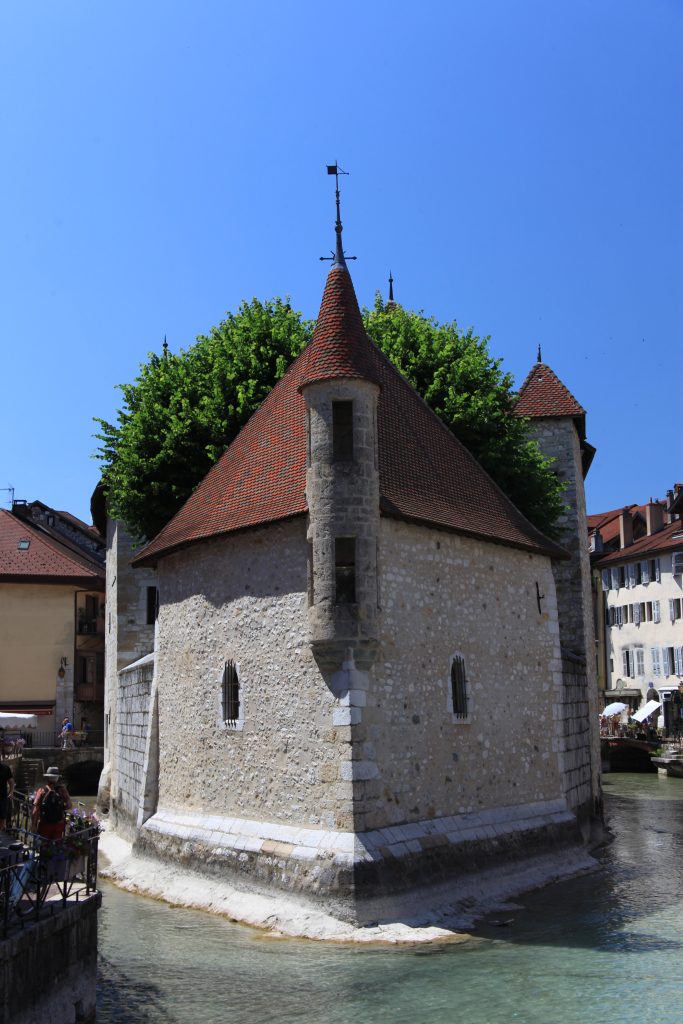
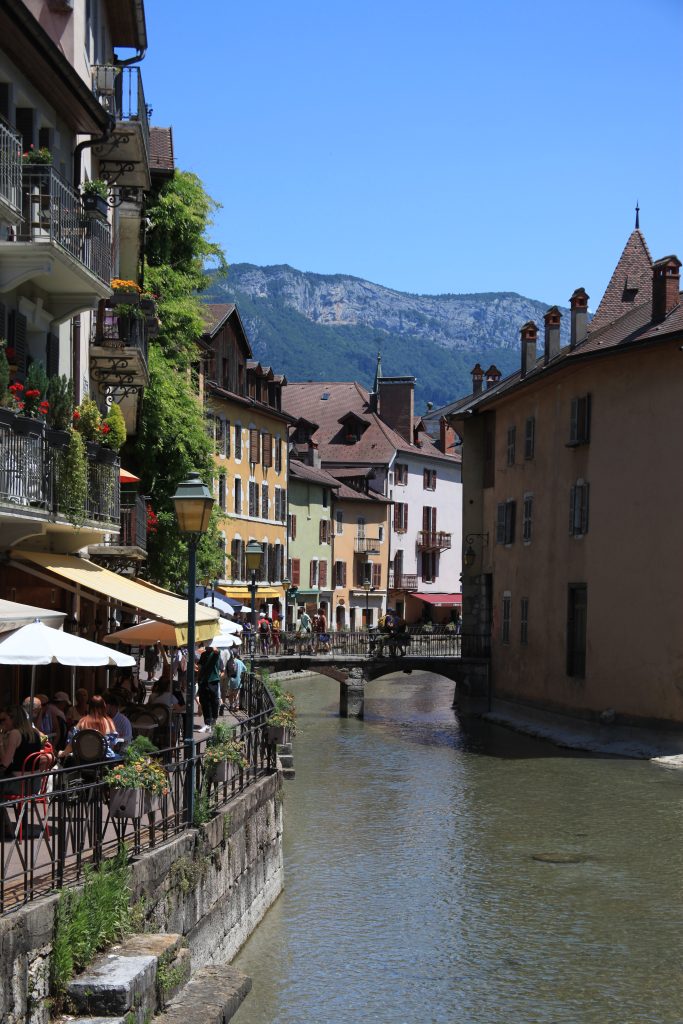
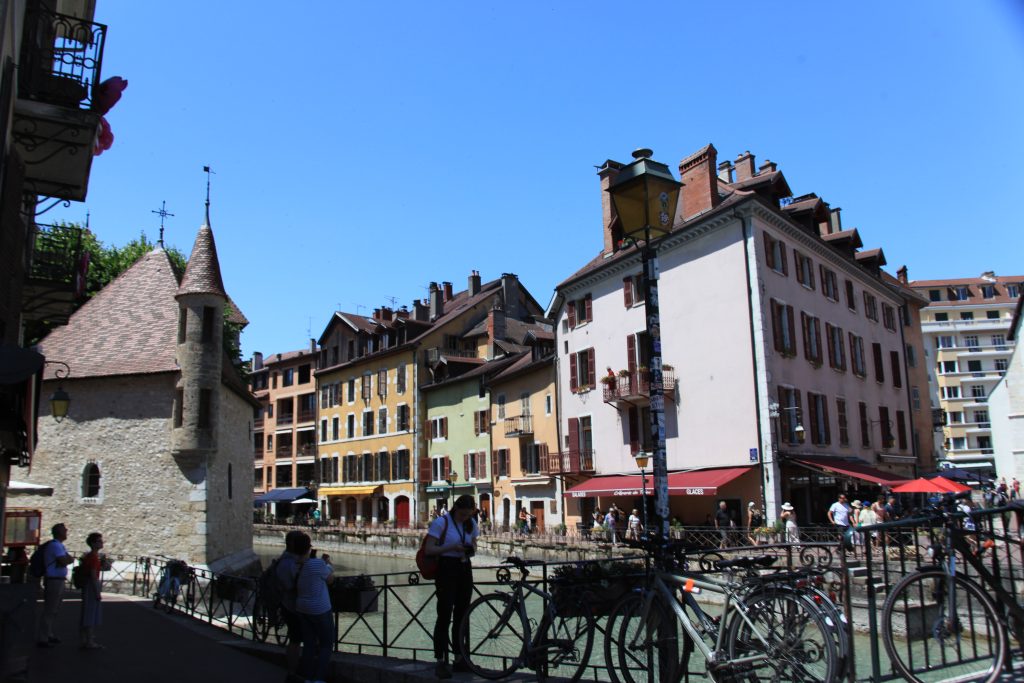
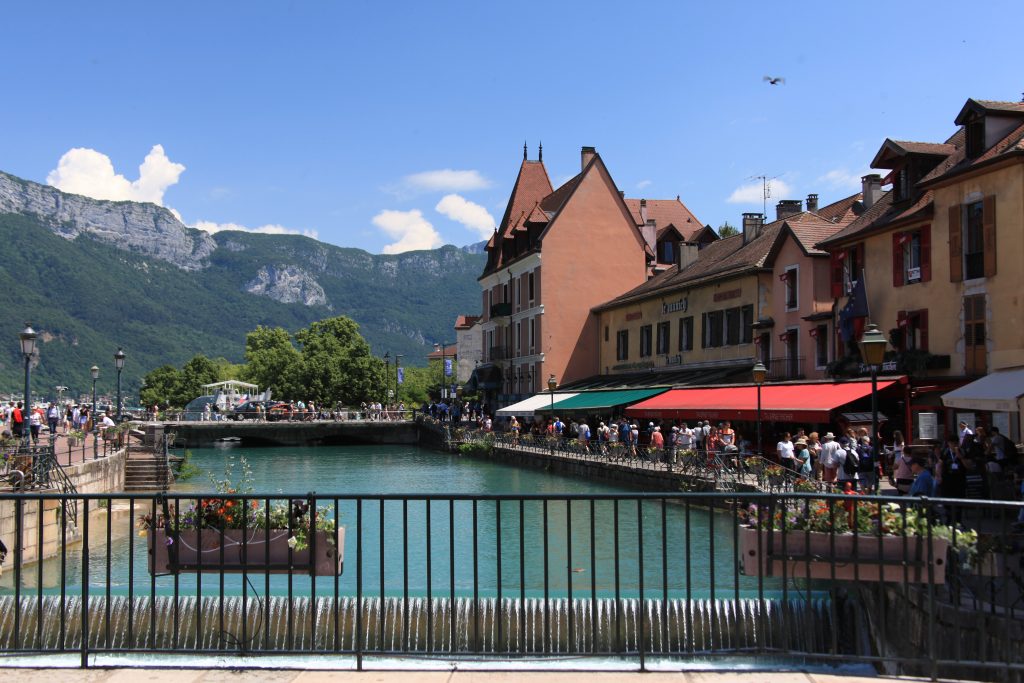
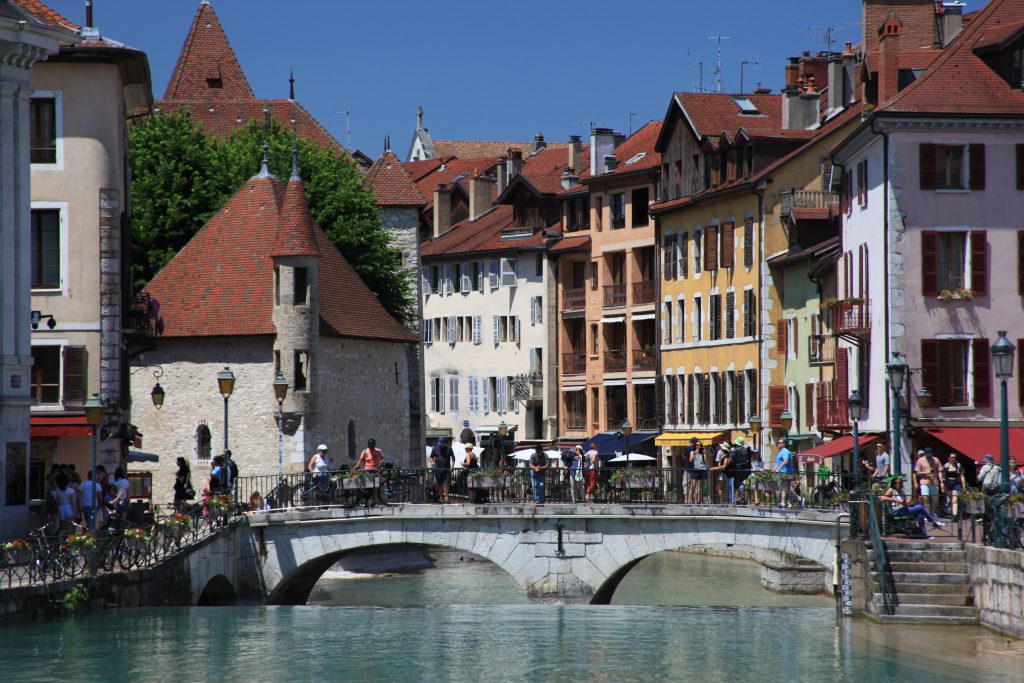
It rises like a mirage from the water, wedged into a silver-blue canal that divides Annecy’s old town in two. The Palais de l’Isle, a centuries-old “island palace,” sits cradled by flowing currents and flower-draped footbridges, as if plucked from a medieval dream. No visit to Annecy is complete without pausing before it, though pausing there means drifting backward, quietly and irresistibly, into history.
Here in this fairy-tale town nestled at the foot of the French Alps, time moves differently—it’s reflected. In the canal, on the lake, within the softened stone of the arcades. Annecy is more than a place to see. It’s a place to remember.
The Historical Tapestry: From Savoy to Sovereignty
Though its fairytale beauty might suggest otherwise, Annecy’s past is layered and complex, forged through centuries of shifting borders, religious conflict, and military occupation.
Roman Origins: The area around Annecy has been inhabited since the Roman period, with the nearby settlement of Boutae (modern-day Annecy-le-Vieux) serving as a strategic waypoint between Italy and Gaul.
Medieval Growth: The heart of Annecy took shape around the 11th century with the construction of the original hilltop castle and the Palais de l’Isle on its small islet in the Thiou River, a canal fed by Lac d’Annecy‘s outflow.
House of Savoy: By the 13th century, Annecy belonged to the County of Geneva, then passed to the House of Savoy through strategic marriages and inheritance, a powerful dynasty that straddled what is now France and northern Italy. It became a residence city for the counts and, by the 16th century, the episcopal seat of Geneva after the Reformation pushed Catholic clergy out of Calvinist-controlled Switzerland.
French Annexation: In 1860, following a public referendum, Annecy and the Savoy region were annexed to France as part of the Haute-Savoie département. Yet today, that distinct Savoyard character persists in its architecture, cuisine, and fiercely guarded identity.
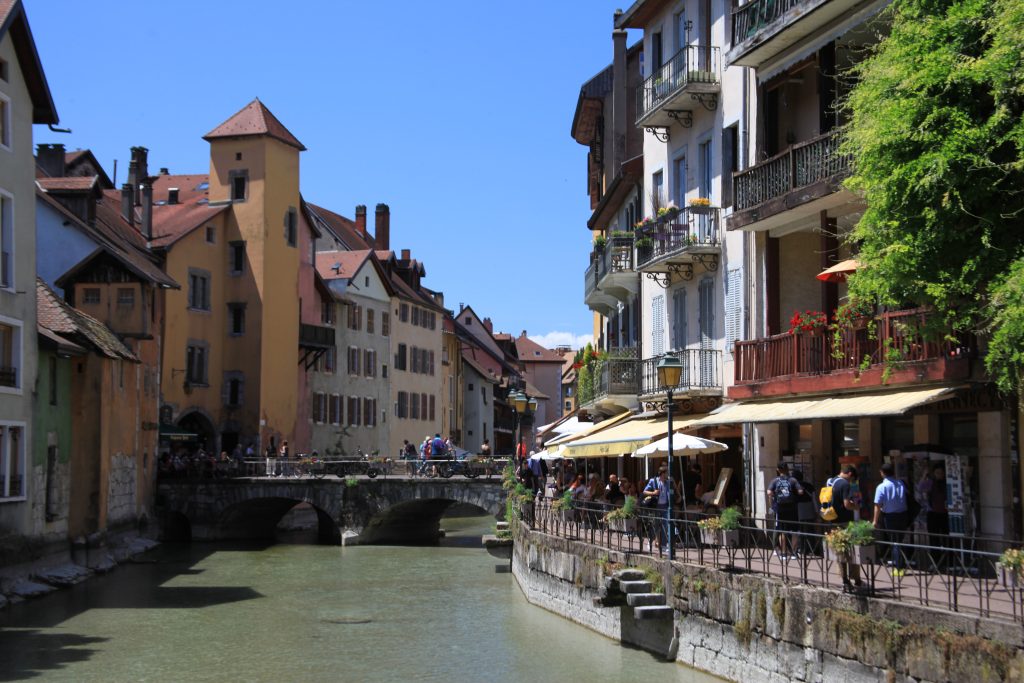
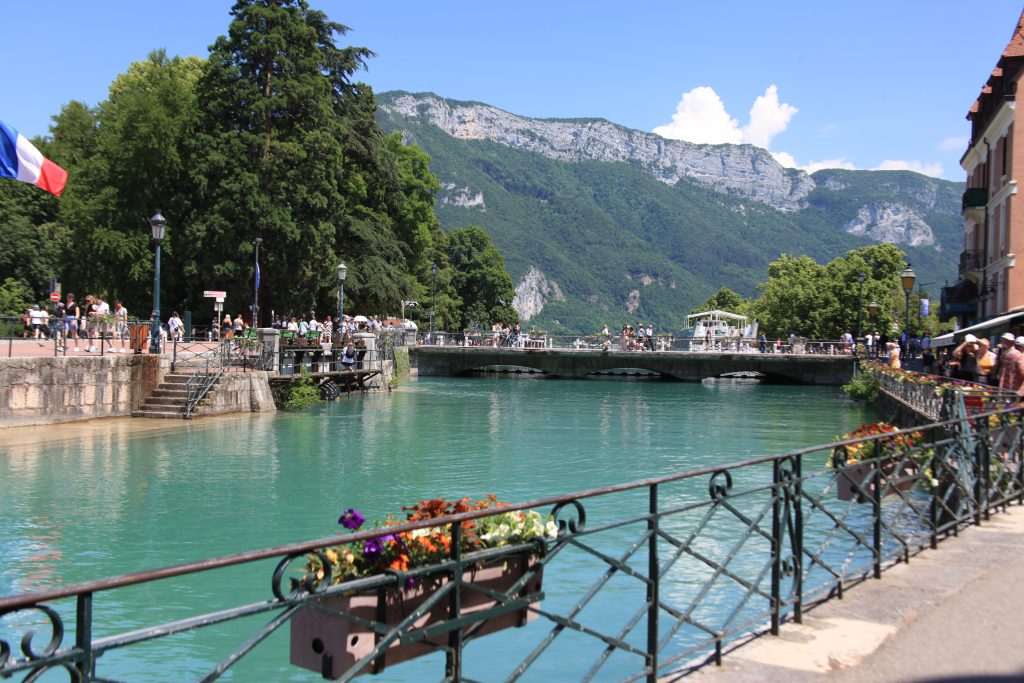
The Palais de l’Isle
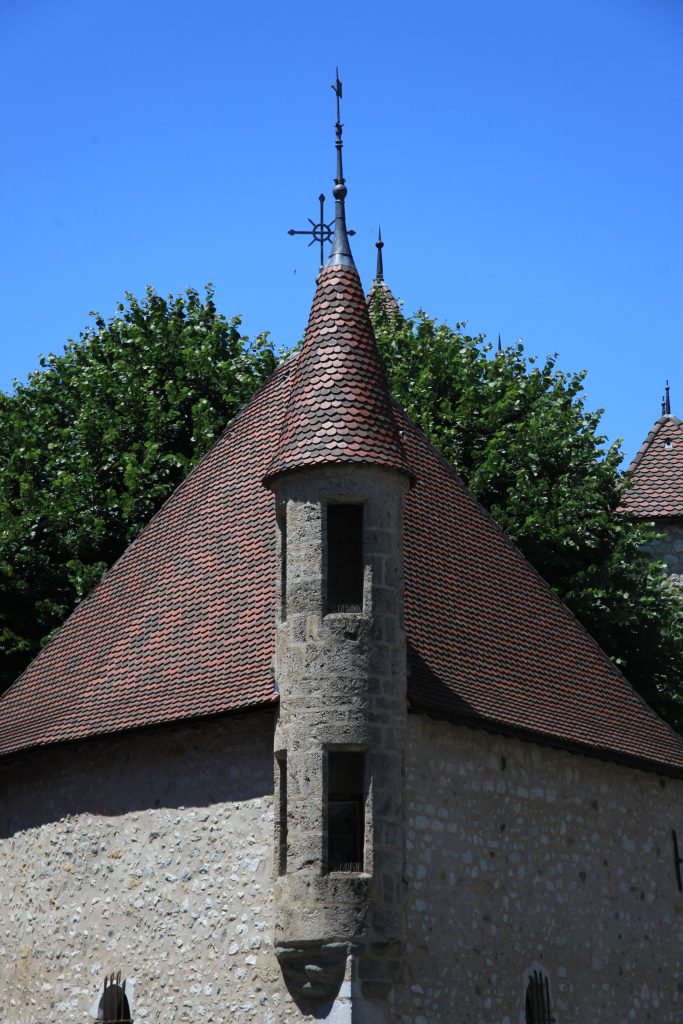
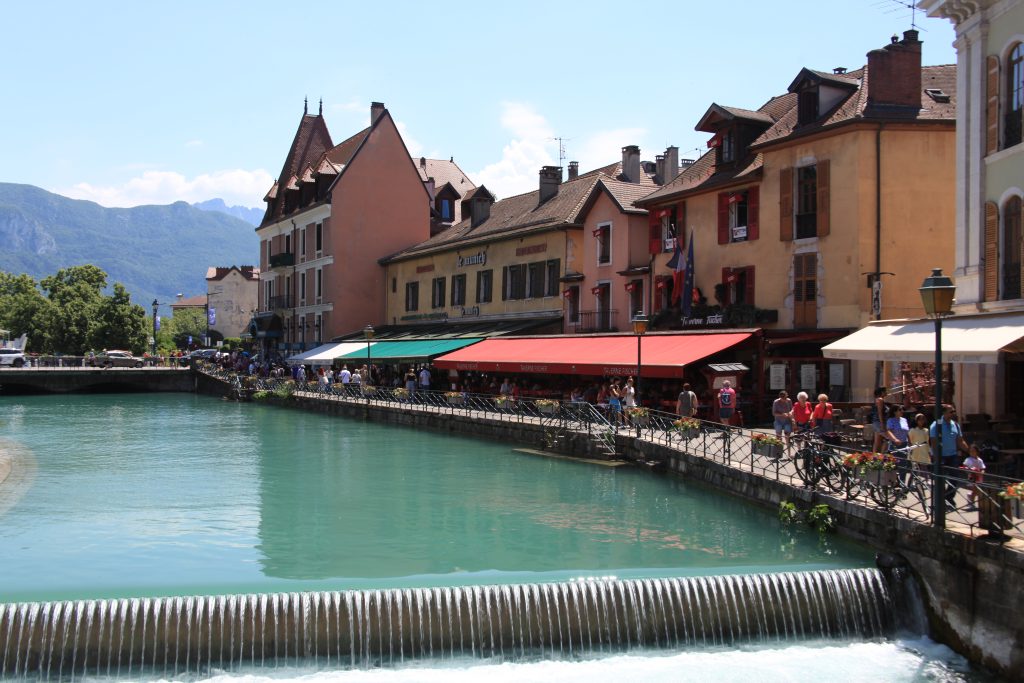
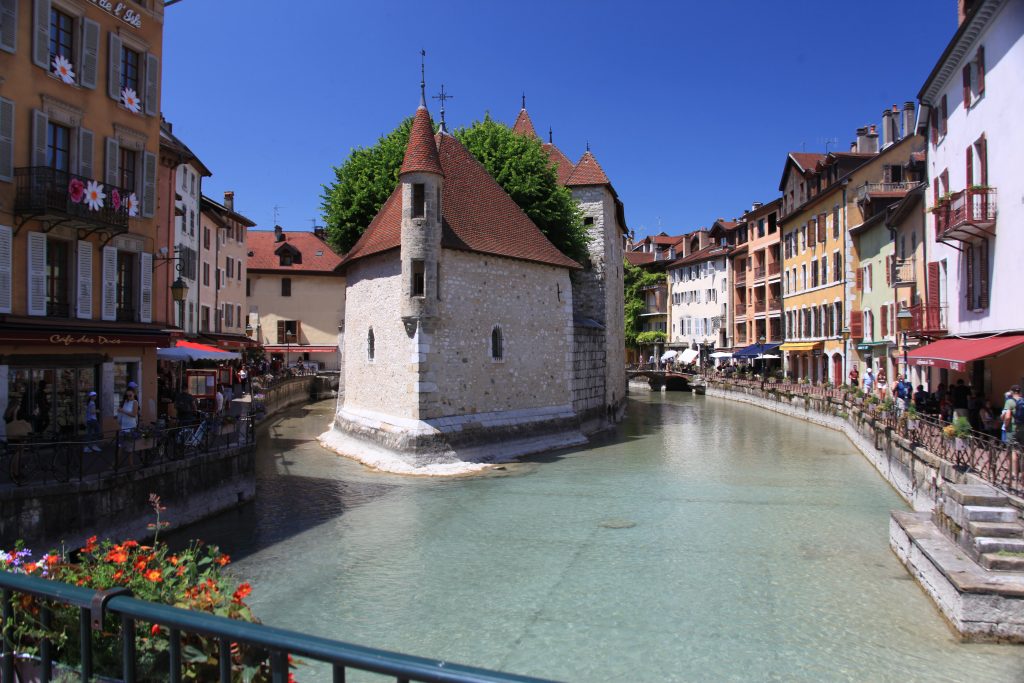
Standing like a stone prow at the heart of the old town, the Palais de l’Isle has played many roles throughout its long history. Built in 1132, the earliest recorded mention refers to it as a “house on the island,” the residence of the Lord of Annecy. By the 13th century, it had become an administrative center and courthouse with a feudal prison.
Over the centuries, it has been repurposed as a mint, military barracks, and most notoriously a prison, a function it retained well into the 20th century, including under German occupation during WWII.
Despite its grim chapters, the building is now Annecy‘s most photographed landmark, thanks to its unique canal setting and ship-like silhouette. Inside, it houses a local history museum with preserved prison cells and exhibits on Annecy’s urban development.
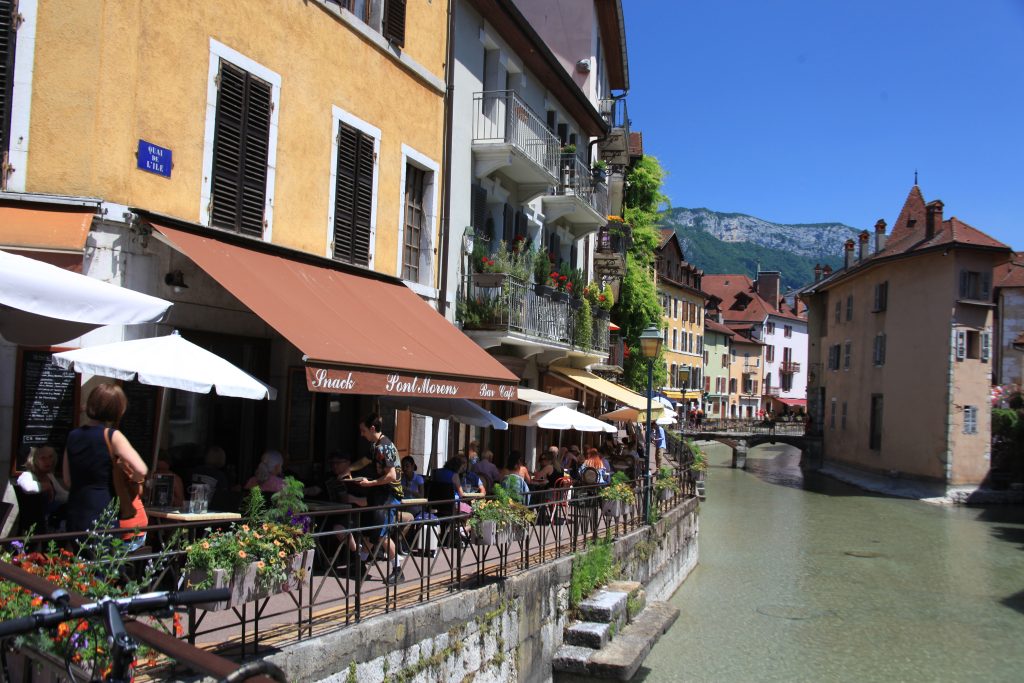
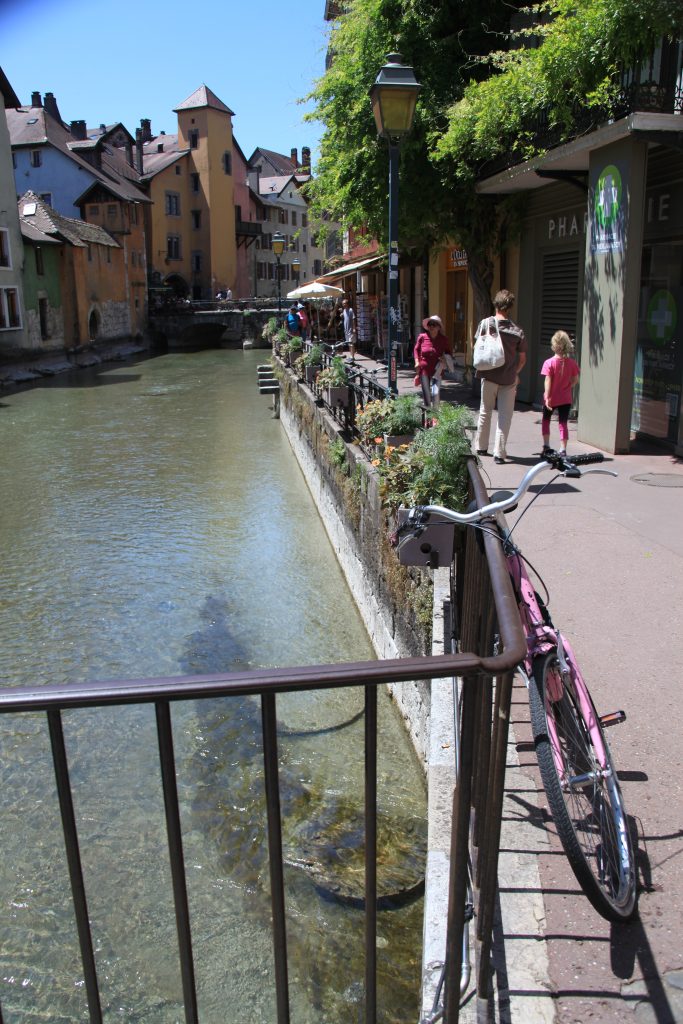
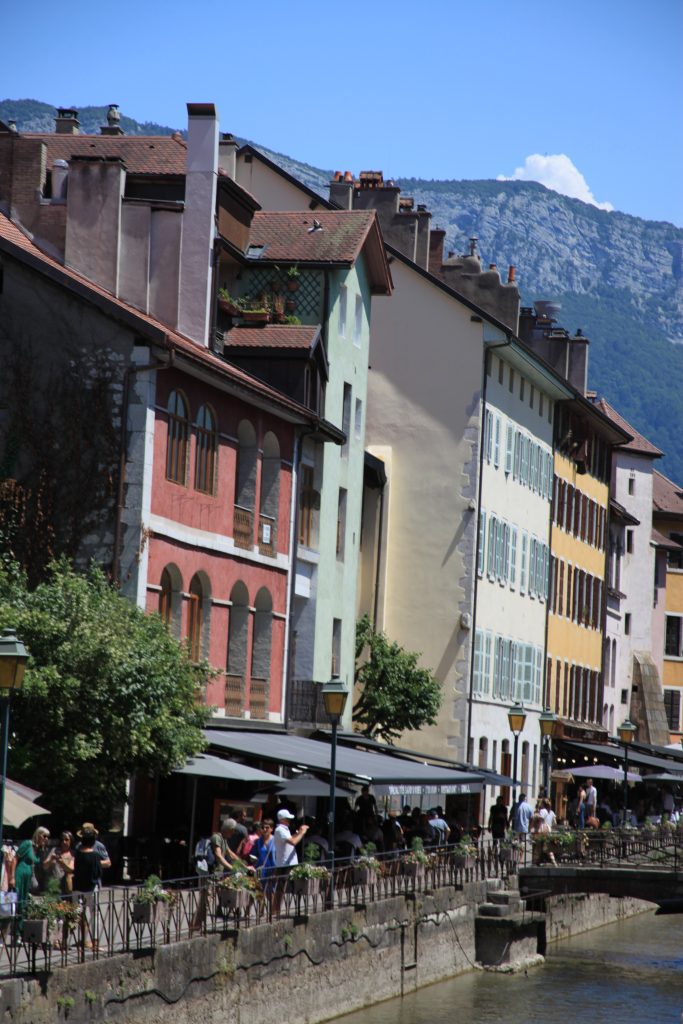
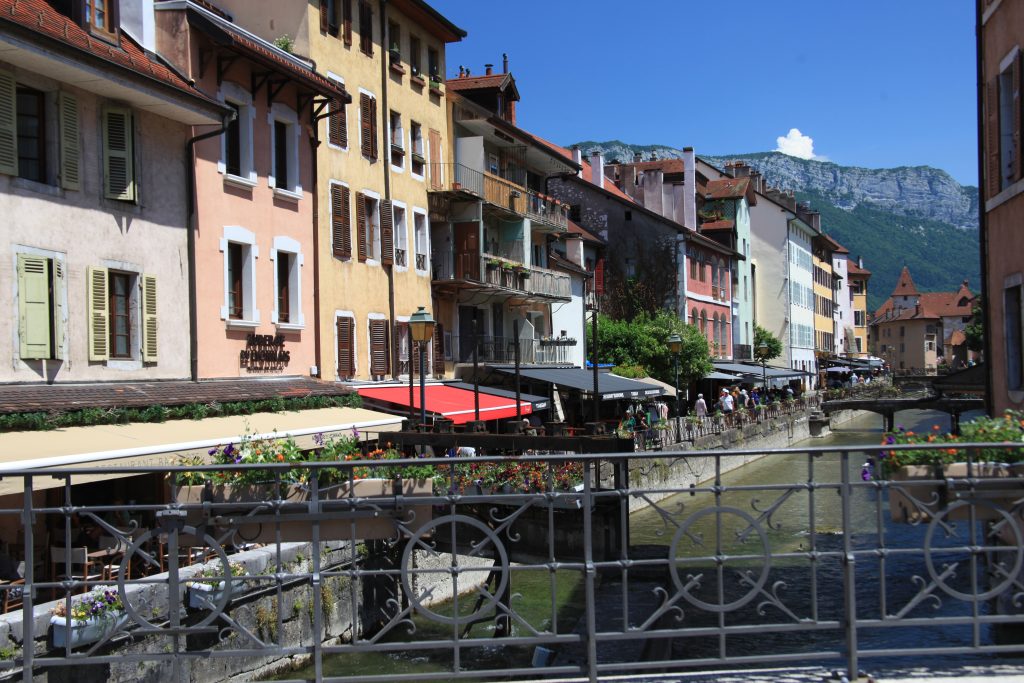
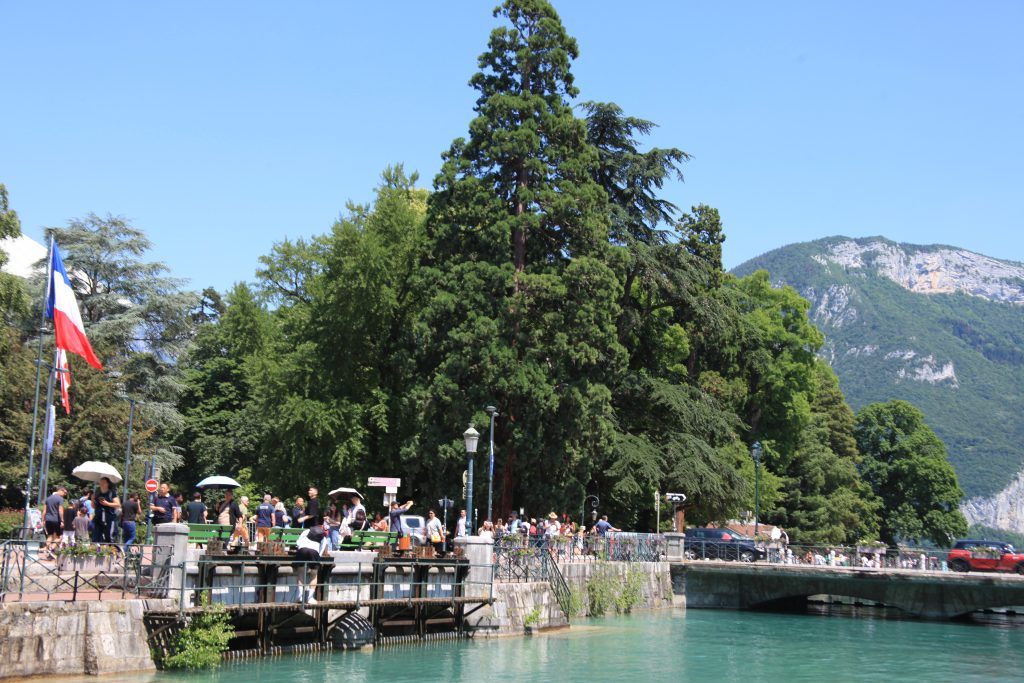
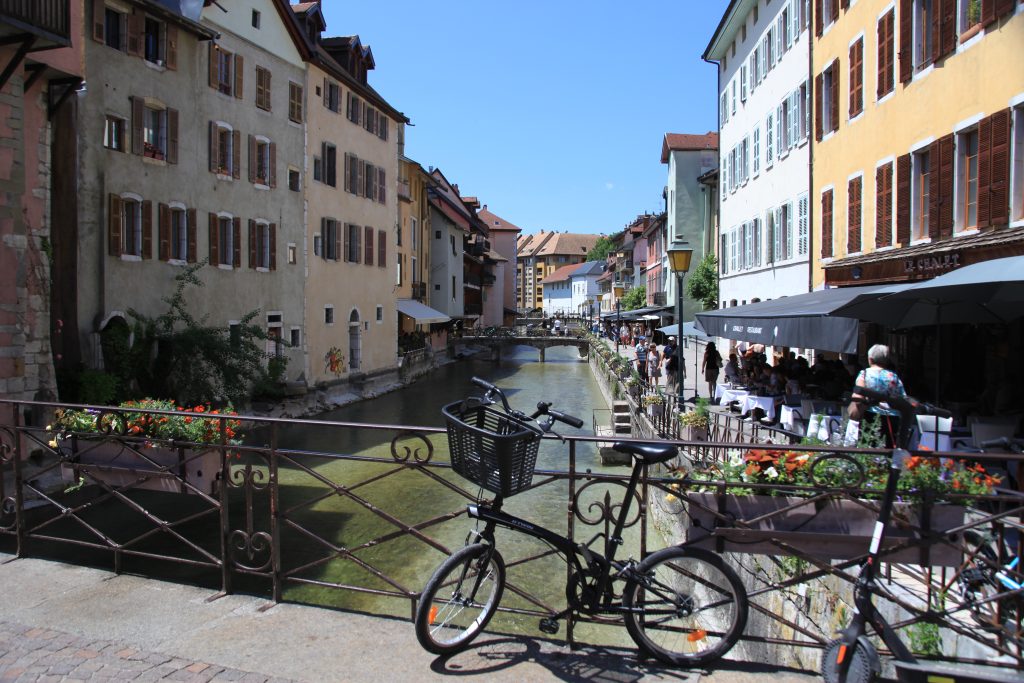
Stand on the bridge over the Thiou and capture the Palais de L’Isle with the flower-lined canals, outdoor cafes, and bustling life of Annecy.
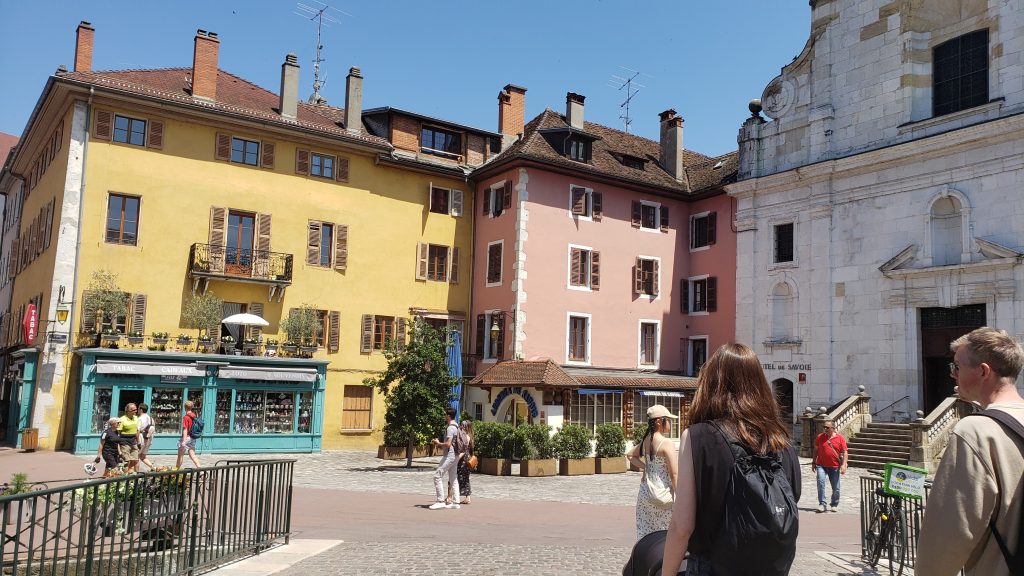
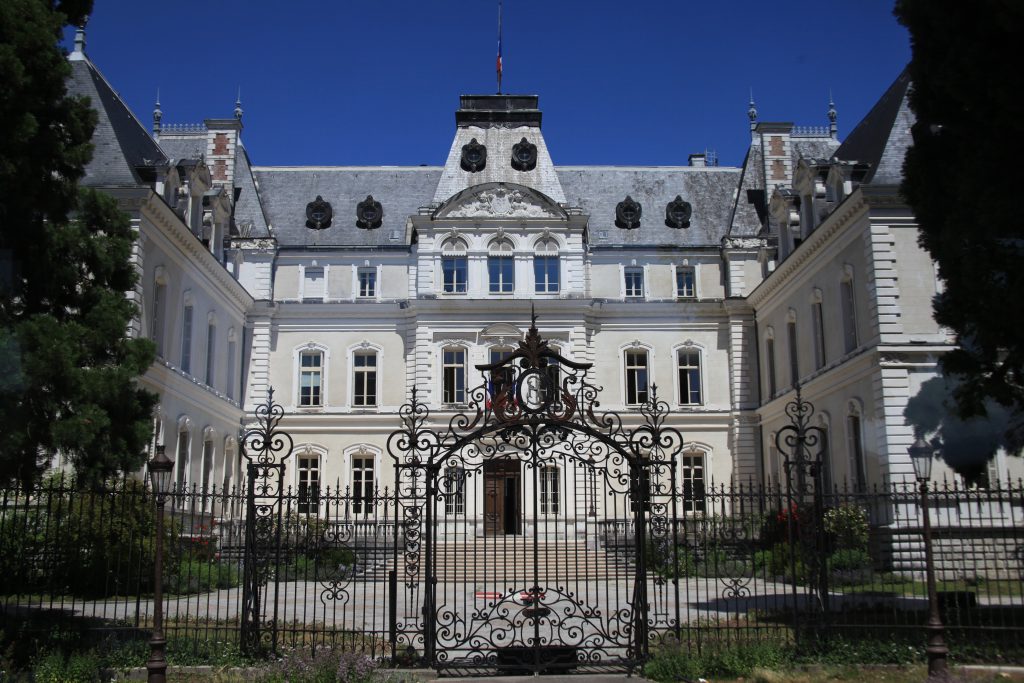
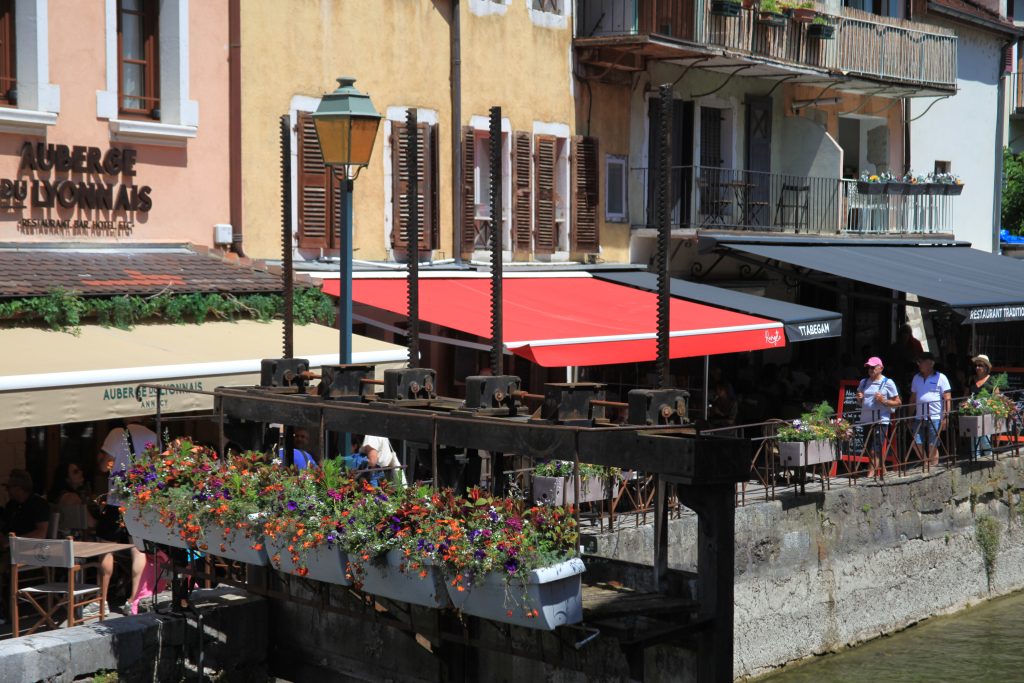
Annecy’s Churches and Canal-front Heritage
While the Palais de l’Isle may catch your eye first, it is not the only building telling a story here. Along the curve of the Thiou River, Annecy’s historic buildings nestle within medieval lanes, each a chapter in stone of this open-air cathedral.
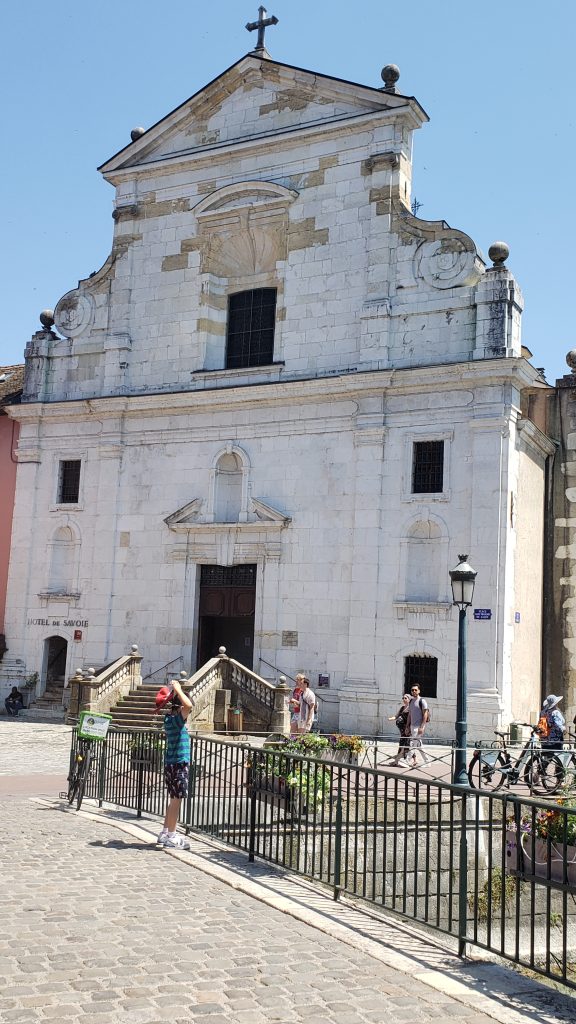
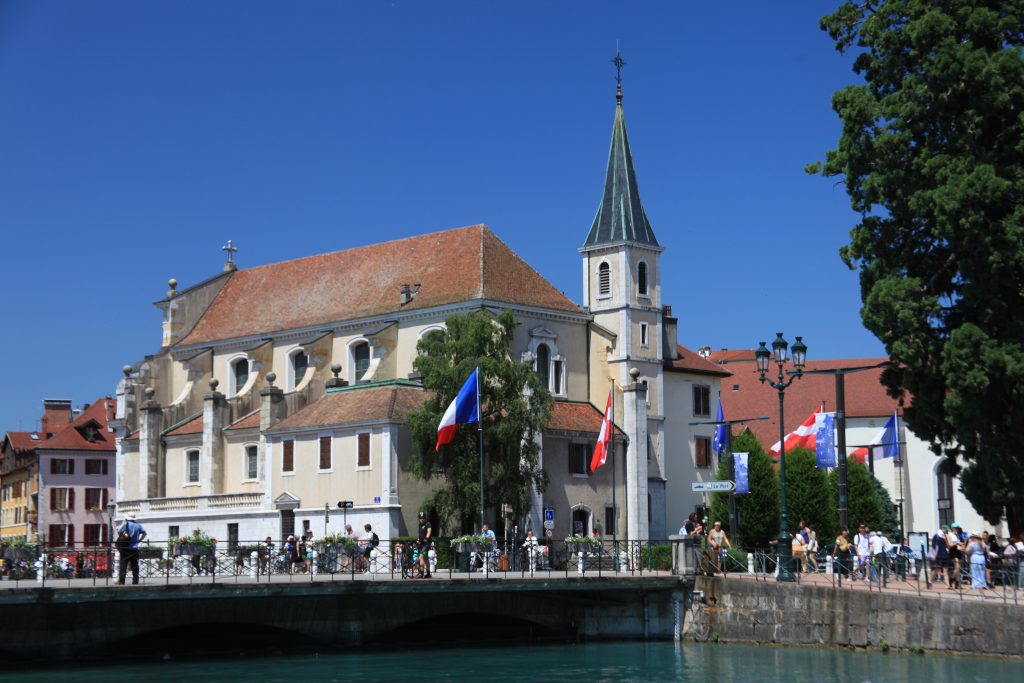
Chief among them is the Église Saint-François-de-Sales, its ochre façade and modest baroque bell towers rising at the canal’s edge, directly opposite the Palais. Built between 1614 and 1683, this was the spiritual home of the Visitation Order, founded by Saint François de Sales and Saint Jeanne de Chantal, key figures of the Catholic Reformation.
This church is anchored more than opulent, quietly luminous in its high vaulted nave with simple altars. It was constructed as part of the Counter-Reformation’s efforts to reaffirm Catholic presence in a region increasingly influenced by Protestant Geneva to the north. Within its walls, Saint François de Sales once preached, and his teachings on gentleness, humility, and inner devotion still echo through the stained glass.
Cathédrale Saint-Pierre, just a few streets away, has served as Annecy’s cathedral since 1822, though it was originally built as a Franciscan church in the 16th century. This graceful structure, with its coffered wooden ceiling and restrained Renaissance lines, gained prominence when Annecy briefly served as the ecclesiastical seat of the displaced Bishop of Geneva. It was here that a vision of Catholic intellectual resistance – polished, persuasive, and peaceful – was nurtured amid exile and reform.
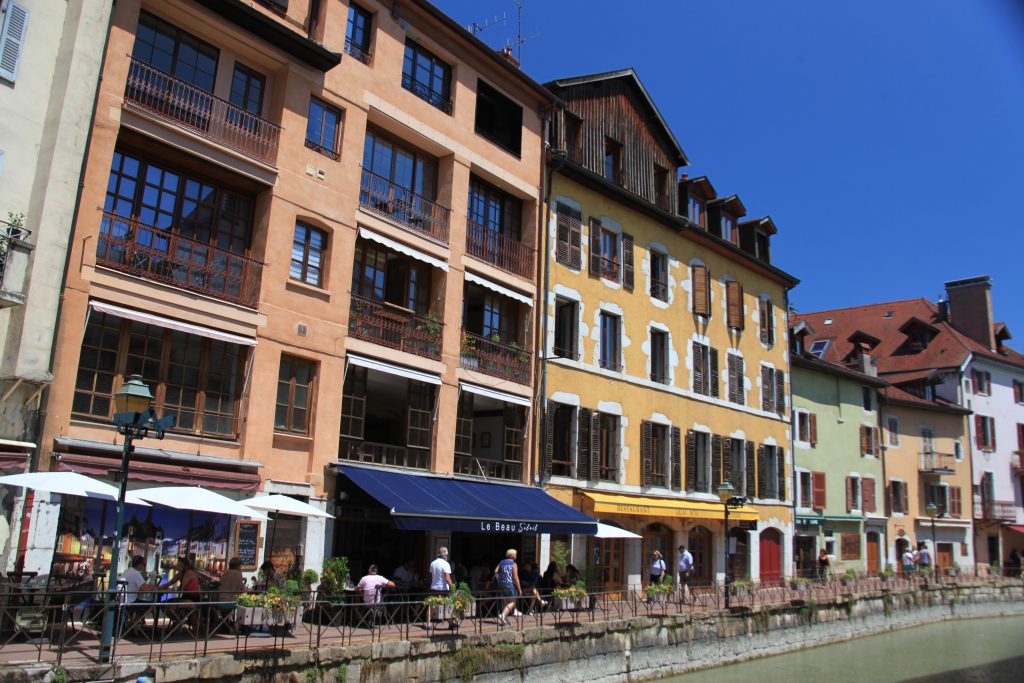
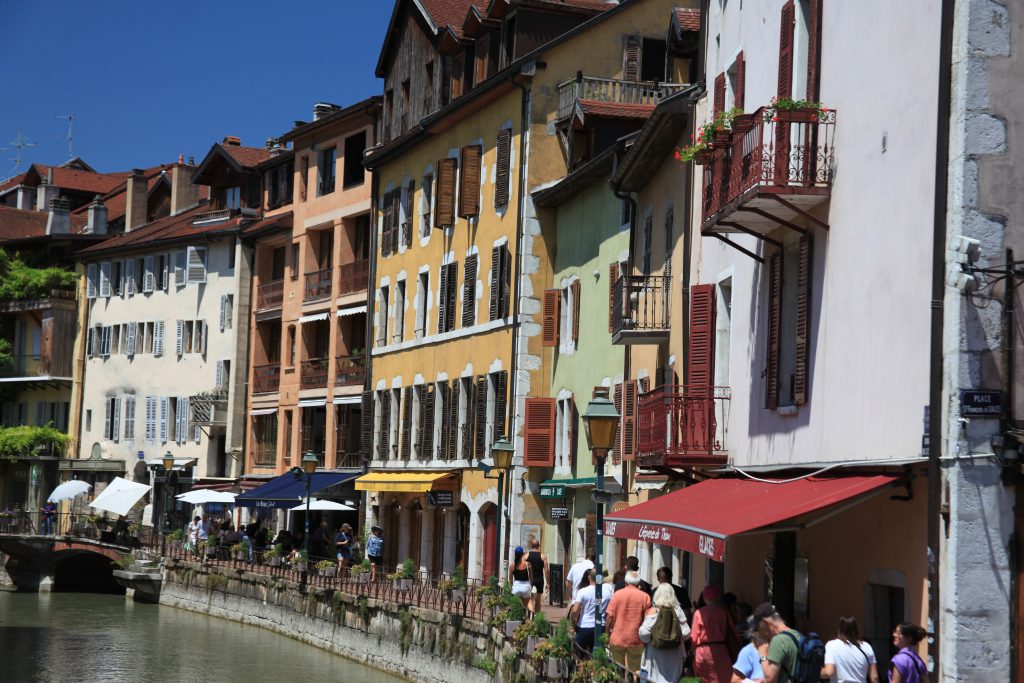
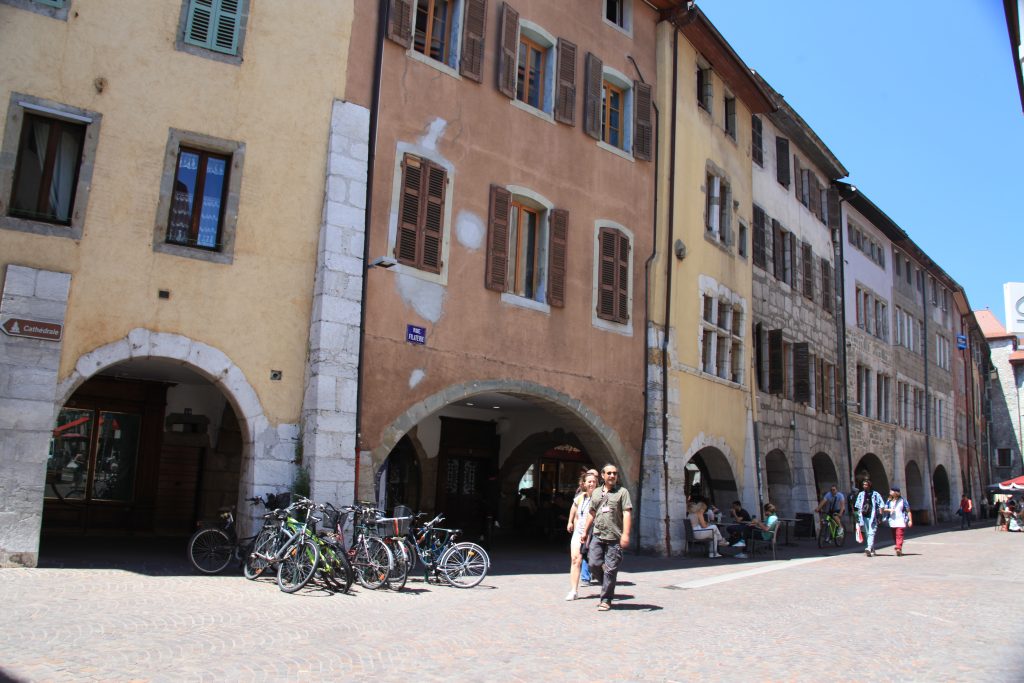
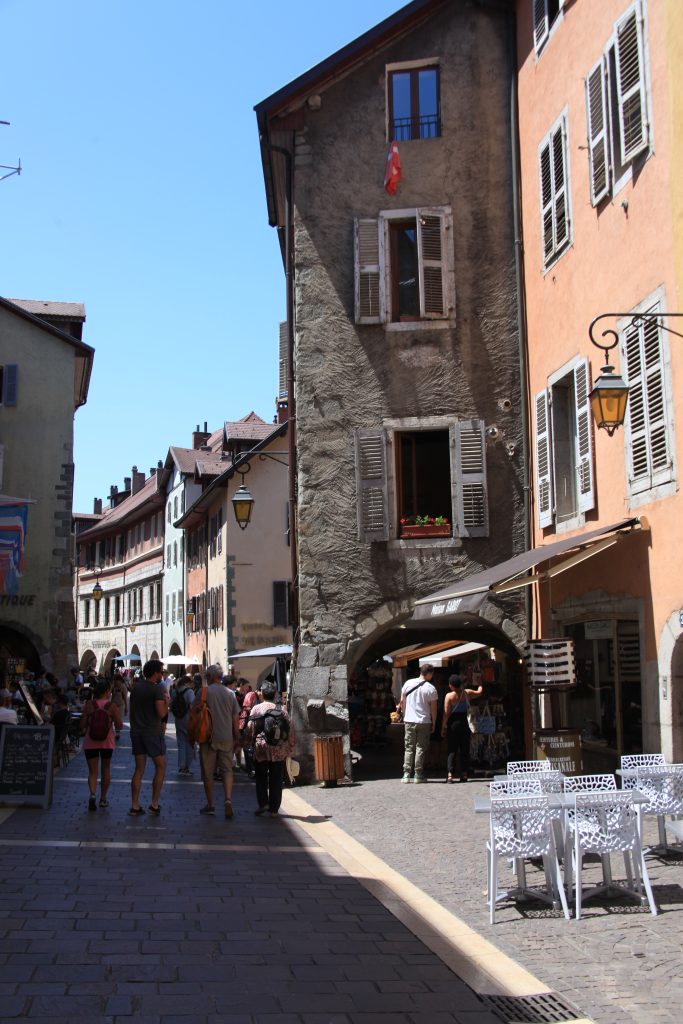
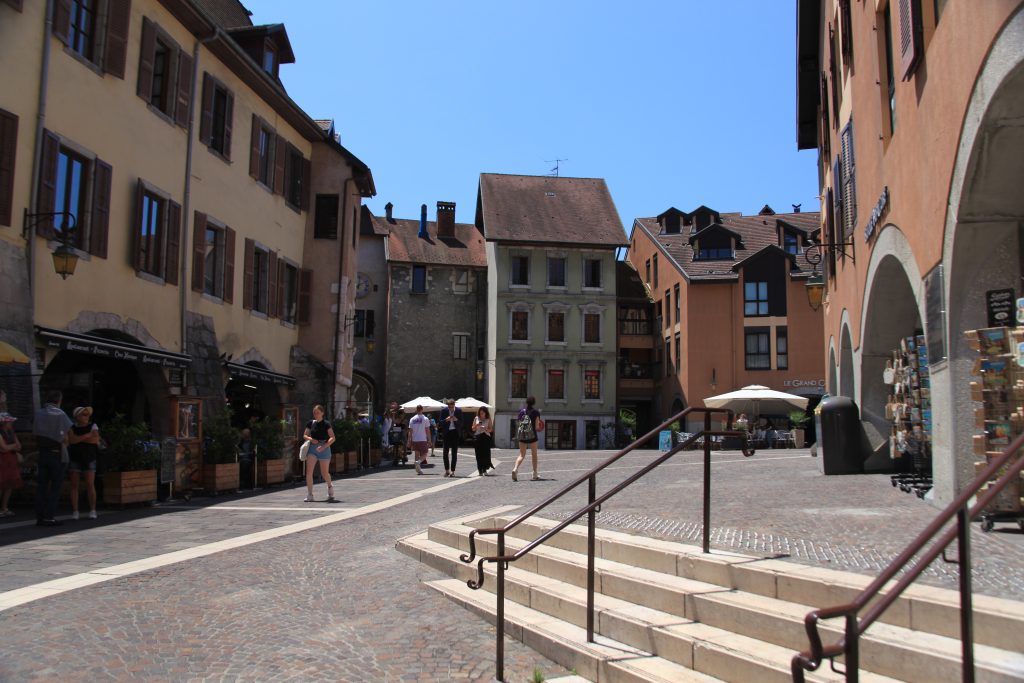
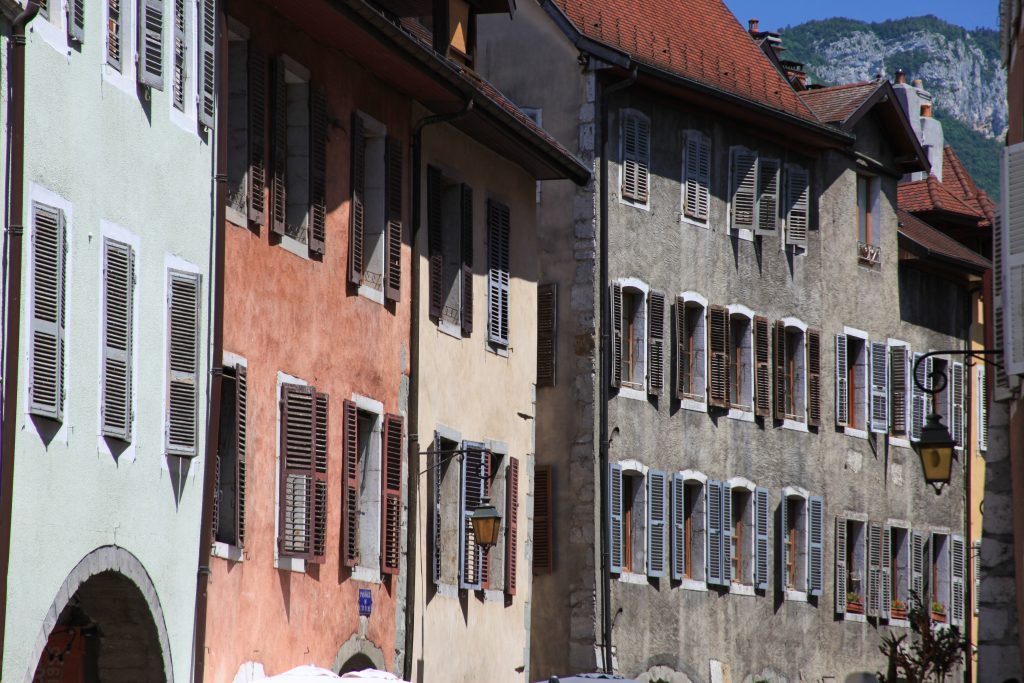
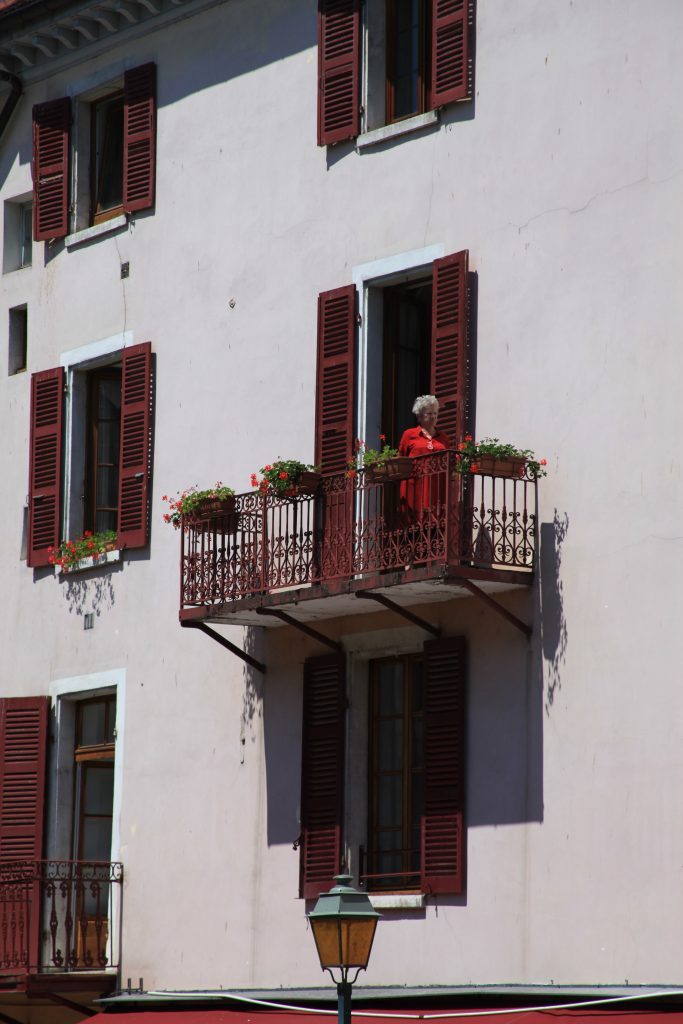
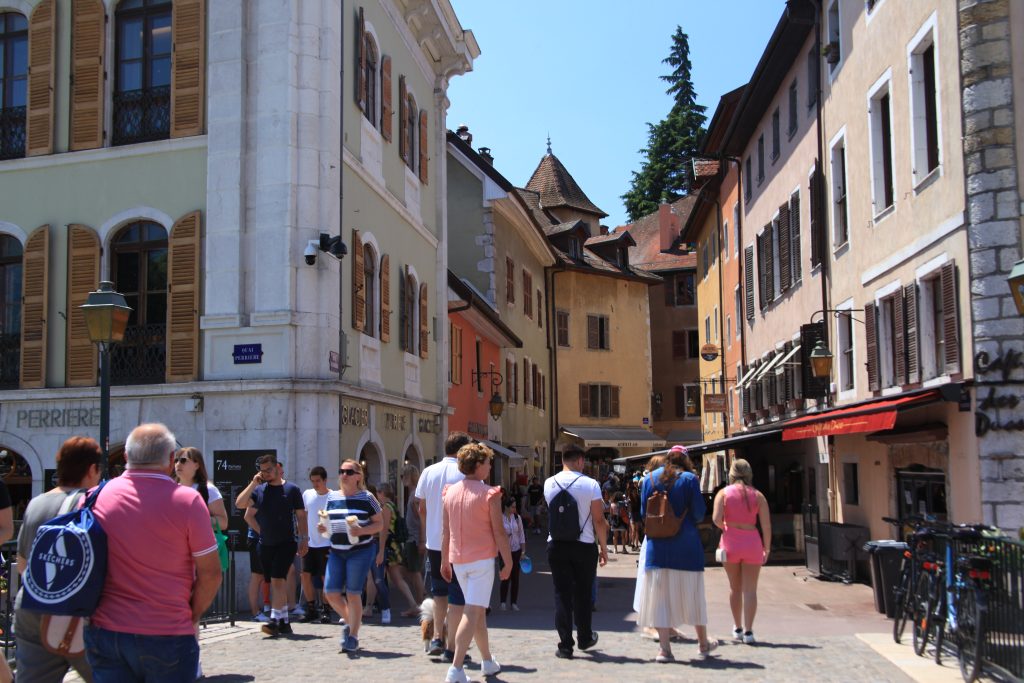
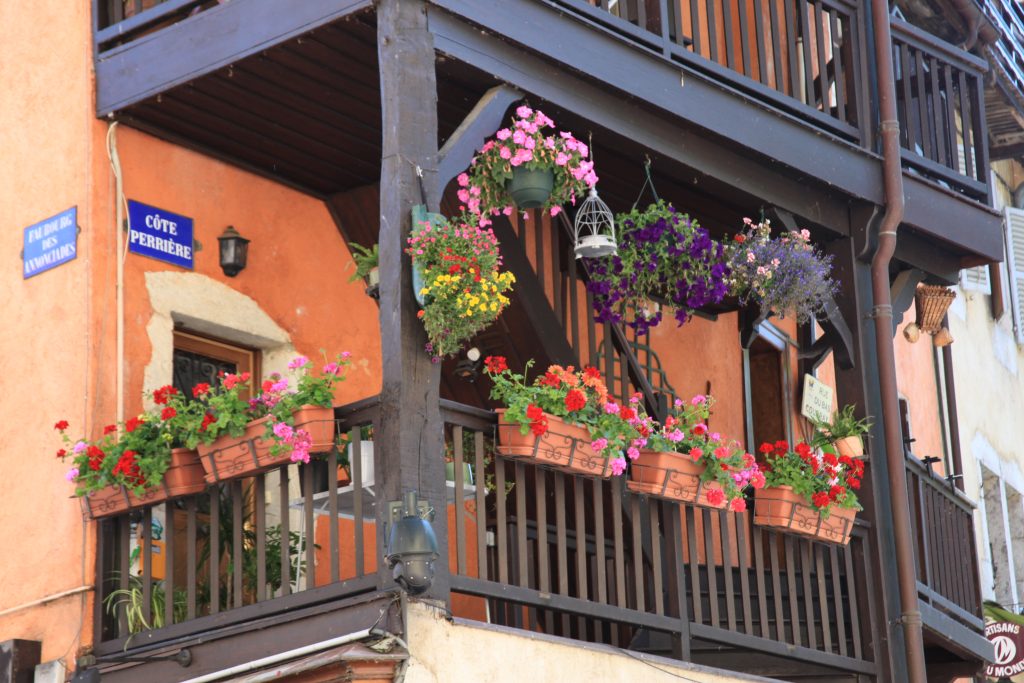
Across from the canal, the Rue Perrière is lined with Renaissance-era arcaded merchant houses whose painted shutters and overhanging balconies testify to Annecy’s prosperity under Savoy rule. Many of these buildings still hold fragments of their original frescoes beneath the pastel plaster, layers of trade, faith, and domestic life.
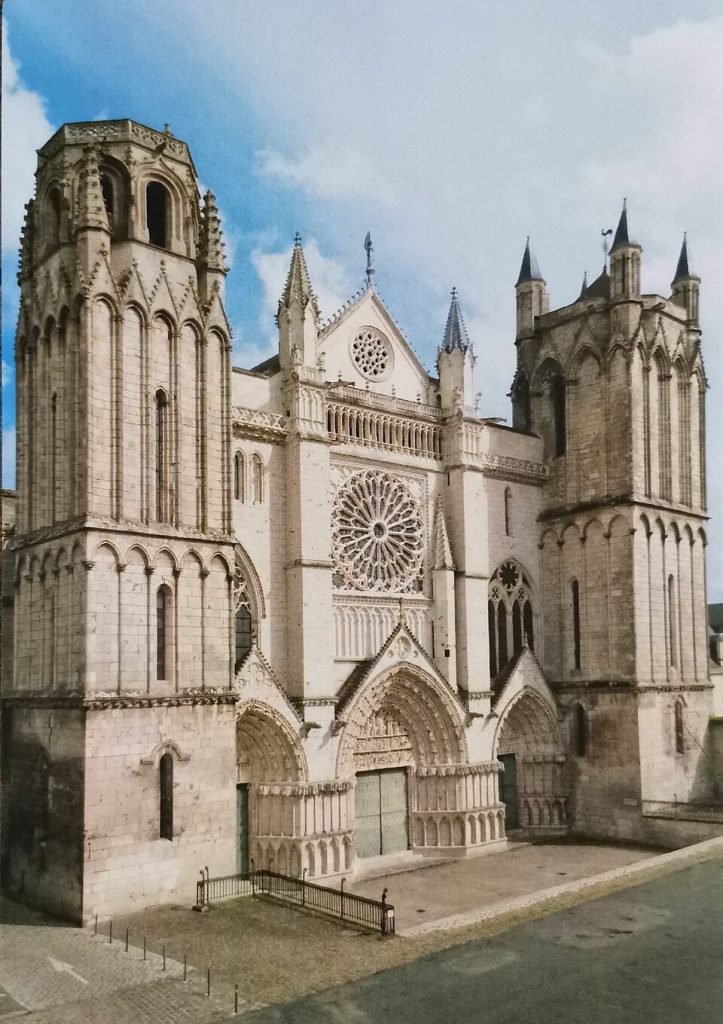
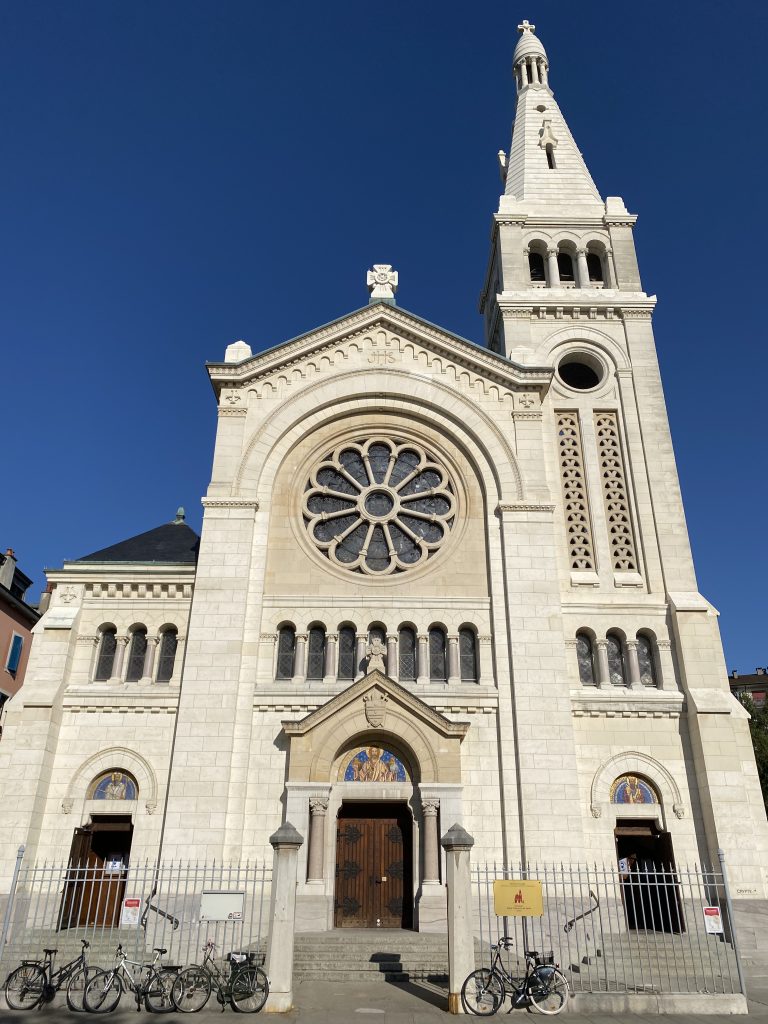
Sensory Strolls Through the “Venice of the Alps”
Annecy’s magic lies not in monuments alone but in how visual poetry and lived detail thread together:
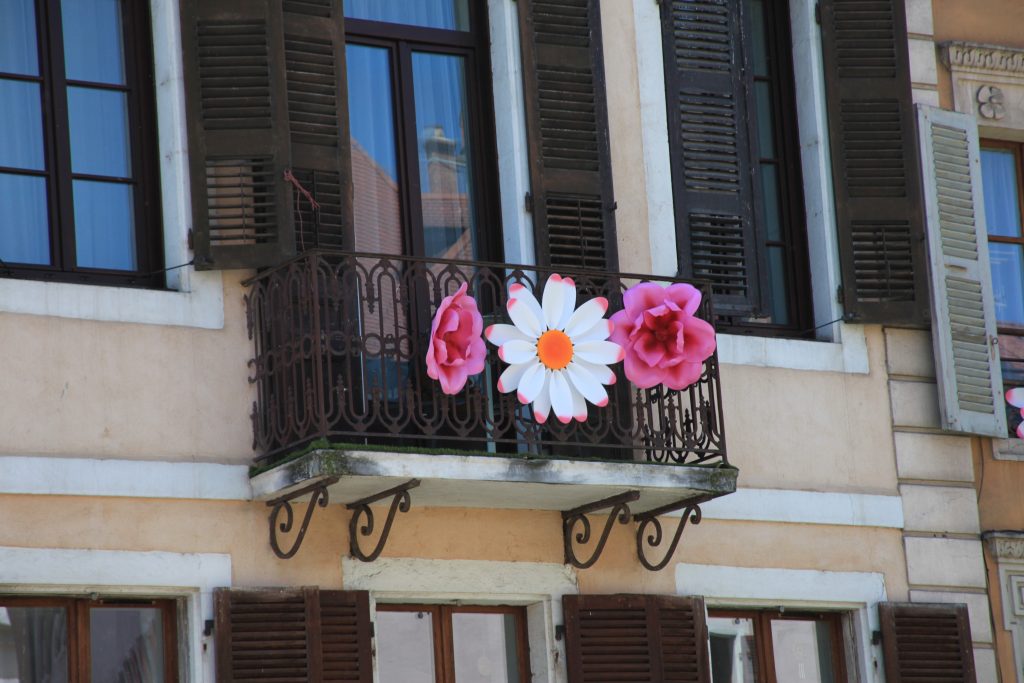
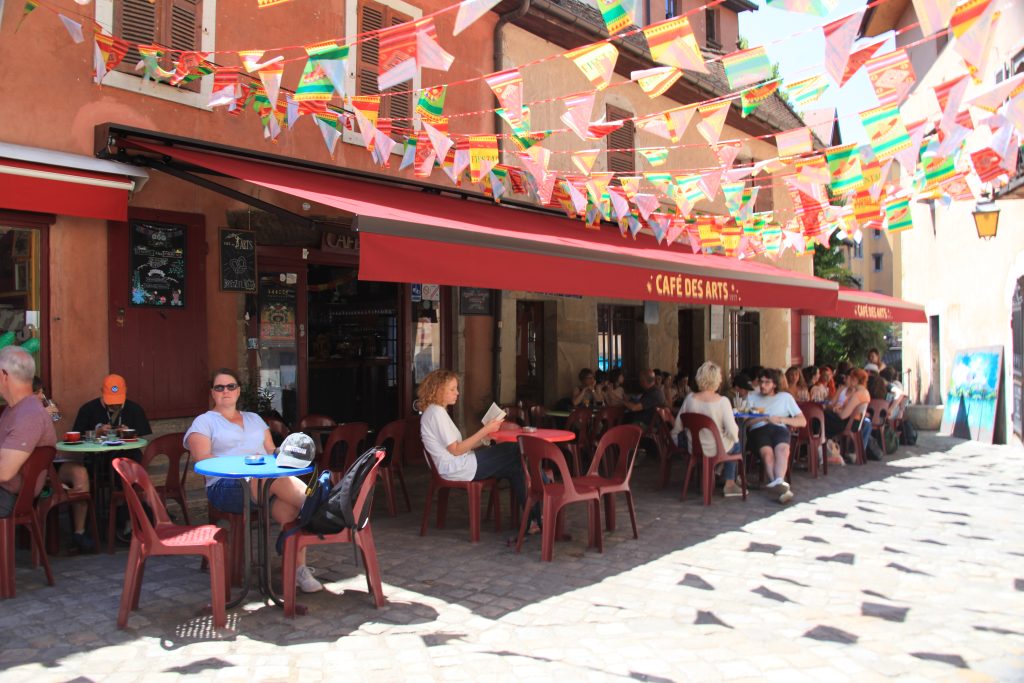
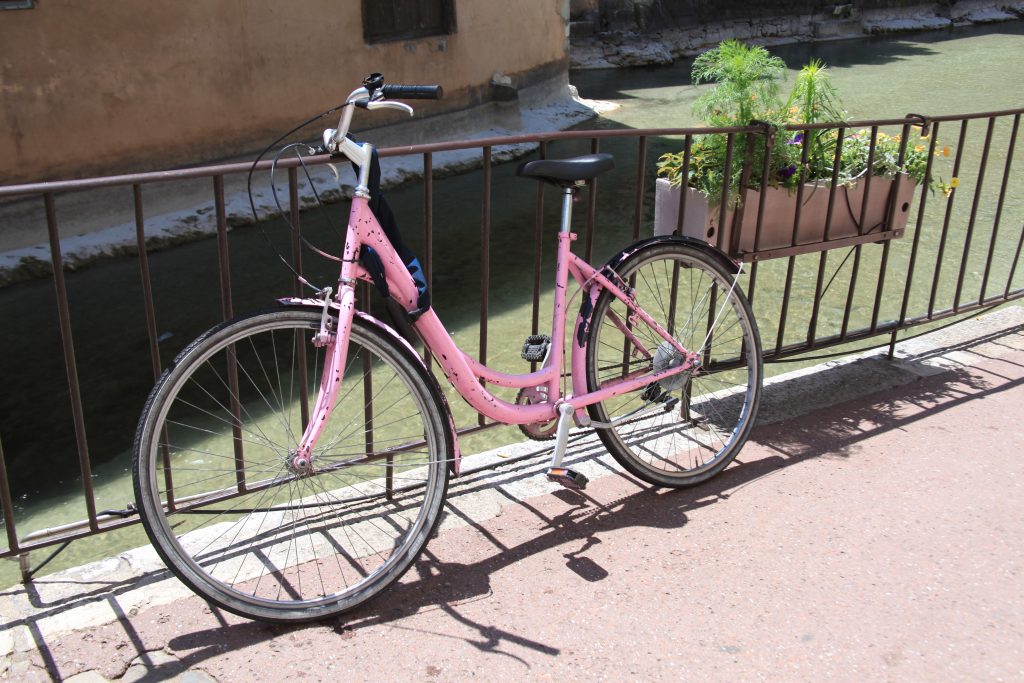
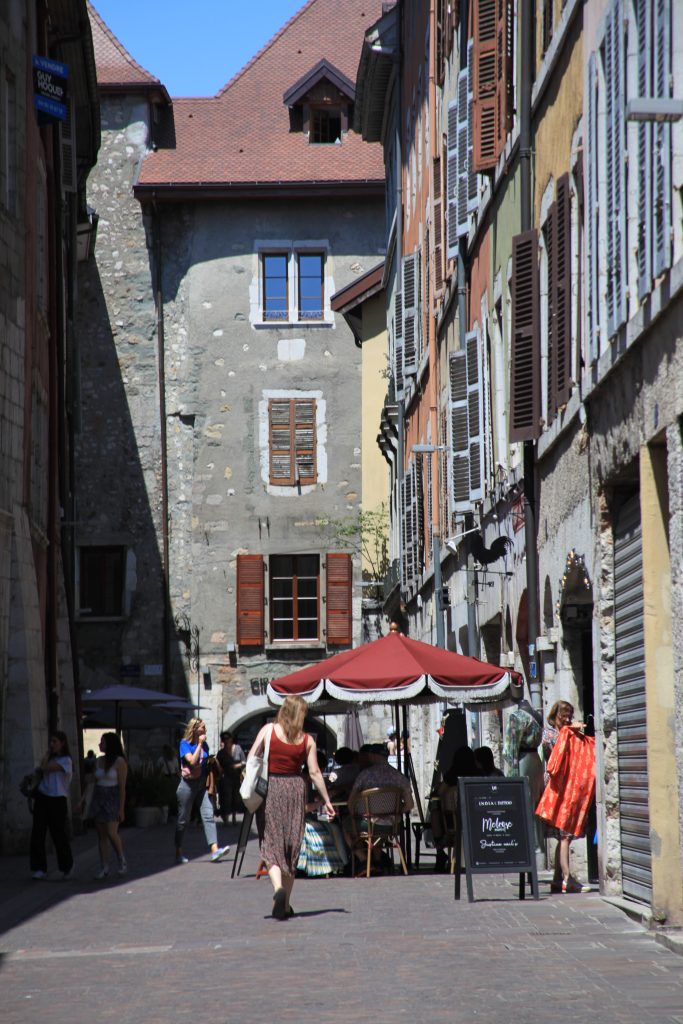
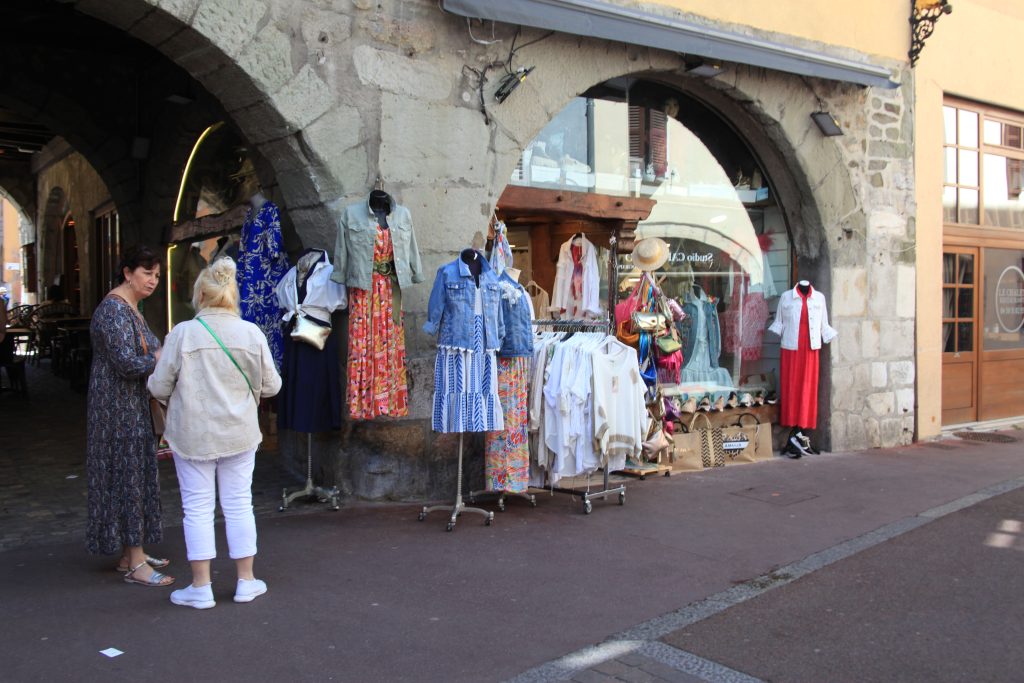
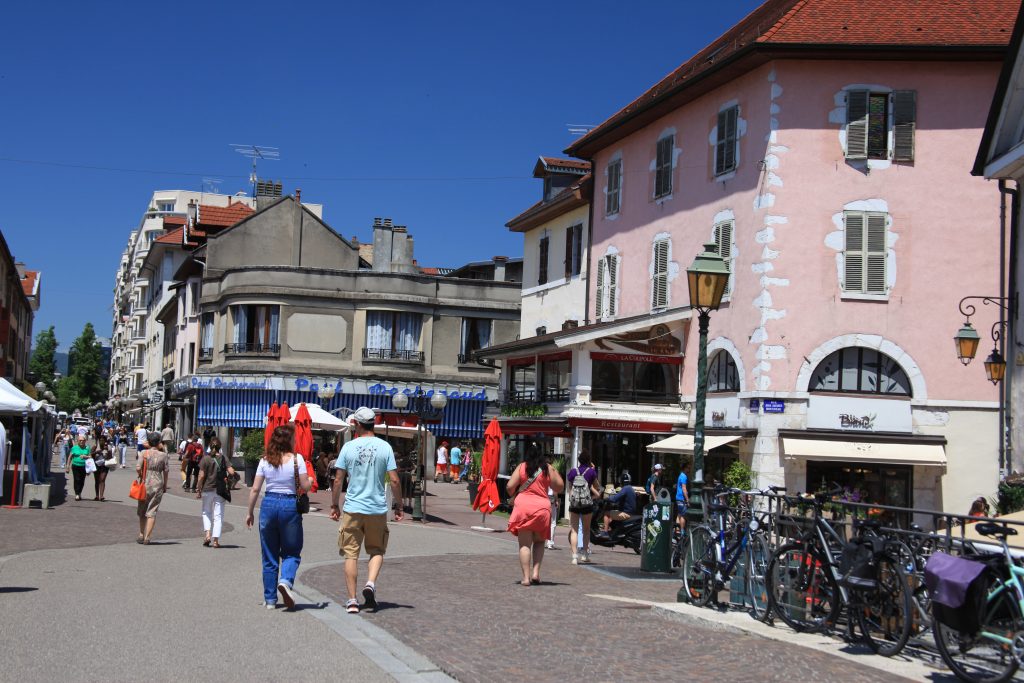
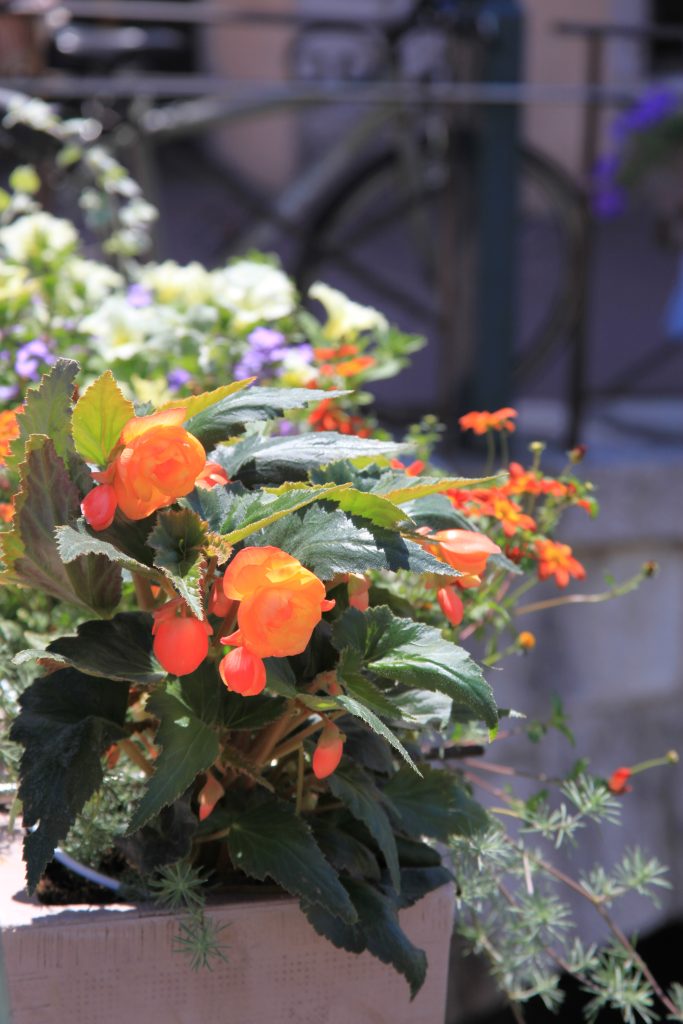
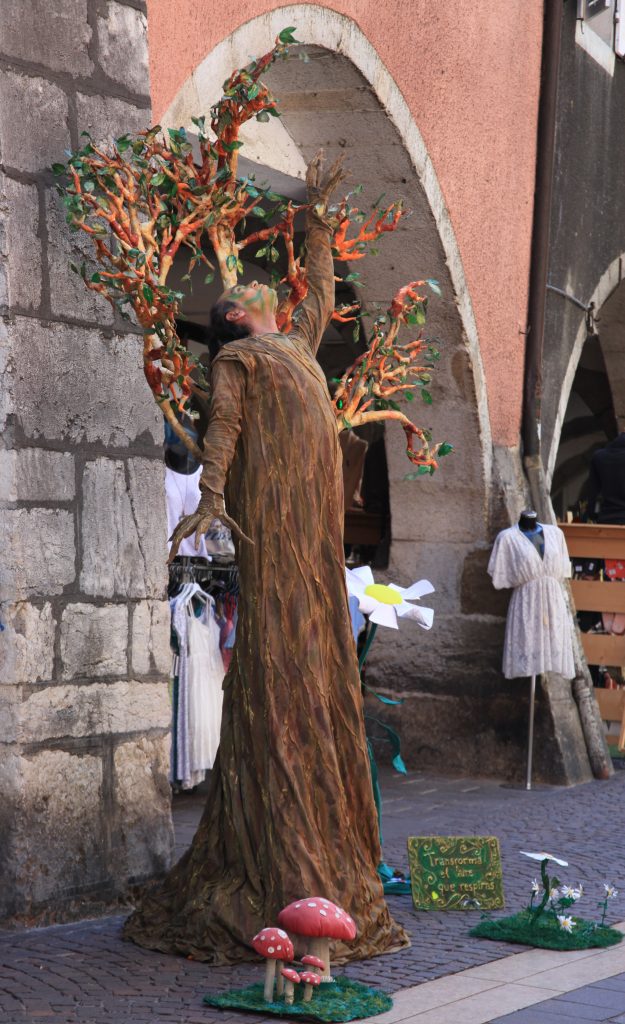
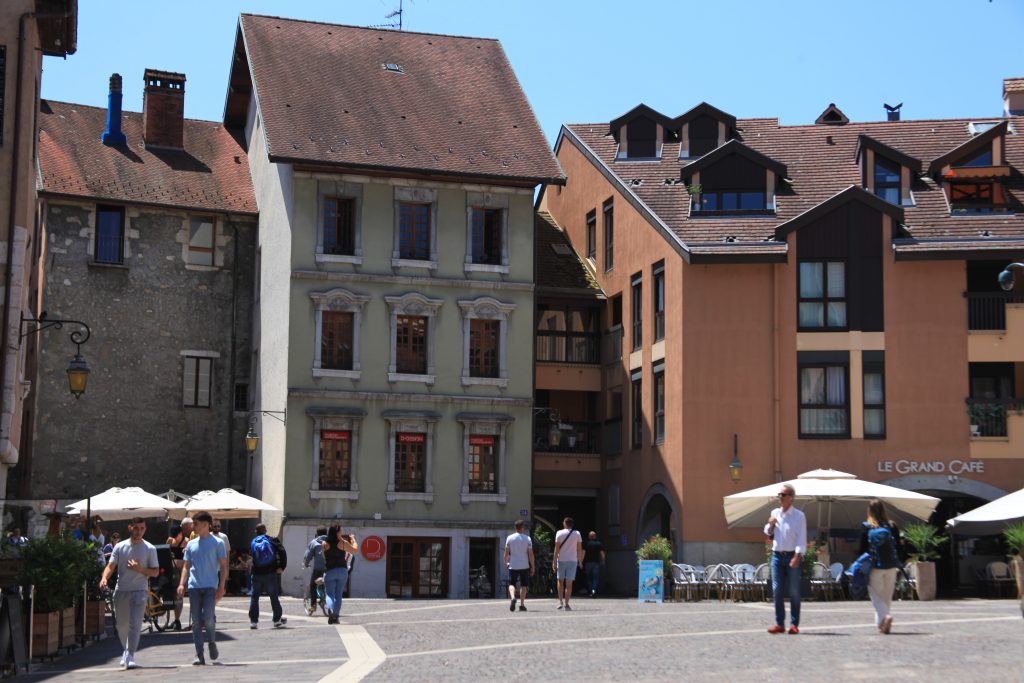
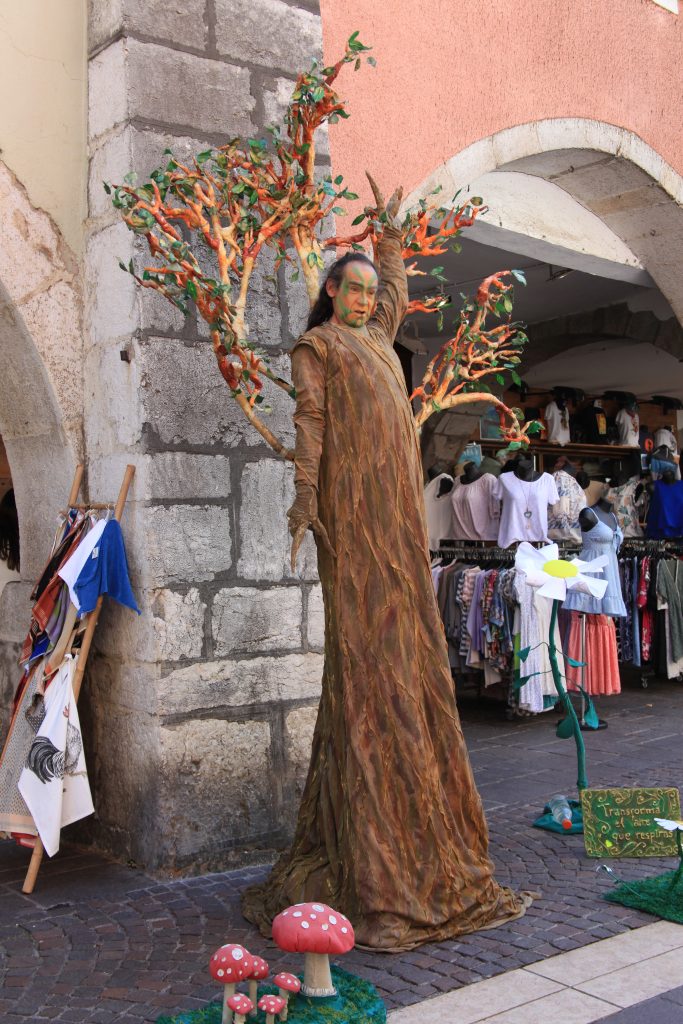
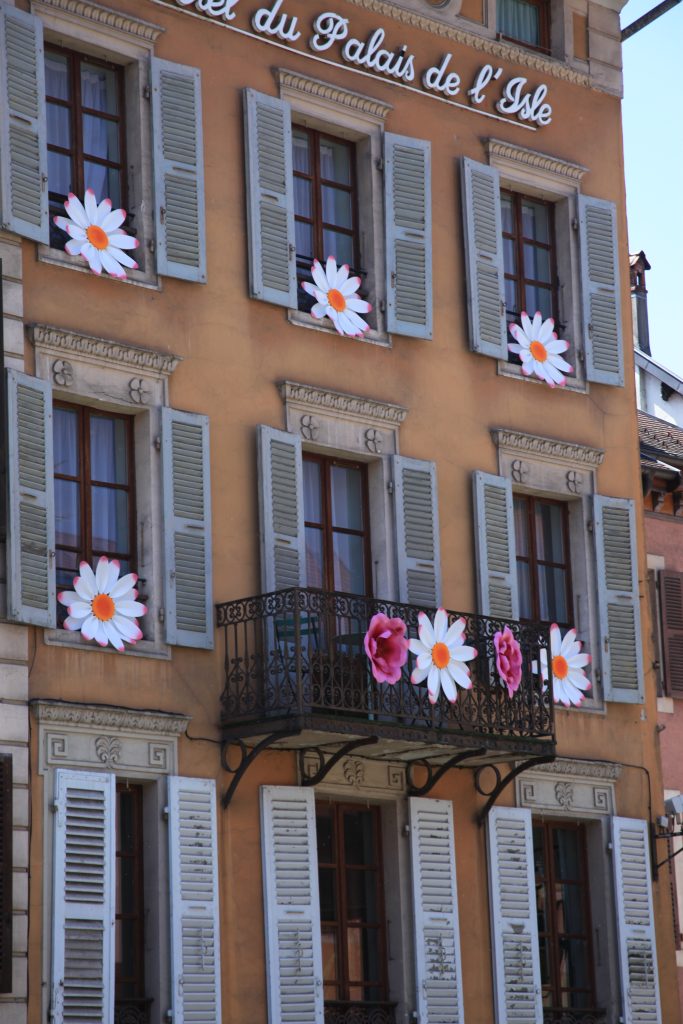
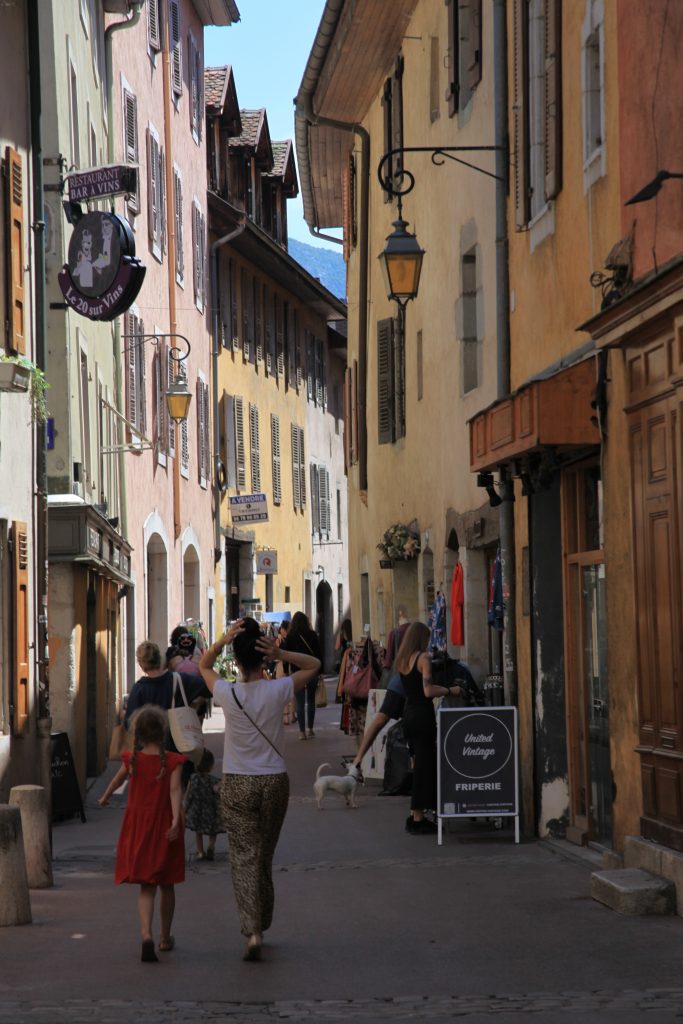
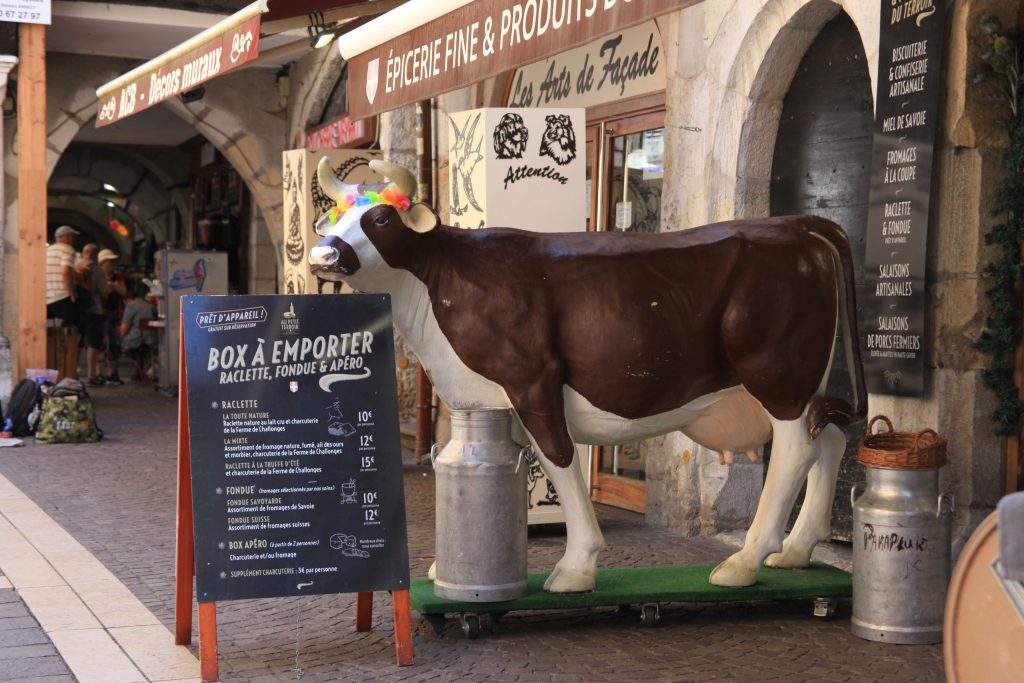
The soft clang of church bells echoes down Rue Sainte-Claire, where 18th-century arcades house fromageries and antique shops. The rainbow blur of flower boxes hanging from canal bridges brushes your view like impressionist brushstrokes. Street mimes in colorful paint, charming window displays, and picturesque views at every corner filled the senses, along with the smells of enticing delicacies. In winter, woodsmoke and the scent of tartiflette drift lazily from a café window framed by snow-dusted shutters on an afternoon.
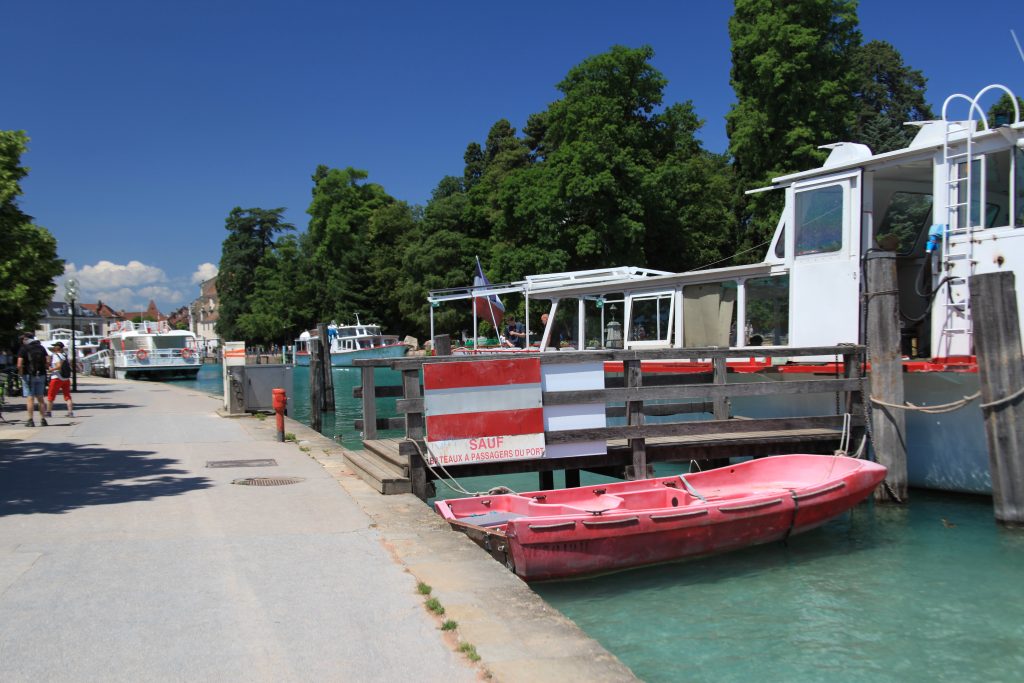
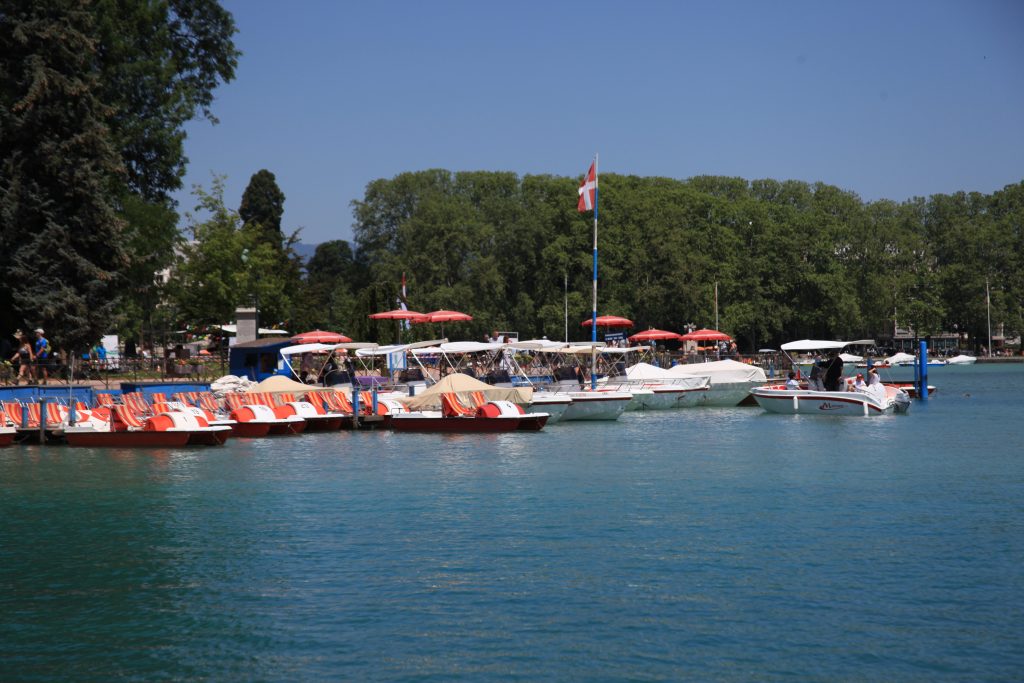
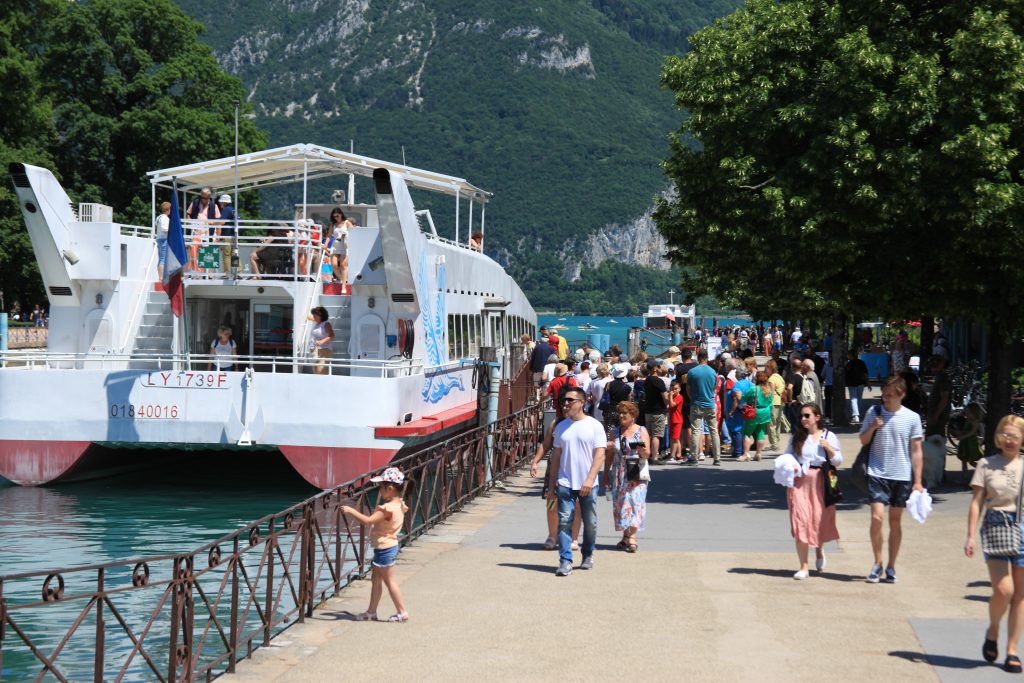
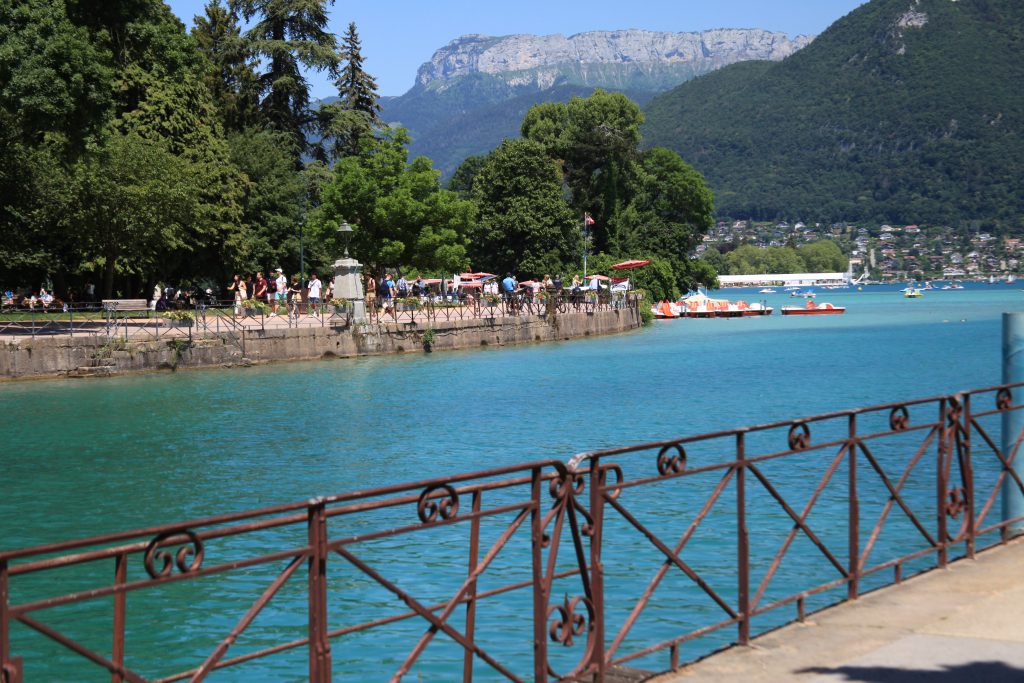
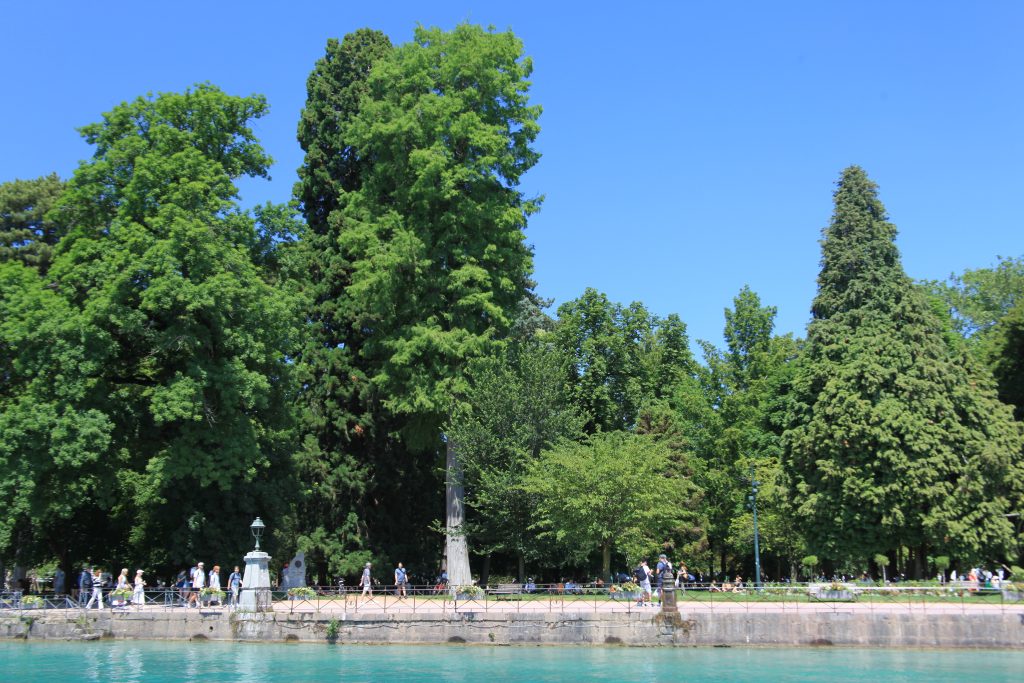
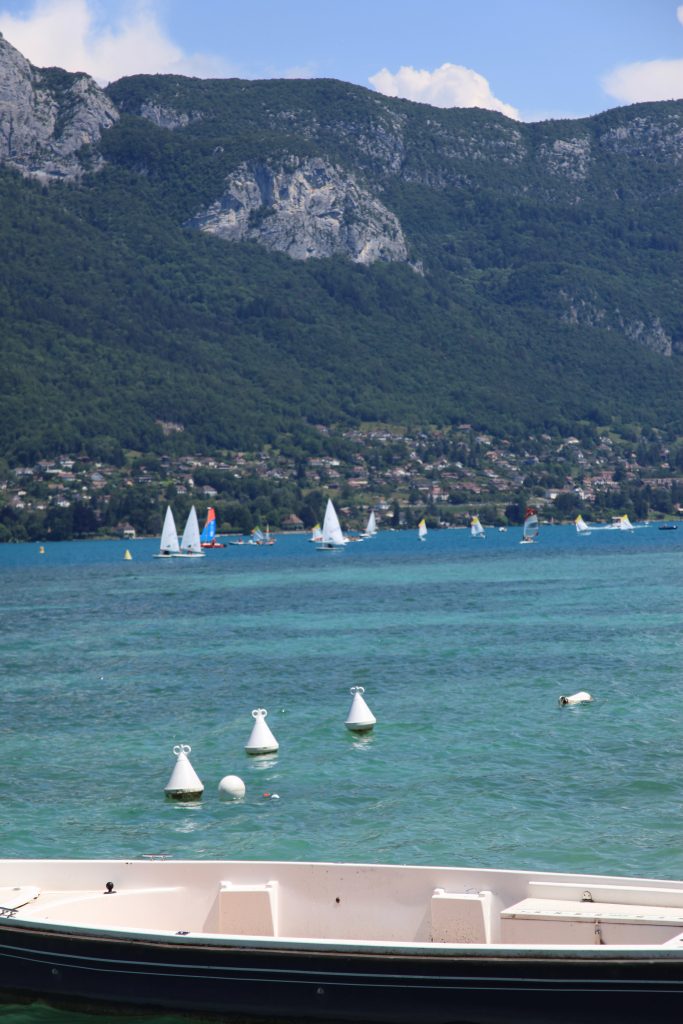
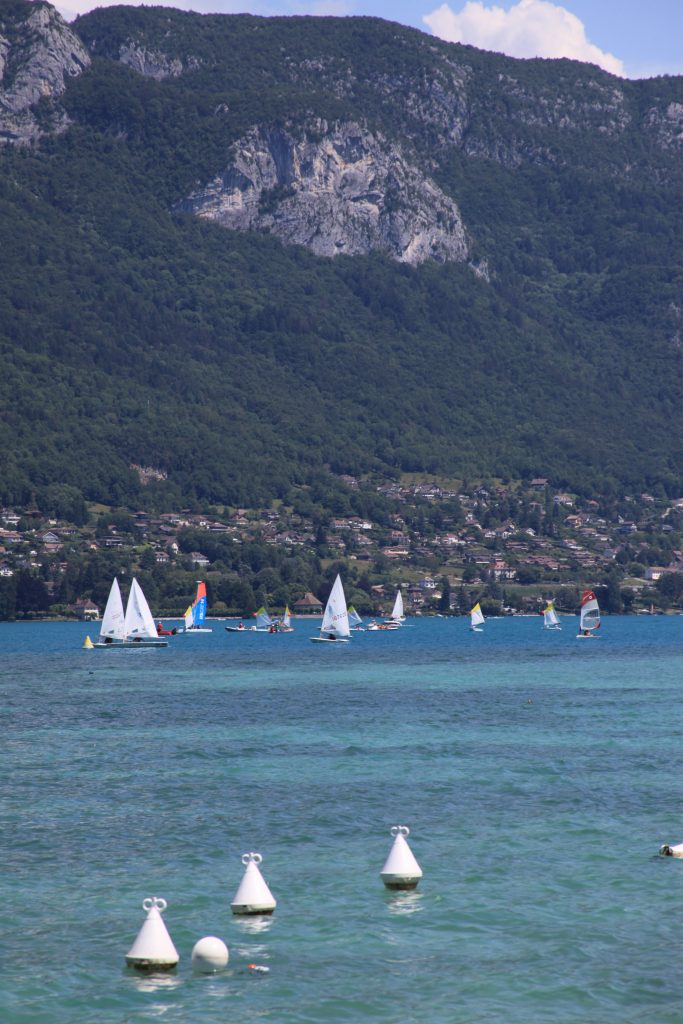
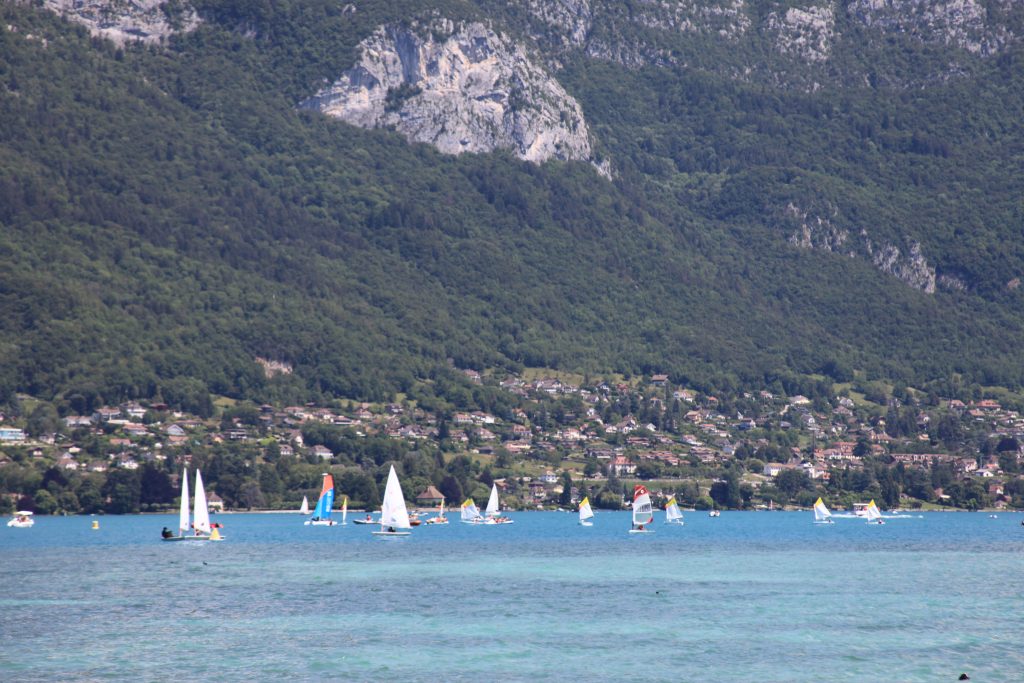
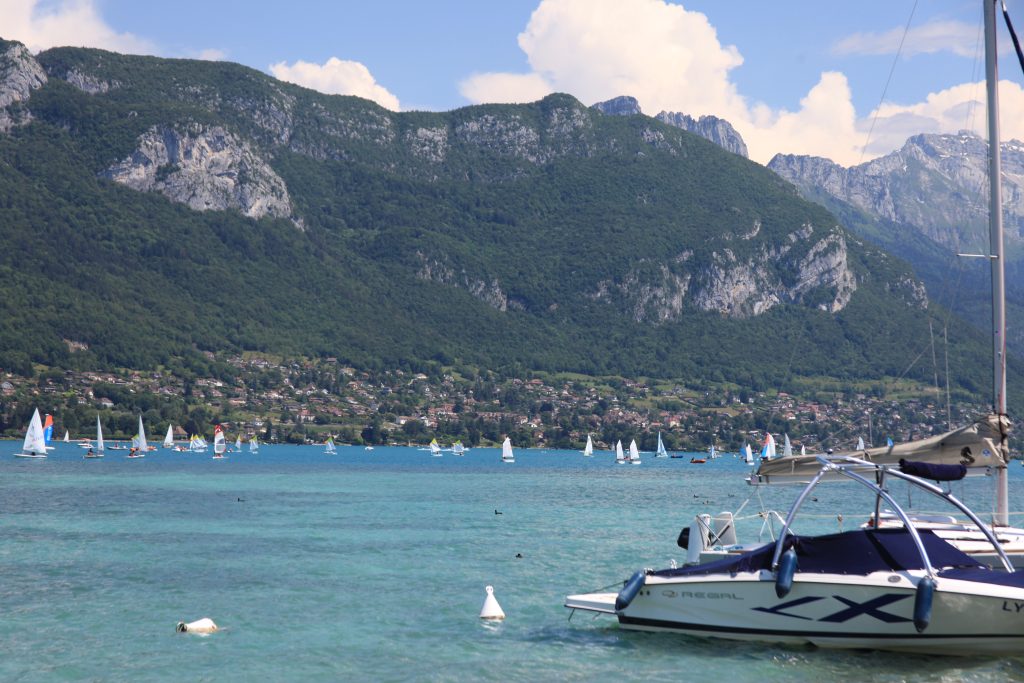
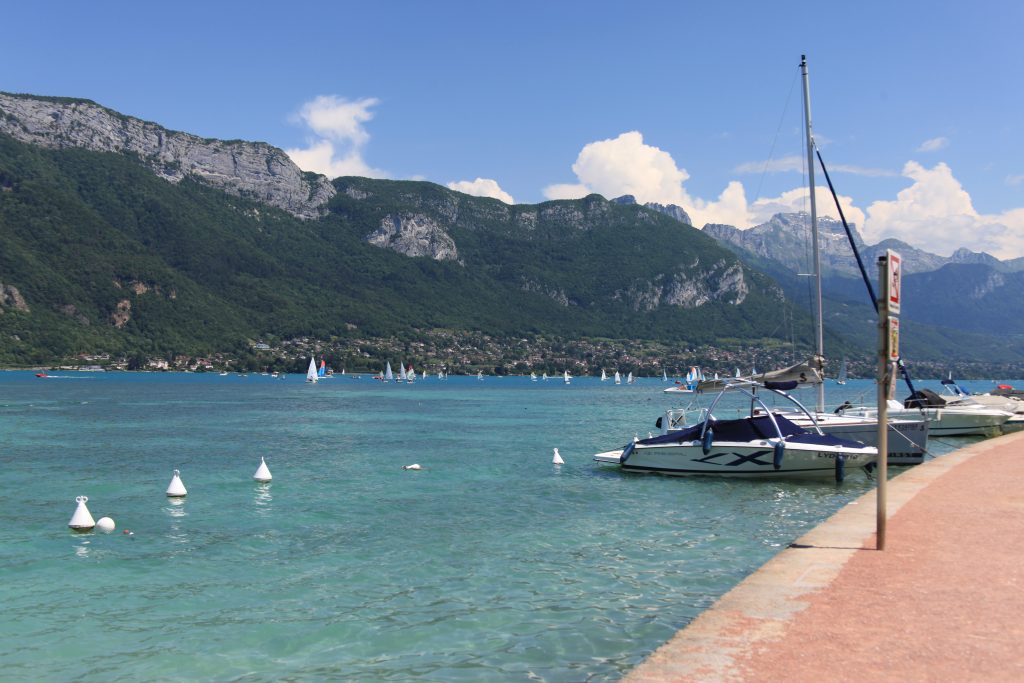
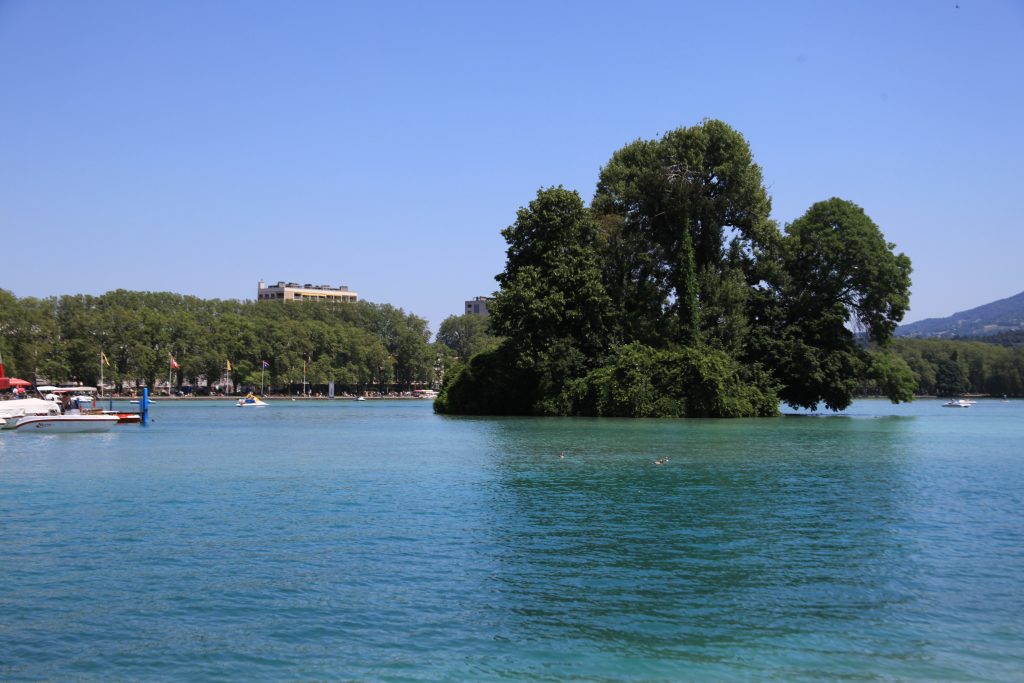
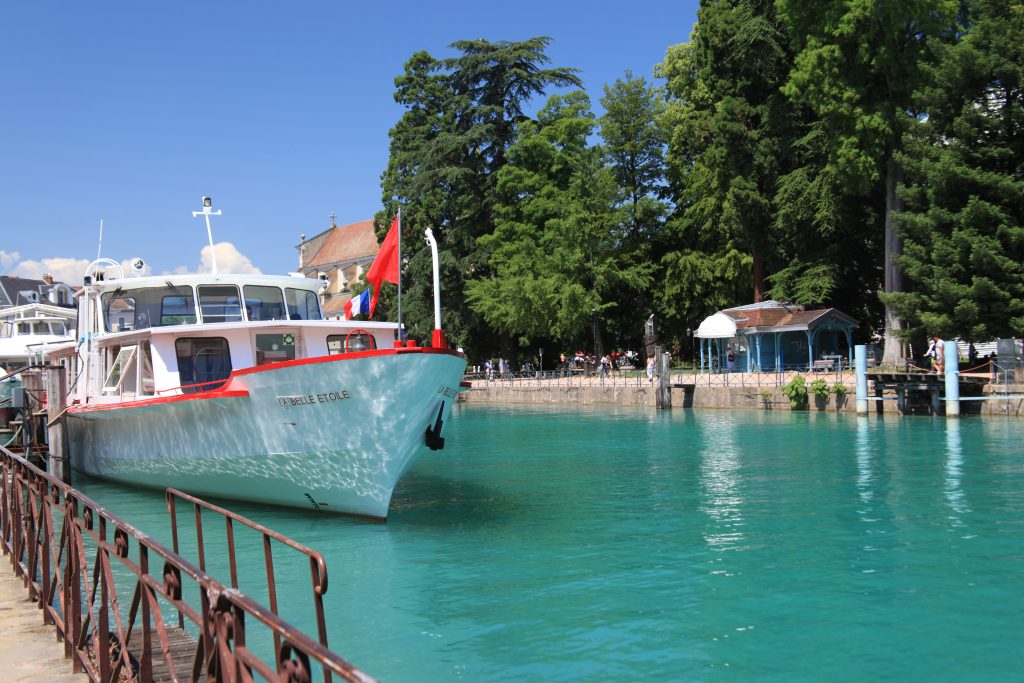
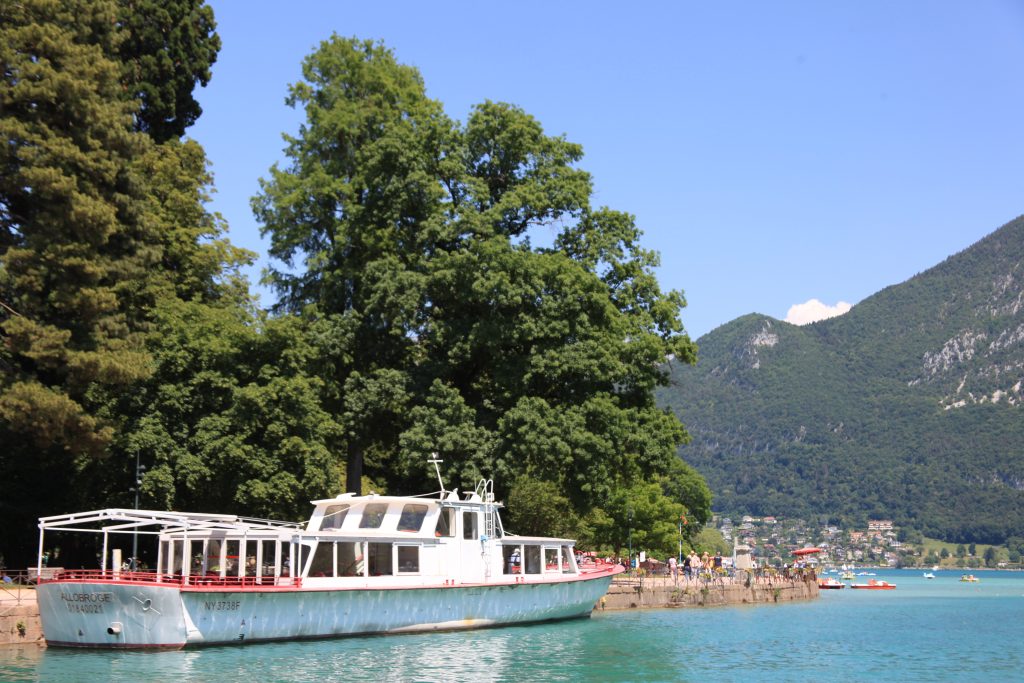
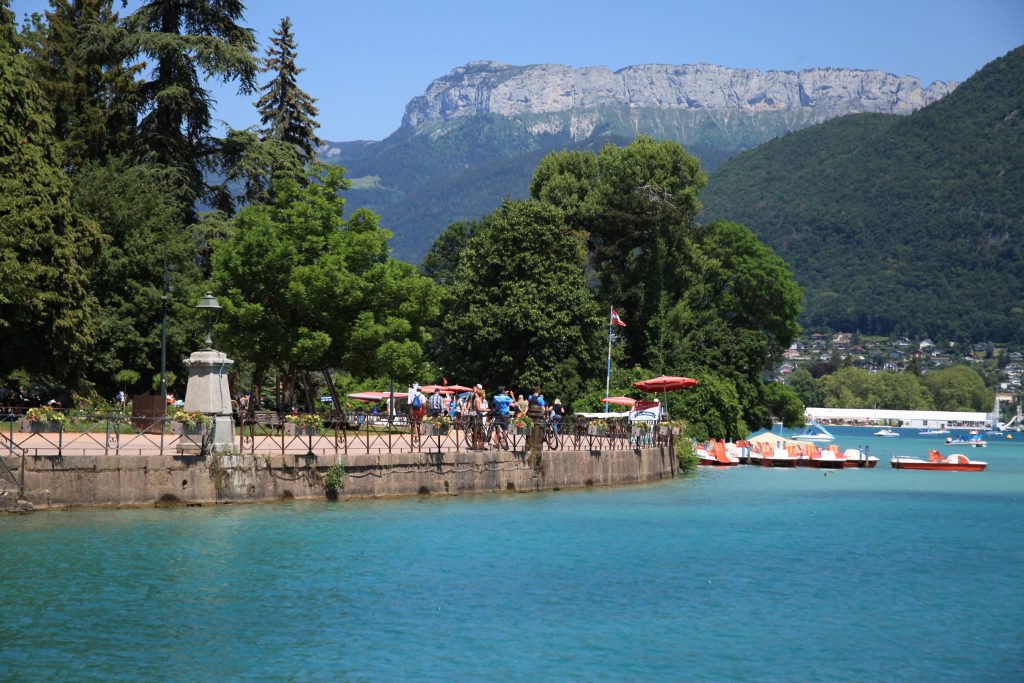
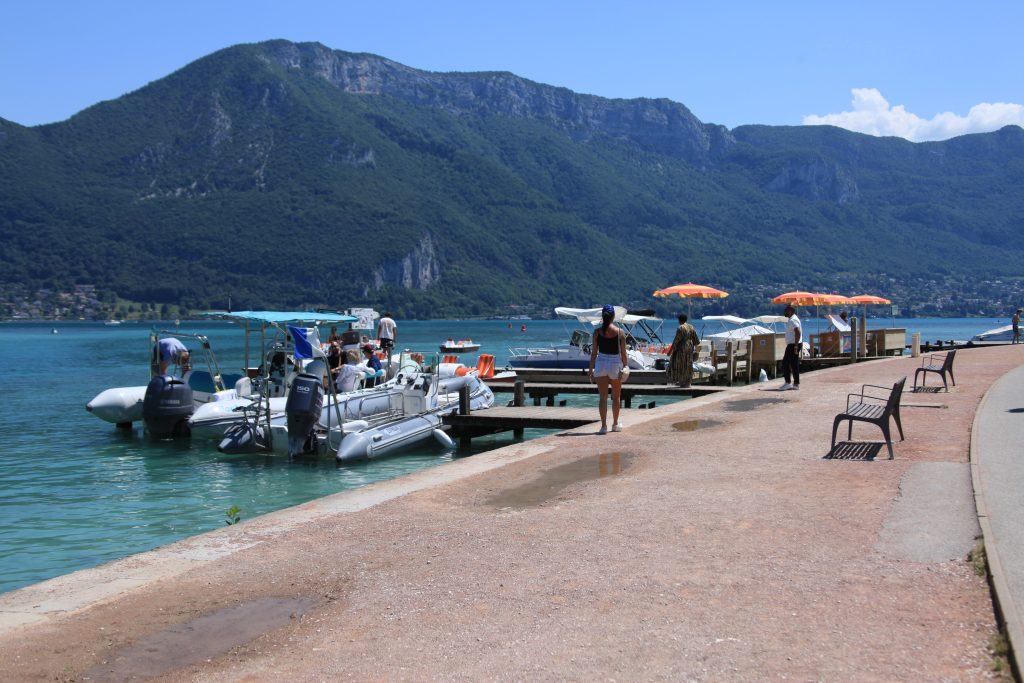
The lake, Lac d’Annecy, famous for its clarity, mirrors snowcapped peaks and small sailboats in perfect equilibrium. The inviting waterfront drew strolling locals with their dogs and visitors basking in the sun.
In every season, Annecy reveals a different mood: alpine briskness in winter, festival brightness in summer, and in autumn, a golden hush along the canals, as if the whole town has turned inward for reflection.
Annecy Today: Still a City of Crossing Currents
Though steeped in story, Annecy remains vibrantly alive. The Annecy International Animated Film Festival, founded in 1960, draws creators from around the world and reaffirms the town’s artistic pulse.
The old château overlooking the city now houses an art and regional museum.
Eco-consciousness is a way of life here: Lac d’Annecy remains among Europe’s cleanest lakes, protected by strict environmental measures. The town balances romantic past and intentional present, reflecting history while modeling mindful modernity.
In Annecy, history flows around your ankles, glints from the lake, echoes off stone walls. You feel it in the rhythm of shutters opening, bells ringing, footfalls over bridges built before the Bourbons ruled.
Where to Stay in Annecy, France
For accommodation in Annecy, your best options are clustered around the Old Town and along the lakefront. The narrow cobblestone streets of Vieille Annecy offer small family-run hotels and guesthouses within walking distance of the canals and restaurants, though rooms are modest and book quickly in summer. These properties put you steps from the historic heart of the city.
The lakefront zone near Parc du Château offers larger hotels with views across the water to the mountains beyond. This area feels less dense than Old Town yet remains walkable to the main attractions. Rooms here offer more space and amenities, with easy access to waterfront paths and beaches where locals swim in summer.
If you prefer quieter streets with reasonable walking access to the main sights, neighborhoods north of Old Town around rue Royale and place Notre-Dame offer solid mid-range hotels that balance proximity with calm. You will pass through quieter residential areas on your way to the center, and the trade-off of an extra five to ten minute walk often means better rates and more availability than Old Town proper.
Budget travelers should consider areas just outside the Old Town walls, where hostels and smaller hotels keep you within easy walking distance of everything. Annecy is compact enough that even the furthest lodging on our list sits only a fifteen minute walk from the most famous sites, so your location choice matters less than it would in a larger city.
Recommended Reading
Fiction
- The Winter Sea by Susanna Kearsley
A historical novel weaving past and present on the coast of France, rich in atmosphere and memory. - The Little Paris Bookshop by Nina George
Though set mostly along the Seine, it evokes the same emotional geography of riverside French towns. - The Elegance of the Hedgehog by Muriel Barbery
A philosophical novel that captures the interior life and secret poetry of French daily life.
Non-Fiction
- War, Diplomacy and the Rise of Savoy, 1690-1720 by Christopher Storrs
An academic study analyzing how Savoy emerged as a significant European power through strategic warfare and diplomatic maneuvering at the turn of the 18th century. - France: A History from Gaul to de Gaulle by John Julius Norwich
A sweeping, witty chronicle that places Annecy’s timeline within the larger currents of French identity. - A History of Savoy: Gatekeeper of the Alps by John Dormandy
A comprehensive history of Savoy tracing its evolution from a medieval Alpine territory to a European dynastic power. - The Road from the Past: Traveling Through History in France by Ina Caro
A transportive guide for historically curious travelers, with chapters that evoke the magic of towns like Annecy.
Tours to Consider
- Private 2-hour Walking Tour of Annecy with official tour guide
- Explore Annecy in 60 minutes with a Local