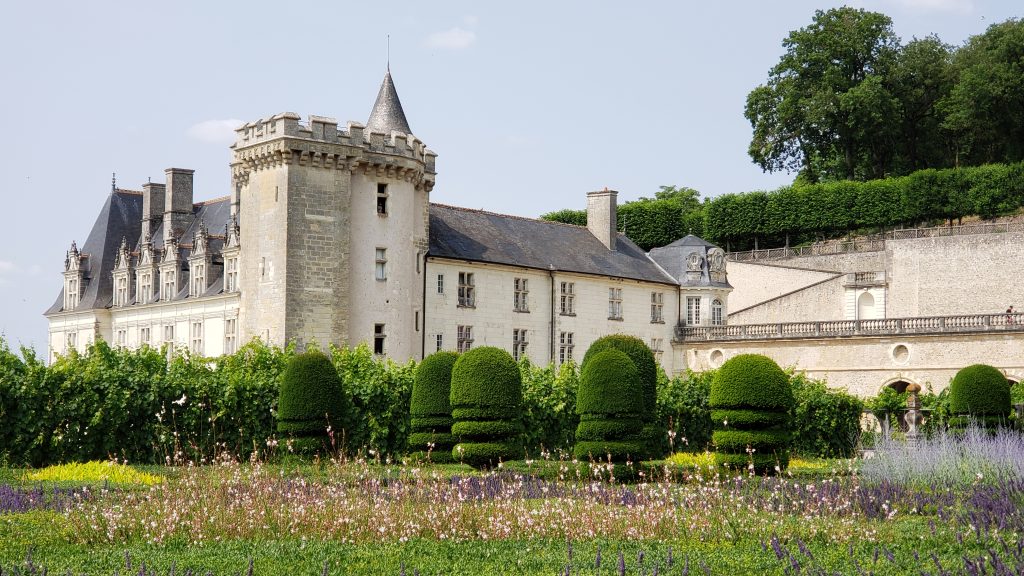
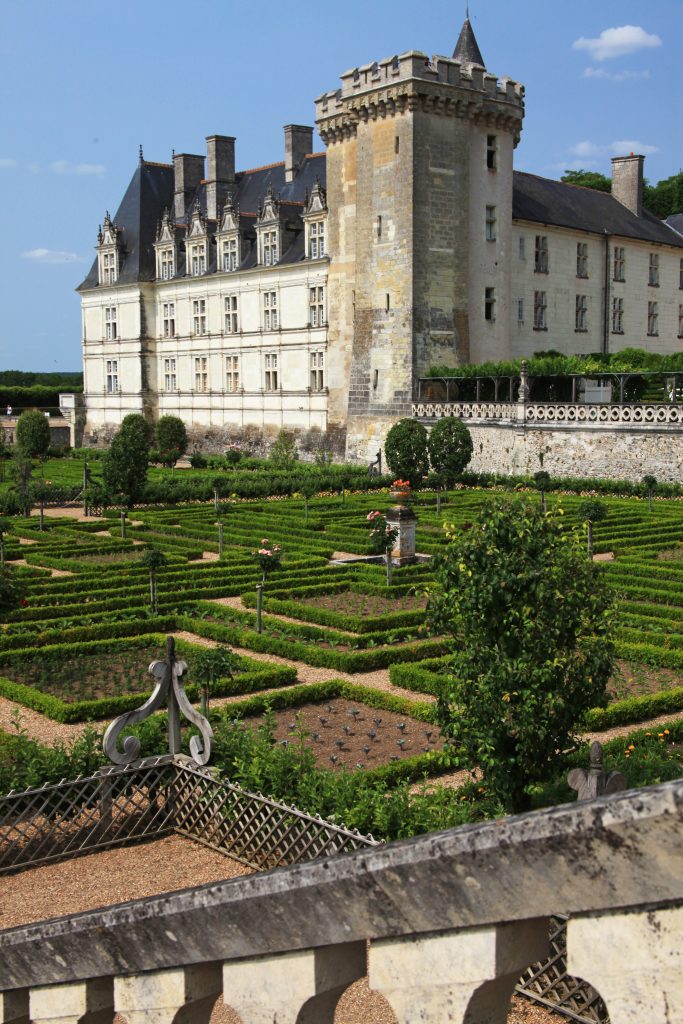
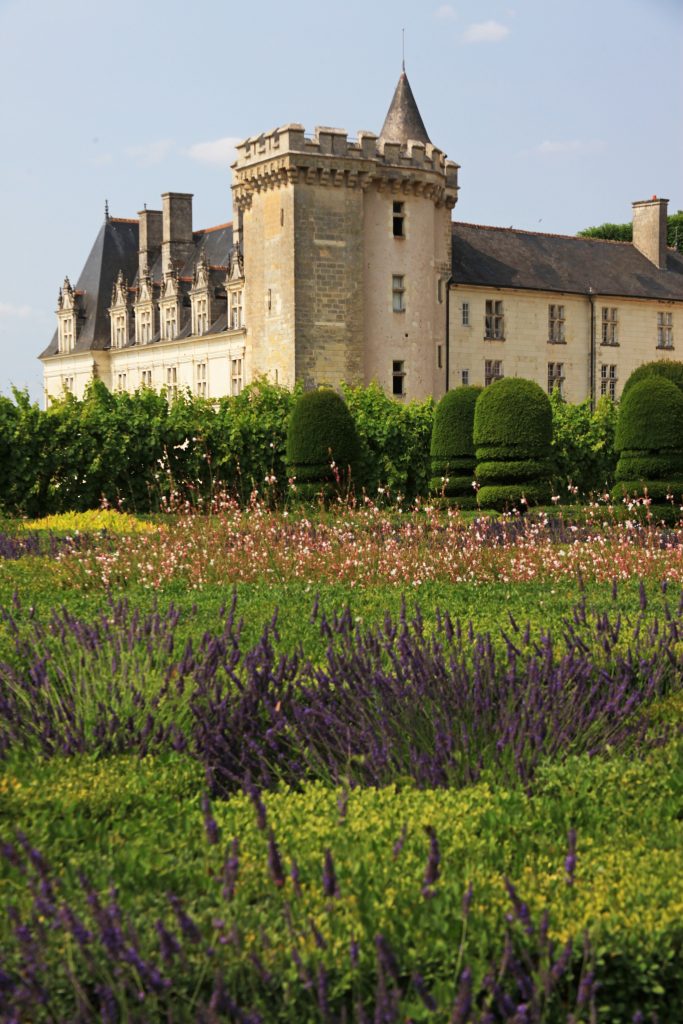
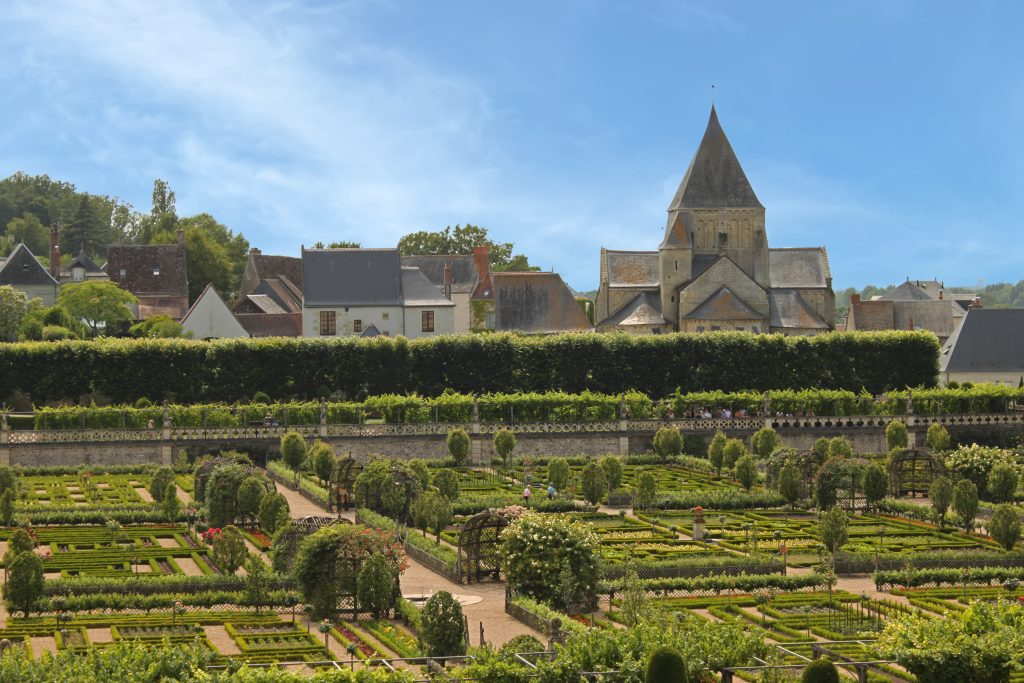
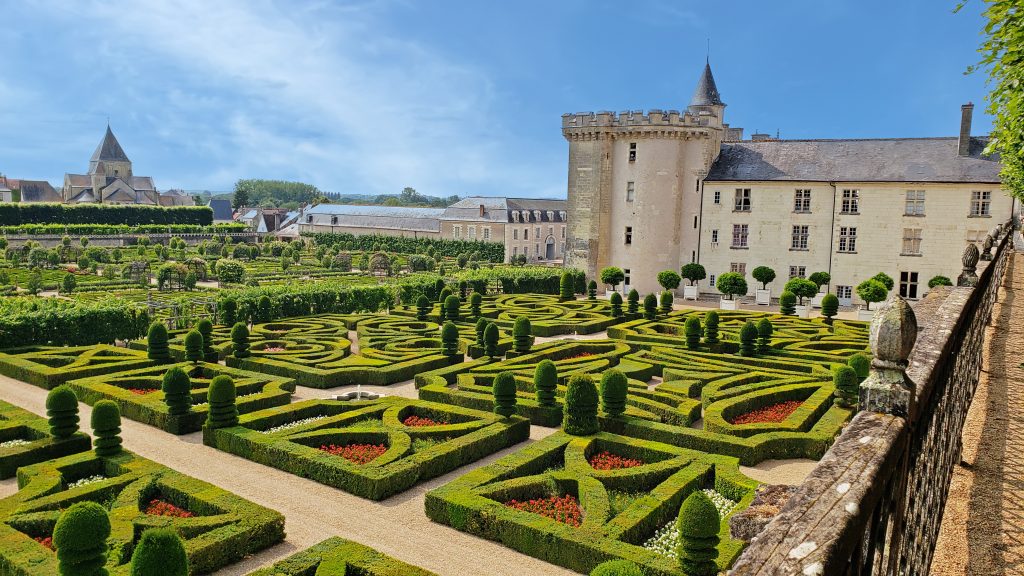
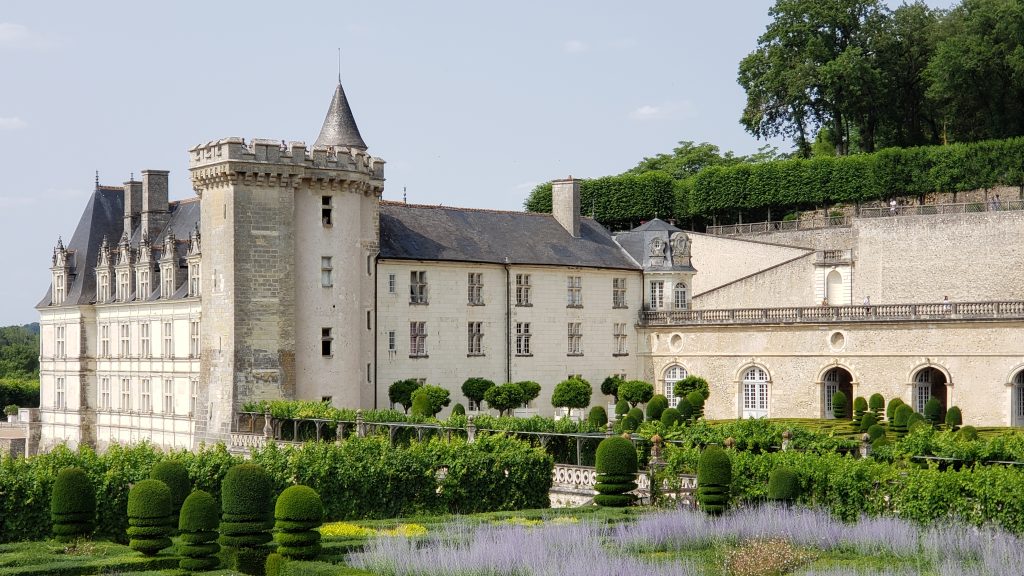
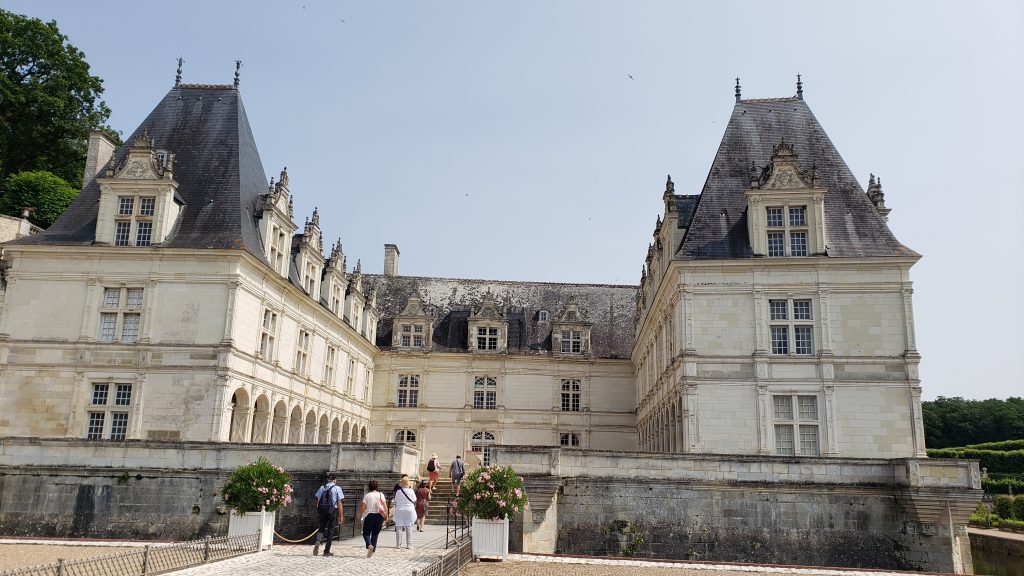
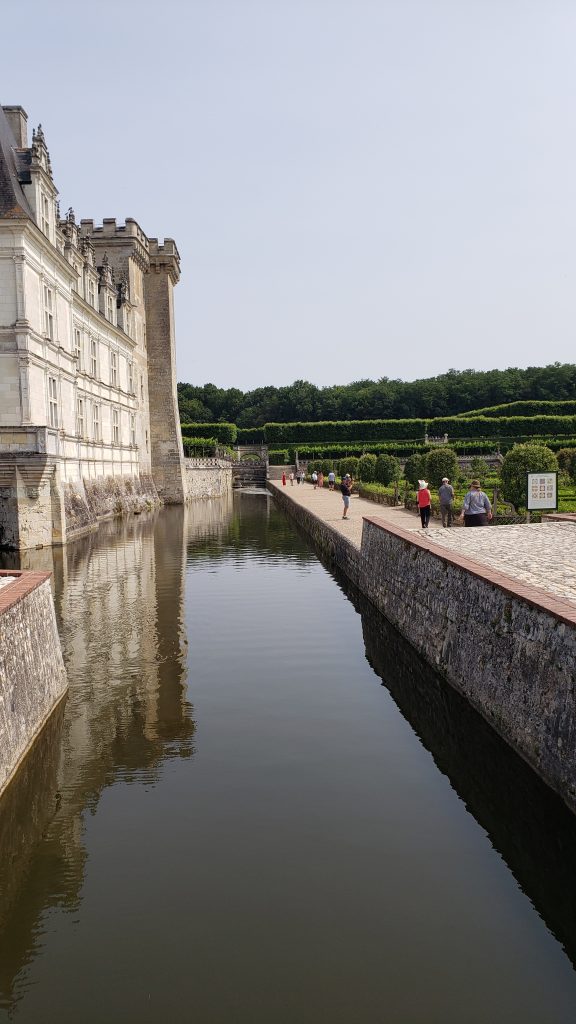
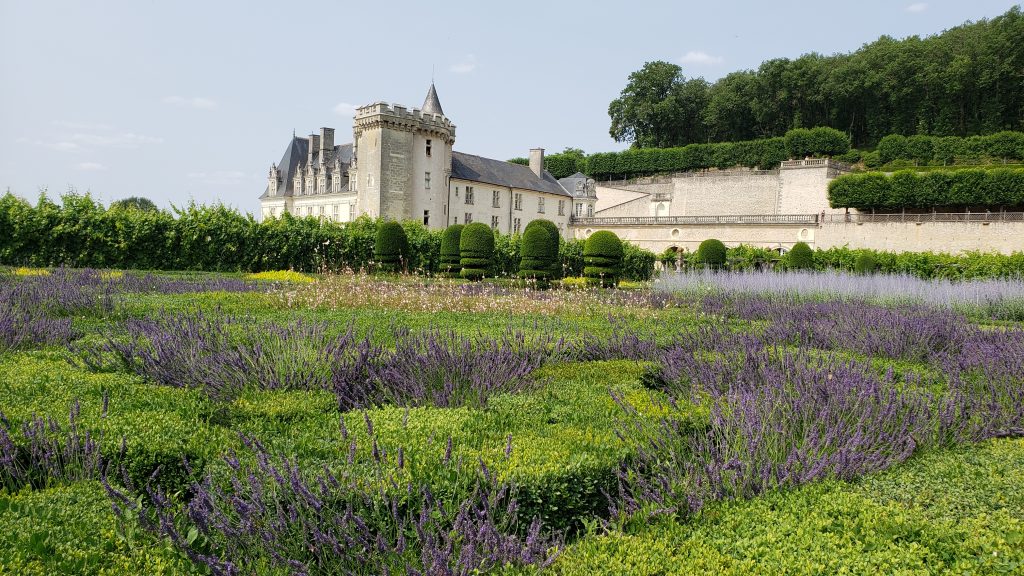
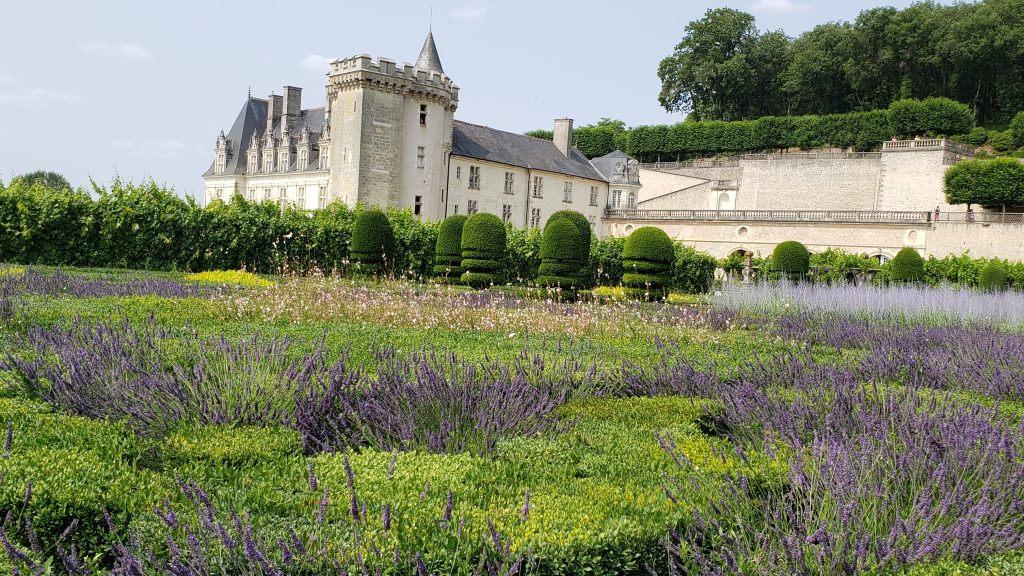
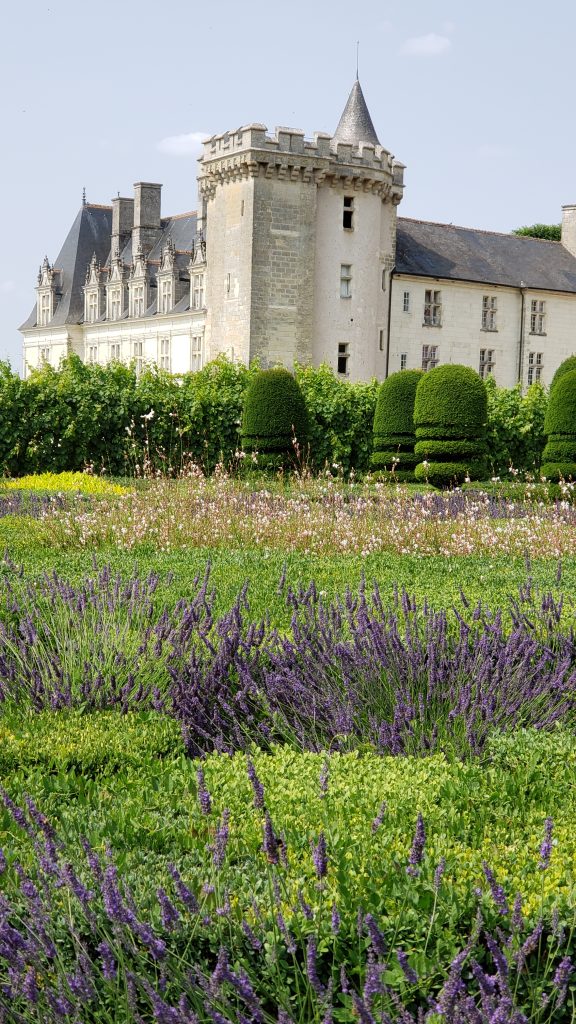
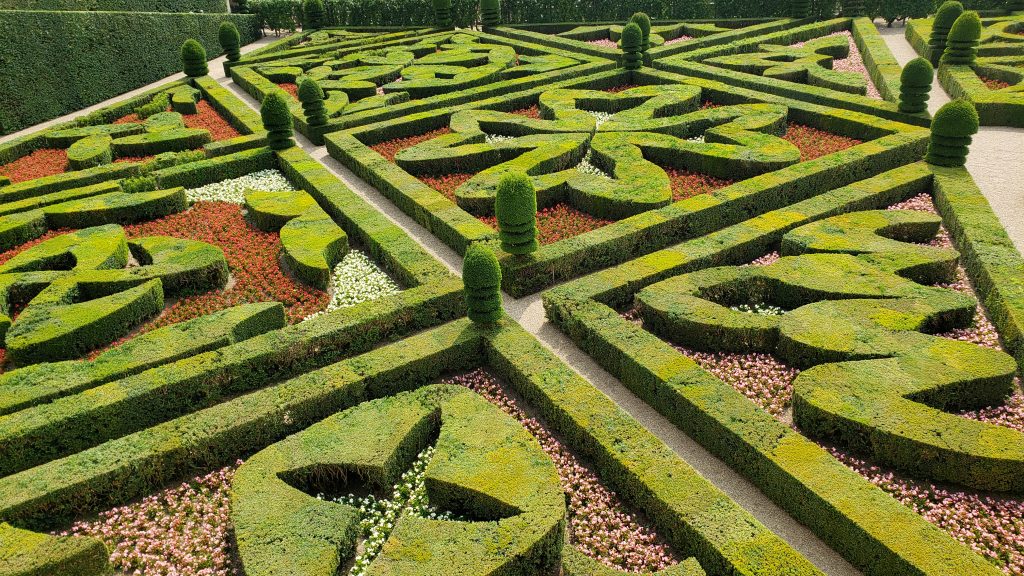
At first glance, the Château de Villandry appears as pure symmetry and serenity, a honey-stoned manor set within the gentle curve of the Loire River. But step through the gates and descend into the parterre gardens, and you enter one of the most breathtaking conversations between nature and design ever committed to earth.
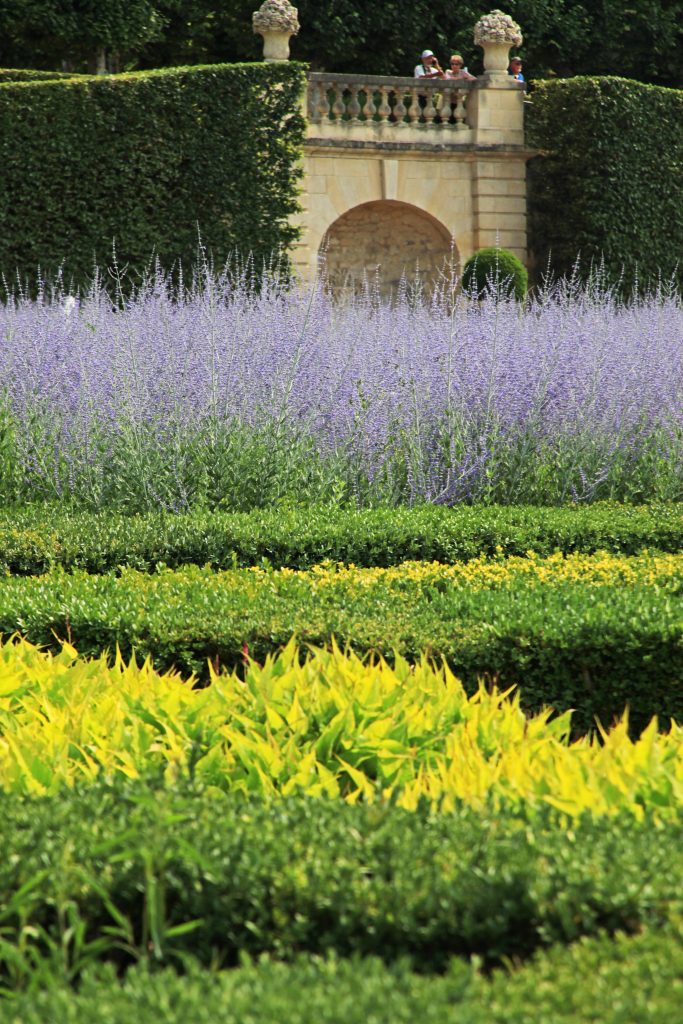
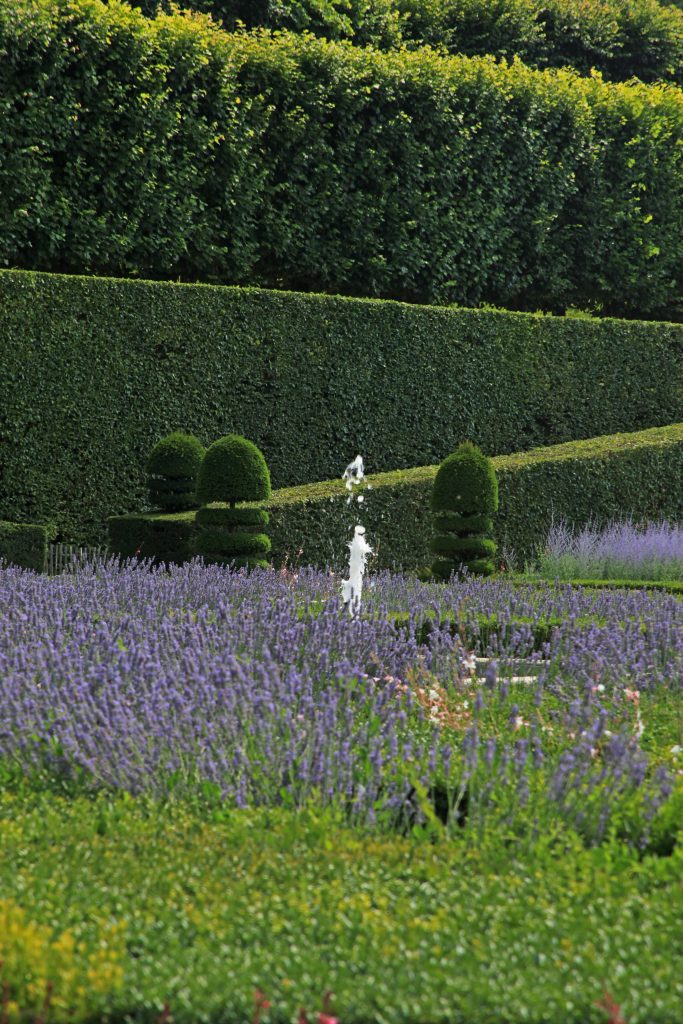
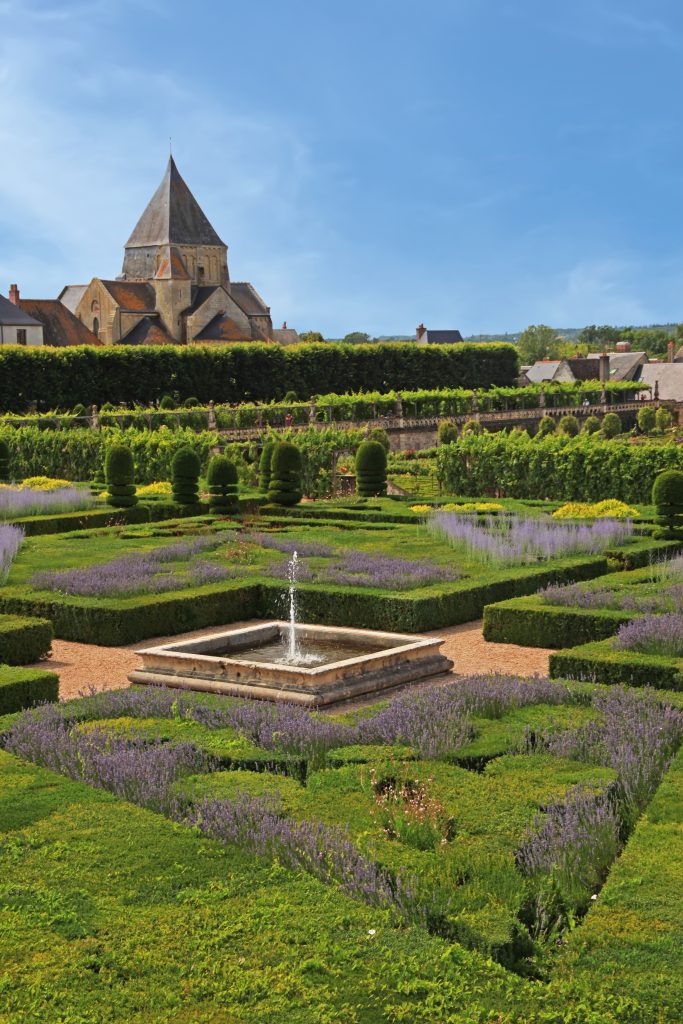
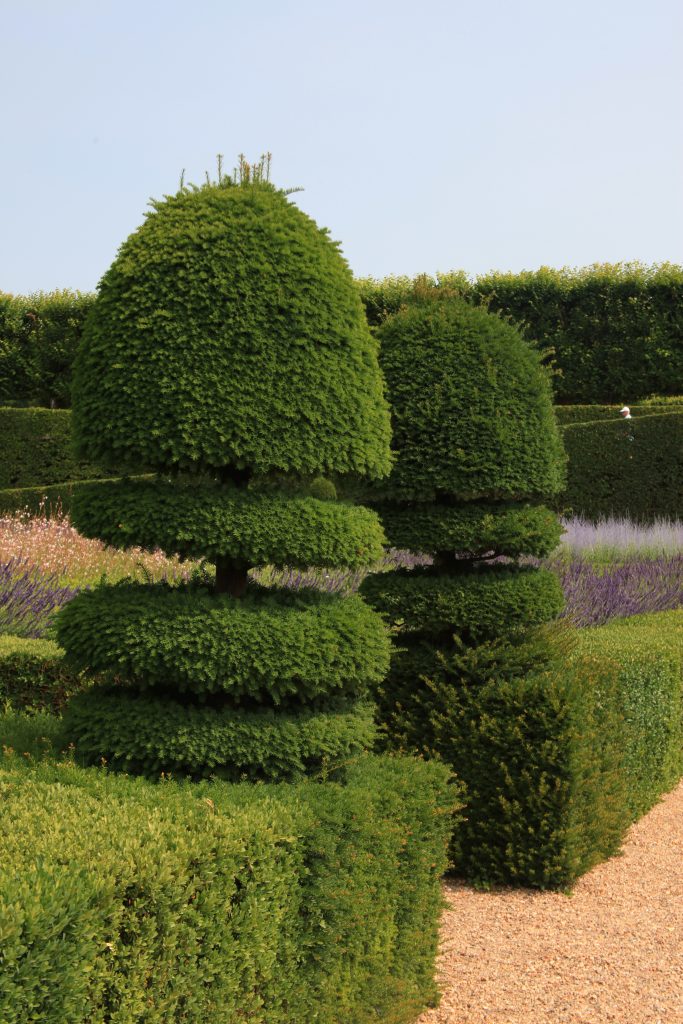
Here, order transforms into poetry. Time shapes itself in topiary. And the whisper of sixteenth-century footsteps echoes almost audibly between rows of lavender and clipped boxwood.
A Brief History of the Château
Though the gardens are Villandry’s undisputed stars, the château itself has deep historic roots.
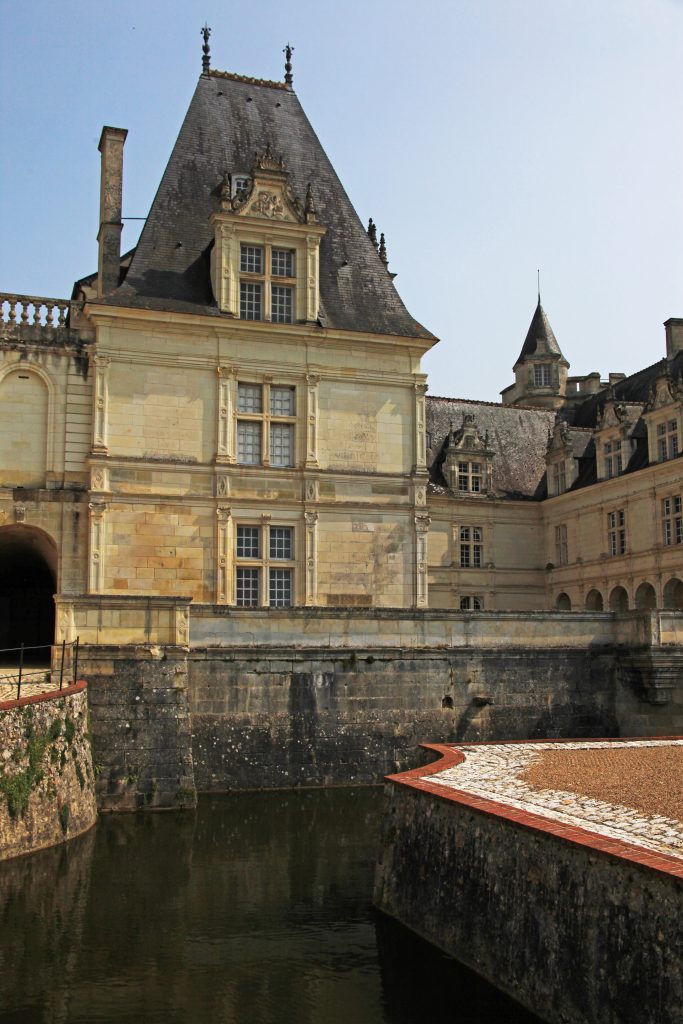
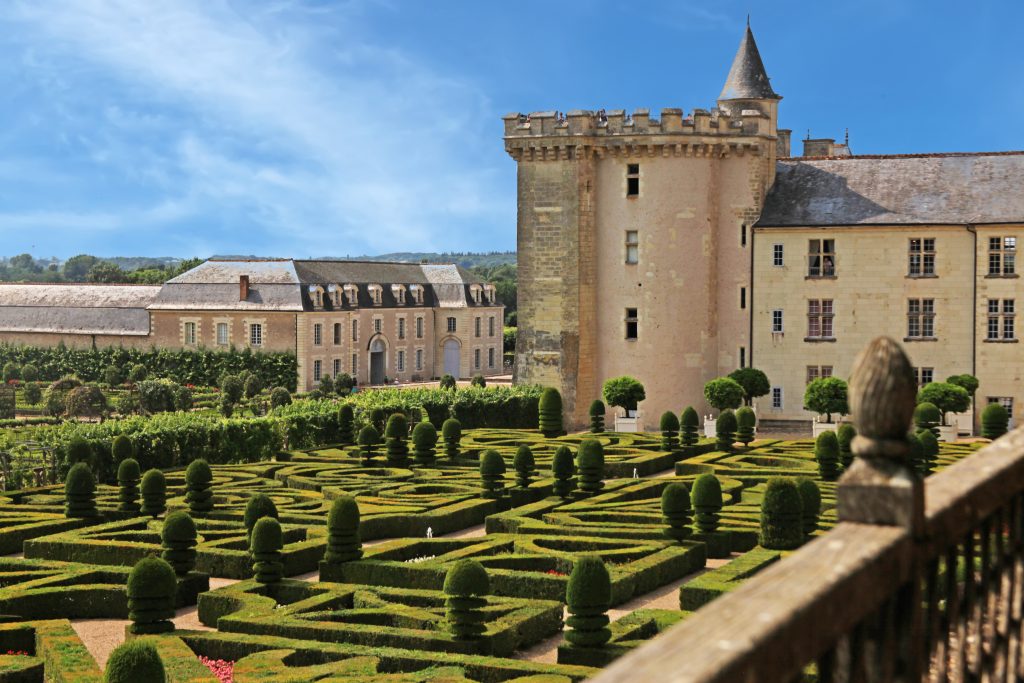
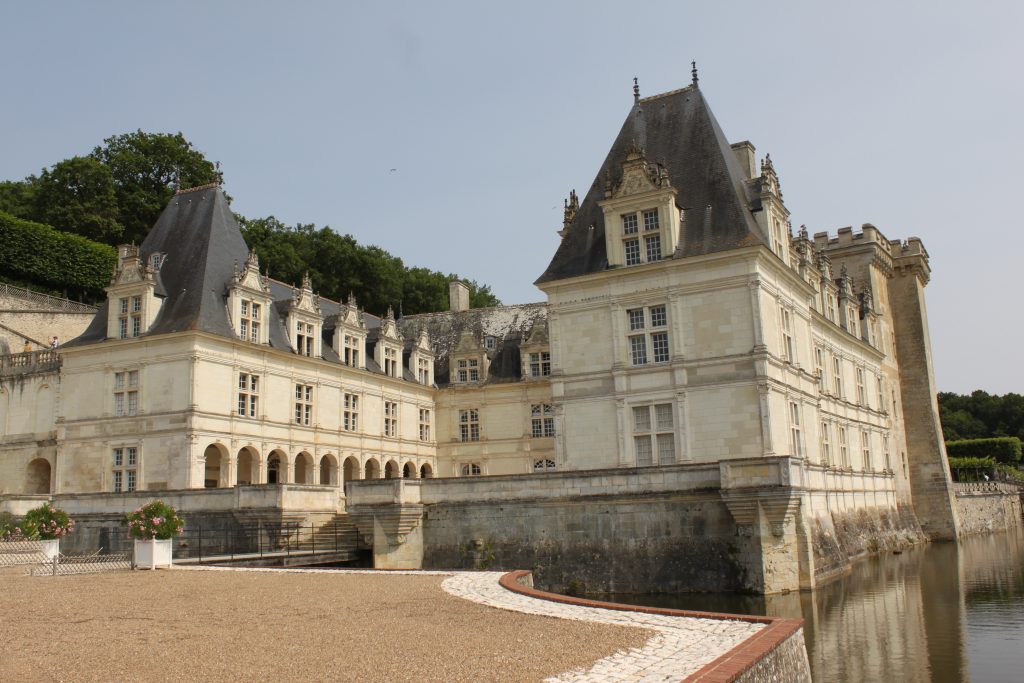
The current structure was built in 1532 by Jean Le Breton, finance minister to King François I, who demolished an earlier medieval fortress on the site but preserved its keep, where King Philip Augustus of France once met Richard the Lionheart to negotiate peace in the 12th century.
Le Breton built a fine example of French Renaissance architecture—restrained and harmonious, reflecting humanist ideals of proportion and light. Over the centuries, the estate changed hands repeatedly, suffering neglect during the French Revolution and alterations throughout the 18th and 19th centuries.
But it was in 1906 that Villandry was reborn—when Dr. Joachim Carvallo, a Spanish-born physician and philosopher, purchased the estate with his American wife, Ann Coleman. Together, they abandoned careers in science to restore the château and recreate its Renaissance gardens using archival plans and meticulous research. Their legacy still blooms today.
The Gardens: A Living Manuscript of Renaissance Order
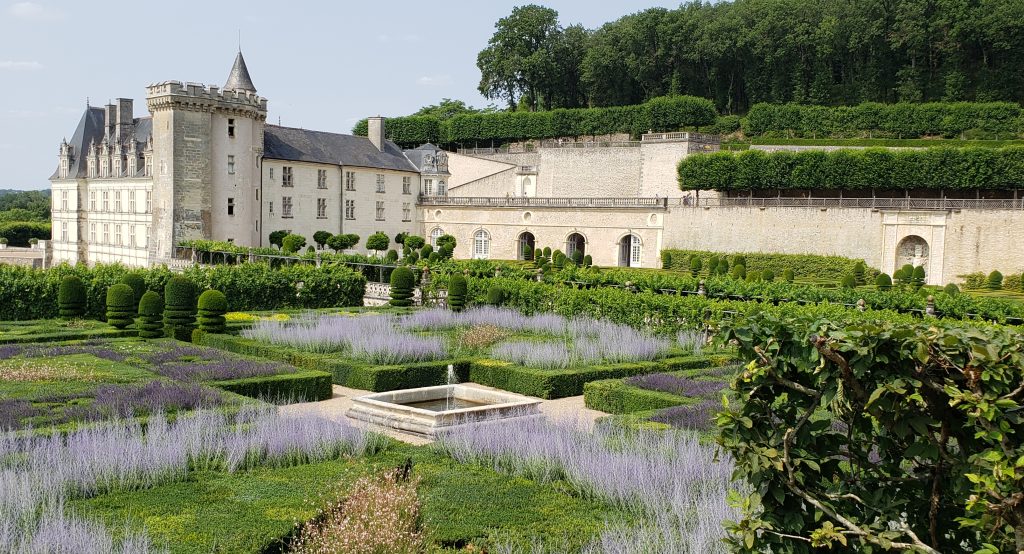
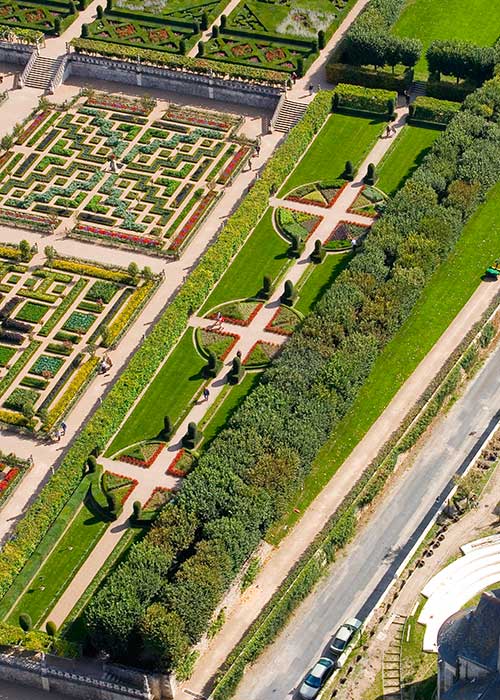
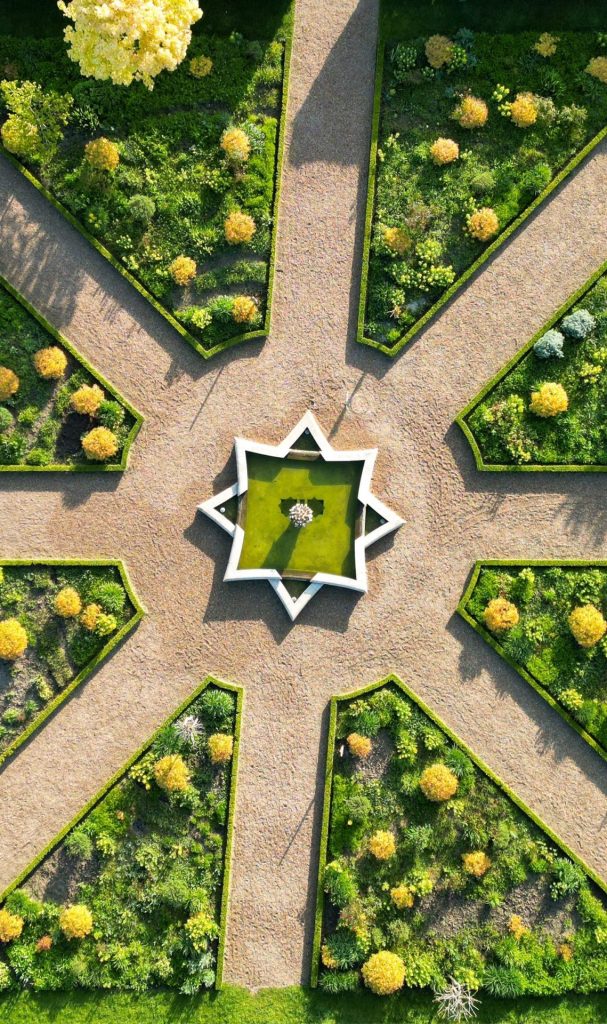
Step beyond the stone balustrades into a six-level world of gardens, each with its own mood, palette, and philosophy. Villandry’s gardens are not mere decoration—they are coded language, expressing love, morality, abundance, and faith through their shape, symmetry, and color.
The Ornamental Garden (Love Garden)
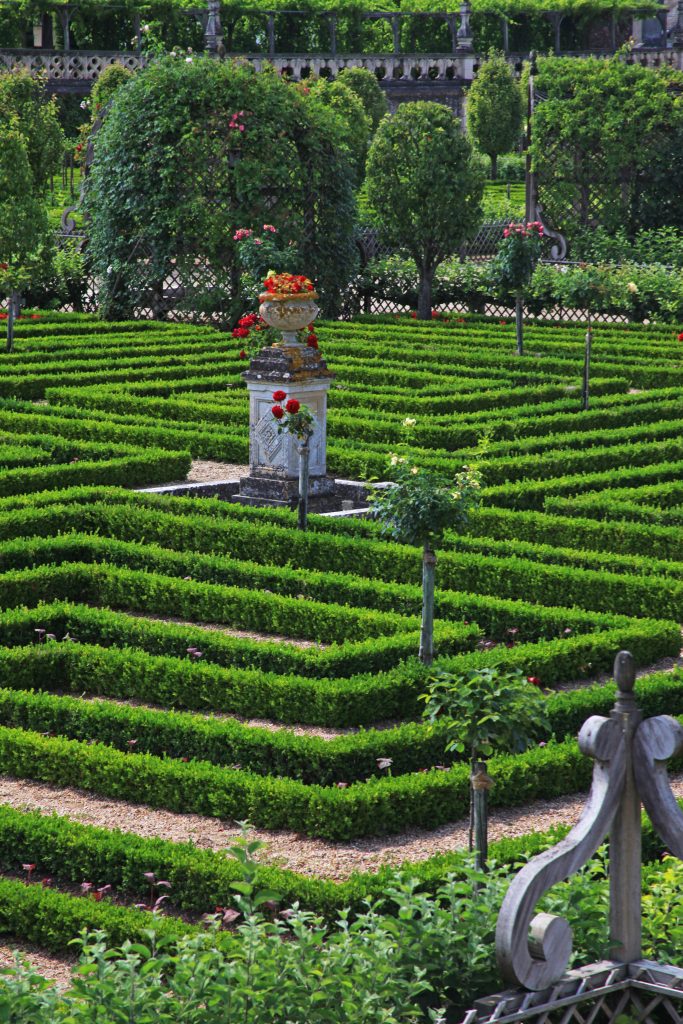
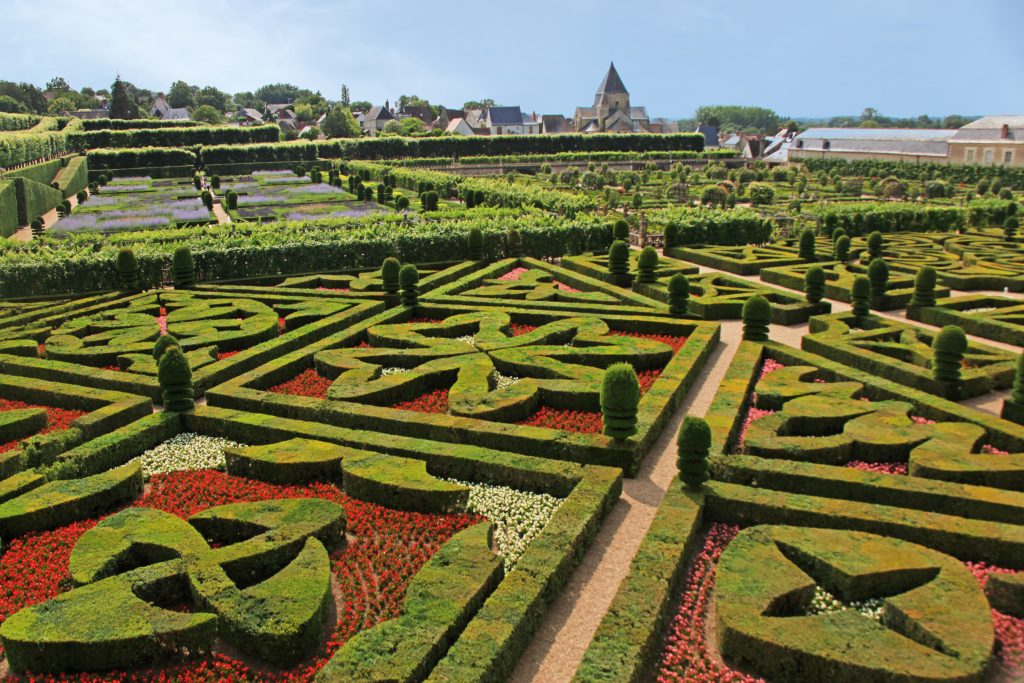
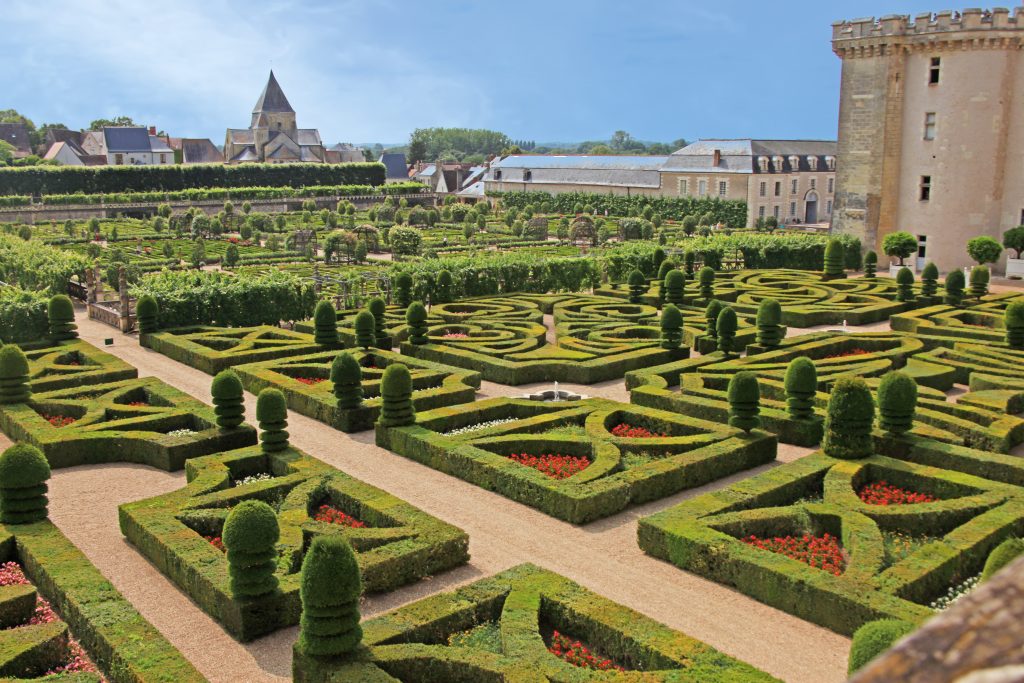
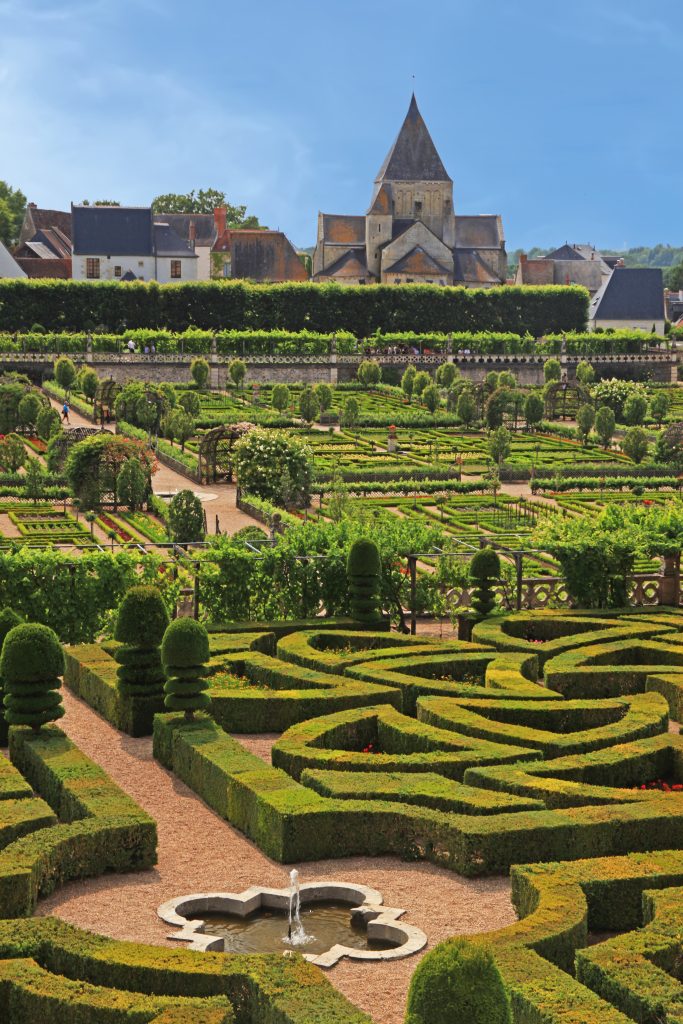
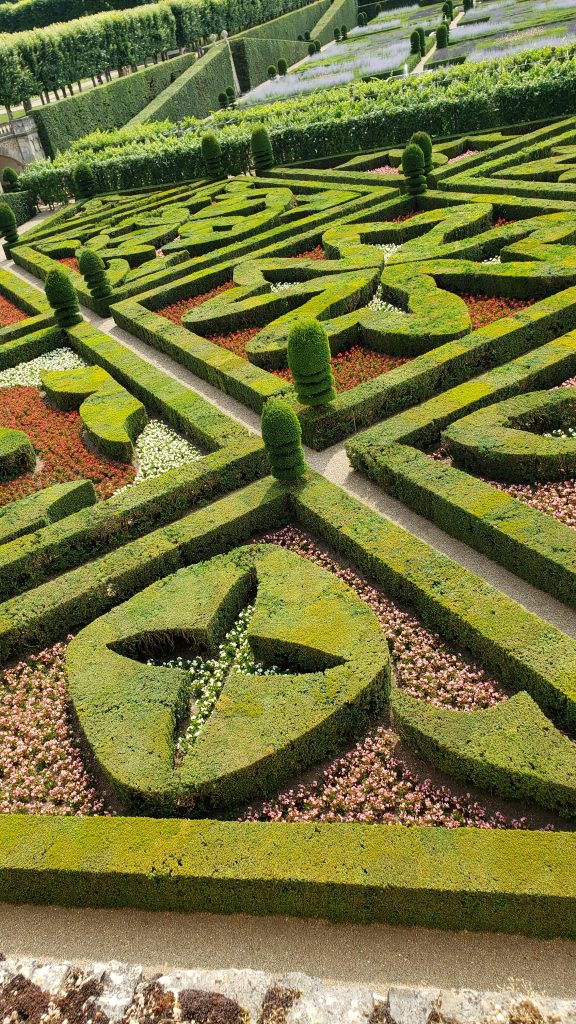
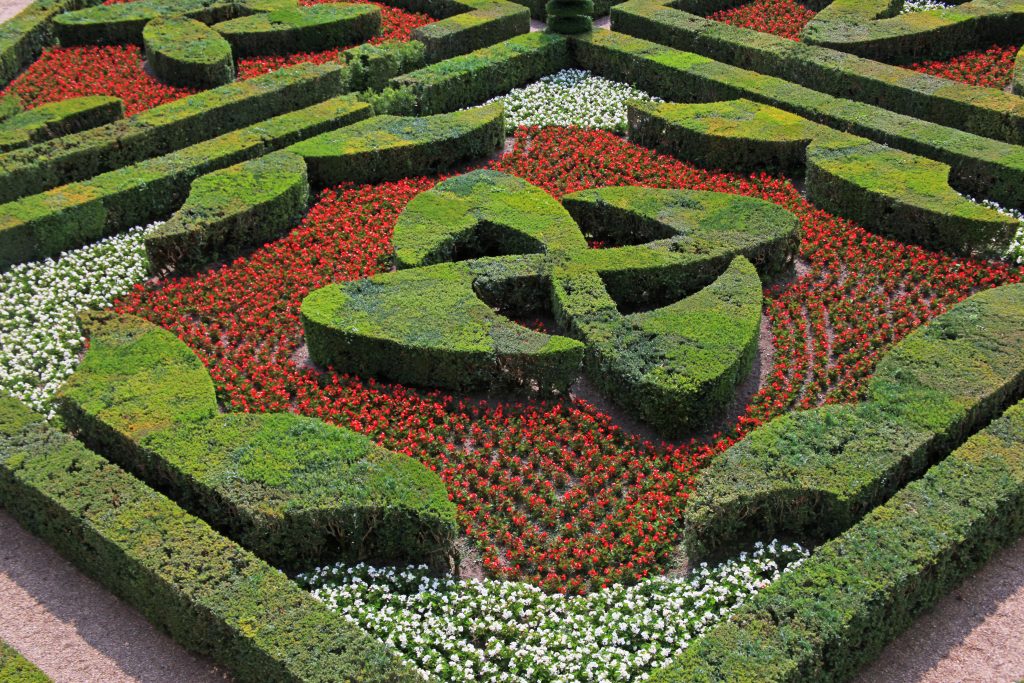
Perhaps the most photographed and symbolically rich, this formal parterre is divided into four quadrants, each expressing a different kind of love: tender, passionate, fickle, and tragic.
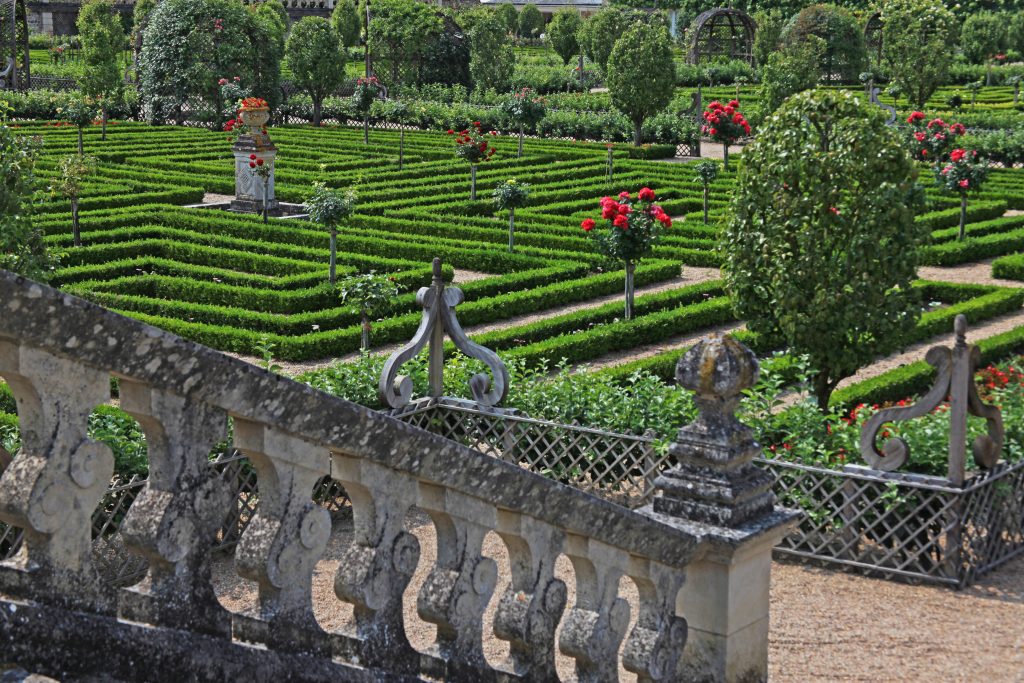
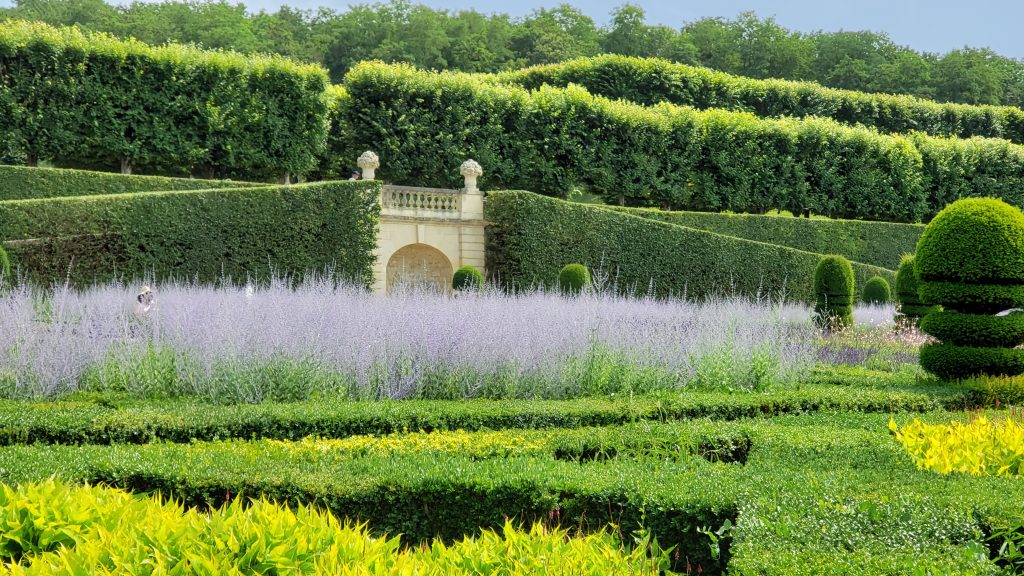
Boxwood hedges form hearts, scrolls, daggers, and flames, while seasonal flowers in red, pink, and white deepen the visual message. A bird’s-eye view from the château windows reveals the garden as a tapestry woven from devotion and drama.
The Potager (Kitchen Garden)
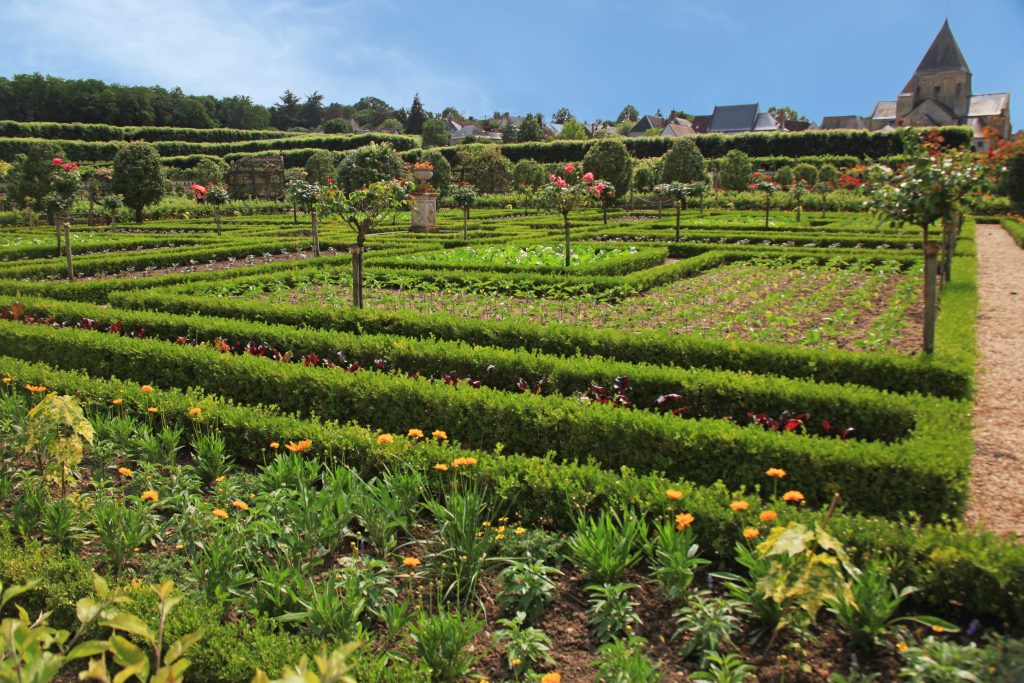
No humble vegetable patch, this is a checkerboard of edible splendor. Cabbages, lettuces, chard, leeks, and tomatoes are planted in geometric beds edged with herbs and box hedging, a tradition inspired by medieval monastery gardens.
Each season brings a new riot of color and texture, crafted for both sustenance and aesthetic pleasure. It’s art meant for the eyes alone, though sometimes edible too.
The Water Garden
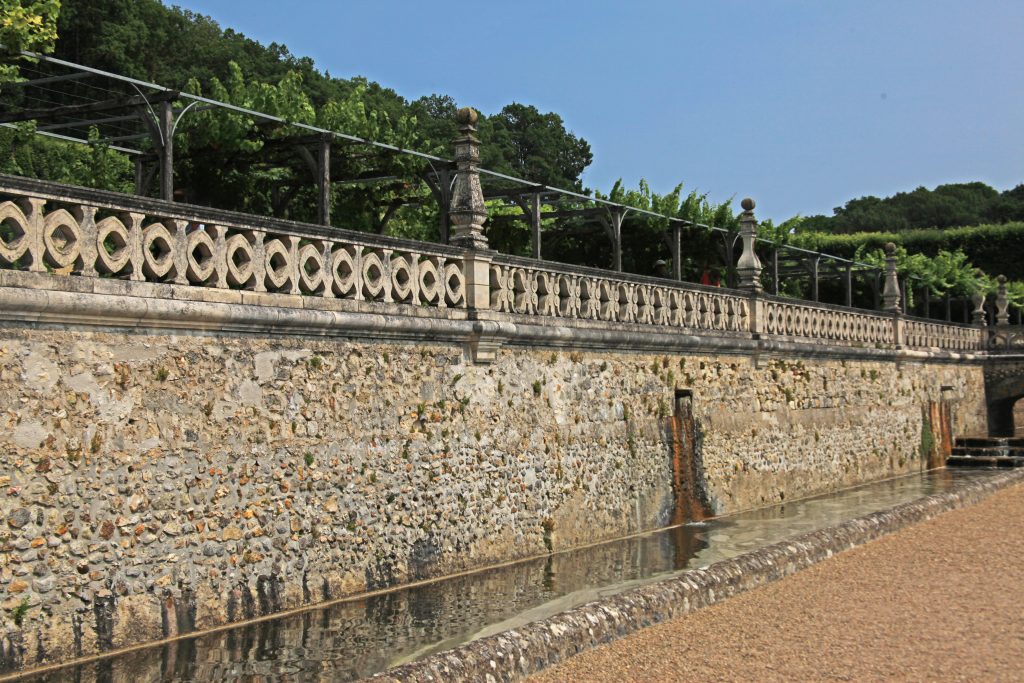
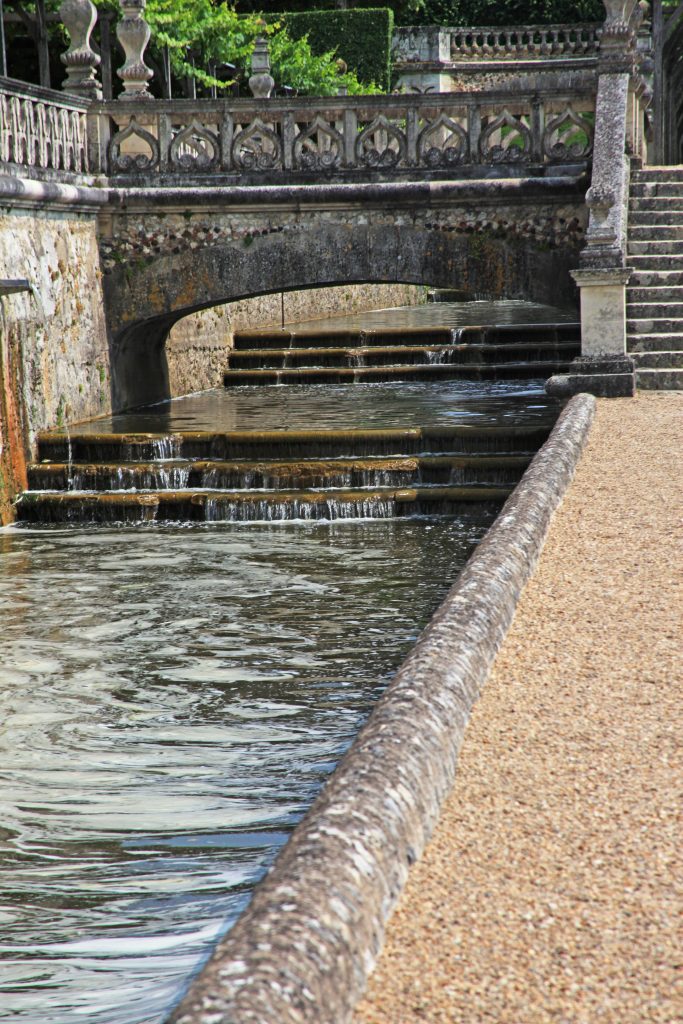
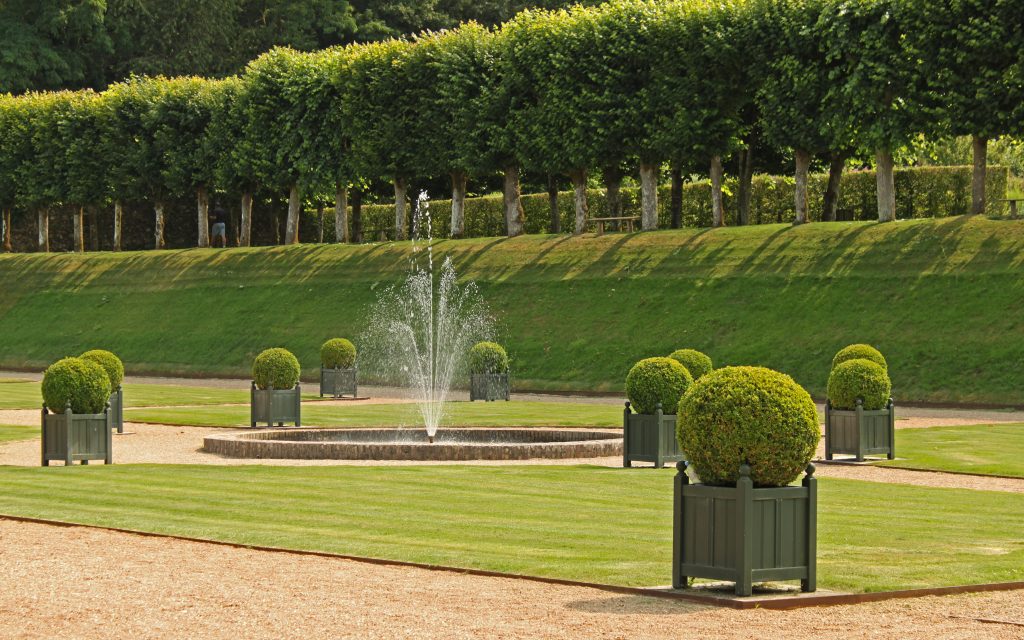
At the lowest terrace, a tranquil mirror pool shaped like a Louis XV-style cross sits flanked by grass lawns and lime trees. This is the space of reflection, literally and spiritually—the Renaissance ideal of calm contemplation made manifest in water and sky.
The Herb Garden and Maze
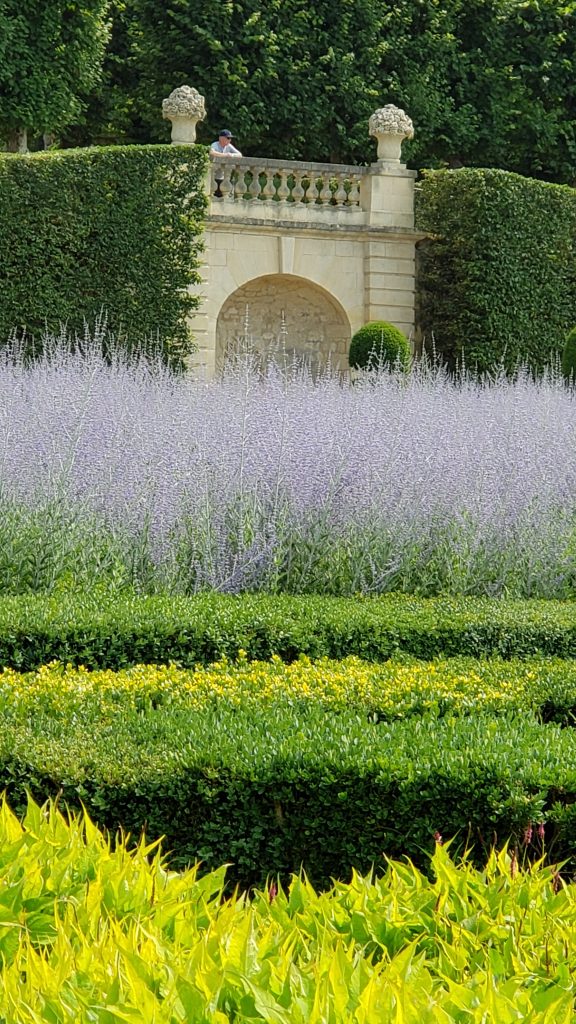
A quiet corner filled with medicinal and aromatic plants like lavender, thyme, and sage. Nearby, a small labyrinth invites visitors to trace the Renaissance metaphor of life’s journey toward clarity.
The Sun Garden
Added in the 20th century by Carvallo’s descendants, this “modern” addition features three rooms: the Cloud Room, the Sun Room, and the Children’s Garden, each blending modern sensibility with classical ideals.
What You’ll See Today
Today, the Château de Villandry and its gardens remain privately owned by Carvallo’s descendants, who maintain the estate with historic fidelity and ecological care.
Visitors will find:
- A self-guided or docent-led tour of the château’s furnished rooms
- Stunning aerial views from the upper-story windows, offering ideal perspectives on the garden’s design
- Seasonal planting schemes, meaning the gardens look remarkably different in spring, summer, and autumn
- Quiet shaded walks, rose gardens, garden pavilions, and even a charming on-site café serving light meals and Loire wines
And in every corner, a sense of intentional beauty—nature not tamed but choreographed, each hedge and petal part of a centuries-old dance.
Where to Stay in Villandry, France
The village of Villandry has limited lodging, so most visitors stay in nearby Tours, about 15 kilometers away. Tours offers a full range of hotels from budget chains to three-star properties, plus well-regarded guesthouses in the historic center near Cathedral of Saint-Gatien. The 20-minute drive or train ride to Villandry is straightforward, and Tours offers easy access to restaurants, shops, and nearby Loire Valley châteaux.
If you prefer to stay closer to Villandry, seek small family-run hotels and chambres d’hôtes in the surrounding Loire Valley towns. Langeais, about 10 kilometers downstream, has modest hotels and is quieter than Tours while retaining basic services. Many travelers choose this approach to experience rural charm without sacrificing convenience.
For a more immersive stay, consider renting a cottage or apartment in the Villandry area through local vacation rental services. This option works especially well for families or groups staying several days, letting you explore the gardens at your own pace amid countryside surroundings. Several properties in Savonnières and Rivarennes villages, within five kilometers of Villandry, offer this type of accommodation.
The best time to book lodging is several months ahead for spring and summer visits, when gardens are in full bloom and tourism peaks. Winter months offer quieter stays and lower rates, though Villandry’s formal gardens are less colorful then and some visitor services may have reduced hours.
Recommended Reading
Fiction
- The Garden of Letters by Alyson Richman
A lyrical wartime novel with themes of memory, secrets, and sanctuary—perfect for reading under a trellis. - The Perfume Garden by Kate Lord Brown
A multi-generational novel of gardens, grief, and resilience, infused with sensory detail. - The Illuminator by Brenda Rickman Vantrease
Though set earlier, its themes of art, faith, and medieval France echo through the monastic garden roots at Villandry.
Non-Fiction
- French Gardens: A Cultural History by Gabrielle van Zuylen
An essential, beautifully illustrated guide to the philosophy and evolution of formal French gardens. - Châteaux of the Loire Valley by Jean-Marie Pérouse de Montclos
The book contextualizes estates such as Villandry within the broader development of French courtly architecture and garden design. It is a standalone nonfiction work blending architectural history with regional heritage. - The Road from the Past: Traveling Through History in France by Ina Caro
An immersive, era-hopping guide through France’s most storied sites—including the Loire Valley’s gems.
Tours to Consider