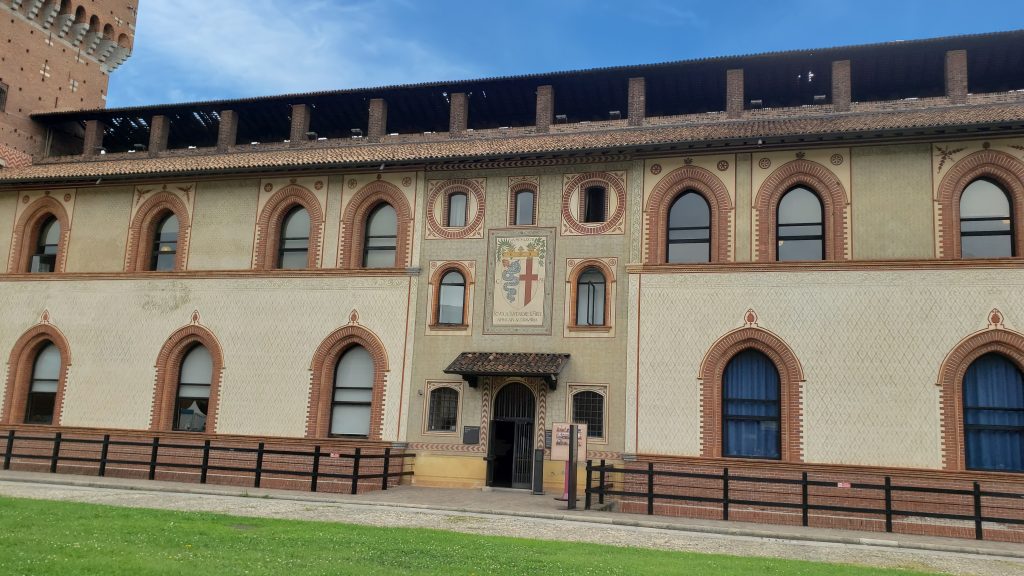
You might think of a castle as being on the ramparts of a city, but today, Milan’s storied castle is right smack in the middle of the city, which grew up around it. But oh, what stories it can tell! Intrigue, poison, war, romance,e and even Leonardo Da Vinci!
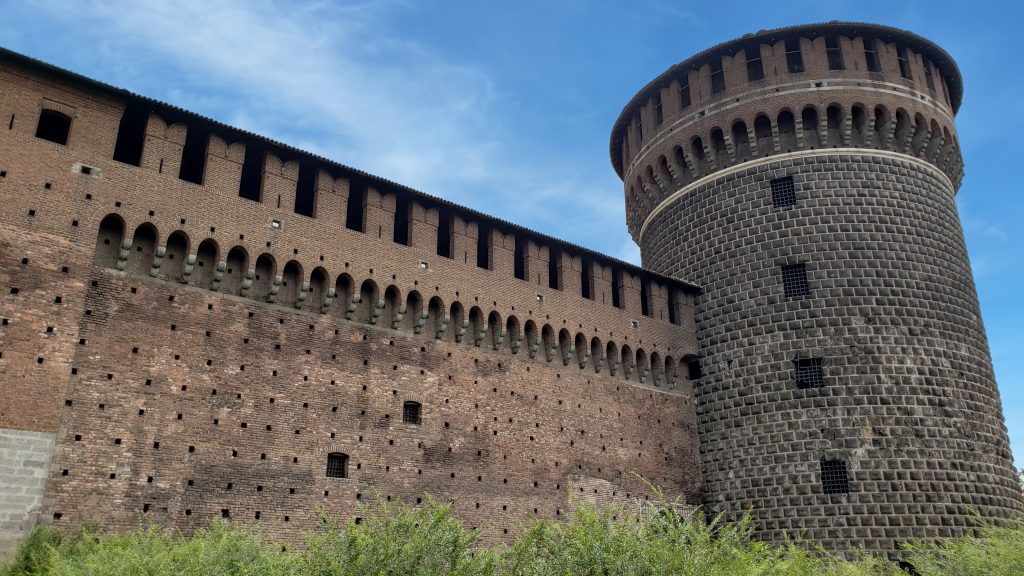
Begun in 1358 by Galeazzo Il Visconti, the fortress passed to his successors, and ultimately to Francesco Sforza, head of the most powerful family in Northern Italy, hence the name of the castle. Sforza, whose name actually means “The Forcer,” began the construction you see here today in 1450, becoming the 4th Duke of Milan, and launching a dynasty. Upon his death in 1466, it came under his son Galeazzo Maria Sforza, who was assassinated just a year later, leaving his 7-year-old son as duke. The child’s uncle, Ludovico, coveted the duchy, first assuming the regency from his sister-in-law and very probably poisoning his nephew. Known as “Il Moro” for his dark coloring, he was ruthless, an inveterate intriguer and warrior, known for his black heart as well. Seeking a politically advantageous marriage, he was affianced to Beatrice, daughter of the Duke of Ferrara, Ercole d’Este.
Only 5 years old at the time, she finally joined Ludovico in 1485 at the court in Milan at the age of 15. But unlike most royal marriages of the time, this seemed to be a real love match! Considered one of the great beauties of the age, Beatrice D’Este’s duke could not keep his eyes –and hands–off of her it was reported! She charmed the court and gave Ludovico two sons. Ludovico, a great patron of the arts, attracted and supported some of history’s leading artisans including Leonardo Da Vinci, who lived in Milan for 17 years, including painting frescos in the living areas of the castle and his masterpiece fresco the Last Supper in a nearby chapel, as well as designing weapons, battlements and canals for Sforza, until Sforza’s castle fell to the French in 1515.
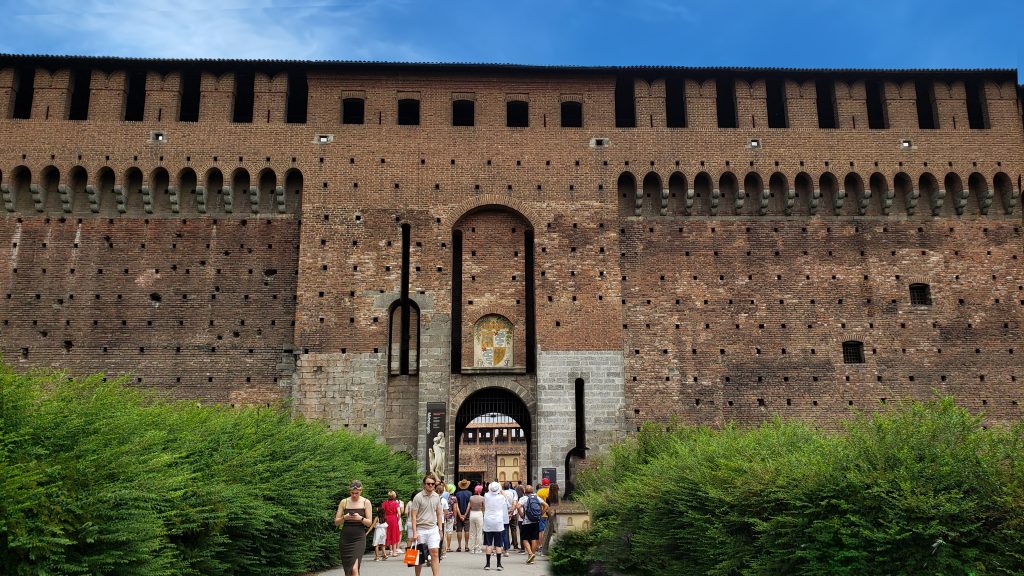
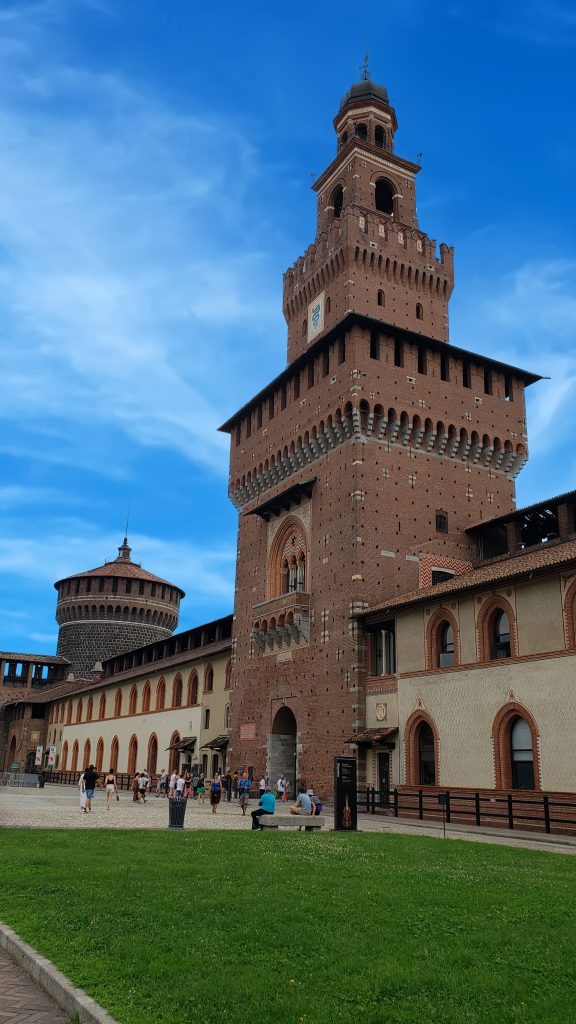
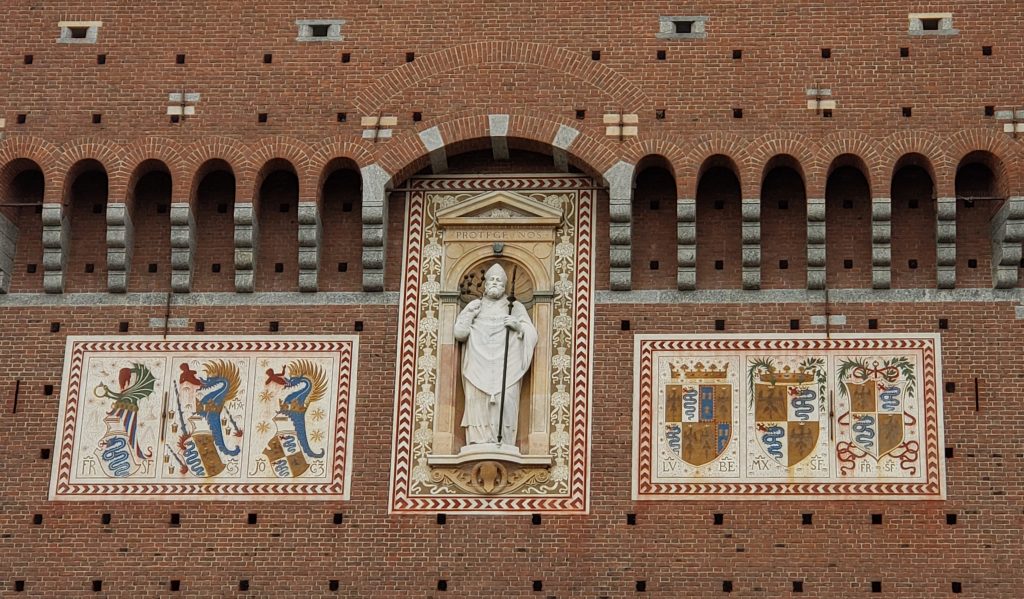
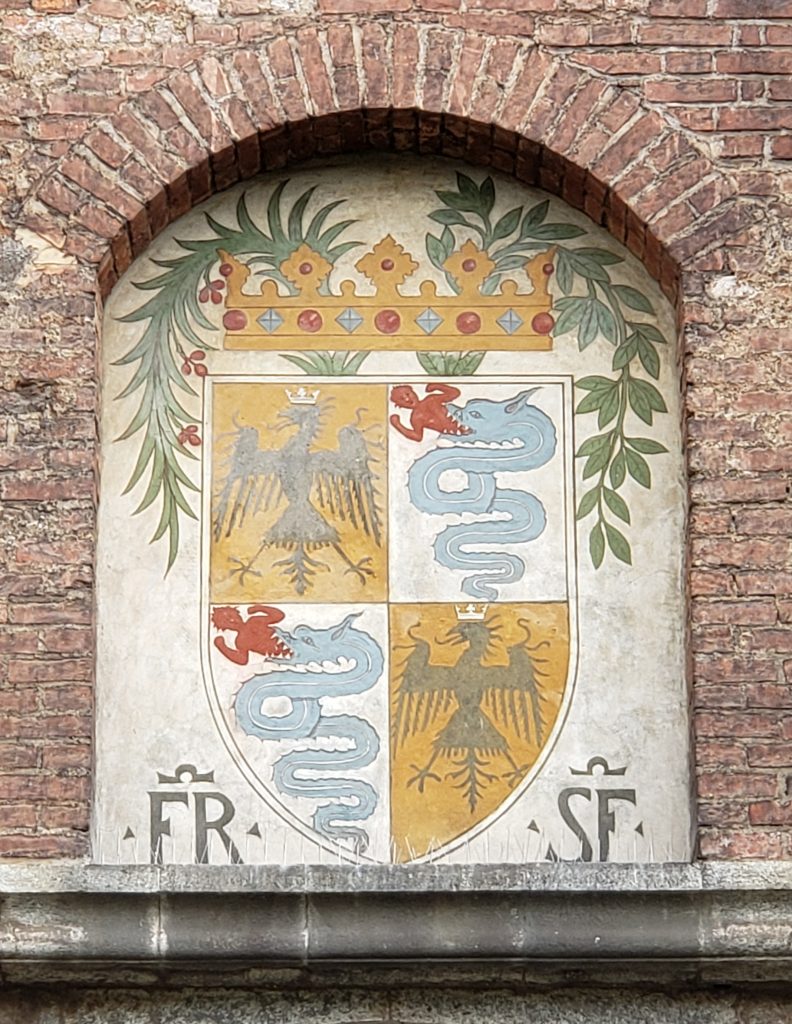
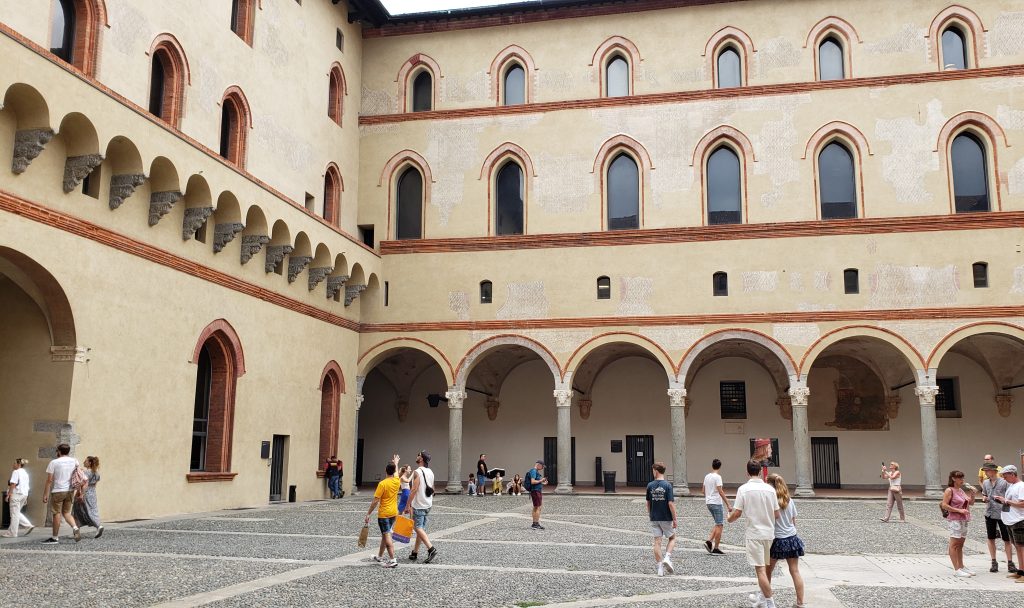
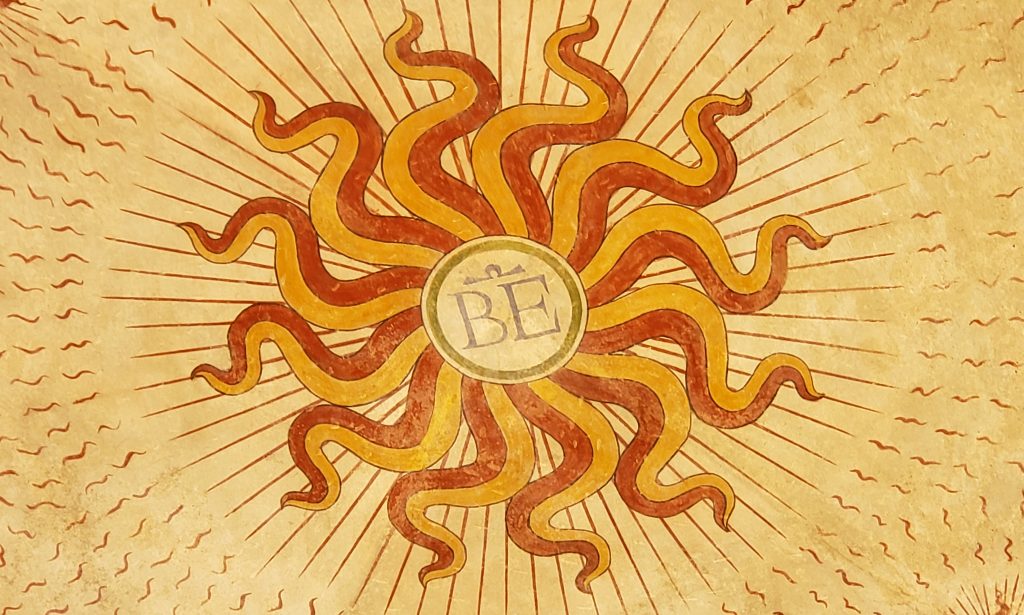
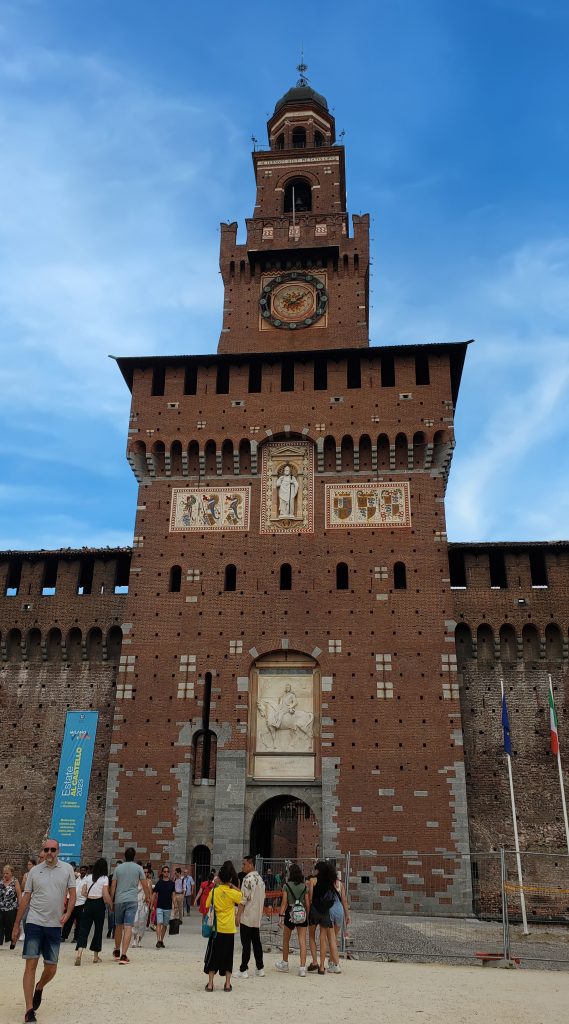
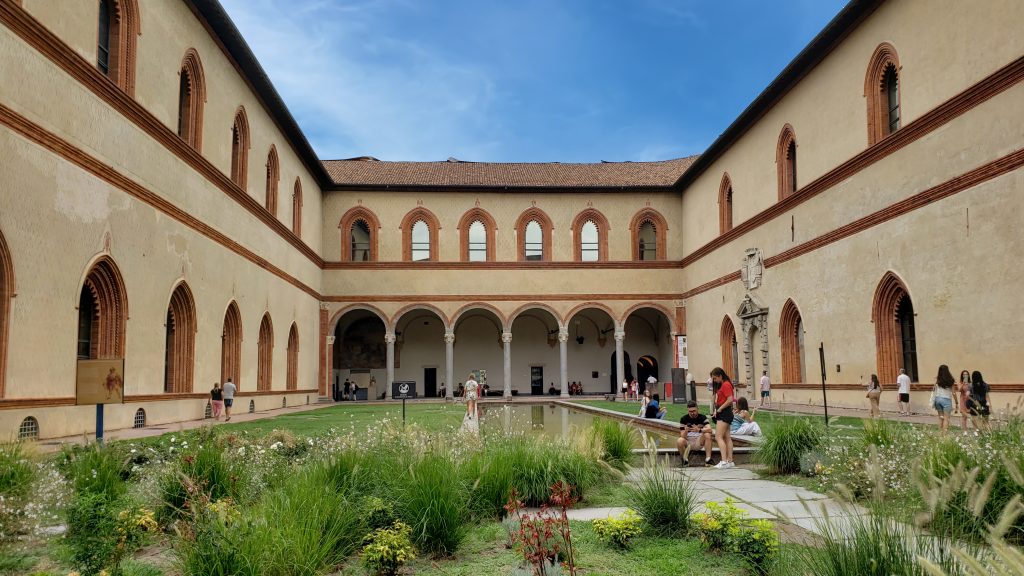
Today, you can still see the 23-foot-thick walls, the entry tower, the family quarters, the family garden and more in an enclosed and grassy square that sports the family’s distinctive crest emblazoned with snakes.
Where to Stay in Milan, Italy
For proximity to the castle and the Brera neighborhood’s galleries and restaurants, the Sforzesco area itself has modest family-run hotels and bed-and-breakfasts within a five-minute walk. These tend to be quieter than downtown options and put you steps from the museum entrance and nearby parks. If you prefer more established hotels, the Brera district just south has mid-range options like the Lilia or similar properties where you can walk to both the castle and the neighborhood’s cafes and art studios.
The city center around Piazza Duomo, while busier and pricier, keeps you within 15 minutes of the castle by metro and connects you to Milan’s core shopping and dining. Hotels here range from budget chains to upscale properties, and you’ll have easy transit links everywhere. This works well if you plan to spend time beyond the castle or want nightlife within walking distance.
For a quieter base, the Navigli district southwest of downtown has smaller hotels and converted apartments near the canal streets where locals actually live. It’s about 20 minutes to the castle by tram or metro, but the neighborhood itself has genuine antique shops, workshops, and restaurants that feel less touristy. This appeals to travelers who want to experience Milan beyond the main monuments.
Budget-conscious visitors should look at the Loreto or Garibaldi areas north of the castle, which have hostel chains and affordable three-star hotels. Transit is straightforward to the castle and most neighborhoods, and you’ll find neighborhood markets and casual dining. These zones are workday Milan, practical rather than atmospheric, but entirely functional for a short visit.
Recommended Reading
Here’s some Milan reading for you…
- Duchess of Milan by Michael Ennis – A page-turning historical novel centered on Beatrice d’Este, Duchess of Milan and wife of Ludovico Sforza. Ennis vividly brings to life the intrigue, art, and politics of Renaissance Italy through the eyes of one of its most fascinating noblewomen.
- Turning the World to Stone: The Life of Caterina Sforza Part One (1472–1488) by Kelly Evans – The first in a compelling two-part series on Caterina Sforza, the illegitimate daughter of Galeazzo Maria Sforza. This novel chronicles her early years and rise to power during one of the most volatile periods in Italian history.
- Turning the World to Stone: The Life of Caterina Sforza Part Two (1488–1509) by Kelly Evans – The saga continues as Caterina, widow of Girolamo Riario and fierce defender of her children and territory, faces betrayal, imprisonment, and legend-making defiance. Evans paints a portrait of strength, strategy, and survival.
- Insight Guides: Milan – A compact yet comprehensive travel companion, this guide explores Milan’s rich history, vibrant culture, and iconic sites like the Castello Sforzesco. Perfect for readers wanting both context and inspiration before visiting—or revisiting—the city.
Tours to Consider
- Milan Highlights and Hidden Gems Private Guided Walking Tour
- Milan Private Tour: Highlights & Hidden Gems with a Local
- Sforza Castle and Michelangelo’s Pietà Rondanini guided experience