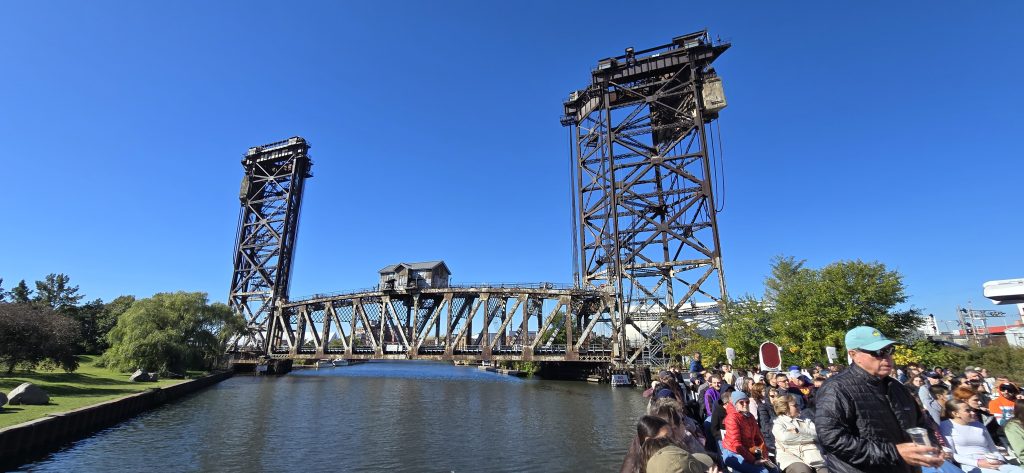
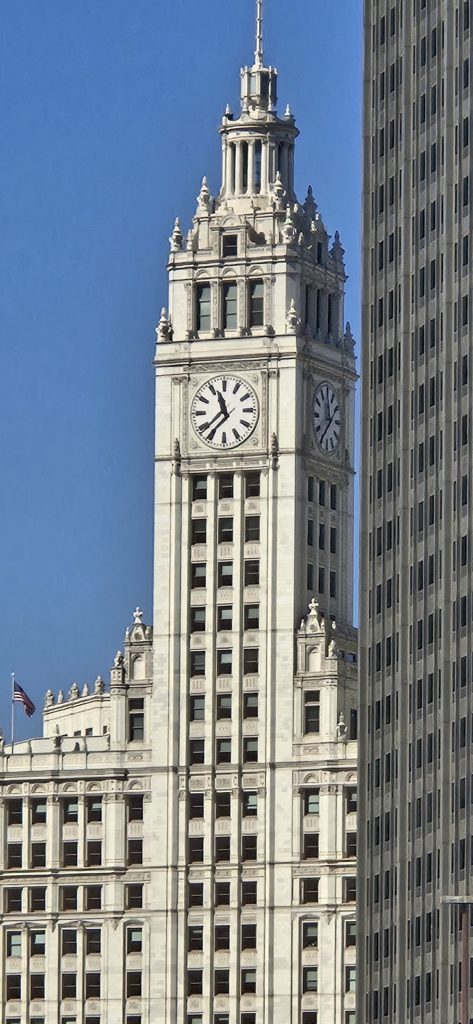
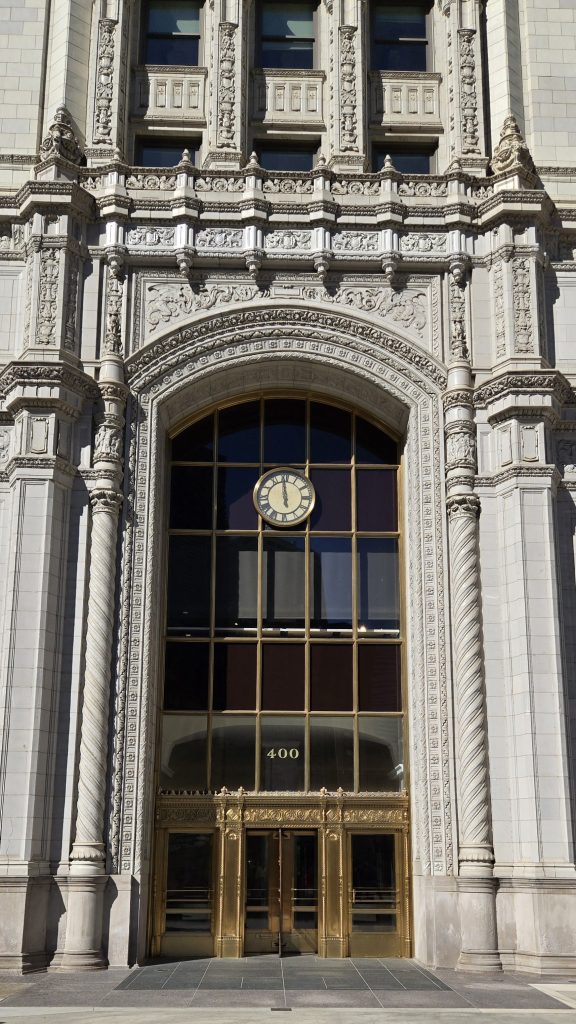
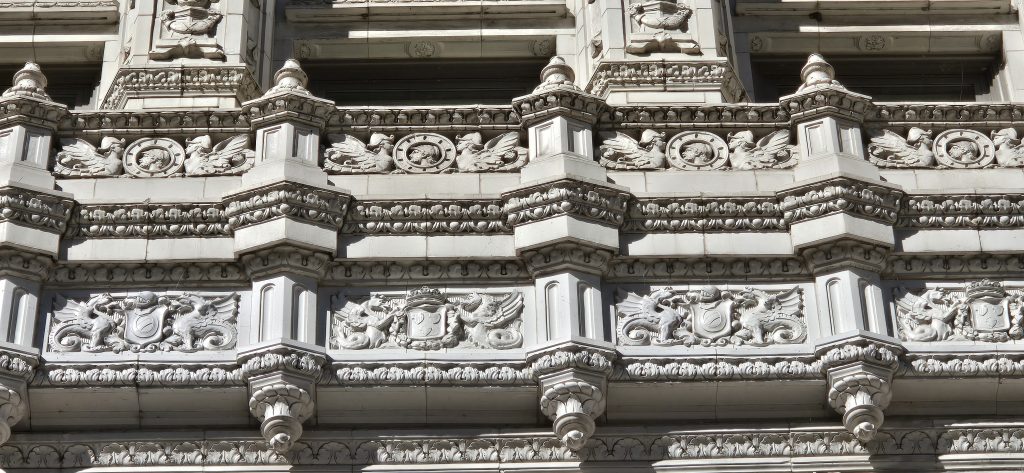
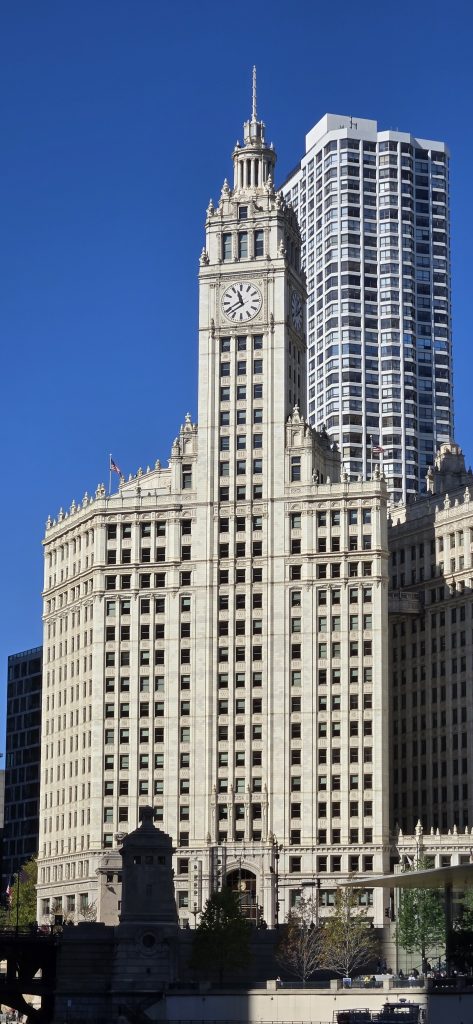
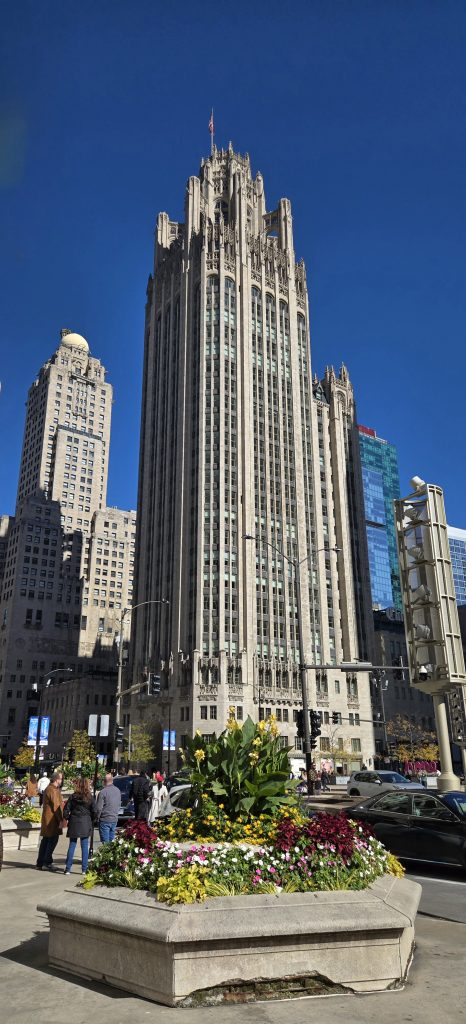
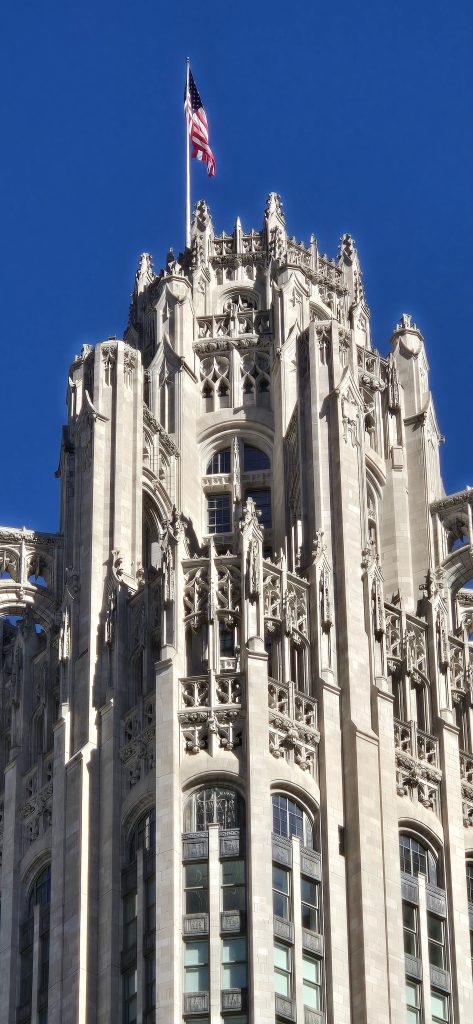
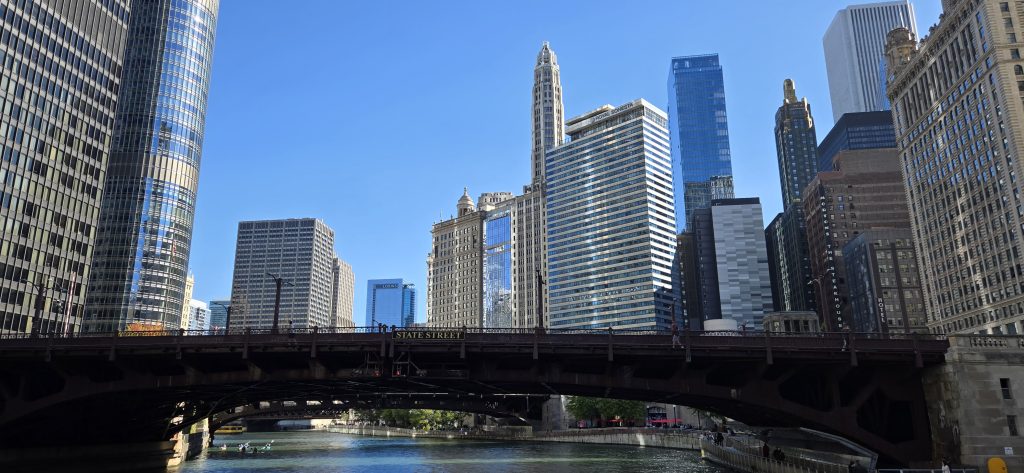
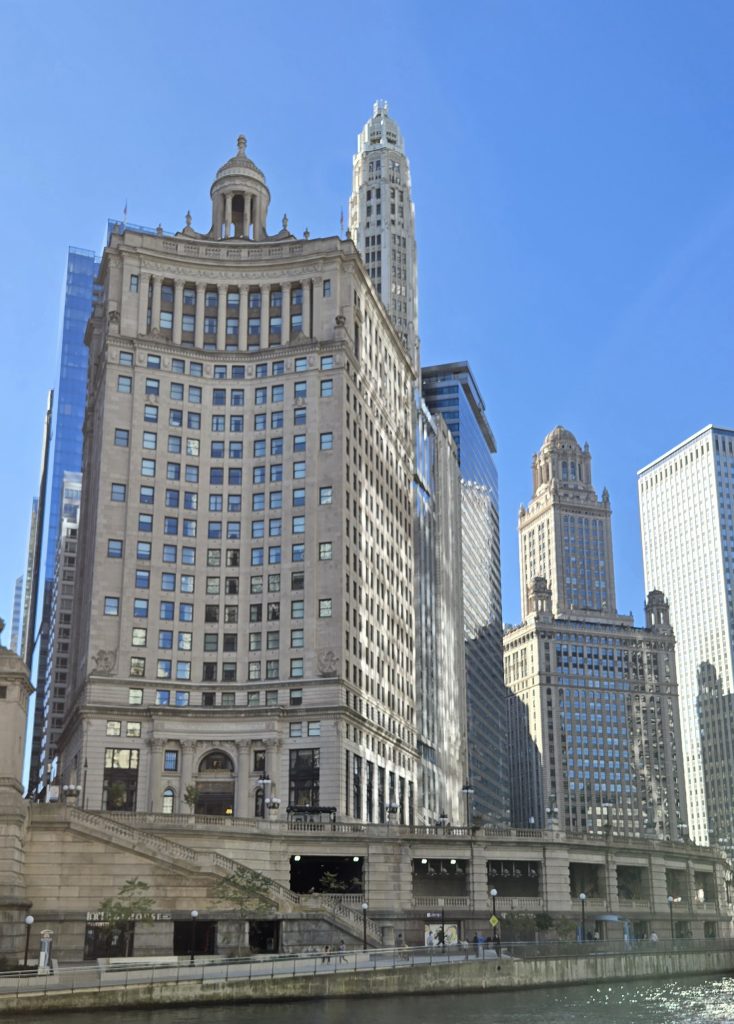
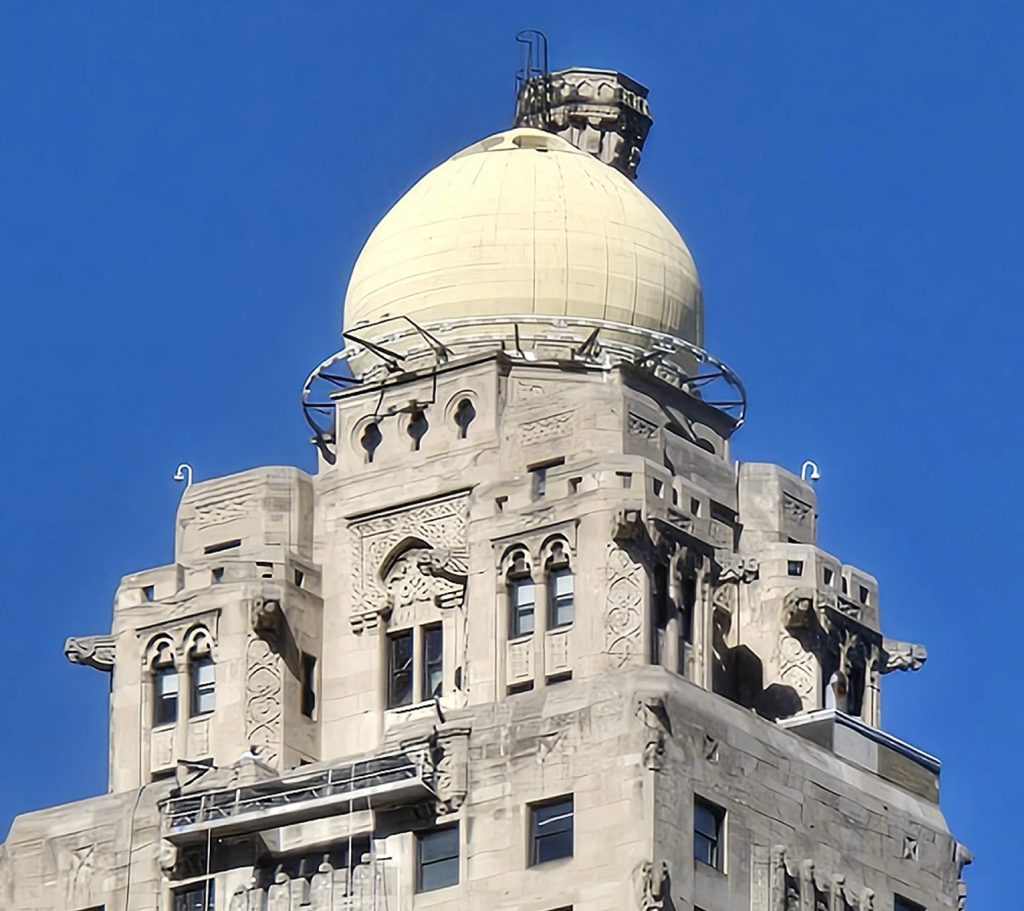
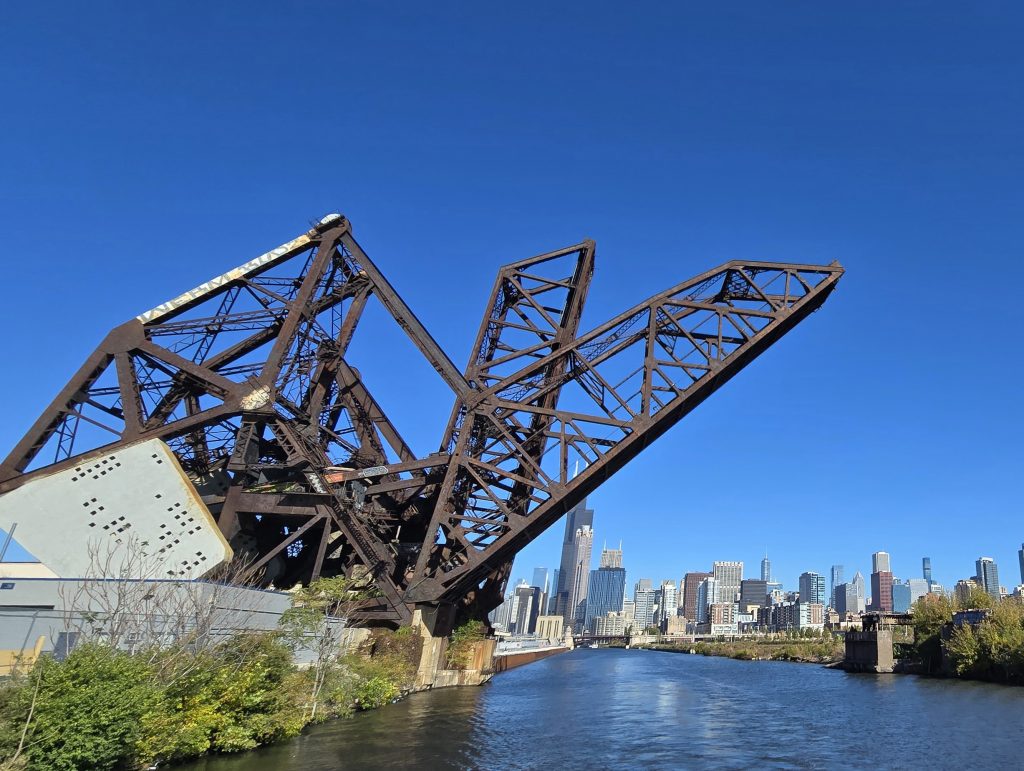
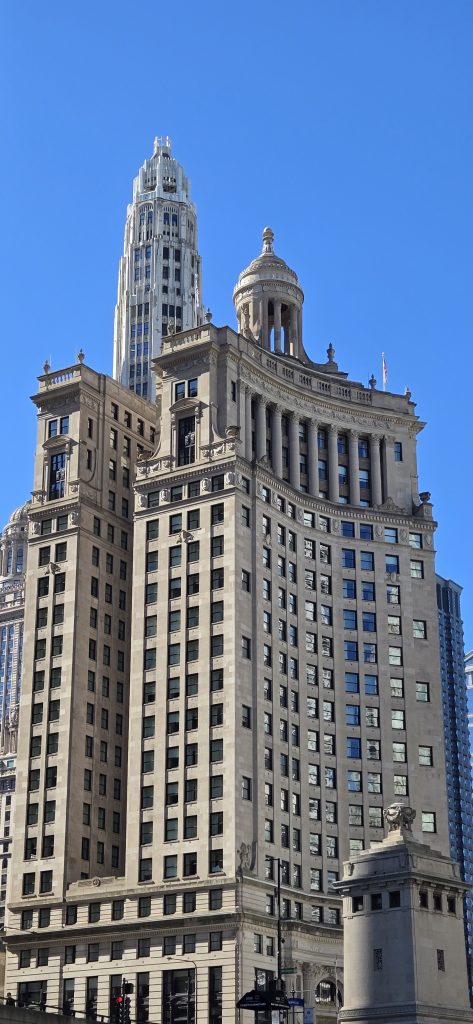
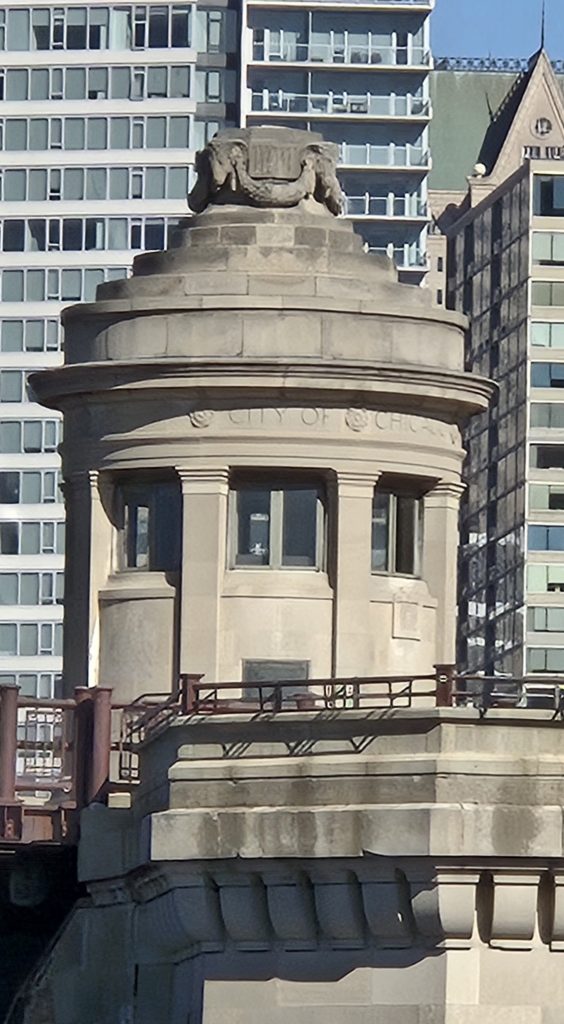
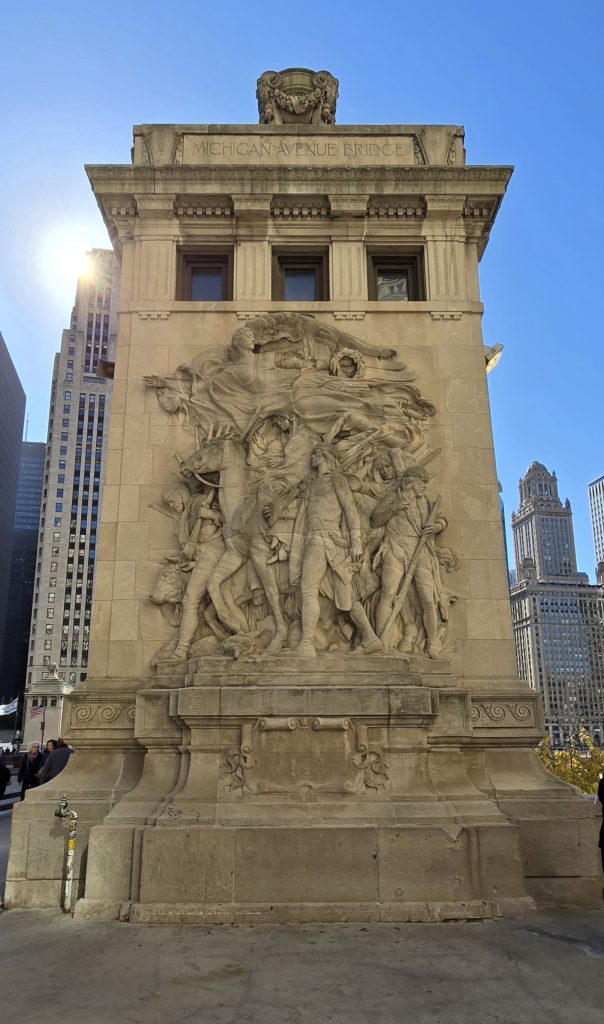
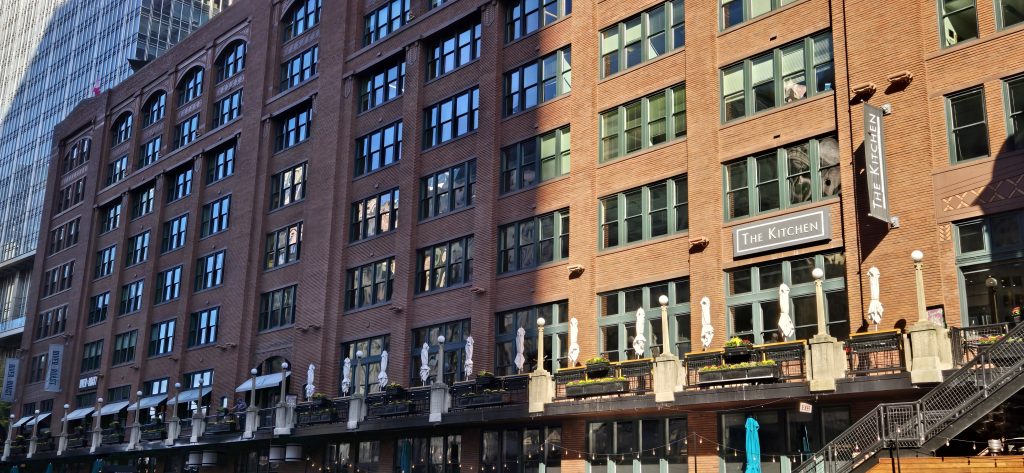
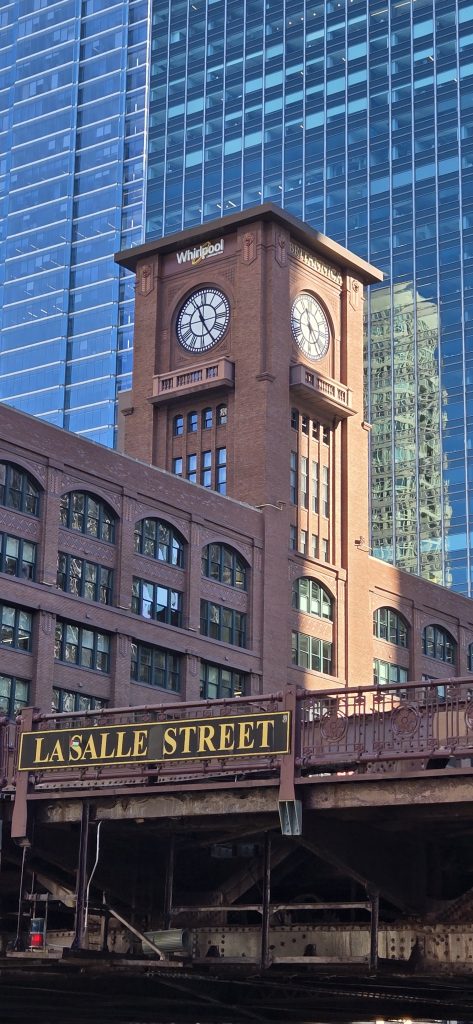
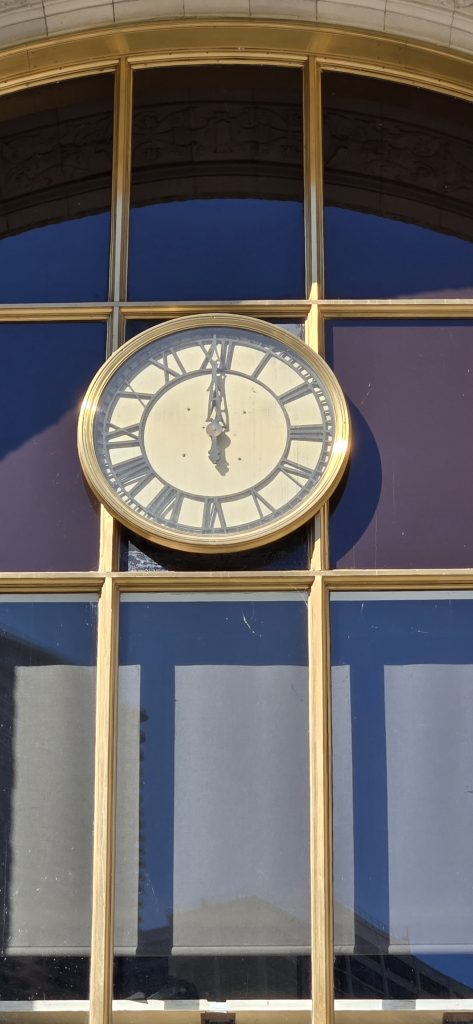
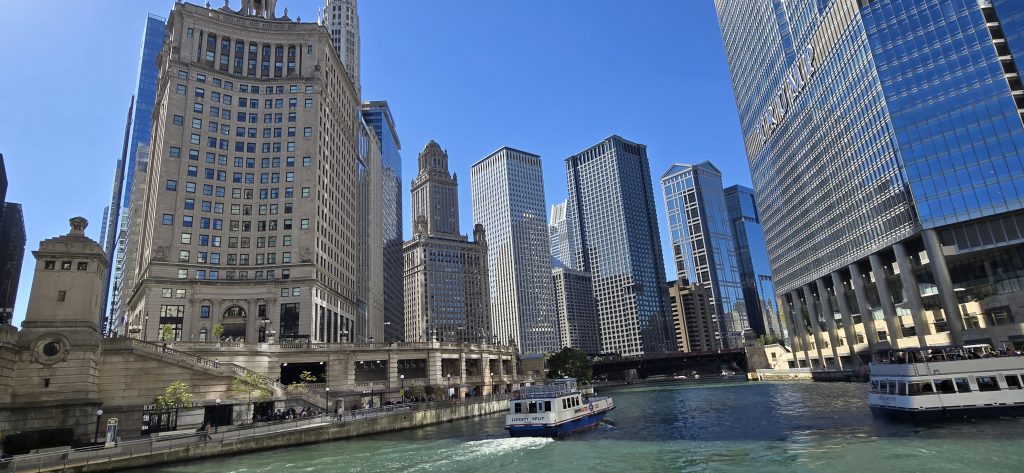
One of the glories of Chicago is taking the Chicago River Architectural Tour from the water which reveals the history of Chicago visually. It begins at the Michigan Ave Bridge with its distinctive Bridge Houses (like the one with the carved statuary you see depicting the earliest exploration of the area), under the shadow of the looming Wrigley Tower, originally built by the chewing gum magnet. The Wrigley Building is the dozen of historic Chicago buildings with its graceful clock tower. Standing beside it is the original Chicago Tribune building with its neo-gothic wedding cake ornamentation and flying buttresses. Across the way is the London Guarantee Building, now a hotel, which once housed the famous London House Jazz Club. Also on that side of the river is the Jeweler’s Building with its domed tower atop multiple levels.
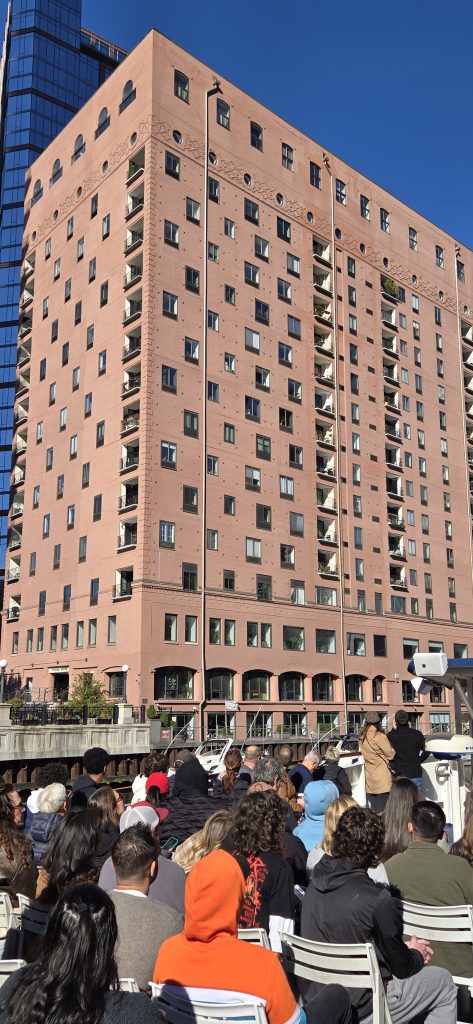
You soon pass on the right a few more modern landmarks like the two circular Marina Tower buildings, that allowed residents to park their watercraft below, and cars on the lower floors before the residential levels. Followed shortly by the ochre-colored Brittanica Building (aka Reid Murdoch Grocery Warehouse Building) just past the Clark Street Bridge, which for much of the last half century was the City of Chicago Central Office Building.
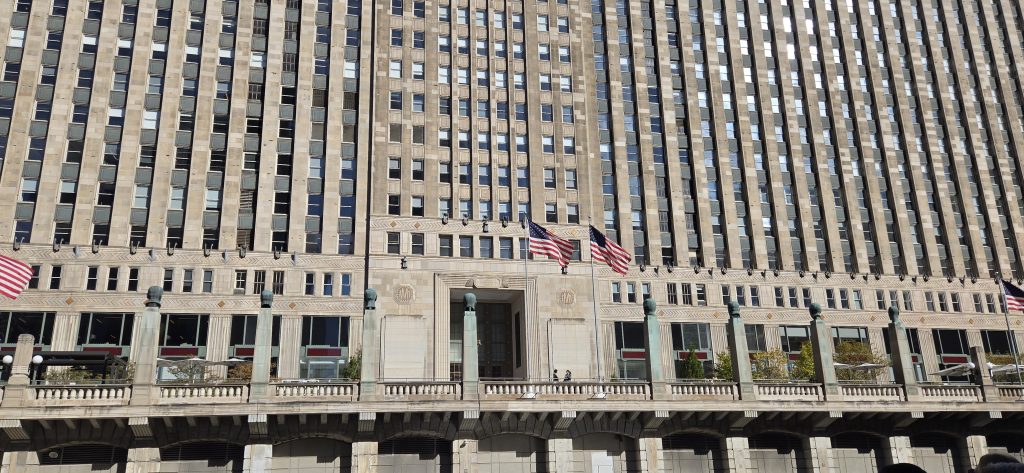
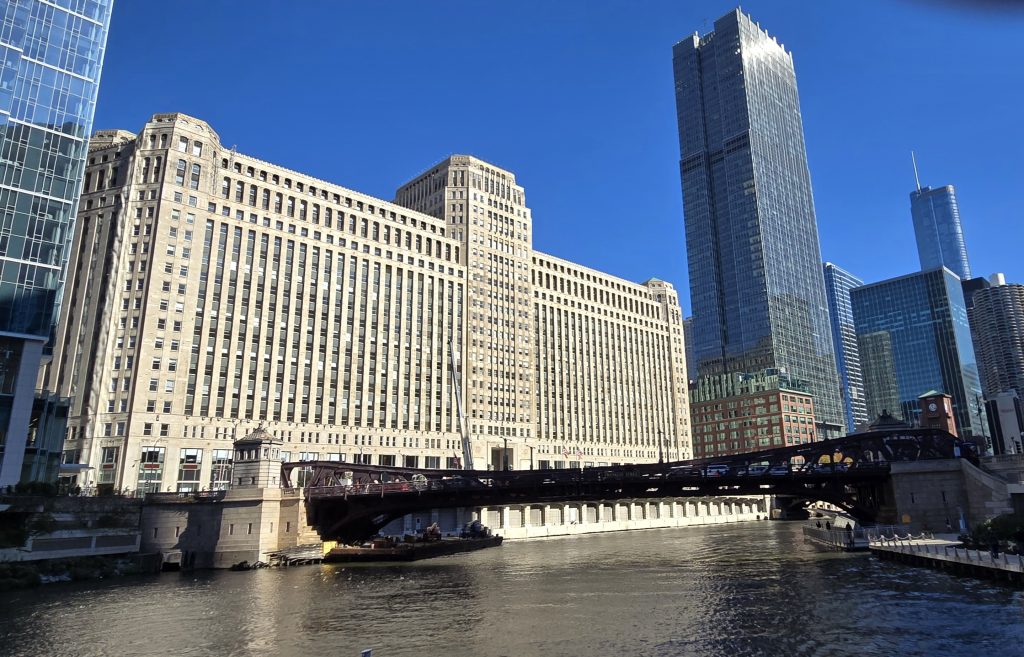
Right behind that is the gorgeous 1930 Art Deco Merchandise Mart, the world’s largest commercial building and design centers with 4 million square feet! The Merchandise Mart originated as a wholesale warehouse store for Marshall Field Department Store that included rental space for other wholesalers. The idea was to unite the sales of furniture, fabric and other decorative materials under one roof. It’s still a design showcase! Note the busts honoring leading American merchants installed by Joseph Kennedy in the years when he owned the Mart
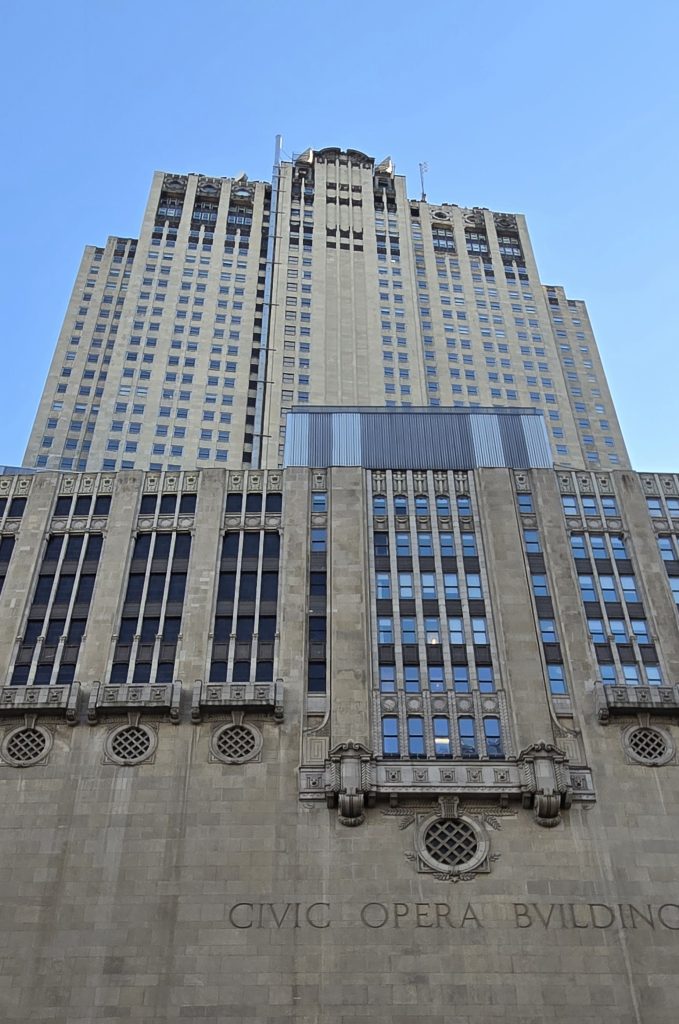
Next find the Civic Opera edifice with its back to the river, the second largest opera house in North America. The utility magnet who built it lost everything when it opened just days after the 1929 stock market crash, ushering in the depression.
More Historic Chicago in future Historic Traveler Blogs!
Where to Stay in Chicago, United States
For accommodations in Chicago, consider staying in the Loop, where most major hotels sit within walking distance of the riverfront attractions mentioned in this guide. The Loop offers everything from business-class chains like the Hyatt Centric and Renaissance to independent boutique properties, and you can walk to the Chicago River Architecture Boat Tour, Cloud Gate, and the Art Institute without needing transit. Prices here run higher than neighborhoods farther out, but the convenience pays off if you want to spend your days exploring rather than traveling to and from your hotel.
If you prefer a quieter base with character, try the Gold Coast neighborhood just north of downtown, where brownstone-lined streets and smaller hotels create a more residential feel while keeping you fifteen minutes from most attractions. The area has its own restaurants and shops, so you can have downtime without feeling like you’re in a tourist zone all day. Hotels here tend to be mid-range, and you get better value than Loop properties while staying close enough to everything.
For budget-conscious travelers, consider staying in Pilsen or Logan Square, neighborhoods with younger energy, affordable local restaurants, and their own museums and galleries. You’ll need the ‘L’ train to reach downtown Chicago quickly, but these areas reward exploration on foot and feel like real neighborhoods where Chicagoans actually live and work. Hotels and guesthouses here cost substantially less than downtown, freeing up money for meals, entry fees, and riverside time.
No matter which neighborhood you choose, book a place with easy ‘L’ train access or a short taxi ride to the Chicago River. Most of the city’s history and architecture concentrate downtown and along the waterfront, so proximity to transit matters more than which specific hotel you pick. Check for package deals that include architecture tour tickets, as many hotels bundle these with stays from spring through fall.
Recommended Reading
Here’s some Chicago history reading for you…
- City of the Century: The Epic of Chicago and the Making of America by Donald L. Miller – A sweeping, vivid account of Chicago’s explosive growth during the 19th century. This book captures the city’s transformation into a modern metropolis and its role in shaping America’s industrial and political future.
- Chicago: Growth of a Metropolis by Harold M. Mayer and Richard C. Wade – A classic visual and scholarly chronicle of Chicago’s urban evolution. With historic photographs and detailed analysis, this book traces how the city expanded from a frontier outpost to a global powerhouse.
- Plan of Chicago by Daniel H. Burnham and Edward H. Bennett – A visionary document that changed the face of American city planning. Known as the “Burnham Plan,” this blueprint for urban beauty and functionality reflects early 20th-century ambitions to create a livable, majestic Chicago.
- The Devil in the White City: Murder, Magic, and Madness at the Fair That Changed America by Erik Larson – A gripping narrative that blends true crime and history, centered on the 1893 World’s Columbian Exposition. Larson masterfully intertwines the grandeur of the fair with the chilling story of serial killer H.H. Holmes.
- Sister Carrie by Theodore Dreiser – Set in 1889 Chicago, this literary classic follows a young woman’s rise and fall in the big city. A haunting portrayal of ambition, desire, and the harsh realities of urban life during America’s Gilded Age.
- Insight Guides: USA on the Road – A broad, photo-rich travel guide that includes Chicago among its must-see destinations. This guide blends cultural insights, practical travel advice, and historical background—perfect for anyone planning to explore the Windy City.
Tours to Consider