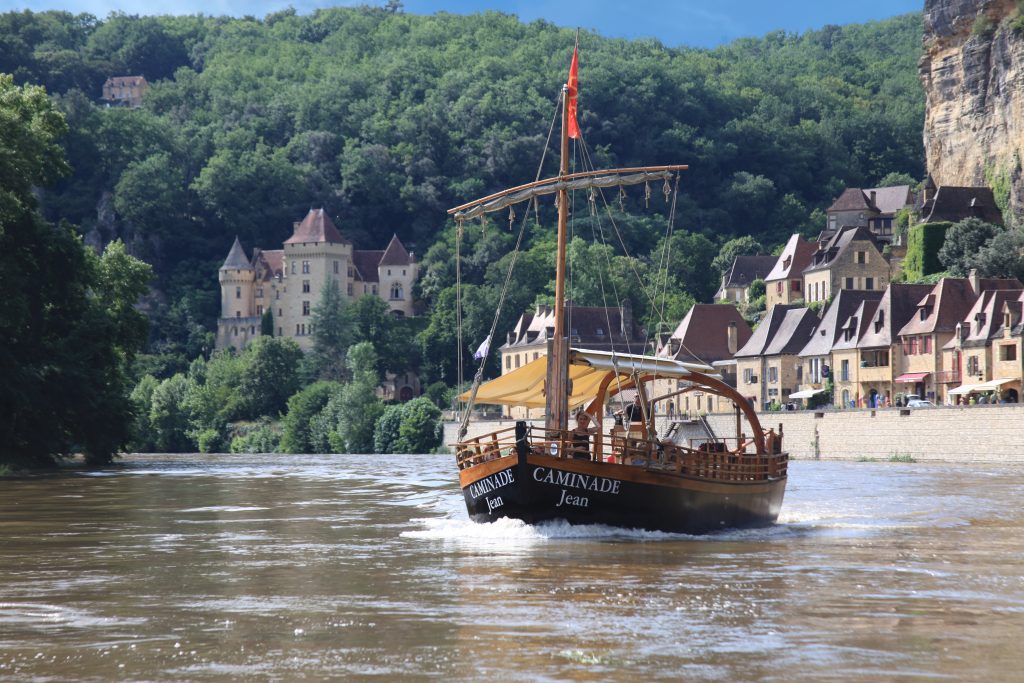
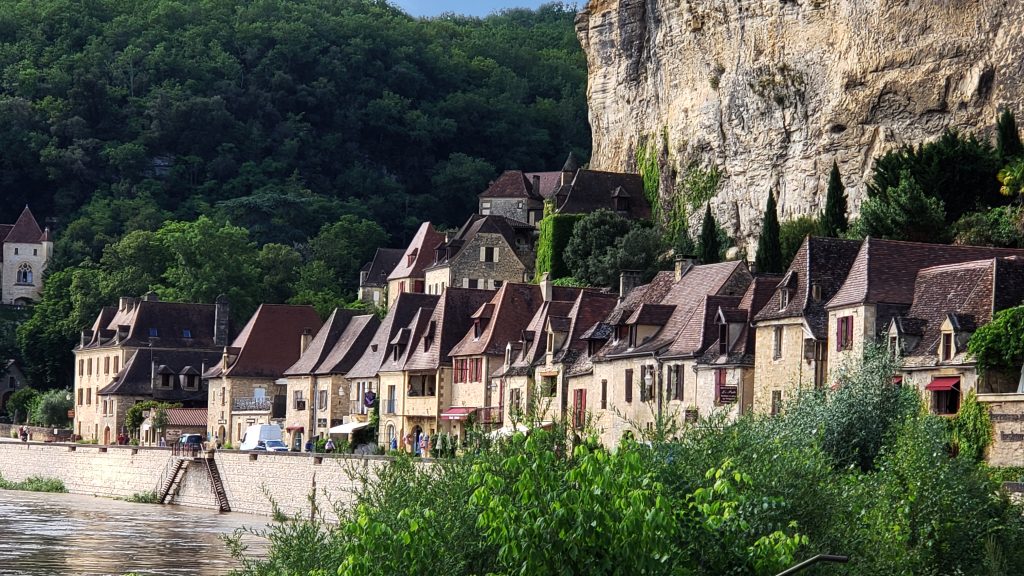
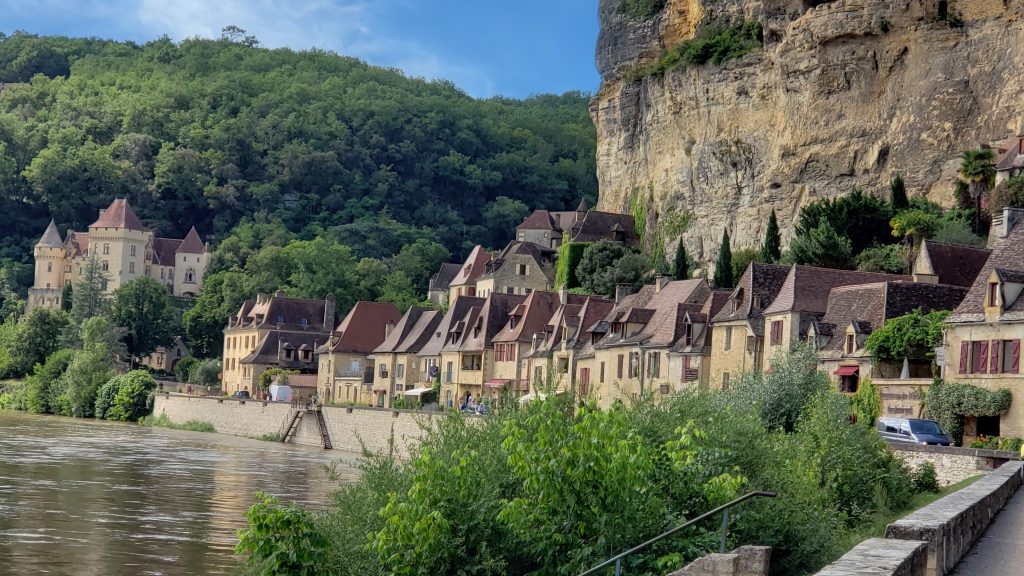
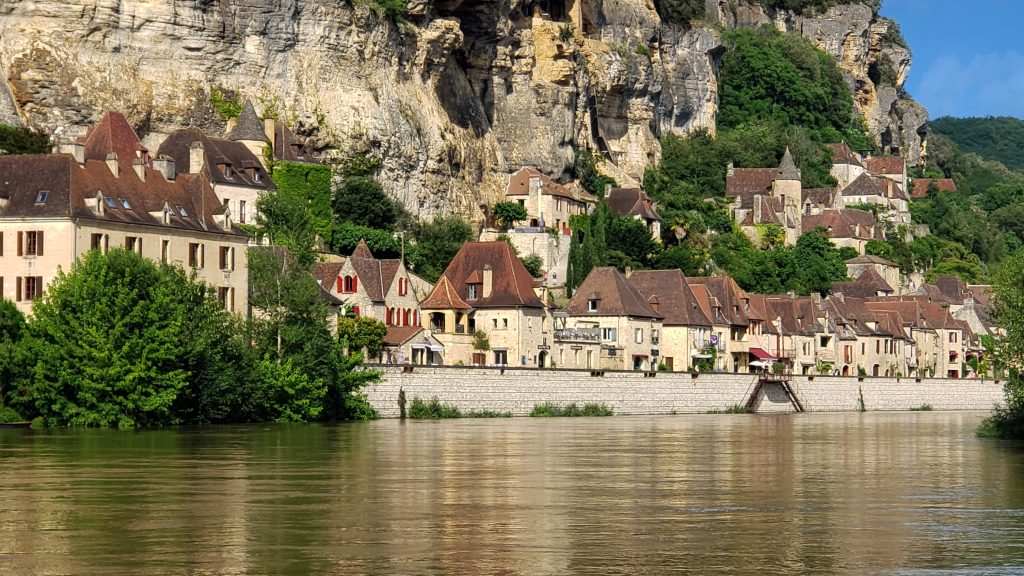
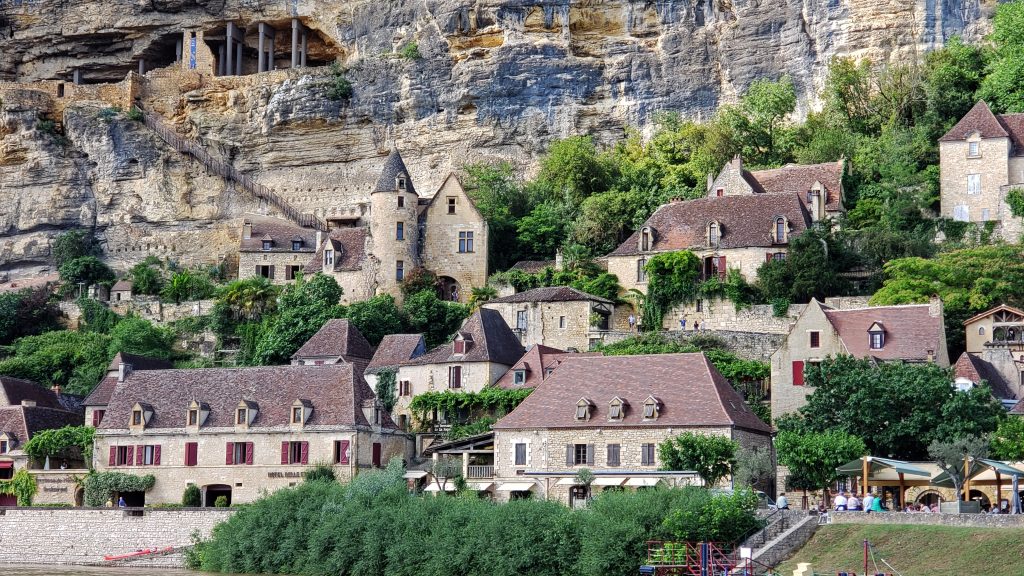
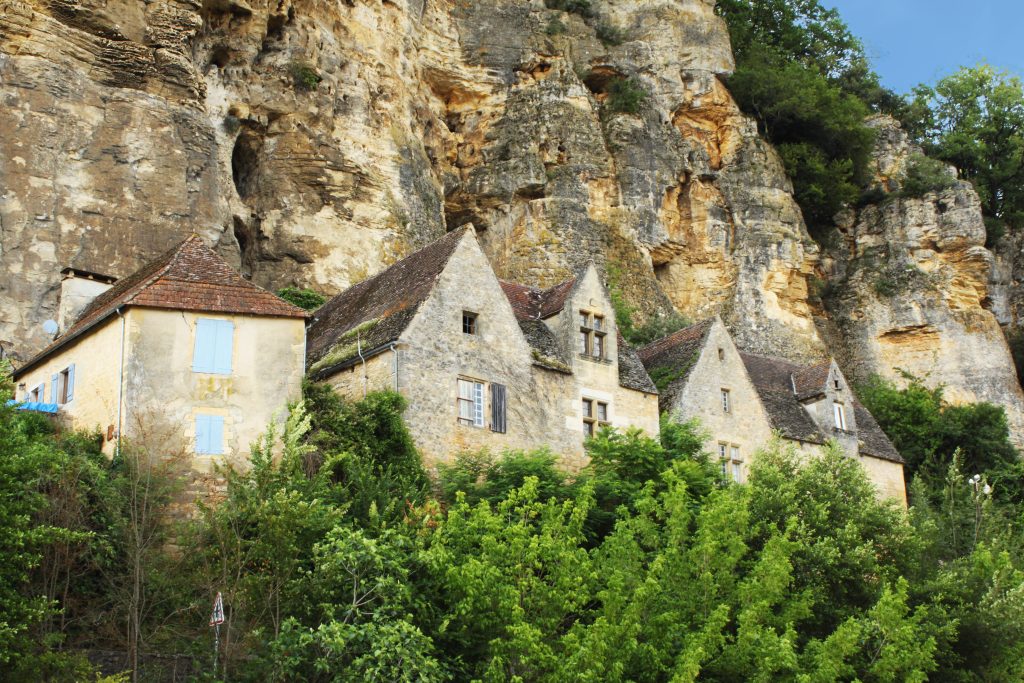
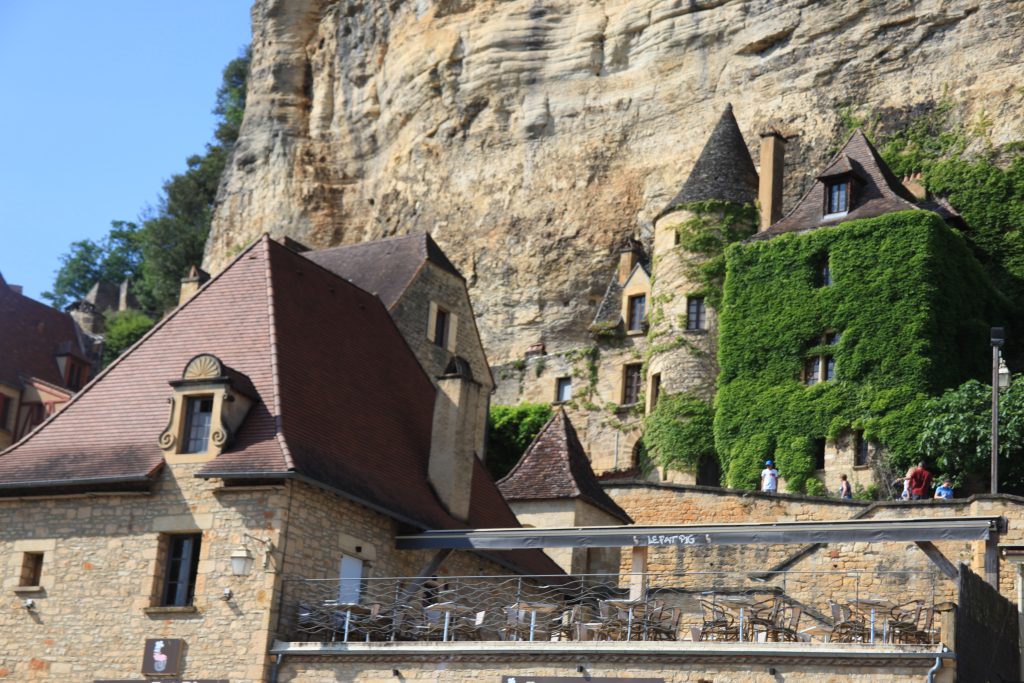
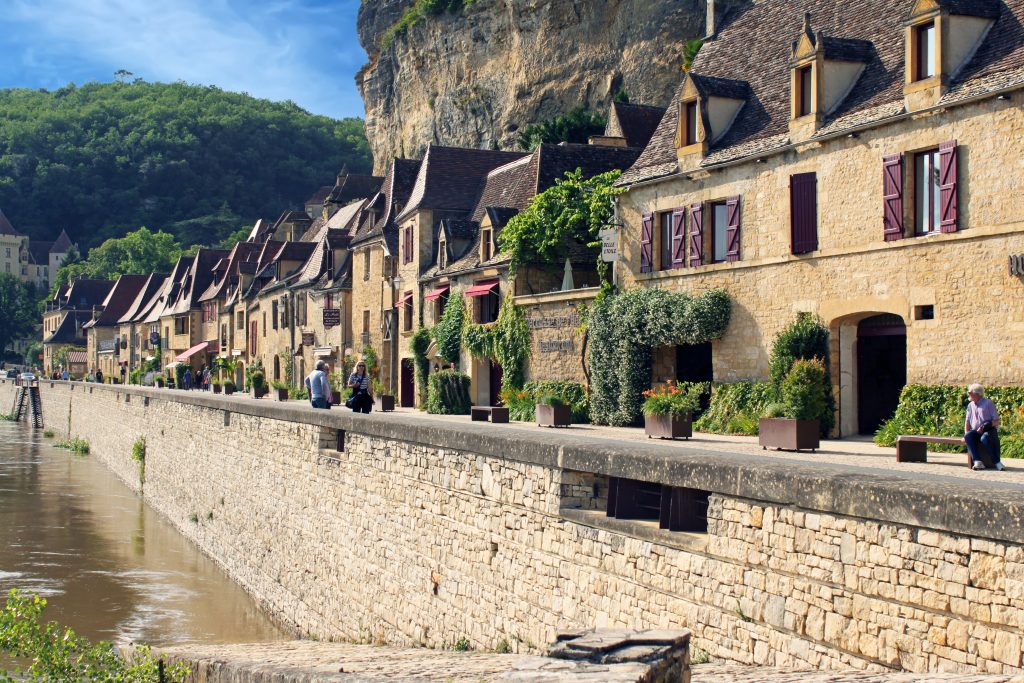
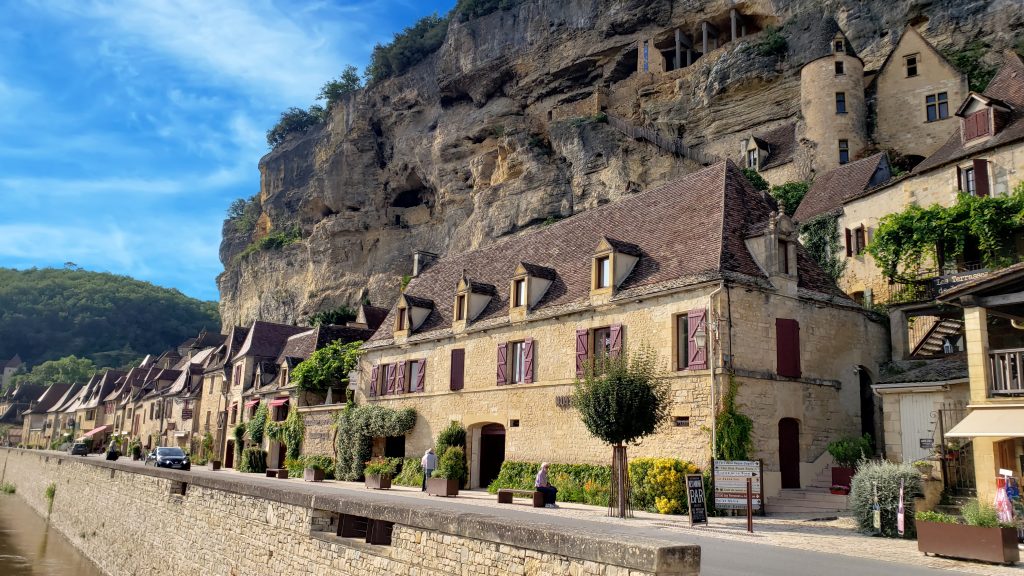
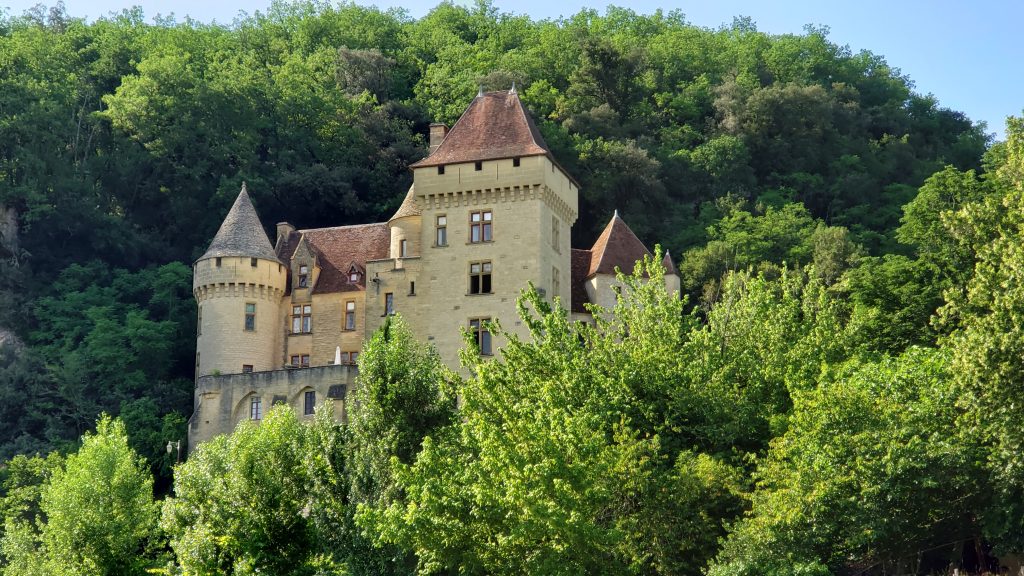
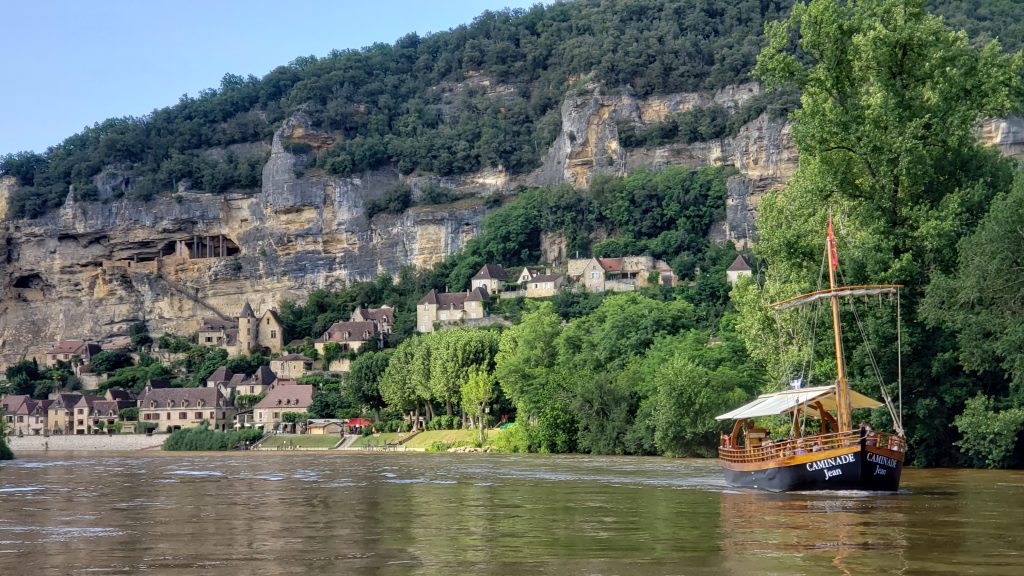
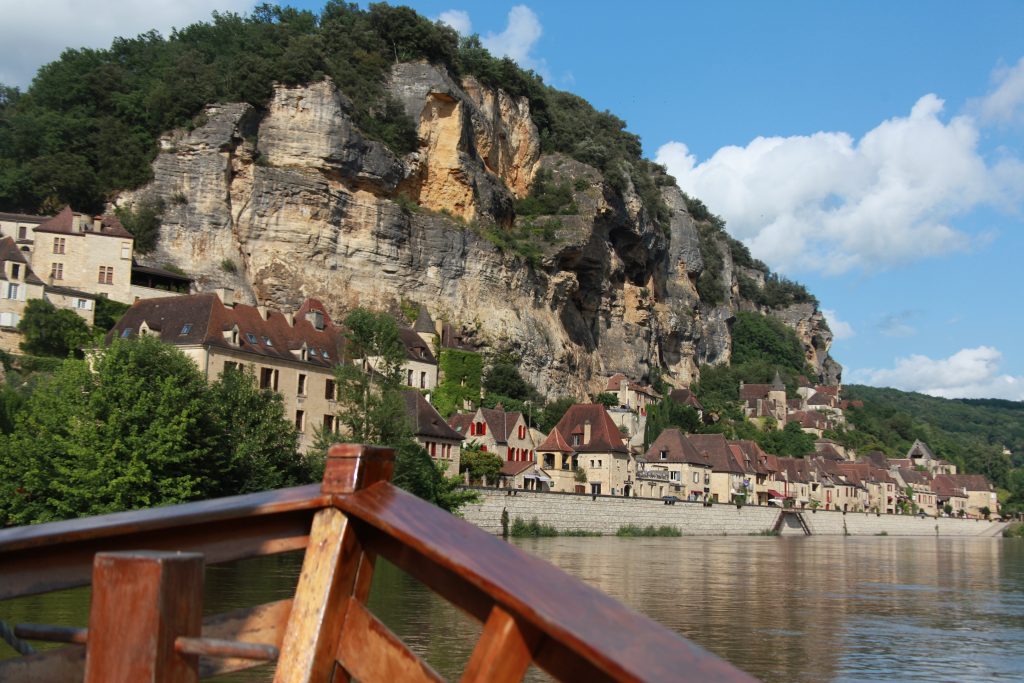
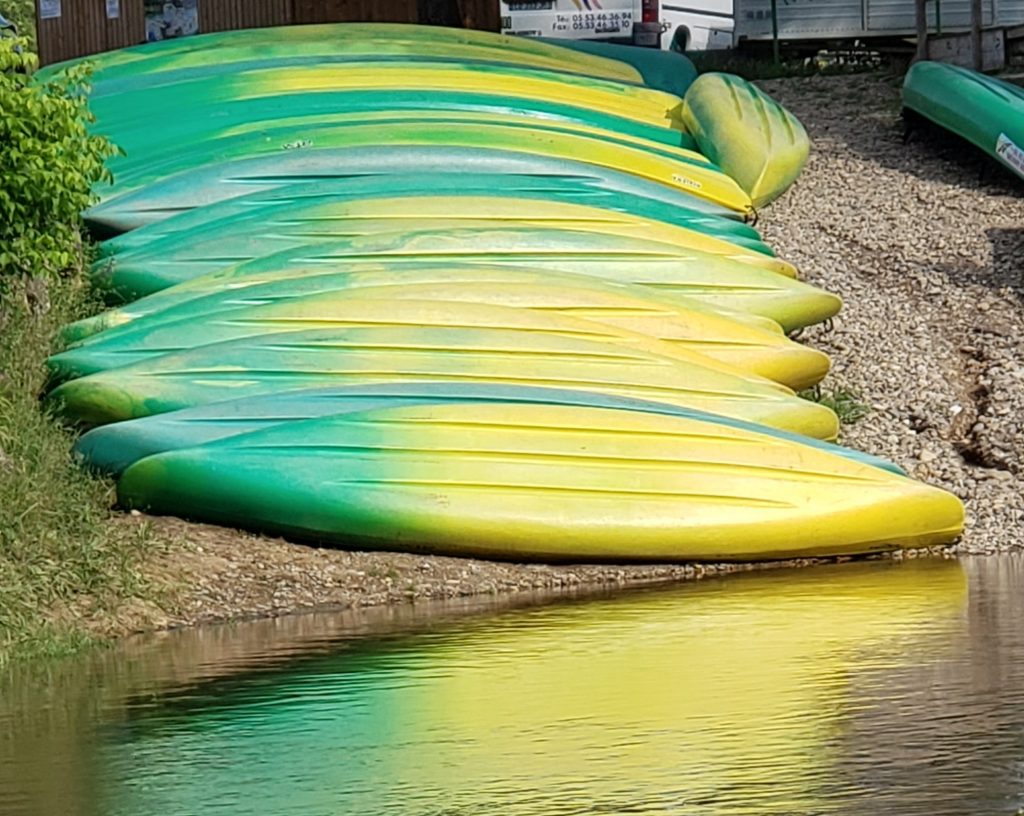
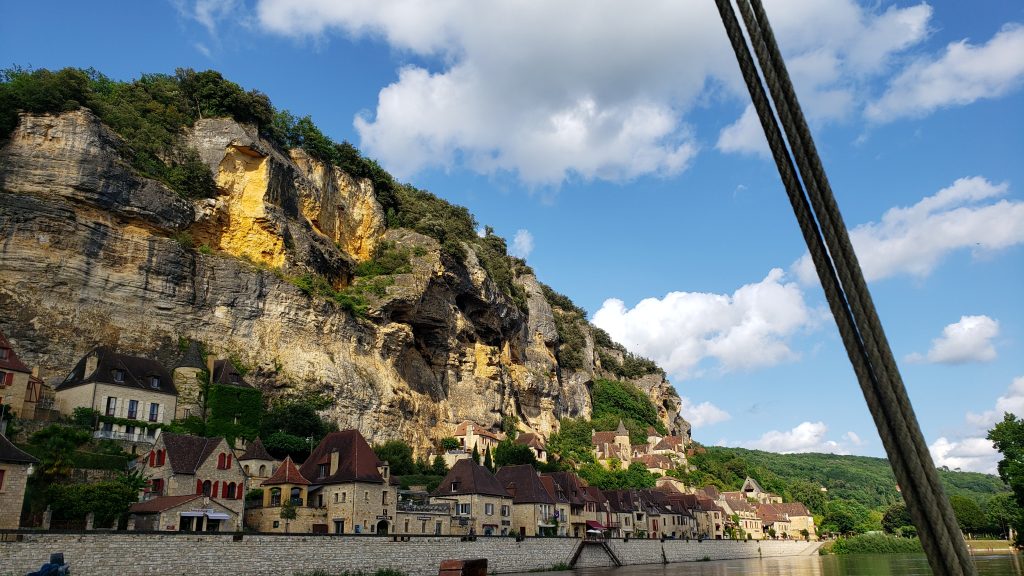
In the sunlit folds of France’s Dordogne Valley, where the river winds like a silver ribbon and limestone cliffs rise in dramatic embrace, there clings a village so enchanting it seems born of dreams. La Roque-Gageac, perched between rock and river, is a storybook place where golden stone, terraced gardens, and medieval echoes create a tapestry of breathtaking beauty. And where homes, forts and churches are built into cliffside caves—“Troglodyte” structures!
Defensive Position
La Roque-Gageac’s history stretches back to the Middle Ages, when its unique geography made it both a flourishing river port and a strategic stronghold. During the turbulent Hundred Years’ War, the village’s cliffside troglodyte fortifications provided refuge and defense, while its sheltered position along the Dordogne ensured trade and prosperity.
Through centuries of wars, floods, and political shifts, La Roque-Gageac endured—adapting, rebuilding, and preserving its medieval character. Today, it remains one of “Les Plus Beaux Villages de France,” an official designation for the country’s most beautiful villages
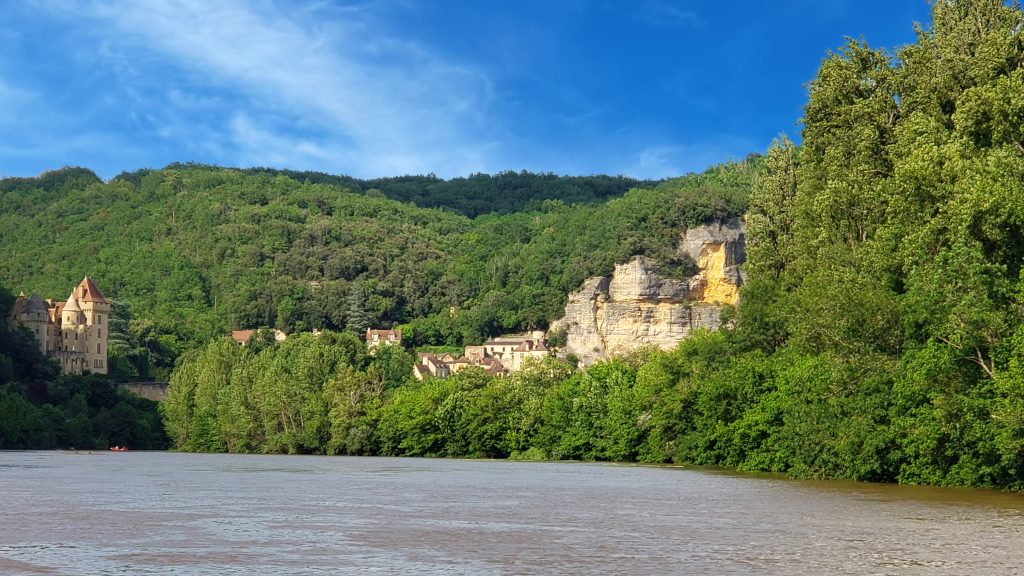
Charm on Riverside and Fascination Above
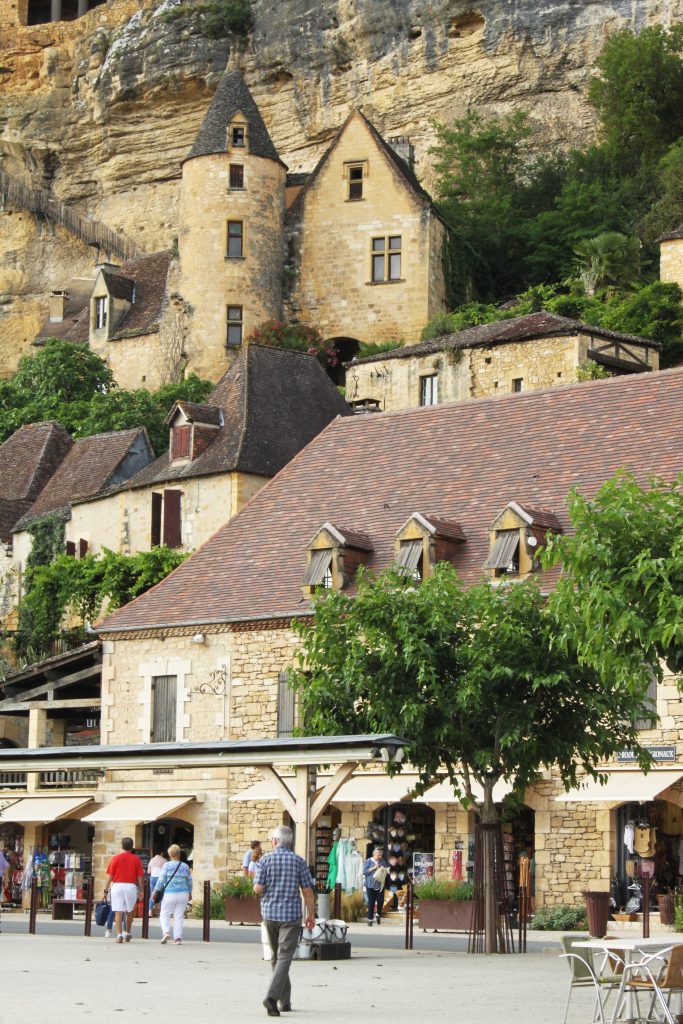
Wandering through La Roque-Gageac is to step into an impressionist painting brought to life. Narrow lanes weave past honey-colored houses with steep, brown-tiled roofs, their walls warm from the sun. Lush Mediterranean gardens—with banana plants, palms, and oleanders—cascade from hidden terraces, thanks to the village’s unique microclimate created by the protective cliff.
The mighty Dordogne drifts lazily by, its waters catching the golden light, while traditional “gabares” (flat-bottomed boats) glide past, recalling the days when the river was the village’s lifeblood. The air carries the scent of ripening figs and the earthy perfume of ancient stone warmed by the day.
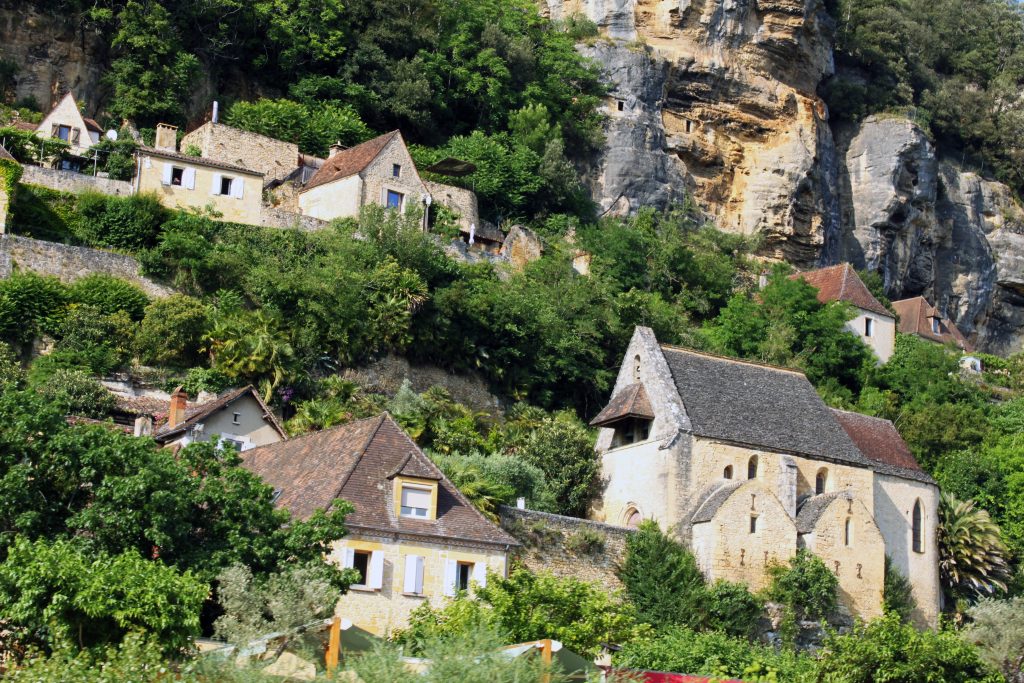
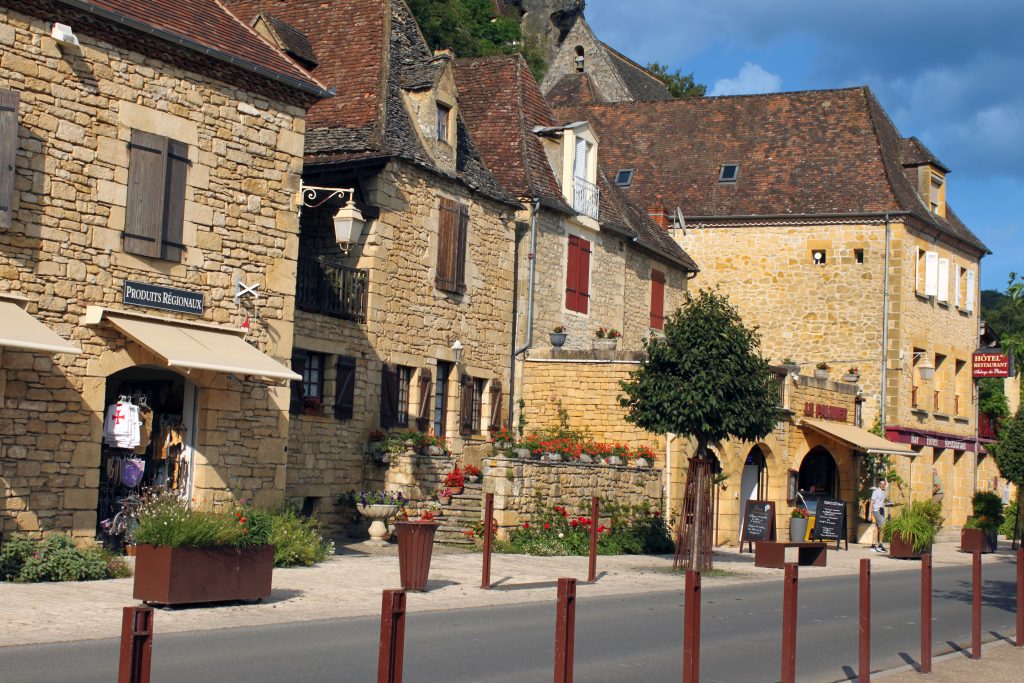
A Town on the Edge
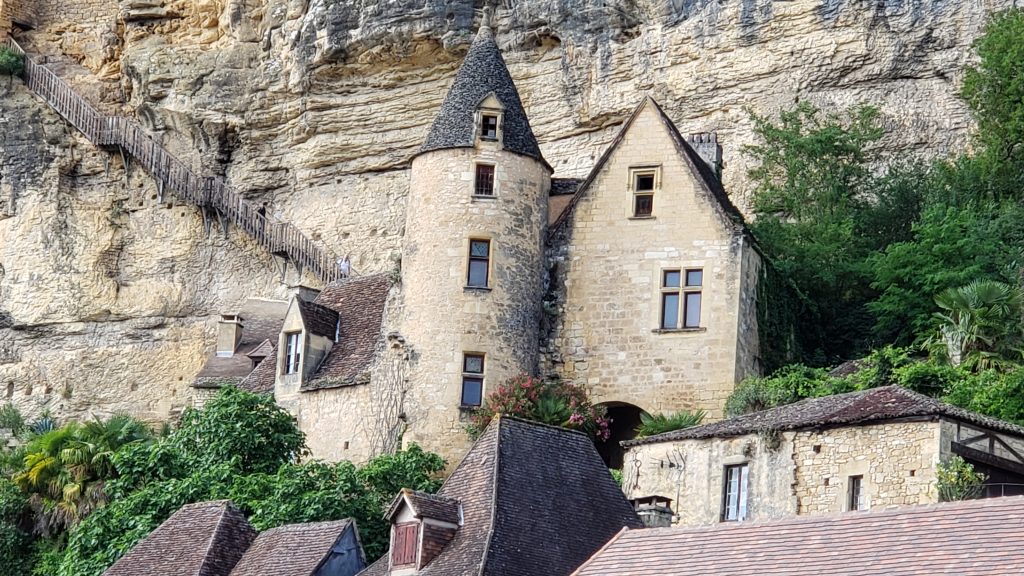
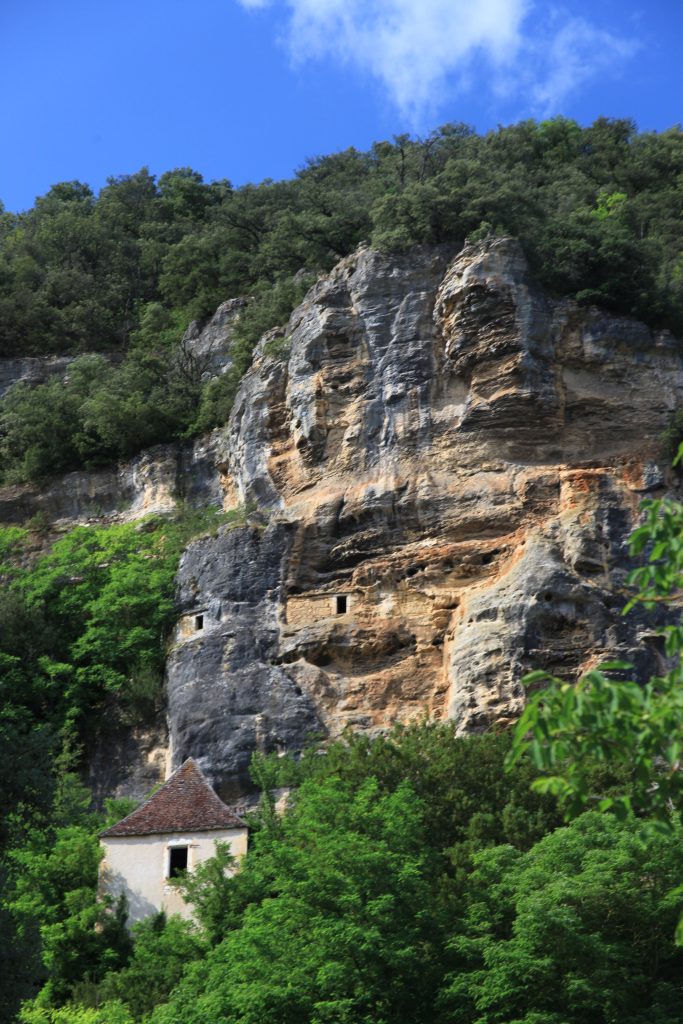
- The Troglodyte Fort: High above the village, semi-carved into the limestone cliff itself, the ancient fortifications date back to the 12th century. Originally designed as a defensive stronghold against invaders, the fort featured wooden walkways, watchtowers, and storehouses embedded into the rock. Though partially collapsed by the 19th century, the remnants—accessible today via a steep path—still offer a fascinating glimpse into medieval ingenuity and breathtaking views over the valley.
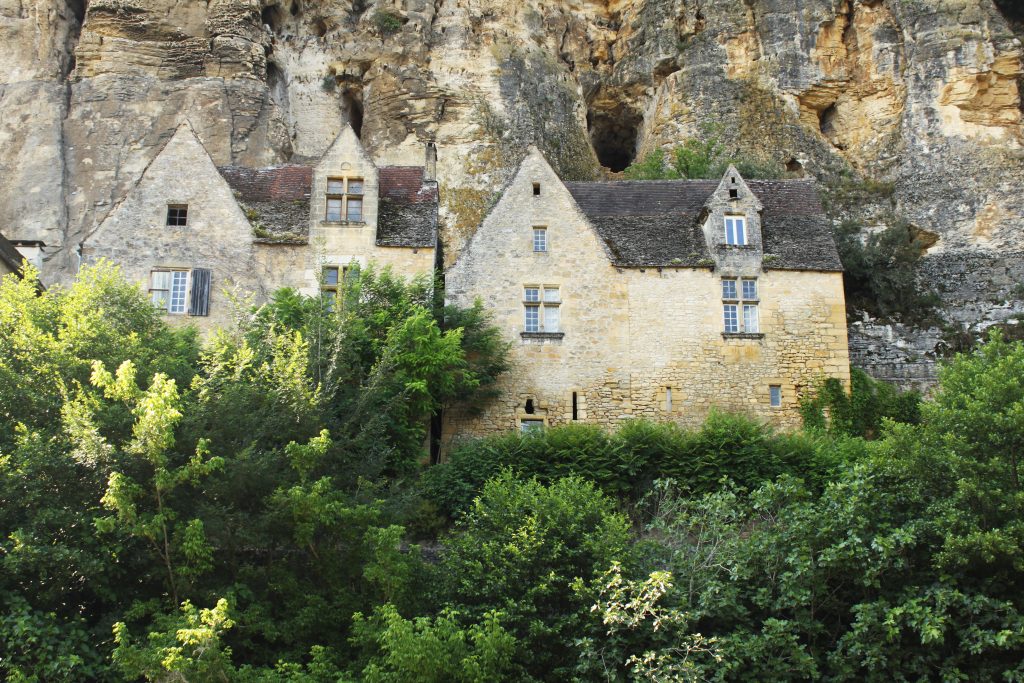
- The Troglodyte Homes: Beneath the fort, a series of cave dwellings once housed villagers seeking safety from river raids and warfare. Built directly into the cliff face, these homes maintained a cool interior year-round and could be easily defended. Some of these ancient abodes have been restored and incorporated into modern structures, blending past and present in stone and shadow.
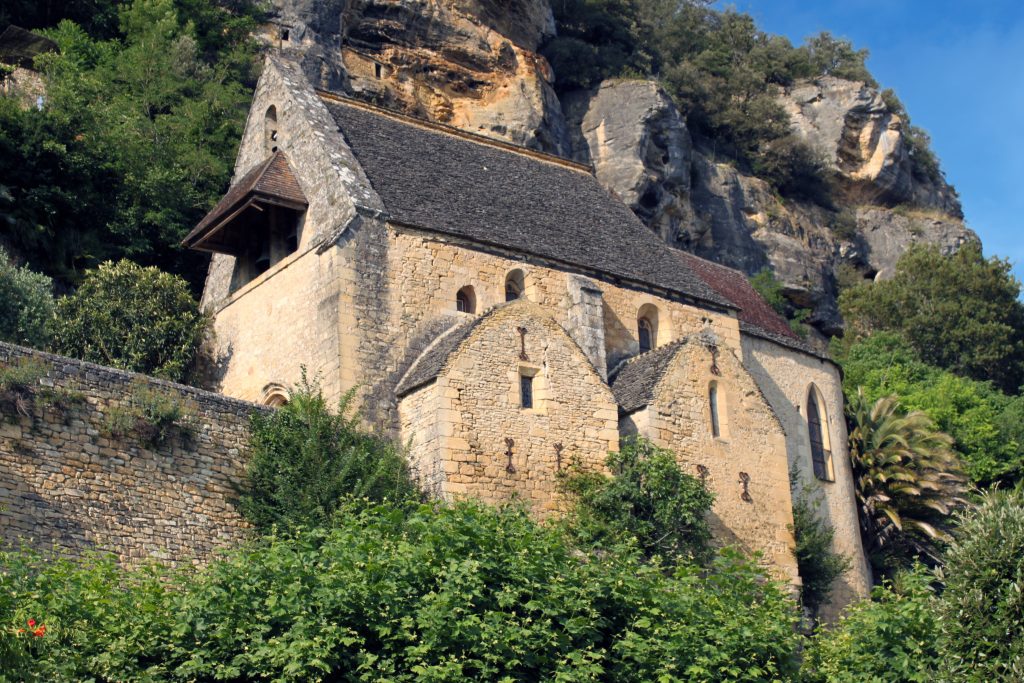
- Saint-Dominique Church: Tucked high above the river, this charming Romanesque church dates to the 12th century. Its weathered stone façade and modest bell tower stand as serene witnesses to centuries of faith, overlooking the rooftops and river below with quiet dignity.
- The Exotic Gardens: Along the main lane, a lush cascade of palms, banana trees, and bamboo lines the cliff base, creating a striking contrast between tropical exuberance and medieval stone.
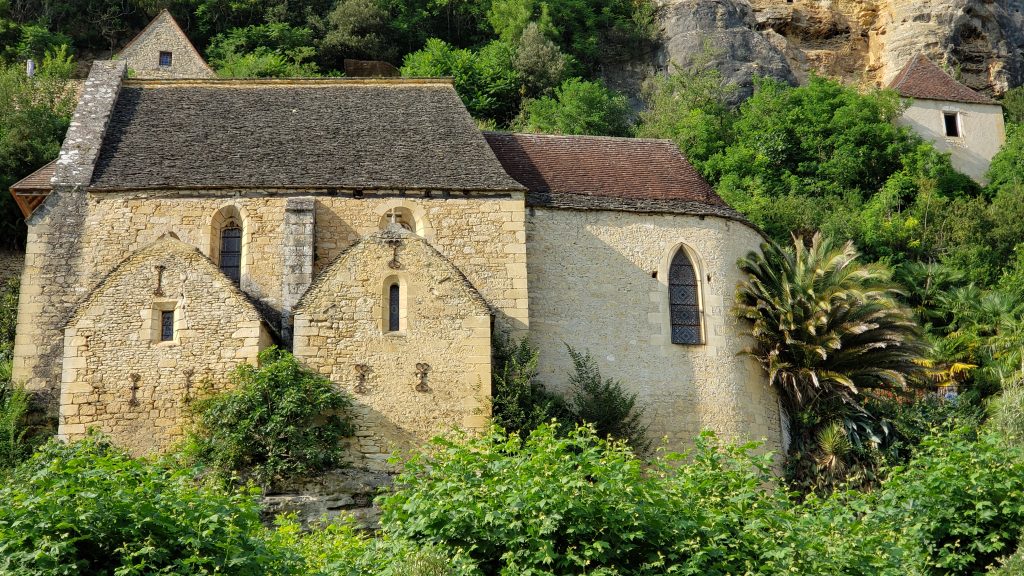
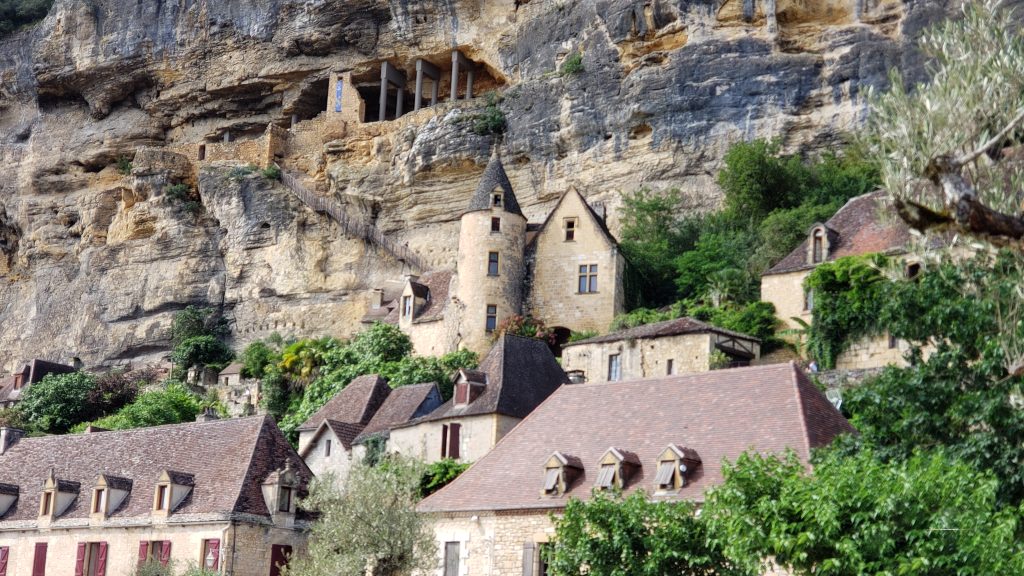
Life in the Slow Lane
Today, La Roque-Gageac beckons travelers seeking serenity, history, and natural beauty. Artists set up easels in the shade; cafés spill onto the cobbled lanes; and hikers climb winding paths up the cliff for panoramic vistas that seem untouched by time. Gabarre tours offer a gentle voyage into the past, tracing the routes once vital to trade and communication. Take a boat ride up the river and back to see stunning views, especially in the late afternoon ”golden light.”
So linger along the riverbank, where sunlight dances on the water and ancient stones breathe stories into the breeze. Let La Roque-Gageac remind you that sometimes, the most wondrous places are those where history clings not to the ground, but to the very cliffs and clouds.
Where to Stay in La Roque-Gageac, France
La Roque-Gageac is a small village, so lodging options are limited compared to larger towns in the Dordogne. The village itself has a handful of small hotels and guesthouses, including the Hotel La Belle Etoile, which sits directly on the riverside and offers views of the cliffs and water. Booking well in advance is essential, especially during summer months, as rooms fill quickly in this popular spot.
If the village hotels are full, nearby Sarlat-la-Canéda, just 10 kilometers away, offers far more choices and remains within easy driving distance. Sarlat is a larger medieval town with everything from budget guesthouses to mid-range hotels, plus good restaurants and shops. Many visitors base themselves there and take day trips to La Roque-Gageac rather than staying in the village itself.
For a more immersive stay, consider the small hotels and chambres d’hôtes scattered through the surrounding Dordogne countryside. These rural accommodations, often converted farmhouses or village properties, put you close enough to La Roque-Gageac for an easy morning or afternoon visit. They tend to offer quieter surroundings and, frequently, a chance to experience local hospitality and breakfast.
Budget-conscious travelers should look into the campgrounds in the area, which range from basic to well-equipped with cabins and lodges. Camping is a popular option in the Dordogne, and staying at a campground nearby allows flexibility to explore La Roque-Gageac and other villages in the region without the higher cost of central hotel rooms.
Recommended Reading
- The Lantern by Deborah Lawrenson – A haunting novel set in the south of France, where past and present intertwine.
- The Dordogne: Through History and Imagination by Martin Garrett – An exploration of the Dordogne’s historical and cultural treasures.
- Life in a Medieval City by Frances and Joseph Gies – A vivid portrait of life in places like La Roque-Gageac during the Middle Ages.
- Cliff Castles and Cave Dwellings of Europe by Sabine Baring-Gould —This classic work by Sabine Baring-Gould explores the history and architecture of cliffside and cave dwellings across Europe, with significant attention to France’s troglodyte habitats. Baring-Gould provides detailed accounts of various sites, discussing their historical significance and the lifestyles of their inhabitants. While the book covers a broad geographic area, it offers valuable insights into the development and use of troglodyte dwellings in France.
- The Cleaner of Chartres by Sally Vickers – A literary mystery‑novel set in Chartres, centred on Agnès, a cathedral cleaner whose hidden past gradually unfolds amid the cathedral’s labyrinth, stained‑glass symbolism and town life; standalone novel
- Insight Guides: France – With a staggering 84.7 million foreign visitors in 2013, France is the world’s most visited country – in fact, the only one in the world to receive more than 80 million. Be inspired to visit by the new edition of Insight Guide France, a comprehensive full-colour guide to this beautiful and varied country, home to “joie de vivre” and the first country whose cuisine has been declared a “world intangible heritage” by UNESCO.
Tours to Consider