In a sun-washed corner of the French countryside, one cathedral rises not merely from the earth, but from the imagination of a people reaching for the divine. Chartres Cathedral is not just a place of worship; it represents a convergence of stone, glass, and spirit, considered by many the most beautiful expression of Gothic art and architecture in Christendom. Considered one of Christendom’s most beautiful churches, Chartres Cathedral stands as a masterpiece.
Rising Over Foundations of 4 Churches
Chartres Cathedral (“Notre Dame de Chartres”) stands on layers of faith built across centuries. Erected atop the remnants of at least four earlier churches—themselves rooted in Christianity’s earliest centuries in Gaul—the present structure stands as a monument to both catastrophe and resilience. A devastating fire in 1194 destroyed most earlier buildings, sparing only the crypt and the Royal Portal. What rose in its place between 1194 and 1260 became a tour de force of early High Gothic architecture, establishing a new standard for medieval builders.
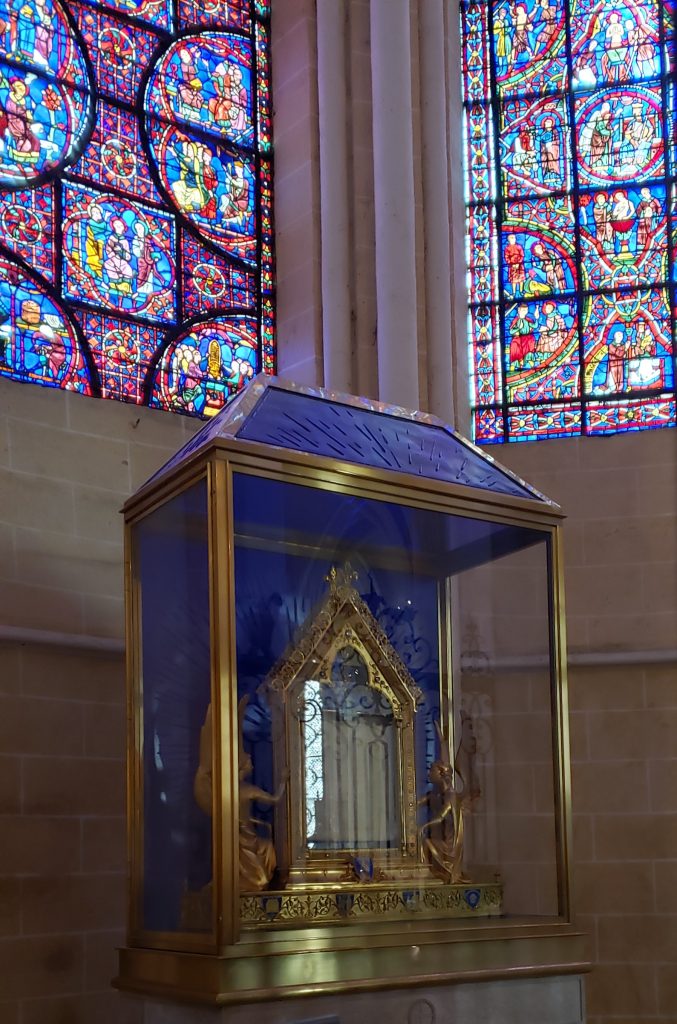
Chartres also played a vital role in France’s national history. It was the site of Henry IV’s coronation in 1594 and became a revered pilgrimage center, drawing medieval faithful to venerate the Sancta Camisa—a relic said to be the tunic worn by the Virgin Mary at Christ’s birth.

Grandeur From Afar and Up Close
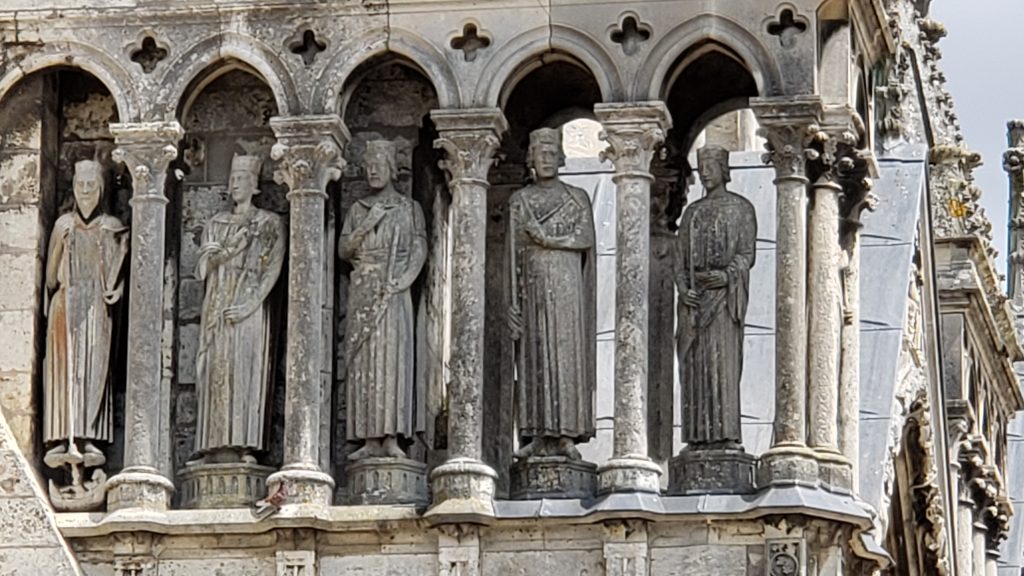
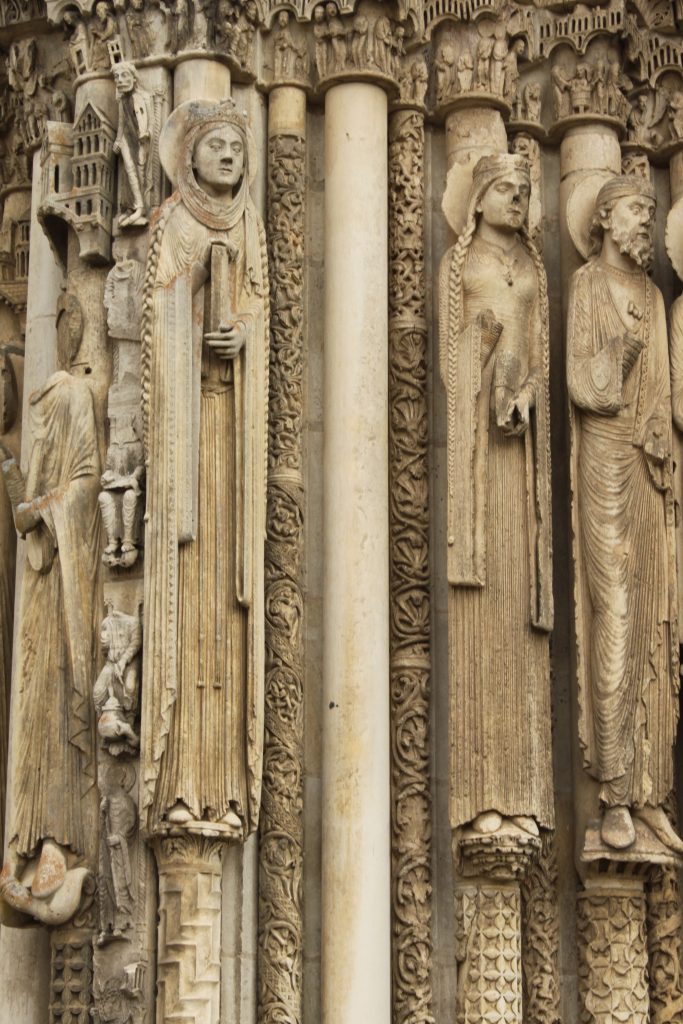
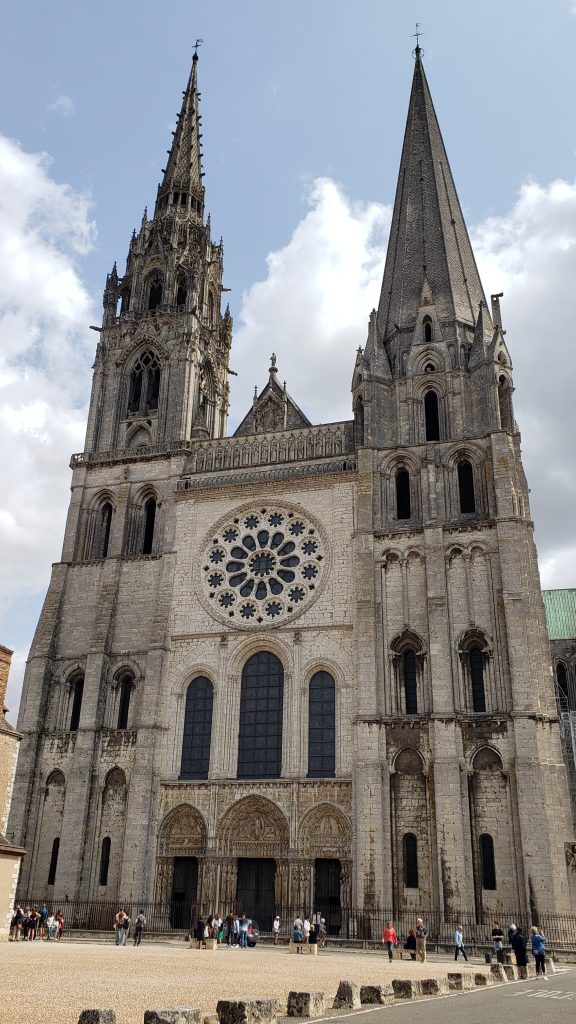
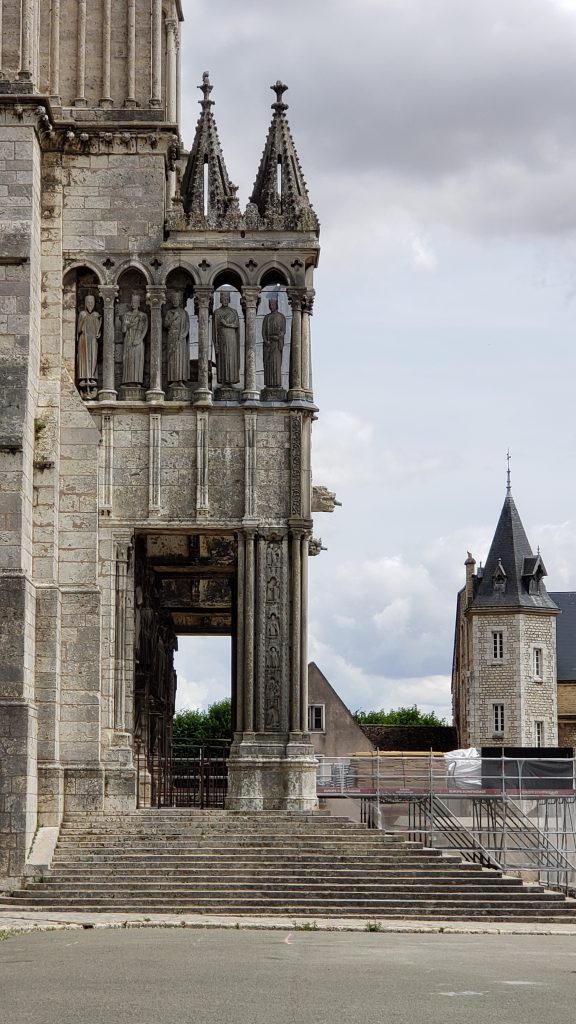
From a distance, the twin spires of Chartres Cathedral pierce the sky with breathtaking grace—the 12th-century Romanesque tower sturdy and plain, the 16th-century Gothic spire soaring and filigreed. As you approach, the intricate statuary of the Royal Portal commands your gaze: kings, prophets, and apostles carved in stone, their faces serene, their gestures eternal.
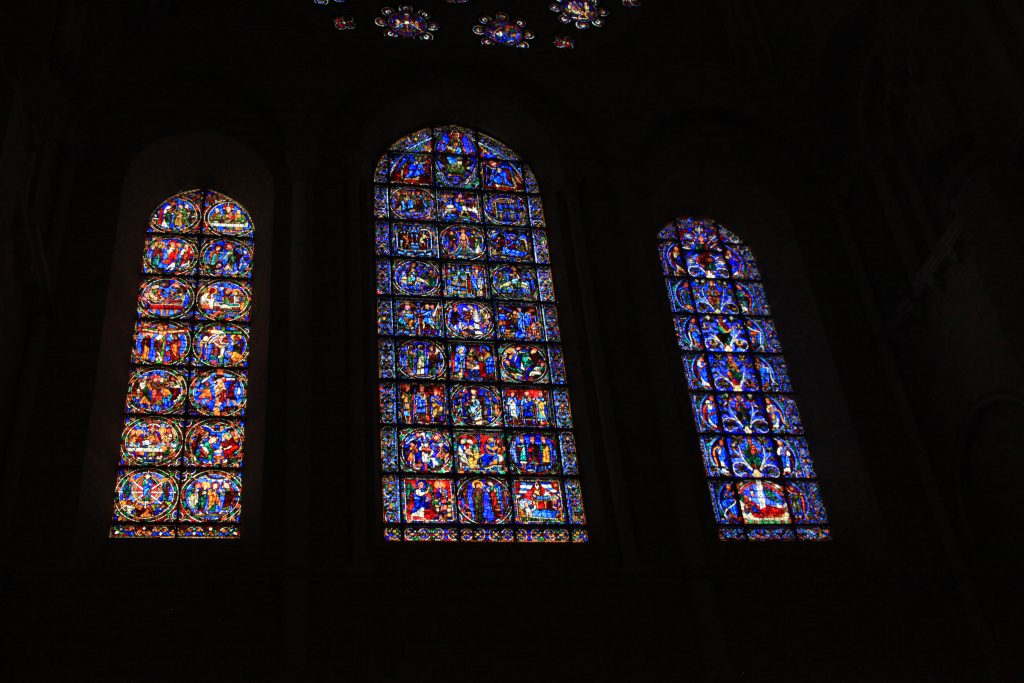
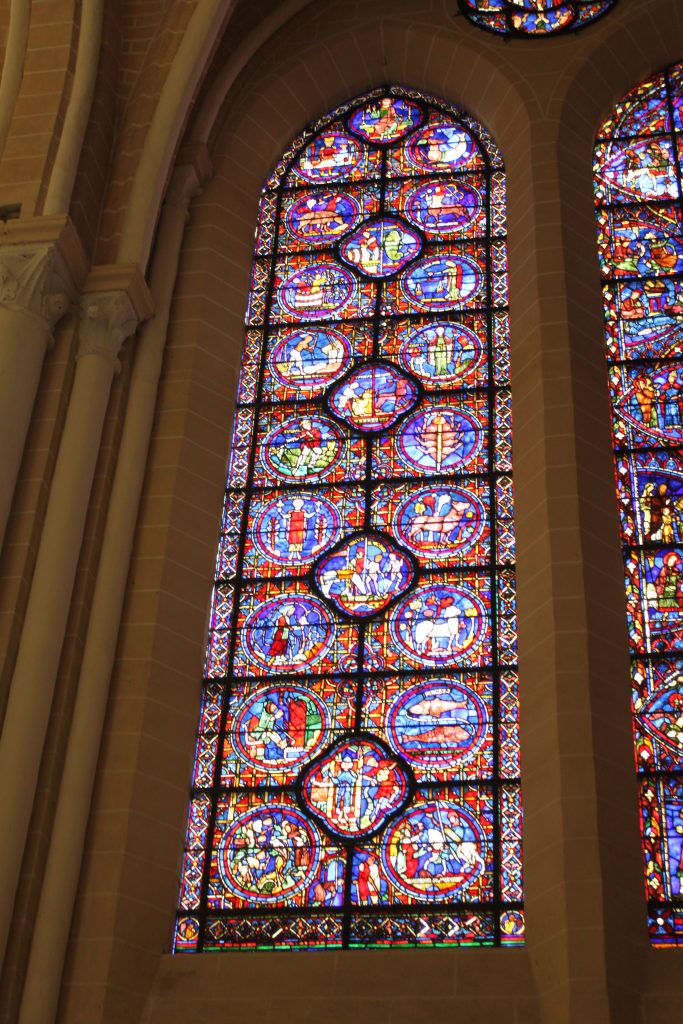
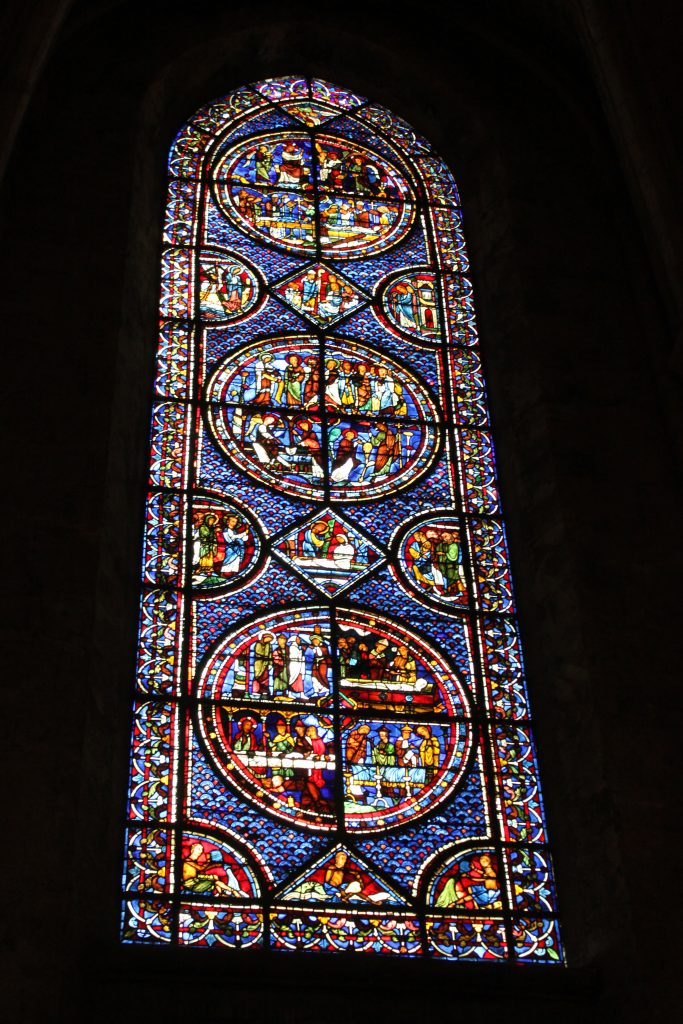
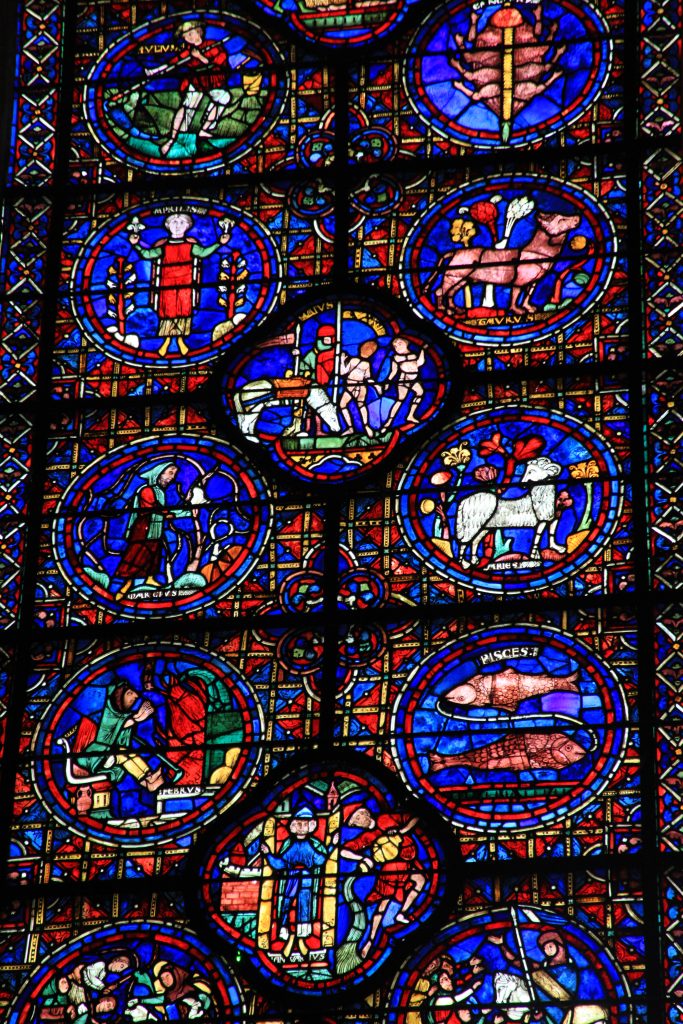
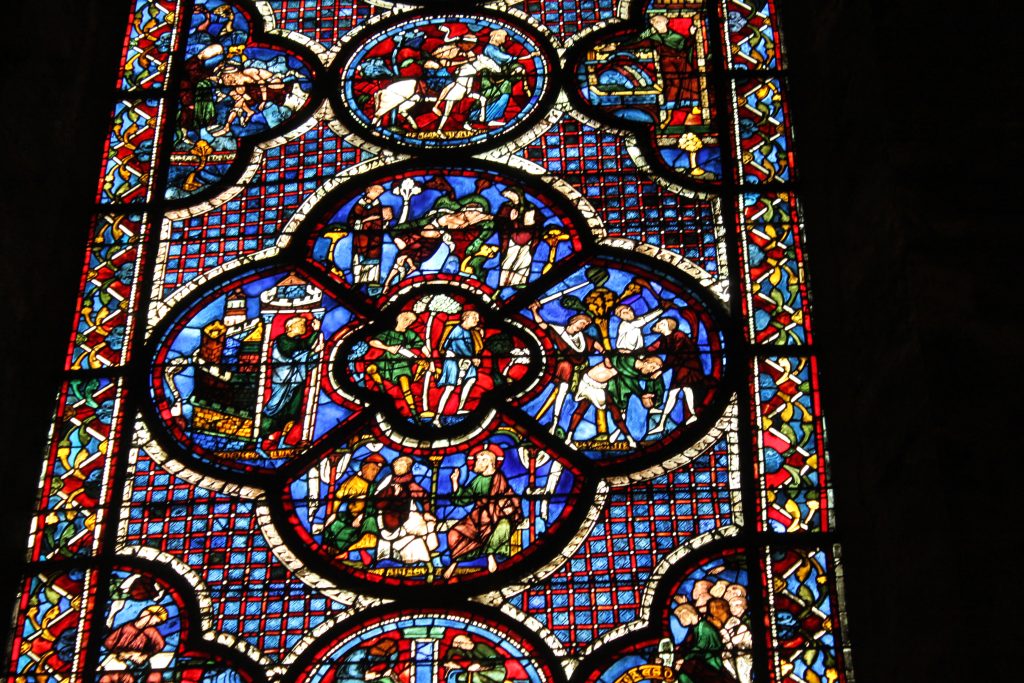
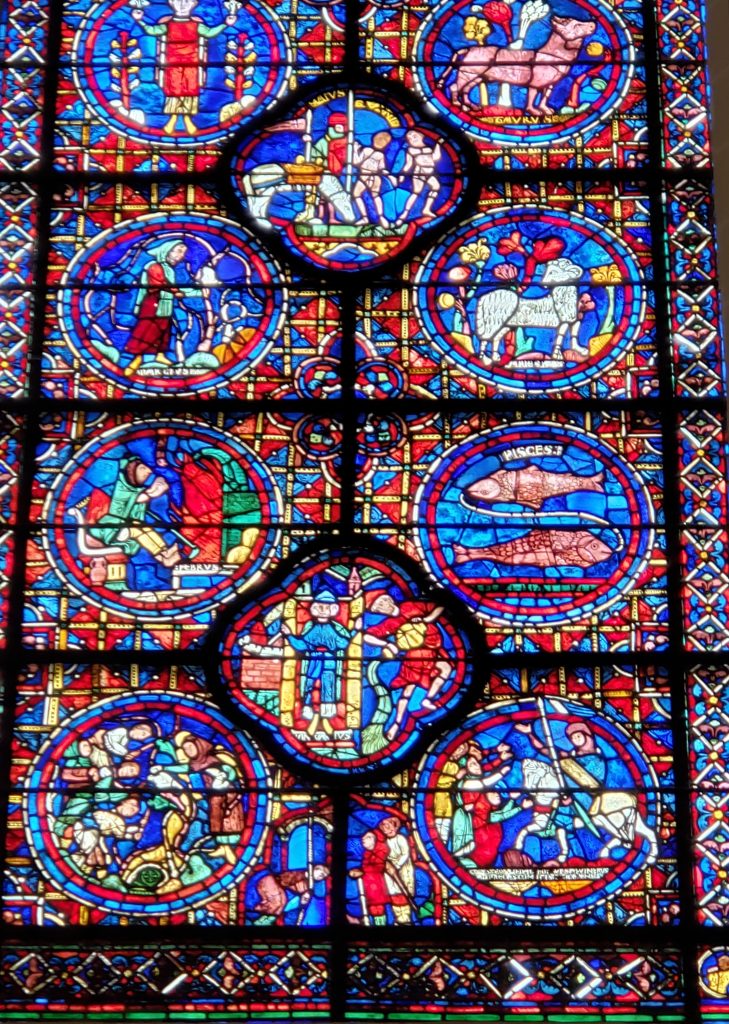
Step inside and the world changes. Light pours through stained glass windows of unsurpassed brilliance—a kaleidoscope of deep sapphire, ruby, and emerald hues that illuminates the stone interior with a hushed, ethereal glow. Dating from 1210–1250, these windows depict biblical scenes, saints’ lives, and medieval allegories, rendered with astonishing detail and humanity. Many scholars regard the stained glass at Chartres as the world’s finest collection of original sacred glass.
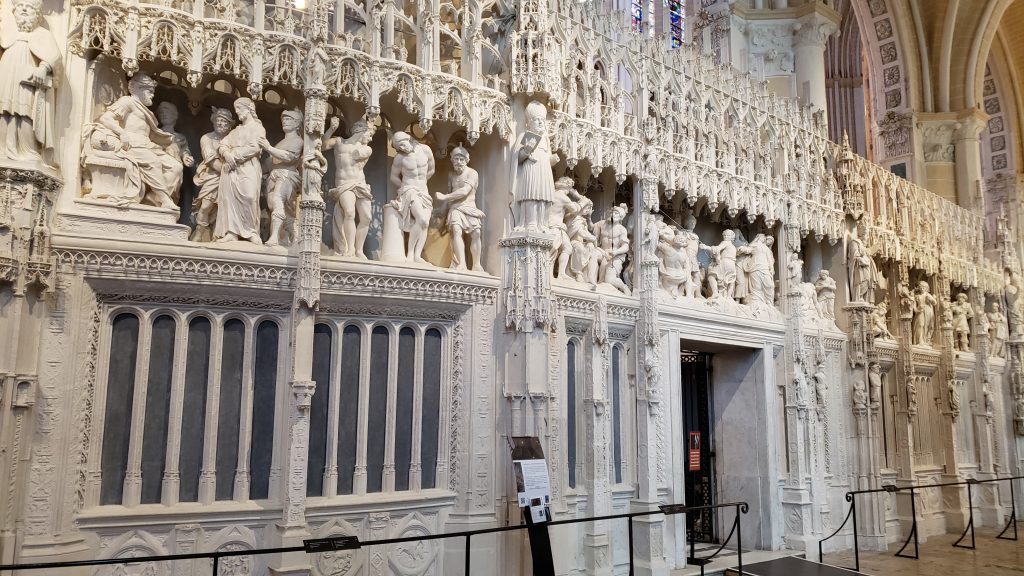
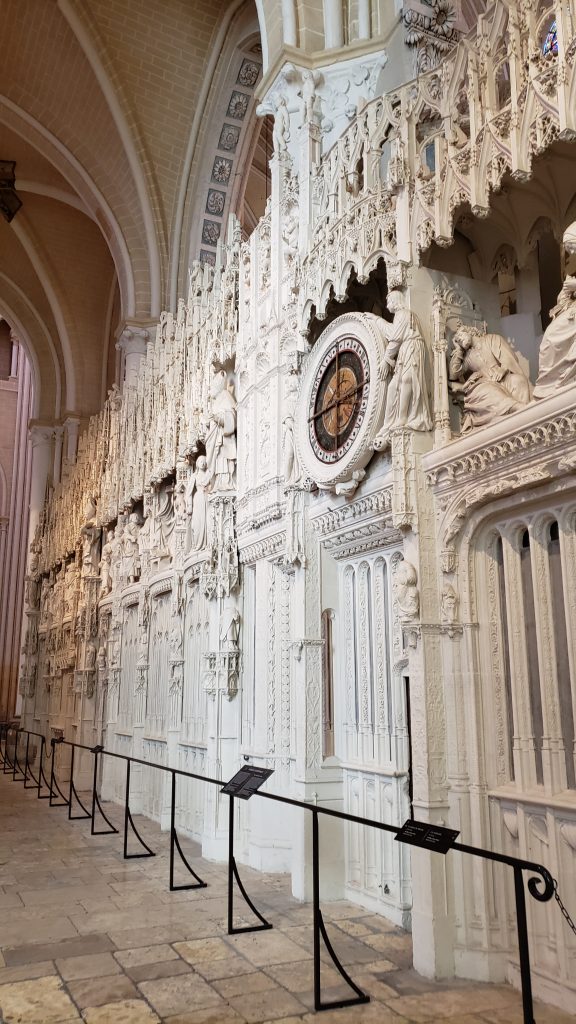
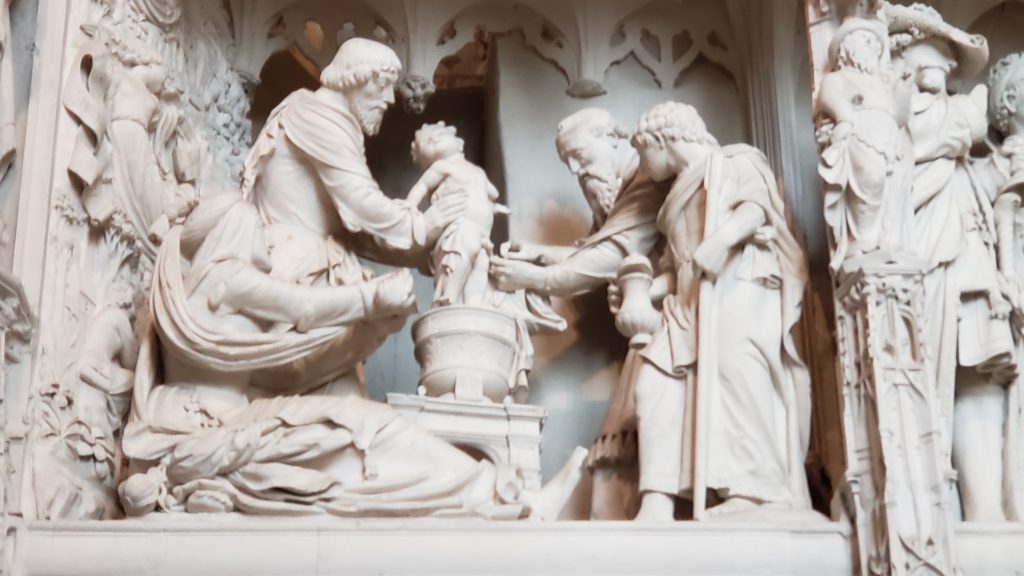
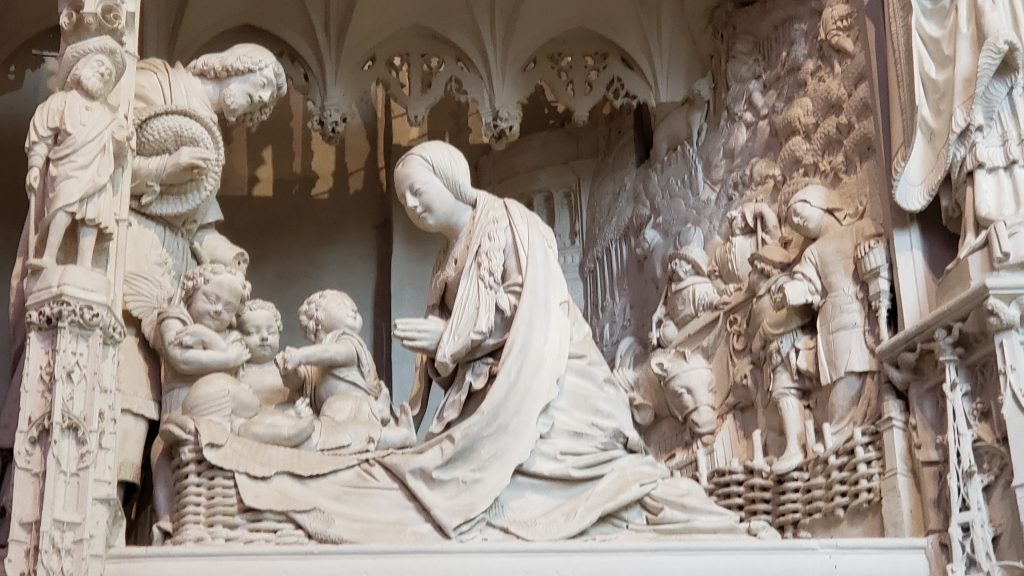
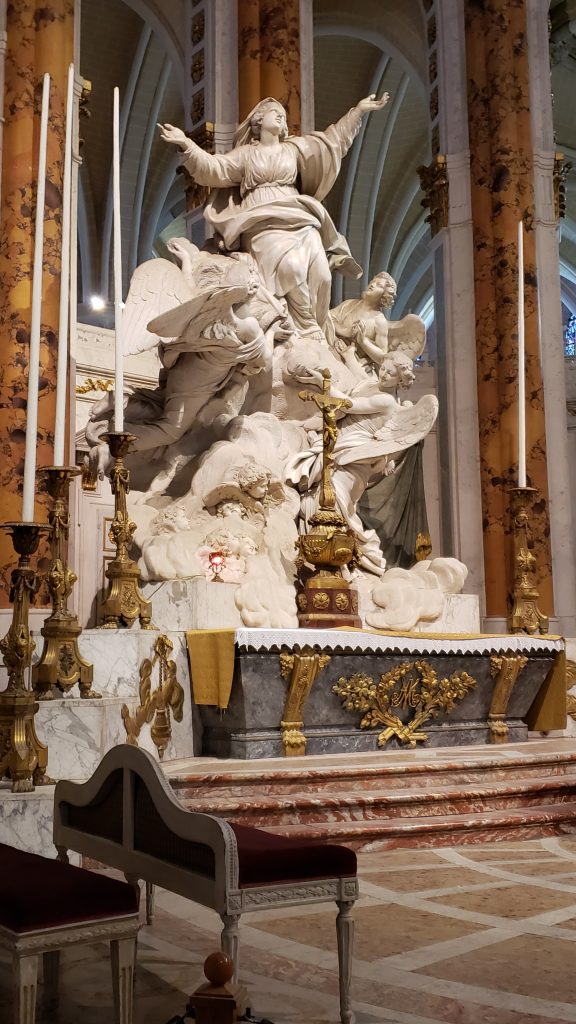
Weave your way toward the apse to discover a marvel: a Renaissance-era marble “porch,” a swirling sculptural masterpiece portraying the life of Mary and Jesus across 40 exquisitely carved 16th-century panels. No cathedral quite matches it—a union of Gothic reverence and Renaissance artistry.
Beneath your feet lies another wonder: a 42-foot labyrinth set into the stone floor of the nave. Pilgrims once walked its winding path as a symbolic journey to salvation, meditating with each step toward the spiritual center—a ritual of the soul’s passage through hardship toward redemption.

More Details on These Marvels
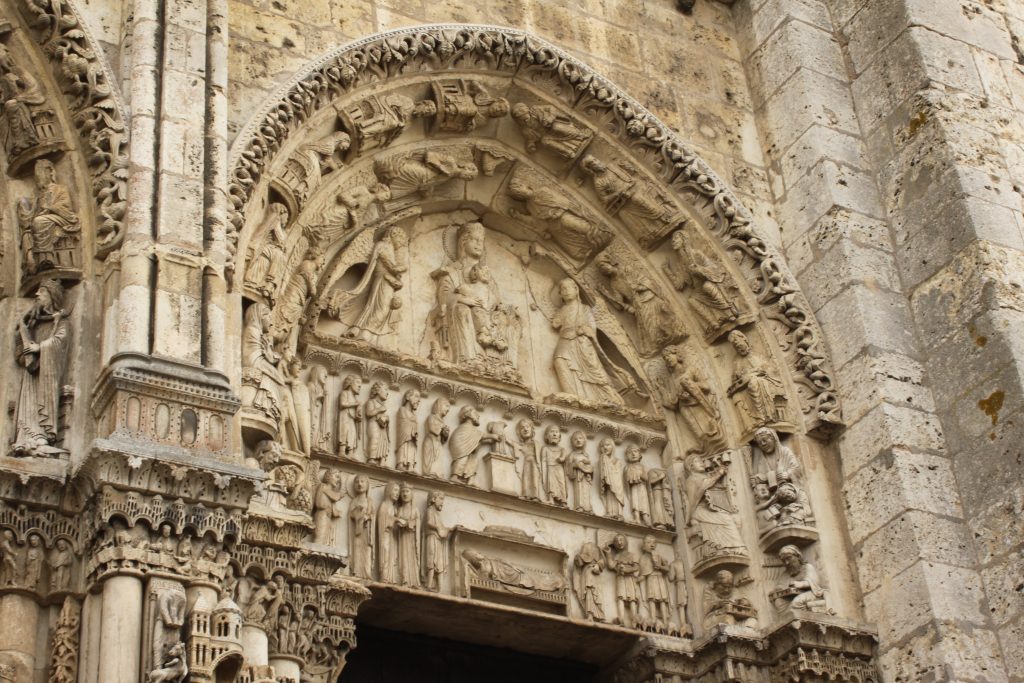
- The Royal Portal: The west entrance is the pinnacle of early Gothic sculpture, surviving the 1194 fire. The lintels of the Royal Portals represent episodes from the infancy story of Christ beginning on the lower left with the annunciation followed by the visitation, the nativity, and the annunciation to the shepherds. The upper lintel focuses on the story of Christ’s presentation in the temple. These scenes invite all who enter to contemplate the mystery of the Incarnation.
- The Stained Glass: Chartres houses 176 original windows, creating a shimmering storybook universe of faith, hope, and humanity, from the vaults to the walls to the rose window. The stained glass of Chartres is considered one of the finest and most complete collections of medieval glass anywhere in the world. Crafted with a unique recipe—using a combination of pot-metal glass and vitreous paint—the windows retain a radiant luminosity that seems almost otherworldly. The famous “Chartres blue” remains unmatched, a depth of hue so rich that it seems to glow from within. Each window served as a visual sermon for a largely illiterate populace, weaving a dazzling tapestry of faith, morality, and celestial aspiration across the vast interior.
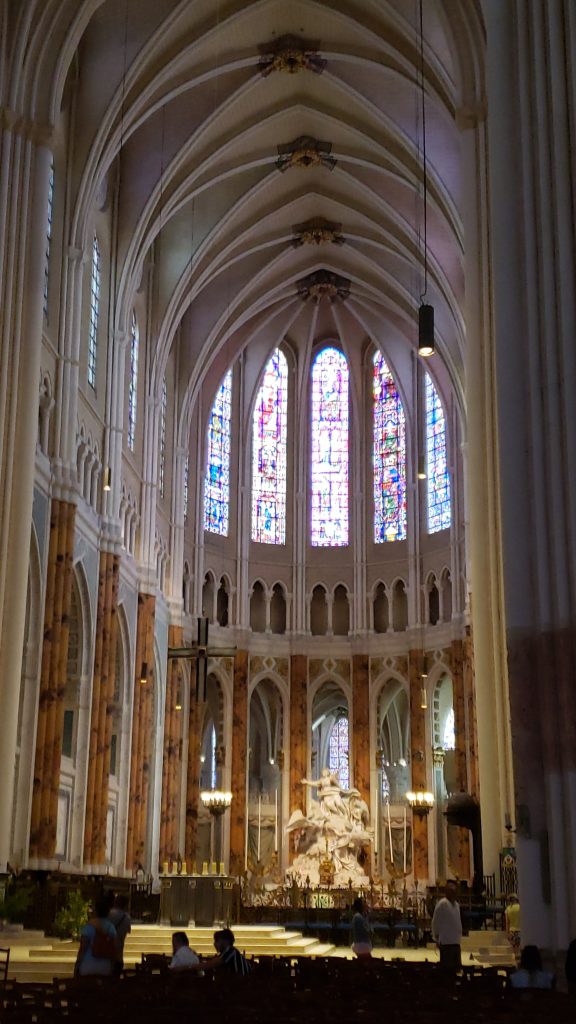
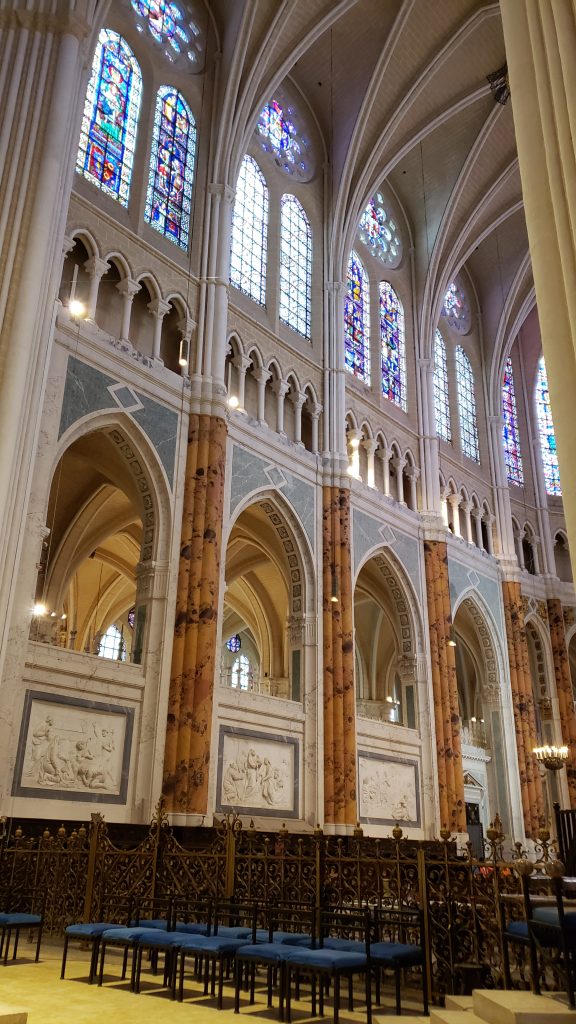
- The Nave and Choir: Reconstructed after the fire of 1194, the nave and choir soar with an extraordinary harmony of architecture and light. The pointed arches, ribbed vaults, and flying buttresses achieved a daring height and openness that flooded the interior with color and spirit. The nave stretches majestically toward heaven, its rhythmic columns and delicately carved capitals drawing the eye upward, while the choir enfolds the altar in a serene embrace of sculpture and light.
- The Labyrinth: More than an architectural feature, it is a spiritual pilgrimage compressed into stone; a meditative journey reflecting the soul’s path to God. This 42-foot Labyrinth invites you to take a meditative pilgrimage right there inside the church! The college of priests constructed in the early 13th century. According to the Cathedral’s website: “The challenge of the labyrinth is to open oneself progressively to Christ before advancing towards the altar, the love that Christ gave and a desire to surpass all personal difficulties. The opportunity is given to re-evaluate your sins – abandon them and seek forgiveness in order to advance. The purpose is to meditate with Christ on death and eternal life.”
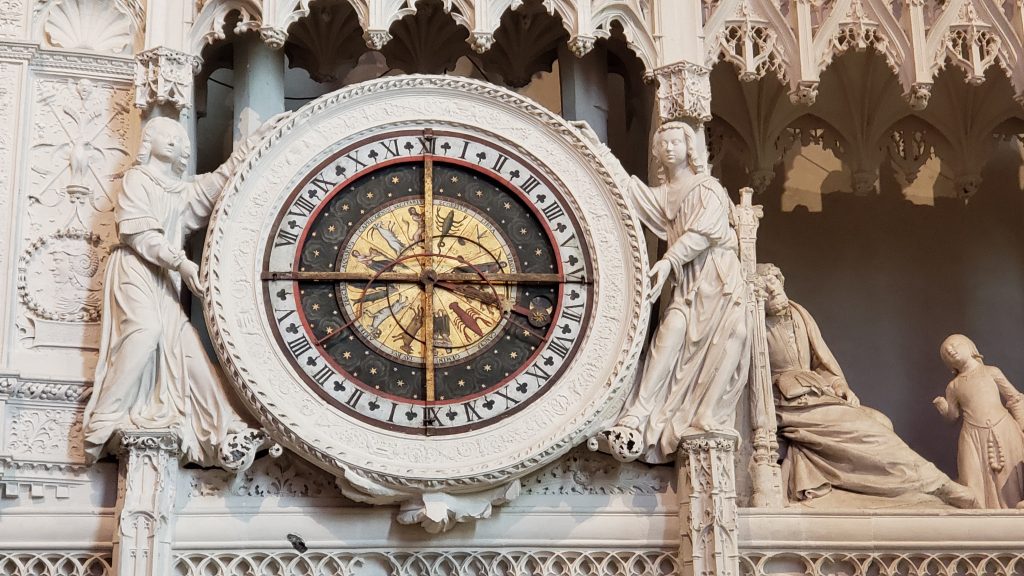
- The Marble “Porch”: Around the altar, the life of Mary and Jesus unfolds in delicate Renaissance marble carvings unmatched in ecclesiastical art. This “porch,” is a swirling sculptural masterpiece offering 40 exquisitely carved 16th-century panels. Commissioned in the early Renaissance when Gothic architecture was already giving way to new styles, the marble screen was crafted by artists under the patronage of the French monarchy. Each delicate bas-relief teems with life: angelic choirs, biblical episodes, the crowning of Mary as Queen of Heaven—all executed with a grace and narrative power that bridge medieval piety and Renaissance humanism. Intricately detailed and meticulously arranged, the porch wraps around the high altar, forming a visual and spiritual centerpiece unmatched

Five Secrets of Chartres Cathedral
Here are a few of the Cathedral’s secret highlights:
- The Uneven Spires: The north and south spires are dramatically different—a Romanesque tower and a flamboyant Gothic spire—built in two distinct architectural eras yet harmonizing miraculously.
- Hidden Pagan Symbols: Some carvings—green men and nature deities—echo pre-Christian beliefs, subtly woven into the cathedral’s Christian narrative.
- The Sancta Camisa: Chartres’s relic, said to be the Virgin Mary’s tunic, survived the 1194 fire, a “miracle” that inspired the townspeople to rebuild on a more magnificent scale.
- Labyrinth Pilgrimage: Medieval pilgrims who could not journey to Jerusalem symbolically “walked to God” by traversing the cathedral’s labyrinth.
- Celestial Alignment: Some historians believe Chartres was constructed according to ancient solar alignments, with shafts of sunlight falling on specific points at particular times of year.
A Pilgrim’s Guide to Chartres
A few tips for making the most of your visit to Chartres Cathedral…
- Enter Through the Royal Portal: Pause to study the serene kings and prophets carved into the stone. They are your companions as you step into sacred space.
- Gaze Upward at the Blue Virgin Window: Located in the north transept, this breathtaking pane of deep blue glass is the soul of Chartres.
- Walk the Labyrinth: Trace the ancient winding path in silent meditation, following the footsteps of centuries of pilgrims.
- Contemplate the Choir Screen: Marvel at the intricate Renaissance sculptures that tell the sacred story of Mary and Jesus.
- Descend into the Crypt: Visit the oldest surviving parts of the cathedral—silent, mysterious spaces where medieval worshippers once prayed.
Where Art and Worship Unite
Today, Chartres Cathedral remains a living sanctuary and beacon for travelers, art lovers, and spiritual seekers. Its influence on Gothic architecture is immeasurable, and its preservation stands as a testament to humanity’s enduring commitment to beauty, faith, and craftsmanship.
Recent restoration projects have revealed the stone and glass’s original vibrancy, bringing fresh life to ancient faces and scenes long dimmed by centuries of soot and candle smoke.
So stand beneath the vaulted arches. Let the light of the Blue Virgin Window wash over you in serenity. Trace the paths of medieval pilgrims through the labyrinth’s winding stone. In Chartres, history does not merely survive—it sings, shimmers, and blesses all who walk beneath its sacred canopy.
Where to Stay in Chartres, France
Chartres is compact enough that you can stay almost anywhere and reach the cathedral on foot within 15 minutes. The historic center around the cathedral and Place Charmontoise offers character and convenience, with small hotels and bed-and-breakfasts housed in restored stone buildings. Many visitors choose accommodations on Rue Noël Balluet or the quieter streets branching from the cathedral square, where family-run establishments reflect the town’s local character.
If you prefer more amenities, the area near the train station, about a 10-minute walk south, has moderate hotels with reliable facilities and parking options. This quarter offers straightforward comfort and easier access to regional transportation, though it lacks the atmosphere of the old town. Several chain hotels line the Rue de Verdun approach on the outskirts, suitable if you’re traveling by car and want familiar service.
For a quieter stay, consider neighborhoods along the Eure River valley south of the cathedral, where rural inns and small hotels offer a gentler pace. These locations require a short walk or taxi to reach the cathedral but offer space and calm. Many also offer restaurant service featuring regional specialties, making them ideal bases for overnight visits.
Book accommodations well in advance during spring and summer pilgrimage seasons, as rooms in Chartres fill quickly due to steady visitor traffic. The town itself is manageable in a day trip from Paris (45 minutes by train), but staying overnight lets you experience the cathedral’s light at different times of day and explore the surrounding countryside without rushing.
Recommended Reading
To walk Mykonos’s cobbled streets in spirit—or prepare for your real-world adventure—immerse yourself in these captivating books:
- Cathedral by Ben Hopkins – A sweeping historical novel that weaves together the lives and ambitions of those who shaped and were shaped by the building of a Gothic cathedral.
- Universe of Stone: Chartres Cathedral and the Invention of the Gothic by Phillip Ball – A profound exploration of the art, science, and philosophy behind the cathedral’s creation.
- The Mysteries of Chartres Cathedral by Louis Charpentier – A fascinating look into the myths, legends, and mystical symbolism surrounding this sacred marvel.
- The Cathedral by Joris-Karl Huysmans – A classic of 19th-century literature celebrating the spiritual and artistic majesty of Chartres.
- Insight Guides: France – With a staggering 84.7 million foreign visitors in 2013, France is the world’s most visited country – in fact, the only one in the world to receive more than 80 million. Be inspired to visit by the new edition of Insight Guide France, a comprehensive full-colour guide to this beautiful and varied country, home to “joie de vivre” and the first country whose cuisine has been declared a “world intangible heritage” by UNESCO.
Tours to Consider
- Cathedral Of Chartres – Private Trip
- Private excursion to Chartres Cathedral
- Chartres walk of Cathedral Churches and World War Heros with App