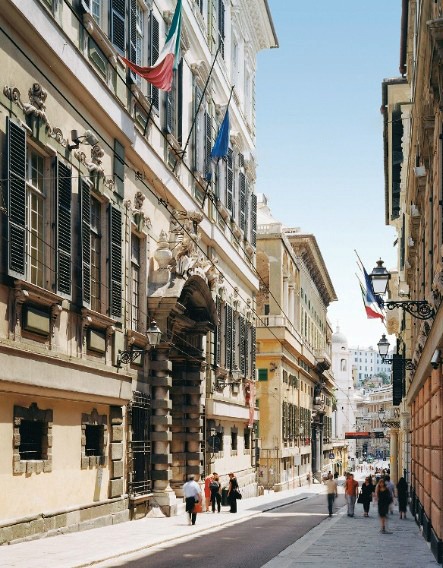
Wander the sunlit canyons of Genoa’s old town, and you’ll see walls and palaces that reveal the history of merchant princes, imperial ambitions, and maritime power. But these are no ordinary facades. Dressed in elaborate frescoes, angels, gods, allegories, anchors, they are brush-painted declarations of prestige, power, and legacy. Genoa’s painted buildings are autobiography rendered in pigment and plaster.
The Rise of the Painted Palazzo
The Republic of Genoa rose to power as one of the preeminent maritime states of medieval and Renaissance Europe. Its ships controlled trade routes stretching from the Black Sea to the Atlantic. Wealth flowed through its harbors, and from the 16th through the 18th centuries, the city bloomed into a kaleidoscope of urban grandeur.
Nowhere was this more vivid than in its painted facades.
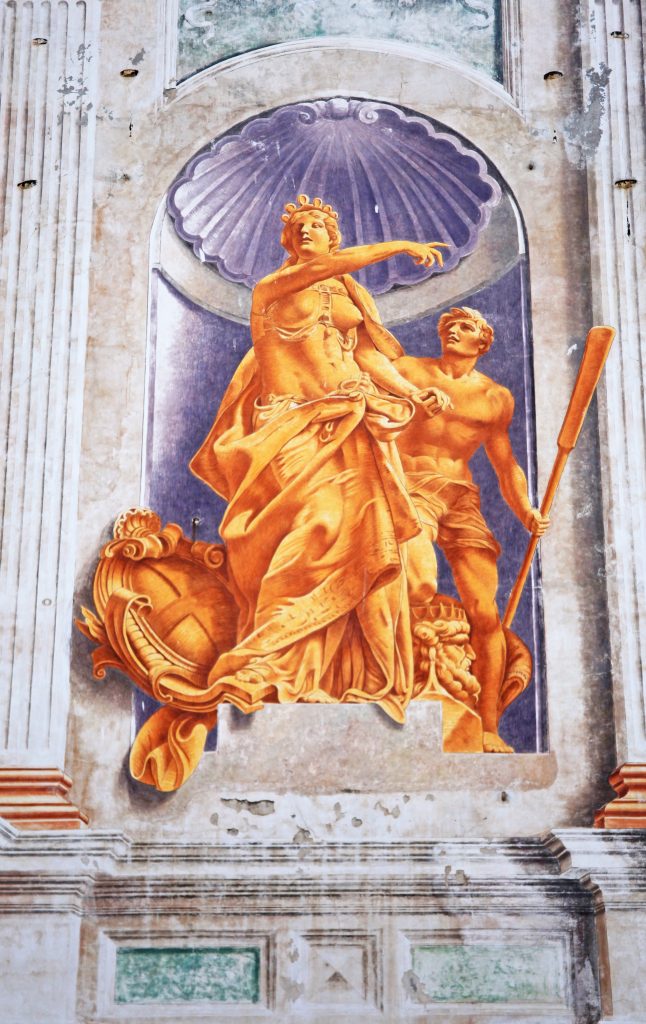
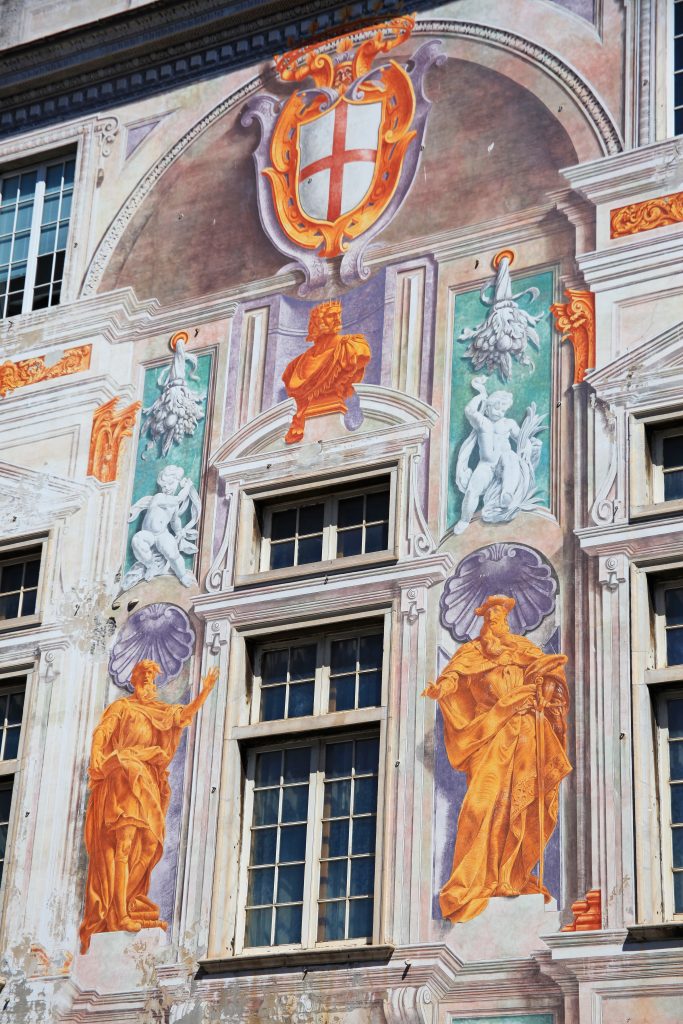
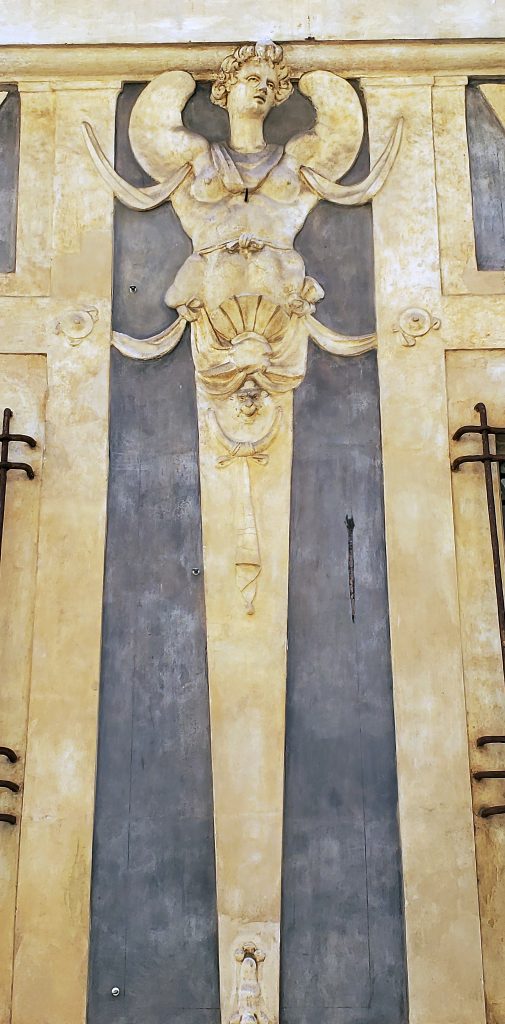
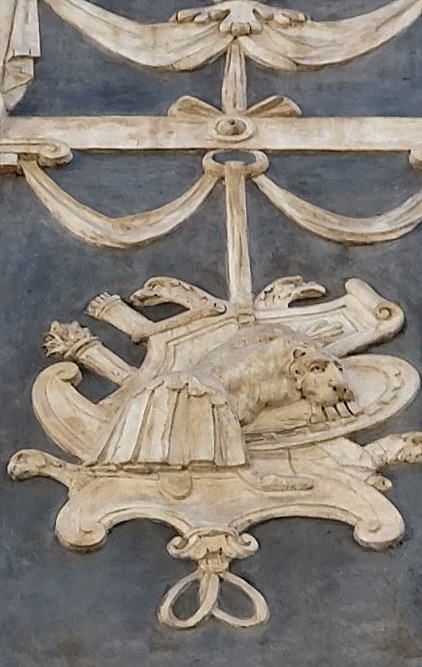
In an era where power was not just exercised but displayed, Genoese noble families competed to transform their palazzi into canvases of opulence. While Florence sculpted, Venice gilded, and Rome built, Genoa painted. These illusionistic frescoes were more than decorative, many were trompe-l’oeil masterpieces, tricking the eye into perceiving marble columns, grand statues, and architectural flourishes that did not exist. Others presented mythological scenes, saints, emblems, and dynastic heroes, all encoded messages to those who knew how to read them.
This practice of facade painting flourished especially in the 1500s and 1600s, when the Genoese aristocracy, listed in the city’s “Rolli di Genova,” a register of elite homes used to house visiting dignitaries, sought to display their palaces as civic showpieces. Genoa’s tight medieval street plan left no room for expansive courtyards or ostentatious gardens. So the facades became a public stage.
Via Garibaldi Lures
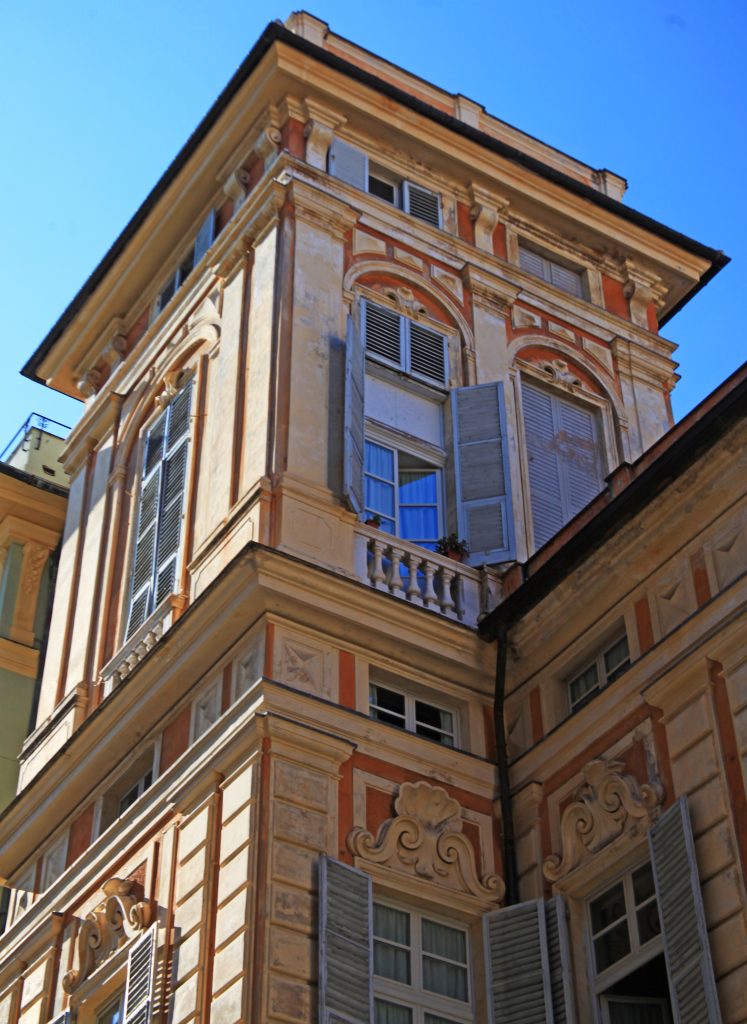
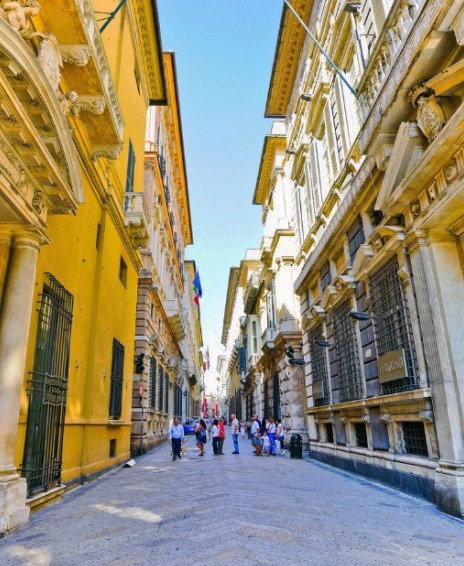
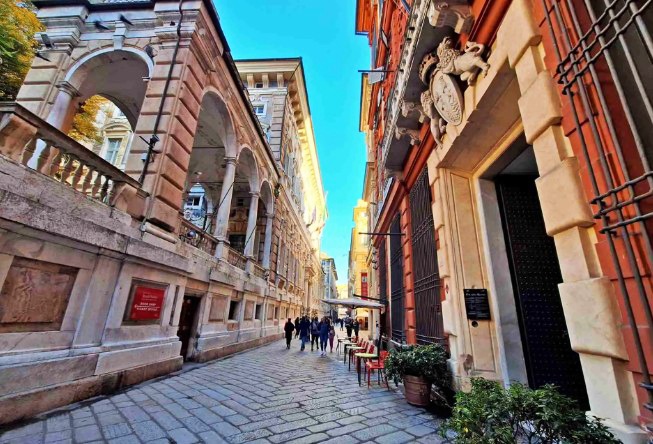
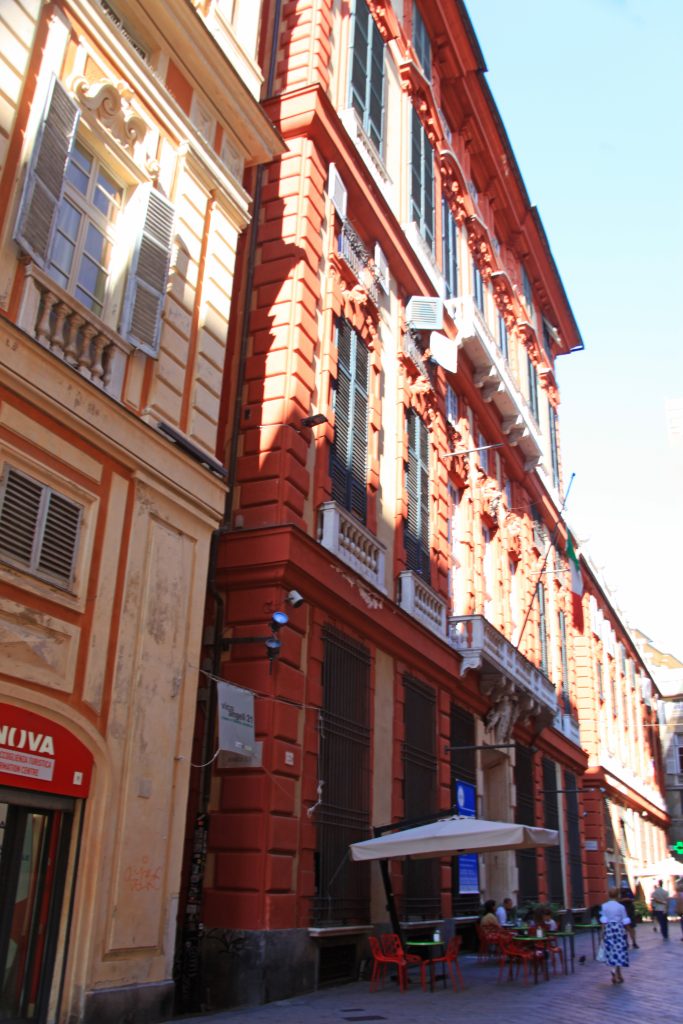
To see these painted buildings at their most majestic, head to the Strada Nuova, today known as Via Garibaldi. This narrow, elegant street was laid out in the mid-16th century to display Genoa’s architectural power. Here, a procession of noble palaces, Palazzo Rosso, Palazzo Bianco, Palazzo Tursi, and others, stand shoulder-to-shoulder, dressed in classical harmony, adorned with illusion and iconography.
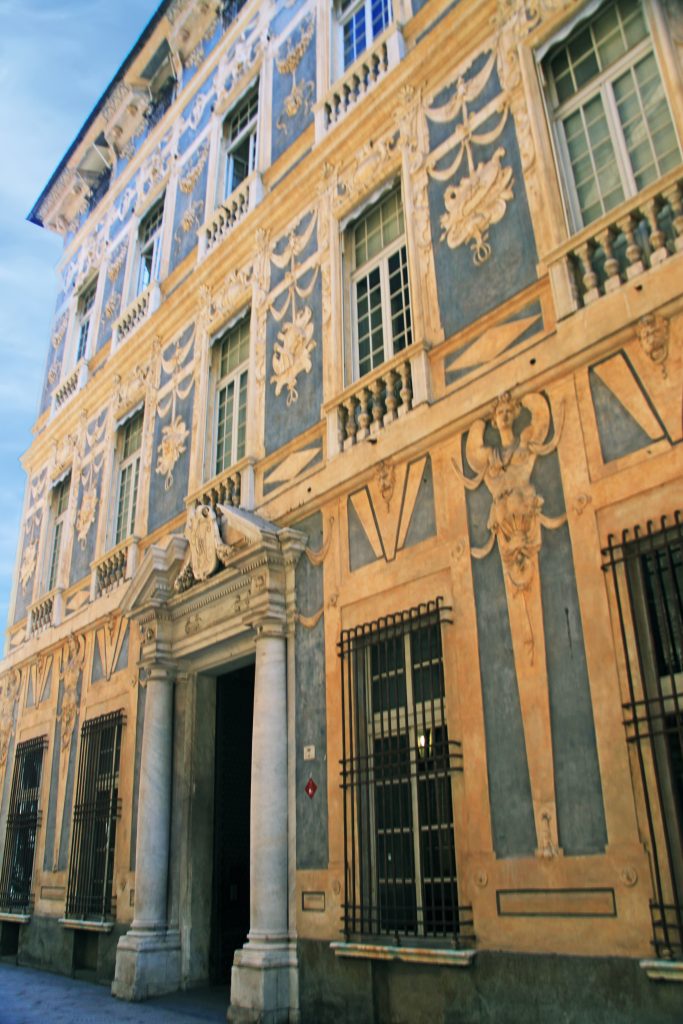
- Among them, Palazzo Nicolosio Lomellino also known as Palazzo Podestà, built in 1563, offers one of the finest examples of painted façade storytelling. Its intricate fresco program, attributed to the brothers Giovanni and Giovan Battista Carlone, brims with mythological and martial symbolism. The gods Mars and Minerva, flanking its windows, symbolize fortitude and wisdom, virtues critical to the Lomellino family’s identity as military financiers. Cherubs parade the family’s heraldic crests, while faux Roman arches suggest imperial gravitas.
Painted garlands, rusticated columns, and Neptune-like sea gods trumpet the wealth and nobility of a family whose fortunes were tied to the sea. In fact, the Podestà family, possibly linked to the coral trade and maritime goods, likely used these sea creatures as a symbolic nod to their commercial lifeblood. Coral, once harvested off Sardinia and parts of North Africa, was a prized material in early modern Europe, both for ornament and its supposed apotropaic (evil-warding) powers. Trompe-l’oeil statuary leans out from painted niches, bestowing theatrical grandeur upon the otherwise compact façade, an ideal solution in Genoa’s densely packed urban core.
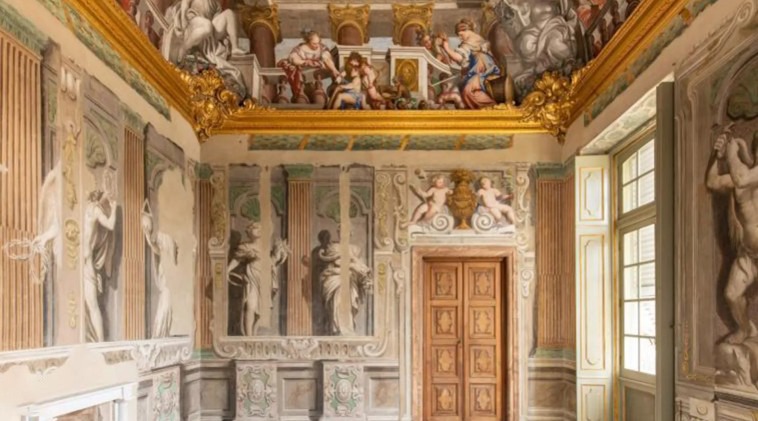
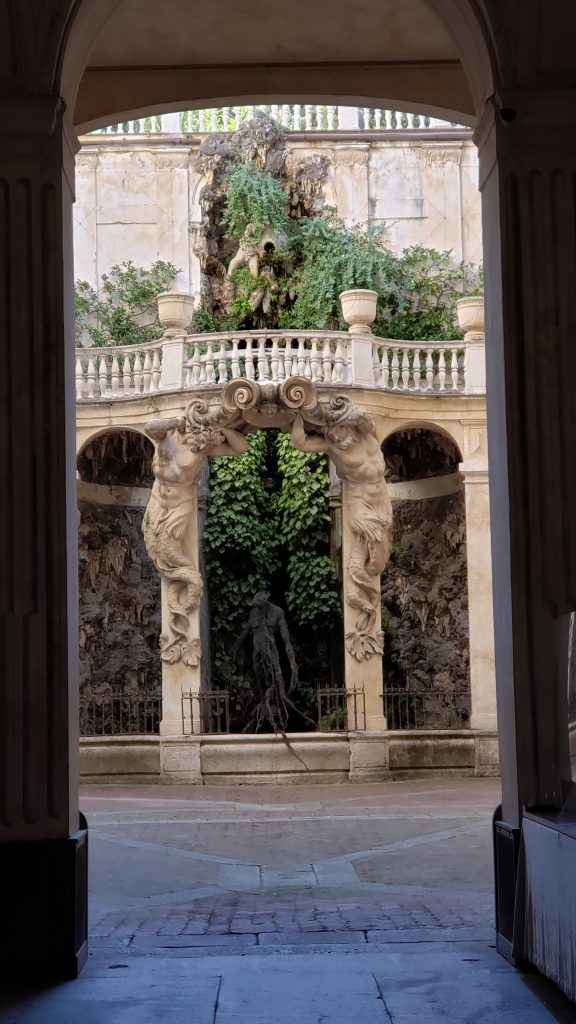
Today it is privately owned, with guided visits available during cultural events or by special arrangement. Often used for art exhibitions and cultural functions, known for its beautifully frescoed salons and gardens, rare for Genoa’s vertical architecture. Inside, stuccoed ceilings and mythological ceiling paintings reflected the same martial and allegorical themes seen on the façade, with Mars and Minerva presiding over rooms dedicated to diplomacy and finance.
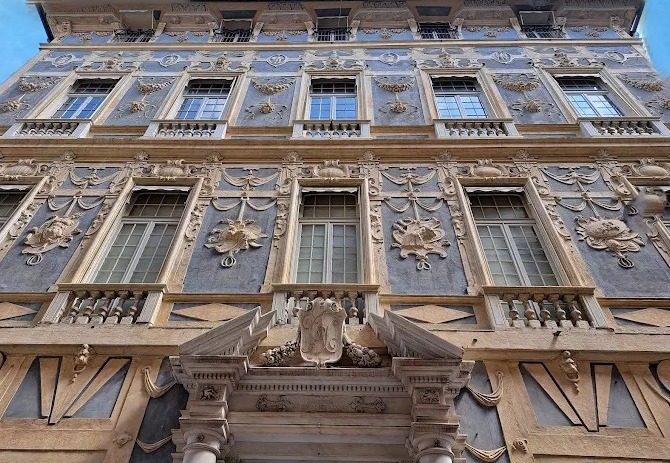
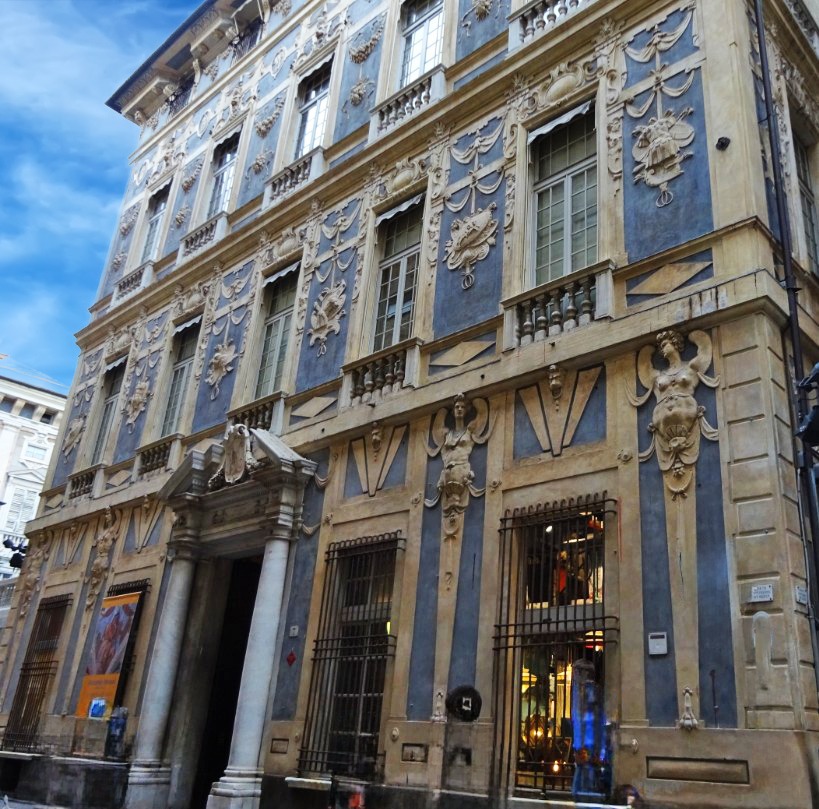
- Nestled at Piazza Fossatello 3, Palazzo Andrea Pitto rises from the ambition of Battista Centurione, who commissioned its construction in 1611-1612 on the site of homes owned by his father-in-law, the banker-shipowner Adamo Centurione Crafted under the guidance of architects Battista Cantone and his son Filippo, the palace embraces Renaissance structure and Baroque exuberance, with its façade immortalized in Rubens’ renowned “edition” and its portal inscribed with the noble motto Sic nos non nobis, “Thus we, not for ourselves”
Inside, the sensuous swirl of Baroque frescoes unfolds across two noble floors, entered via an original, vaulted staircase adorned with textured “infrascato” plaster Master artists of Genoese Baroque, Bernardo Strozzi, Gregorio De Ferrari, Bartolomeo Guidobono, Domenico Piola, and Giovanni Semino, each left their imprint.
In the main hall, Domenico Piola’s mythologically rich frescoes guide us into a realm of allegory and narrative.The Sala delle Quattro Stagioni by Giovanni Semino enchants with its vault: Time unveiling Truth amid representations of the Four Seasons, an image both poetic and morally steeped. The grand Sala del “Trionfo della Liguria” by Gregorio De Ferrari presents a personified Liguria, an armed woman astride a griffin, her right palm bearing an eye, the sky dotted with stars, proclaiming regional pride in allegory. Finally, Bernardo Strozzi’s Gallerietta closes the journey in a flourish of grotesque decoration, whimsical landscapes, animal motifs, and ornamental richness entwined in playful harmony The Palazzo Andrea Pitto, today this building now houses private offices and cultural exhibitions. It is occasionally open to the public during Rolli Days. Its richly painted vaults and reception halls once featured faux colonnades and maritime frescoes symbolizing Neptune’s dominion, perfect for a family entrenched in Genoa’s shipping empire. The interiors created a flowing continuation of the oceanic imagery seen outside.
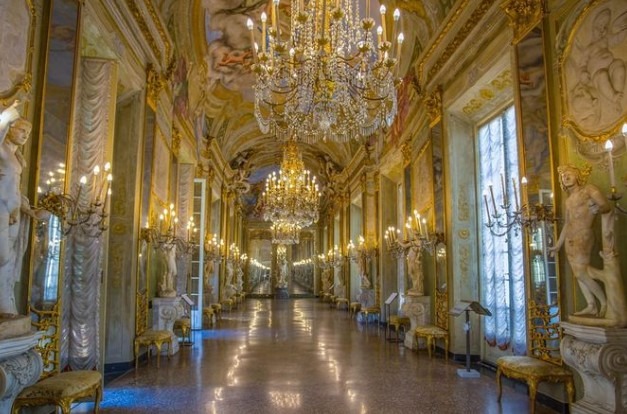
- On Genoa’s elegant Via Garibaldi, Palazzo Campanella, also known as Palazzo Baldassarre Lomellini, quietly reveals centuries of ambition and artistry. Built in 1562 for Baldassarre Lomellini, banker to Spain’s Philip II, the palace was designed by Giovanni Ponzello, one of the Republic’s most trusted architects. Its marble portal, sculpted by Taddeo Carlone, still bears the inscription venturi non immemor aevi, a reminder to remain “mindful of the future,” a fitting motto for a mercantile dynasty.
Inside, Andrea Semino once covered the vaulted ceilings with stirring frescoes of the Labors of Hercules, each feat a metaphor for the Lomellini family’s own vision of strength, virtue, and divine favor. Stucco decoration and painted allegories transformed the palace into a stage of heroic self-representation. In the 18th century, Cristoforo Spinola, ambassador to France, recast the interiors with neoclassical grandeur, commissioning the luminous Salone del Sole, inspired by Versailles, a room designed to awe, later tragically lost to bombing in 1942.
Though its most dazzling spaces have vanished, Palazzo Campanella retains fragments of its layered past. Visitors can still admire portions of Semino’s frescoes, along with later romantic-style rooms by Michele Canzio. In 1917 the Campanella family gave the palace its current name, and today it houses government offices, its noble floor occasionally open to the public.
The palace endures as both workplace and monument, its portal a Renaissance welcome, its surviving frescoes a whisper of Genoa’s mercantile myth-making. To stand before it is to glimpse the Republic’s long habit of casting commerce as heroism, where Hercules himself lent muscle to the ambitions of a banking dynasty.
Now it serves as part of the University of Genoa’s School of Humanities. The upper floors once dazzled with fresco cycles depicting the Labors of Hercules, complemented by coffered ceilings, stucco decorations, and allegorical personifications of virtue and heroism. These motifs reinforced the family’s commercial might and civic role.
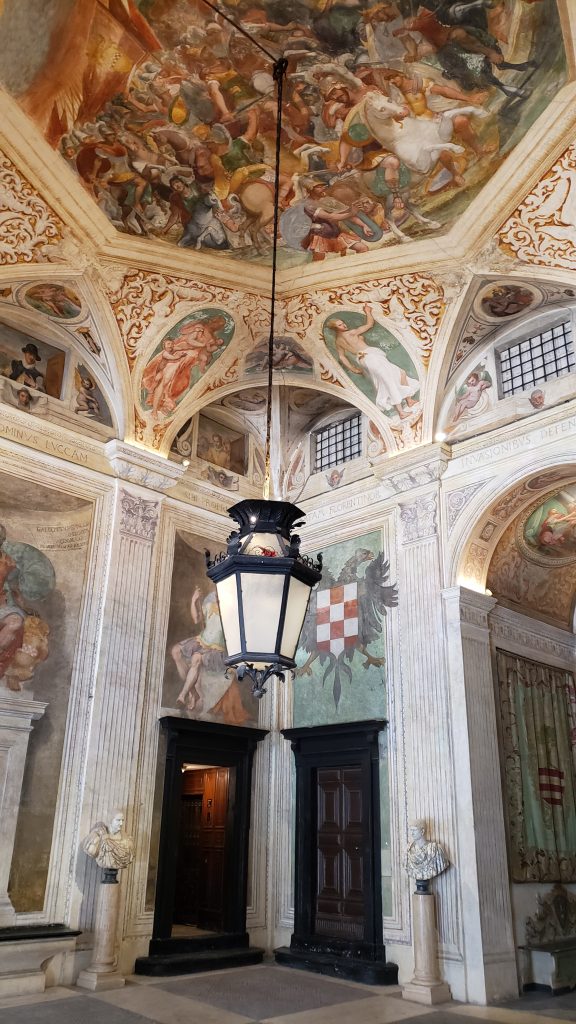
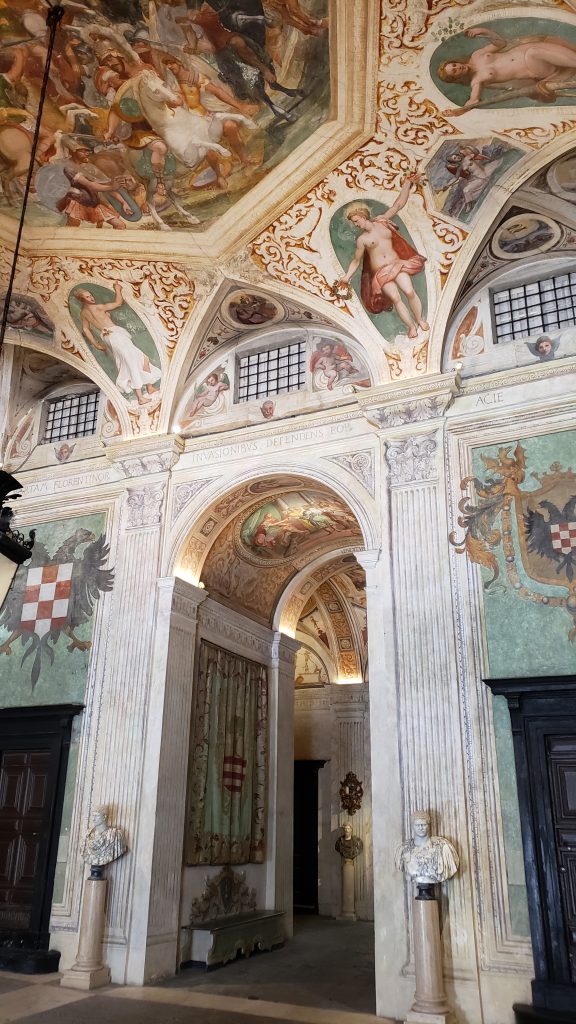
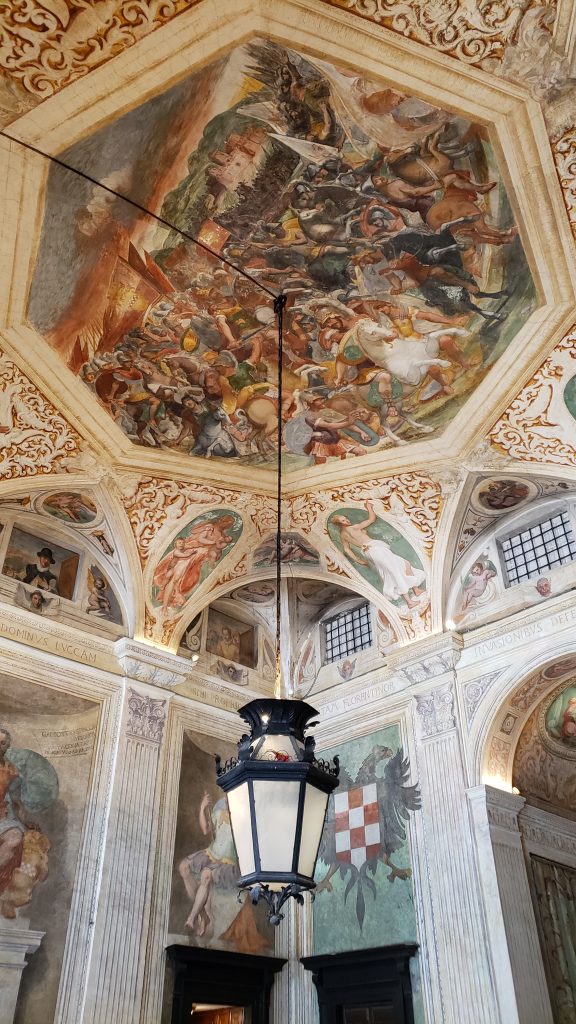
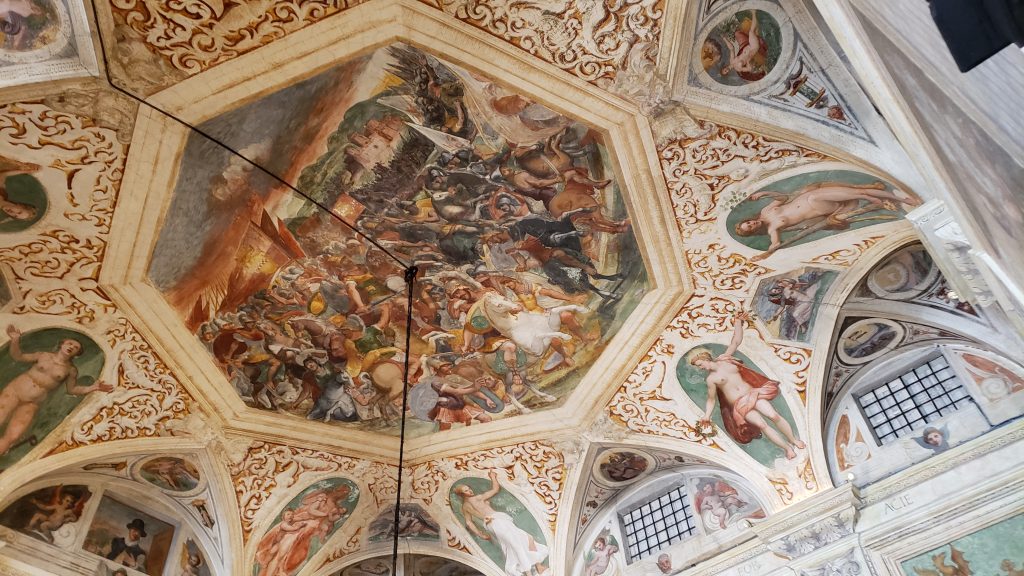
- Palazzo Rosso is now a public museum (Musei di Strada Nuova). It houses one of Genoa’s finest art collections, including works by Van Dyck, Dürer, and Veronese. Originally decorated with opulent red damask, gilded furniture, and ceiling frescoes by renowned artists such as Gregorio De Ferrari, the rooms reflected both artistic patronage and patrician taste.
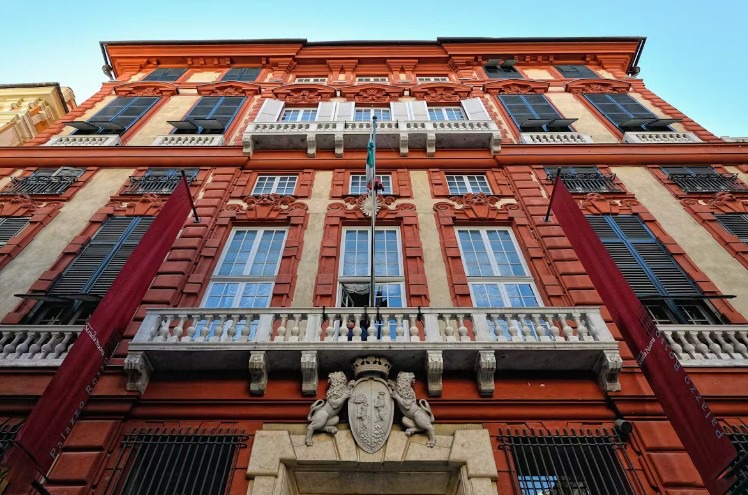
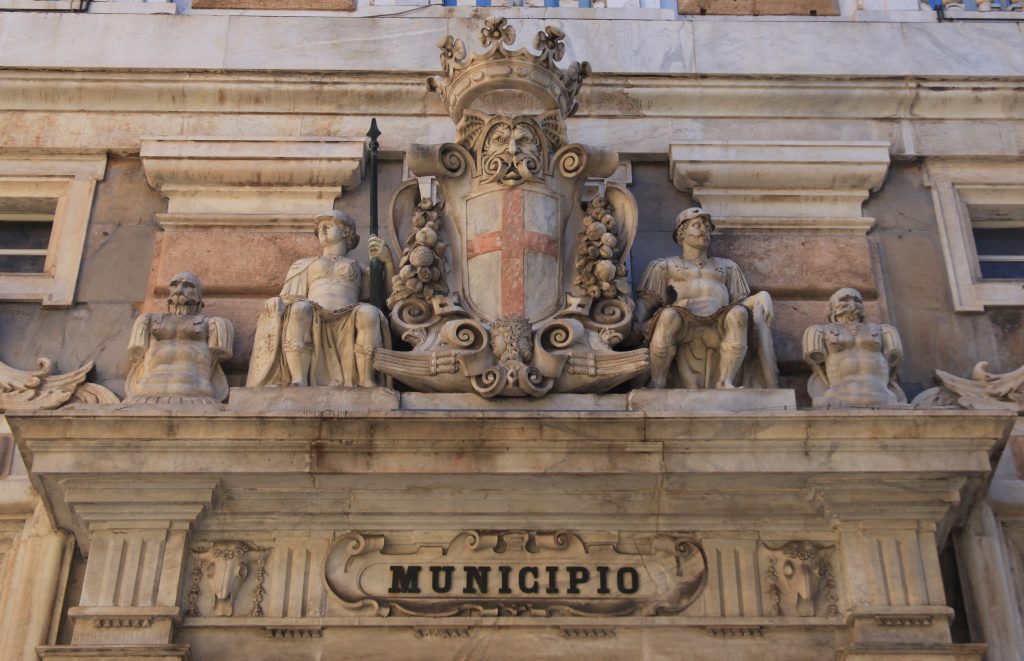
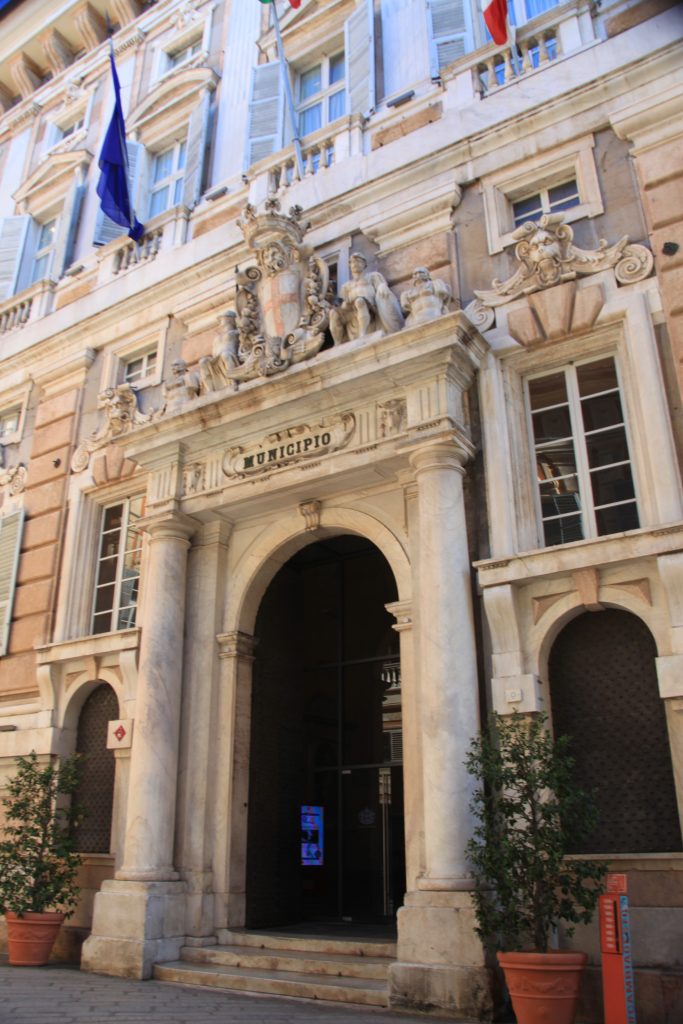
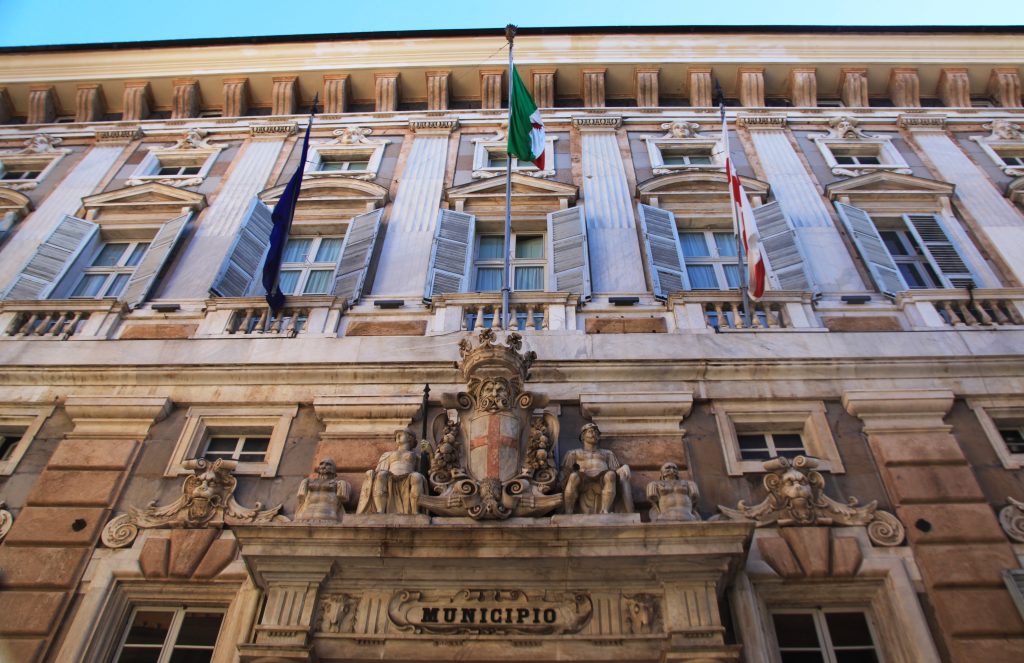
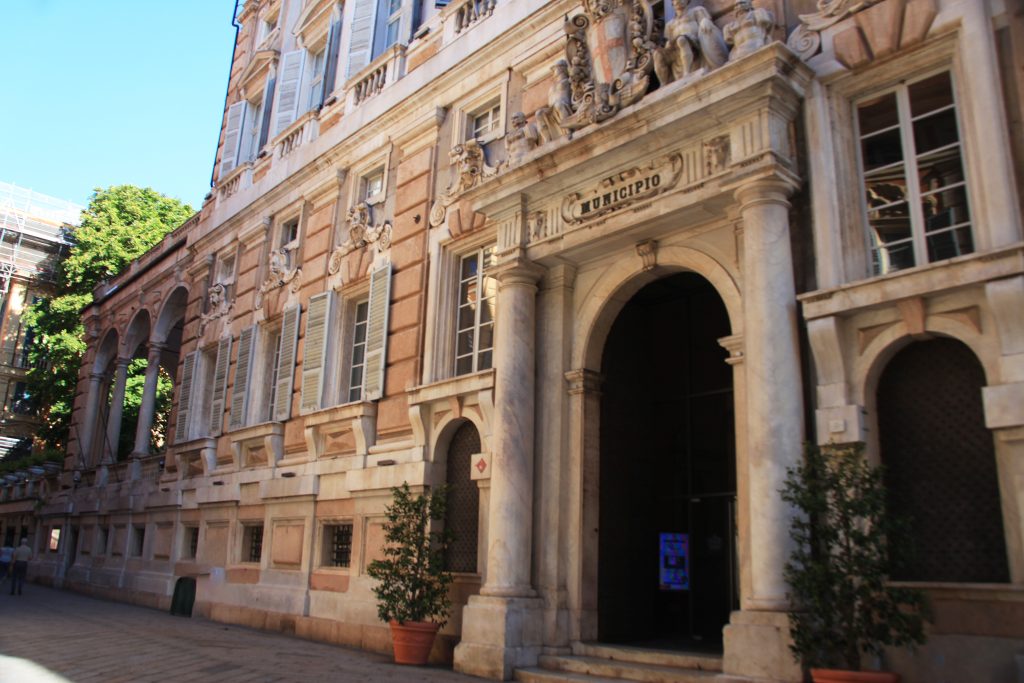
- Not as ornately painted as its sister palaces, the Palazzo Doria-Tursi is still a beautiful stately building, the largest on the street, and long served as the municipal headquarters for the city of Genoa. In fact, The façade is so long that in the engravings of the “Palazzi di Genova” made by Rubens in 1622, the image dedicated to the “Palace of Don Carlo Doria Duke of Tursi” could only fit half of it.
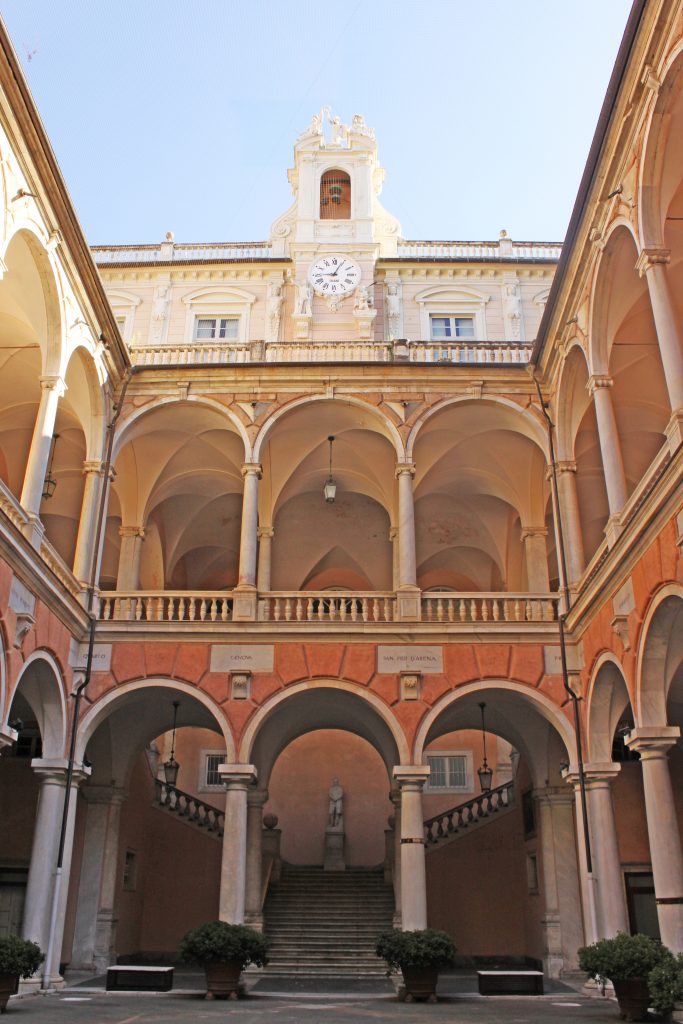
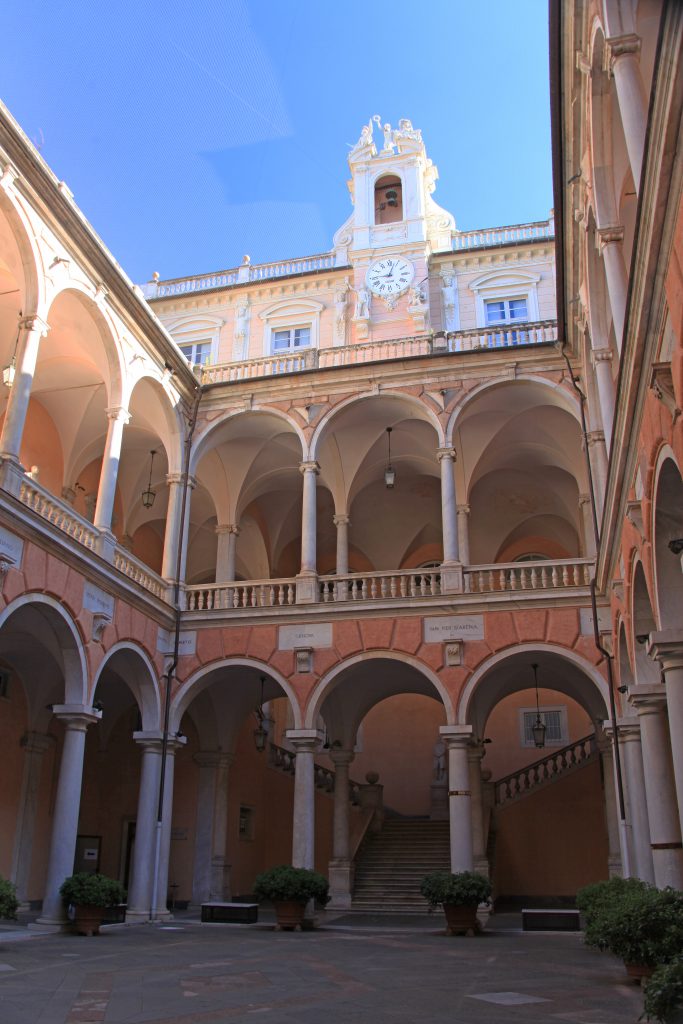
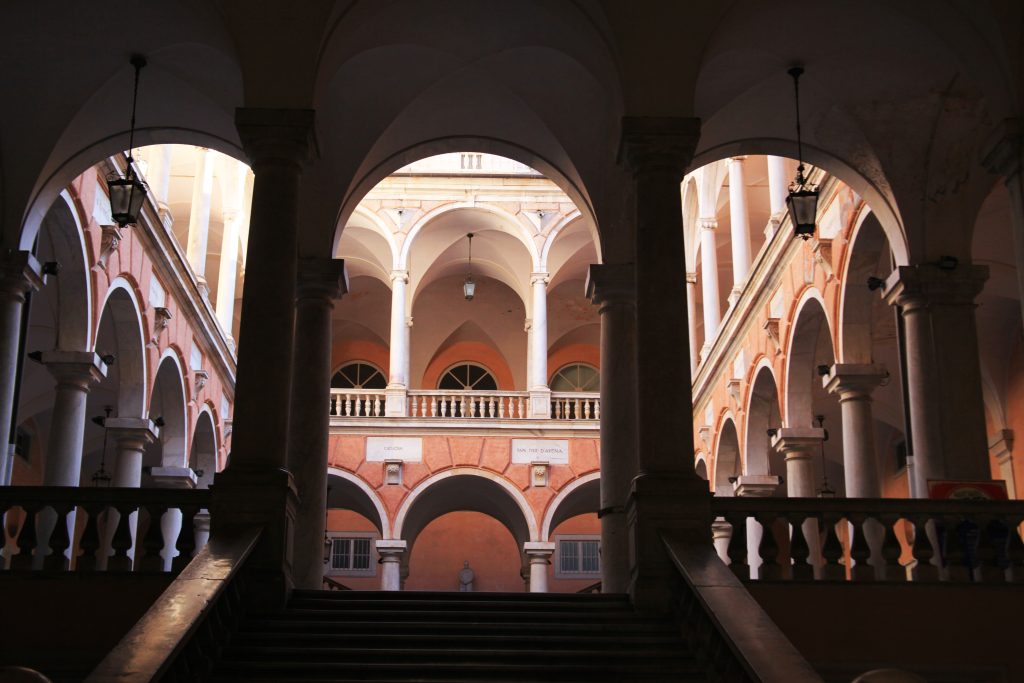
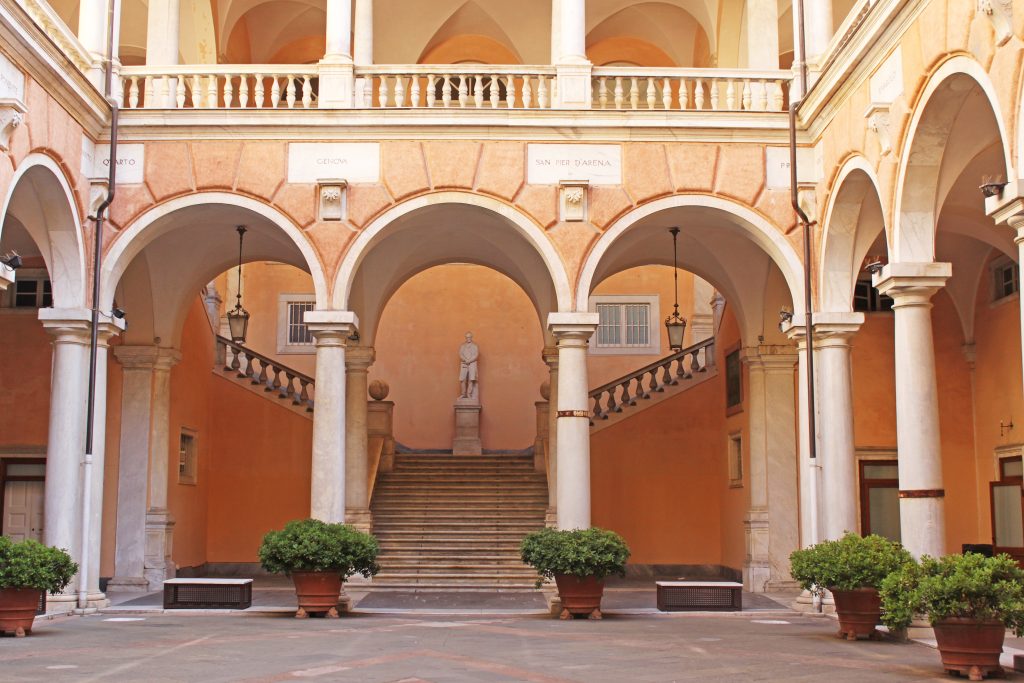
Step into the grand courtyard and façade of Palazzo Doria-Tursi, where history and civic grace converge in marble and loggias. Bathed in Renaissance elegance, Palazzo Doria-Tursi, originally commissioned in 1565 by the opulent banker Niccolò Grimaldi, known as “il Monarca”, was designed by Domenico and Giovanni Ponzello and built across three generous lots with two sweeping gardens framing its central block. It stands as the grandest palace along Via Garibaldi, a testament to Genoese prestige.
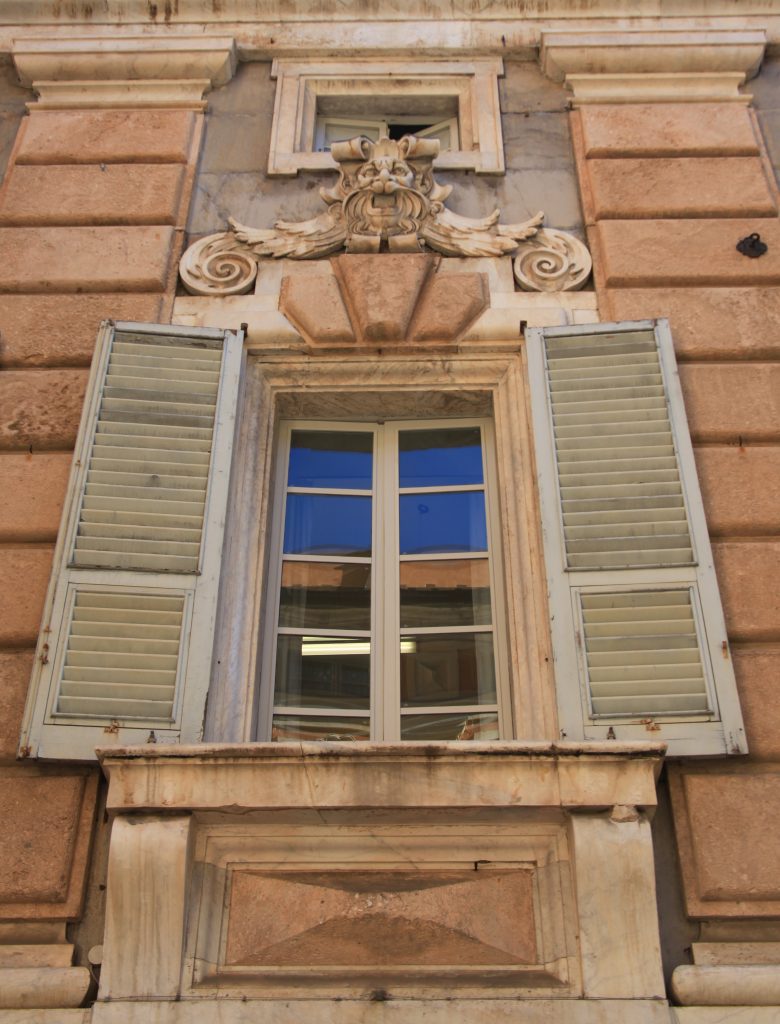
In 1597, ownership passed to Giovanni Andrea Doria, who acquired it for his son Carlo, Duke of Tursi, a chapter that bestowed the palace with its enduring name. Under Doria’s hand, the elegant street-facing loggias were added, and a sumptuous marble portal adorned with figures, and once the Doria eagle, graced the entrance, now bearing Genoa’s coat of arms. The façade’s striped hues, pink Finale stone, gray-black slate, and luminous Carrara marble, play against each other in a baroque-tinged harmony.
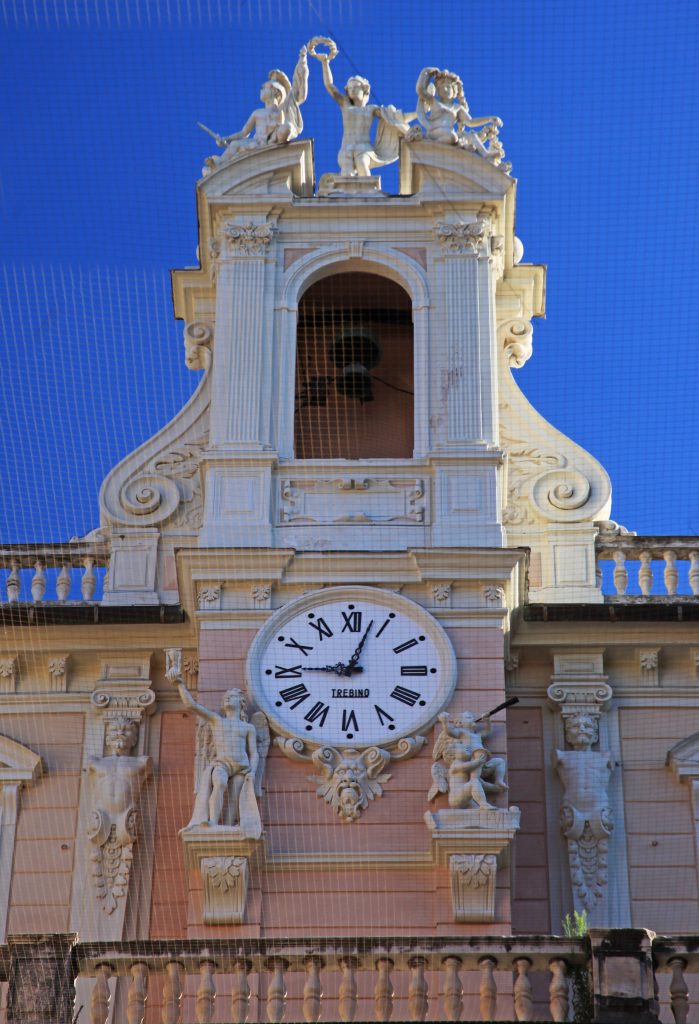
Following the Republic’s union with the Kingdom of Sardinia, the palace entered the possession of the House of Savoy in 1820, who commissioned the distinguished architect Carlo Randoni to complete the building’s rear and erect its clock tower. By 1848, it had become the official City Hall of Genoa, anchoring its civic significance.
Today, within, visitors encounter Genoese 17th- and 18th-century paintings, Canova’s exquisite Penitent Magdalene, collections of ceramics, coins, weights, and measures, as well as galleries commemorating the virtuoso Niccolò Paganini, whose famed “Il Cannone” violin resides in the sumptuous Sala Paganini, occasionally played during the annual festival
Palazzo San Giorgio Astride the Waterfront
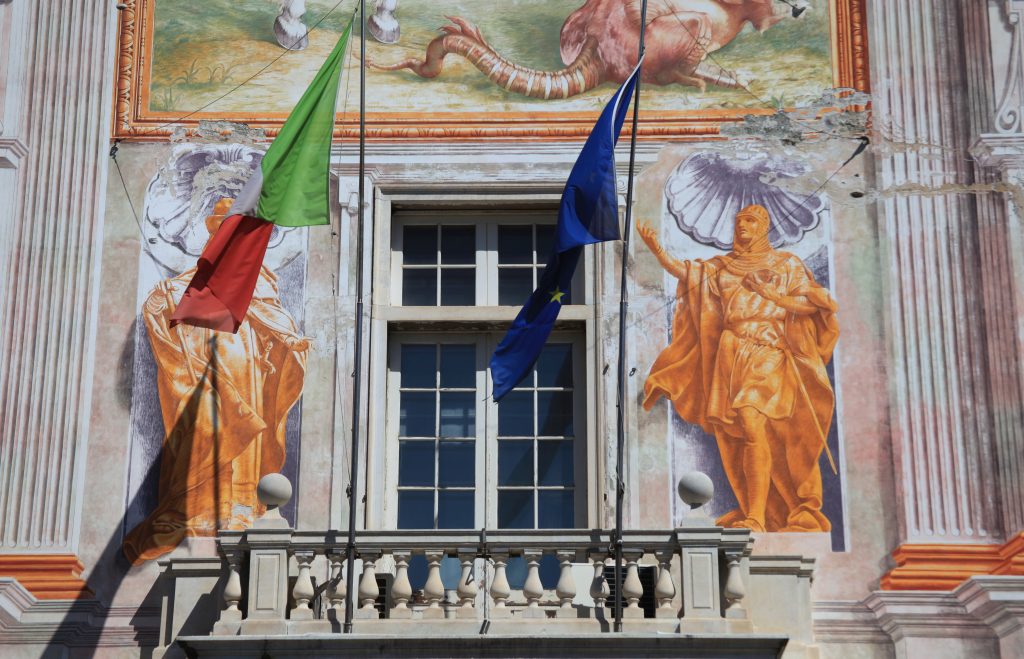
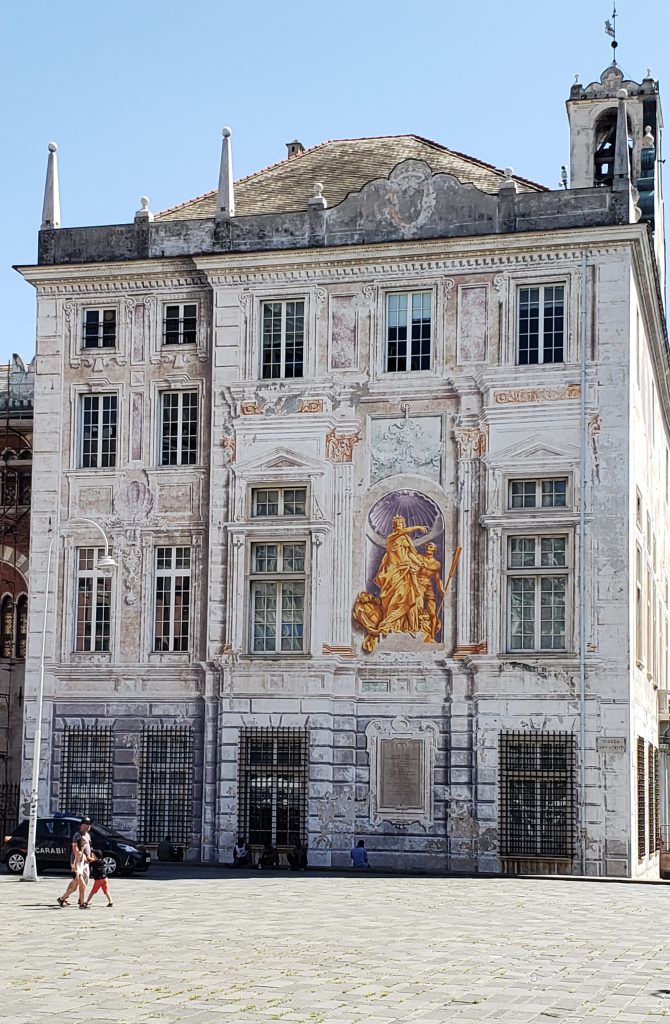
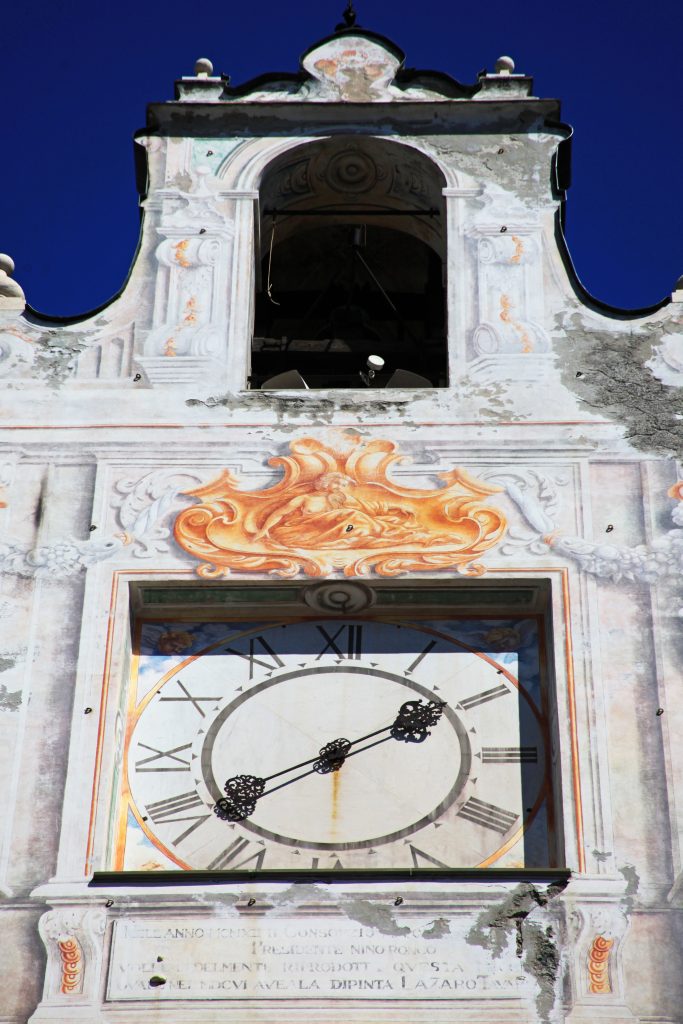
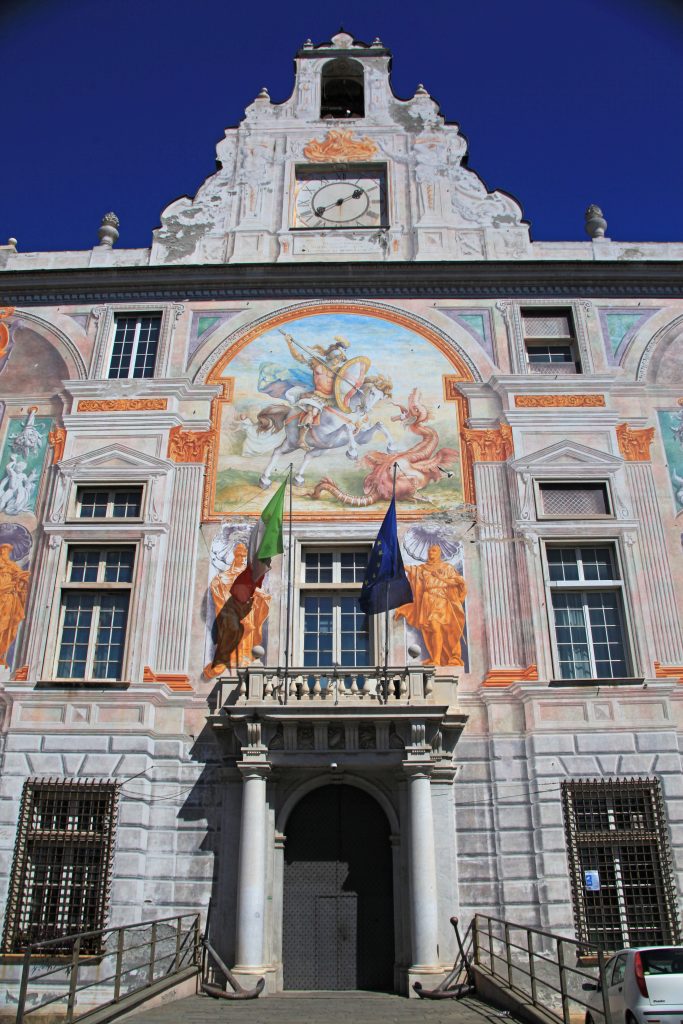
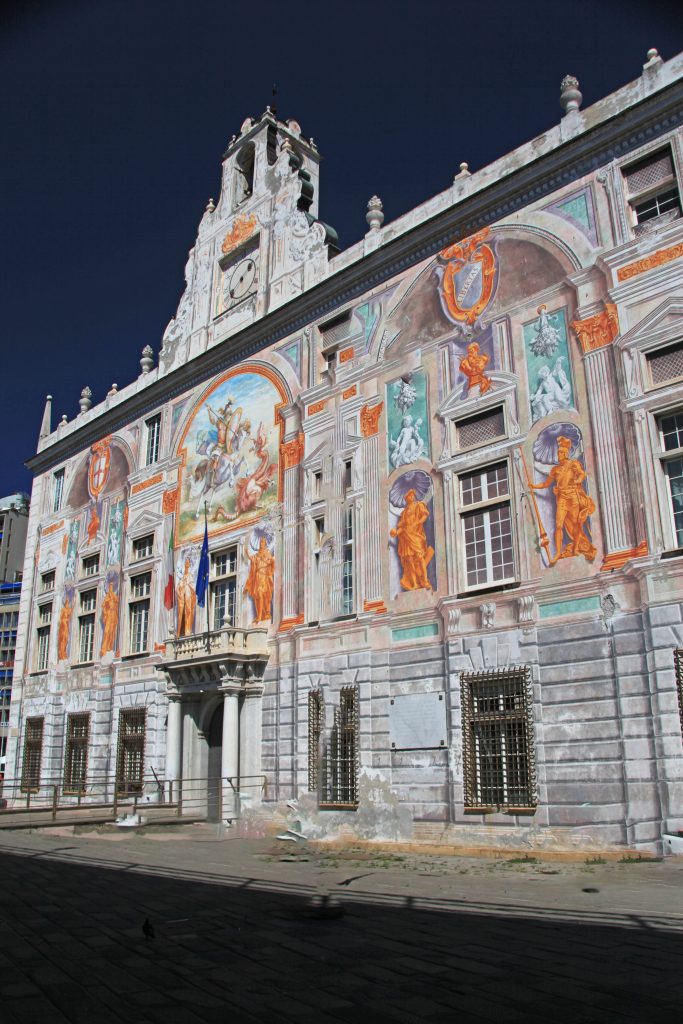
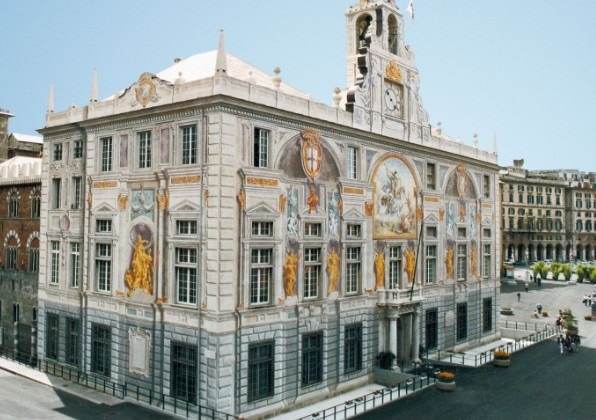
That pageantry reaches a crescendo at the waterfront-facing Palazzo San Giorgio, perhaps the most recognizable of Genoa’s painted palaces. Originally constructed in 1260, and later given Renaissance flourishes, the façade now glows with 19th-century restorations based on earlier frescoes. At its center rides Saint George, Genoa’s patron, driving his lance into the dragon beneath him. While clearly religious, this imagery is deeply political: Saint George stands in for the republic itself, governance vanquishing disorder, reason overcoming chaos.
Painted draperies and columns simulate an open loggia, with allegorical figures of Justice and Strength representing the city’s ideals. Historically, this building was home to the Bank of Saint George, one of the earliest public banks in Europe. The building’s pictorial language reinforced its role as both temple and treasury, marking Genoa’s twin devotions to commerce and sovereignty.
Genoa remains, to this day, a city that reveals itself slowly, layer by painted layer. Its palazzi are more than monuments; they are manuscripts, recording the ambitions, beliefs, and mythologies of a republic that once ruled the waves. So the next time you find yourself beneath the Ligurian sun, glance upward. You may just find a cherub whispering a family secret, or a painted hero beckoning you into history
Where to Stay in Genoa, Italy
For a stay centered on Genoa’s historic core, the Porto Antico (Old Harbor) area offers waterfront hotels within walking distance of the Palazzo Ducale and the city’s finest art collections. The neighborhood has modernized considerably while keeping its medieval character, and you’ll find both high-end hotels and mid-range options here. Staying near the harbor means easy access to the Aquarium and the narrow caruggi (alleyways) where locals still live and work, though expect narrow streets and some noise from the working port.
The Caruggi district itself contains smaller guesthouses and family-run hotels tucked into restored medieval buildings, which gives you genuine proximity to everyday Genoese life. These accommodations tend to be simpler and less expensive than waterfront properties, and many owners can point you toward local trattorias and specific frescoed palaces worth visiting. The trade-off is that your room may be modest and bathrooms sometimes tight, but the location is authentically central.
If you prefer more breathing room and a quieter pace, the Albaro neighborhood sits southeast of the center, where Belle Epoque villas and modern hotels line the seafront promenade. This area has its own beaches and feels more residential, making it appealing if you want to balance sightseeing with rest. The walk to the main historic district takes about twenty minutes, or you can use the efficient local bus system.
Book well ahead during summer months, as Genoa draws steady tourism but has limited high-end capacity. Many smaller hotels close in January and February, so verify availability if you’re traveling outside peak season. Italian breakfast (typically coffee and a pastry) is standard at most properties, and most hotels can arrange parking in this cramped old city, though prices run high.
Recommended Reading
- Guida Completa ai Palazzi dei Rolli: Genova by Gioconda Pomella: Guida Completa ai Palazzi dei Rolli: Genova | A comprehensive illustrated guide to the Palazzi dei Rolli in Genoa, detailing their history, architecture, patronage and role within the Republic of Genoa’s “Rolli” hospitality system for dignitaries. Covers nearly 150 palaces, their families, artistic decoration and changing uses
- Genoa and the Sea: Policy and Power in an Early Modern Maritime Republic by Thomas Kirk: A vivid look at Genoa’s merchant elite and their architectural ambitions.
- Painted Palaces: The Rise of Secular Art in Early Renaissance Italy byAnne Dunlop: While broader in focus, this book places Genoa’s painted facades in the larger Italian context.
- Italian Frescoes: The Flowering of the Renaissance by Steffi Roettgen: Includes stunning plates and insightful commentary on the fresco tradition across Italy, including Genoa.
- The Art of Trompe L’Oeil: Illusion and Reality in Renaissance Architecture by Miriam Milman: A helpful guide to understanding the visual strategies used in Genoese painted facades.
Tours to Consider:
- 2 Hours Private Historical Tour in Genoa
- Genoa: Private Custom Walking Tour With A Local Guide
- Guided Walking Tour in Genoa