
The Founders at Home: Where the Presidency Took Shape
Since America opted for a government that invested leadership in men who believed in the principle of democracy, instead of celebrating a king or sovereign is this section as we normally do, we chose instead to celebrate our Presidents whose homes are a reflection of the men we elected.
In monarchies, the legacy of a ruler is often housed in palaces—grand, gilded, and deliberately imposing. But in America, our “sovereigns” left behind something far more revealing.
They left their homes—the presidential homes that, more than any monument, reveal who these men truly were.
Their farms, their modest studies, their evolving estates. Places where decisions were pondered not beneath painted ceilings or along mirrored arcades, but beside fireplaces, in gardens, on porches overlooking rivers and fields. Long before the advent of formal presidential libraries, the early leaders of the United States returned—again and again—to these personal sanctuaries. And it is here, perhaps more than anywhere else, that we come closest to understanding them.
In America’s 250th year, these sites offer a deeply human lens into leadership—one rooted not in ceremony, but in daily life.
Let us wander, then, through the homes, museums, and repositories of America’s earliest presidents—lingering longest where history feels most intimate, and where the stories are less often told.
The Founders—Virginia’s Presidential Homes
Mount Vernon — George Washington
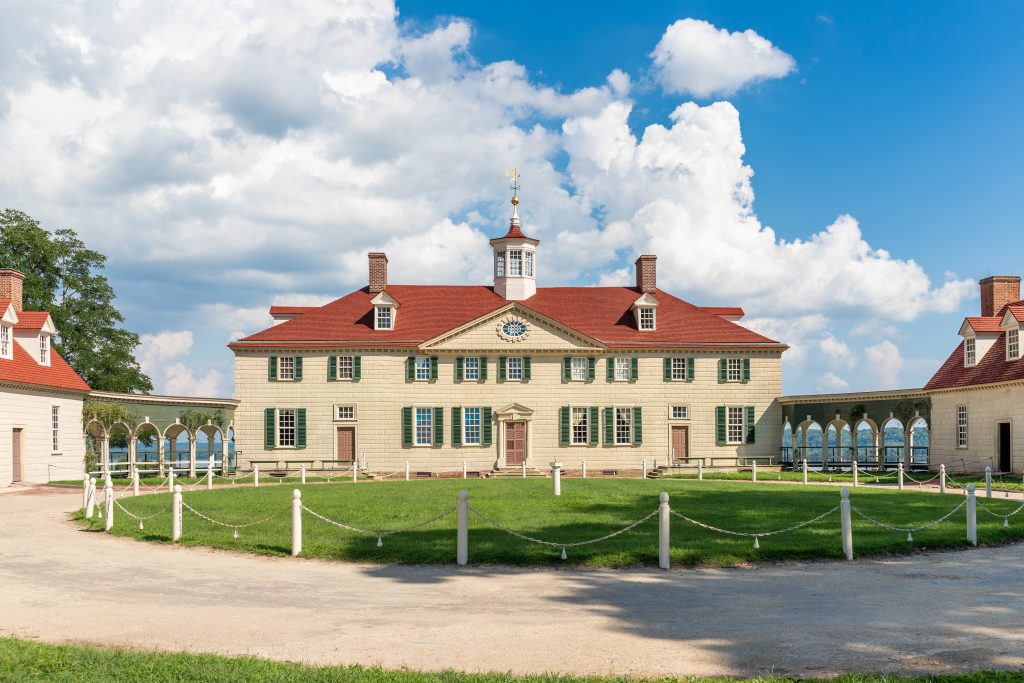
There is a quiet gravitas to Mount Vernon that no photograph quite captures. The approach itself—through tree-lined paths and across gently sloping land—feels almost ceremonial, as if you are being prepared for the presence of the man who defined the presidency before it even had form.
The mansion, with its iconic two-story piazza facing the Potomac River, is deceptively modest for a figure of Washington’s stature. Yet that restraint is precisely the point. Inside, you’ll find rooms that reflect both refinement and discipline—Washington’s study, in particular, where he managed correspondence and agricultural experiments, offers a glimpse into a mind that never ceased working, even in retirement.
What stands out most, however, is the working estate. This is not simply a preserved home—it is a fully realized plantation landscape. The reconstructed distillery, one of the largest in early America, reveals Washington’s entrepreneurial instincts. The gardens—ornamental and utilitarian—demonstrate his deep investment in innovation and sustainability.
Equally important is the interpretation of the enslaved community who lived and labored here. The slave quarters and museum exhibitions are thoughtfully presented, ensuring that Mount Vernon tells a fuller, more honest story of its past.
What stands out:
- The remarkable balance between grandeur and restraint—the mansion’s symmetry and scale reflecting Washington’s stature, yet never tipping into ostentation
- The estate as a fully functioning enterprise, where agriculture, innovation, and leadership intersected in daily life
- The commanding yet serene position above the Potomac River, offering views that feel both expansive and contemplative
- The sense of return—this was not simply a residence, but the place Washington repeatedly chose over power, grounding his identity beyond the presidency

What not to miss:
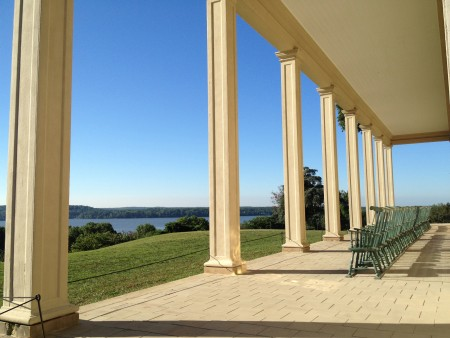
- The iconic piazza overlooking the Potomac, where Washington stood and took in the river view—a moment of stillness that connects you directly to him
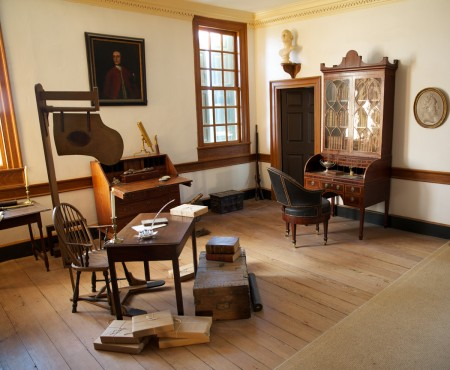
- Washington’s study, filled with personal items and furnishings, where you can picture the discipline and order that defined his daily routine
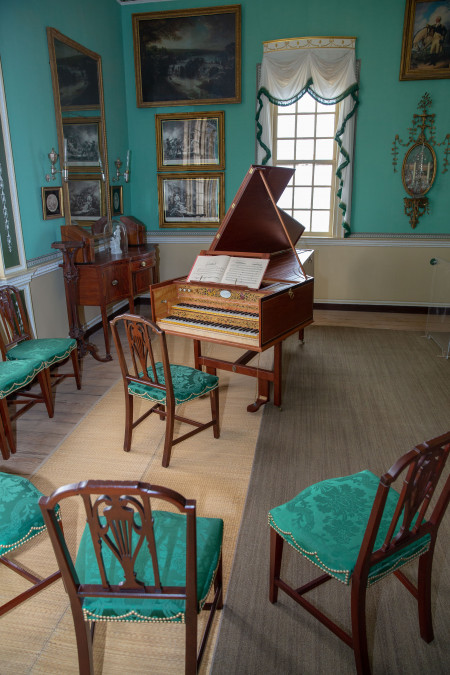
- The New Room dining space, with its bold verdigris-green walls and elegant table settings—Washington’s stage for entertaining, where carefully arranged china, glassware, and symmetry reflected his attention to detail and the social rituals of leadership
- The working outbuildings and reconstructed distillery, revealing the scale of Mount Vernon as an active and innovative estate
- The formal gardens, carefully designed and maintained, reflecting both aesthetic sensibility and agricultural purpose
- The tree-lined approach and sweeping lawn, where the house gradually reveals itself—creating one of the most memorable arrivals in any historic American site
Mount Vernon is not simply where Washington lived. It is where he returned—again and again—to define who he was beyond power. https://www.mountvernon.org
Monticello — Thomas Jefferson
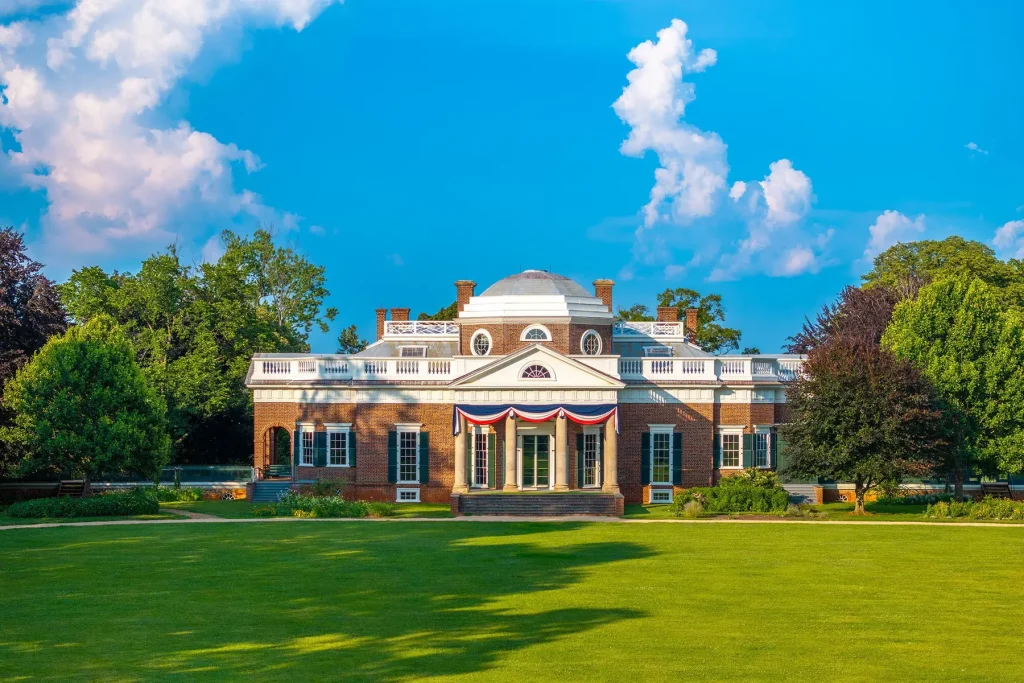
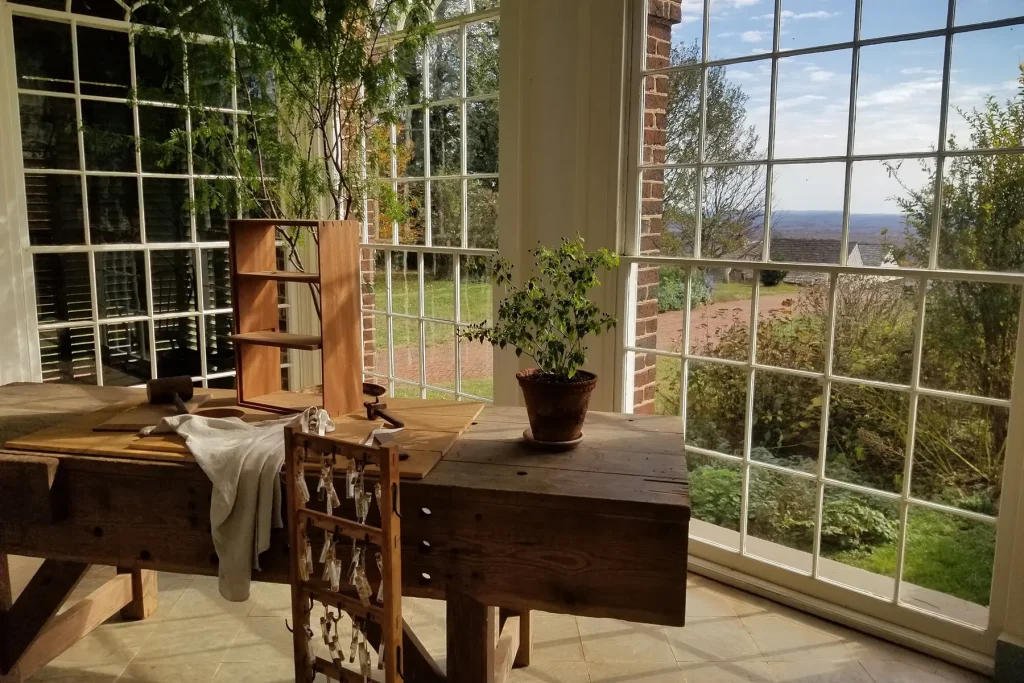
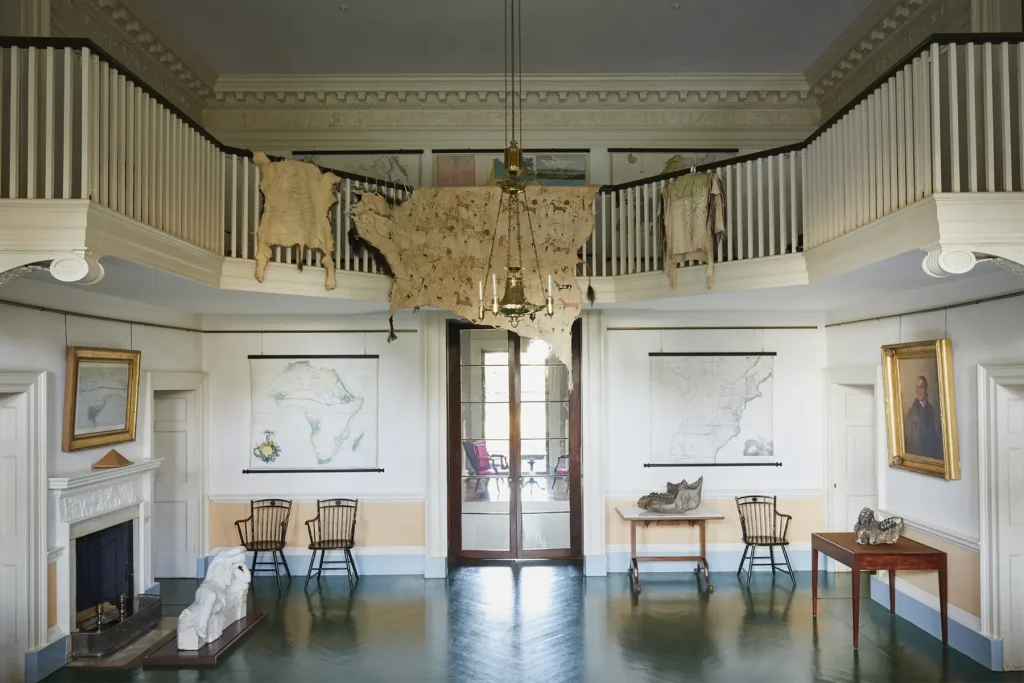
Monticello feels less like a home and more like a three-dimensional expression of a restless intellect. Perched atop a hill with sweeping views of the Virginia countryside, Jefferson’s architectural masterpiece is filled with invention. Hidden dumbwaiters, rotating book stands, alcove beds tucked into walls—every element reflects a mind that delighted in solving problems elegantly.
But Monticello is also a place of layered truths. The beauty of the main house contrasts with the lives of the enslaved people who made Jefferson’s world possible. The Mulberry Row exhibits—where enslaved families lived and worked—are among the most powerful in any historic site in America.
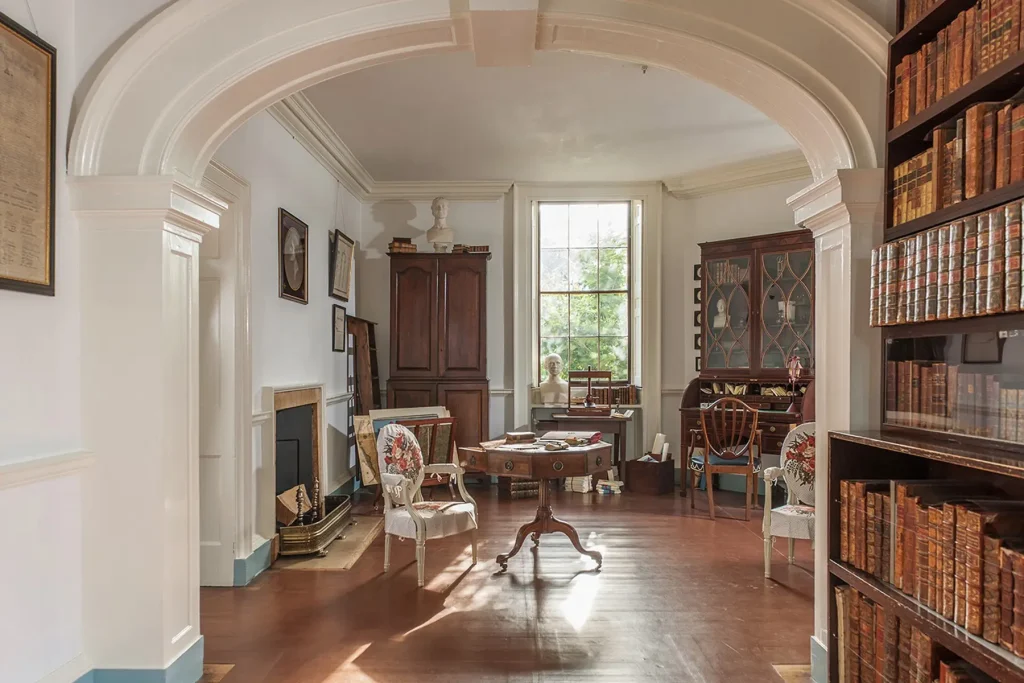
Inside, the rooms feel personal rather than grand. Jefferson’s study, lined with books and artifacts, reveals his global curiosity. You sense a man constantly in conversation—with ideas, with history, with possibility.
What stands out:
- The integration of architecture with landscape—Jefferson designed both
- The extraordinary attention to light and proportion throughout the home
- The Hemings family interpretation, essential to understanding Monticello fully

What not to miss:
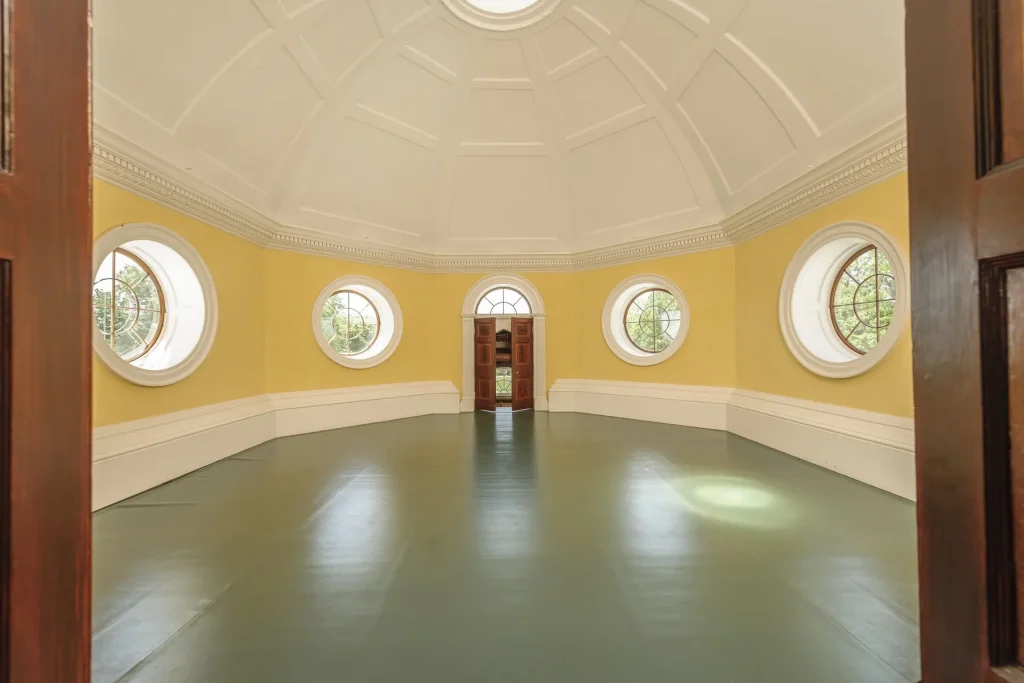
- The Dome Room (rarely accessible historically, now open on select tours) –a striking, light-filled space unlike anything else in early American architecture.
- The Great Clock in the entrance hall—the elegant clock tracks days of the week with cannonball weights that descend slowly through the floor—so long, in fact, that holes had to be cut into the floorboards to accommodate their full drop. A perfect expression of Jefferson’s belief that function and beauty should coexist.
- The Polygraph Copying Machine device that created an exact copy of Jefferson’s writing in real time as he wrote—using a system of linked pens.
- The compass embedded in the entry hall floor and the directional weather vane visible through the ceiling
- Jefferson’s spectacles and reading tools
- The gardens, particularly in spring and early summer
Monticello is both inspiring and unsettling—and it should be. It asks you to hold admiration and contradiction in equal measure. https://www.monticello.org
Montpelier — James Madison
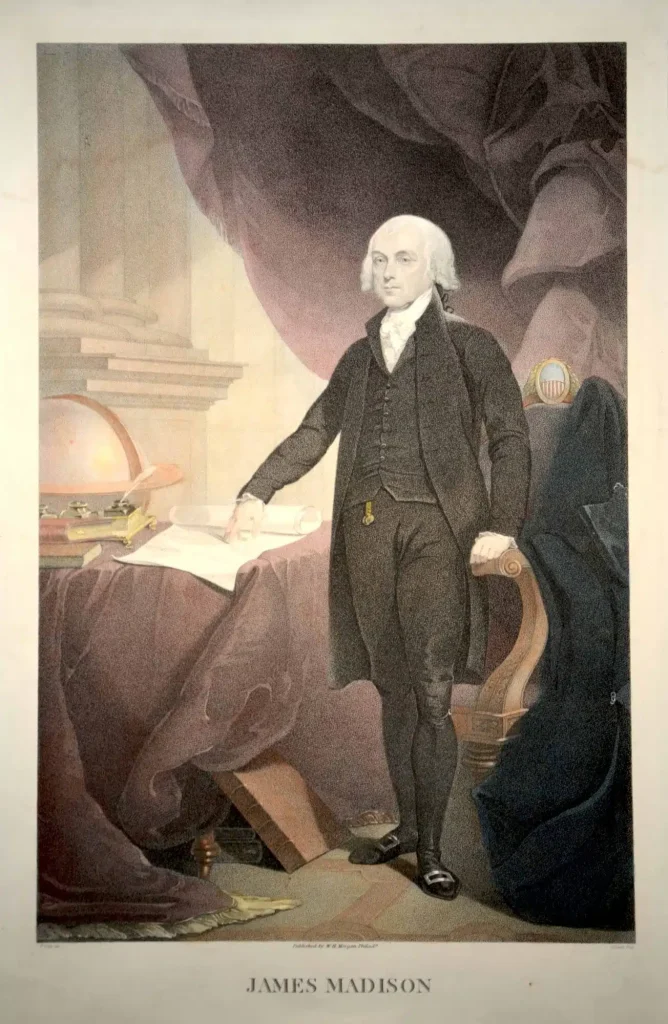
Montpelier does not overwhelm—and that is precisely its strength.
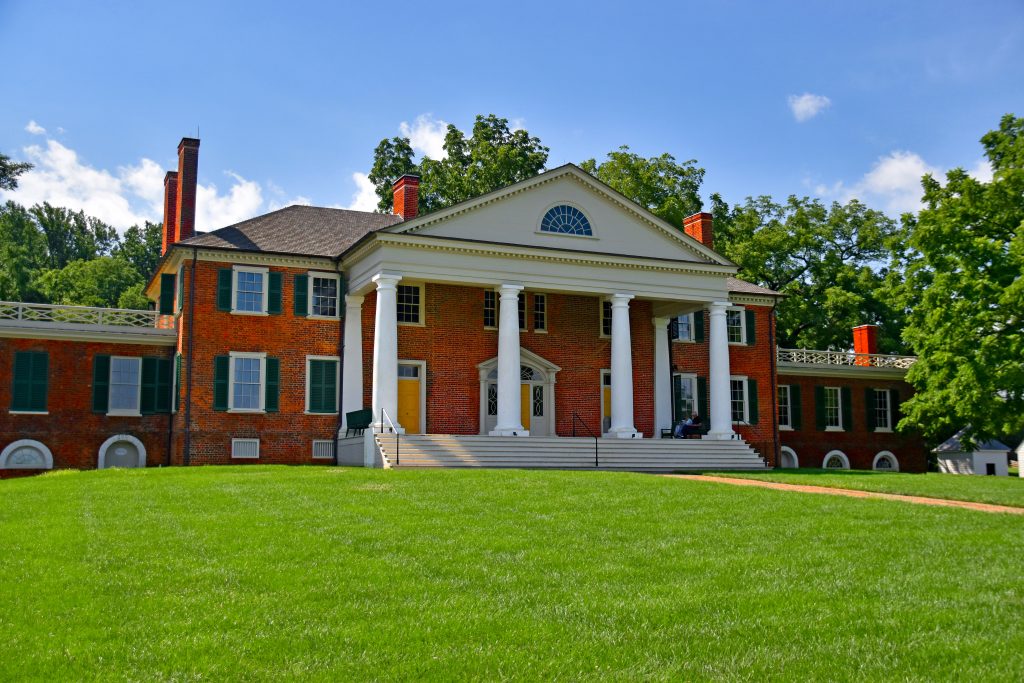
Madison, slight in stature but immense in intellect, crafted the framework of American governance from this estate. The house itself reflects that sensibility—balanced, thoughtful, and quietly refined. The restoration of Montpelier is one of the most meticulous in the country, returning the home to Madison’s era rather than later alterations. This allows visitors to experience the environment much as he would have known it.
But what distinguishes Montpelier most profoundly is its interpretation of slavery. The Gilmore Cabin and the stories of the enslaved community are presented with depth and care, offering a fuller understanding of the estate’s reality.
What stands out:
- The intellectual atmosphere—this is a place of ideas more than display
- The archaeological work that continues to reshape the narrative
- The deep integration of Madison’s political legacy with the physical space
What not to miss:
- The Constitution-focused exhibits within the house, where Madison’s ideas are brought into physical space through documents, artifacts, and thoughtfully designed rooms that connect his writing to the world around him
- The vivid interior restoration, with boldly painted walls in blues, greens, and yellows—colors far brighter than many expect, revealing the aesthetic confidence of the early republic
- The Temple—a classical, open-air garden structure set on a distant rise, perfectly aligned within the landscape, where Madison would retreat for reflection and where the symmetry of design mirrors the balance he sought in government
- The long, tree-lined approach and surrounding walking trails, which gradually reveal the house and its setting, offering a sense of arrival that feels both deliberate and serene
- The South Yard and formal grounds, where the relationship between house and landscape becomes clear—ordered, proportional, and quietly elegant
Montpelier invites contemplation. It is less about spectacle, and more about understanding. https://www.montpelier.org
Highland — James Monroe
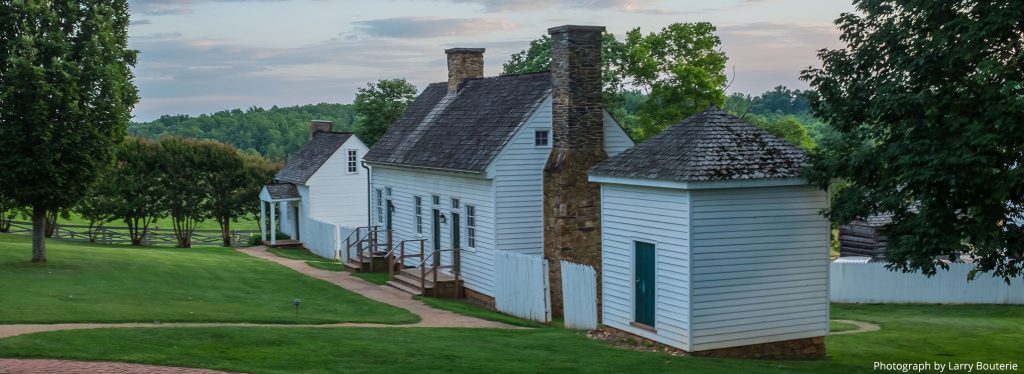
Highland is, in many ways, the most surprising of the Virginia presidential homes.
For years, it was believed that the main house visitors toured was Monroe’s residence. Archaeological discoveries have since revealed that his actual home was different—and much of what you see today is the result of ongoing research and reinterpretation.
This makes Highland feel alive in a unique way. It is not a finished story—it is one still being uncovered.
The site is quieter than its neighbors, with fewer crowds and a more intimate scale. Monroe himself, often overshadowed by his contemporaries, emerges here as a transitional figure—bridging the revolutionary generation and a new era of national identity.
What stands out:
- The active archaeology and evolving understanding of the site
- The quiet, human scale of the property—less formal than its neighbors, with a lived-in intimacy
- The landscape itself, where open fields and wooded edges create a feeling of retreat rather than display
What not to miss:
- The archaeological exhibits explaining the “lost” main house, where foundations, artifacts, and ongoing discoveries reveal a shifting understanding of Monroe’s residence—giving you the rare experience of watching history being actively uncovered
- The distant Blue Ridge mountain views, subtly framed by the property’s layout and sightlines, offering a serene and unchanging backdrop that would have shaped Monroe’s daily perspective
- The interpretive focus on Monroe’s later life and presidency, brought to life through personal objects, correspondence, and evolving scholarship that illuminate his role in guiding the nation through its formative post-Revolutionary years
- The reconstructed guesthouse structure, long believed to be Monroe’s primary residence, whose modest scale provides a striking contrast to neighboring presidential estates
- The walking paths that connect the main house area to surrounding fields and wooded edges, allowing you to experience the estate as Monroe did—through movement across the land rather than from a single vantage point
Highland is about exploration—of both place and history. https://highland.org
Northern Roots and the Early Republic
Adams National Historical Park — John Adams & John Quincy Adams
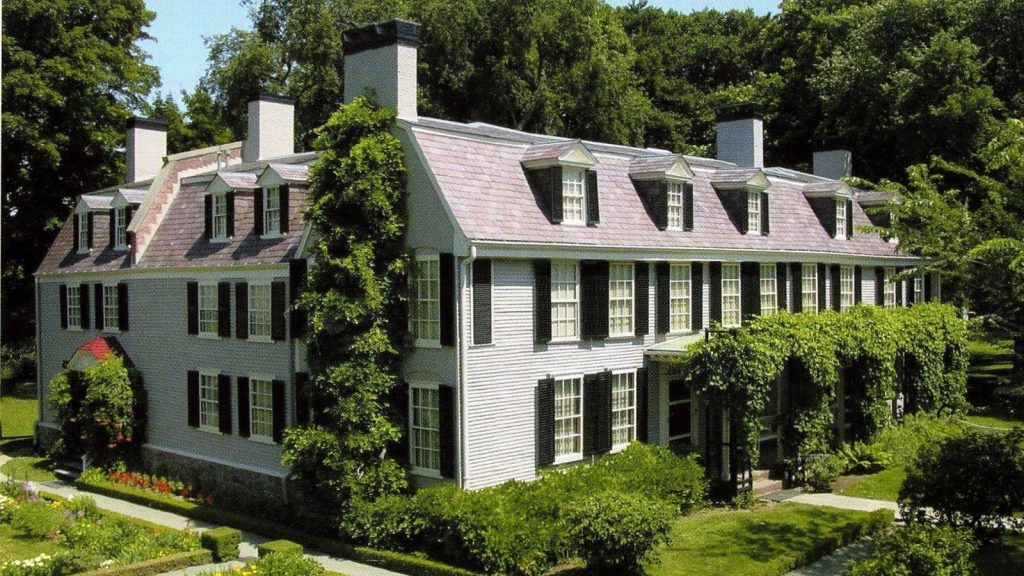
In Quincy, Massachusetts, history unfolds not in a single home, but across a family landscape—one shaped as much by Abigail Adams as by her husband and son.
The Adams story is one of continuity, but also of partnership. While John Adams traveled extensively—serving the fledgling nation in Philadelphia and abroad in Europe—Abigail remained here, managing the household, the farm, and the family’s financial survival with remarkable competence and resolve.
It is within these walls that her presence is most deeply felt.
Her letters—written from this very place—are among the most vivid and revealing documents of the Revolutionary era. In them, she reports on wartime shortages, local sentiment, and the practical realities of sustaining a household in uncertain times. But she also does something more extraordinary: she advises.
Her famous entreaty to her husband to “remember the ladies” was not an aside—it was part of an ongoing intellectual exchange between equals. Abigail’s words moved across the Atlantic and back again, carrying insight, urgency, and a clarity of thought that makes her one of the most compelling voices of the early republic.
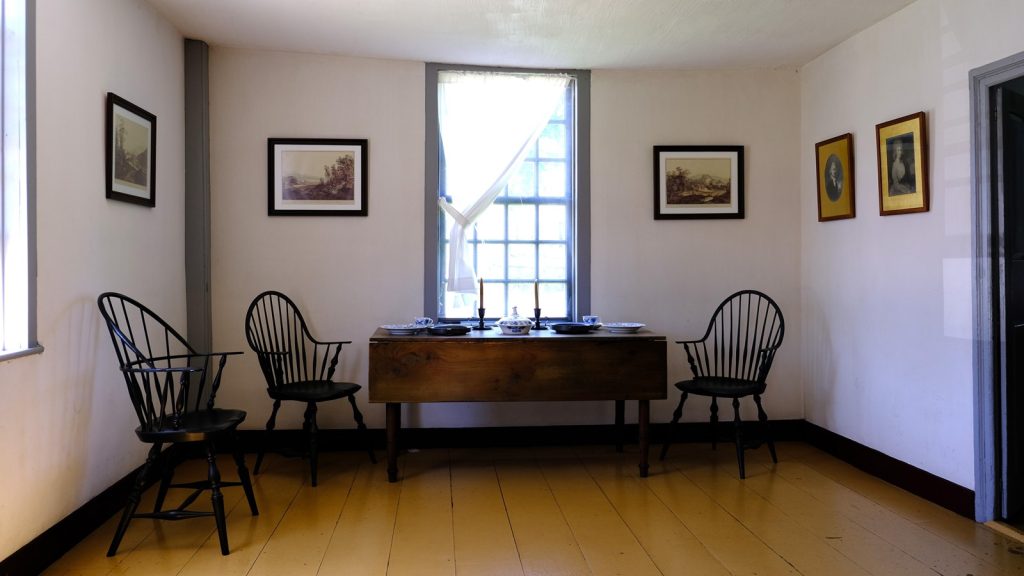
Walking through the “Old House” at Peacefield, you begin to understand how much of this legacy was shaped not in public halls, but in private endurance. The home itself reflects that evolution—from modest beginnings to a more refined residence befitting a president—yet it never loses its sense of intimacy. The rooms feel lived in, not staged. The story here is not only political, but deeply personal.
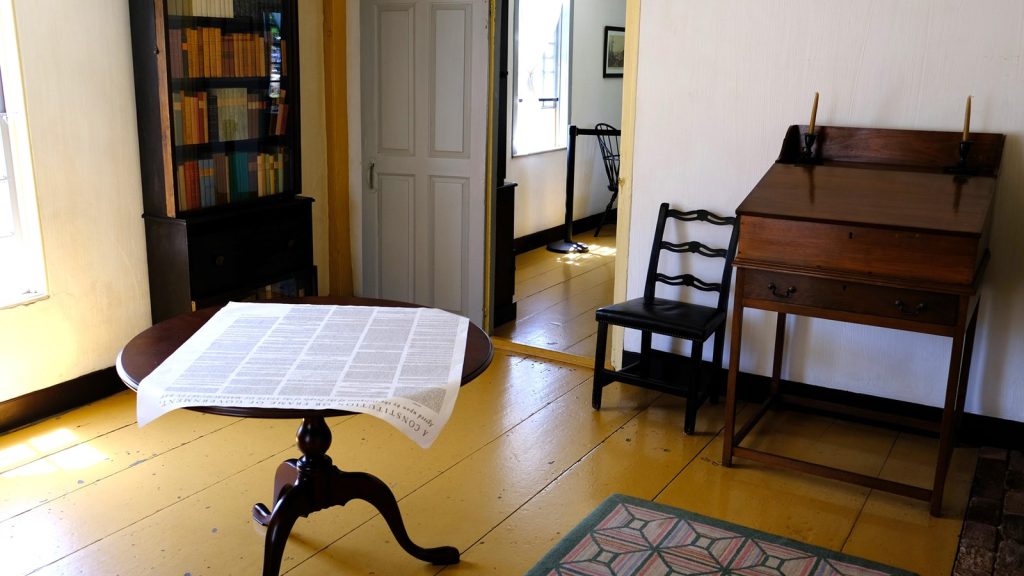
And then there is the Stone Library, built later by John Quincy Adams—a quiet, book-lined sanctuary that stands as one of the earliest examples of a presidential repository. It feels like the natural extension of a family that lived through words, ideas, and correspondence.
What stands out:
- The multigenerational legacy—two presidents shaped within one family environment
- Abigail Adams’ enduring presence, revealed through her letters and her management of the home front
- The rare preservation of a private presidential library, deeply personal in scale
What not to miss:
- The Stone Library at Peacefield, where John Quincy Adams gathered the books and papers of a family steeped in public life, and where the intellectual legacy of both John and Abigail seems to linger in every shelf-lined wall
- The guided tour of the Old House, where Abigail’s steadfast management of the household and farm is set alongside John’s long political absences, revealing the depth of their partnership and correspondence
- The grounds of Peacefield themselves, where John Adams returned after the presidency to reflect, write, and continue exerting influence from home, proving that his public life did not truly end when he left office
This is not just a presidential site. It is a family story—one of ambition, intellect, and legacy. https://www.nps.gov/adam
Lindenwald — Martin Van Buren
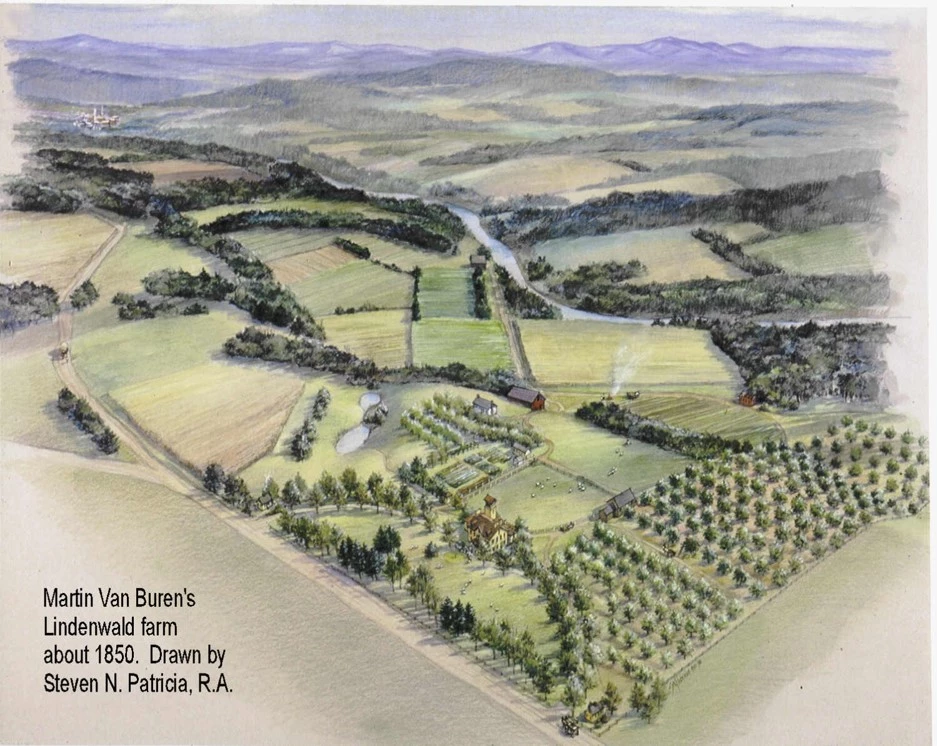
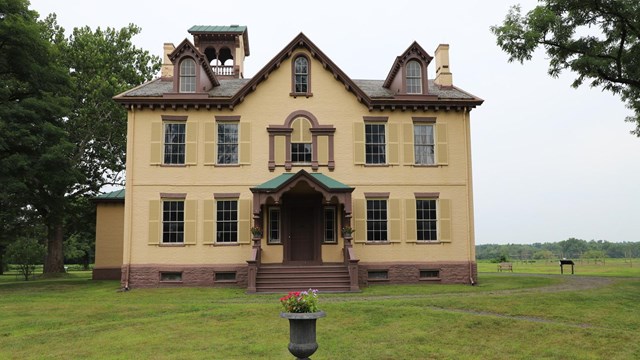
Lindenwald feels almost hidden—tucked into the Hudson Valley, away from the more heavily traveled historic circuits.
The home itself reflects a shift in American identity. By Van Buren’s time, the nation was beginning to develop its own cultural confidence, and Lindenwald’s design—elegant, slightly European—suggests that evolution.
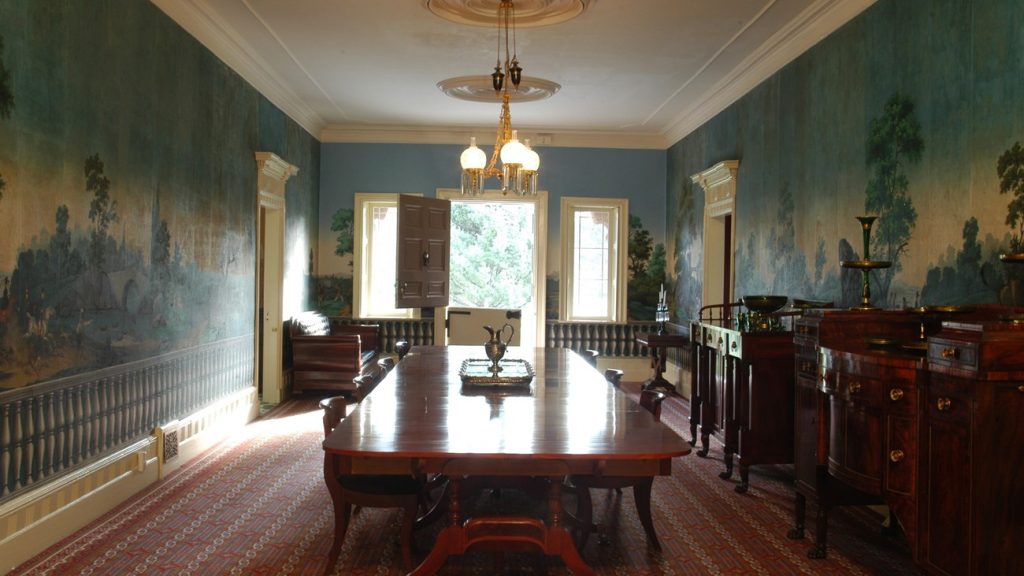
Inside, the rooms are refined but not ostentatious. You sense a man attuned to diplomacy and political nuance rather than grand display.
What stands out:
- The architectural transition toward a more cosmopolitan America
- The relative quiet of the site—allowing for unhurried exploration
- The insight into a president often overlooked but politically significant
What not to miss:
- The distinctive double-tiered front porch, added later in Van Buren’s life, which gives the house its almost European villa character and reflects his taste for refinement after years in national politics
- The formal parlor, where Van Buren entertained political allies and engaged in the kind of careful, relationship-driven diplomacy that defined his career
- The surrounding carriage roads and landscaped grounds, designed for both leisure and display, offering a glimpse into how a former president lived in semi-retirement
- The original architectural lines of the house beneath later additions—look closely and you can see how the structure evolved, much like the nation Van Buren helped shape
Lindenwald rewards those who seek it out. It is subtle but deeply revealing. https://www.nps.gov/mava
The Frontier Presidents: Expansion and Identity
The Hermitage — Andrew Jackson
The Hermitage carries a weight that is immediately palpable. The mansion itself is stately, with a columned façade that suggests authority. Inside, the rooms are richly furnished, reflecting Jackson’s rise from frontier beginnings to national prominence.
But it is the broader landscape—and the stories embedded within it—that give the site its power. The interpretation of slavery, including the preserved quarters, is direct and unflinching. The narrative does not shy away from Jackson’s policies toward Native Americans, making this a place of both admiration and reckoning.
What stands out:
- The emotional intensity of the site’s history
- The contrast between Jackson’s personal story and national impact
- The comprehensive and candid interpretation


What not to miss:
- Jackson’s tomb in the garden, set within a quiet, circular enclosure that feels both intimate and ceremonial
- The grand front portico, with its imposing white columns—an unmistakable statement of arrival and authority that contrasts sharply with Jackson’s frontier origins
- The original log cabin on the property, offering a glimpse into the far more modest beginnings of Jackson’s life before the mansion rose around it
- The slave quarters and surrounding work areas, where the scale and structure of the plantation become physically apparent
- The tree-lined approach to the house, creating a dramatic sense of entry that builds anticipation before the mansion comes fully into view
- The columned front portico—its symmetry and scale projecting power, yet standing in quiet tension with Jackson’s rugged personal story
The Hermitage is not a passive experience. It challenges, provokes, and stays with you. Much as Jackson was such a dynamic character himself. https://thehermitage.com
Grouseland — William Henry Harrison

In Vincennes, Indiana, Grouseland marks the westward reach of early American governance.
Built while Harrison served as territorial governor, the home functioned as both residence and political center. Treaties were negotiated here, decisions made that would shape the expansion of the nation. The house itself is solid, symmetrical, and reflective of authority in a frontier setting. It feels both domestic and official—a hybrid space where personal and political life intertwined.
What stands out:
- The sense of governance on the edge of the frontier
- The role of the home as a center of negotiation and power
- The understated but historically significant setting
What not to miss:
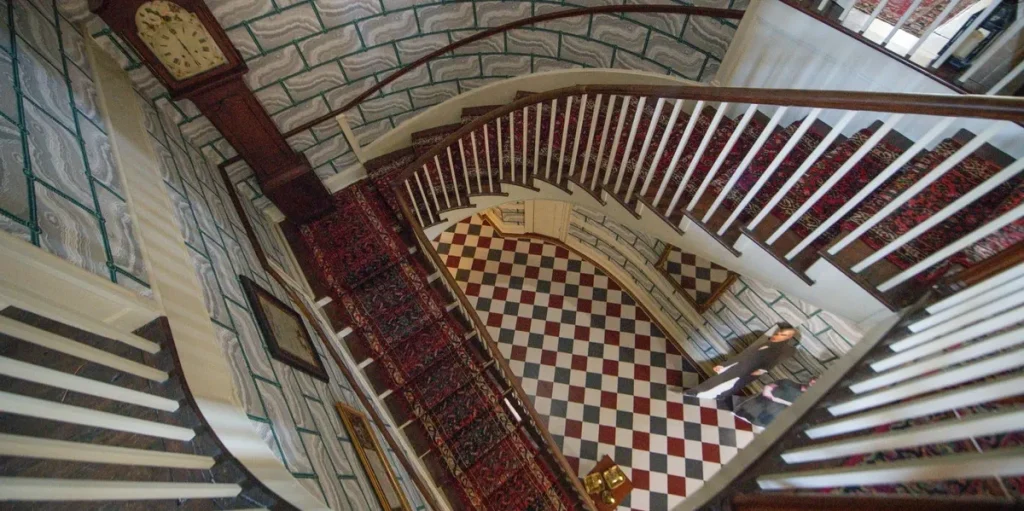
- The grand central hallway, unusually wide and formal for a frontier home, designed to receive visitors and conduct official business—its scale signaling authority in what was still the edge of the young nation
- The council room, where Harrison met with Native American leaders to negotiate treaties—stand here and you are in the very space where the future of western expansion was debated
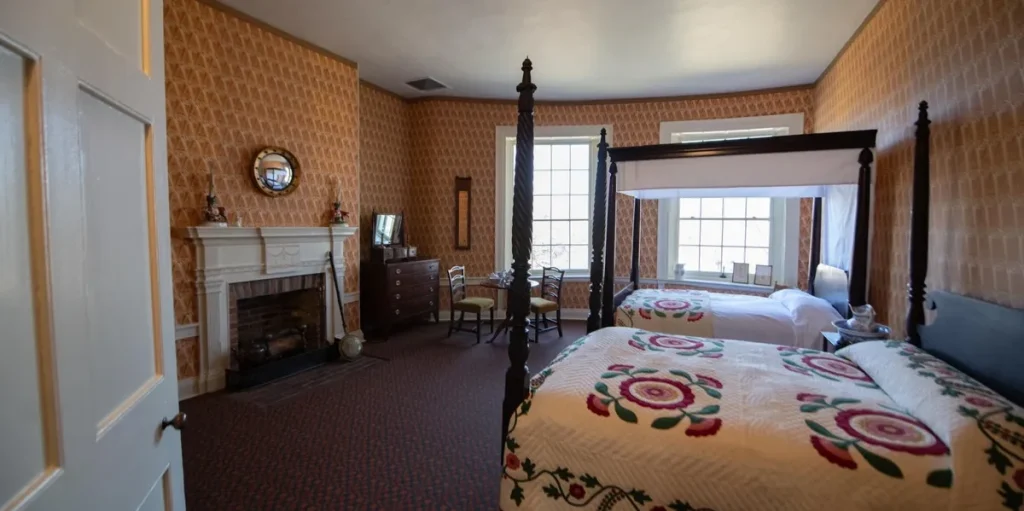
- The original furnishings and period pieces, which reflect both the aspirations and constraints of frontier life—refined, yet practical
- The symmetrical brick façade and balanced architecture, a striking contrast to the rugged surroundings of early Indiana and a clear statement of order and governance
- The surrounding grounds, where the house sits almost as a symbol of imposed structure on an emerging territory
Grouseland is a reminder that the presidency was never confined to the East Coast—it expanded with the nation itself. https://grouselandfoundation.org
Lesser-Known Corners of Presidential History
James K. Polk Home — Columbia, Tennessee

This is one of the most intimate presidential sites in the country. Unlike the grand estates of Virginia, Polk’s home is modest—reflecting both his upbringing and his practical nature. Yet from this unassuming place came a presidency that dramatically reshaped the map of the United States.
The home is carefully preserved, with original furnishings and personal artifacts that bring Polk’s life into focus.
What stands out:
- The contrast between the home’s simplicity and Polk’s historical impact
- The personal nature of the artifacts and interpretation
- The accessibility of the site—less crowded, more immediate
What not to miss:
- Polk’s personal desk and writing furnishings, where you can picture the disciplined, methodical president managing correspondence that would ultimately reshape the nation’s borders
- The carefully preserved parlor rooms, where original furniture and decorative objects reflect the restrained, practical elegance of Polk’s domestic life
- The detached kitchen building, a physical reminder of how early 19th-century households functioned, with separate working spaces that kept heat and labor outside the main home
- The garden paths and heirloom plantings, which recreate the rhythms of daily life and offer a quiet contrast to the sweeping national changes Polk set in motion
- The museum galleries displaying artifacts from his presidency, including documents and maps tied to westward expansion—allowing you to connect this modest home to the vast territorial growth of the United States
This is a place that surprises—quietly, but profoundly. https://jameskpolk.com
Zachary Taylor at Farmington — Louisville, Kentucky
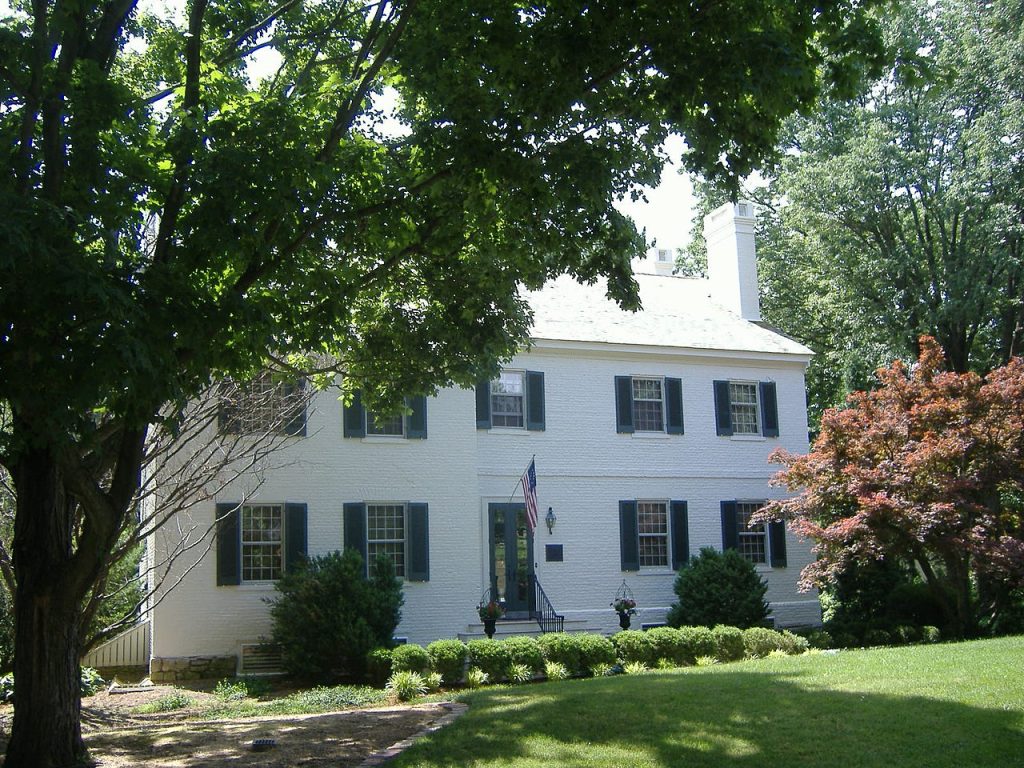
Farmington offers a glimpse into the life of a president whose career bridged military command and national leadership. The house itself, with its Jeffersonian design, reflects the spread of architectural ideals across the young nation. It is elegant without being overwhelming, set within a landscape that retains its historic character. Taylor’s connection to the property adds another layer, linking personal history with broader national narratives.
What stands out:
- The unmistakable Jeffersonian architecture—its balanced symmetry, red brick façade, and refined proportions reflecting the spread of early American design ideals beyond Virginia
- The contrast between cultivated elegance and frontier life, as Taylor moved between military campaigns and this orderly domestic setting
- The elevated position of the house, which gives it a commanding yet graceful presence over the surrounding landscape
- The layered history of the plantation itself, where beauty and complexity coexist within the broader story of early America
What not to miss:
- The striking front façade and columned entrance, where the home’s symmetry and proportion are best appreciated as a statement of early American refinement
- The central hallway and interior architectural details, including finely crafted woodwork and the sense of airflow and light that define Jeffersonian design
- The detached dependencies and outbuildings, which reveal how the estate functioned as a working plantation beyond the main house
- The sweeping lawn and surrounding grounds, offering views that connect the home to its agricultural past and broader landscape
- The subtle architectural influence attributed to Jefferson himself, visible in the home’s proportions and layout—an elegant echo of Monticello in the Kentucky countryside
Farmington is both beautiful and thought-provoking—a place where aesthetics and history intersect.
https://farmingtonhistoricplantation.org
Franklin Pierce Homestead — Hillsborough, New Hampshire

There is a simplicity to the Pierce Homestead that feels almost grounding. This is not a grand estate, but a working New England farmstead. It reflects the early life of a president shaped by rural surroundings and modest means. The home’s quiet presence allows visitors to step into a different kind of presidential narrative—one rooted in everyday life rather than grandeur.
What stands out:
- The simplicity of the New England farmhouse, with its unadorned wood construction and practical layout reflecting the rural world that shaped Pierce’s early character
- The authenticity of the setting, surrounded by rolling fields, stone walls, and wooded edges that feel largely unchanged from Pierce’s youth
- The contrast between this modest upbringing and the burdens of his later presidency, giving the site a quietly introspective tone
- The sense of isolation and stillness, far removed from the political centers of the nation, which underscores how rooted his beginnings truly were
What not to miss:
- The original family rooms within the homestead, where low ceilings, narrow stairways, and simple furnishings create an immediate sense of 19th-century domestic life
- The large open hearth kitchen, the true heart of the home, where daily life unfolded and the rhythms of a working household are most vividly imagined
- The surrounding farmland and stone boundary walls, which define the property and offer a tangible connection to early New England agricultural life
- The views across the gently sloping landscape, where the quiet beauty of the countryside provides context for Pierce’s formative years
- The preserved outbuildings, which reveal how the household functioned beyond the main structure, grounding the experience in everyday reality
This is a place of origins—simple, honest, and deeply human. https://www.nhstateparks.org/visit/historic-sites/franklin-pierce-homestead
Recommended Reading
- The President’s House: A History by William Seale — A richly detailed exploration of presidential residences, including private homes and the evolution of executive spaces. While it includes the White House, its broader context helps illuminate how early presidents lived before formal institutions took hold.
- American Architecture: A History by Leland M. Roth –A superb overview that helps decode what you are seeing at Monticello, Montpelier, and beyond.
- Washington: A Life by Ron Chernow — A sweeping, deeply human portrait that brings Mount Vernon into sharper focus—especially Washington’s identity as a landowner and innovator.
- Thomas Jefferson: The Art of Power by Jon Meacham — Elegant and nuanced, this biography pairs beautifully with a visit to Monticello, illuminating both Jefferson’s brilliance and contradictions.
- James Madison: America’s First Politician by Jay Cost — A more recent and insightful look at Madison, offering context for the intellectual world you encounter at Montpelier.
- The Last Founding Father: James Monroe and a Nation’s Call to Greatness by Harlow Giles Unger — An accessible and engaging biography that helps bring Monroe—and Highland—into clearer view for modern readers.
Image Credits: Polk Association Photographer, Midnightdreary, and other Wikimedia Commons contributors; Unsplash photographers; and public domain sources.
