
Have you ever stepped into an historic inn, and felt the wooden floorboards beneath your feed, smelled that pungent smell of history, sat before the warming fire eating a meal much like the early patriots would have enjoyed or sipped a toddy that they would have imbibed in troubled, peaceful or triumphant times?
Inns are among the most intimate of places. Unlike battlefields or monuments, they were never meant for spectacle. They were built for rest, for sustenance, for conversation. And yet, in their taprooms and chambers, the young republic found its voice—over ale, by candlelight, in hurried whispers and long, deliberative debates.
As we approach America’s 250th anniversary, there is something deeply moving about stepping into these spaces that have never ceased their purpose. They are not relics. They are continuations.
They are, quite simply, where the republic rested.
Let’s take a look at those incredible inns that have stood the test of time…and are still serving today!
New England: Where the Journey Began
If America’s story has a hearth, it is here—in New England—where roads were first carved through forests and taverns rose to meet the weary traveler.
- Wayside Inn — Sudbury, Massachusetts (1716)
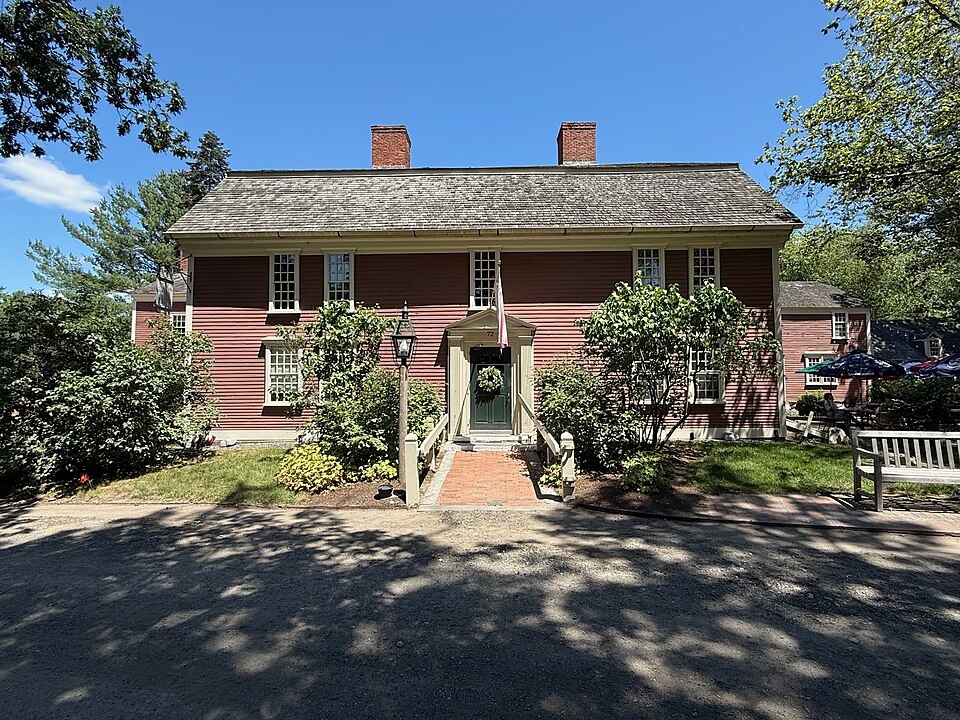
Low beams. Wide hearths. A sense of time compressed into timber and stone. The Wayside Inn, often cited as the oldest continuously operating inn in the United States, began as a simple stagecoach stop along a vital colonial route. But what it became was something more—a gathering place where travelers, thinkers, and revolutionaries paused between destinations. Henry Wadsworth Longfellow immortalized it in Tales of a Wayside Inn, but its true poetry lies in its endurance. Sit by the fire today, and you are sharing space not only with fellow guests—but with the lingering presence of centuries.
- Red Lion Inn — Stockbridge, Massachusetts (1773)
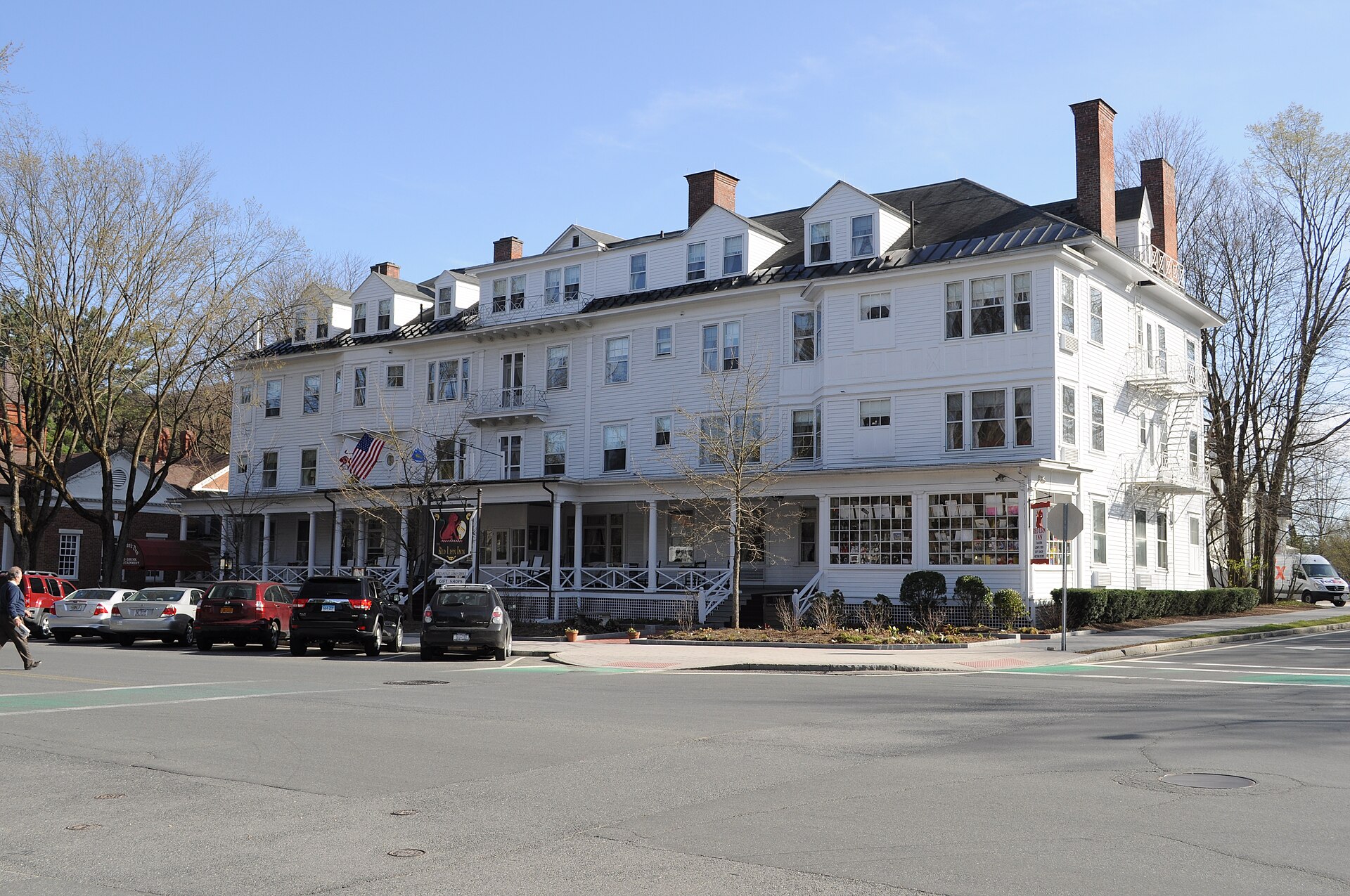
If the Wayside Inn is contemplative, the Red Lion Inn is convivial. Founded on the eve of revolution, it quickly became a crossroads of culture and conversation. In later years, Norman Rockwell would find inspiration here, but long before that, the inn was alive with the energy of a nation in formation. Today, it retains a delightful eccentricity—rocking chairs on the porch, rooms layered with personality, and a palpable sense that stories are still being written within its walls.
- Beekman Arms & Delamater Inn — Rhinebeck, New York (1766)
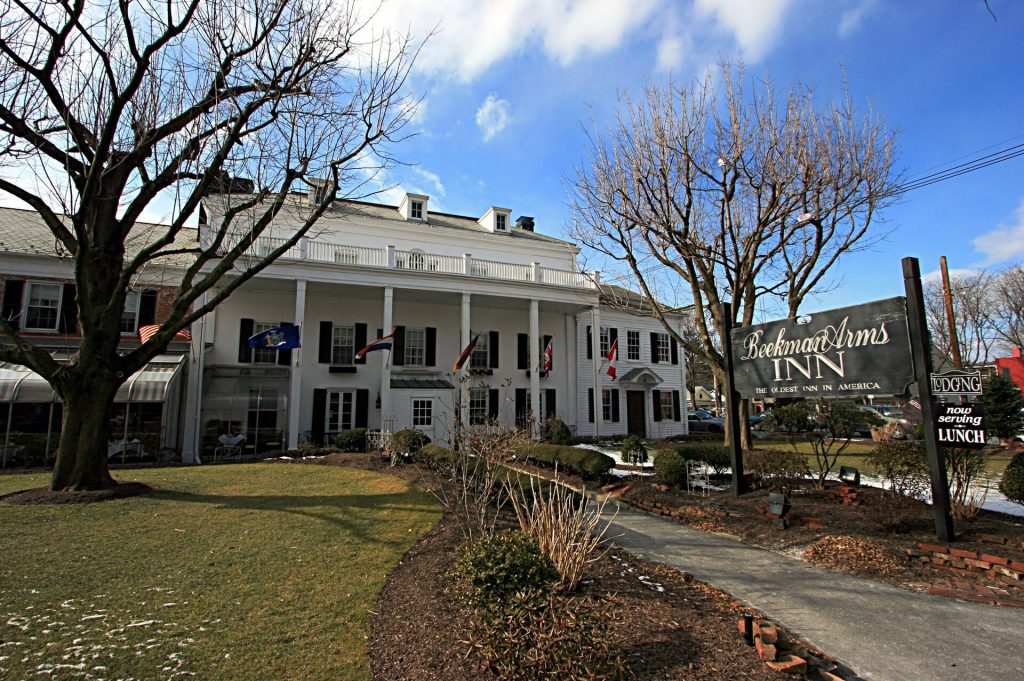
Few places can claim a guest list that includes Washington, Hamilton, and Clinton—and still serve a drink at the same bar. The Beekman Arms, widely regarded as America’s oldest continuously operating hotel, stands as a testament to continuity. Its taproom hums with the same genial spirit that once animated early American discourse. Here, the past does not feel distant. It feels…adjacent.
- Three Chimneys Inn — Durham, New Hampshire (Origins 1649; Inn Use Early 1700s)
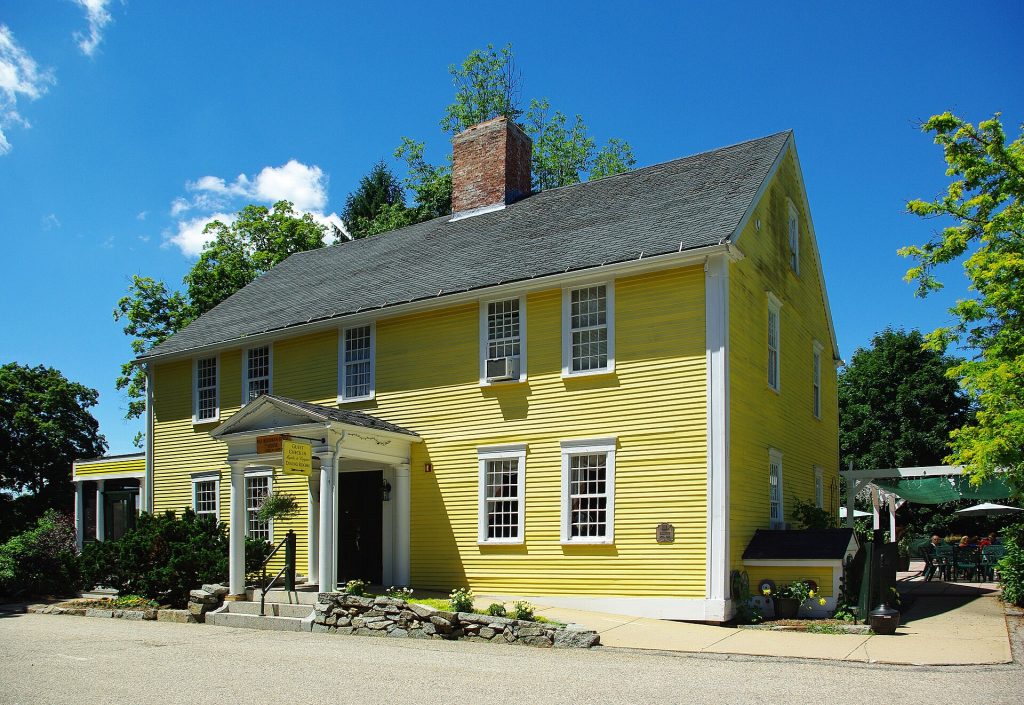
Though its origins predate the 18th century, the Three Chimneys Inn came into its own as a center of hospitality in the early republic. Its architecture speaks of endurance—thick beams, sloping roofs, and the quiet sturdiness of colonial craftsmanship. It is the kind of place where you sense not just history, but resilience.
Mid-Atlantic: Taverns of Revolution and Republic
As the colonies edged toward independence, the taverns of the Mid-Atlantic became something more than rest stops. They became the crossroads of both colonials and their oppressors, folks moving south and west, leaders and frontiersmen.
- Fraunces Tavern — New York City, New York (1762)
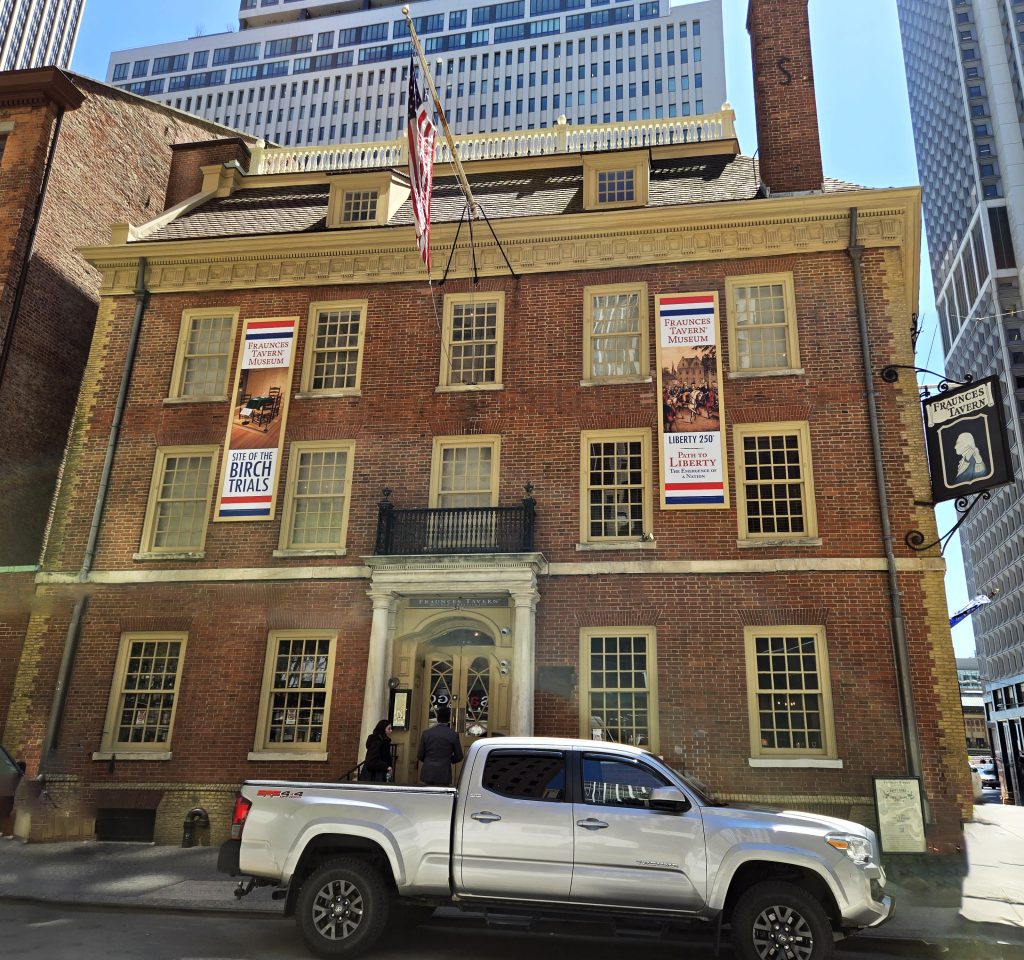
One of the most storied taverns in America, Fraunces Tavern is forever linked to the closing chapter of the Revolutionary War, when George Washington bade an emotional farewell to his officers here in 1783. Originally opened as a public house and meeting place, it served as a hub of political and social life in colonial New York. Though no longer operating as an inn, it continues as a tavern and museum, where visitors can stand in the Long Room and feel the weight of that historic moment.
- General Wayne Inn — Merion, Pennsylvania (1704)
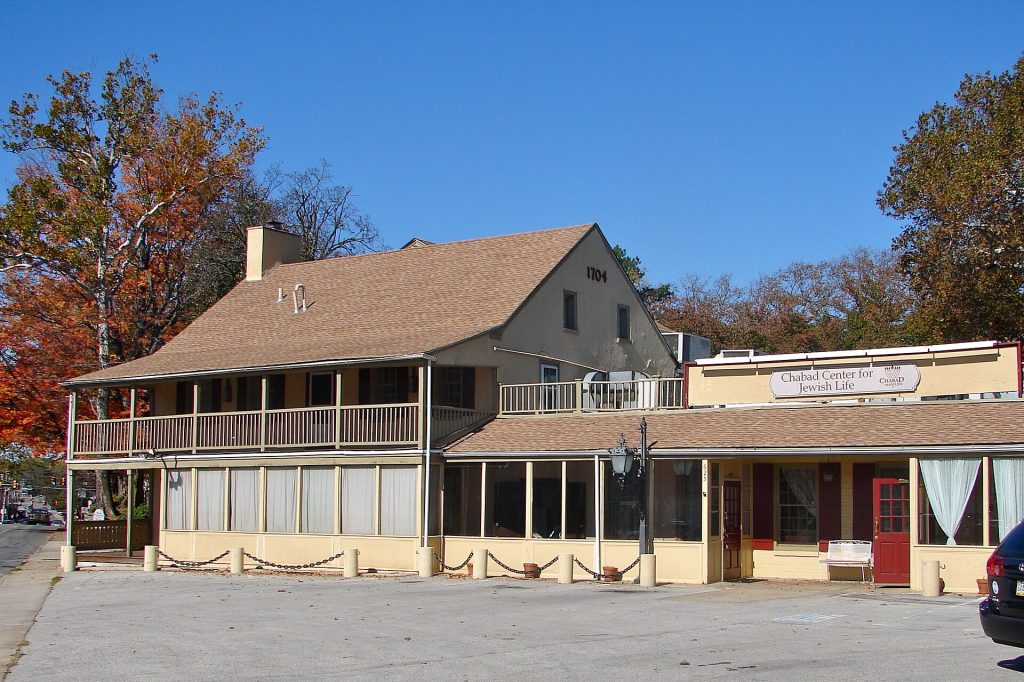
Few inns carry such a layered—and at times eerie—history. Favored by General “Mad” Anthony Wayne, this Pennsylvania landmark has long been associated with both Revolutionary fervor and lingering legend. It is frequently cited as one of the most haunted inns in America, but even without its spectral reputation, it stands as a powerful reminder of the era’s intensity. War, strategy, survival—these were not abstractions here. They were lived realities.
- The Wayside Inn (Brick House Inn) — Middletown, Virginia (1797)
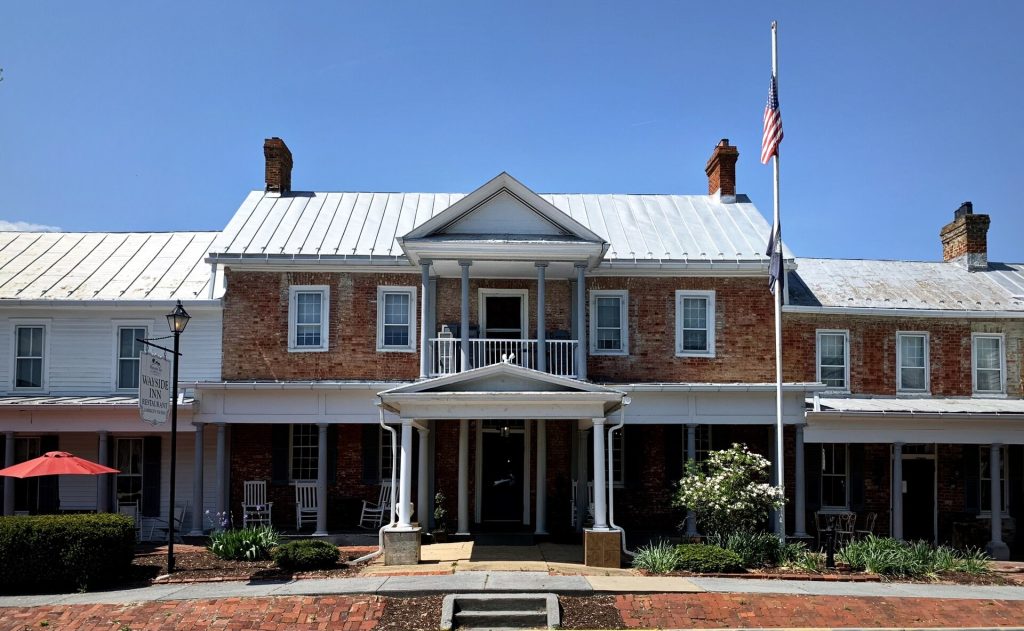
Set in the Shenandoah Valley, this stone-built inn welcomed travelers moving south and west in the early years of the republic. It is easy to imagine wagons arriving at dusk, horses tethered, voices carrying across the valley air. The inn’s walls have absorbed the rhythms of expansion—the slow, steady push of a nation finding its breadth.
- The Inn at Court Square — Charlottesville, Virginia (c. 1785)
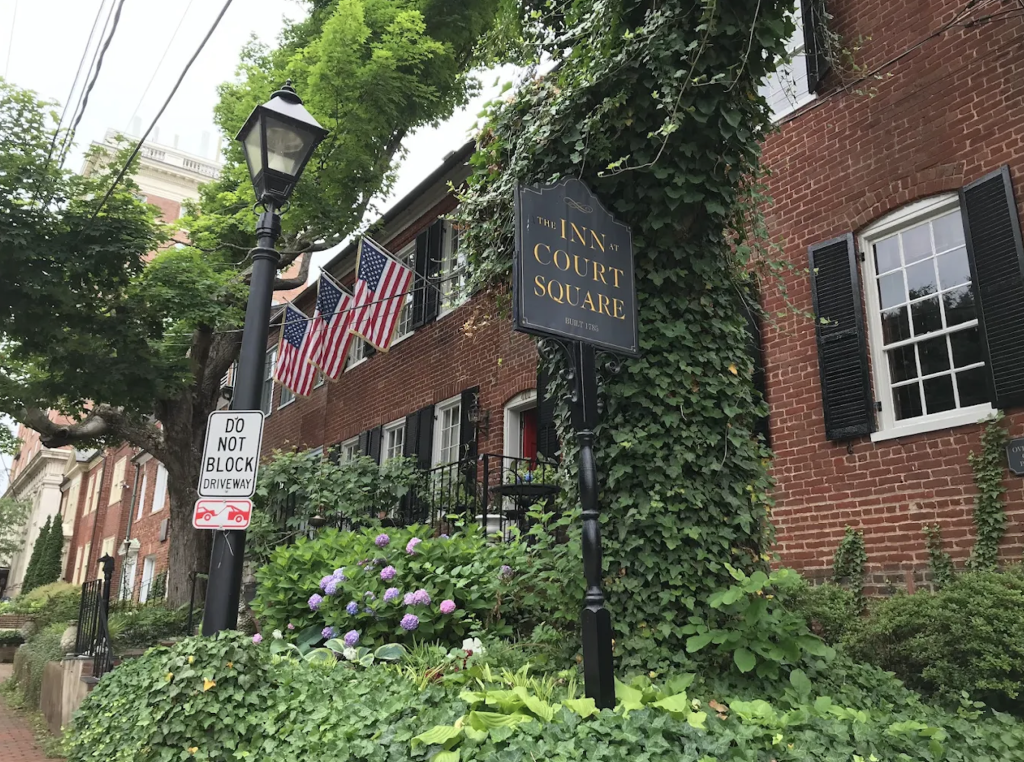
Refined and quietly elegant, this Federal-era inn sits within the orbit of Thomas Jefferson’s Monticello.
Here, the tone shifts. The rough edges of frontier travel give way to something more deliberate—measured conversation, philosophical exchange, the shaping of ideas that would define a nation.
The South: Grace, Complexity, and Untold Stories
In the South, inns and taverns carry a different cadence—one shaped by both hospitality and the complex, often difficult histories of the region.
- The Olde Pink House — Savannah, Georgia (1771)
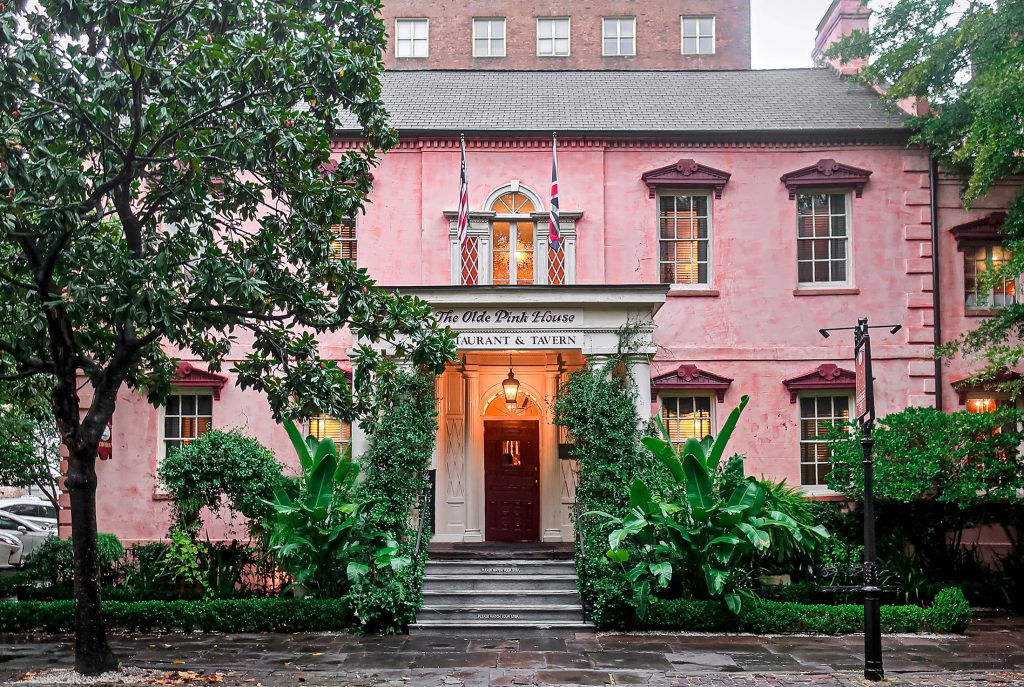
Though now a restaurant, The Olde Pink House began its life in the Georgian era as both residence and tavern. Savannah itself feels like a city suspended in time, and this structure—blush-toned and elegant—anchors that illusion. Within the walls of The Olde Pink House, one can sense the layered lives of those who passed through: merchants, soldiers, citizens navigating a world in flux.
- The Historic Magnolia House — Greensboro, North Carolina (Early 1800s)
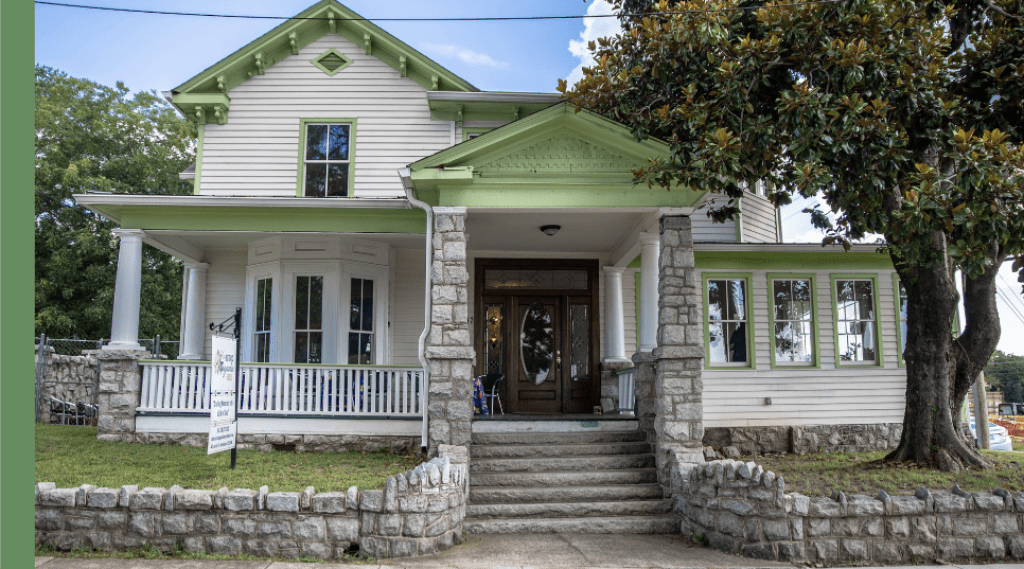
Here, history takes on a profoundly important dimension. Originally a private residence, the Magnolia House later became a vital stop on the Green Book network—a sanctuary for Black travelers during the era of segregation. Figures such as James Baldwin and Ray Charles found welcome here when much of the country denied it. To step into the Magnolia House is to encounter not only early American history, but the ongoing story of resilience, dignity, and the pursuit of belonging.
Beyond the Coast: Expansion and Endurance
As the young nation pushed westward, the role of the inn evolved—but its essence remained.
- Golden Lamb Inn — Lebanon, Ohio (1803)
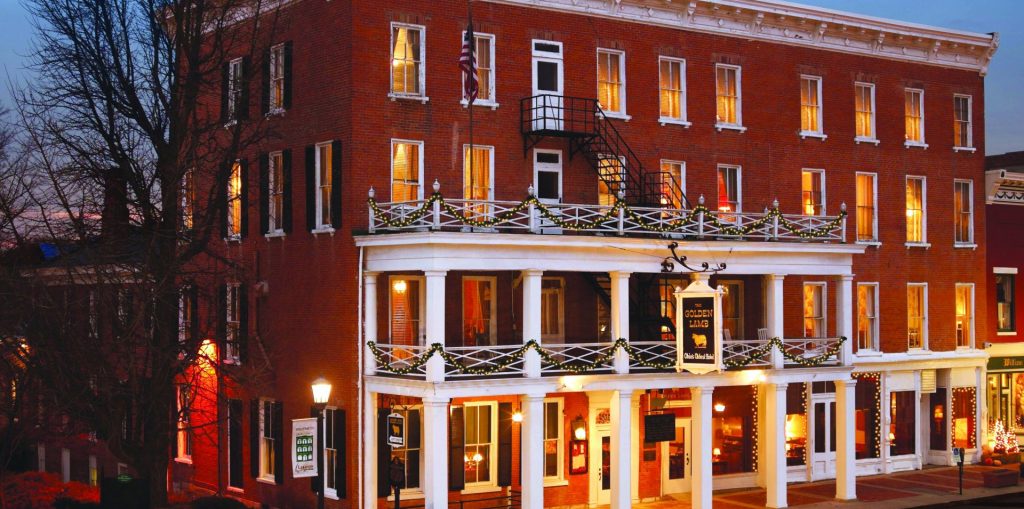
The oldest continuously operating inn in Ohio, the Golden Lamb stands as a beacon of early American expansion. Its guestbook reads like a who’s who of the nation’s formative years—twelve U.S. presidents, Harriet Beecher Stowe, Charles Dickens. But beyond its notable visitors, the inn embodies something deeper: the movement of ideas and people into the interior of the country. It is history in motion—captured, briefly, between arrival and departure.
The Living Thread of Hospitality
What unites these places is not merely age, but continuity.
They have endured:
- Revolutions and civil war
- Economic upheaval
- Cultural transformation
And yet, they remain what they have always been—places of welcome.
There is something profoundly reassuring in that. In an age of digital transience and ever-shifting landscapes, these inns offer a rare constancy. You can still arrive at dusk. Still be greeted. Still sit by a fire or at a table where countless others have done the same.
Recommended Reading
Fiction:
- The Seaside Homecoming by Julie Klassen — The novel continues the On Devonshire Shores series and offers a richly detailed portrayal of Regency-era life in a seaside community. It combines family drama, faith, and historical atmosphere.
- Johnny Tremain by Esther Forbes –A classic of Revolutionary-era Boston, this novel frequently places its characters in taverns and public houses where news, rumor, and rebellion circulate freely. It offers a youthful but richly textured view of how such spaces functioned in daily colonial life.
- My Dear Hamilton: A Novel of Eliza Schuyler Hamilton by Stephanie Dray & Laura Kamoie — Travel, war, and the constant movement between cities and encampments place inns and taverns at the edges of many scenes in this sweeping novel. It captures the transient, uncertain nature of the Revolutionary period—where such establishments offered brief refuge amid upheaval.
- The Midwife’s Revolt by Jodi Daynard – –Set in Boston during the years leading up to the Revolution, this novel brings readers into the social fabric of the time—where taverns and inns serve as meeting grounds for both personal and political transformation.
- The Whiskey Rebels by David Liss — For a slightly later period, this novel explores the early republic’s economic tensions, with taverns once again serving as hubs of information, intrigue, and negotiation. It vividly evokes the atmosphere of post-Revolutionary America
Nonfiction:
- Taverns and Drinking in Early America by Sharon V. Salinger — Explores how public houses functioned as centers of commerce, communication, and community life. The book is considered one of the foundational studies of tavern culture in early America.
- Early American Taverns: For the Entertainment of Friends and Strangers by Kym S. Rice — This beautifully researched work offers a vivid portrait of tavern culture in the 18th century. From food and drink to social customs and architecture, Rice brings to life the rhythms of daily existence within these establishments—many of which would have looked and felt remarkably like the inns still standing today.
- Public Houses: Drink and the Revolution of Authority in Colonial Massachusetts by David W. Conroy — A fascinating and more scholarly examination of taverns as political spaces, this book reveals how these gathering places became incubators of revolutionary thought. Read this before stepping into a place like the Wayside Inn, and the conversations you imagine will take on new urgency.
- Taverns of the American Revolution by Adrian Covert — A lively and accessible narrative that traces the role of taverns in the birth of the nation. Covert connects specific places and events, allowing readers to map the Revolution not just through battlefields, but through the rooms where ideas were argued into existence.
- Rum Punch and Revolution: Taverngoing and Public Life in Eighteenth-Century Philadelphia by Peter Thompson — This book shows how drinking establishments became places where politics, news, and revolutionary ideas circulated. The book offers a detailed look at urban tavern culture in colonial America.
Image Credits: Wikimedia Commons contributors, including APK, Rolfmueller, Smallbones, AcrossTheAtlantic, and Joe Mabel; Unsplash photographers; and public domain sources
