
Morris-Jumel Mansion: Manhattan’s Oldest House and Its Most Storied Survivor
High above the movement of upper Manhattan, where the rigid grid begins to soften and the island’s earlier contours still assert themselves, there stands a house that has watched the city become itself.
The Morris Jumel Mansion does not overwhelm with scale or ornament. It is not a palace, nor a sweeping estate. And yet, it possesses something far rarer—a continuity of presence that reaches back to the years just before the American Revolution and carries forward, uninterrupted, into the present day.
This is Manhattan’s oldest surviving residence—but more than that, it is one of the few places where the island’s earliest layers remain visible.
A House Above the City
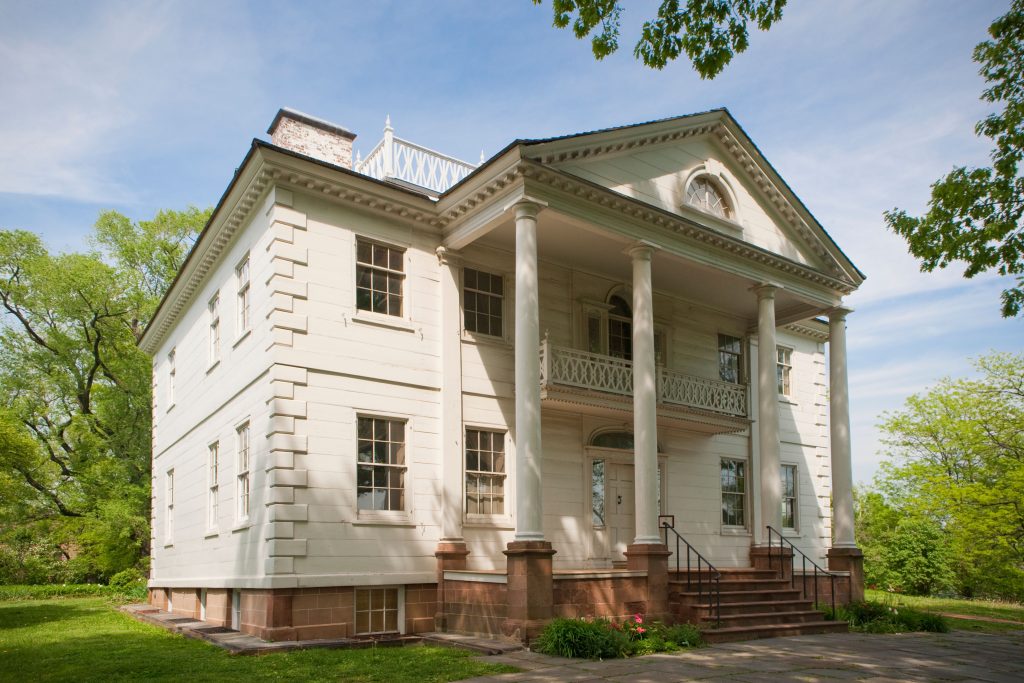
Built in 1765 by British Colonel Roger Morris, the house was conceived not as part of a city, but as a country retreat. At the time, this stretch of Manhattan was open land—elevated, breezy, and commanding in its views of the Harlem River and the surrounding countryside.
Morris chose the site with intention. From this rise, one could observe movement across a wide expanse, a quality that would later prove far more significant than its original pastoral appeal.
Architecturally, the mansion reflects refined Georgian Palladian design. Its symmetry is balanced and deliberate, softened by a distinctive two-story portico that still defines its façade. Inside, the layout reveals both formality and innovation, particularly in its octagonal rooms, which allow light to move through the house in ways that feel unexpectedly modern.
It was, even then, a house of ambition—elegant, strategic, and carefully placed.

War Comes to the Heights
That placement would soon determine its role in history. When the American Revolution reached New York, Roger Morris, a Loyalist, fled the property, leaving it behind as control of the city shifted. In 1776, George Washington claimed the house as his headquarters during the Battle of Harlem Heights.
From here, he could survey the surrounding terrain, monitor British troop movements, and attempt to stabilize a fragile military position following earlier defeats. The elevation that had once offered scenic views became a tactical advantage. Even today, the logic of the site is unmistakable. Despite the surrounding city, the rise remains perceptible. The vantage still holds. It is easy to understand why this house, more than others nearby, became a point of command.
Eliza Jumel and a House of Reinvention
After the war, the mansion passed through several hands before entering its most defining chapter in the early 19th century under Stephen Jumel and his wife, Eliza.
Stephen Jumel, a wealthy French wine merchant, restored and refined the property, introducing decorative elements that reflected both European taste and rising American prosperity. But it was Eliza Jumel who would ultimately shape the house’s enduring identity.
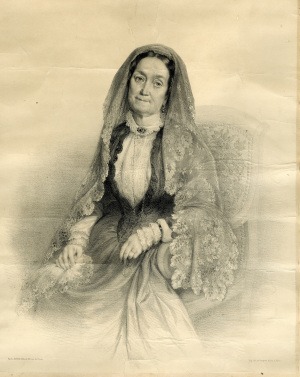
Her life was one of calculated reinvention. Rising from modest beginnings, she became one of the wealthiest and most socially prominent women in New York.
After her husband’s death, Eliza Jumel stood as one of the wealthiest women in New York City and among the most successful self-made women in America. What set her apart even more was her uncommon position of personally controlling her fortune at a time when few women did. Financially independent and socially prominent, she occupied a rare space in early 19th-century society—one defined not just by wealth, but by autonomy and influence. She controlled both her fortune and the future of the estate, maintaining the house as a symbol of her status and independence.
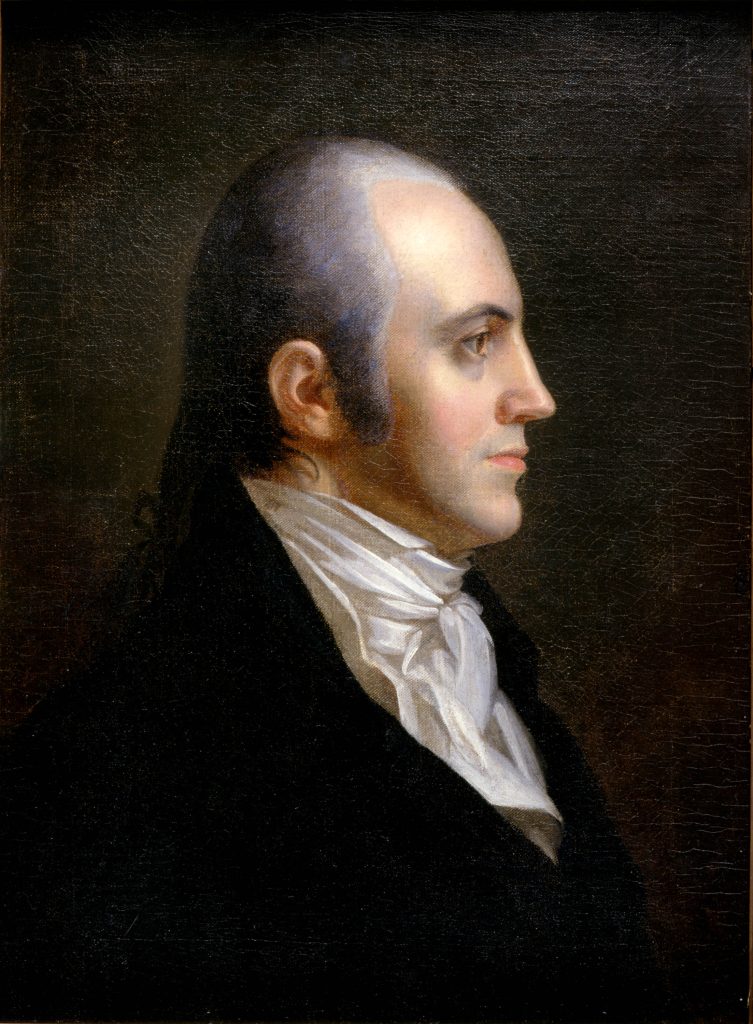
In 1833, she married Aaron Burr.
The marriage took place within the mansion, bringing together two figures whose lives were already deeply entwined with the nation’s early drama. Burr, former Vice President and forever marked by his duel with Alexander Hamilton, arrived with reputation — but diminished means. Eliza, pragmatic and perceptive, quickly recognized the imbalance. The marriage lasted only months, ending in divorce finalized on the very day of Burr’s death.
Within this house, then, the stories of Washington and Burr intersect—not as distant history, but as lived experience.
Inside the Mansion
What distinguishes the Morris-Jumel Mansion today is its sense of authenticity.
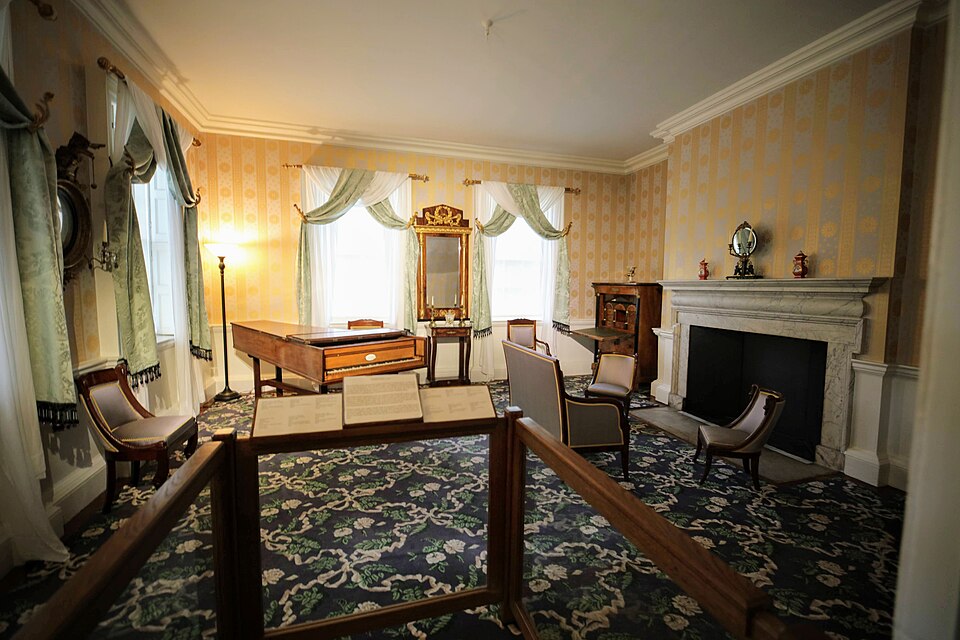
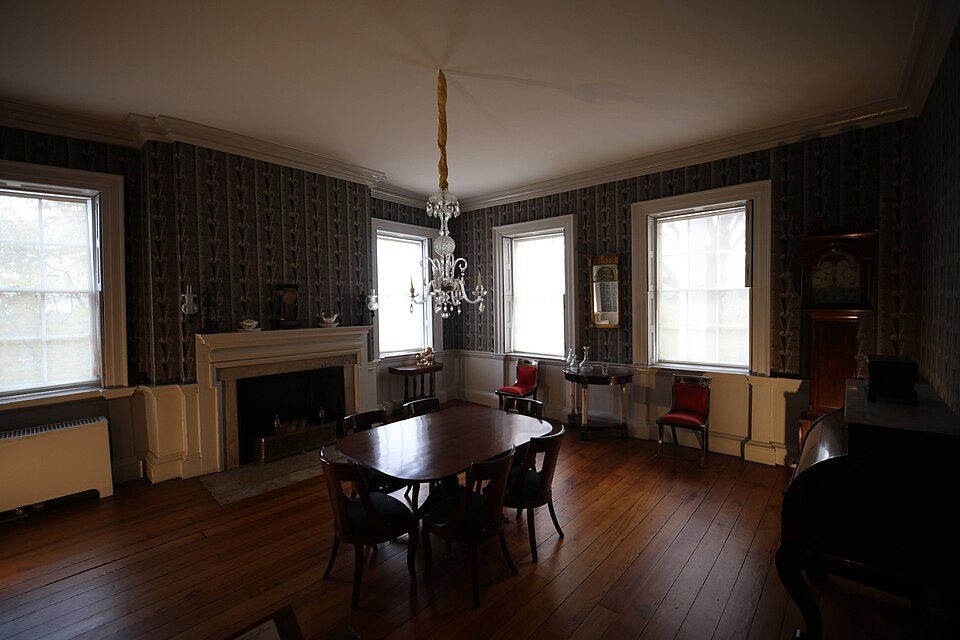
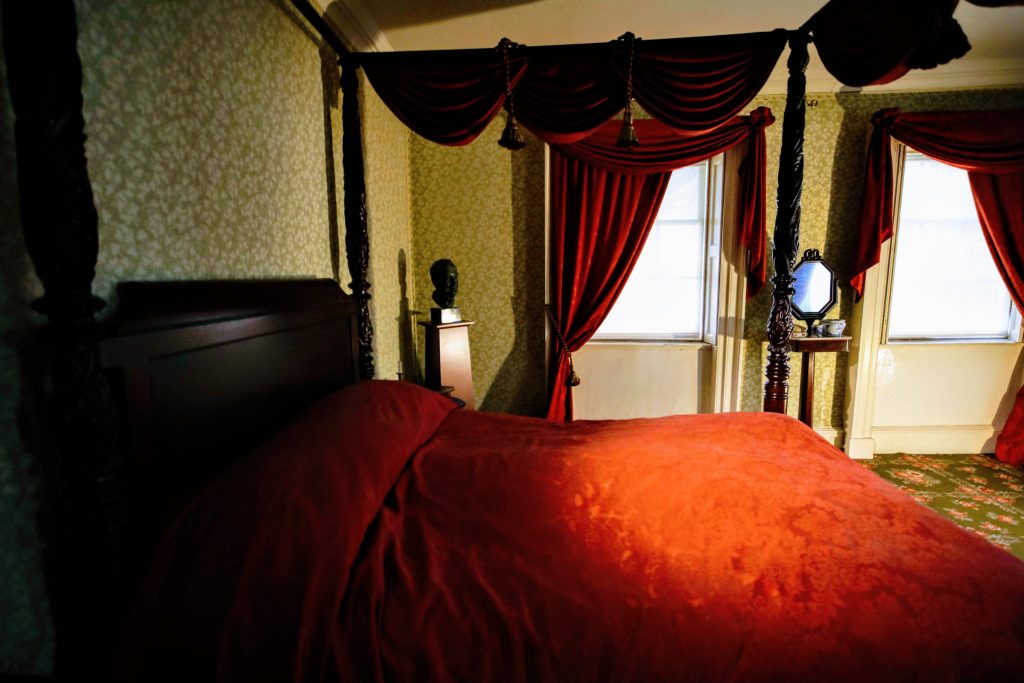
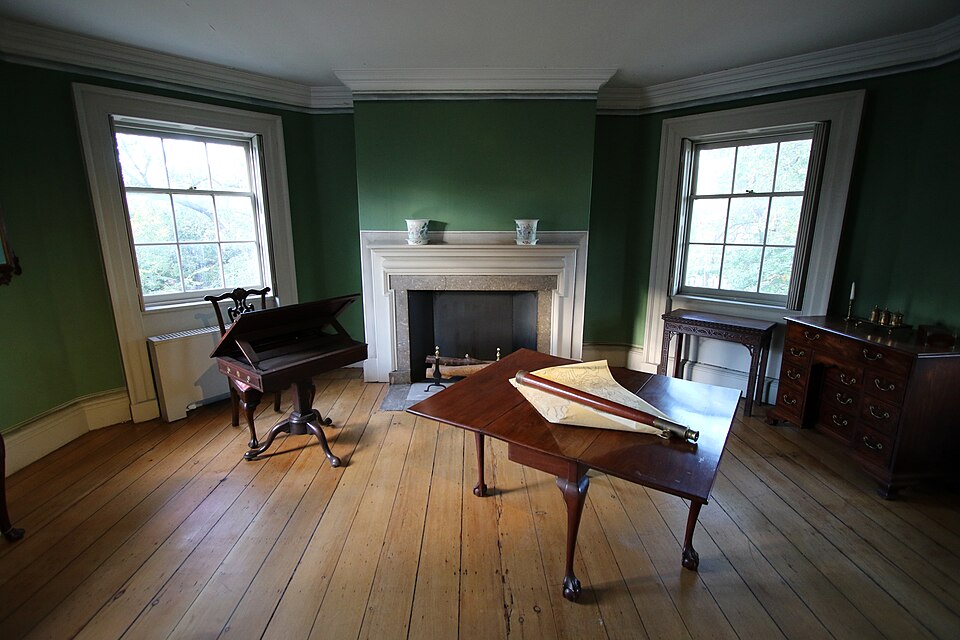
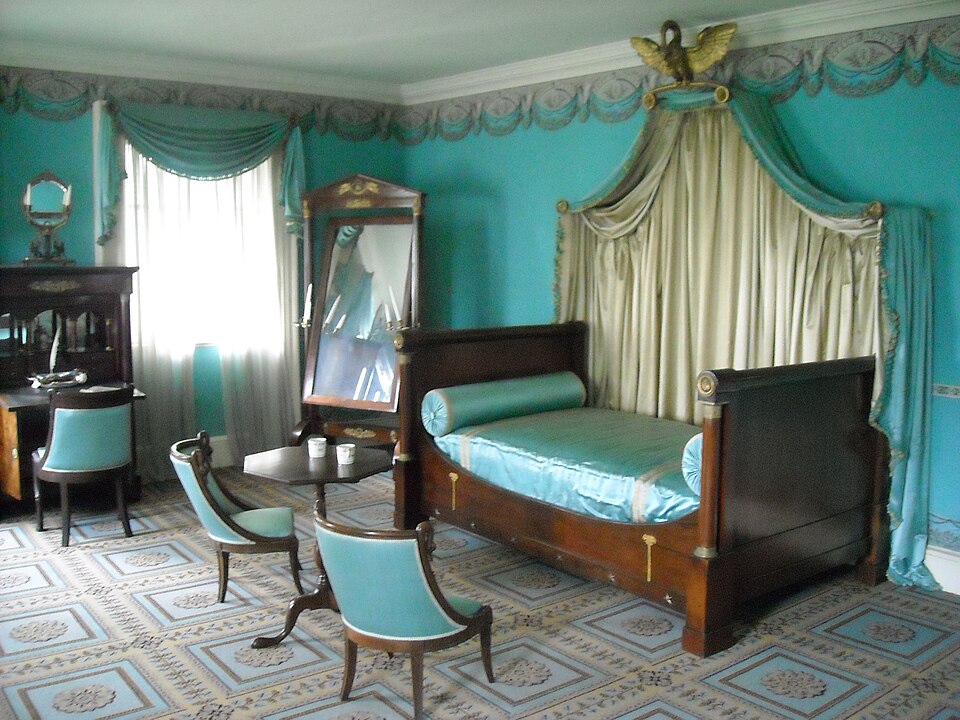
The interior retains a scale that feels both intimate and substantial. The central staircase rises with quiet authority, connecting rooms that remain proportioned for living rather than display. The octagonal drawing room, one of the house’s most distinctive features, allows light to move across the space in shifting patterns throughout the day.
The front parlor, where Eliza Jumel and Aaron Burr were married, carries a different weight—less architectural, more personal. The room associated with Washington’s occupancy is more restrained, reflecting the practical demands of its temporary use as headquarters.
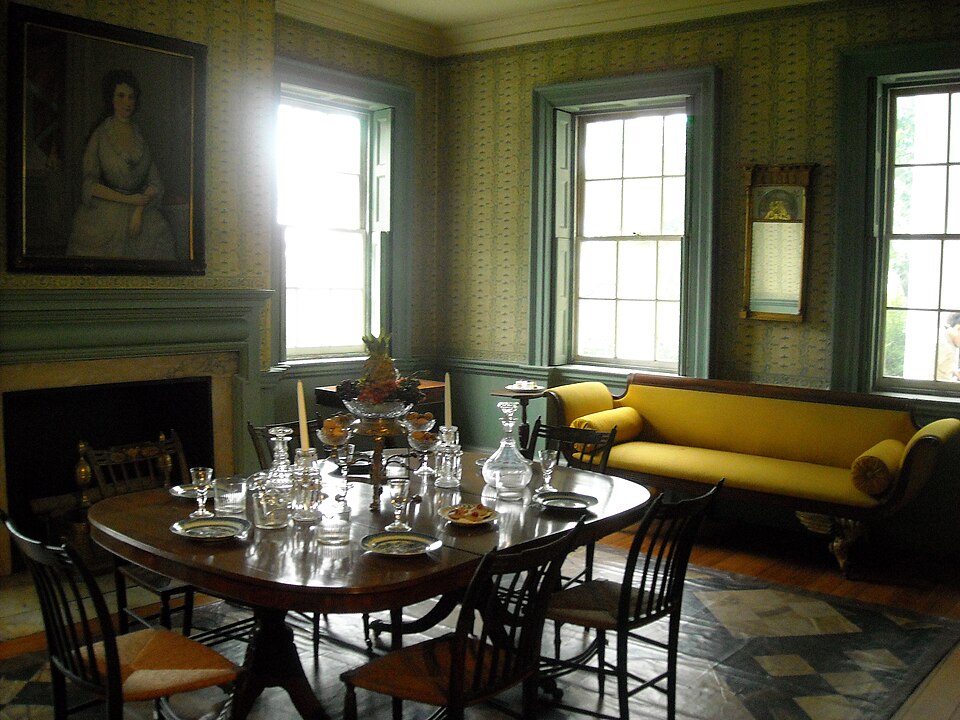
The dining room and adjoining spaces reveal the social aspirations of the Jumel era, when the house functioned not just as a residence, but as a stage for status and influence. Each room holds more than one narrative. The house does not belong to a single moment—it accumulates them.

The Grounds and the Lost Landscape
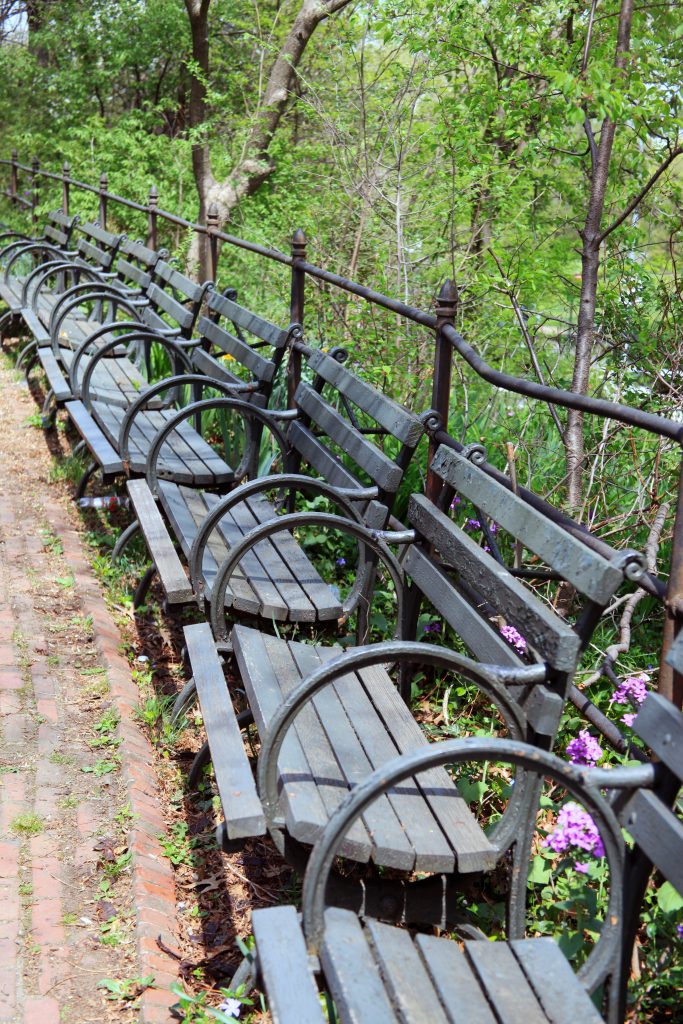
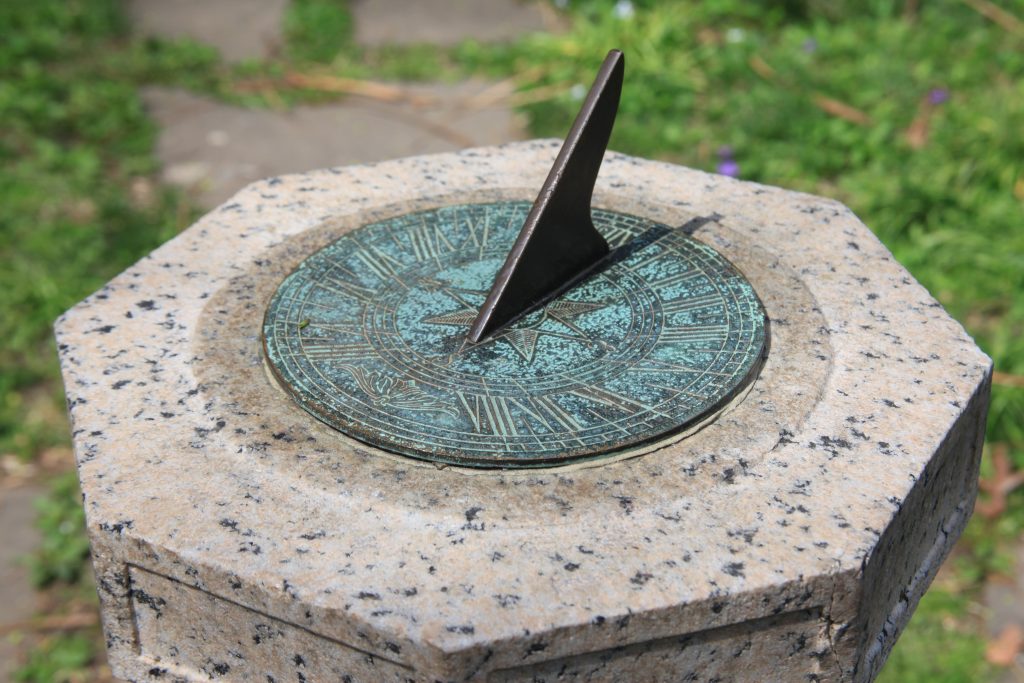
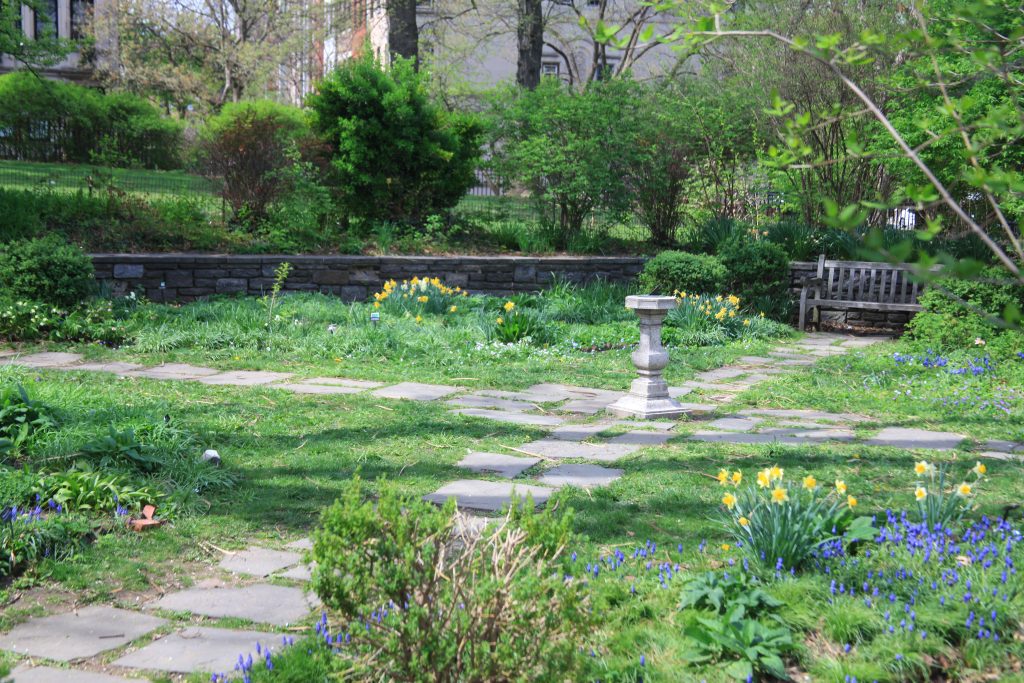
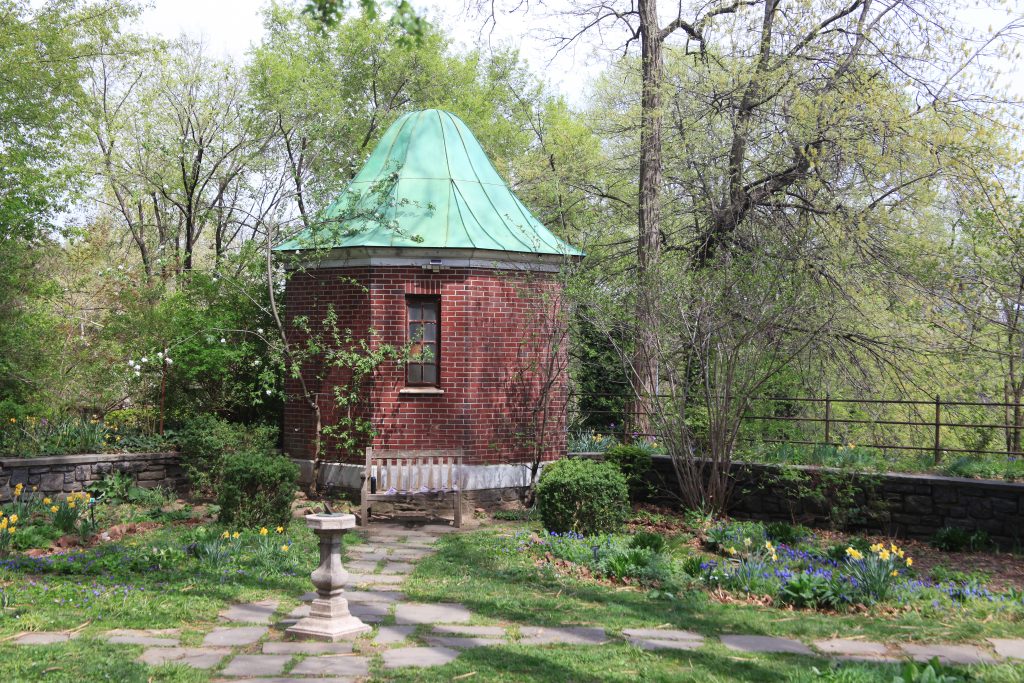
Today, the mansion sits within Roger Morris Park, a modest but significant green space that preserves something of its original setting. While the surrounding neighborhood is now dense and urban, the immediate grounds still suggest the earlier landscape. The elevation is tangible. The air shifts slightly. The sense of separation remains.
With attention, it becomes possible to reconstruct what once was—open land, long sightlines, and a strategic vantage point overlooking the approaches to the island. It is one of the rare places in Manhattan where the geography beneath the city is still visible.



Visitors Welcome
The Morris-Jumel Mansion has endured because it has never been static. It has served as a private residence, a military headquarters, a symbol of social ambition, and now a museum. Visitors move through it today not as observers of a single era, but as participants in a layered history. The furnishings, many dating to the Jumel period, ground the house in its domestic life, while interpretation continues to expand, acknowledging the broader realities of those who lived and worked there, including enslaved individuals whose presence is an essential part of its story. It is, in every sense, a house that contains more than it reveals at first glance.
A note for anyone planning a visit: the Mansion’s interior is currently closed to the public as part of a major restoration effort — a $10 million project addressing the exterior, roof, and long-needed accessibility upgrades. The grounds and Roger Morris Park, however, remain open, offering visitors a chance to stand on that same elevated rise Washington once surveyed. Before making the trip uptown, it’s worth checking https://www.morrisjumel.org for the latest on tour availability and reopening.
Recommended Reading
Fiction
- The Jewel of Sugar Hill by Fiona Davis — Inspired by the real life of Eliza Jumel, the novel explores ambition, reputation, and the enduring legacy of one of New York City’s most storied homes.
Nonfiction
- The Remarkable Rise of Eliza Jumel: A Story of Marriage and Money in the Early Republic by Margaret Oppenheimer — A deeply researched and engaging portrait of Eliza Jumel’s rise from poverty to power, bringing the mansion and its social world vividly to life
- The Mansion of Happiness: A History of Life in the Morris-Jumel Mansion by Mary C. Black — A richly detailed account of the house itself, tracing its evolution through its various occupants and its place in New York history
- Aaron Burr: Conspiracy to Treason by Buckner F. Melton Jr. –While focused on Burr, this work provides important context for his final years and his brief, dramatic connection to the mansion
Image Credits: CaptJayRuffins, Beyond My Ken, and Elisa Rolle via Wikimedia Commons
