Where Every Corner Whispers a Different Tongue
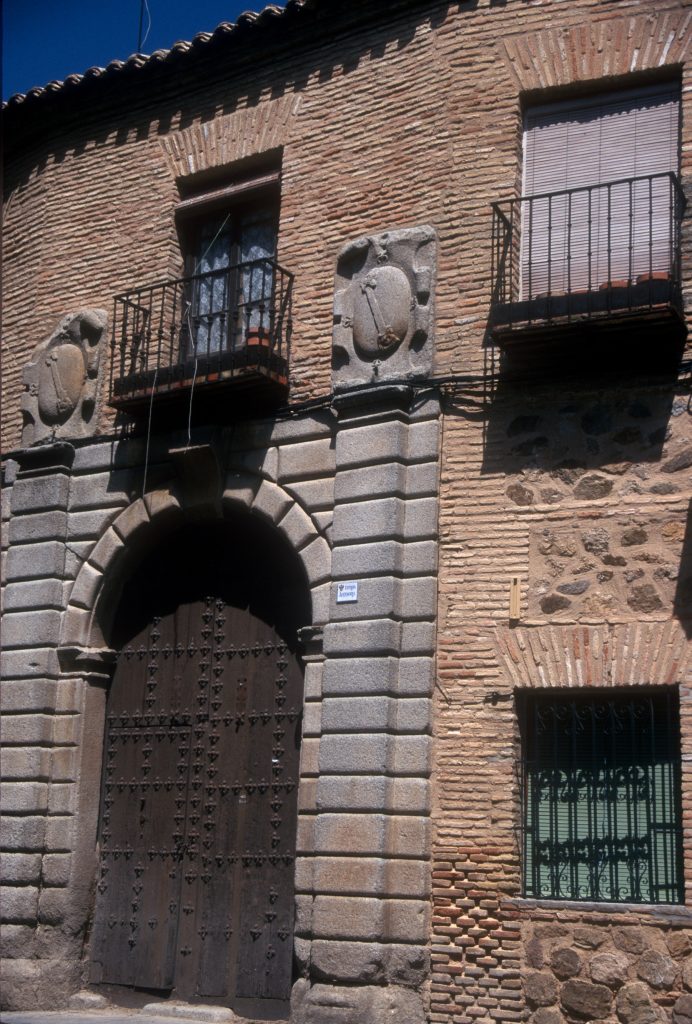
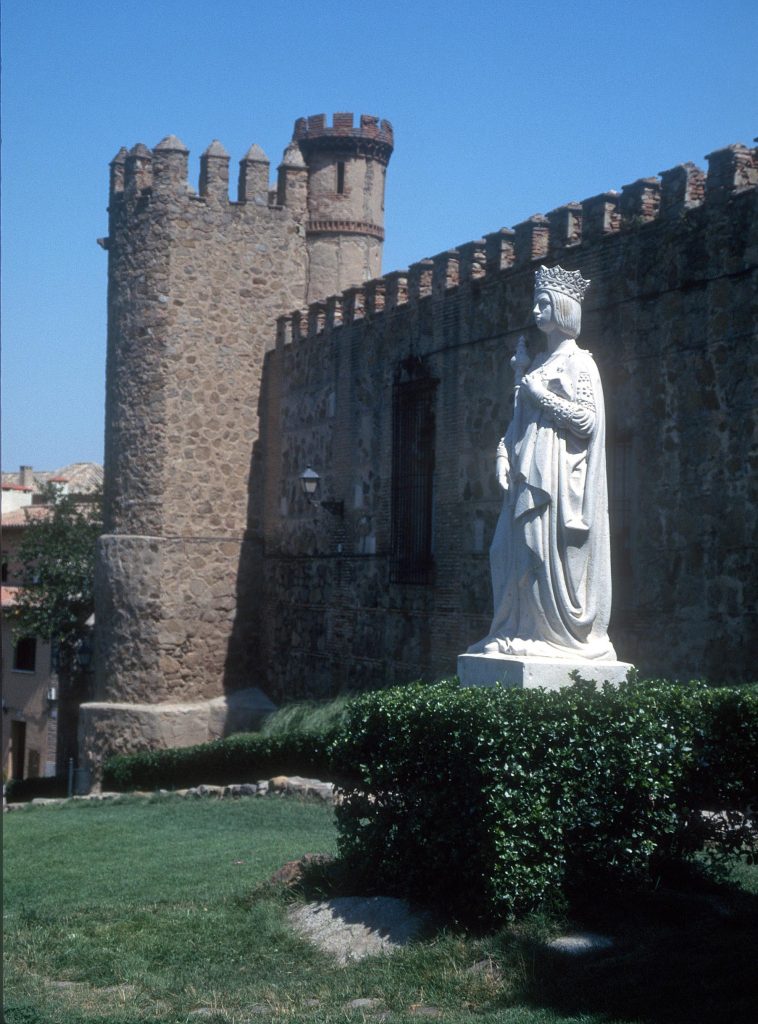
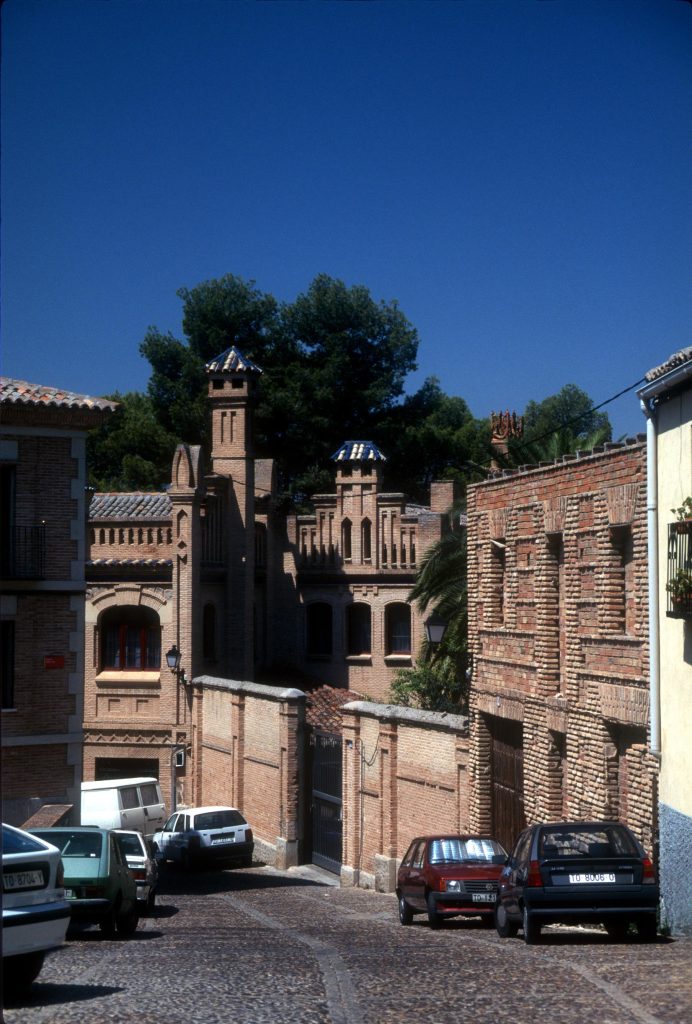
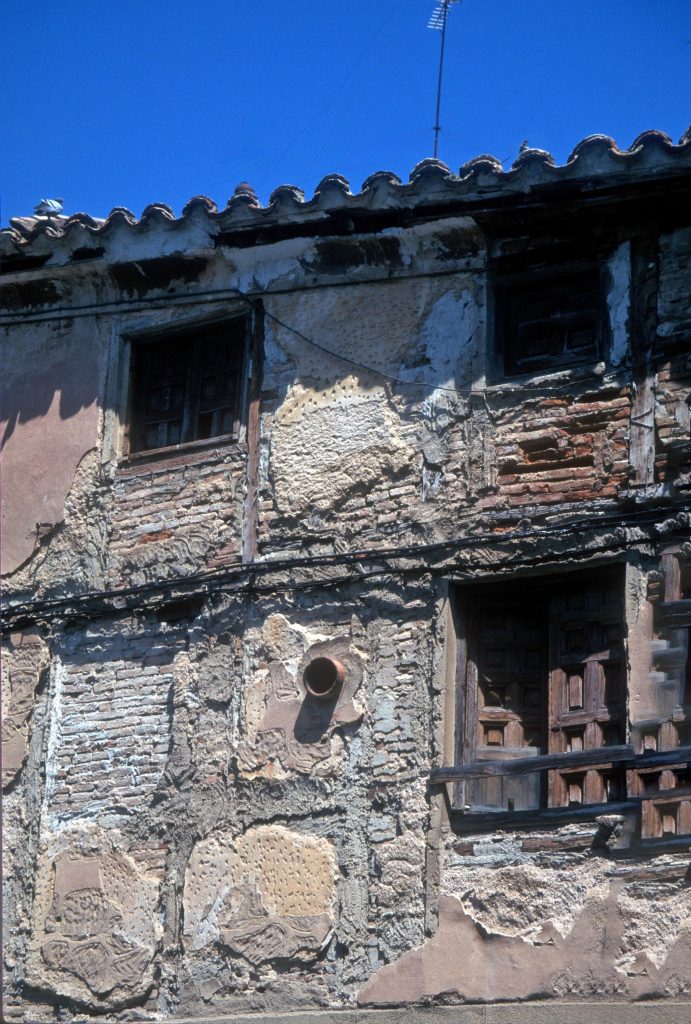
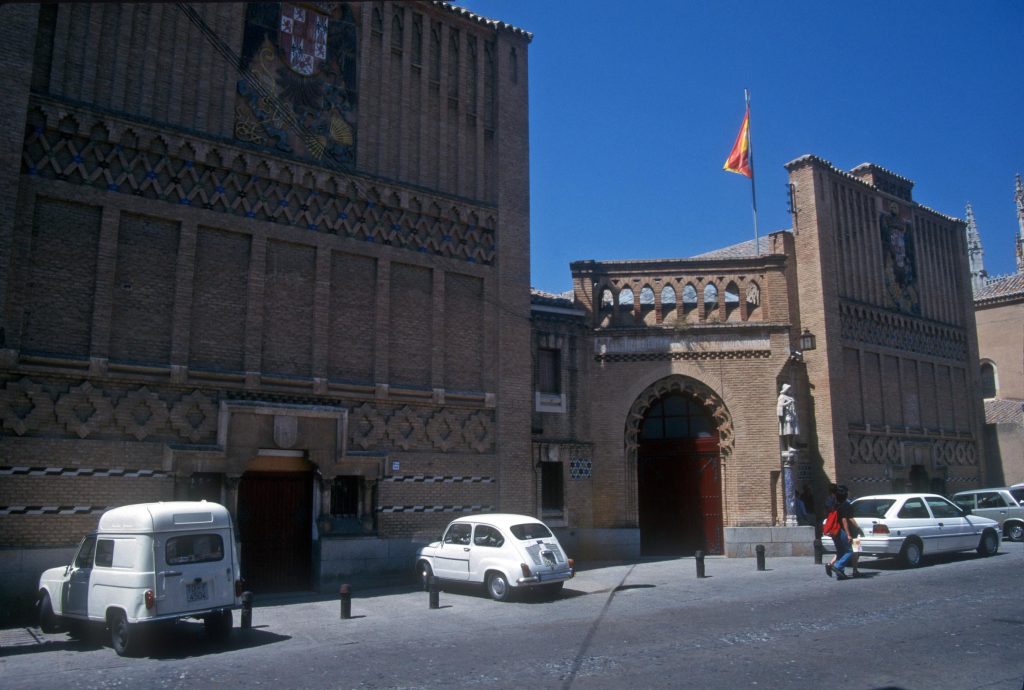
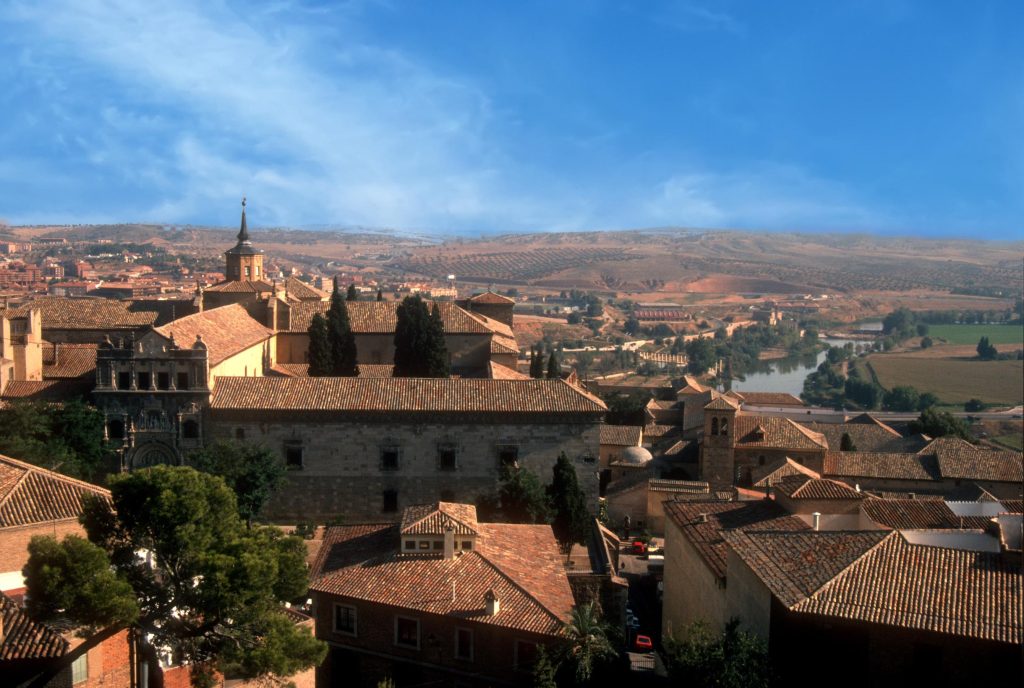
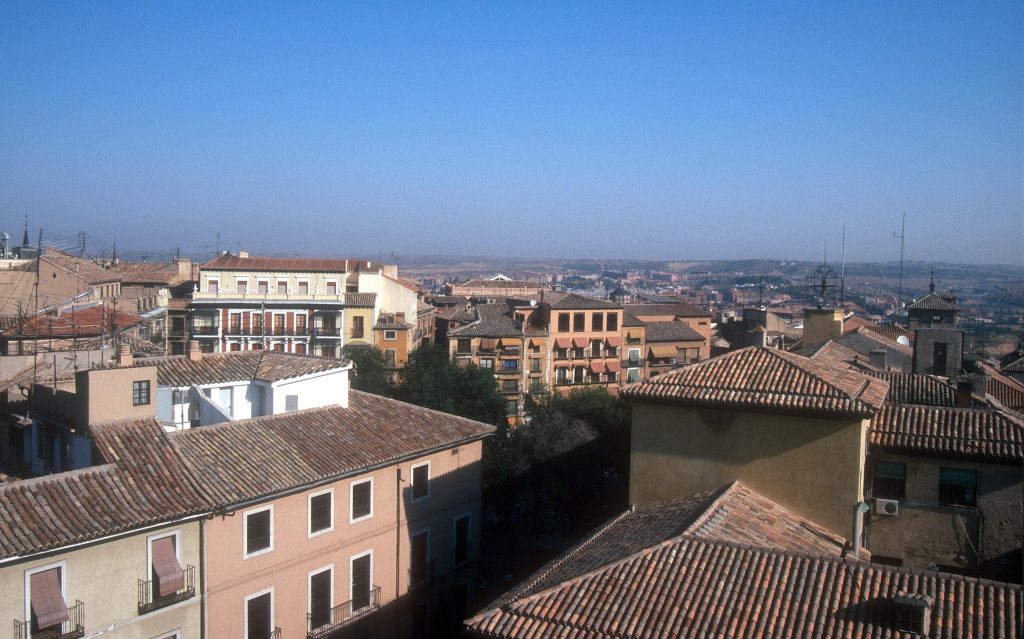
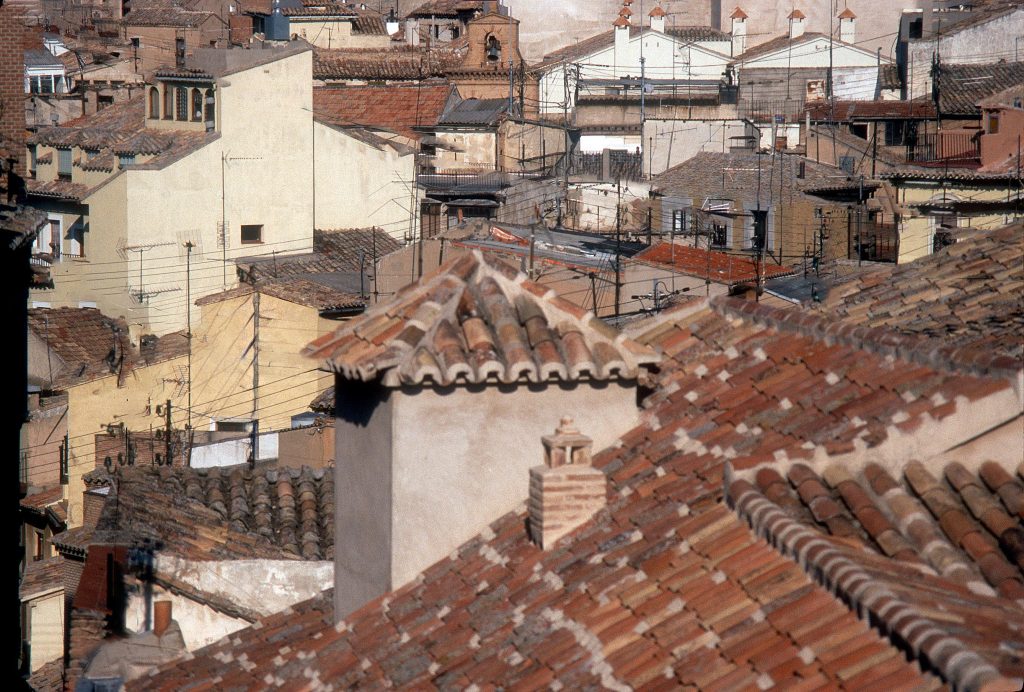
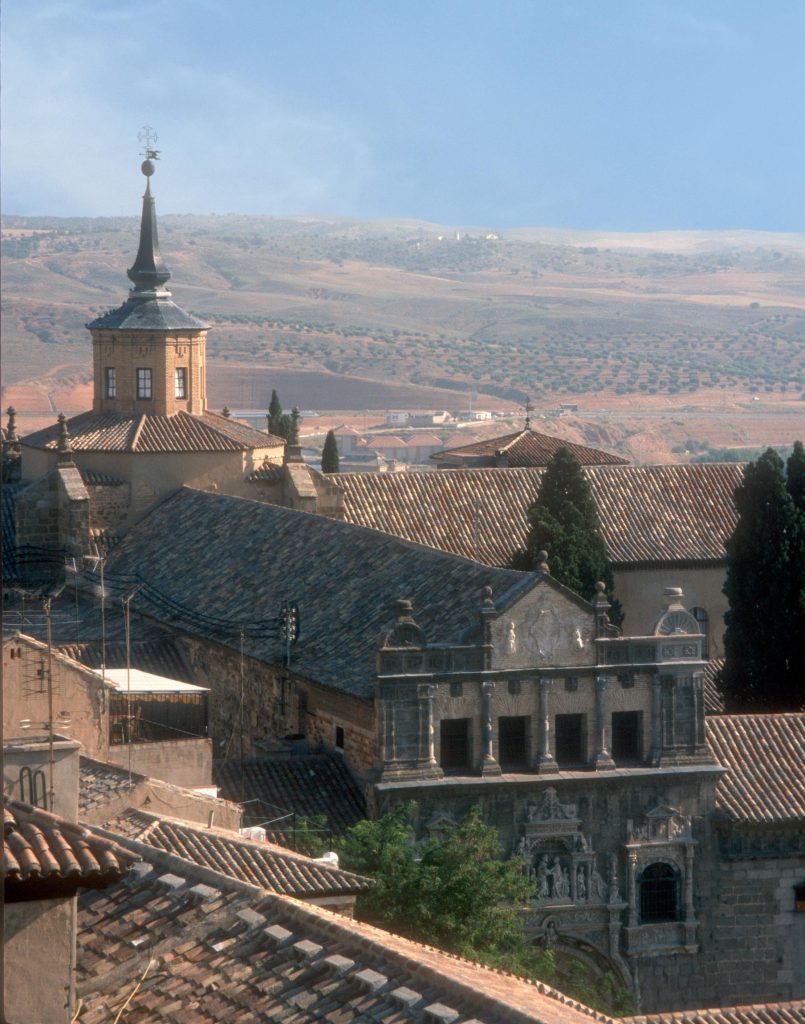
Perched high above the Tagus River, Toledo rises like a crown of stone. Its ancient walls coil around hilltops, and its streets do not flow — they spiral, meander, descend, then rise again, as if tracing memory rather than map. Here, every doorway, every tile, every echo holds a century. And often, three.
Toledo was once called “the city of three cultures” — a place where Christians, Jews, and Muslims lived side by side, trading ideas, artistry, and architecture. It was not always peaceful, but it was profoundly layered — a place of overlapping traditions, where Arabic inscriptions share walls with Gothic arches and Hebrew poetry once floated through narrow lanes.
To walk through Toledo is to feel time tangled and humming, and to touch, with each step, the textures of empire, exile, and enduring craft.
A Capital of Empires and Spirit
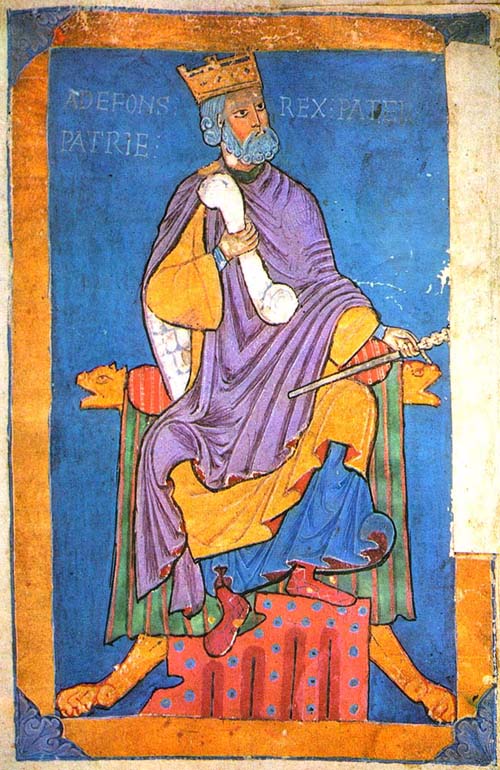
Toledo’s story stretches deep into antiquity. It was an important Roman city, a Visigothic capital, and in 1085 became part of Christian Spain under King Alfonso VI, following the Reconquista. But instead of razing what came before, Toledo absorbed it.
Between the 12th and 15th centuries, Toledo became a hub of translation, theology, and scholarship. Known for the Toledo School of Translators, the city’s scholars worked to preserve and share Greek, Hebrew, and Arabic texts, helping to bring lost classical knowledge back into Europe.
But it was also a center of religious complexity and contradiction — where tolerance flourished, then faltered.
Nowhere is this more visible than in the city’s Jewish Quarter.
The Jewish Quarter: Memory in Stone and Silence
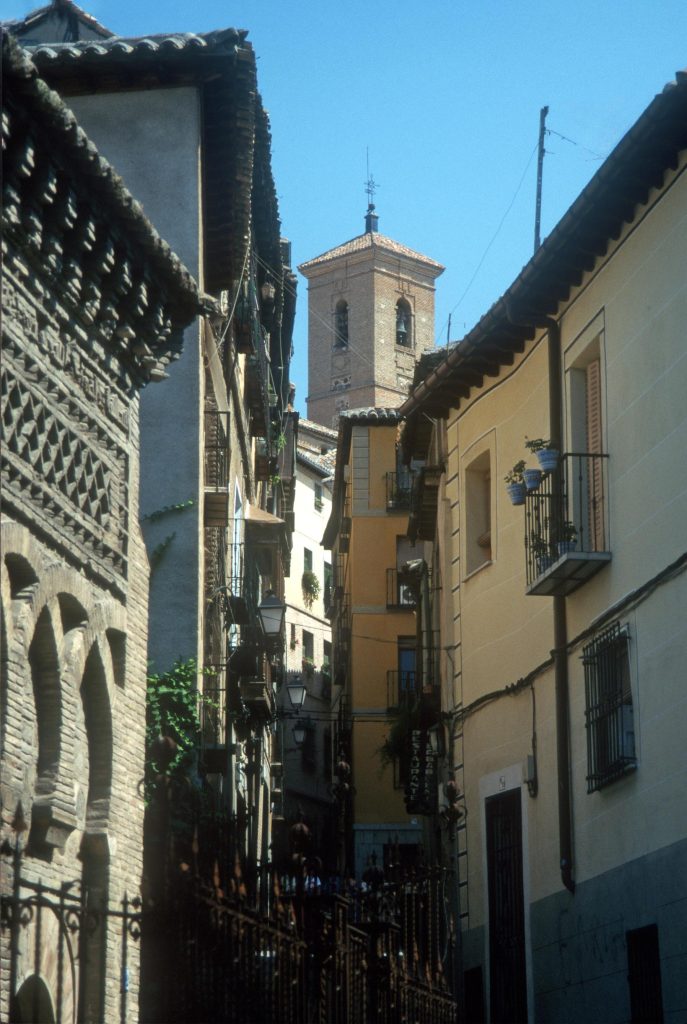
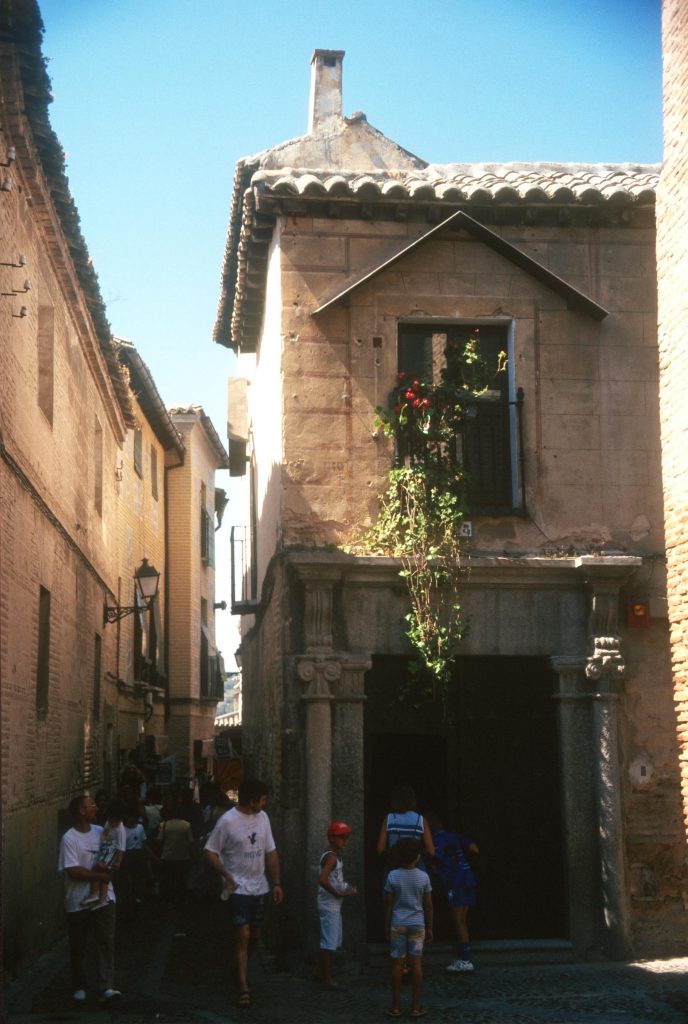
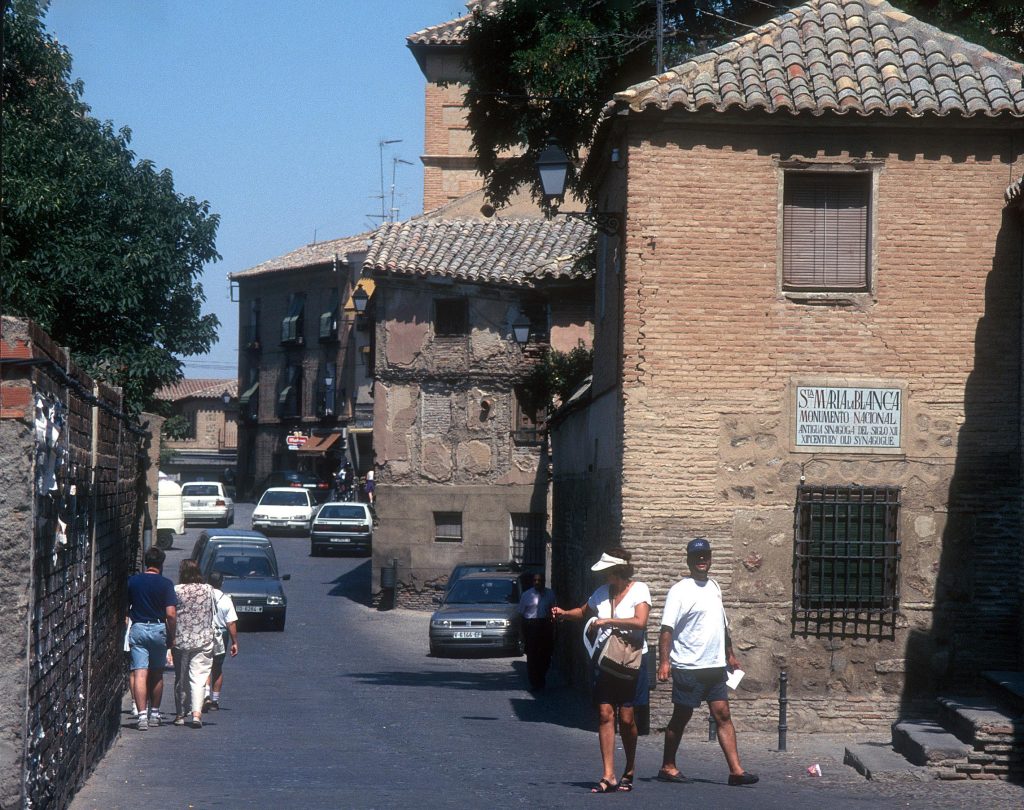
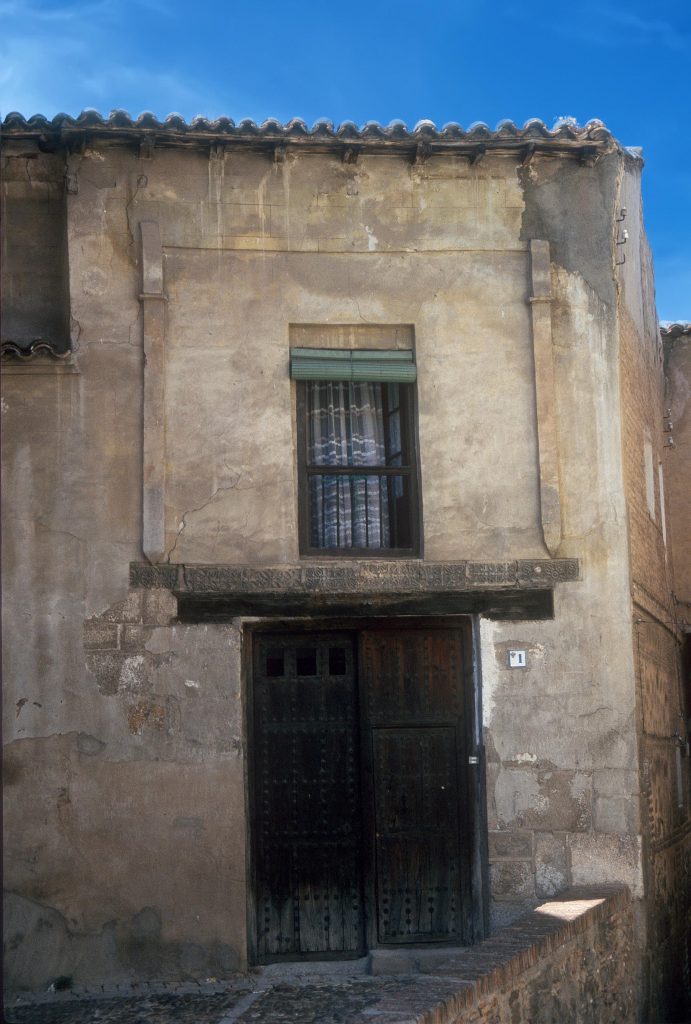
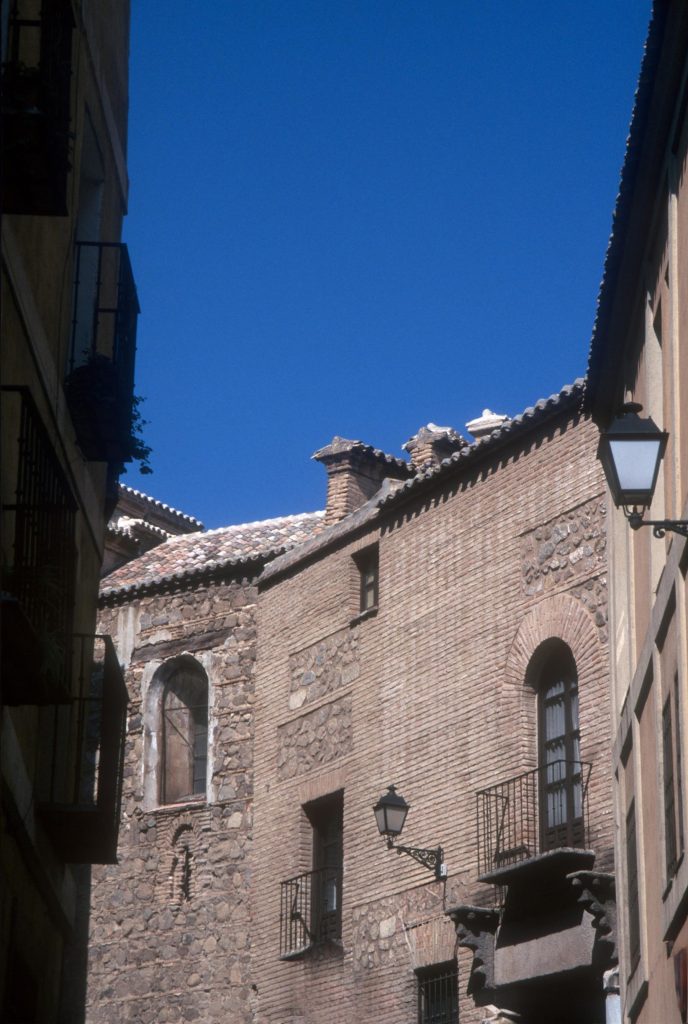
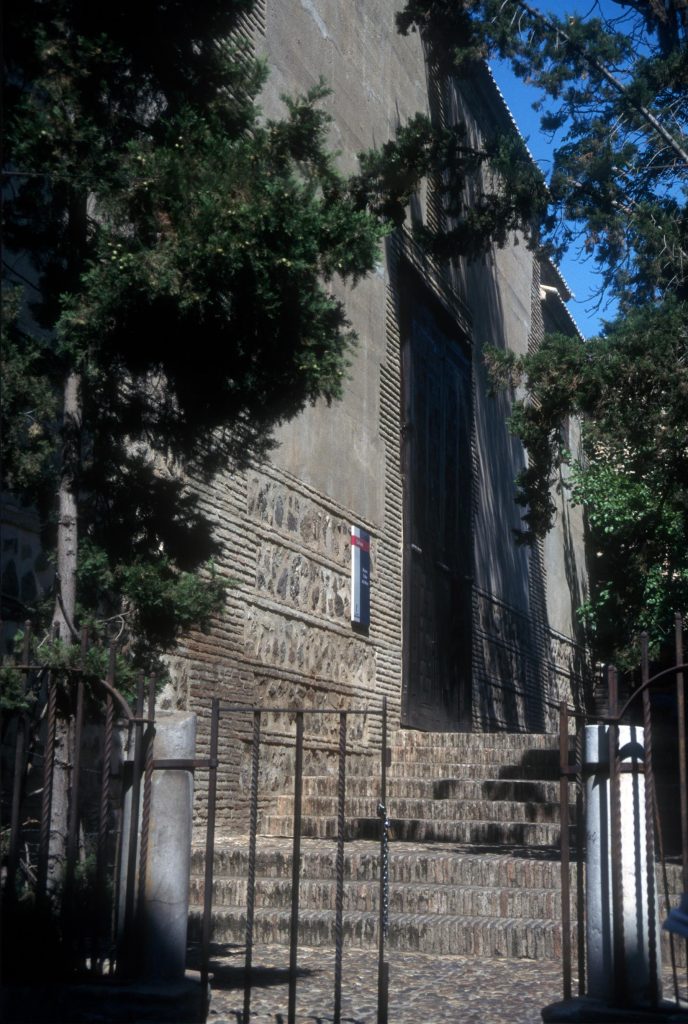
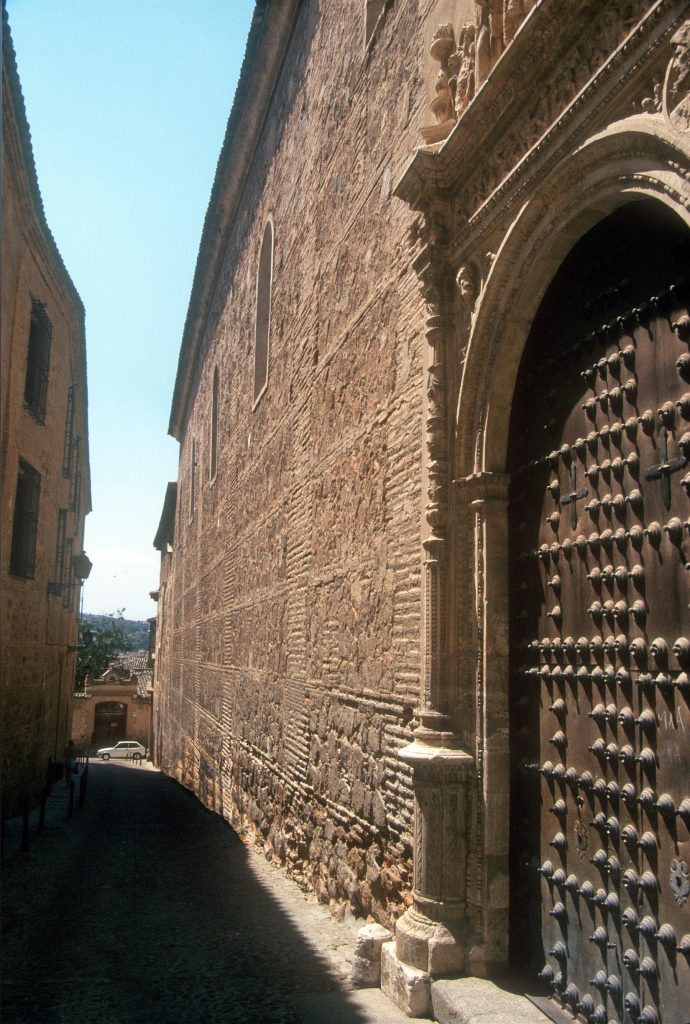
Toledo’s Judería, or Jewish Quarter, occupies a high corner of the old city — a maze of cobbled lanes, low arches, and sun-bleached walls. From the 11th through the 15th centuries, this was one of the most vibrant Jewish communities in Spain, home to poets, philosophers, and physicians.
Walk these streets today and you’ll find:
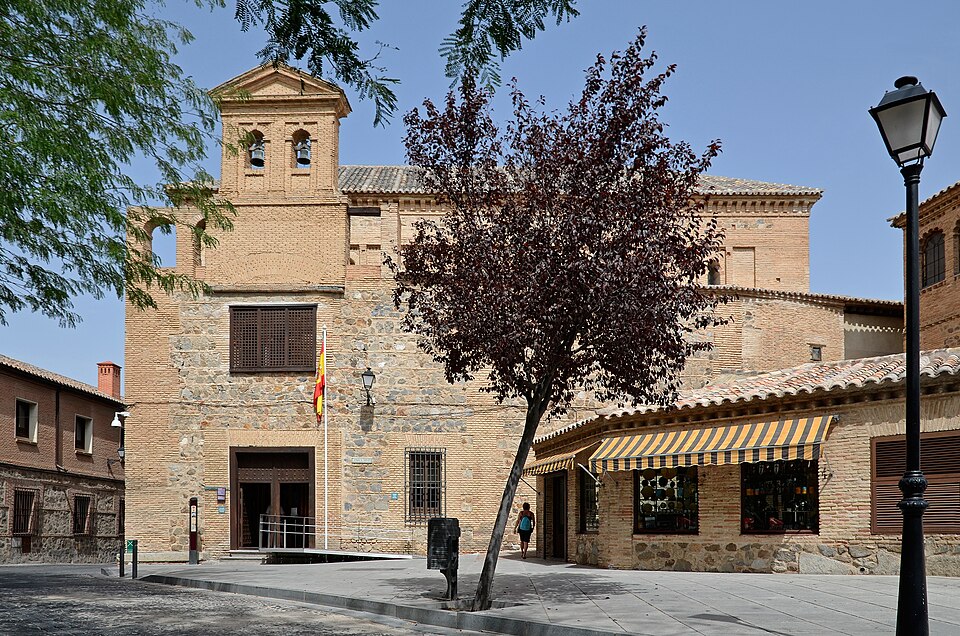
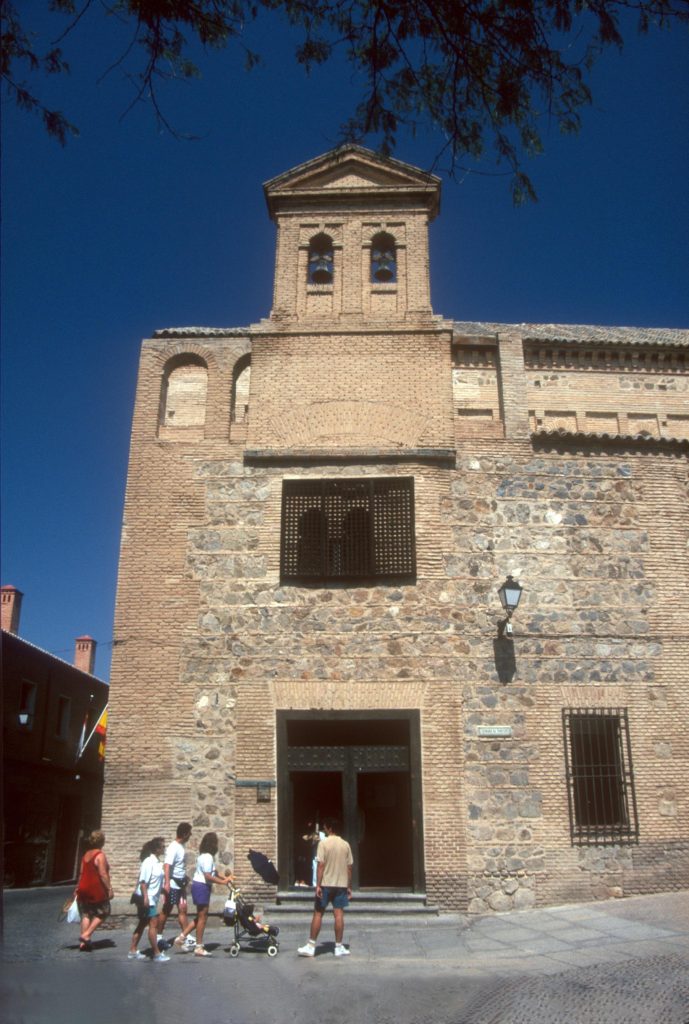
- Sinagoga del Tránsito (14th century): Commissioned by Samuel ha-Levi, treasurer to King Pedro I, this synagogue is a masterpiece of Mudejar architecture, where Islamic geometric patterns and Hebrew inscriptions intertwine in intricate woodwork and plaster.
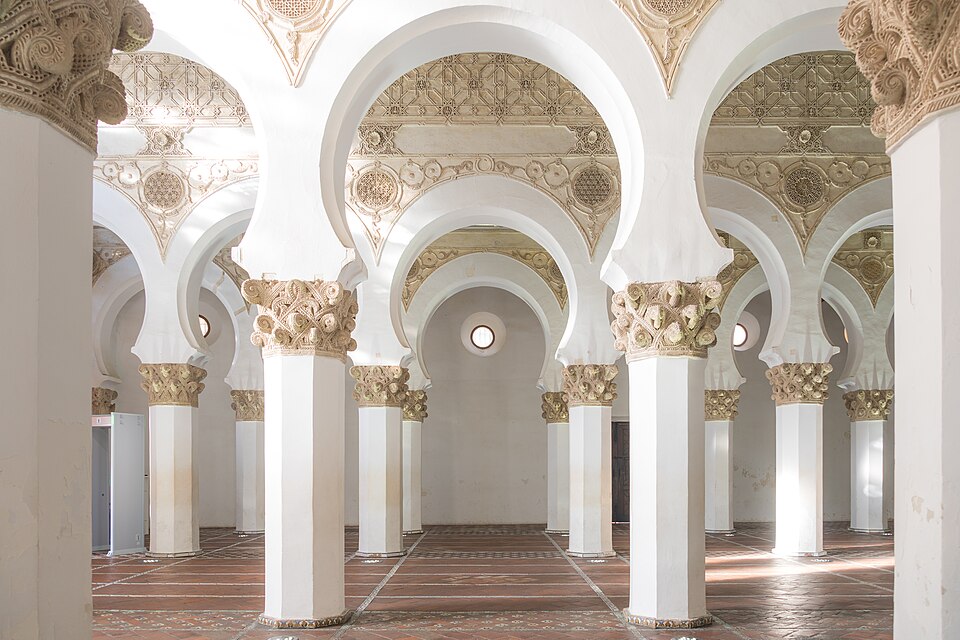
- Sinagoga de Santa María la Blanca (12th century): Though built as a synagogue, it was later converted into a church. Its horseshoe arches and whitewashed columns evoke a tranquil, haunting beauty — a space of sacred ambiguity.
- Museo Sefardí: Housed within the Tránsito synagogue, this museum offers an elegant, moving journey through Sephardic Jewish history, language, and exile.
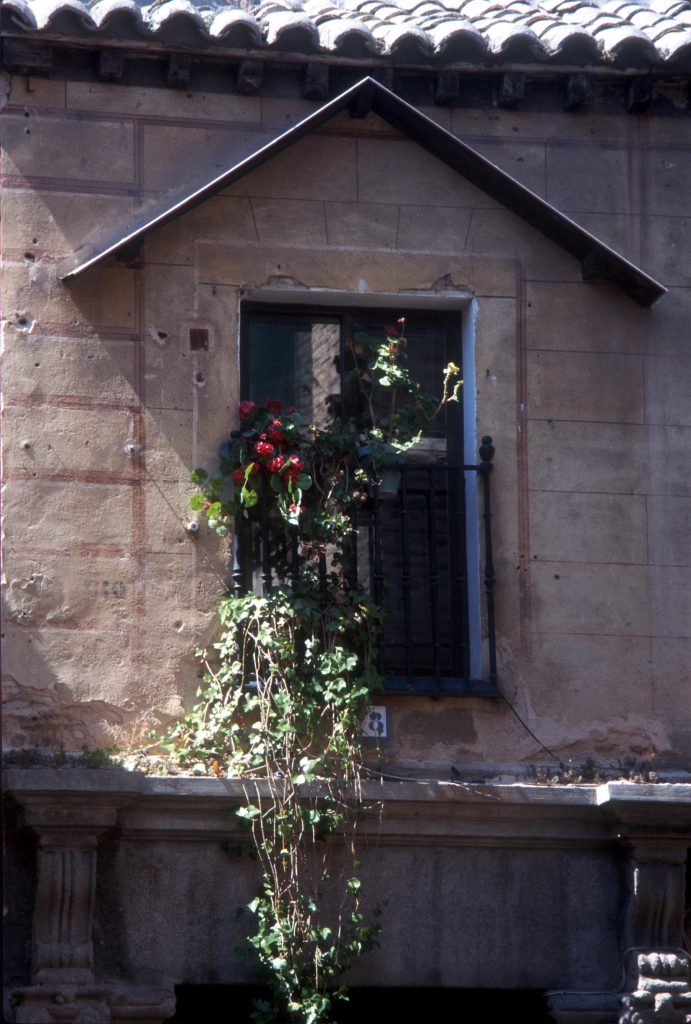
In 1492, Spain’s Jews were expelled by royal decree. But in Toledo, their legacy remains in Hebrew names carved in lintels, mikvehs hidden beneath homes, and the whisper of Ladino in older texts. The Judería is not a preserved quarter—it is a remembered one, kept alive in stone, story, and careful silence.
Historic Landmarks That Still Breathe
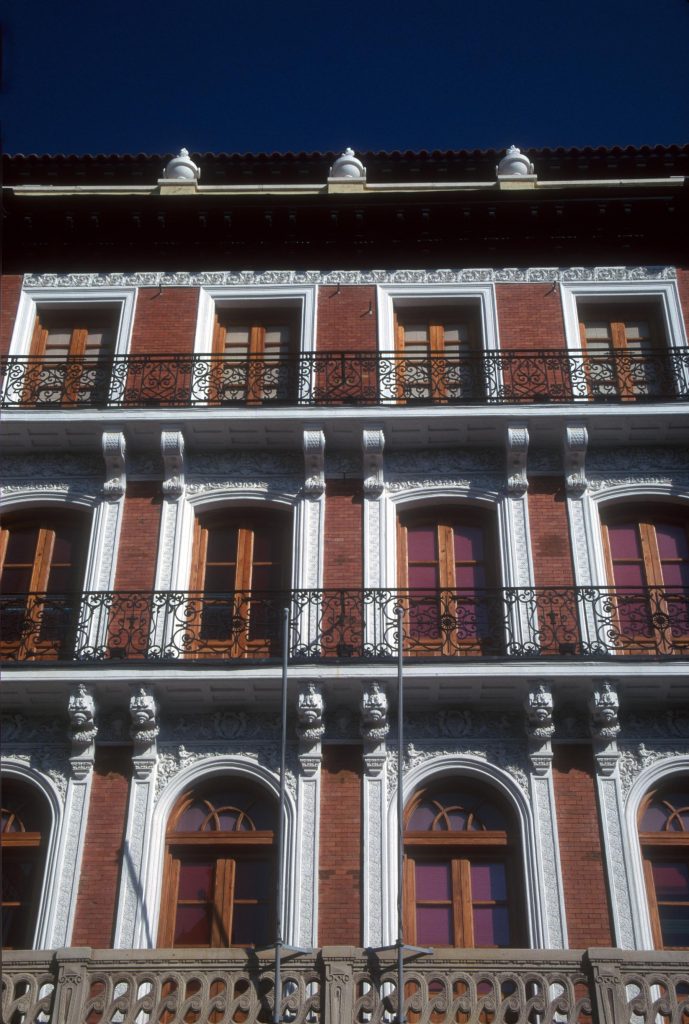
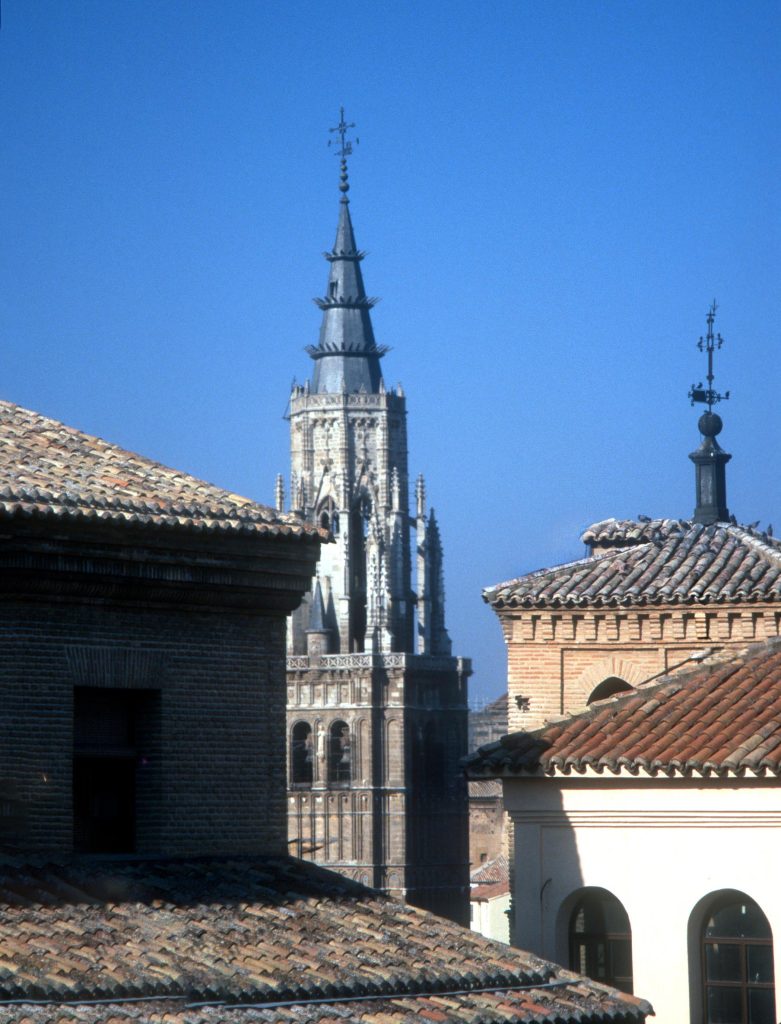
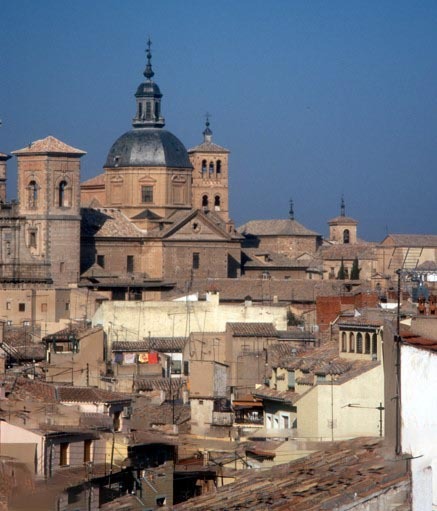
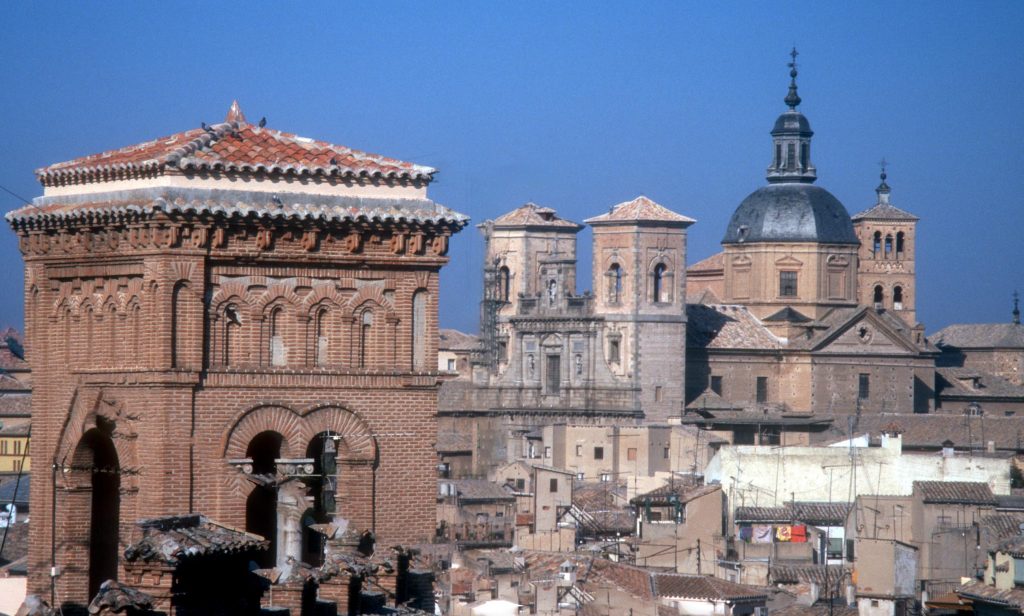
Toledo’s skyline is a cathedral of stone and memory, where every building seems to tell a chapter — some holy, some violent, all layered. Beyond the Jewish Quarter and artisan workshops, the city is a living gallery of medieval, Renaissance, and Moorish architecture, where history is not hidden — it rises in towers and hides in cloisters.
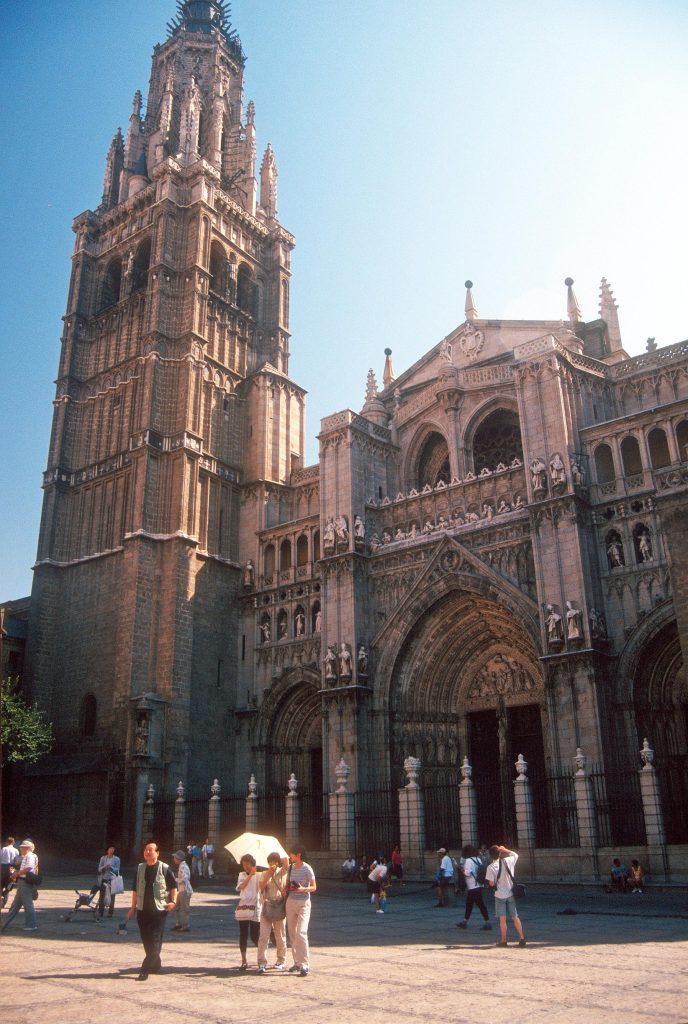
Toledo Cathedral (Catedral Primada de España)
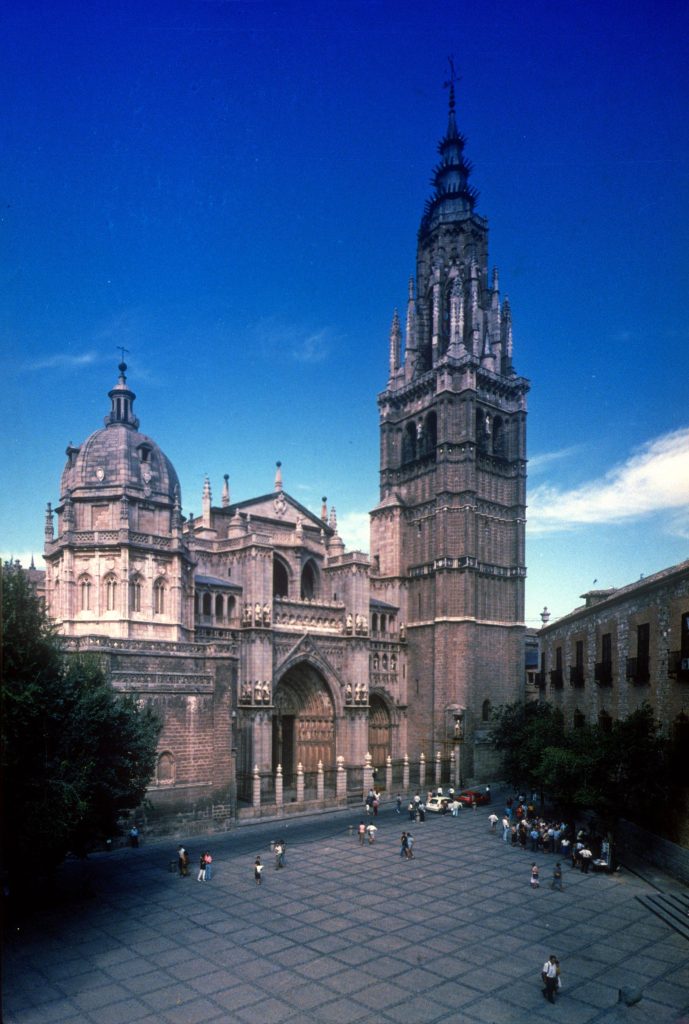
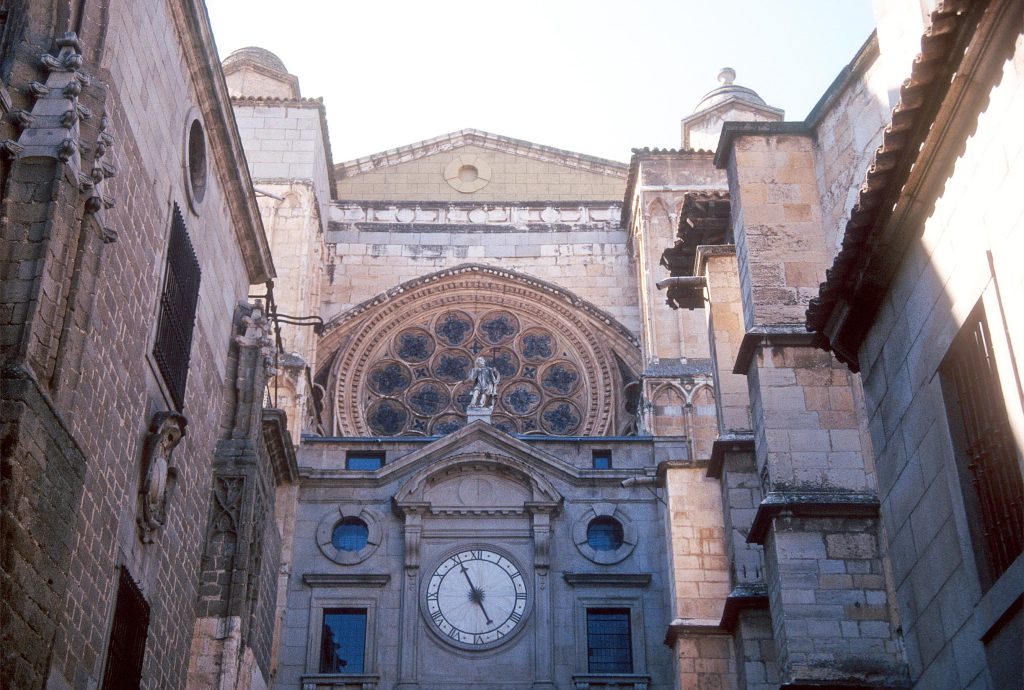
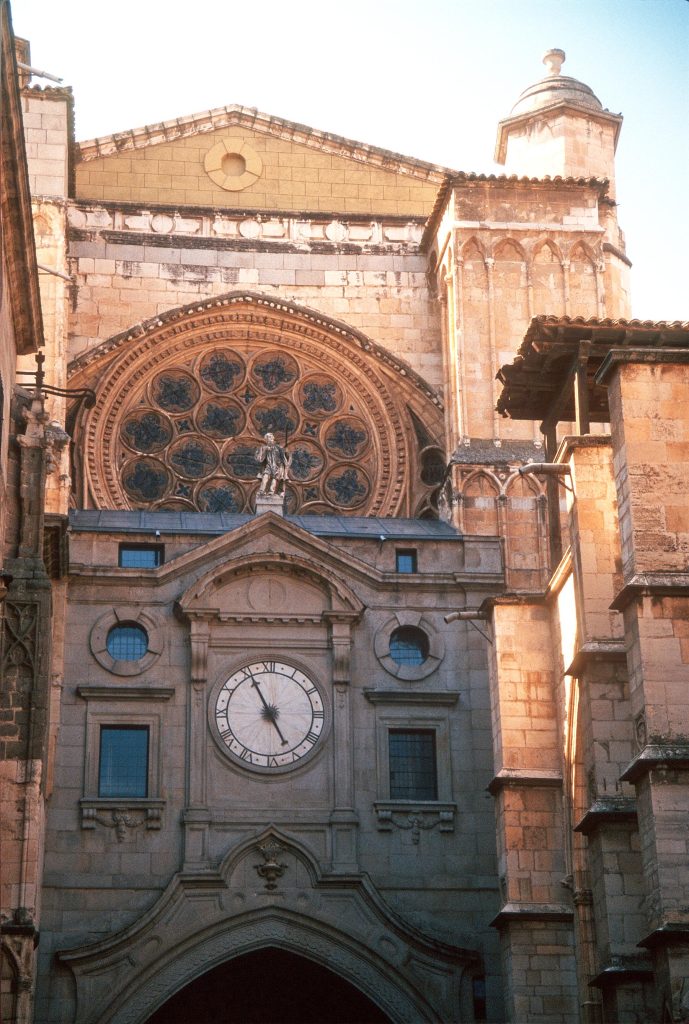
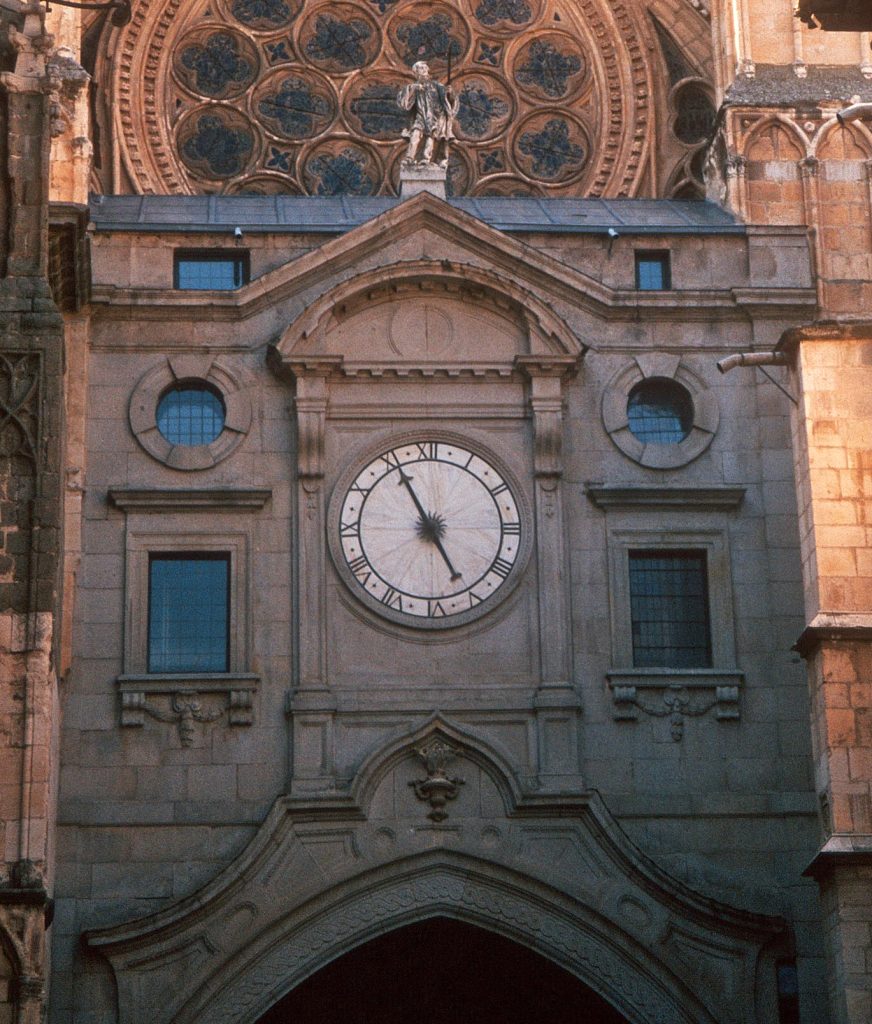
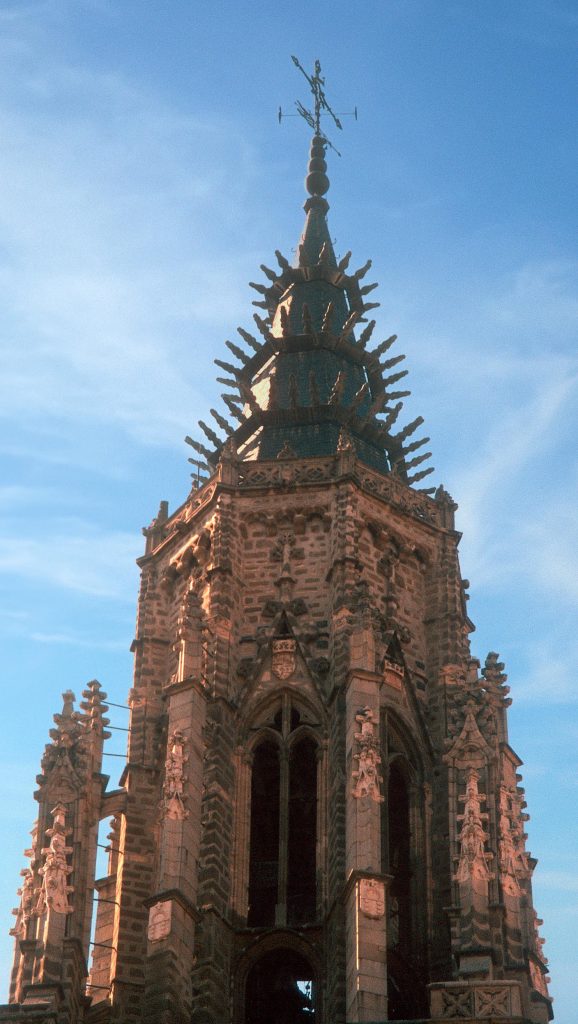
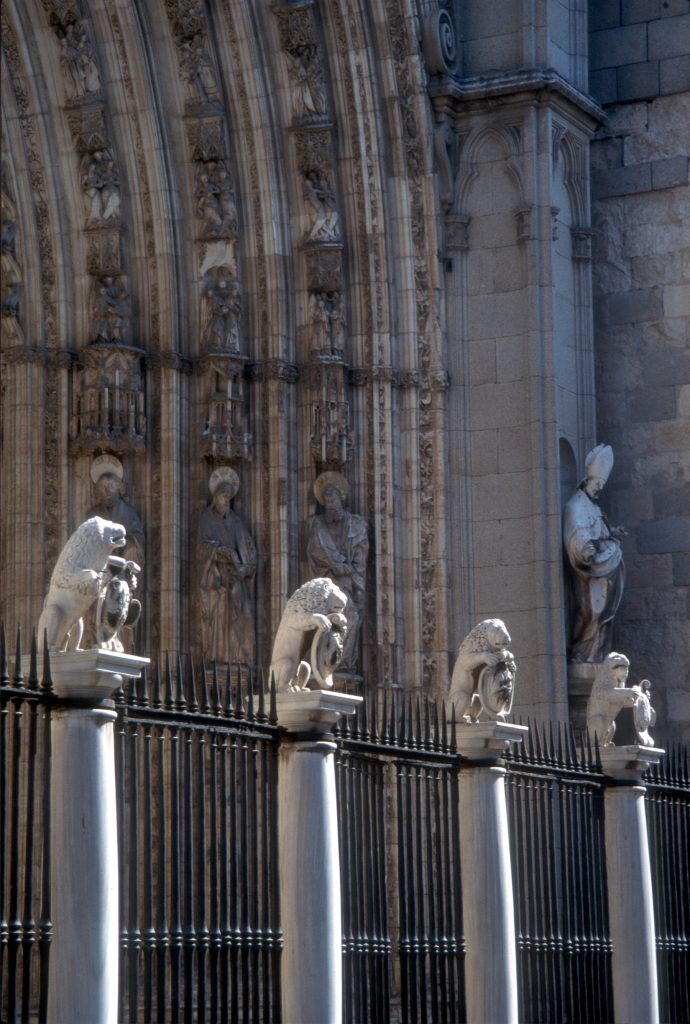
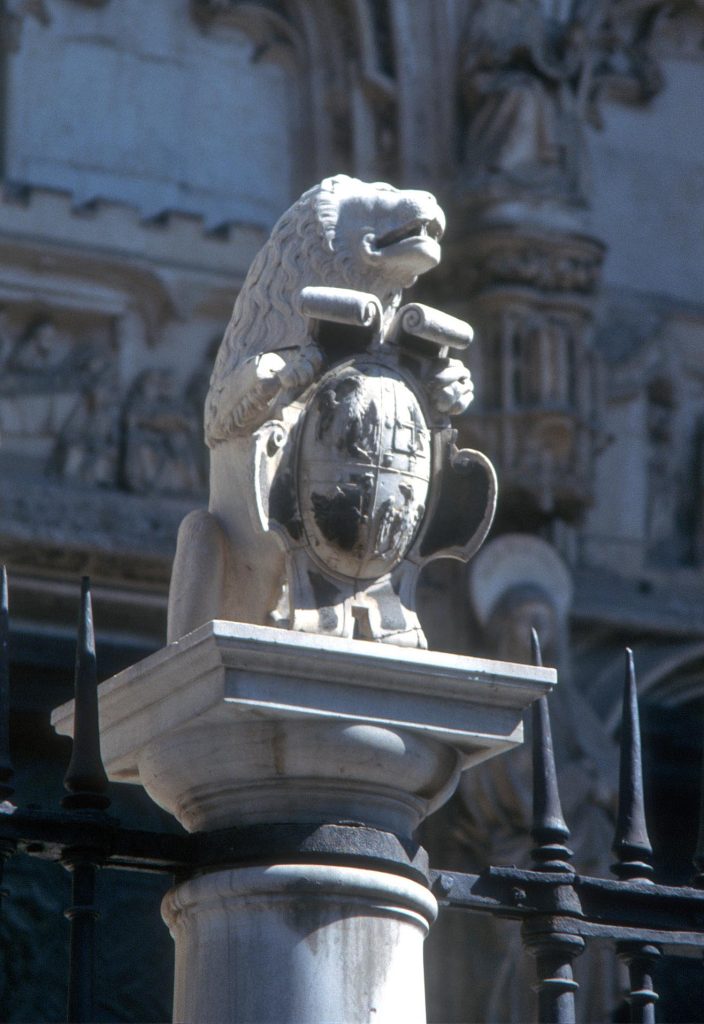
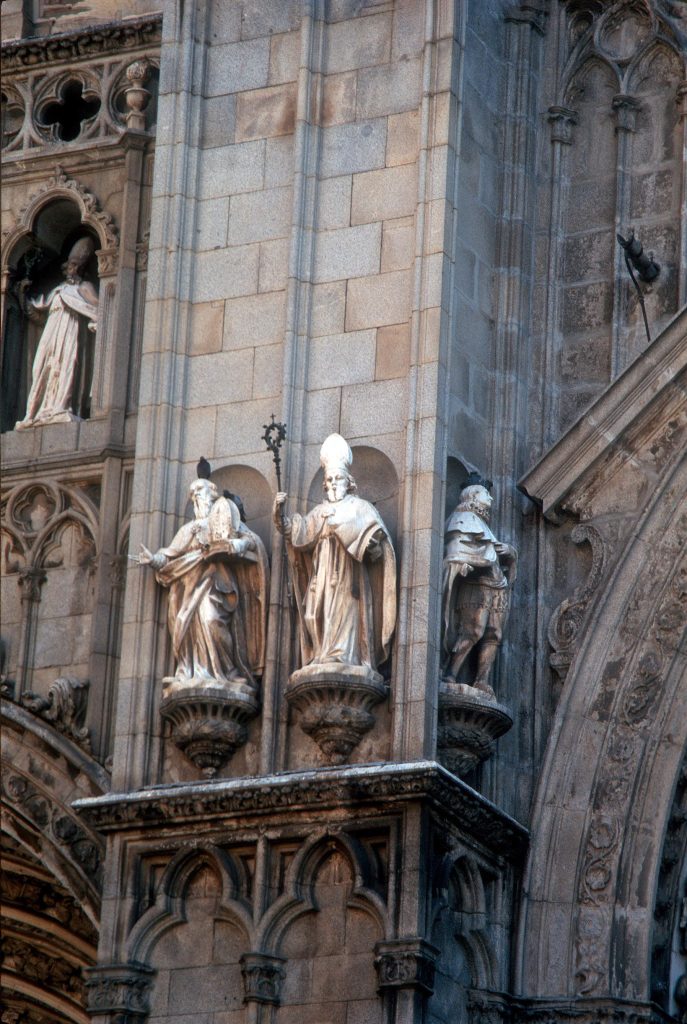
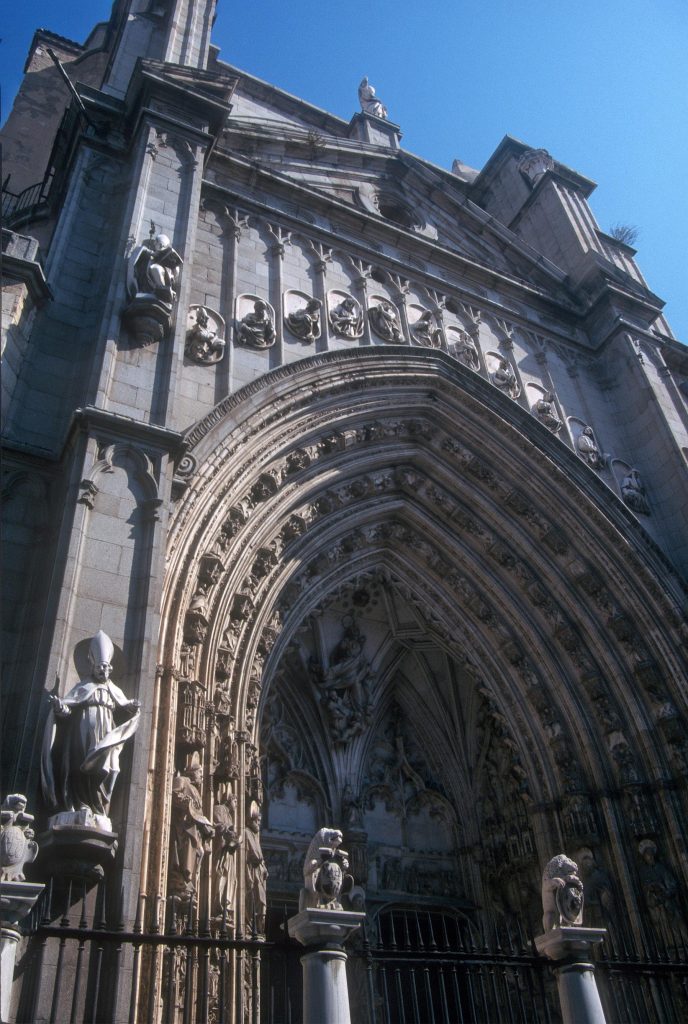
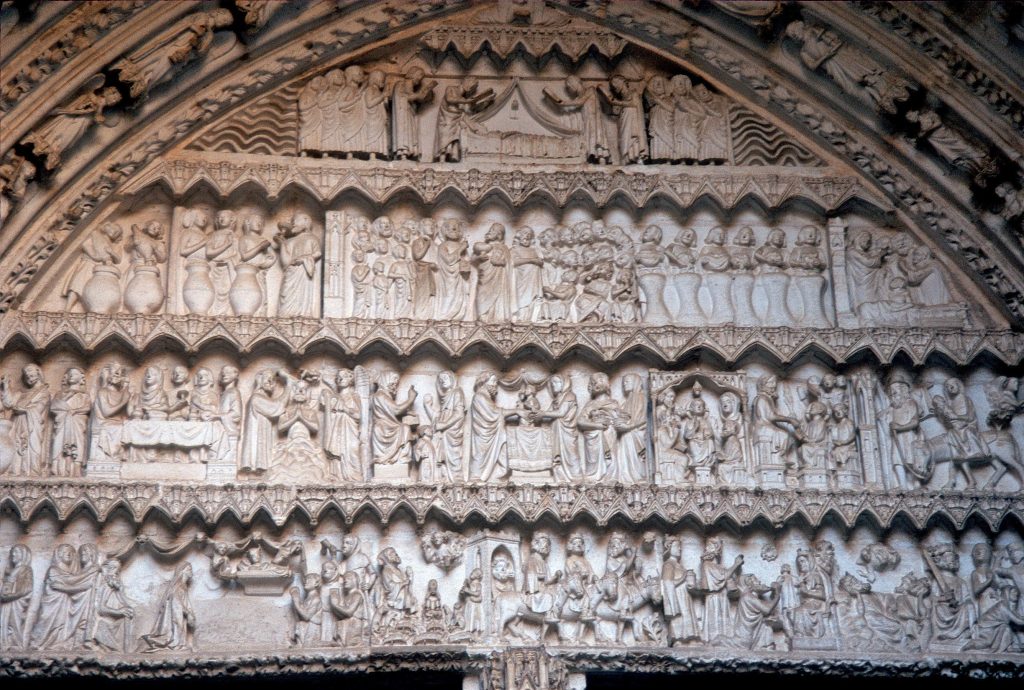
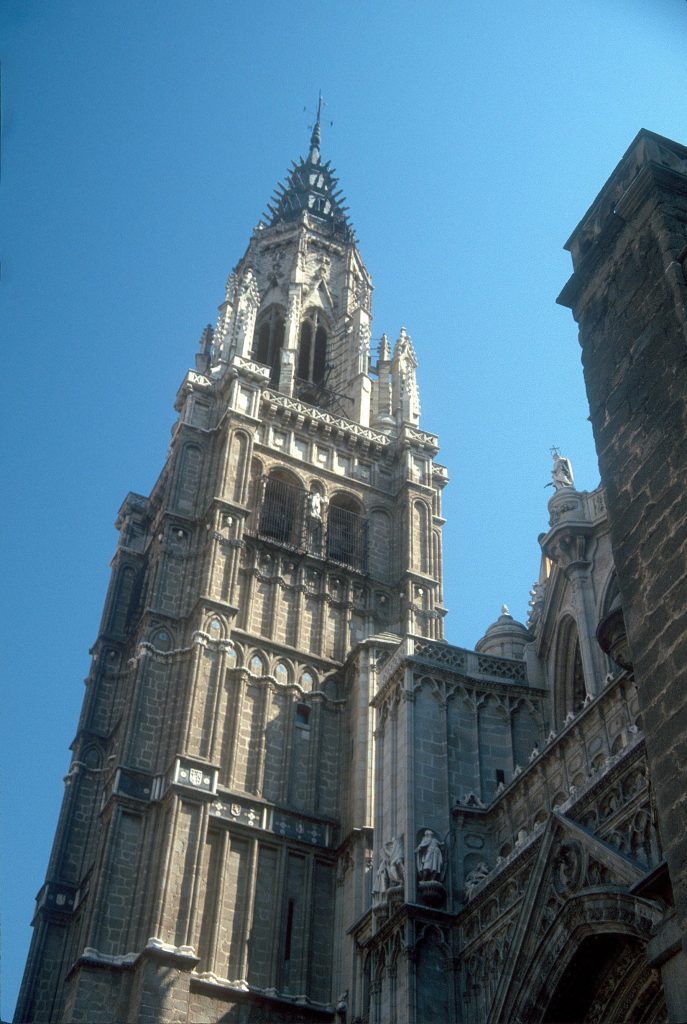
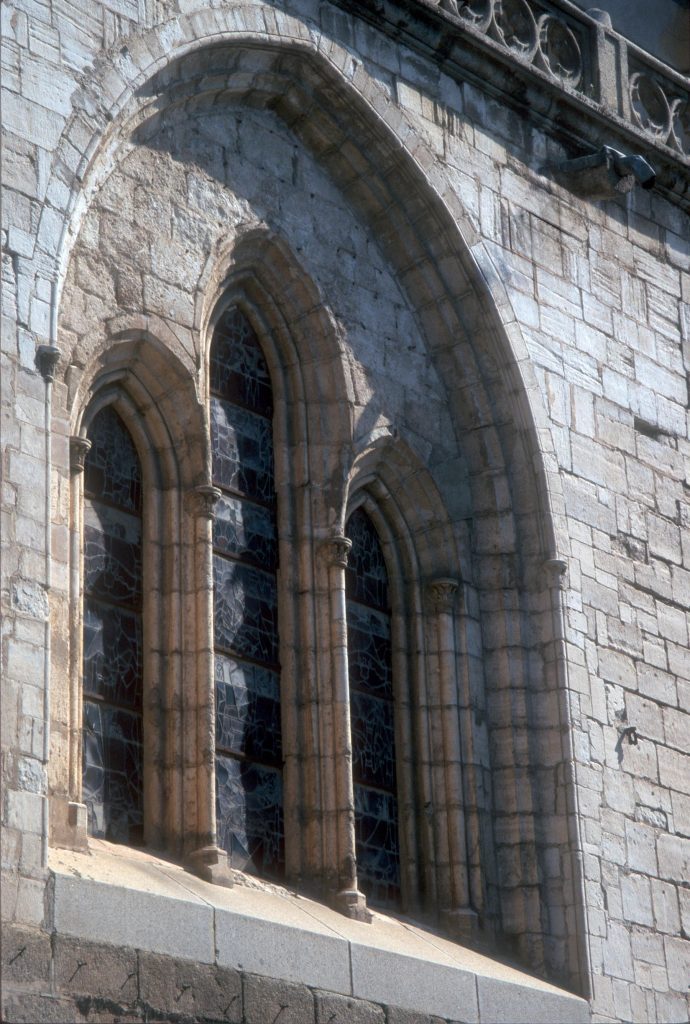
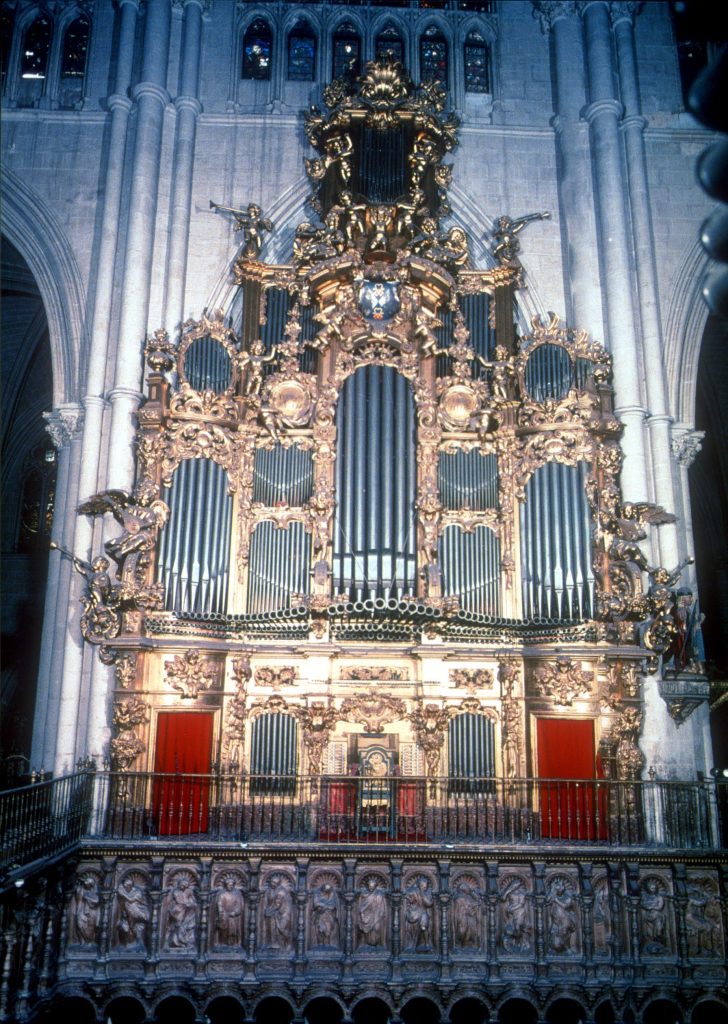
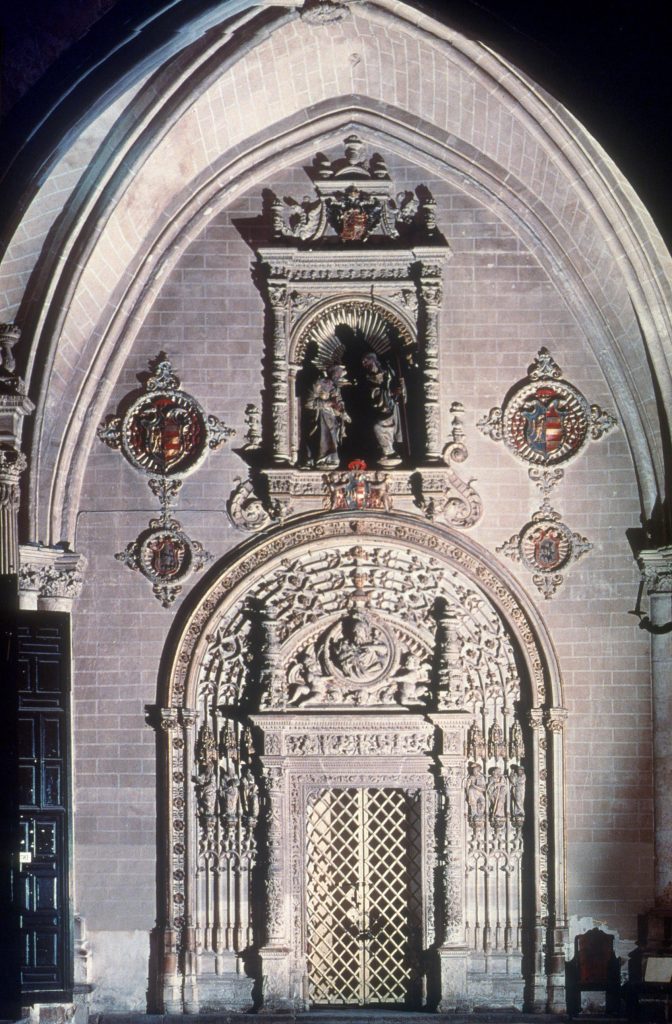
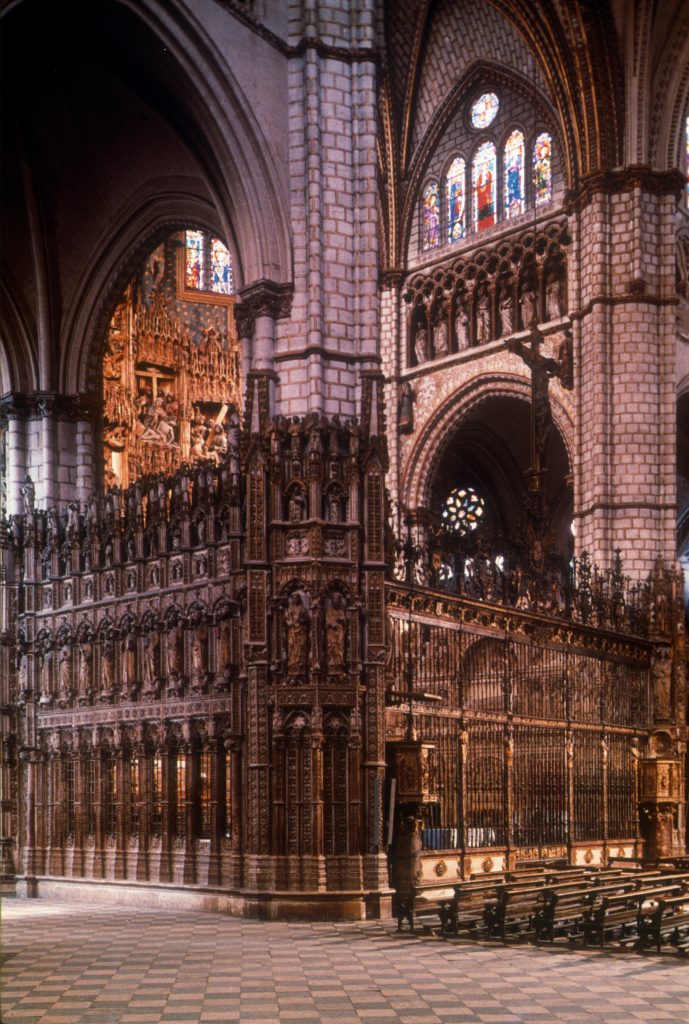
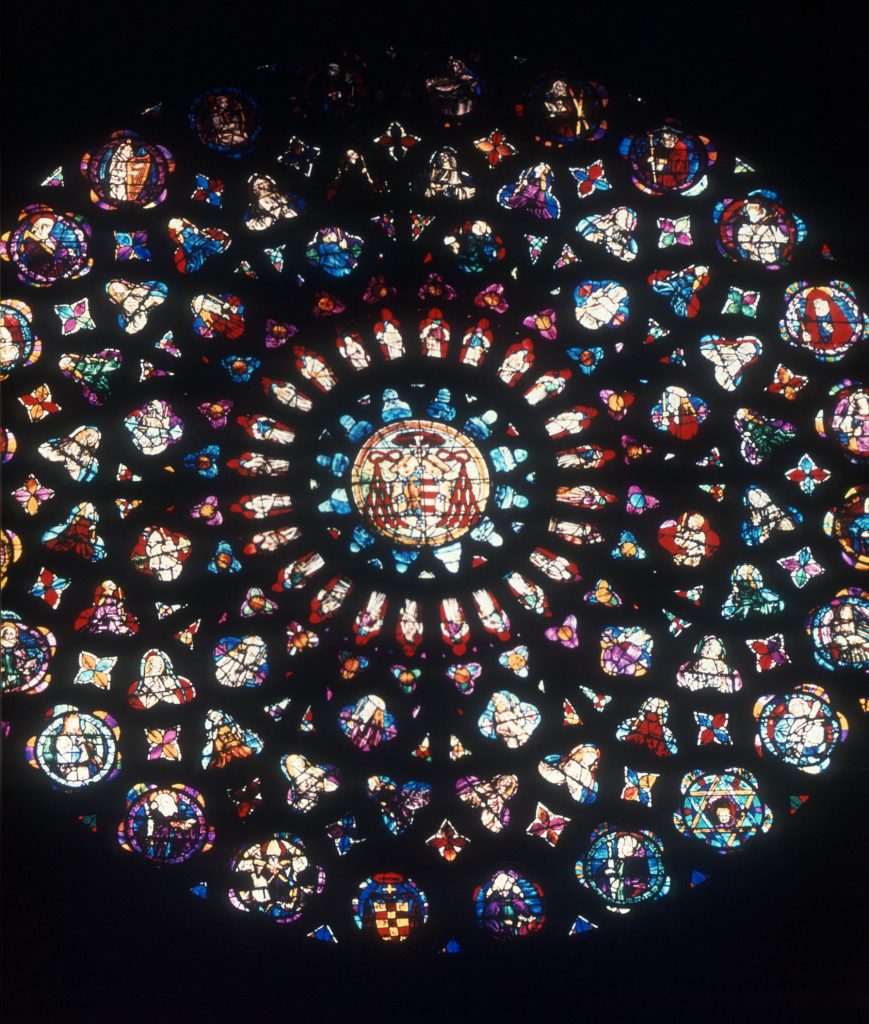
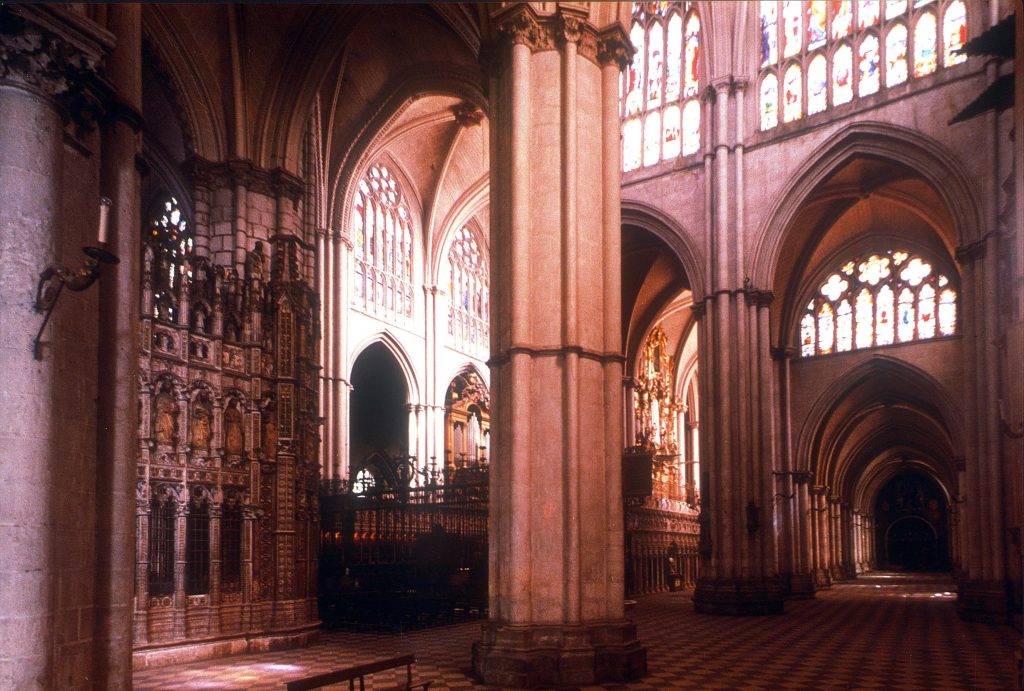
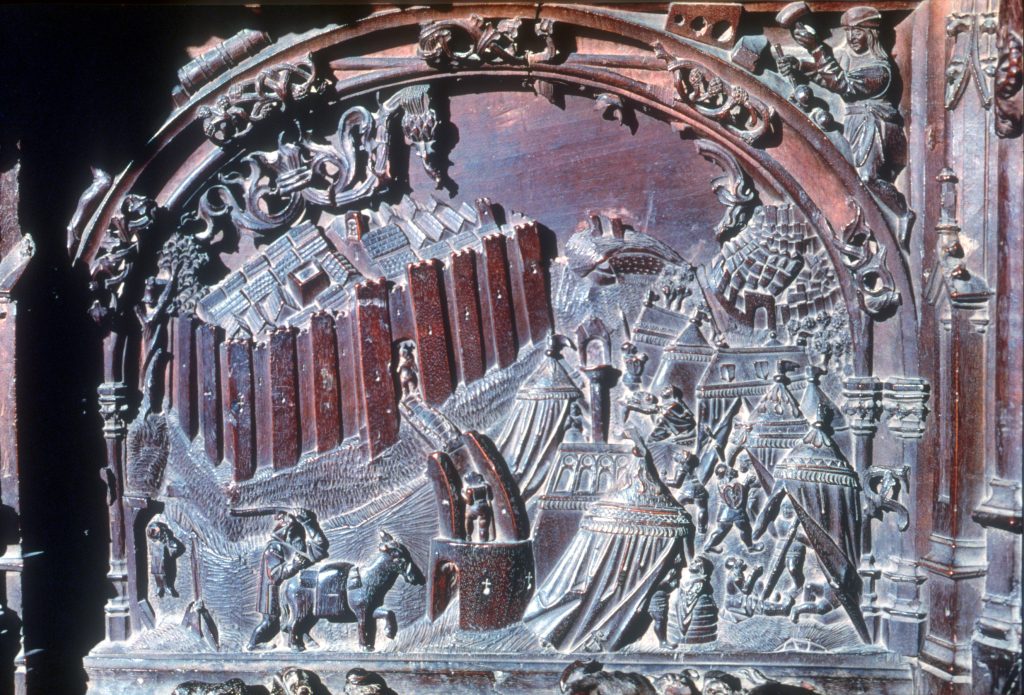
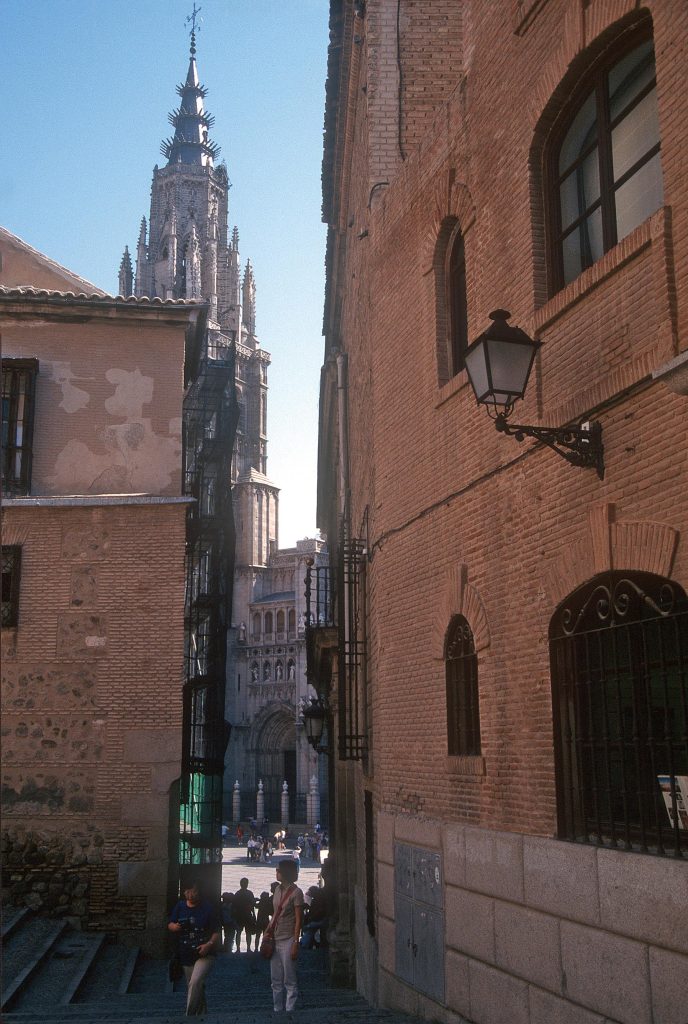
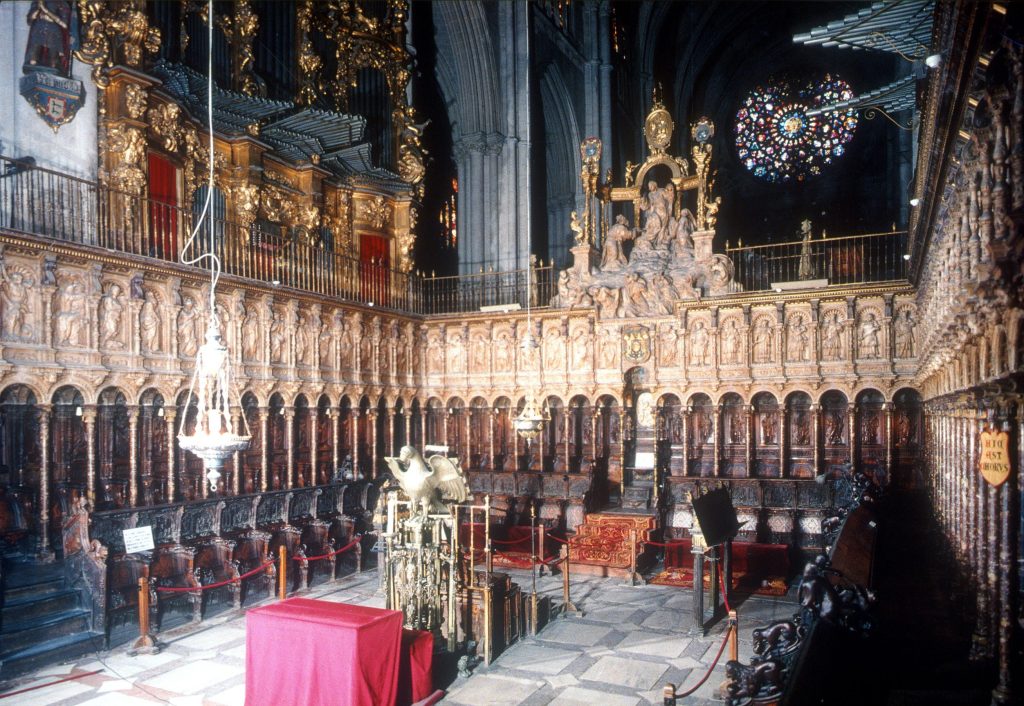
One of the most magnificent Gothic cathedrals in Europe, Toledo’s cathedral was begun in 1226 and took over two centuries to complete. Built atop a former mosque, it is the spiritual and architectural heart of the city.
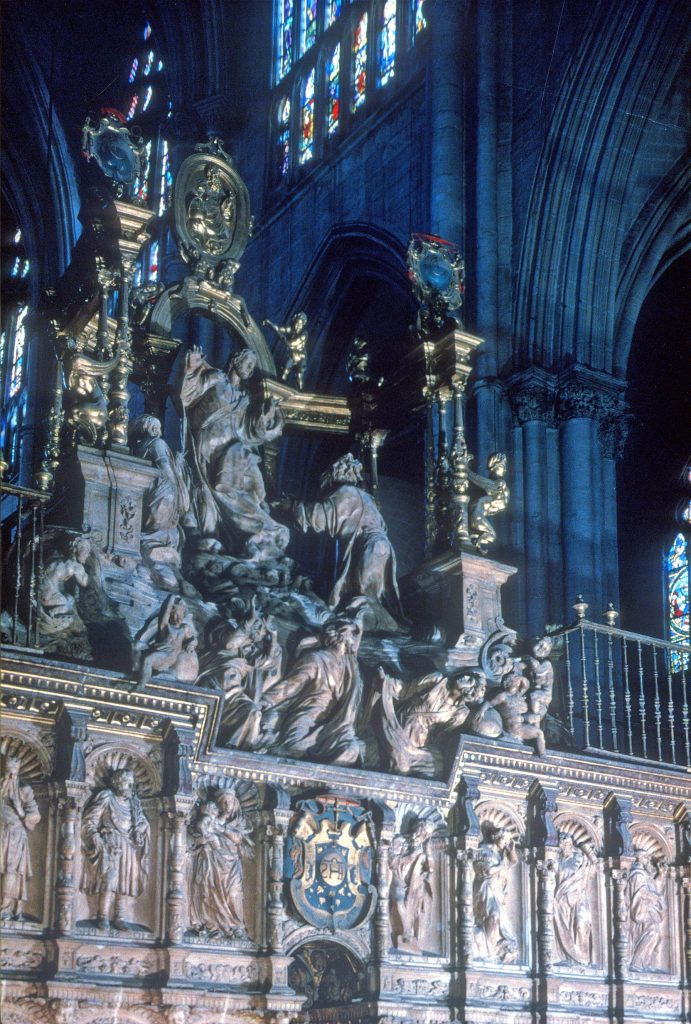
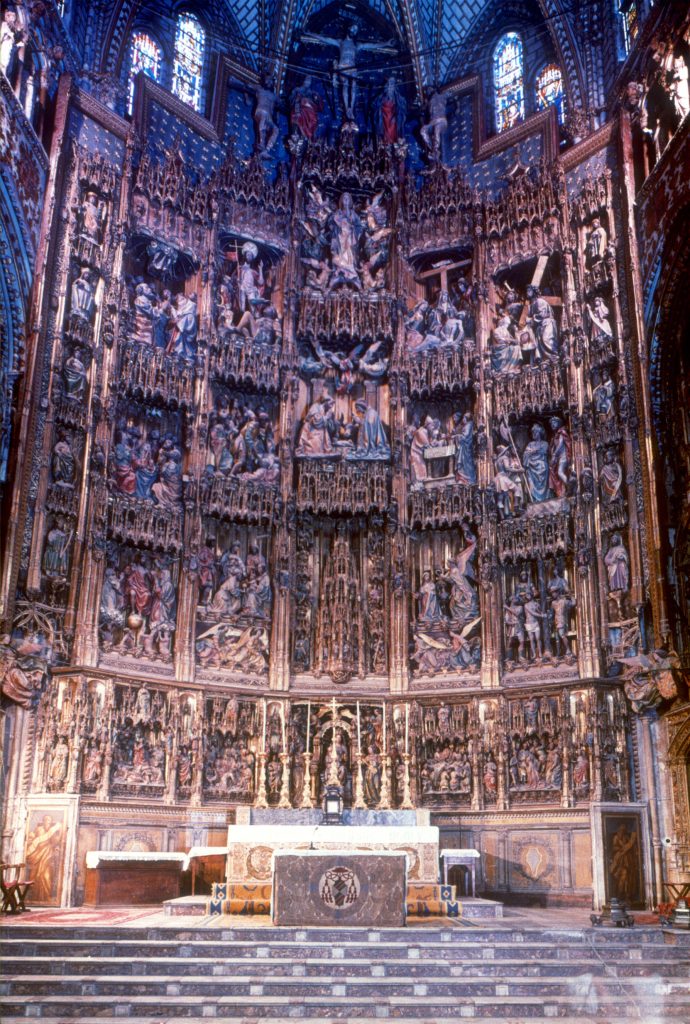
- The retablo mayor (main altarpiece) soars in gold and color, a cascading explosion of Gothic carving.
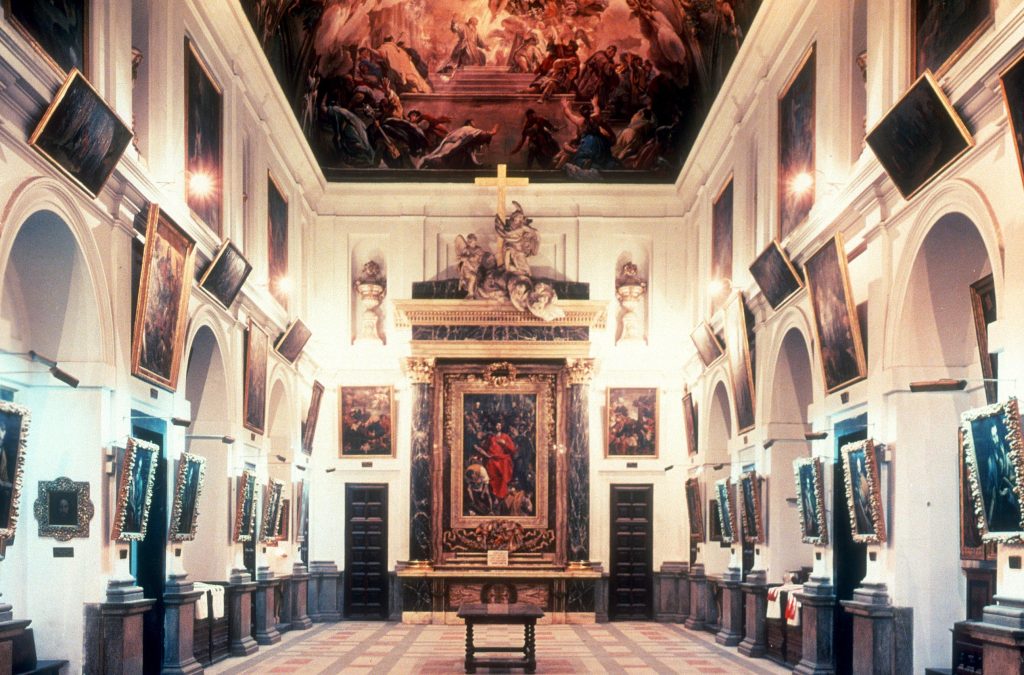
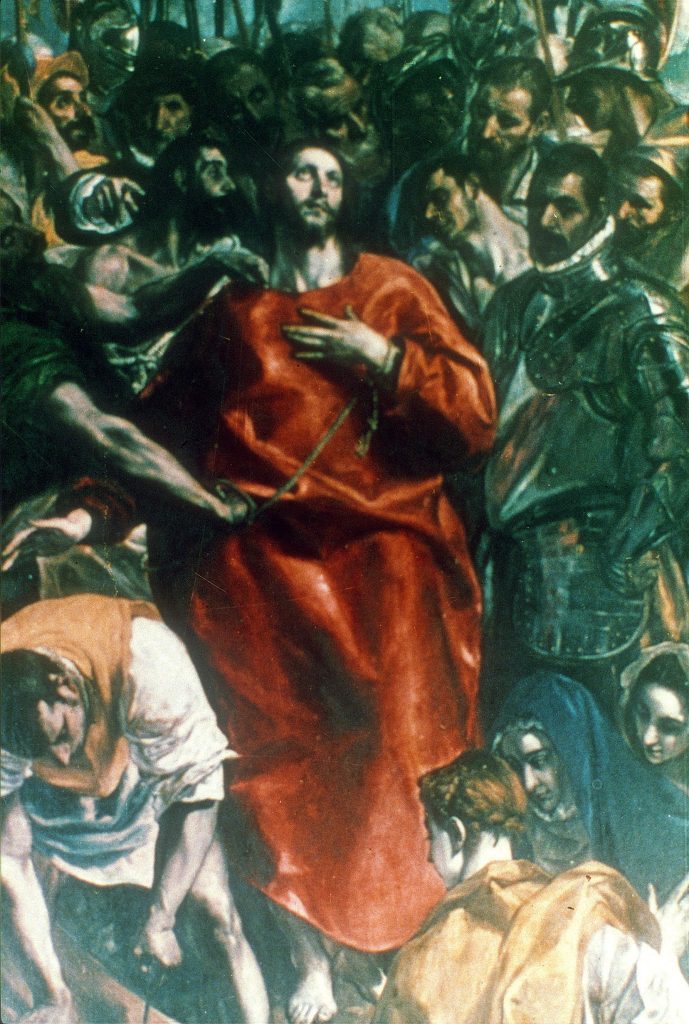
- The sacristy holds masterpieces by El Greco, Goya, and Velázquez.
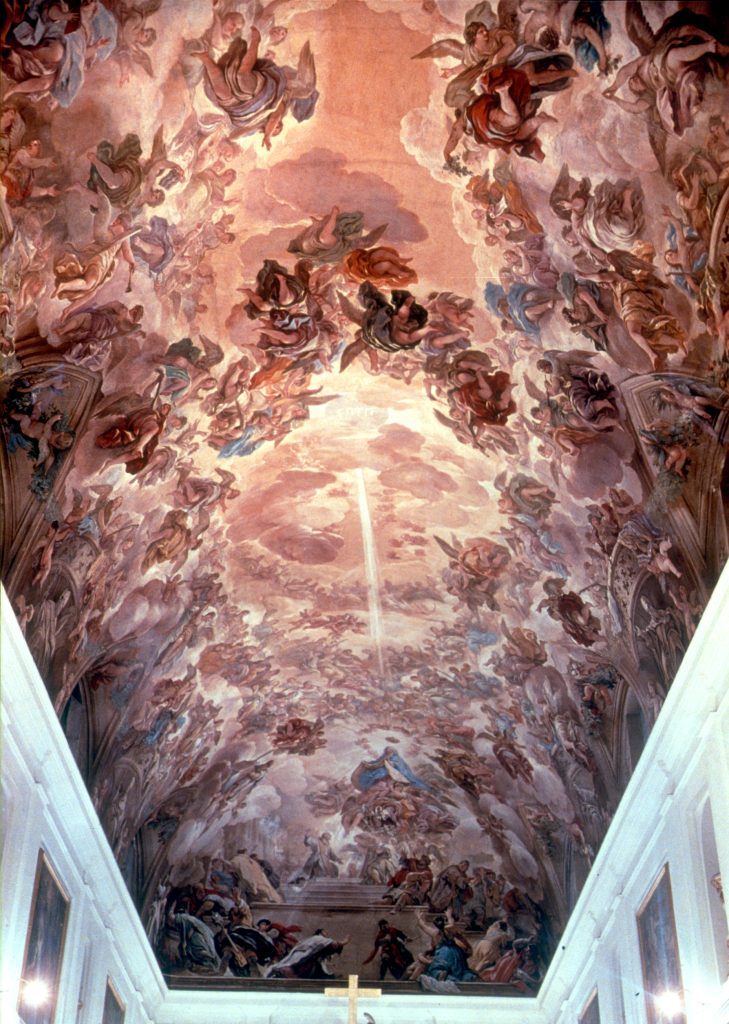
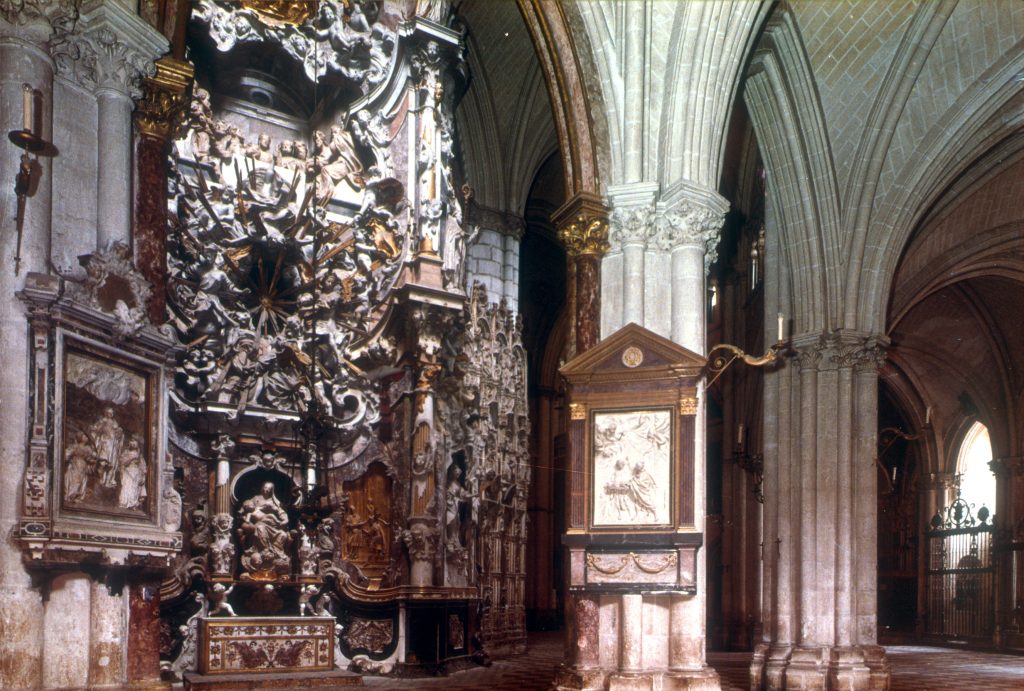
- The Transparente, a Baroque skylight installation, brings divine light through marble and illusion — a marvel of spiritual theatricality.
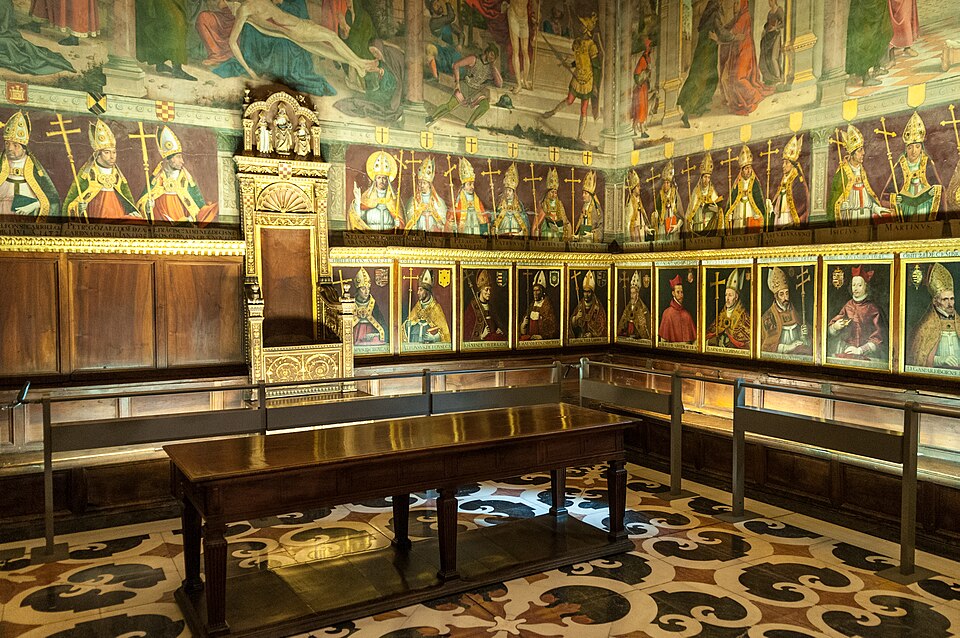
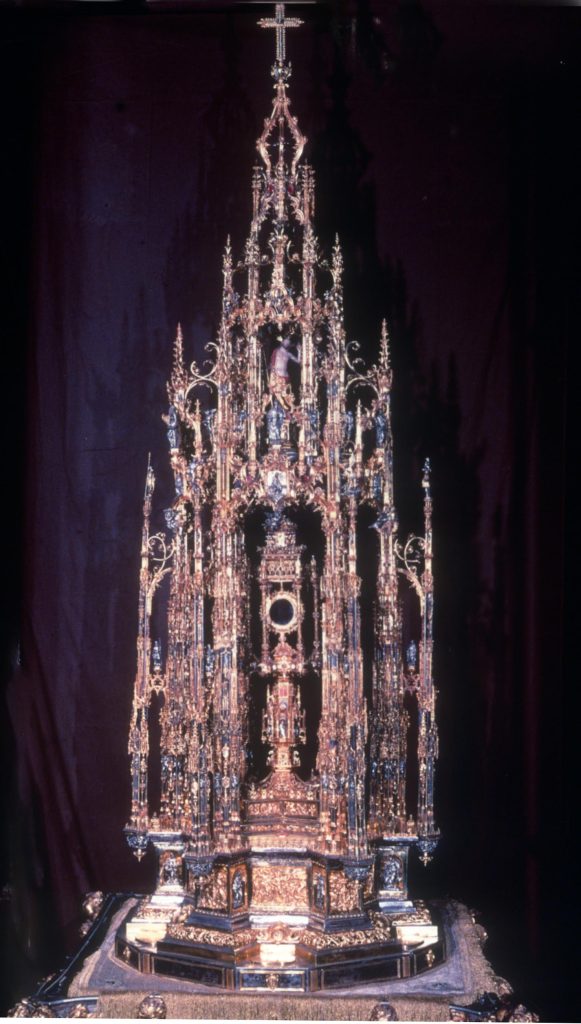
Don’t miss the Chapter House, choir stalls, or the haunting beauty of the Custodia de Arfe, a golden monstrance that’s said to contain over 18 kilograms of pure gold.
Alcázar of Toledo
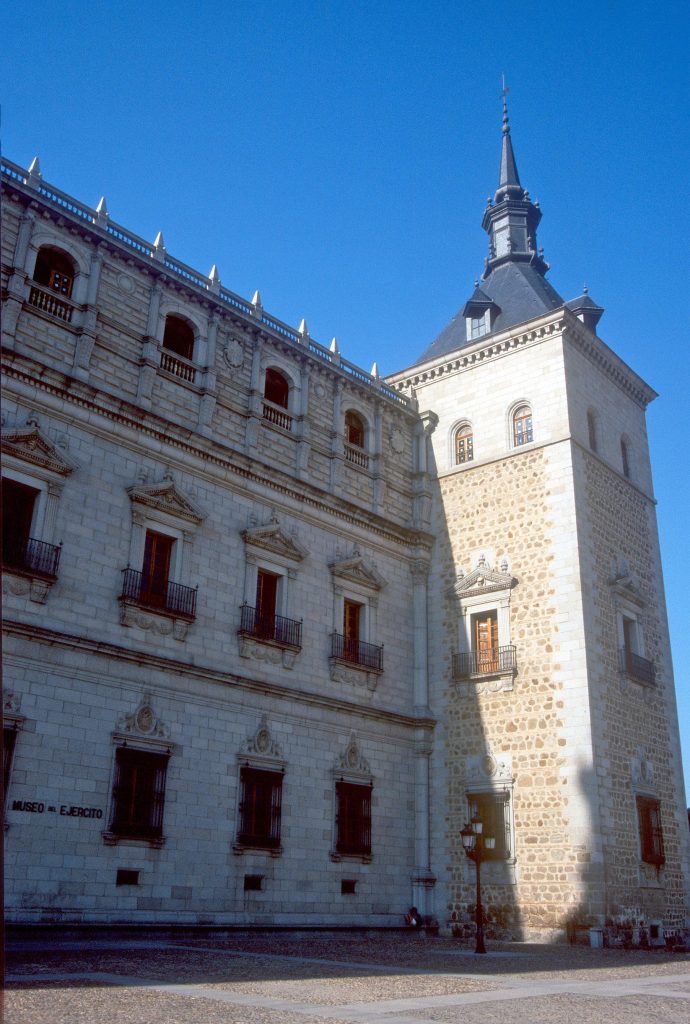
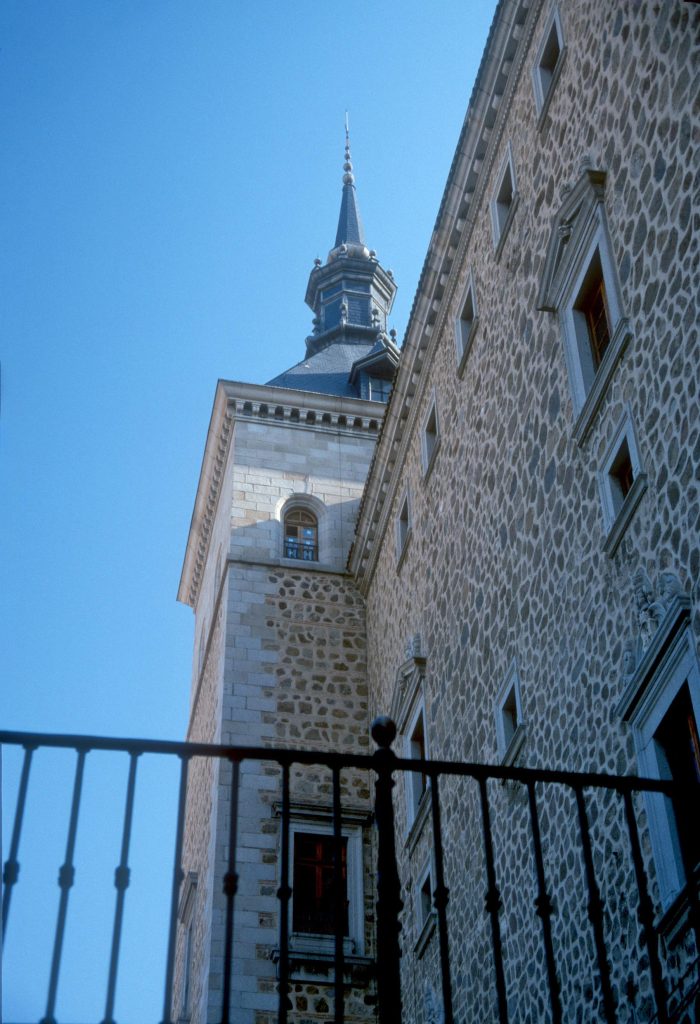
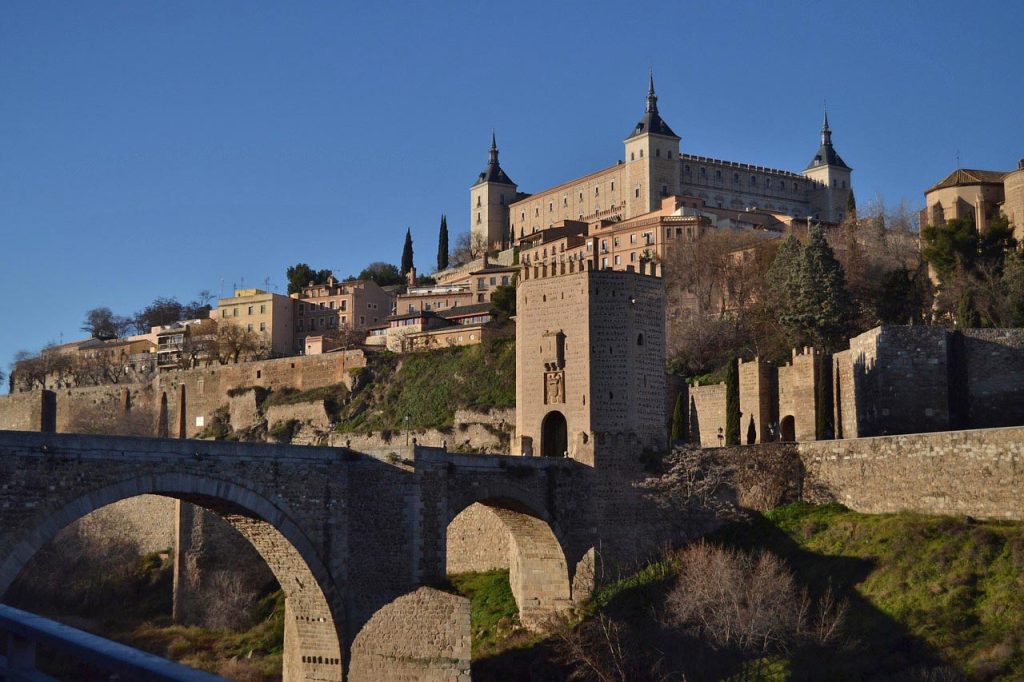
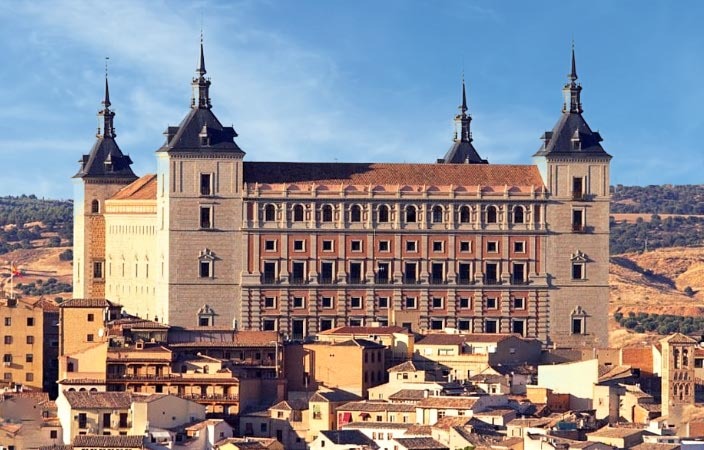
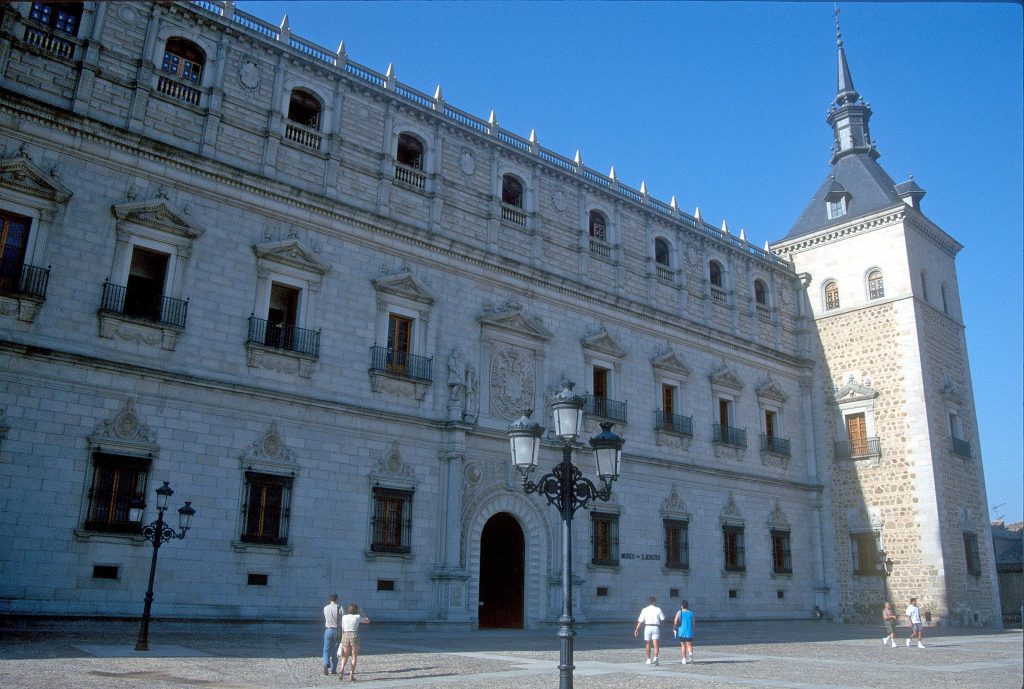
Towering above the city, the Alcázar has served as a Roman palace, a Moorish fortress, and a royal residence. Destroyed and rebuilt many times, it was most famously the site of a brutal siege during the Spanish Civil War, becoming a national symbol of resistance.
Today, it houses the Army Museum (Museo del Ejército), with exhibits ranging from Roman swords to Civil War propaganda. But the building itself is the greater artifact — a stone chronicle of power, fire, and endurance.
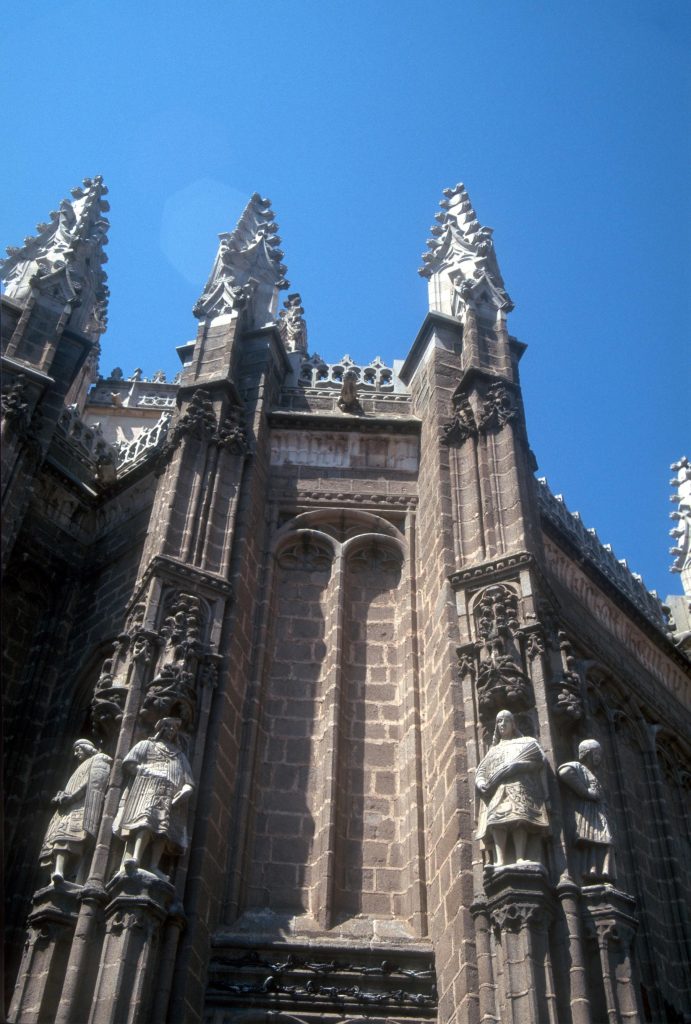
Monastery of San Juan de los Reyes
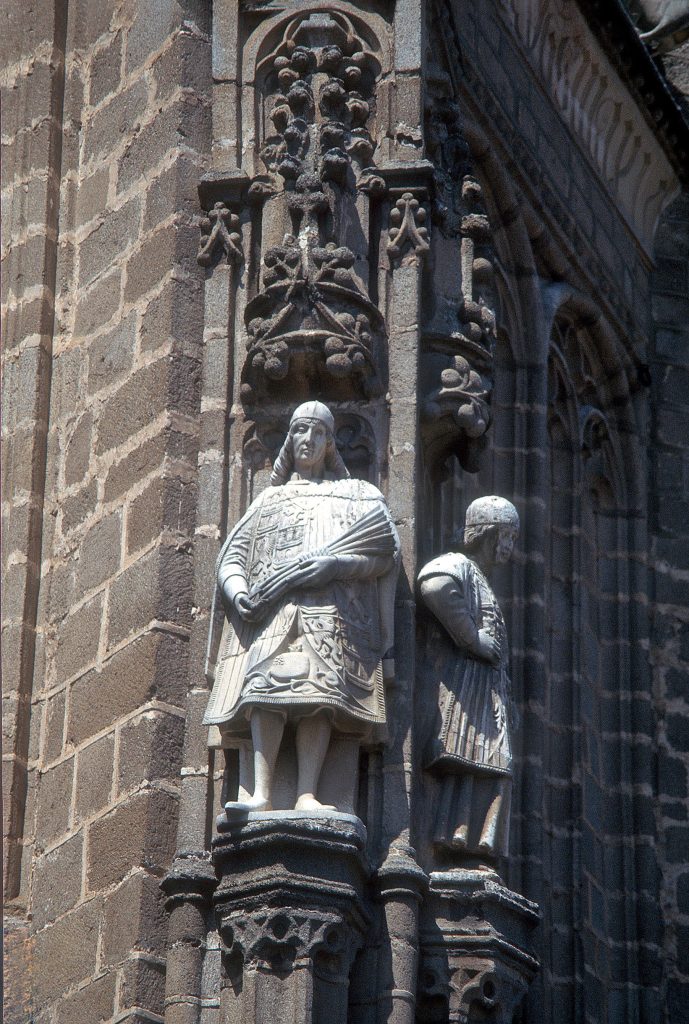
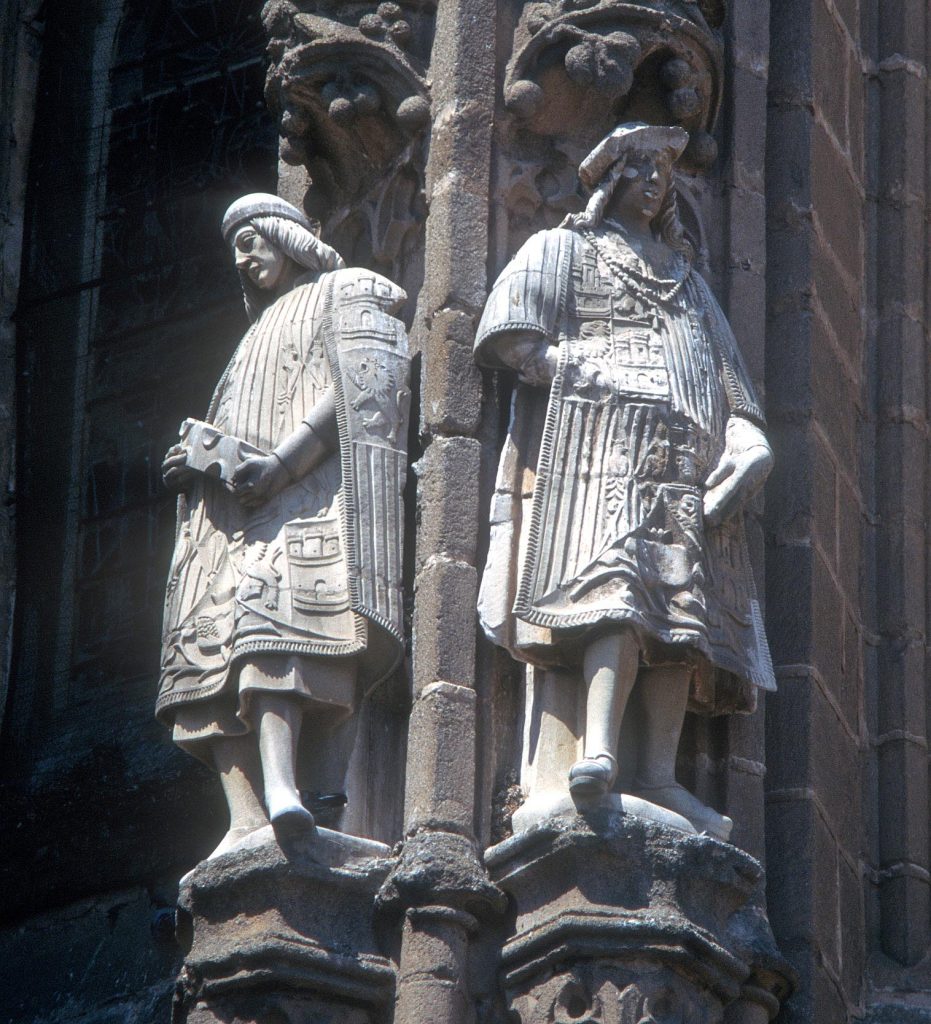
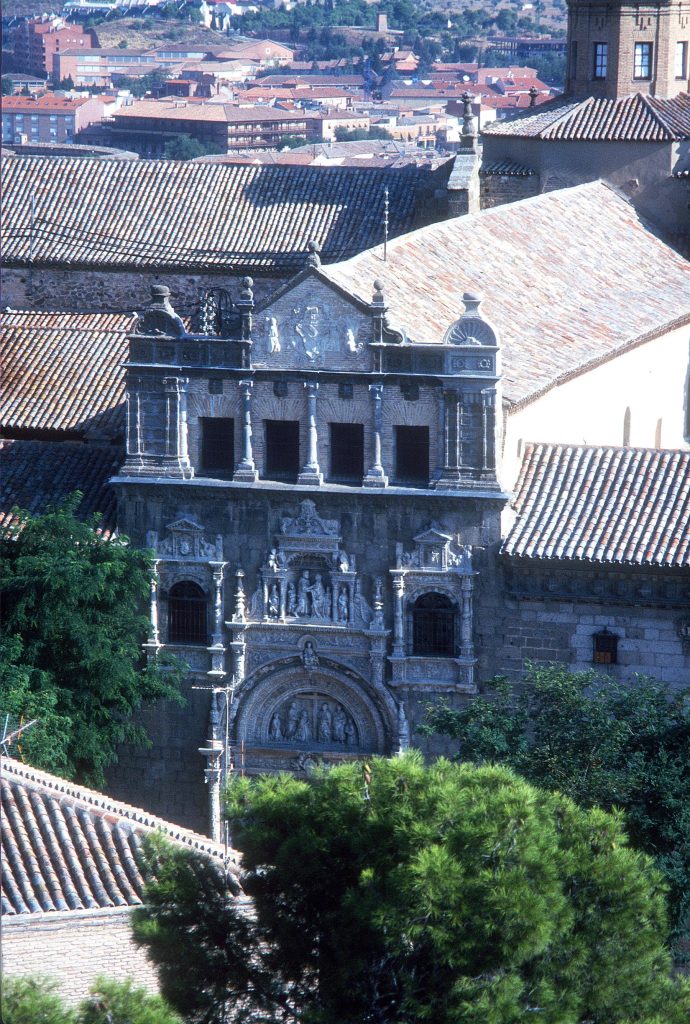
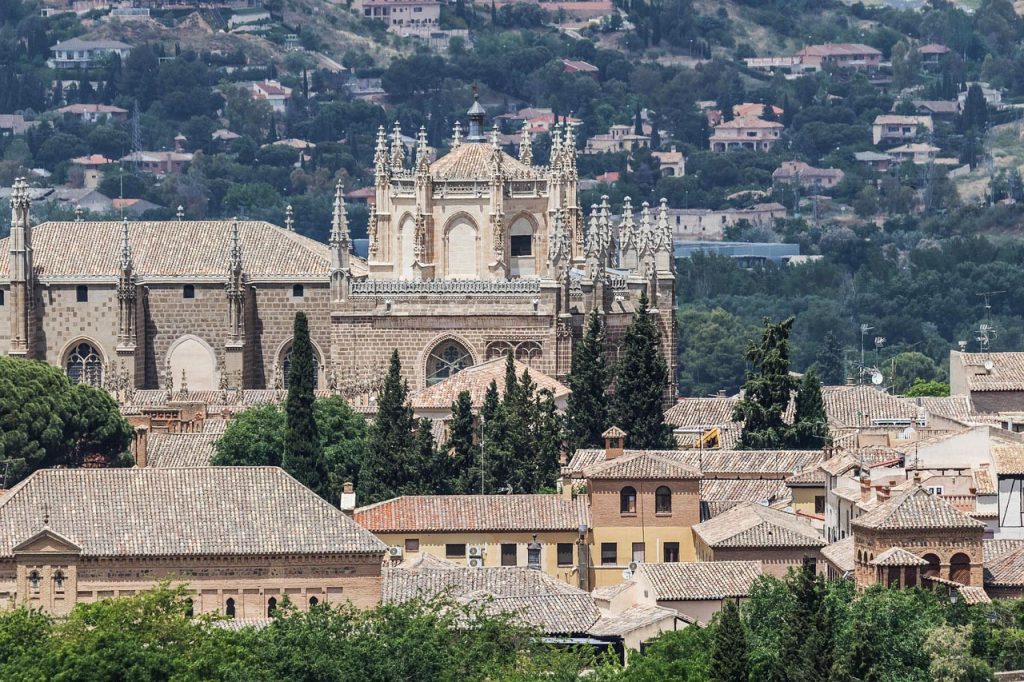
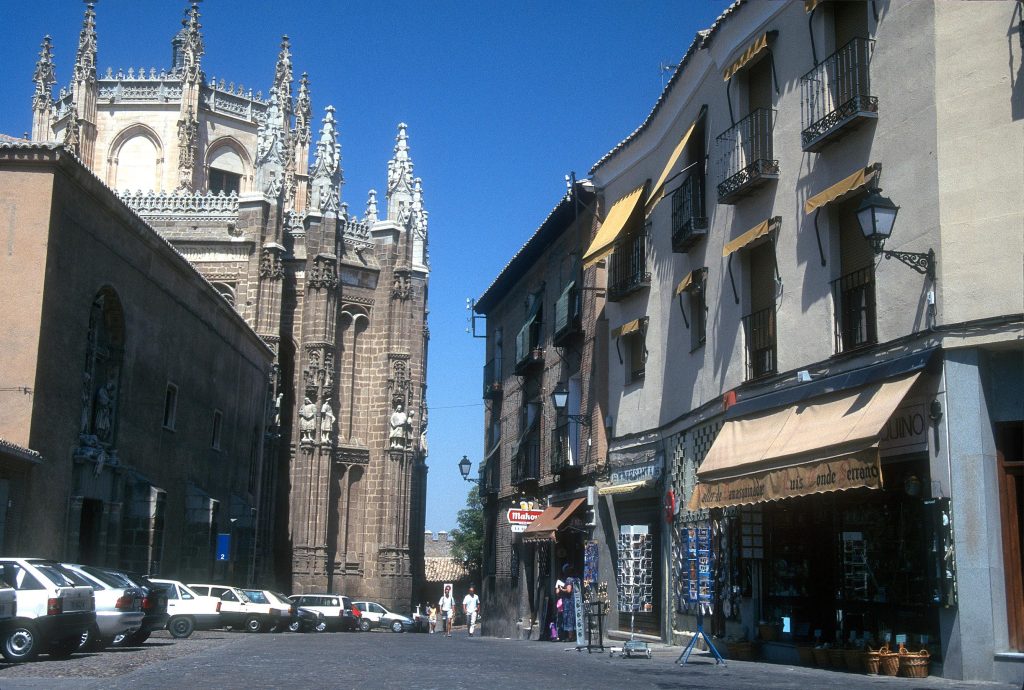
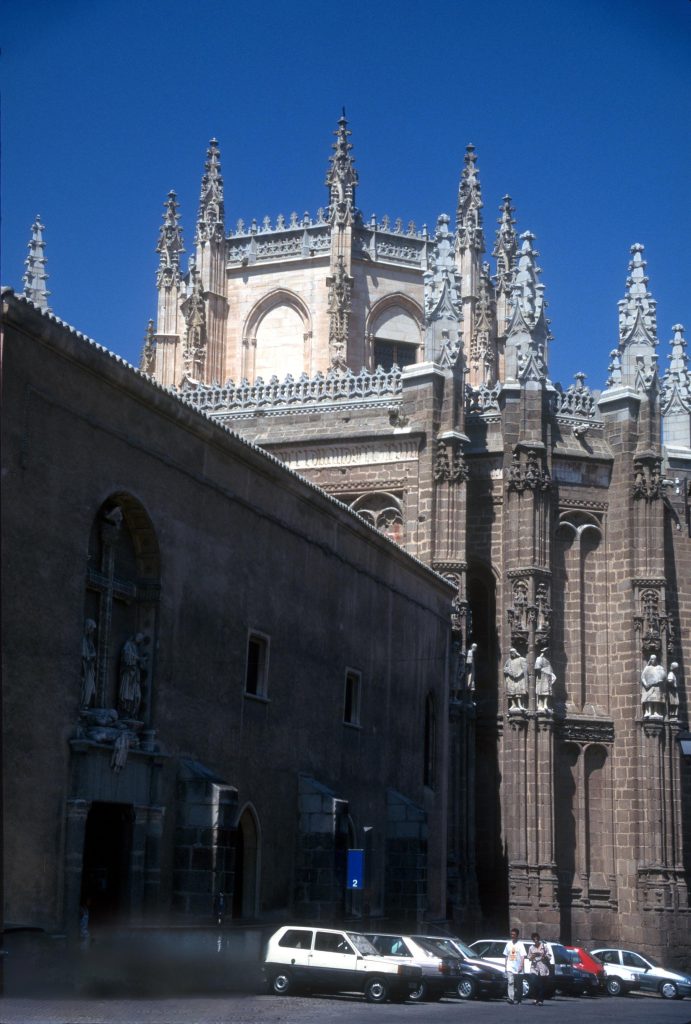
Commissioned by Queen Isabella I in the late 15th century to celebrate the birth of her son and the victory at the Battle of Toro, this Franciscan monastery is a late Gothic gem with elaborate Plateresque decoration, delicate cloisters, and soaring arches.
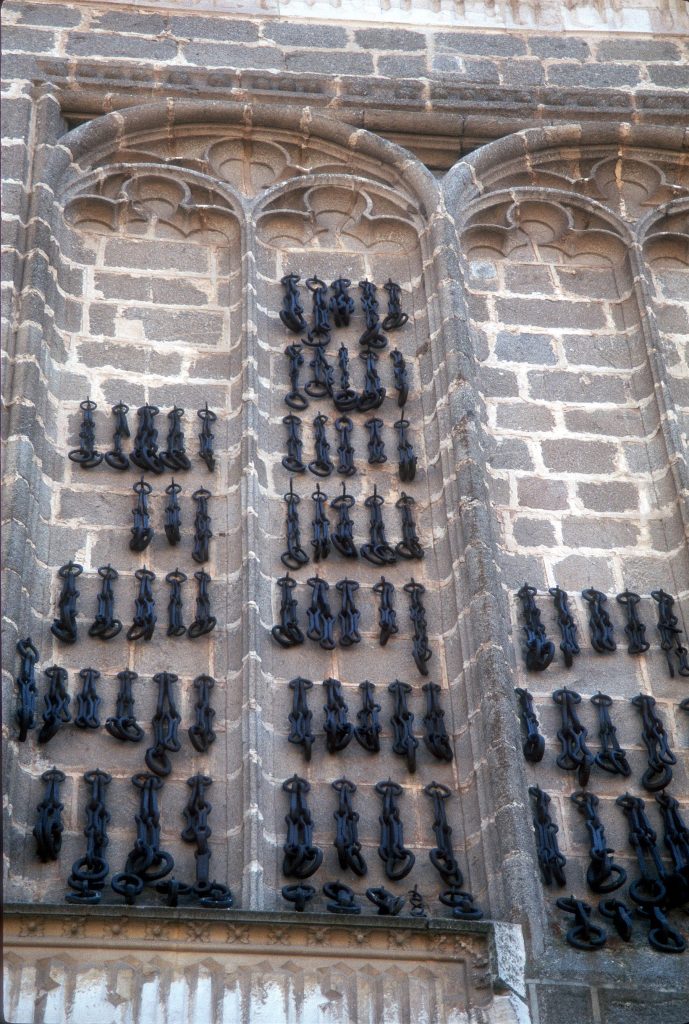
Notably, its exterior once displayed the shackles of Christian prisoners freed from Moorish captivity — a dramatic symbol of conquest turned architecture. The monastery also reflects Isabella’s early desire to be buried in Toledo — a plan later changed when Granada fell.
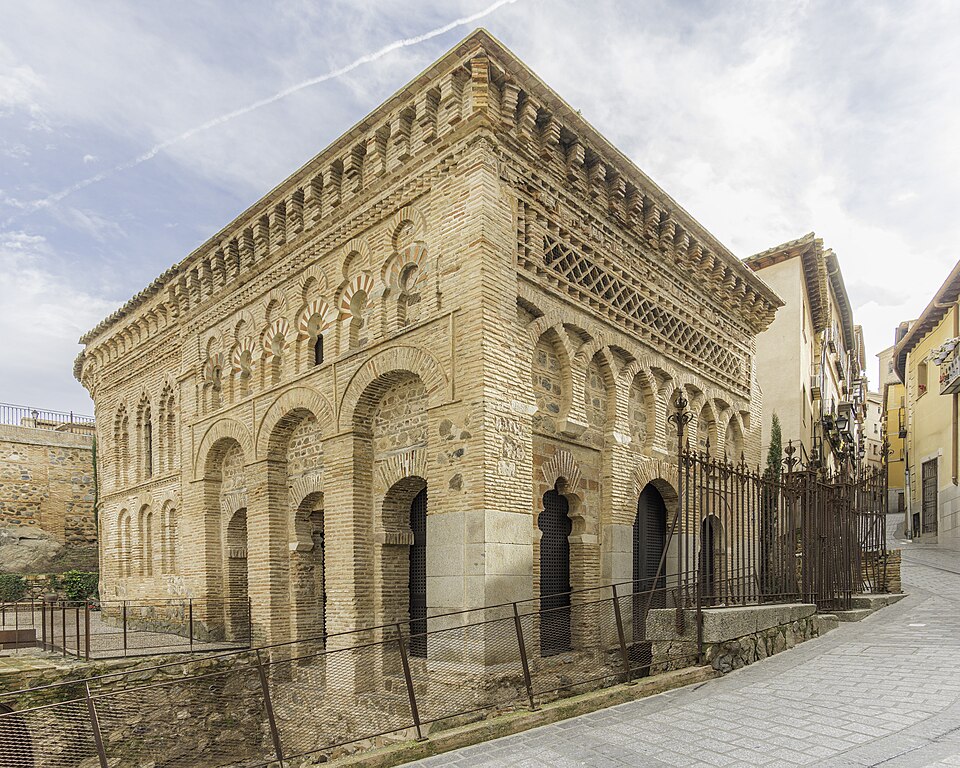
Mosque of Cristo de la Luz
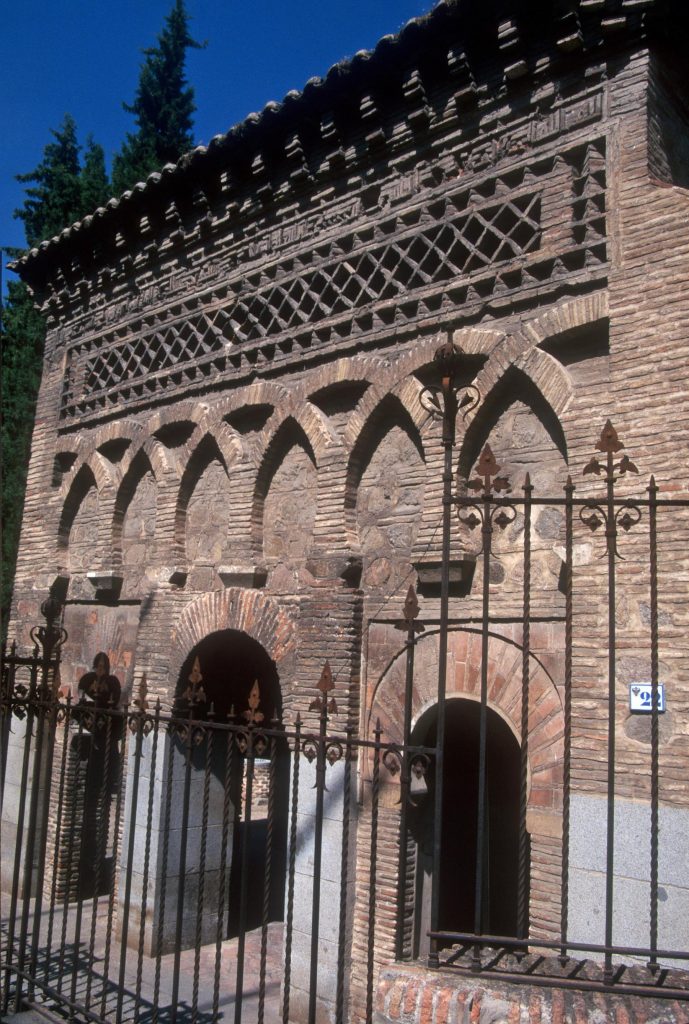
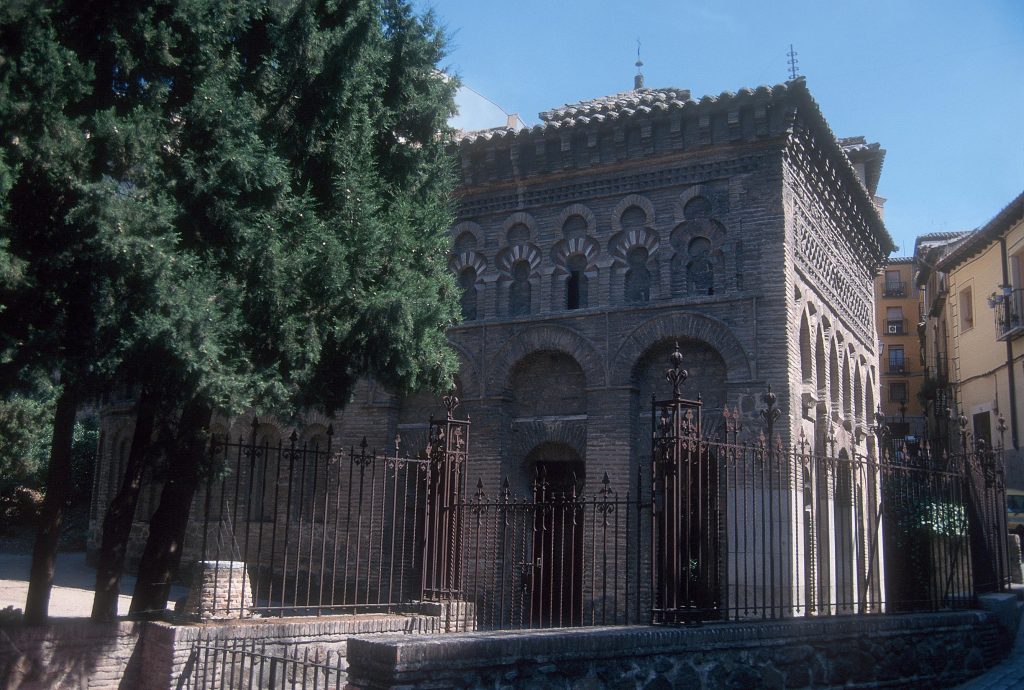
One of the few surviving Moorish-era buildings in Toledo, this small 10th-century mosque is an exquisite example of Caliphate architecture — compact, geometric, and serene. After the Reconquista, it was converted into a church, with frescoes added centuries later.
The layering is literal: you can see Muslim arches and Christian altars side by side. It’s a quiet place, off most tourist paths, but it holds the soul of the city’s cultural interweaving.
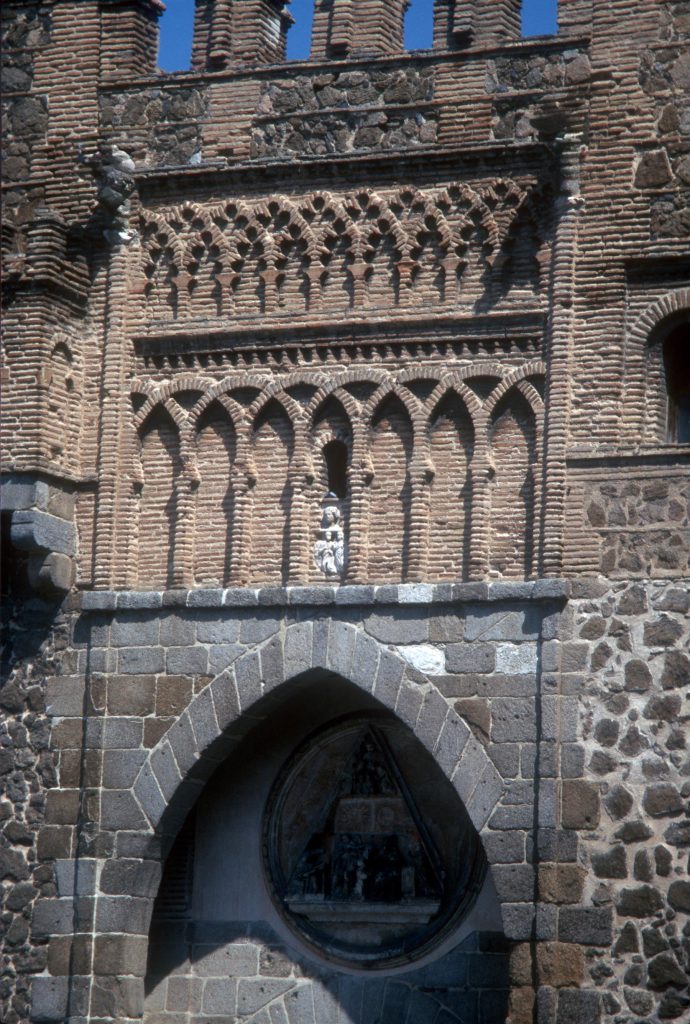
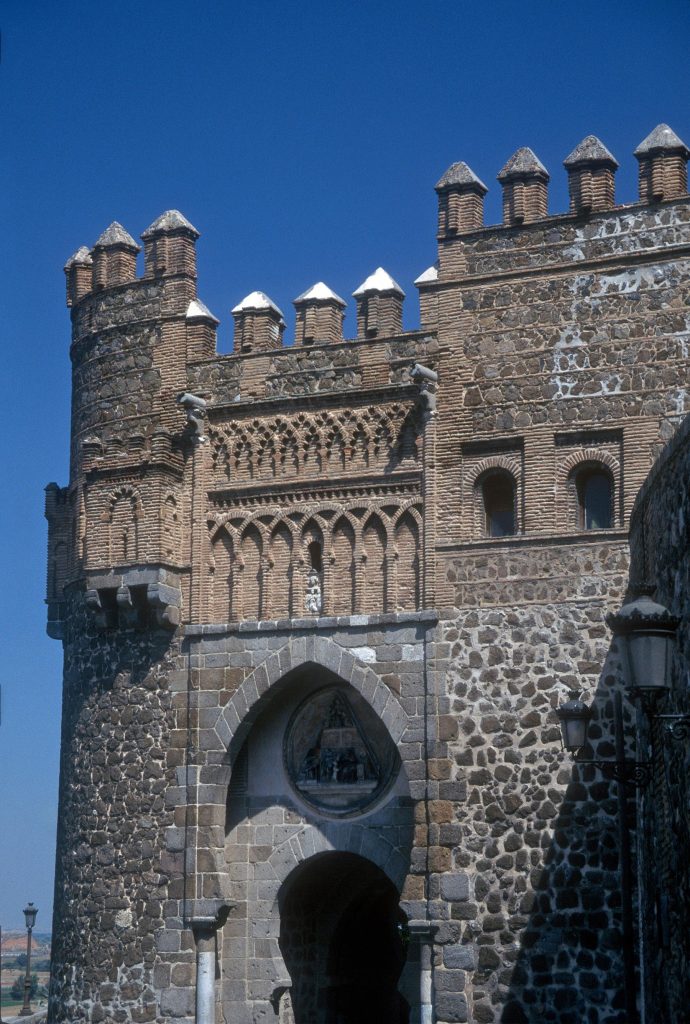
Puerta del Sol and Puerta de Bisagra
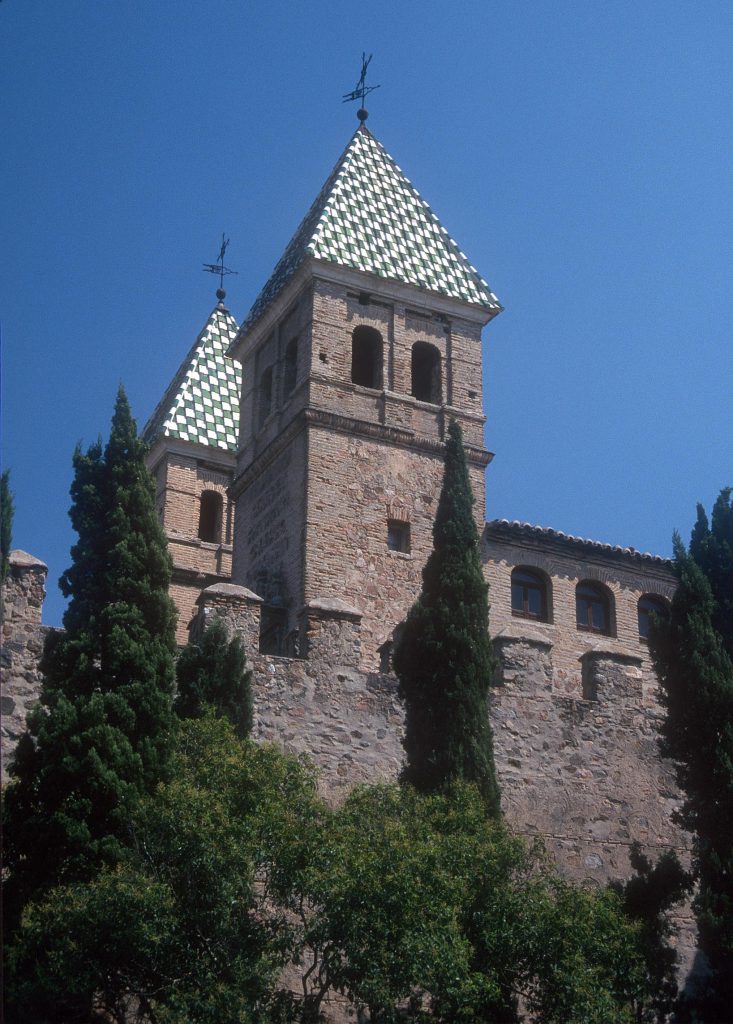
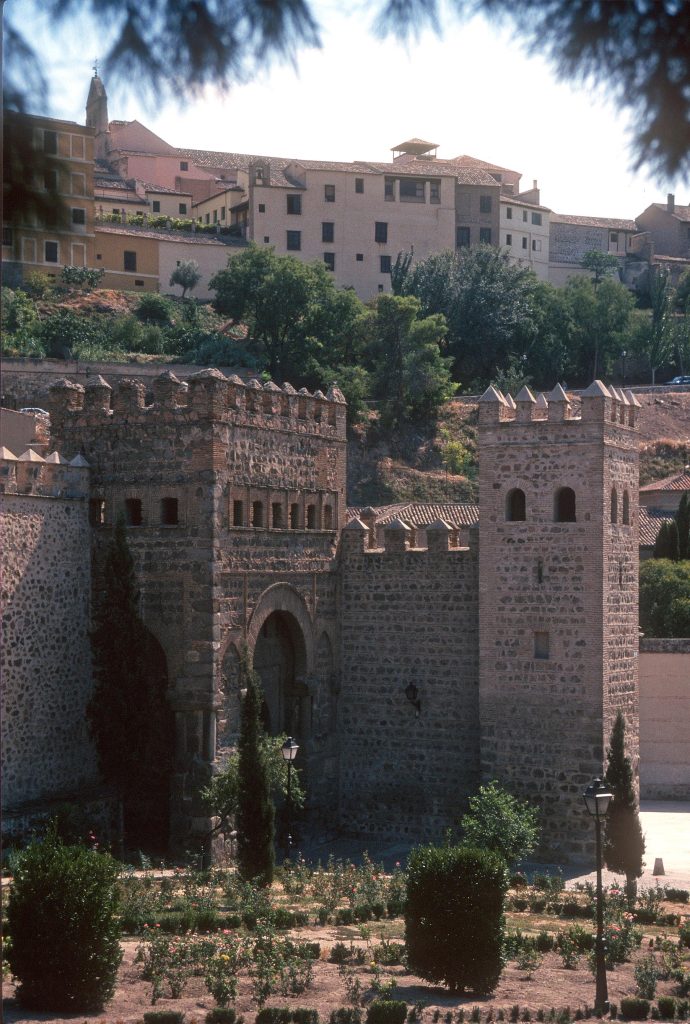
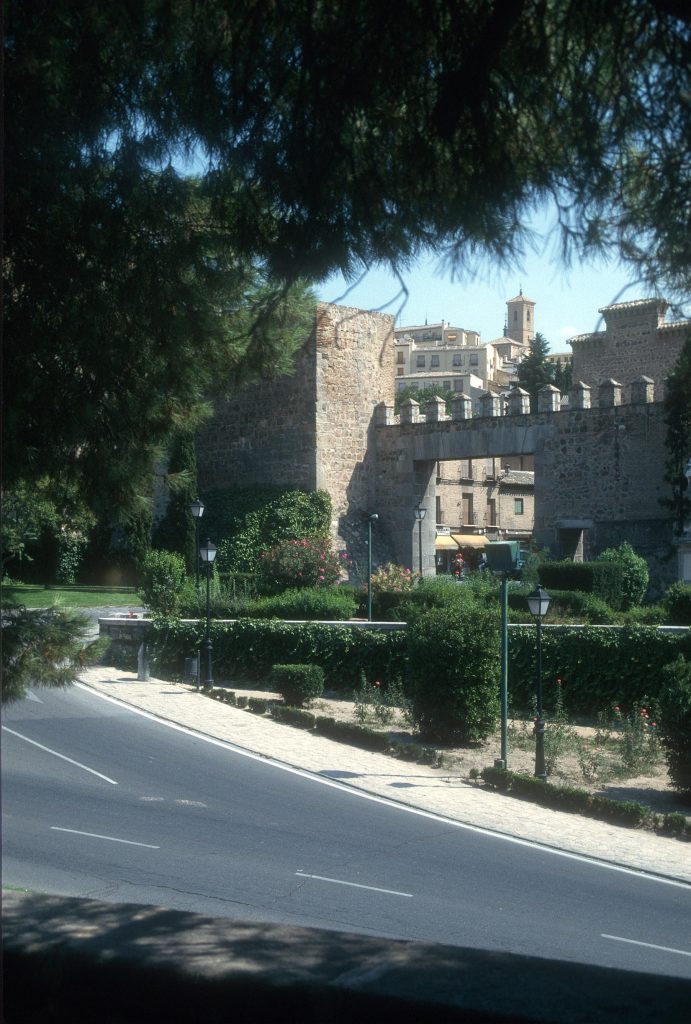
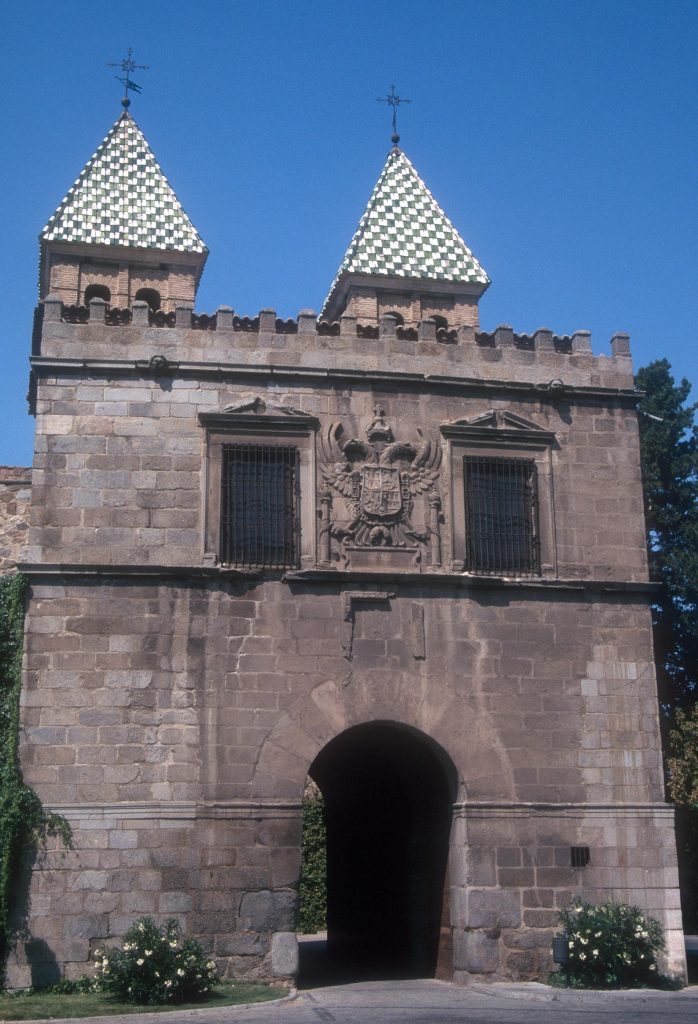
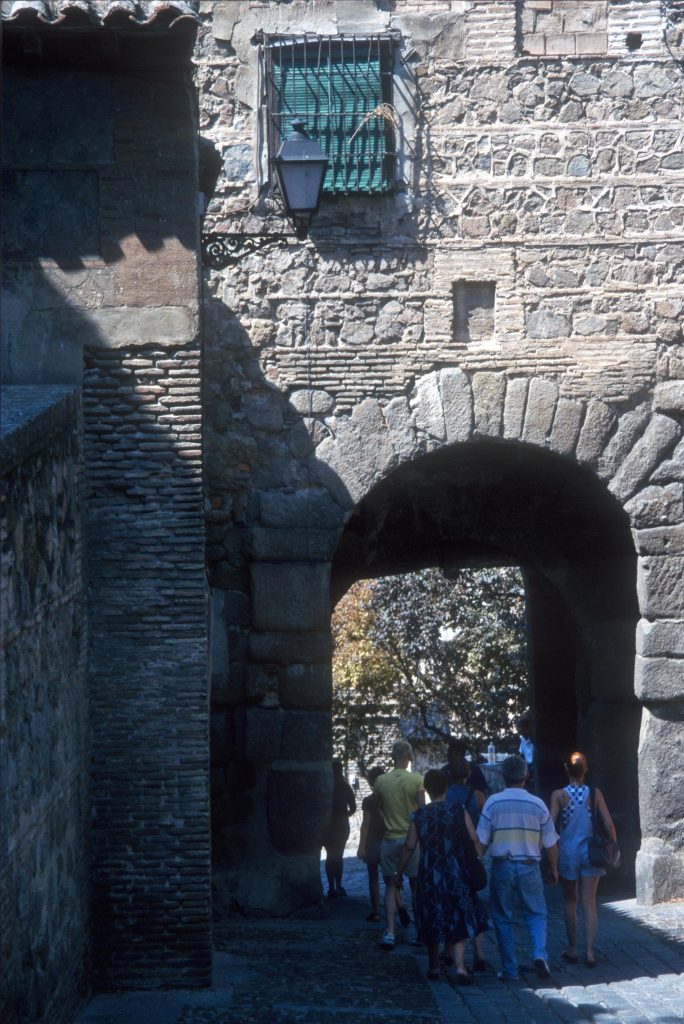
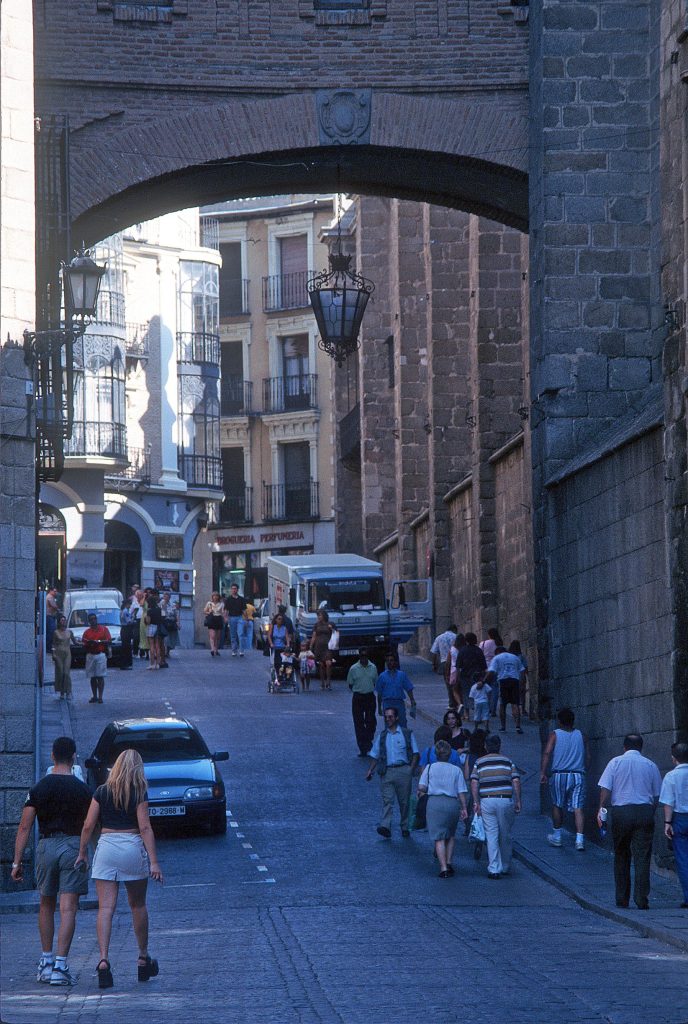
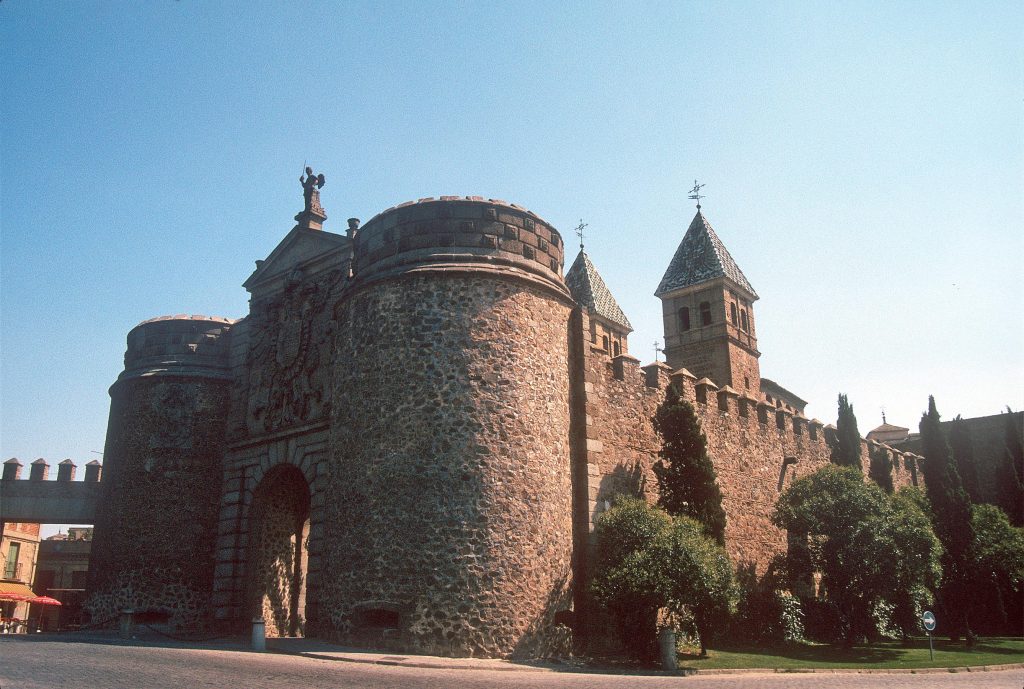
Toledo’s old city gates remain standing like guardians of time. The Puerta del Sol, built in the 14th century by the Knights Hospitaller, is a textbook example of Mudéjar architecture, blending Gothic form with Islamic detail.
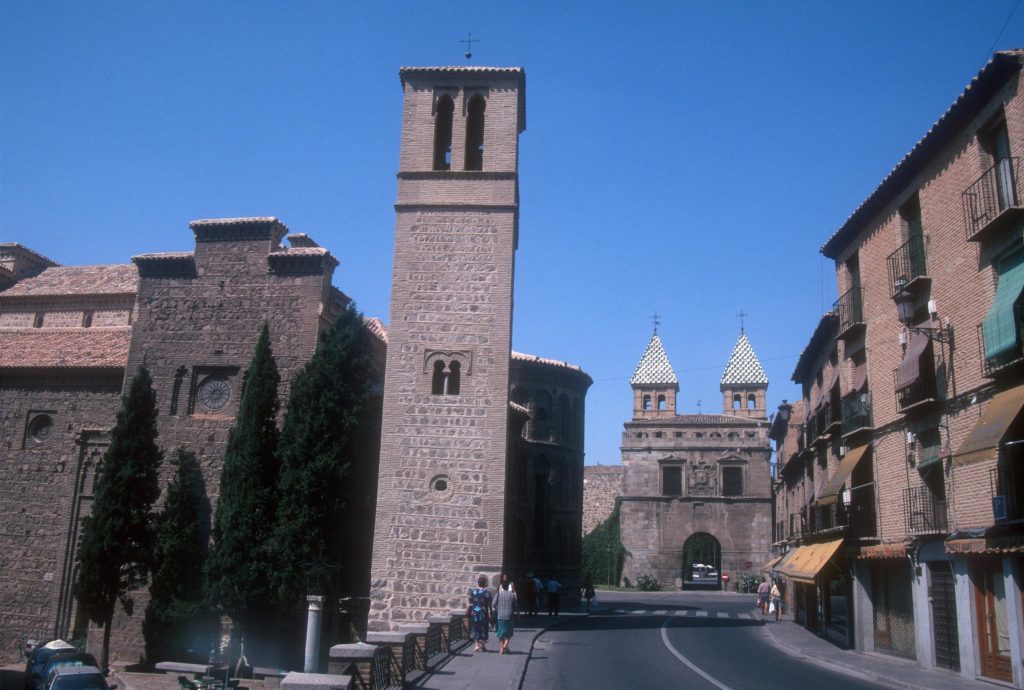
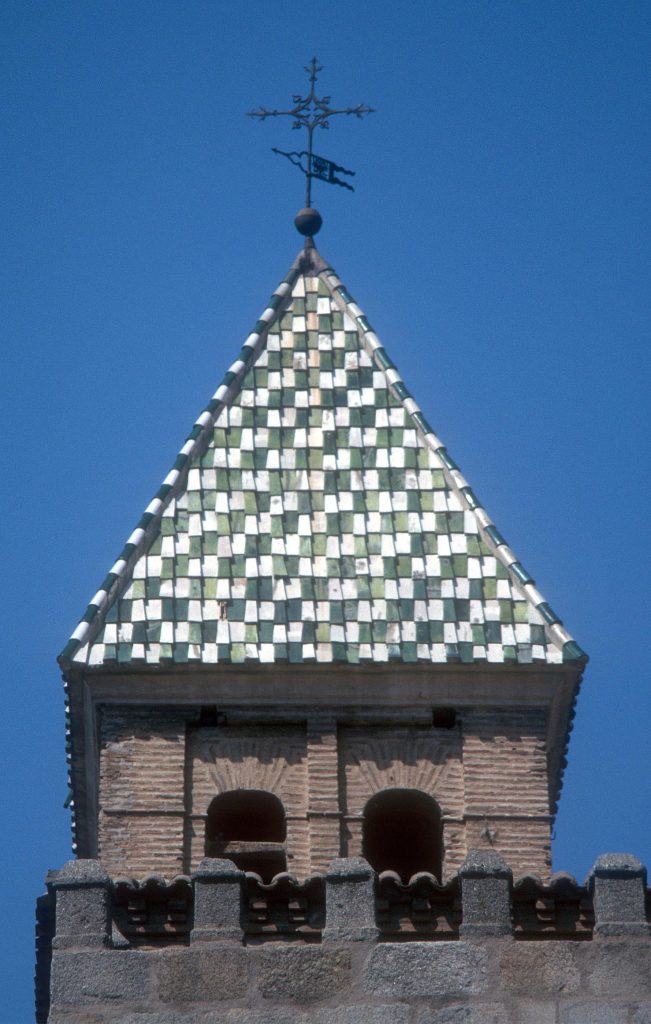
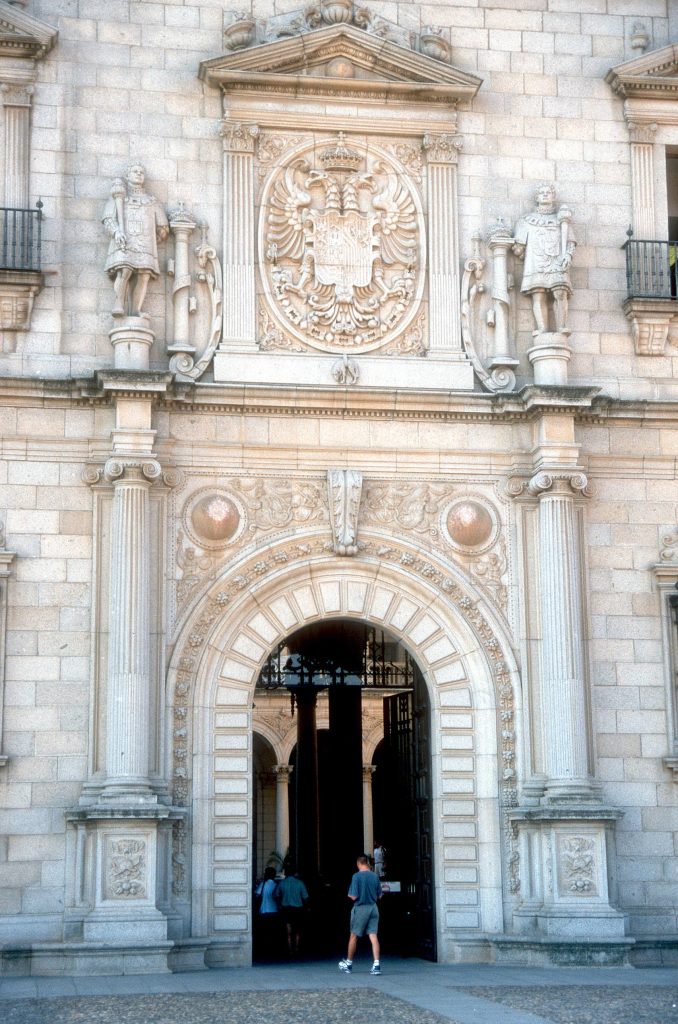
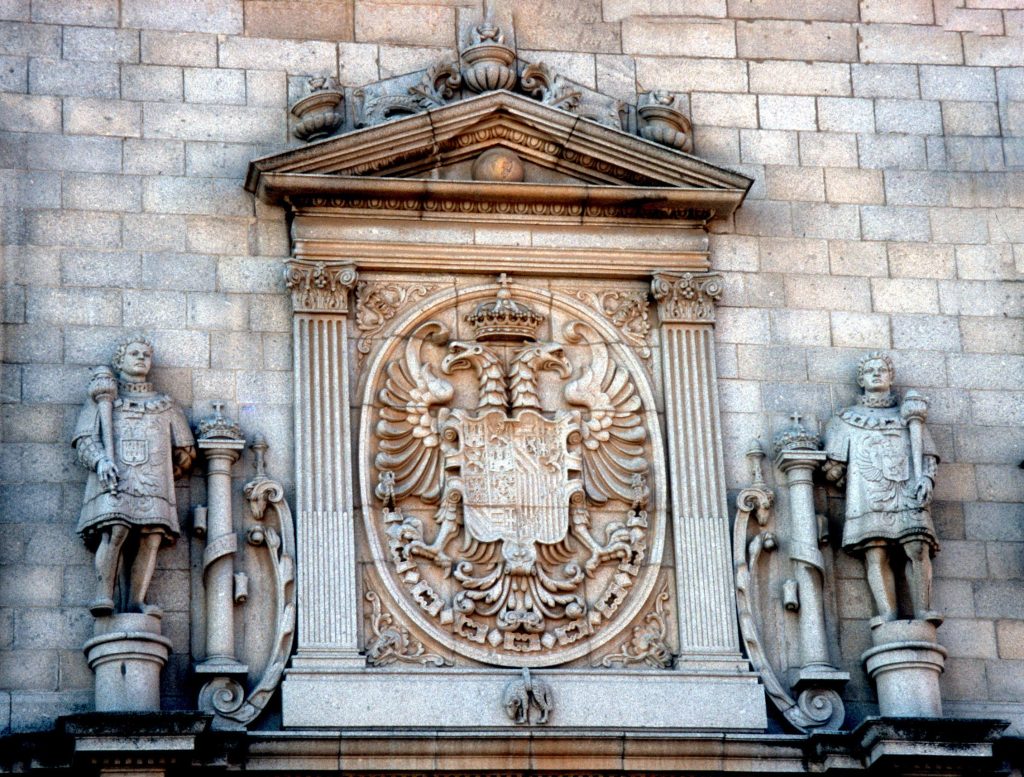
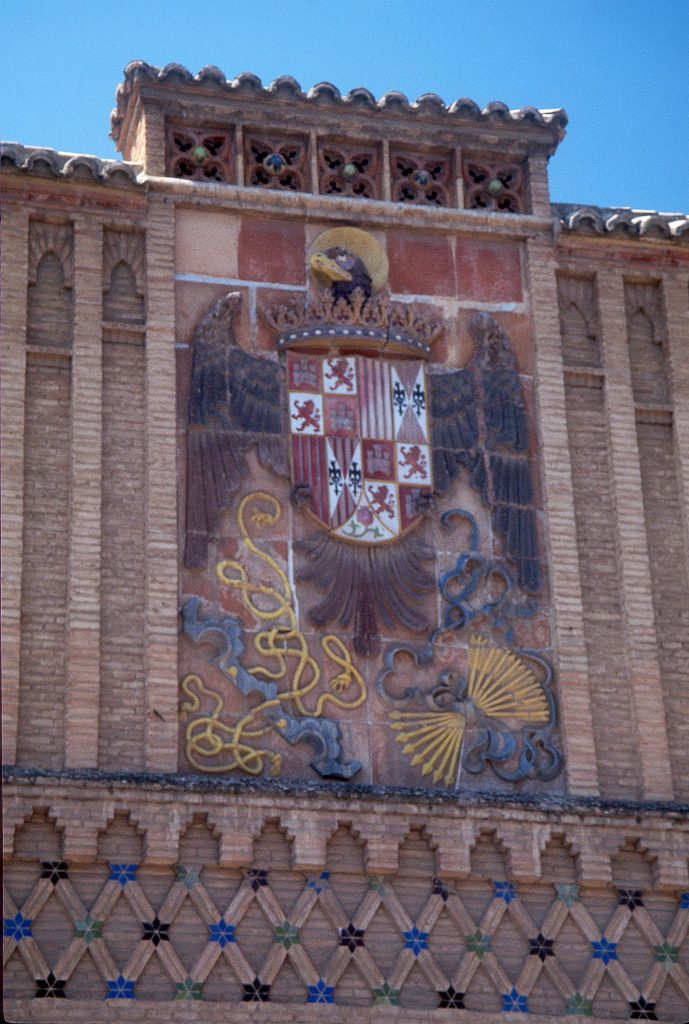
The Puerta de Bisagra, larger and more ceremonial, served as the main entrance to the city. Its twin towers and imperial shield speak to Spain’s growing might under the Habsburgs — Toledo’s last moment as a political capital before Madrid rose.
Toledo’s Hand and Craft
Beyond its religious and scholarly past, Toledo has long been a city of artisans — famed across centuries for craftsmanship that is both ornamental and lethal.
Swords and Steel
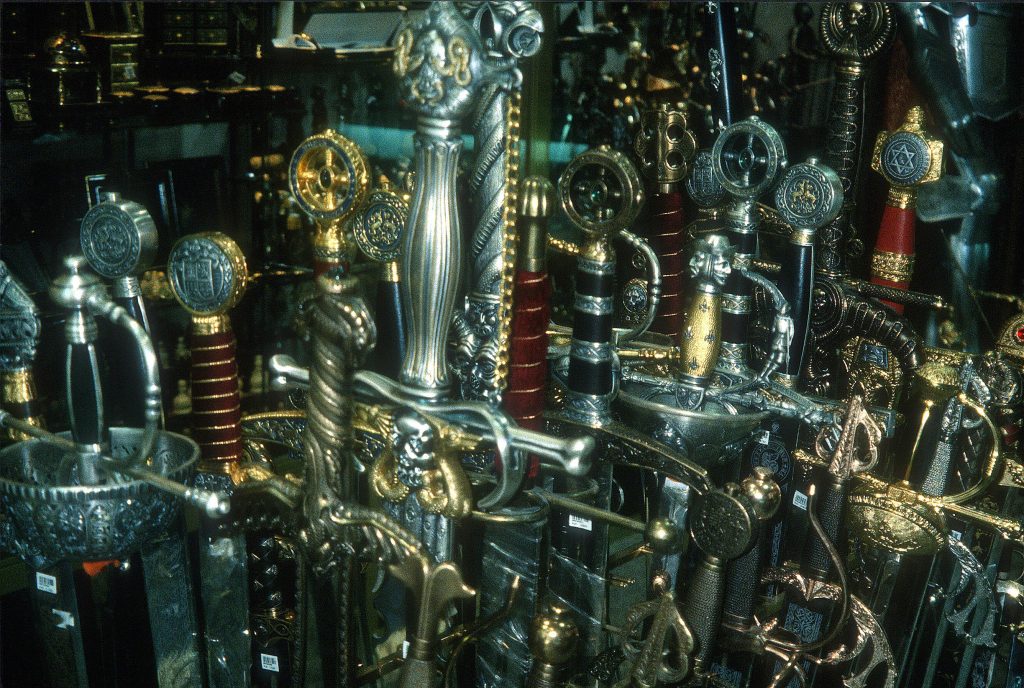
Since Roman times, Toledo has been known for its superlative steel, especially in sword-making. By the Middle Ages, Toledo blades were prized throughout Europe and the Islamic world for their strength, flexibility, and balance.
Today, workshops still hand-forge swords, daggers, and armor using traditional techniques. While no longer needed for battle, they are made for ceremony, collectors, and cultural preservation. You’ll find smiths near the city gates still hammering and folding steel, as they have for a thousand years.
Damascene
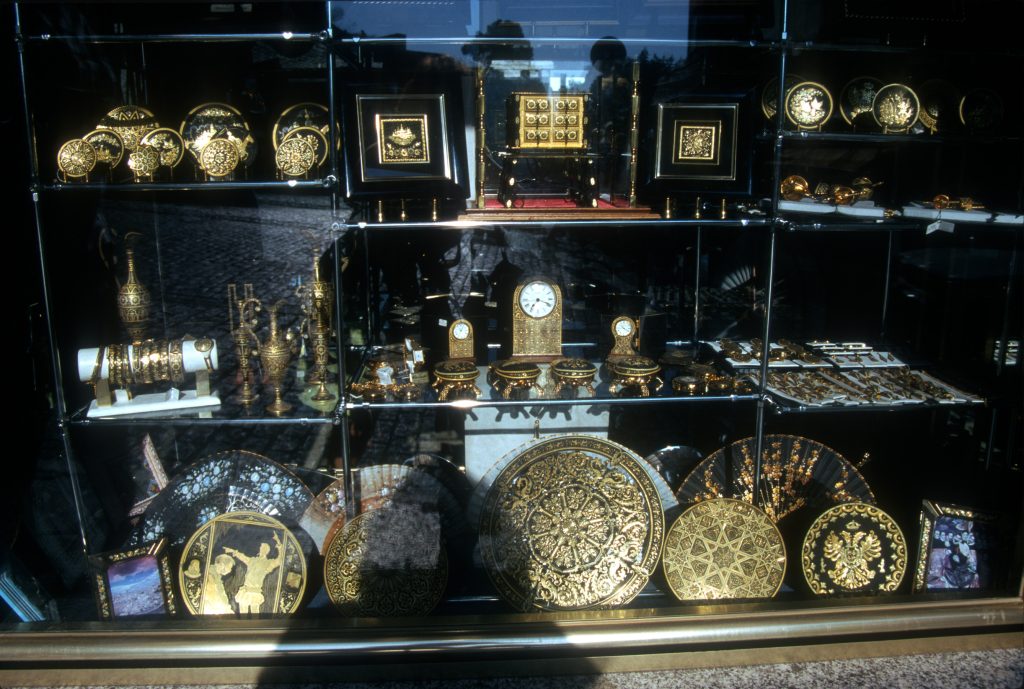
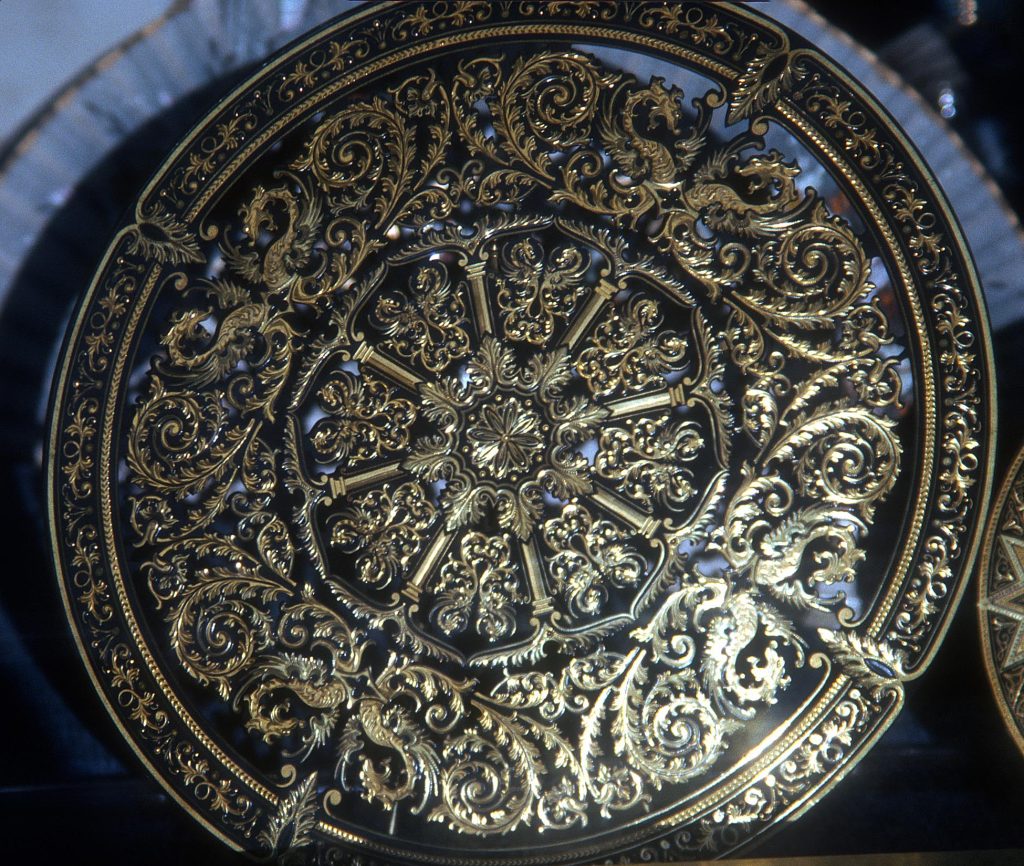
Toledo is also world-renowned for damasquinado — or damascene, the art of inlaying precious metals into darkened steel to create elaborate, shimmering designs. This craft arrived with the Moors and flourished in Christian Toledo, blending Islamic geometric motifs with Renaissance flourishes.
Common themes include Arabesques, mythological figures, lions, vines, and religious symbols, often rendered in gold and silver thread so fine it appears painted. Damascene is found in jewelry, boxes, plates, swords, and religious icons. Workshops often let visitors observe the process — a patient, precise dance of hand and eye.
Ceramics and Embroidery
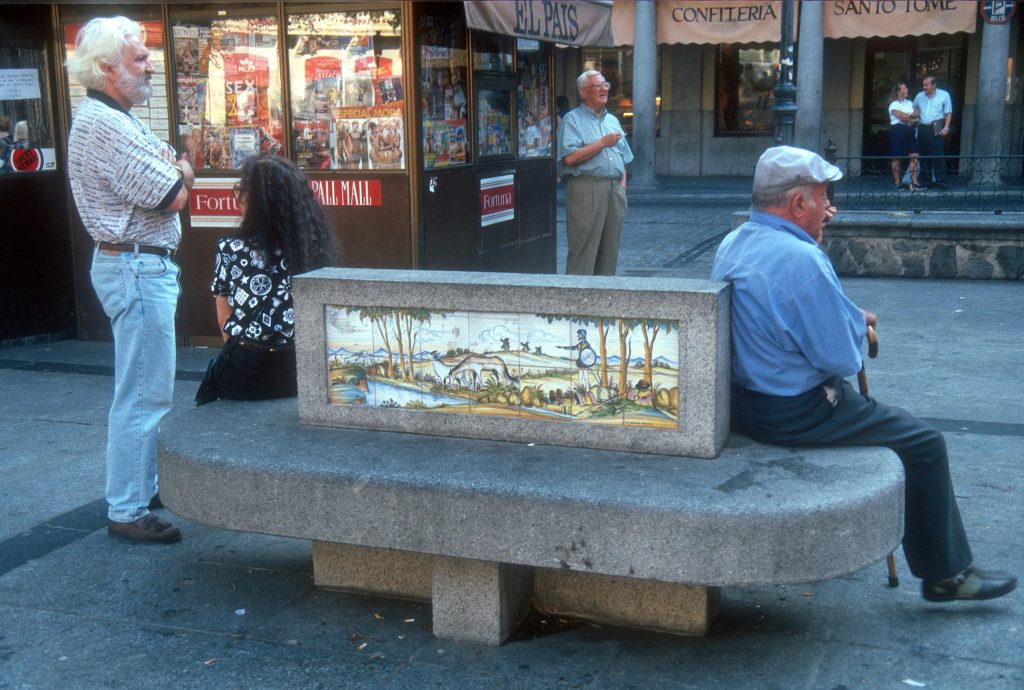
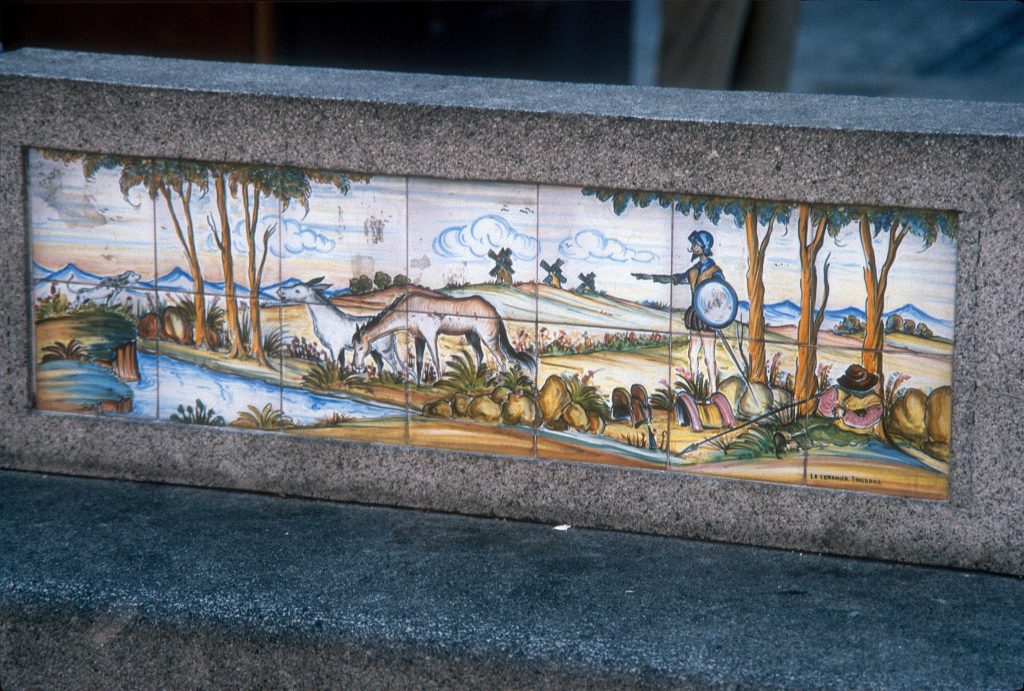
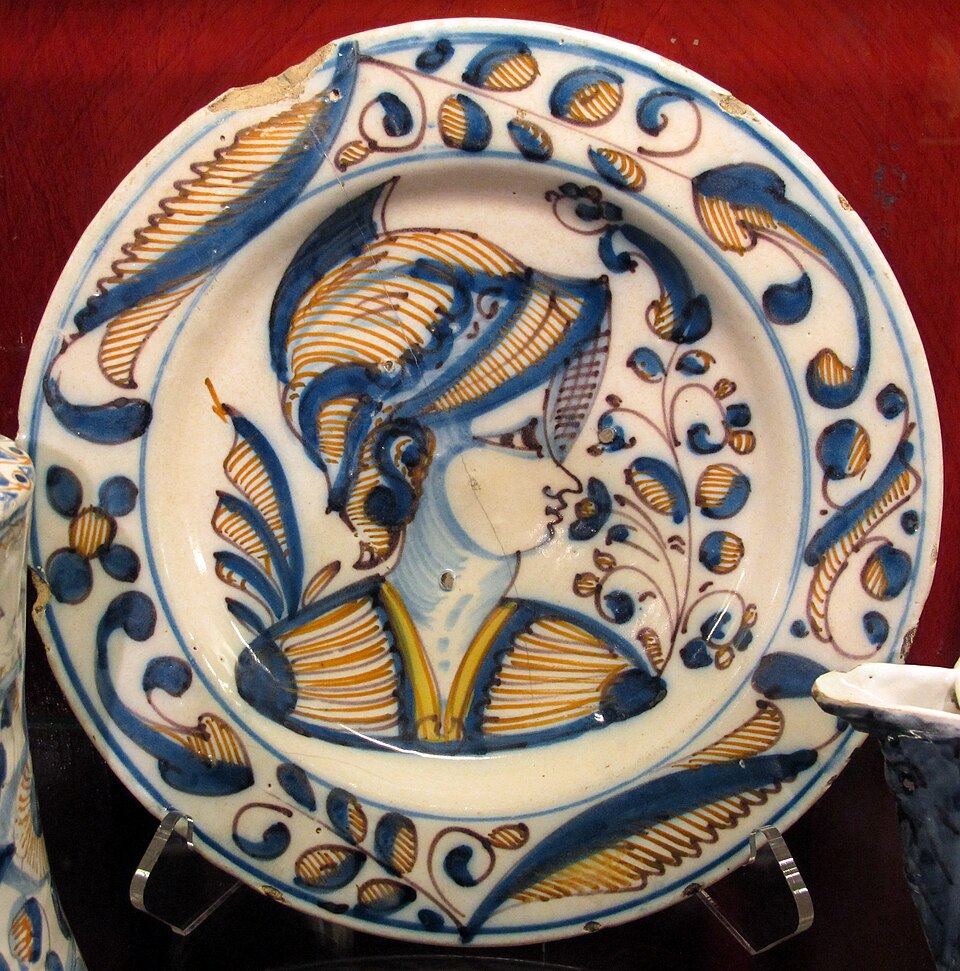
Toledo also maintains traditions in glazed pottery, tilework, and intricate embroidery — especially in the nearby town of Talavera de la Reina, whose famous blue-and-white ceramics were once shipped to the Spanish Americas and now grace museums worldwide.
Toledo Today: A City That Still Twists Back
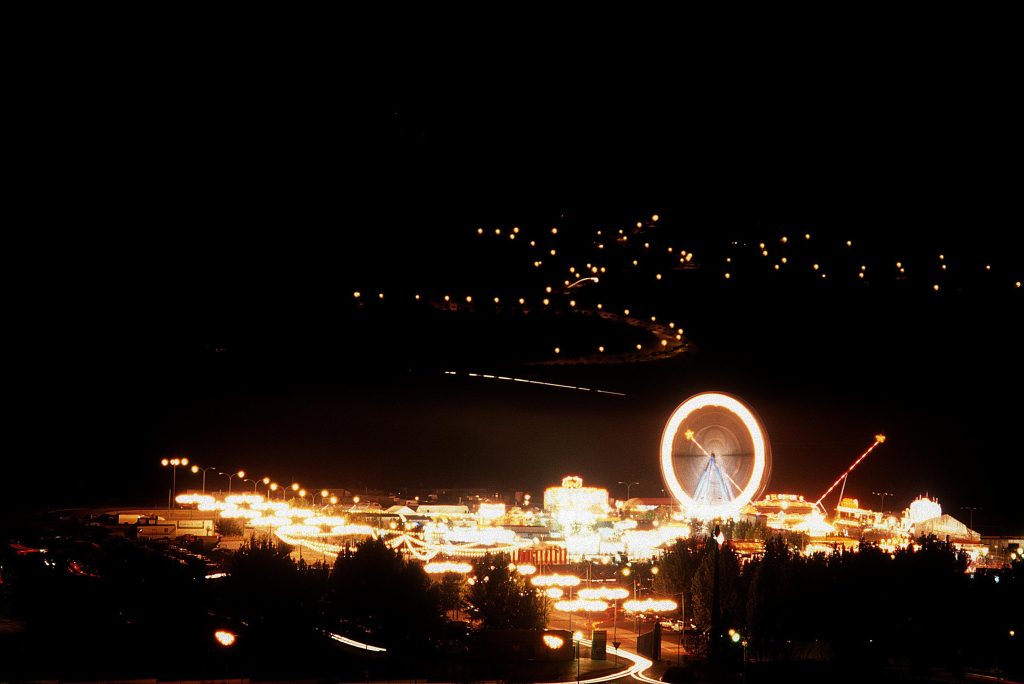
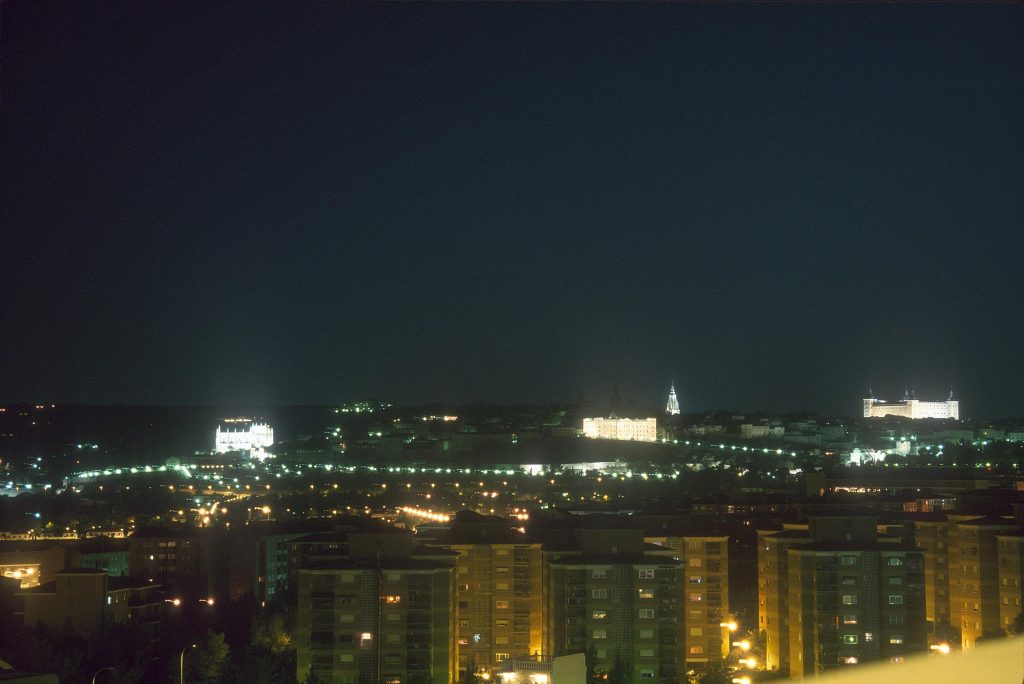
While many Spanish cities modernized outward, Toledo folds inward. Declared a UNESCO World Heritage Site in 1986, it remains largely preserved — a medieval skyline surrounded by modern Spain. Its streets demand attention. Its hilltop views reward it.
Visitors today can:
- Cross the Puente de San Martín at sunset, its arches glowing above the river
- Climb to the Alcázar, the city’s ancient fortress, now housing a military museum
- Marvel at Toledo Cathedral, a Gothic marvel and seat of Spain’s Primate
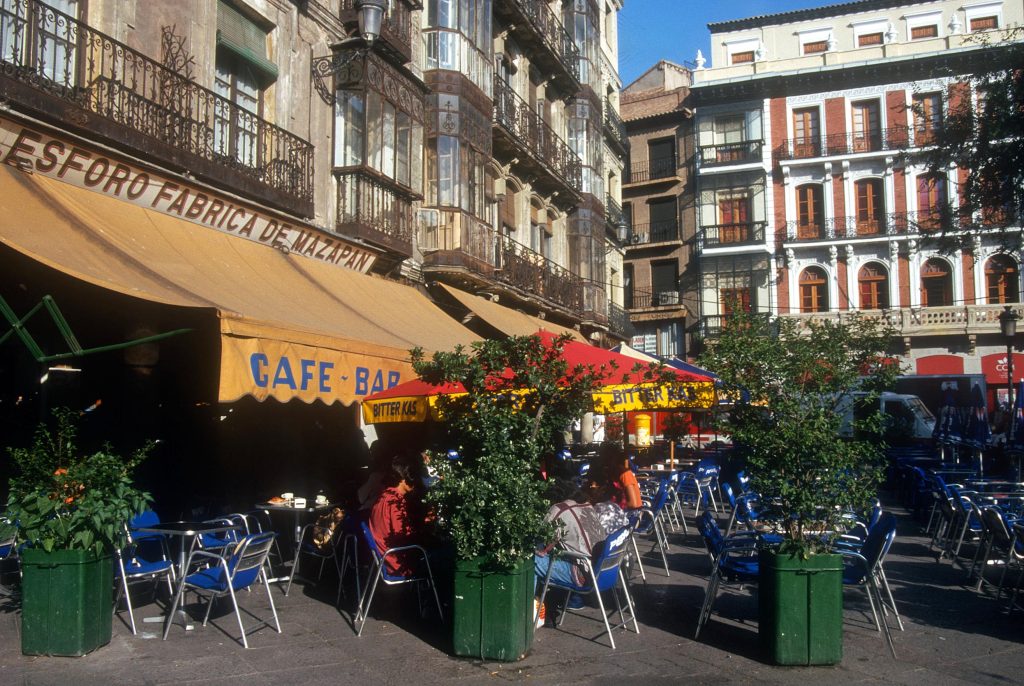
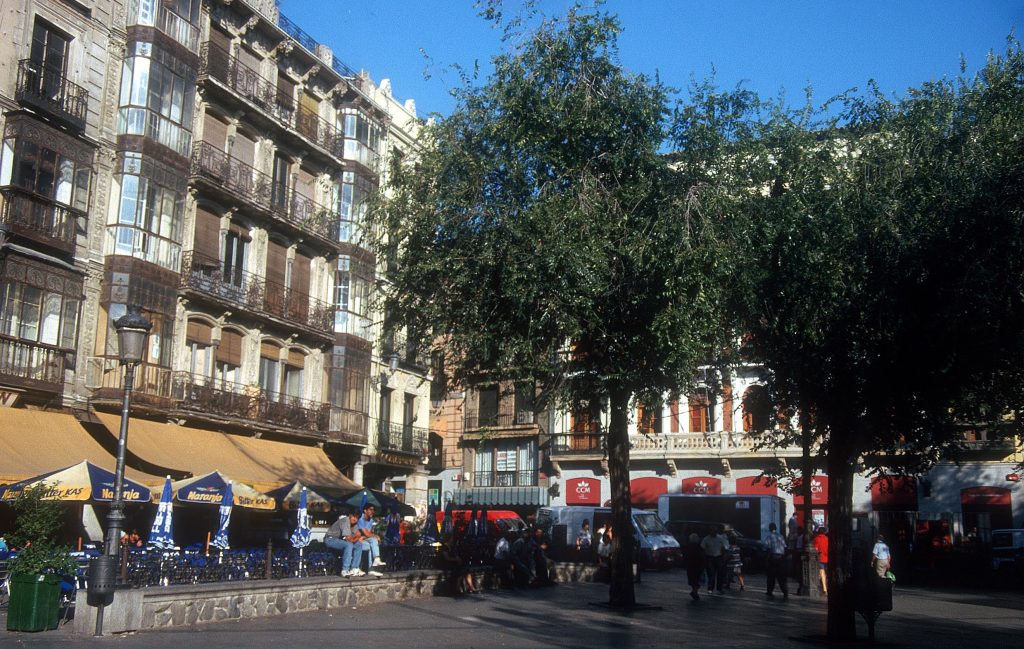
- Or simply sit in a shaded plaza, watching swallows trace the same paths they’ve flown for centuries
Toledo is a city of pilgrims, poets, and ghosts. It is a city that unfolds in memory, like the gleam of gold thread in damascene, or the worn groove in a synagogue step. It reminds us that beauty and pain, faith and exile, art and endurance are not opposites — they are the very textures of history. And here, in this hilltop maze of shadows and sun, they remain — waiting for your footsteps.
Recommended Reading
Fiction
- The Last Jew by Noah Gordon
A moving novel set during the Spanish Inquisition, following a young Jewish boy from Toledo struggling to survive in a world of exile and persecution. - People of the Book by Geraldine Brooks
While centered on the Sarajevo Haggadah, this novel includes poignant sections in Toledo’s Jewish past, weaving historical fiction with preservation and scholarship. - The Queen’s Vow by C.W. Gortner
A richly imagined portrait of Queen Isabella, with scenes in Toledo that capture the complex intersection of power, religion, and policy during her reign.
Non-Fiction
- Toledo Cathedral: Building Histories in Medieval Castile by Tom Nickson
The book places the cathedral within Toledo’s multilingual and multireligious society while examining its connections to political authority, memory, worship, and urban identity. - The Jews of Spain: A History of the Sephardic Experience, not The Sephardic Jews of Spain and Portugal by Jane S. Gerber
A scholarly yet accessible history of the Jewish communities that flourished — and were later expelled — from cities like Toledo. - The Arts of Intimacy: Christians, Jews, and Muslims in the Making of Castilian Culture by Jerrilynn D. Dodds; María Rosa Menocal; Abigail Krasner Balbale
The Arts of Intimacy examines how Christian, Jewish, and Muslim communities contributed to the formation of medieval Castilian culture. The authors use architecture, visual art, poetry, and prose to explore the cultural interactions that followed the Christian conquest of Toledo. - Conflict and Coexistence: Archbishop Rodrigo and the Muslims and Jews of Medieval Spain by Lucy K. Pick
The book uses his life to explain the complicated mixture of accommodation, hierarchy, cultural exchange, and religious conflict among Christians, Muslims, and Jews in medieval Toledo.