
There are places where history is recorded—and then there are places where it simply happens, casually, over conversation and cigar smoke. Step into the lobby of Washington, D.C.’s Willard Hotel, and you are standing in one of those rare spaces where the currents of power once flowed not behind closed doors, but in plain sight.
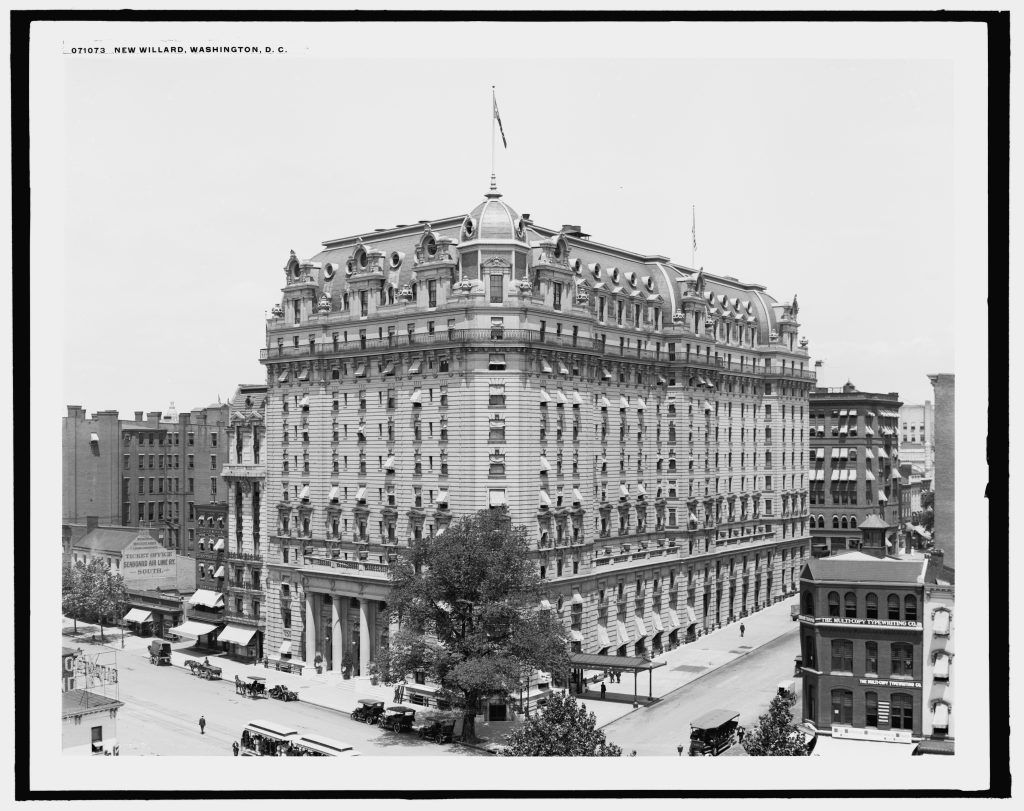
Established in 1818 and rebuilt in its grand Beaux-Arts form in 1901, the Willard Hotel quickly became the epicenter of political and social life in the nation’s capital. Its proximity—just steps from the White House—made it a natural gathering place for presidents, diplomats, military leaders, and those hoping to influence them.
The Willard’s Influence
Abraham Lincoln stayed here before his inauguration in 1861, arriving in secrecy amid threats to his life. It was within these walls that he finalized his inaugural address, as the nation teetered on the brink of Civil War. Julia Ward Howe later recalled being inspired within the Willard’s walls to pen The Battle Hymn of the Republic, after hearing Union troops singing in the streets below. And in the decades that followed, the hotel became a neutral ground where political adversaries, foreign envoys, and power brokers could meet under the same roof—sometimes formally, often not.
During the fraught days leading up to and during the Civil War, the Willard was a crossroads for Union officials, journalists, and travelers—but also, it was rumored, Confederate sympathizers and informants. Washington was thick with espionage, and hotels like the Willard were natural listening posts. While specific incidents are often more anecdotal than documented, the atmosphere was one of watchfulness and quiet suspicion, where conversations could carry consequences.
But it was during the presidency of Ulysses S. Grant that the Willard earned one of its most enduring legends. Grant was known to sit in the lobby, often in the evenings, receiving a steady stream of visitors. These were not formal audiences, but spontaneous encounters—men (and occasionally women) seeking favor, influence, or simply a moment of access. From this practice, the term “lobbyist” is said to have entered the American lexicon.
Critics of the time saw this as emblematic of the blurred lines between governance and persuasion in the Gilded Age. The Willard became, in essence, a symbol of informal power brokering—respectable on the surface, but not without ethical gray areas.
Over the decades, the Willard continued to host pivotal figures—from Mark Twain and Charles Dickens to every U.S. president since Franklin Pierce. It was here that diplomats negotiated, journalists gathered intelligence, and the machinery of government found an unofficial, but highly effective, extension in marble and velvet.
Stately Elegance That Lasts
Approach the Willard along Pennsylvania Avenue and you are immediately struck by its dignified façade—arched windows, classical detailing, and a sense of proportion that feels both grand and reassuring. Step through the doors, and the city’s urgency falls away almost instantly.
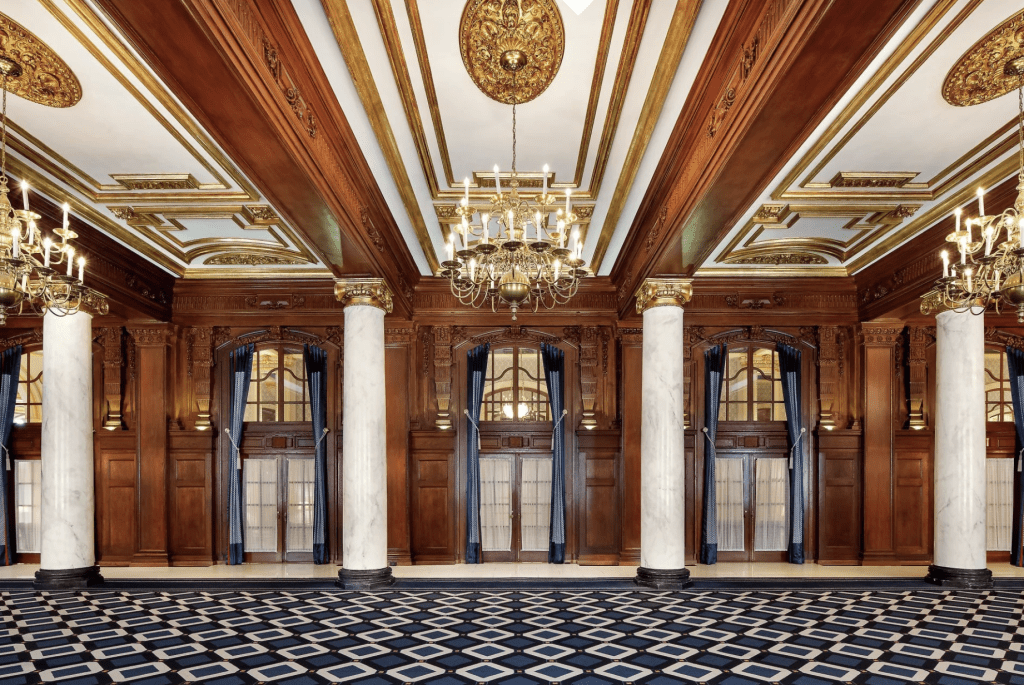
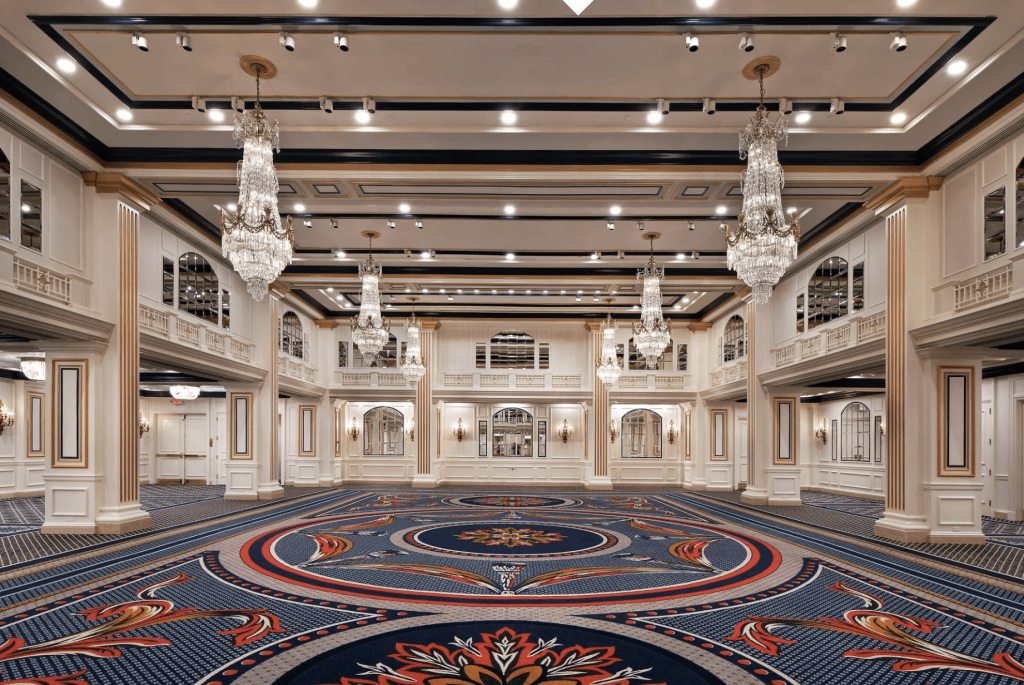
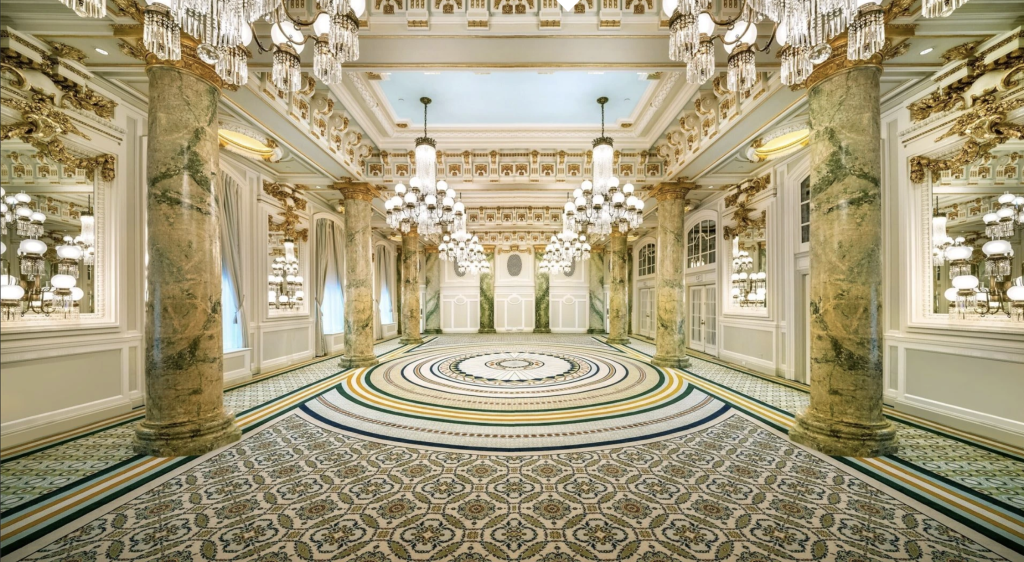
The lobby unfolds in a series of elegant gestures: polished marble floors that reflect the soft glow of chandeliers; fluted columns that rise with quiet authority; and a ceiling that seems to hover just high enough to inspire awe without intimidation. The color palette—creams, golds, and warm woods—creates an atmosphere that is neither ostentatious nor austere, but deeply composed.
Let your eye travel. Notice the intricate molding along the ceiling lines, the gleam of brass railings, the way light pools in corners and lingers across the stone. The furnishings invite pause—plush seating arranged not for spectacle, but for conversation. This is, after all, a place built for exchange.
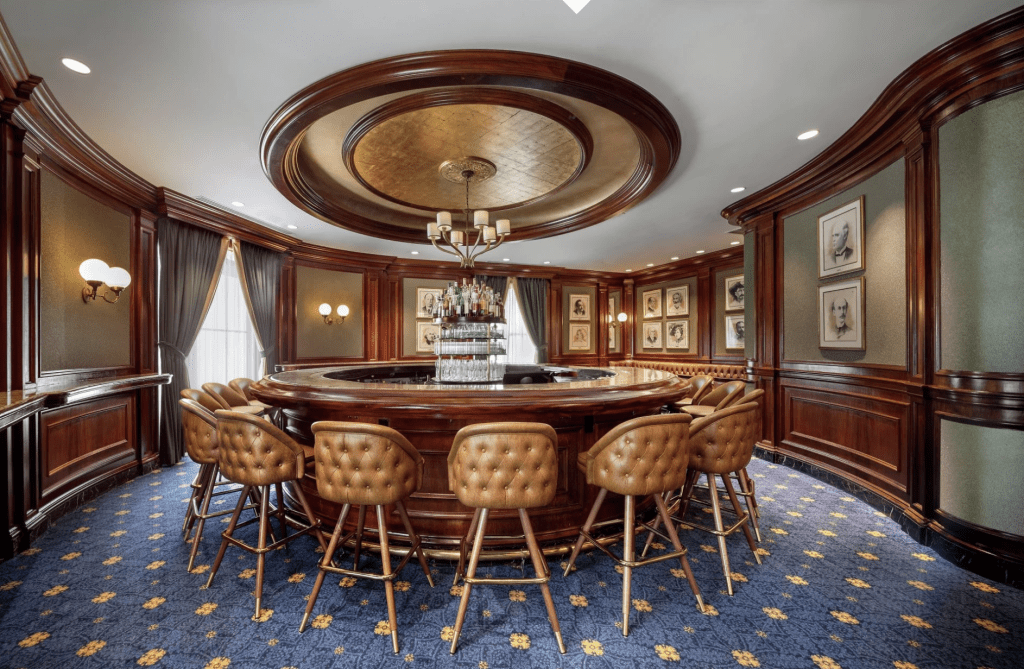
Make your way to the famed Round Robin Bar, a circular sanctuary of dark wood and convivial energy. Its paneled walls seem to absorb decades of whispered negotiations and political confidences. One can easily imagine a senator leaning in, a deal quietly struck over a well-mixed drink, the outcome destined to ripple far beyond the room. Over decades, the Round Robin Bar became synonymous with off-the-record negotiations—the kind that never made headlines but shaped outcomes. Senators, diplomats, and power brokers met there to test ideas, forge alliances, and occasionally undermine rivals, plenty of behind-the-scenes maneuvering that history often reveals only in hindsight.
Even the corridors tell stories. Framed photographs, historic prints, and subtle design flourishes create a sense that you are walking not just through space, but through time. And if you pause long enough—perhaps near a column, or by a window overlooking Pennsylvania Avenue—you may begin to feel the peculiar sensation that you are both observer and participant in an ongoing narrative.
Classic Hospitality
The Willard remains very much alive today—restored in the 1980s after a period of decline and now operating as the Willard InterContinental. It continues to host dignitaries, travelers, and history lovers alike, offering not just luxury accommodations but an experience steeped in continuity.
The accommodations at the Willard carry forward the same sense of restrained grandeur that defines its public spaces. Guest rooms are elegantly appointed with classic furnishings—rich woods, tailored upholstery, and a palette that echoes the soft golds and creams of the lobby below. Many rooms offer views toward Pennsylvania Avenue or the nearby monuments, a subtle reminder of the hotel’s proximity to the nation’s symbolic heart.
Modern comforts are, of course, seamlessly integrated—marble baths, plush bedding, and attentive service—but never at the expense of atmosphere. There is an unmistakable feeling that you are not simply checking into a hotel, but stepping into a continuum of distinguished guests who have, for more than a century, rested, reflected, and prepared for the moments that awaited them just beyond the doors. Outside, the White House stands just beyond Lafayette Square, a reminder that the distance between decision and discussion here has always been remarkably short. Willard InterContinental Washington, D.C.
Recommended Reading
Fiction
- Lincoln, Gore Vidal – A richly detailed novel that brings to life the presidency of Abraham Lincoln, including the tense days surrounding his arrival in Washington and stay at the Willard.
Nonfiction
- The Willard Hotel: An Illustrated History by Stanley Turkel – A comprehensive and engaging account of the hotel’s evolution and its role in American political life.
- Grant by Ron Chernow – A sweeping and deeply human portrait of Ulysses S. Grant, illuminating his presidency, personal struggles, and the very years when he famously held court in the Willard’s lobby.
- The Battle Hymn of the Republic:A Biography of the Song That Marches On by John Stauffer and Benjamin Soskis – Explores the origins of Julia Ward Howe’s iconic hymn, inspired during her stay at the Willard.
Image Courtesy: The Willard InterContinental Washington, D.C.
