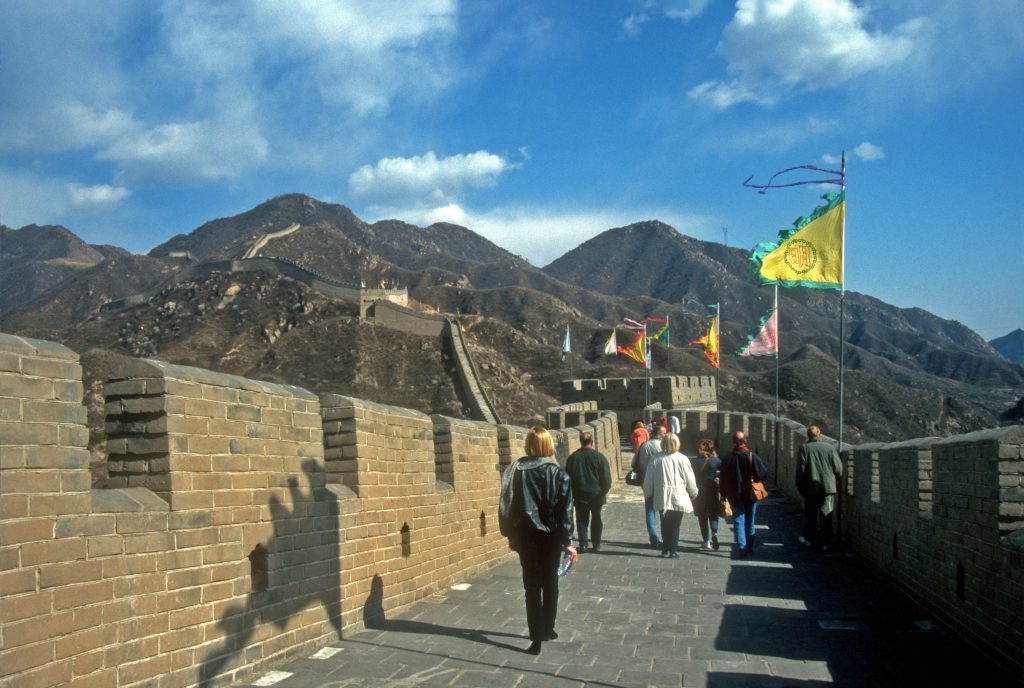
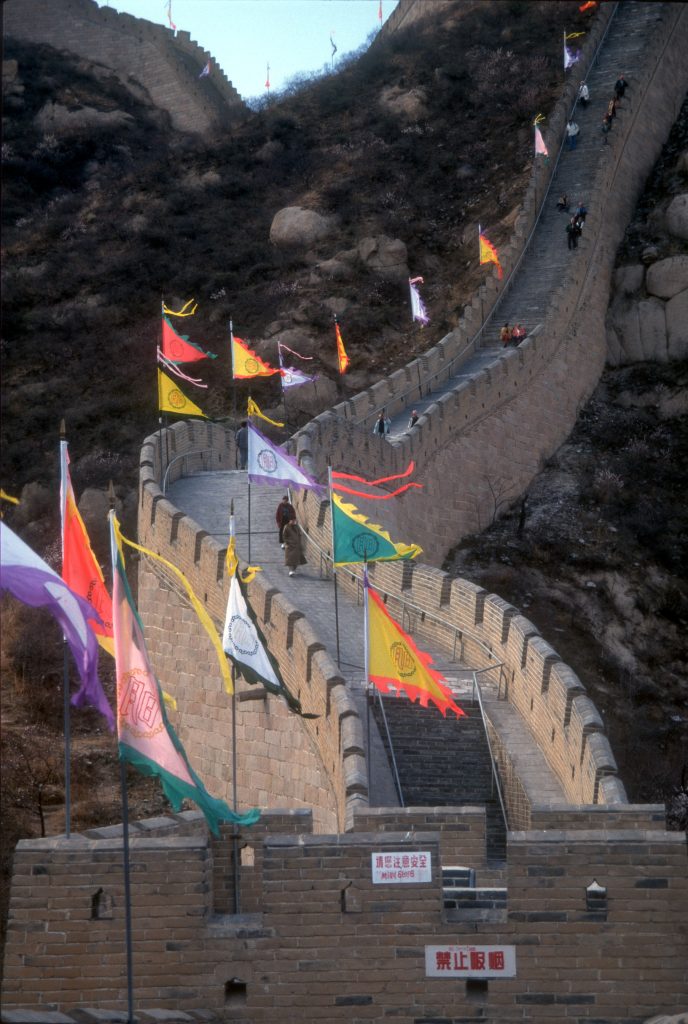
It snakes across deserts, mountains, and mist-drenched valleys, a stone dragon unfurling its ancient body across the spine of China. The Great Wall stands as a marvel of engineering and a testament to the dreams, fears, and ambitions of a civilization determined to endure. To walk its worn stones, especially near the ancient capital of Beijing, is to tread upon the very pulse of history itself.
Who Build the Wall
The story of the Great Wall stretches over two millennia. Its earliest sections date back to the 7th century BCE, when competing regions during China’s Warring-States-period built walls to defend their territories. These fragmented fortifications were unified in the 3rd century BCE by Emperor Qin Shi Huang, the first emperor of a unified China, who ordered the linking of these barriers into a single defense against northern nomadic tribes.
Subsequent dynasties, especially the Han (206 BCE: 220 CE), Northern Wei (386-534 CE), Sui (581-618 CE), and most notably the Ming (1368-1644 CE), expanded, strengthened, and rebuilt the Wall. It was under the Ming Dynasty that the most iconic stone and brick sections were constructed, creating the imposing battlements, watchtowers, and fortresses we recognize today.
The Wall was not a continuous line but a complex network of walls, trenches, fortifications, and natural barriers, adapting to the geography it crossed. Stretching over 13,000 miles at its greatest extent, it symbolized not only military might but also the unity and resilience of a people who saw themselves as the guardians of civilization.

Construction
The construction of the Great Wall was a massive undertaking. During the Qin Dynasty alone, it is estimated that over 300,000 soldiers, conscripted laborers, and convicts were drafted to work on the Wall. The arduous labor involved quarrying heavy stones, fashioning tamped earth walls, and hauling materials across forbidding terrain without the benefit of modern machinery. Countless laborers perished due to harsh conditions, accidents, and exhaustion, so many, in fact, that the Wall earned somber nicknames such as “the longest cemetery on Earth.”
Under the Ming Dynasty, construction techniques became even more sophisticated. Builders used bricks, stones, and tiles, binding them with mortar made from lime and glutinous rice, a mixture that has proven astonishingly resilient to the ravages of time. The Wall’s height varied from 15 to 30 feet (5 to 9 meters), with parapets and crenellations serving as defensive positions. Watchtowers and beacon towers were placed at strategic intervals to relay messages quickly across vast distances using smoke signals and fire.
The Great Wall consumed extraordinary resources, shaping not only China’s landscape but its economy, politics, and even its mythology for centuries.
Accessible from Beijing
Near Beijing, the Wall unfurls in dramatic grandeur. The sections most accessible to travelers, Badaling, Mutianyu, Jinshanling, and Simatai, each show a different side of the Wall.
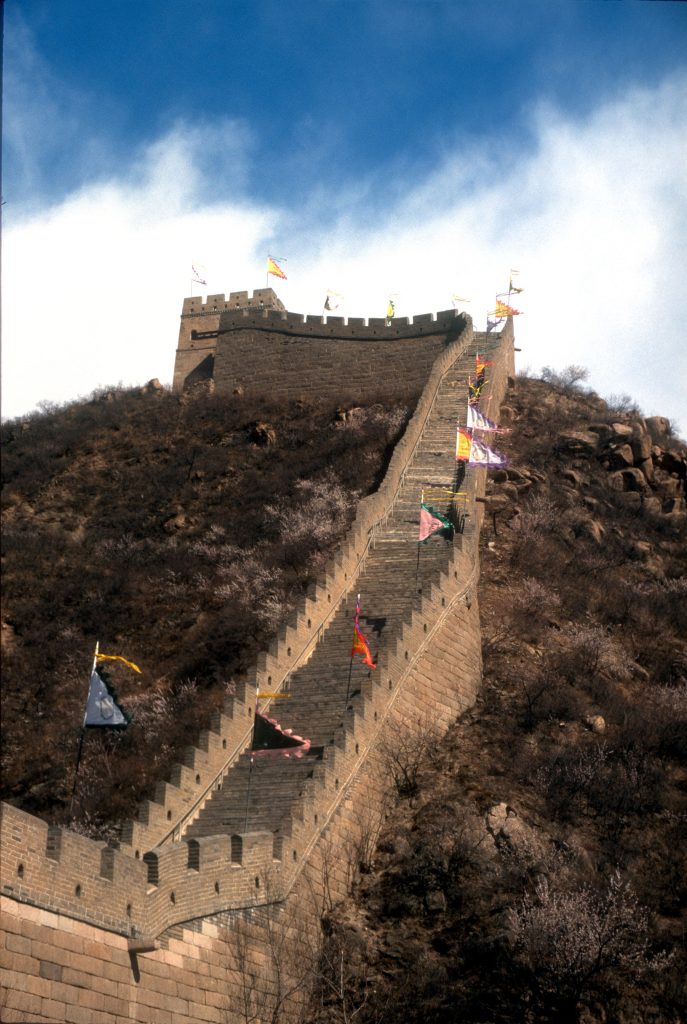
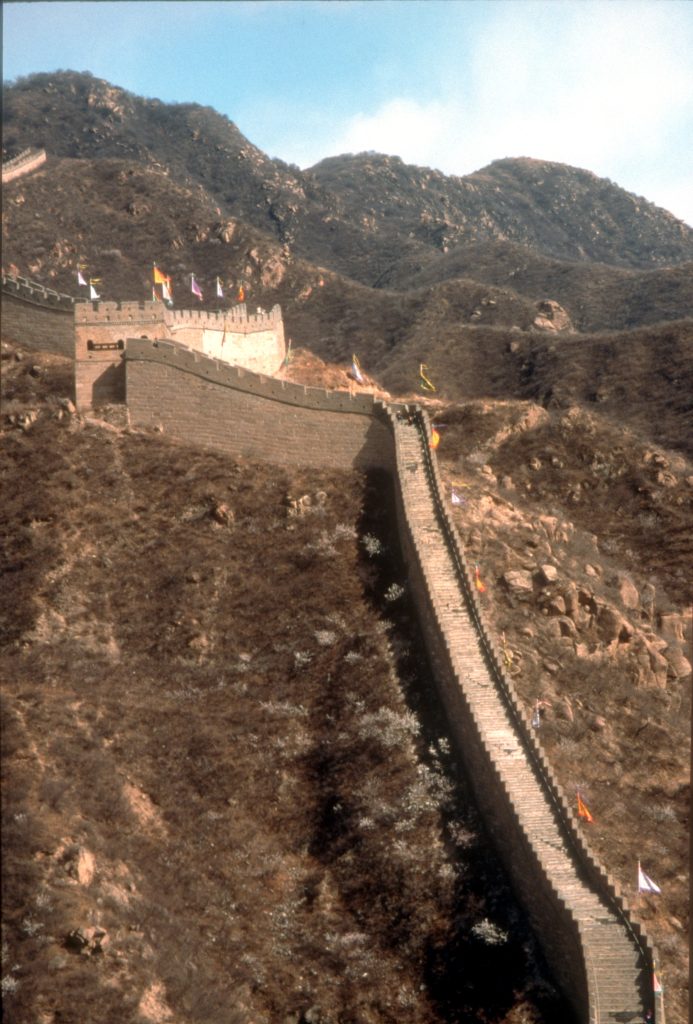
- Badaling: The most visited and restored section, Badaling showcases towering ramparts and broad pathways wide enough for five horsemen to ride abreast. Flags whip in the mountain wind, and the rhythmic crunch of countless footsteps echoes from stone walls once tread by imperial sentries.
- Mutianyu: A less crowded jewel, Mutianyu’s Wall climbs lush, forested slopes. Ancient watchtowers peek through dense pine canopies, and in the misty hush of morning, the Wall seems to dissolve into the clouds, an ethereal bridge between earth and sky.
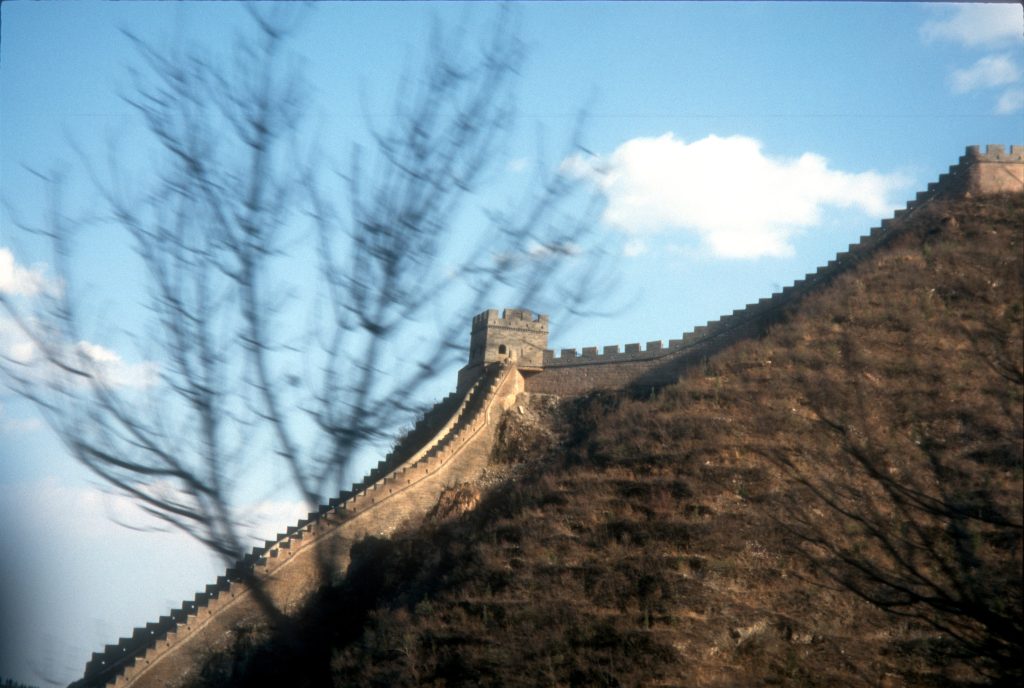
- Jinshanling and Simatai: These wilder, less-restored stretches reveal the Wall’s weathered soul. Crumbling battlements snake over razor-sharp ridges, and the landscape’s fierce beauty speaks of an era when every stone laid was a stand against oblivion.

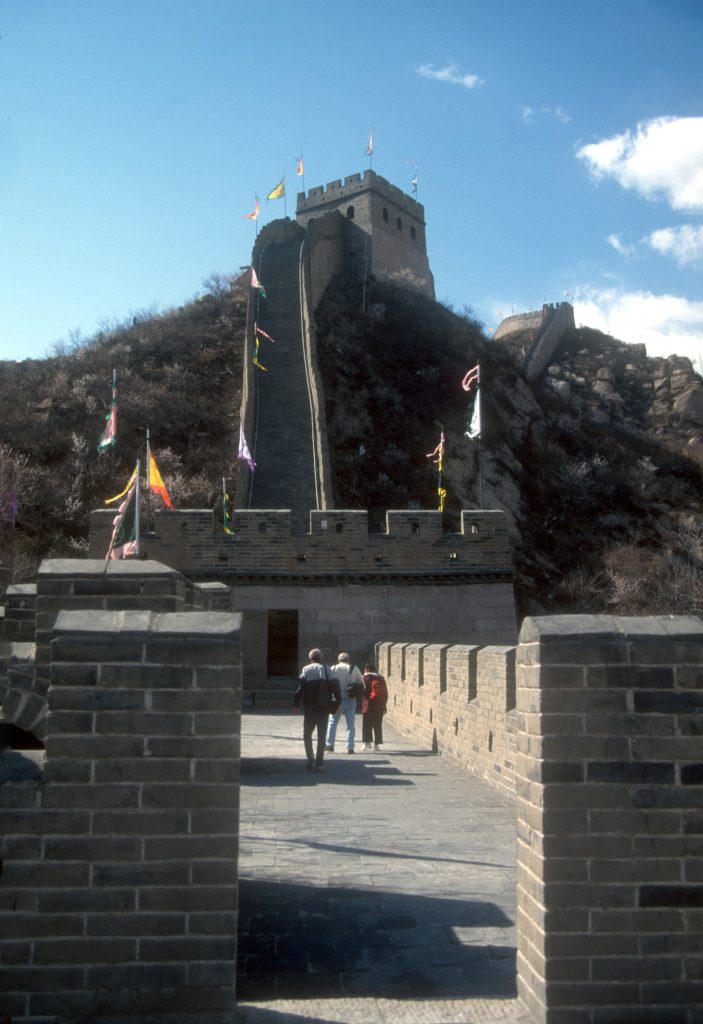

The stones are cool beneath your fingers; the air carries the scent of earth and pine. The wind whips the flags. In the lonely silences between groups of visitors, you can almost hear the distant drumbeats that once signaled danger or celebration.
The Full Scale Across China
The Great Wall is not confined to the green mountains of Beijing. It sweeps through the parched sands of the Gobi Desert, skirts the Inner Mongolian grasslands, and threads through the cliffs and plateaus of western China. In Gansu, battered fortresses cling to the edges of vast emptiness; in Ningxia, ancient earthen walls crumble into dust under the burning sun. In Liaoning, the Wall reaches the Bohai Sea at “Laolongtou” (“Old Dragon’s Head”), where legend says the Wall was meant to drink from the waters.
This network protected trade routes like the Silk Road, housed frontier soldiers, and served as an ever-watchful sentinel of Chinese identity and strength.
Notable Towers and Structures
- Zhengbei Tower (Jinshanling Section):
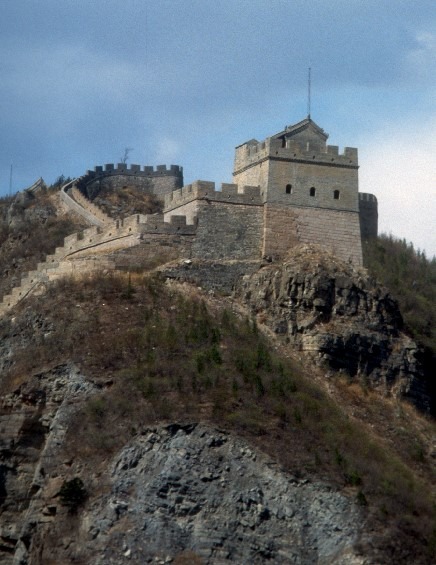
Sometimes called the “General’s Tower,” this impressive structure offers sweeping views across rugged ridgelines. It was crucial for communication and defense, acting as a command post overseeing a vast stretch of wall. - The Watchtower at Simatai: Simatai is famed for having 35 watchtowers, each with slightly different architectural styles. One highlight is the “Fairy Tower” (Xian Nu Lou), known for its delicate, ethereal design. Local legend says a fairy descended here to marry a mortal.
- Beacon Towers: Scattered across the Wall, these smaller, fortified towers were used for early warning systems, lighting fires by night and sending smoke signals by day to alert distant garrisons of incoming threats. In good weather, a signal could travel over 300 miles in a single day.
- Laolongtou (Old Dragon’s Head): At Shanhaiguan, where the Wall meets the Bohai Sea, the Laolongtou structure marks the Wall’s “beginning.” Shaped like a dragon drinking from the water, it symbolized imperial protection extending even to China’s natural boundaries.
- The “Heavenly Ladder” (Simatai Section): A dizzyingly steep portion of the Wall that appears to ascend directly into the sky, culminating at an ancient watchtower. It offers one of the most thrilling, challenging climbs on the Wall.
Reflection on the Wall
Today, the Great Wall remains a source of national pride and global wonder. Restoration efforts balance preservation with accessibility, and certain sections are UNESCO World Heritage Sites. Visitors can hike for hours across undulating stones, stand atop windswept watchtowers, and ponder the sheer audacity of those who dreamed and built across such immensity.
At the same time, historians and travelers alike are drawn to the Wall’s harder truths: it was built through unimaginable labor and sacrifice, costing countless lives and centuries of toil. It is both triumph and testament, awe and elegy.
So walk a little farther along its worn stones. Feel the breath of the centuries in the mountain wind. In every crumbling tower, every weathered parapet, the Great Wall of China whispers a timeless promise: that endurance, though battered by time, will always find a way to stand. Today this Dragon lies peacefully.
Where to Stay in Beijing, China
The Chaoyang District in northeast Beijing offers modern convenience and proximity to many attractions. International hotel chains like the Peninsula Beijing and Mandarin Oriental provide luxury options with English-speaking staff, which can be helpful for first-time visitors. Mid-range hotels and business chains line Chang’an Avenue and Jianguomenwai Street, offering reliable comfort at moderate prices.
For travelers seeking a more local experience, the Hutong neighborhoods around the Forbidden City provide traditional courtyard guesthouses and smaller family-run hotels. These properties offer rooms in restored historic compounds where you can see daily life unfold in the narrow lanes. Booking directly through Chinese platforms like Ctrip or through your hotel concierge can yield better rates than international booking sites.
The Xuanwu and Xuanwumen areas south of the city center offer good value and quieter surroundings than the tourist zones. This part of Beijing has fewer visitors but remains well-connected by subway to the Great Wall, the Summer Palace, and other historical sites. Local restaurants and everyday shops give you a more authentic view of how residents actually live.
Whichever area you choose, confirm that your hotel offers printed maps and staff who can write your destination in Chinese characters. This simple step makes navigating by taxi or asking for directions far easier, especially if you venture beyond the central tourist corridors.
Recommended Reading
- The Dragon’s Village by Yuan-Tsung Chen: Though set in the 20th century, it captures the endurance of China’s rural spirit against sweeping historical tides.
- The Early Chinese Empires: Qin and Han by Mark Edward Lewis: A scholarly yet accessible portrait of the dynasties that first envisioned a united China, and the earliest incarnations of the Wall.
- The Great Wall: China Against the World, 1000 BC: AD 2000 by Julia Lovell: A compelling, nuanced exploration of the Wall’s real role across China’s history.
- The Great Wall: A Cultural History by Carlos Rojas: An imaginative retelling and analysis blending myth, memory, and material history.
- Insight Guide: The Silk Road – This Silk Road guidebook, perfect for travellers planning longer trips, is written by Insight Guides’ destination experts. It blends detailed coverage of local history, culture and places to visit with the visual appeal of an illustrated magazine, packed with enticing photos that will inspire excitement for your travels. Printed on eco-friendly paper for sustainability.
Tours to Consider
- Full Day Guided Exploration of Beijing Badaling Great Wall
- Beijing Essential Full-Day Tour including Great Wall at Badaling, Forbidden City and Tiananmen Square
- Great Wall of China at Badaling and Ming Tombs Day Tour from Beijing