
While a long rail trip can be relaxing, exciting and adventurous—one of my all-time favorite forms of rail transportation is the very fun, short and yet utilitarian funicular! I have been privileged to have ridden a number of those noted here!
Perched between earth and sky, funicular railways have long been the charming workhorses of hilly cities, hoisting passengers up steep slopes with mechanical grace. These cable-pulled carriages are not merely modes of transport—they are windows into the engineering marvels and urban dreams of bygone eras. In the clatter of their tracks and the sway of their ascent, the spirit of a city often reveals itself.
Join us as we ride through eight of the world’s most fascinating city-located funiculars—each a moving testament to ingenuity, perseverance, and urban charm
A Brief History of Funiculars
The word “funicular” stems from the Latin “funiculus,” meaning “small rope.” Early funiculars appeared in the late 15th and early 16th centuries in mining operations, but it wasn’t until the 19th century that cities embraced them as practical, elegant solutions for transporting people up formidable hillsides.
Funiculars operate on a simple principle: two counterbalanced cars connected by a cable move in opposite directions along a steep slope. Gravity, counterweight, and clever engineering do the work—allowing passengers to ascend and descend with surprising smoothness. Over the decades, these charming conveyances have become not just transportation but beloved cultural landmarks.
1. Angel’s Flight Railway — Los Angeles, California, USA
Dubbed “the world’s shortest railway,” Angel’s Flight first opened in 1901 to connect the steep incline between Hill Street and Olive Street in downtown Los Angeles. Though its total length is just 298 feet, its historical and cinematic significance looms large. After periods of closure and restoration, the vivid orange and black cars, “Olivet” and “Sinai,” continue to ferry passengers and tourists alike through the Bunker Hill District’s storied past. It is often featured in television and film—both period and present day.
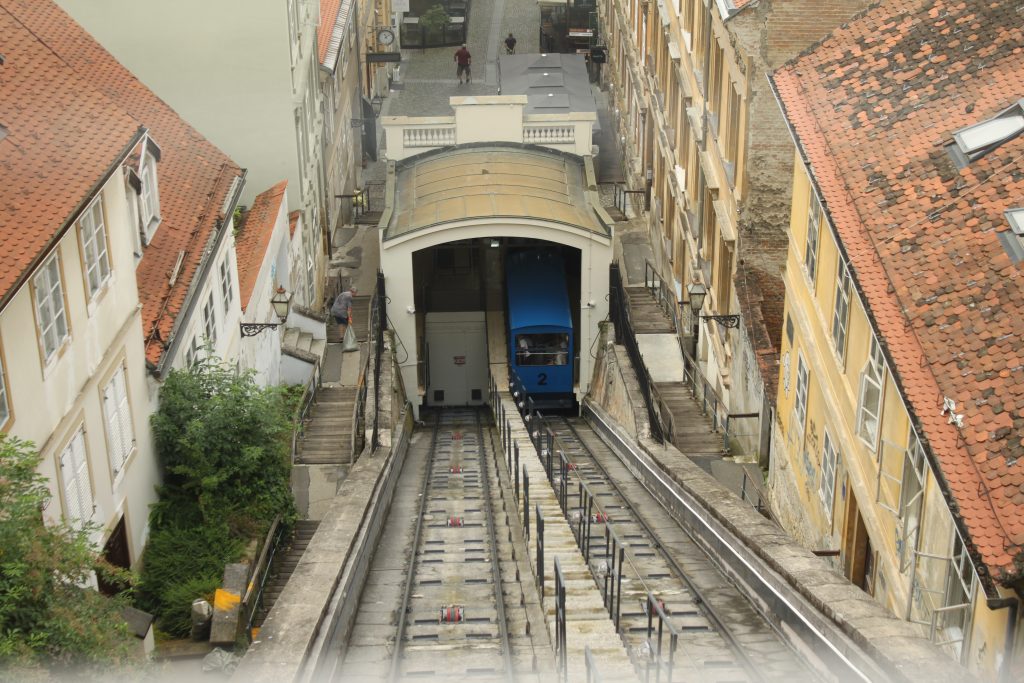
2. Zagreb Funicular — Zagreb, Croatia
One of the shortest funiculars in the world, Zagreb’s elegant blue carriages travel just 217 feet, yet climb an elevation of 100 feet to connect the Lower and Upper Towns. It does it in a mere 64 seconds! In continuous operation since 1890, this charming ride is more than a practical solution—it’s a living link between medieval history and modern city life.
3. Wellington Cable Car — Wellington, New Zealand
Originally launched in 1902, the Wellington Cable Car offers stunning views as it climbs from the bustling Lambton Quay to the serene Botanic Garden. Its bright red cars, the panoramic sweep of the harbor, and the gentle rumble up Kelburn Hill make it both a vital commuter link and an essential Wellington experience.
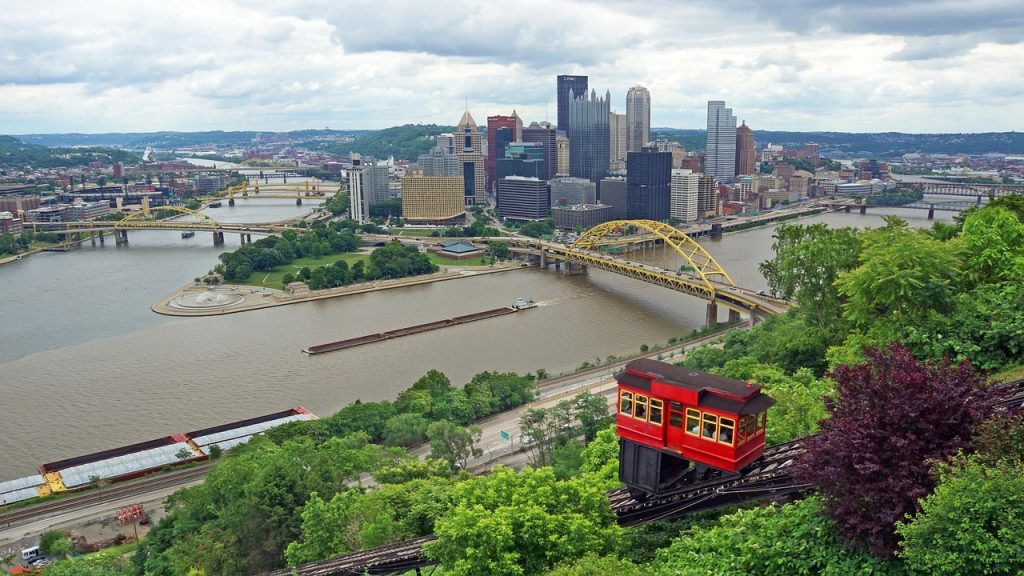
4. Duquesne Incline — Pittsburgh, Pennsylvania, USA
Opened in 1877, the Duquesne Incline is one of the oldest funiculars still in operation in the United States. Climbing the steep slope of Mount Washington, its wooden cable cars and Victorian-era stations provide a nostalgic glimpse into Pittsburgh’s industrial heyday—along with sweeping views of the city’s skyline and three rivers.
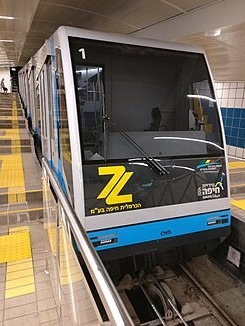
5. Carmelit — Haifa, Israel
Part underground funicular, part subway, the Carmelit has been winding its way up Mount Carmel since 1959. It remains one of the world’s shortest metro systems but compensates with steep grades and futuristic design, linking Haifa’s downtown with the mountaintop residential neighborhoods.


6. Funicular dos Guindais — Porto, Portugal
First built in 1891 (and fully restored in 2004), the Funicular dos Guindais connects the Ribeira riverside with the upper city near Batalha Square. The short but dramatic ride offers breathtaking views of the Dom Luís I Bridge and the Douro River, making it a popular journey for both locals and visitors.
7. Monongahela Incline — Pittsburgh, Pennsylvania, USA
A companion to the Duquesne Incline, the Monongahela Incline has been faithfully carrying Pittsburghers up and down Mount Washington since 1870. It holds the title of the oldest continuously operating funicular in the United States, a cherished link to the city’s industrious past.
8. Peak Tram — Hong Kong
Though technically a cable-hauled tram, Hong Kong’s Peak Tram has operated as a funicular railway since 1888. Climbing Victoria Peak, it offers a heart-racing ascent and a jaw-dropping panorama of Hong Kong’s futuristic skyline and harbor. Its polished carriages and impeccable service make it a quintessential Hong Kong experience.
9. Montmartre Funicular — Paris, France
The Montmartre Funicular, inaugurated in 1900, spirits passengers up the butte Montmartre to the iconic Basilica of Sacré-Cœur. Though updated and automated, the ride still captures the romance of Parisian street scenes, offering a glimpse into the bohemian heartbeat of the city.
10. Funicolare di Castel San Pietro — Verona, Italy
First opened in 1941 and beautifully restored in 2017, the Funicolare di Castel San Pietro glides visitors up the hillside to the medieval fortress of Castel San Pietro. In just a few minutes, passengers are transported from the vibrant streets of Verona to panoramic views over the city’s terracotta rooftops and the winding Adige River. Though short in distance, the ride captures the timeless romance of Verona’s historic soul.


Funicular Finale
Funiculars are far more than mechanical marvels—they are cultural touchstones that ascend through history as well as geography. Whether you’re gazing over Los Angeles from Angel’s Flight or sweeping above Zagreb’s rooftops, each ride offers a timeless journey: a gentle, swaying tribute to human ingenuity, urban dreams, and the irresistible pull of higher ground. Wherever your travels take you, if you see a hill—look for the rails. Adventure, it seems, often waits just uphill.
Funicular Railways by John Woodhams – Concise illustrated overview of cable-operated inclines worldwide—including seaside cliff lifts and iconic systems like San Francisco cable cars; examines technology from animal and water-powered to hydraulic and electric systems.
Cliff Railways, Lifts & Funiculars by Martin Easdown – Richly illustrated survey of the UK’s Victorian-era and modern cliff lifts, funiculars, and tramways; includes engineering details, historical context, and cultural commentary.An Illustrated Guide to the Funicular Railways of Great Britain by Amy Bartle, Steve Roberts, Martin Slader & Michel Azema – Scenic, illustrated guide to Britain’s funicular and cliff railways—including history, technical data, practical travel tips, and narratives from operators and engineers.
This Article was featured in the Summer, 2025 issue of The Historic Traveler Magazine.
