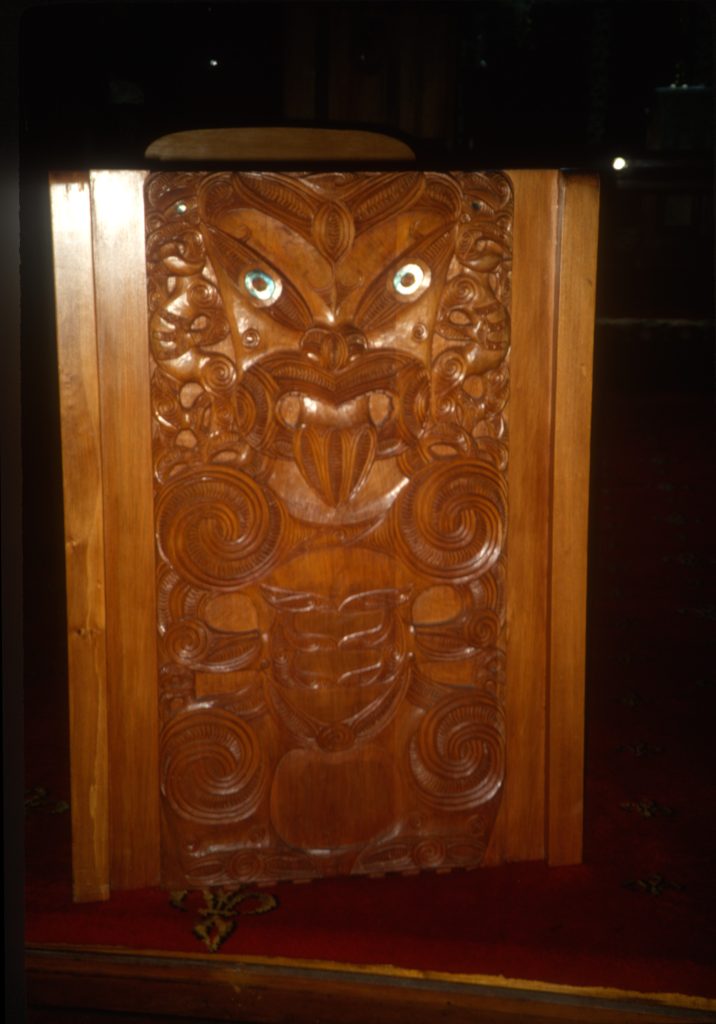
Nestled in the heart of Ōpōtiki among the lush eastern landscapes of Aotearoa New Zealand stands a church unlike any other in the country. Hiona St Stephen’s Church, originally known simply as Hiona—Zion in Māori—represents a sacred space where two cultures have met, clashed, and ultimately moved toward reconciliation. This striking wooden church is far more than a house of worship. It is a living repository of New Zealand’s turbulent colonial history, a monument to martyrdom, and above all a canvas for the exquisite artistry of the Māori people.
A Mission of Faith and Hope

The story of Hiona begins with a wave of missionary fervor that swept across New Zealand in the early 19th century. Christianity flourished among Māori communities, with mission stations taking root in Tauranga and Rotorua. By 1840, over 1,500 Māori on the East Coast professed Christianity. In 1839, John Alexander Wilson, a lay catechist of the Church Missionary Society, arrived in Ōpōtiki and sowed the seeds of what would become Hiona. He was accompanied by local Māori leaders, including Chief Ngahuku, in a gesture that underscored early Māori enthusiasm for receiving the Gospel message.
It was not until the 1860s that the dream of a dedicated church in Ōpōtiki took form. The Reverend Carl Sylvius Völkner, a German-born Lutheran who had joined the Anglican C.M.S., arrived with his wife in 1861. They established a mission at “Peria,” named after Berea in the Book of Acts, where Paul was warmly received. Völkner’s devotion to the Whakatōhea iwi was earnest. He baptized and preached, even designing a church inspired by European Gothic traditions.
The design was distinctive: a wooden building sixty feet long with a towering steeple that resembled continental rather than English churches. Construction was slow and painstaking—pit-sawn timber hauled from surrounding valleys, each beam hand-wrought. Māori communities pledged timber, and Governor George Grey provided funds, signaling shared investment in this sacred venture. By January 30, 1864, the church was dedicated and named Hiona. It was built by Māori hands, for Māori worshippers, standing as a symbol of bicultural hope.
The Shadow of War and the Tragedy of Völkner
But beneath the harmony, tension simmered. The mid-19th century saw brutal land wars, ideological upheaval, and deepening mistrust between Māori and colonial authorities. A spiritual movement called Pai Mārire, commonly known as Hauhau, emerged in Taranaki. Blending Christian theology with traditional Māori spirituality and Old Testament imagery, it promised empowerment and resistance. In 1864, two leaders—Kereopa Te Rau and Patara Raukatauri—traveled to Ōpōtiki to rally support.
Though Völkner had worked tirelessly for the Māori community, his decision to share intelligence with Governor Grey about Māori military positions marked him, in local eyes, as a betrayer. His correspondence criticizing Father Garavel further stoked tensions. When rumors spread that Völkner’s information had led to Garavel’s removal and possible death, resentment hardened into fury.
On 2 March 1865, Völkner returned to Ōpōtiki with fellow missionary T.S. Grace. They were immediately seized by the Hauhau. Völkner was condemned by Kereopa Te Rau and hanged the next day from a willow tree near the church he had built. What followed was a scene of horror that reverberated across the colony: Völkner’s body was decapitated, his blood caught in a chalice and consumed, and in a deeply symbolic act of retribution, Kereopa swallowed his eyes. Grace, spared death, later buried his colleague’s mutilated remains against the church’s eastern wall.
From Redoubt to Redemption
The colonial response was swift and severe. Governor Grey declared martial law. The church, once sacred, was converted into a fortress and prison. The East Coast Expeditionary Force drove the Hauhau and Whakatōhea inland, extending retribution far beyond those directly involved in Völkner’s death.
Five Māori were arrested, including the prominent chief Mokomoko. The evidence against him was tenuous—chiefly a claim that his horse rope had been used in the hanging—but it mattered little amid the climate of colonial vengeance. He and three others were convicted and hanged at Auckland’s Mount Eden jail on 17 May 1866. It took more than a century for their names to be cleared.
Though built as a Māori mission church, by 1875 Hiona was rededicated as the Church of St Stephen the Martyr—ironically, in honour of a man whose death, though tragic, stemmed from political rather than religious conflict. The church passed into European hands, severing Māori connection. The Whakatōhea, their land confiscated, were now physically and spiritually displaced.
The Art of Healing: Māori Design Reclaims Sacred Space
For decades, Māori presence at Hiona remained muted, a reminder of an unhealed wound. But in the years following World War II, Māori began returning to the parish. With their return came cultural art forms that would transform Hiona into a powerful symbol of reconciliation.
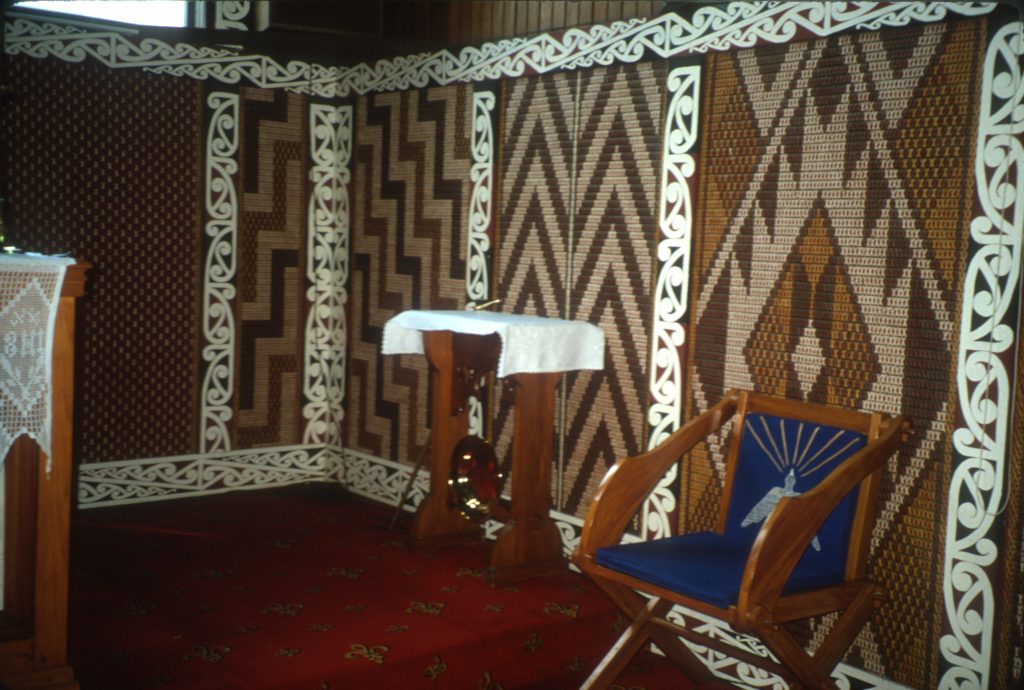
One of the most breathtaking features of the church is the set of tukutuku panels lining the sanctuary walls. Under the guidance of Mrs. Grace Maxwell, these woven lattice panels—rich in geometric symbolism and spiritual meaning—were completed by Māori parishioners over eighteen months and dedicated in April 1979. The panels are not merely decorative; they are expressions of whakapapa (ancestry), unity, and devotion. In 1979, intricately woven taniko kneelers in traditional Māori styles were added to the sanctuary rails.
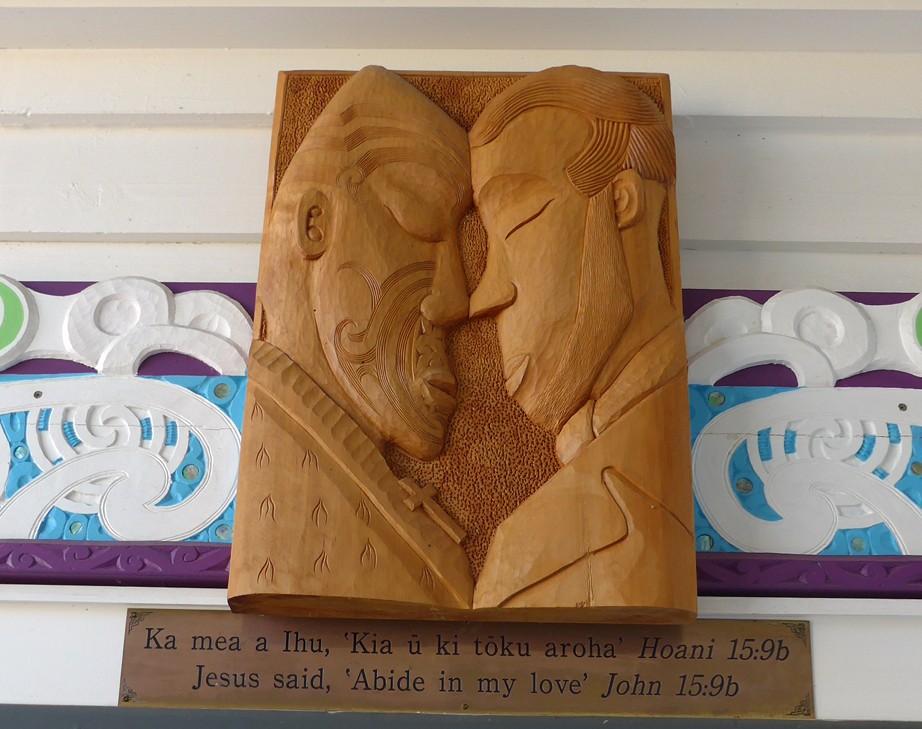
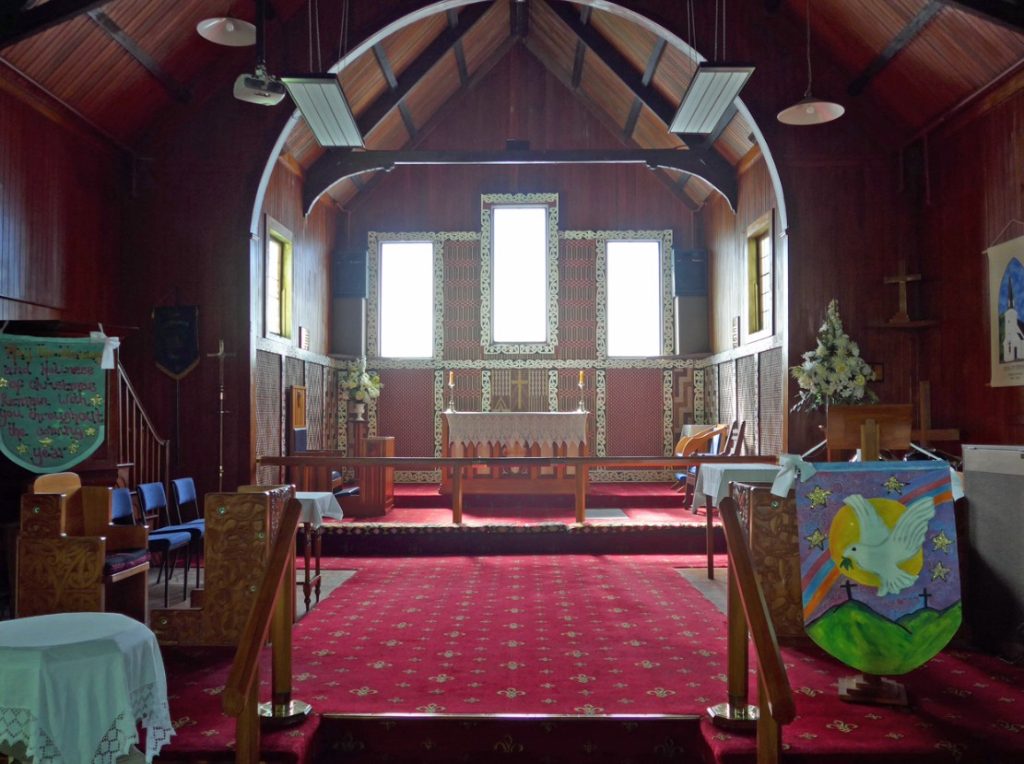
In 1964, marking the church’s centennial, another deeply meaningful gift arrived: three sandblasted windows from the Māori pastorate of Te Kaha. These windows, installed in the chancel, offer light both literally and as metaphorical beacons of shared faith and mutual respect. In 2014, to celebrate the church’s 150th anniversary, a wooden pare—a carved lintel—was installed above the front door. This carving, which symbolizes reconciliation between Māori and Pākehā (white-skinned New Zealanders), captures the church’s modern identity: a space where past trauma is acknowledged and healing is actively pursued through shared artistry and sacred dialogue.


Memorials of Pain and Pardon
Today, Hiona St Stephen’s Church remains one of New Zealand’s few churches housing a martyr’s memorial. Inside the sanctuary, a marble slab marks Völkner’s final resting place, flush with the floor. His Bible, chalice, and paten remain on display. In 1910, when the church was extended eastward, his grave was moved into the heart of the church—a gesture of sanctification that also enshrined the colonial narrative.
But Māori memory endured. In 1992, more than a century after Mokomoko’s execution, Governor-General Dame Catherine Tizard formally granted him a pardon. The pardon now hangs framed inside the church after being presented to his descendants at Waiaua Marae. Two plaques—one in English, one in Māori—proclaim that the murder accusation has been lifted, and with it, some measure of historic injustice. In 1994, the church was renamed Hiona St Stephen’s, reclaiming its original Māori identity while honoring a Christian martyr, forming a dual legacy.
A Living Symbol
Hiona St Stephen’s transcends its stained-glass windows, tukutuku panels, and historic graves. It stands as a living testimony to New Zealand’s complex and often painful journey toward bicultural understanding. Here, Māori art and Christian faith intersect. Here, a vicar’s tragic death and a chief’s wrongful execution live on in memory. Here, reconciliation is not just a concept but a daily practice—woven through threads and wood, sacred rituals shared between peoples once torn apart.
Walking through its threshold today, visitors are struck by the serenity of the space, the weight of its history, and the beauty of its design. It is impossible not to feel the presence of those who came before—the missionaries, the warriors, the weavers, the mourners, and the faithful.
In Hiona, the church once torn by ideological conflict now welcomes a tapestry of cultures. And within its walls echo not only hymns of praise, but also whispered hope of healing
Where to Stay in Hiona, New Zealand
Hiona itself is a very small settlement, so most travelers stay in nearby Rotorua, roughly 30 minutes away by car. Rotorua offers accommodations across all price ranges, from budget hostels to mid-range motels and upscale resorts. The town center offers good dining and shopping within walking distance, while lakeside areas provide quieter settings with geothermal views. Many visitors base themselves in Rotorua and take day trips to Hiona to explore St Stephen’s Church alongside other local attractions.
If you prefer to stay near Hiona itself, the small rural guesthouses and farmstays throughout the Waikato region offer a more intimate experience. These family-run establishments typically offer home-cooked meals and personal knowledge of local history and attractions. Book ahead during busy seasons, as local availability is limited.
For a different pace, consider staying in one of the smaller towns within 20 kilometers of Hiona, like Cambridge or Te Awamutu. Both offer comfortable motels, bed-and-breakfasts, and local cafes. Te Awamutu has its own historical sites and museums that complement a Hobbiton visit, making it a solid secondary base for exploring the wider region without staying in larger Rotorua.
Whichever you choose, book your accommodations well in advance, especially during New Zealand’s peak travel seasons (December through February and July through August). Local visitor information centers in Rotorua or Te Awamutu can arrange bookings and provide current recommendations for guesthouses and farmstays in the Hiona area.
Recommended Reading
- Hiona: A Centennial History of the Church of St Stephen the Martyr, Ōpōtiki by Alan Watson — A detailed centennial account of the church’s founding, Völkner’s legacy, and its changing role in the community.
- A Short History of the Church of St Stephen the Martyr, Ōpōtiki — A concise overview of the church’s evolution, from its mission roots to its post-conflict transformation.
- The Hauhau: The Pai Marire Search for Māori Identity by Paul Clark — A foundational study of the Hauhau movement and its theological-political roots, critical for understanding the conflict that led to Völkner’s death.
- Redemption Songs: A Life of Te Kooti Arikirangi Te Turuki by Judith Binney — Explores Māori prophetic movements and colonial resistance; offers broader insight into the spiritual and cultural climate of 19th-century Aotearoa.
- Encircled Lands: Te Urewera, 1820–1921 by Judith Binney — Traces land confiscations and indigenous resistance, with references to Mokomoko and Whakatōhea’s experiences post-Völkner.
- Bible & Treaty: Missionaries Among the Māori – A New Perspective by Keith Newman — Reframes the role of missionaries in Māori society, highlighting both spiritual impact and colonial entanglements.