
By Subhasish Chakraborty
Today Subhasish Chakraborty continues our tour of the Rajasthan region of India.
Bikaner – Jewel in the Thar Desert
This surreal desert town is ideally located to the north of Rajasthan and was founded by His Excellency Rao Bikaji. The quintessential feature of Bikaner is its high, battlemented fortification which is 7 kilometers long (4.35 miles) with five entrance gates, built way back in the 18th century. In the days of yore, it used to be an important staging post on the great caravan trade route.
Apart from the impregnable fort, Bikaner has carved a niche for itself as a camel breeding centre and there is a camel breeding farm in close proximity to the city, which is unique in Asian context. There are hundreds of camels here and rides are available.
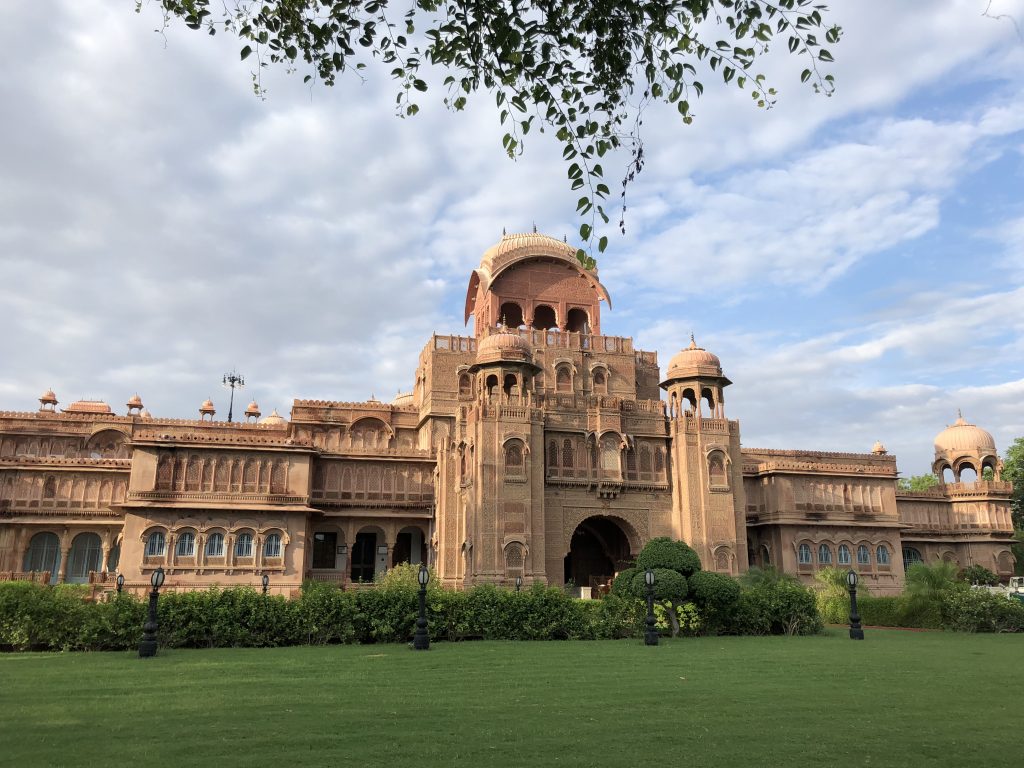
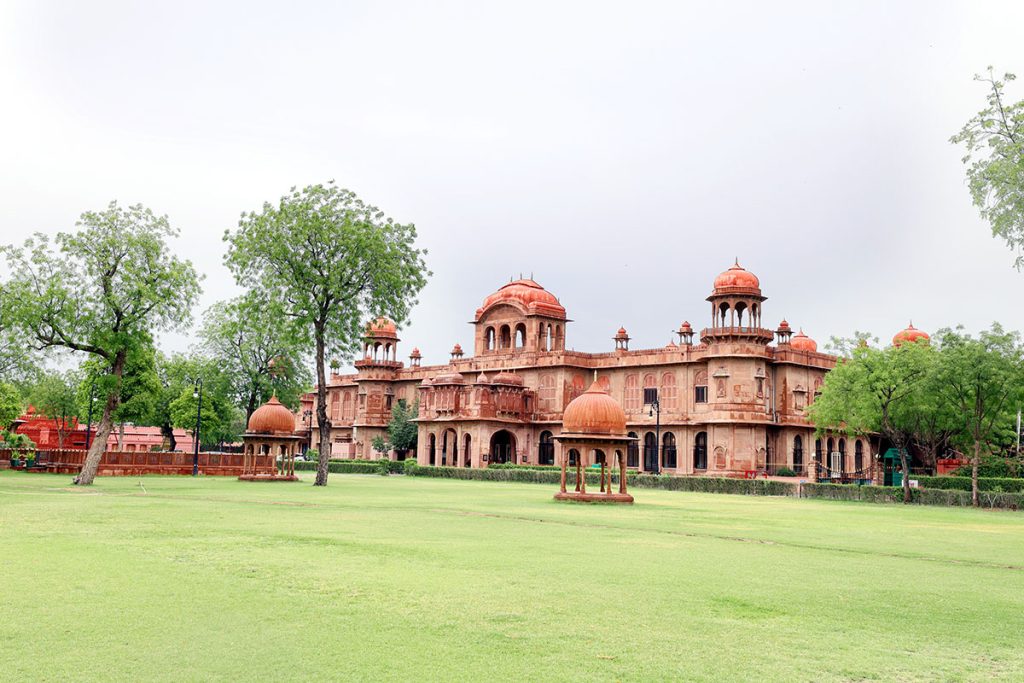
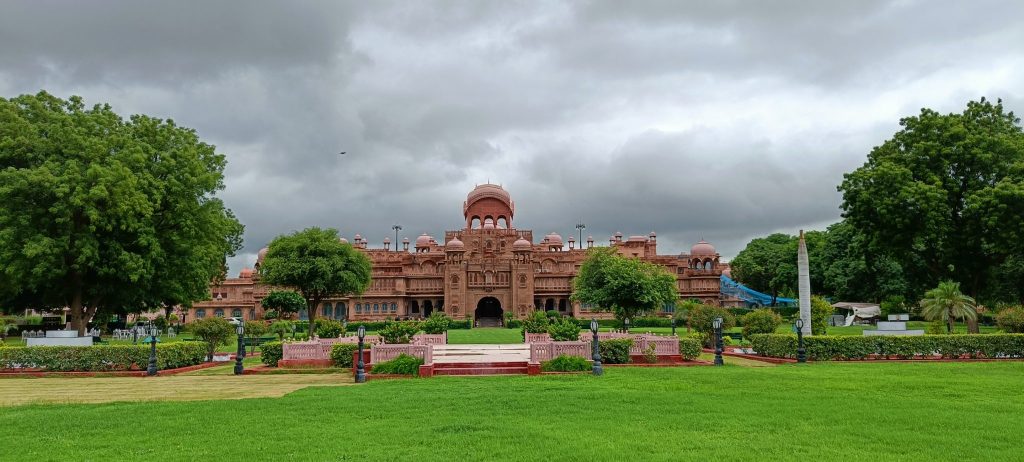
One of Bikaner’s prized possessions is the imposing red sandstone Palace – Lallgarh Palace, built by the erstwhile Maharaja Ganga Singhji in the year 1902. This oriental fantasy designed by Sir Swinton Jacob, is one of the most magnificent specimen of the Indo-Saracenic style of architecture. Today, this exemplary Rajput Palace has been converted into a luxurious heritage hotel, standing tall with its rich heritage and having played host to a number of dignitaries from all over the world.
Another feather in the cap of this desert city of Rajasthan is the Ganga Golden Jubilee Museum, said to be one of the best museums of Rajasthan and is replete with artifacts dating back to the pre-Harrapan, Gupta and Kushan period.
Here’s what else you should see when visiting Bikaner:
- Junagarh Fort — A majestic 16th-century fort known for its stunning architecture, ornate palaces, courtyards, and temples, all built within its massive stone walls.
- Sri Sadul Museum — Located within the Lalgarh Palace, this museum showcases the royal family’s history through photographs, artifacts, and personal memorabilia.
- Royal Cenotaph at Devi Kund Sagar — A sacred site housing beautifully carved chhatris (cenotaphs) of Bikaner’s royal family, reflecting the grandeur and symmetry of Rajput architecture.
- Prachina Culture Centre & Museum — A heritage museum within Junagarh Fort displaying traditional textiles, royal costumes, jewelry, and cultural artifacts from Bikaner’s regal past.
- Deshnoke Temple — Also known as Karni Mata Temple, this famous shrine is home to thousands of revered rats, believed to be incarnated devotees of the goddess.
- Camel Breeding Farm — One of the largest camel research and breeding centers in Asia, offering insights into camel husbandry along with rides, dairy products, and demonstrations.
- Laxmi Nathji Temple — One of the oldest temples in Bikaner, dedicated to Lord Vishnu and Goddess Laxmi, featuring intricate stone carvings and spiritual significance for the locals.
Where to Stay:
The regally done up Laxmi Niwas Palace hotel and the WelcomeHeritage’s Lallgarh Palace are two exquisite royal properties. They offer a unique blend of medieval charm with contemporary amenities.
What to Buy:
The best place for shopping is in the neighborhood of K.E.M. Road located near the fort. Camel hide articles like shoes, purses, cushions etc… are top draws. The pride of Bikaner is of course its unique range of sweets. The Haldiram outlets are simply fabulous and do brisk business.
Jaisalmer – India’s Most Exotic City
Jaisalmer is one of Rajasthan’s, indeed India’s most exotic and unusual city. It is remote as it is splendidly isolated. This medieval looking place is something right out of the tales of the “Arabian Nights.”
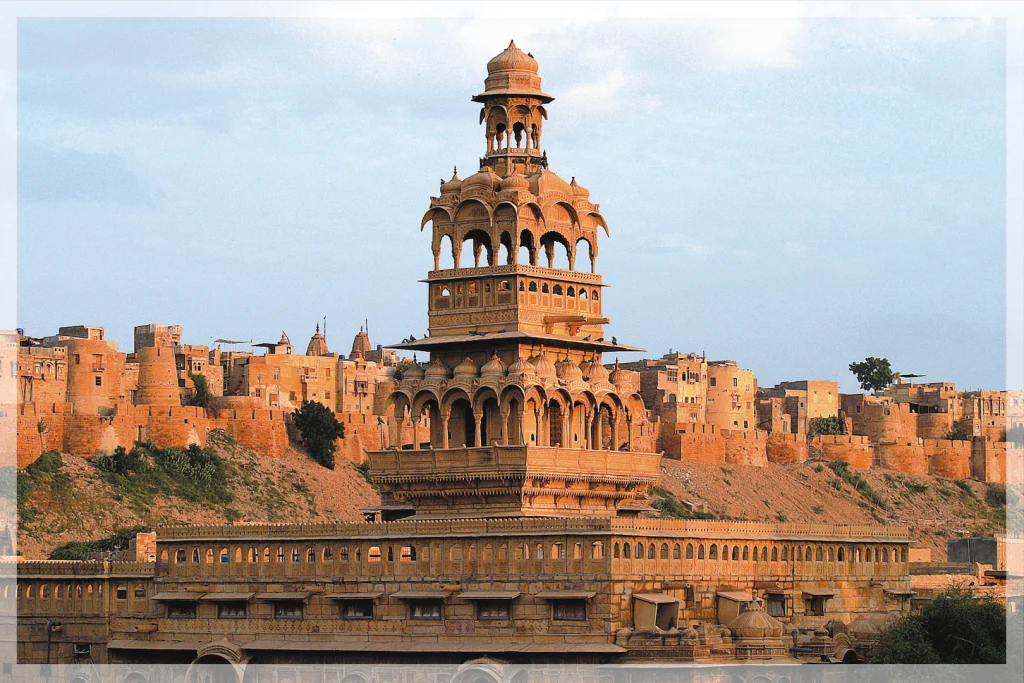
Centuries ago its strategic position on the camel train routes between India and Central Asia brought great wealth to Jaisalmer. The merchants and townspeople built magnificent mansions (Havelis), carved out of the rarest variety of golden-yellow sandstone. Even today, new edifices must be so designed so as to blend harmoniously with the old.
The Patwon Ki Haveli is the most elaborate and magnificent of all the havelis of Jaisalmer. It stands on a narrow lane and one of its apartments is painted with beautiful murals. There is also the Salim Singh Ki Haveli, which is more than 300 years old.
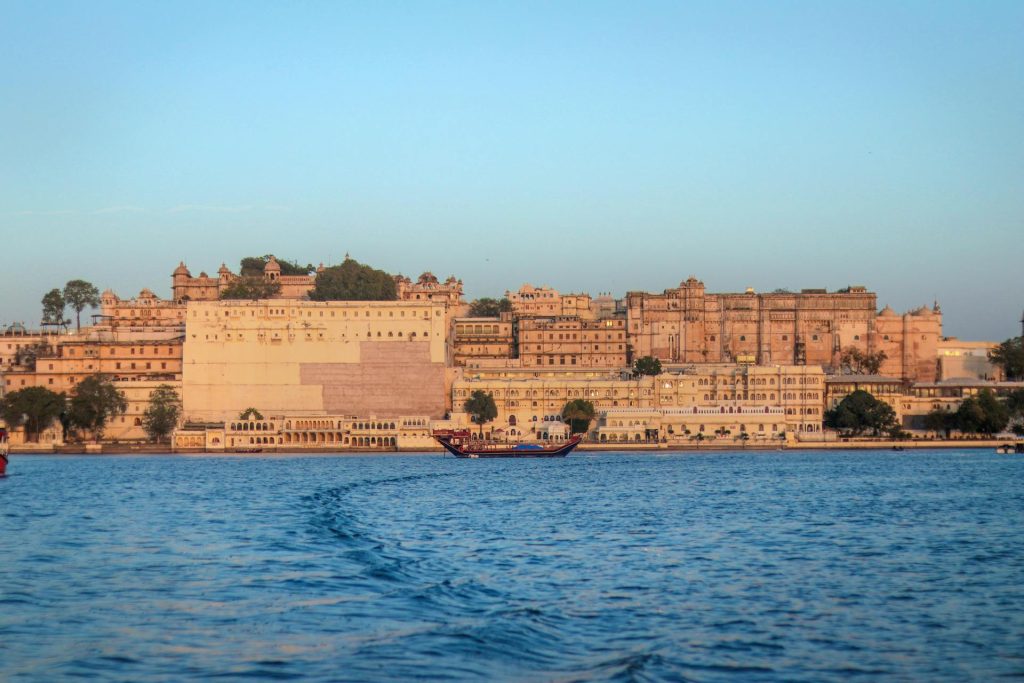
The Old City is surrounded by an impregnable fort and from within this a hill rises with more fortified walls. The ancient Jain temple and an old palace are ideally located on this hilltop.
Besides being a strategic military base of the armed forces, Jaisalmer’s economy is pumped up to a considerable extent by tourism – courtesy the increasing number of travelers who are waking up to the fascination of this exotic place.
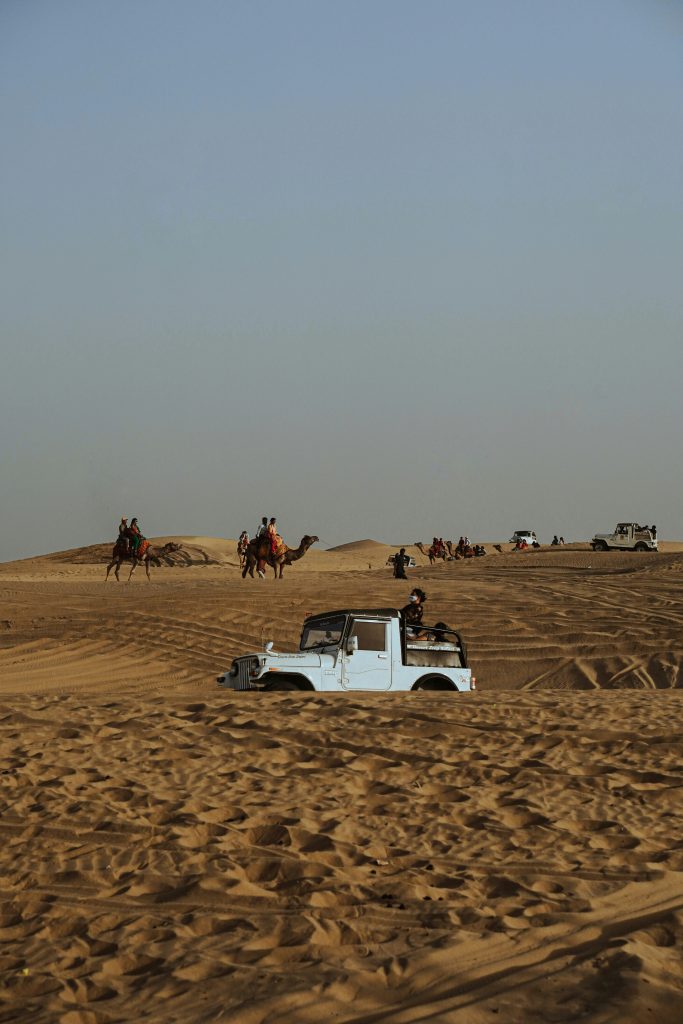
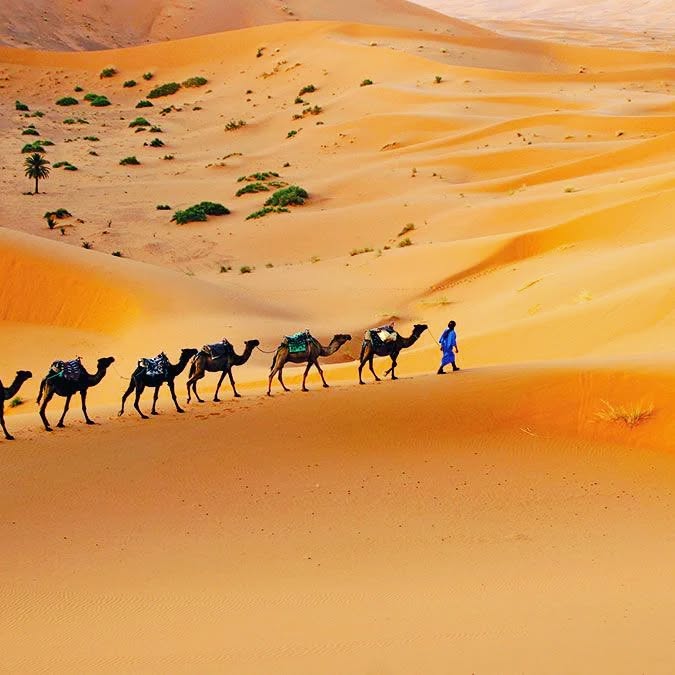
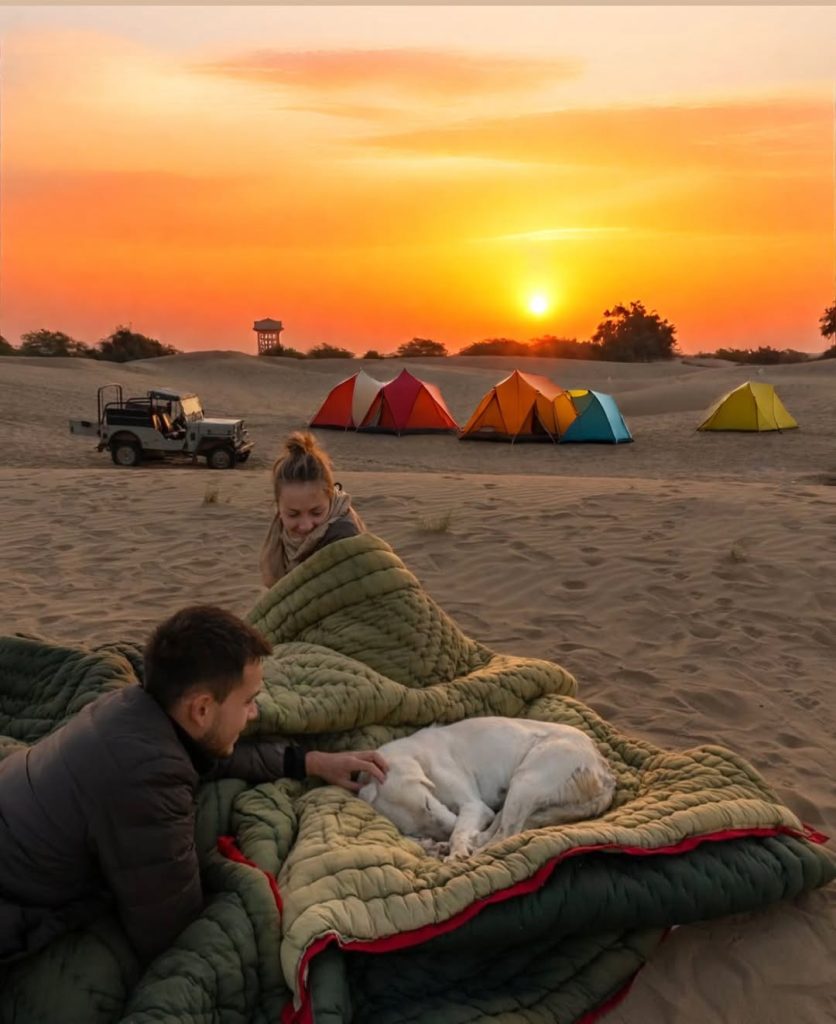
There are some fascinating locales around Jaisalmer which is best explored by embarking on a Camel Safari – a stupendous experience in itself. The usual tours take four days and three nights in a circuit around Jaisalmer via Mool Sagar, the Sam sand dunes and back via Lodruva passing through fascinating Rajput, tribal and abandoned villages. The more adventurous ones may opt for the longer duration Camel Safaris that stretches to 7 days and some even 11 days that takes the discerning travelers through some of the most amazing desert landscape anywhere in the world
Here’s what you should see when visiting Jaisalmer:
- Havelis — Exquisite mansions built by wealthy merchants, such as Patwon Ki Haveli and Nathmal Ki Haveli, featuring intricate facades, jharokhas (overhanging balconies), and delicate stone carvings.
- Gadi Sagar Tank — A scenic man-made reservoir once used as the city’s water source, surrounded by shrines, ghats, and gateways, offering a tranquil setting for boating and reflection.
- The Fort — Also known as Sonar Quila or Golden Fort, this UNESCO World Heritage Site rises from the Thar Desert in golden sandstone, housing palaces, shops, and residences within its massive walls.
- Jain Temples — A cluster of ornate temples within Jaisalmer Fort, built in the 12th and 15th centuries, renowned for their fine marble work and devotion to the Jain Tirthankaras
(The annual Jaisalmer Desert Festival is a riot of colors. Camel races, exotic dance recitals, folk music, desert ballads, puppet shows etc… are all part of the festivities).

Where to Stay:
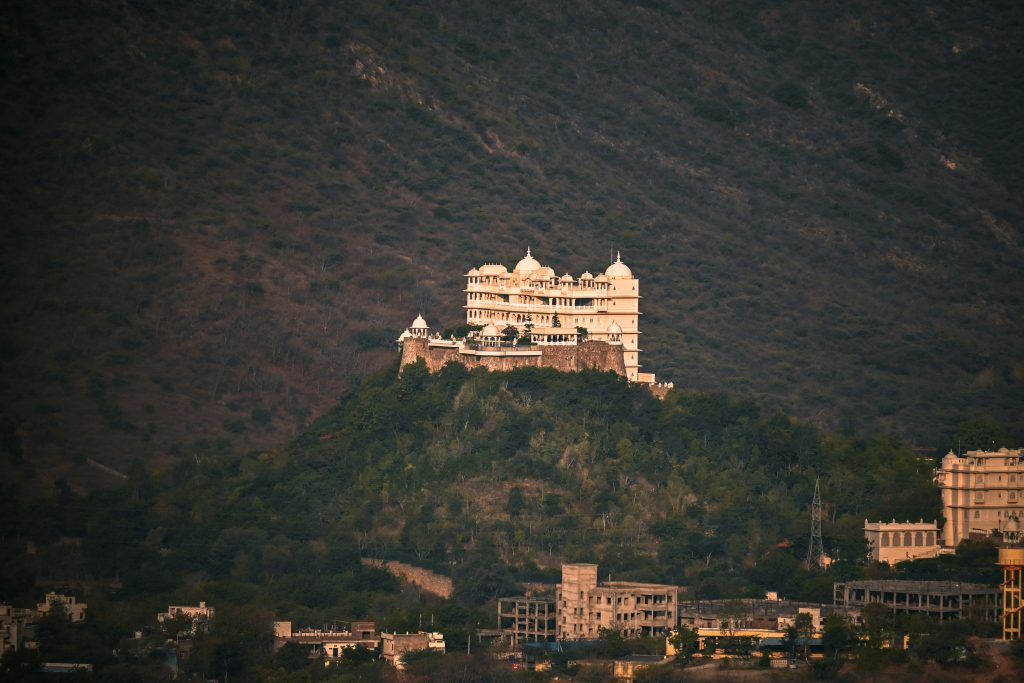
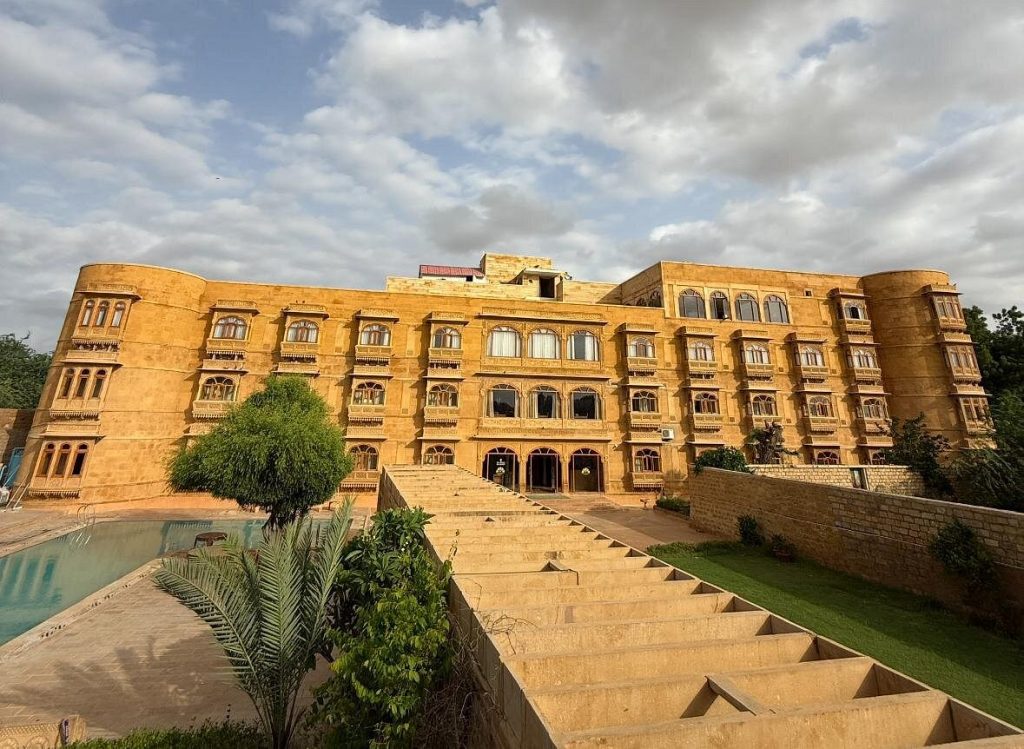
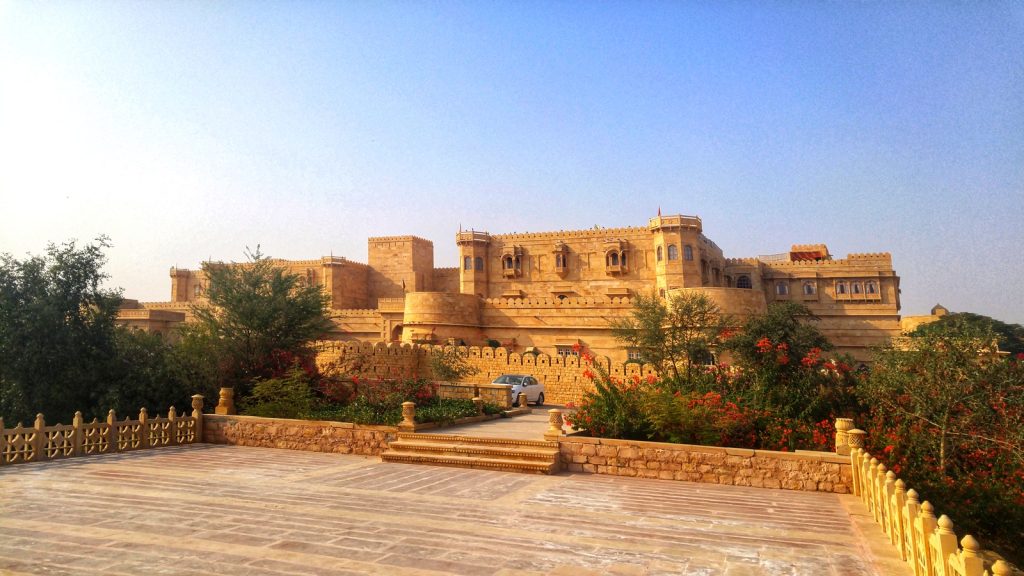
Hotel Suryagarh on Sam Road and hotel Sonargarh Fort are two outstanding heritage hotels in Jaisalmer. There is also the WelcomHeritage’s Mandir Palace, which is an exquisitely carved architectural marvel and its intricate stone carvings are unmatched by any other hotel.
What to Buy:
The Central Market located just below the Trikut hill and another bustling market near the gate of Amar Sagar are great places to go shopping while in Jaisalmer. Stone artifacts, embroidery items and woolen blankets are very popular and much admired by the discerning travelers.
Reaching Rajasthan:
The most convenient way to reach Rajasthan is by air to New Delhi, India’s capital city, which is linked worldwide by a wide network of international airlines and from New Delhi one has the option of either flying by any of India’s domestic airline or by road to Jaipur, the capital city of the state of Rajasthan. There are also regular train services from New Delhi to various cities of Rajasthan. Ideally, Jaipur should be your gateway city to explore the state of Rajasthan.
By air, there are convenient flights on the New Delhi – Jaipur sector.
By road, the distance from New Delhi to Jaipur is 260 Kms. which can be covered in 5.5 hours. Hired taxis and luxury buses are readily available from New Delhi Airport.By train, two of the world’s most outstanding luxury rail journey originates from New Delhi – The Palace on Wheels (http://rtdc.rajasthan.gov.in/Pow.aspx) and The Royal Rajasthan on Wheels (http://rtdc.rajasthan.gov.in/rrow.aspx)
Informative Websites:
- Department of Tourism, Government of Rajasthan – http://www.rajasthantourism.gov.in/
- Rajasthan Tourism Development Corporation – http://rtdc.rajasthan.gov.in/
Where to Stay in Bikaner, India
Bikaner offers lodging options suited to different budgets and preferences, though advance booking is wise during the tourist season from October through March. The old city near Junagarh Fort has smaller heritage hotels and guesthouses that provide character and proximity to the main sights, though rooms can be modest and amenities basic. Mid-range hotels in the newer parts of town offer more consistent comfort and modern facilities, with air conditioning and reliable hot water, which matter in a desert climate where temperatures swing sharply between seasons.
For visitors seeking heritage stays, several converted havelis and old mansions operate as boutique hotels, offering traditional architecture and courtyard spaces that reflect the city’s architectural history. These properties often have fewer rooms and more personal service than larger establishments, though you’ll want to confirm specifics like wifi availability and backup power, as utilities can be inconsistent.
Budget travelers and backpackers will find basic guesthouses throughout the central areas, particularly near the railway station and in lanes close to Junagarh Fort. These are functional and economical, but inspect rooms before committing, as quality varies considerably and some lack reliable water supply or cooling during hot months.
When choosing where to stay, consider your priorities: proximity to Junagarh Fort and the old bazaars if you want to walk to major sites, or a quieter location in the newer neighborhoods if you prefer distance from street noise and commercial activity. Ask your hotel about local transportation to Bhainsrorgarh Fort and the camel breeding farms, as these outlying attractions require a vehicle or arranged excursions.
Recommended Reading
- Rajasthan: A Concise History by Rima Hooja —A sweeping and authoritative chronicle, this book explores Rajasthan from its prehistoric roots to the mid-20th century. Blending political, socio-cultural, and economic perspectives, it is an essential read for anyone seeking a comprehensive understanding of the region’s enduring legacy.
- A Princess Remembers by Maharani Gayatri Devi —The elegant memoir of Jaipur’s celebrated royal, this book captures Gayatri Devi’s journey from aristocratic freedom to palace life as the third wife of Maharaja Sawai Man Singh II. Filled with vivid accounts of princely customs, glamour, and resilience, it offers a rare glimpse into India’s royal past through the eyes of one of its most iconic women.
- Maharana Pratap: The Greatest Rajput Warrior by Rima Hooja —A deeply researched biography that brings to life the legendary Mewar ruler who defied Mughal domination. Drawing from court chronicles, folklore, and bardic tradition, this is a compelling portrait of Maharana Pratap’s courage, sacrifice, and unyielding spirit.
- The Henna Artist by Alka Joshi — Set in 1950s Jaipur, this bestselling novel follows a woman navigating tradition and independence as a sought-after henna artist to the city’s elite. With lush detail and emotional depth, it’s a richly textured story of resilience, reinvention, and female empowerment.
- Maharanas: A Thousand-Year War for Dharma by Omendra Ratnu —A powerful narrative of the Sisodiyas of Mewar, this book honors a dynasty that resisted centuries of invasion while fiercely upholding dharma. Through their unwavering defense of cultural and spiritual values, the Maharanas emerge as unmatched symbols of endurance and sovereignty.
Tours to consider:
- Private Heritage Walking Tour in Jaisalmer Fort and Old Bazaar
- Heritage & Cultural Trails of Bikaner (2 Hours Guided Walking Tour)

Subhasish Chakraborty is a travel writer from India, associated with numerous global travel publications, including In-Flight magazines. He received invitations as a guest travel writer from various Indian states and was a Tourism Consultant for the UNWTO.
All images are for illustrative purposes only and remain the copyright of their respective owners.
