
By Richard White, The Everyday Tourist at www.everydaytourist.ca
Between 1886 and 1915, during a period of rapid growth, Calgary’s 16 sandstone quarries kept busy supplying stone for 250 sandstone buildings. After a devastating fire on November 7, 1886, which destroyed 18 wooden buildings in downtown, the city quickly pivoted to fire-resistant materials, mainly local sandstone.
The Sandstone Era ended with the First World War, as rising costs for stone carving, quarry supply failures, and competition from new building materials led to the abandonment of the quarries. However, by then Calgary was home to a delightful collection of sandstone buildings renowned for their beauty – many still grace the city centre today.
Stephen Avenue
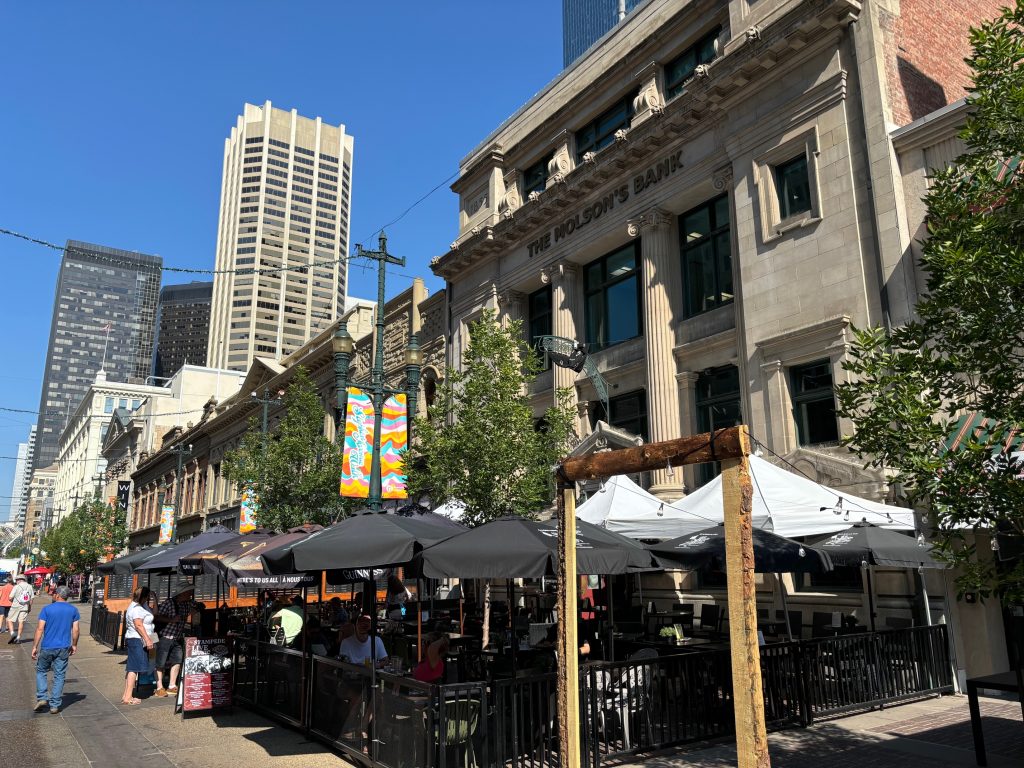
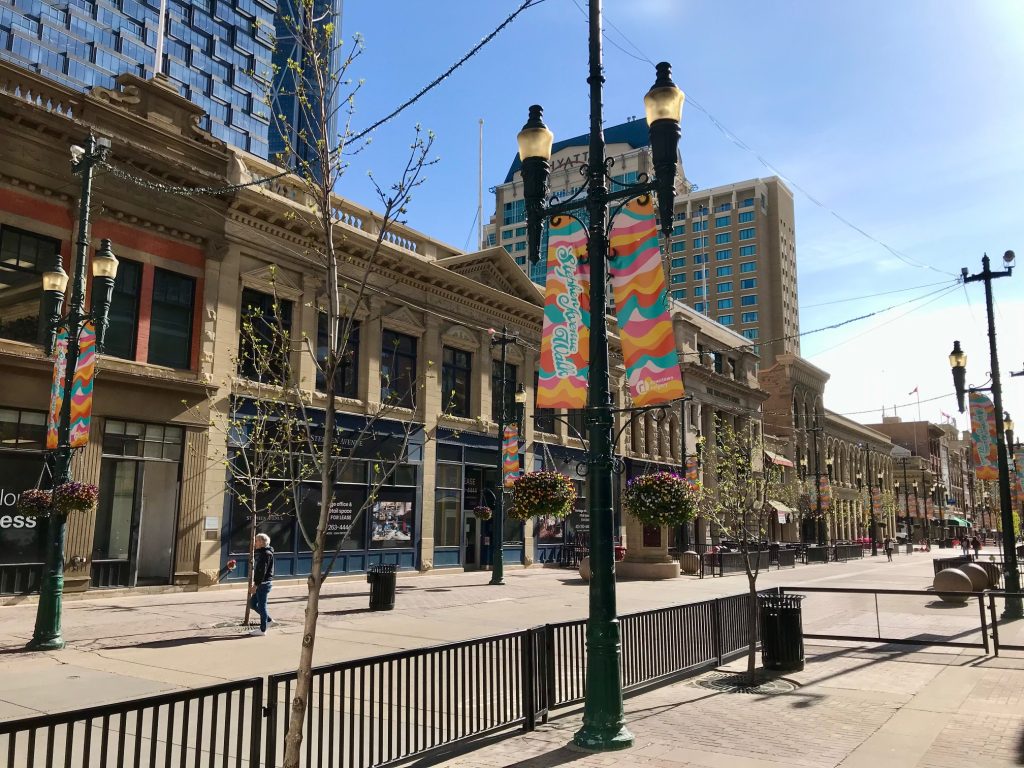
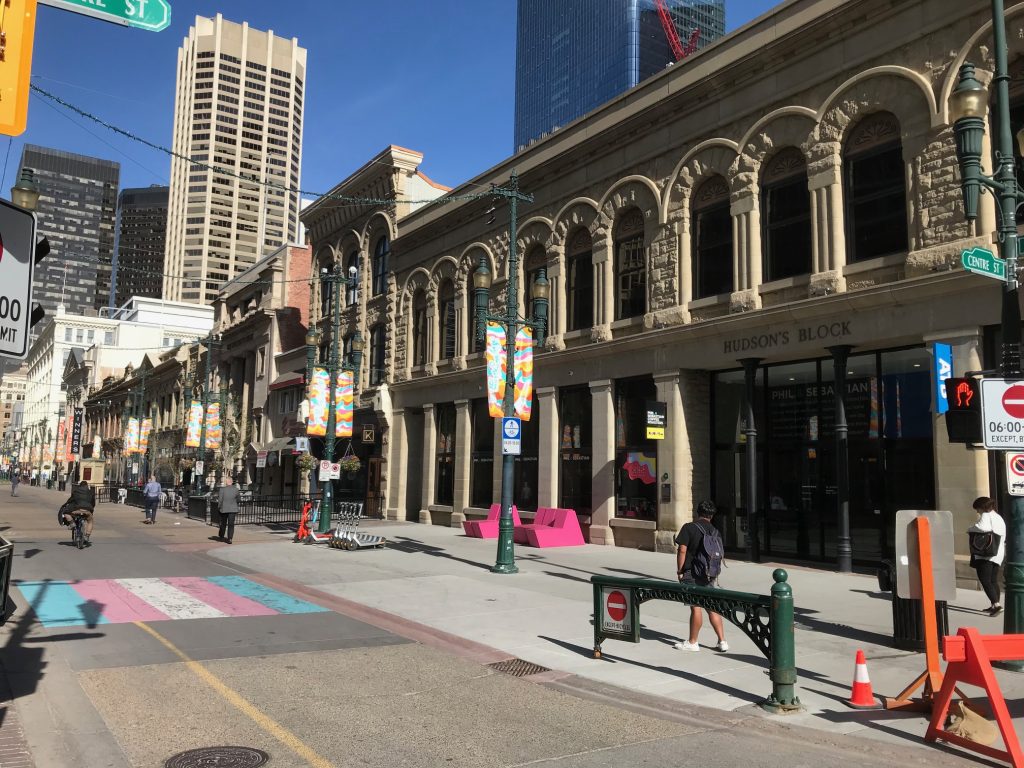
Stephen Avenue, named after Baron Stephen, the first President of Canadian Pacific Railway, is Calgary’s historic main street. It is home to one of the finest collections of sandstone buildings in Canada and perhaps even North America.
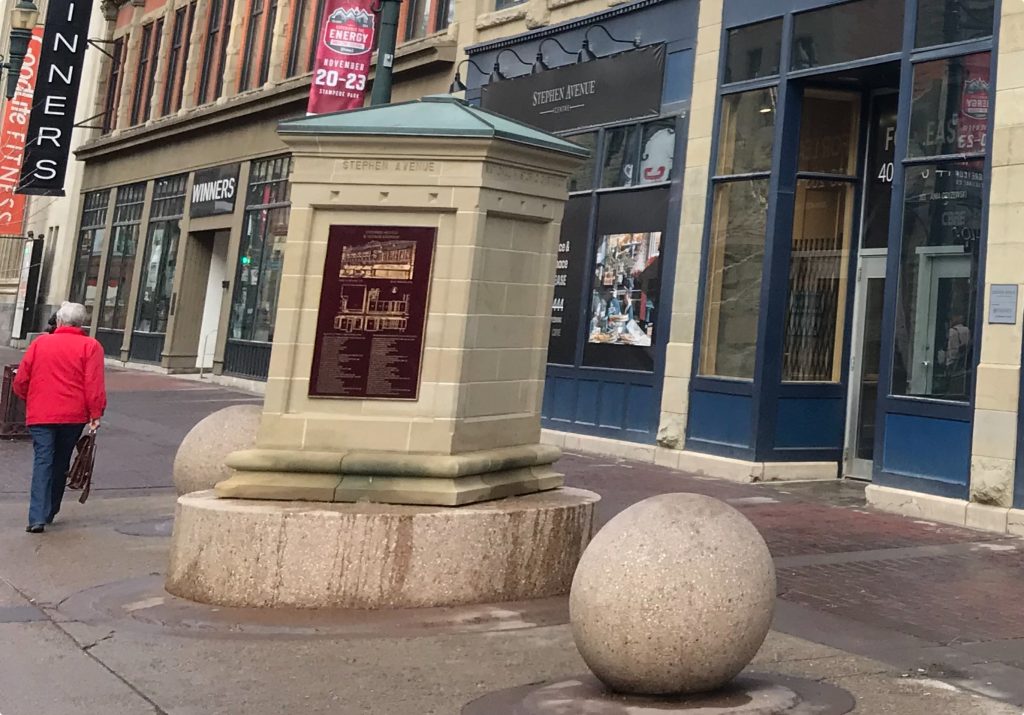
In 2002, a three-block section of Stephen Avenue from Centre Street to 2nd Street SW became a National Historic Site of Canada.
A historic plaque on a Stephen Avenue monument reads:
Stephen Avenue is a superb illustration of the central role that retail streets have played and continue to play in the Canadian urban experience. As a well-preserved commercial street, the avenue witnesses the emergence of the modern retail sector in Canada from 1880 to 1930. With the coming of the railway, Prairie cities grew at an unprecedented rate, their gridiron plans reflecting a new functional pattern: financial and commercial sectors near the train station, surrounded by residences, with factories farther away. Elegant illustrations of Calgary’s sandstone era, the buildings of Stephen Avenue are handsome representatives of Victorian, Art Deco, and Beaux-Arts architecture from their time.
In July 1970, Stephen Avenue was converted to a pedestrian mall. It remains that way today, making it easy for people to stop in the middle of the street and enjoy the architecture of the buildings. The juxtaposition of historic small buildings with new tall skyscrapers along Stephen Avenue is intriguing.
It is amazing to ponder how Calgary and our world have changed over the past 150 years. Most sandstone buildings have been repurposed as restaurants, making Stephen Avenue one of Canada’s best restaurant rows.

Sandstone Schools
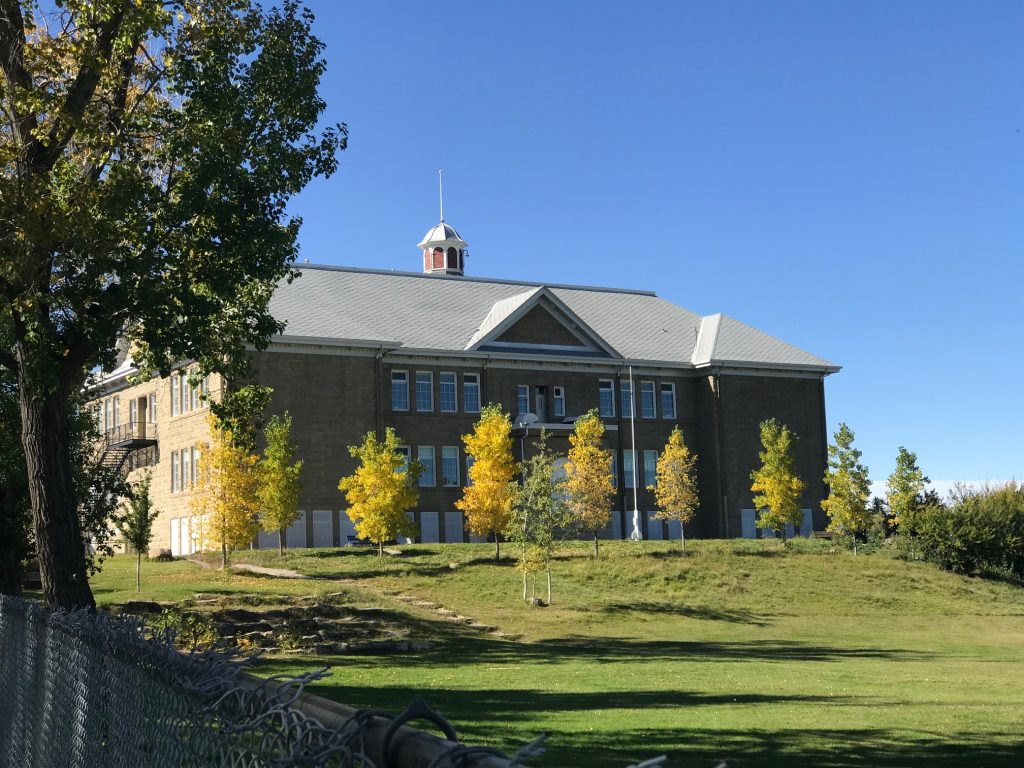
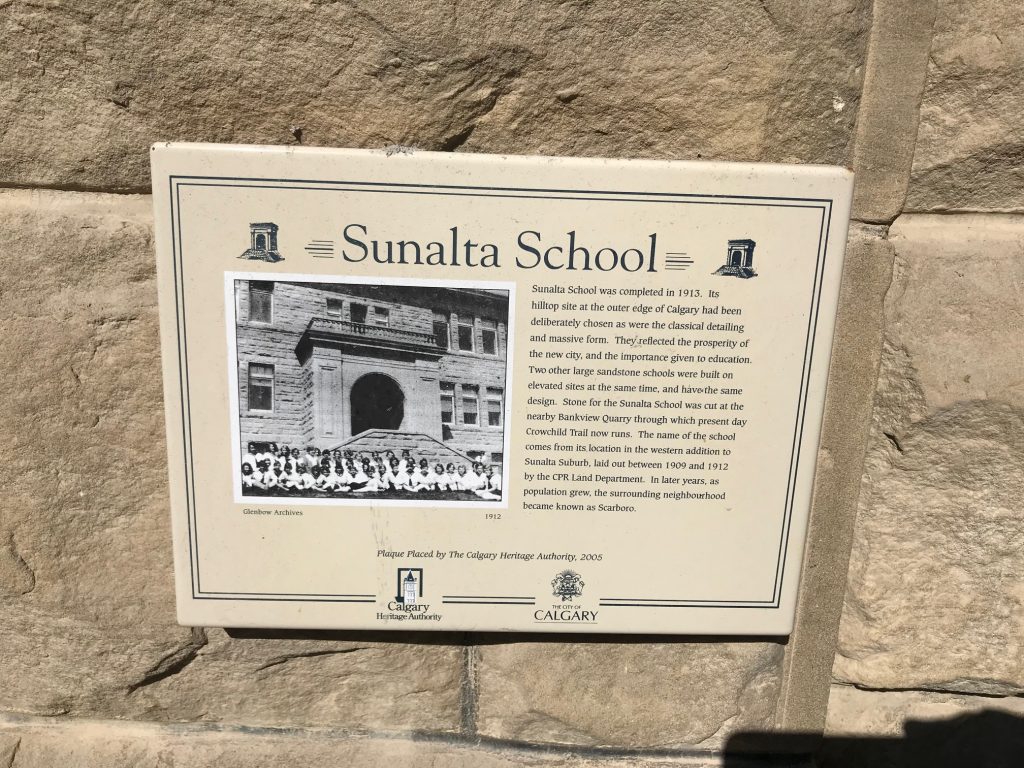
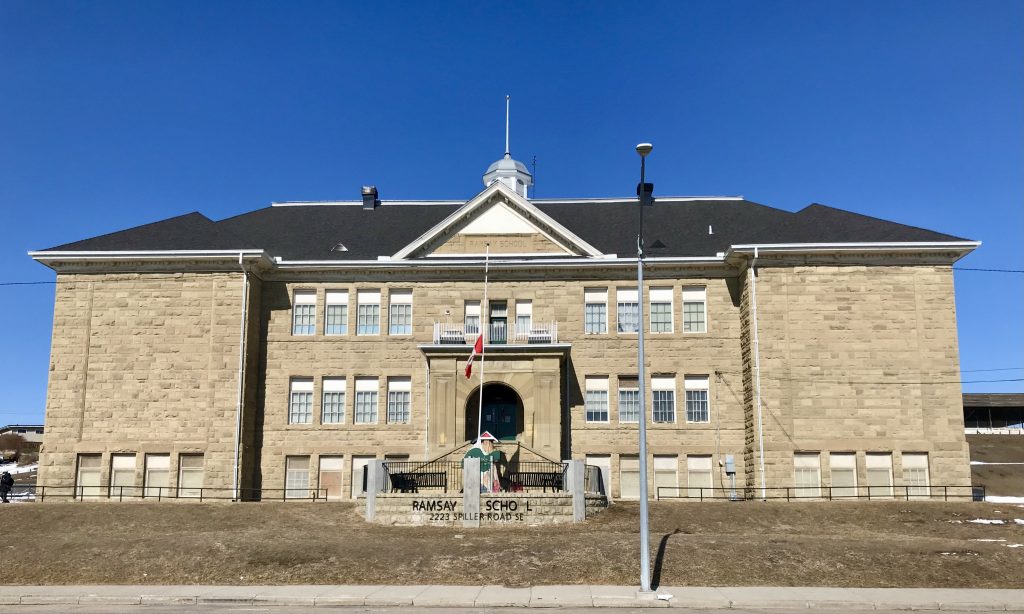
In addition to Stephen Avenue’s sandstone buildings, Calgary was also home to 19 majestic sandstone schools built between 1894 and 1914. Most of these schools still operate today. The McDougall School (1907) in downtown has been transformed into the McDougall Centre (455, 6th St. (SW), i.e. home of the provincial government office and the meeting space for Calgary caucus and media announcements. It is where the Premier’s annual “pancake breakfast” takes place during the Calgary Stampede.
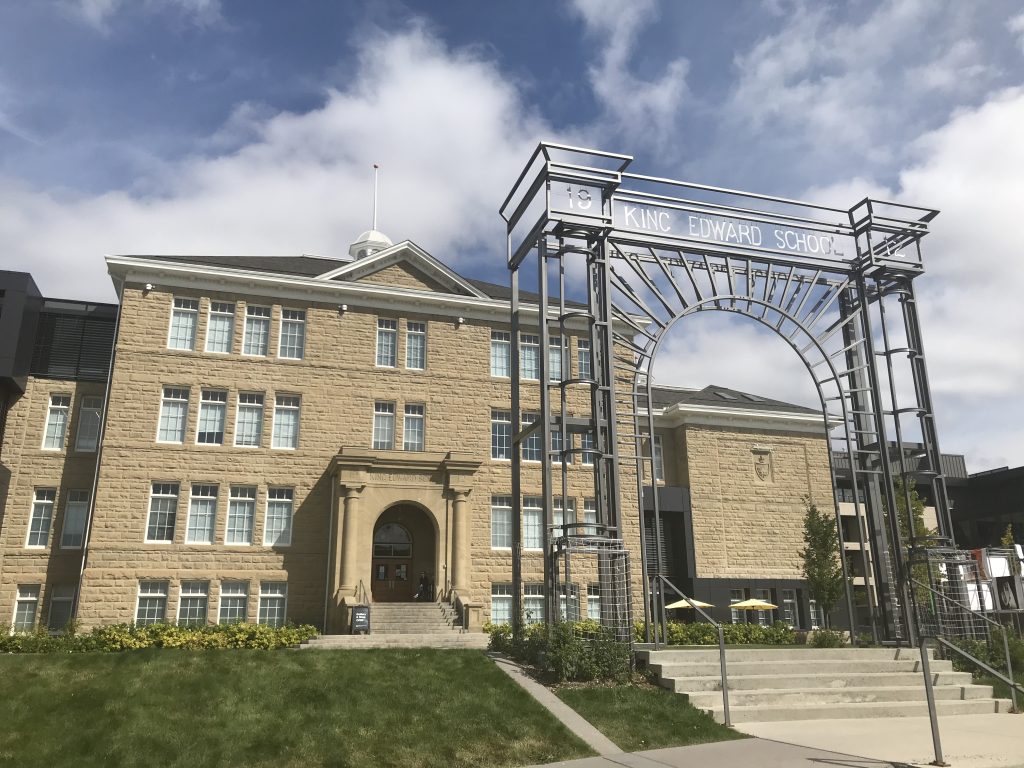
FYI: Pancake breakfasts are a huge part of Calgary Stampede celebrations, with hundreds taking place across the city in churches, malls, office towers, and commercial shops. In 2025, the 67th annual Chinook Mall Stampede breakfast set a world record by serving 26,994 pancakes in 4.5 hours. The first official Calgary Stampede pancake breakfast took place on Stephen Avenue in 1934. The King Edward School (1740 30th Ave SW) has been transformed into cSPACE Marda Loop, an arts incubator with studios, offices for art groups, theatre, and meeting space. It is a fascinating place to explore, with some of the old lockers and doors retained, and the old drinking fountains turned into works of art. The Alberta Craft Council anchors the space with its gallery and gift shop.
Calgary’s Best Sandstone Buildings
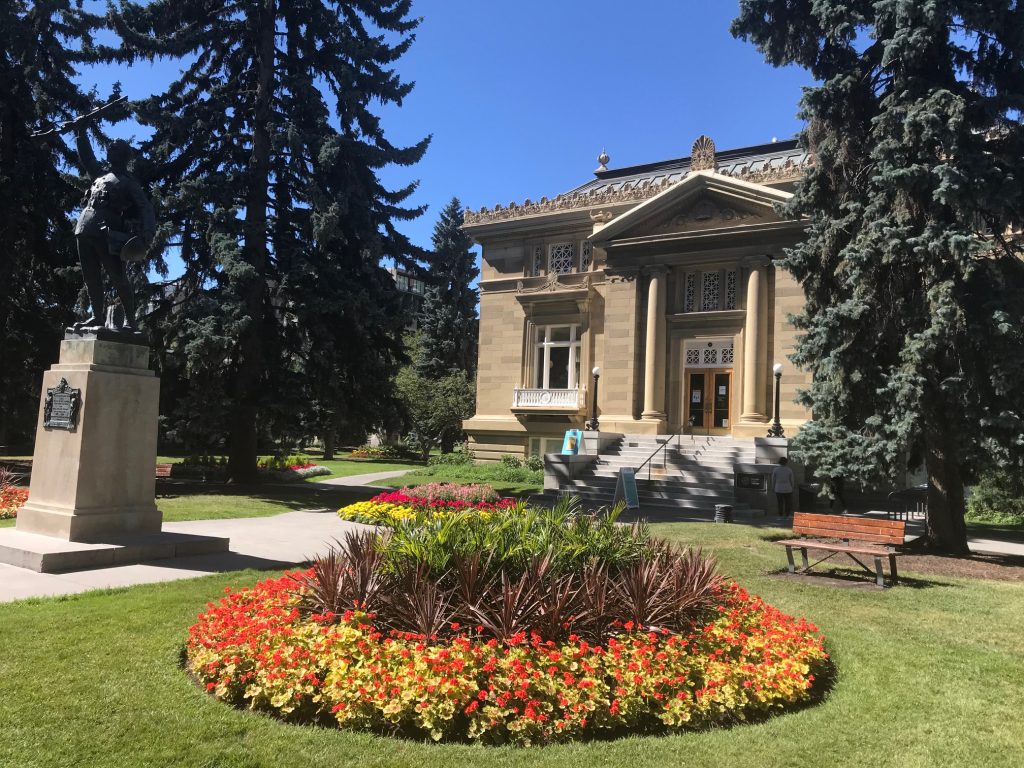
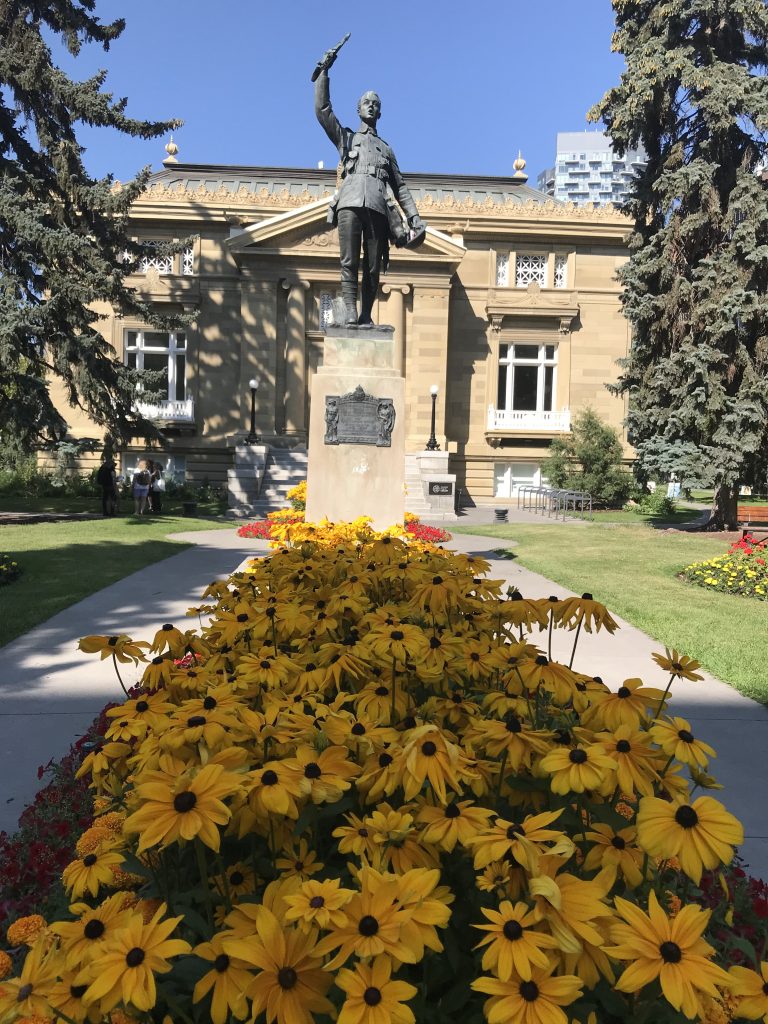
Arguably, Calgary’s finest sandstone building is the Memorial Park Library. Located in historic Memorial Park, Calgary’s first park, the library is Alberta’s oldest public library and still operates on its main floor today. The second floor now houses the office of Wordfest, Calgary’s annual literary festival. It stands steep in history as one of 125 Carnegie Libraries in Canada. Opened in 1912, it exemplifies the classical elegance characteristic of Edwardian public architecture set within a carefully planned landscape.
Originally called the Central Library, it was renamed in 1928 when the park around it became Memorial Park following the unveiling of a major cenotaph, and it remained the city’s central branch until 1963, when the new William R. Castell branch opened downtown at 1221 2nd Street SW.
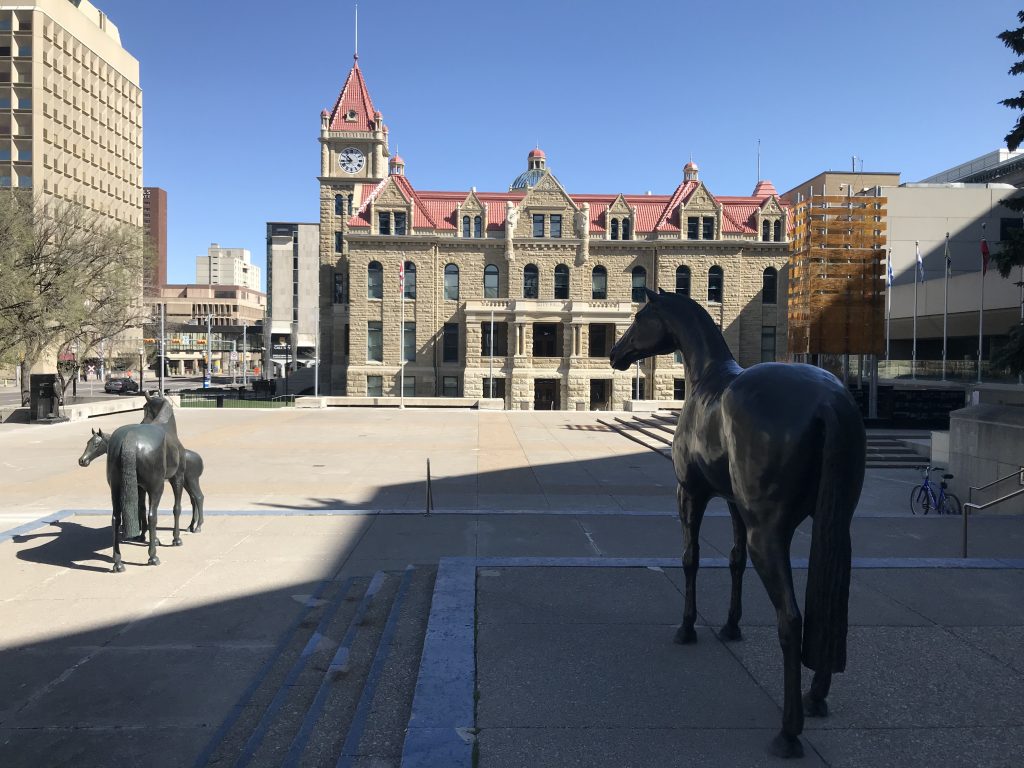
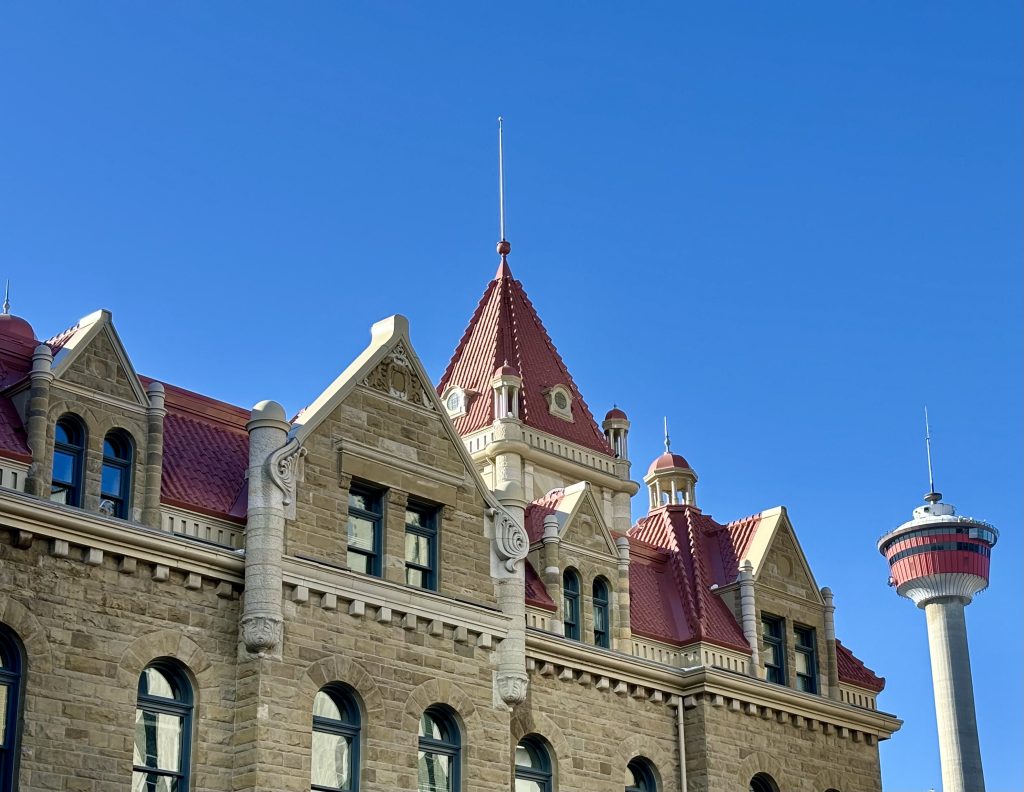
Calgary’s Old City Hall is a hidden gem. Built in 1911, this four-storey Romanesque Revival sandstone building features a central clock tower entrance. Currently it houses the offices and meeting rooms for the mayor and city council members. It is the architectural focal point of the City Hall block, which consists of two later additions: the 1962 four-storey brick extension at the rear of the original building and the massive wedge-shaped, mirrored-glass structure that opened in 1985.
800 Macleod Trail SE
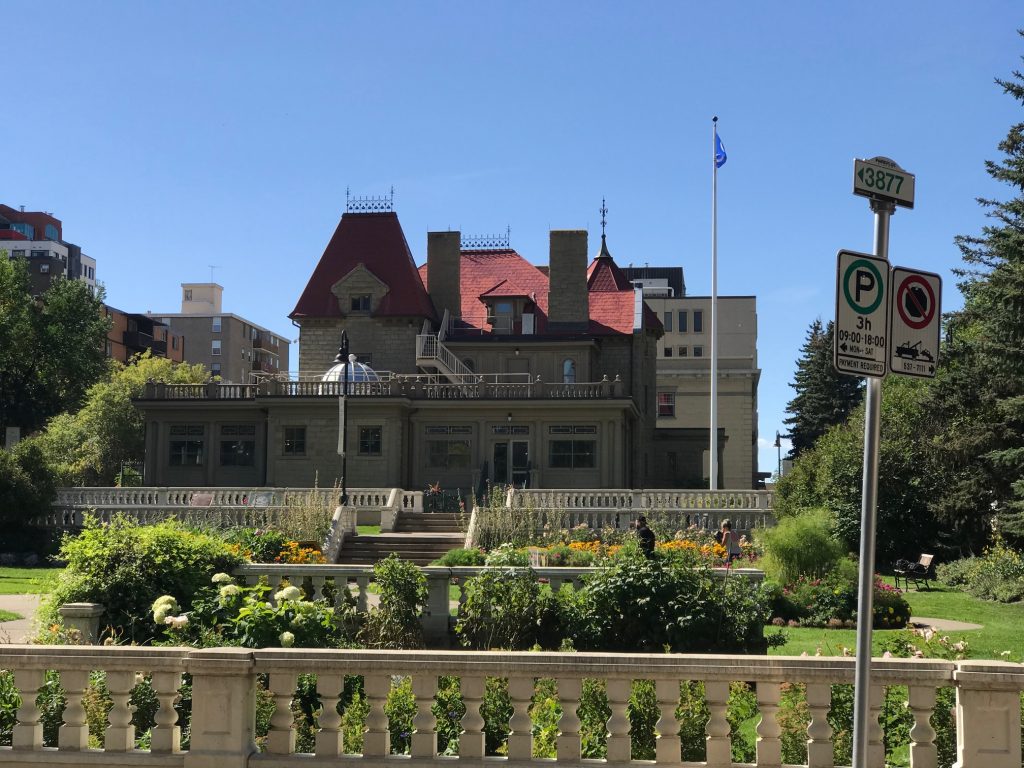
The Lougheed Mansion, built in 1891, was home to Calgary’s original “power couple,” Senator James Alexander Lougheed and his wife Belle Hardisty. Over the years, the Lougheeds added several rooms for their growing family and developed a sunken garden. They named the house and garden “Beaulieu,” one of Belle’s ancestral family names, but Calgarians simply called it the “big house”—all 14,000 square feet of it.
Designed in the High Victorian and Queen Anne Revival style, it is an oasis in the middle of the Beltline high-rise neighbourhood, just south of the downtown core. The most prominent exterior feature is the cone-shaped tower at the front entrance. The 48-room house interior features Spanish mahogany and Italian marble. The stained glass windows and doors feature hand-painted Alberta flora and fauna. Today, the home and gardens are open to the public, with rotating historical exhibitions and a gift shop.
FYI: 13th Avenue SW earned the nickname millionaires’ row in the early 20th century, home to several of Calgary’s elite including Patrick Burns and William Roper Hull (both demolished), two of Calgary‘s most influential businessmen along its tree-lined street. If you walk further west along 13th Avenue SW to 8th Street, you’ll arrive at the historic 1908 Calgary Collegiate Institute (1221 8th St. a Scottish Baronial-style building that has been modified to become the Calgary Board of Education building. Proceed to 10th Street and you will arrive at the back of the Free Classical style sandstone Connaught School, built in 1911. It is a fully functioning elementary school today. Address: 707 13th Avenue SW
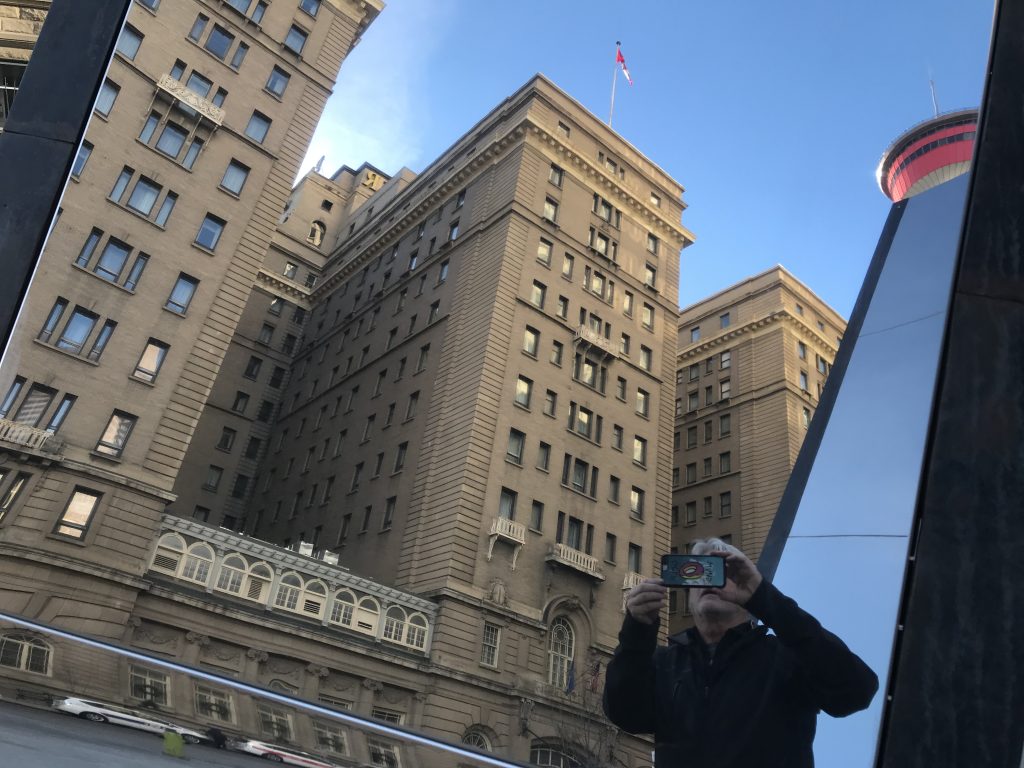
The Fairmont Palliser hotel opened as “The Palliser” on June 1, 1914, beside Calgary’s train station (demolished in 1966 to make way for the iconic Calgary Tower). It was designed in the Edwardian Commercial style by architect Lawrence Gotch, inspired by the straight lines of the prairie grain elevator. The E-shaped building ensures all rooms receive outside lighting and creates the appearance of three towers from the exterior. Originally four floors, it gained three more floors and a penthouse in 1929, making it Calgary’s tallest building until 1958. Calgary’s first cocktail lounge opened in the penthouse during 1959. Wander the hallways today and you’ll find photos of many famous people who have stayed at the hotel. Address: 133 9th Ave SW
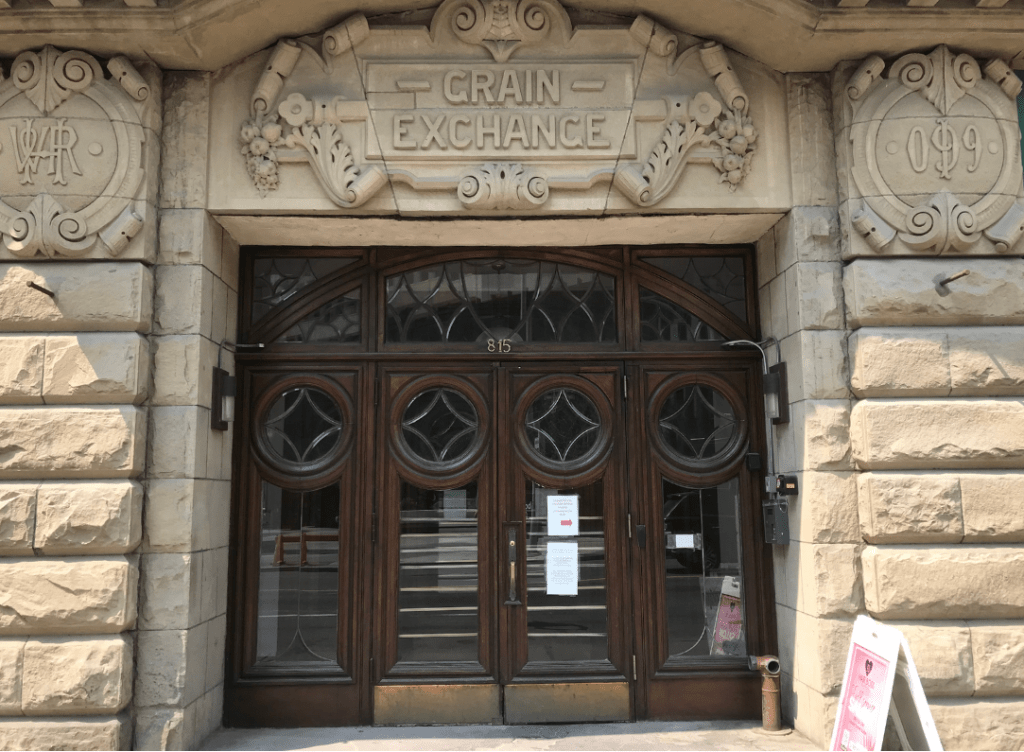
Just across the street from The Palliser sits the Grain Exchange Building, which opened in 1909. It features a rustic sandstone façade that distinguishes it from most of Calgary’s sandstone buildings with their smooth surfaces. It was Calgary’s original skyscraper at six floors, made possible by being the first building in the city to use reinforced concrete. Look for the relief lettering above the main entrance with its ornate wooden doors, which still announces the original anchor tenant – the Grain Exchange. Today, it is an incubator for small businesses. It’s fun to poke your head in and wander the hallways. Address: 815 1st Street SW
Sandstone Churches
Knox United (1911), Cathedral Church of the Redeemer (1904), and Grace Presbyterian (1912) are other classic sandstone churches.
Knox United Church, built in 1912-13, is the fourth home of the oldest Protestant congregation in Calgary. The congregation first met June 17, 1883, and was officially organized as Knox Presbyterian Church on November 21, 1883. The interior of Knox United Church, with seating for 1,200 worshipers, earned it the title “Cathedral of the West” for its architectural merit.
Notable features of the interior include a steel truss roof cased in wood to resemble heavy-timber construction, oak paneling and detailing, and an Arts and Crafts style clay tile floor in the narthex. Knox also houses a Casavant-Freres organ with 5,018 pipes and 92 stops, installed in 1913. The organ was the largest and most versatile one west of Toronto. Today, the church hosts concerts regularly, thanks to its excellent acoustics.
Thirty-four stained glass windows, installed between 1921 and 1960 and including a large WWI memorial window dedicated in 1921, contribute to the magnificence of the structure. The window was manufactured by Pittsburgh Glass Co. of Minneapolis, renowned for its ecclesiastical work. The window comprises 9,982 individual pieces of European antique glass.
506 4th Street SW
The Cathedral Church of the Redeemer began as the first Anglican church in the area in 1884, served as a parish church until becoming the Pro-Cathedral in 1889, and has since evolved into a prominent Anglican cathedral. The current sandstone structure, built between 1904 and 1905, exemplifies Gothic Revival architecture with unique German influences and became the permanent cathedral in 1949.
Address: 604 1st St. SE
Grace Presbyterian (1913), designed by Smith & Gemmell, exemplifies the ecclesiological Gothic Revival style and showcases beautifully crafted architecture in Calgary. In addition to a sensitive mid-century addition, the 1962 side-gabled Reeve Memorial Chapel is equally well-crafted and well-preserved. It’s best known for its three-story bell tower and grand east staircase.
1009 15th Ave SW
Last Word
The City of Calgary offers a historic walking tour of Stephen Avenue online that you can download for your own self-guided exploration HERE
In 2005, Calgary historian Harry M. Sanders wrote “Historic Walks of Calgary,” which is out of print but sometimes available in used bookstores or on Abebooks. It’s an excellent read and a great self-guided tour of Calgary’s history.
Where to Stay in Calgary, Canada
The Bow Tower and downtown core offer compelling bases for visitors. The Fairmont Palliser, a historic 1914 hotel facing Central Station, offers classic Alberta luxury with easy access to downtown’s riverwalk and galleries. For modest budgets, numerous three-star chains and independent boutique hotels line Stephen Avenue and the immediate downtown area, all within walking distance of restaurants and shopping.
The Beltline neighborhood just south of downtown has emerged as a popular residential district, offering smaller inns, Airbnb options, and apartment-style accommodations. This area sits on the pathway system and puts you near the Glenbow Museum and local cafes without downtown prices. Train travelers heading to the Rocky Mountain parks may prefer staying here to split the difference between city attractions and mountain access before driving west.
For those seeking quieter surroundings with easy city access, the Inglewood and Kensington neighborhoods offer character-driven lodging in restored historic homes and smaller hotels. These neighborhoods preserve more of Calgary’s early streetcar-era architecture and attract travelers drawn to local food scenes and community galleries rather than convention centers. The river itself provides orientation from any neighborhood, making navigation straightforward even when you venture away from downtown.
Budget-conscious travelers will find reliable chain accommodations south of downtown on Macleod Trail, where prices drop noticeably but car access becomes essential. This corridor has adequate restaurants and gas stations, but lacks the walkability and historic character of downtown or the Beltline. If you’re renting a car for day trips to the Canadian Badlands or Drumheller, staying here simply shifts your time investment rather than limiting your experience.
Recommended Reading
Sandstone City: Calgary’s Historic Architecture by Donald B. Smith & Donald R. Luxton
This richly illustrated book captures Calgary’s signature sandstone era and the unique character of its early 20th-century buildings.

Richard White (aka the Everyday Tourist) manages Everydaytourist.ca, where he blogs extensively about Calgary’s past and present, plus his travels across North America and Europe.
All images in this article are courtesy of Richard White
