
Trajan’s Markets, rising in monumental tiers along the slope of the Quirinal Hill, was the first shopping mall known to the modern world.
It was here in the center of Rome that business was conducted in the ancient world. It stands almost intact, awaiting the next shipment of olive oil or the next edict from the emperor’s court. Never before had one structure been created to centralize the purchase of goods and the commercial intercourse of an empire.
Known today as Mercati di Traiano: Museo dei Fori Imperiali, this astonishing complex is both an archaeological marvel and a living museum, offering insight into how Rome was shaped, not by mythology alone, but by infrastructure, architecture, and administrative genius. For travelers who want to walk not just through ruins, but through the bones of a functioning imperial city, there is no better place.
A Brief History: Trajan’s Bold Urban Vision
Commissioned by Emperor Trajan and constructed between 100 and 110 CE, the Markets were designed by the legendary architect Apollodorus of Damascus, who also engineered Trajan’s Forum and Trajan’s Column. The Markets served as the commercial and administrative center of the Imperial Fora, the grand complex of plazas and government buildings that extended from the Roman Forum in the heart of the city.
But Trajan’s Markets weren’t “markets” in the modern sense of stalls and haggling vendors. They were more akin to a state-run commercial hub and civic headquarters, housing tabernae (offices and shops), warehouses, and public services, all tucked beneath the grand terraces of the forum above. Think of it as a combination of government annex, business center, and logistics hub, elegantly constructed in concrete and brick, and still resonating with organization and order.
While we may liken The Markets to world’s first shopping mall, that description barely scratches the surface. This was imperial Rome doing logistics with grace, supporting not only commerce, but the very function of empire.
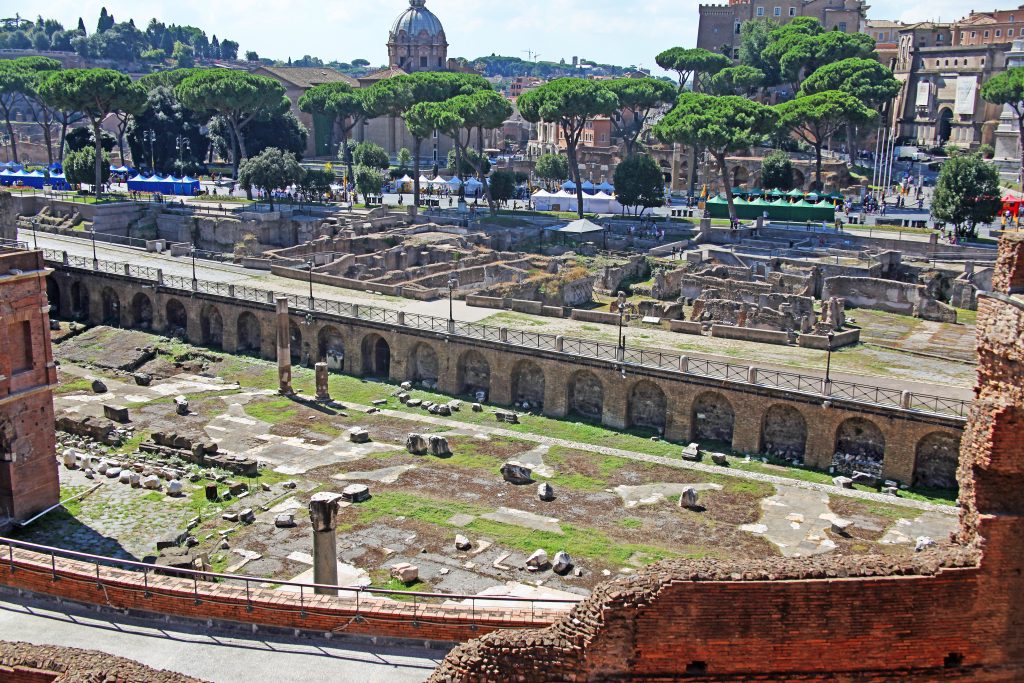
Architectural Marvel: A City Within a City
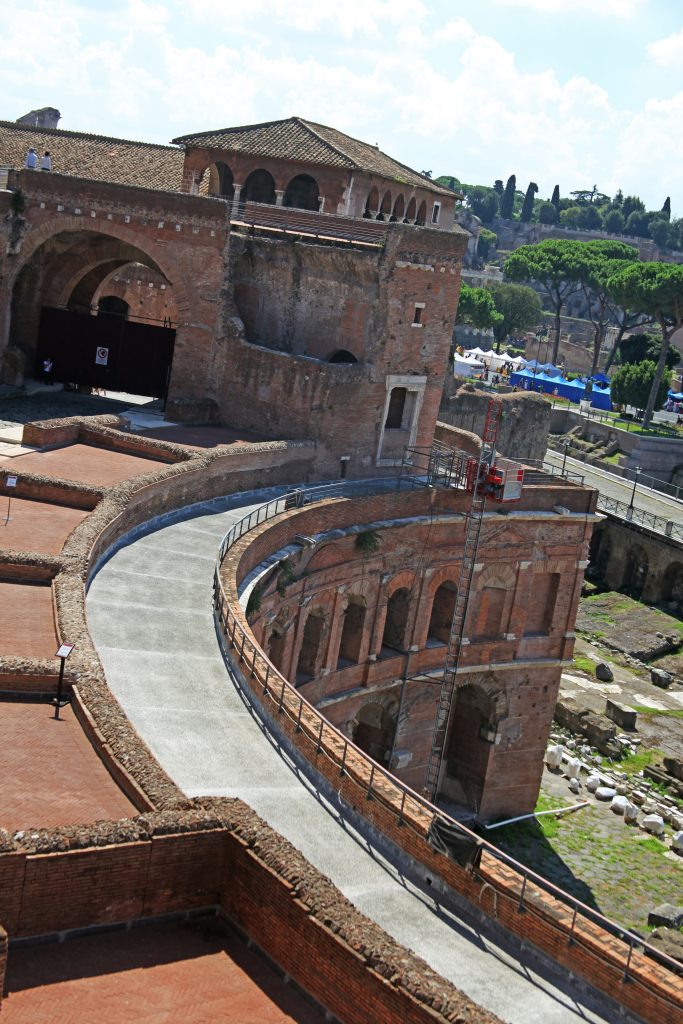
The architectural complexity of Trajan’s Markets is astounding, and much of it remains visible, walkable, and legible.
The complex includes:
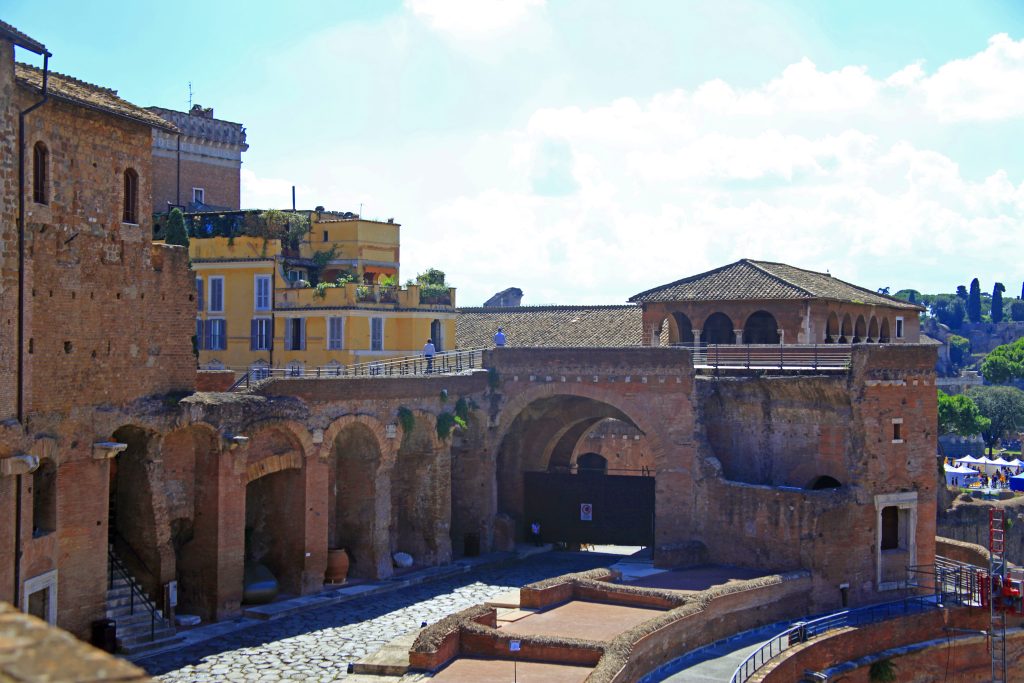
- The Great Hemicycle: A massive curved façade that forms the visual centerpiece of the site, rising over multiple tiers and flanked by porticoes and pilasters. This grand crescent faces what would have been Trajan’s Forum, visually tying the commercial and civic realms.
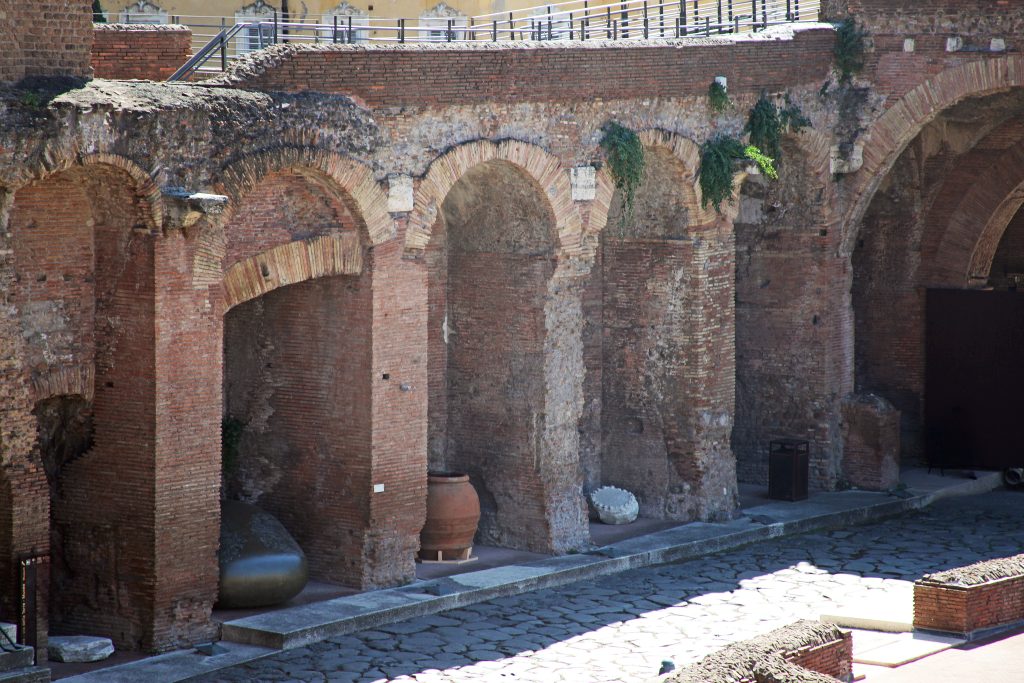
- Via Biberatica: A narrow, still-paved Roman road running between levels of the market buildings, its name (from the Latin bibere, “to drink”) suggesting the presence of taverns or wine sellers in antiquity. It now serves as a route through layers of the imperial city.
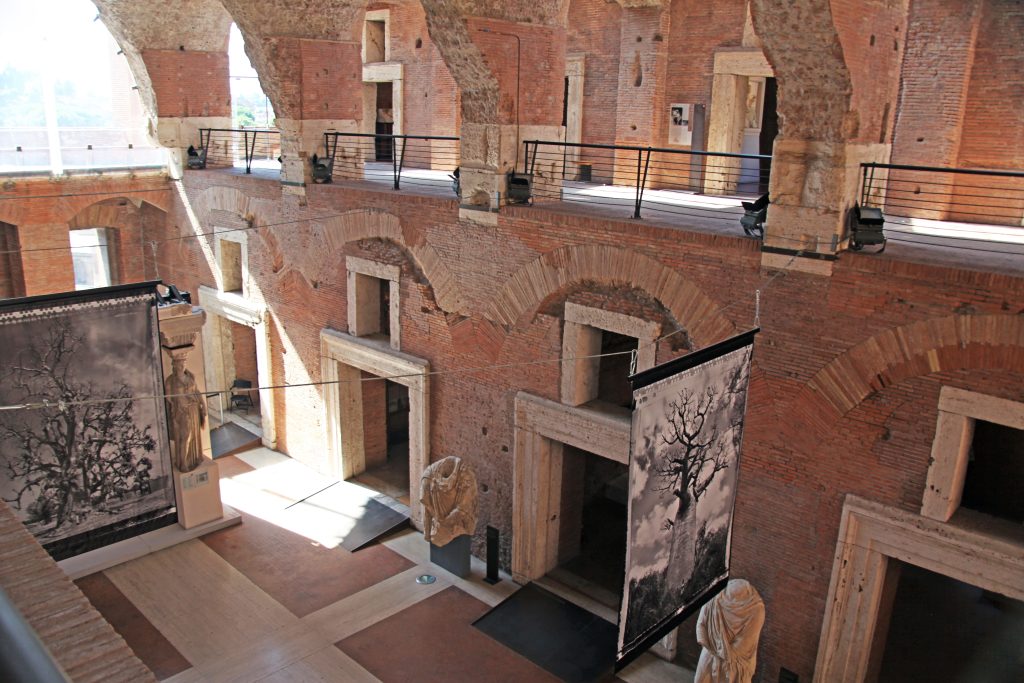
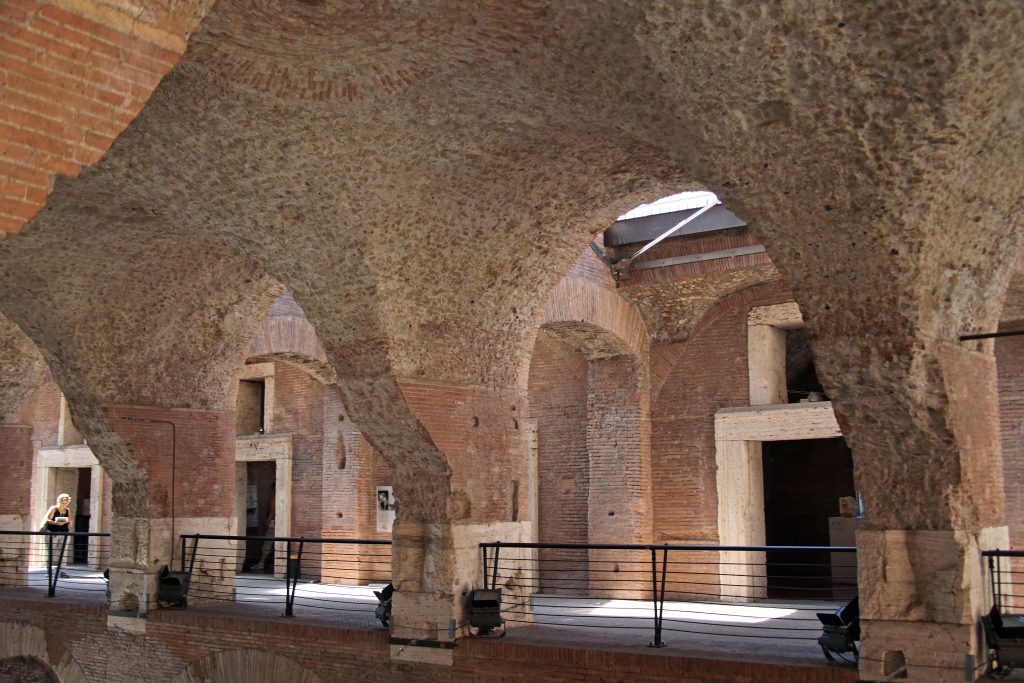
- The Great Hall: A vaulted interior space with skylights, used for large gatherings and exhibitions. It’s a masterclass in Roman engineering, a basilica-shaped structure built into the hillside, defying gravity and time.
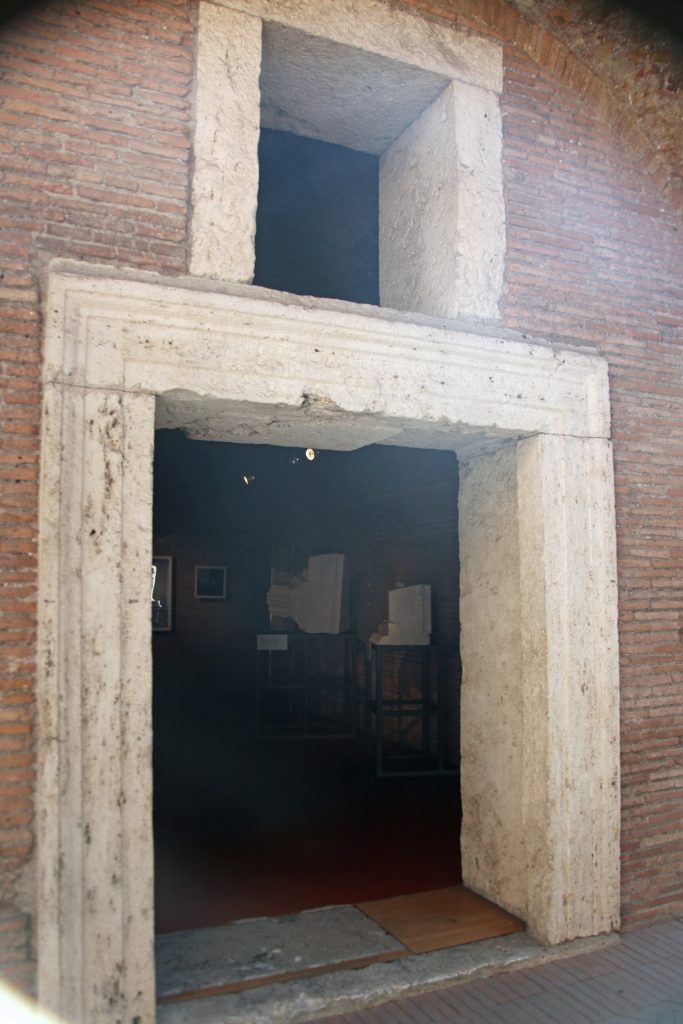
- Multilevel tabernae: These aren’t simple shop stalls but elegant, vaulted chambers used by merchants and officials, many still adorned with original thresholds and inscriptions.
It’s one of the rare Roman sites where you truly walk inside the ancient city, not around or above it. The walls speak, the proportions are human, and the streets still curve as they did two thousand years ago.
The Museum Inside: The Story of the Imperial Fora
Established in 2007 as part of a broader initiative to consolidate Rome’s ancient administrative sites, the Museum of the Imperial Fora now occupies key sections of the complex. Rather than simply showcasing sculpture and fragments, the museum’s mission is to interpret the political, architectural, and ideological power of the Imperial Fora themselves.
Here’s what visitors will find inside:
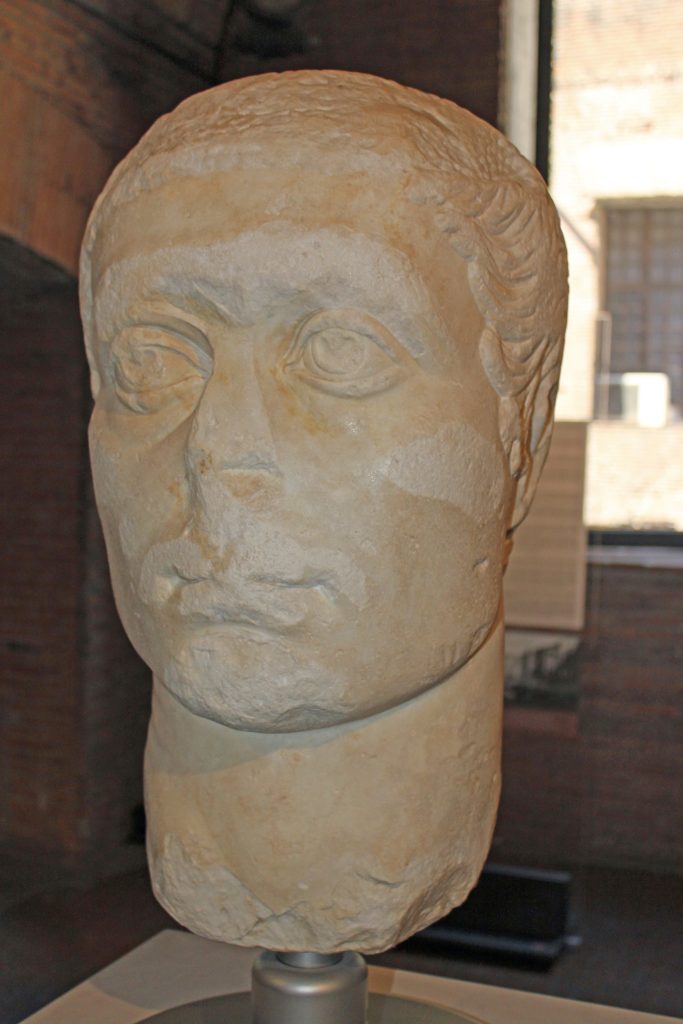
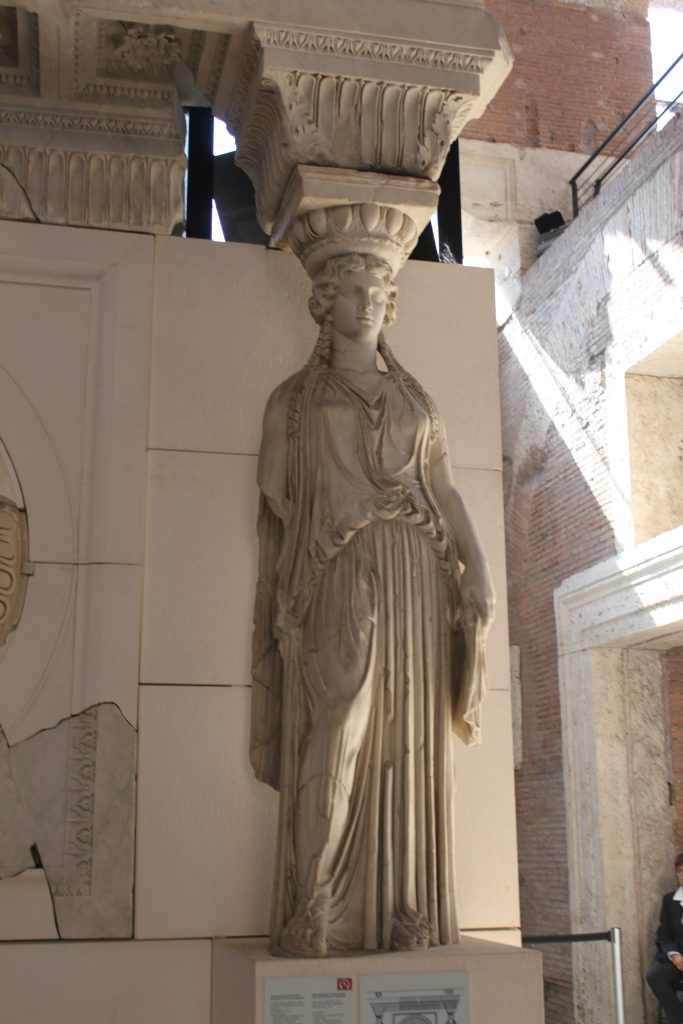
- Architectural Models and Reconstructions: Beautifully detailed scale models show the Fora of Caesar, Augustus, Nerva, and Trajan as they would have looked at their peak. These provide essential context for understanding how Rome was designed as a visual language of imperial power.
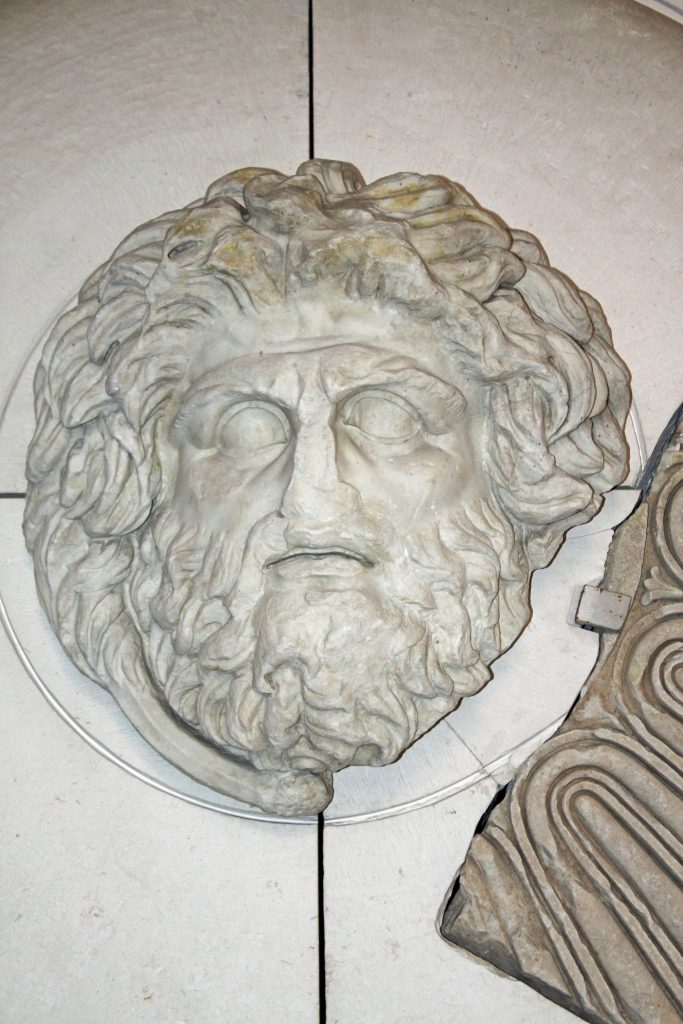
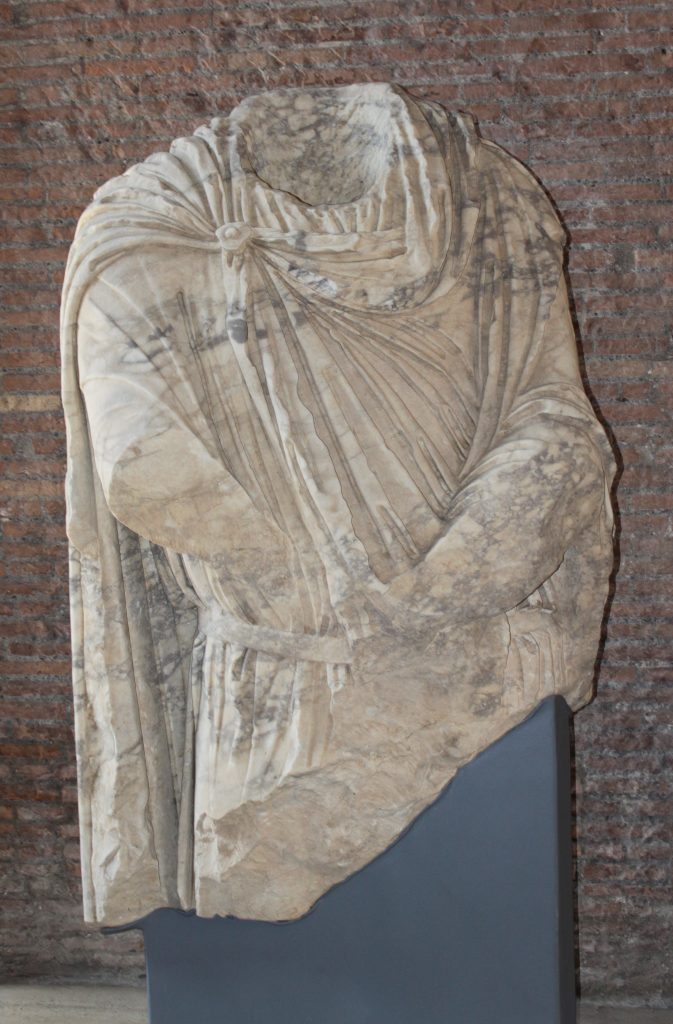
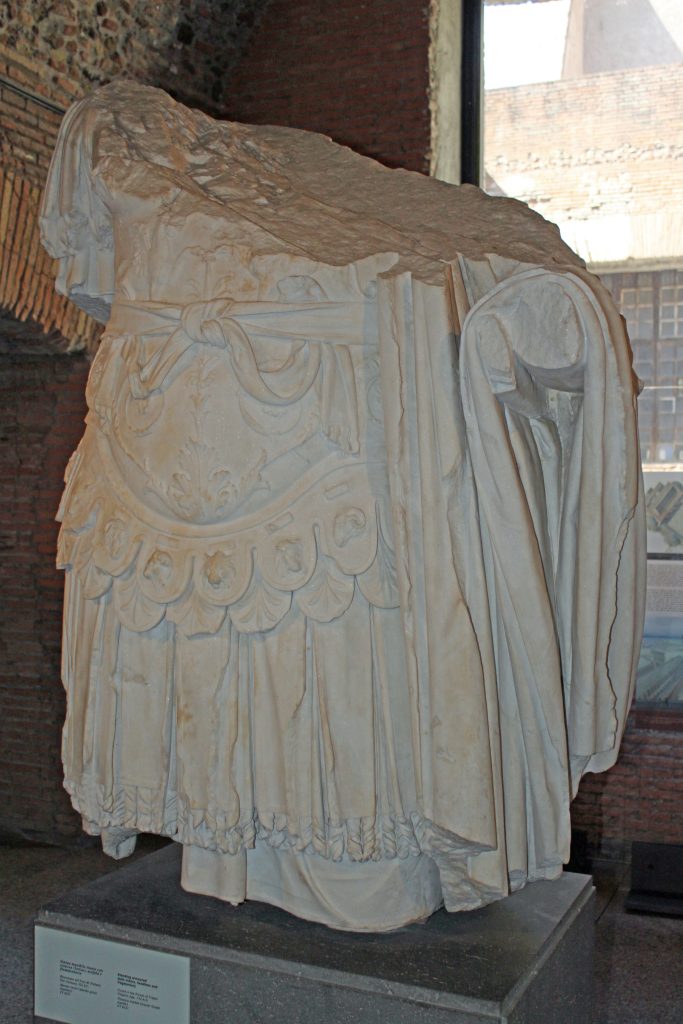
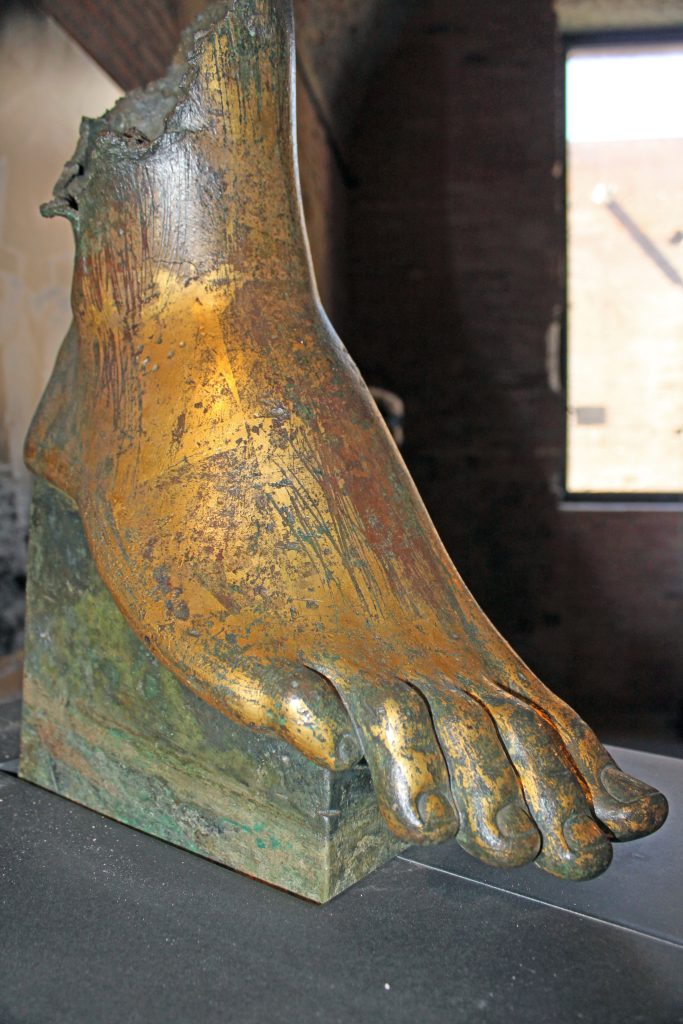
- Inscriptions, Capitals, and Friezes: The museum contains original marble elements from the various forums, including decorative capitals, fragments of monumental inscriptions, and portions of colossal statues once used to broadcast the divine authority of emperors.
- Didactic Panels and Digital Projections: With thoughtful curation, the museum includes illuminated panels and interactive screens that trace how each forum served a particular imperial agenda: Caesar’s for military legacy, Augustus’s for divine lineage, Trajan’s for conquest and civic order.
- Sculptural Highlights: You’ll find heads of emperors, deity statues, and pedestal carvings from the Forum of Trajan, many of which were part of triumphal programs meant to legitimize power through art and narrative.
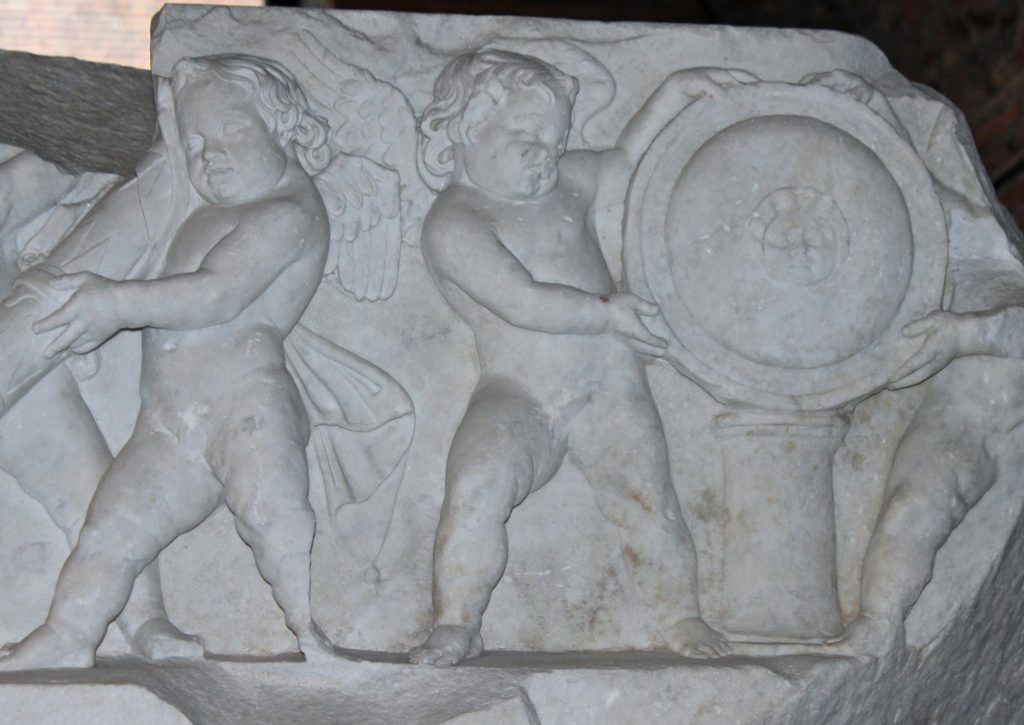
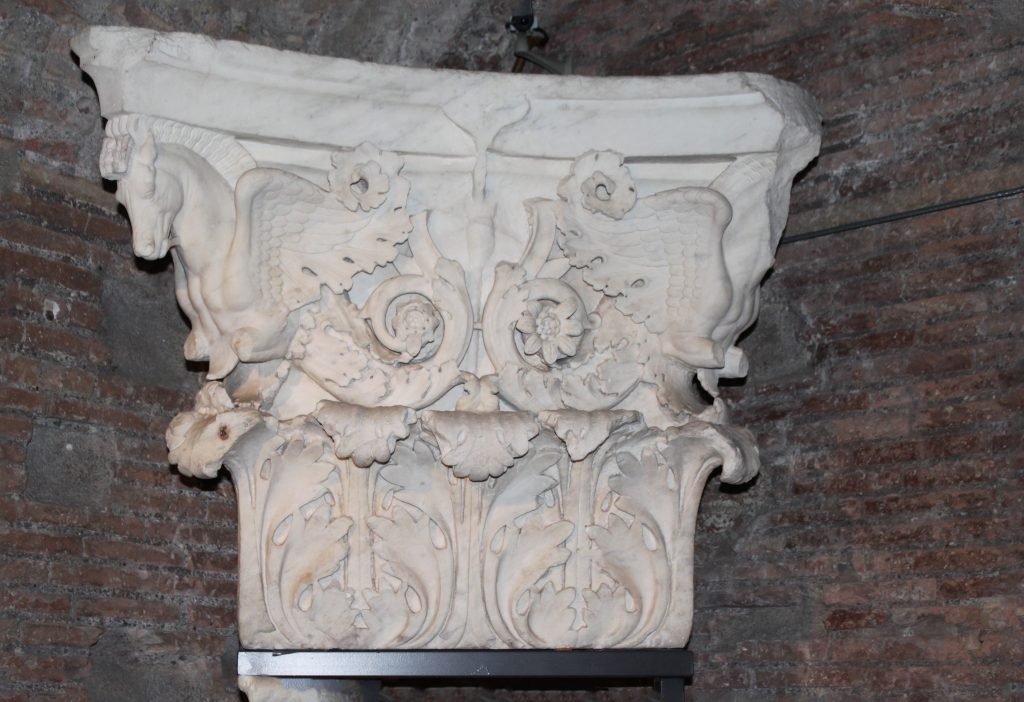
Perhaps most impressively, the museum blends seamlessly with the ruins themselves. The exhibitions are not housed in some sterile, modern wing, they live inside the market halls and arcades of ancient Rome, surrounded by brickwork laid by imperial hands.
A Living Dialogue Between Past and Present
Few places in Rome offer the sense of continuity that Trajan’s Markets do. While the Roman Forum often feels suspended in ruin, and the Colosseum speaks of spectacle, the Markets offer something more grounded: insight into how the empire actually functioned, how space was managed, how goods moved, how administration happened.
It’s also a more contemplative experience, tucked away just enough from the tourist thoroughfares to allow for quiet reflection. You can look out from the upper terrace toward the Vittoriano and modern Rome, and still feel the empire beneath your feet.
This is not just Rome’s past. It’s Rome’s logic, laid out in brick and arch, still legible, and still astonishing. Still speaking to the brilliant legacy of Rome that underlies are own culture of order and civic/commercial functionality.
Where to Stay in Rome, Italy
For visiting Rome’s Imperial Fora and Trajan’s Markets, staying near the Roman Forum puts you within walking distance of the museum and the heart of ancient Rome. The Monti neighborhood, just north of the Forum, offers small hotels and family-run guesthouses within a few minutes of the site. This area is quieter than central tourist zones but still walkable to restaurants and local shops. You’ll avoid the heaviest crowds while remaining close to your destination.
Another solid option is staying in the Centro Storico, the historic center west of the Forum. This area has everything from three-star hotels to apartment rentals, and while it draws more visitors, you’re steps from multiple archaeological sites and can explore on foot. The neighborhood connects easily to transit if you want to visit other parts of the city.
If you prefer proximity to major train stations and broader amenities, the area around Termini Station, just east of the Forum, has abundant mid-range and budget hotels. Termini can feel more chaotic than Monti or the historic center, but it’s a practical hub if you’re using public transport or arriving by train. From here, the Forum is a short walk or quick Metro ride away.
Book your lodging a few weeks in advance, especially if visiting in spring or fall when Rome draws the most travelers. Once you’ve arrived, the walk to Trajan’s Markets takes only ten minutes or so from most central hotels, and you can easily combine a visit with the Roman Forum or Palatine Hill nearby.
Recommended Reading
Non-Fiction
- Trajan: Optimus Princeps by Julian Bennett
A compelling scholarly biography of the emperor who reshaped Rome’s skyline and expanded the empire to its greatest reach, with rich detail on the urban projects that defined his reign. - Rome: An Urban History from Antiquity to the Present by Rabun Taylor
A beautifully written and deeply visual study of how Rome evolved as a built environment, with excellent sections on the Imperial Fora and Trajan’s architectural legacy. - The Roman Forum: A Reconstruction and Architectural Guide by James E. Packer
The book includes detailed architectural analysis and illustrations that explain how imperial building programs, including those under Trajan, reshaped the urban landscape of Rome.
