
Nathan Somers, a Scottish professional tour guide, has a passion for Roman history in Britain. An amateur historian, he seeks out evidence of Rome in Scotland and England during his personal travels. We’re drawing on his extraordinary knowledge of Rome in the British Isles for this special issue on Roman Legacy.
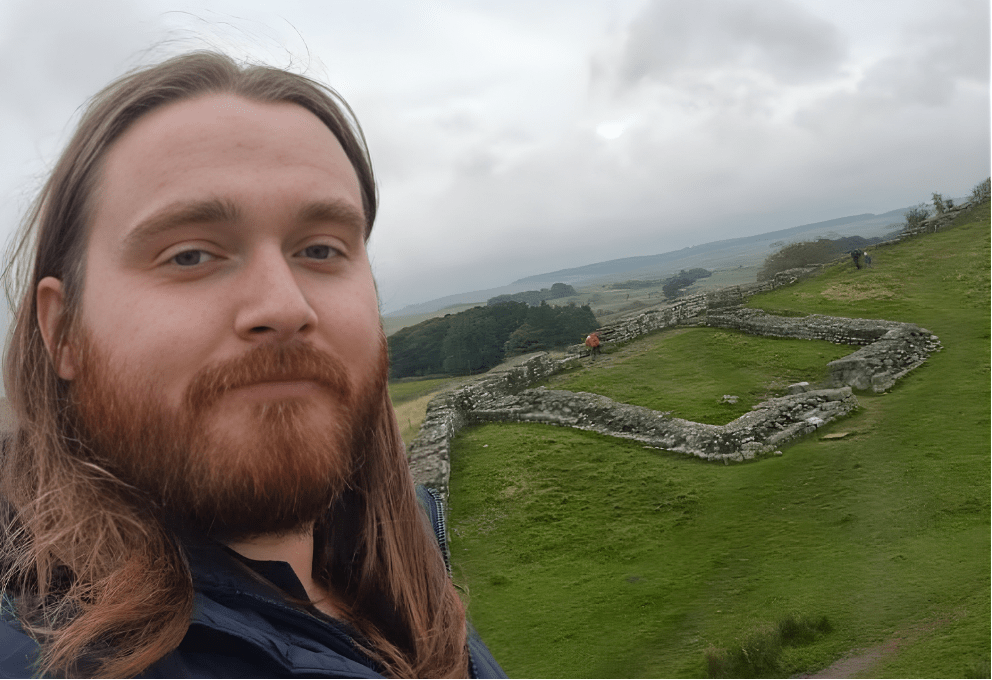
Jackie: Nathan, first tell us a little bit about who you are, what you do, and what ignited your passion.
Nathan: I’m a tour guide in Edinburgh, Scotland for Rabbie’s. One of our tours combines Hadrian’s Wall and Roman Britain, while another five-day tour visits the wall and York, a former Roman city. I’ve been doing it since spring of 2024. But when I interviewed for the company, they asked me to give a short talk on something I’m passionate about. I noticed they offered a tour to Hadrian’s Wall, and I thought, “Why learn something new when I could talk about what I already know?” I’ve loved ancient and medieval history since childhood. The first book I read as a child was on Greek mythology. Then the next was a children’s book about Robert the Bruce, who led Scotland in the First War of Scottish Independence against England. The Greeks led the way to Rome. I’ve been captivated by the Roman world ever since. To get paid for talking about what you love? There are worse fates!
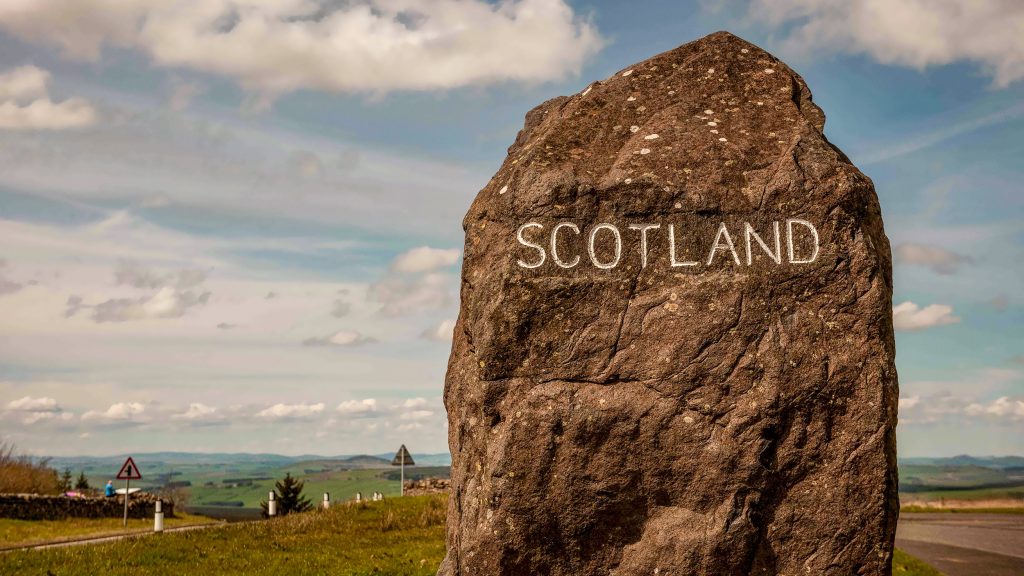
Jackie: So tell us about Roman history in Britain. When did it begin? Please give us a chronology of the emperors who were physically present, the invasions or invasion plans, the chain of forts, the major cities, encampments, and resistance. Just give us an overview of Roman history in Britain.
Nathan: Roman history begins on the island nearly a century before the first permanent Roman settlement. Gaius Julius Caesar was the first to lead an expedition. It was during his campaigns in Gaul, modern-day France and parts of Belgium, when he led this exploratory expedition.
There’s considerable debate about why he did it. What many people accept is that Gallic enemies had friendship and family ties on the island and were using them to escape. However, some scholars offer a different view. Knowing what an astute self-publicist Julius Caesar was for the time, there’s a lot suggesting he understood that being the first Roman to lead an expedition to an unfamiliar land would make him exceptionally popular in Rome. It was their version of the Spanish conquest in South America, a land of mystery. Other than a handful of daring traders, few knew much about the island. Caesar becomes the first Roman to land there. For this politician, that’s going to make him very popular.
He plans an expedition. The expedition falls apart before it starts. He’s delayed from launching because there’s trouble on the Rhine. Some Germanic tribes crossed the Rhine to raid Caesar’s territories in Gaul, forcing him to respond. That, in itself, is regarded as an impressive event, but it derailed his intended plan.
He travels quite late into the summer. The English Channel is notorious for severe storms. The Romans were famously poor sailors. Not all of his boats make it, including much of his cavalry, scouts, and supplies.
What few boats make it across land at the White Cliffs of Dover, possibly the worst place they could land! Thus, they must sail northward. But by now the Britons knew they were coming, so it was a contested landing; Caesar managed to defeat them, but the Romans didn’t stay for very long. In 55 AD, after losing or damaging so many ships and being forced to forage, they realized staying was a bad idea. So they hastily retreat.
Caesar returns in 54 AD with greater success. He plans better. He brings additional cavalry, including fighters from Gallic tribes. That means more shipbuilders and engineers in case their ships are damaged by storm again. He makes it up to the River Thames around London, perhaps even beyond. He defeats Cassivellaunus, a native king leading the coalition against him.
But even then, logistics, native resistance, and the island’s poverty forced Caesar to abandon his conquest plans. He still writes and sends a report to the Senate. That manages to get a day of celebration in his name, regardless of the lack of subjugation of the island population. Even though both campaigns ultimately failed, they advanced his long-term political aspirations.
Nevertheless, Caesar’s campaigns yielded a significant outcome. Some tribes began paying tribute to the Romans under a loose understanding. Subsequent Roman emperors Augustus and Tiberius considered invasion but lacked the appetite for it.
Caligula, famously mad, seizes a pretext for invasion in 40 AD when the Atrebates’ king Verica is overthrown by the neighboring Catuvellauni tribe. He asks the Romans for assistance. Caligula planned an invasion but abandoned it due to bad weather in the English Channel. Not that it mattered, since he was assassinated not long after.
Now you have the Emperor Claudius. He was forced to become emperor. He had a physical disability, which the Romans of his era found disconcerting. But he was quite smart. He knew his political position was weak and he needed a win. Recognizing his pretext from before, he launches an invasion led by general Aulus Plautius in 43 AD.
It’s unclear how many legions there were. But many historians believe about four legions—around 20,000 men—were sent. In that year, they conquered the capital of the Catuvellauni, which became the site of Camulodunum, modern-day Colchester, the first Roman city on the island. By 44 AD, they had conquered hillforts in the Dorset area, including Maiden Castle. By 48 AD, they controlled most of the territory between the Humber and the Severn Estuary. The only places definitively still in the native Briton’s control are Wales, modern Cornwall, Devon, and the northwest of England, Northumbria. Consider this: from 43 to 48, just five years, yet it’s a remarkable amount of time to conquer that much territory!

However, many tribes could see the writing on the wall, including the Iceni. At this point, their association with Rome was more alliance than rule, a client state. Yet, they are still forced to accept Roman laws, including the disarming of themselves, which leads to rebellion.
But Rome is on the island to stay. The Romans began building their first cities. Then they make their first major mistake, which becomes very famous. It inspired their worst rebellion, around 60 to 61 AD.
The Iceni king dies. He left a will. In the will, he gave his possessions to his two daughters and to Emperor Nero, supposedly a subtle way of ensuring a peaceful transition of power under Roman rule while still honoring his heirs.
But the Romans saw it differently. They viewed it as an insult because, in their eyes, women shouldn’t inherit. So they go in and mistreat the Iceni. They loot houses and enslave many tribesmen. They mistreated the daughters, including the one crowned Queen, Boudica. When Boudica protests, the Romans flog her.
This caused Queen Boudica to secretly meet with other tribes and launch the most famous rebellion in Roman Britain. It’s harsh. The Iceni sacked and destroyed three Roman cities: Camulodunum, Londinium, and Verulamium. The sackings were so severe that archaeological evidence remains visible today. Melted glass in Colchester reveals how intense the fires were. Roman artifacts dated before 60 AD lie buried under London’s thick red clay layer, evidence of destruction from that era. The rebels slaughter any Romans they encounter, soldier or civilian. Some accounts describe it as nightmarish.
Any surviving refugees are taken in by Governor Paulinus. Nero even considers withdrawing from Britannia. Paulinus sends his legions west and makes a stand at what is now known as the Battle of Watling Street, one of the main Roman roads. We don’t know exactly where the battle took place. The only surviving sources are Cassius Dio and Tacitus.
Apparently, the Romans fielded 10,000 men against between 230,000 and 300,000 rebel soldiers. Some historians take those numbers with skepticism. Regardless of the actual numbers, the Romans were severely outnumbered. However, the Romans kept the forest at their back to avoid encirclement. They had heavier armor and superior equipment. Remember, the tribes had been disarmed earlier, so their equipment was inferior.
Despite their numerical advantage, the Romans won. When the tribal coalition was defeated, observers could watch their baggage trains being set up. Unfortunately, that blocked the exit. Many survivors were killed in the crush as they tried to escape.
According to the sources, Boudica survived the battle but drank poison days later to avoid capture. She received a lavish funeral, but her final resting place remains unknown. One theory places her burial beneath what is now King’s Cross in London.
Just like that, the rebellion failed and Rome rebuilt its cities.
The next major event occurred around 69 AD. In 68 AD, Nero commits suicide. What followed was the Year of the Four Emperors. This had repercussions in Britannia, since the governors could not control the legions. The island erupted in chaos. A Roman ally from the north became an enemy. There was a queen of the Brigantes tribe, Cartimandua. She fled her ex-husband. She favored Rome; he did not. Now the Brigantes are raiding into Roman territory.
This chaos wouldn’t end until Vespasian stabilized the empire. He became emperor on December 7, 69 AD. He sends Agricola to Britannia. Agricola finished conquering Wales and the south by 77 AD. He then turns north to conquer the Brigantes.
From this point, Rome controlled the territory in Britannia definitively. There is debate about how much of Scotland, called Caledonia, they sincerely held. But south of what would be Hadrian’s Wall lay Roman territory until their fall.
That wasn’t easy. Roman Britain was a famously troubled province. It never had fewer than three legions at a time due to its rugged terrain. Romanization proved difficult. It only really happened in the cities. That made it difficult, since an estimated 80 to 90 percent of the population lived outside the cities and maintained their pre-Roman lifestyles. The Roman legacy across Britain can be surprisingly difficult to find.
Now the Roans focus their attention on Caledonia (Scotland). Agricola campaigns from 79 to 85 AD. Details remain disputed. Roman sources claim he established a port on the River Tay, though many historians argue it was actually the River Forth, north of Edinburgh. It was both a land and sea assault. He defeats a Caledonian army at Mons Graupius. Nobody knows exactly where the battle took place, though likely in Aberdeenshire. The Grampian Mountains took their name from that battle. Agricola withdrew to Rome in 85 AD. That ends the campaign, though Roman incursions continue intermittently in southern Scotland for years. By 100 AD, Emperor Trajan withdraws Roman forces from Scotland for the first time, pulling them back to around modern Newcastle.
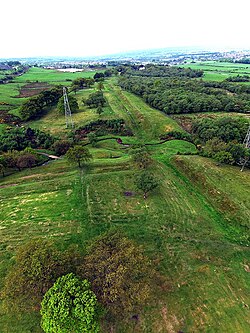
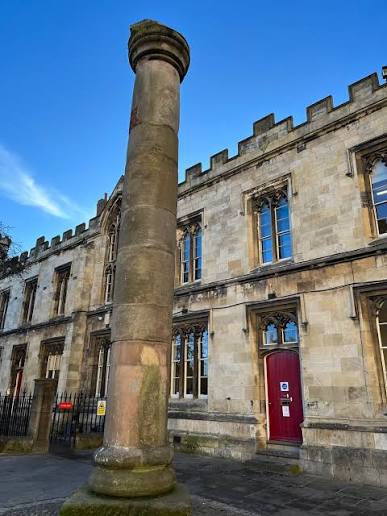
One of the best examples of Roman legacy is its road system. Between 8,000 and 10,000 miles of roads in the British Isles are Roman roads. You’ve got the Fosse Way running from Exeter to Lincoln, Watling Street from Dover and London to Wroxeter, Ermine Street from London to York, plus Stane Street and Dere Street extending into Scotland.
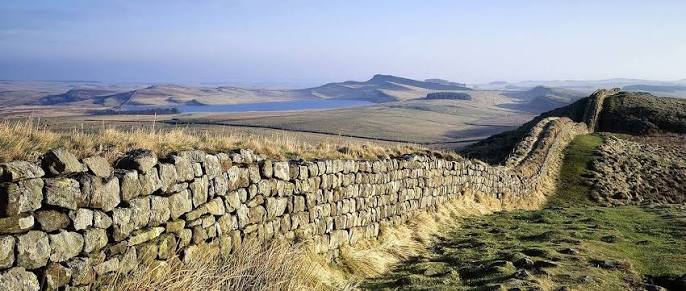
The next big date is 122 AD when Emperor Hadrian visits Britain and orders construction of Hadrian’s Wall, the most famous Roman monument in the British Isles. Even today, it captures the imagination. The Antonine Wall in Scotland was built between 142 and 154 AD under Emperor Antoninus Pius. It was an attempt to push further north into Scotland again. It ran between the Firth of Forth and the Firth of Clyde, placing it further north than Hadrian’s Wall. It was made mostly of turf rather than stone, which is why it hasn’t survived nearly as well as Hadrian’s Wall.
That campaign against the Caledonians lasted only about 20 years. By 162 AD, the Romans had withdrawn from Scotland and consolidated at Hadrian’s Wall, which became the northern frontier of Roman Britain for the remainder of the occupation.
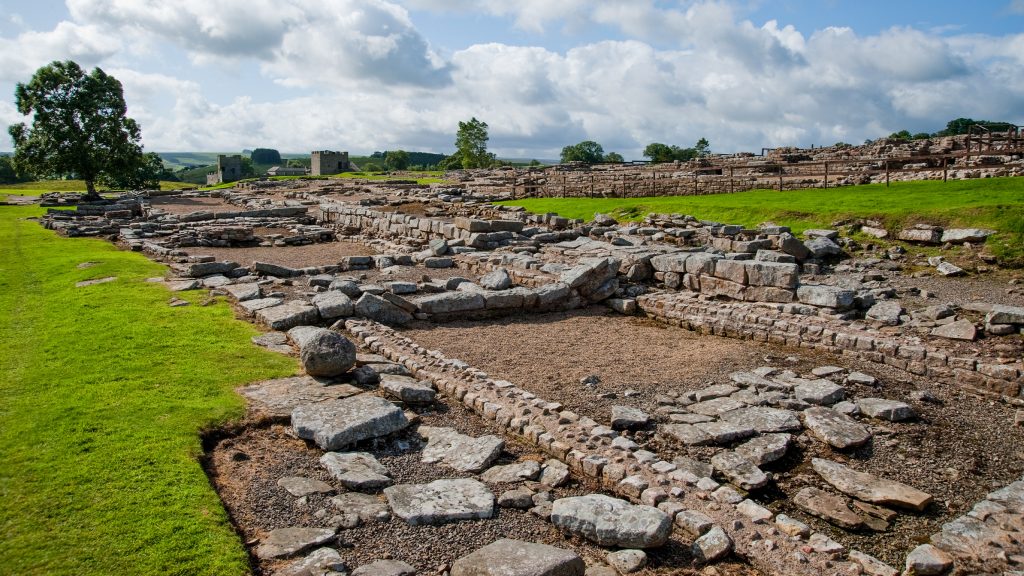
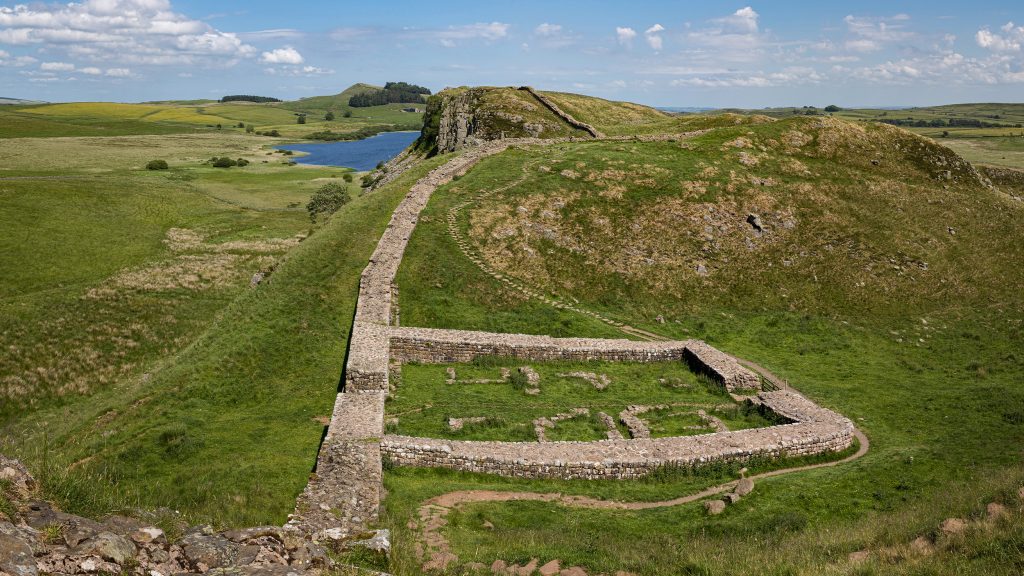
Back to Hadrian’s Wall, which stretches about 73 miles from the River Tyne in the east to the Solway Firth in the west. It was far more than just a wall. It had milecastles spaced every Roman mile, turrets between them, and attached forts. Some of the major forts are Housesteads, Vindolanda, Birdoswald, and Chesters. Vindolanda is particularly famous for the Vindolanda tablets discovered there, thin wooden writing tablets that preserve everyday correspondence between soldiers and their families. They give us incredible insight into frontier life.

It’s important to remember that the wall wasn’t built solely to keep people out. It was also about control, taxation, and restricting movement. It was as much a statement of Roman power as it was a defensive structure.
After Hadrian came the Severan campaigns of the early third century. Emperor Septimius Severus came to Britain in 208 AD with his sons Caracalla and Geta. He campaigns into Scotland again, attempting to subdue the Caledonians. It’s a grueling campaign. The sources describe guerrilla warfare, harsh terrain, and heavy casualties through attrition and disease, not necessarily in pitched battle. However, Severus died in York in 211 AD. York at the time, known as Eboracum, was one of Britain’s major Roman cities. After Caracalla’s death, he abandons the northern campaigns and returns south. That’s Scotland’s last major conquest attempt.
From that point on, Roman Britain shifted to a defensive posture. The empire faced difficulty in the third century. You have the Crisis of the Third Century: short-lived emperors, economic instability, external threats. Britain’s no exception.
In 286 AD, the naval commander Carausius declared himself emperor of Britain and northern Gaul. He built a breakaway empire that lasted about seven years. He’s eventually assassinated by his finance minister, Allectus, who rules briefly until Constantius Chlorus invades and restores Britain to central Roman control in 296 AD.
Constantius dies in York in 306 AD, and his son Constantine, later known as Constantine the Great, is proclaimed emperor by the troops there. Britain’s role extends into wider imperial politics. York becomes significant because of an Emperor’s accession.
Through the fourth century, Roman Britain faced intensifying pressure from what the Romans called the “barbarian conspiracies,” culminating in 367 AD with the Great Conspiracy, when Picts from the north, Scotti from Ireland, and Saxons from across the North Sea attacked simultaneously. The province descends into chaos. It took a general named Theodosius, father of the later Emperor Theodosius I, to restore order.
But by the early fifth century, Rome was overstretched. In 410 AD, Emperor Honorius told the cities of Britain to defend themselves. That traditionally marked the end of Roman Britain. Roman administration effectively withdraws from the region. Troops were recalled to defend the continent against the Visigoths and other groups.
That doesn’t mean everyone leaves right away. Roman culture, towns, and infrastructure don’t simply vanish. But Rome’s centralized authority is gone.
In major cities, Londinium has become a major commercial hub. Camulodunum was the first Roman town in Britain. Verulamium, near modern St Albans. Eboracum was York. Aquae Sulis in Bath was famed for its baths and temple complex dedicated to Sulis Minerva. Deva Victrix, the legionary fortress in Chester, was built to defend the region. Isca Augusta at Caerleon in Wales was another legionary base.
You also had a network of forts not just along Hadrian’s Wall but throughout Wales and the north, and along what’s known as the Saxon Shore in the southeast of England in the later period. These coastal forts were designed to defend against seaborne raids.
Boudica’s resistance didn’t end there. The Silures and other Welsh tribes resist fiercely in ongoing local uprisings. It takes decades to fully understand Wales. Even in the north, the Brigantes and others demanded constant management.
But eventually, Roman Britain acquired the culture of the wider Roman world. You have villas in the countryside, some quite elaborate, like Fishbourne Palace. You have mosaics, bathhouses, and amphitheaters. You have evidence of Roman religion coexisting with native Celtic traditions. There’s syncretism, where gods merge, like Sulis and Minerva.
By the time Rome leaves, Britain has been part of the empire for nearly 400 years. That’s longer than the United States has been a country. So even though Romanization might not have been complete, it left a significant mark through roads, city layouts, place names, and even aspects of law and administration that influenced what came later.
Jackie: How many soldiers would a full fort along Hadrian’s Wall have held? And how many are still left? Or what might you see from there?
**Nathan:** Housesteads is the most famous one. It’s arguably the most complete Roman fort. At most, a fort like Housesteads would have housed a thousand men. Some of the smaller forts held about thirty men. But one figure I’ve seen is that at any given point, there would have been no less than thousands of men at Hadrian’s Wall.
There’s also a road behind it, built atop an old Roman road. A legion was stationed there to patrol that road. So it would have been an absolutely massive force when Rome was at its most powerful. But as Rome collapsed from the fourth century onward, the wall’s fortifications declined.
Jackie: So let’s talk about the structures still standing and the places where you can really see the lasting Roman legacy of these forts and what’s built around them.
Nathan: So I mentioned Housesteads. That’s likely the first one I’d suggest touring. Like I said, it remains the most complete Roman fort. They hold a small museum with Roman artifacts. That fort was built around 124 AD. It’s remarkably impressive. Not just for its military structure, but for several other interesting remains as well. For example, large stone-lined cisterns ring the periphery to gather rainwater for drinking, since Housesteads lacked a natural water source. They captured the rainfall.
It also contains one of the best-preserved stone latrines found in Roman Britain. So, if you’re interested in visiting an ancient toilet, Housesteads is where to go!
Another favorite fort and one we visit on tour is Vindolanda. It was an auxiliary fort built in AD 85. This was actually one of the furthest north before Hadrian’s Wall was built. The Roman troops used it until 407. It was a fort around which a town developed. People lived at the site throughout the fifth century too. Apparently, many retired Romans were given land there and chose to stay and cultivate it. As I mentioned, one of the most important discoveries here is the Vindolanda tablets. These thin wooden writing tablets were preserved in the soil. They include letters, supply lists, birthday invitations, complaints about cold weather, and requests for socks. It offers an incredibly human insight into frontier life.
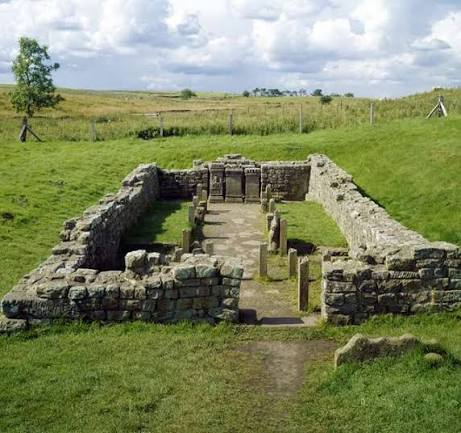
Follow the roads eastward. You have the remains of a Mithras temple. Mithraism was one of the mystery cults. Mithras was an Indo-Iranian god whose worship soldiers from the East brought to other parts of the Empire. And from the first to the fourth centuries, Mithras worship was widely practiced. Worshippers had underground temples, which is interesting because Mithras was a sun god. So it just goes to show how extensively this eastern deity found worship throughout the empire.
You might also want to visit other forts and milecastles along Hadrian’s Wall. I often stop at Corfield, a nice example of one of these smaller ones. But you’ve got forts like Chester and Birdoswald, along with the Roman town of Corbridge. There’s a Roman army museum along the wall as well.
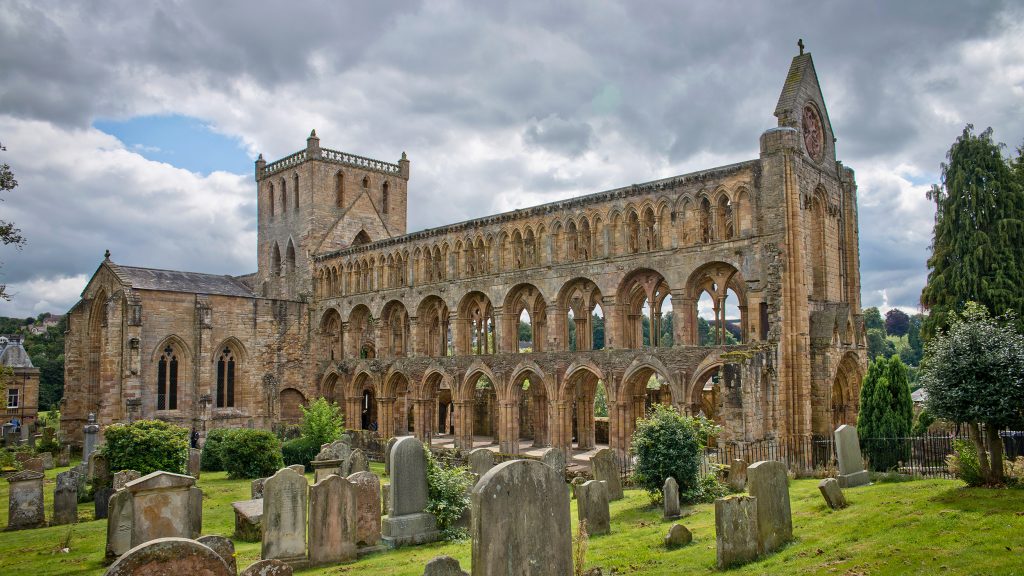
And the last place I’ll mention isn’t actually Roman. It’s later than Rome. It’s Lanercost Priory, a church. The oldest parts date to 1169. And the reason I’m mentioning that is because the stones used to build this church came from Hadrian’s Wall. So after the Romans fell, Hadrian’s Wall became a convenient source of masonry for the area right up until it was protected, to the point where Latin inscriptions you see on the church walls are likely Imperial, not Ecclesiastical.
Jackie: Fascinating. So that covers the northern reaches of Scotland. But there are other places throughout Britain essential to understanding the Roman past. Let’s start with Bath. That’s the one most people know.
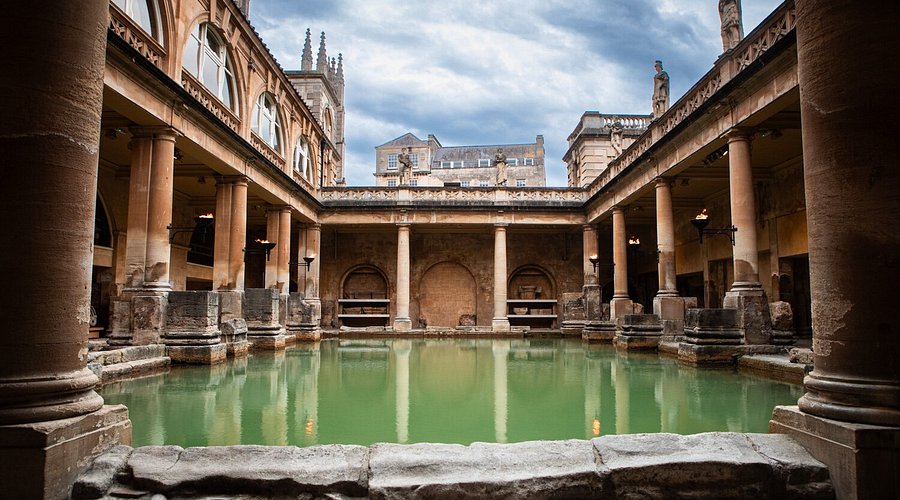
Nathan: Bath is Somerset’s largest city. It’s a UNESCO World Heritage site. And it’s one of Europe’s 11 transnational Great Spa Towns. You might think I’m just throwing that out there. But being a spa town is foundational to Bath, since that’s why it was founded. Originally it was the Roman city of Aquae Sulis, which simply means the waters of Sulis. Sulis, a Celtic healing goddess, was synchronized with Minerva, the Roman goddess of wisdom.
Bath is the only place in Britain with naturally occurring thermal hot springs. So you can see why they looked at that and thought this was clearly divine. That’s probably the only place back then on the island that had any warmth to it. (That’s a joke.) A temple built around 60 A.D. became the nucleus, with the bathing structure gradually expanding around it over the next 300 years. This was a Roman spa town. Like I said, it’s a place people go to relax. However, in the third century, they found it necessary to fortify it with defensive walls. Of course, it was abandoned when the Romans fled Britain. And this caused the baths’ loss. Those baths were rediscovered in 1878 and reconstructed during the Victorian era. They, of course, have modern bathrooms there too. It was also rather interesting because 30,000 Roman coins were found in Bath in 2012, very close to the bathhouse. And that’s the largest hoard of Roman coins ever found on the island.
**Jackie:** Now let’s talk about London, or Londinium as it was called? What can you see there?
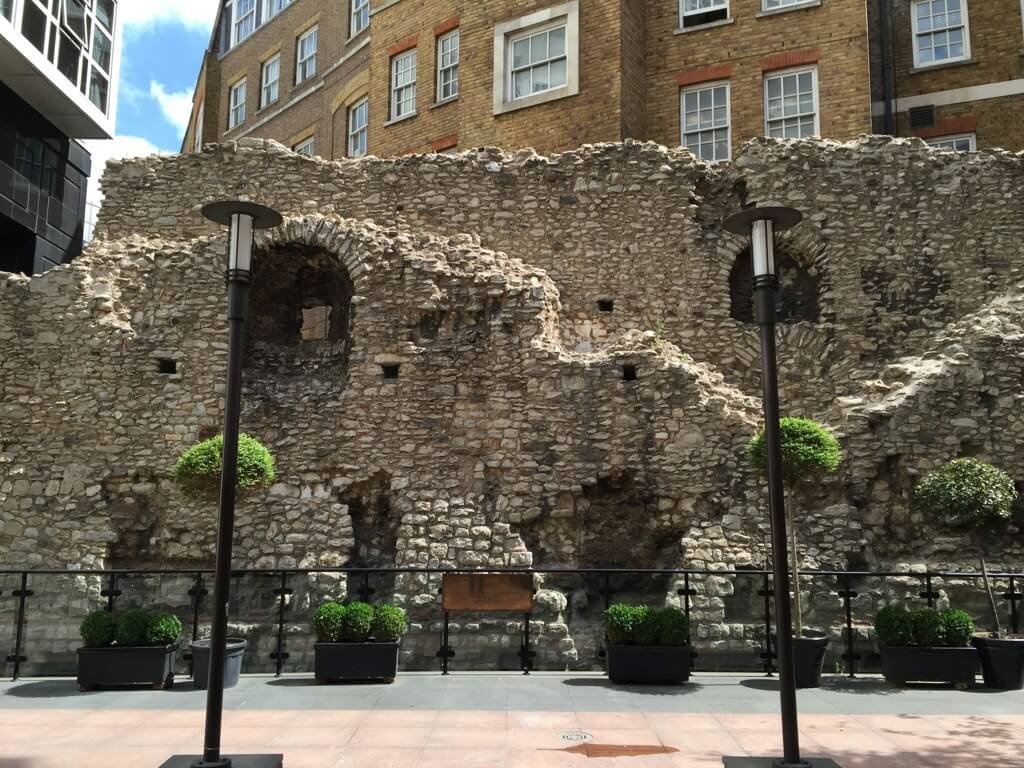
Nathan: In London, you can still see parts of the Roman wall, completed around 255 AD. It was built to counter the Germanic raiders who had begun migrating into the area. From the start, London was an important trade town. The Romans chose arguably the best location on the island for a city. The River Thames provided access to the North Sea. That position was simply too good to ignore.
Even after Boudica destroyed the city, it rose again remarkably quickly. By 80 AD, it already had a forum, basilica, governor’s palace, and amphitheater. There is evidence of some of that still visible, particularly the amphitheater. Frequently in the City of London, construction projects unearth Roman ruins beneath the surface. You’ve also got the Billingsgate Roman House & Baths. The baths held obvious importance to the Romans.
The Romans built their cities with purposeful design. They arranged them in a grid. The cities had one major market road running north to south and a military road running east to west.
The City of London still follows that grid. London Bridge stands where the original Roman bridge once did. Fenchurch and Gracechurch Streets intersect at the site of the former Roman forum. The Roman basilicas lie beneath Leadenhall Market, one of London’s most famous markets.
So the influence of Rome, even ignoring architecture inspired by Roman buildings, shaped the spine of the City of London, which was a Roman creation. The City of London, the powerhouse it is today, was built on the back of the Romans.
Jackie: Let’s talk about York.
Nathan: York, or Eboracum, was founded around 71 AD, initially as a fort to help defend the area. It became one of Roman Britain’s most important cities.
In 211 AD, the Roman province of Britannia was divided into two: Britannia Superior and Britannia Inferior. That doesn’t mean one province is better than the other. It means one province is closer to Rome than the other. York became the capital of the northern province. It would prove a surprisingly consequential city.
Two emperors died in that place. Septimius Severus, who made the greatest attempt at conquering Scotland, established York as his base. He brought his family along with him. Severus founded the Severan dynasty. He wanted to leave a legacy and dynasty for his sons, particularly his favorite, Caracalla, to inherit. He wanted to glorify him. Invade Scotland, where better to launch from than York?
It didn’t go well. Initially, they made decent progress. Most lowlands were briefly part of Rome. But as soon as Severus departed for York, leaving troops behind, the Caledonians rebelled and Rome lost Scotland again. A disappointed Septimius Severus fell ill and died in 211 AD.
Then in the late third century came Constantius Chlorus. He defeated the rebellious emperor who had attempted to break away and establish a separate empire in Britannia and Gaul. Constantius Chlorus arrives around 296 AD, defeats this faction and restores control, but he too dies in York. When Constantine’s father dies, troops in York proclaim him emperor, making York a direct catalyst in the rise of Constantine the Great.
There is also a building in York called the Treasurer’s House. The structure itself is not Roman, but a Roman road ran through its basement. It was properly uncovered in the 1950s. Now, The Treasurer’s House has a ghost story: a plumber working in the basement encountered a man with a plumed helmet, followed by Roman soldiers. The plumber could only see them from the knees up because the room’s floor sat above the level of the Roman road. The rest of their bodies lay beneath the ground, walking on the original road.
What better example of a legacy than an actual Roman ghost?
**Jackie:** So let’s move to Colchester.
**Nathan:** Colchester was the first Catuvellauni capital seized by Rome and settled with Roman legionaries. It became the province’s first capital and the first to host a Roman emperor.
The Roman sites around the city include the Balkerne Gate. This was the gateway to Camulodunum. It’s the largest surviving Roman gate of its time in Britain. Only part of it survives, but what remains is so well preserved and strong that a pub was built on it. Part of the reason it’s so large is because it encompasses the triumphal arch that celebrated Claudius’s arrival in 49 AD. Claudius initially sent a general to lead the invasion, but visited later himself. That’s where he entered through the arch.
There is also a Norman castle in Colchester. At the base of that castle lie the foundations of the Temple of the Deified Claudius, constructed between 49 and 60 AD. The temple itself doesn’t survive in full, but it clearly provided a strong base to support a Norman castle.
About 450 meters south of the city center stands the Roman Circus Visitor Centre. They discovered the site of a Roman circus in 2004. It’s the only known Roman circus still standing in Britain. It could have seated around 8,000 people and hosted chariot racing. The evidence suggests it was built around the second century and used for approximately 150 years.
**Jackie:** Is there anything else we might have missed? We’ve already covered the road system; what else? Aqueducts, administration, art, culture, anything else in Britain we haven’t covered?
Nathan: Yes. There are a couple of them.
One major city that often goes unrecognized is Verulamium, the third largest city in Roman Britain. It was also one of three cities Boudica destroyed. Today it’s near modern St. Albans.
Not only was it destroyed by Boudica, but the city also burned in fires in 155 and 250. So after being destroyed a second time, it was rebuilt with stone. The Roman remains in the town include an old wall. And there is also a hypocaust, which are amazing features. The Romans had central heating. The hypocaust is an underground heating system that warmed Roman buildings. You had hot air pumped into metal bars and pipes, which heated the walls and floors. And one of them is in Verulamium.
A rather interesting building on the south coast of West Sussex is the Fishbourne Roman Palace, also known as a villa. This was the largest Roman palace north of the Alps, despite Britannia’s remote and neglected status as Rome’s unruly frontier province. It was discovered by accident in 1805. And it wasn’t until the 1960s that they realized how significant this site truly was. So it’s now been excavated and preserved, with an on-site museum. It’s a rectangular palace set within formal gardens. The northern sections have been reconstructed. Alterations in the second and third centuries overlaid many of the palace’s original black and white mosaics with more sophisticated colored works, including a perfectly preserved dolphin mosaic. Britain doesn’t have many mosaics. So having a perfectly preserved mosaic in Britain is impressive. The palace was initially built for a local king. And this was a reward for his support of the Roman conquest.
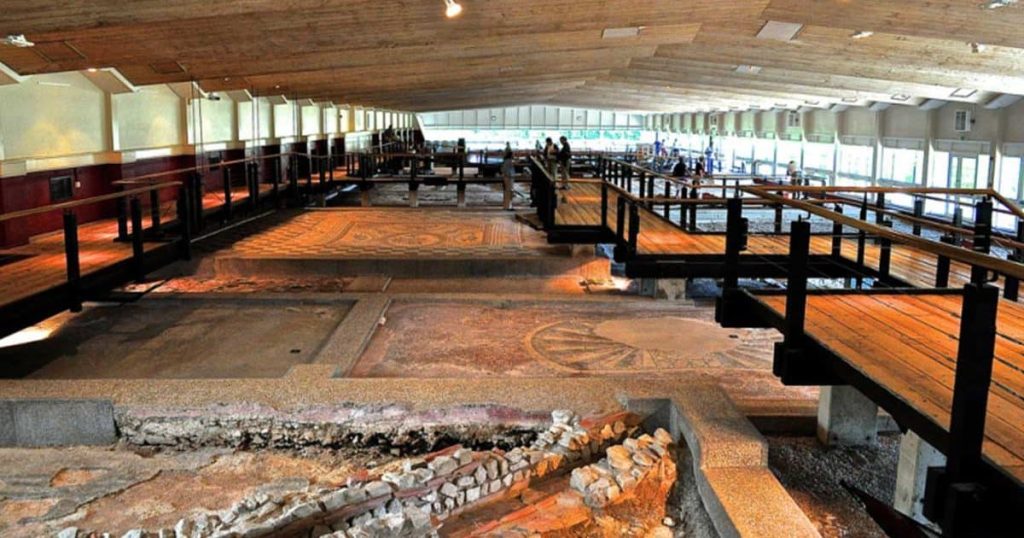
In Gloucestershire’s famous Cotswold Valley, you’ll find the remains of a Roman villa complete with mosaics, a hypocaust system, and bathrooms. It’s called Chedworth, built in the second century and extended between 360 and 380. The Romans withdrew from the island in 410. Yet, evidence suggests it remained in use through the fifth century.
There’s another fort near the coast in Kent’s region called Richborough, or Rutupiae. It was situated on a major port and became a significant fort in the third century when Germanic raids intensified. This fort stood along the Saxon Shore, which ran along Britain’s east and south coasts.
And the last place I’ll mention is Wroxeter in Shropshire, which the Romans called Viroconium. It’s just outside of Shrewsbury. At its peak, it was Britain’s fourth largest Roman settlement, with an estimated population exceeding 15,000. It was Britain’s first archaeological site to become a tourist attraction. It contains the remains of a bath house, marketplace, Roman forum, and city walls. It wasn’t a major city like London or York, but it exemplifies the legacy Rome brought to the islands. And yes.
Jackie: Nathan, that’s amazing. You have given us such an incredible survey of what one would experience when looking for Roman presence in Britain. It is exceptionally thorough and engaging. I’m pleased to share this with our readers.
# # #
Nathan Somers specializes in leading Rabbie’s one-day Hadrian’s Wall, Roman Britain & the Scottish Borders tour from Edinburgh, which explores Rome’s influence on Britain, ancient abbeys, the serene border hills, and the Roman site of Vindolanda. Rabbie’s offers small group tours throughout England, Scotland, Wales, and Ireland, giving history buffs the advantage of traveling with a knowledgeable driver-guide and truly small groups of fewer than 16 passengers.
Where to Stay in Roman Britain, United Kingdom
If you’re visiting Hadrian’s Wall and other Roman sites across Britain, stay near the wall in Northumberland for easy access to the best-preserved sections. The market towns of Hexham and Corbridge offer family-run hotels and bed-and-breakfasts within a short drive of major sites like Housesteads Fort and Chesters. These towns also have good restaurants and local shops, making them ideal bases for a few days of exploration.
For those interested in southern Roman Britain, Cirencester offers comfortable mid-range hotels near some of the Cotswolds’ richest archaeological sites. The Corinium Museum anchors your visit, and staying nearby puts you within an hour’s drive of villa sites and smaller forts. Bath, just beyond the Roman frontier zone, offers larger hotel chains and luxury options if you prefer more services, though it shifts your focus westward.
In London, accommodation near the British Museum or in central areas keeps you close to the artifacts and your fieldwork. Hotels in Bloomsbury and King’s Cross put you within walking distance of the museum and the Roman city’s archaeology. A day trip from London to Colchester, Britain’s first Roman capital, is feasible if you’d prefer to stay put and explore by train.
Choose your base depending on how much time you have and which sites interest you most. A week around Hadrian’s Wall and Northumberland captures the frontier experience; add southern England and you’ll either split time or drive longer between regions. Either way, book lodging in advance during summer, as these historic towns draw steady tourism.
