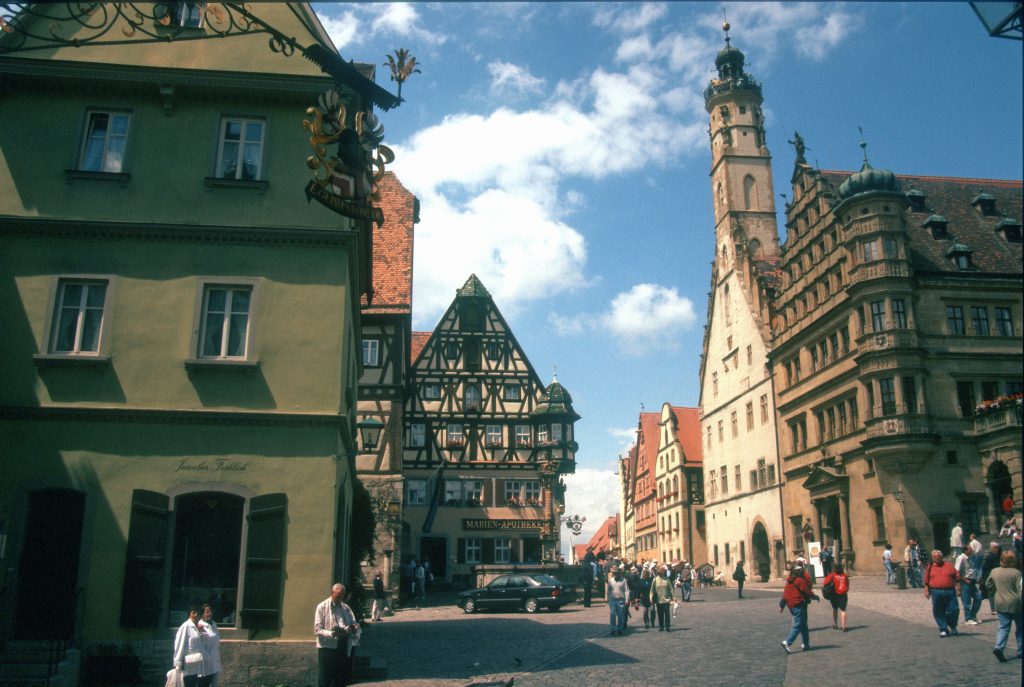
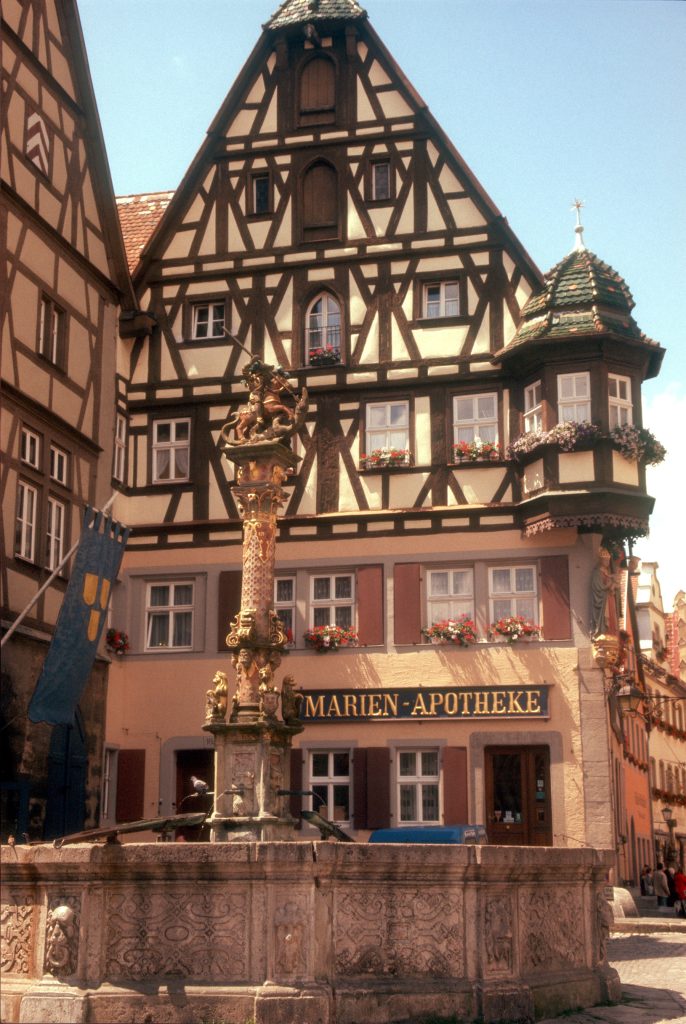
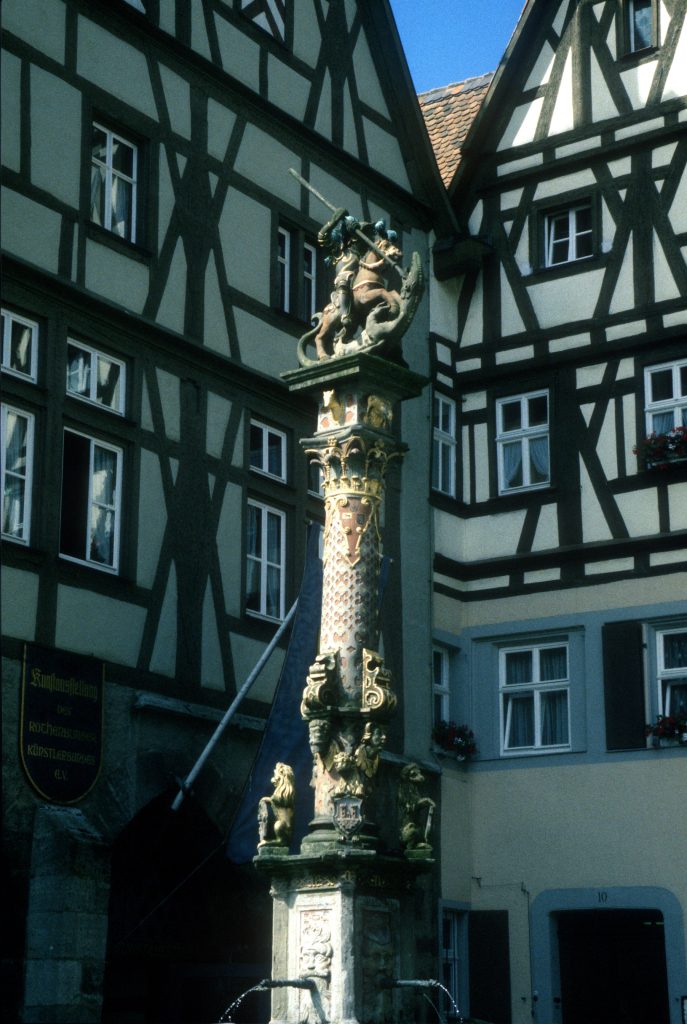
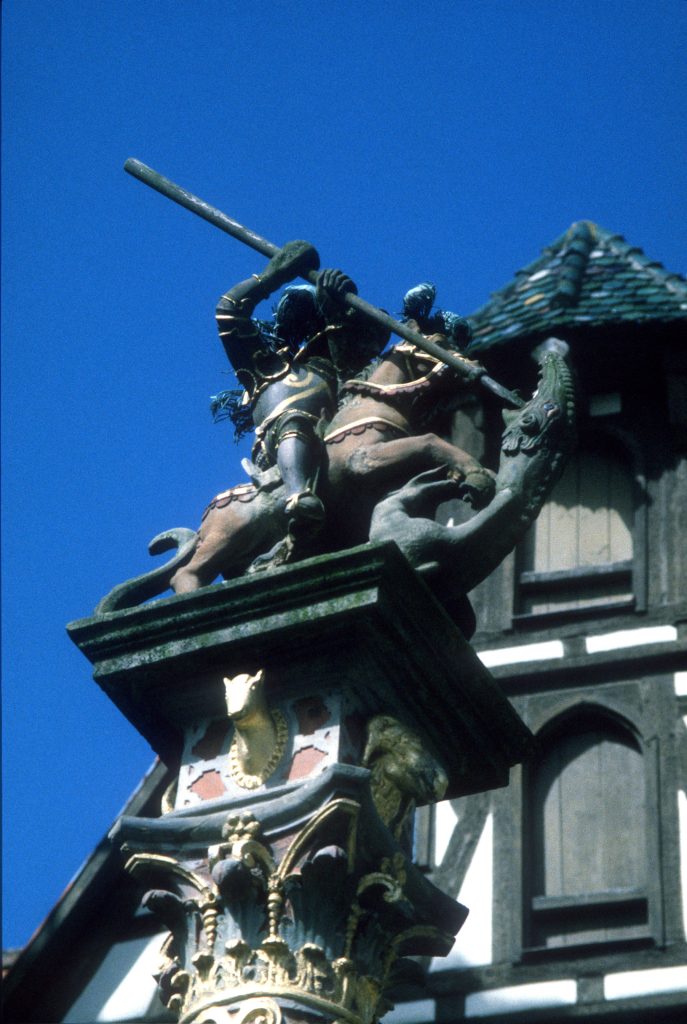
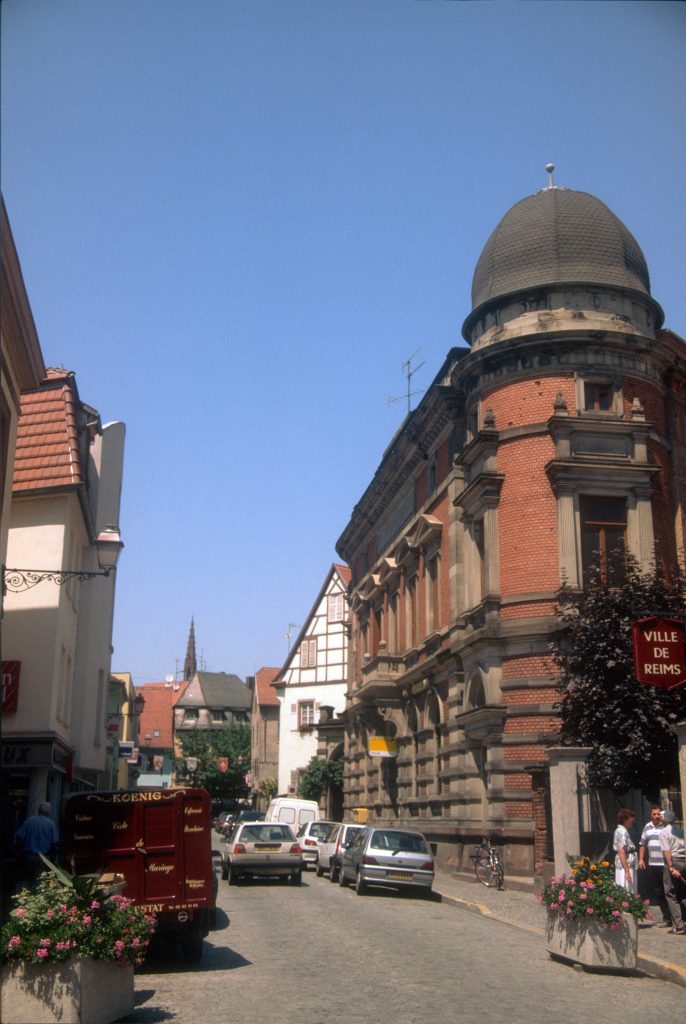
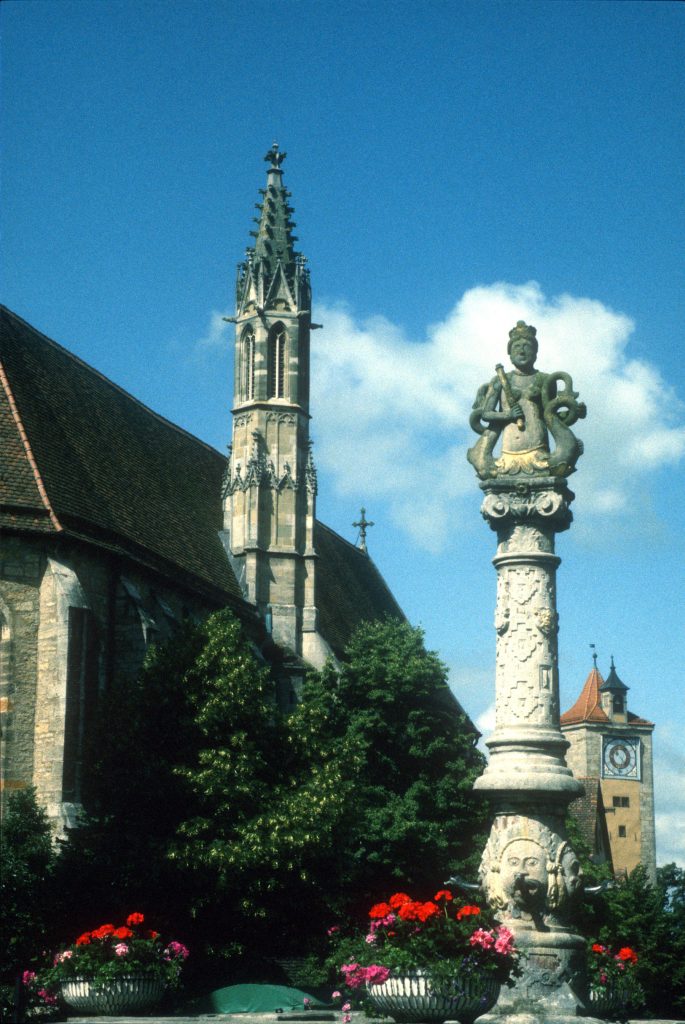
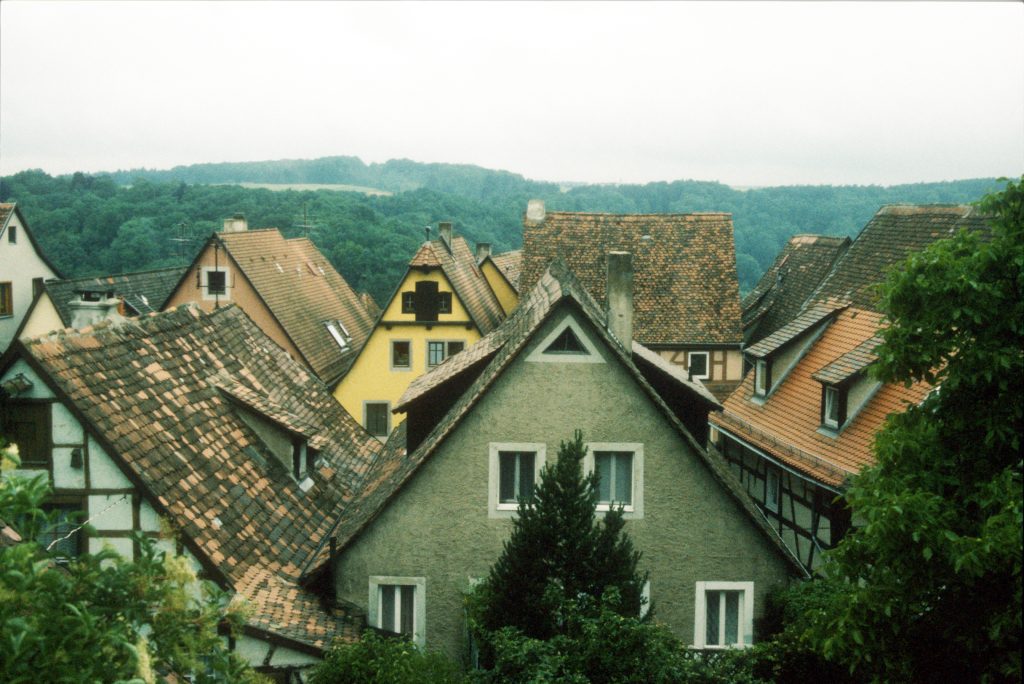
In the gentle curve where the River Tauber winds its way through Bavaria, a town rises like a dream stitched from stone, timber, and time. Rothenburg ob der Tauber (Rothenburg Over the Tauber) is that rare place where the medieval world has not merely survived but thrives, lovingly preserved as if centuries were mere days. To walk its cobbled lanes is to step into a storybook, one colored with Gothic steeples, half-timbered houses, and whispers of history around every bend.
Founded in 1274 as a Free Imperial City within the Holy Roman Empire, Rothenburg quickly flourished as a center of trade and governance. Its prosperity peaked in the 14th century, when it became one of the largest cities in medieval Germany, fortified with thick stone walls and stout towers. However, the town’s golden age came to a sudden halt during the Thirty Years’ War, when it was captured by Catholic forces in 1631. Financial hardship and political isolation preserved Rothenburg in a peculiar way, with no money for modern expansions, its medieval core remained untouched by industrialization, effectively freezing it in time.
Walk the Walls
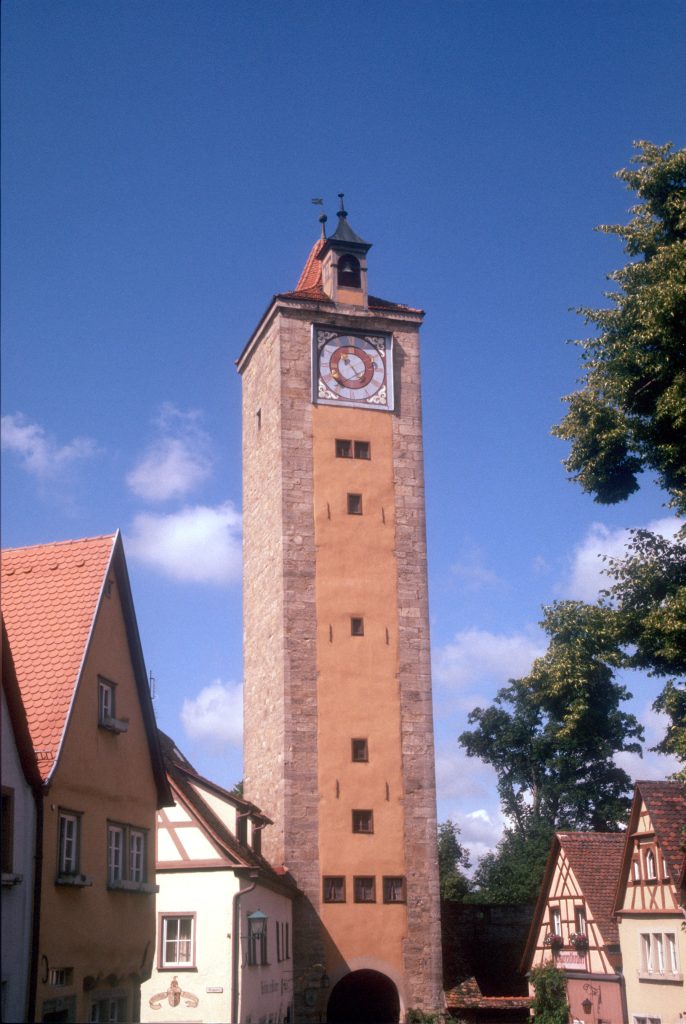
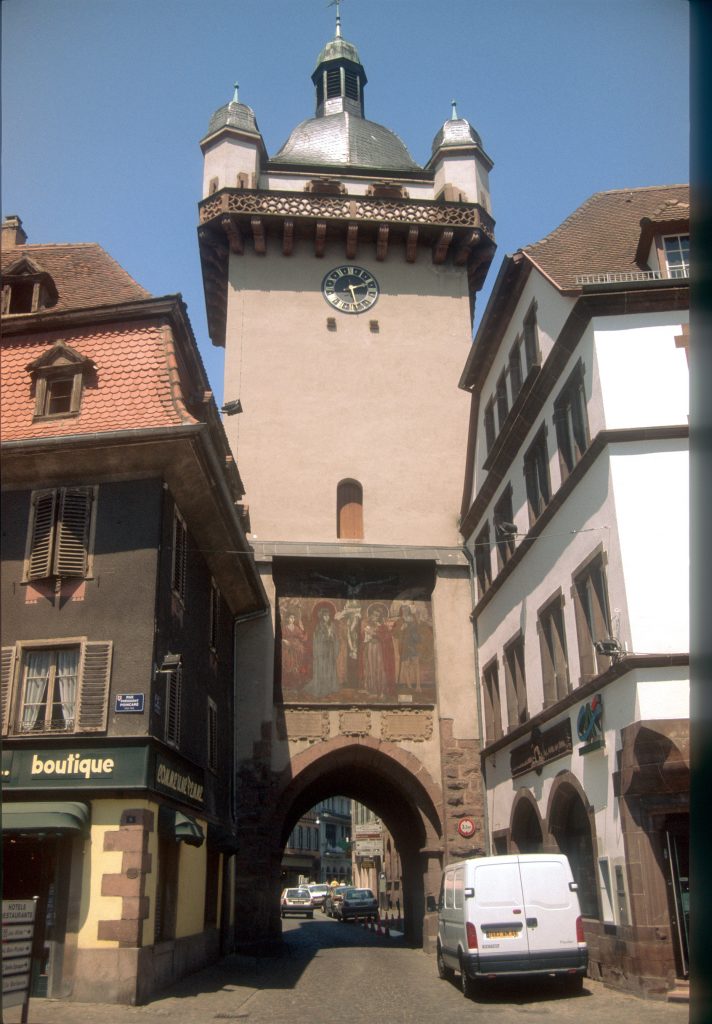
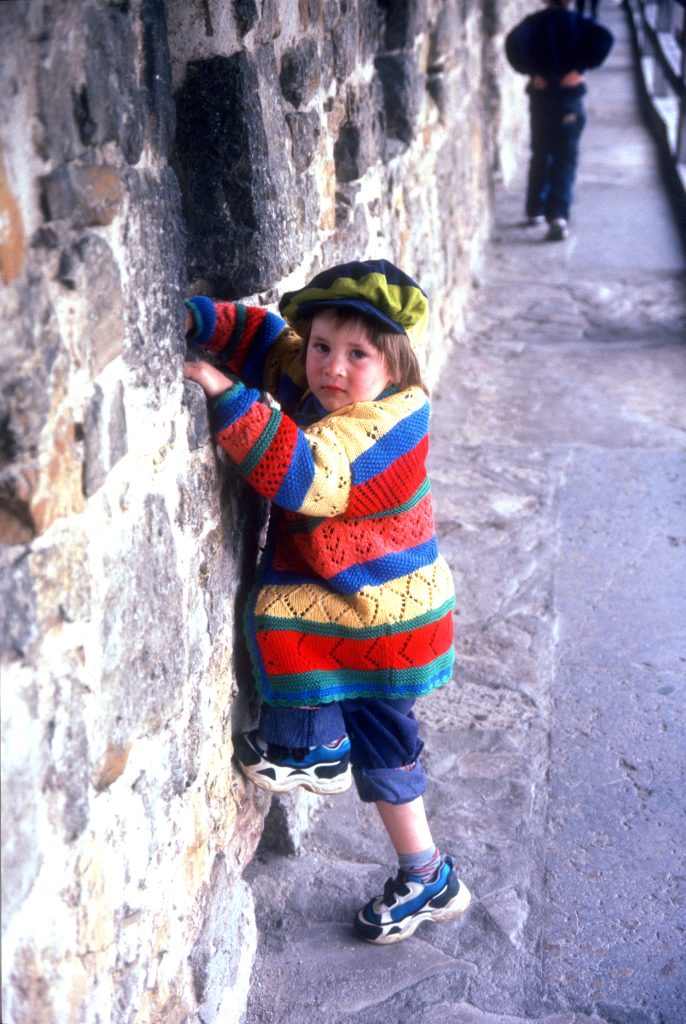
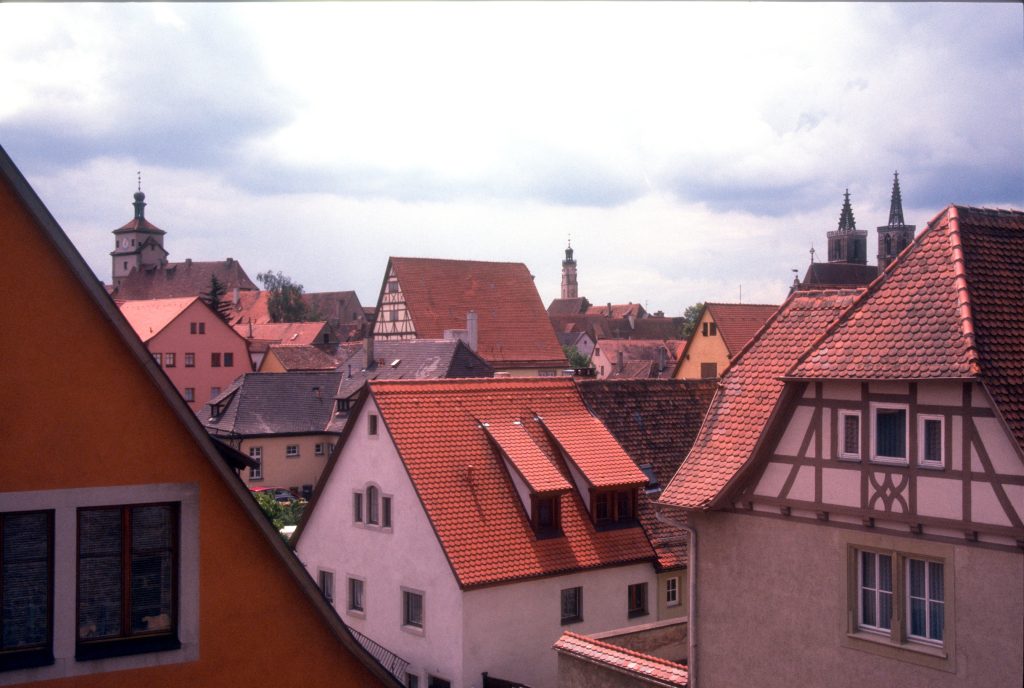
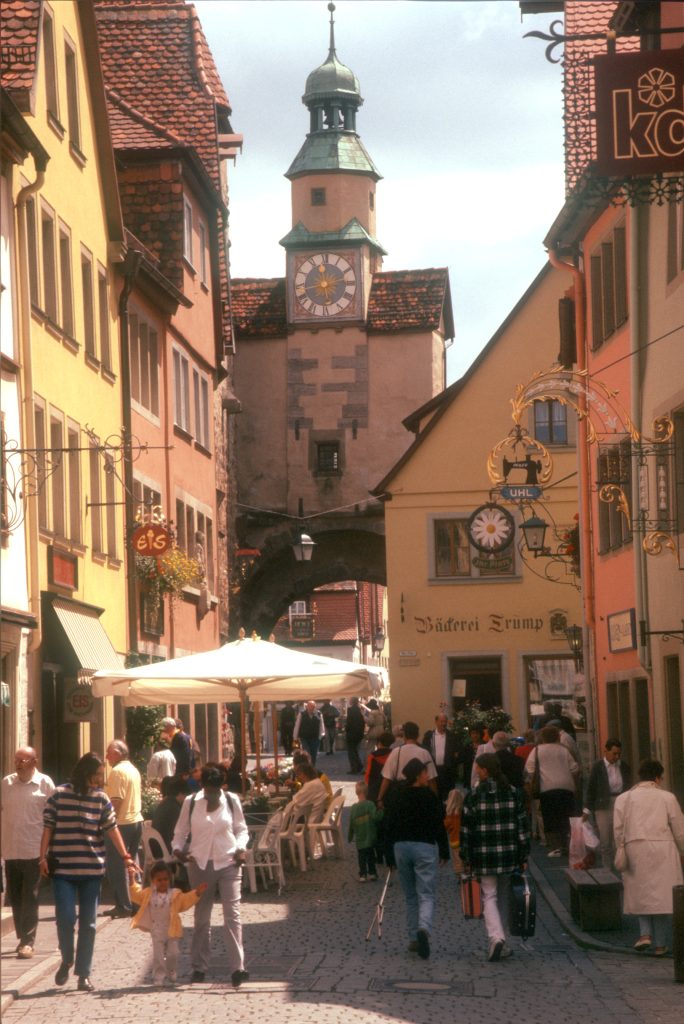
Arriving in Rothenburg is like opening a jewel box. The city’s defining features are its encircling walls, punctuated by watchtowers and fortified gates like the majestic Klingen Gate and the Röder Arch. Wander along the parapet walk, where the weathered stones are warmed by the midday sun, and every turn reveals terracotta roofs and spired silhouettes.
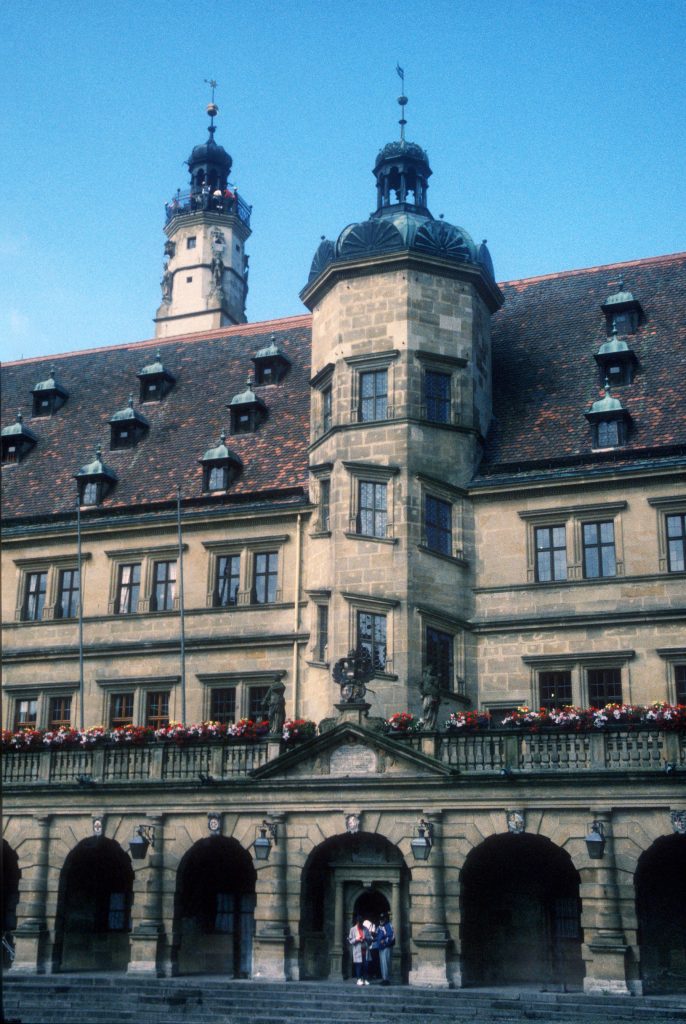
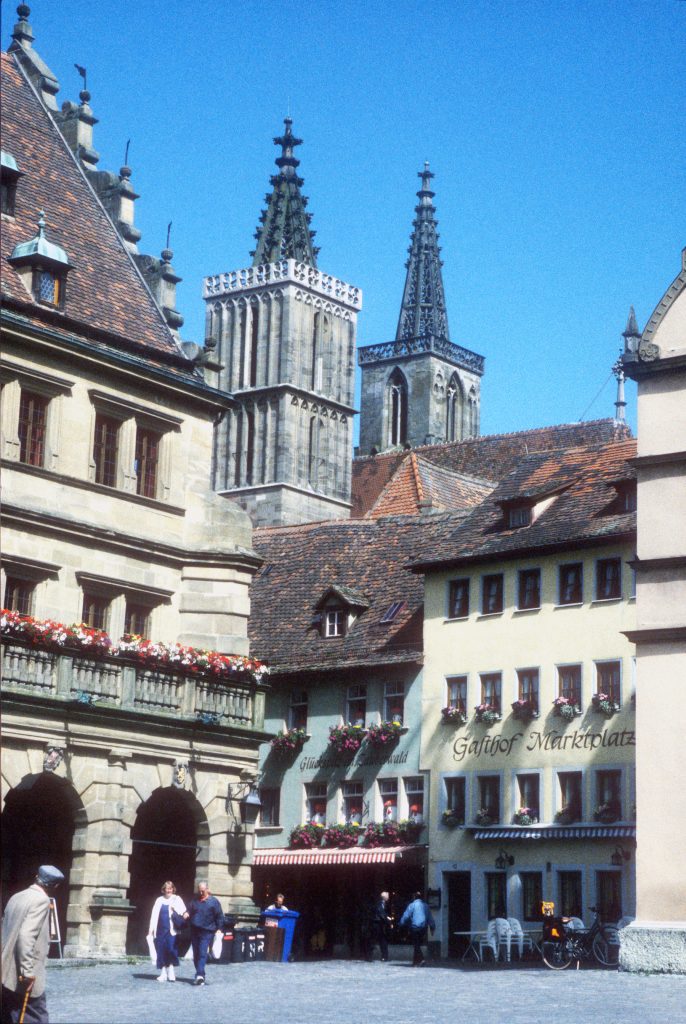
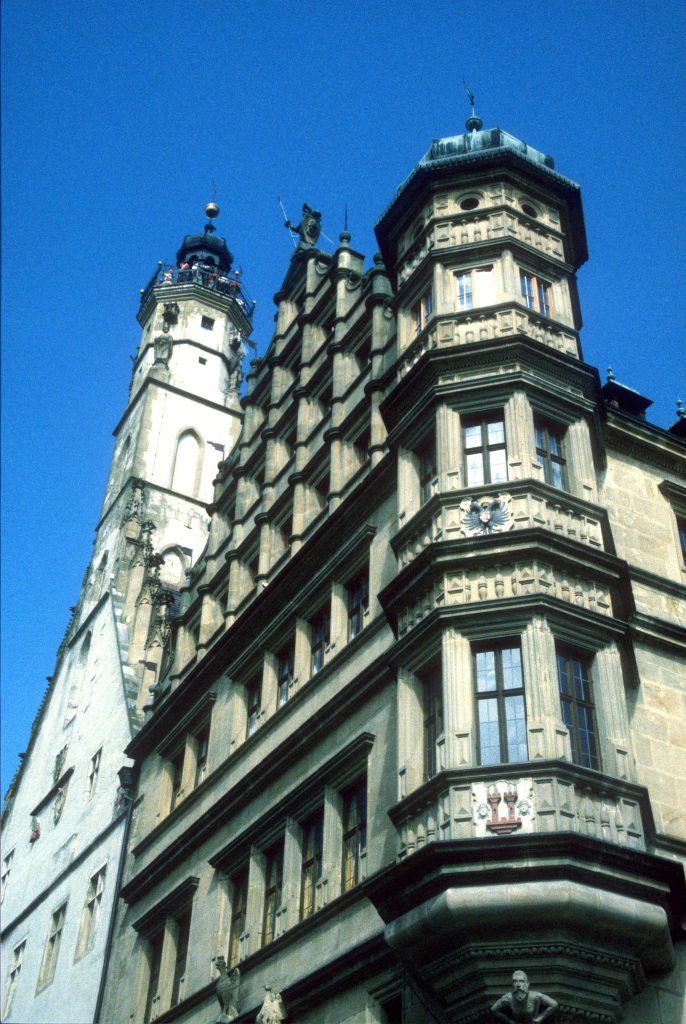
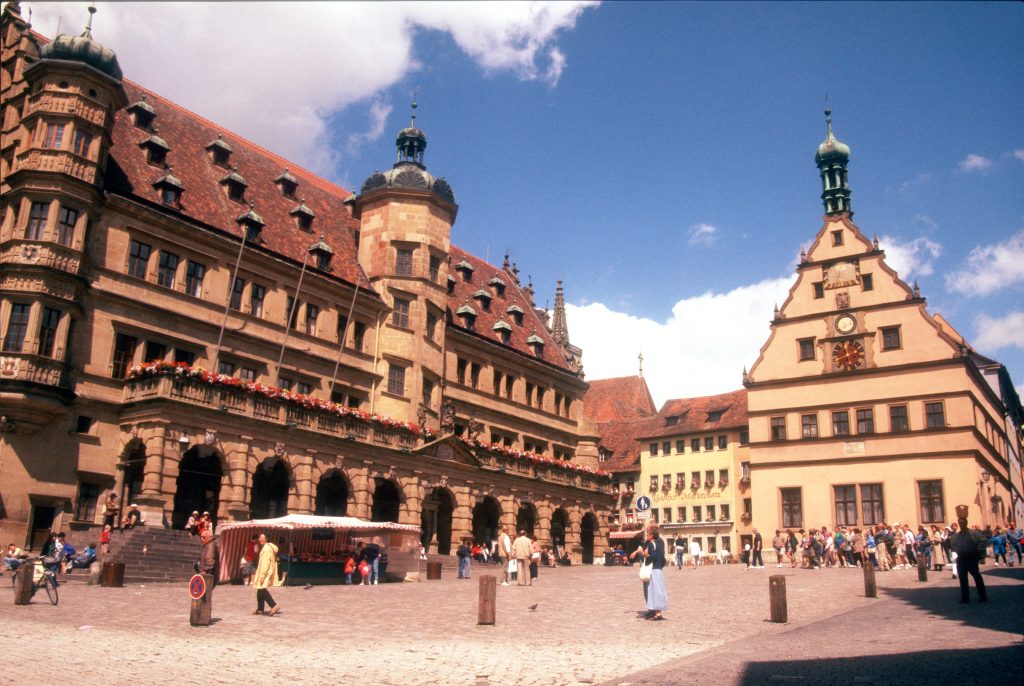
In the heart of town, the Marktplatz pulses with life. The Renaissance-era Town Hall (Rathaus) dominates the square with its twin personalities: a Gothic rear structure from the 13th century and a 16th-century Renaissance façade facing the marketplace. Visitors can climb the Town Hall Tower for a sweeping view over the red-tiled cityscape.
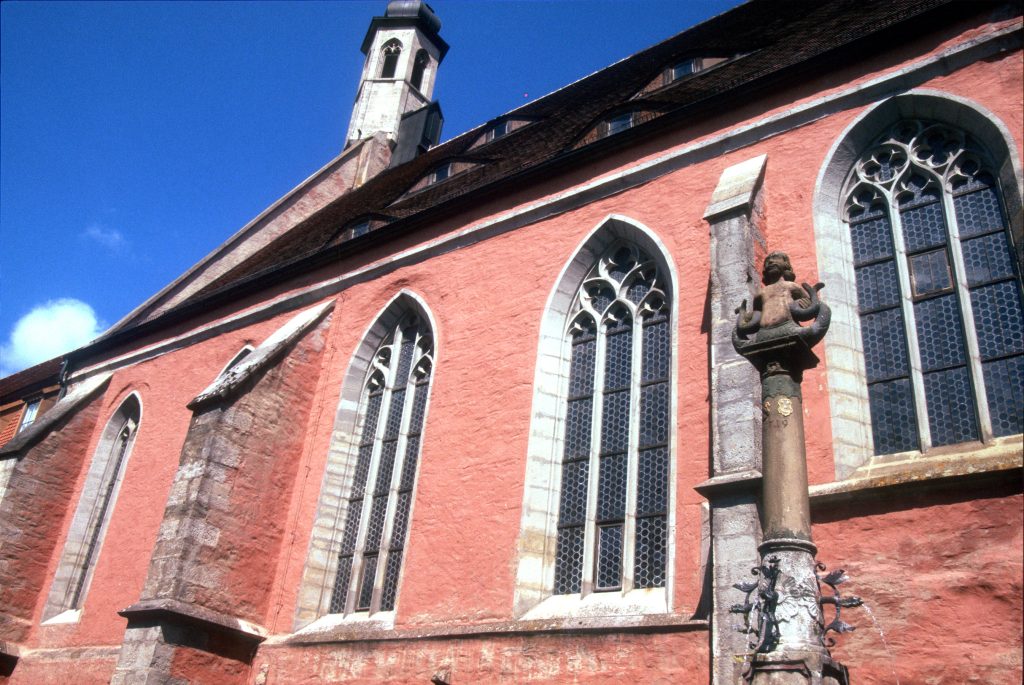
Just steps away, St. Jakob’s Church shelters one of Germany’s most celebrated religious treasures, the Holy Blood Altarpiece. Masterfully carved by Tilman Riemenschneider between 1500 and 1505, this breathtaking sculpture depicts the Last Supper with a reverence and detail that feels almost ethereal.
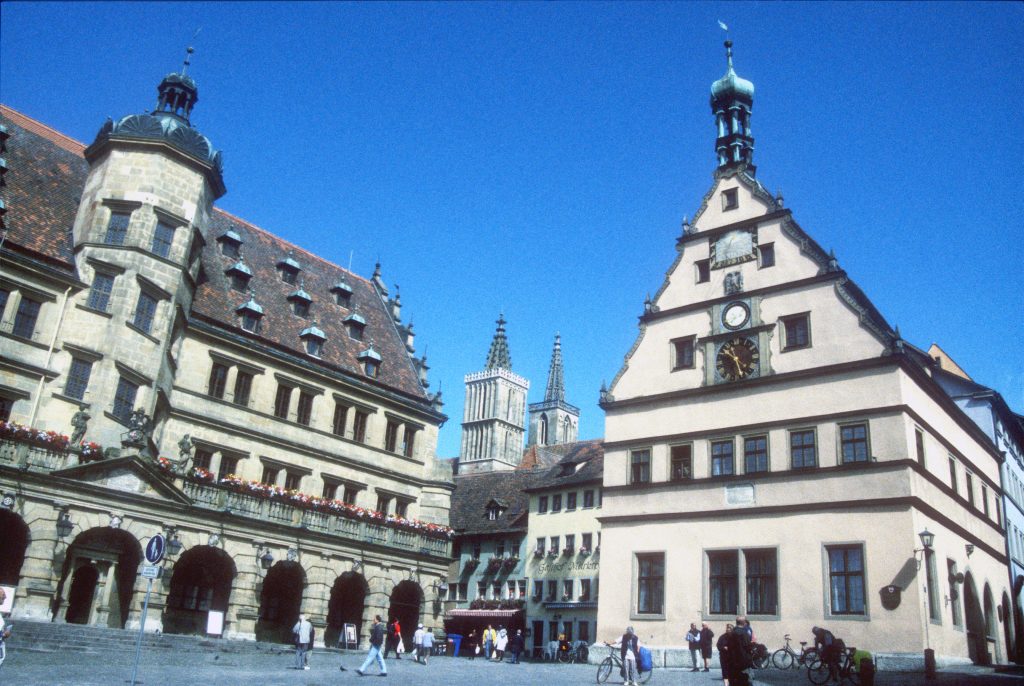
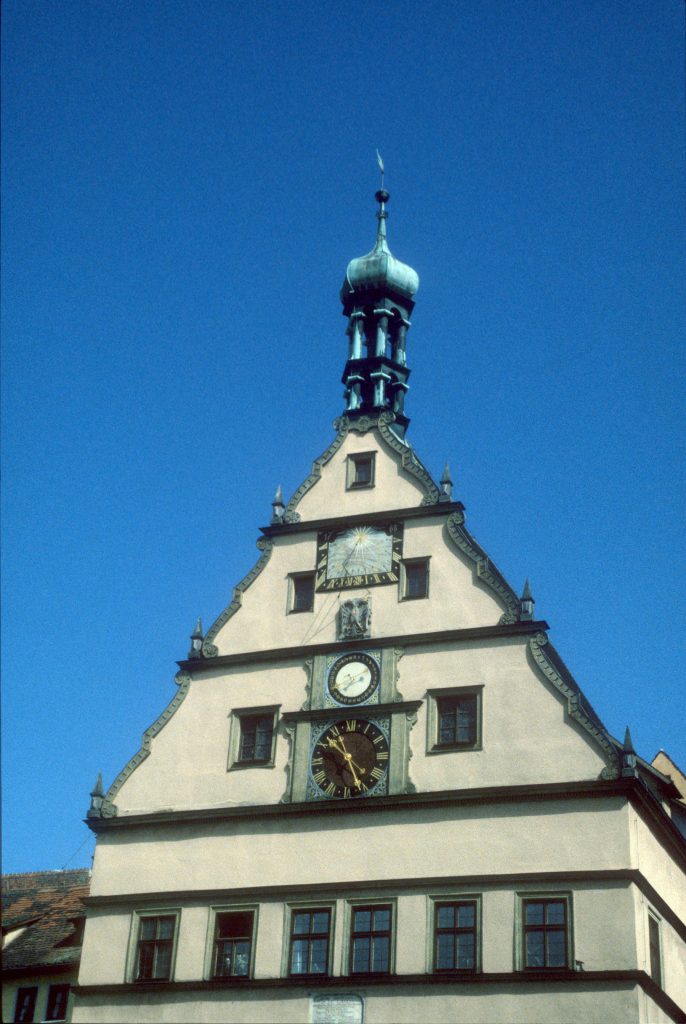
The Ratstrinkstube Clock Tower
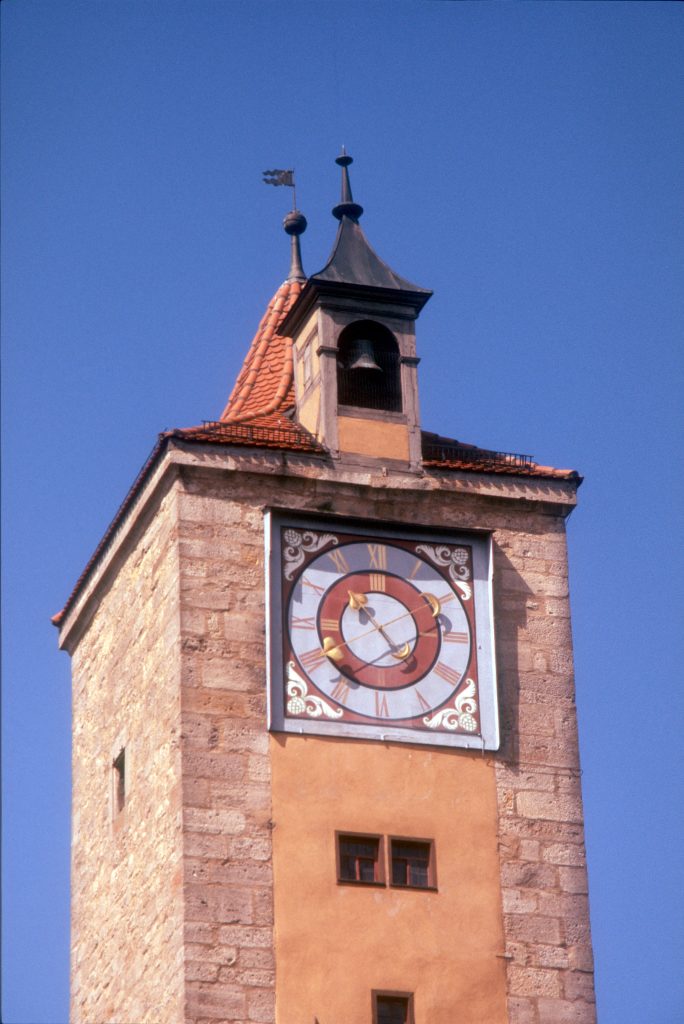
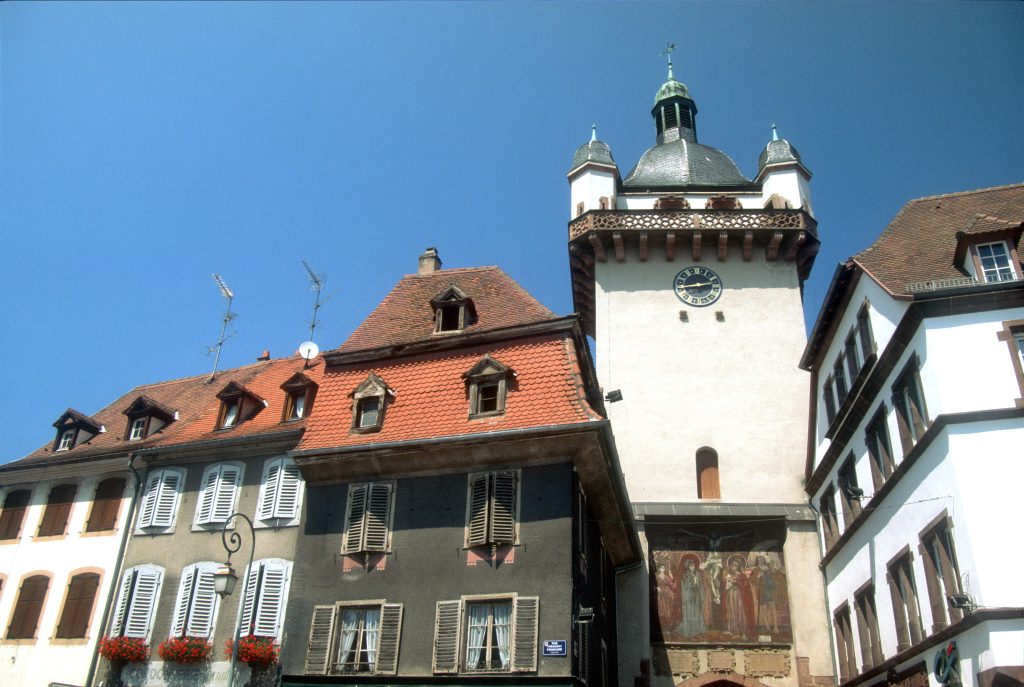
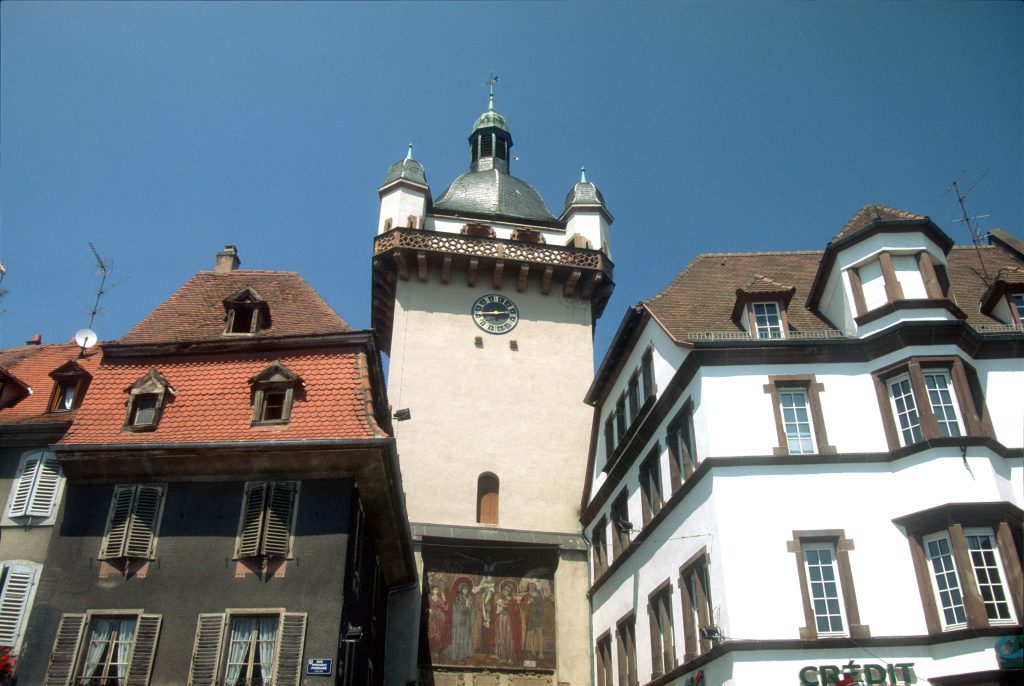
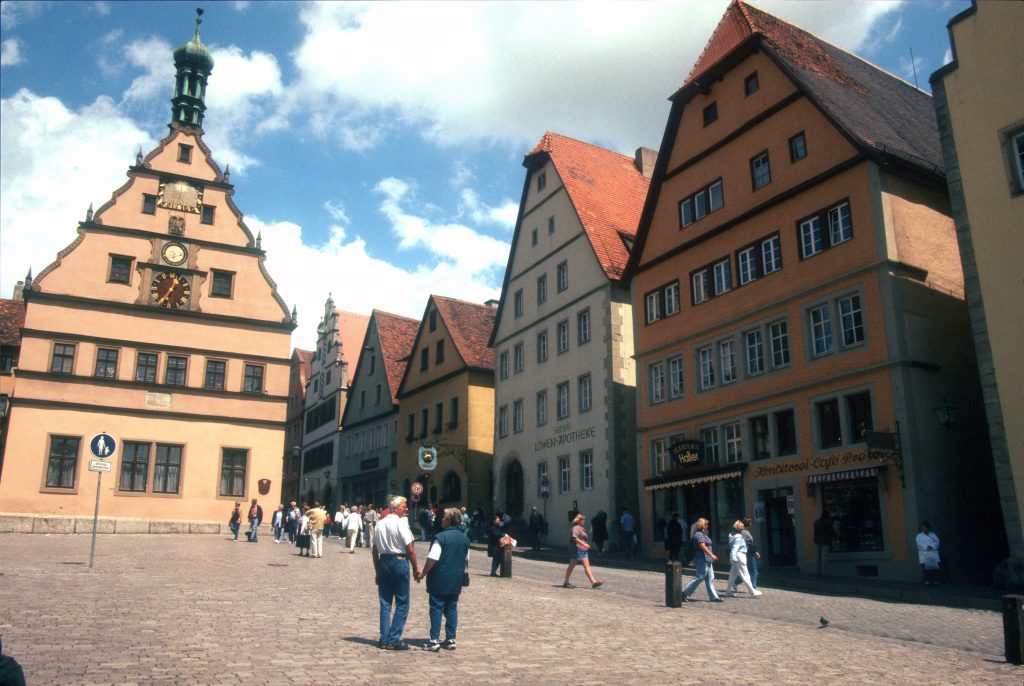
Nearby, the Ratstrinkstube Clock Tower delights visitors with a charming mechanical spectacle. Every hour, small doors above the clock face open to reveal animated figures reenacting Rothenburg’s most beloved legend: during the Thirty Years’ War, the Catholic general Count Tilly offered to spare the town if someone could drink a full gallon of wine in one draught. According to the tale, Mayor Georg Nusch heroically accepted the challenge and succeeded, saving Rothenburg from destruction. The clock’s quaint reenactment reminds visitors of the town‘s resilience.

Other buildings and landmarks of note include:
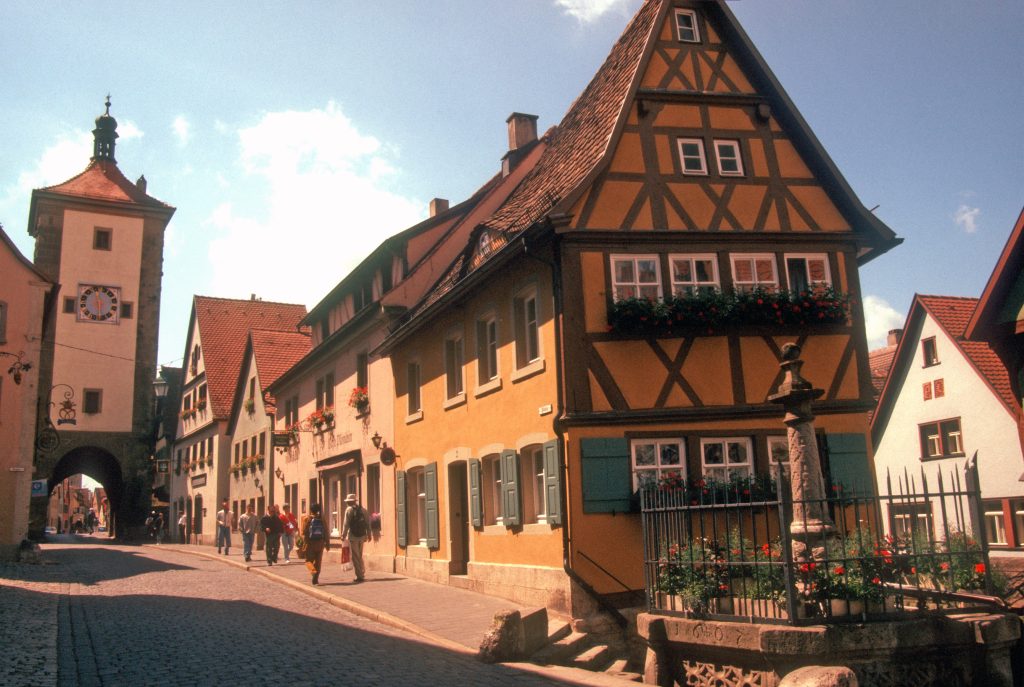
- Plönlein (Little Square): A postcard-perfect half-timbered house flanked by two medieval towers, symbolic of Rothenburg itself.
- Medieval Crime and Justice Museum: An arresting collection of historical instruments of law, punishment, and torture.
- Klingentor: A fortified tower incorporating a cistern and once part of Rothenburg’s vital water supply system.
- Burgtor and Castle Garden: The Burgtor gate marks the entrance to the former castle grounds, now a serene garden offering panoramic views over the Tauber Valley.
- Siebers Tower and Kobolzeller Gate: A striking pair of defensive structures that once guarded the southern entrance to the city.
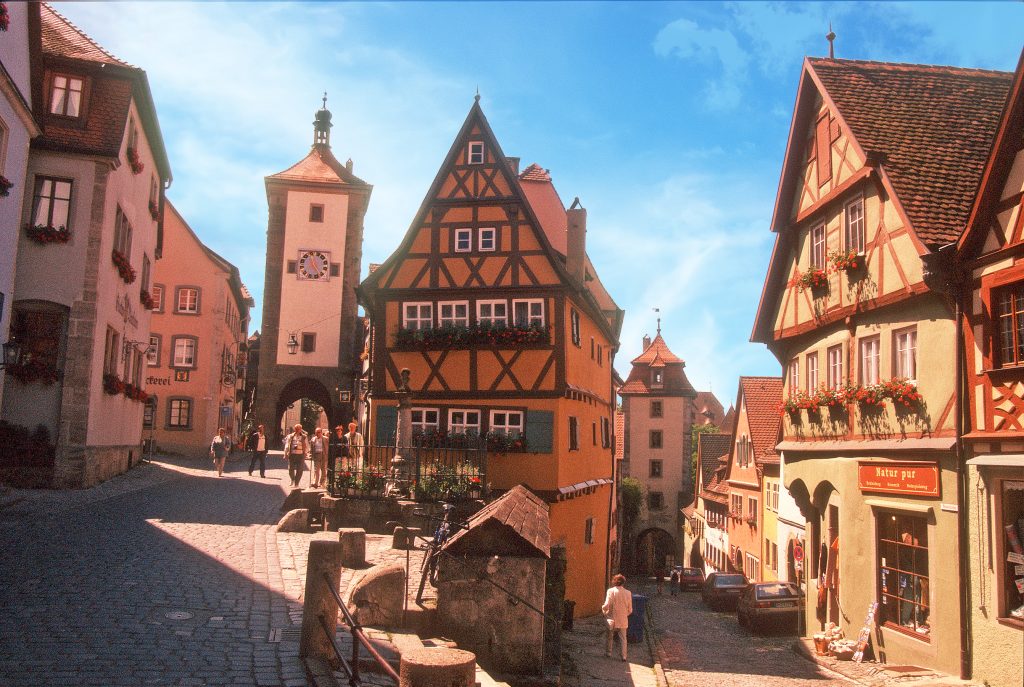
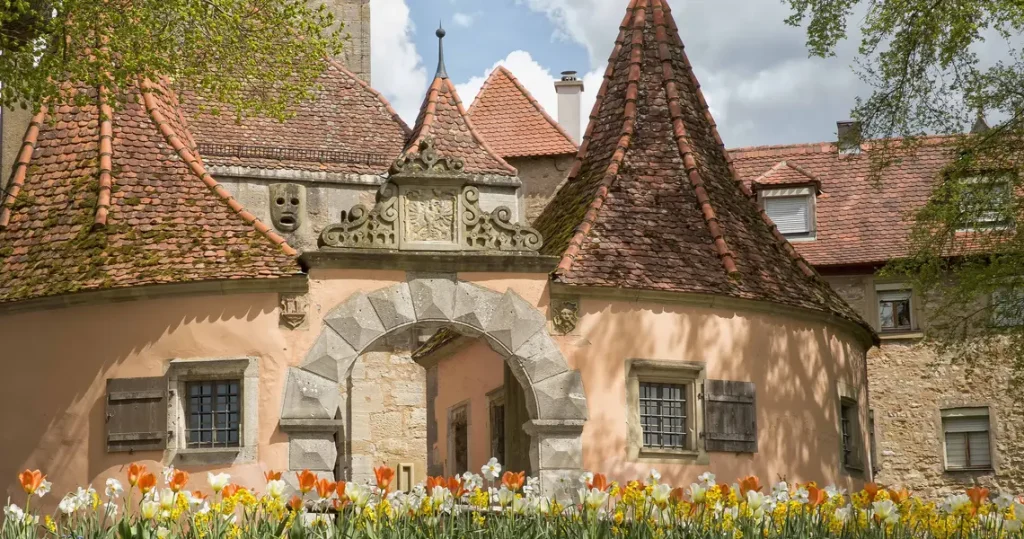

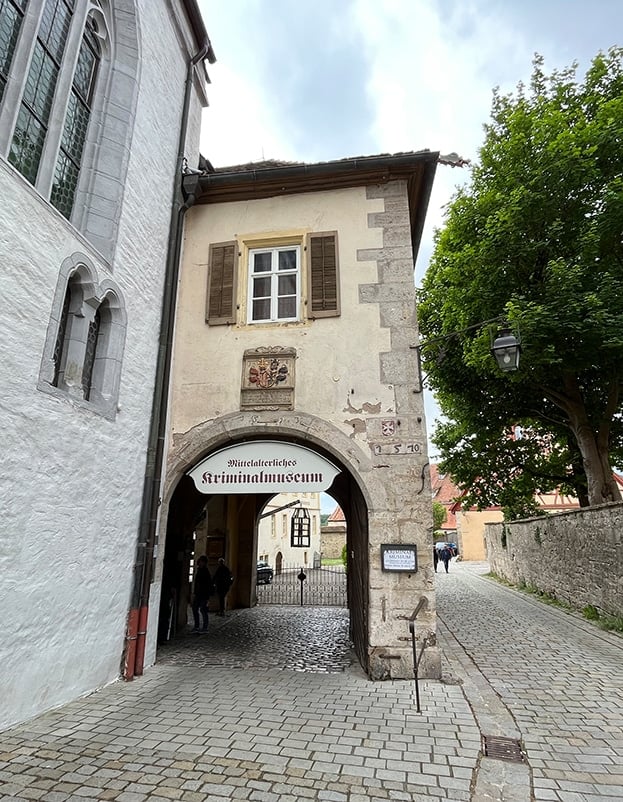
Cobblestoned Charm
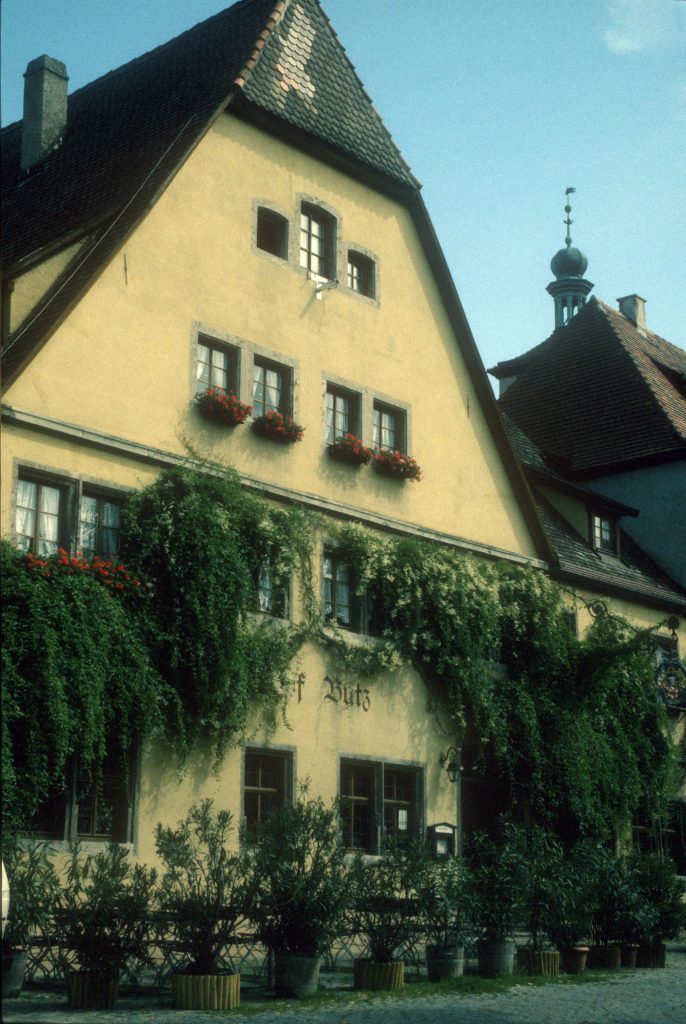
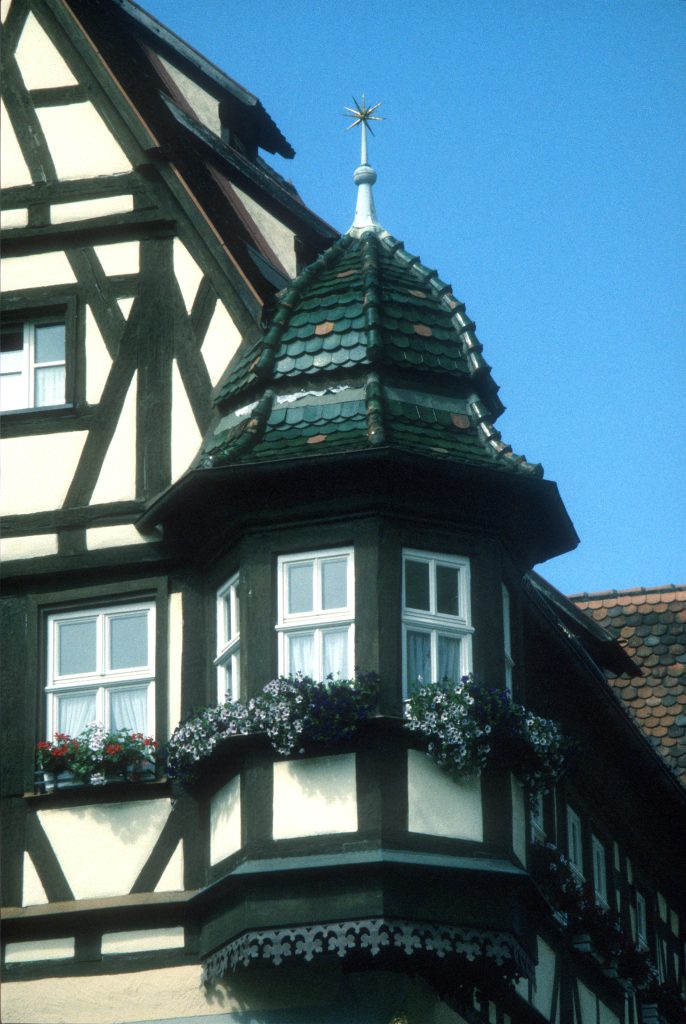
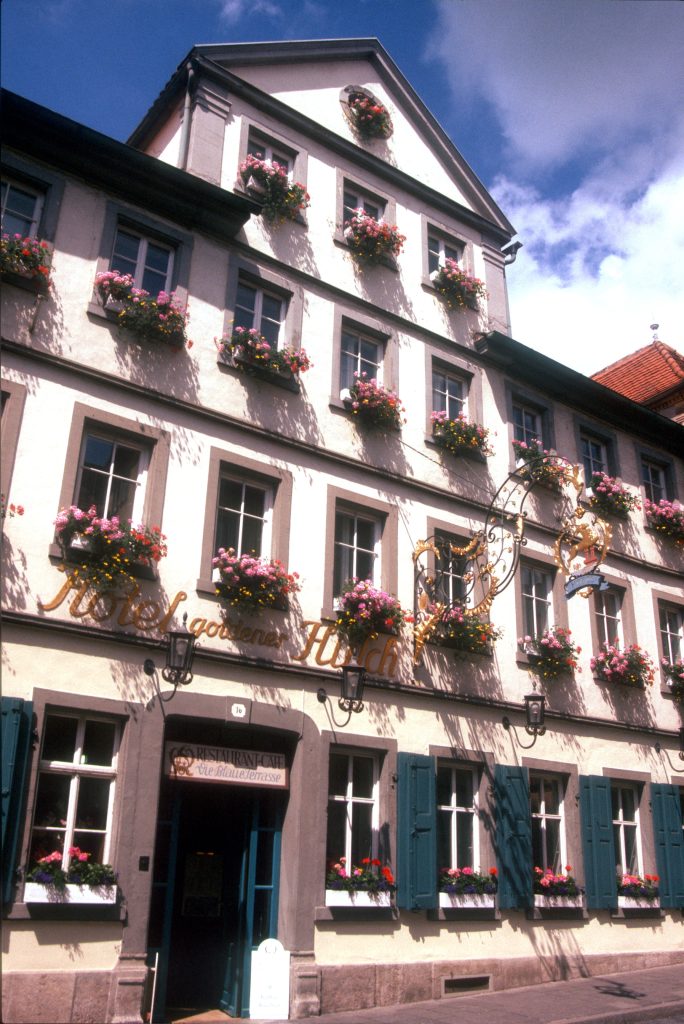
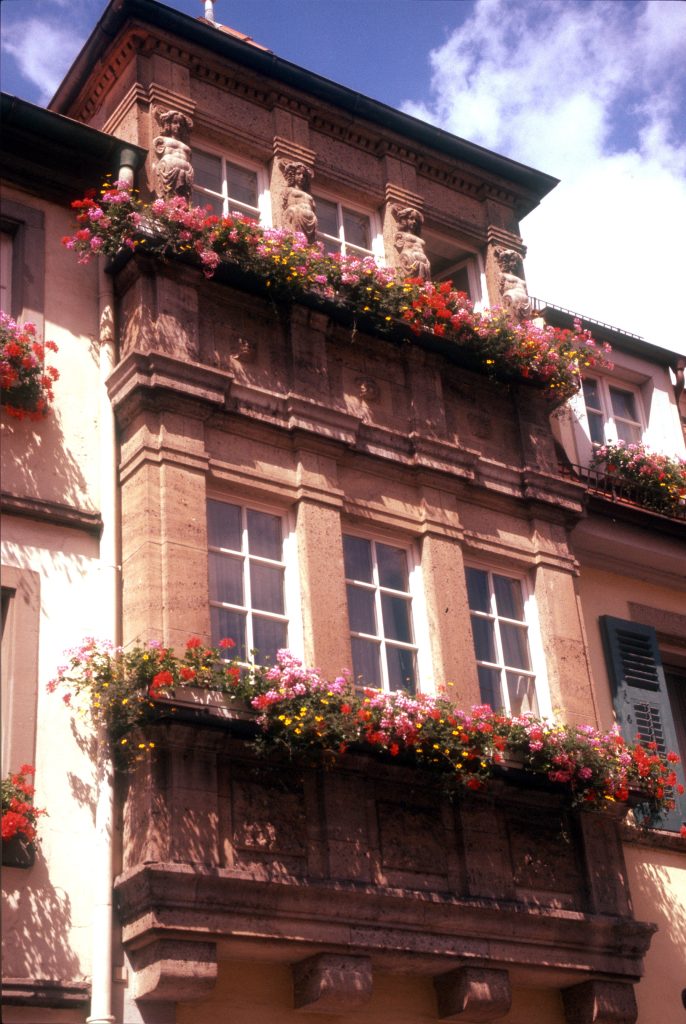
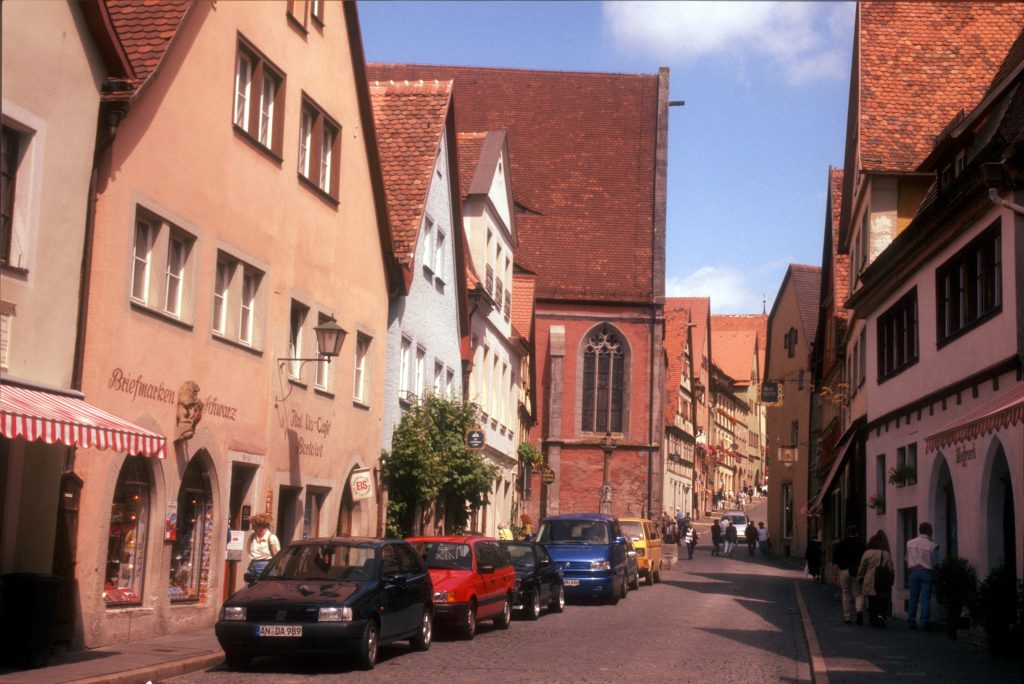
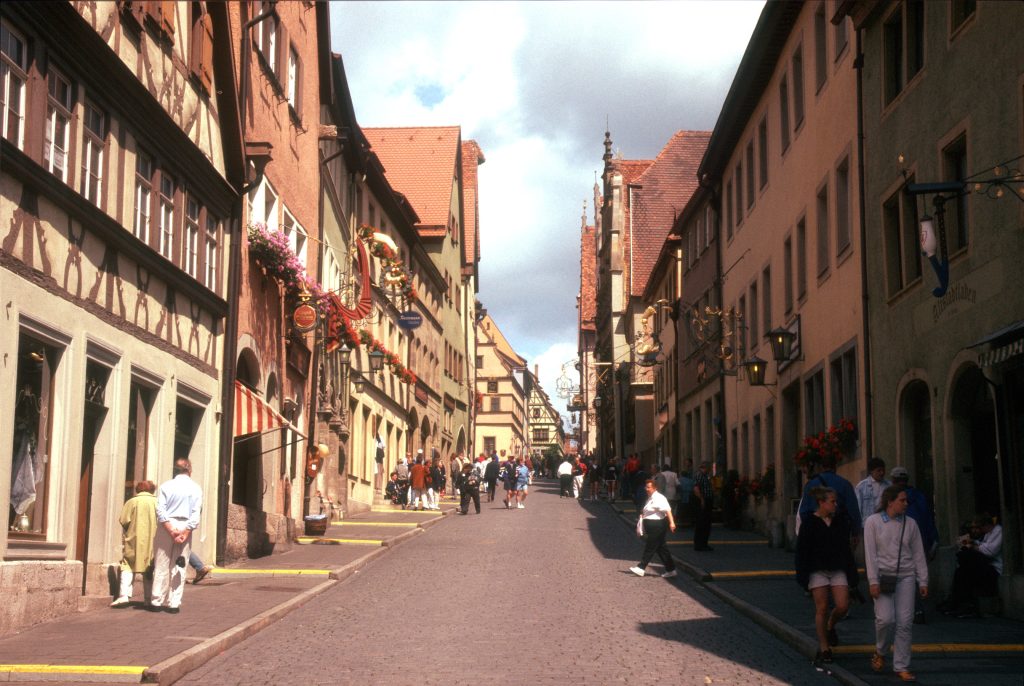
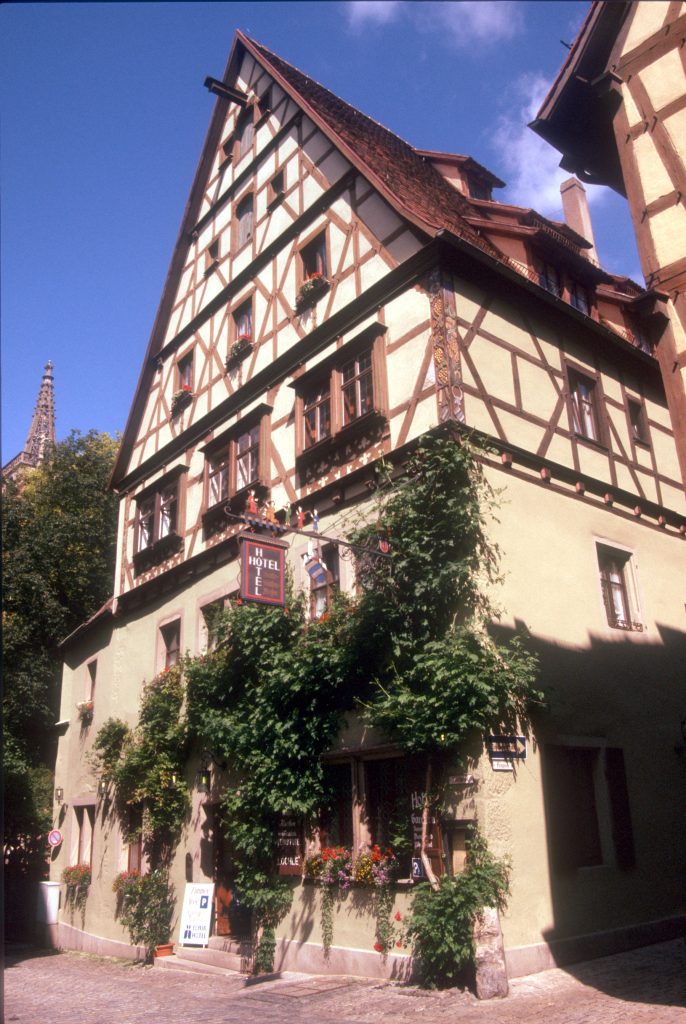
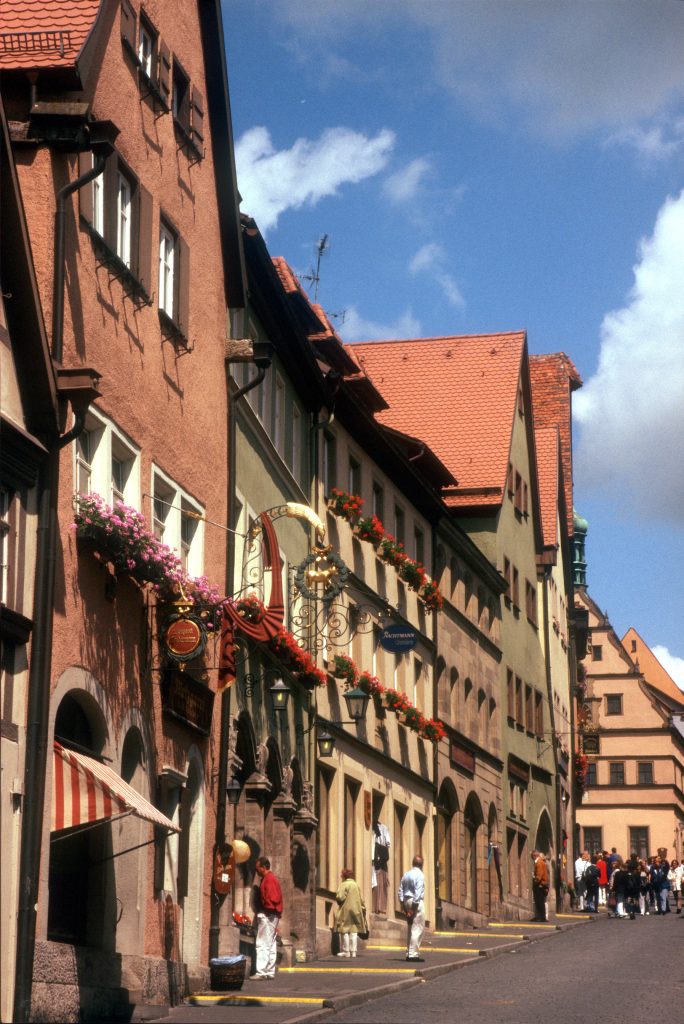
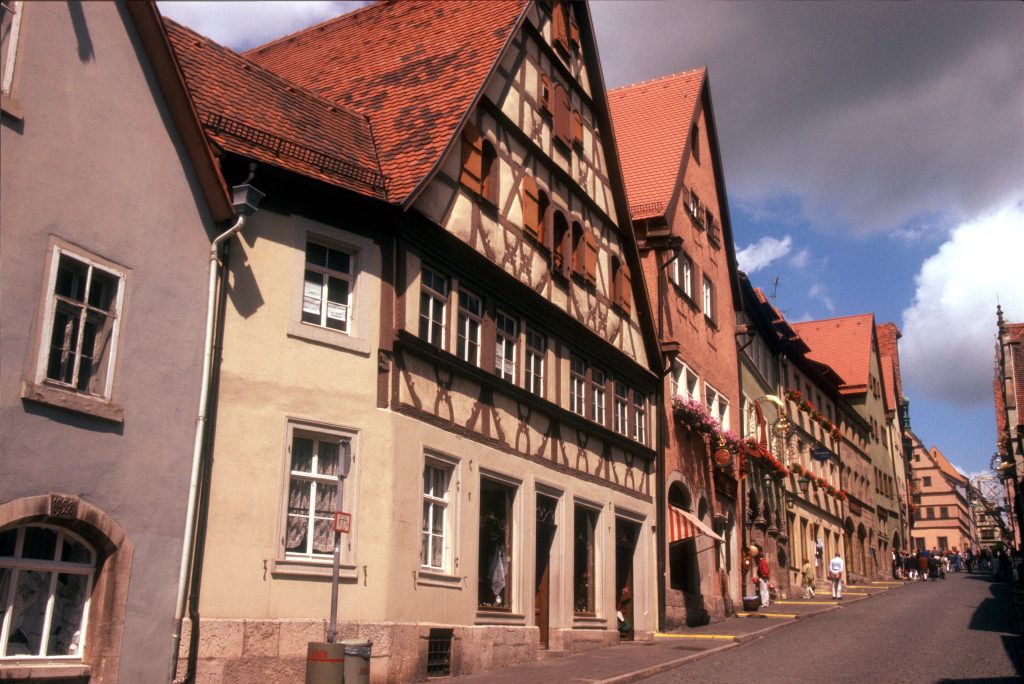
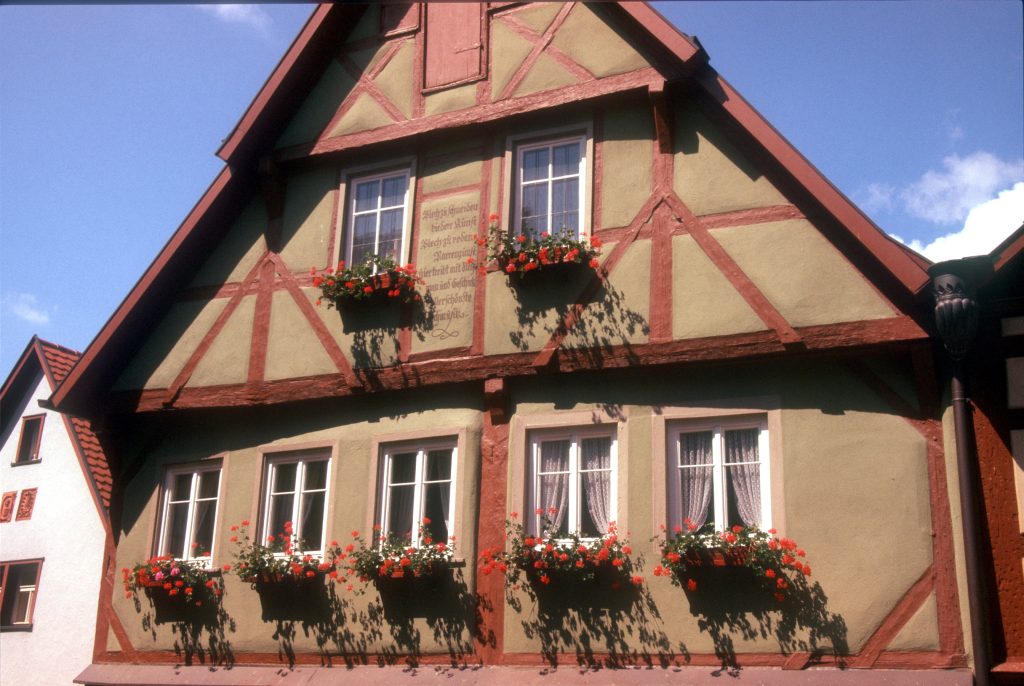
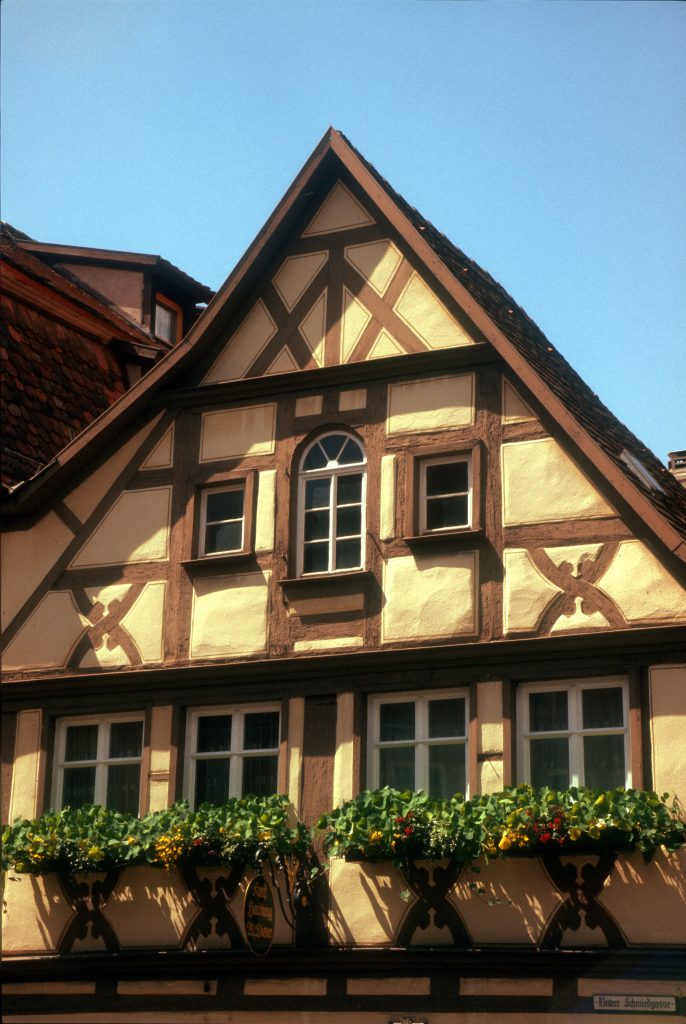
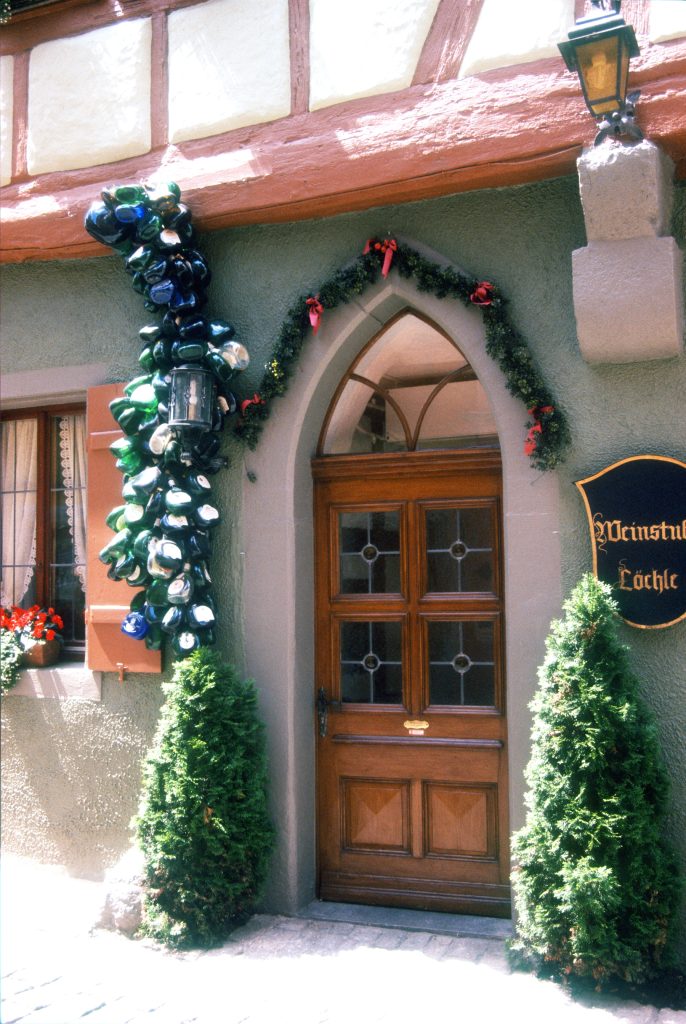
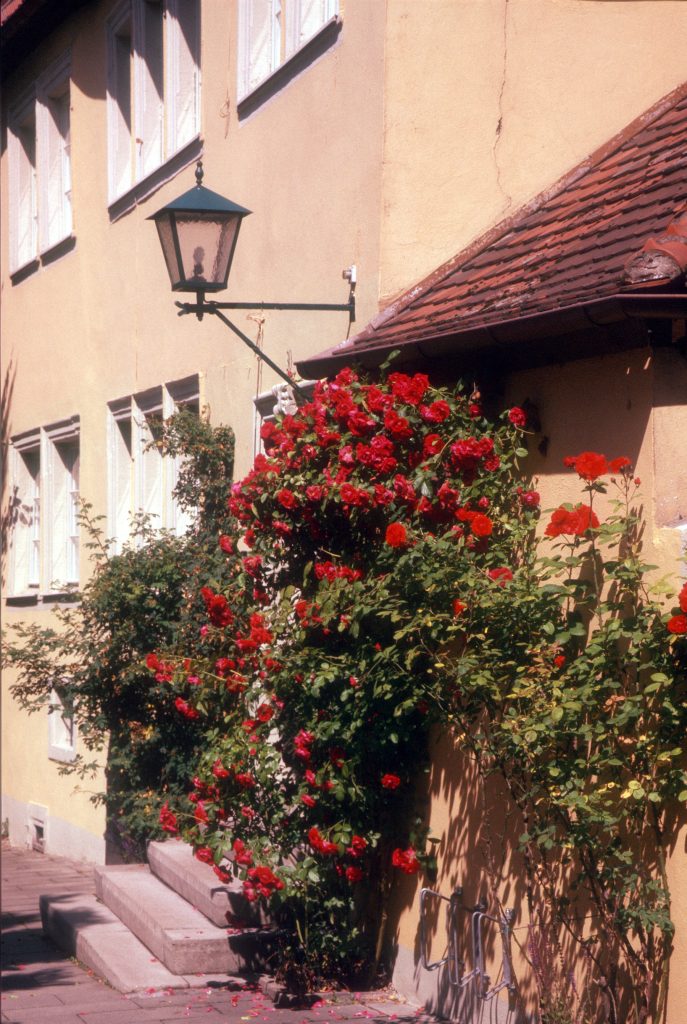
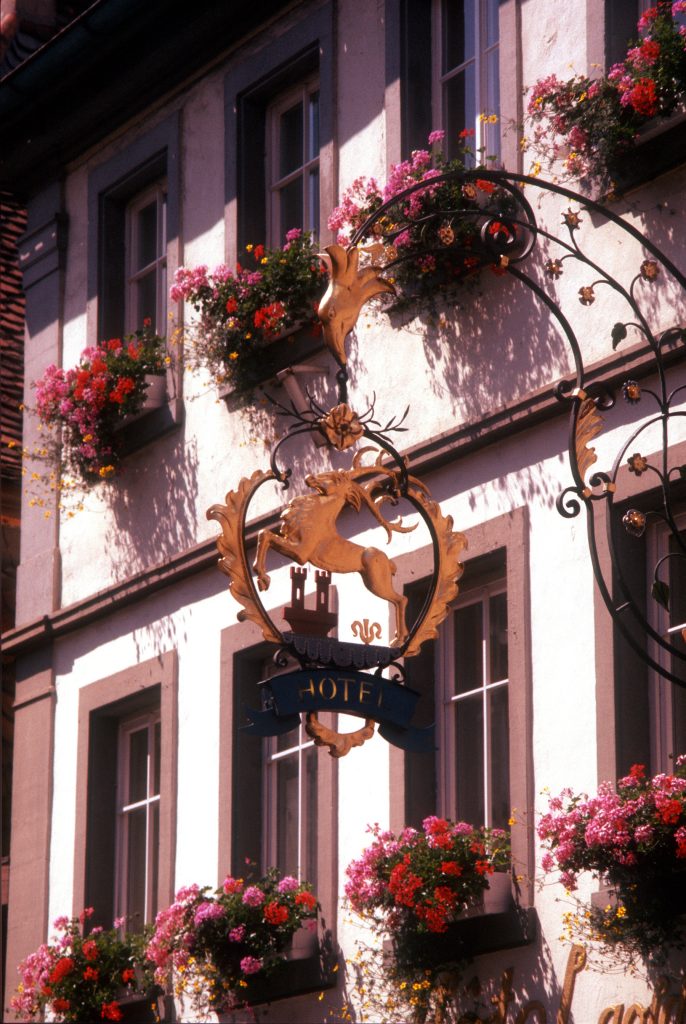
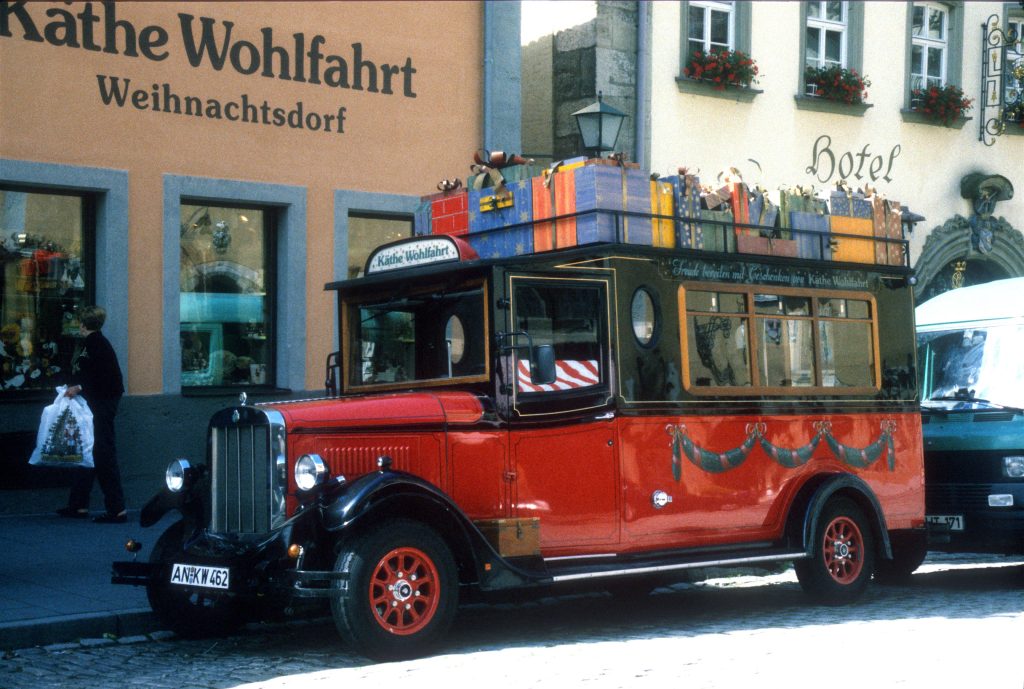
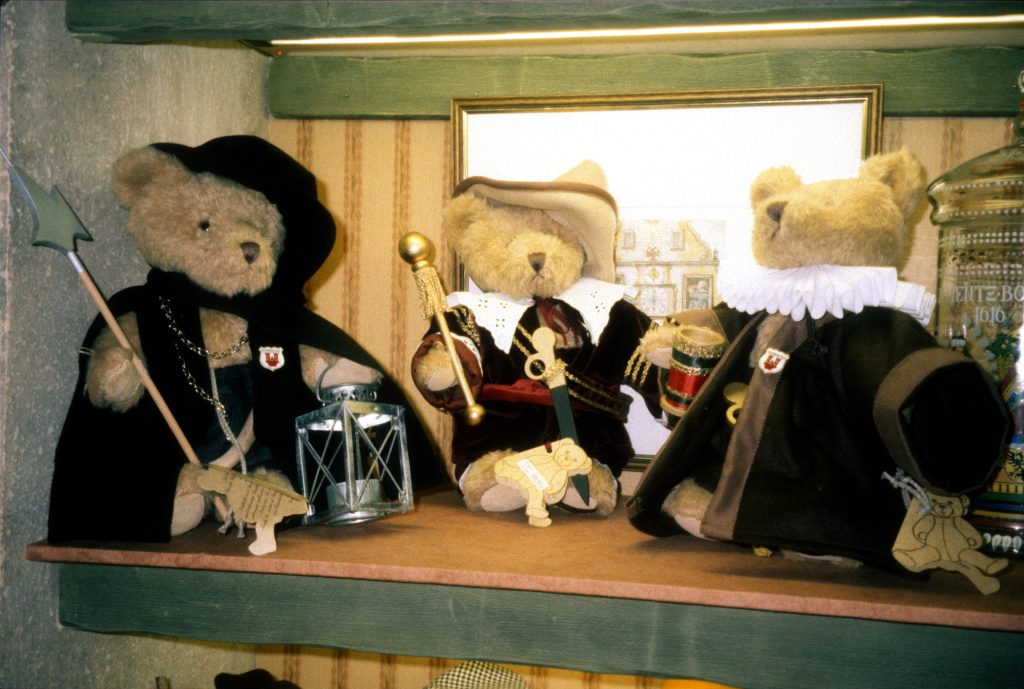
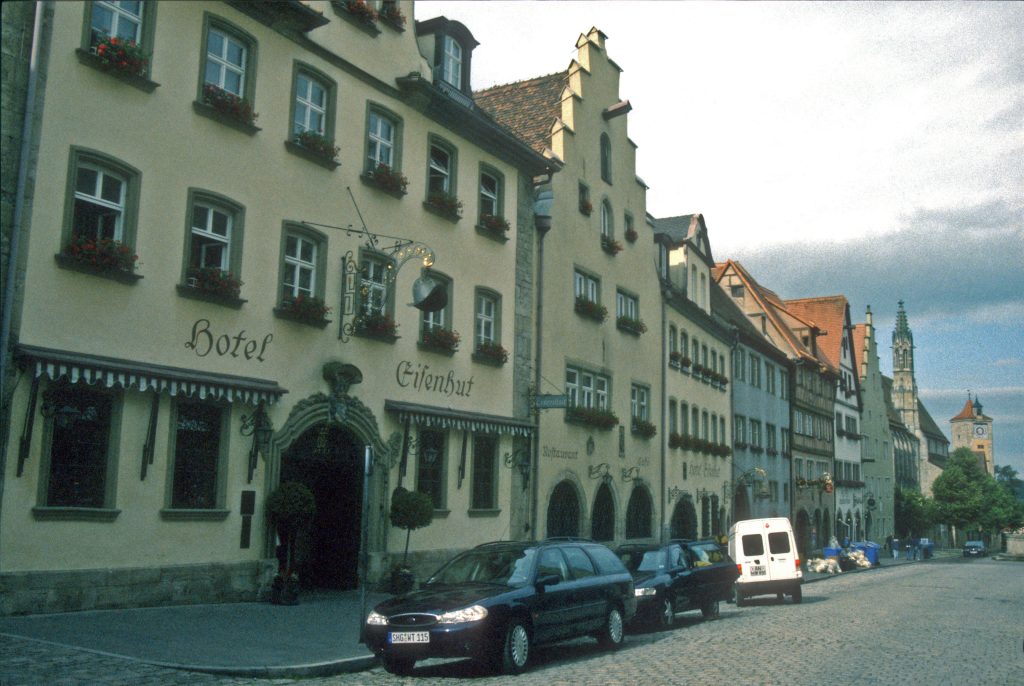
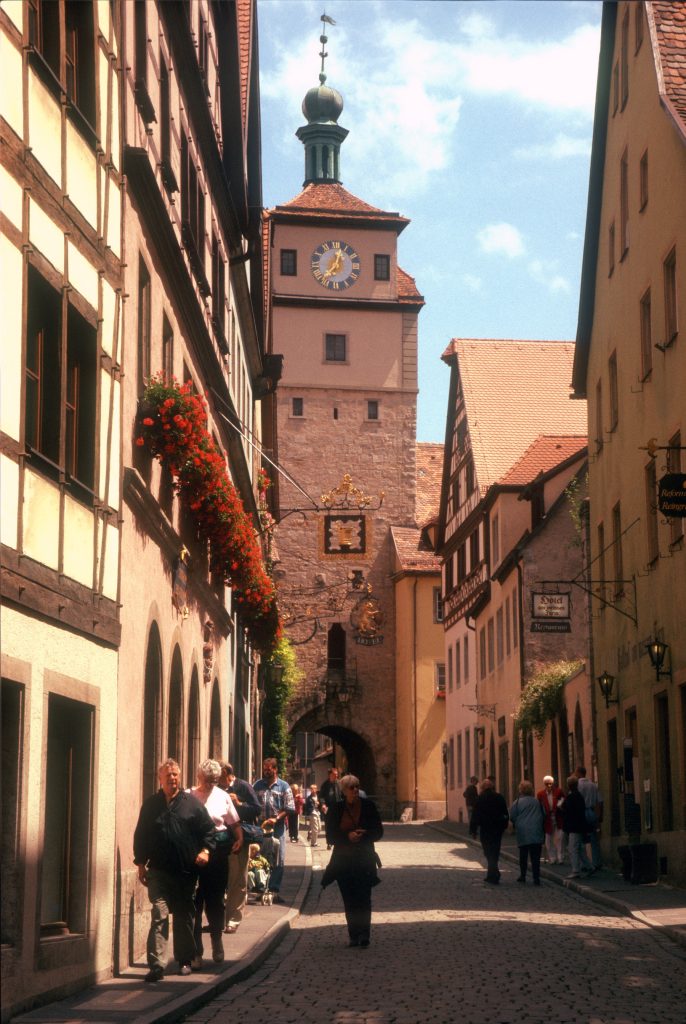
Cafés spill onto the lanes, offering piping-hot Schneeballen (“snowballs”), a delicious tangle of fried pastry dusted with sugar or dipped in chocolate. Timbered houses, leaning companionably against one another, are splashed in buttery yellows, sage greens, and rustic reds, their flower boxes a jubilant riot of geraniums. On warm days, the air hums with the scent of fresh bread, beeswax candles, and the faint spice of mulled wine lingering from the last festival. The shops are crowded with browsers, including a very robust Christmas store. There are many inns and hotels within the city, so an overnight stay can be fairly magical, after all of the other day-trippers leave. You are alone with the locals, a great stein of beer and a town that wraps you in its historic hospitality.
A Town Restored
Rothenburg’s preservation is deliberate. After partial damage during World War II, citizens and international donors, many from the United States, undertook painstaking restoration efforts to save what was left. The town now thrives as a pilgrimage site for historians, photographers, and romantics. It remains a vivid filming location as well, immortalized in movies like Chitty Chitty Bang Bang and serving as inspiration for animated realms like Disney’s Pinocchio.
Beyond the picturesque, Rothenburg reminds us how fragile history can be, and how essential its guardianship is. Every cobblestone here stands as evidence of resilience, patience, and the enduring power of beauty.
So linger a while longer within these storied walls. Lose yourself in Rothenburg’s twilight glow, when lantern light gilds the stones and history surrounds you. In Rothenburg ob der Tauber, history is not distant or dusty, it is alive, fragrant, and impossibly beautiful, waiting just beyond the next bend.
Where to Stay in Rothenburg ob der Tauber, Germany
For the most authentic Rothenburg experience, stay within the medieval town walls if your budget allows. The Markusturm and other historic guesthouses in the old town put you steps away from the town square, timber-framed streets, and the Night Watchman’s tour departure point. These properties range from simple, family-run establishments to more upscale boutique hotels, all offering the convenience of walking everywhere and waking to the sound of church bells rather than traffic.
If in-wall accommodations are fully booked or too expensive, the neighborhoods immediately outside the town gates offer good value and still put you within a five-minute walk of the main attractions. Pension-style lodgings and smaller hotels in these areas tend to cost less while maintaining easy access to the town center. Many travelers find this a practical compromise, especially during peak summer months when rooms inside the walls fill quickly.
For budget-conscious visitors, Rothenburg has several youth hostels and rooms rented by local families, typically advertised through the town’s tourism office. These options often include hearty German breakfasts and direct advice from hosts who know the town’s history and best times to visit the museums and town ramparts. Booking directly through the Rothenburg tourism website or calling ahead in high season will save you from arriving without a room.
Wherever you choose, plan to park your car outside the town walls and rely on foot traffic within them. The narrow cobblestone streets cannot accommodate vehicles, which keeps the medieval character intact and makes wandering on foot the only real way to experience Rothenburg’s layout and architecture from the perspective of centuries past.
Recommended Reading
- Baudolino by Umberto Eco: A richly layered historical novel set within the medieval Holy Roman Empire, following the life of a clever peasant who becomes entangled in imperial politics, religious disputes, and competing truths. The novel explores civic life, faith, and power during a period of intense ideological conflict that shaped imperial free cities. It is a standalone historical novel blending history, philosophy, and myth.
- The Hangman’s Daughter by Oliver Pötzsch: A richly detailed historical mystery set in 17th-century Bavaria, evoking towns much like Rothenburg.
- Tyll by Daniel Kehlmann (2017) – This novel reimagines the life of the legendary trickster Tyll Ulenspiegel, placing him amidst the chaos of the Thirty Years’ War. Blending historical facts with folklore, Kehlmann crafts a narrative that explores the absurdities of war and the resilience of art and performance.
- Rothenburg Ob Der Tauber: Guide with 144 Color Prints — A visually rich guidebook that combines historical insights with stunning imagery. It serves as both an informative resource and a keepsake for visitors interested in the city’s heritage.
- The History of Bavaria: From the First Ages to This Present Year, 1706 by John Stevens
A classic reprint that traces Bavaria’s history from ancient times up to the early 18th century. It compiles accounts from various historians, offering a comprehensive overview of the region’s political and cultural evolution. - Medieval Cities: Their Origins and the Revival of Trade by Henri Pirenne: An insightful exploration of the medieval urban fabric that Rothenburg epitomizes.
- Germany: Memories of a Nation by Neil MacGregor: A sweeping yet personal journey through Germany’s complex history, including its preserved medieval towns.
Tours to Consider:
- Rothenburg’s Historical Gems: A Private Walking Tour
- Rothenburg Ob Der Tauber Private Walking Tour with Local Guide