By Jillian Forsberg, Author of The Porcelain Menagerie
The Ascent Into a City Once Imagined
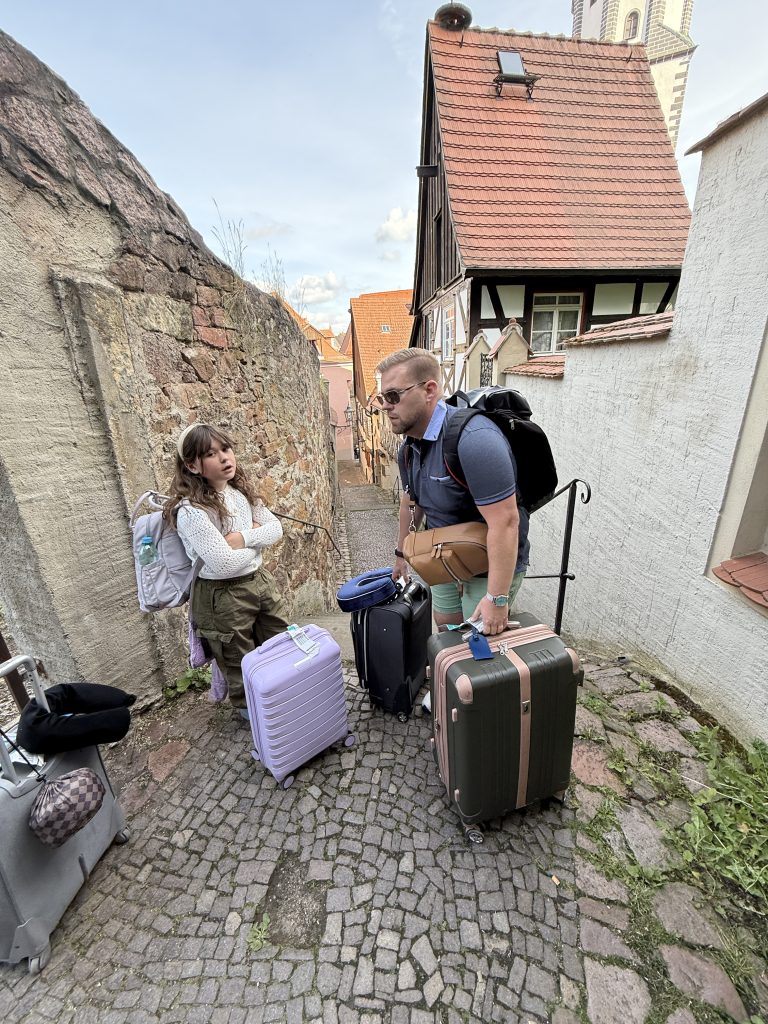
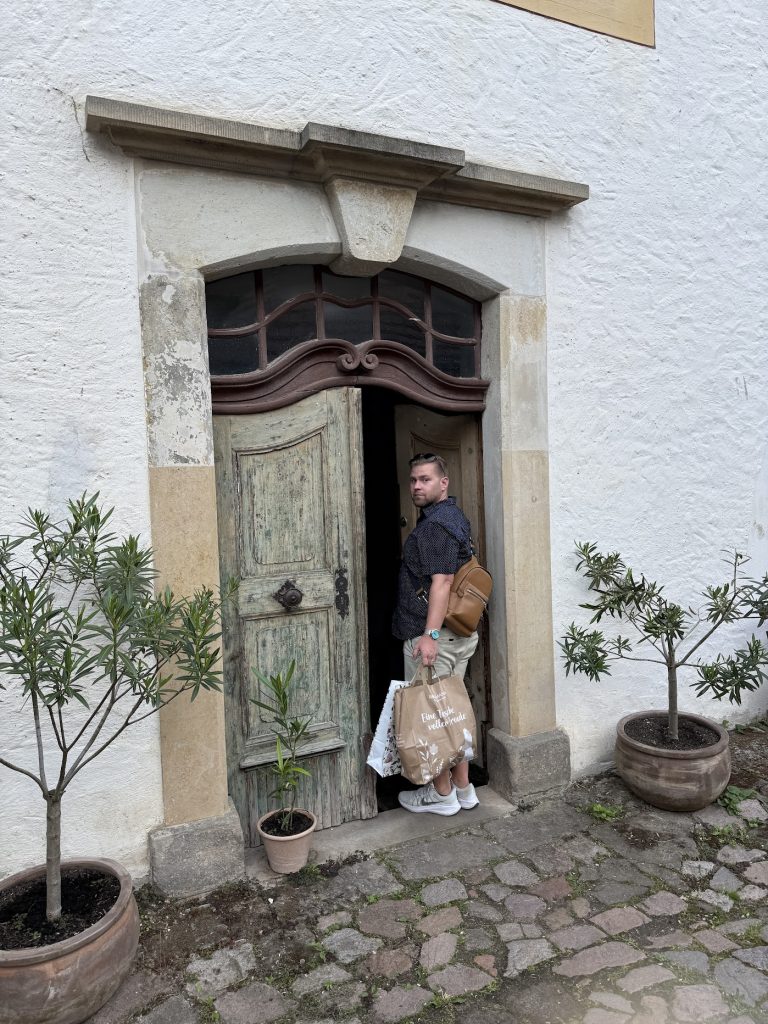
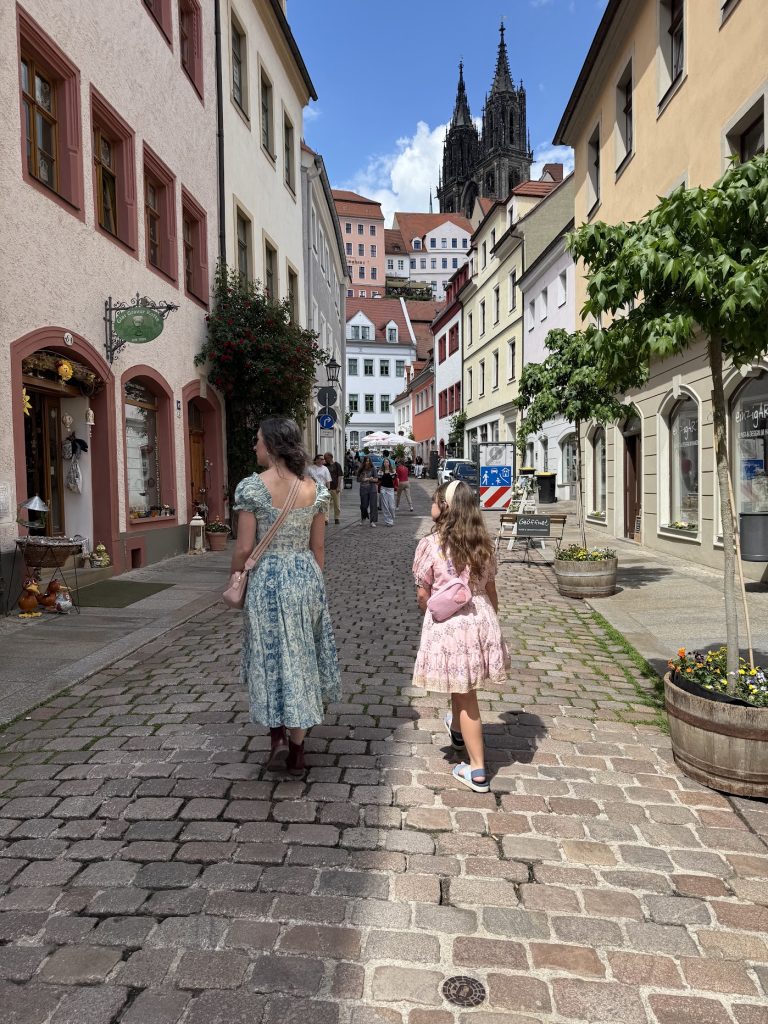
Up many cobbled steps, my family and I haul our distinctly American suitcases. The winding roads of Meissen are too narrow to properly call them roads. I reach out to touch the moss-covered walls blooming with yellow flowers and realize I understood it perfectly.
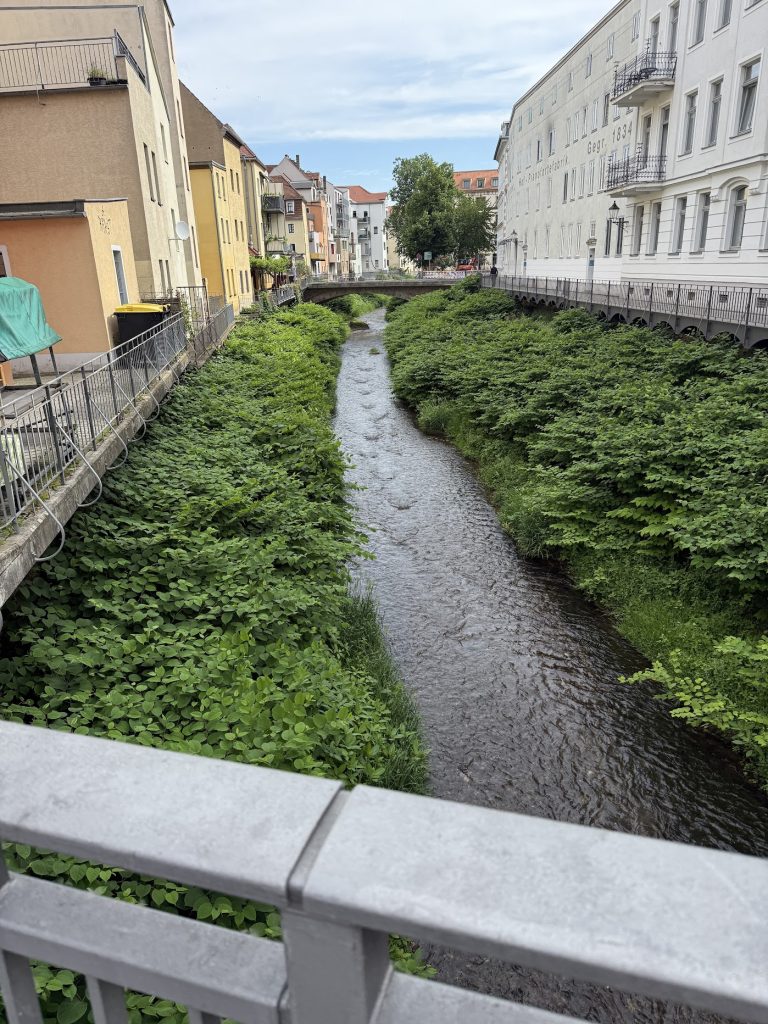
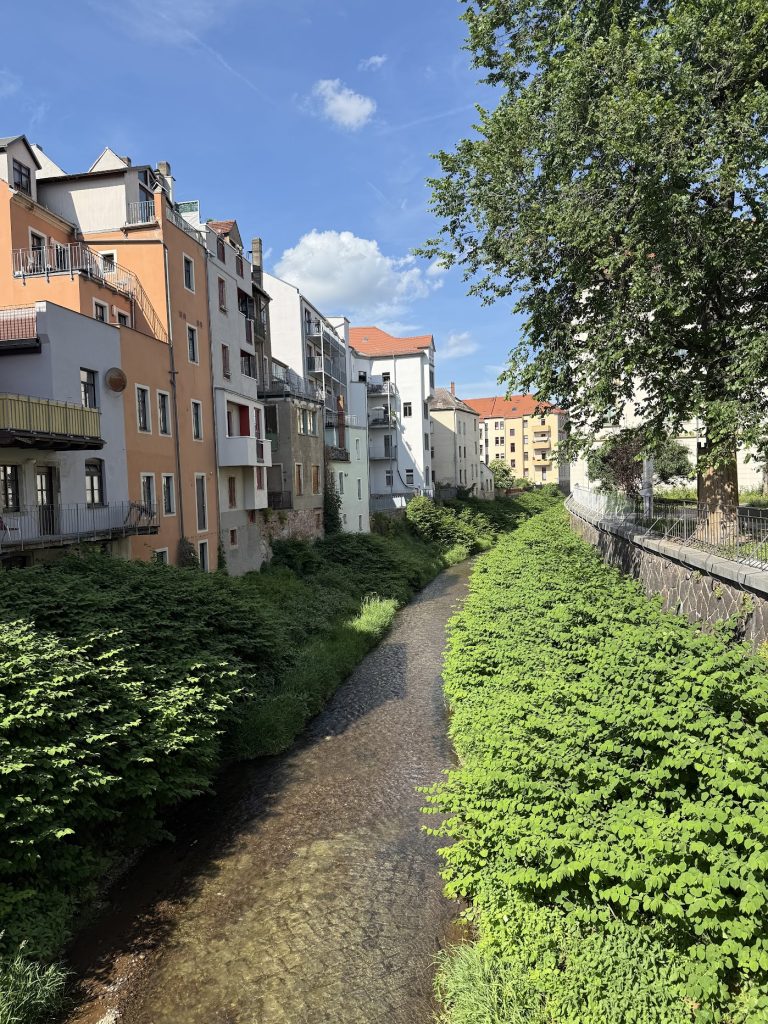
The descriptions of the medieval town of Meissen, Saxony, Germany in my novel, drawn from photos, paintings, and wobbly YouTube videos, are correct. And now, two years after writing The Porcelain Menagerie, I breathe in the sweet, river-tinged air of the city I inhabited in my mind but never in body until today.
Though sweat drips down the small of my back and my husband and I exchange a look of disdain when we realize Germany has no Uber app, we pull our rumbling suitcases up, up, up. Our Airbnb, booked a year in advance, sits atop the hill in Meissen, a town of thirty thousand. There is no way to get there but to walk, since calls to the local taxi company went unanswered.
Living Inside a Medieval Dream
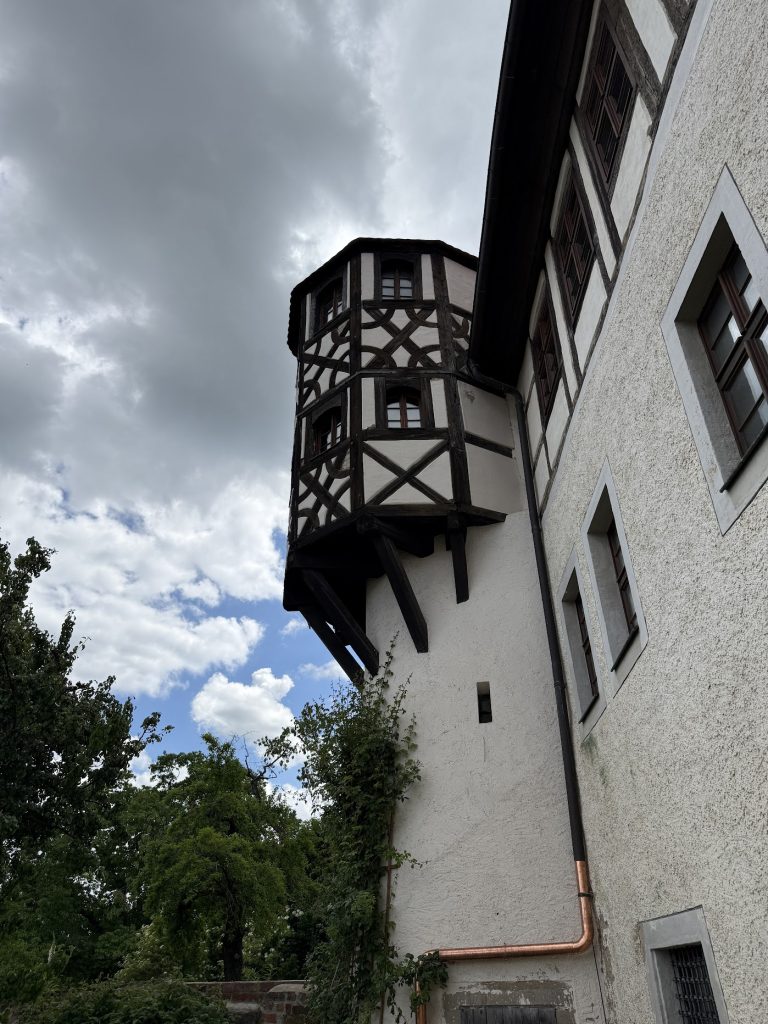
We watch the Elbe River flow past, swooping swallows and songbirds far outnumbering the people around us. Soon enough, the chateau comes into view. A 14th-century home converted into lovely apartments, and the one at the top of another narrow staircase is ours for the week. The suitcases barely fit through the spiral. My elbows graze plastic as I silently thank whoever installed plexiglass over a fading mural of Saint George slaying the dragon.
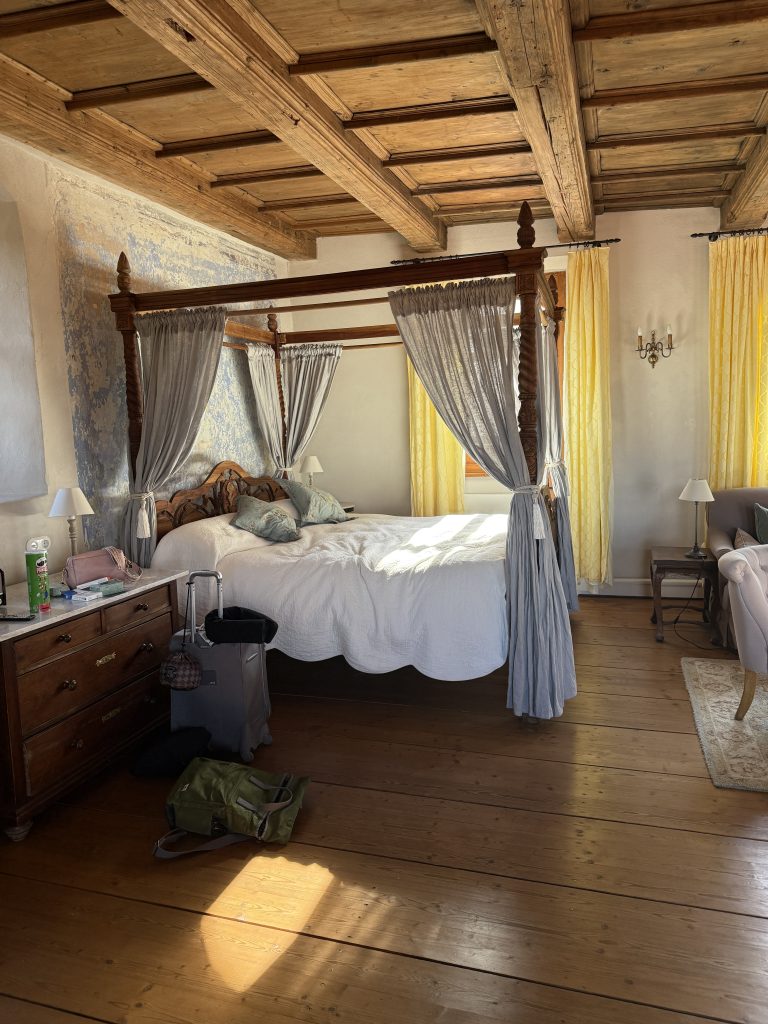
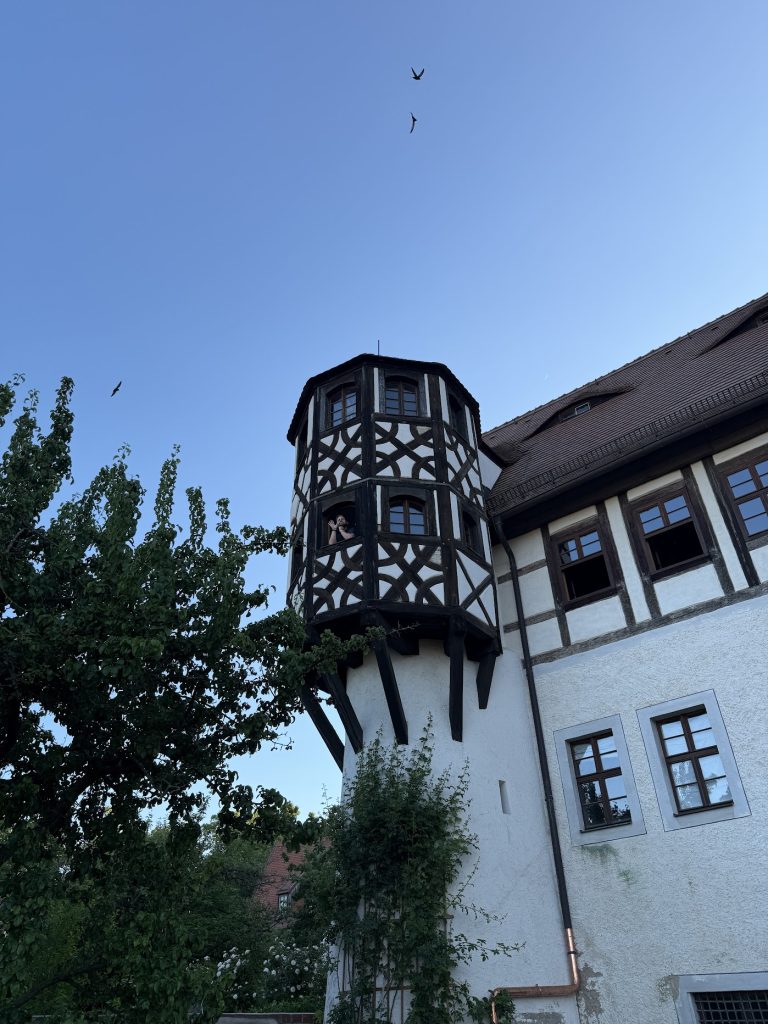
Our space unlocks with a heavy key; the door is crooked and thick, and inside sits a simple four-room apartment: a large living room-dining room-bedroom combination. A corner kitchen. A simple bathroom. And to my nine-year-old’s delight, a princess tower with diamond-paned, 360-degree windows and a long-legged resident spider. The neighbors help us drag in a twin mattress and floral coverlet for her.
A Town Spared, A Secret Preserved
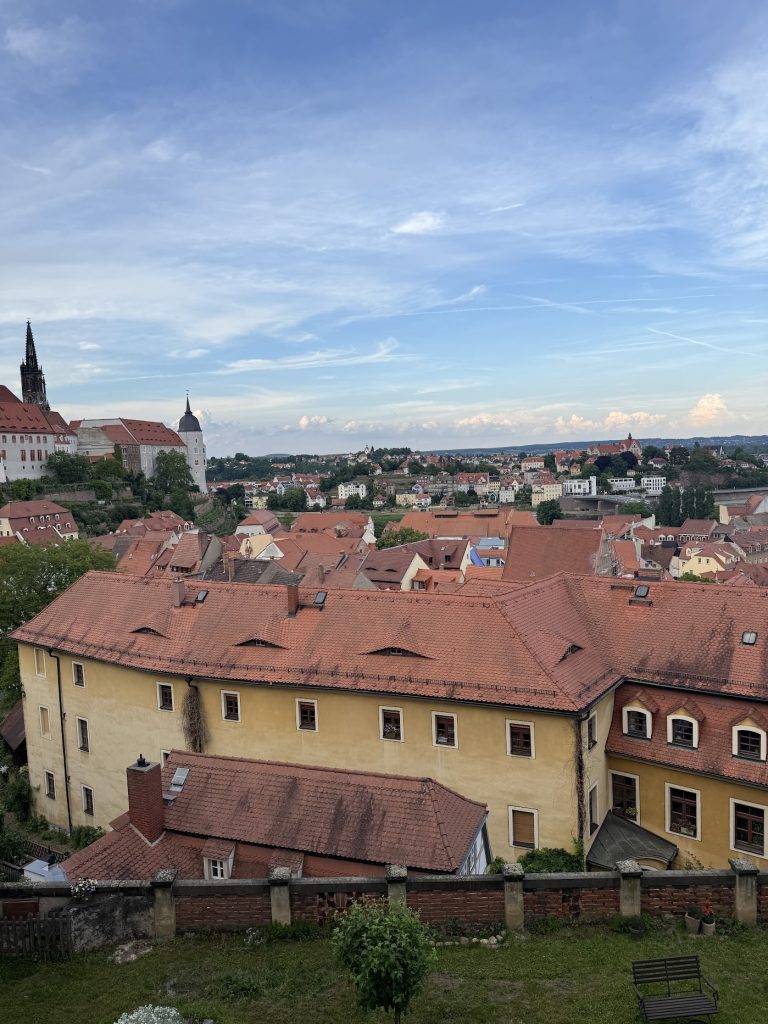
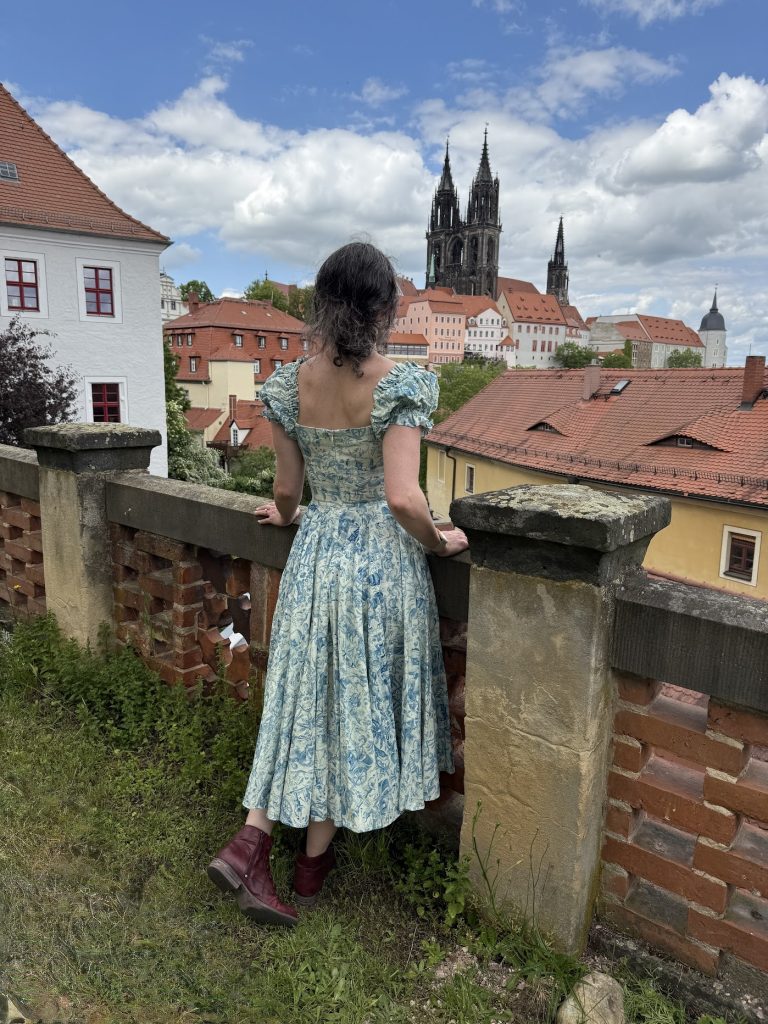
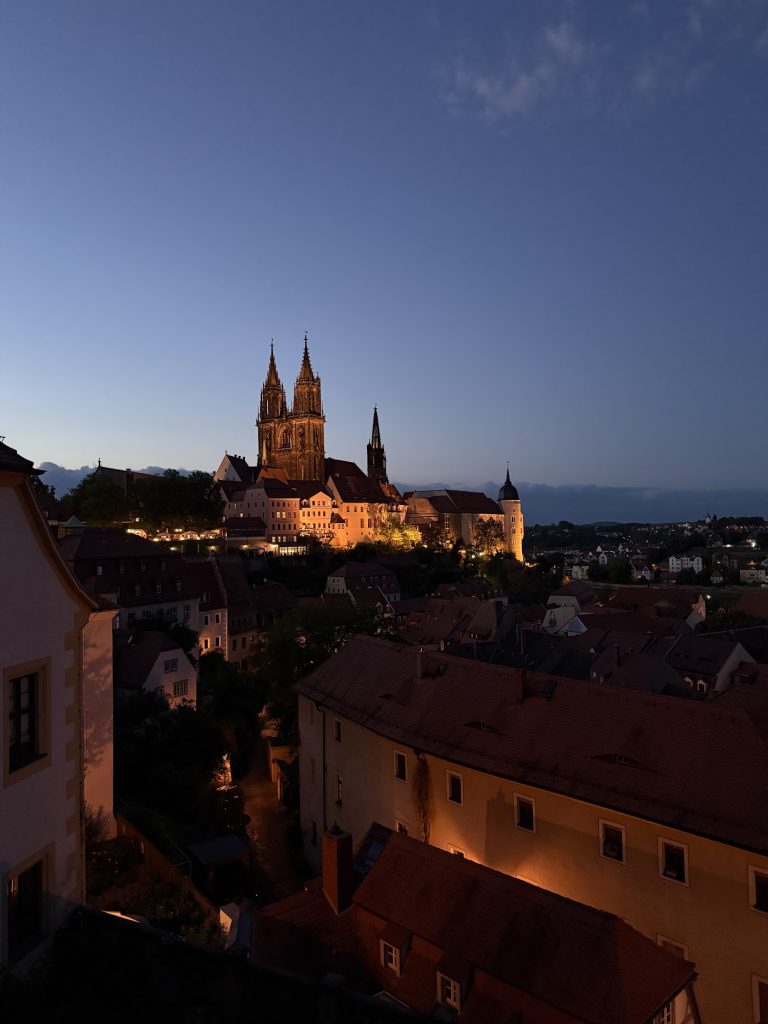
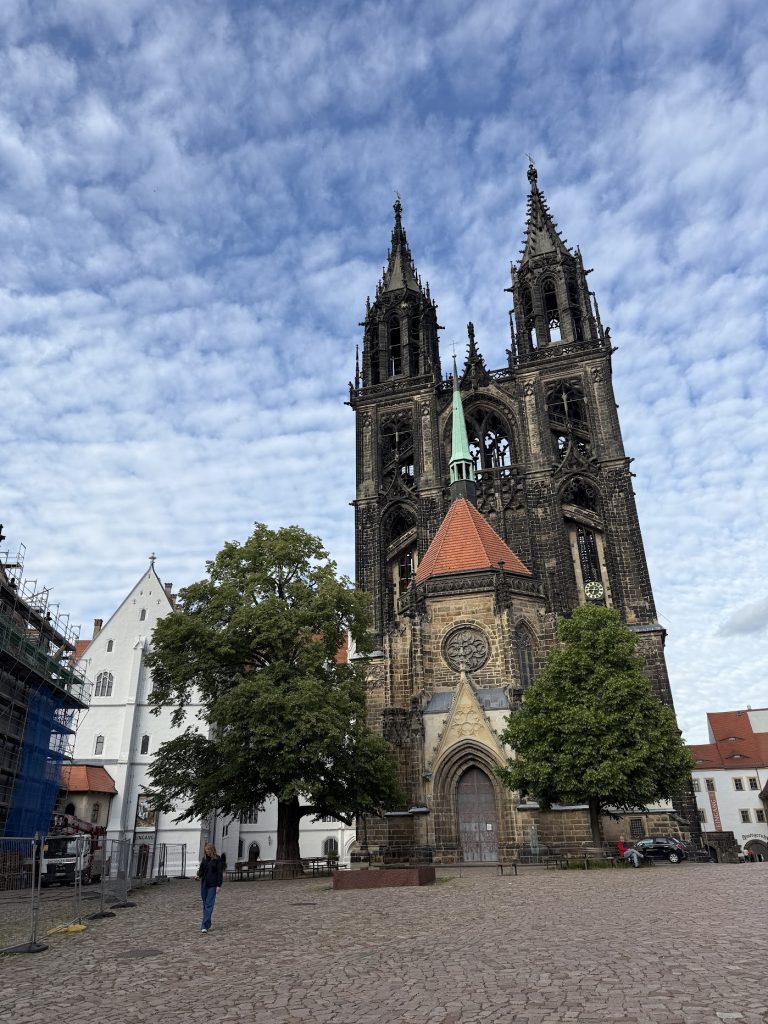
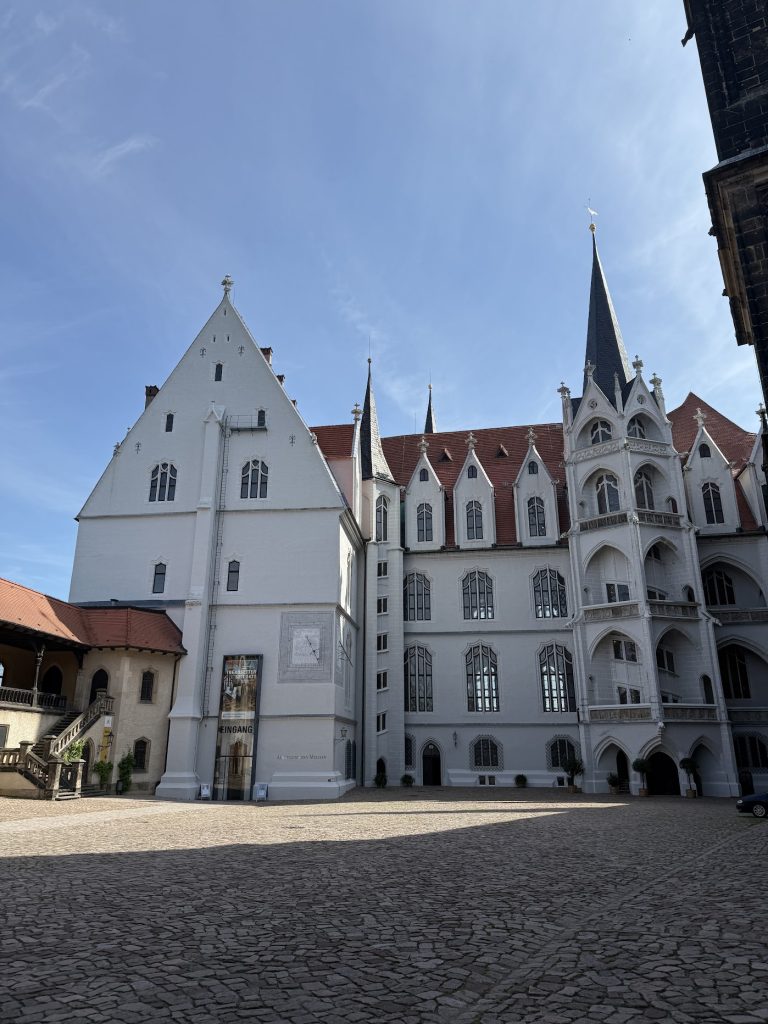
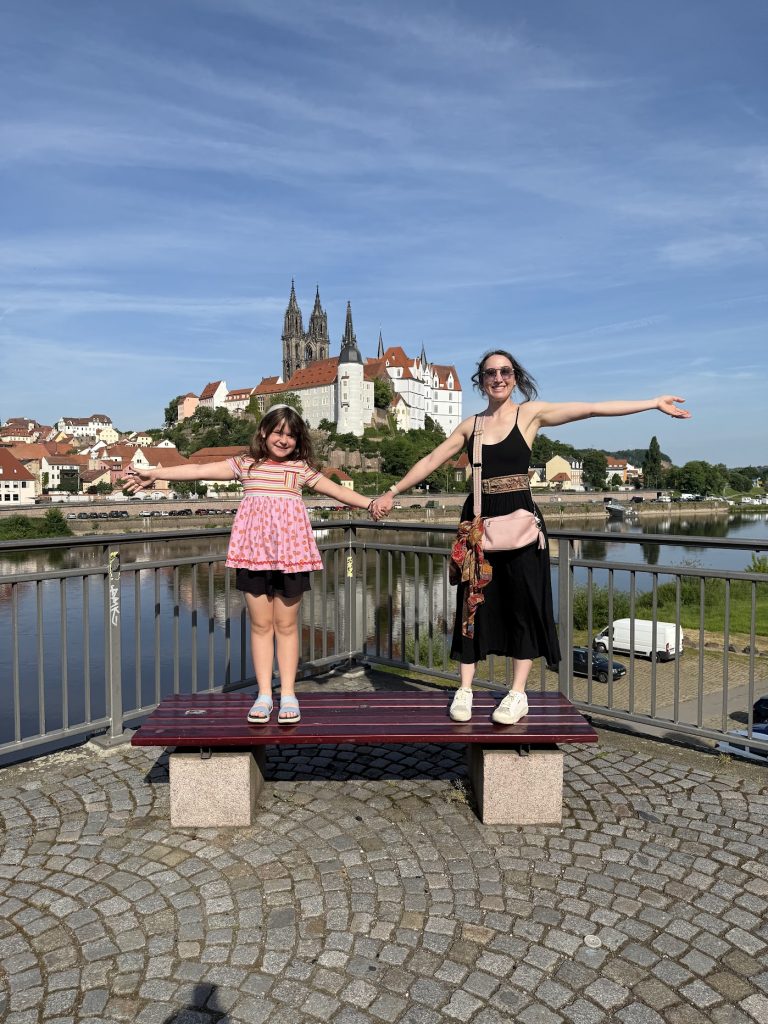
The windows crank open, their wooden frames crackling. The view from the tower encompasses Germany’s oldest castle, Albrechtsburg, the golden-green river, red roofs, and a garden below us dotted with strawberries, cabbages, and quarter-sized snails. There is a cherry tree whose constellation of fruit seems plucked from a storybook, and a garden wall of stones someone hauled up and mortared together a hundred or more years ago. The wall is dotted with baby ferns and the same yellow-flowering moss that drapes the narrow streets like a curtain of age. The sky stretches endlessly blue. Until it turns pink with evening, when the warm, fire-colored lights of the black cathedral and white castle glow in the near distance.
Meissen escaped World War II bombing, unlike nearby Dresden, which was firebombed and nearly leveled in 1945. Meissen is not a place many tourists visit unless they’re on a pilgrimage like mine—to see something rare, unusual, and still full of secrets even in today’s searchable world.
The Lure of White Gold and the Royal Obsession
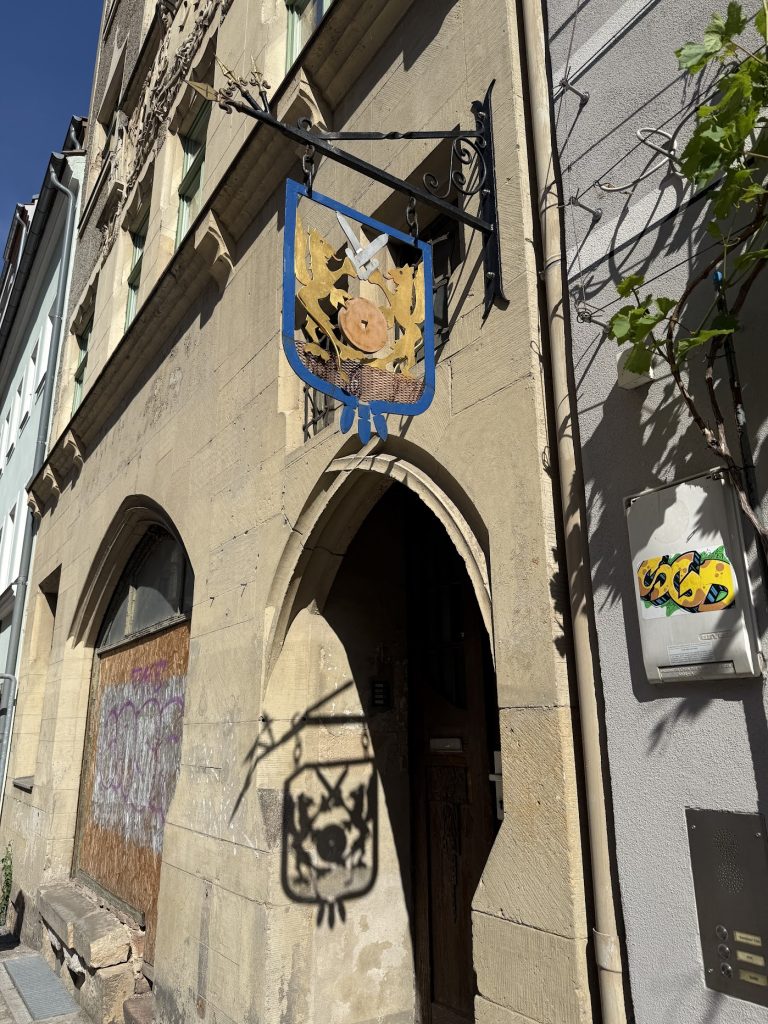
Everywhere on the way up the hill to our apartment, I saw signs of this secret in small, breadcrumb trails. Crossed swords hung on a pub sign. A stark white glass placard on a dark stone wall created a striking contrast. A large porcelain sculpture flanks a street sign. And Albrechtsburg, the castle where it all began.
I seek white gold. Porcelain.
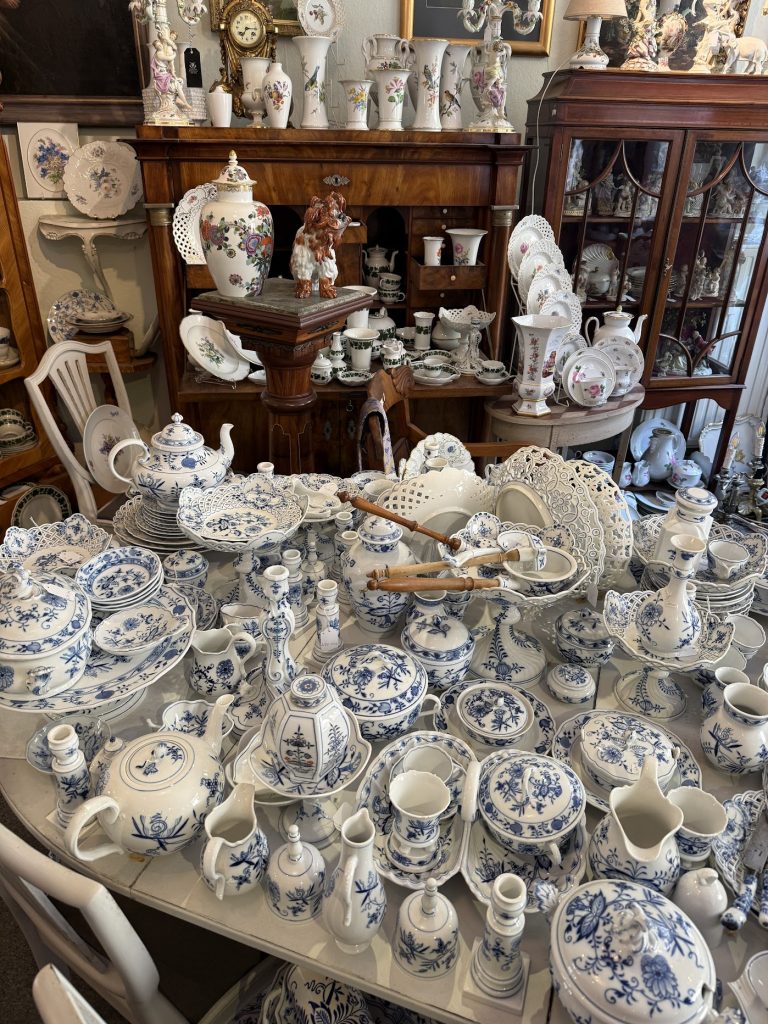
Meissen, Germany, is home to Europe’s first and oldest porcelain factory, still in operation today. Porcelain and secrets go together like cobbled streets and Europe. They cannot exist without each other. The art of making porcelain began in Asia thousands of years ago, and European royalty in the 17th and 18th centuries fell victim to a strange affliction: porcelain sickness, the condition when a royal wanted nothing more than white gold.
Breakable wealth was more valuable than any other treasure, and they imported Chinese porcelain to fill their residences. A ship must travel across the world to get the porcelain, rounding Africa’s horn through dangerous waters where the Indian and Atlantic Oceans collide, past the doldrums and pirate-infested shores. Onward to Europe, where the Dutch East India Trading Company typically unloaded boats full of blue and white porcelain made in Jingdezhen, China, for royalty.
The era prized luxury and tangible wealth over numbers on paper. The coffers were emptied for such art, but what if one king thought differently: what if we could simply make our own porcelain?
Augustus the Strong and the Cost of Desire
That king, often forgotten in history despite his great-grandson Louis being beheaded during the French Revolution, was Augustus the Strong. Though Elector of Saxony, he fought, bribed, and conned his way to the Polish throne. The non-hereditary title was up for grabs, and he seized it by spending millions of Saxony’s thalers on bribes for the vote.
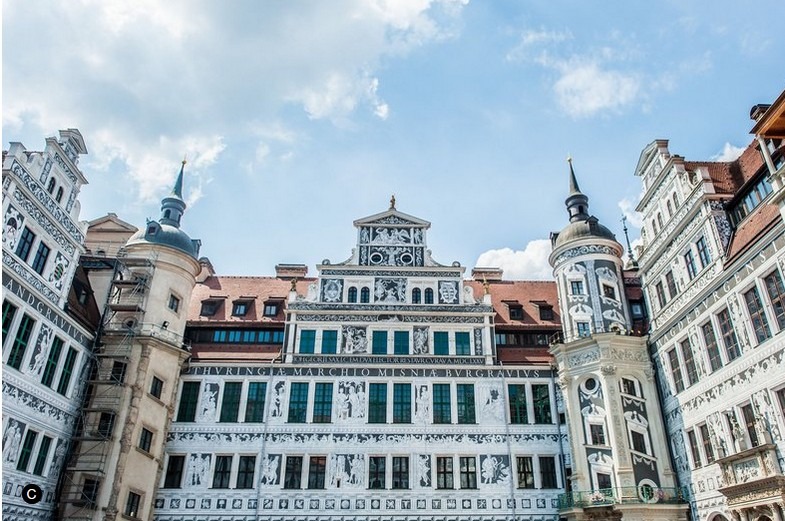
His were questionable morals, mistresses, bastards, bloodsports, unexplained deaths, and political fiascos, yet he had absolutely fantastic taste in art. Augustus the Strong transformed Dresden into a baroque masterpiece, evident in the incredible Green Vault, the Zwinger, and the royal palaces you can visit today.
The Green Vault, robbed in 2019, has the most intense security of any museum I have ever visited. To see Europe’s largest treasure collection, you must enter through an airlock and leave most belongings behind. When I used my phone to translate a question for a staff member, I was scolded for simply having it with me. The place is insane, nautilus shells repeated on shelves, gold and crystal and gems and jewels and diamonds all displayed in thick-glass cases. It is indeed a treasure box. Even the parquet floors and ornate ceilings testify to wealth beyond understanding.
The Green Vault does not house Augustus’s porcelain. That has its own wing in the museum, and stepping inside, you see how foolish it is to invest in something so fragile it could shatter on the floor or crack on its pedestal. But the beautifully curated Chinese and Saxon porcelain displays create a striking contrast. Something brilliantly different exists between these two forms.
Flawed Perfection and the Road to Meissen
Chinese porcelain is fine, translucent, and stunningly perfect. Blue-white as a maiden’s veined hand, painted with exquisite expertise and so symmetrical your eye skims over the pieces without stopping. The Meissen wares on display show visible flaws. Cracked and uneven forms created by wobbling hands. They must have thought they’d failed. Pieces show remnants of thumb-prints and disastrously wrong animal faces.
Though Meissen-ware was visibly imperfect, as Europe’s only manufactory, it must have been a joy to pull a hell-hot piece from the kiln and have it survive. A kiln, mind you, that was not run by electricity, and with a variety of clay types and mix-ins like lobster shells and animal bones and anything white that might make the thick gray stuff they called porcelain true to its name.
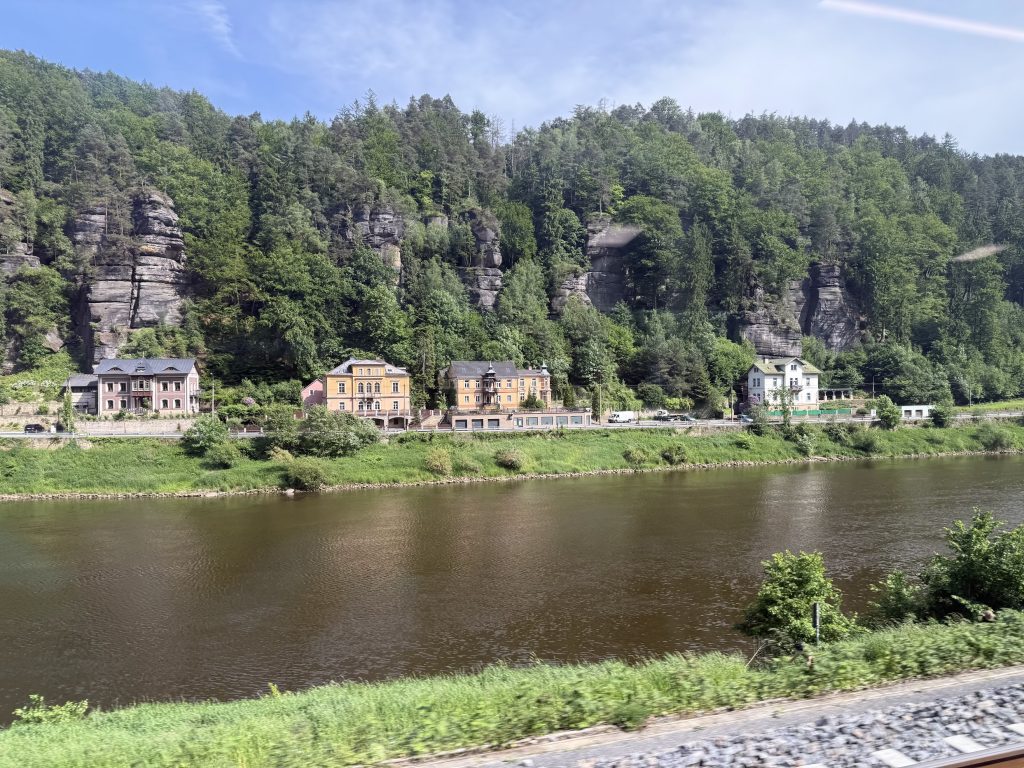
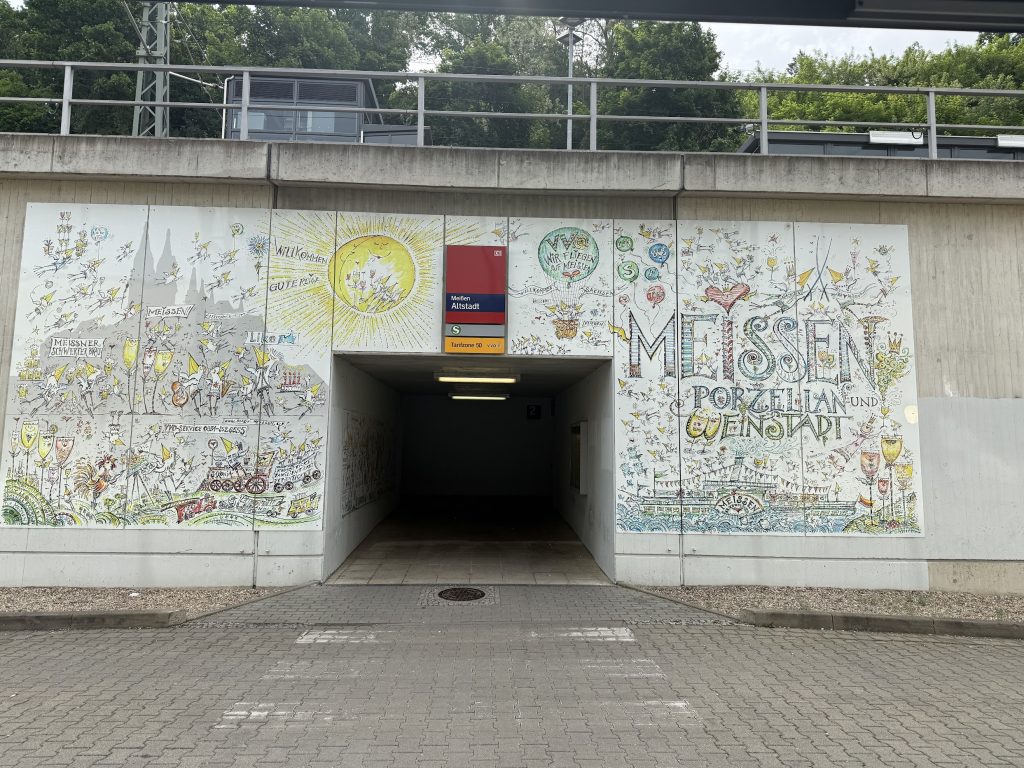
All of these are on display in the Zwinger in Dresden. But the real place, the obscure place, is just northwest of the city. And if you choose to follow the porcelain path you can travel beside the Elbe by train where English translations are scarce and you must quickly decide which train to board. For this reason, I highly suggest booking The Historical Traveler Concierge to handle all your logistics, so you won’t scramble to translate and your tickets will be calmly waiting in your digital wallet. The train winds along the river through forests dotted with hidden fortresses and stone castles perched at high points.
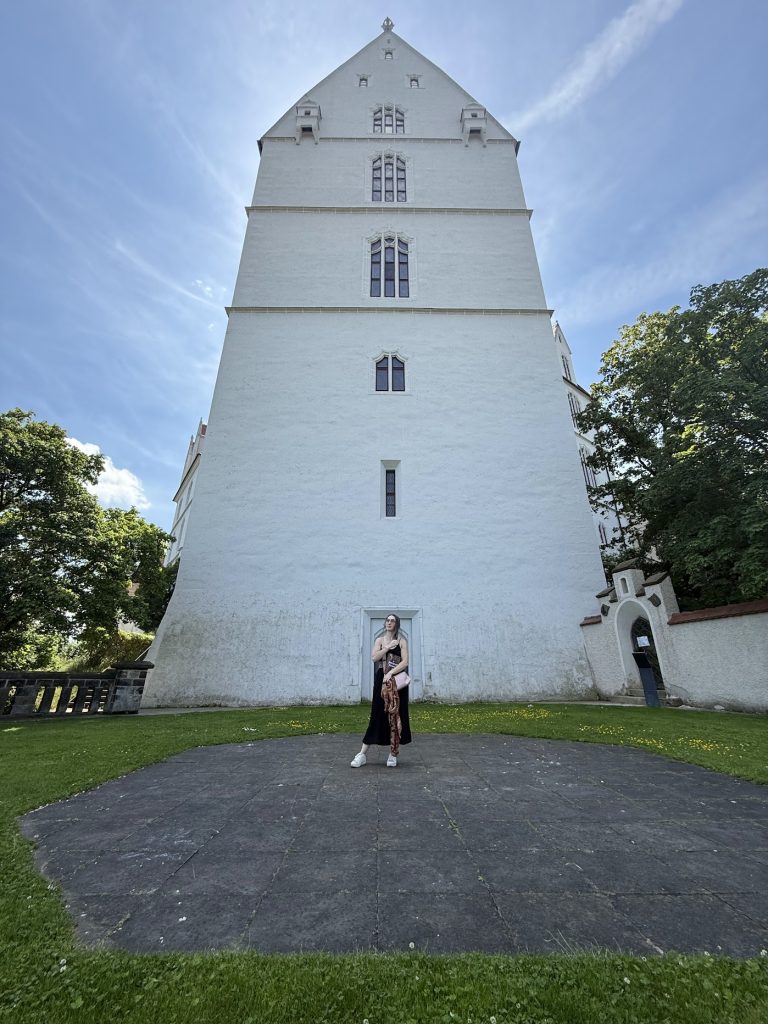
You quickly stop at Meissen, just a few blocks from the still-operating porcelain factory. From the train station, it’s a ten-minute walk to Schloss Albrechtsburg. It was in Meissen where I sought evidence of the most prolific and famous porcelain makers.
The Man Who Made the Impossible
Johann Kaendler, son of a Lutheran pastor, showed great skill in carving from a young age. He was apprenticed to Benjamin Thomae, Saxony’s court stone carver, and soon began assisting in commissions for Augustus. Augustus sent him to Meissen, to the castle where porcelain makers had struggled for decades to create white gold.
But Johann got lucky. By the time he arrived in the early 1730s, the formula was nearly perfected, and Augustus assigned him to create masterworks: Animals. A porcelain menagerie. Lifesize, if you would. Birds and bugs and small beasts were easy, but bison? King Augustus on horseback? A rhino? A bear?
The task was enormous. Proved impossible, until it wasn’t. And today, the remaining animals still stalk the halls of Albrechtsburg and Meissen‘s porcelain factory, their strange white eyes gleaming in the spotlighted exhibits. What would they have glowed like in pre-electricity days? They’re slightly smaller than life-size, but their impact far exceeds the comparison. I’ve asked many Meissen museum curators what their masterpiece is.
They all said the same thing: the menagerie. I’ve sought and found pieces scattered throughout the United States, lions and birds at The Met. A vulture sculpture at the Chicago Art Institute. But it wasn’t until I arrived at the factory itself that the glory of the menagerie struck me.
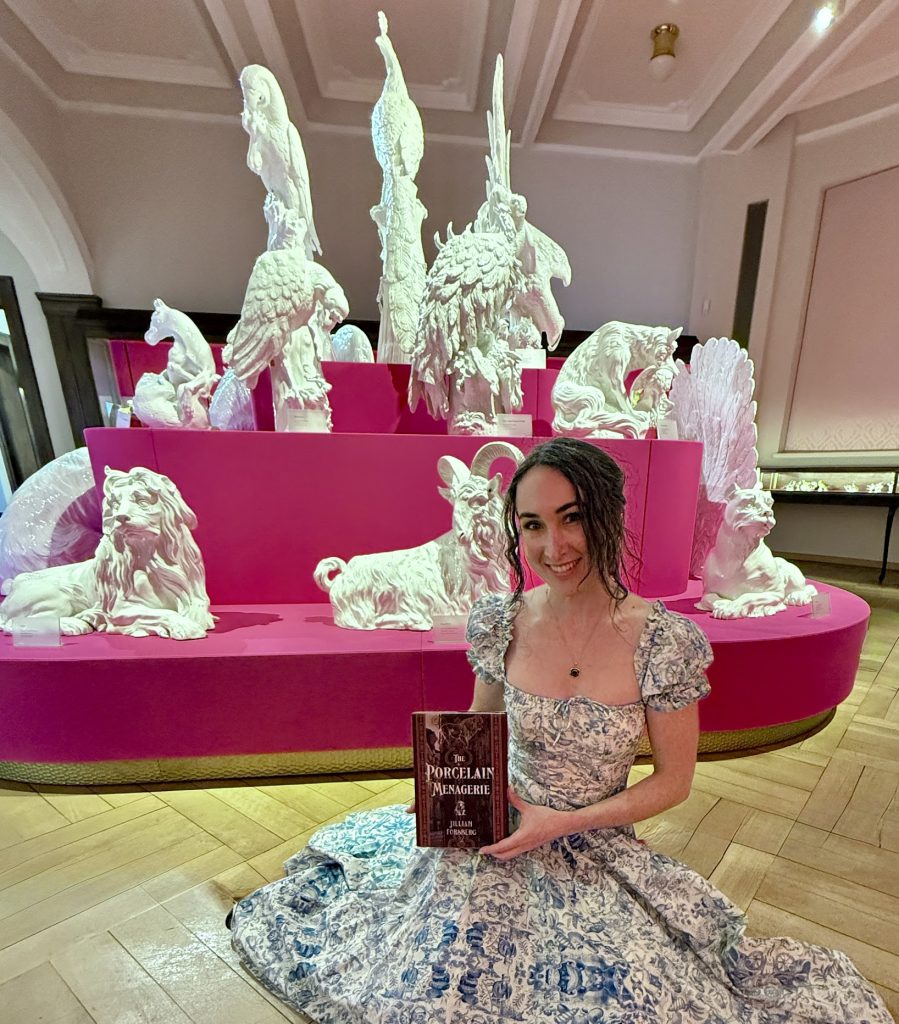
Dozens of large, white animals with twisted eerie smiles, eyes shaped like a man’s, prey in their mouths, feathers bristling, and teeth bared haunt you in this menagerie.
I also seek their maker, Johann Joachim Kändler. The main character of my book, the delightful son, the artist who left behind thousands of pieces of porcelain, and yet I have only been able to find two portraits of the man himself. In Meissen, I search for evidence of him.
Kaendler is woven throughout the city. A bridge bears his name. Porcelain pieces displayed in shop windows. A placard next to the first restaurant where we ate, Domkeller, clearly stated: Johann Kaendler lived here. I go inside the next day and find a small jewelry shop with a silent shop owner. I feel a tiny glimmer of Johann there, but I’m seeking more.
Finding What Endures
We go to Albrechtsburg on a tour, and when the guide leaves us alone in Johann’s workshop, I touch the window sill overlooking the glowing river, and something melts into me. He was here, whispering plans with his co-artists and laughing. Dreaming of grand things, cursing the imperfect art, and gazing at the bend of the Elbe. How much has it changed since he lived there?
But it isn’t until the end of our trip that I truly discover Johann. I search online out of curiosity, as historians and authors tend to do, to find where his grave is, and tell my family, “Probably in Dresden. My GPS says otherwise, and suddenly we’re a ten-minute walk from the town center where medieval water troughs splash with spring water, inviting you to wash your hands, and shop windows display the trademark blue and white swords of Meissen.
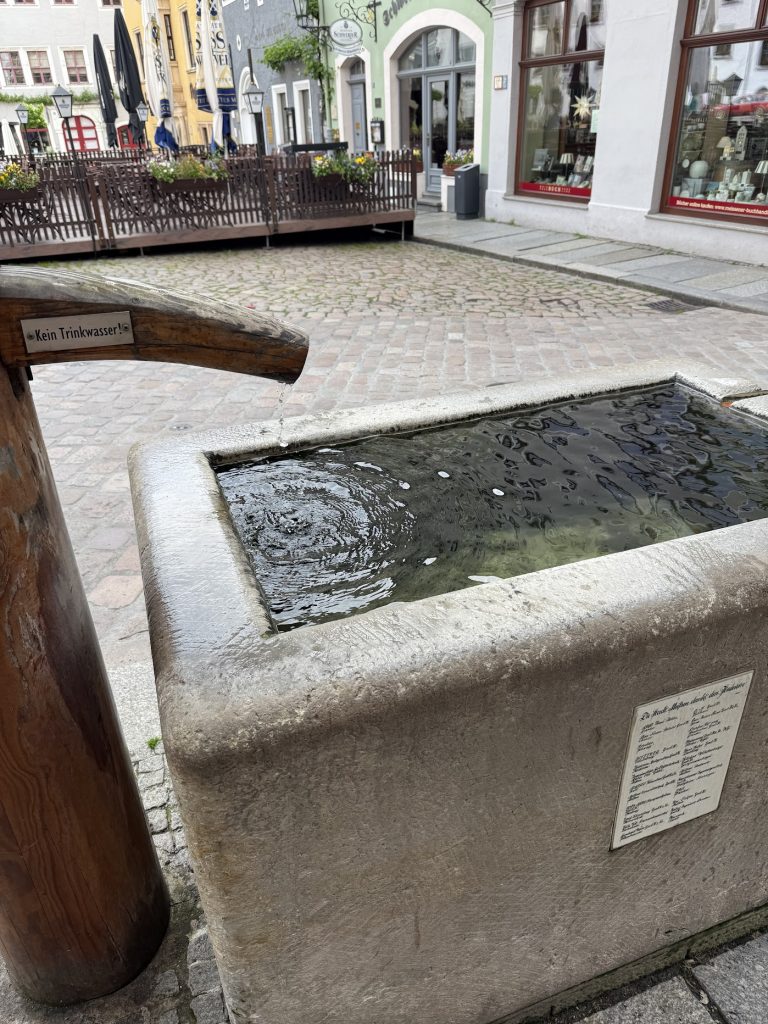
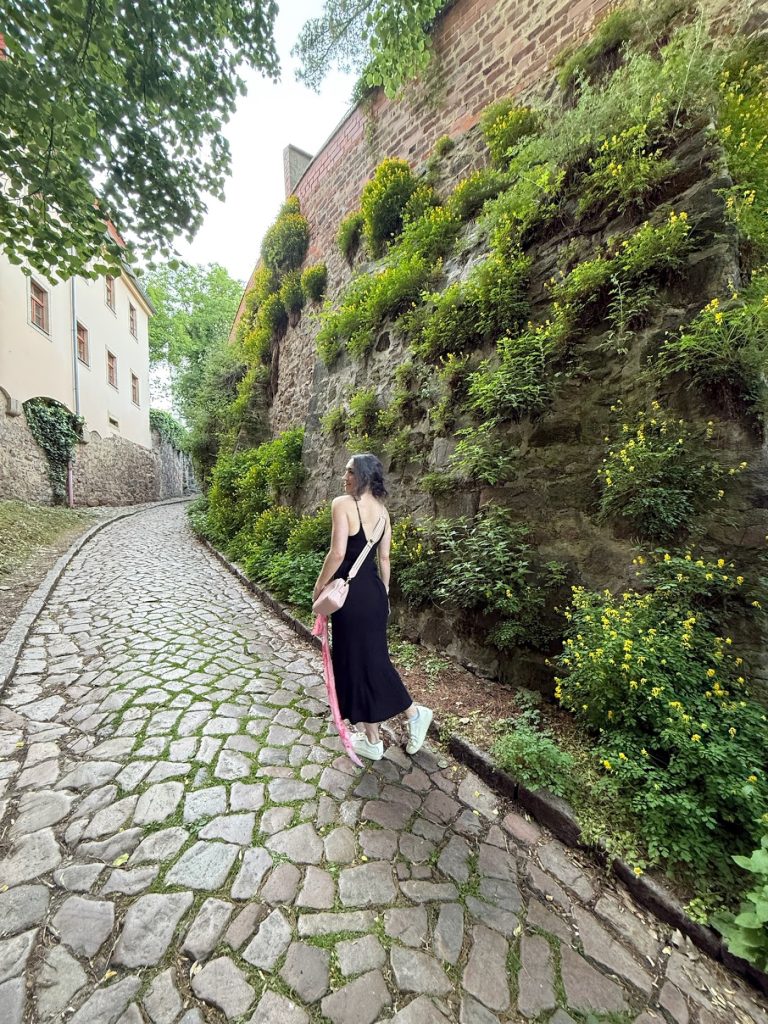
We climb many cobbled steps again. Past the Elbe, past the factory, past snails on the wall and a squish-faced orange cat that accepts a few pets before darting into a blooming garden.
We’re awfully close to our house, my husband says. He’s right. The churchyard my phone directs us to is just across the street. I can see our open window.
The graveyard is dotted with yellow flowers and graves so weathered their inscriptions have faded beyond reading. I looked closely, skimming the eroded dates and names with my hands in hopes of finding a J or a K, and then I found it.
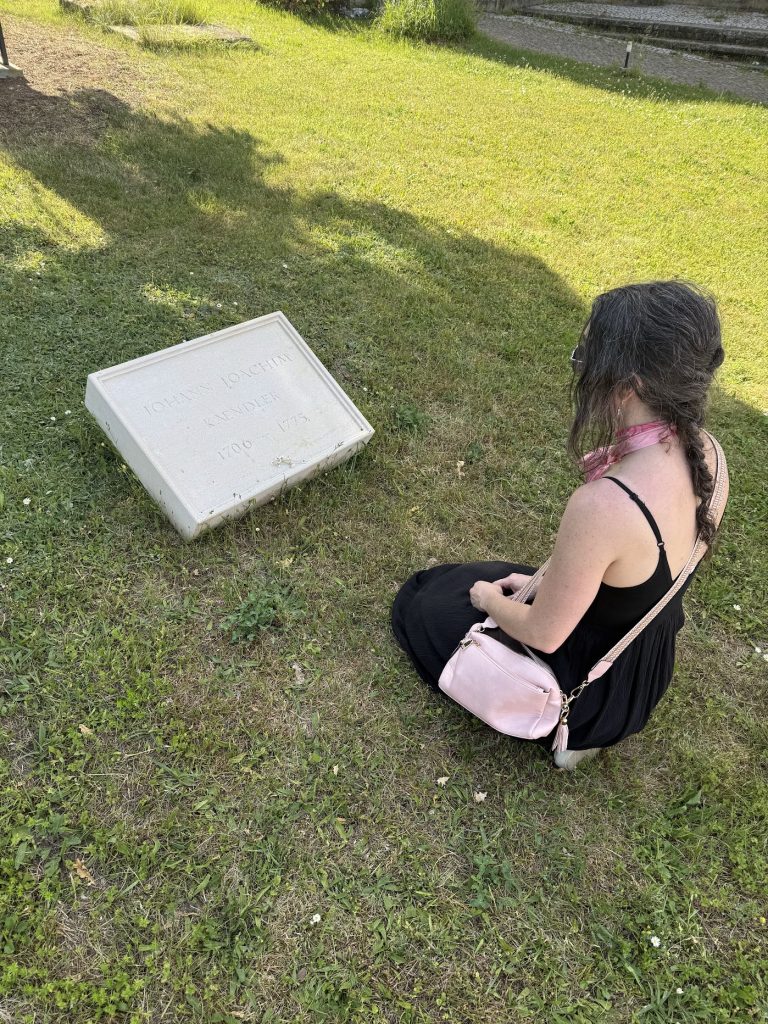
Johann Kaendler has two markers at St. Affra’s Abbey. The first is clean and white, perfectly marked with his name and dates of life. I believe it was placed there because his original grave has faded considerably over the past 300 years.
His original grave is taller than I am. Carved by someone who knew their worth. Stone weathered by rain and wind across countless winters. If you stand with your back to it, you can see the river and the castle where he crafted his wares. The grave is dark, like something from a storybook, carved with a skull and book adorned with curved, swirling details. And at its base, while my daughter gathered flowers and my husband took photos, I wept.

I found him. The person whose mind I tried to capture in fiction. The person who led me here, unaware that I would write a novel about him or travel over 5,000 miles on a pilgrimage seeking his immortal yet fragile animals and the damp, strange walls of a castle-turned-workshop. I found him, and every time I looked out the window of our temporary home, I gazed at his resting place.
On my last day in Meissen, I excuse myself from my family and take my book to Johann’s grave. I read to him a passage. The swallows overhead swoop and play in the morning light as I breathe in the smells of gentle flowers and stone.
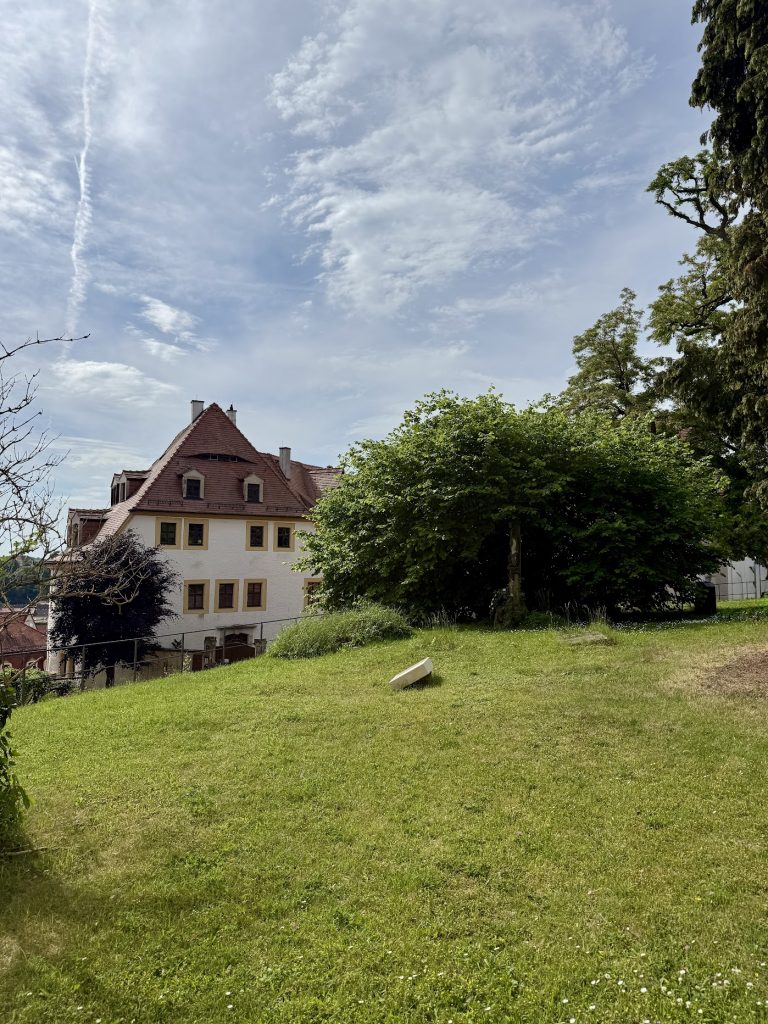
Down many cobbled steps we descended with our distinctly American suitcases. I leave Meissen with many things: treasures and trinkets from the factory, a snail shell, a flower from Johann’s grave, and the realization that life after death is possible when the dead are remembered. It is with hope that people—obscure ones from the past—are brought back to life in fiction. I encourage you to visit Saxony. And while you’re there, read The Porcelain Menagerie on the train. Find the crossed swords above the doorways, enter the shops piled high with porcelain, and feel the smooth edges of art against the rough garden walls. See the king’s treasure in the air-tight vault. Find your own piece of everlasting white gold and guard it well. Wrap it up tightly. And create your own art. In the next 300 years, someone else might draw inspiration from your existence, too.
Where to Stay in Meissen, Germany
Meissen’s old town sits compactly along the Elbe River, with most attractions within walking distance of the cathedral and porcelain factory. The Altstadt has several small hotels and guesthouses, many in historic buildings with river or castle views. Prices run moderate, and you’ll be steps from the main sights, though rooms on narrow medieval streets tend to be smaller than elsewhere.
If you prefer more space and quieter surroundings, residential neighborhoods just outside the Altstadt offer better value. Hotels here tend to be newer with parking and larger rooms, though you’ll need to walk ten to fifteen minutes or take a short tram ride to reach the old town. This is where you’ll find chain hotels and family-run guesthouses for visitors spending several nights in the area.
The countryside around Meissen merits exploring if you plan to visit the Elbe Valley wine region. Small hotels and vineyard guesthouses in villages like Radebeul offer a quieter base nearby, with Meissen itself accessible by car or train in under twenty minutes. Many of these places offer regional wine tastings or overlook terraced vineyards.
Book accommodations several weeks in advance for spring or fall visits, when Meissen draws steady tourist traffic. Smaller guesthouses with only a few rooms fill quickly, especially those highly rated for breakfast or proximity to the porcelain factory. Off-season visits in winter or early spring offer better availability and lower rates, though some smaller establishments close briefly during the slowest months.
Recommended Reading
- The Porcelain Menagerie by Jillian Forsberg — A richly immersive dual-timeline historical fiction set in 18th-century Dresden, where sculptor Johann Kändler is tasked by Augustus the Strong with crafting a lifelike porcelain zoo, while decades earlier a Turkish handmaiden named Fatima navigates court intrigue, exploring art, power, identity, and survival in the secretive kilns of Meissen porcelain.
- The Arcanum: The Extraordinary True Story by Janet Gleeson — A thrilling narrative of secrecy, ambition, and alchemy behind the invention of European porcelain in Meissen.
- The White Road: A Journey into Obsession by Edmund de Waal — A poetic, personal history tracing the author’s search for the origins of porcelain from Jingdezhen to Meissen, Dresden, and beyond.
- Meissen Porcelain by John Sandon — An authoritative visual guide chronicling the early masterpieces of Meissen and its evolution into Europe’s most celebrated porcelain manufactory.
- Figures of the Enlightenment: A Catalogue of Eighteenth-century Meissen from a Private Collection by Philip Kelleway; Tristan Sam Weller — A scholarly catalogue examining eighteenth-century Meissen porcelain figures from a private collection.
- Porcelain: A History from the Heart of Europe by Suzanne L. Marchand — A scholarly yet accessible account that positions Meissen’s porcelain legacy within a sweeping narrative of European identity, aesthetics, and politics.
- Meissen Figures 1730-1775: The Kaendler Period by Yvonne Adams — A detailed reference work examining Meissen porcelain figures produced during the Kaendler period.
- Early Meissen Porcelain: The Michael Greenberger Collection by Michael Greenberger — A scholarly catalogue presenting early Meissen porcelain from the formative years of Europe’s first porcelain manufactory.
About Jillian Forsberg

Jillian Forsberg is an award-winning historical fiction author whose novels tell true stories about people, animals, and artworks. Her other book is The Rhino Keeper. She lives in Wichita, Kansas, with her husband, daughter, and their pets.