
Our interview this month features an author whose several series reflect intimate knowledge of where she has lived or places to which she has been passionately attached. From the locations of English Civil War to the Australian Goldmines to Regency Singapore, Alison Stuart breathes life and reality into her characters. Most recently, she has had greatest success with her Harriott Gardon Mysteries set in Singapore, and many of her older romances and English Civil War heroic stories are being reissued around the world, reaching a wider audience.
We are pleased to introduce you this to Australian-based bestselling author.
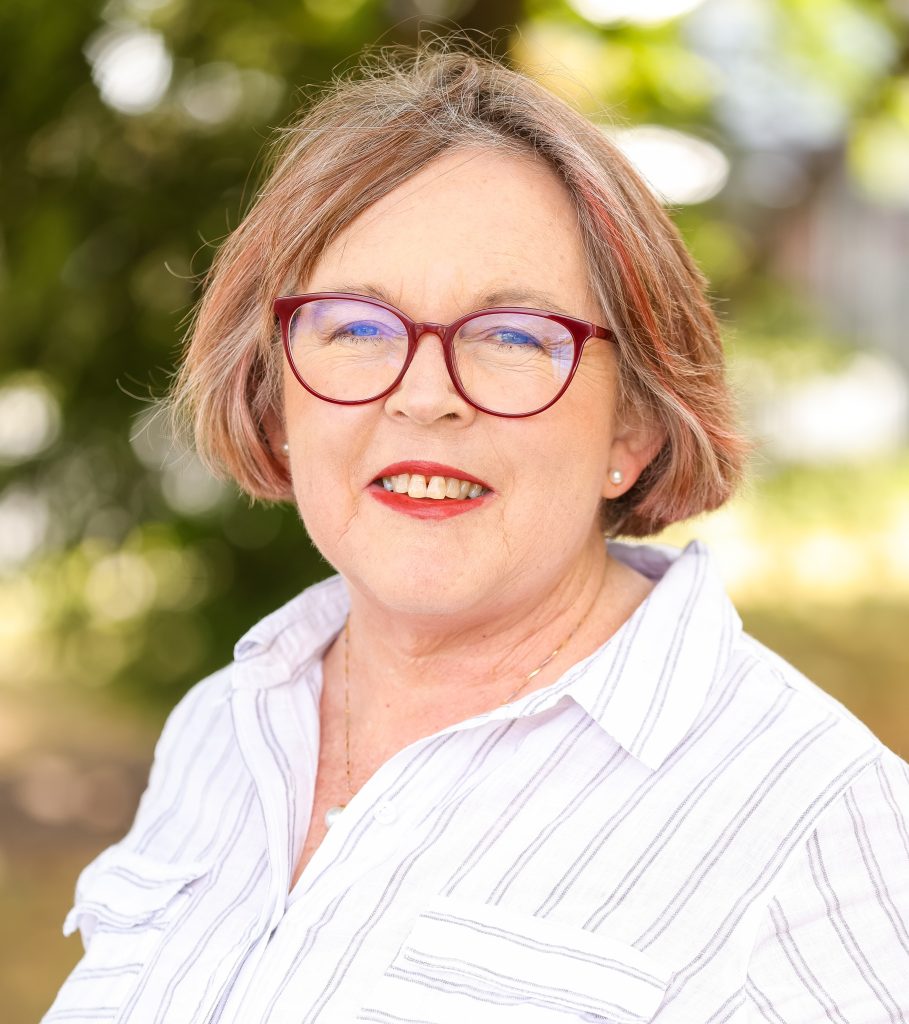
Jackie: I’m very excited today to be interviewing Alison Stewart—you might also know her as A.M. Stewart—and we’re going to talk about that a little later. I’m thrilled to bring her to you because she has been developing fabulous series all over the world, not just in one place. We’re going to learn more about that as we delve into Alison’s life and the books she has brought to us.
Let’s dig in. Alison, you’ve made your mark on several continents with different kinds of books. Your books are heavily influenced by the places you’ve lived. Please tell us a little about your life and how you came to live in such a variety of places, some of which would be considered exotic.
Alison: Being born in Kenya probably counts as the most exotic place. My mother was born in Kenya. My father went there with the army, loved the place, wanted to settle, and mourned the fact he had to leave. Reality strikes, and when I was about eight or nine, my parents realized it was time to move on, and neither wanted to return to England. They chose Australia. I’ve lived in Australia since I was ten. I am Australian, married to an Australian, and my children are Australian. I just got left with a silly accent. I’ve lived in Melbourne and it’s been a good life. My husband worked for a multinational oil company, and I joked we’d get an overseas posting just as the children’s education became critical. Sure enough, when my sons were 15 and 12, we were posted to Singapore! We realized this was an opportunity not to be passed up, despite protests from our sulky teenage sons. We spent three amazing, not always easy, years in Singapore before the company decided it was too expensive and sent us home. We’ve always been great travelers. Both of us have been in the military. We share an interest in battlefields, tracing campaigns, and what we’d call war‑gaming. I introduced my husband to a love of history. He tried very hard to introduce me to rotating machinery—he’s an engineer—and I think he failed. That’s my background, why I have the accent I do, and why I write the books I write. The only place I haven’t set a book is Africa; that’s still on the back burner.
Jackie: Why history? What brought that to you?
Alison: My father takes the credit. He was a great history buff and I loved him. We spent a lot of time sharing history. We saw dramas like Napoleon, Cromwell, Nicholas and Alexandra. He also read to us because there was no television in Kenya. Every Sunday afternoon he’d read — and he wasn’t one to read children’s books. I was introduced to his favorite historical novels—like the works of Daphne du Maurier, highly unsuitable for an eight‑year‑old—but they opened the world to me. The King’s General stands out. It probably inspired my love of the English Civil War—cavaliers, roundheads, skeletons found in tunnels. I’ve lived in that world in my mind ever since.
Jackie: But you ended up as a lawyer, and then with military and emergency service. Give us a picture of all that.
Alison: I have an arts degree in history—ancient history, ironically. I’m a professional historian from that point of view. I did law because my father said I needed a trade, I fainted at the sight of blood, and I couldn’t add to save my life. That ruled out medicine and accounting. There’s a long history of lawyers in the family, so I followed the family trade. It was an interesting 30 years. I didn’t follow the traditional route. I did a lot of work for myself while looking after children, preferred to work for not‑for‑profits and had a small practice. Later, I became a company secretary. The military came in my final year of university after a badly broken heart. I needed to do something drastic and earn some money, so I joined the Army Reserve. My friends said, “You’ve done what?” Some decisions feel inevitable; joining the Reserve was entirely my decision. Many amazing experiences followed. I met my husband during officer training—and I outrank him. I’m qualified as a lieutenant colonel; he’s still a major. We left that life behind when we moved to Singapore. I sidestepped into the legal corps—the JAG Corps in American terms. It was a peacetime army. The world changed with 9/11, but by then we were out. I took that experience into what I thought would be my ultimate job — as director of corporate governance for one of our emergency services. It was a fabulous experience—riding in fire trucks—melding law and the military, uniforms, and I could shoot. I’d visit fire stations, and when they learned I was a lawyer who knew how to shoot and had worn a uniform, I got a bit more respect! Politics overcame that job.
Alison: So, in 2017 I told my husband I felt my writing was about to take off, that I’d worked and saved enough, and asked if I could retire. We agreed I could, and I ended up with not one — but TWO book contracts from two major publishers. My instinct was right.
Jackie: How did you become a writer?
Alison: It goes back to childhood. I’d always been a scribbler. My best friend and I would climb a big willow tree in the schoolyard every lunchtime and write our magnum opuses. Hers was The Intermittentra—she loved sci‑fi and fantasy. Mine was The Locket of Grace—historical, of course. I still have my notes. The serious start was a skiing holiday in the early 1990s. My husband suggested a slope that “didn’t look too steep.” Of course, I went head over heels and dislocated my shoulder. I spent the rest of the holiday in the lodge with our brand‑new notebook—about the size of a telephone book—but it had WordPerfect 5.1. I started writing the book that became By the Sword, my first published book. The bug bit and I never looked back.
Jackie: You bring humor to the page; I’m enjoying this conversation and chuckling my way through it. Does that come out in your writing as well?
Alison: I don’t think my books are deliberately humorous. The most amusing is a short time‑travel novella I wrote the week my father was dying. He had Alzheimer’s and dementia; it had been a hard few years, and I needed an escape far from my reality. It’s not laugh‑out‑loud—more like little digs—because I write about serious subjects: war, soldiers, death, crime.
Jackie: What drew you to varied time periods—the English Civil War, Regency, Australian history, Colonial/Edwardian, and post–World War I? Most people stick to one or two. How have you wandered across the time span?
Alison: I started writing the books I wanted to read. I was passionate about the English Civil War and ran out of books, so I wrote them! Six ECW books later, I realized the definition of madness was to keep doing the same thing and expect a different outcome. I had a small readership; I’m still waiting for ECW to become the next Regency. At a romance writers’ conference in America, established authors talked about “own story”—writers retell their own story in every book: themes, tropes, character types. Readers come for that. Once I understood, I realized the period didn’t matter; I was telling my own story in any era. I flirted with the Regency—published by HarperCollins Australia—and recently re‑released it; it’s doing well. My World War I interest comes from time spent on the Western Front with David, visiting graveyards and researching. I had to write that story—a history‑mystery‑romance‑and‑ghosts: Gather the Bones (1922), featured a war‑damaged hero and heroine and a dual timeline back to the Regency. Flashbacks to the trenches, a few ghosts—because I do love a good ghost story!
Now, my two big series are the Australian series set in the goldfields, and the Harriet Gordon Mysteries set in Singapore. Harriet Gordon came about during my time in Singapore. As an expat wife, I went from busy professional lawyer to “my husband’s wife.” The kids were at school, my husband traveled, and I lost my identity. A writers’ group gave me focus. I used to go to the National Library and scroll microfiche of old newspapers. On the front page of a 1905 Straits Times I found an advert: “An Englishwoman undertakes shorthand and typing” with set hours, ending with “absolute secrecy and confidentiality assured.” It leapt off the page. Who was she? Why only certain hours? Why secrecy? She became the inspiration for Harriet Gordon—a shorthand typist in Singapore escaping an unhappy experience in England where she was a suffragette. I learned a bit about the real woman, but she wasn’t nearly as exciting as Harriet. I shopped the story around. My Australian publisher Harlequin Australia, now HarperCollins, loved it but couldn’t see how to market it and asked if I had anything else.
I had started reading an historical novel by American set in my hometown of Melbourne and nothing about it was right! Reviews thanked the author for illuminating a period they “knew nothing about,” but it was awfully historically inaccurate. It coincided with a time when Australian readers wanted Australian voices telling their own stories. Our history is subtle, but powerful, and 60,000 years old. It didn’t begin with Cook “finding Australia.” I have convicts rattling in my family from 1798—almost Australian royalty.
So, my husband and I were camping on the Snowy River; it was raining, and with a good bottle of wine we brainstormed: if I wrote an Australian historical, what would it be? Gold mining was huge in Victoria. The big goldfields are well covered, but there’s a smaller field near where we were camping—Walhalla—that we love. We brainstormed about an isolated mountain goldfield — who lives there, what trades, how the gold is mined. When my editor asked for “anything else,” I pitched it sight unseen! I’m a pantser (editor’s translation for non-Australians—this means someone who flies by the seat of their pants); I had no idea how it would end, but she said, “Fantastic! Can you give me a synopsis and sample chapters for two books?” I did, and they commissioned two, then a third: and those were the Maiden’s Creek books.
Around the same time, at the Historical Novel Society conference in Portland OR, I pitched Harriet Gordon to an agent who picked me up. Almost simultaneously, HarperCollins Australia signed the Australian series, and Penguin USA picked up the Singapore books!
Be careful what you wish for—everyone wanted the same timelines! Good thing I come from a corporate background—I had Gantt charts. One editor said, “I do love an author with a Gantt chart.” A Gantt chart is a project‑management tool that outlines phases, timelines, and moving parts in order.
Jackie: Malaysia is a place you’ve been to a lot. Did you set any books there?
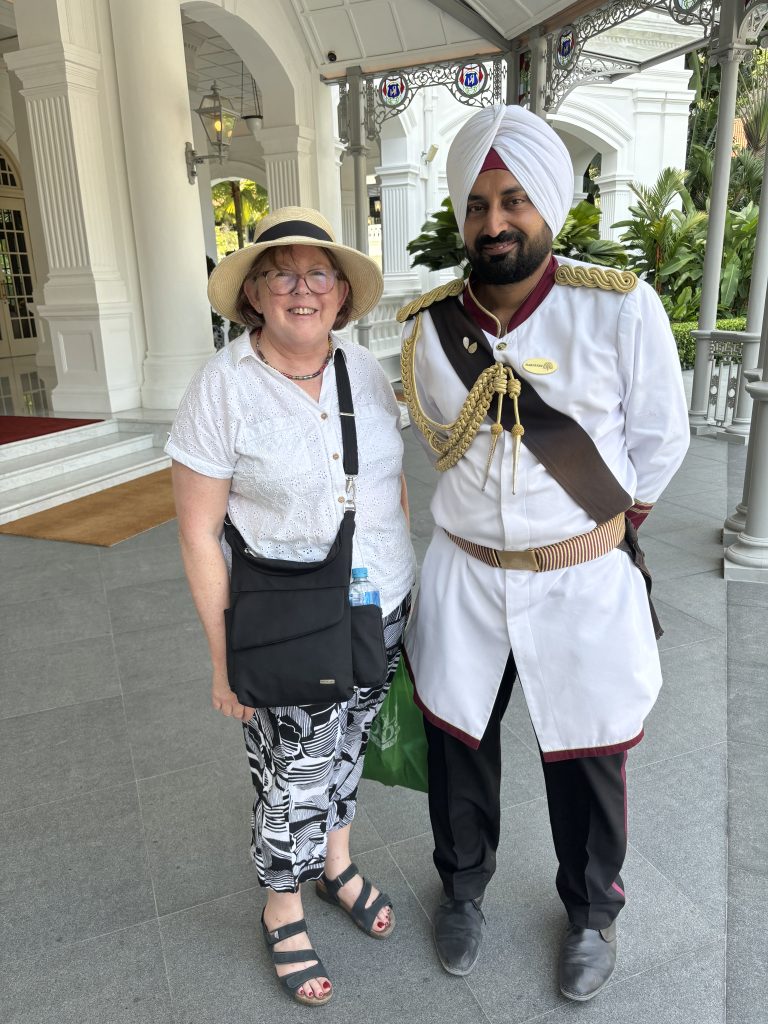
Alison: Yes. Malaysia and Singapore are closely related. At independence, Singapore was part of Malaysia before separating. Living in tiny Singapore, it was good to get out, so we’d drive across the causeway. Malaysia was gorgeous chaos; we loved it. We’d spend long weekends in Malacca, take road trips to Taman Negara, and I’ve been back many times. The fourth Harriet Gordon story, Terror in Topaz, moves the characters to Kuala Lumpur. I came across a real fascinating 1911 murder there: an English woman accused of shooting her lover on the steps of her family home. Her husband was the principal of a major school. She was found guilty and sentenced to hang, later pardoned by the Sultan of Selangor and allowed to leave. Somerset Maugham heard the story and turned it into “The Letter,” later a Bette Davis film and even an opera, and it has inspired other fiction. I fictionalized it into my book and enjoyed researching who she was and why she might have shot him.
Jackie: Tell us about your creative and research process. How does a book spark, and how do you research?
Alison: It varies, but it’s generally an historical incident I come across. With the Maiden’s Creek books, one centers on a fire, one on a mine collapse, the third on a flood—each drawn from real events in Walhalla, the town Maiden’s Creek is based on. I dig into contemporary newspapers. One story was a smallpox case that could have wiped out the town—eerily predictive of COVID a year after I wrote about it.
But because I’m such a pantser, I’m not always sure where the story will go or what extra research I’ll need. I set aside about a week before starting for core research—e.g., for The Homecoming I researched nursing history; for gold mining, my engineer husband helped translate geology into plain English. He dared me to write a hero who was an engineer—oddly rare in romance—so the hero of my second book is a dour Scottish engineer. He worked out fine and there’s a lot of David in him. English Civil War research was easy—I’ve been researching it since I was eleven. Later books required more work. I write with a base of research and add specifics as needed; I don’t spend months researching before I start.
Jackie: Is your research mostly online now, or do you still use newspapers and libraries?
Alison: We’re blessed—so much is online. All those Straits Times issues I scrolled on microfiche are available instantly now. The internet is my starting point, but I’m very fond of our State Library of Victoria and spend time there for esoteric topics like nursing history. There’s something visceral about pulling a book from the stacks and taking notes. The internet opened the world to writers—we just need to validate sources. Wikipedia is a fine place to start; and it often points to other references.
Jackie: You changed from Alison Stewart to A.M. Stewart for the Singapore series. Why the change?
Alison: I was developing two very different brands. In crime, it’s common for women to use initials, so gender isn’t obvious—there’s still prejudice that women don’t write crime, despite many successful women. It was a no‑brainer to separate A.M. Stewart and Alison Stewart. I’ve never hidden that I’m the same person. I now have one newsletter and I’m cutting back the two personas because it’s an administrative nightmare. While I was with Penguin, the brands were distinct across website, Facebook, and Instagram. Some books will still be A.M. Stewart if they’re crime. When I self‑released Lord Summerton’s Heir, I labeled it a romantic mystery so readers knew it’s a mystery, and that changed how readers approached it.
Jackie: Take us through your series chronologically, with characters and a few titles.
Alison: My first books were English Civil War. They weren’t intended as a series. I wrote By the Sword and The King’s Man initially individually. Early on they were with a U.S. press; I got the rights back and took them to Harlequin Australia. My editor said, “I love these, but it’s incomplete—you need a third book.” The books start in 1651 at the Battle of Worcester; the middle involves spies and an attempt to assassinate Cromwell (a true story). We needed the Restoration and a proper ending for our heroes. The only plausible hero I’d killed at the end of book two, so I had to figure out how to resurrect him — and wrote Exile’s Return to complete the trilogy. They’ve been recently republished in the UK with fabulous covers. I wrote two more ECW books and a time‑travel novella, Secrets in Time, also set in the ECW.
Then I pivoted and wrote Gather the Bones—Downton Abbey with ghosts, perhaps—which remains one of my favorites and did very well in book award contests. Other ECW titles include Rebel Heart and My Enemy.
Then came the Regency: Lord Summerton’s Heir and the Christmas novella Love Redeemed—both recently re‑released. This has been a year of re‑releases and rights reversions rather than new writing.
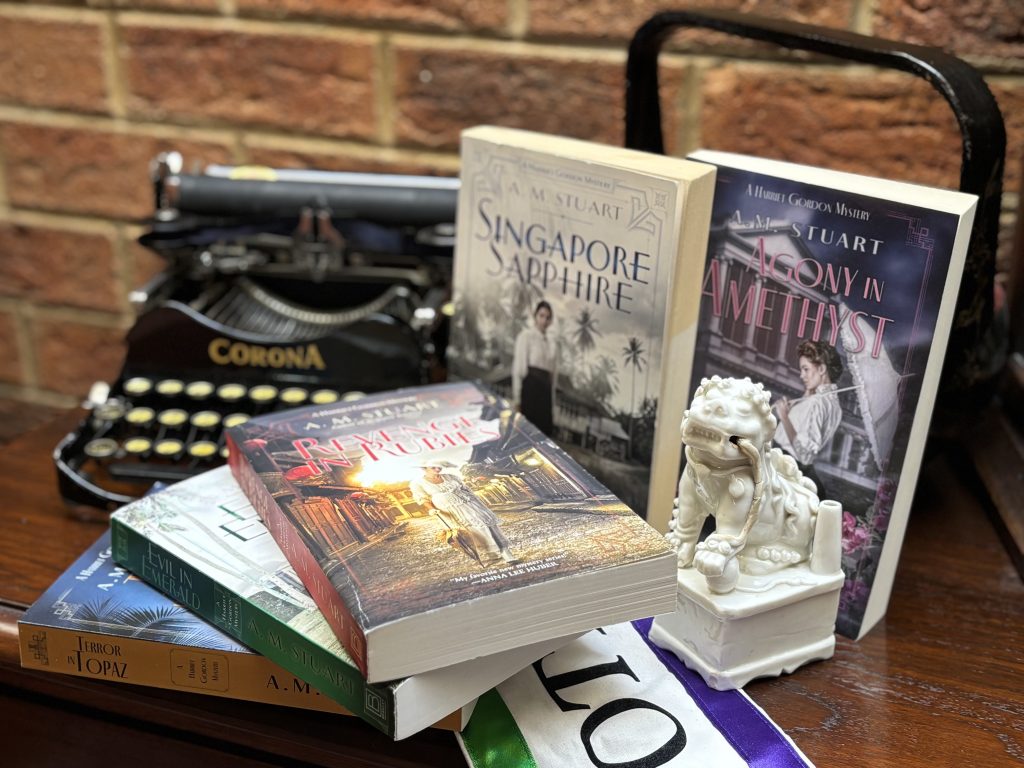
I started Singapore Sapphire in NaNoWriMo 2011, the first of the Harriot Gardon mysteries; Penguin picked it up. Book two was supposed to be The Colonel’s Lady Is Dead, but the publisher wanted to stay with the gem theme, and preferred a red cover and “ruby” in the title, so it became Revenge in Rubies. Then Evil in Emerald, Terror in Topaz, and the finale Agony in Amethyst. Not all are gemstones—Emerald is a place; Topaz is a club; Amethyst is a dress—but I was running out of gems, so it was time to leave. T
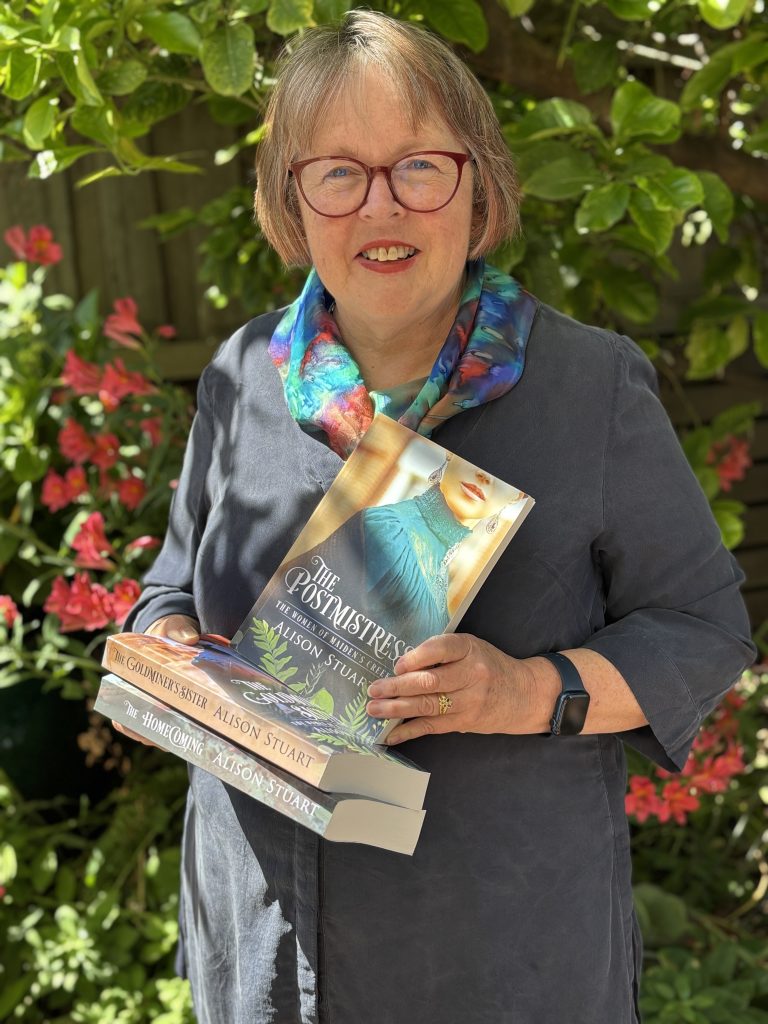
Then came the three Maiden’s Creek books: The Postmistress; The Goldminer’s Sister (a teacher); and The Homecoming (a nurse). The third is set 20 years later and follows two children from the first two books as adults. That’s my sixteen books.
Jackie: You hinted at another mystery series. Is that where you’re headed?
Alison: Yes. I love crime. I have a standing joke: I used to write romance, and then my husband retired. Not quite true, but another author asked me what I actually read, and it’s mostly crime and mystery, starting with Ellis Peters (Editor’s note: author of The Cadfael Chronicles—Monk “Brother Cadfael” solving murders in the 1100s.) Historical mystery is my love, though it’s harder to write. Whatever comes next—and there are a few irons in the fire—it will be historical murder mysteries. I even have one set in the English Civil War mostly written; I’m not sure I’m brave enough to submit it.
Jackie: Why is mystery harder—because the plotting is more complicated?
Alison: Exactly. A romance is fairly straightforward. A murder mystery starts with a body and ends with discovery, but you must take readers on a journey—tease, send them down blind alleys, throw in red and blue and green herrings. I love building the puzzle. Sometimes readers say, “I never guessed,” — often because I didn’t know who did it until the end! Then I go back and seed proper clues; you must give readers a fair chance. Nothing annoys me more than rabbit‑out‑of‑a‑hat endings where the murderer is someone who appeared once at the start. That’s cheating. But I have a spontaneous nature. Plotting every scene would kill the joy for me; I like to discover the story along with the characters.
Jackie: What’s your favorite thing about the Harriet Gordon Mysteries—or about Harriet herself?
Alison: There’s a lot of me in Harriet—probably more than any other character. She’s annoyingly curious, which gets her into trouble. She’s loyal to friends and family and has a deep sense that right should be done. My favorite thing is her counterpart, Inspector Robert Curran. They have a working relationship that might turn into something more. I’m in love with Curran! He has a strong sense of justice and isn’t afraid to bend the rules to see it done. I wanted characters who weren’t objectionable colonials. People with good motives and good hearts existed alongside the objectionable ones, and I based some of those on real life.
Jackie: Are there places in the world you’d like to place future characters? You haven’t touched Africa yet.
Alison: I find it harder to write Singapore now because of the colonial dichotomy that now dominates the perception. I dearly want to write a book set in East Africa—Kenya. I’ve been back as an adult and have a different perspective. I believe in boots on the ground, writing from what you’ve seen. Most of my books are set in England—Warwickshire and Worcestershire, where my family’s from—or Australia. I might set something on the U.S. East Coast; I’ve been enough times—to tour the battlefields. The hero of The Postmistress is American—Caleb, a doctor and survivor of the American Civil War, damaged and escaping. I enjoyed writing Virginia because I know it so reasonably well. Future books will likely be English or Australian—maybe Africa. People need to hear their own voices telling their history.
Jackie: Anything else we should explore?Alison: I have a few irons in the fire; we’ll see which comes out first. There will be another Harriet and Curran story. I’m toying with taking them into a new series away from the Gemstone arc—spoilers, they are now a couple—so the dynamic is different. Maybe adventures in Africa. There are possibly a couple of shorter Harriet and Curran stories—one is written and needs polishing. It was supposed to be out for Christmas this year; maybe Christmas next year. Watch for news on my Substack.
