For over 400 years, the archipelago of Bermuda has played a major role in Western hemisphere development.
Since its discovery in 1505, when a Spanish galleon returning from the Caribbean anchored off its shore and allowed Bermuda to be plotted on some of the earliest Western Atlantic maps, the island has played a remarkably strategic role in global geopolitics.
From Jamestown’s settlement through the American Revolution and Civil War to both World Wars, Bermuda has consistently held a place of importance in shaping the course of history.
The name “Bermuda” comes from Juan de Bermudez, captain of a Spanish galleon. While he never set foot on the island, he is still recognized as the first person to discover Bermuda.
In 1543, a Portuguese galleon returning from the Caribbean to Portugal managed to drop anchor and come ashore, thus becoming the “first feet” on the island—there were no indigenous people present when it arrived.
A Shipwreck Changed Everything
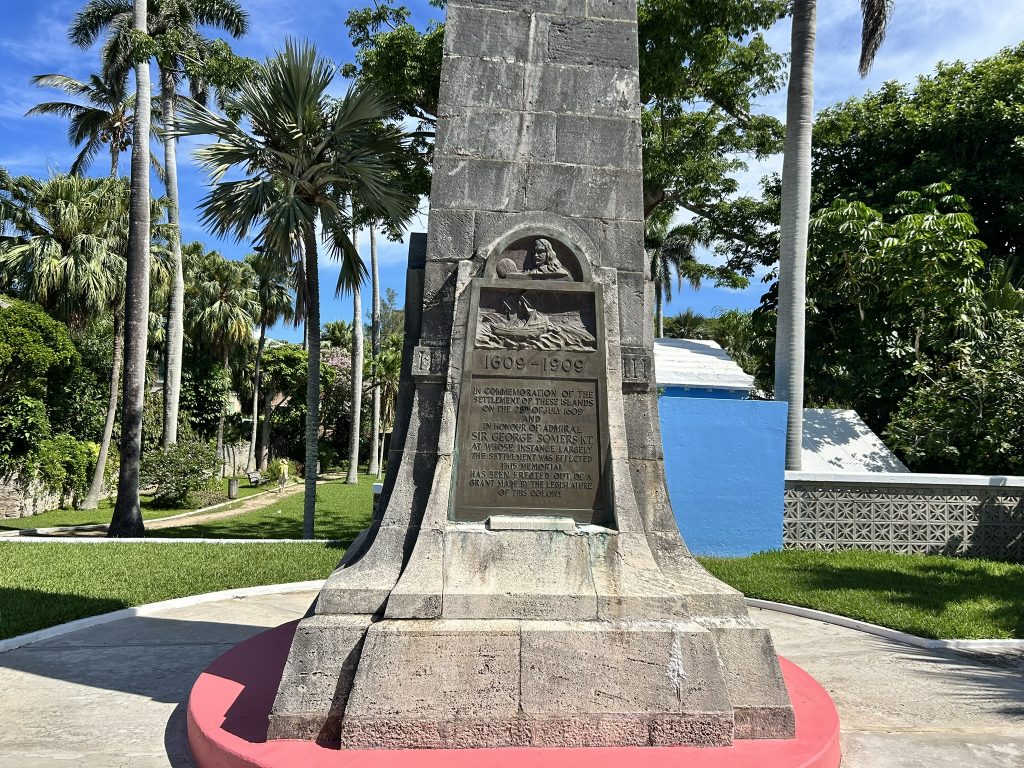
The substantive discovery of Bermuda occurred in 1609 when the ship Sea Venture ran aground on a coral reef off the island’s eastern end.
In those days, Jamestown, Virginia was a British Colony settled by English explorers seeking new land and investment opportunities in the western hemisphere.
They arrived in Jamestown in 1606, but due to obstacles such as a mosquito-ridden area around the settlement and ongoing conflict with the Powhatan Indians, the settlers quickly found life in the Colonies was far from ideal.
A fleet of nine ships was sent from England in 1609 to bring supplies and relieve the horrible conditions of Jamestown, which included significant levels of famine, disease, and death.
Of the nine ships that set sail, four made it to Jamestown without delay, two ships made it a while later, two floundered in the open sea, and one, the Sea Venture, was blown off course by a severe hurricane and grounded on the coral reef surrounding the island of Bermuda.
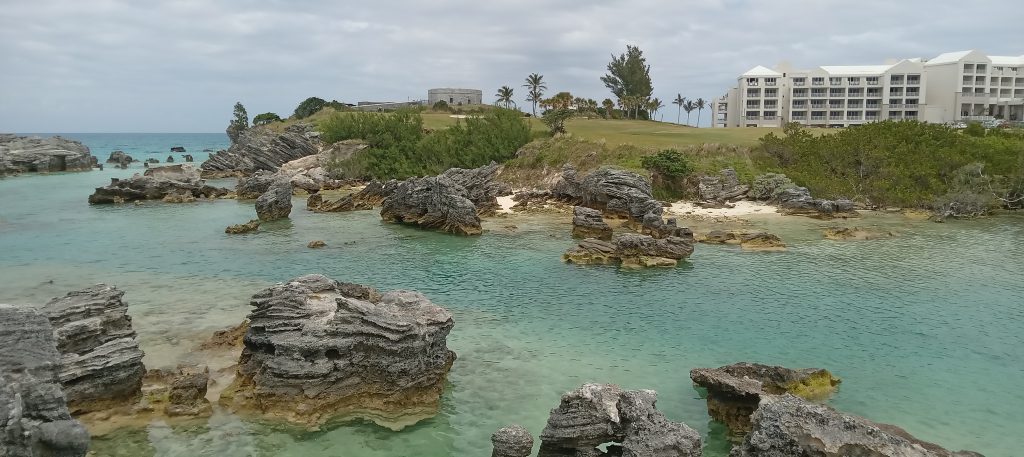
All 150 souls on board, including the Admiral of the Fleet Sir George Somers KT. (knighted in 1603 by King James VI of Scotland/King James I of England, son of Mary Queen of Scots) and Captain Thomas Gates (who was intended to be Governor of Virginia) survived and came ashore on a large beach that still provides pleasure to residents and tourists today. It is called Discovery Bay, located immediately in front of one of the latest additions to the hotels collection of Bermuda, the St. Regis in the St. George’s at the eastern end of Bermuda.

Sir George and Thomas Gates were determined to reach Virginia, so they arranged for two smaller ships to be constructed on the island using the Sea Venture’s remaining wood, sails, and ropes plus the island’s abundant cedar trees, then sailed them to Jamestown as the Deliverance and the Patience.
All but three of the Sea Venture crew and passengers successfully sailed to Jamestown approximately ten months later.
The remarkable story of the wreck of the Sea Venture and the subsequent sailing to Jamestown reached London, inspiring William Shakespeare to write his final play, The Tempest, first performed before Royalty in November 1610.
Sir George Somers returned to Bermuda for supplies of fruit and timber but died on the island in 1610. His heart was buried in Bermuda while his remains were shipped back to Dorset, England for his family to claim his substantial inheritance.
Visiting the Original Capital of Bermuda

St. George’s (today a UNESCO World Heritage Site) was incorporated as the Capital of Bermuda in 1612 until 1815, when the Capital moved to the City of Hamilton, where it remains.
Stepping into St. George’s, Bermuda, feels like stepping back in time—precisely 400 years.
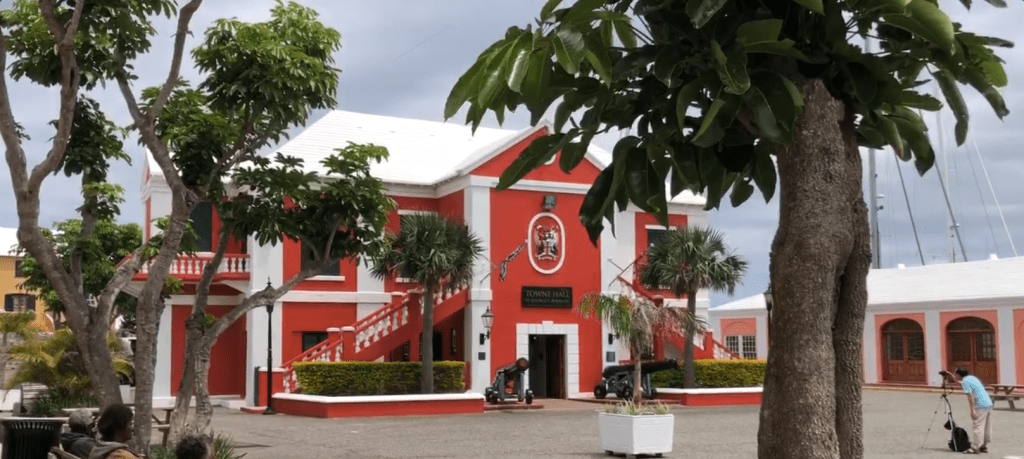
A simple and pleasant walk in St. the Town Square where the Towne Hall stands, an elegant and stately building built in the 1870s that serves as the centerpiece of the town, also called King’s Square after King George III, the “cause célèbre” of the American War of Independence.
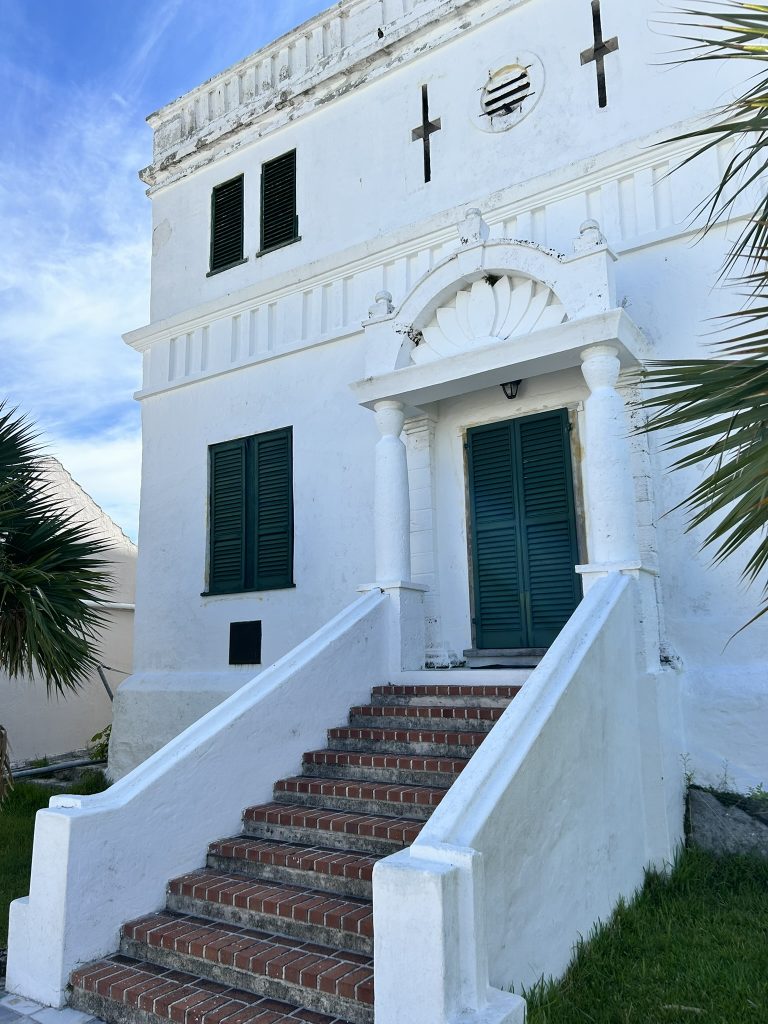
Slightly behind the Town Hall, up a slight incline is the Old State House, not only the oldest stone building in Bermuda but also the oldest English Colonial building in the Western Hemisphere. Thus the site hosted Bermuda’s first Parliament from 1620 until the capital moved to Hamilton in 1815.
The building was designed by then-Governor Nathaniel Butler in Italian style. He mistakenly believed Bermuda lay at Italy’s latitude and would share its climate. Regrettably that was not the case, as Bermuda is prone to hurricanes, which has always caused rainwater to pour through the roof.
The seat of the Bermuda Government remained in the State House until 1815 when the capital of Bermuda moved to Hamilton, an almost 200-year period.
The Peppercorn Ceremony
When the Capital moved to Hamilton, officials had to decide what to do with the State House. It was resolved by gifting the building to a Scottish Masonic Lodge (No. 200 on the Roll of the Grand Lodge of Scotland). The Lodge, formed in 1797, is Scotland’s oldest still-working Masonic Lodge outside of Scotland.
The building was given in perpetuity with an Annual Rent of one Peppercorn (a highly valuable and desirable commodity at the time).
Ever since, the Annual Peppercorn Ceremony has been held in St. George’s – when the Government, Royal Bermuda Regiment including their Bagpipe Band, VIPs, and the general public congregate in the Town Square. Then the Governor arrives by horse-drawn carriage to demand the Annual Rent payment for the State House. It has been one of Bermuda’s highlights every year since 1815. To this day.
A short stroll leads to the serene beauty of Somers Garden, which dates back to the town’s formation in 1612. Enjoy the majestic Royal Palms, mostly imported from the Caribbean. The Garden is full of greenery, much of which was brought to Bermuda by sea-faring captains who travelled the world’s oceans from the island’s earliest days. A peaceful haven for quiet reflection.

Alley Wanderings
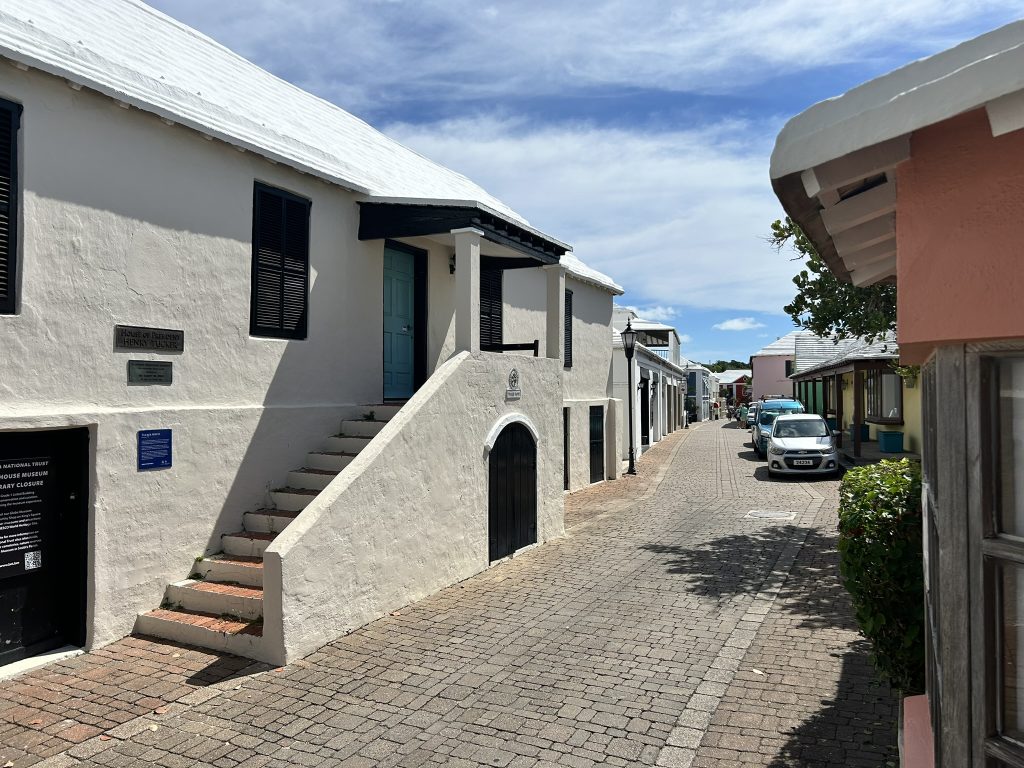
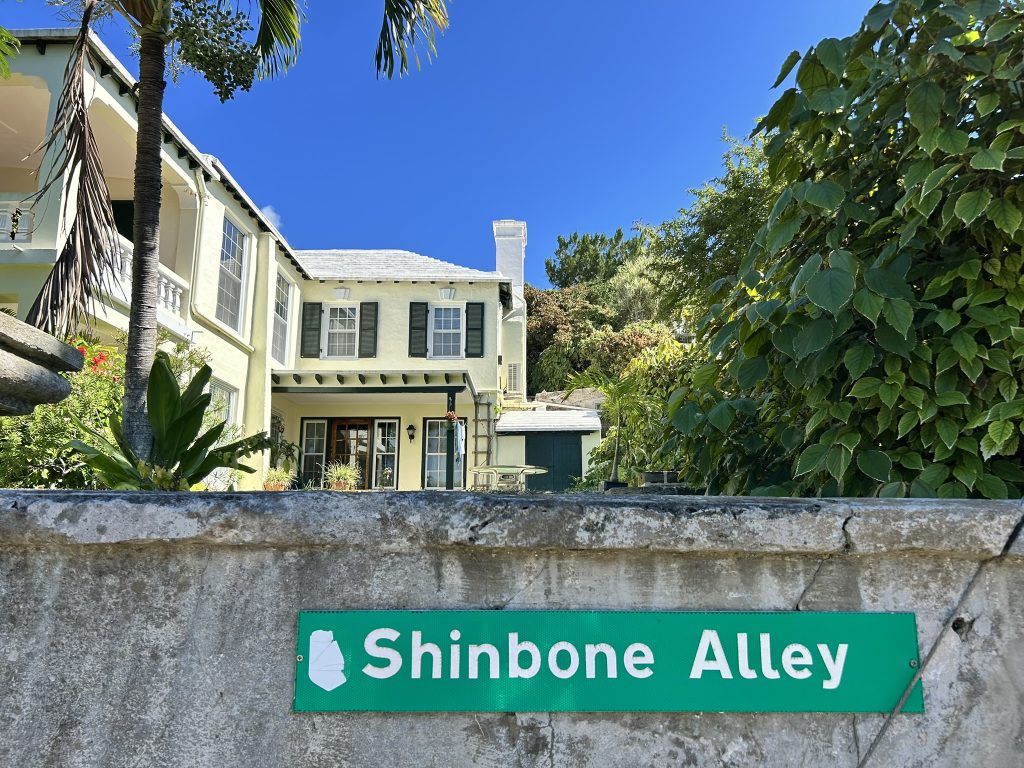
Wandering out the far end of the Garden into Blockade Alley, a nod to Bermuda’s role in the American Civil War. Looking along the alley is another intriguing sign – Shinbone Alley – a reference to soldiers in the early days who, after abundant drinking, struggled to return to their nearby barracks, crawling and damaging their shinbones in the process.
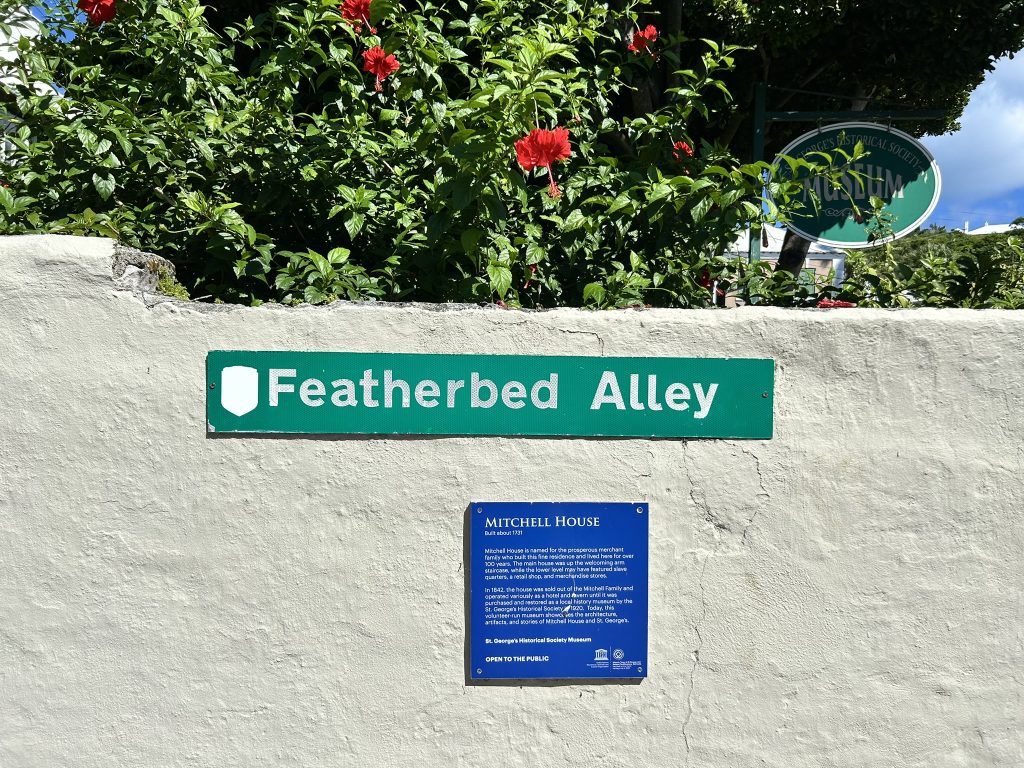
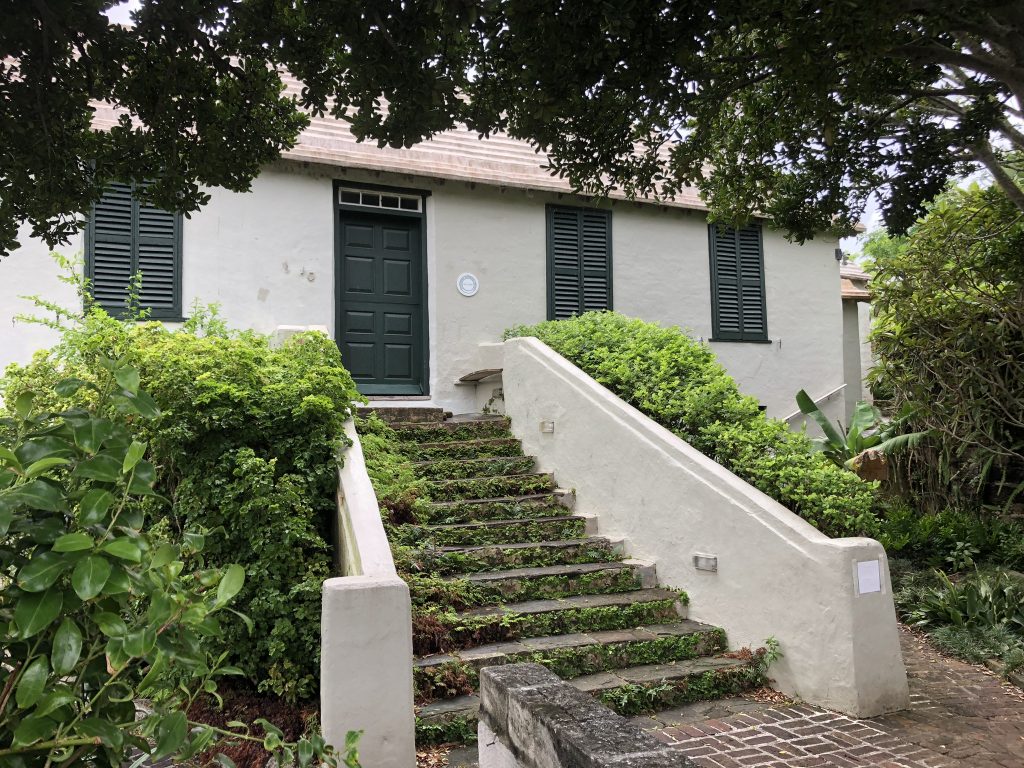
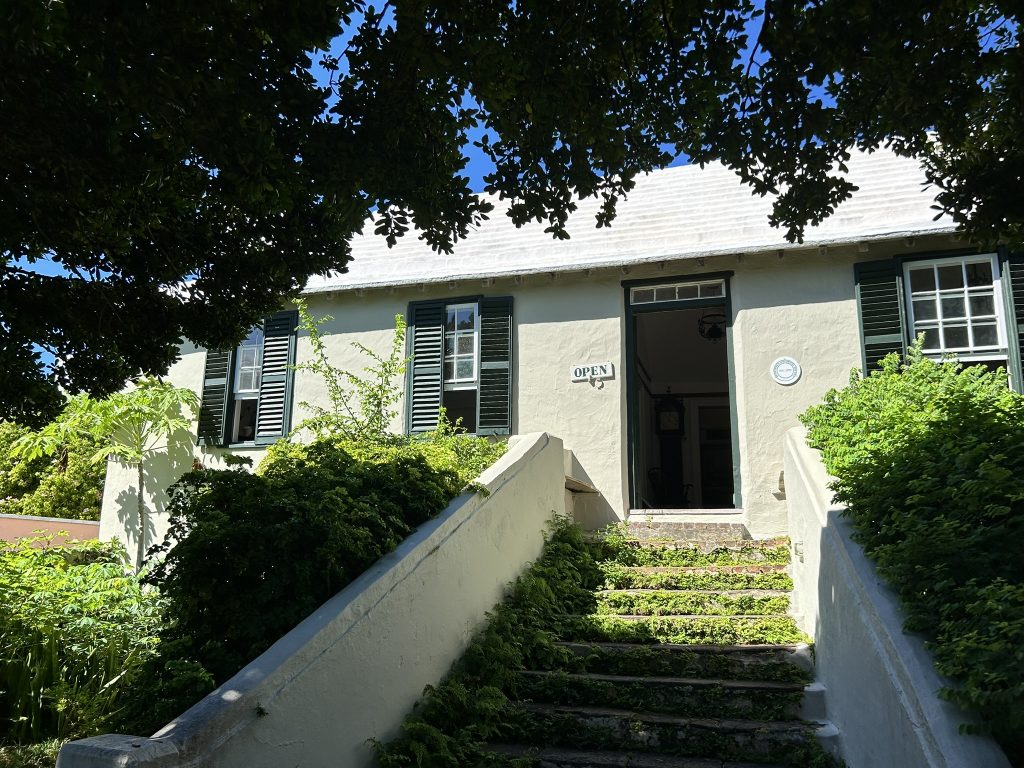
Around the corner stands Mitchell House, located where Featherbed Alley meets Duke of Kent Street, one of the oldest buildings on the island. Built around 1731 by the wealthy merchant Major Walter Mitchell for his nephew William, the house has a rich and varied history.
Today, Mitchell House operates as the St. George’s Historical Society Museum, preserving and showcasing 18th-century Bermudian life.
Visitors can explore a colonial-era kitchen with authentic cooking implements and see a 300-year-old “Geneva” Bible printed in Amsterdam. The cellar houses a vintage printing press, a replica of the one that printed Bermuda’s first newspaper, the Bermuda Gazette, in 1784.
Oldest Anglican Church Outside Britain
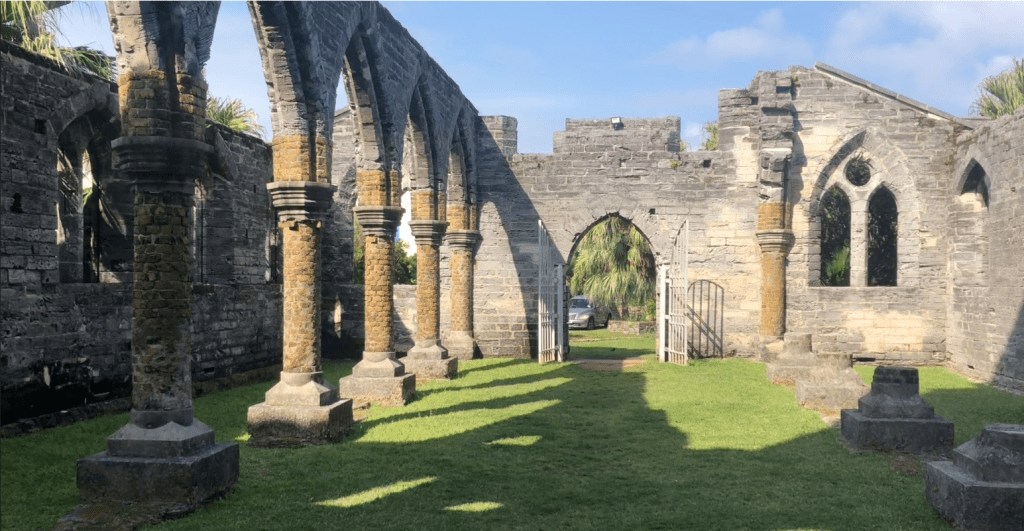
A walk down Church Lane reveals the grandeur of St. Peter’s Church – the oldest continuously used Anglican church outside the British Isles.
Originally built from wooden beams and thatch, the church was later reconstructed in stone and has remained central to Bermudian spiritual and social life ever since.
The churchyard is equally revealing with four separate graveyards segregated by race and status, reflecting Bermuda’s complex social history. The gravestones all have that weathered look because the entire graveyard fell out of use after 1854, when Yellow Fever devastated Bermuda’s population. A new graveyard was built nearby.
In 2012, to mark the church’s 400th anniversary, Queen Elizabeth II granted it the royal designation “Their Majesties’ Chappell.
Originally built in 1612 with cedar logs and thatch, the church was rebuilt in stone in 1620 and has been carefully restored ever since. Inside, visitors will find a cedar altar, the oldest in Christendom still in use, and a fascinating collection of historical artifacts, including a baptismal font dating back to 1450 and hand-carved family pews.
Look up into the ceiling to see how the interior of the church was first built by survivors of the Sea Venture, who only knew how to build ships, so they turned their craftsmanship upside down for the ceiling. Look to the right and see a small triangle of cedar beams from the very first building in 1612.

Globe Museum
Exiting the Church’s front door and descending its impressive steps to York Street leads to the Globe Museum, a treasure trove of artifacts showcasing the island’s rich maritime heritage and Civil War significance.
Given that some 75% of all types of materiel for the Confederacy came from Europe – most of which came into St. George’s for transshipment to the South despite the Union Blockade, with the Globe becoming the commercial center for Southern shipments, and then receiving incoming cotton shipments back to Europe during the Industrial Revolution.
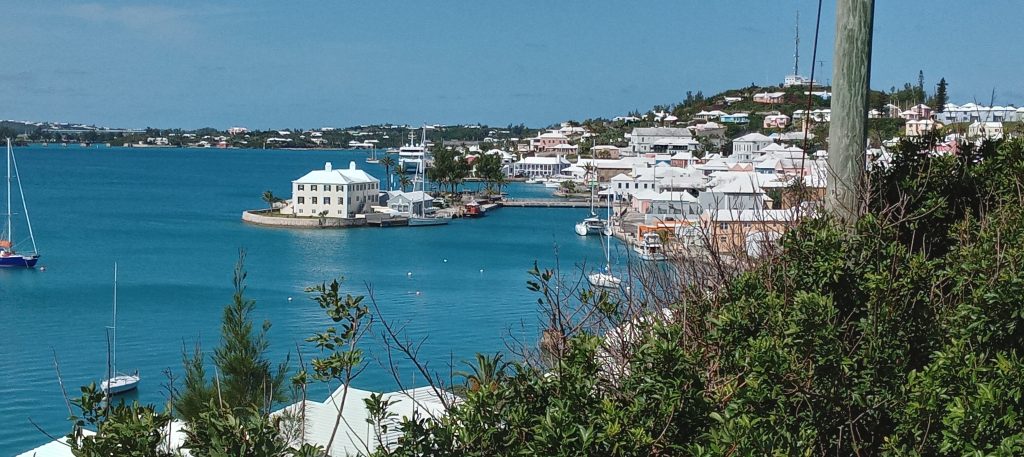
St. George’s Harbour has long been known for its impressive depth, which once drew sailing ships daily from around the world until steamships shifted maritime routes.
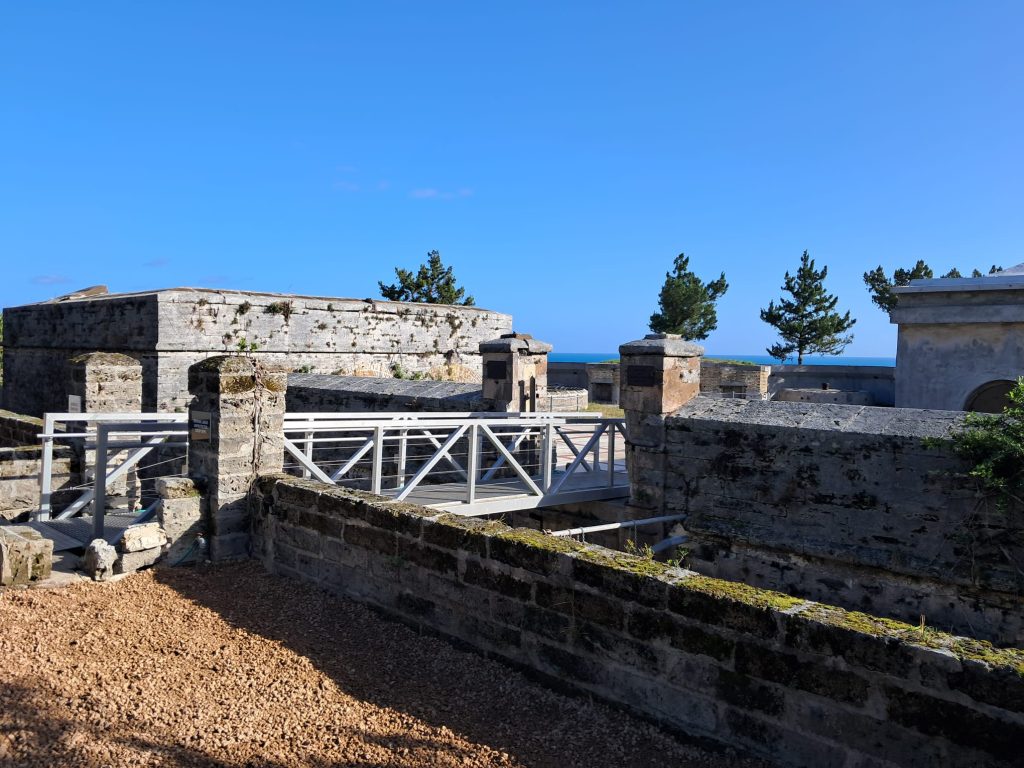
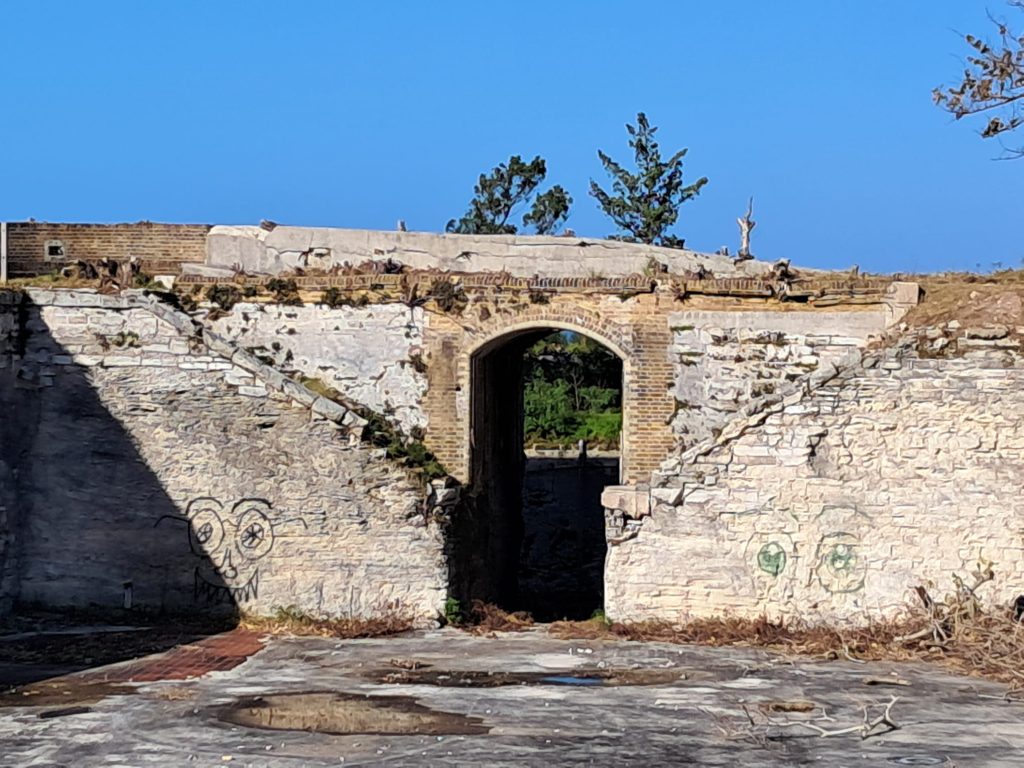
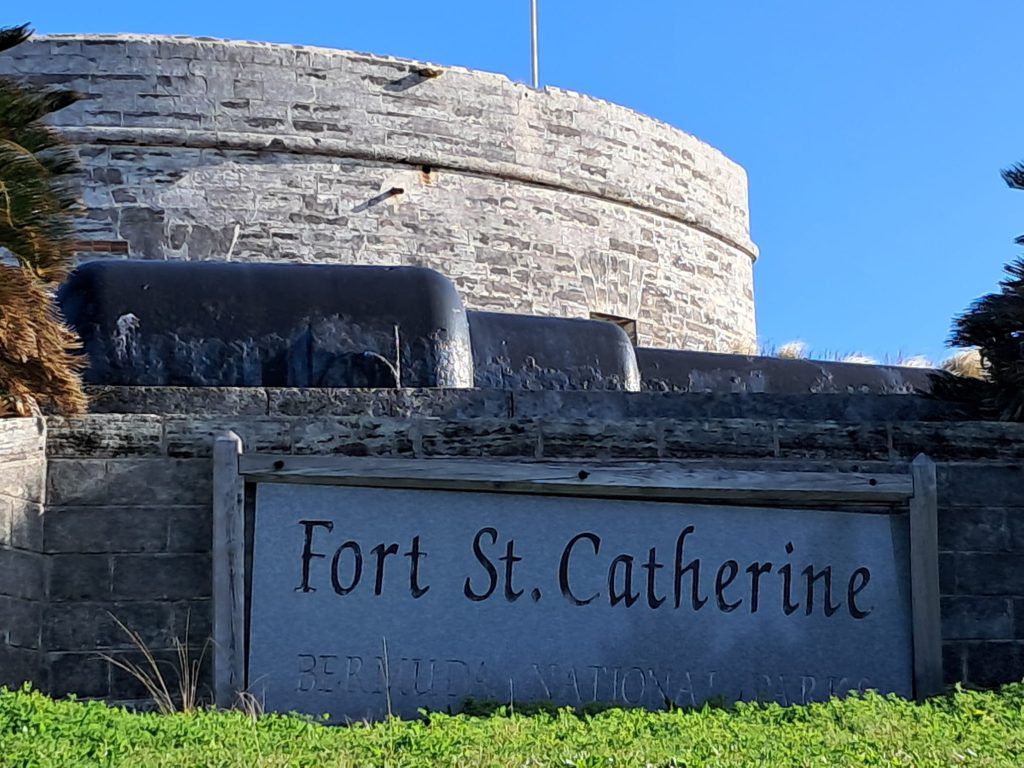
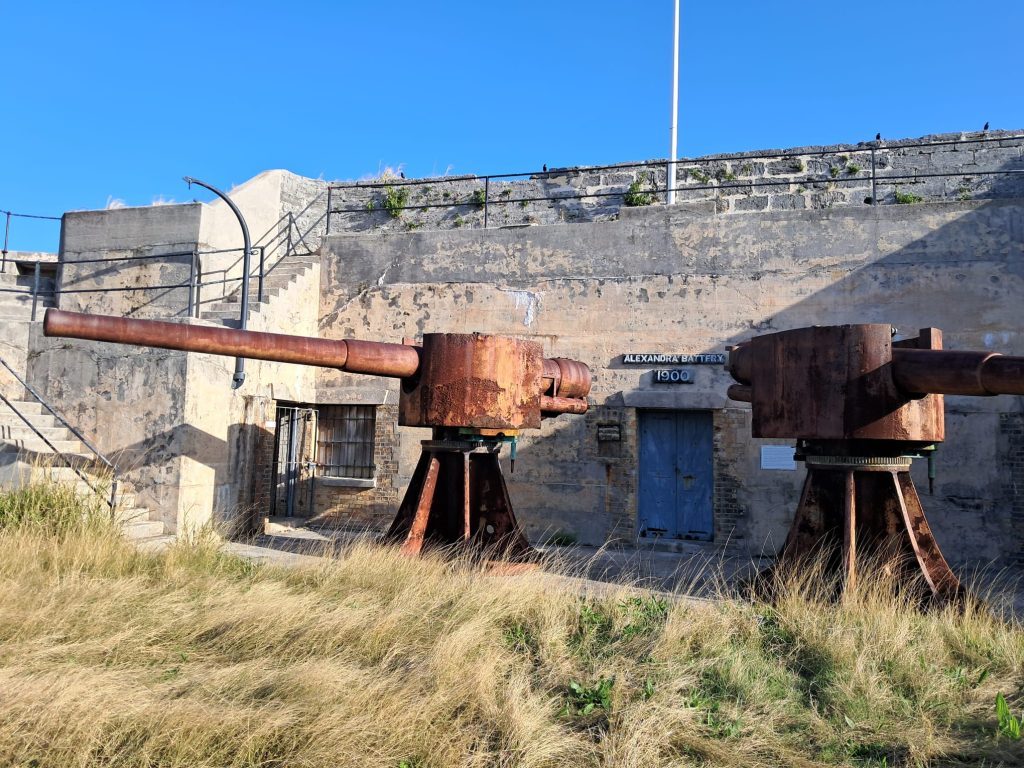
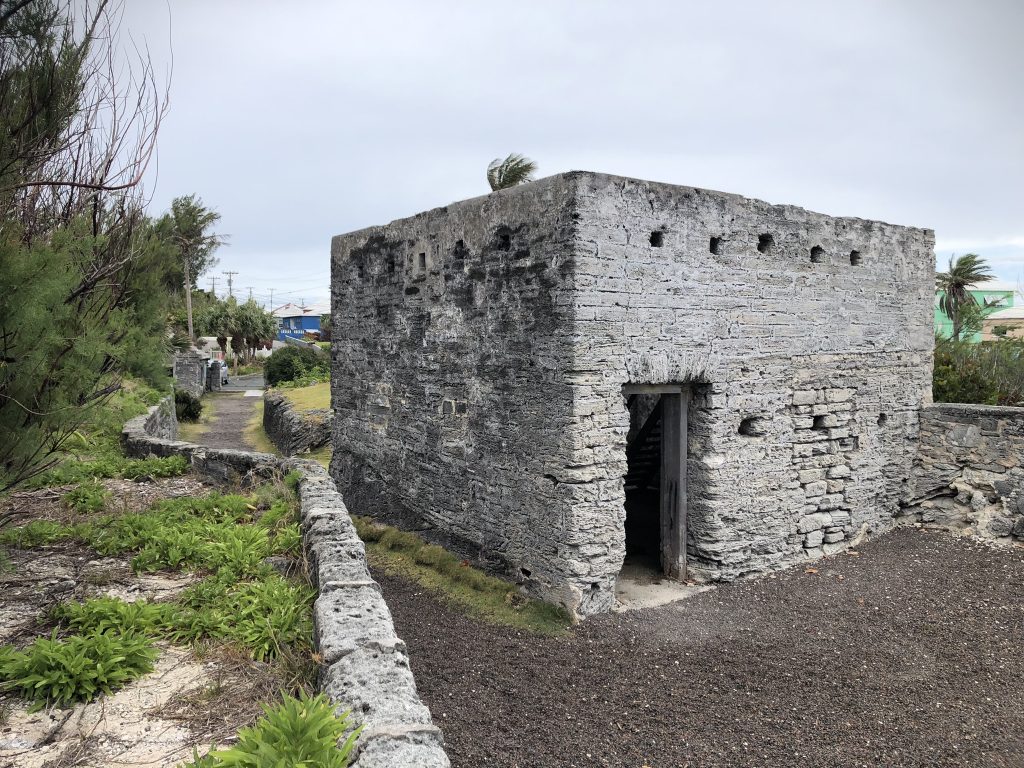
Apart from Spanish and French invasions, Bermuda was a stable and comfortable British Colony. In fact, several military forts were built on the island, mainly in the East End in those early days, with expansion all around the island for many years thereafter.
Bermuda is twenty-one miles long and a mere twenty square miles in total, part of an extinct volcano. The coral reef surrounding the island, thought to mark the crater’s rim, provides complete protection for all large ships in port—but only one safe route, the “Cut,” penetrates the treacherous reef near Gates Fort.
Navigation to Bermuda by any other entry point has resulted in some 300 shipwrecks around the island. Many of those were the so-called “Pirates of the Caribbean,” including the famous Blackbeard and Henry Jennings (circa 1715), a prominent local Bermudian who plied his trade in Nassau and Kingston, Jamaica.

Crown Colony
A major shift occurred in 1684 when King Charles II revoked the charter of the Somers Isles Company, which had succeeded the Virginia Company of London as the original “owners” of Bermuda. This change effectively dissolved Bermuda’s corporate governance and placed the island directly under British Crown authority, marking the beginning of its Crown Colony status.
The original shareholders were noblemen from Scotland, Ireland, and England. It seems they individually asked the King if they could buy the Company, hence buy Bermuda. The King refused every one of them but eventually agreed to divide Bermuda into nine “Parishes,” each named after one of the noblemen—the Earl of Warwick, Lord Paget, the Earl of Southampton, the Marquis of Hamilton, and others.
The term “Colony” was officially changed to “British Overseas Territory” in 2002 under the British Overseas Territories Act.
Military Reuse

A few miles from St. George’s lies the international airport—originally built as a military airbase by Franklin Roosevelt during World War 2 following an agreement with British Prime Minister Winston Churchill in 1939.
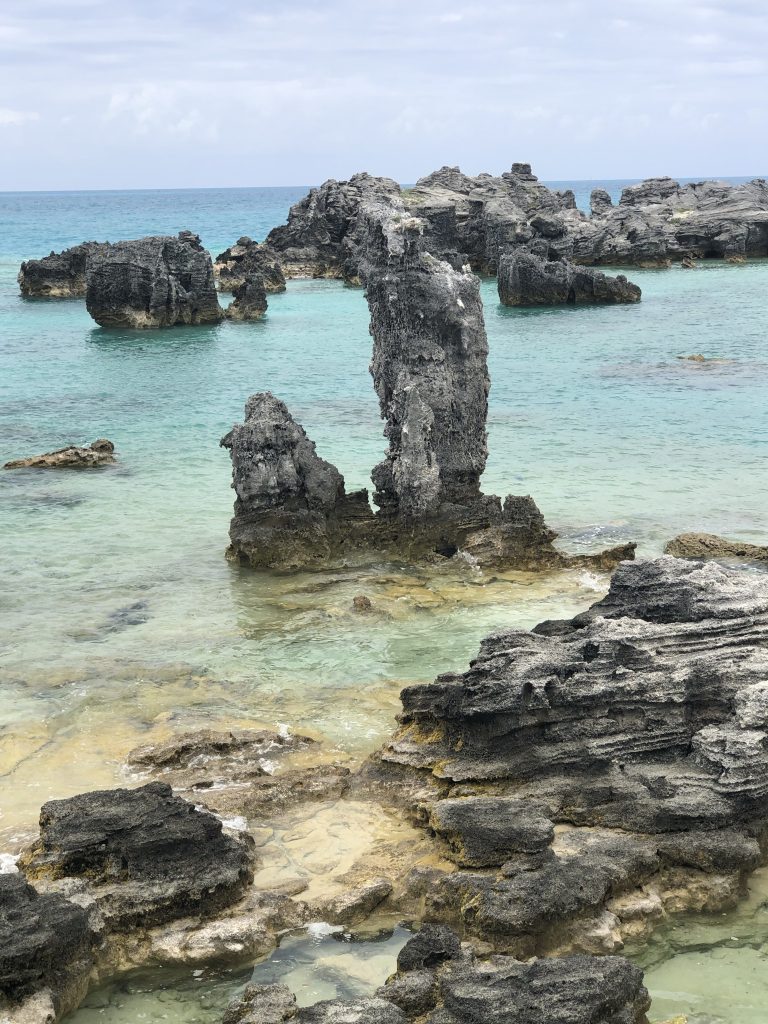
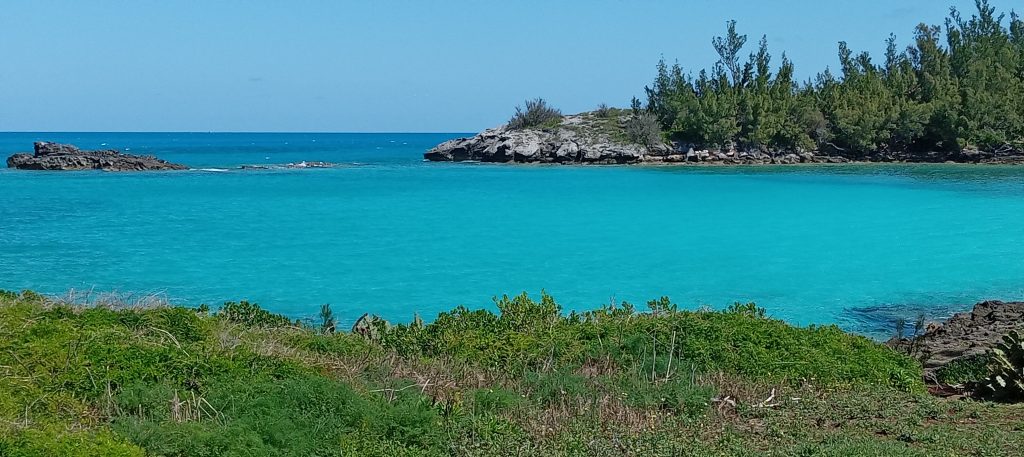
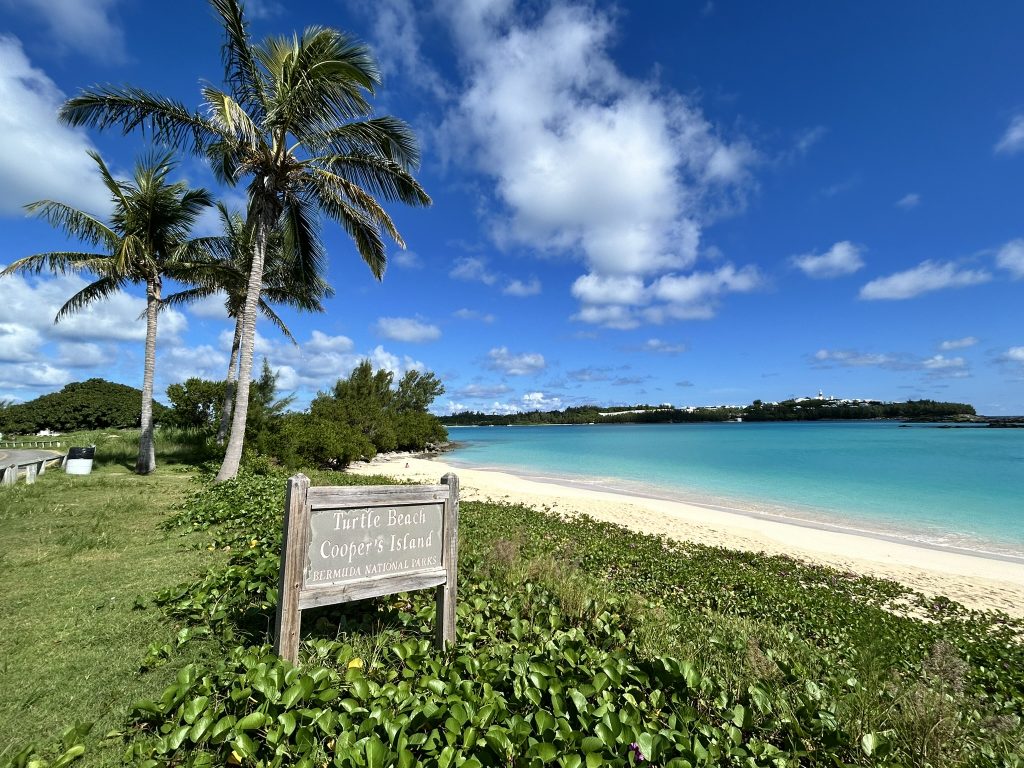
The base (originally named Kindley Air Base after an American WW II pilot). Ace pilot from Arkansas) was off limits to the local Bermudian public, but when the base was officially handed back to Bermuda in 1995, local folks discovered an array of beautiful beaches ranging from Clearwater Beach to the nearby small but stunning Turtle Beach.
The island is renowned for its beautiful beaches from end to end.
Thus, time in the St. George’s area of Bermuda features venues of historical and military significance, commercial importance, ecological beauty, and stunning beaches.
Bermuda’s year-round climate (circa 65 Fahrenheit in winter) offers a peaceful, charming setting to experience the island’s warmth and welcoming people.
Where to Stay in Bermuda, Bermuda
Bermuda’s compact size means good lodging options are scattered throughout the islands, though prices stay high year-round. The capital of Hamilton and the town of St. George’s offers the most walkable settings with nearby restaurants and shops, while south shore beaches like Horseshoe Bay and Jobson’s Cove draw visitors seeking sand and water access. Mid-range hotels, guesthouses, and vacation rentals cluster in these areas, with nightly rates typically ranging from $150 to $300 depending on season and amenities.
For beach access without resort prices, consider the south shore parishes of Warwick or Southampton. This stretch features smaller hotels and cottage-style accommodations within walking distance of multiple pink-sand beaches. You’ll trade nightlife for quieter mornings and easier access to swimming and snorkeling. Many visitors, especially families with children, prefer this quieter setup.
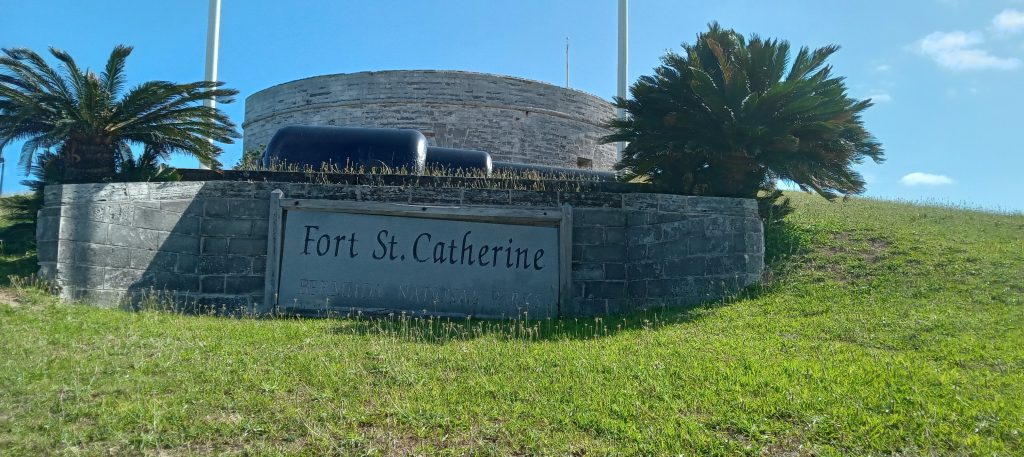
The historic town of St. George’s, settled in 1609, offers character and charm with practical lodging. Smaller inns and guesthouses fill colonial-era buildings throughout Town Square and its surroundings, putting restaurants and the ferry terminal within walking distance. St. George’s tends to feel less crowded than Hamilton and gives easy access to Fort St. Catherine and the eastern beaches, both reachable by short taxi or bus rides.
If you prefer traditional resort amenities, several larger hotels operate on the islands at premium rates. Book well in advance during high season: May through October for warm weather, and December through spring break for school holidays. Off-season rates drop noticeably, and beaches and attractions see fewer crowds. No matter where you stay in Bermuda, efficient public transportation and small geography let you easily reach any beach or historic site within 30 minutes.
Recommended Reading
Fiction
- The Sea Venture by F. Van Wyck Mason — This novel centers on the famous shipwreck of the Sea Venture in 1609, which is foundational to Bermuda’s early colonial history. It’s earlier than the 1700s, but it engages with the maritime, political, and emotional tensions of colonial life.
- Under the Moon Gate by Marilyn Baron —A romance novel set in Bermuda with intrigue, secrets, and a romantic pairing.
- Facing the Flag by Jules Verne — Though not entirely focused on Bermuda, this adventure novel places much of its action on the island.
- Told by Two by Marie St. Felix –The novel frames a romance in Bermuda among visitors in the gilded-age era. It offers a view into social life, manners, and the island’s appeal at the turn of the century.
- The Lost Diary of Don Juan by Douglas Carlton Abrams — For a flavor of Iberian exploration during the era of Bermuda’s discovery.
Nonfiction
- The History, Culture & Beauty of St. George’s, Bermuda by Bill Storie and Robin Trimingham–Locally informed guide to the historical, cultural, and scenic charms of St. George’s.
- Islands of the Sea: The Story of Bermuda and the West Indies by Sir Henry Wilkinson — classic study of Bermuda’s maritime role.
- Bermuda: Five Centuries by Rosemary Jones — a sweeping, well-illustrated history of the island.
- A History of the Bermuda Maritime Museum by Edward Harris — For readers fascinated with shipwrecks, forts, and the Royal Navy.
- Under the Calabash Tree: 150 Years of the Royal Bermuda Yacht Club byRobin W. Trimingham

Bill Storie, C.A. is the man who has traded spreadsheets for street history. A highly successful Chartered Accountant (Scotland) with a distinguished background in international finance and reinsurance, Bill now dedicates his time to revealing Bermuda’s authentic soul, with special focus on its military history. Bill is the Co-Founder of Bermuda Heritage Tours, guiding groups from cruise lines like Norwegian, Regent of the Seven, as well as co-author of “The History, Culture and Beauty of St. As a Certified Tour Guide in Bermuda, Bill is renowned for his unique storytelling style and deep historical expertise, delivered with an unmistakable Scottish accent.

Robin Trimingham
With a career spanning over two decades in luxury hospitality and history, Robin isn’t just a tour guide, she’s a storyteller with exclusive, firsthand knowledge of Bermuda. Robin’s credentials blend high-level corporate experience with deep historical research. She is the acclaimed author of two Bermudian history books, including “The History, Culture and Beauty of St. George’s Bermuda,” coauthored with Bill. Her professional background includes serving as Director of Group Sales for the iconic Fairmont Hamilton Princess in Bermuda, and previously as Director of Large Group Sales for Fairmont Hotels Canada’s Western Mountain Region. Co-Founder of Bermuda Heritage Tours, Robin has led over 500 private tours for guests of leading cruise lines. Robin’s engaging style has made her a favorite among international travelers.
Their St. George’s Town Square Live Cam has officially surpassed 100,000 views! You can watch the live camera here: https://www.skylinewebcams.com/webcam/bermuda/st-george-s-parish/st-george-s-parish/st-george-s-town-square-bermuda.html