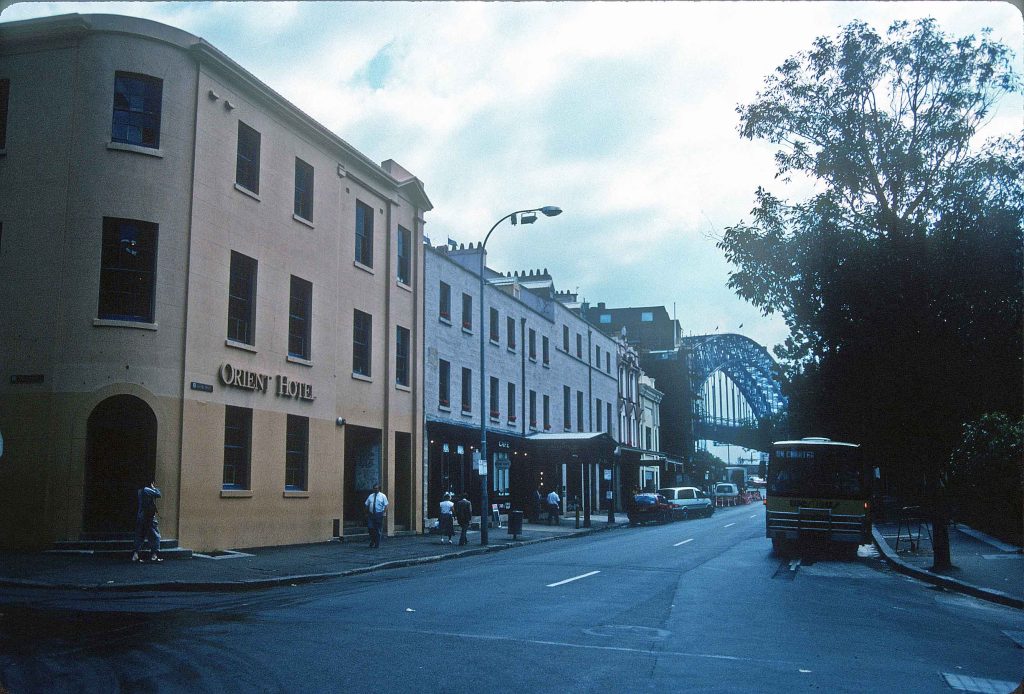
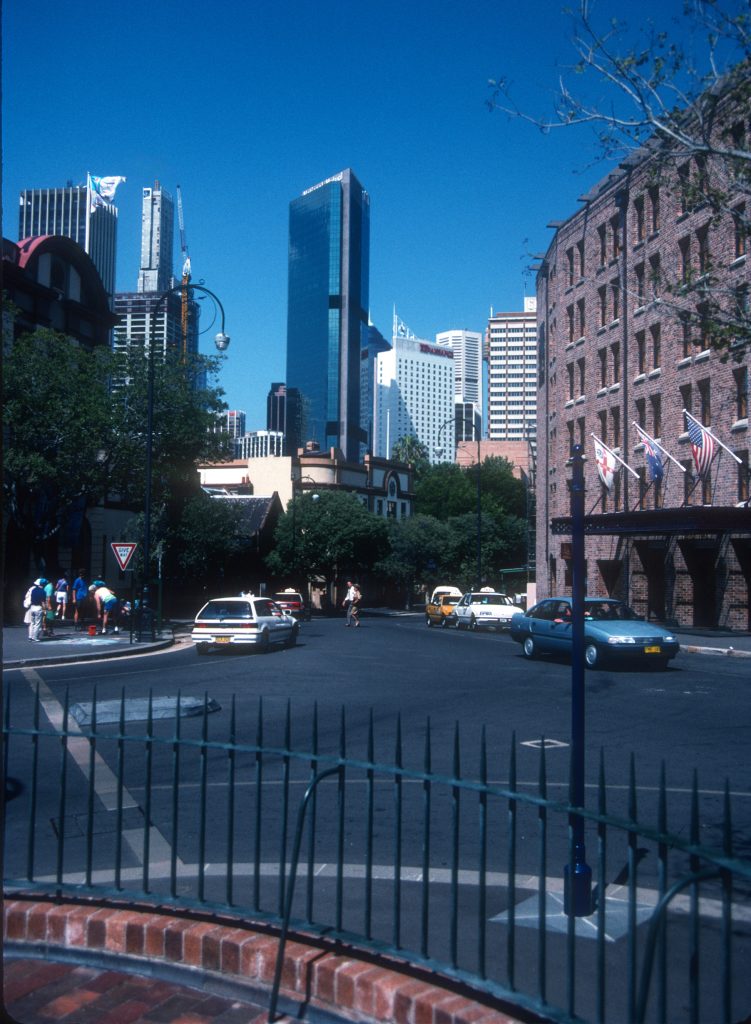
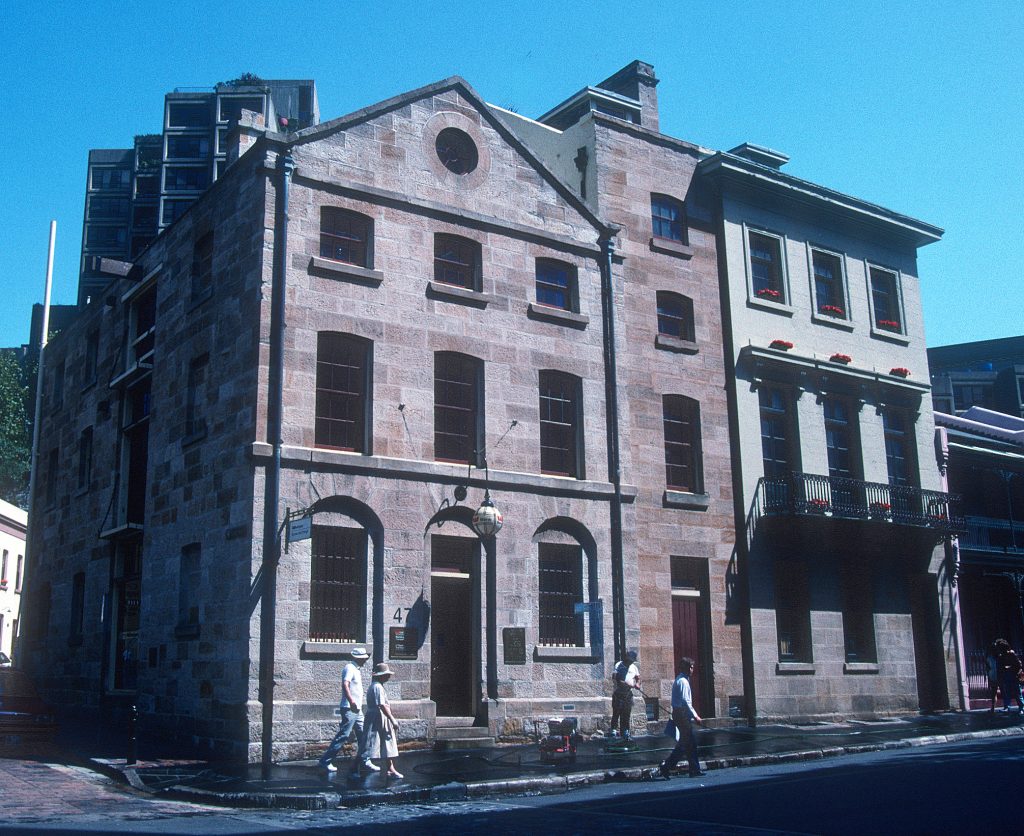
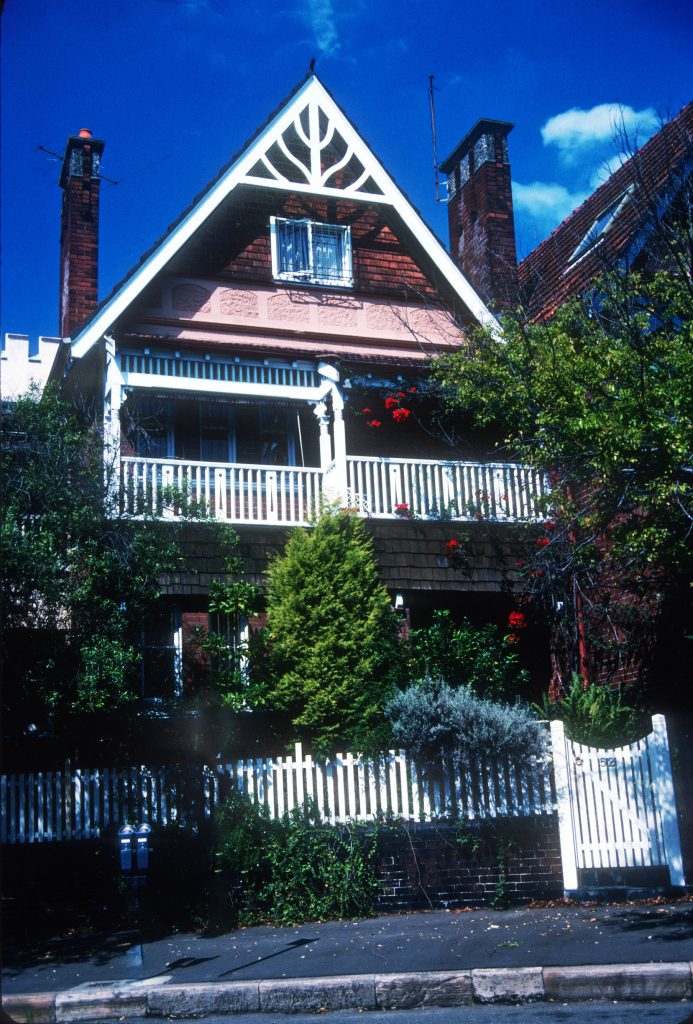
Beneath the vast steel arc of the Harbour Bridge lies Sydney’s oldest quarter, The Rocks. Once a settlement of convicts, sailors, and dockworkers, it was a place of rough survival and colonial grit. Today, its cobbled lanes and sandstone buildings endure as rare survivors of early Australia, each doorway a portal to stories of crime, commerce, resilience, and reform.
Colonization Goes Down Under
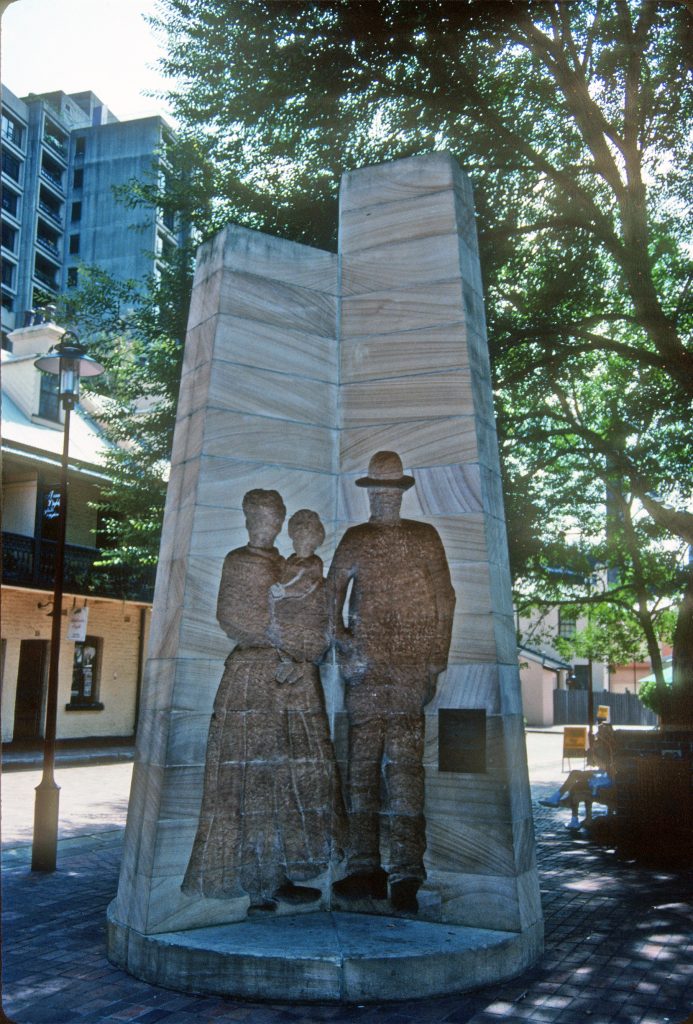
The Rocks was established in 1788 as the first European neighborhood in Sydney. Its sandstone cliffs provided both material and name, quarried by convicts who were housed in rough huts along the waterfront. Through the 19th century, The Rocks became infamous for its crowded alleys, grog shops, and brothels, yet it was also a hive of labor: quarrymen, mariners, laundresses, and market women sustained the growing colony.
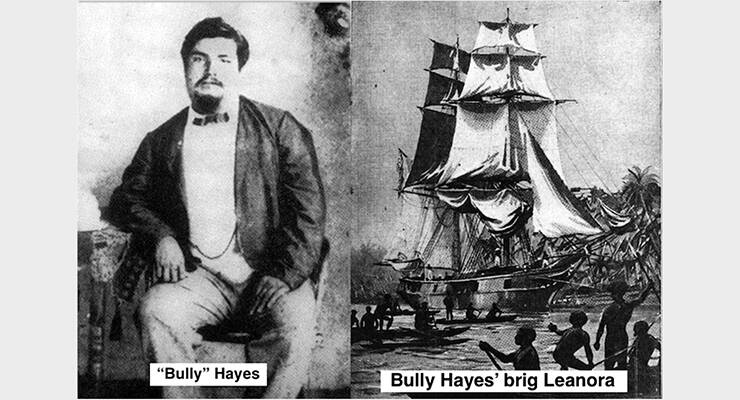
One of the most notorious figures tied to The Rocks was “Bully” Hayes, a swaggering sea captain and conman who haunted its taverns in the 1850s. Known as the “Pirate of the Pacific,” Hayes was both a rogue and a raconteur, spinning tales in the pubs of The Rocks while luring sailors into shady schemes. Local lore insists he used the cellars of the Hero of Waterloo to pressgang drunkards onto ships bound for the South Seas. Whether truth or embellishment, such stories reflect the district’s reputation as a place where a night’s drinking could end with a one-way passage.
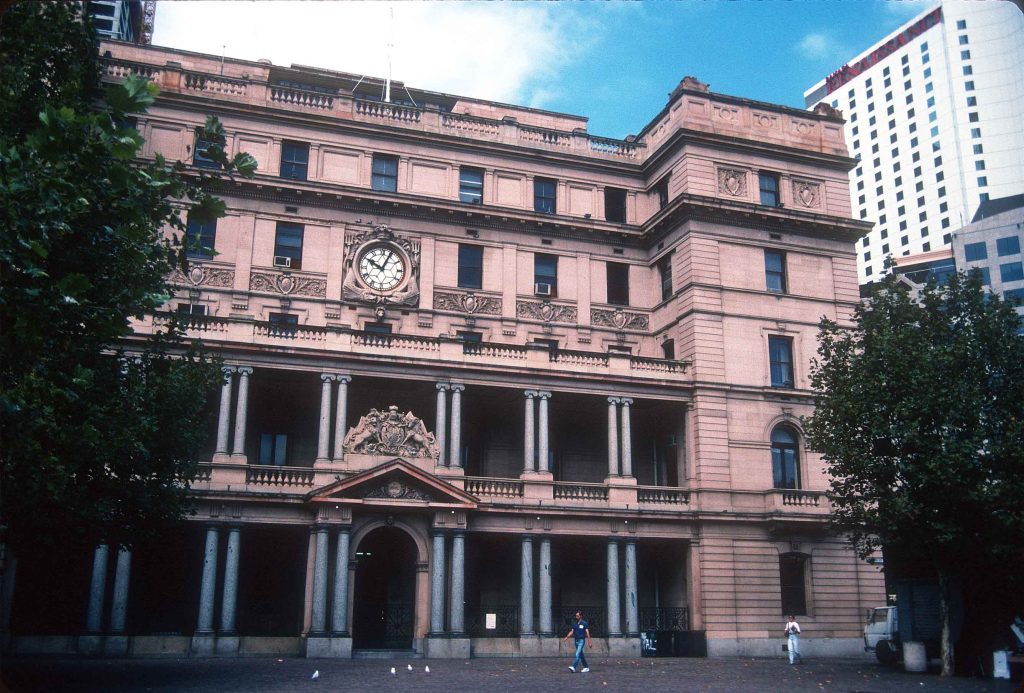
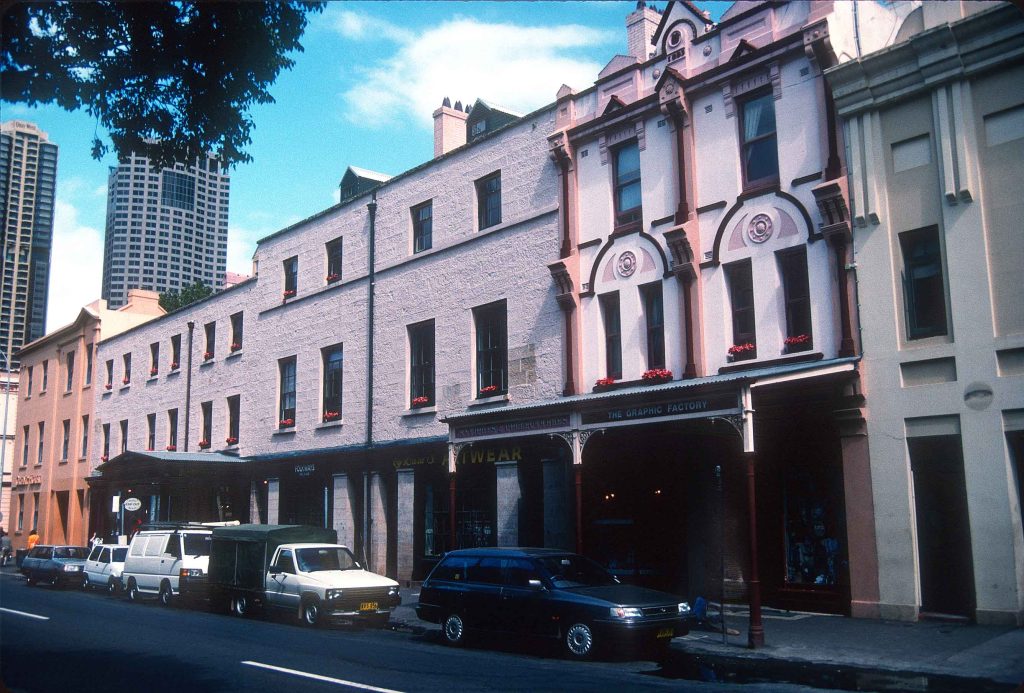
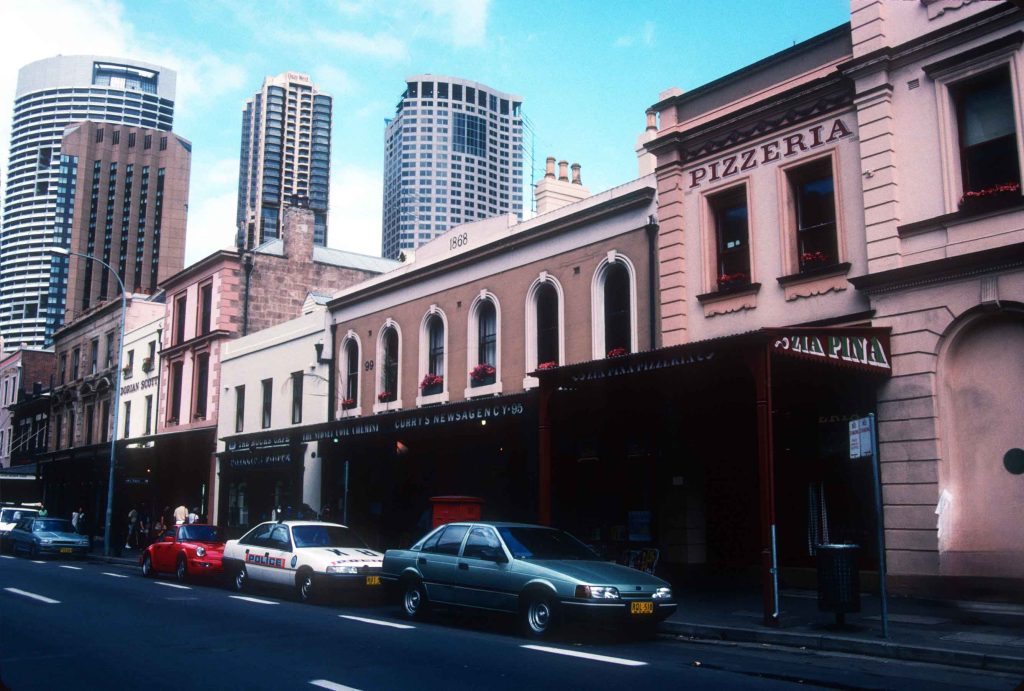
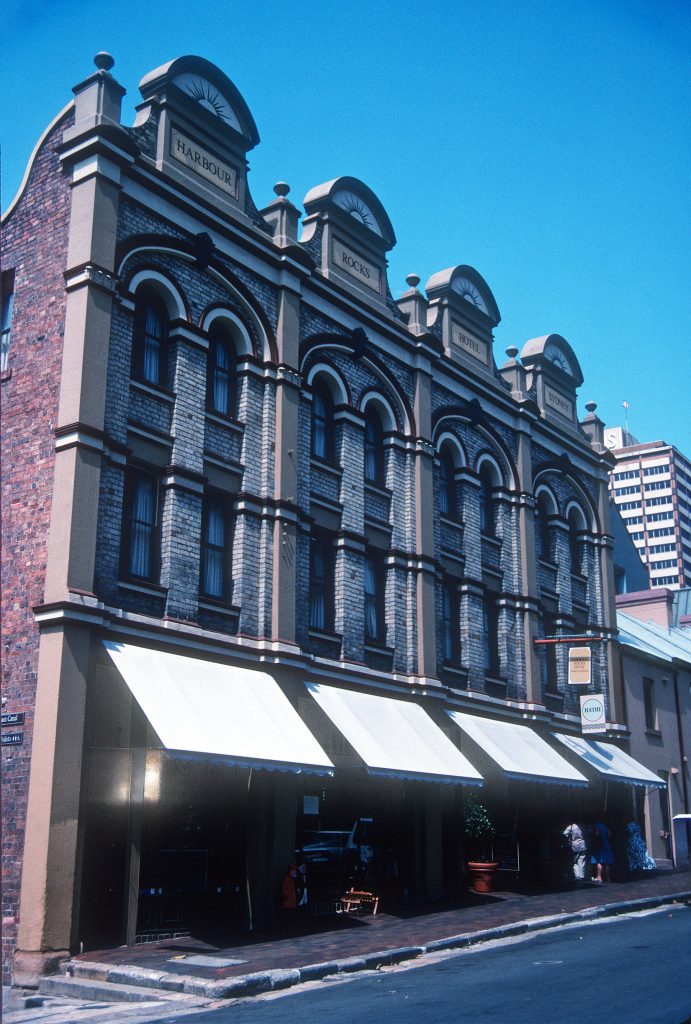
By the 1880s, The Rocks was densely built with boarding houses, warehouses, pubs, and churches. Epidemics of plague and poverty marked it as a slum, prompting authorities to demolish large swaths after 1900. Yet enough survived to make The Rocks today a uniquely intact window into Sydney before Federation.
Surviving Historic Landmarks
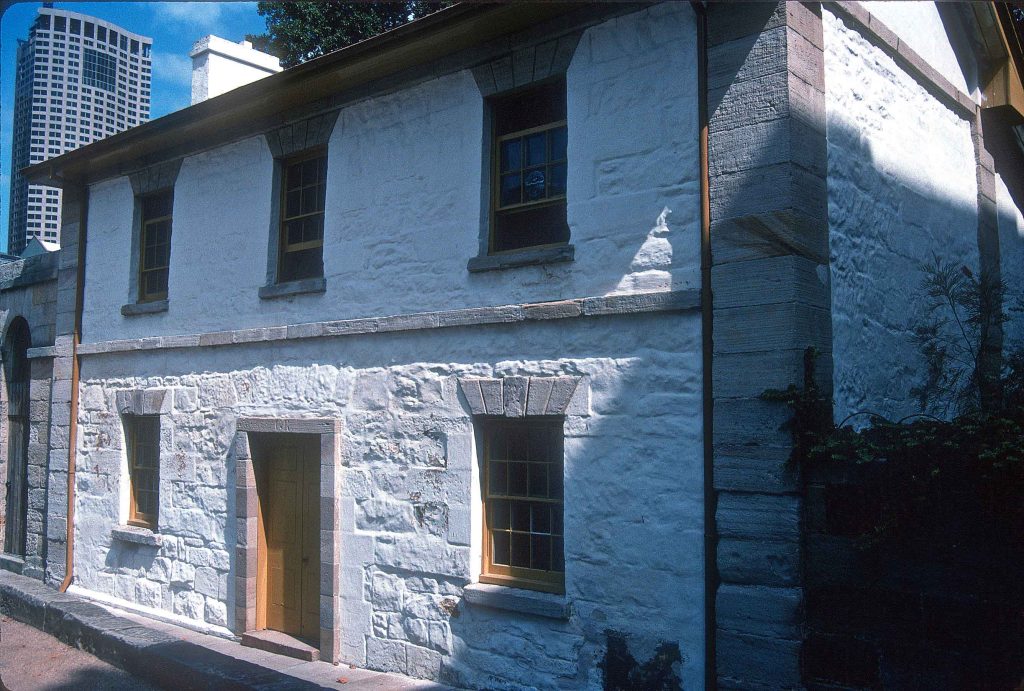
Cadman’s Cottage (1816)
The main entrance on Anacapa Street features a grand sandstone archway adorned with elaborate carvings. Above the arch, a Latin inscription reads, “Dios nos dio los campos. El arte humana edificó ciudades,” translating to “God gave us the fields. Human art built the cities.” Flanking the arch are sculpted figures and decorative elements that enhance the building’s majestic presence.
Campbell’s Stores (1839-1864)
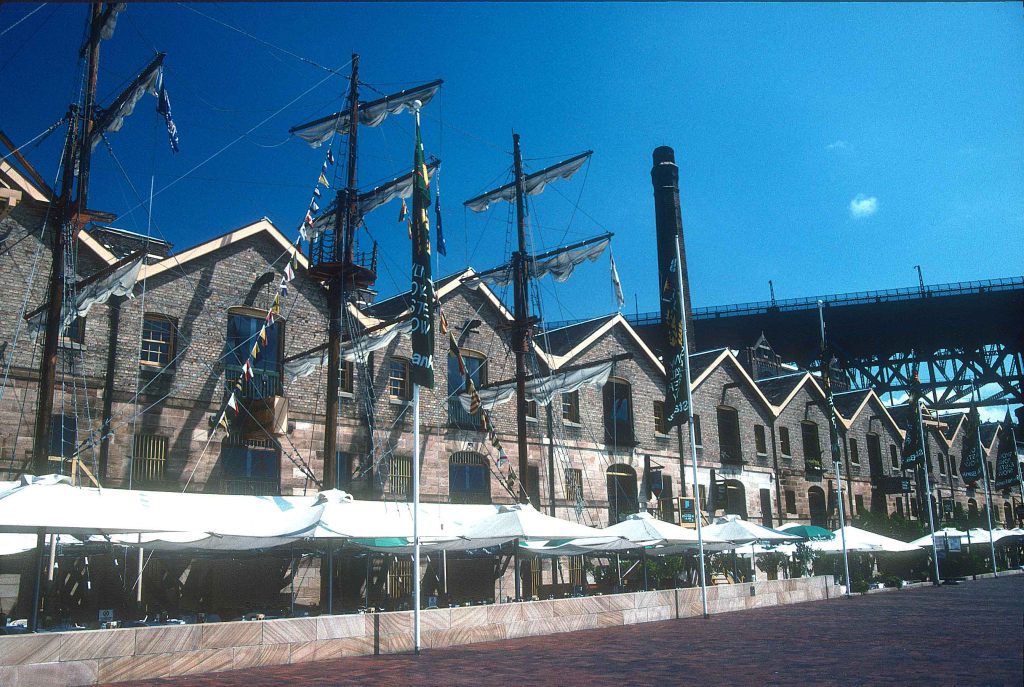
These long, sandstone warehouses on the waterfront were built by Robert Campbell, a merchant who dominated Sydney’s early trade. Their arched doors once opened onto wool, grain, and imported goods bound for the colony. Today they house restaurants, but the arched façades and cobbled wharfside lanes recall their mercantile origins.
Garrison Church (Holy Trinity, 1846)
Built to serve the British regiments stationed at Dawes Point, this Gothic Revival church still stands proudly. Its rough sandstone walls and soaring nave became a spiritual anchor for soldiers and sailors; today, its memorial plaques echo with stories of colonial defense.
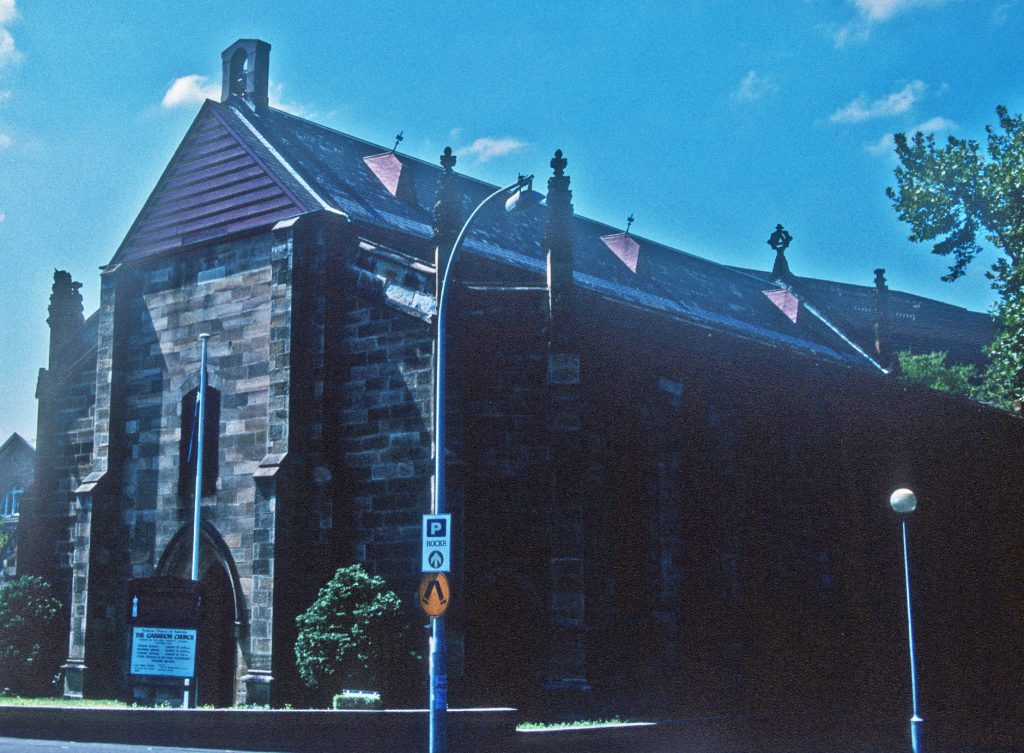
The Argyle Cut (1840s-1850s)
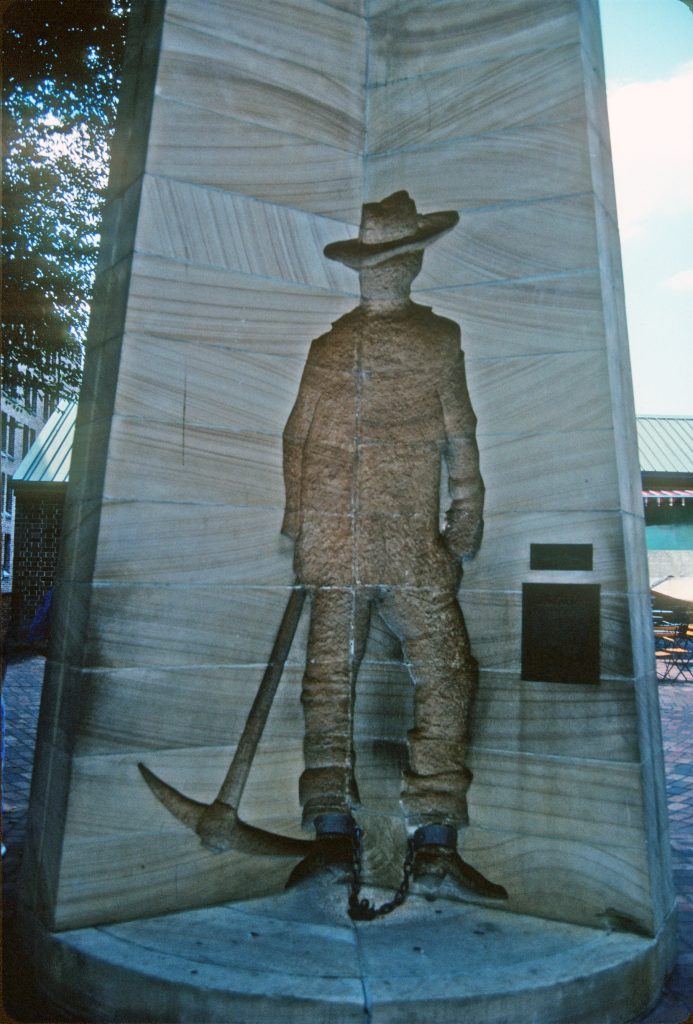
One of the great feats of colonial engineering, the Argyle Cut was begun by convicts with pick and chisel and completed with blasting. It carved a passage through the solid sandstone ridge, linking the wharves of Millers Point with the town. To walk through its shadowy tunnel today is to see the scars of convict labor etched in stone.
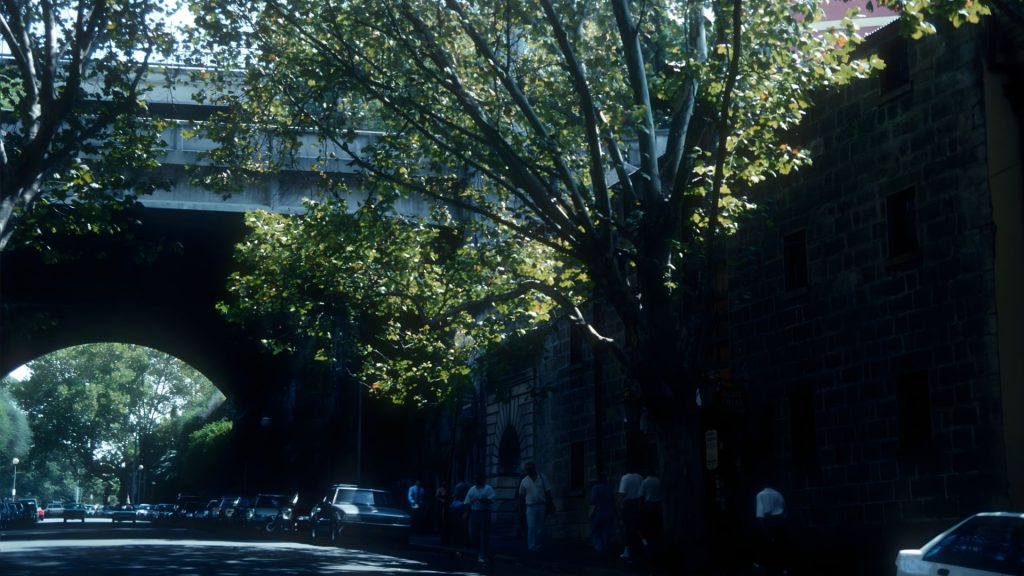
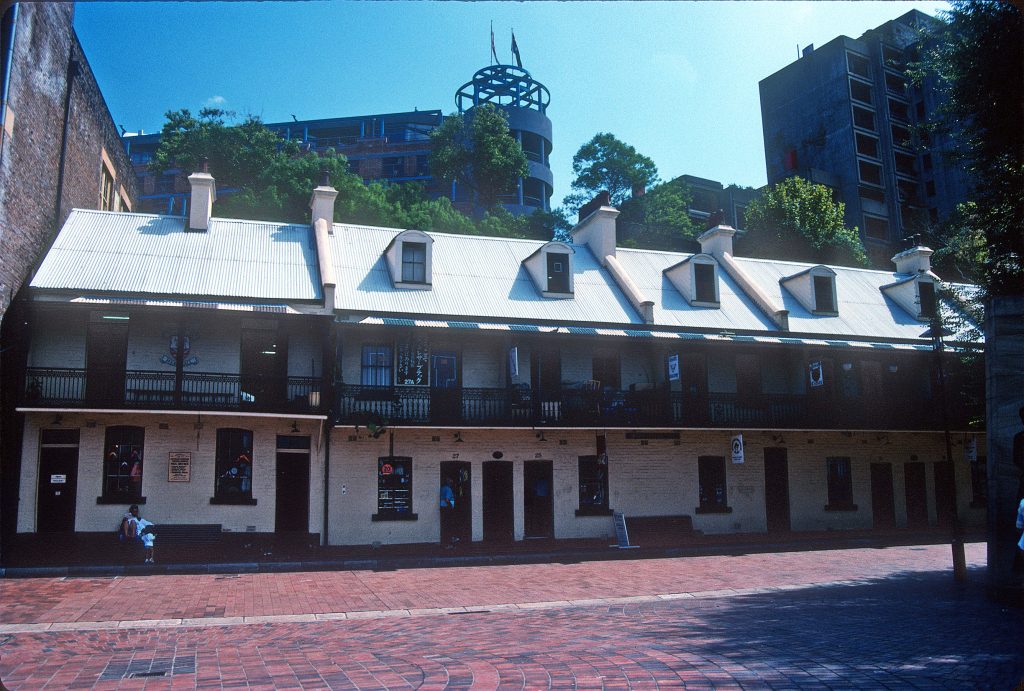
Susannah Place (1844)
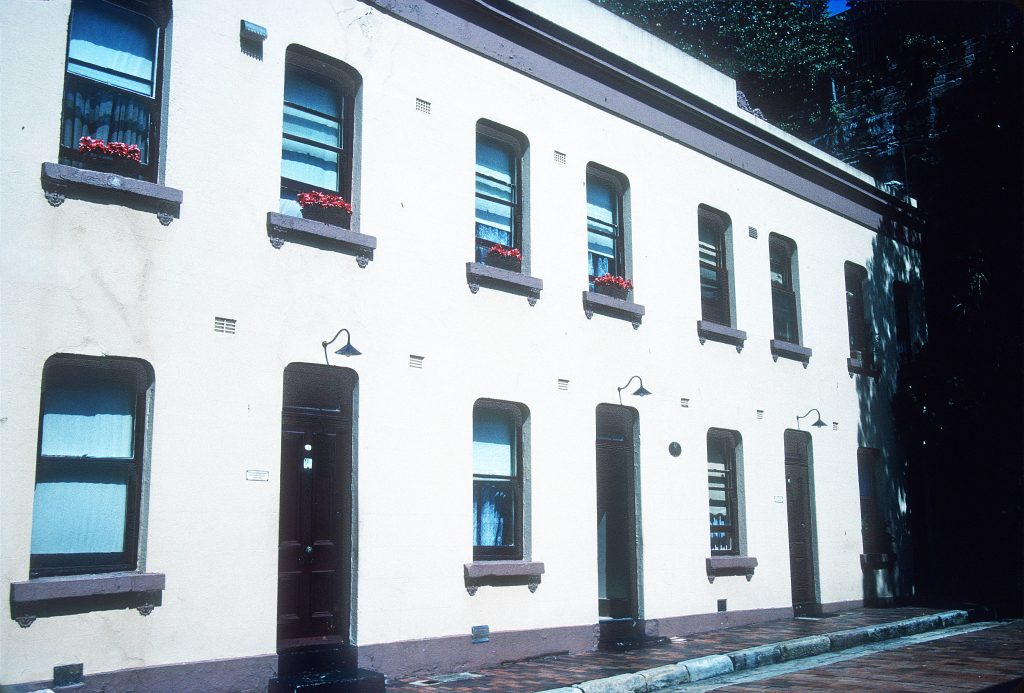
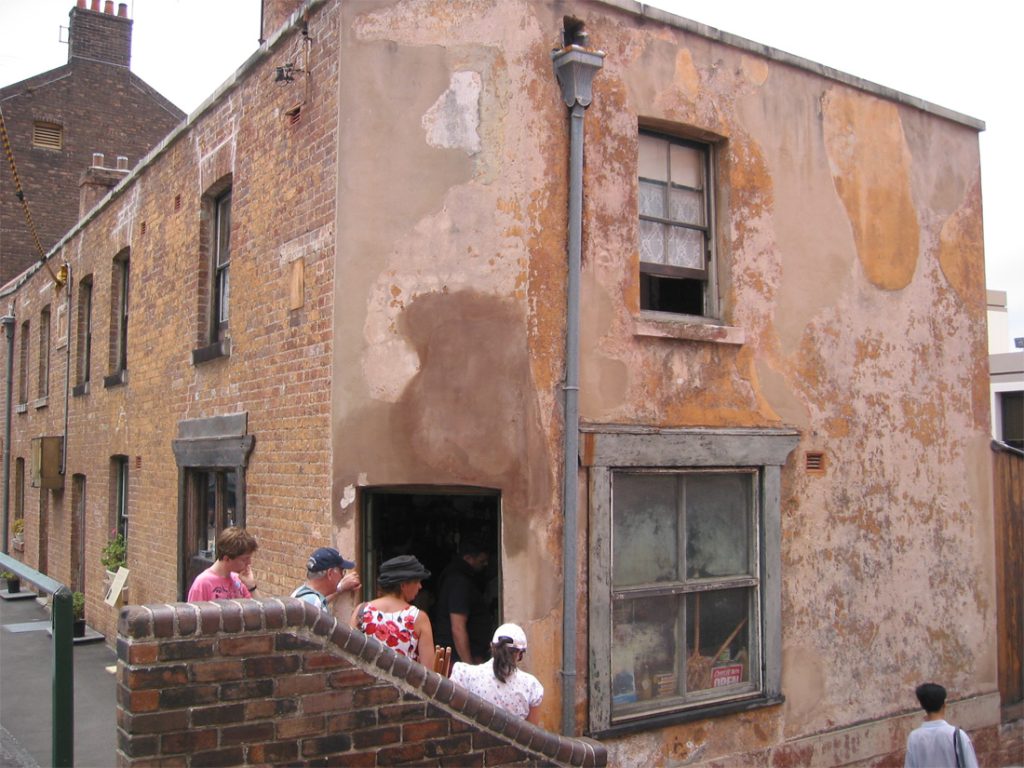
A row of four simple brick terrace houses built by Irish immigrants, preserved exactly as they were lived in through the 19th and early 20th centuries. Today, they serve as a museum where visitors can step into tiny parlors, gaze at preserved wallpaper, and imagine families of ten crowding into narrow rooms.
Nurses Walk (from 1788)
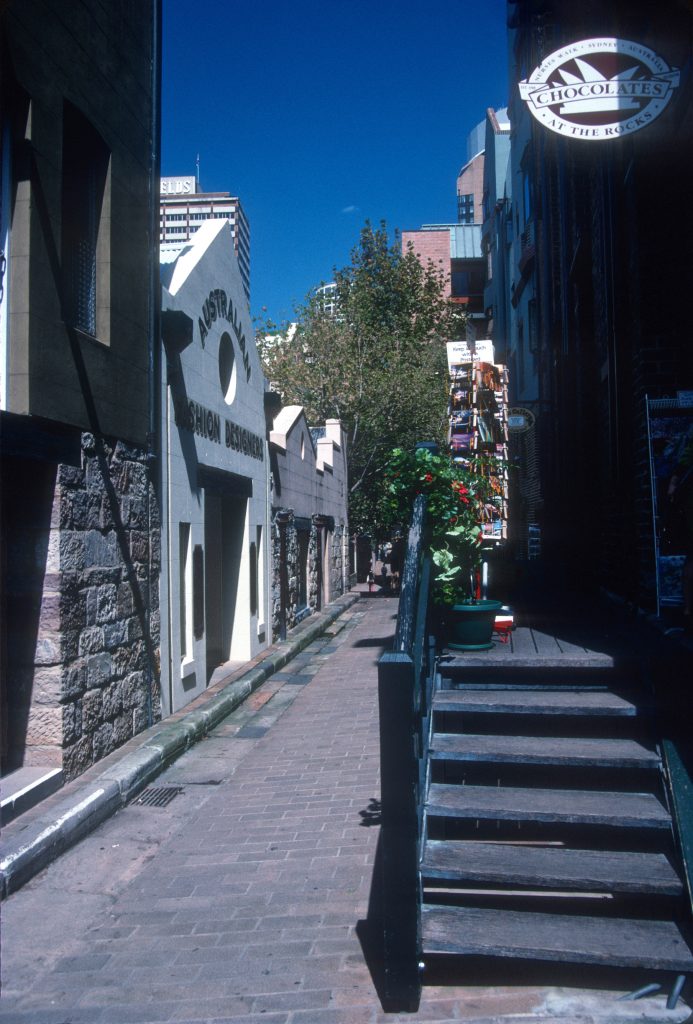
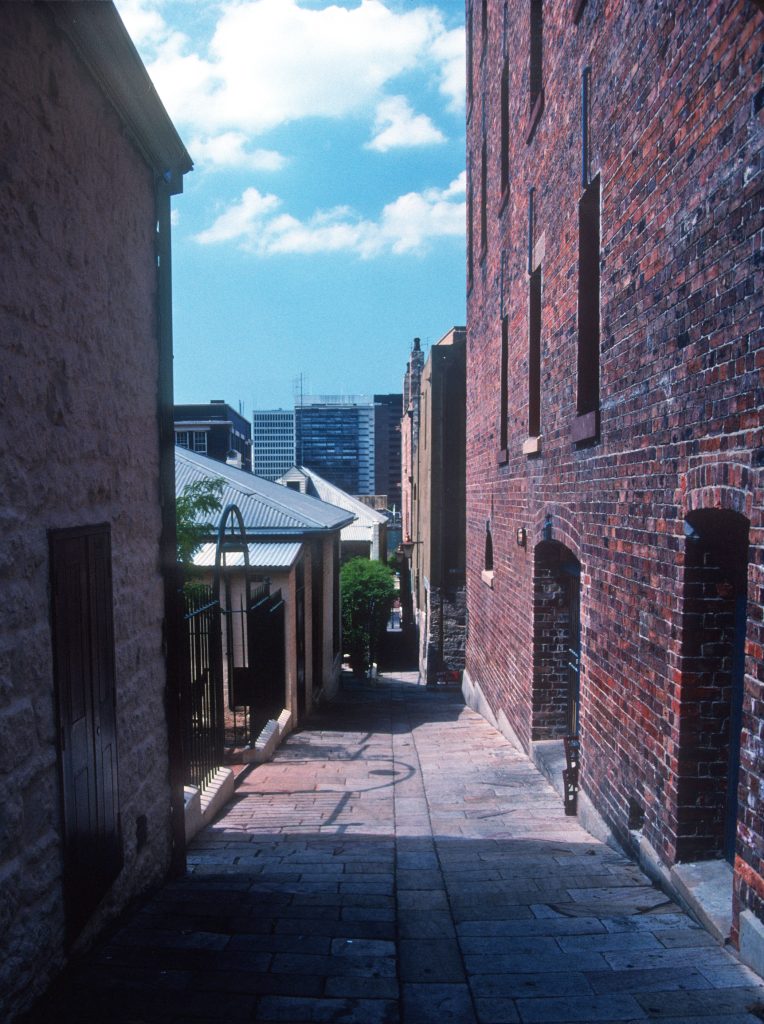
A twisting network of laneways commemorating the nurses who tended to the First Fleet convicts at the nearby hospital. Though the original hospital buildings are gone, the alleys preserve the atmosphere of the settlement’s earliest days.
The Lord Nelson Brewery Hotel (1841)
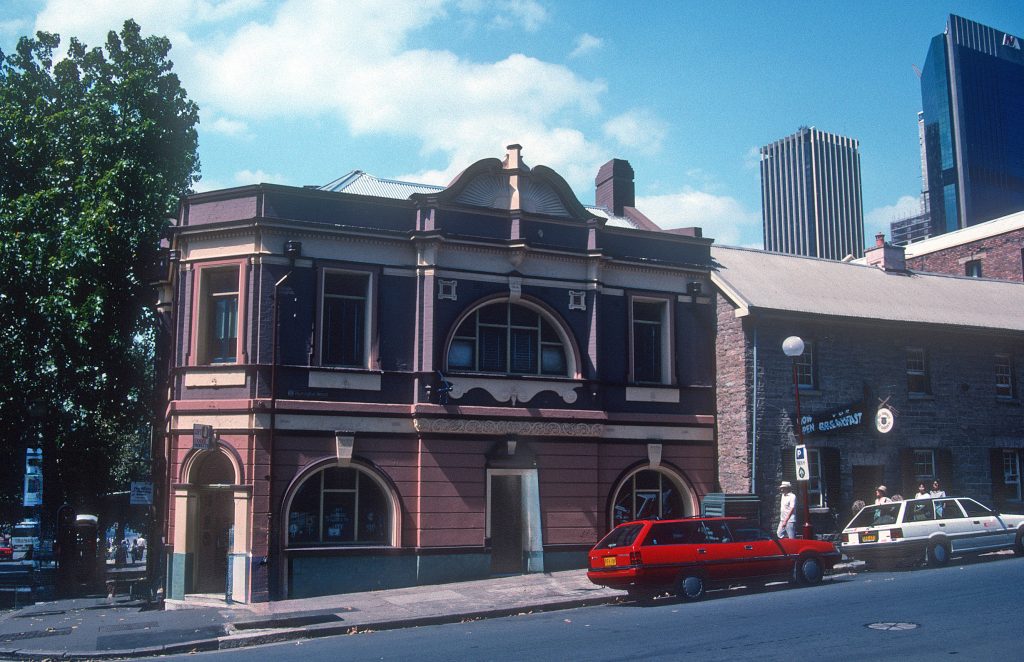
Sydney’s oldest continually licensed hotel, built of local sandstone and still brewing beer on site. From the start it served dockworkers, sailors, and soldiers, drawn by its proximity to the bustling waterfront. Its cellars, carved straight into the sandstone, were rumored to connect to a network of tunnels leading to the harbor. Stories abound that unsuspecting sailors, after drinking too freely, might wake to find themselves “shanghaied” aboard a departing vessel, their contracts forged in ale.
The Lord Nelson also played a role in Sydney’s brewing heritage. In the mid-19th century, it was one of the first pubs in the colony to experiment with on-site brewing, supplying fresh beer to a population deeply suspicious of imported, often spoiled, casks. That tradition was revived in the 1980s, when the pub once again began brewing craft ales in-house, making it both a historic hotel and one of Australia’s first modern microbreweries.
Legends say its upstairs rooms also played host to political debates and whispered deals during the 19th century, when merchants and reformers mingled with working men. Today, the aroma of malt wafts out to travelers retracing the footsteps of those hardy men who built Sydney.
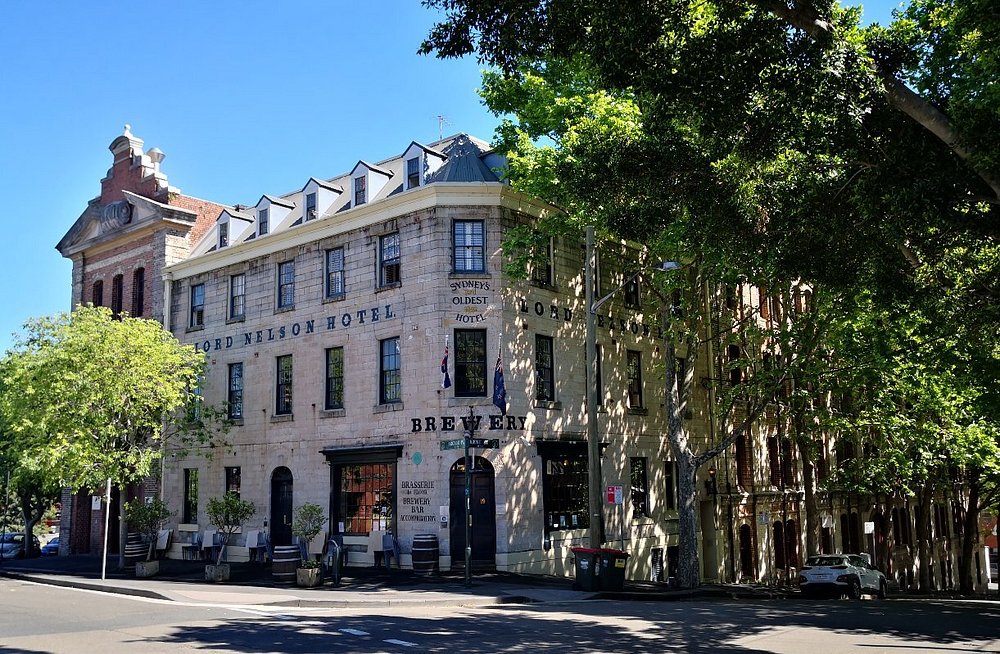
The Hero of Waterloo (1840s)
Another venerable pub, also notorious for its smugglers’ tunnels and alleged trapdoors used to shanghai drunkards onto ships. Its underground cellars remain a dark reminder of The Rocks’ more sinister past.
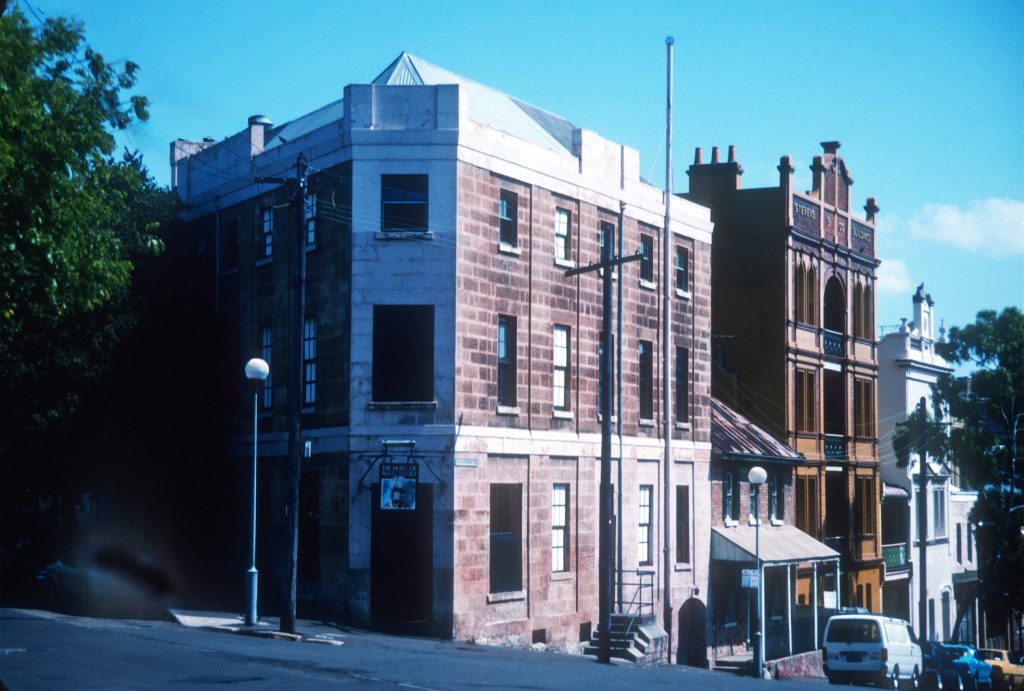
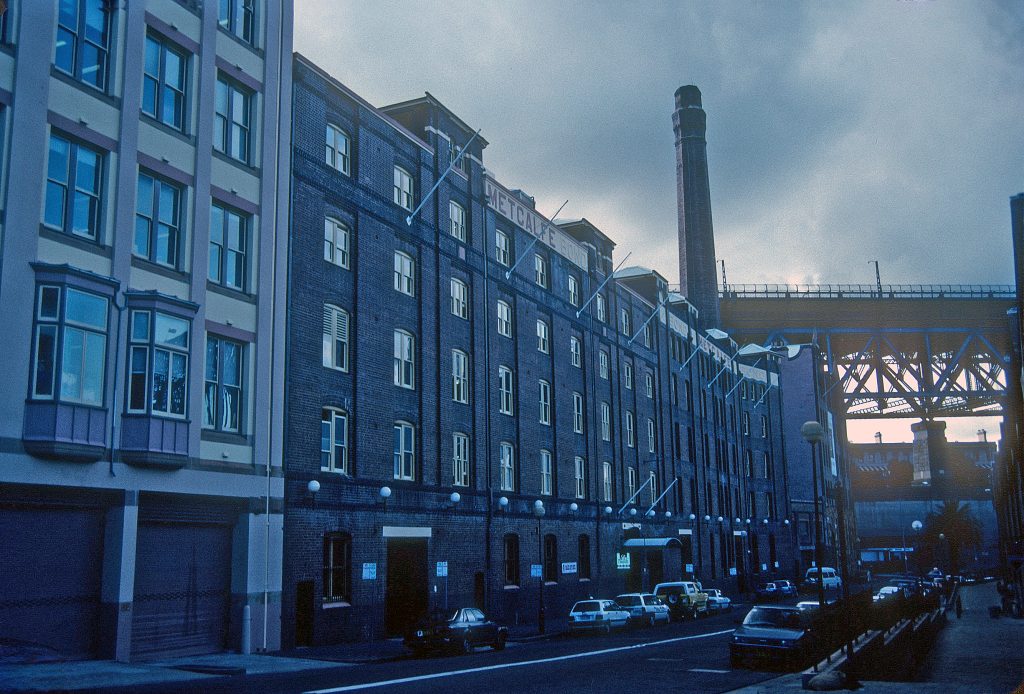
Argyle Stores (1826-1913)
A complex of warehouses built over decades, showcasing the evolution of construction from early stone to brick and iron. Now a cultural center, the buildings testify to The Rocks’ role as Sydney’s commercial hub.
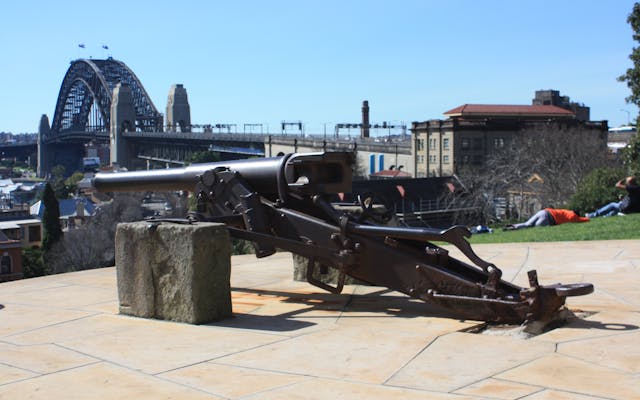
Dawes Point Battery Remnants (1791, rebuilt 1819)
At the northern tip of The Rocks once stood Sydney’s first permanent fortifications, guarding against foreign attack. Though much was dismantled for the Harbour Bridge, cannon placements and foundations survive, marking where soldiers once scanned the horizon.
Water and Utilities
The Rocks also preserves traces of early utilities:
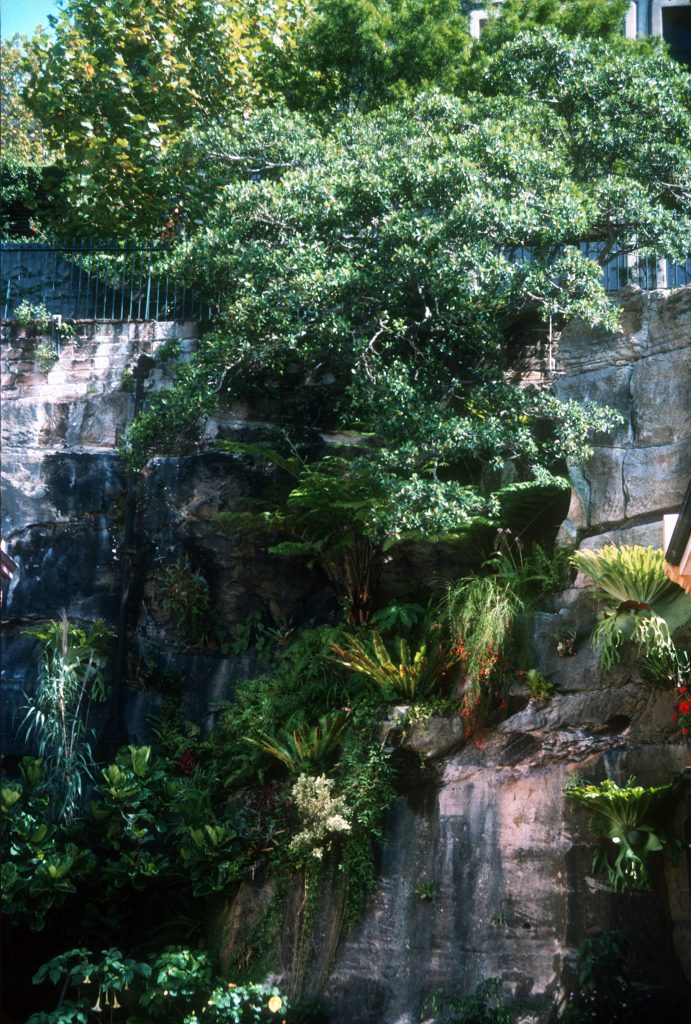
- Cisterns and wells dug into sandstone cliffs to supply water before mains.
- The Bonded Stores (1840s) where dutiable goods were kept under lock and key.
- Archaeological remains of communal washhouses and cesspits, uncovered in digs, which tell the story of sanitation (or lack thereof) in colonial Sydney.
The Turning Point
In 1900, when Sydney’s plague outbreak swept through its poorest quarters, The Rocks was ground zero. Authorities descended, quarantining houses, burning contaminated bedding, and forcibly evacuating families. Many homes were demolished in the name of hygiene, and residents, some of whom had lived in The Rocks for generations, were scattered. This tragedy, however, sparked the government’s large-scale resumption of the neighborhood, ironically ensuring that many historic buildings were preserved from piecemeal demolition and speculative redevelopment. The plague left scars, but it also cemented The Rocks’ place in Sydney’s urban memory.
Rocking The Modern Rocks
Today, The Rocks thrives as a cultural precinct. Markets spill across cobbles where convicts once hawked stolen wares. Galleries and cafes occupy old warehouses. The Argyle Cut funnels modern traffic, just as it once carried horse-drawn carts. Heritage tours reveal the layered stories of pubs, houses, and tunnels, while museums like Susannah Place let visitors step directly into 19th-century domestic life.
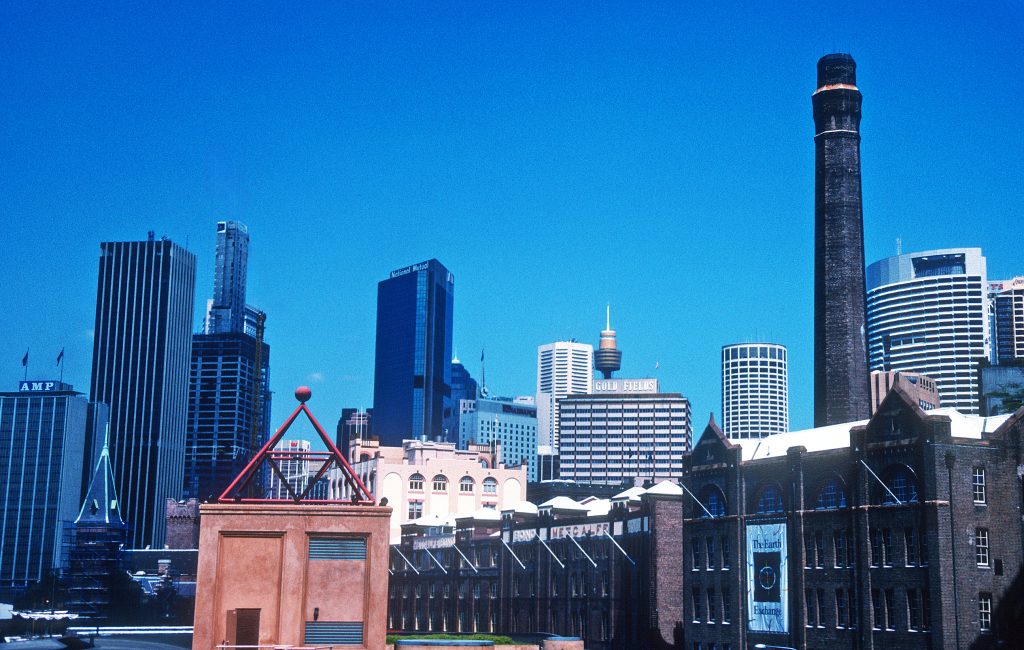
Its very survival is remarkable. In the 1970s, when plans arose to demolish The Rocks for high-rise offices, residents and activists fought to save its sandstone heart. Thanks to them, we can still walk streets where Australia’s colonial story began, and see not just monuments but working, living remnants of a convict town.
The Rocks endures as both relic and revelation. Its cottages, pubs, warehouses, and cuttings embody Sydney’s earliest century, an era of hardship, resilience, and transformation. To stand within its sandstone walls is to feel the raw beginnings of a nation, when survival was uncertain and every stone bore the mark of a convict’s hand.
Next time you wander beneath the Harbour Bridge, let yourself stray into its crooked alleys. Touch the sandstone, breathe in the harbor air, and listen closely, you may yet hear the echo of chains, the cry of a stevedore, or the hymn rising from a garrison church. The Rocks is not just history preserved, it is history alive.
Where to Stay in Sydney, Australia
The Rocks district itself offers intimate guesthouses and boutique hotels within the historic precinct, putting you steps from cobblestone laneways and colonial pubs. Properties here range from heritage-listed conversions to contemporary small hotels, and most sit within walking distance of the archaeological sites and convict-era structures that define the neighborhood. If you prefer the energy of the immediate waterfront, Circular Quay and Barangaroo Reserve lie just north, with larger hotels positioned between the Opera House and the harbourside.
For budget-conscious travelers, hostels and serviced apartments occupy side streets throughout The Rocks and the CBD fringe, offering affordable access without sacrificing proximity to the district’s history. These accommodations suit visitors who plan to spend daylight hours exploring rather than resting in rooms. The immediate area can be loud on weekend evenings, so light sleepers might consider booking a room away from George Street, the main thoroughfare.
Accommodation in nearby Millers Point or Barangaroo offers quieter alternatives while keeping major attractions within a ten-minute walk. Both neighborhoods have fewer tourists after dark and provide a more residential atmosphere if you want to experience how Sydneysiders actually live near the harbor. The trade-off is reduced walkability to nightlife and restaurants, though The Rocks’ pubs and eateries remain accessible.
If you’re visiting during high season or prefer more conventional amenities, consider staying in the CBD or near Central Station, where mid-range and business hotels offer reliable comfort at better rates than harbor-facing properties. From there, The Rocks is a quick train ride or fifteen-minute walk, and you’ll have access to shopping, dining, and public transport hubs that serve the broader city.
Recommended Reading
Fiction
- The Secret River by Kate Grenville: A haunting novel that illuminates the clash of convicts, settlers, and Indigenous Australians in the early colony.
- Sara Dane by Catherine Gaskin: Inspired by the life of Mary Reibey, transported convict who became a Sydney merchant queen.
- The Harp in the South by Ruth Park: A classic evocation of Sydney’s working-class neighborhoods, echoing the struggles of The Rocks’ families.
Non-Fiction
- Inside the Rocks: The Archaeology of a Neighbourhood by Grace Karskens: The definitive study of the district, combining archaeology with vivid narrative.
- The Colony: A History of Early Sydney by Grace Karskens: Explores the broader birth of Sydney, with The Rocks as its nucleus.
- Sydney: The Making of a Public Culture by Paul Ashton: Examines how neighborhoods like The Rocks shaped the city’s civic identity.
- Stories from the Sandstoneby Peter Hobbins & Anne Clark: A historical non-fiction book that documents more than 1,600 carved and painted sandstone inscriptions made by immigrants at North Head Quarantine Station in Sydney Harbour.
Tours to Consider