Barcelona is a city where streets curve into fantasy, where rooftops sprout sentinels in stone, and where a single architect reshaped the skyline. Antoni Gaudí, Catalonia’s most beloved son, designed buildings that became a living mythology. To explore his creations is to step into a dreamscape of faith, geometry, and nature, each structure more than architecture: each is a revelation.
Gaudi Rises
Born in 1852 in Reus, Catalonia, Antoni Gaudí grew up absorbing the natural world with unusual intensity, shapes of seashells, spirals of pinecones, flight patterns of bees. When he became an architect, he drew not from textbooks alone but from creation itself. For him, God was the ultimate architect, and man’s task was to learn from His designs. Gaudí’s Barcelona flourished in the late 19th century, when industrial wealth created a new bourgeois class seeking monumental houses and public spaces that expressed Catalan pride. The artistic movement of Modernisme gave Gaudí a stage, but he transcended its floral curves into something wholly his own, structures that look grown rather than built. Over his career, he reshaped not just individual houses but the very identity of a city.
Sagrada Família
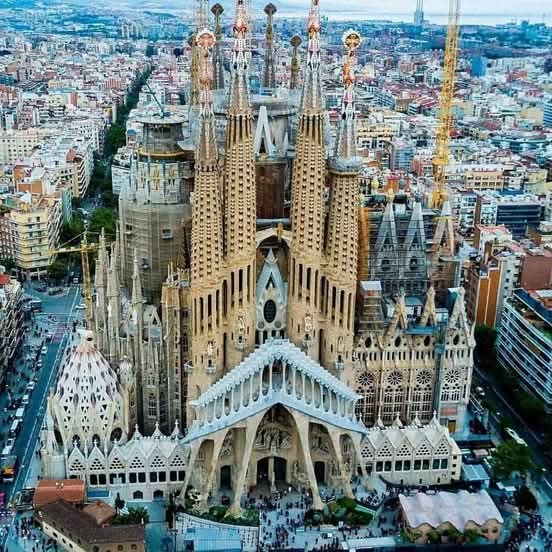
Perhaps no monument in Europe so fully captures the audacity of human faith as the Basílica de la Sagrada Família. Begun in 1882 and still unfinished today, this is Gaudí’s masterpiece where he devoted his life and ultimately lived; he is buried in its crypt.
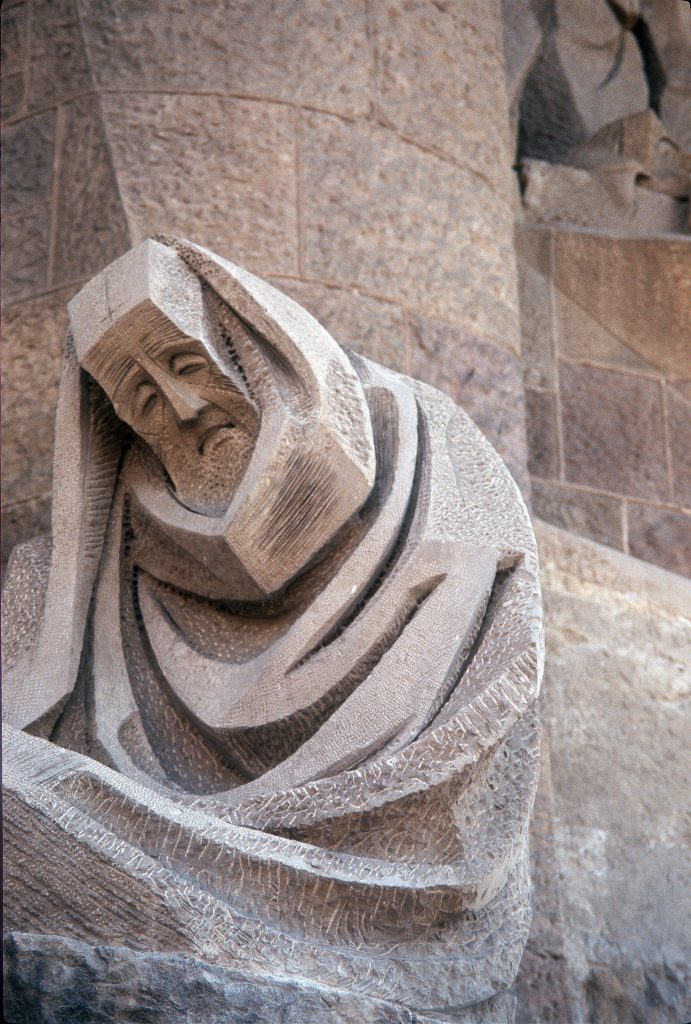
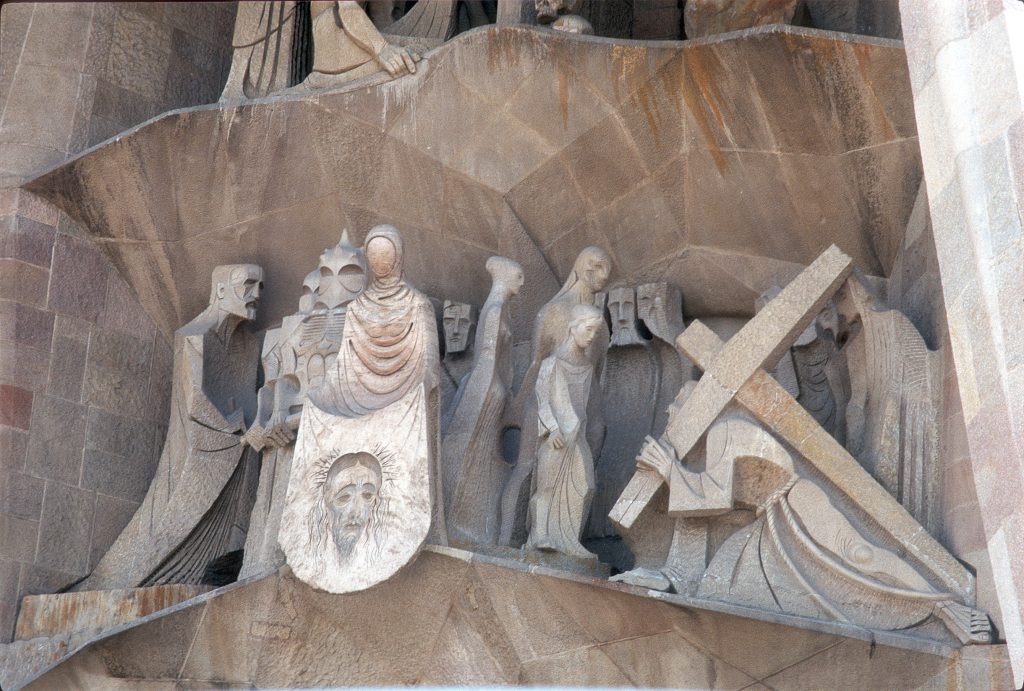
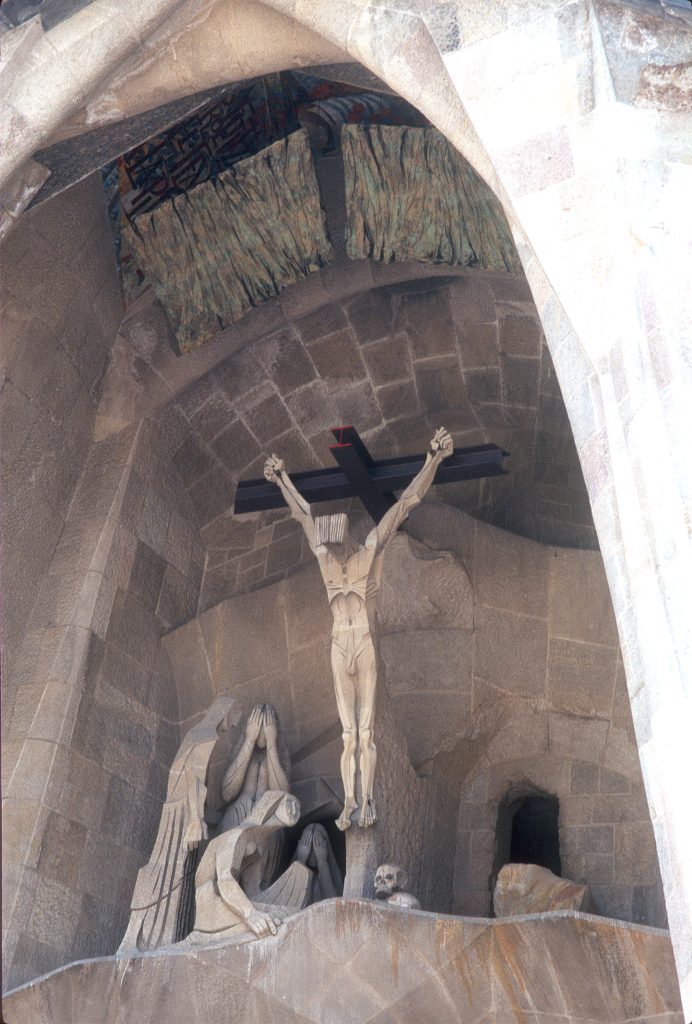
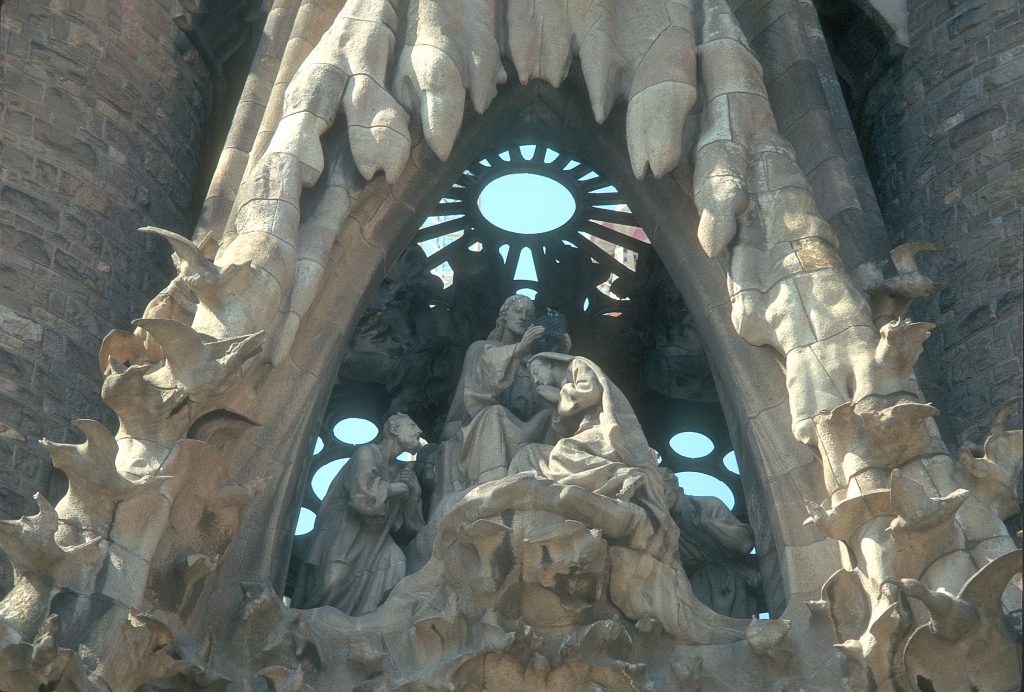
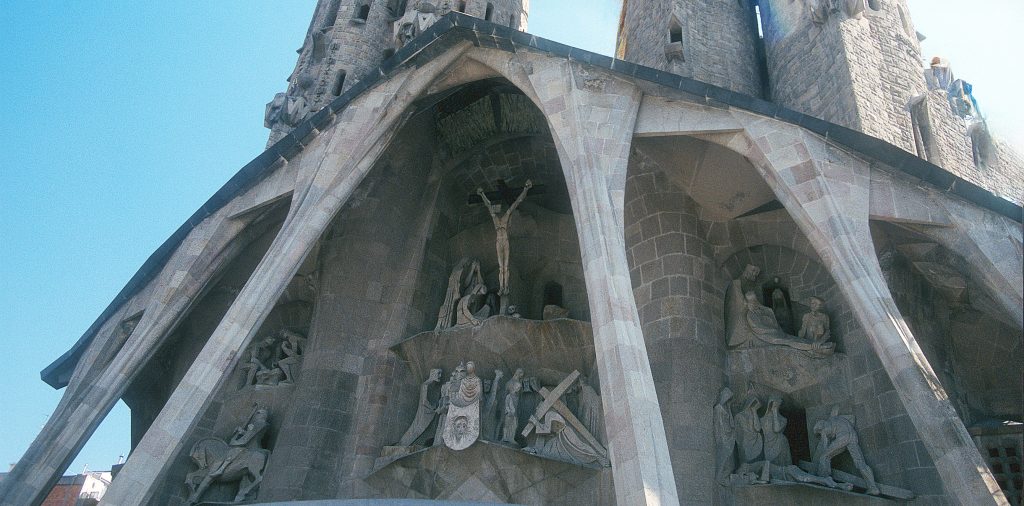
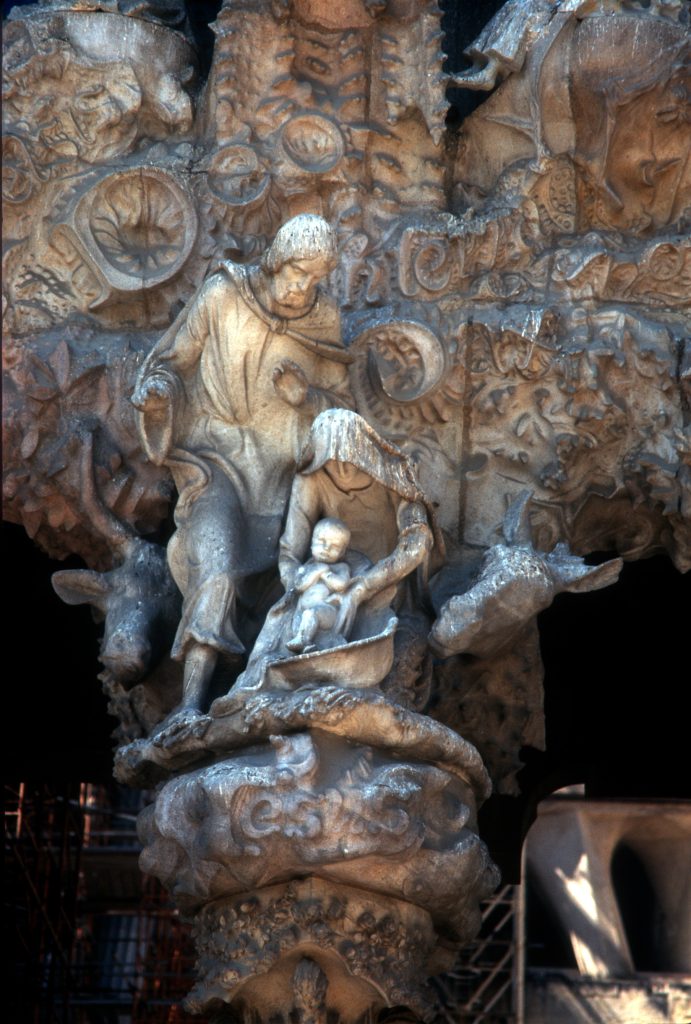
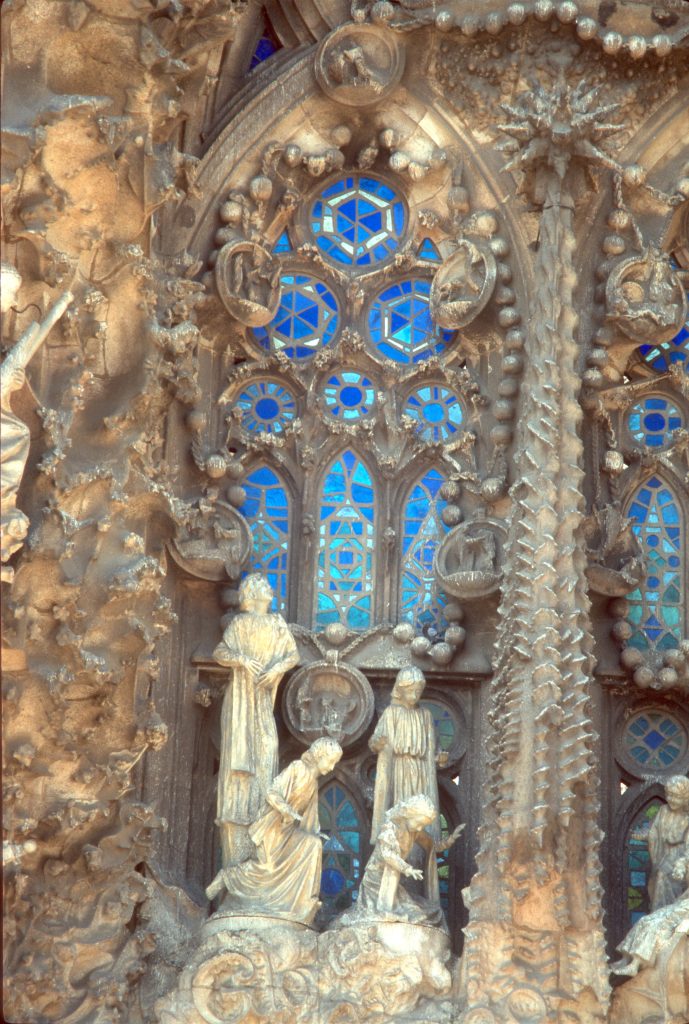
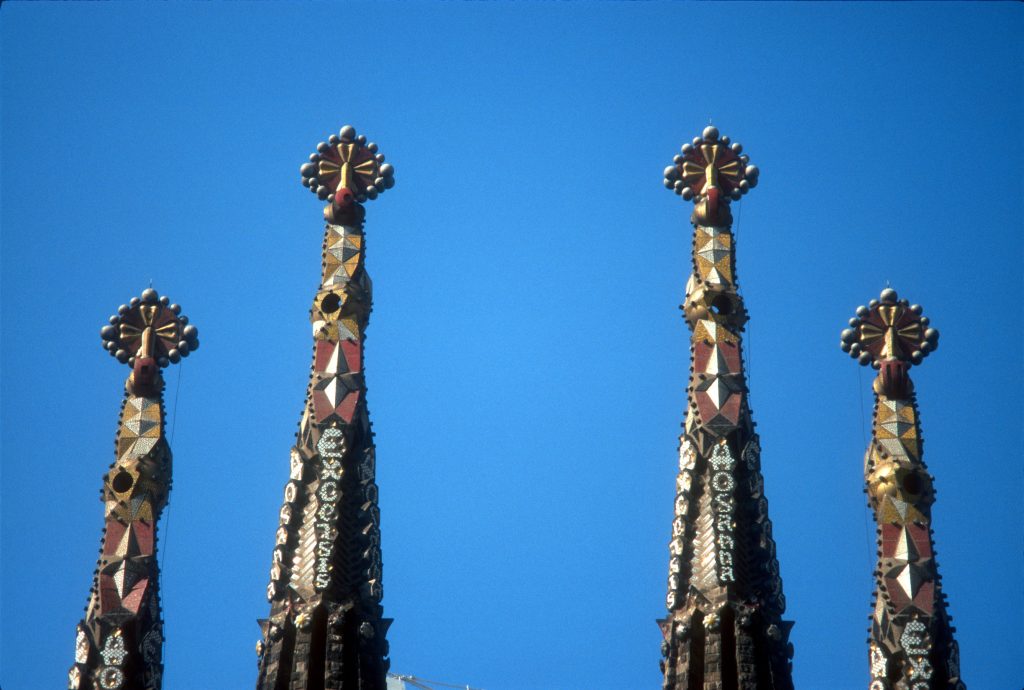
The exterior bristles with biblical storytelling. The Nativity Façade, completed during Gaudí’s life, is covered with exuberant detail, angels, animals, and vines carved into a tapestry of creation. By contrast, the Passion Façade, built later to Gaudí’s sketches, is stark and angular, with gaunt figures depicting Christ’s suffering. Above all soar towers like organ pipes, destined to reach eighteen in total, the tallest piercing 172 meters into the Barcelona sky.
Step inside and you’re in Gaudí’s forest of stone. Slender columns branch like trees, rising toward a ceiling that glimmers as a canopy. Sunlight spills through stained glass in radiant blues, greens, and golds, bathing the nave in an otherworldly glow. It is as though nature itself has been transfigured into a cathedral.
Still to be completed is the Christ Tower, which falls short of its intended 565 feet, and the Glory Façade depicting “Death, Final Judgment, and Glory.
Even unfinished, the Sagrada Família welcomes millions each year. When completed in 2026, marking the centenary of Gaudí’s death, it will be the tallest church in the world. Barcelona’s heartbeat, a perpetual act of faith.
Casa Batlló
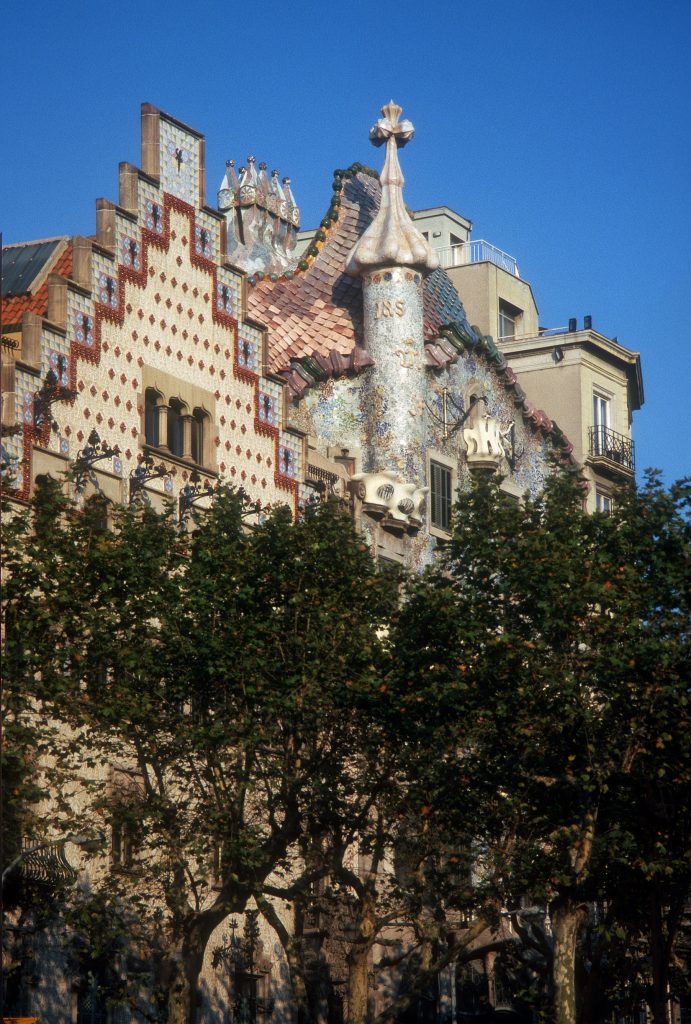
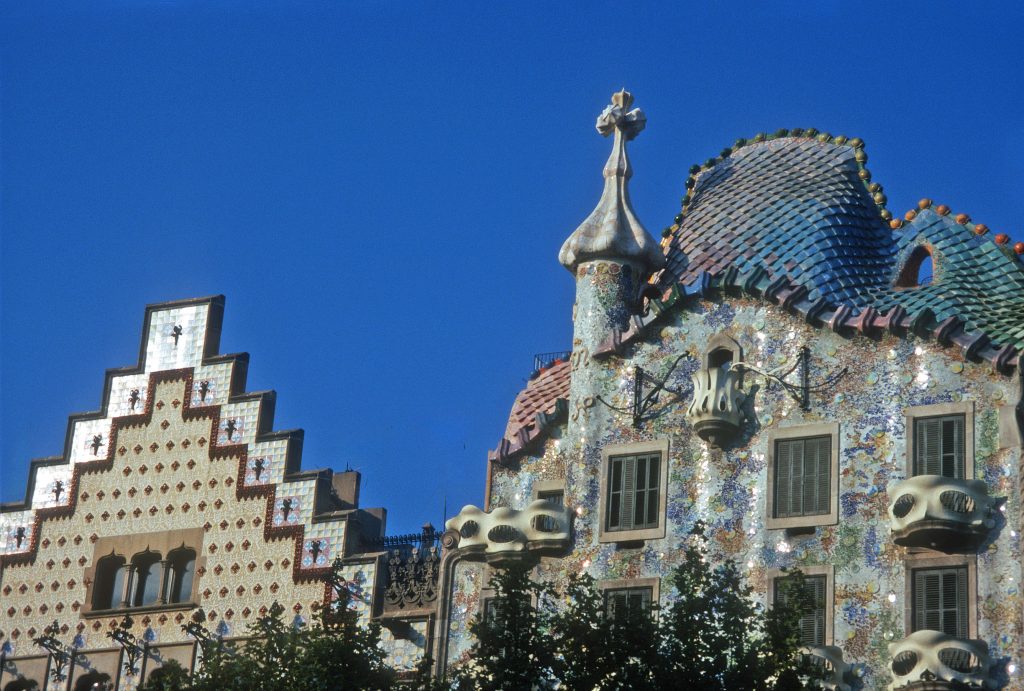
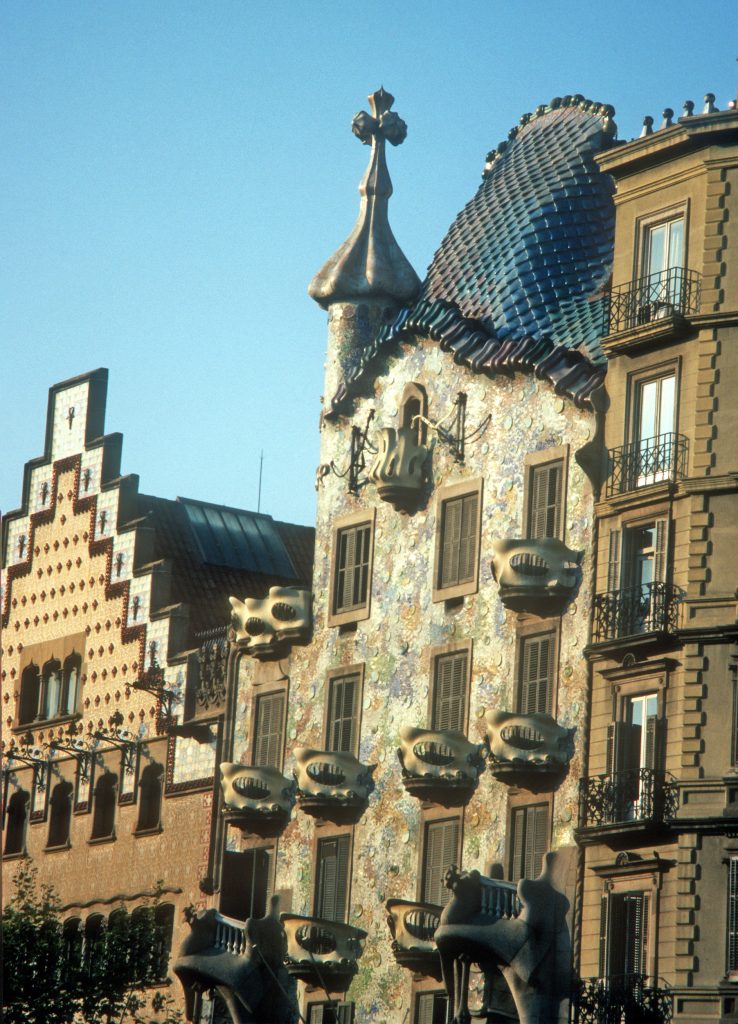
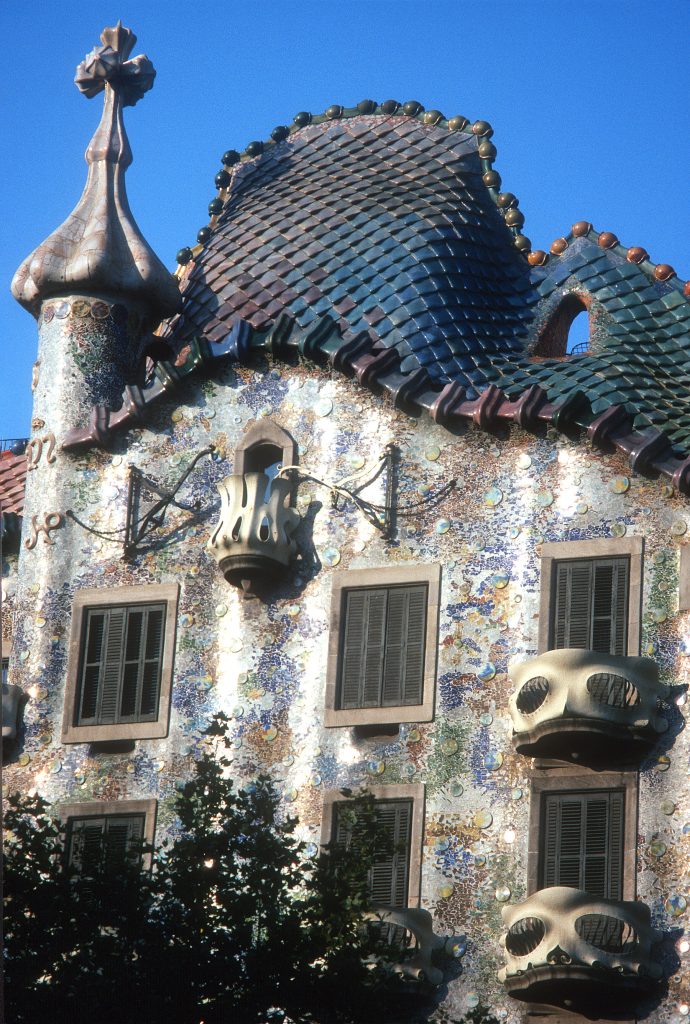
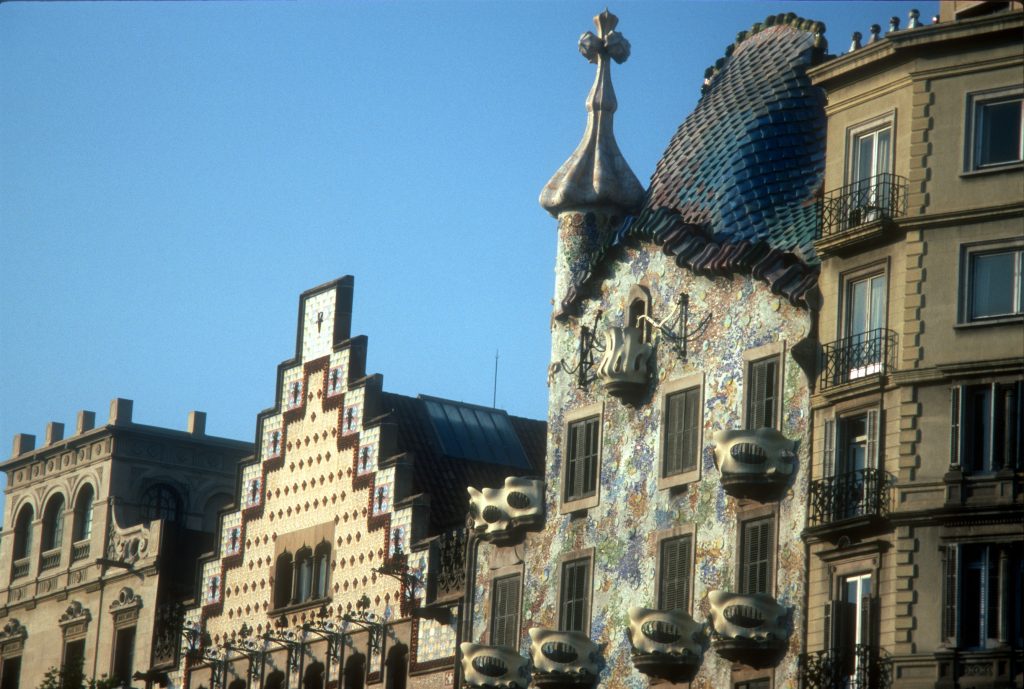
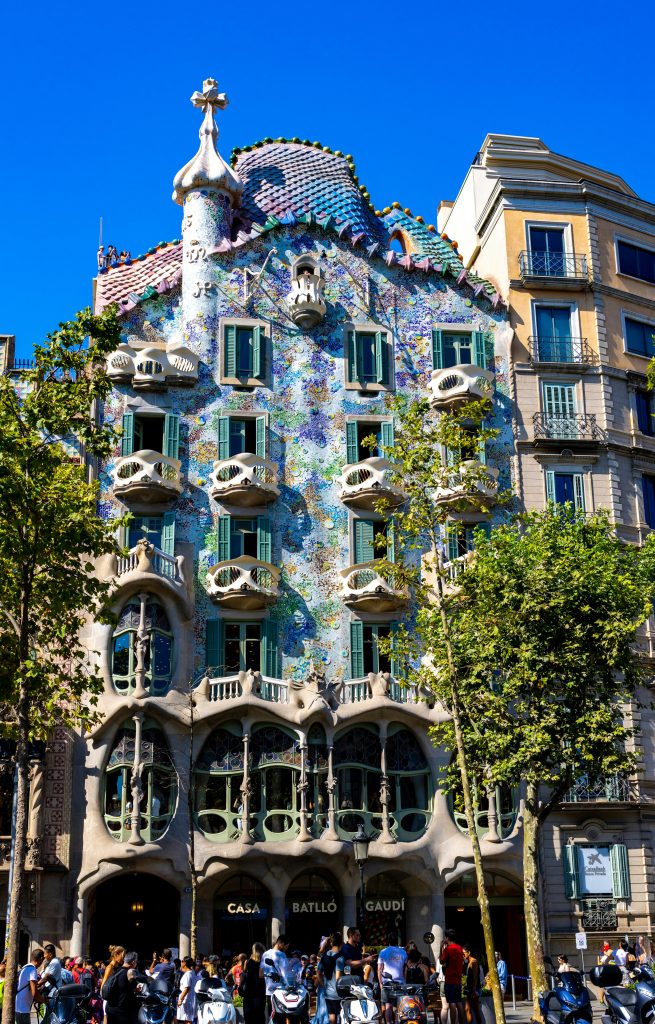
If the Sagrada Família is a hymn, Casa Batlló is a poem, playful, sensuous, alive. Located on Passeig de Gràcia, Barcelona’s grand boulevard, this 1904 remodel of a conventional townhouse displays an extraordinary range of sculptural detail.
The façade ripples in blue, green, and violet tiles, shimmering like the scales of a dragon. Balconies resemble skulls or masks, while pillars suggest bones, earning the building the nickname “The House of Bones.” At the rooftop, the spine-like ridge culminates in a cross, with ceramic mosaic catching the light.
Inside, Gaudí eliminated straight lines. Ceilings swirl like ocean currents, windows flow with colored glass, stairwells breathe like the ribcage of a great beast. Light wells are tiled from pale blue at the bottom to deep sapphire at the top, ensuring even sunlight filters through every level.
Once a family home, Casa Batlló is now open as a cultural monument. By night, concerts are held on its rooftop terrace, where the dragon’s back lights up against Barcelona’s skyline. To sit there is to feel the city alive with myth and magic.
Casa Milà (La Pedrera)
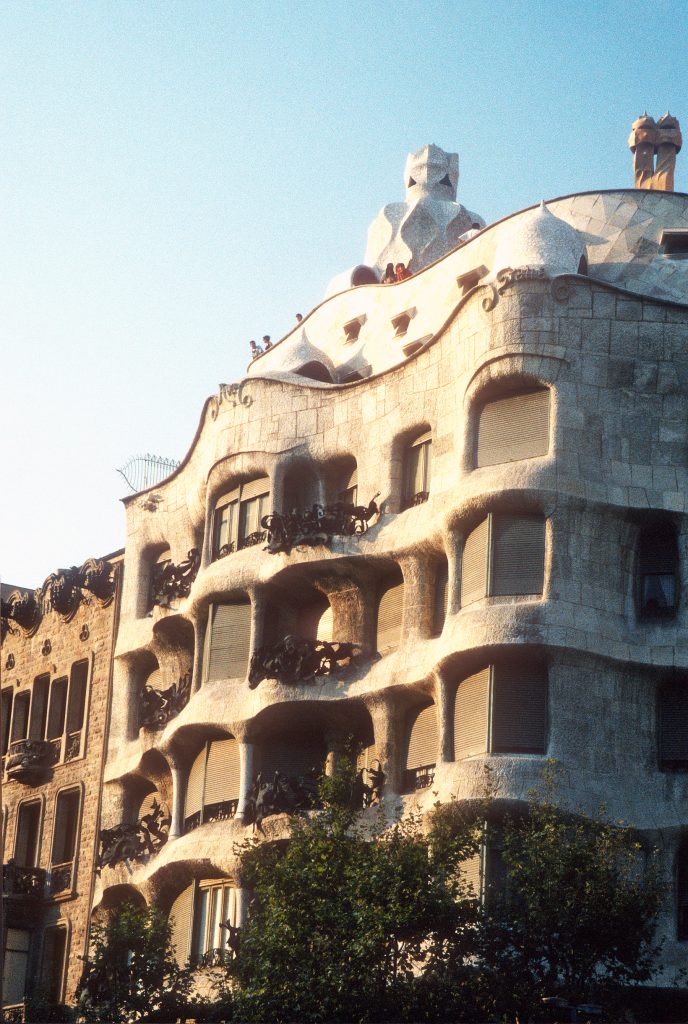
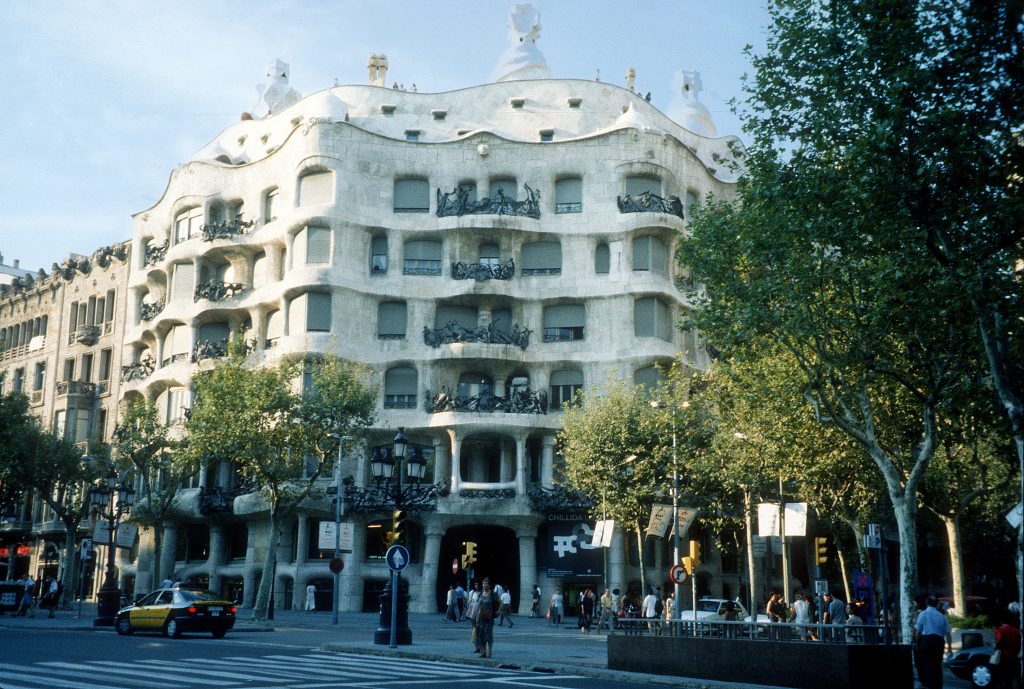
Casa Milà stands further up Passeig de Gràcia, nicknamed La Pedrera (“the stone quarry”) for its rugged, wave-like façade. Completed in 1912, it scandalized neighbors who thought it too radical. Today it is celebrated as one of the defining icons of Barcelona.
The building’s limestone front undulates with no straight walls. Iron balconies curl like seaweed, and the entire structure feels more sculpted than built. Gaudí designed it as two apartment blocks around a central courtyard, ensuring light and air reached every room, a revolutionary idea at the time.
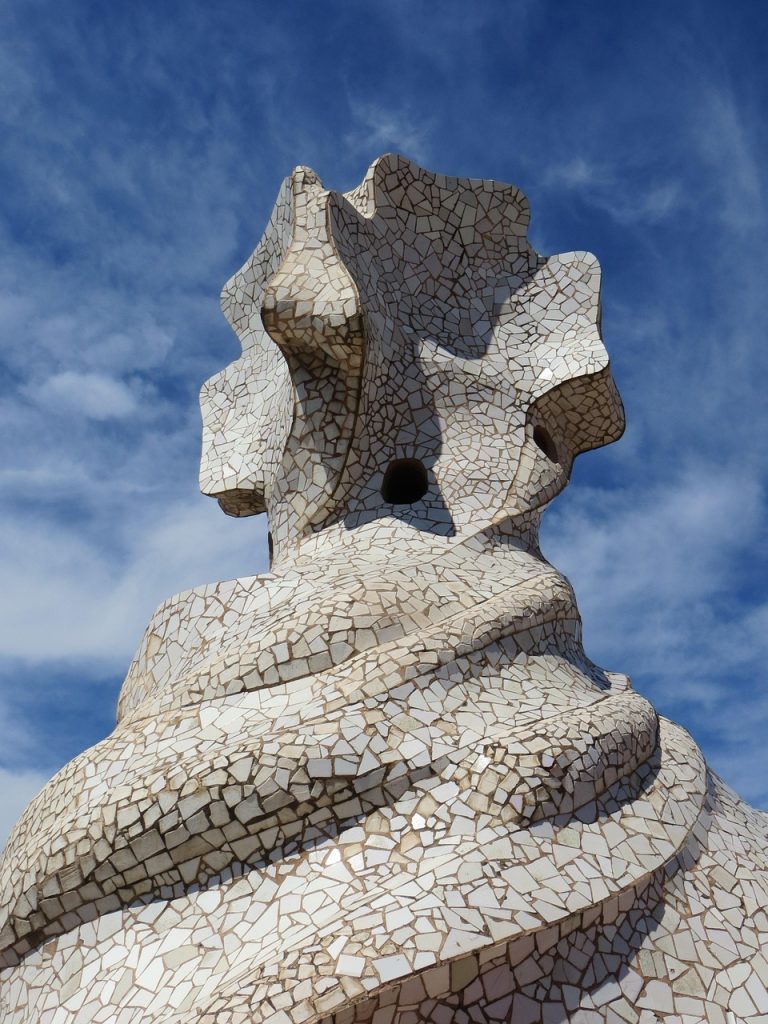
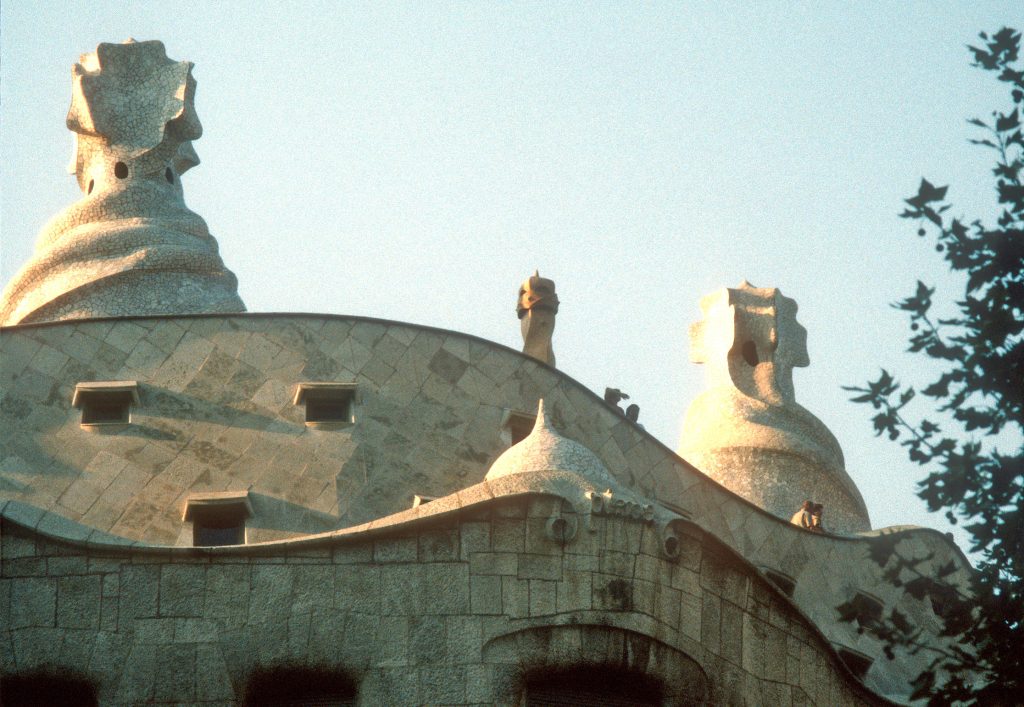
But the rooftop steals the imagination. Here chimneys rise as surreal warriors, helmeted guardians watching over the city. Stairwells twist like seashells. From this vantage, one sees not only Barcelona but also the spirit of Modernisme transformed into sculpture.
La Pedrera remains both museum and residence. Exhibitions showcase Gaudí’s models and designs, including his pioneering use of catenary arches and hanging-chain models to calculate organic curves. At night, light shows transform the rooftop into a shimmering fantasy, a stage set for the cosmos.
Park Güell
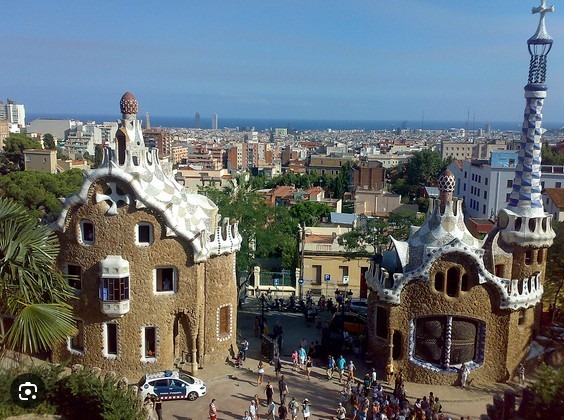
High on Carmel Hill spreads Park Güell, Gaudí’s garden city design. Commissioned by industrialist Eusebi Güell in 1900, it was meant to house sixty luxury villas amidst landscaped gardens. Only two houses were built, but Gaudí created one of the world’s most remarkable public parks instead.
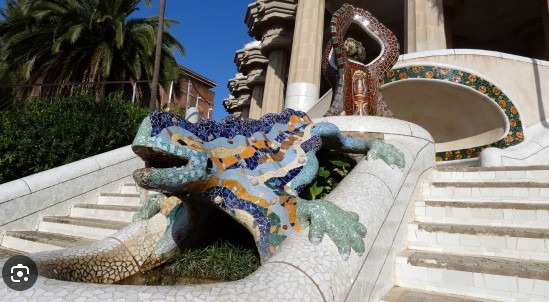
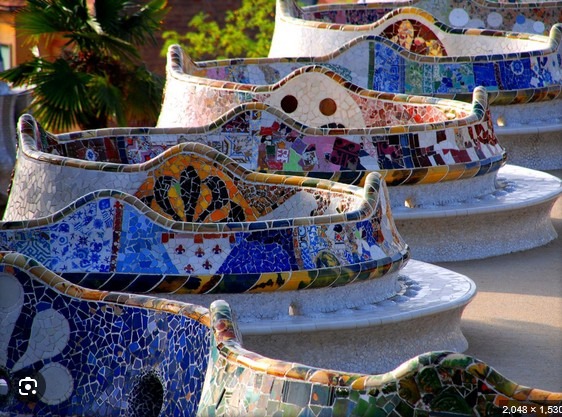
Visitors climb a staircase guarded by the famous mosaic salamander, “El Drac.” Beyond lies the Hypostyle Hall, where 86 Doric columns support a vast terrace above. The terrace, edged by Gaudí’s serpentine bench, is encrusted in colorful broken-tile mosaics that curve around a panoramic view of the city.
The park abounds with whimsy: viaducts that blend into hillsides, stone arcades resembling caves, twisted paths that feel like natural outcroppings. It is as though Gaudí coaxed architecture to grow like vines across the landscape.Today Park Güell is both UNESCO treasure and neighborhood park. Children chase pigeons under the arcades, musicians play guitar on sunlit steps, and travelers admire Gaudí’s playful design. Barcelona’s open-air fairy tale.
Palau Güell
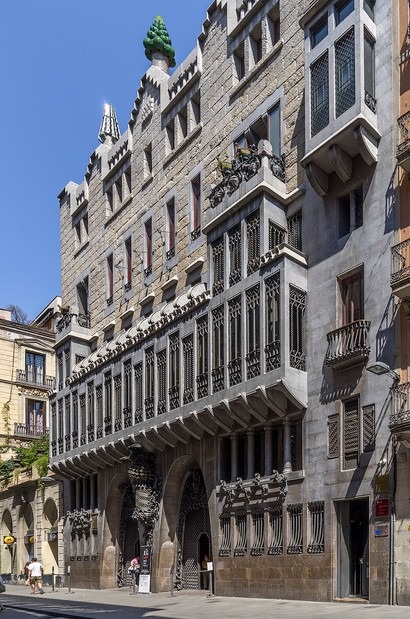
Before he built dreamlike houses and parks, Gaudí honed his craft with Palau Güell, a mansion completed in 1890 for his patron Eusebi Güell. Tucked near the Rambla, it is less flamboyant than his later works but already brimming with invention.
The exterior is restrained, its dark stone punctuated by parabolic archways of wrought iron. Yet step inside and you are enveloped by grandeur. Gaudí designed the central hall with a soaring dome pierced by star-shaped openings, allowing light to filter like constellations. Noble materials, marble, wood, iron, blend into an interior that feels both medieval and modern.
On the rooftop, Gaudí allowed his imagination freer rein. Chimneys burst with mosaic color, twisting in forms that anticipate his later masterpieces. Palau Güell marked the beginning of a lifelong collaboration between architect and patron, and remains one of Barcelona’s best-preserved examples of Gaudí’s early work.
Casa Vicens
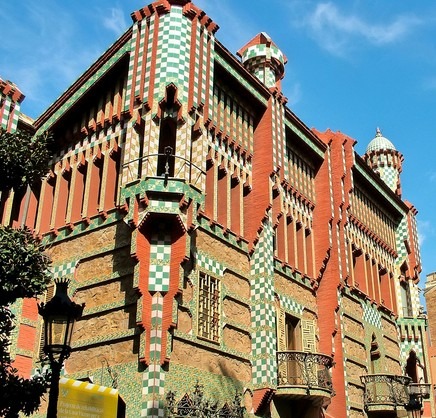
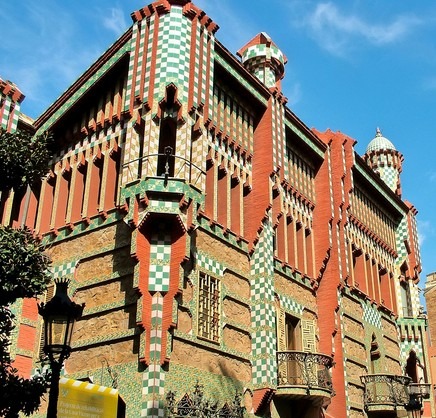
Gaudí’s very first major commission, Casa Vicens (1883-1888), shows his youthful daring. Built for a tile manufacturer, it explodes in ceramic color, checkerboard patterns, Moorish-inspired arches, wrought-iron palm leaves. Unlike the flowing forms of his later work, Casa Vicens is geometric, exuberant, and eclectic, reflecting Oriental and neo-Mudejar influences.
Yet even here one sees Gaudí’s attention to nature. The facades are adorned with ceramic marigolds and palm motifs, while interiors open into gardens that blur indoor and outdoor space. Recently restored and opened to the public, Casa Vicens allows visitors to trace Gaudí’s architectural development from his early ambitious work to his mature mastery.
Catalonian Legacy
Gaudí’s Barcelona is a living city shaped by his imagination. Families still inhabit apartments in Casa Milà; concerts resonate in Casa Batlló; Mass is celebrated in the Sagrada Família; children play in Park Güell. Gaudí’s works, unlike those of many historic architects, remain alive with daily use.
Tourism brings millions, yet for Barcelonans, Gaudí is more than spectacle. He is identity, proof that Catalonia produced a genius who reshaped the very language of architecture. His vision continues to inspire artists, architects, and dreamers who see in his work the possibility that the world might be built not only for utility but for wonder.
Antoni Gaudí once said, “Nothing is art if it does not come from nature.” To wander Barcelona is to witness that belief throughout the city. His columns become trees, his facades dragons, his chimneys warriors, his cathedrals forests of stone. He transformed the language of architecture into a hymn, part geometry, part faith, wholly alive.
Barcelona without Gaudí would be a fine city. With him, it is a city of dreams, a place where past and present, earth and heaven, human and divine all converge. When you leave, it is not just the vision of his buildings you carry, but the conviction that imagination, too, can be built in stone.
Where to Stay in Barcelona, Spain
For a stay that puts Gaudí’s architecture within easy reach, consider the Eixample district, where many of his most famous works stand. Hotels here range from budget-friendly hostels to mid-range options, and you’ll be able to walk to Park Güell, Casa Batlló, and the Sagrada Familia within 20 to 30 minutes. The neighborhood also has excellent metro connections and plenty of restaurants and cafes for evening meals after a day of exploring.
If you prefer a more central location with easier access to the Gothic Quarter and Las Ramblas, the Old Town offers hotels and guesthouses near Barcelona’s medieval streets and plazas. This area can feel crowded during peak season, but it’s genuinely convenient for visitors who want to experience both Gaudí’s creations and the older parts of the city without lengthy transit times.
For a quieter base, look toward Gracia, a neighborhood just north of Eixample where local residents live alongside visitors. Small hotels and apartments here tend to be more affordable, and you’ll find a neighborhood feel with independent shops and restaurants. The trade-off is a slightly longer walk or short metro ride to some of Gaudí’s major sites, but many travelers find the calmer atmosphere worth it.
Book accommodations several weeks in advance if you’re traveling during summer or around major holidays. Barcelona’s popularity means rooms fill quickly, and advance booking often yields better rates than last-minute searches. Once you arrive, stay in one neighborhood rather than moving hotels frequently; this lets you explore at a natural pace and return to familiar streets between days of sightseeing.
Recommended Reading
Fiction
- The Shadow of the Wind by Carlos Ruiz Zafón: A Gothic mystery steeped in Barcelona’s atmosphere, its streets haunted by memory and imagination.
- The Angel’s Game by Carlos Ruiz Zafón: A literary thriller set in the city’s winding neighborhoods, echoing the mood of Gaudí’s surreal Barcelona.
- Design Monograph: Gaudí by Judith Carmel-Arthur: A design monograph series on the most remarkable architects, designers, brands and design movements of the twentieth and twenty-first centuries, each book contains a historical-critical essay discussing the life and work of the subject, followed by an illustrated appreciation of groundbreaking work.
- Cathedral of the Sea by Ildefonso Falcones: A sweeping saga of medieval Barcelona, illuminating the cultural roots of the city Gaudí later transformed.
Non-Fiction
- Gaudí: The Complete Works by Rainer Zerbst: The essential illustrated catalogue of Gaudí’s buildings, drawings, and models.
- The Sagrada Família: Gaudí’s Heaven on Earth by Gijs van Hensbergen: A passionate exploration of his masterpiece and its ongoing construction.
- Homage to Barcelona by Colm Tóibín: A lyrical history of the city, weaving Gaudí into its cultural tapestry.
- Antonio Gaudí: Master Architect by Juan Bassegoda Nonell: An authoritative yet accessible account of the man behind the myth.
Tours to Consider:
- Barcelona Gaudi Houses Tour: Casa Vicens, Pedrera & Casa Batlló
- The Sagrada Familia Tour from Stone to Soul