Trinity Church, standing at the head of Wall Street, is not simply an architectural landmark or a colonial relic. It is something rarer—a continuous thread, running from the ambitions of empire through the upheaval of revolution and into the restless momentum of modern America. Here, beneath a Gothic spire that once dominated the skyline, the nation did not just pass by. It gathered, argued, prayed, rebuilt, and remembered.
The church began, as so many American institutions did, under royal authority. In 1697, King William III granted a charter establishing Trinity Parish, anchoring the Church of England in a colonial city already marked by commerce and cultural exchange. From the beginning, Trinity was not an isolated house of worship. It was woven into the civic and social fabric of New York—its pews filled with merchants, officials, landowners, and families whose fortunes rose alongside the city itself.
The early church stood closer to the Hudson, modest in scale but significant in influence. Its parish lands extended far beyond the footprint of the building, shaping development across what would become lower Manhattan. Even then, Trinity was not simply a spiritual center—it was an institutional presence, quietly accumulating both land and authority.
All of that changed in 1776.
Reborn in the Revolution
The Great Fire, which swept through New York in the early days of the Revolutionary War, consumed the original Trinity Church. Flames reduced it to ruin, leaving the parish—like the colonies themselves—in a state of profound uncertainty. For years, there was no Trinity Church as a structure, only as an idea sustained by its congregation.
And yet, like the nation that would emerge from that conflict, Trinity rebuilt.
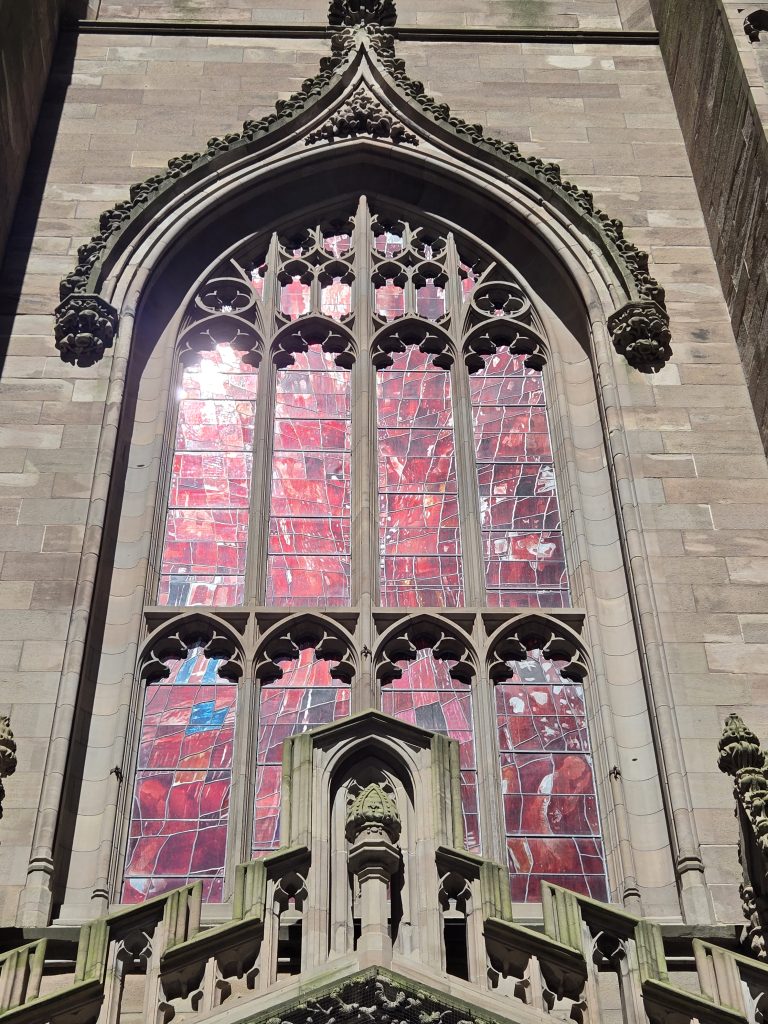
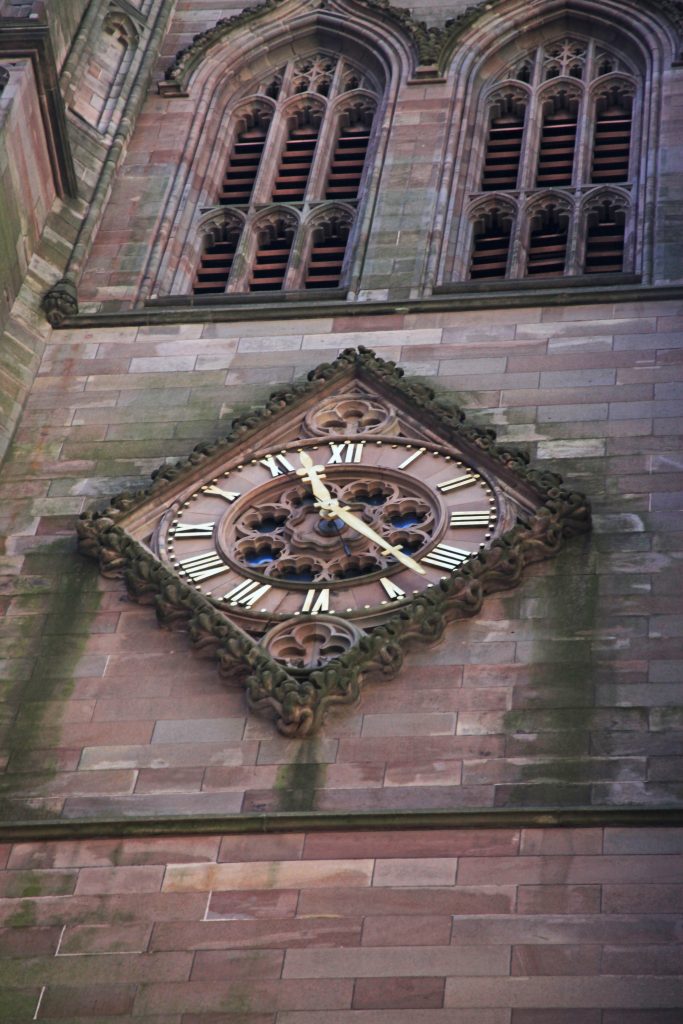
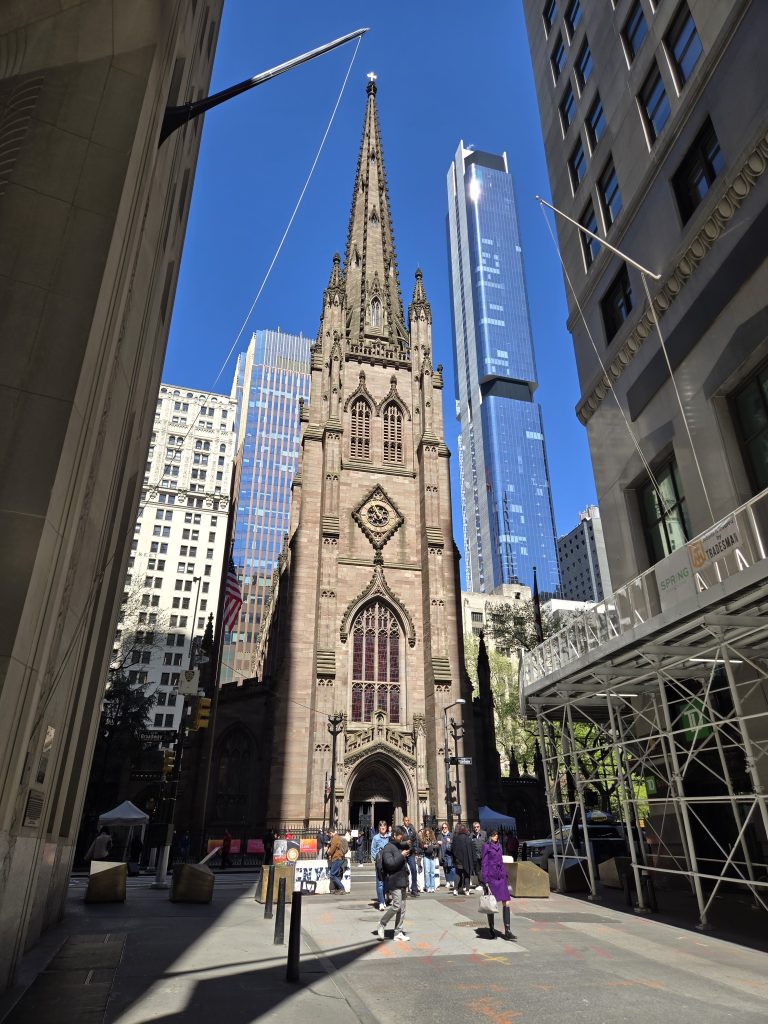
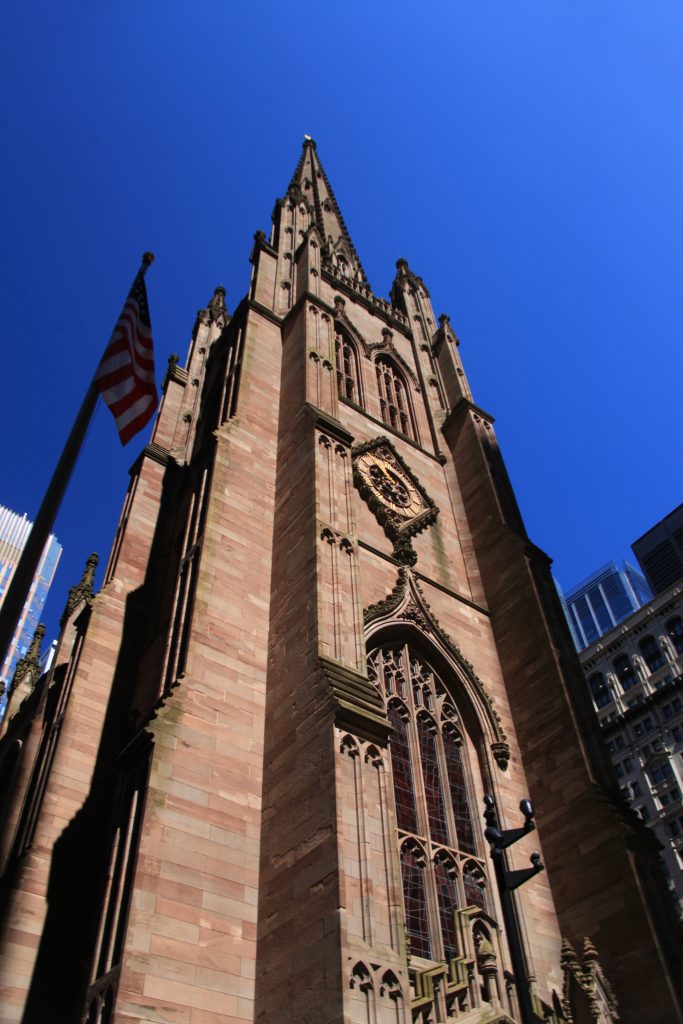
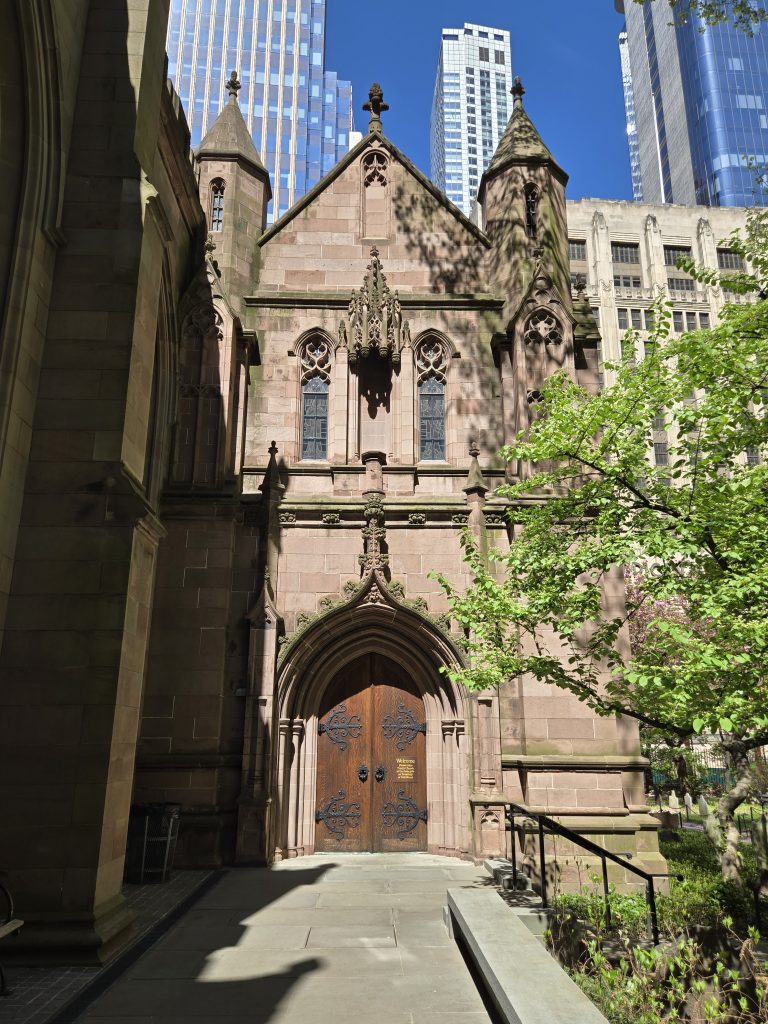
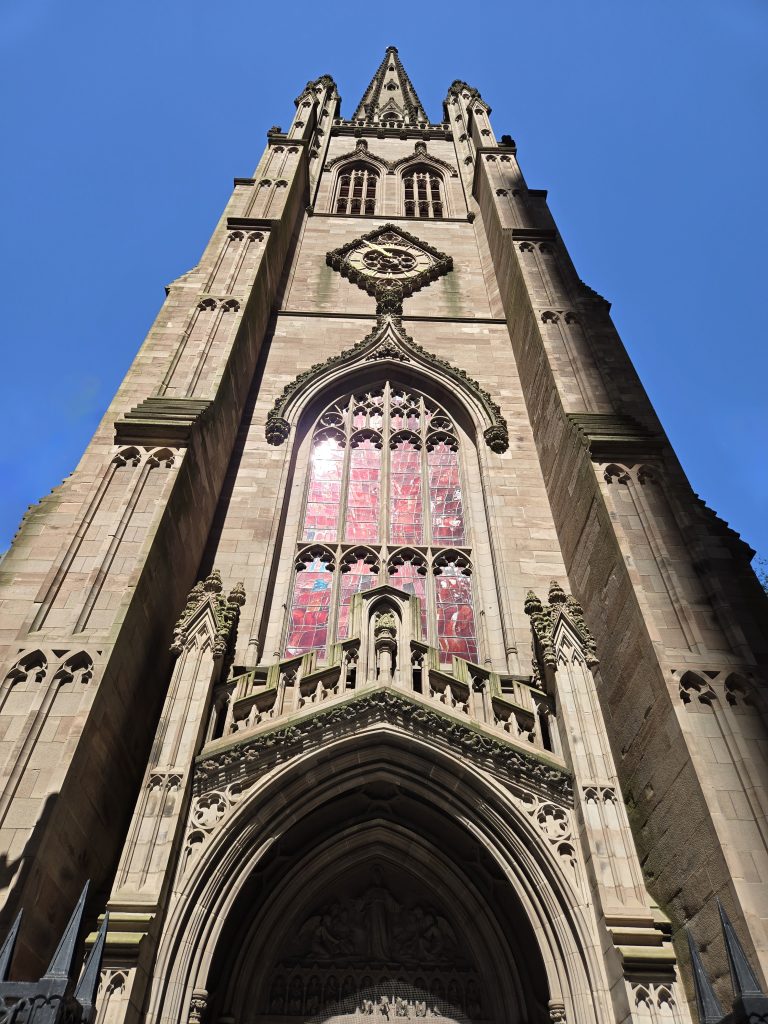
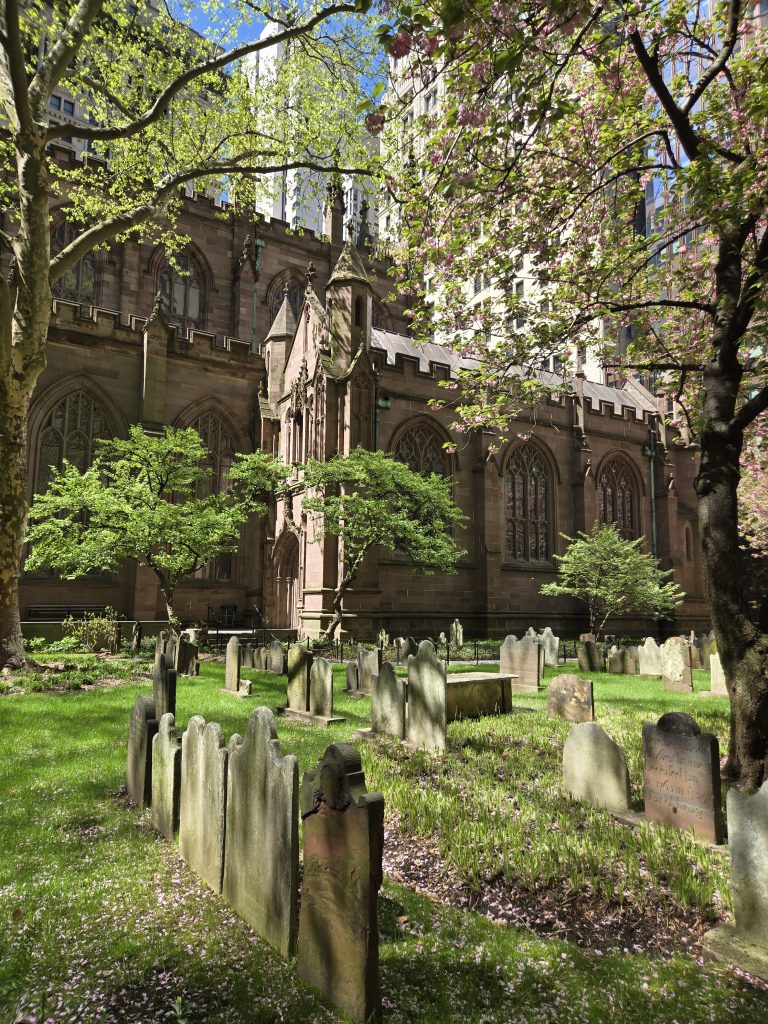
The current church, completed in 1846 and designed by Richard Upjohn, rises in deliberate contrast to the classical forms that dominated early American architecture. Its Gothic Revival style looks not to Rome, but to medieval Europe—its pointed arches, intricate tracery, and soaring vertical lines drawing the eye upward in a gesture of aspiration. Constructed of warm brownstone, the exterior carries both weight and elegance, its surfaces catching the shifting light of the city.
For decades, the spire—rising 281 feet—was the tallest point in New York. Ships entering the harbor would have seen it first, a signal not only of arrival, but of order and presence in a rapidly growing port. Today, dwarfed by glass towers, it still commands attention—not through height, but through contrast. Where the city surges, Trinity steadies.
Elegance and Influence
Step inside, and the noise of Lower Manhattan falls away with surprising immediacy.
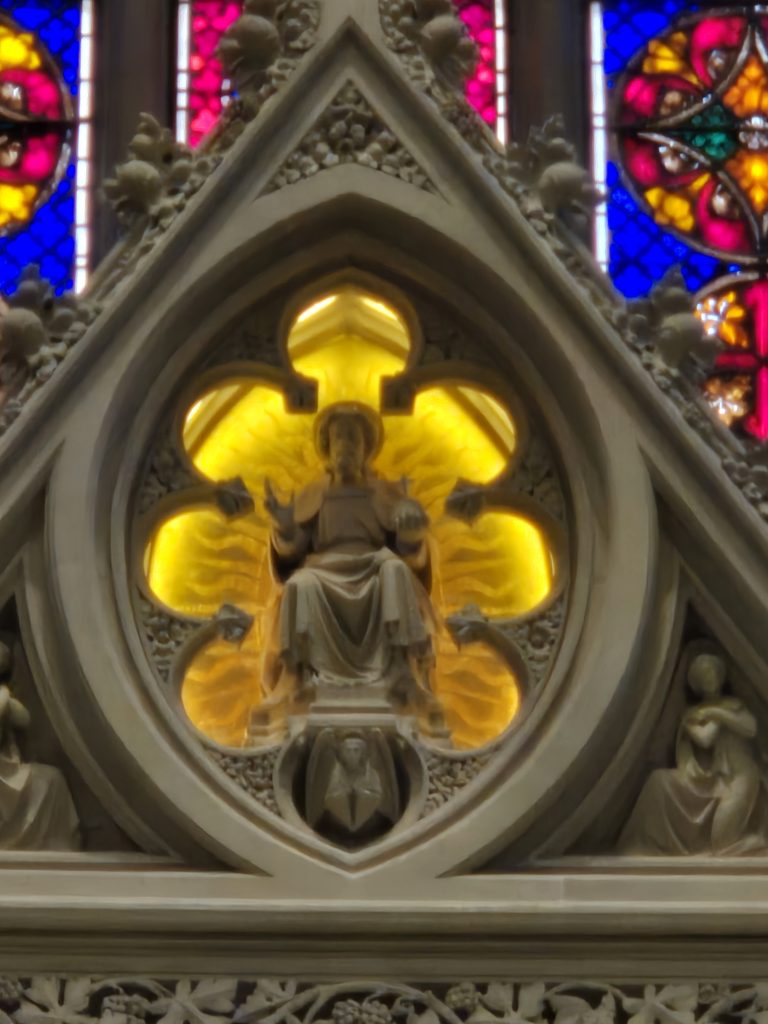
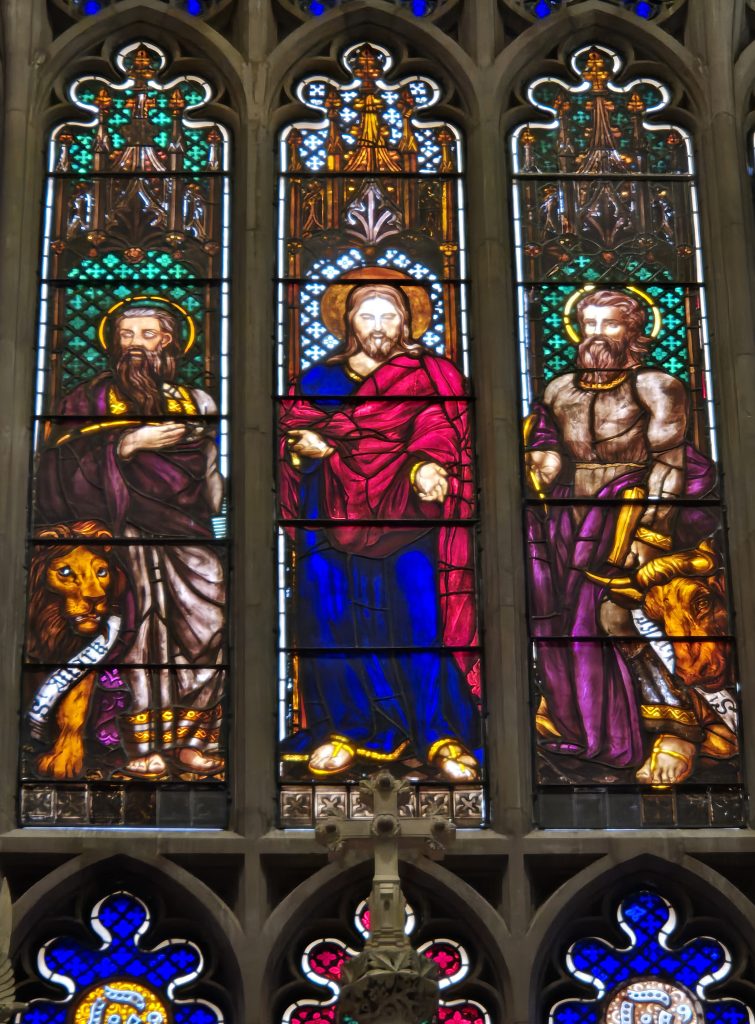
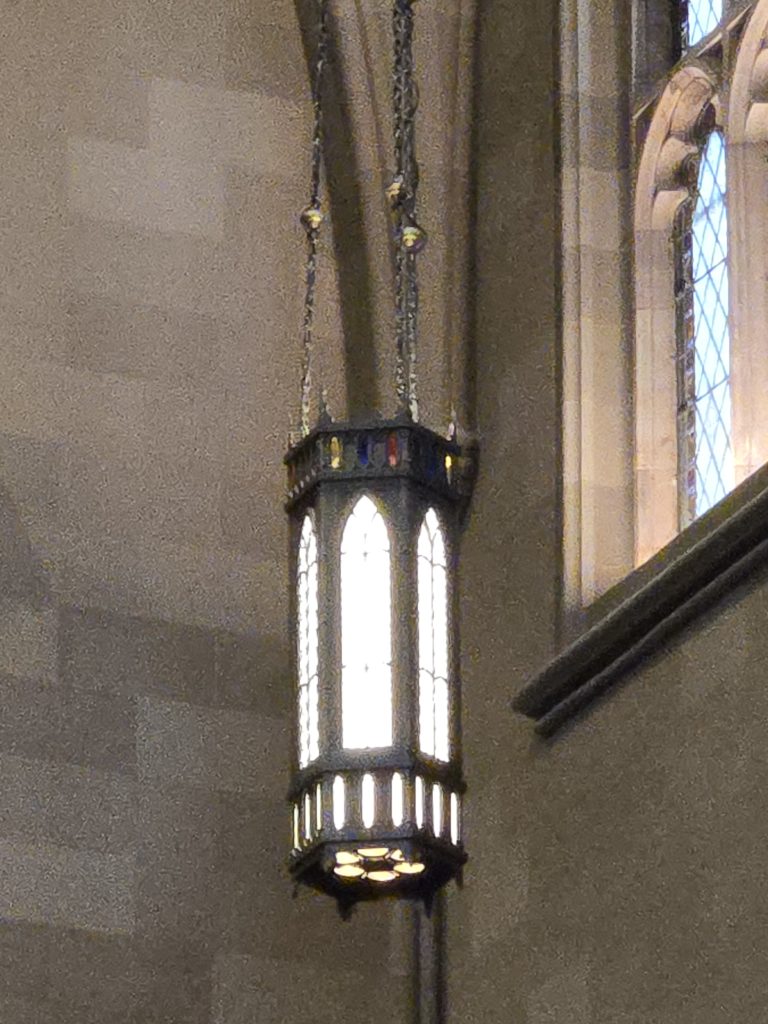
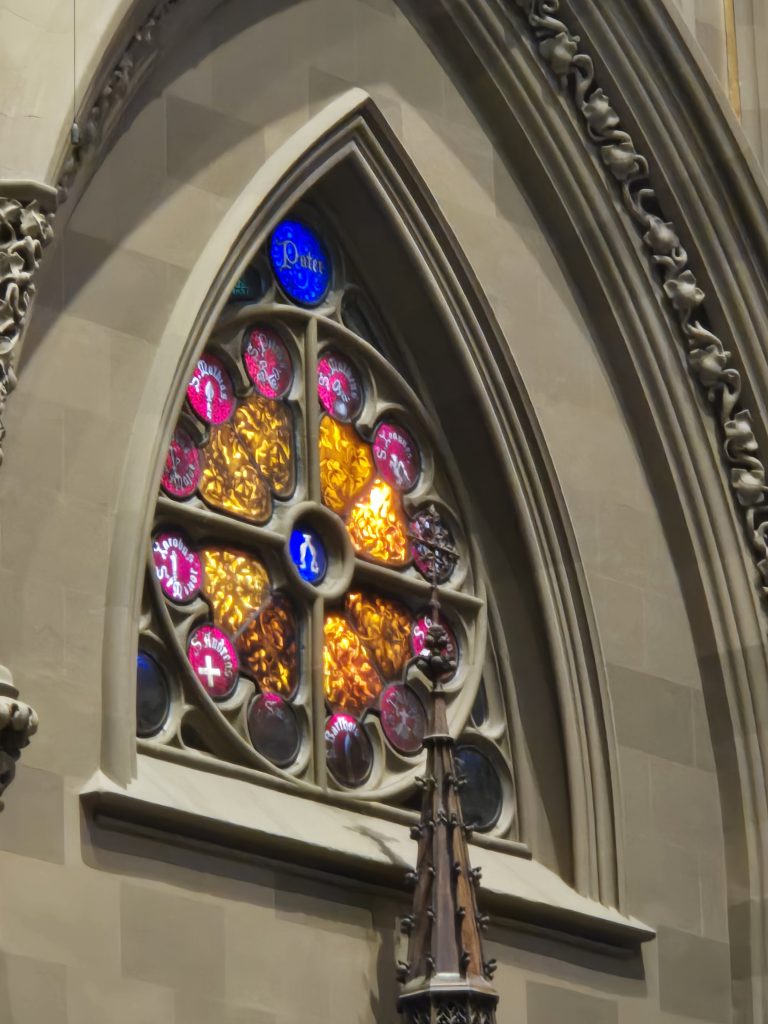
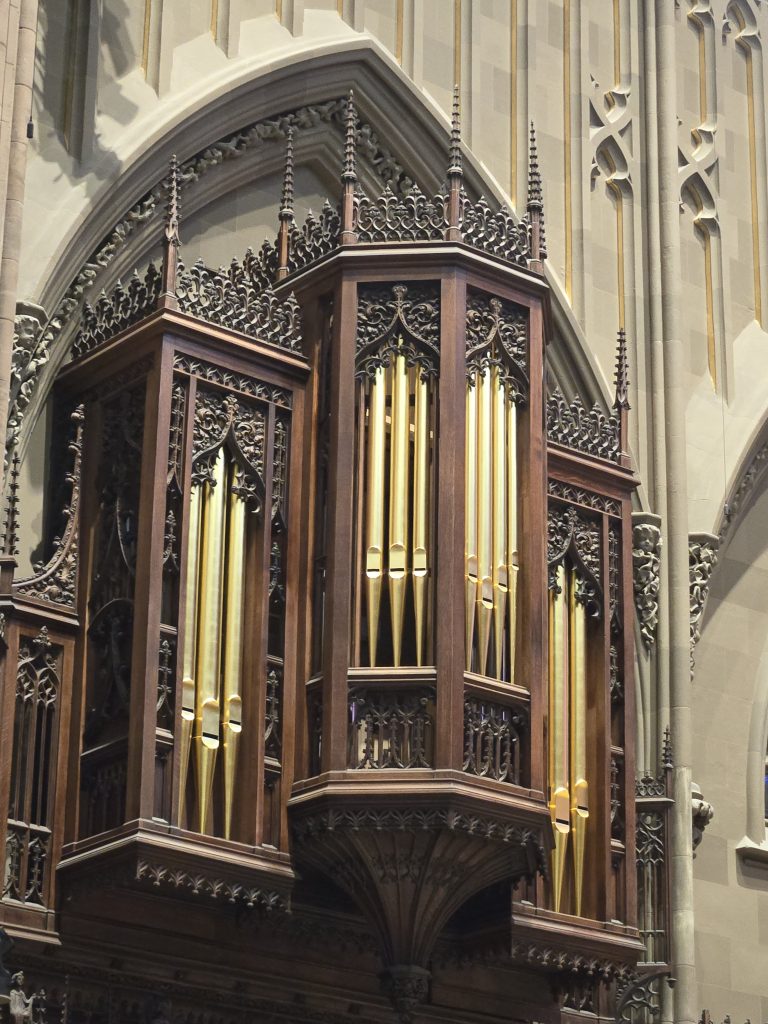
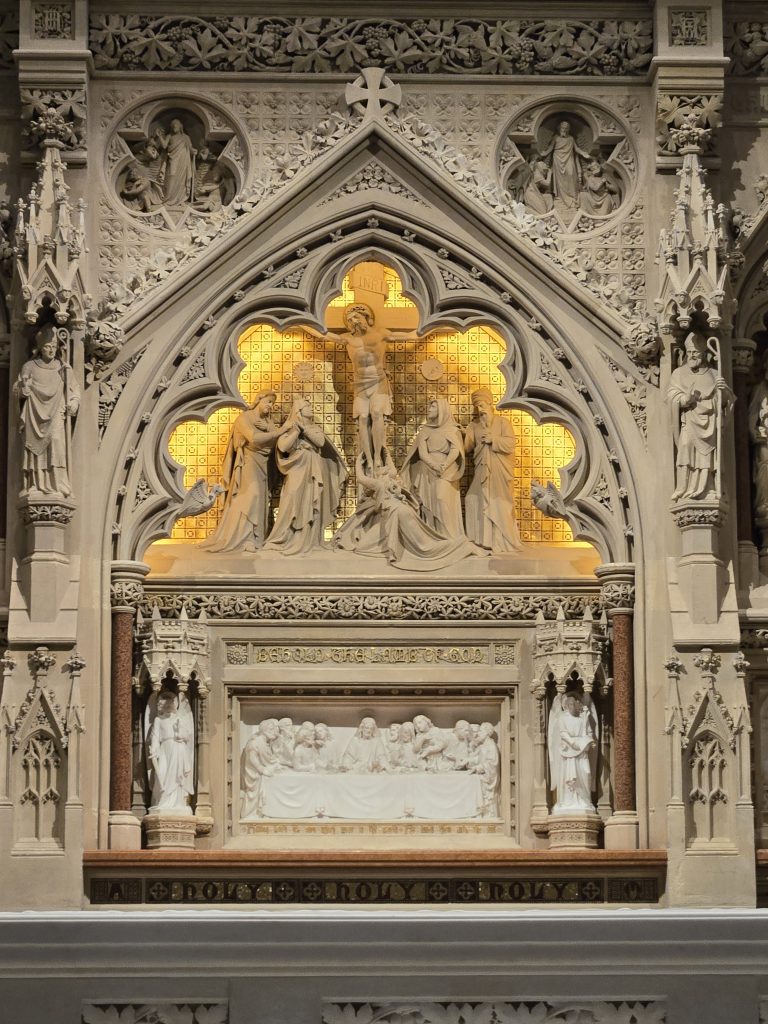
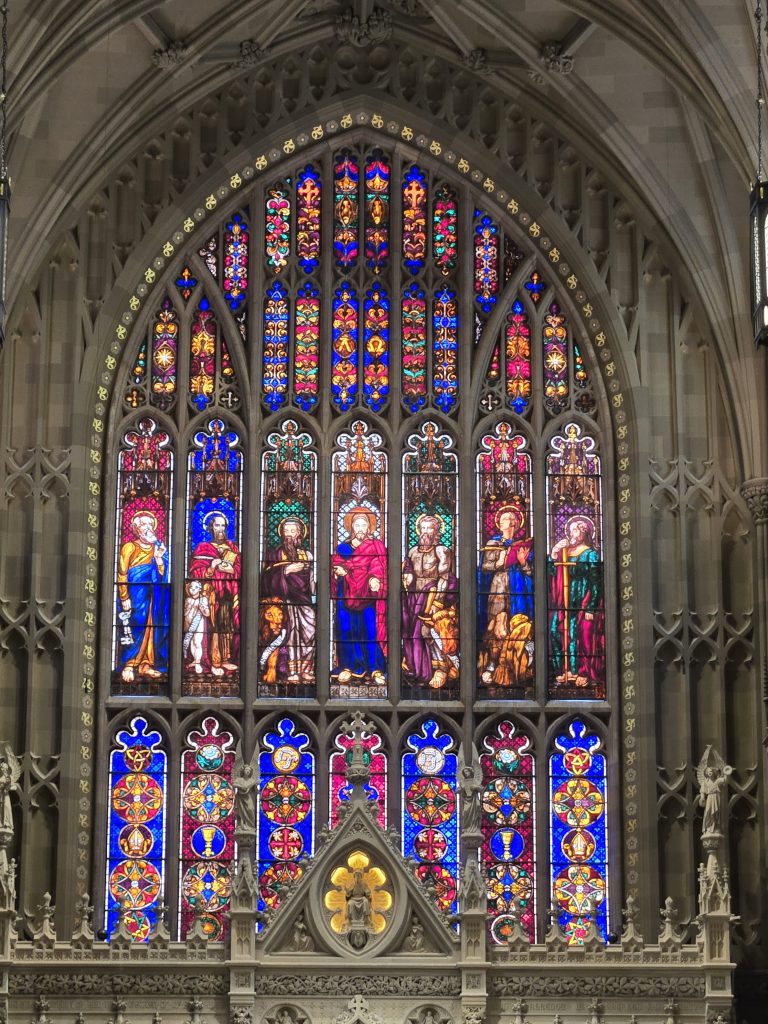
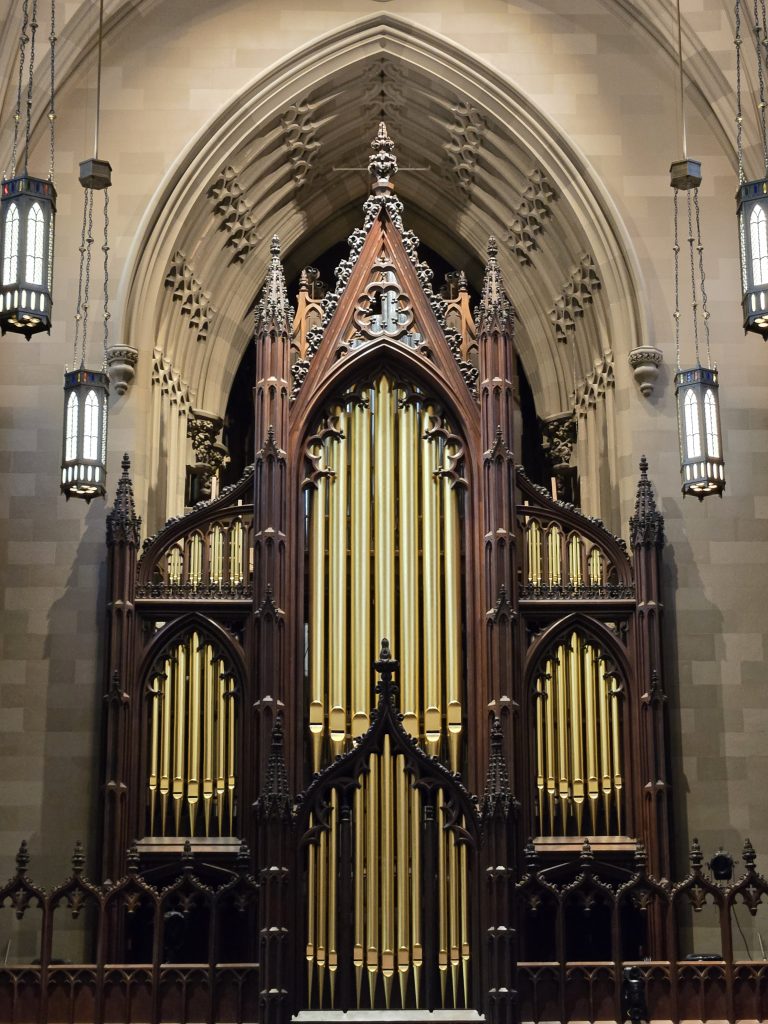
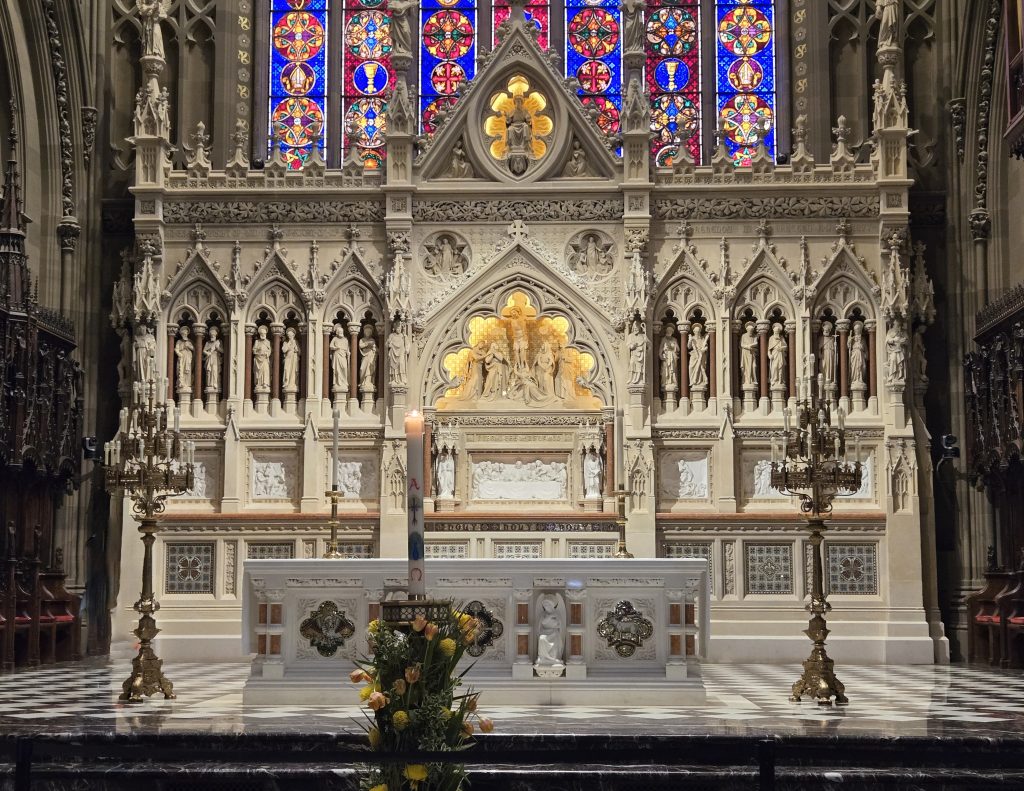
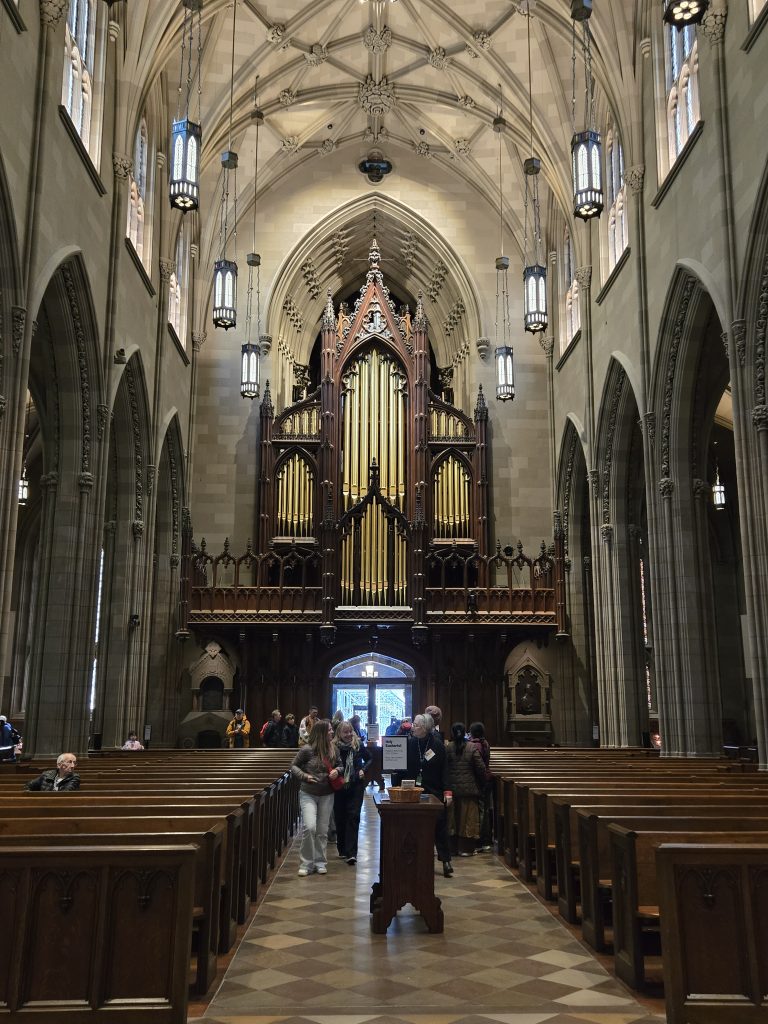
The interior is not vast, but it is deeply considered. Light filters through stained glass in muted colors, illuminating carved wood, stone columns, and the remarkable hammerbeam ceiling overhead—a feat of craftsmanship that feels both intricate and restrained. The space invites stillness, but not emptiness. It feels inhabited—by centuries of voices, thoughts, and quiet reckonings.
It is here that one begins to understand Trinity not just as a building, but as a gathering place for influence.
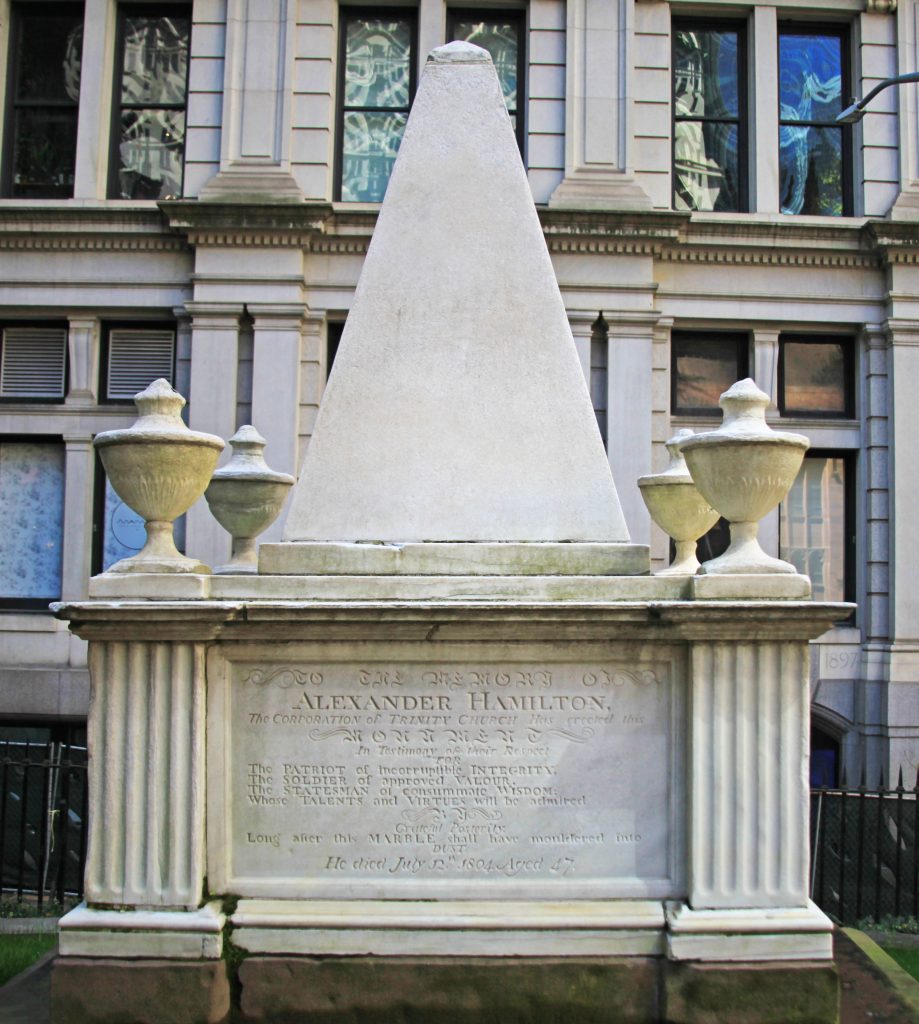
Alexander Hamilton, whose restless energy helped shape the financial and political foundations of the United States, worshipped here. His presence at Trinity was not incidental. This was his parish, his community, his place of return. After his death in 1804, following the duel with Aaron Burr, he was laid to rest in the churchyard—a placement that has transformed Trinity into a site of pilgrimage for those tracing the origins of American governance and ambition.
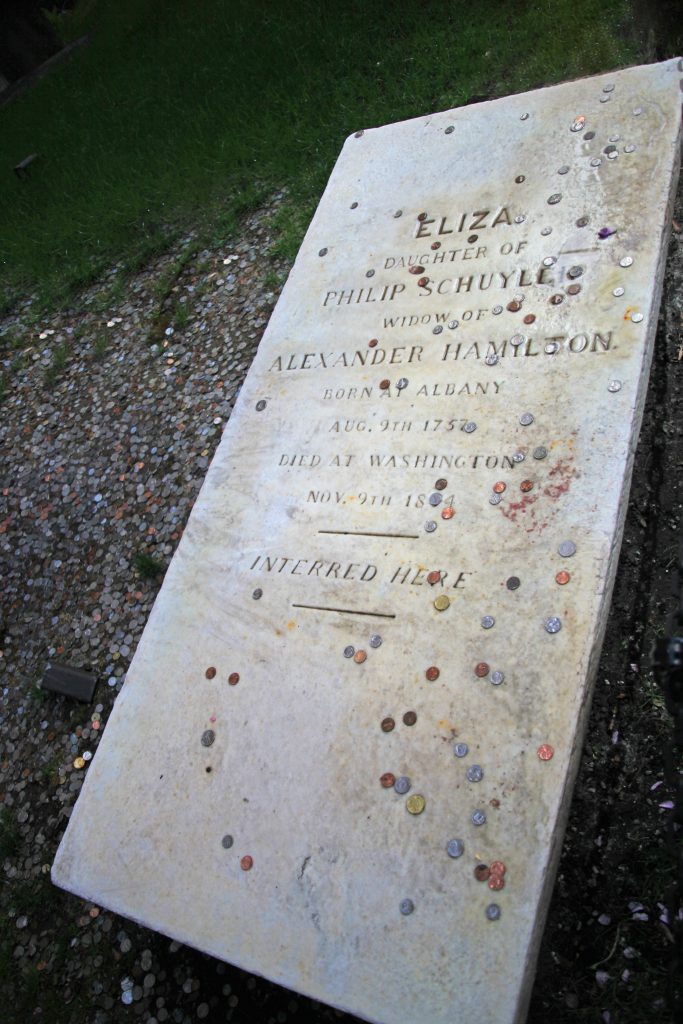
His wife, Eliza Schuyler Hamilton, rests beside him—a figure of equal quiet importance, whose philanthropy and resilience sustained his legacy long after his death. Together, their presence anchors Trinity firmly within the personal and emotional history of the early republic.
George Washington’s connection to Trinity carries a different weight.
Following his inauguration at nearby Federal Hall in 1789, Washington attended services here as the first President of the United States. Imagine the scene: the fragile new government still finding its footing, the future uncertain, the expectations immense. And here, within these walls, Washington took his place among others—not as a symbol, but as a man in need of reflection.
But Trinity’s influence extends beyond these most recognizable names.
Throughout the 18th and early 19th centuries, its congregation included:
- Prominent merchants who fueled New York’s rise as a commercial power
- Political figures engaged in shaping the early republic
- Families whose names would become embedded in the city’s history
Notable Trinity Church Families & Figures
- The Astor family — John Jacob Astor, America’s first great millionaire; Astor Place and Astoria bear the name
- The Schermerhorn family — prominent merchants; Schermerhorn Street in Brooklyn
- The DeLancey family — powerful colonial family; Delancey Street on the Lower East Side
- The Beekman family — early landowners; Beekman Street and Beekman Place
- The Stuyvesant family — descendants of Peter Stuyvesant; Stuyvesant Street and Stuyvesant Town
- The Van Cortlandt family — landowners and political figures; Van Cortlandt Park in the Bronx
- The Roosevelt family (early New York branch) — long before the presidency, part of New York’s mercantile and social fabric
- The Livingston family — deeply influential in New York and early American politics
- The King family — Rufus King, Founding Father and U.S. Senator
This was not merely a place of worship. It was a place where relationships were formed, alliances considered, and ideas—both spiritual and civic—circulated.
Its clergy, too, moved within the same currents of influence. Figures such as Samuel Provoost, the first Episcopal Bishop of New York and a chaplain to the Continental Congress, stood at the intersection of faith and the founding of the nation itself. His successor, Benjamin Moore, would be present at one of the most intimate moments of that era—administering last rites to Alexander Hamilton after the fatal duel. These were not distant or ceremonial roles. They were deeply embedded in the personal and political lives of the republic’s earliest leaders, their influence extending far beyond the pulpit.
Trinity’s Peaceful Rest
And always, just beyond the doors, the churchyard.
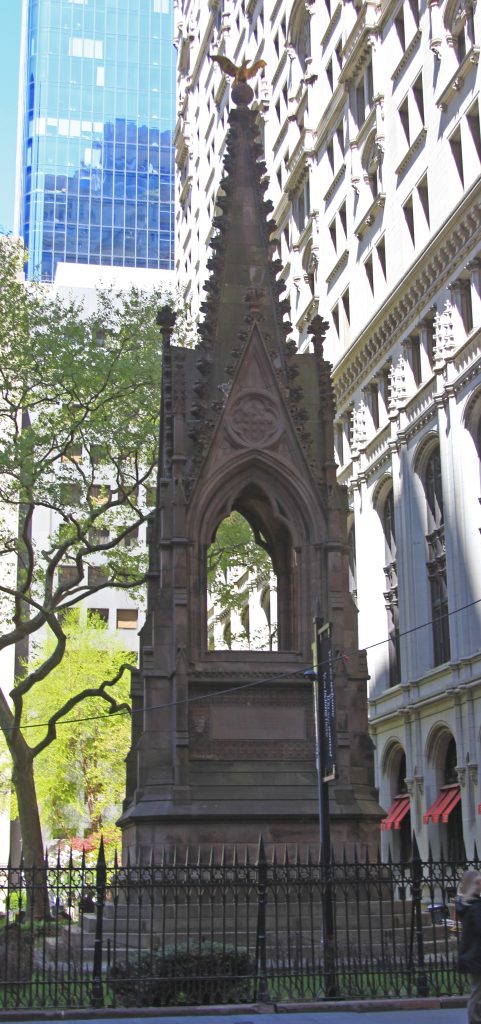
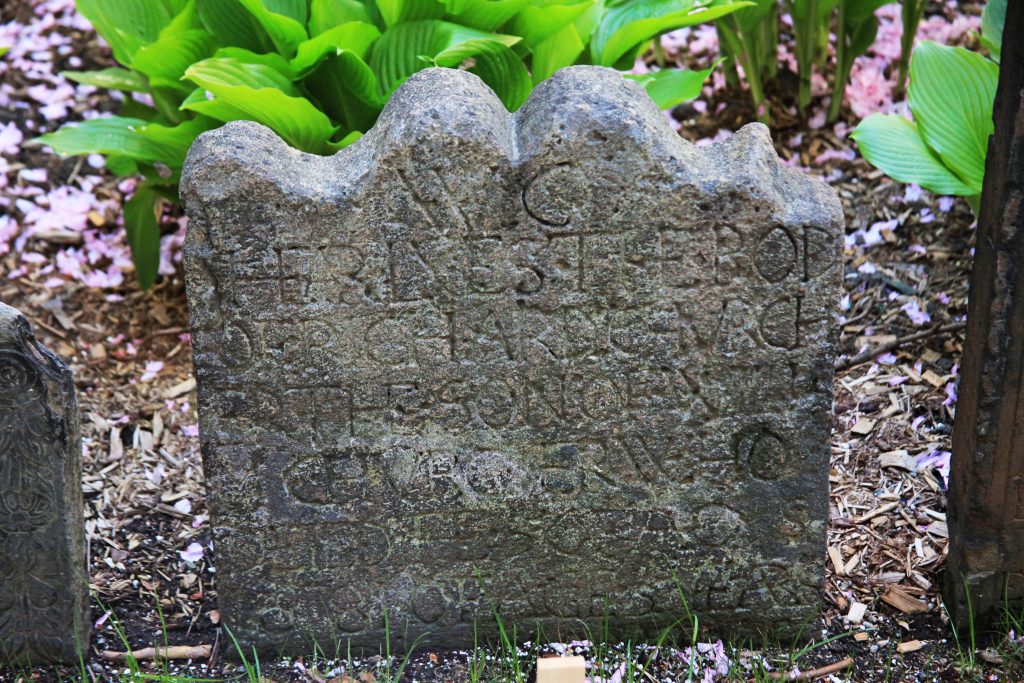
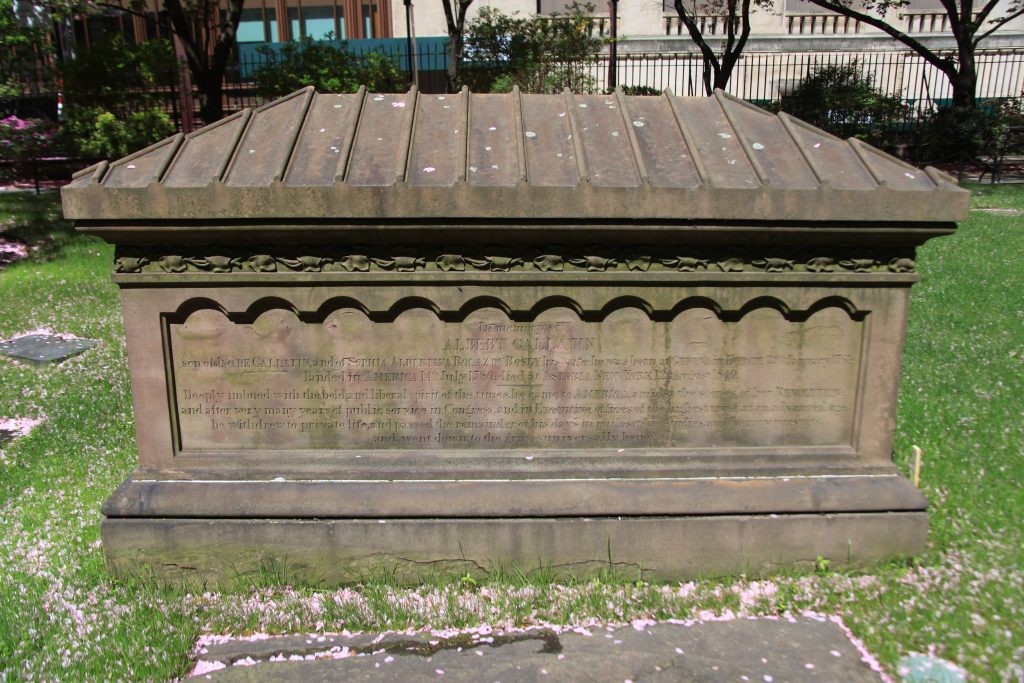
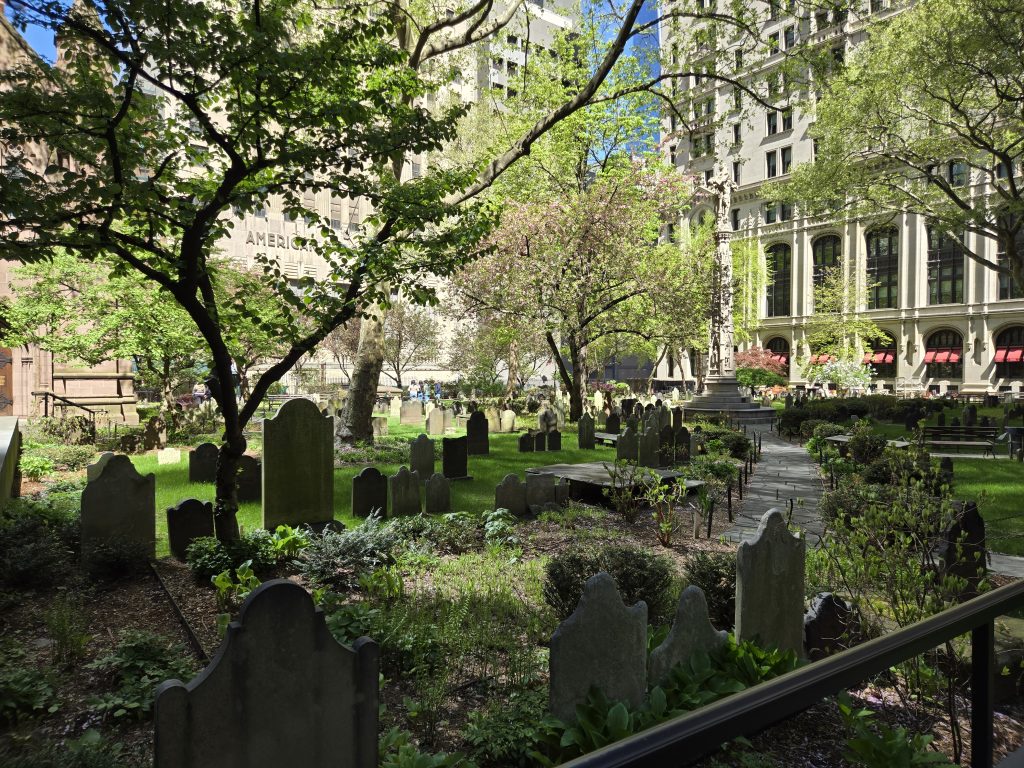
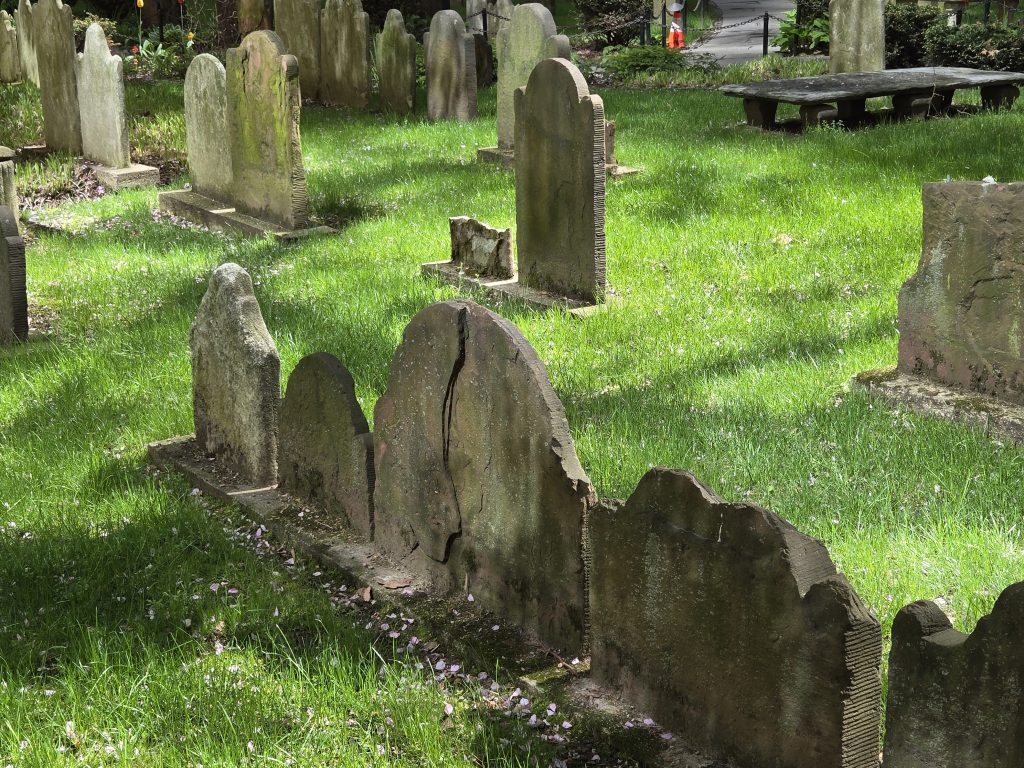
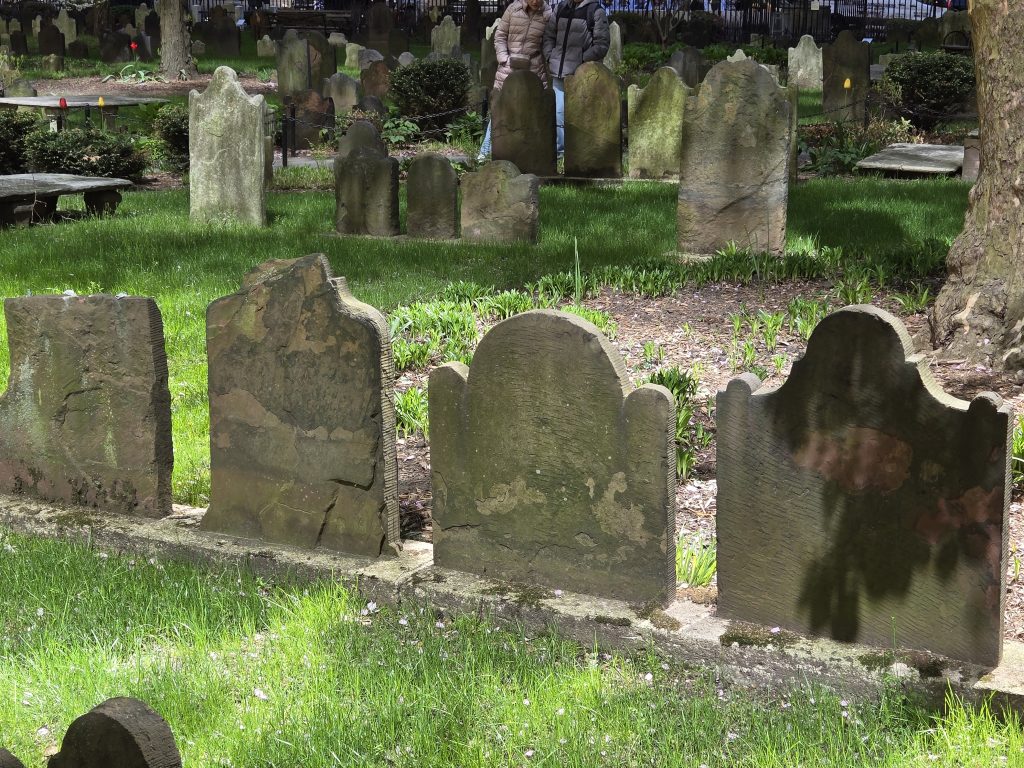
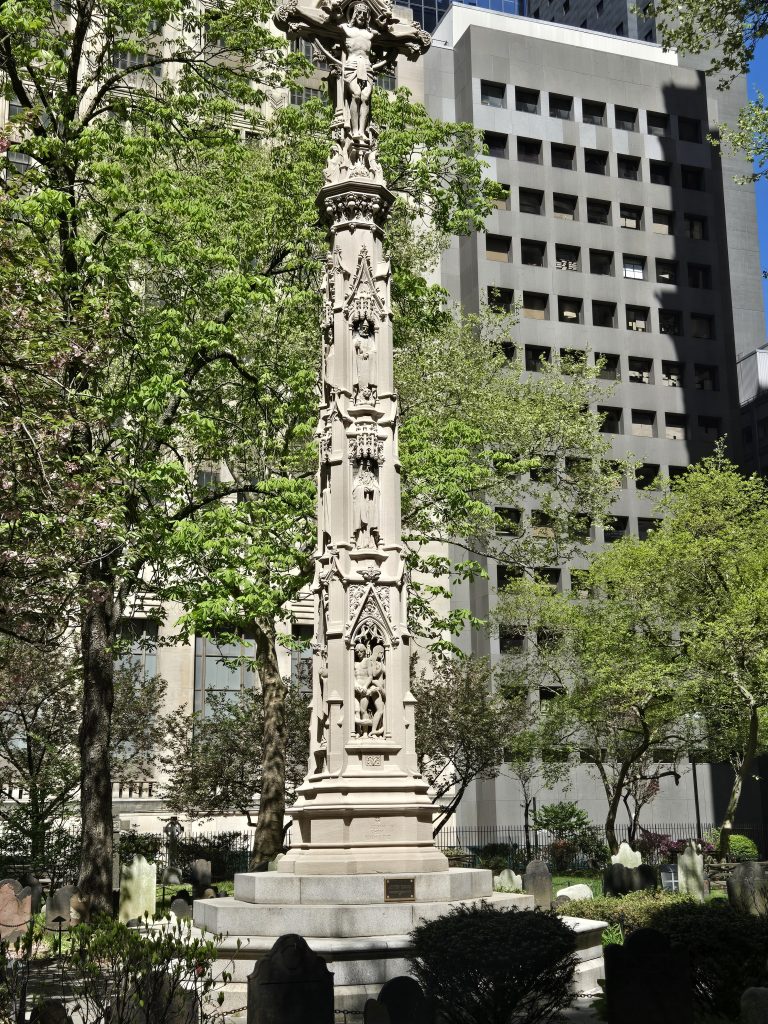
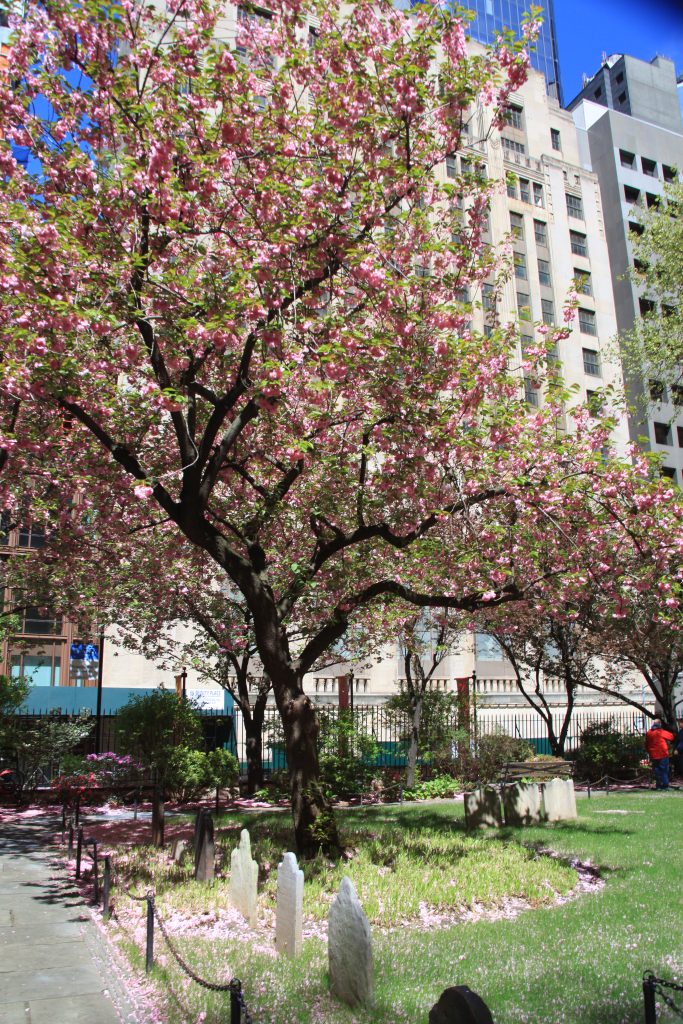
To enter it is to step into a different rhythm of time. The press of the city recedes, replaced by uneven ground, weathered stones, and a canopy of trees that soften the edges of the surrounding streets. Gravestones lean slightly, inscriptions worn but legible—names and dates that trace the arc of New York from colonial outpost to global city.
Hamilton’s monument draws the inevitable crowd but linger longer and the quieter stories emerge. Early settlers. Soldiers. Families whose lives unfolded in the immediacy of their own moment, now layered into the city’s foundation.
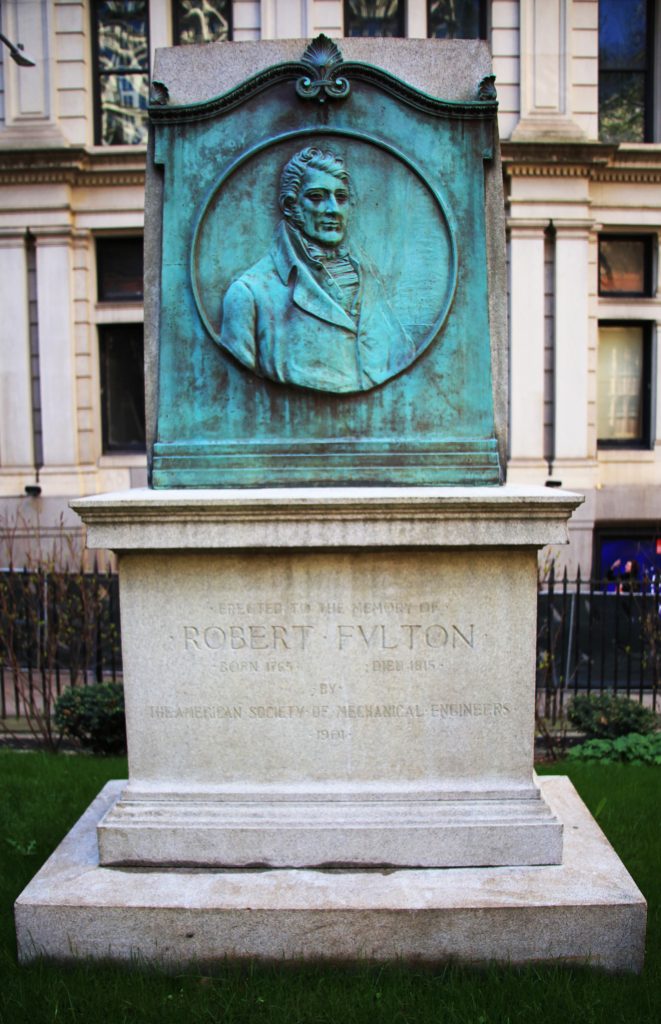
Robert Fulton, whose steamboat transformed the movement of people and goods along American waterways, rests here, as does Hercules Mulligan, the tailor-turned-spy who quietly aided Washington’s cause from within British-occupied New York. Nearby lies William Bradford, one of America’s first printers who was instrumental in the flow of colonial and revolutionary information, along with other merchants, naval heroes, and citizens whose lives shaped the rhythms of a growing city. This is not a collection of isolated graves, but an accumulation of influence—a cross-section of the forces that built both New York and the nation.
And it is deeply moving.
Refuge for the Living
Trinity has never been removed from the currents of history. It has absorbed them—fire, war, growth, grief—and continued. In 2001, when the World Trade Center fell just blocks away, Trinity once again became what it had always been: a place of refuge. Along with nearby St. Paul’s Chapel, it opened its doors to recovery workers, offering rest, food, and quiet support. The past did not simply echo in that moment. It reasserted itself.
What makes Trinity Church so extraordinary today is not just its history, but its setting within contradiction.
It stands at the crossroads of global finance and relentless movement. Wall Street surges around it, numbers rising and falling in abstract rhythms of capital. And yet, within the church, there is stillness. Within the yard, there is continuity.
It does not resist the modern city. It reminds it of something older. Something steadier.
Trinity endures because it has always been more than architecture, more than congregation, more even than history. It is a place where the public and the private, the powerful and the personal, the past and the present meet—quietly, without spectacle, but with unmistakable presence.
Recommended Reading
Fiction
- New York, Edward Rutherfurd – A sweeping historical novel that traces the evolution of New York City across centuries, weaving Trinity Church and its surrounding world into the living fabric of the narrative.
Nonfiction
- Trinity: A Church, A Parish, A People by Dena Merriam; David Finn – A stunning photographic journey capturing the light, artistry, and sacred presence of Trinity Church through Finn’s masterful lens.
- A History of Trinity Church in the City of New York by Morgan Dix – A richly detailed 19th-century account offering insight into the church’s early identity and influence from the perspective of one of its rectors.
- The Parish of Trinity Church in the City of New York by Robert T. H. Halsey – A deeply researched volume that connects Trinity Church to the broader social and cultural history of early New York.
- New York Streetscapes: Tales of Manhattan’s Significant Buildings and Landmarks by Christopher Gray – A lively exploration of New York’s sacred architecture, placing Trinity Church within the broader ecclesiastical landscape of the city.
- Gothic Revival by Kenneth Clark – A foundational work that illuminates the architectural language behind Trinity Church’s design, enriching any understanding of its form and symbolism.