
It is easy to underestimate Lexington and Concord.
There are no dramatic ruins, no sweeping battlefield vistas. Instead, you arrive to find a village green, a quiet bridge, a stretch of road lined with stone walls. And yet, within this deceptively ordinary landscape, the first day of the American Revolution unfolded, hour by hour, mile by mile.
To visit here is not to stand in one place, but to follow a sequence. And remarkably, much of that sequence remains visible.
The Redcoats Are Coming.
On the night of April 18, 1775, British troops began a march from Boston toward Concord. Their objective was strategic and specific: to seize colonial military supplies reportedly stored there and, if possible, arrest key Patriot leaders.
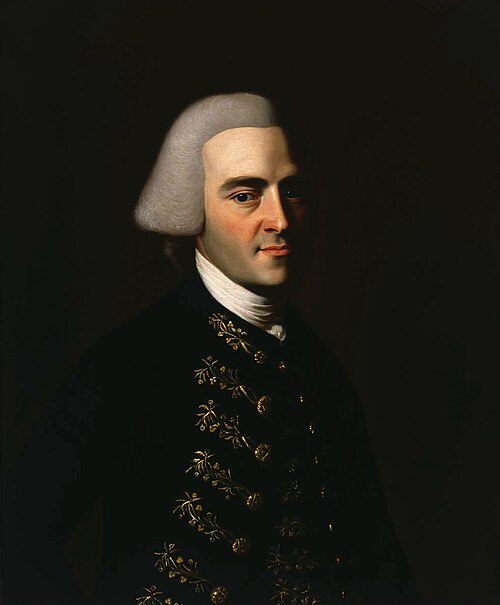
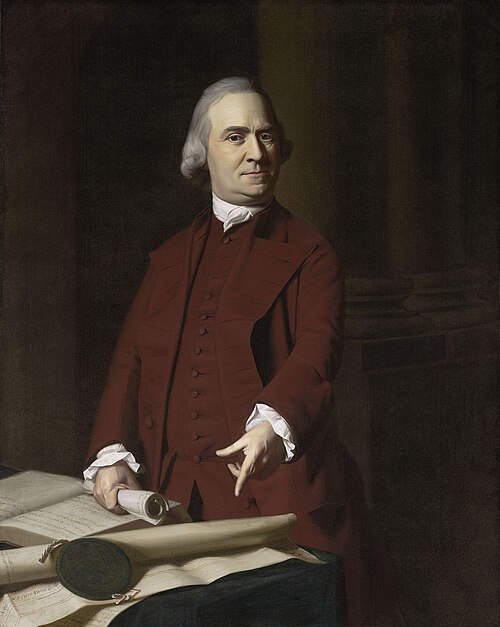
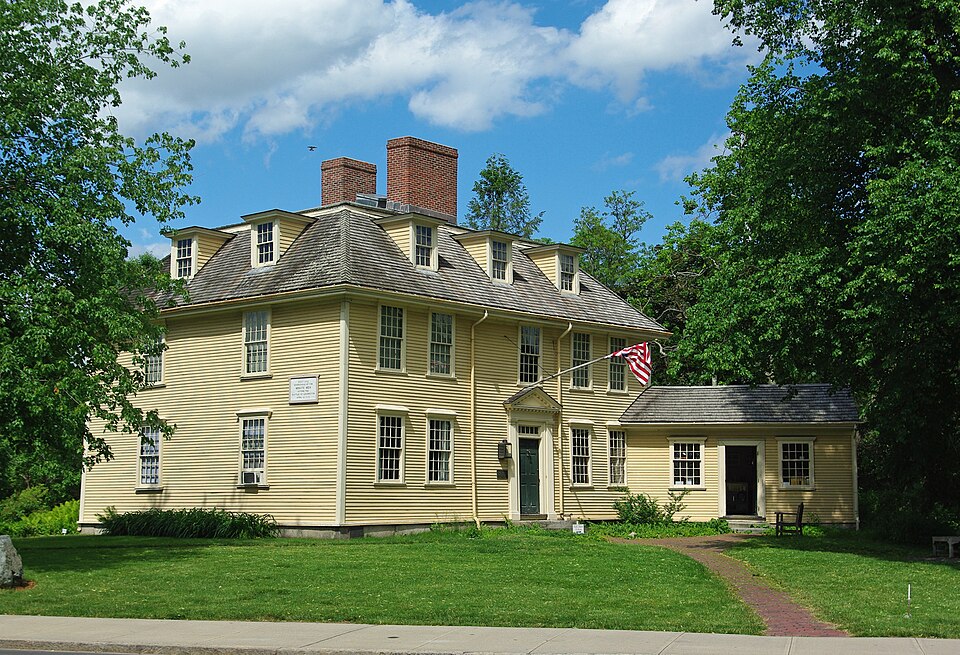
Those leaders, John Hancock and Samuel Adams, were already in Lexington, staying at the Hancock-Clarke House.
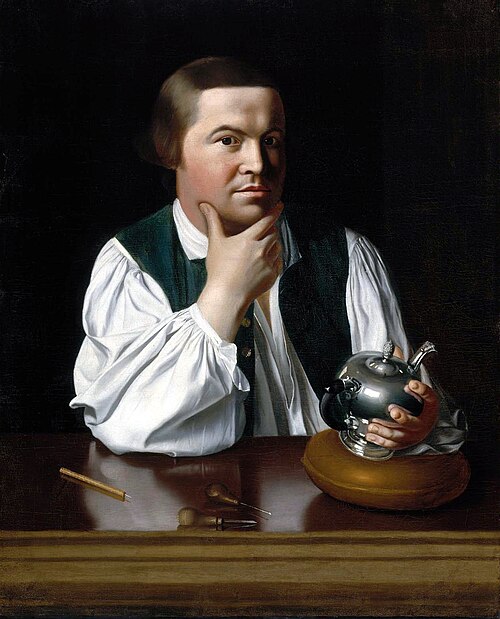
What followed was not a single dramatic warning, but a coordinated intelligence effort. Paul Revere, William Dawes, and Dr. Samuel Prescott rode separate routes to alert militia along the way. Revere was captured before reaching Concord. Dawes was forced to turn back. Prescott alone completed the ride, ensuring the warning spread.
Meanwhile, in Lexington, events moved quickly.

Revolution’s Leaders Escape
In the early hours before dawn, Hancock and Adam’s were urged to flee. Despite Hancock’s initial reluctance, he reportedly believed he should stay and face arrest, the reality of the approaching British column forced action. They left hurriedly, moving eastward toward Woburn, narrowly avoiding capture. Had they been taken, the political leadership of the Patriot cause would have been significantly disrupted at a critical moment.
The Militia
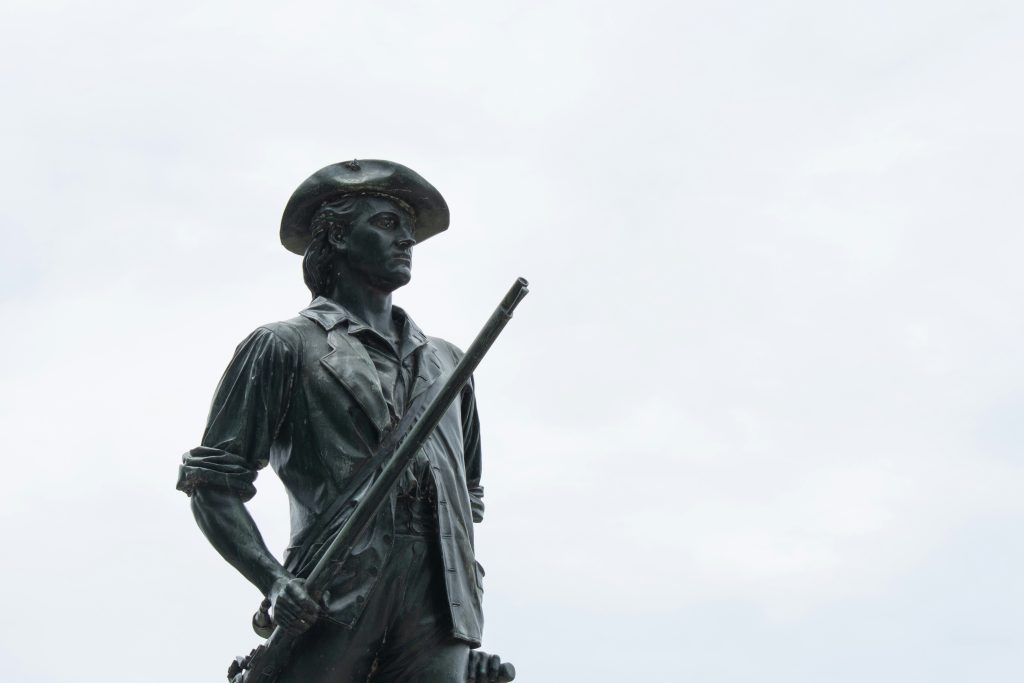
What stood on Lexington Green that morning was not an army in any formal sense.
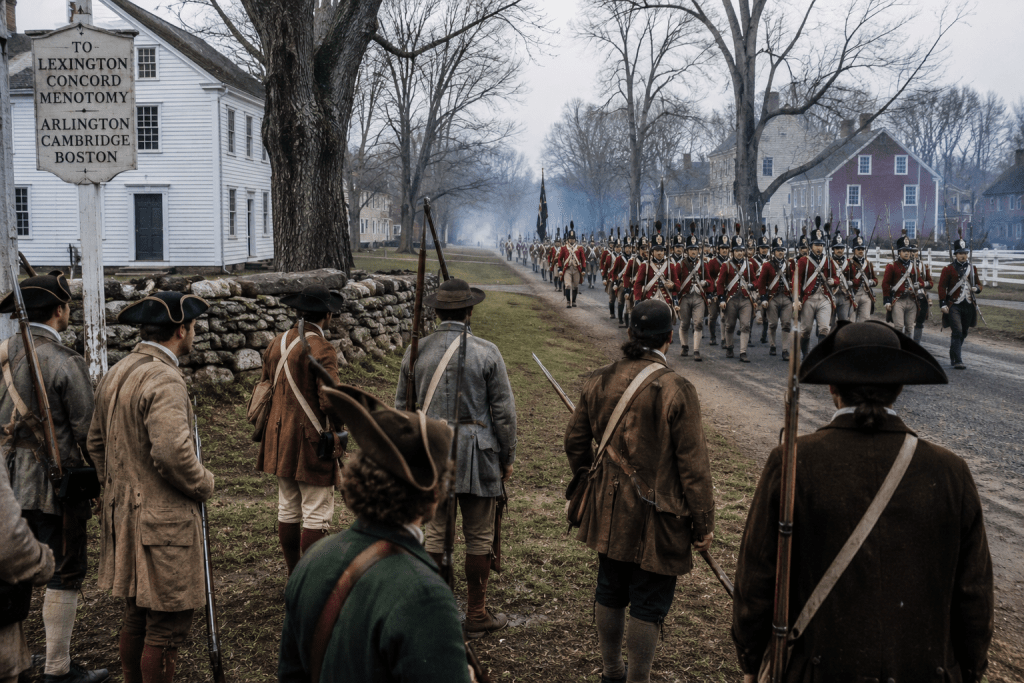
The men who gathered there, approximately seventy-seven under Captain John Parker, were members of the local militia, drawn from the town itself and the surrounding countryside. They were farmers, tradesmen, blacksmiths, and shopkeepers. Many knew one another well. Most had trained together, but only intermittently, in accordance with long-standing colonial practice that required able-bodied men to serve.
They were not professionals. But neither were they unprepared.
By 1775, tensions with Britain had been building for years, and Massachusetts, in particular, had begun organizing more seriously. Local militias had evolved into what were known as Minutemen, units expected to be ready to mobilize quickly, with more frequent drilling and a greater degree of coordination than earlier colonial forces.
Even so, their readiness had limits. Each man was responsible for bringing his own equipment. Most carried muskets, typically older smoothbore firearms, along with powder horns and lead shot. Ammunition was not abundant, and quality varied. Gunpowder supplies were a constant concern, one of the very reasons the British march to Concord had been ordered in the first place.
Uniforms, as one might expect, did not exist. Instead, the militia appeared in ordinary clothing, coats, shirts, and hats suited to early spring in New England. There was no visual unity, no standardization, nothing that would distinguish them, at a glance, from the civilian population they were.
What they did have was familiarity, with the land, with one another, and with the stakes. And they had been warned!
Through the night, word had spread that British troops were on the move. Riders had passed through, stopping at houses, knocking on doors, speaking directly to militia leaders. This was not rumor. It was confirmed intelligence, and it carried urgency.
By the time the men assembled on the Green, they understood why they were there. Not to launch an attack, and not yet to wage war, but to stand, to show presence, and to signal that the town would not simply yield without acknowledgment. Captain Parker’s reported instruction reflects that balance: to stand their ground, but not to fire unless fired upon. It was, in essence, a line drawn, but a cautious one.
And that is what makes the moment so striking.
Beyond Bravery
They stood there knowing they were outnumbered, facing trained British regulars, with no clear expectation of reinforcement and no certainty of what would happen next. Their weapons were serviceable but not superior. Their training was sufficient but not equal. Their position was exposed.
What brought them to that place was not confidence in victory. It was a decision.
A decision shaped by months of rising tension, by a growing belief that British authority had overreached, and by a local commitment, shared among neighbors, to resist, at least in principle, the seizure of their arms and the arrest of their leaders.
When the British column arrived, the imbalance was obvious. And yet, the militia did not disperse immediately. They stood.
And in that brief, uncertain stand, before the first shot, before the confusion, before the losses, the character of the conflict was already set.
Not by armies. But by ordinary men, assembled in an ordinary place, choosing not to step aside.
It Begins
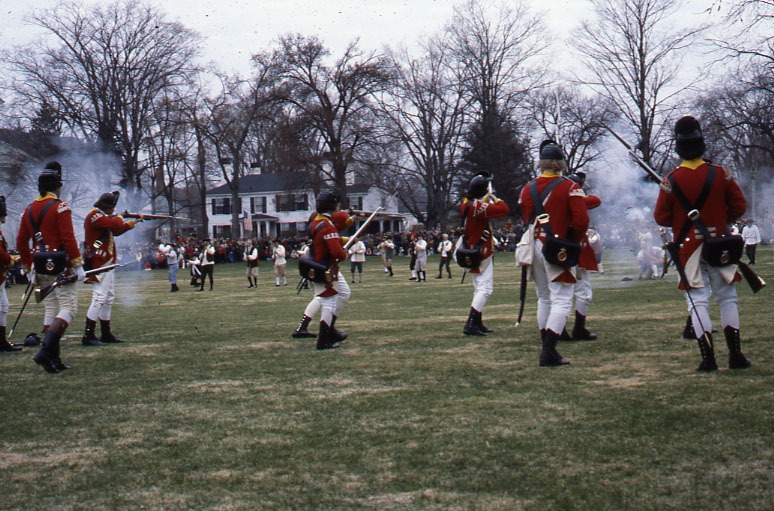
Shortly after Hancock and Adam’s departure, local militia assembled on Lexington Green under Captain John Parker. When British troops arrived, the confrontation followed, brief, confused, and deadly. Eight colonists were killed. The British marched on.
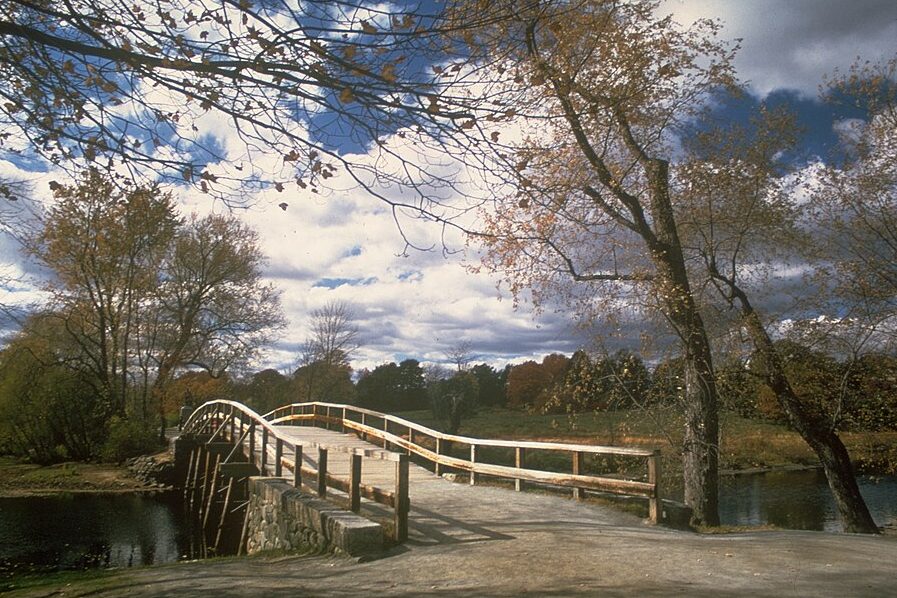
In Concord, the situation escalated. At the North Bridge, colonial militia, now assembled in greater numbers, advanced and fired on British troops. This marked the first organized resistance. And the arrogant British were stunned, assuming the overwhelming numbers and the assumed cowardice of the colonials.
But there it was. Relentless pursuit and a wall of courage. The British withdrawal that followed became a sustained, running battle. As they marched back toward Boston, militia units fired from behind stone walls, trees, and buildings, turning the road itself into a battlefield. By day’s end, what had begun as a mission had become a war.
What You Can See Today
What distinguishes Lexington and Concord is how much of this story remains physically legible.
In Lexington, the Battle Green is still the focal point of the town, its triangular shape unchanged. You can stand where the militia assembled and see the short distance from which British troops approached. The Buckman Tavern, directly on the green, is preserved and open to visitors; inside, you can walk through the rooms where militia gathered before the confrontation.
A short distance away, the Hancock-Clarke House provides one of the most tangible connections to the night before the battle. The house still stands in its original location, and the surrounding grounds make clear how exposed the Patriot leaders were, and how narrow their escape truly was.
From Lexington, the road to Concord follows much of the original route. This stretch is now preserved in large part as Minute Man National Historical Park, and it is here that the landscape becomes particularly revealing.
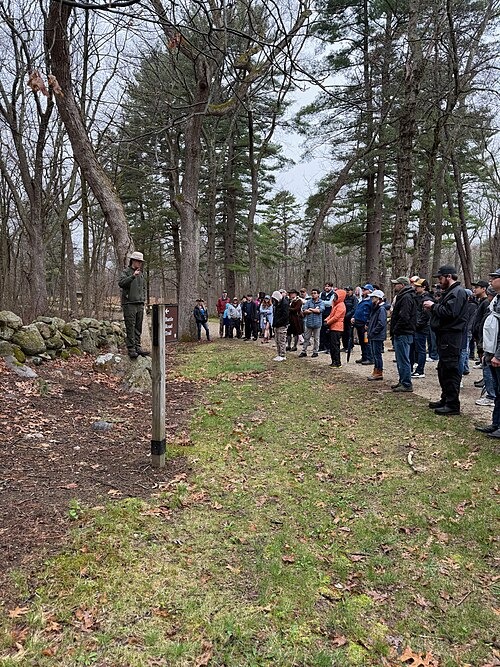
At Meriam’s Corner, you can stand at the point where British troops first came under coordinated fire during their retreat. The road narrows, the terrain opens, and the tactical vulnerability becomes obvious. Further along, near the area known as Bloody Angle, the road curves sharply. Stone walls still line the route. It is easy to see how militia used these features for cover, firing on the British column as it struggled to maintain formation.
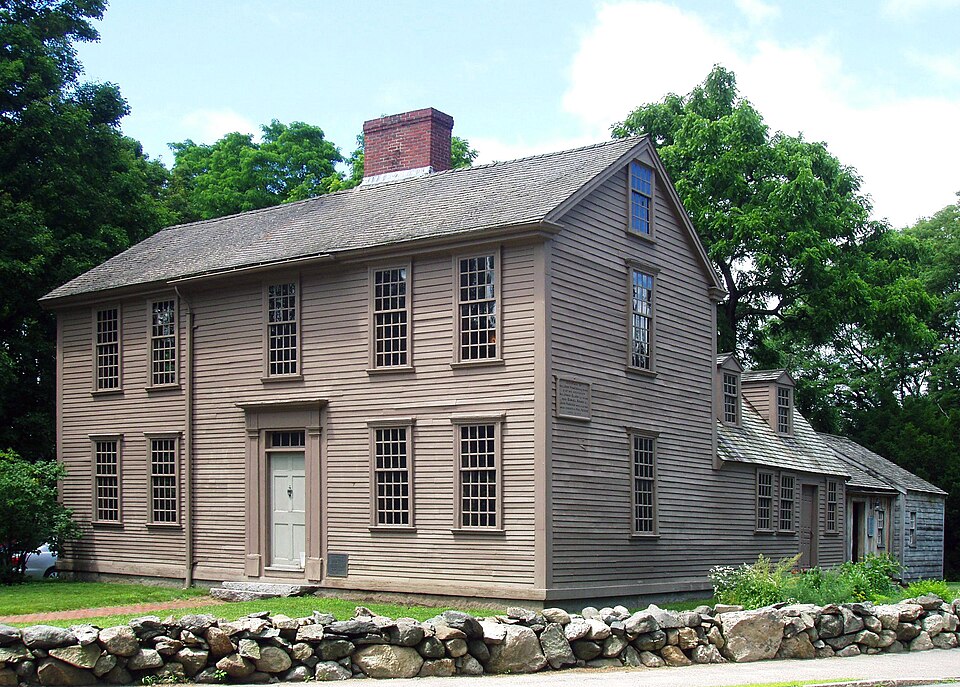
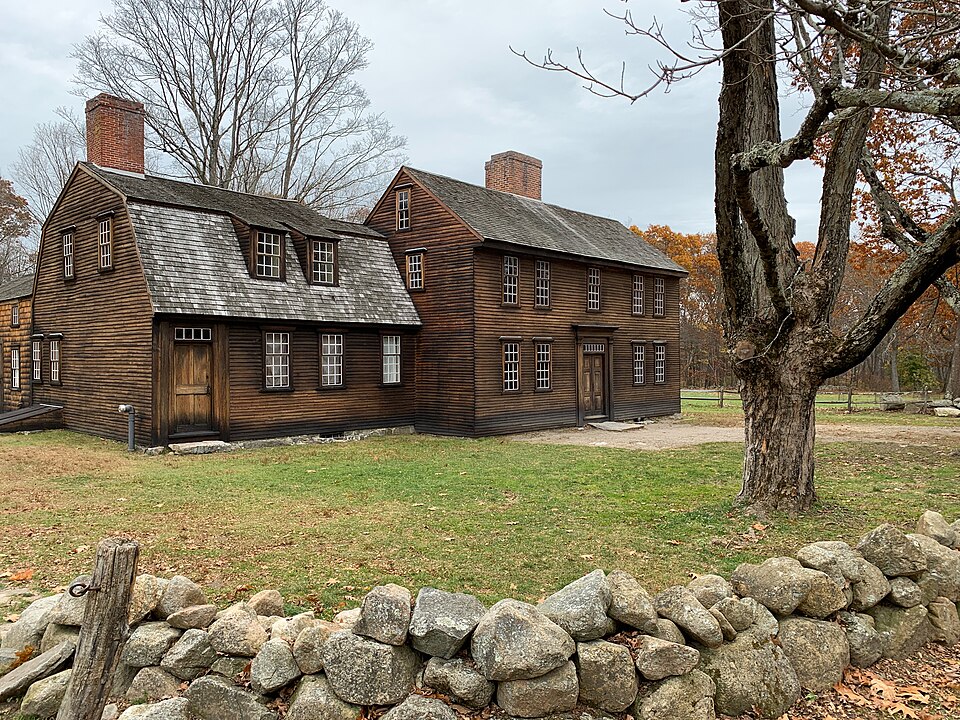
Hartwell Tavern, restored and set along the road, offers another anchor point. The surrounding fields and structures provide one of the clearest impressions of how the landscape would have appeared in 1775.
In Concord, the North Bridge remains the defining site. The current bridge is a reconstruction, but it stands on the original location. The open field leading to it allows you to understand the advance of the colonial militia and the position of British troops on the opposite side.
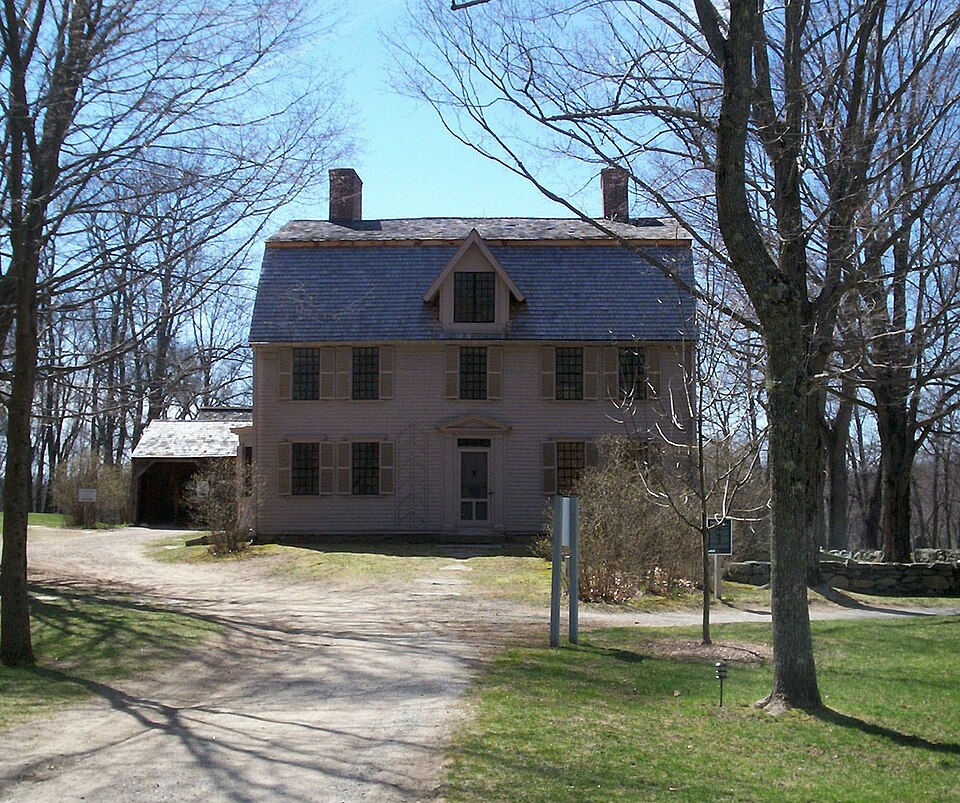
Nearby, The Old Manse overlooks the bridge. Though best known for its later literary associations with Emerson and Hawthorne, its position makes it one of the most visually informative vantage points of the battle area.
Throughout Concord, the town center retains much of its historic scale. Buildings, roadways, and the general layout continue to reflect an 18th-century environment rather than a reconstructed one.

A Distanced Perspective
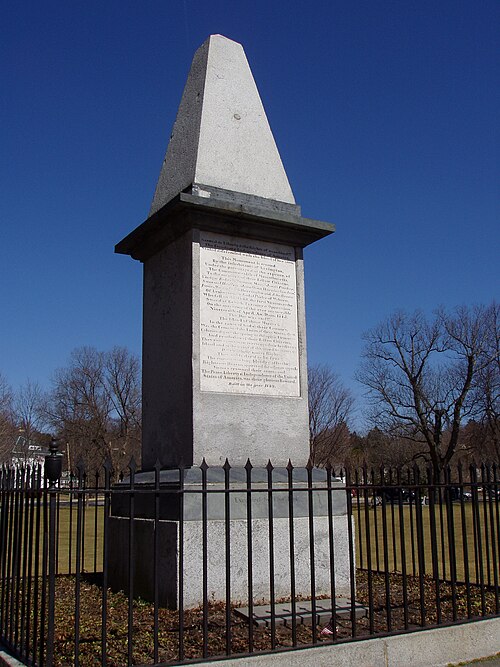
What stays with you here is not spectacle, but clarity. Distances are short. Sightlines are direct. The relationship between road, field, and structure explains the events without the need for interpretation.
You notice:
- How close the houses are to the road
- How low the stone walls sit, perfect for cover
- How the road bends and narrows, shaping movement
Even the quiet is instructive. There are no crowds at most points along the route. Cars pass, but not constantly. Walk a section of the Battle Road Trail, and the setting begins to separate from the present. It becomes easier to imagine movement, messengers riding, militia assembling, troops advancing and retreating. This is not a preserved battlefield in the traditional sense. It is a landscape that never fully stopped being used.
A Living Monument
Lexington and Concord function as both historic sites and active communities.
The preservation of large portions of the Battle Road within the National Park system has ensured that the most critical segments remain intact, while the towns themselves continue to operate normally, with charming shops, beautifully preserved residences, and local institutions integrated into the historic setting.
Annual Patriots’ Day reenactments in April bring the events of 1775 into sharp focus, particularly on Lexington Green and at the North Bridge. These are among the most historically grounded reenactments in the country and provide a useful frame of reference for first-time visitors.
At the same time, the best experience often comes outside of those moments, when the sites are quiet, and the landscape can be read without interruption.
Where to Stay: Sleep Where History Was Made
The best way to experience Lexington and Concord is to wake up already inside the story, and a few options make that surprisingly easy.
Concord’s Colonial Inn on Monument Square is the obvious first choice, and for good reason. Parts of this inn predate the Revolution itself, and it sits steps from the North Bridge, the town center, and the very streets the blog brings to life. It’s the kind of place where the floorboards creak with intention and the clam chowder at dinner feels like the most appropriate meal you’ve ever ordered.
The North Bridge Inn is a B&B on Monument Street with a near-perfect rating and a location that puts you within walking distance of the North Bridge. Rooms are named after the literary figures who called Concord home, Emerson, Longfellow, and breakfast is homemade, warm, and nothing like a chain hotel. Small, personal, and genuinely charming.
Element by Marriott Lexington is the most budget-friendly of the three, clean, modern, and well-rated, with a full breakfast included. One guest noted that the Battle Road Trail is practically right outside the door, which means you can lace up in the morning and walk the same route the British retreated along in 1775 before most people are even awake.
Recommended Reading
Fiction
- April Morning by Howard Fast — A vivid, ground-level account of the Battle of Lexington through the eyes of a young man coming of age as the Revolution begins
- Johnny Tremain by Esther Forbes — A classic that follows a Boston apprentice drawn into the Patriot cause, culminating in the events of Lexington and Concord
- Rise to Rebellion by Jeff Shaara — A sweeping, character-driven narrative that brings figures like Adams, Franklin, and Washington into sharp focus as tensions erupt into war
- The Fifth of March by Ann Rinaldi — Told from the perspective of a young indentured servant in John Hancock’s household, this novel offers an intimate view of the political and personal forces leading into revolution
- The Bastard by John Jakes — A sweeping Revolutionary-era saga that places the reader within the political and social upheaval of the colonies as tensions rise toward open conflict. The first in the Kent Family Chronicles.
NonFiction
- Paul Revere’s Ride by David Hackett Fischer –A definitive account that separates myth from reality, offering a detailed reconstruction of the warning network and the events of April 1775
- The Minute Men by John R. Galvin — A focused study of the militia system and the opening engagements at Lexington and Concord
- April 19, 1775 by William H. Hallahan — A clear, accessible narrative of the first day of fighting, following events hour by hour
- The Regulars Are Coming! by Rick Atkinson — A recent and highly readable account that places Lexington and Concord within the broader origins of the Revolution
Image Credits: Bostonian13, Daderot, Seasider53, John Phelan, Midnightdreary, and the Boston City Archives via Wikimedia Commons. Images used under their respective Creative Commons licenses.
