This explores the Historic Carousels of Europe, where whimsy, craftsmanship, and nostalgia still spin beneath cathedrals and city squares.
In the shadow of Gothic cathedrals, on the edges of grand public squares, and tucked beside riverside promenades, something delightful spins its way through Europe’s history: the carousel. Painted horses, gleaming mirrors, and twinkling calliope music—these merry-go-rounds are not mere amusements; they are storytelling machines, heirlooms of craftsmanship, and emblems of nostalgia, especially in the romantic corners of France.

From Military to Playground
The historic carousels of Europe evolved from military training into artistic expressions of joy. Carousels in Europe trace their origins to medieval cavalry training exercises, where knights practiced tilting at rings. By the 17th and 18th centuries, these “carousels” became public spectacles and ceremonial displays. The transformation into the playful, ornate rides we recognize today came in the 19th century, especially in France, where artisans began to craft elaborate fairground machines for parks and seaside resorts. Carousels flourished during the Belle Époque, when a taste for whimsy, beauty, and mechanical innovation converged perfectly.
Before rock concerts and movies, carousels were a place to bring your sweetheart for a little romantic swirl. Children have always been drawn to the captivating carousel, and their laughter can still be heard as soon as the music begins to play and the menagerie starts their journey. In pre-World War I, when money was scarce for the poor, the merry-go-round was an inexpensive means of entertainment and joy. No wonder cities lined up to install them! They have stood the test of time, and are collecting coinage even now! Speaking of merry-go-rounds, these delightful contraptions have also been known as Gallopers, a British term, particularly for older carousels where horses “gallop” up and down, Roundabouts, a quaint British and European term used especially in the 19th and early 20th centuries, Flying Horses , a charming old-fashioned American term, especially for early wooden carousels and Manège, French for “riding school” or “horse ring,” but often used historically to mean carousel in European contexts.
Civic Centerpieces
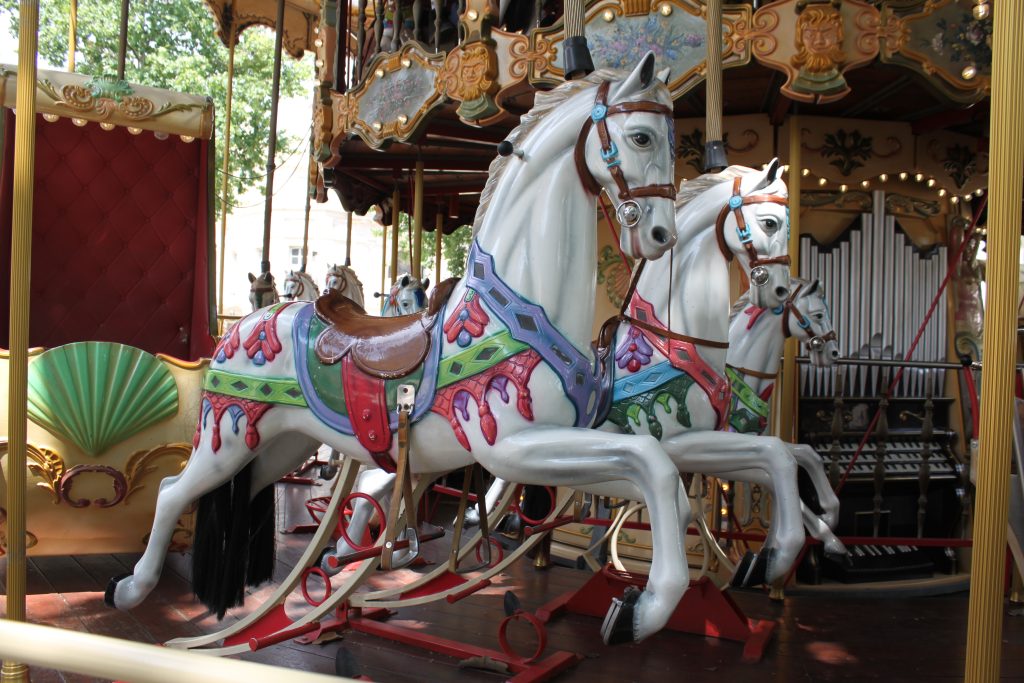
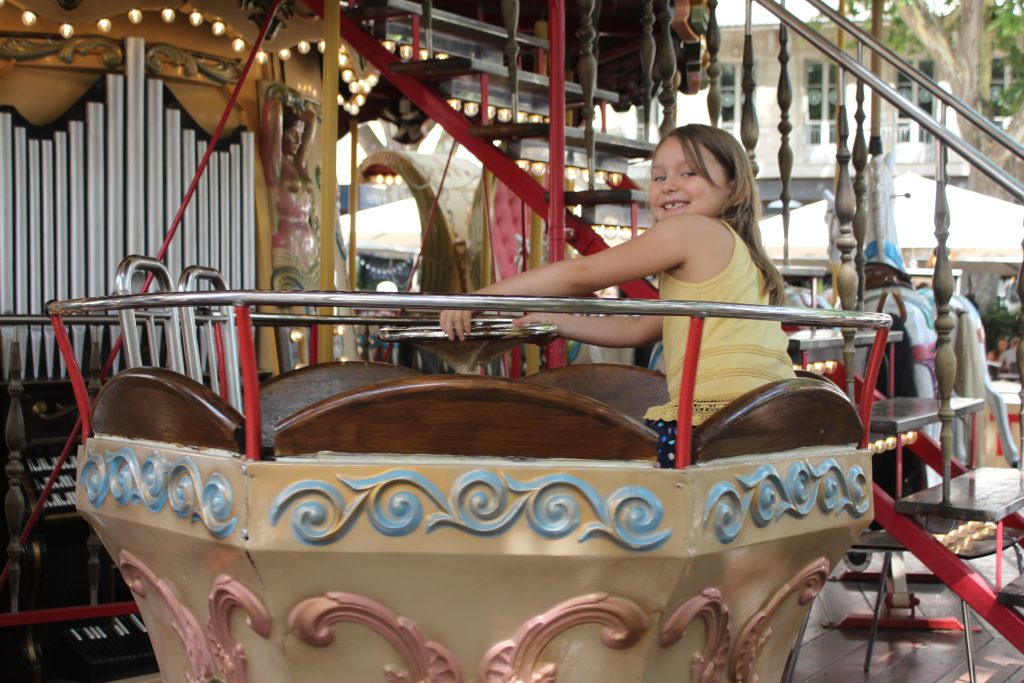
To stumble upon a carousel in Europe is to encounter a living dream: gilded horses rear beneath candy-striped canopies, their eyes wide with perpetual excitement; ornate sleighs and fantastical beasts—lions, tigers, sea serpents—glide up and down to the bright, slightly melancholic strains of an old-time organ. In France, especially, these rides are often tucked beside cathedrals or in leafy squares, their pastel colors glowing against the grey stone of history. Many historic carousels of Europe are civic landmarks in city squares and gardens.
Why Carousels Flourished Across Europe
Carousels found a unique home in European cityscapes because they combined artistry, entertainment, and community values treasured across the continent. French towns especially embraced the carousel as a charming centerpiece for civic pride. Cities and villages commissioned beautifully crafted merry-go-rounds not merely for amusement, but as symbols of joy, craftsmanship, and local identity.

How Carousels Are Crafted
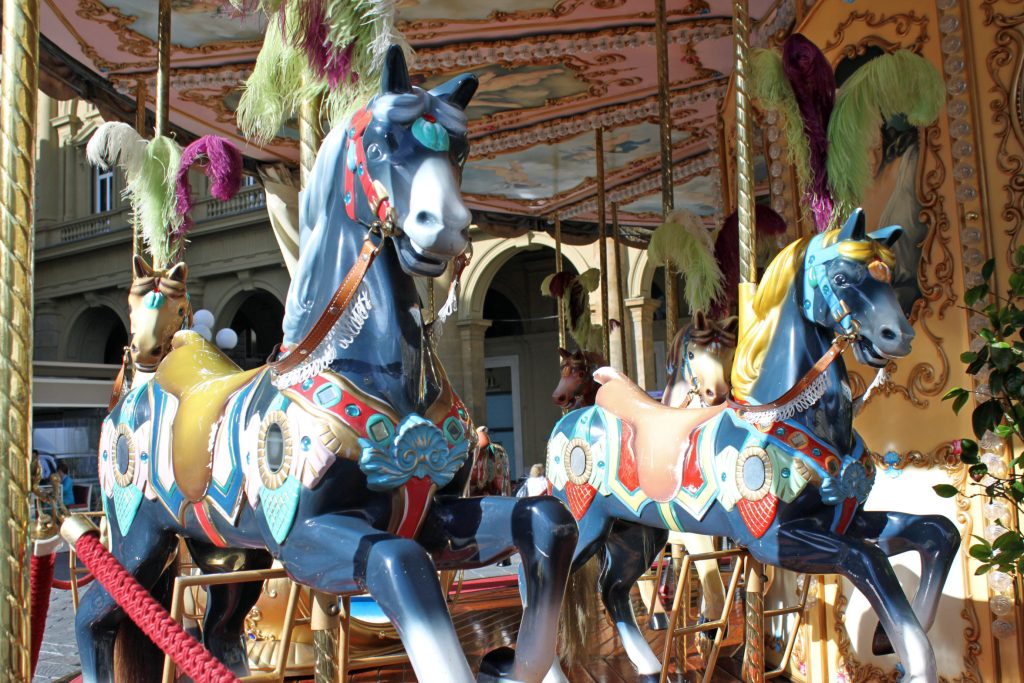
True European carousels are masterpieces of handcraft. Traditional carousel animals and structures are hand-carved from wood and carefully painted, often by generations of skilled artisans. Each figure—whether a galloping horse or a fantastical griffin—bears individual touches: a certain cocked head, a swirling mane, a jeweled harness. Mechanisms are assembled with precision, and calliopes (steam organs) are painstakingly tuned to create the carousels’ signature melodies.
The creation of a fully hand-crafted carousel is a work of both imagination and perseverance, often taking up to 12 to 18 months to complete. Each wooden horse or fantastical figure requires several weeks of detailed carving and hand-painting. Master carvers often spend 80 to 120 hours per figure, meticulously shaping flowing manes, expressive eyes, and ornate saddles. Meanwhile, the central platform, canopy, support poles, and rotating mechanisms must be engineered with both beauty and durability in mind. Once assembled, the carousel is adorned with gold leaf, mirrors, intricate lighting, and the final flourish: a carefully tuned steam or mechanical organ. The result is not merely a ride, but a mobile masterpiece, where hundreds or even thousands of hours of craftsmanship come to life in every twirl. The historic carousels of Europe are unmatched in craftsmanship and mechanical beauty.
Some of the Most Interesting Historic Carousels in Europe
These families helped shape the legacy of the historic carousels of Europe.:
- The Bayol Family (France) —Gustave Bayol’s workshop in Angers became one of France’s most prestigious carousel makers in the late 19th and early 20th centuries. Known for exquisitely carved and vividly painted animals—not just horses but lions, tigers, and mythical creatures—Bayol’s pieces are still prized today.
- The Limonaire Brothers (France) —Best known for their creation of beautiful fairground organs and elaborate carousel decorations, the Limonaire firm of Paris was active from the 1830s into the early 20th century. Their carousels often combined music, sculpture, and mechanical sophistication to dazzling effect.
- The Dentzel Family (Germany, later America) — Michael Dentzel started carving carousel animals in Germany before his son Gustav brought the family art to Philadelphia in the mid-19th century. While the Dentzels are mostly celebrated in American carousel history, their roots are firmly planted in European tradition.
- The Heyn Family (Germany) — Wilhelm Heyn of Germany produced some of the most ornate and visually dramatic carousel animals and wagons of the late 19th century. His pieces often featured elaborate harnesses and luxurious, deeply expressive faces on the animals.
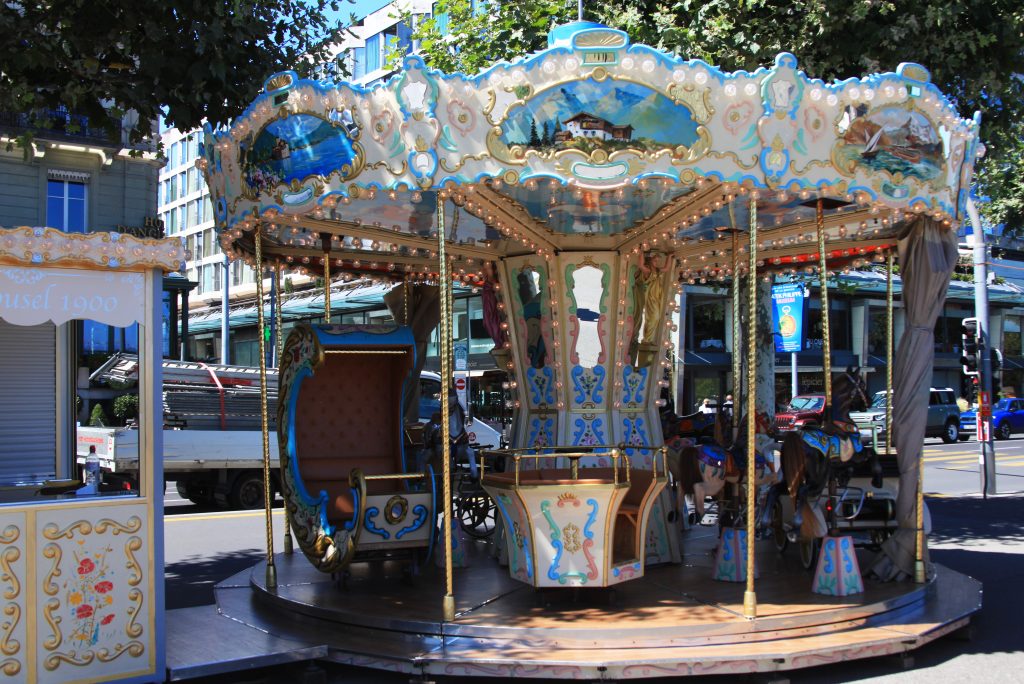
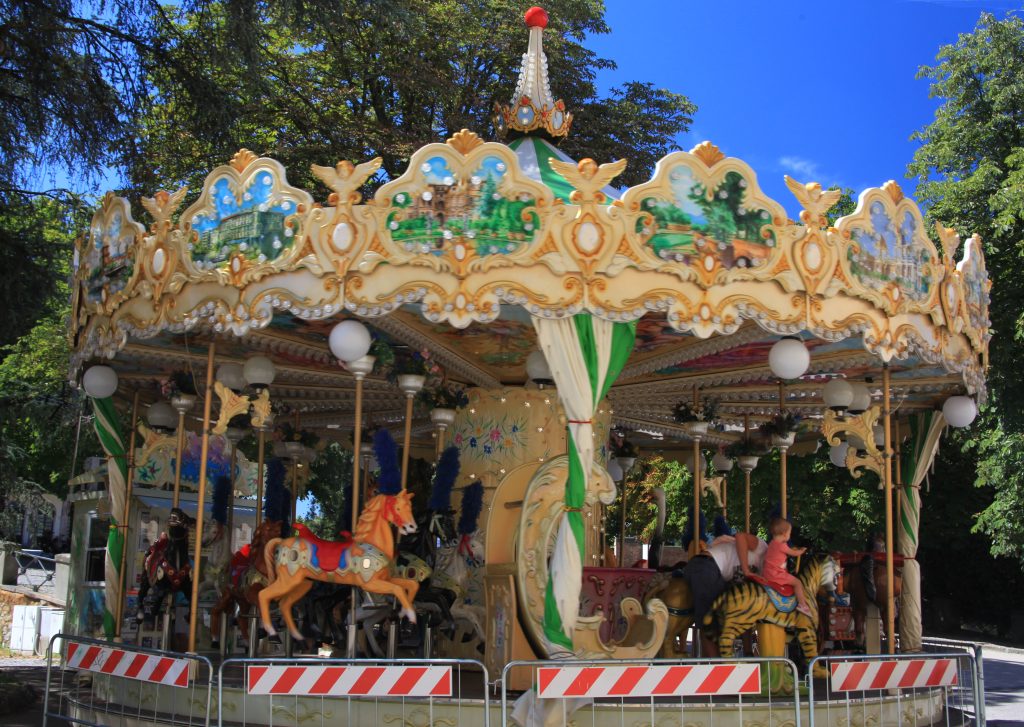
Some of the Most Interesting Historic Carousels in Europe
Here is a list of leading carousels in France:
- Carousel de la Tour Eiffel, Paris: Nestled just beneath the Eiffel Tower, this splendid two-tiered carousel enchants with its ornate horses, lavishly decorated chariots, and twinkling lights. Each panel features hand-painted Parisian scenes—from the Seine to Montmartre—creating a whimsical tour of the city within the gentle whirl of the ride.
- Antique Carousel in the Jardin du Luxembourg, Paris: Dating to 1879, this carousel was designed by Charles Garnier (architect of the Opera Garnier) and allows children to “tilt at the ring” while riding—a nod to medieval tournaments. Its horses are elegant, delicately painted, and full of character, capturing the faded grandeur of the Belle Époque.
- Carrousel Venetian in Avignon: A vision of Venetian splendor, this carousel dazzles with gondolas, masks, and golden horses richly adorned with flowing manes and sparkling harnesses. Its vivid panels depict scenes of Venetian canals, making every turn feel like a festive voyage through La Serenissima.
- Carousel at Place du Vieux-Marché, Rouen, France: Nestled in the historic square where Joan of Arc met her fate, this beautiful carousel enchants visitors with its intricately painted panels depicting Normandy’s pastoral scenes and Rouen’s medieval heritage. Beneath its striped canopy, prancing horses and whimsical carriages spin in a timeless dance, a delicate counterpoint to the solemn history that surrounds it.
- Carousel in Troyes, France: Situated in the medieval heart of Troyes, this exquisite carousel reflects the city’s rich Gothic heritage with its ornate hand-carved horses, gilded chariots, and vivid paintings of local folklore and historic landmarks. Its polished brass poles and pastel canopy cast a nostalgic glow over the cobbled streets, offering a whimsical counterbalance to Troyes’ soaring timbered houses and grand churches.
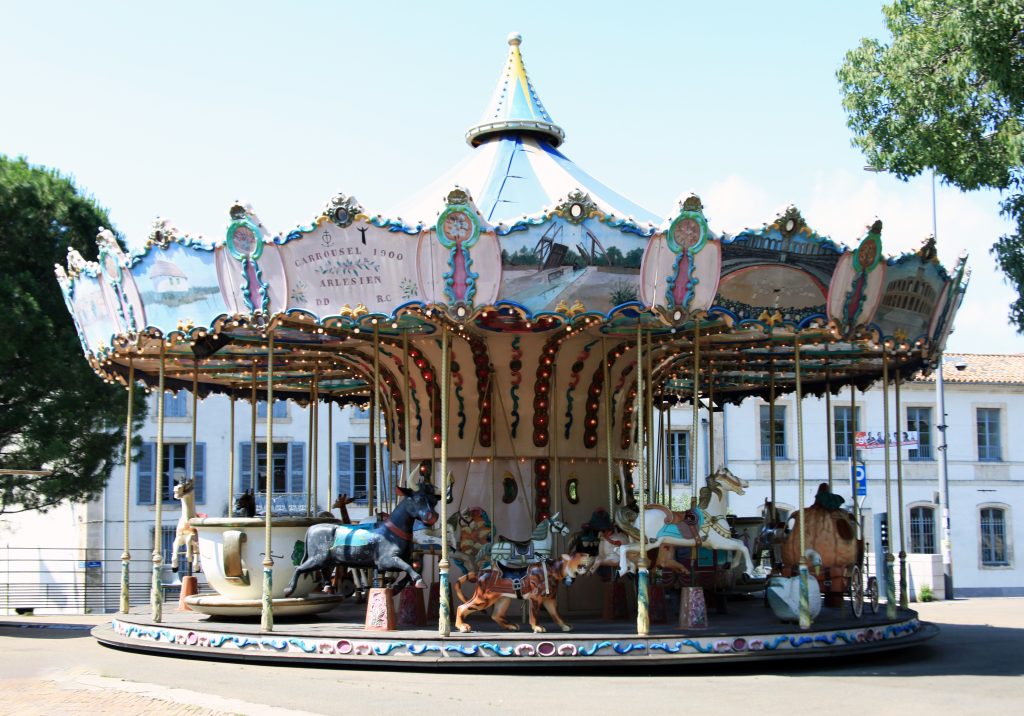
Carousel in Arles, France: Set against the backdrop of Roman ruins and sun-drenched Provençal streets, the carousel in Arles captures the rustic charm of southern France. Its vibrant horses, colorful canopies, and whimsical characters mirror the festive spirit of the region, spinning beneath the bright Mediterranean sky. A perfect blend of heritage and play, this carousel invites visitors to linger a little longer in the sunlit magic of Arles.

These are noteworthy Carousels from other leading European cities:
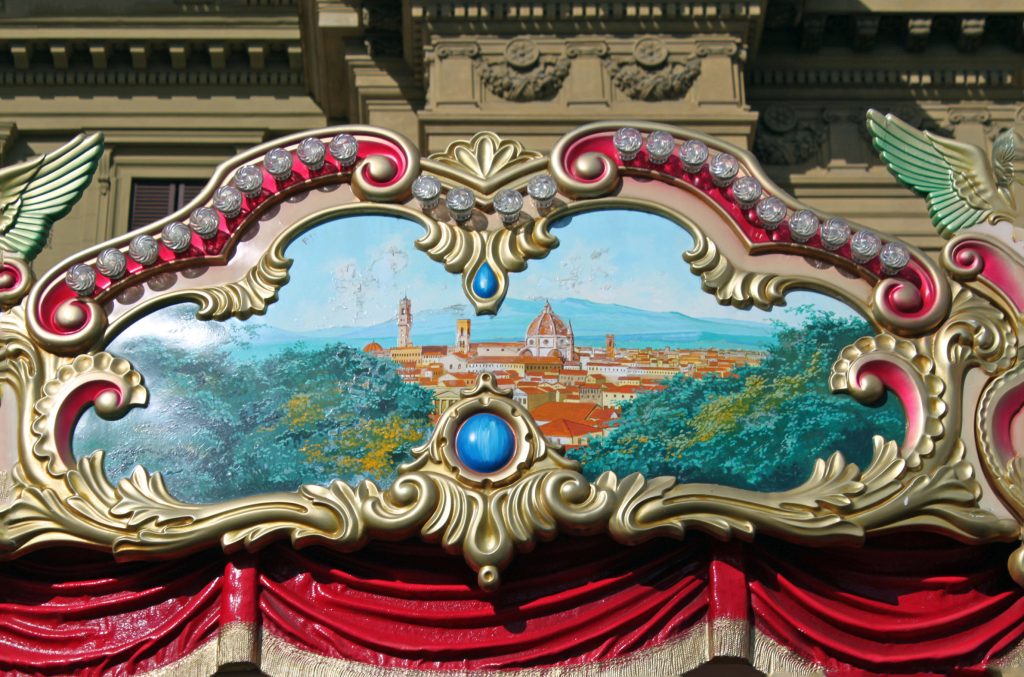
- Carousel in Florence, Italy: Located in the heart of Piazza della Repubblica, the historic carousel of Florence is a luminous jewel amid the Renaissance grandeur. With its gleaming brass poles, elaborately painted panels of Tuscan countryside scenes, and gently bobbing horses adorned in golden trappings, it evokes the refined artistry of the city itself. By day, it sparkles against the elegant cafés and arches; by night, it becomes a glowing beacon of nostalgia and joy in one of Italy’s most cultured cities.
- Carousel in the Old Town Square, Prague: Framed by the Gothic towers of the Church of Our Lady before Týn and colorful Baroque facades, this traditional carousel evokes a bygone era. With hand-carved horses and old-world charm, it offers a delightful contrast to Prague’s soaring spires and medieval majesty.
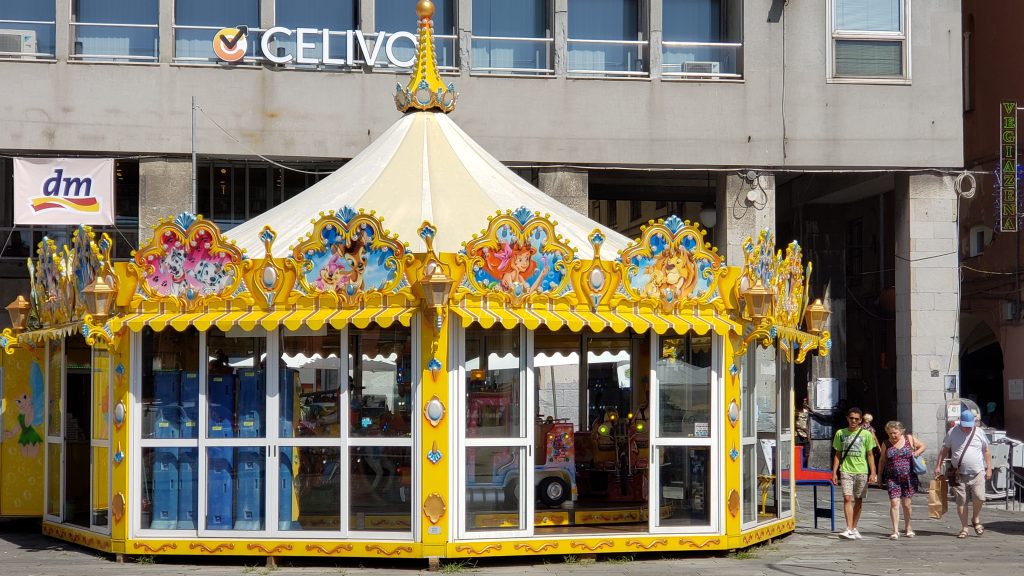
- Carousel at Piazza Caricamento, Genoa, Italy: This charming carousel, located near the bustling old port and the historic city center, dazzles with classic hand-painted horses, bright colors, and an aura of timeless joy. It is a beloved fixture for both children and adults, offering a nostalgic whirl amid the maritime heart of Genoa, where medieval alleyways meet modern life.
Why Historic Carousels of Europe Still Matter
Today, carousels remain beloved across Europe. They are carefully maintained, lovingly restored, and celebrated not just as children’s rides, but as mobile works of art. They embody the enduring European reverence for beauty, imagination, and public joy. The smell of roasted chestnuts and crêpes floats on the air, and the sound of children’s laughter rises like a prayer to simpler times. So next time you glimpse a carousel twirling beneath the spires of a French cathedral or along a sunlit boulevard, pause. Watch the shimmering lights and the spinning figures frozen in a dance of eternal delight. Europe’s carousels invite all of us, young and old, to dream in circles and to remember that wonder never truly goes out of style. The enduring charm of the historic carousels of Europe lies in their ability to spark wonder across generations.
Recommended Reading
- The Night Circus by Erin Morgenstern – A magical novel where carousels and other marvels blur the line between reality and fantasy.
- Carousel Horses: A Photographic Celebration by Toby T. Haberkorn and Sherrell S. Anderson
This beautiful volume dives deep into the hand-carving, painting, and mechanical engineering that go into building carousels. It showcases legendary European and American carousel makers, highlighting the time-honored techniques passed down through generations. - Fairground Art: The Art Forms of Travelling Fairs, Carousels and Carnival Midways by Geoff Weedon and Richard Ward – A beautifully illustrated exploration of the artistry behind traditional fairground rides.
- Paris Between the Wars: Art, Life & Culture by Vincent Bouvet and Gérard Durozoi – Capturing the era that gave birth to many of France’s most beautiful carousels.
- Painted Ponies: American Carousel Art by William Manns and Marianne Stevens – While focused mainly on American carousel history, this richly illustrated book details traditional carving, painting, and construction techniques that originated in Europe and crossed the Atlantic. It offers insights into the artistry and painstaking methods that define carousel craftsmanship.
This Article was featured in the Spring 2025 issue of The Historic Traveler Magazine.