
If you walk the shores of Coronado Island just after sunset, when the Pacific is wrapped in lavender fog and the grand wooden turret of the Hotel del Coronado begins to glow amber under gaslight, you may feel it—a shiver of history, a flicker of something just beyond sight. Perhaps it’s the ocean breeze. Or perhaps it’s Kate Morgan, the hotel’s most famous ghost, still pacing the corridors where she waited… and never left.
Red Shingled Grandeur
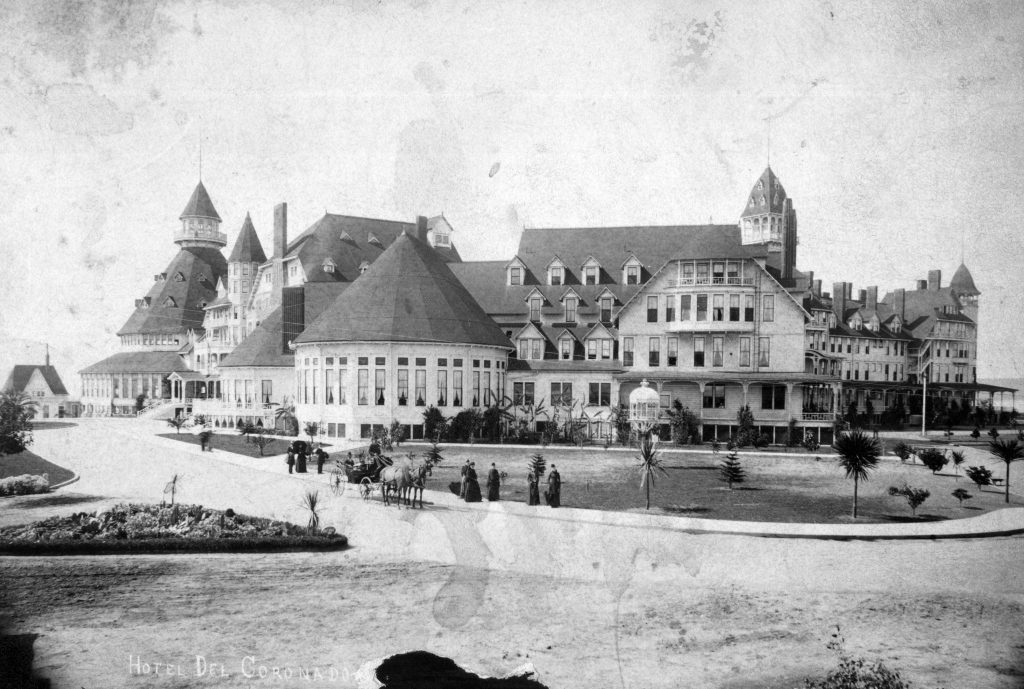
When the Hotel del Coronado first opened its red-shingled gables to the sea in 1888, it was nothing short of a marvel—California’s answer to Newport grandeur, built in the Queen Anne Revival style on a stretch of wild, windblown sand. Designed by architect James W. Reid and financed by Elisha Babcock and H.L. Story, “The Del” was the largest resort hotel in the world at the time, lit by one of the earliest commercial power plants and graced with modern plumbing and elevators—true luxuries of the Gilded Age.
But it was also built on ambition and sheer invention. Thousands of laborers were ferried over from San Diego by barge. Timber arrived from British Columbia. Glass panes, custom tile, and cast iron were carted in by rail. And yet within a year, a palace stood—a seaside fantasy of wood and whimsy, ready to receive presidents, princes, and literary minds from across the world.
The Queen of Seaside Whimsy
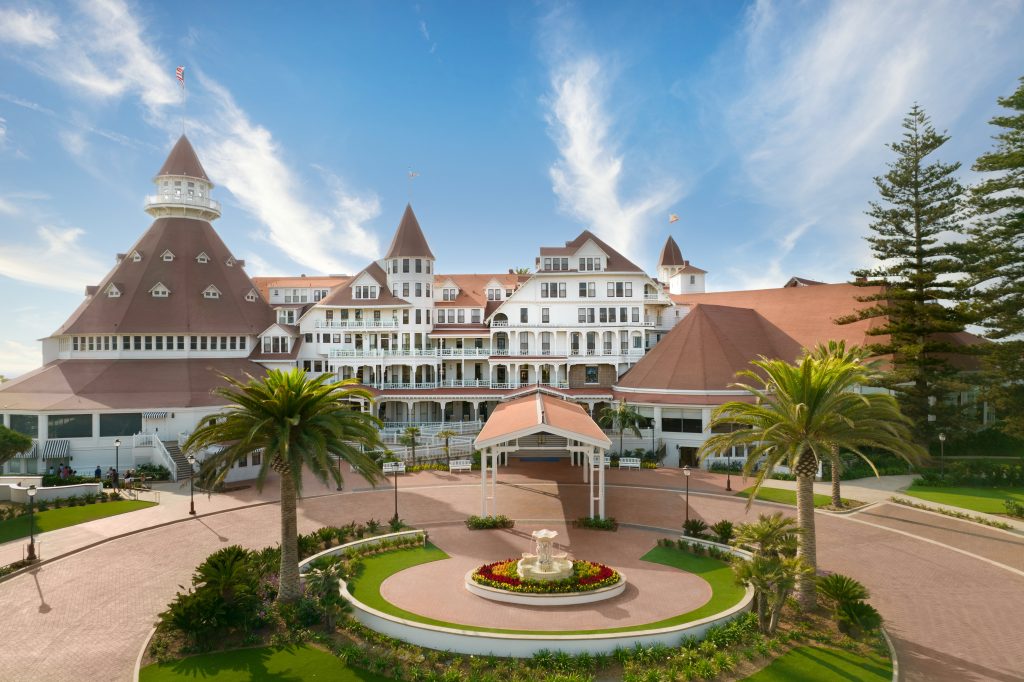
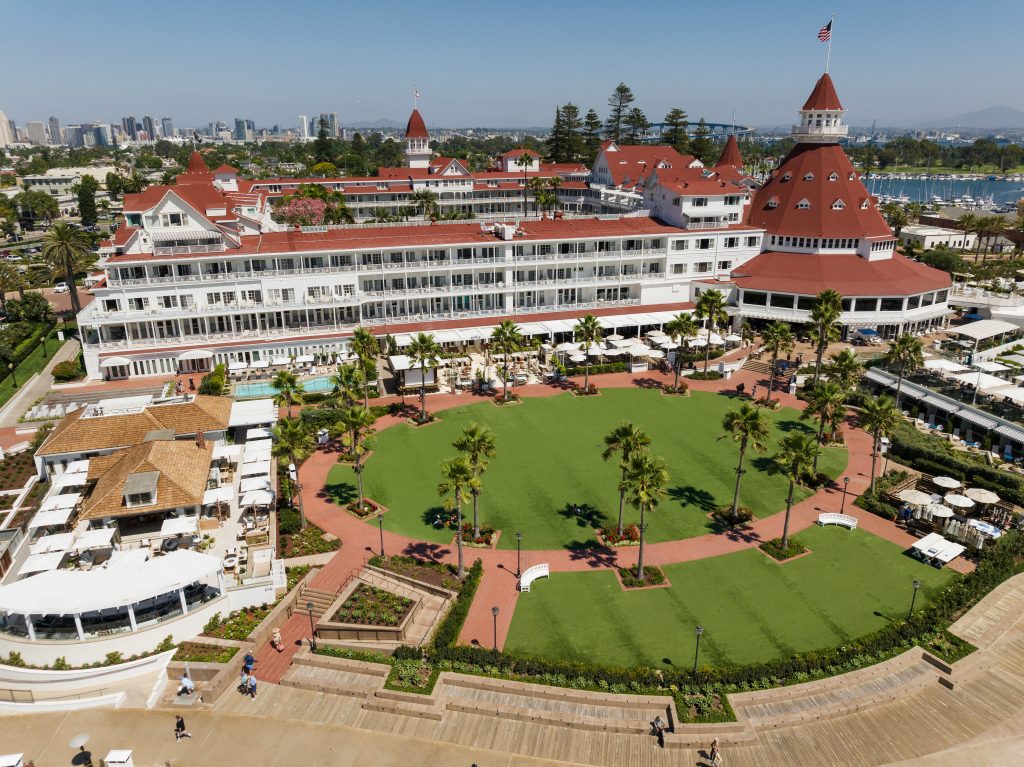
The Hotel del Coronado isn’t merely historic—it’s theatrical. A wooden fantasy of red-roofed gables and curling verandas, it’s the largest surviving example of Queen Anne Revival beach architecture in the United States, and one of the very few all-wooden resorts of its scale still standing anywhere in the world.
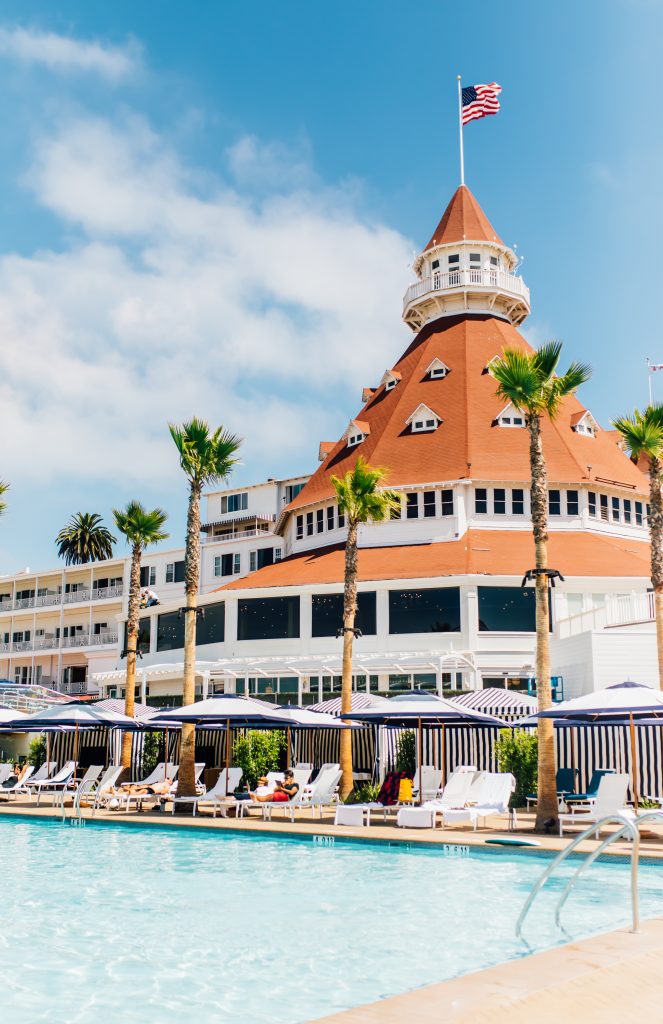
What immediately draws the eye, both then and now, is the enormous round turret rising like a wedding cake spire from the southeast corner, trimmed with white fretwork and capped with a flared conical roof. It’s both the literal and emotional centerpiece of the hotel’s design—a beacon visible from the sea and a motif that would become emblematic of American Victorian seaside resorts.
Built on what was then a barren sand spit, the hotel was constructed using wood salvaged and shipped from as far away as British Columbia and Oregon. Its builders used 37 miles of piping for plumbing and 2,500,000 feet of lumber to create what was, in its day, a technological marvel. The design favored asymmetry, ornate porches, and whimsical details—turrets, towers, dormers, eyebrow windows, and scroll-sawn balustrades.
Crowning Glory of the Crown Room
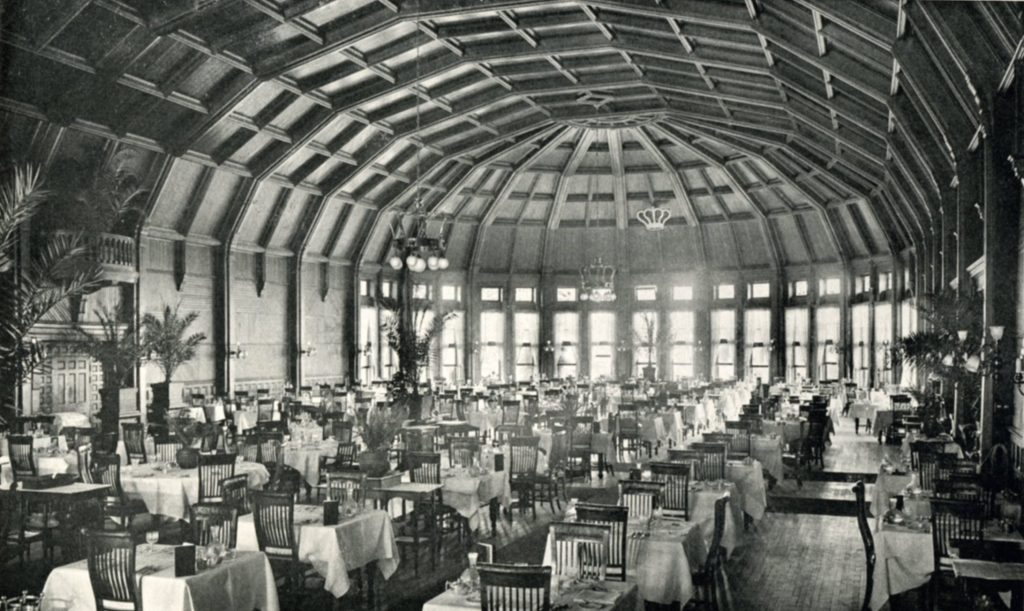
The Crown Room is a particular triumph of design: its ceiling, constructed entirely without nails, resembles the inverted hull of a ship—an homage to nautical craftsmanship. Giant peacock-feather chandeliers (attributed by lore to Wizard of Oz author L. Frank Baum) hang from the ceiling beams, casting golden light over the polished wood floors below.
From above, the hotel’s layout spreads in scalloped wings from the central turret, wrapping around palm-lined courtyards and leading visitors from grand entrances to the glassy sparkle of the beach. The building seems to invite wandering—not just in space, but in time.
Even today, the Del’s silhouette evokes both romance and mystery—its whorls of red shingle and whitewashed trim as fanciful as a carousel and just as timeless. It feels less like something built and more like something imagined, conjured, perhaps, from a dream of elegance perched at the edge of the Pacific.
Imagine President William Taft dining beneath the wagon-wheel chandeliers of the Crown Room, or the whisper of gowns swirling during lavish Edwardian balls. The caged birdcage elevator, still manually operated, gently rattles its way up to rooms once occupied by Wallis Simpson, Charlie Chaplin, and L. Frank Baum, who wrote The Wizard of Oz while staying here. Wander the lush gardens or stroll the famous Silver Strand beachfront, and you’ll find the original Victorian wing still lovingly preserved amid the resort’s modern wings. Don’t miss the Dragon Tree, planted in 1888 and still thriving—its gnarled branches a perfect symbol of the hotel itself: elegant, enduring, and just a touch otherworldly.
National Treasure
Today, “The Del”, a National Historic Landmark, is a dreamy collision of old-world charm and contemporary indulgence. Restoration efforts continue to maintain its original architecture, and guided history tours provide guests with intimate glimpses into the hotel’s opulent past. Even a little film history was made here, including the legendary Some Like It Hot with Marilyn Monroe, Tony Curtis and Jack Lemmon and The Stunt Man with Peter O’Toole.
And then, of course, there are the ghosts.
The Haunting of Room 3327 (formerly 302):
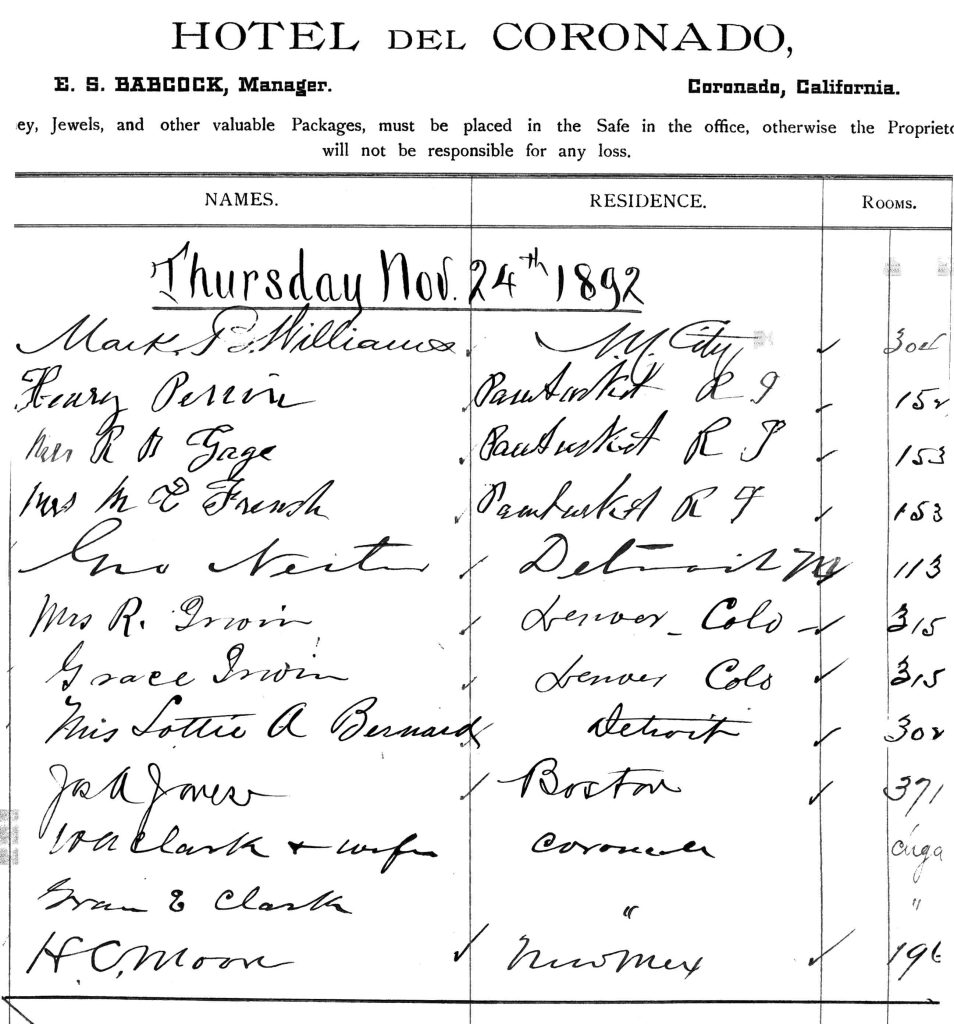
The most enduring tale is that of Kate Morgan, a young woman who checked in under an assumed name in 1892—and never checked out. Described as “beautiful but melancholy,” she spent five days waiting for a man who never arrived. On the morning of Thanksgiving, she was found dead on the hotel’s steps, a gunshot wound to the head. The case was ruled a suicide, but whispers of foul play—and spectral return—began almost immediately.
Guests who stay in her former room, Room 3327, report flickering lights, footsteps, cold spots, and an uncanny sensation of being watched. Staff and visitors alike tell of disappearing items, doors that open and close on their own, and the image of a woman in black drifting through the halls or pausing on the staircase.The hotel has leaned gently into its haunted legacy—not with kitsch, but with a nod to mystery. The Haunted Happenings Tour is a must-do for the curious, weaving together history and legend beneath the glow of the chandeliers and the hush of the sea.



Where to Stay in Coronado, United States
The Hotel del Coronado itself offers luxury beachfront rooms with Victorian charm, though rates reflect its iconic status. For travelers seeking similar quality at lower prices, the nearby area along Orange Avenue has several established hotels and smaller inns within walking distance of the beach. Mid-range properties in central Coronado tend to book quickly during summer months, so advance reservations are worth the effort.
If you prefer quieter surroundings, the residential neighborhoods north of the Hotel del Coronado have bed-and-breakfasts and vacation rental homes that provide a more intimate feel than larger resort properties. These options let you experience how locals actually live on the island while remaining close enough to main attractions for easy exploration.
For budget-conscious travelers, the mainland side of the Coronado Bridge has motor lodges and chain hotels at considerably lower rates than island properties. The tradeoff is a short drive across the bridge to reach beaches and dining, but the savings can be substantial, especially for families planning week-long stays. Many visitors find the bridge crossing brief enough to be worthwhile.
Coronado’s compact size means location matters less than it does in larger cities. Whether you stay oceanfront, on a residential street, or across the bridge, you can reach the Hotel del Coronado, local shops, and beaches within minutes by car or a pleasant walk.
Recommended Reading:
- Beautiful Stranger: The Ghost of Kate Morgan and the Hotel del Coronado by Hotel del Coronado Heritage Department – A deep dive into the life, death, and afterlife of the Del’s most famous guest.
- California’s Historic Haunts by Brian Clune – Includes fascinating accounts of the Del and its spectral residents.
- Hotel Del Coronado – From Vision to Legacy: Unveiling the Historic Journey of the Hotel Del Coronado by Will Andrews – A richly illustrated history from a former hotel historian.
- For fiction lovers: Hotel on the Corner of Bitter and Sweet by Jamie Ford offers a similar haunting atmosphere—though not set at the Del, it captures the kind of timeless, memory-soaked feeling that lingers in such historic places.
