
Where Artists Met a Nation in Crisis
Tucked inside courthouses, post offices, libraries, and schools across the United States are frescoes, oils, and temperas that don’t announce themselves — they wait to be noticed.
A woman harvests grain under a copper sky. Miners emerge, soot-covered, into gray light. A classroom full of immigrant children bends over books. These images aren’t decoration. They’re survival stories in pigment — painted during one of the darkest periods in American memory.
They are the legacy of the WPA murals, born of the New Deal’s Federal Art Project, when artists were called not to escape history, but to document it, illuminate it, and bind a fractured nation through images of shared labor, struggle, and quiet dignity.
On this Memorial Day, as we reflect on those who served and sacrificed, we remember not only the battlefields but also the battlegrounds of unemployment, poverty, and despair. The WPA murals are living monuments to a different kind of perseverance — painted not in blood, but in color, hope, and national identity.
The New Deal and a New Role for Art
In the depths of the Great Depression, between the two great wars, unemployment soared to over 25%, and many of the nation’s artists — muralists, illustrators, lithographers — were among those without work or purpose.
In response, President Franklin D. Roosevelt’s New Deal created the Works Progress Administration (WPA) in 1935, which in turn established the Federal Art Project (FAP). Its mission was radical in its simplicity: pay artists to create public art for public spaces, and in doing so, nourish both the economy and the American spirit.
Over the course of eight years, the FAP employed more than 5,000 artists, producing:
- Over 2,500 murals
- More than 100,000 paintings and prints
- Sculpture, posters, theater sets, and even community art centers
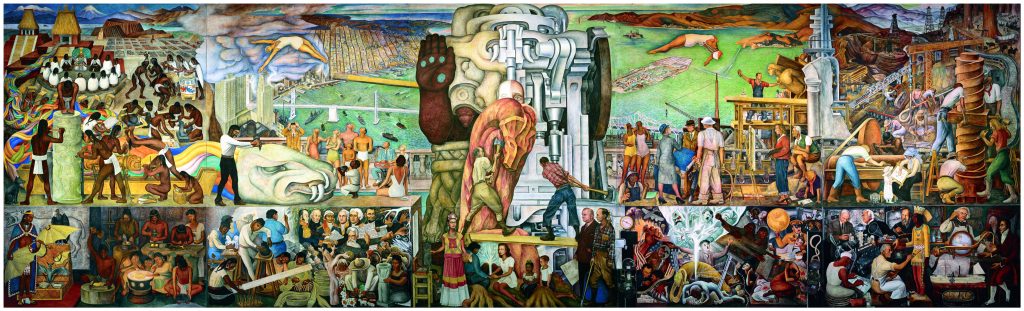
The style was often figurative and narrative, rooted in American Regionalism — accessible, symbolic, and deeply tied to place. It was art meant for everyone. And the walls of the nation became a canvas.
Murals Across the Map
Many of these WPA-era murals still survive, though often quietly — faded in corners of federal buildings, or rediscovered under coats of bureaucratic beige. Here are a few still standing, vibrant with history:
Coit Tower, San Francisco, CA
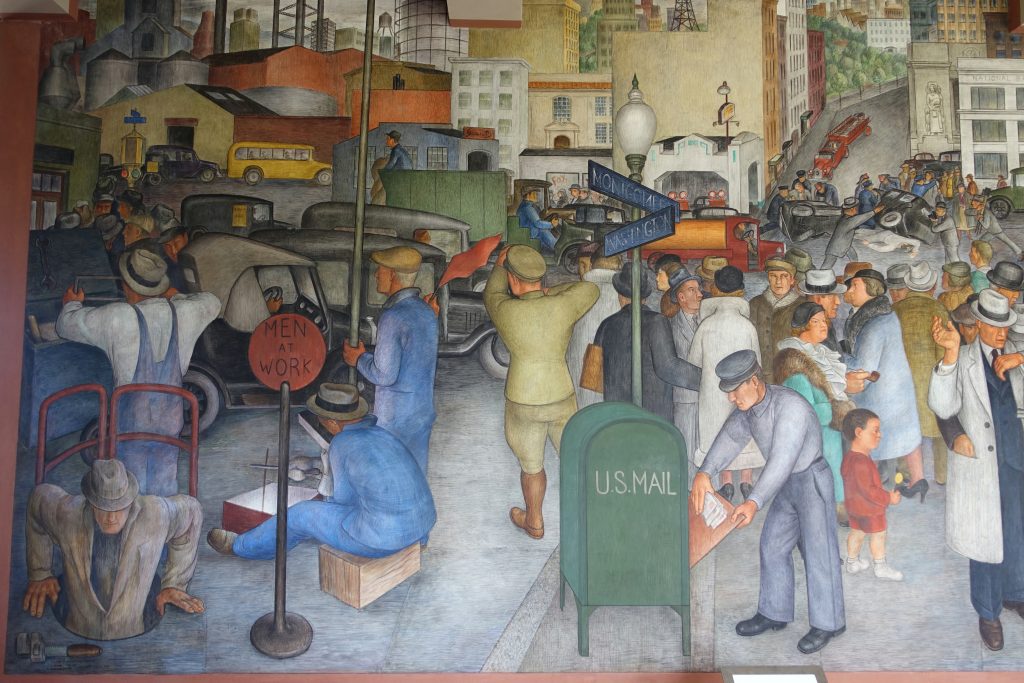
One of the most famous collections of WPA murals, painted in 1934 under the Public Works of Art Project (a forerunner of the FAP), Coit Tower’s interior walls are alive with scenes of urban life, labor strikes, and social tension. Artists like Victor Arnautoff, a student of Diego Rivera, depicted newsstands, libraries, and the inequities of capitalism with extraordinary detail.
Rincon Annex Post Office, San Francisco, CA
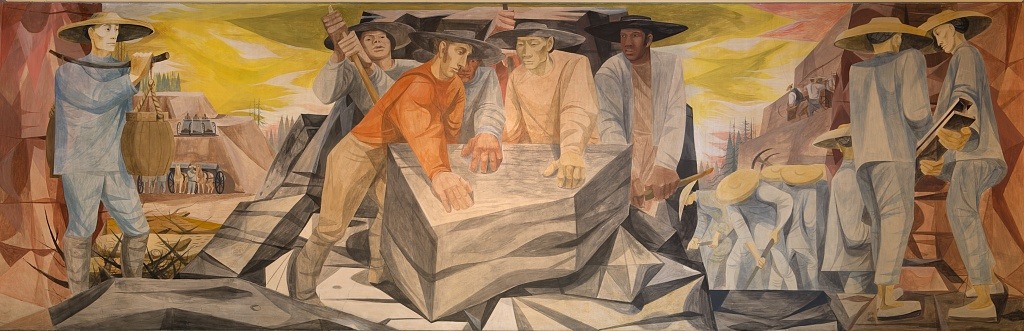
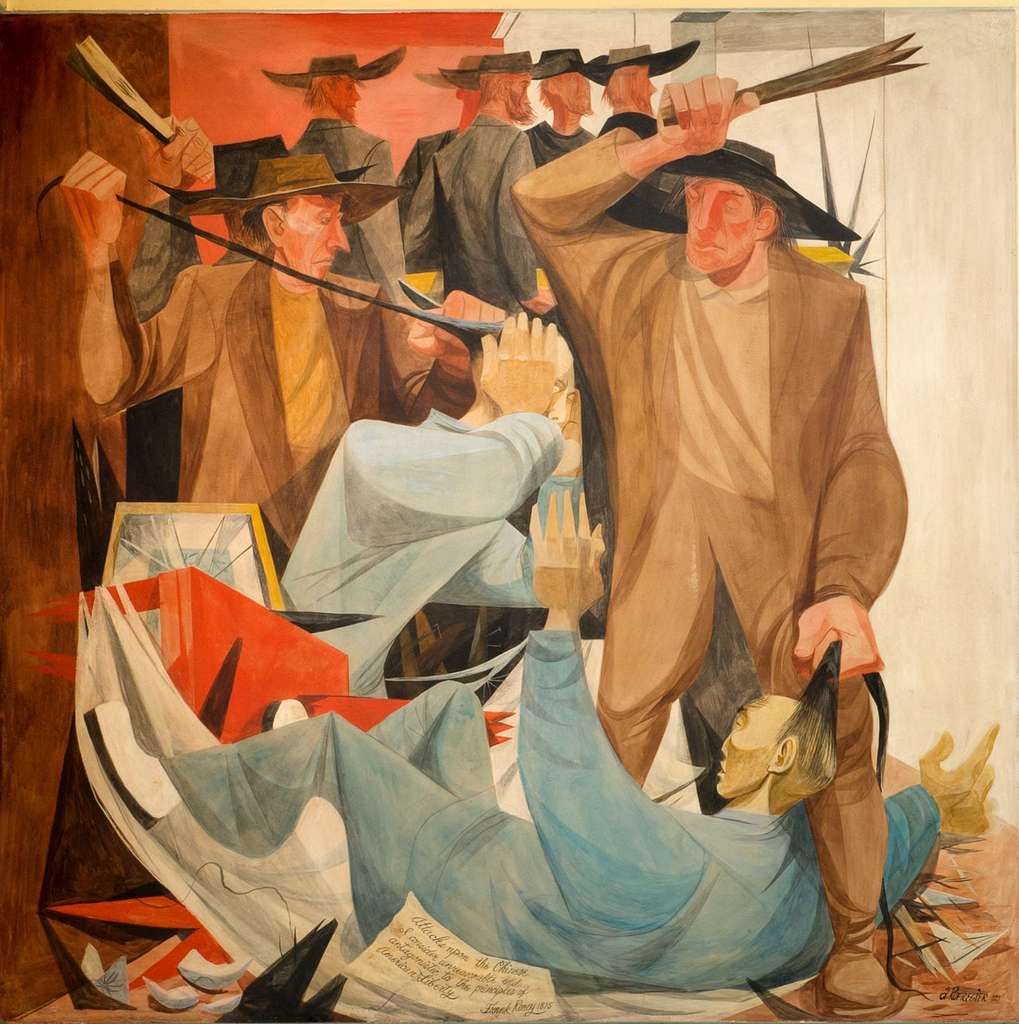
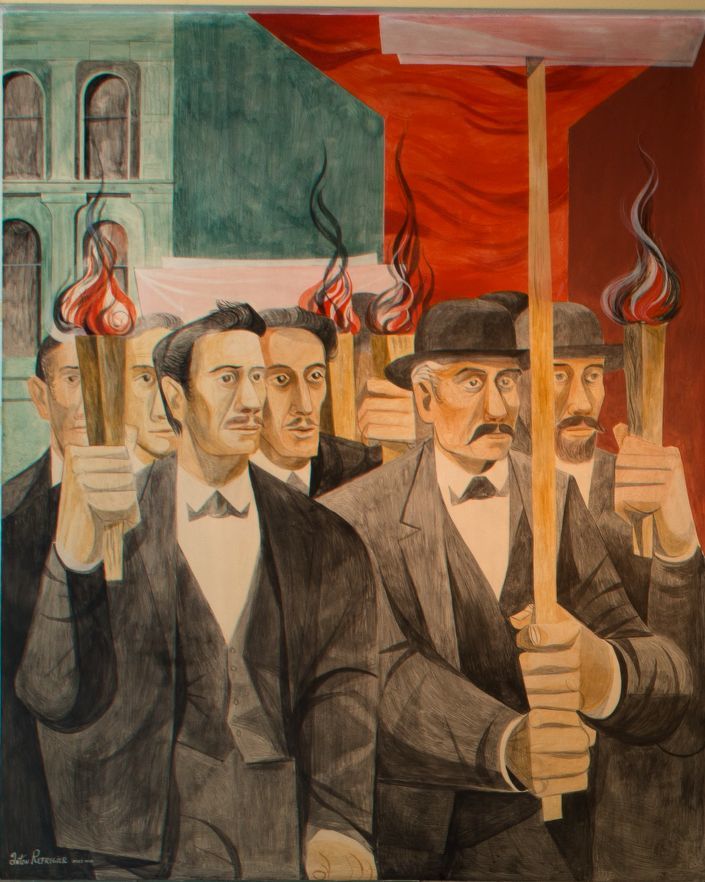
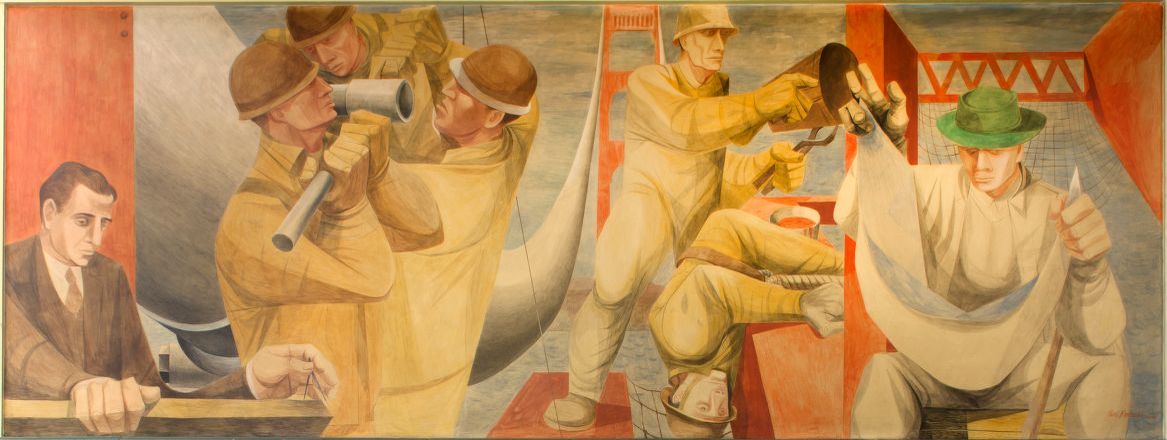
The “History of San Francisco” mural by Anton Refregier spans 27 panels and was controversial in its time for depicting racial injustice, labor unrest, and Indigenous history without whitewashing. Today, it remains one of the most powerful narrative murals in the country.
Harlem Hospital Center, New York, NY
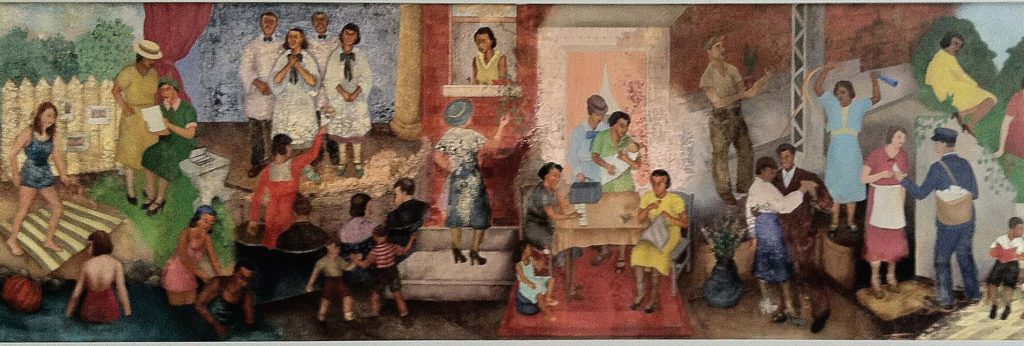
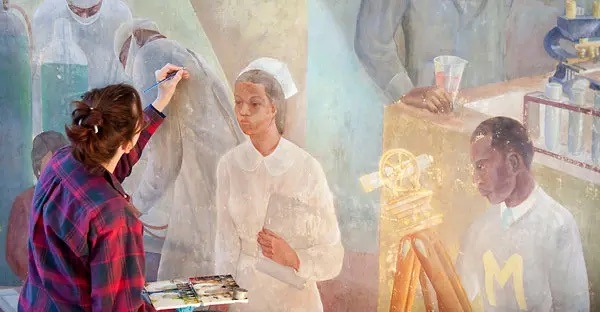
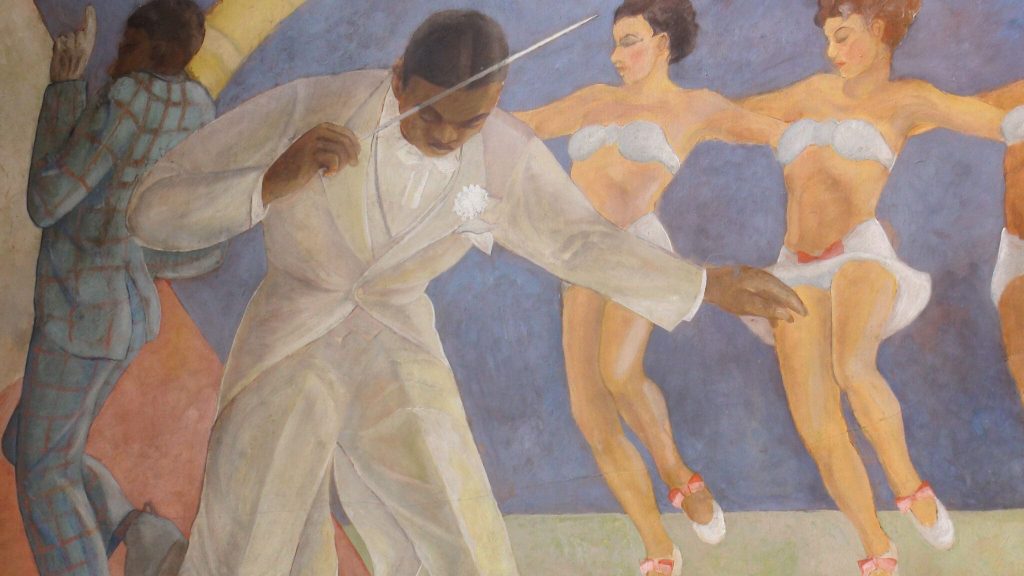
Painted by Charles Alston, Vertis Hayes, and others, these were the first federally funded murals created by Black artists for a Black community. The works depict African heritage, public health, and Harlem’s resilience. Covered up for decades, they were restored and reinstalled in the 2000s.
Department of the Interior, Washington, D.C.
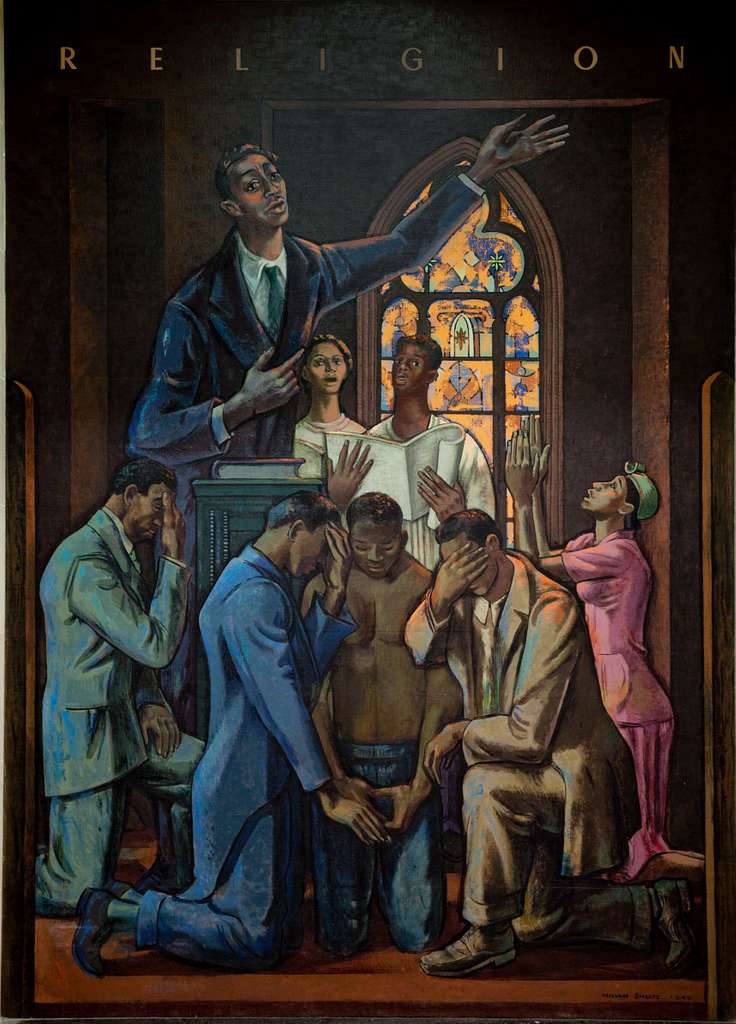
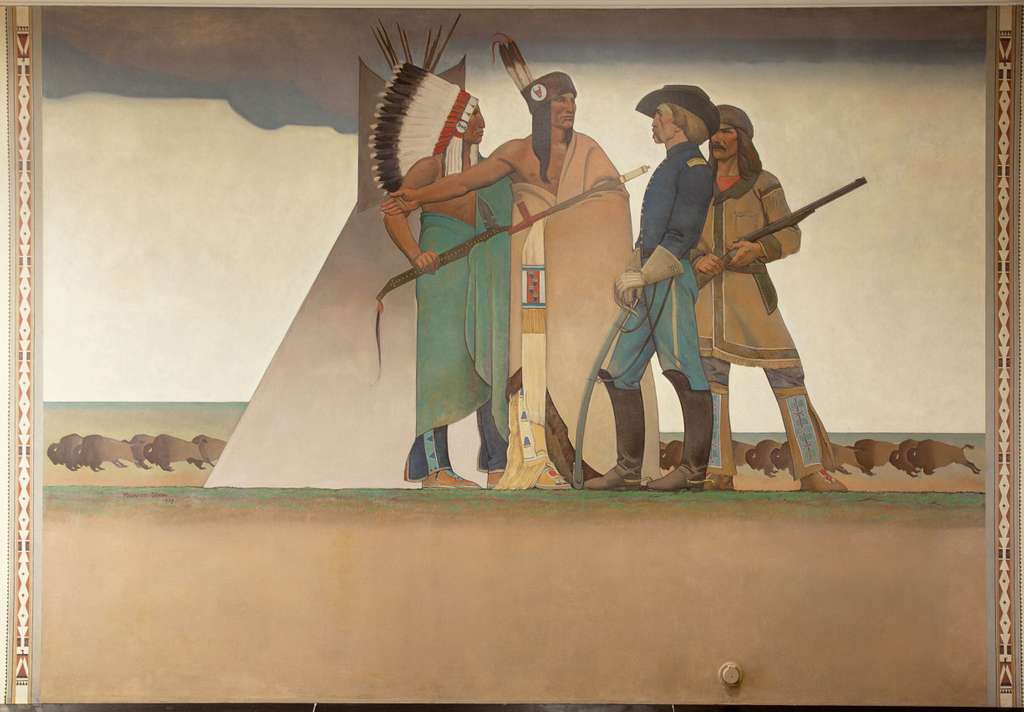
A remarkable collection of New Deal murals by artists including Maynard Dixon, John Steuart Curry, and Millard Sheets. Themes include Native American culture, land use, labor, and westward expansion — a painted declaration of civic responsibility. Don’t miss Dixon’s “The Indian and the Buffalo”, stark and reverent in tone.
Los Angeles Central Library, Los Angeles, CA
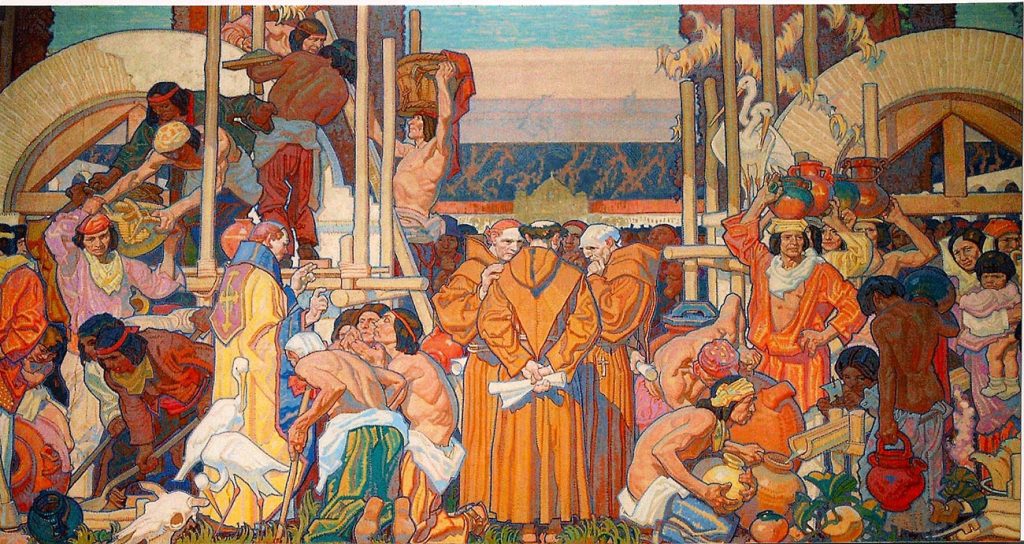
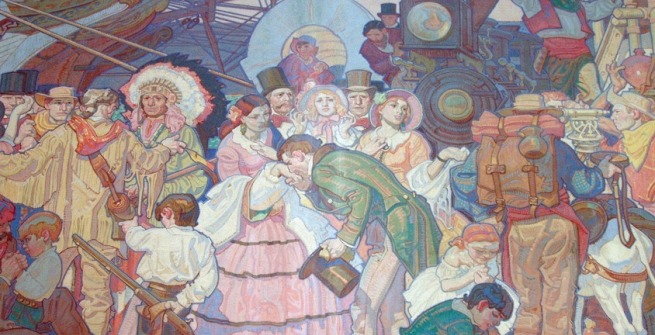
Artist Dean Cornwell painted “The History of California” across the library’s rotunda — a sweeping, cinematic interpretation of California’s settlement, missions, agriculture, and industrial dreams.
Brooklyn College Library, Brooklyn, NY
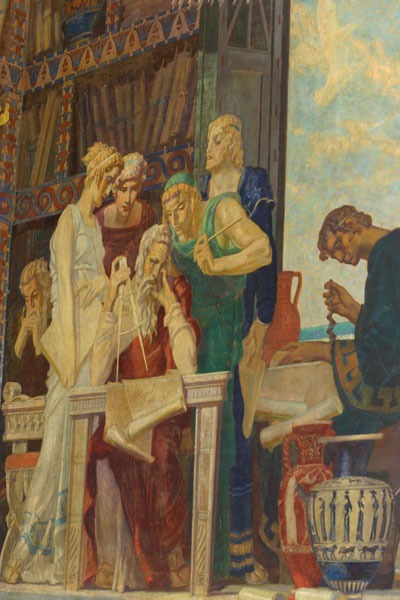
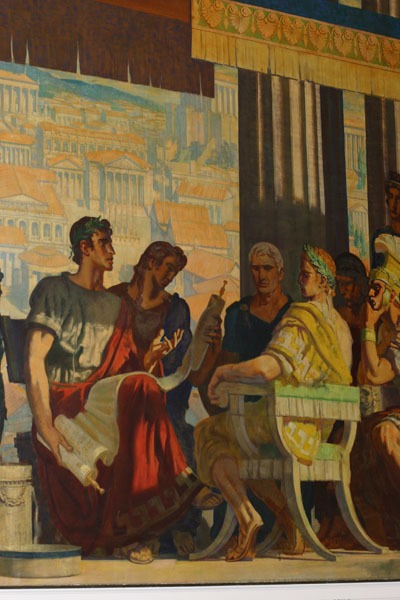
Olindo Mario Ricci’s WPA-funded murals for the Brooklyn College Library celebrate the ancient libraries of Alexandria and Augustus. Created under the Federal Art Project, the panels turn learning itself into a public good, linking scholarship, history, and civic education in the spirit of the WPA.
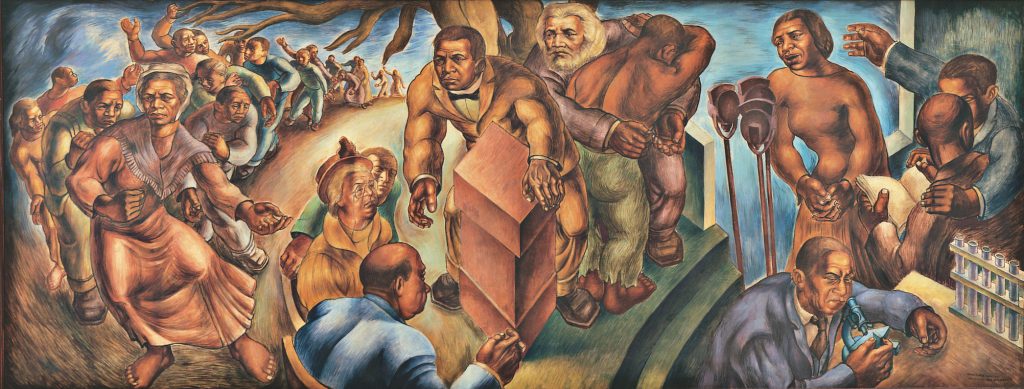
The Bronx General Post Office, New York, NY
Charles White’s WPA mural Five Great American Negroes honors Sojourner Truth, Booker T. Washington, Frederick Douglass, George Washington Carver, and Marian Anderson. Monumental and deeply human, the work transforms Black achievement into public history and shows how the WPA helped artists make social memory visible.
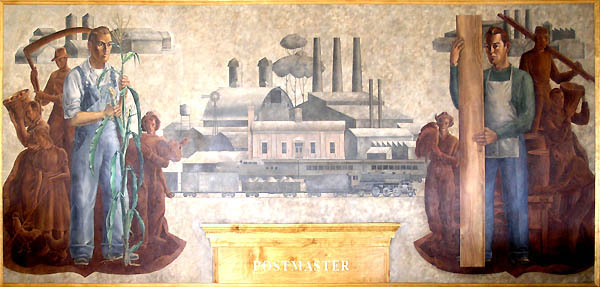
Franklin Post Office, Franklin, IN
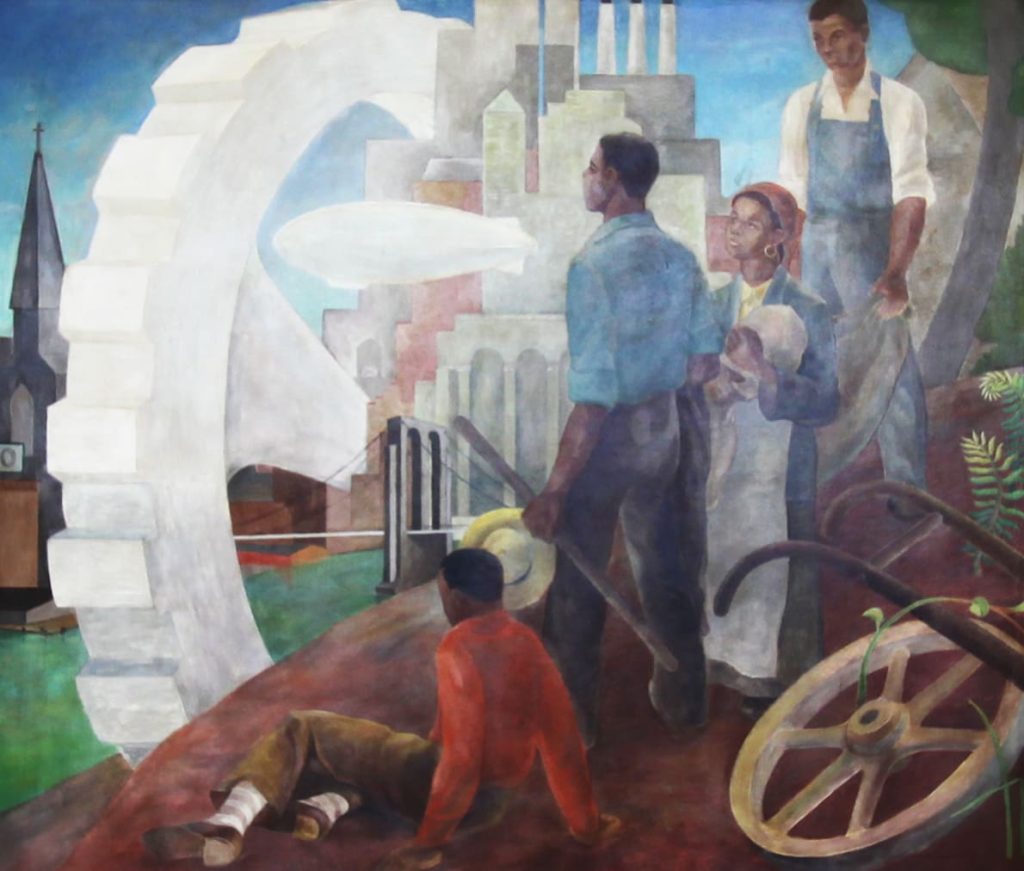
Jean Swiggett’s 1940 mural Local Industry depicts the working life and economic character of Franklin, Indiana. Created for the town’s post office during the New Deal art era, the mural reflects the period’s interest in local labor, civic identity, and everyday industry, turning a federal building into a mirror of the community it served.
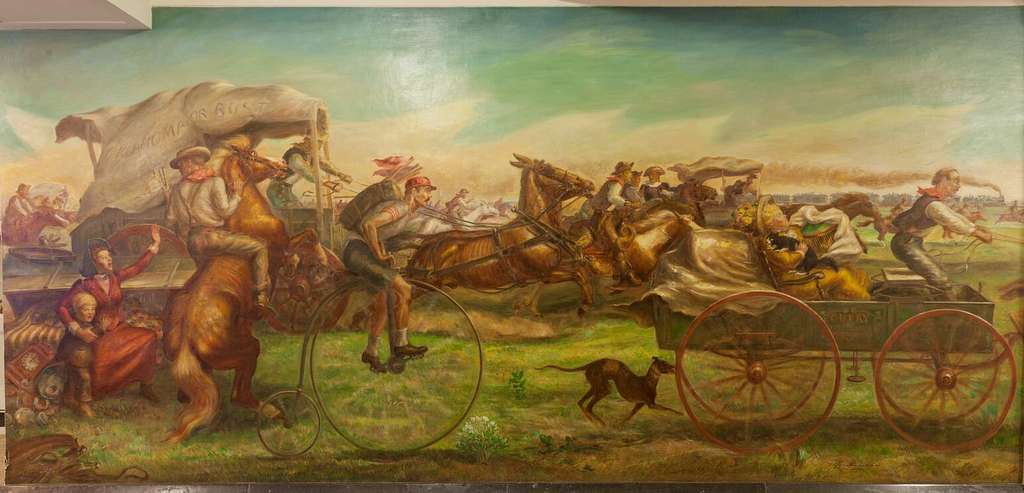
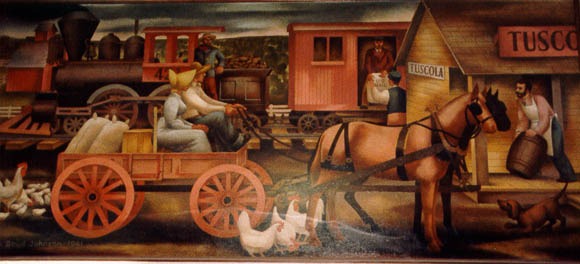
Illinois Post Office, Tuscola, ILEdwin Boyd Johnson’s 1941 mural The Old Days looks back at Tuscola’s earlier community life through scenes of transportation, labor, and small-town memory. Painted for the Tuscola Post Office, the mural reflects the Depression-era belief that public art should preserve local history and make everyday civic spaces feel rooted in shared experience.
Walterboro Post Office, Walterboro, SC
Sheffield Kagy’s 1938 mural Past and Present Agriculture and Industry of Colleton County depicts Black and white workers harvesting crops and tending animals in rural South Carolina — a celebration of local agriculture that also quietly reflects the racial labor hierarchy of the Jim Crow era.

Lakeview Post Office, Chicago, IL
Muralist Henry Varnum Poor painted “The Advance Guard of the West”, a depiction of frontier expansion. Like many WPA murals, it walks the line between mythmaking and realism, capturing both heroic aspiration and historical complexity.
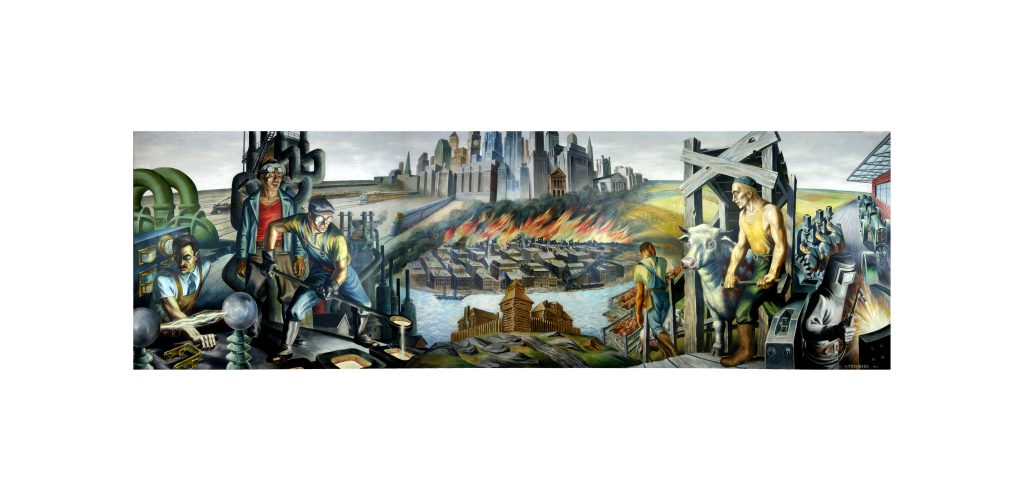
Department of Justice, Washington, D.C.
Ben Shahn’s mural cycle, “The Meaning of Social Security,” honors the dignity of work, the promise of justice, and the role of government in safeguarding both. The figures are monumental, their faces quiet but resolute.
Many smaller towns also house WPA murals — in post offices from Colorado to Alabama, often depicting local industry, agriculture, or regional legends. These murals weren’t ornamental. They were civic mirrors.
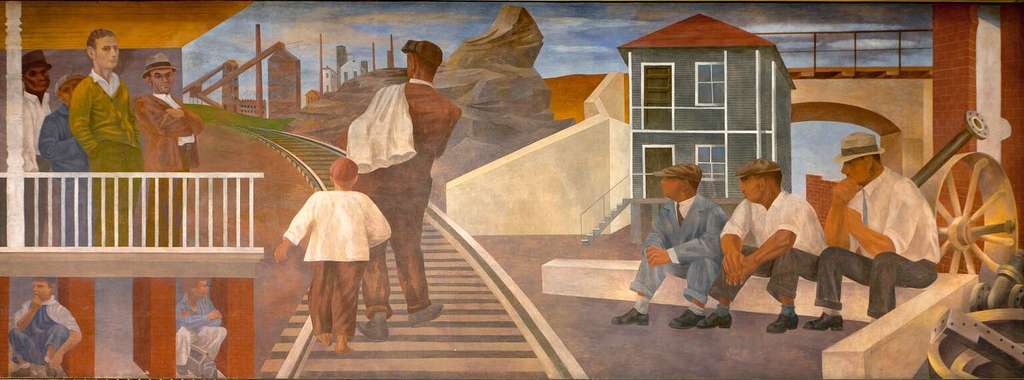
Art as Memorial
Though not created for Memorial Day itself, many WPA murals serve as acts of remembrance — for veterans of war, yes, but also for the everyday Americans who endured crisis through work, solidarity, and imagination.
Some murals explicitly honor those lost in World War I, painted just as the world edged toward World War II. Others capture the agricultural backbone of the country — farmers, mothers, mill workers — reminding us that defense takes many forms.
In schools, murals often depict education as patriotism. In post offices, they affirm communication and connection. And in town halls, they show local workers as national heroes.
The Murals Today
Many WPA murals are being restored, protected, and reinterpreted today, thanks to historical societies, the Living New Deal project, and growing public interest in these quiet masterpieces.
Some have sparked debate, especially when they reflect the prejudices or limitations of their time. But others have been rediscovered with fresh eyes — especially murals by women artists, Indigenous painters, and Black muralists, whose contributions were often minimized or forgotten.
What remains consistent is the spirit behind the work: art created not in gilded studios, but in schools, city halls, train stations — for the people, by the people.
To explore additional WPA mural locations, histories, and preservation efforts across the United States, visit the WPA Murals project at https://www.wpamurals.org/
Recommended Reading
Fiction
- The Grapes of Wrath by John Steinbeck
A novel of displacement, dignity, and perseverance that shares the same spirit and timeframe as the WPA movement. - The Day of the Locust by Nathanael West
A searing portrait of desperation and illusion in Depression-era America, from the perspective of an artist in exile. - North River by Pete Hamill
A lyrical novel set in 1930s New York, full of atmospheric detail and the quiet heroism of working people.
Non-Fiction
- American Made: The Enduring Legacy of the WPA by Nick Taylor
A sweeping, accessible history of the Works Progress Administration and how it shaped modern America. - When Art Worked: The New Deal, Art, and Democracy by Roger G. Kennedy
A richly illustrated volume exploring how New Deal art, including murals, redefined public space and collective memory. - Framing America: A Social History of American Art by Frances K. Pohl
A thoughtful look at how artists turned inward — to local communities and national themes — during the WPA years. - The Living New Deal Map Project (online resource)
A continually updated, interactive map documenting WPA-era public works — murals, buildings, sculptures — across the U.S.
