
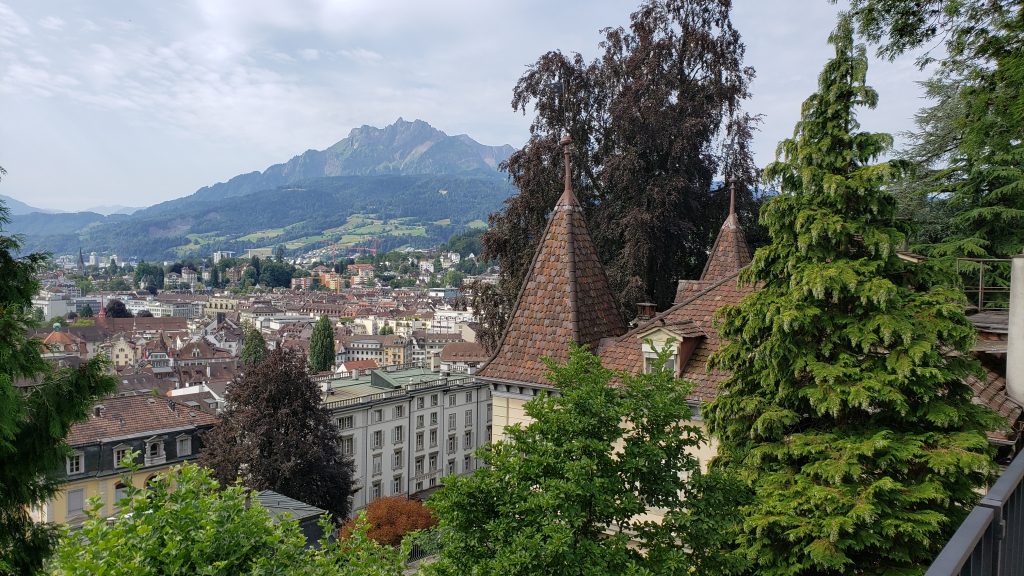
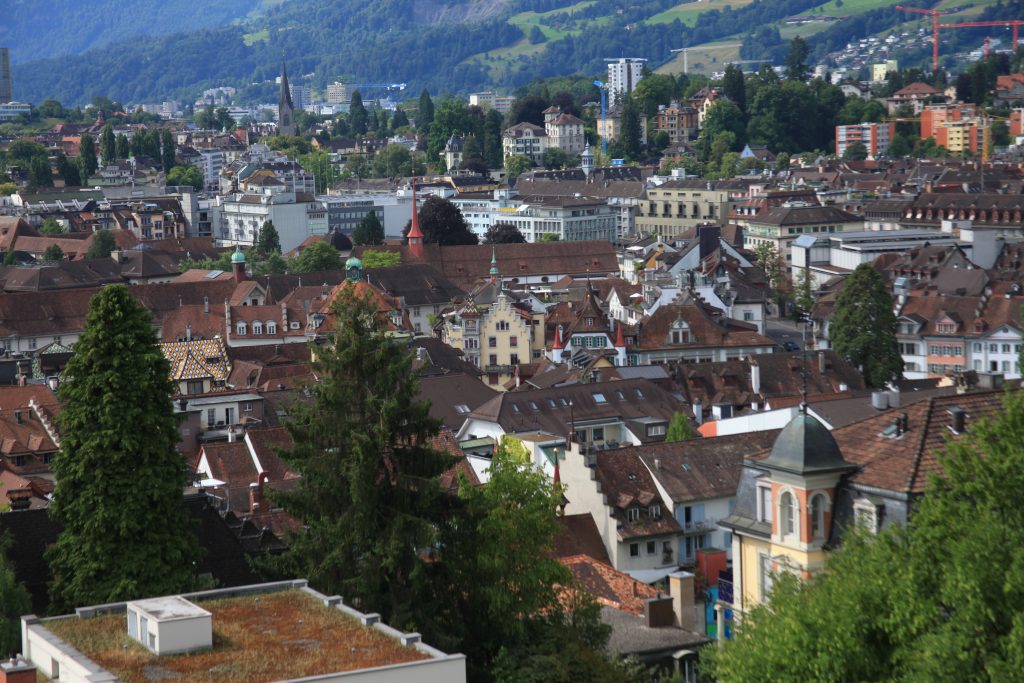
Lucerne, commonly overlooked by many travelers and happily less crowded, is tucked within a bowl in the northern foothills of the Swiss Alps. In the shadow of multi-peaked Mt. Pilatus, the city sprawls around the edge of the sparkling Lake Lucerne, with the old town hugging the lake’s outflow at the River Reuss. Lucerne is a jewel box of a town where medieval splendor appears at nearly every turn.
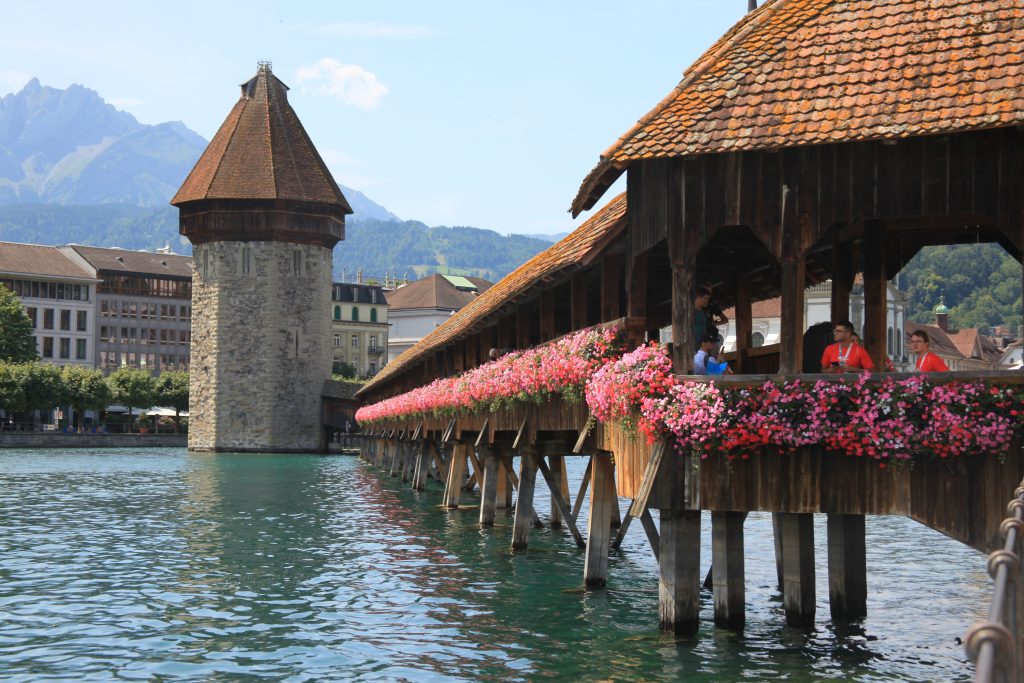
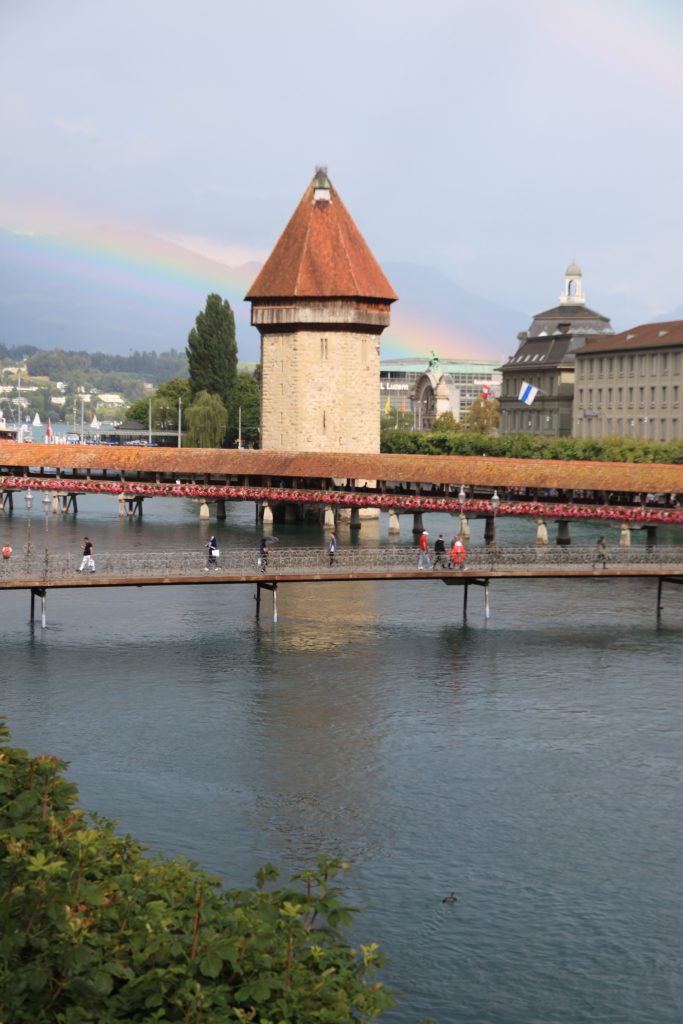
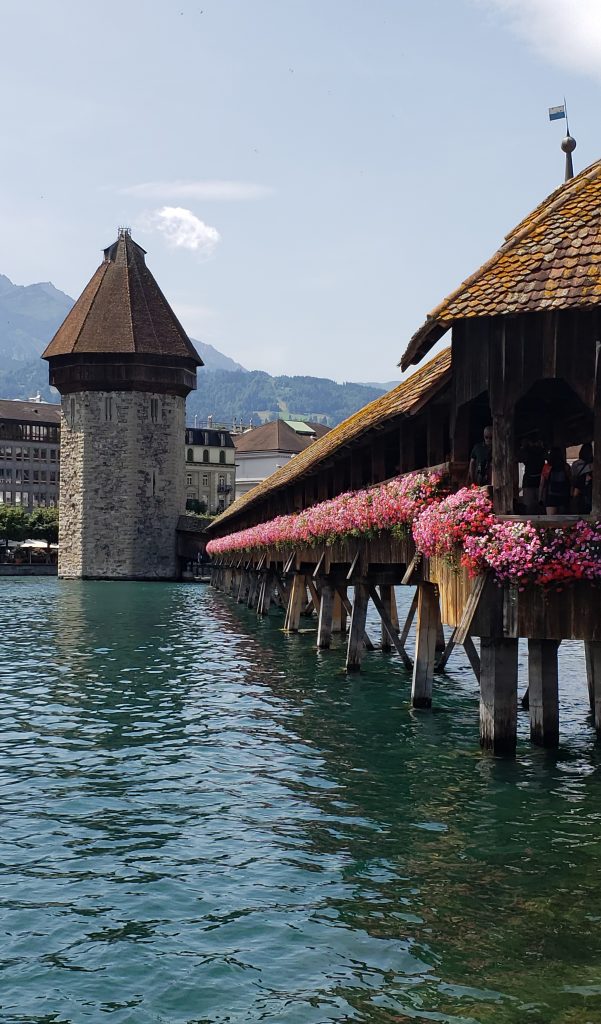
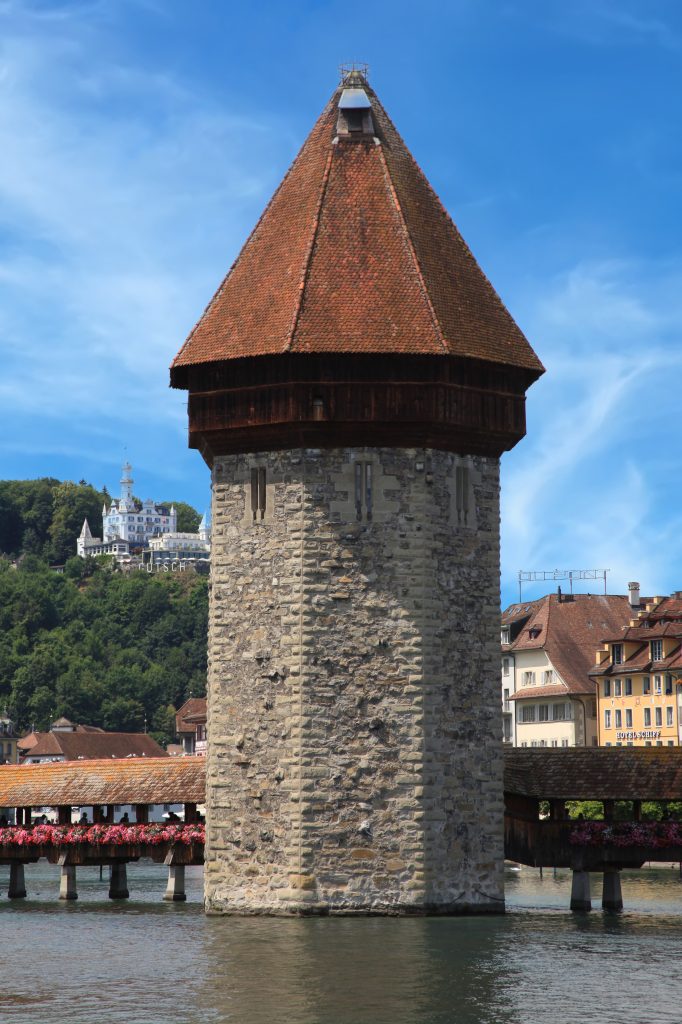
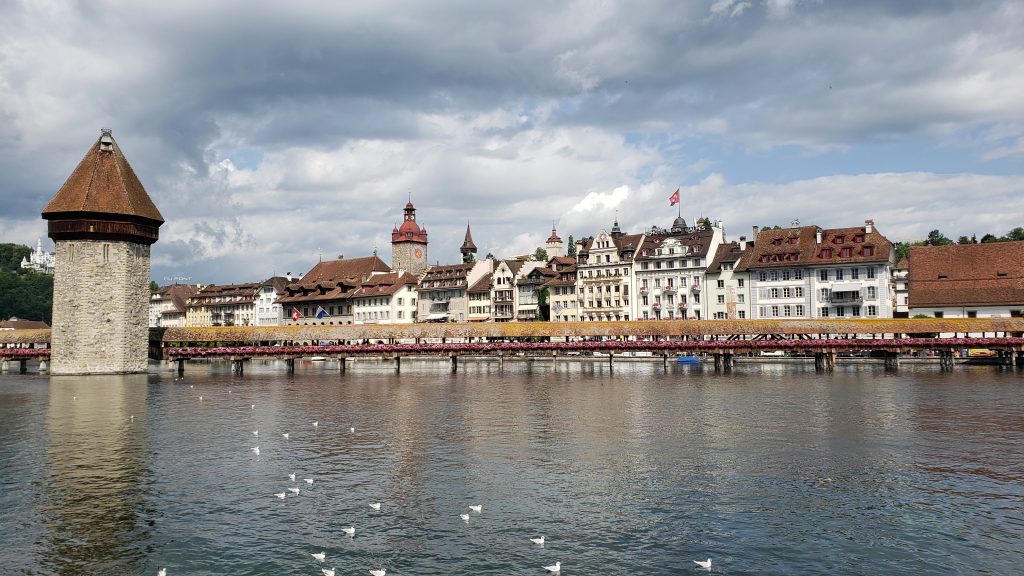
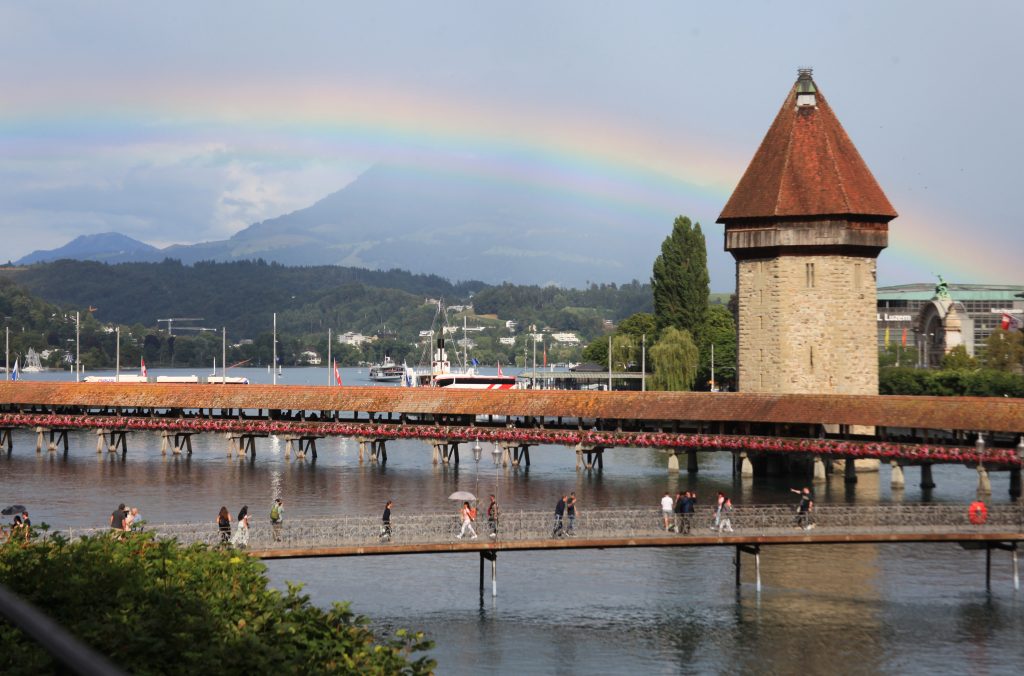
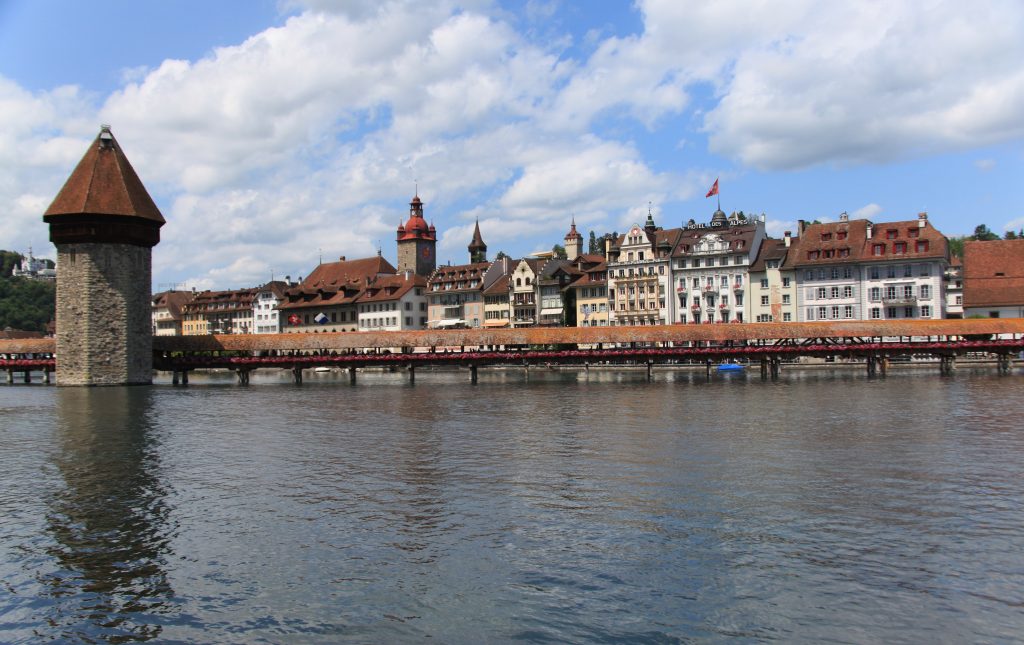
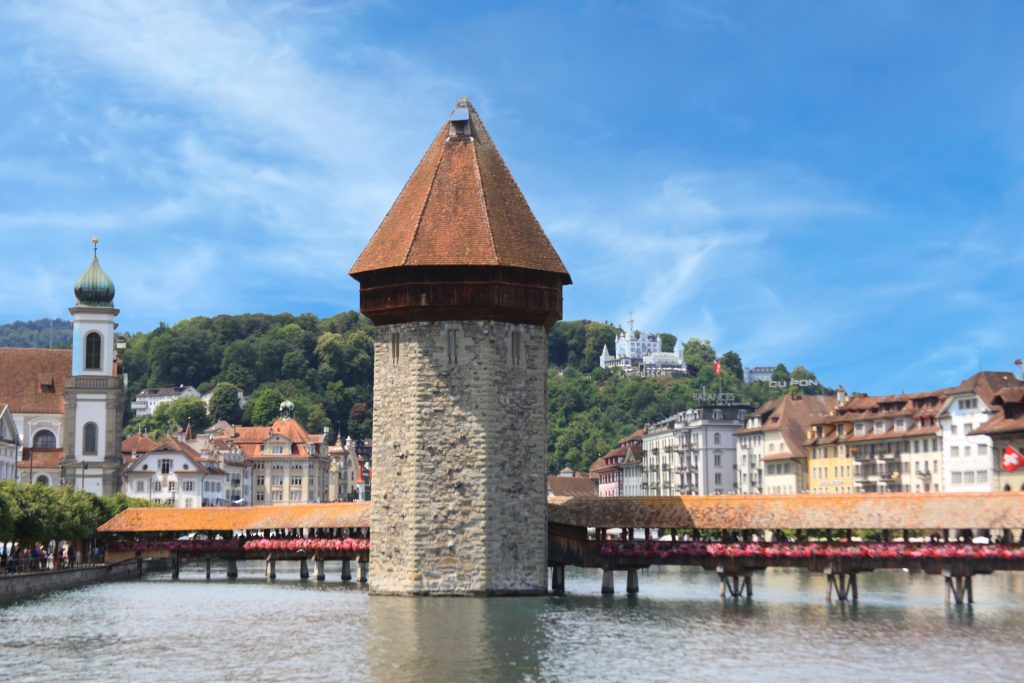
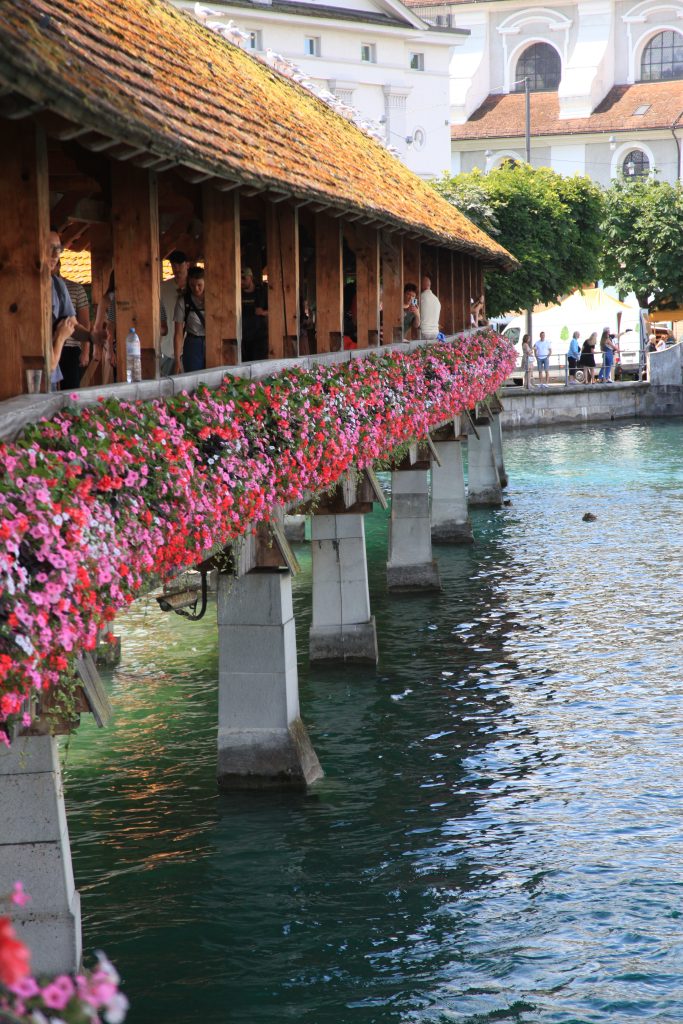
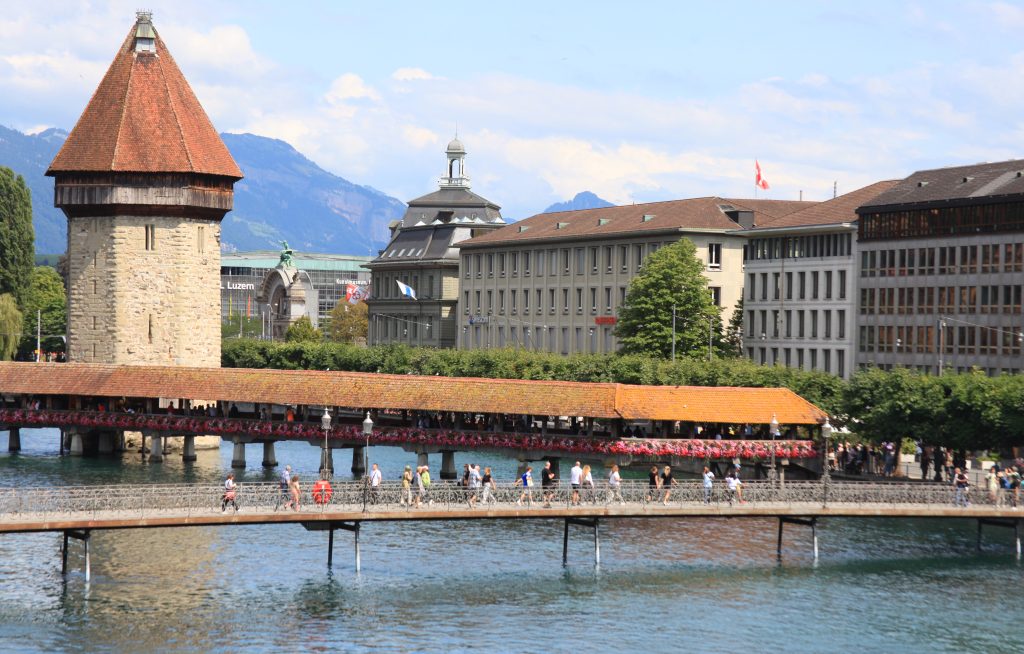
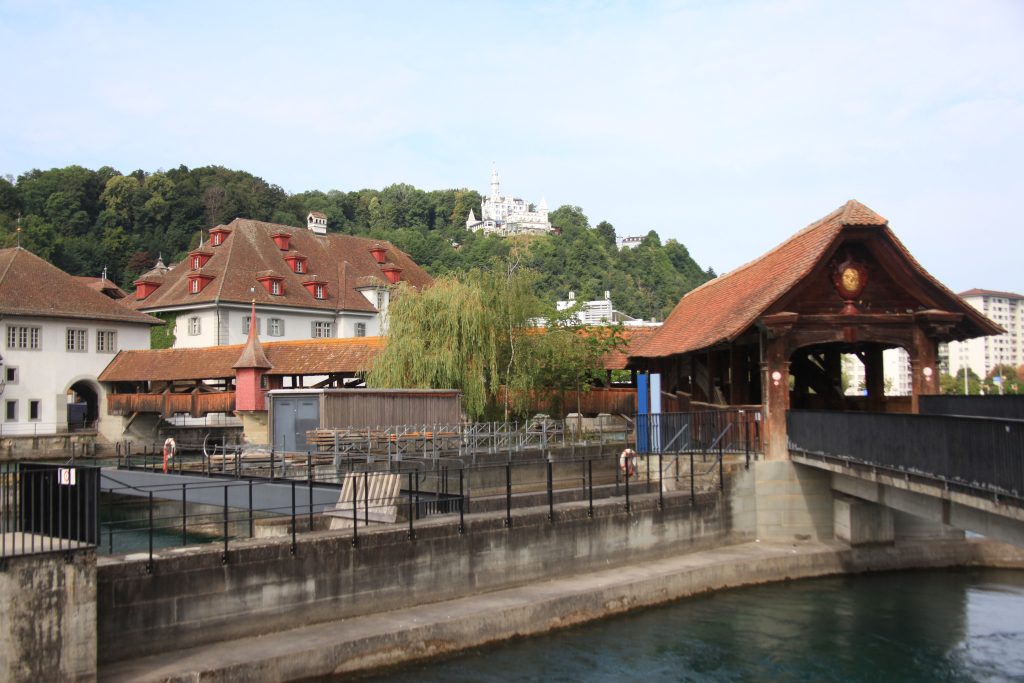
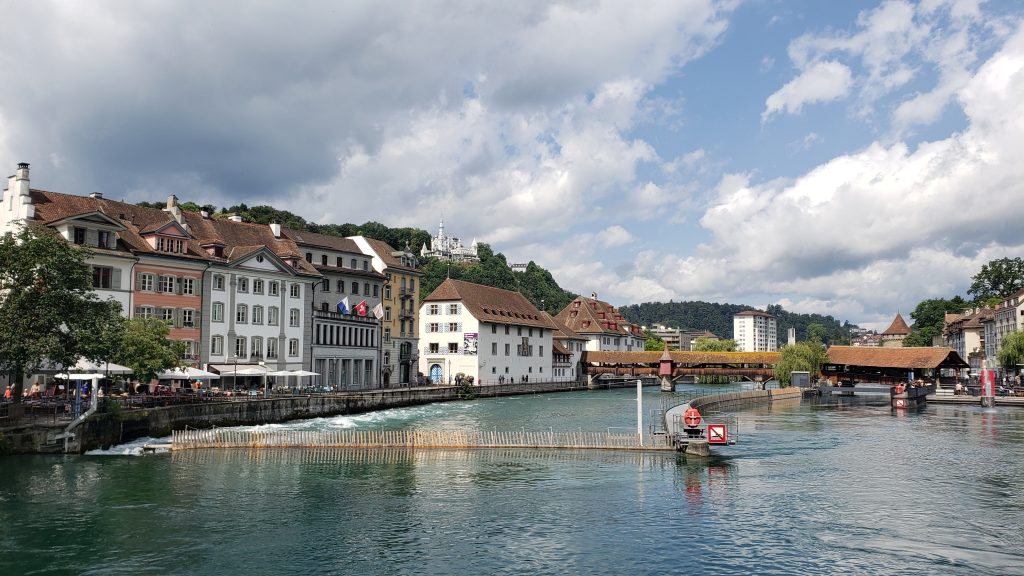
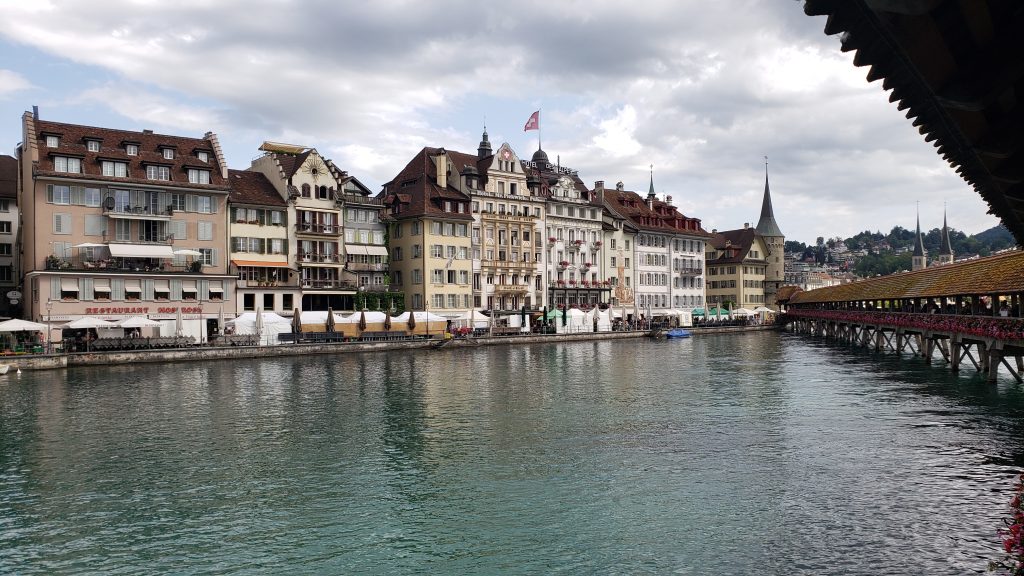
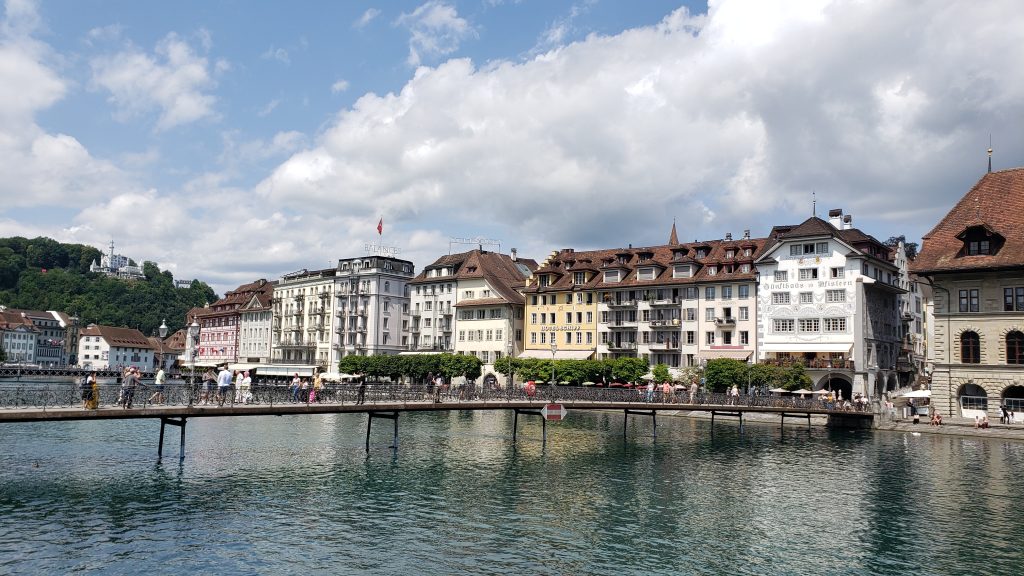
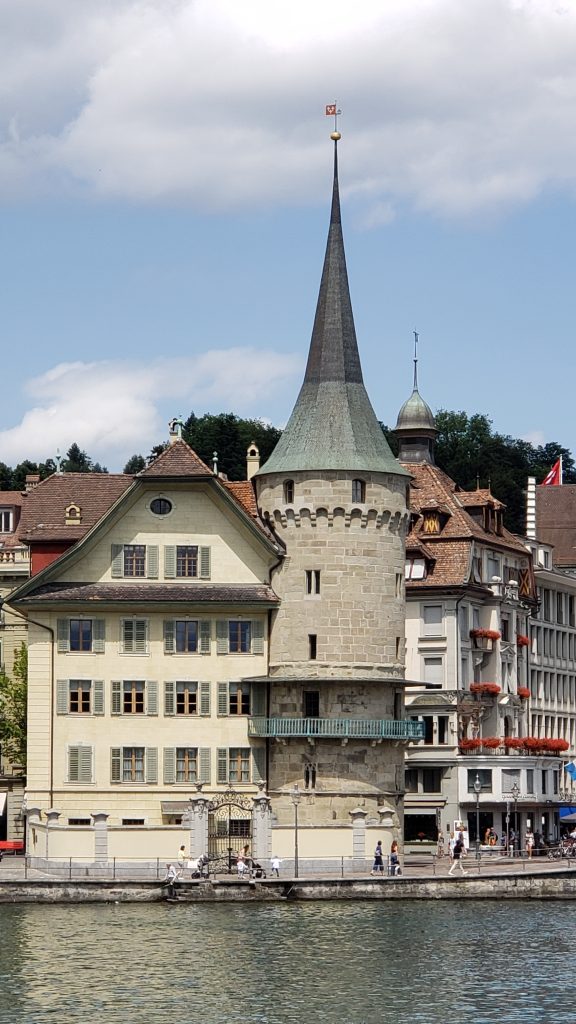
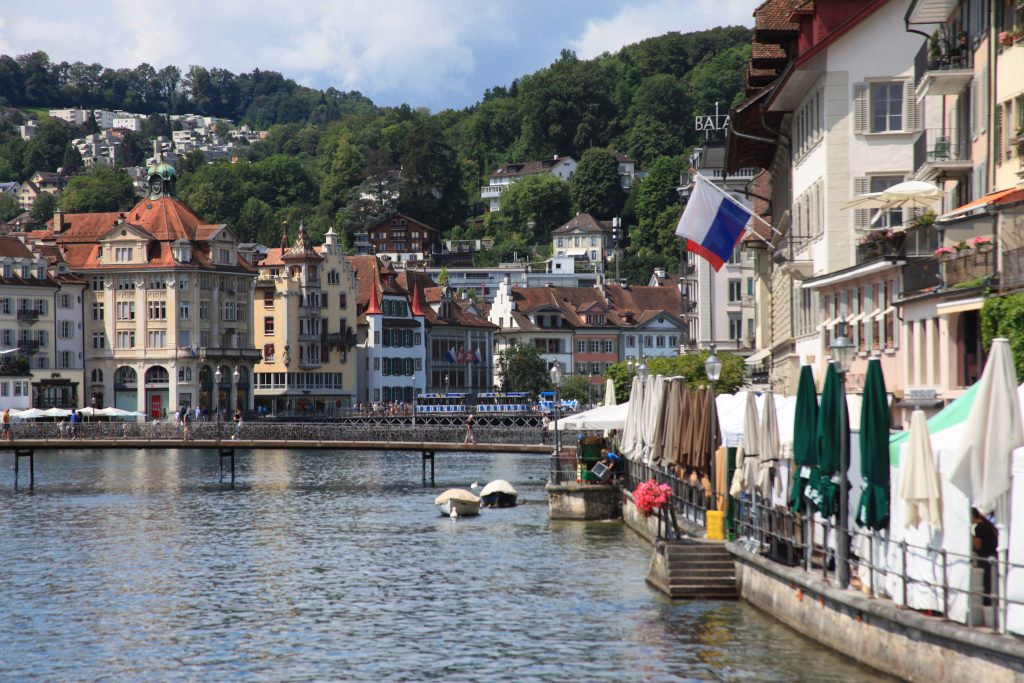
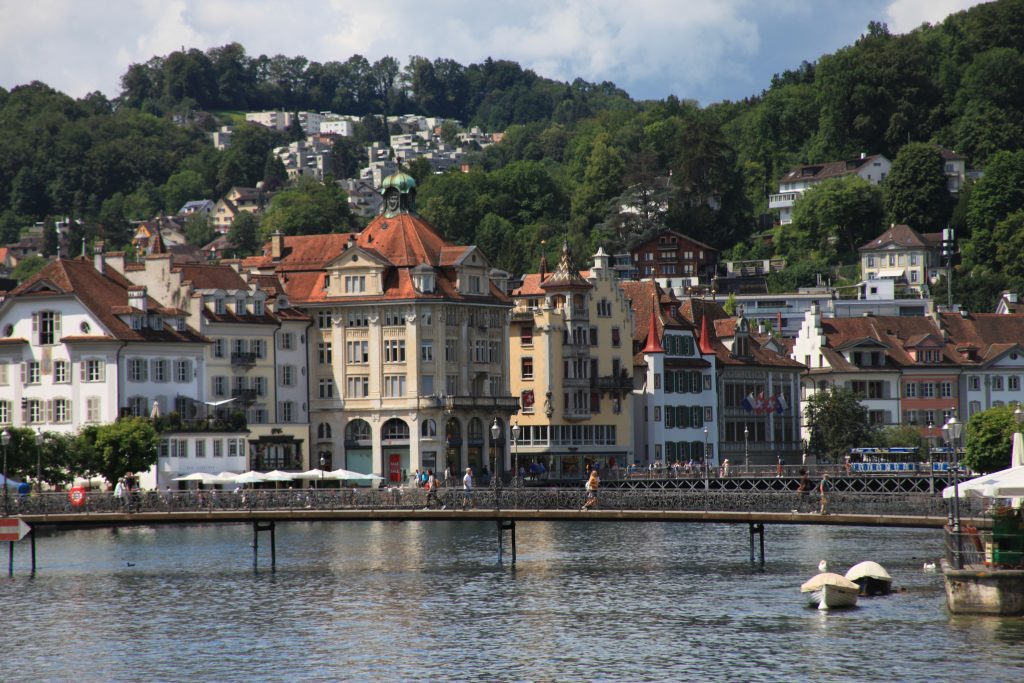
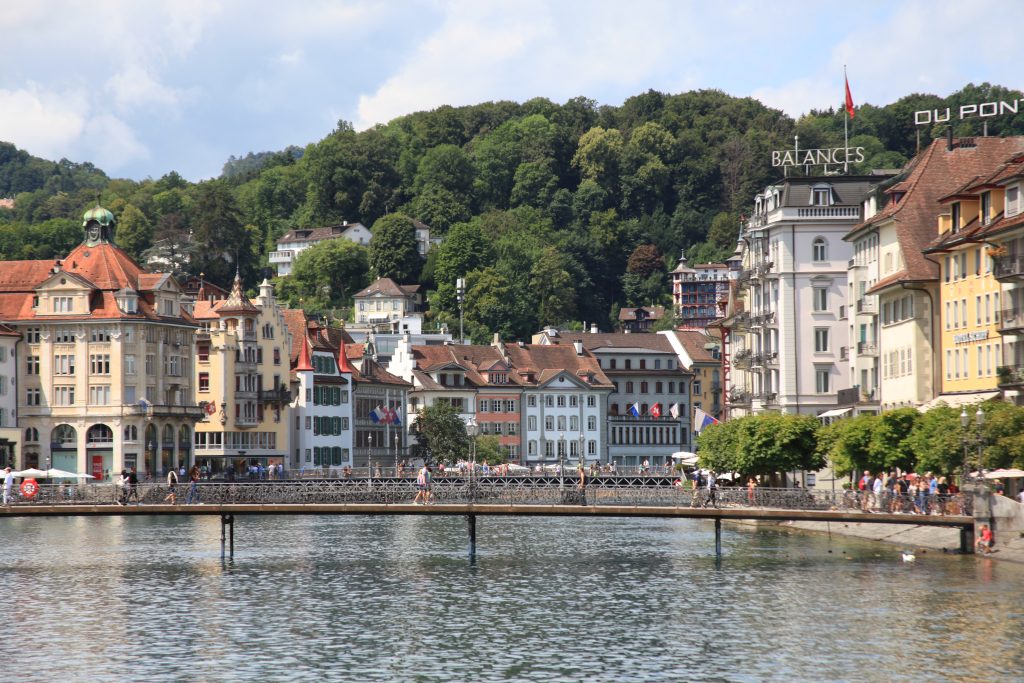
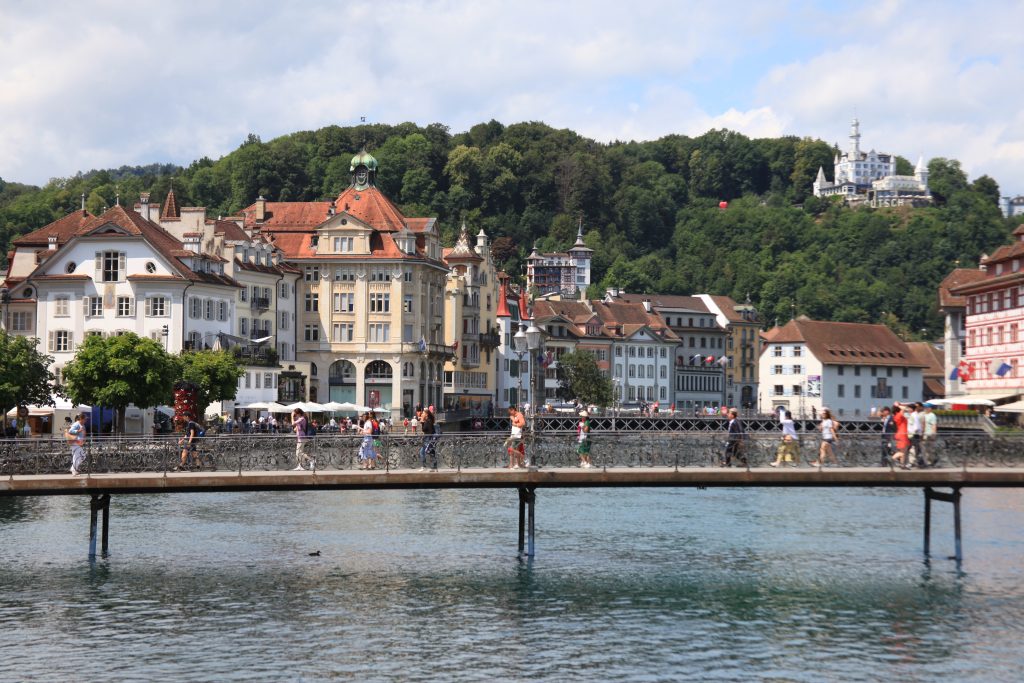
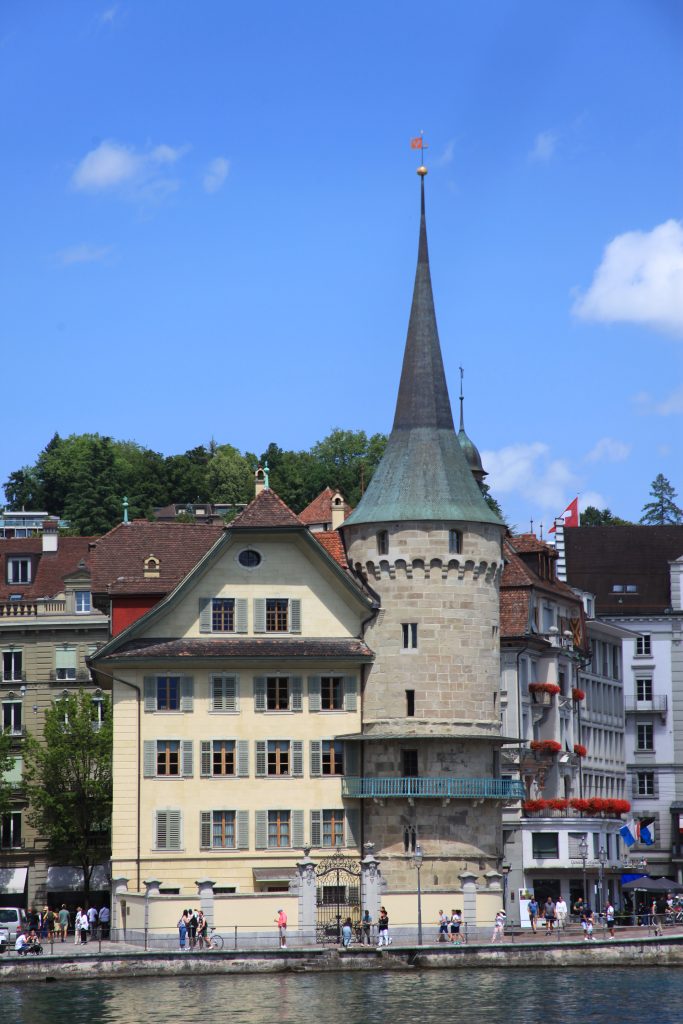
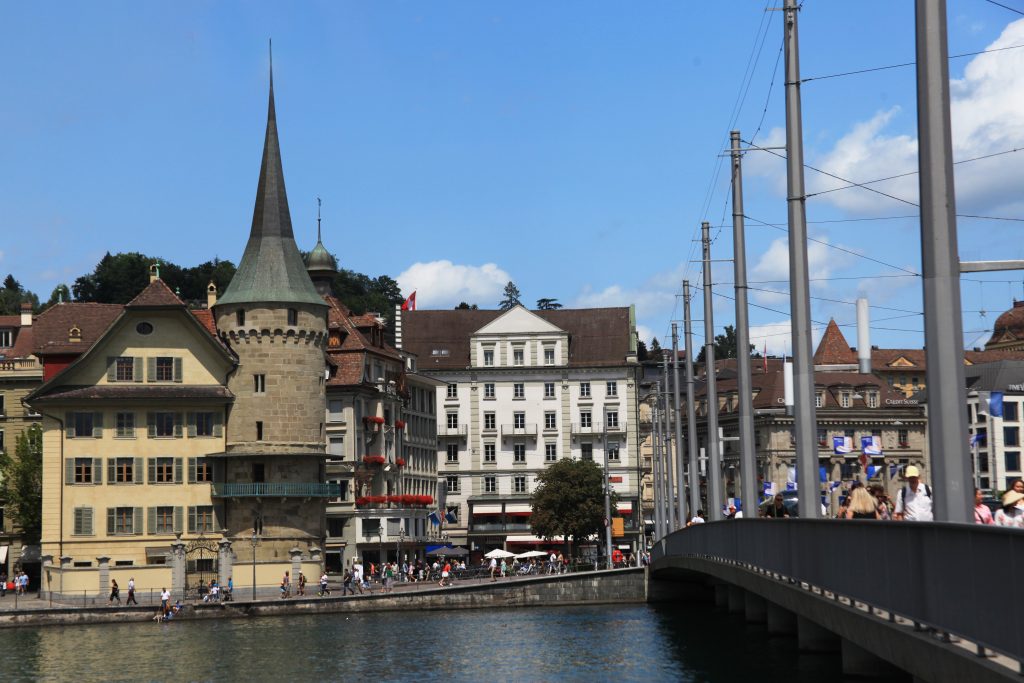
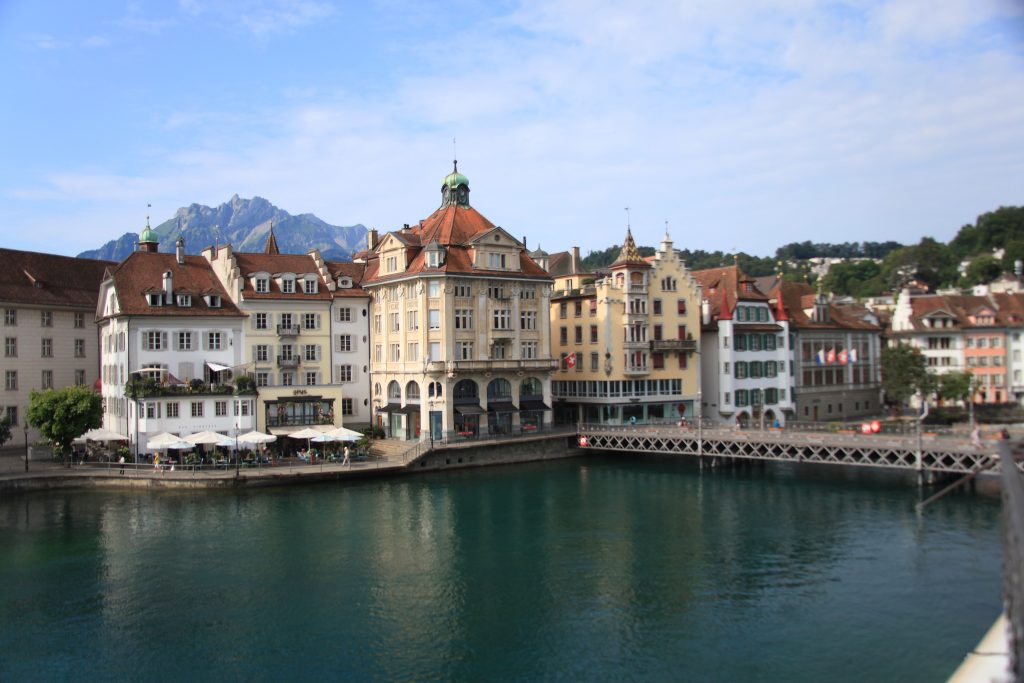
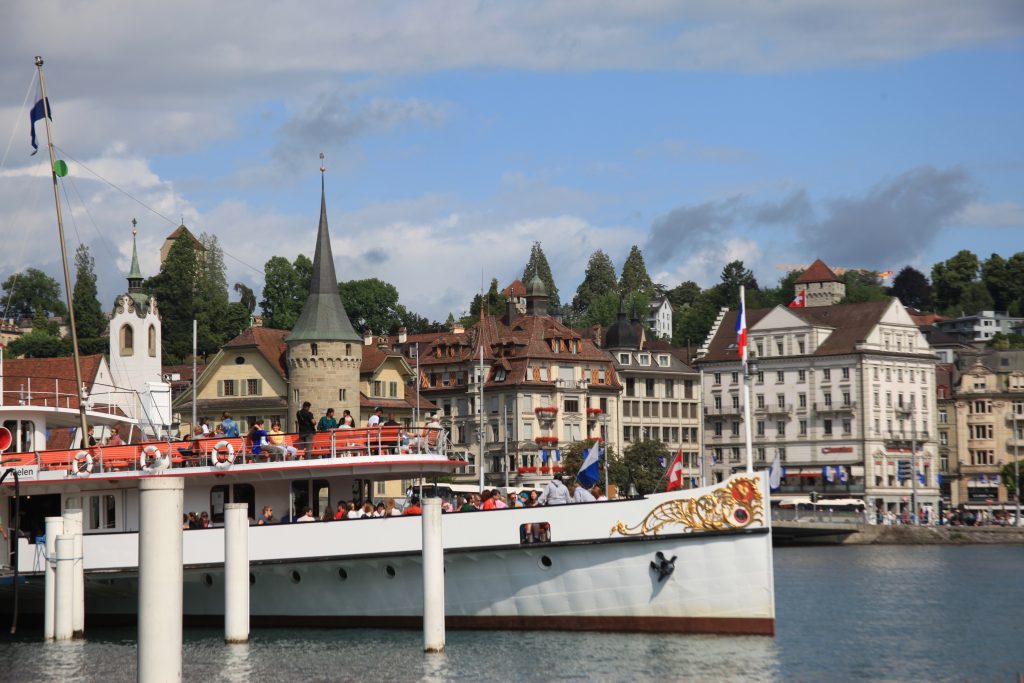
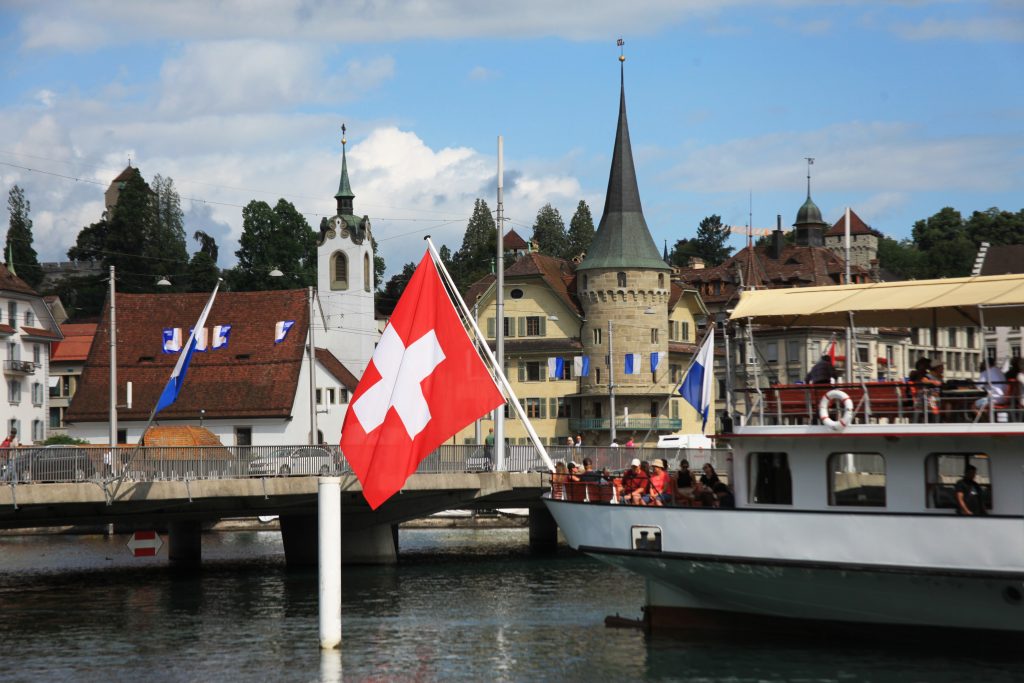
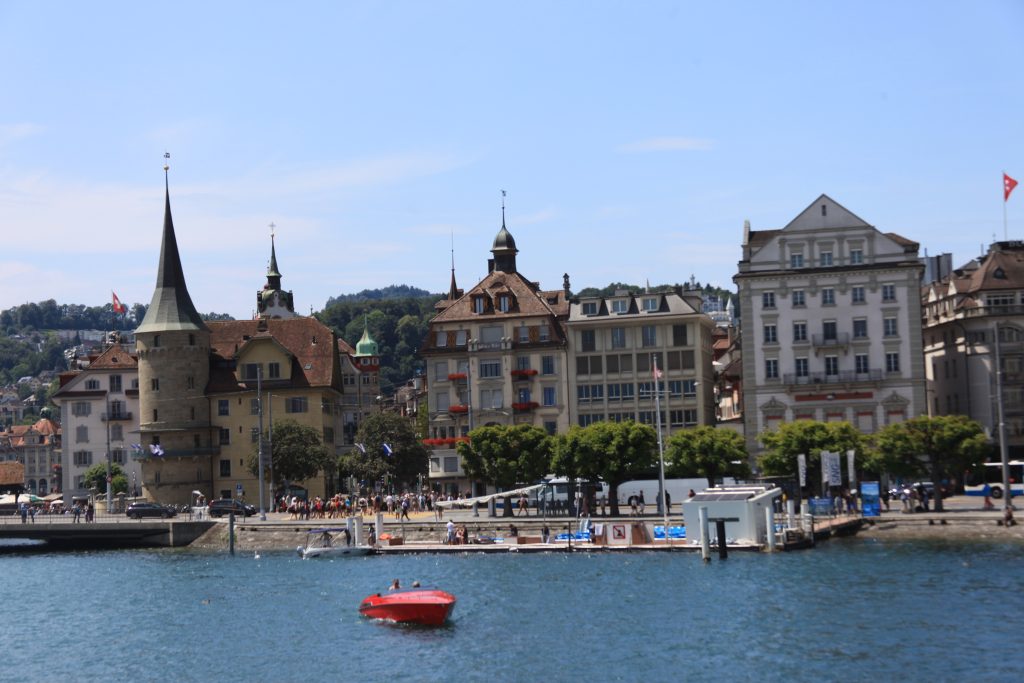
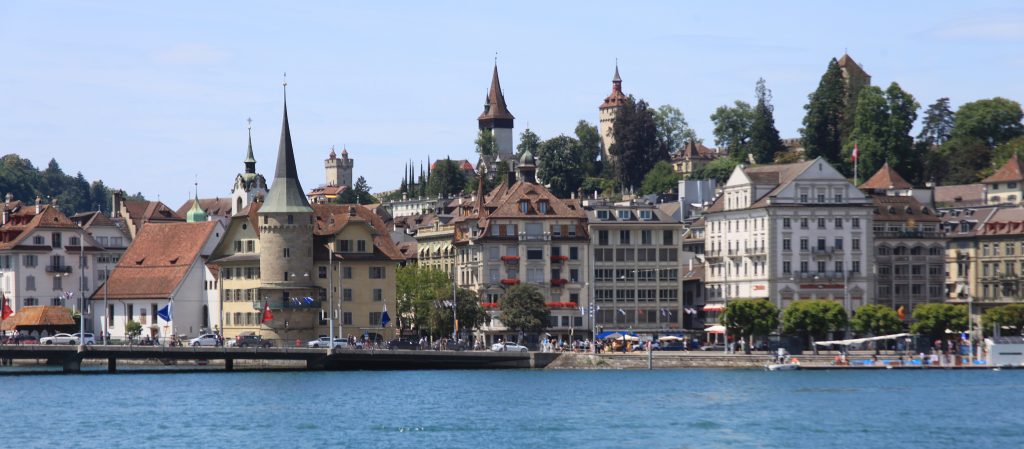
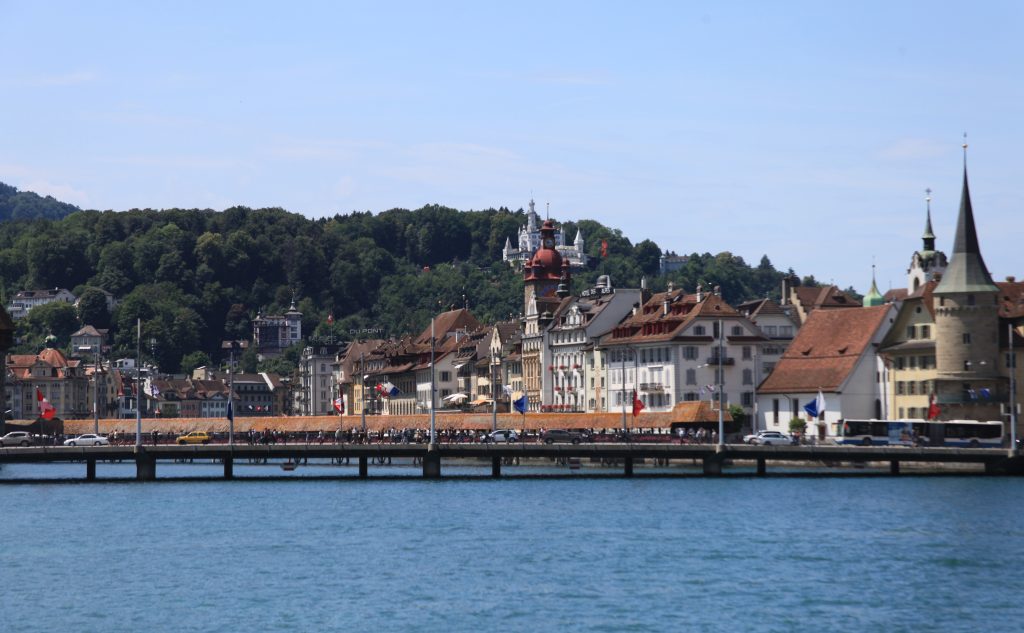
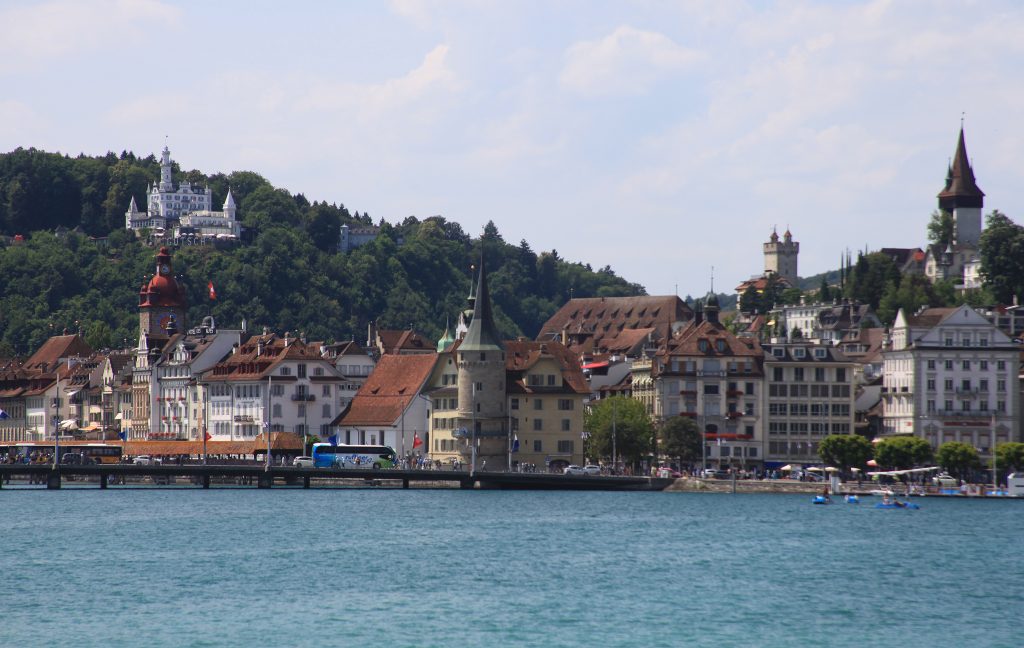
The most beloved and distinguished feature of Lucerne is the Kapellbrücke, a flower-adorned covered wooden bridge spanning the Reuss diagonally, first erected in the 14th century and bisected by an octagonal stone water tower (the Wasserturm) that was part of the city’s original fortifications. That tower has served as a prison, torture chamber, treasury, and city archive.
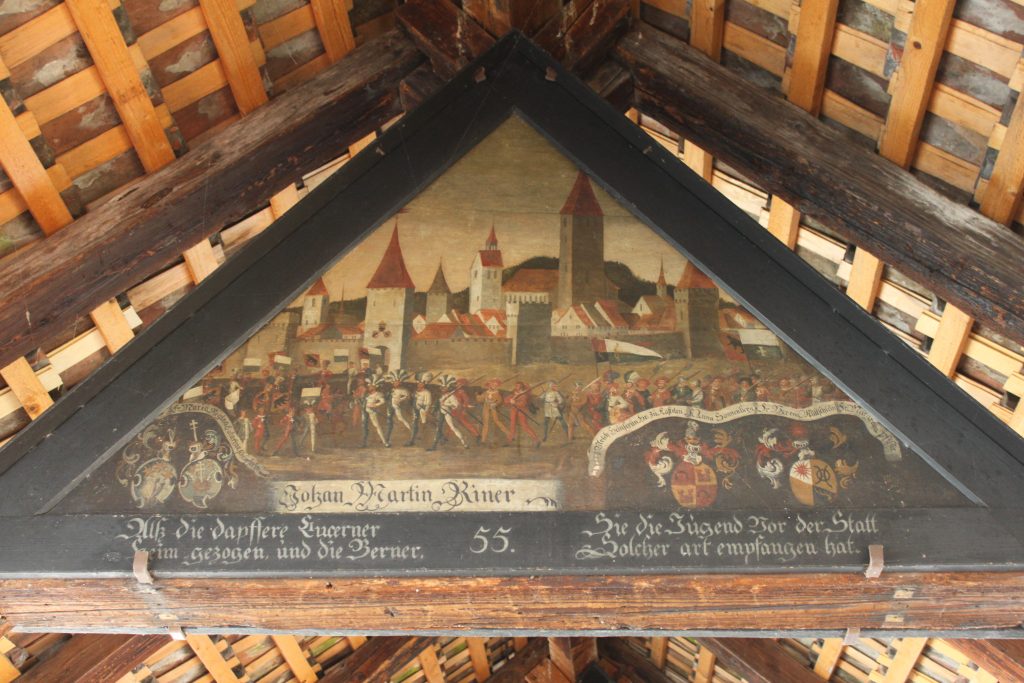
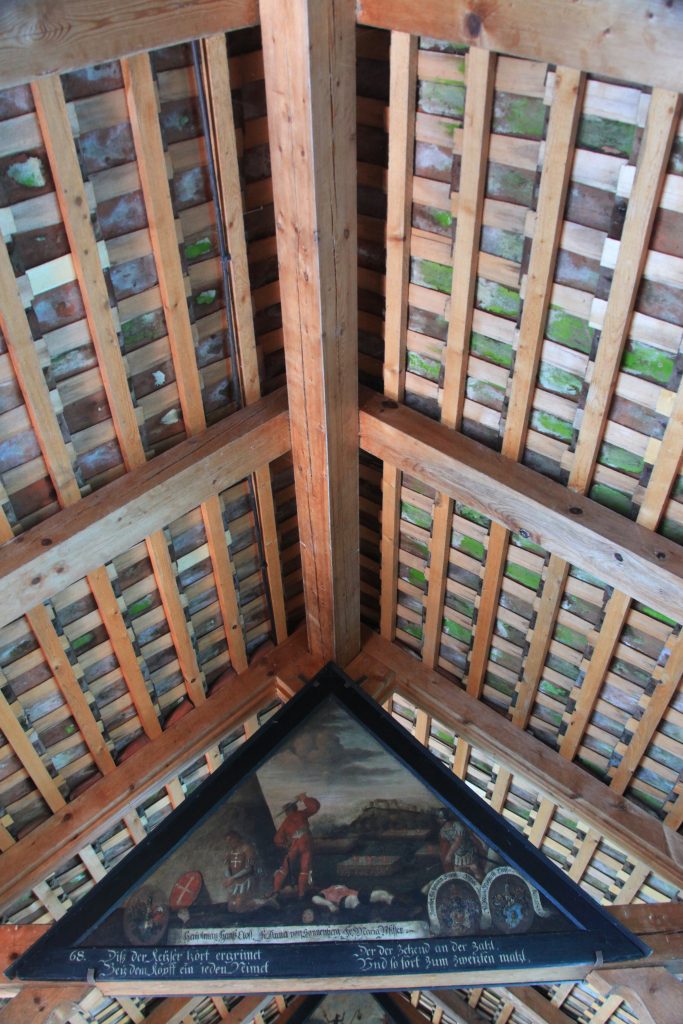
The scenic bridge makes Lucerne a photographer’s dream. From every angle, it is charming and picturesque. As eye-catching as it is, the interior deserves equal attention. Originally 158 14th-century paintings depicted scenes from the life and death of Lucerne’s patron saints St. Leger and St. Maurice, proclaiming Lucerne proudly Catholic during the Counter-Reformation, graced the triangular roof frames. But a 1993 fire destroyed all but the 30 you see today. Look downriver to spot the Spreuerbrücke, a 16th-century covered wooden bridge adorned with 45 paintings from a Danse Macabre, known as Totentanz.
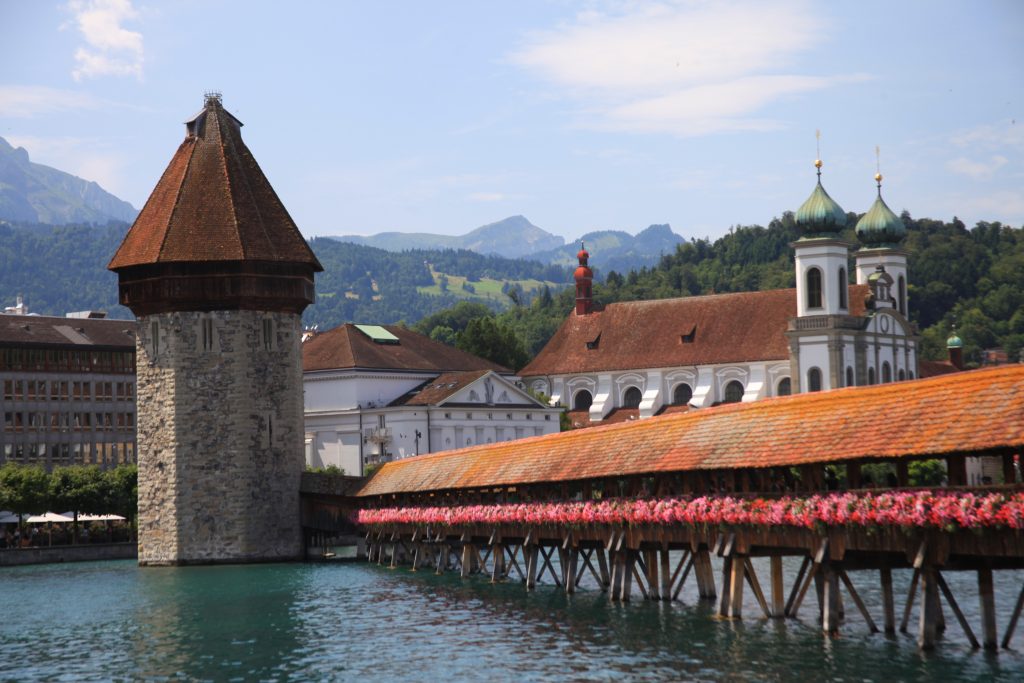
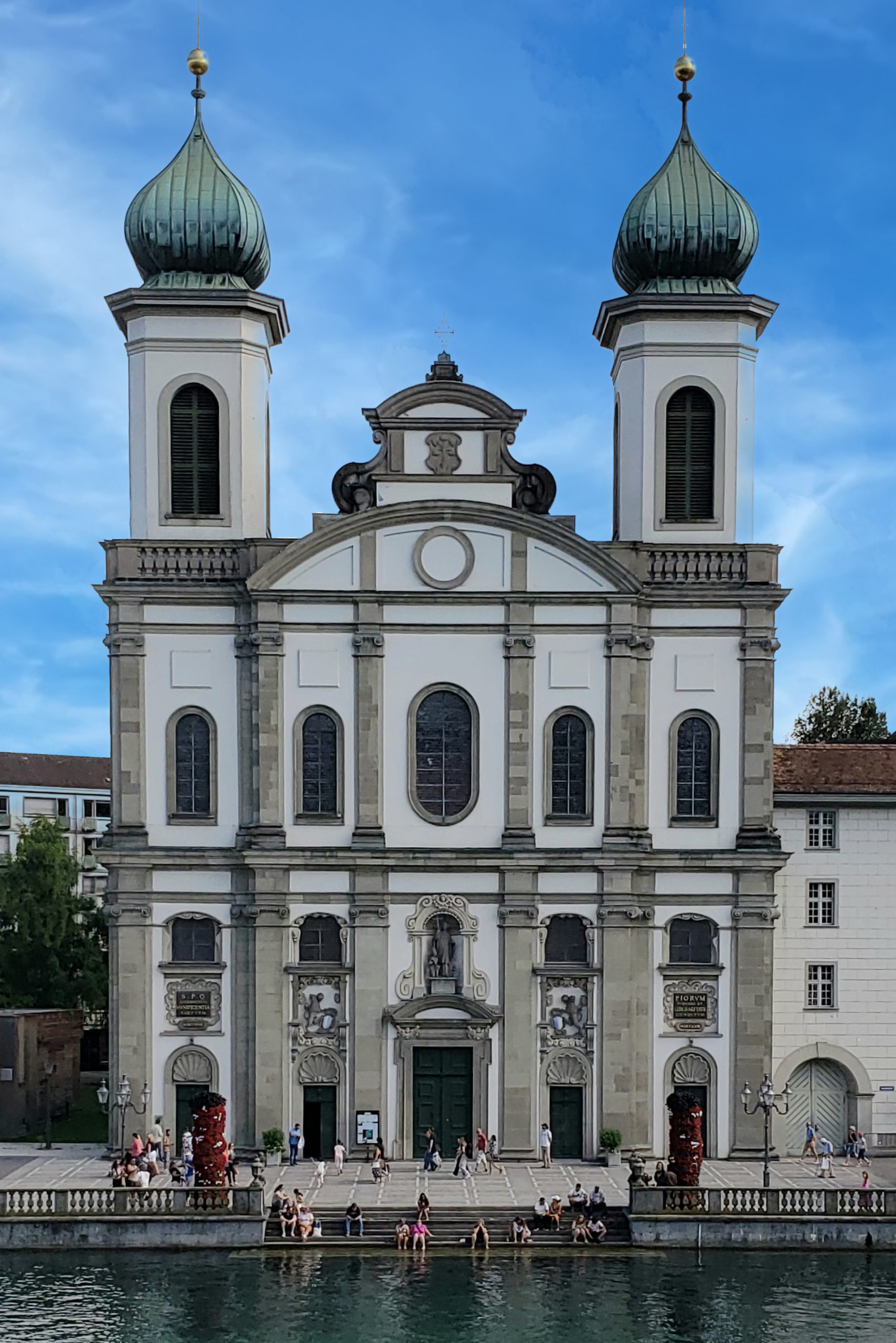
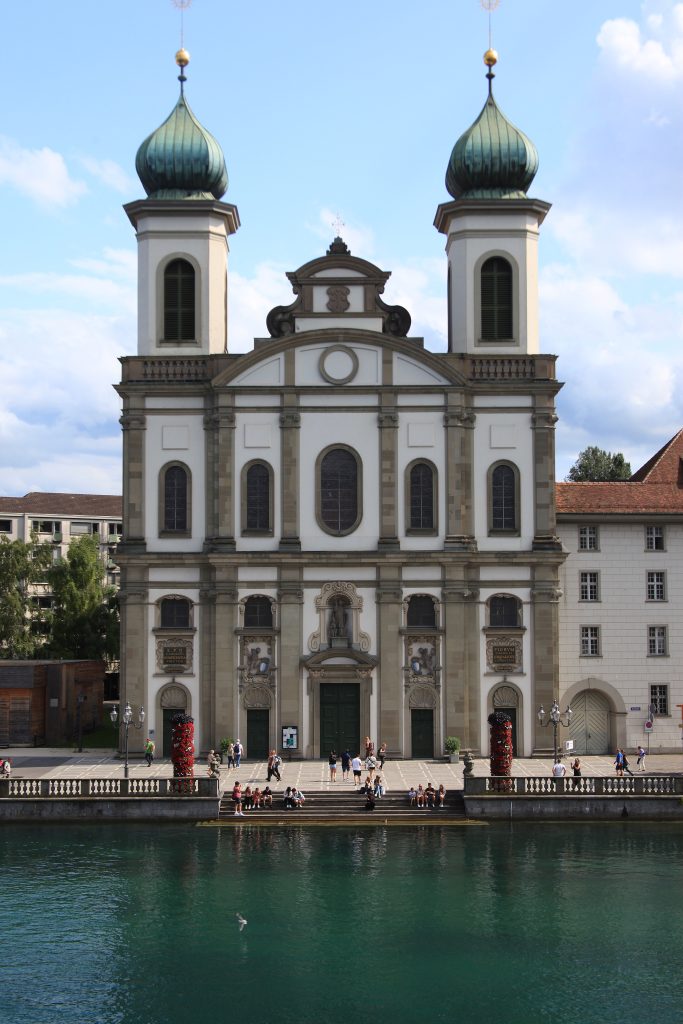
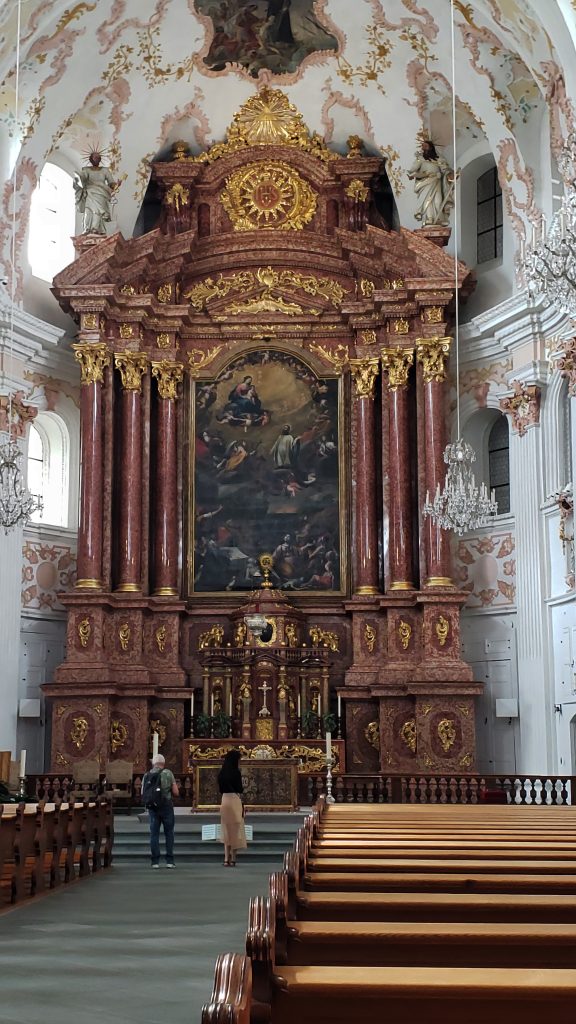
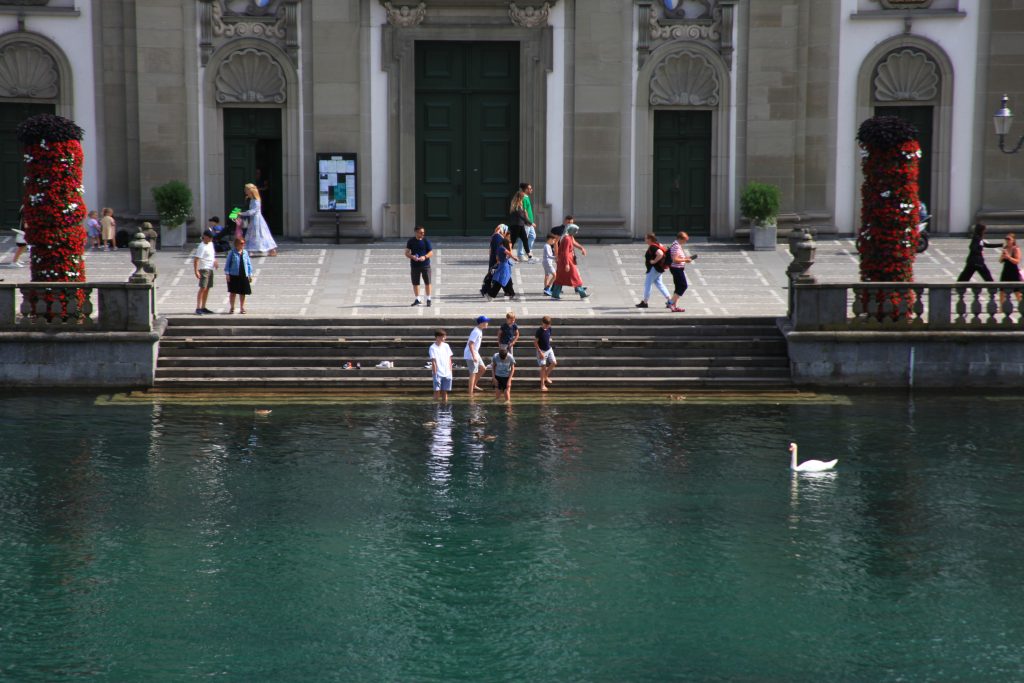
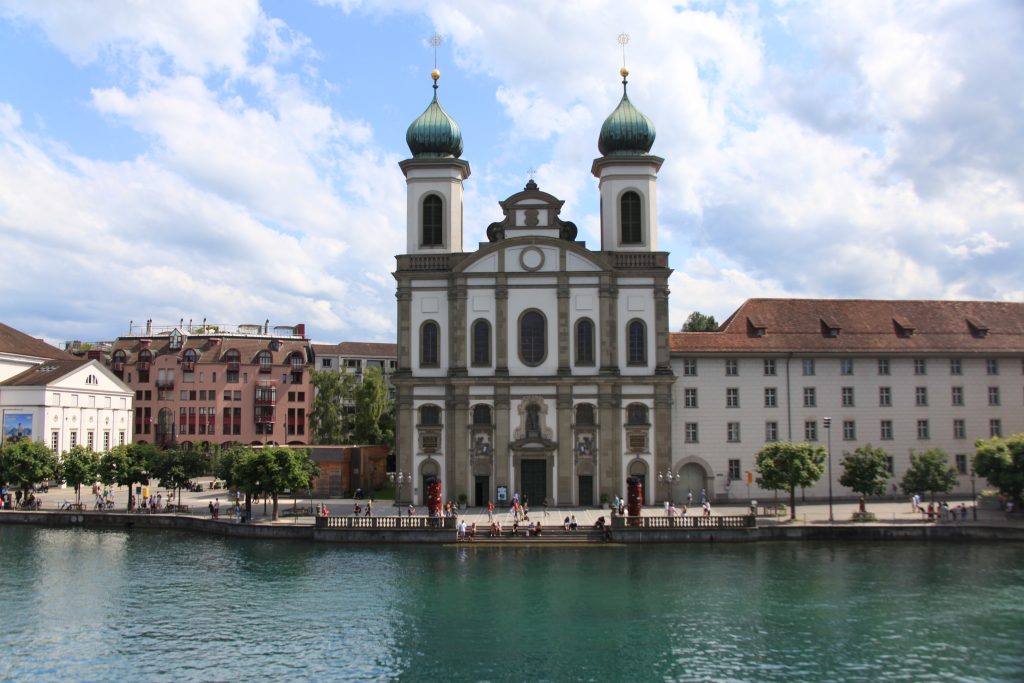
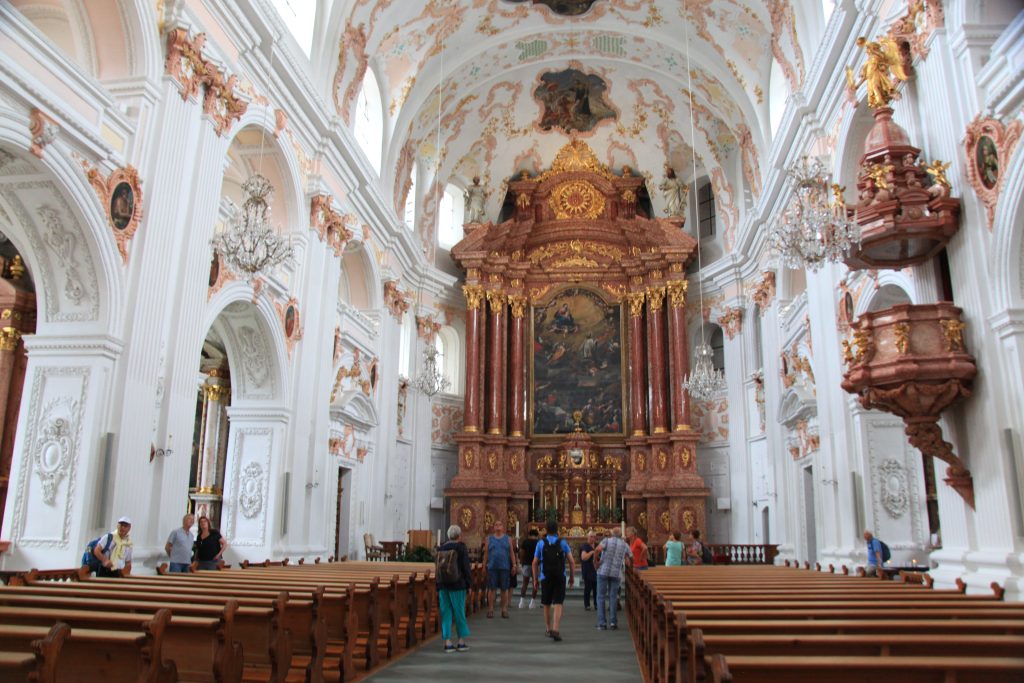
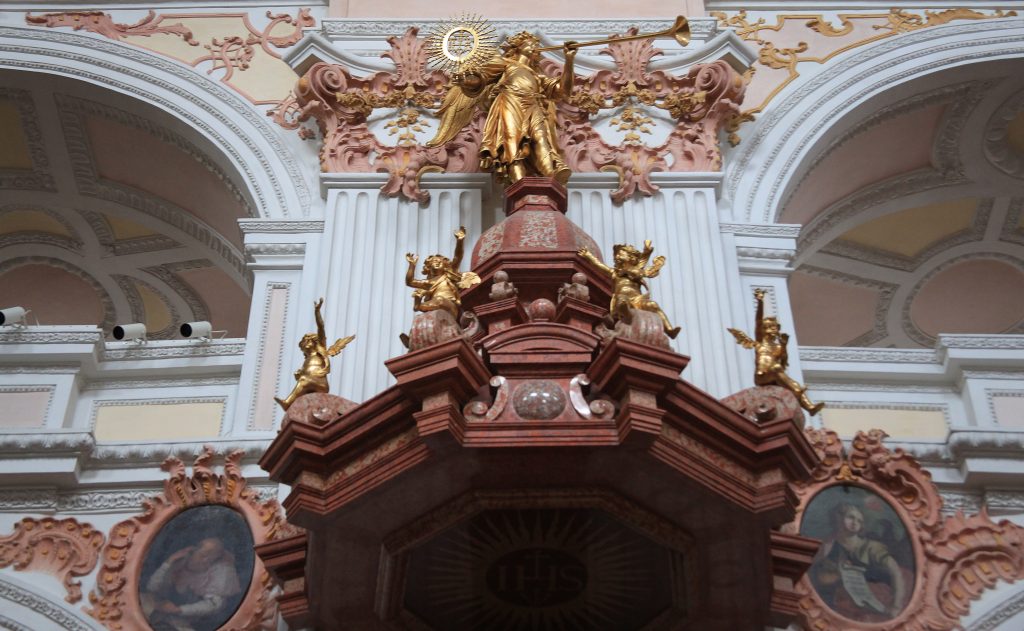
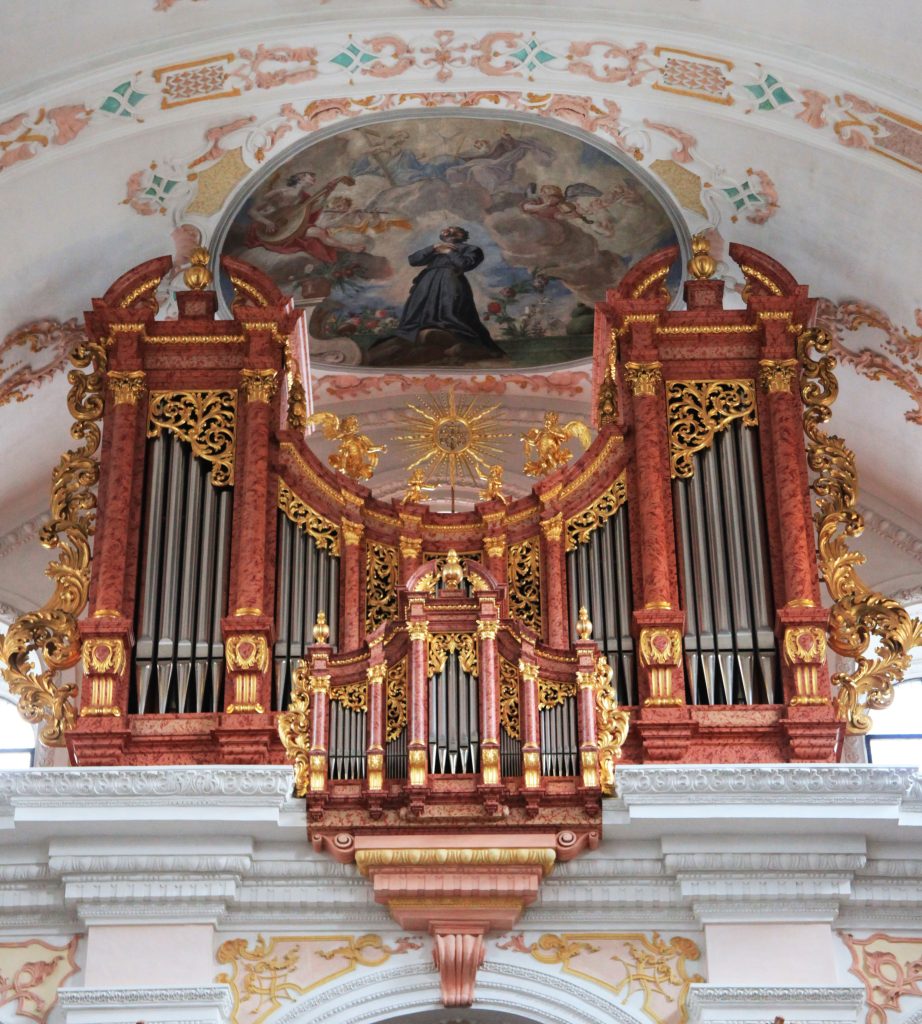
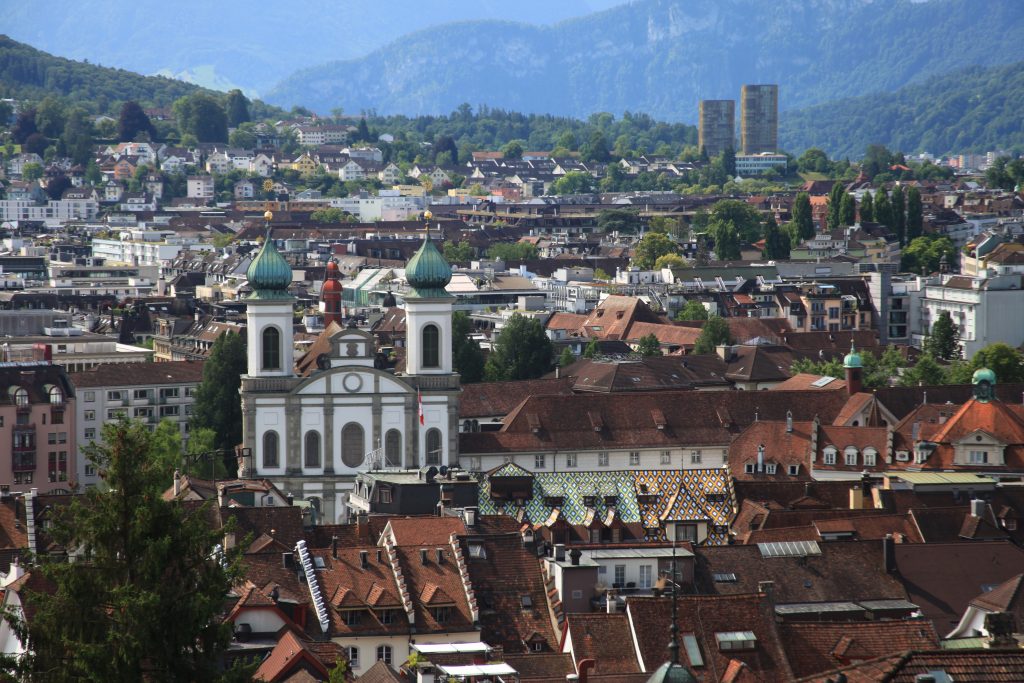
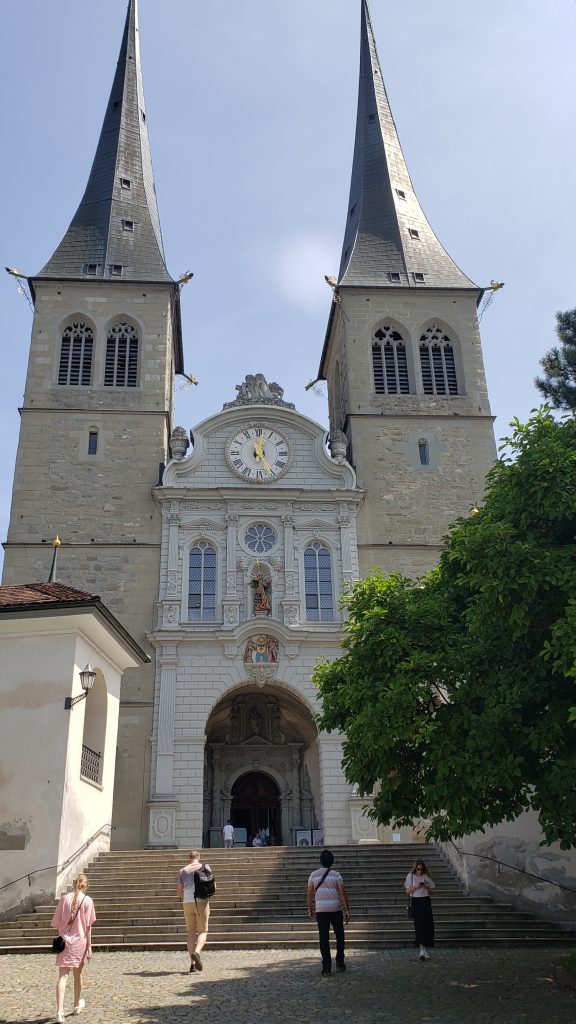
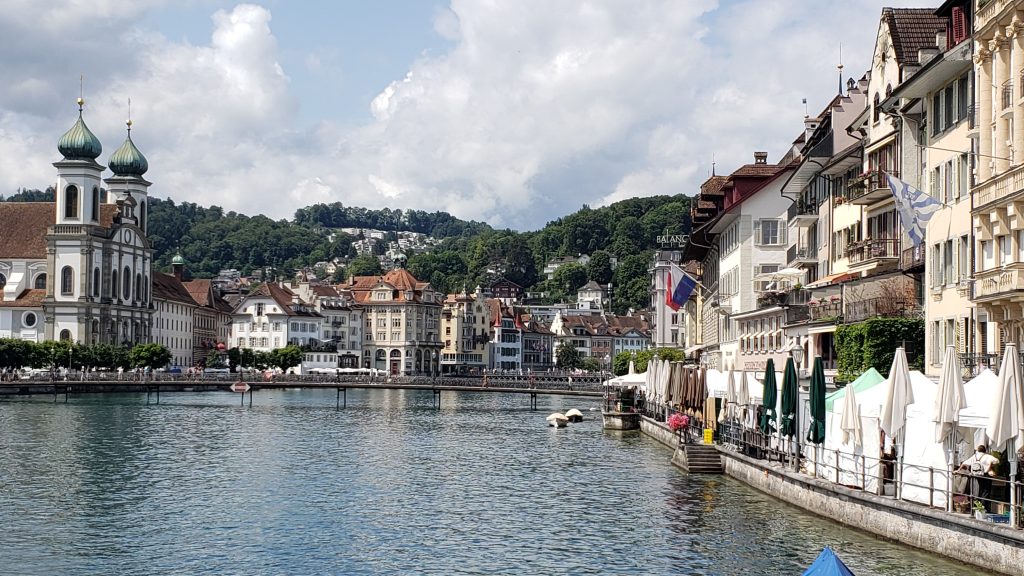
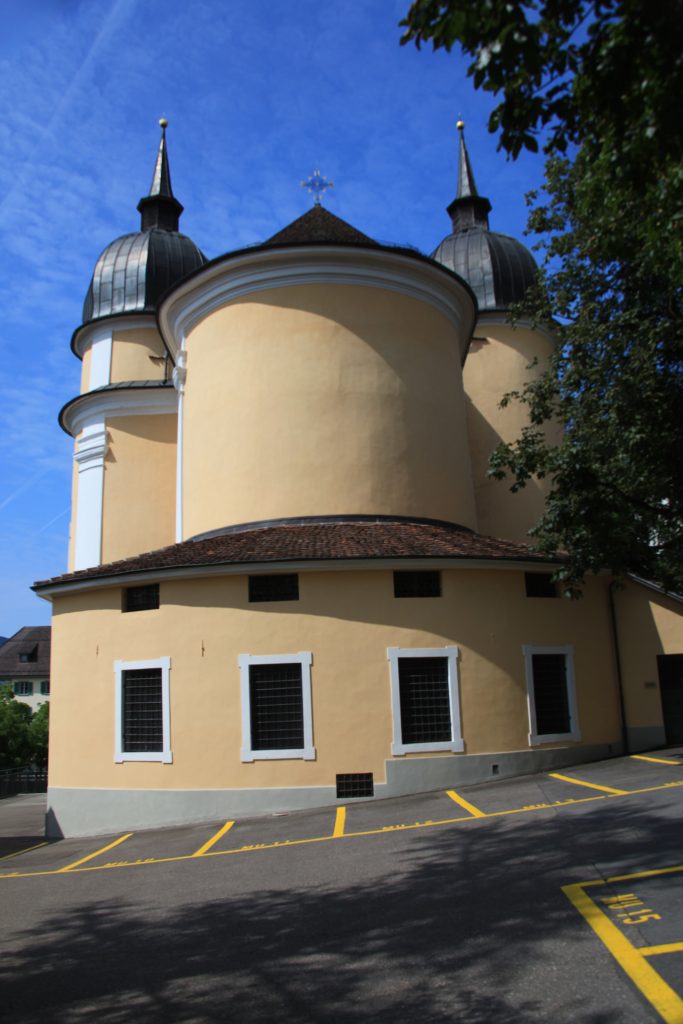
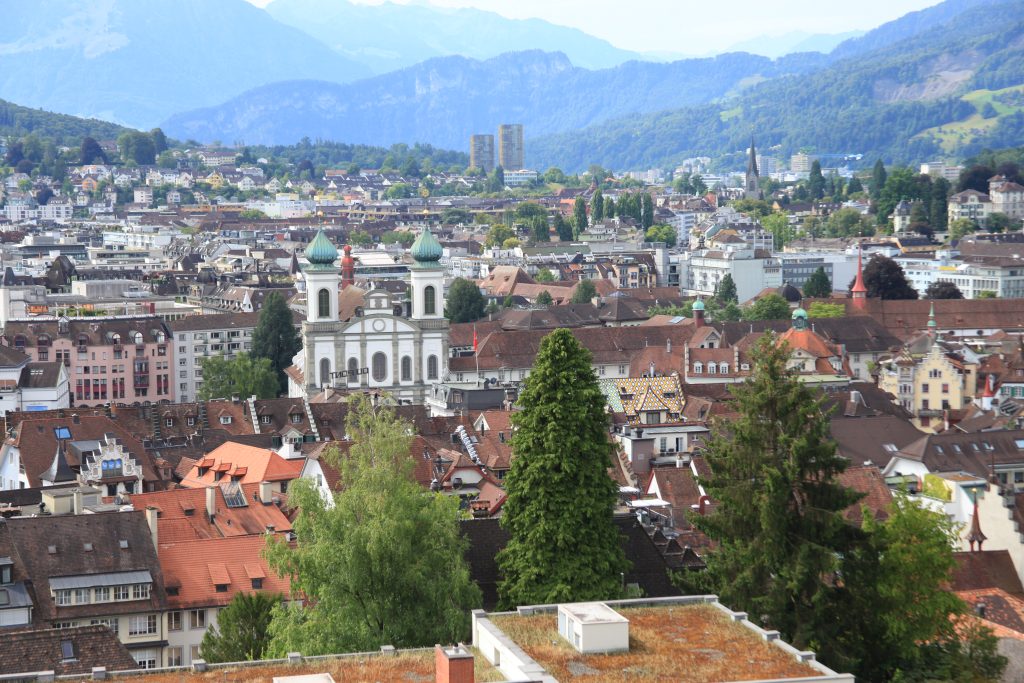
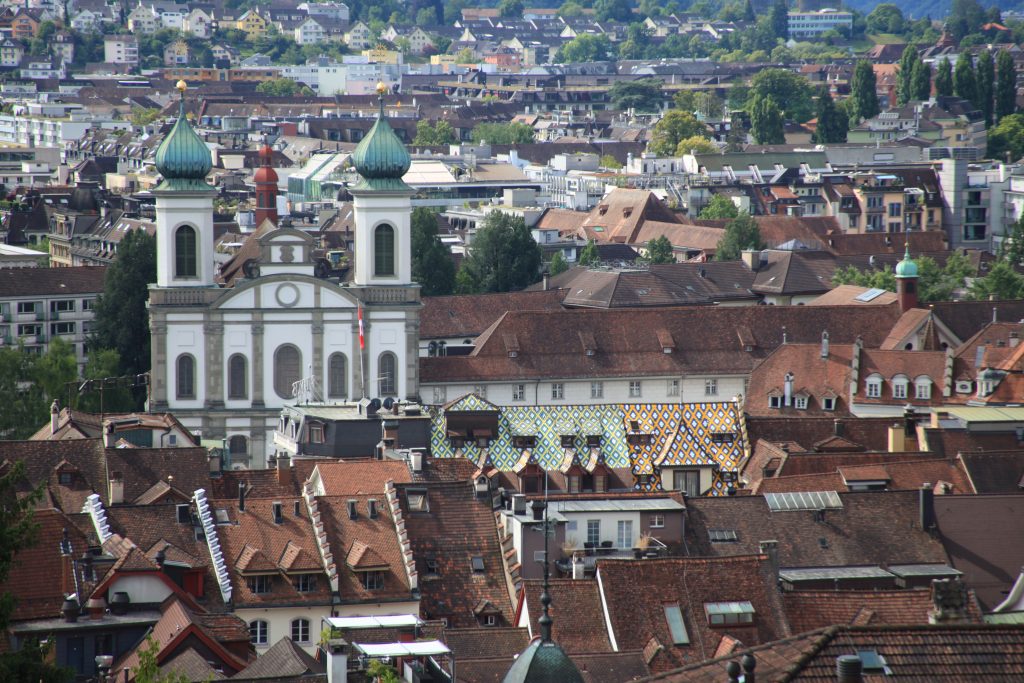
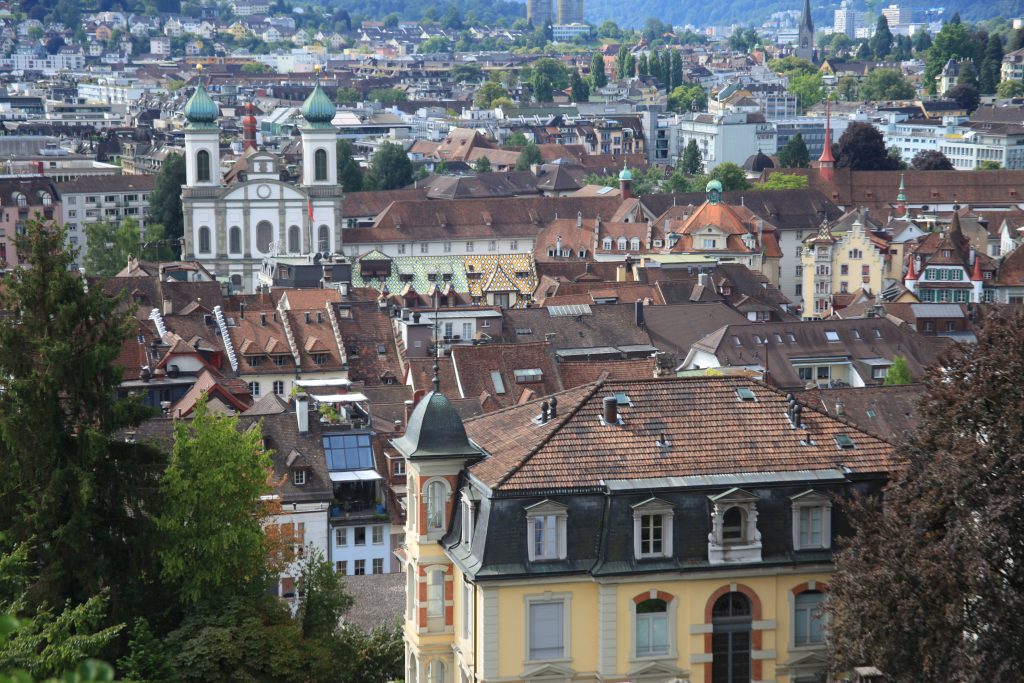
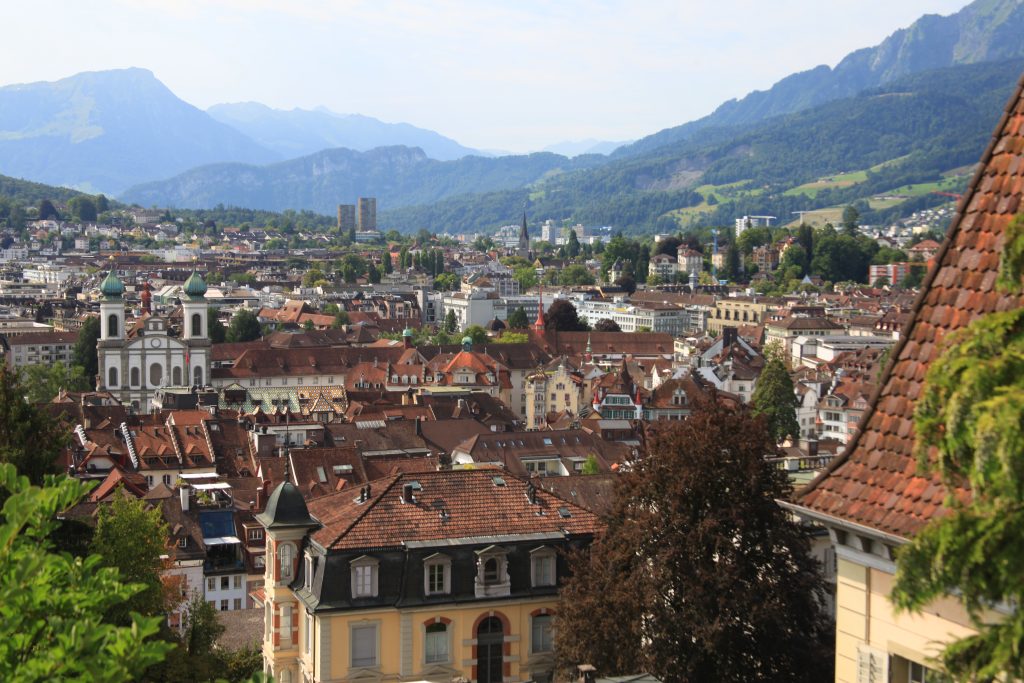
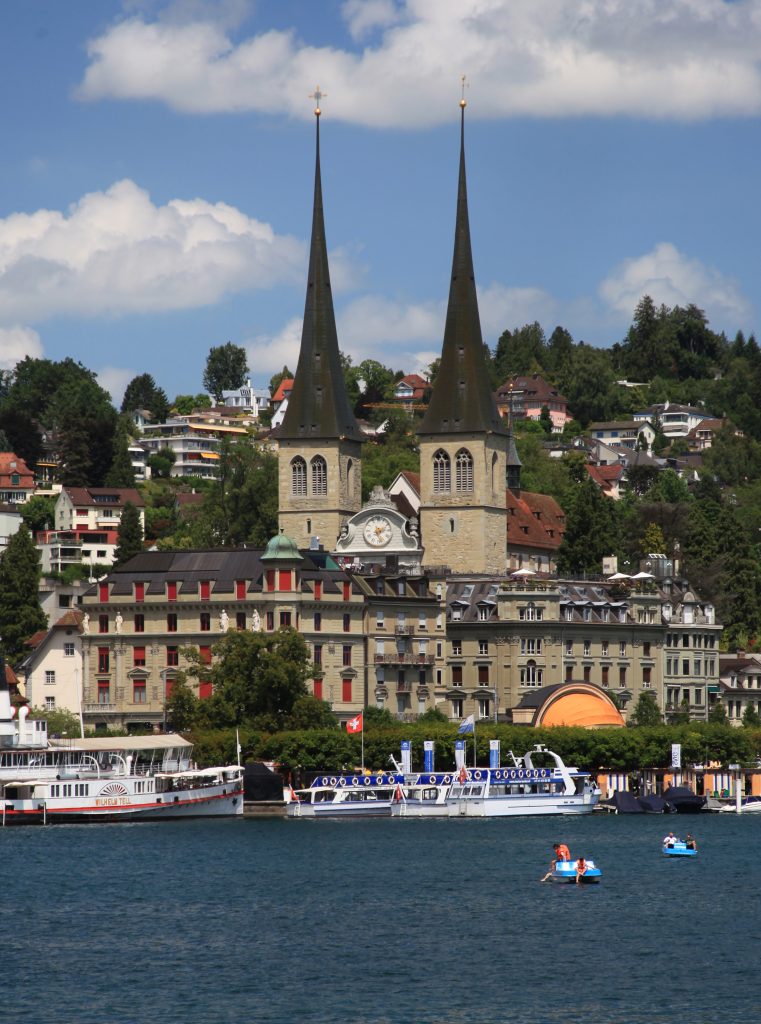
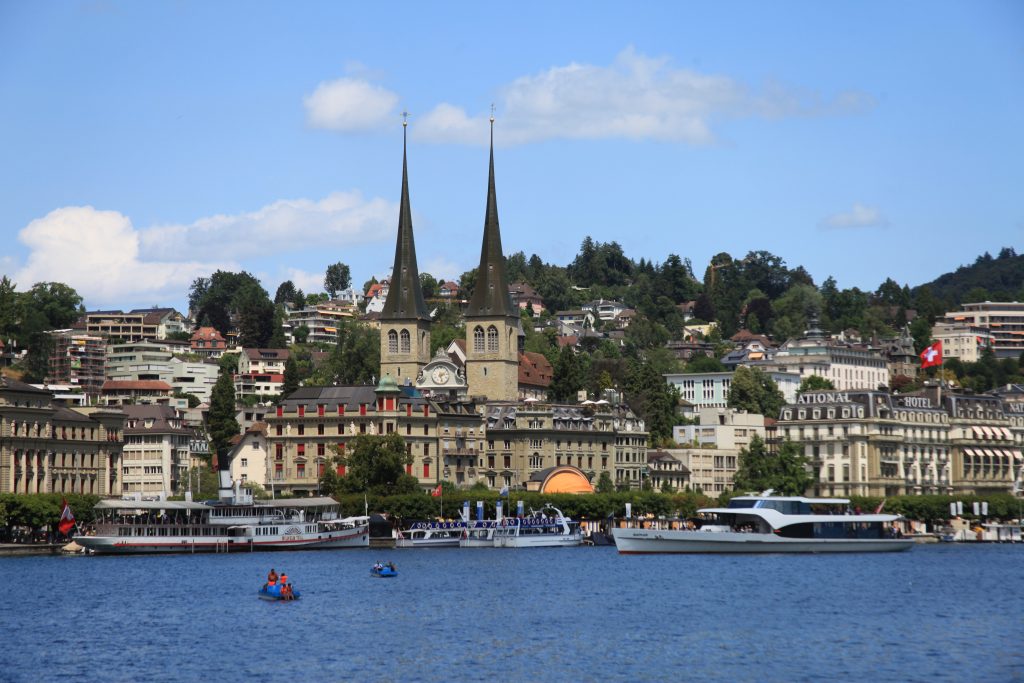
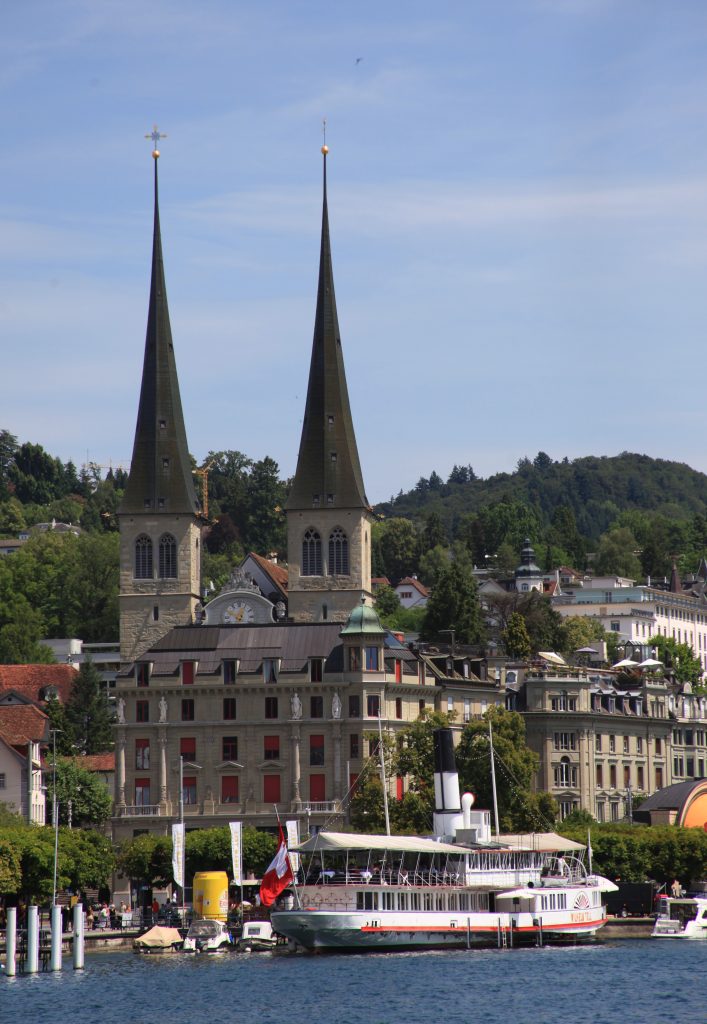
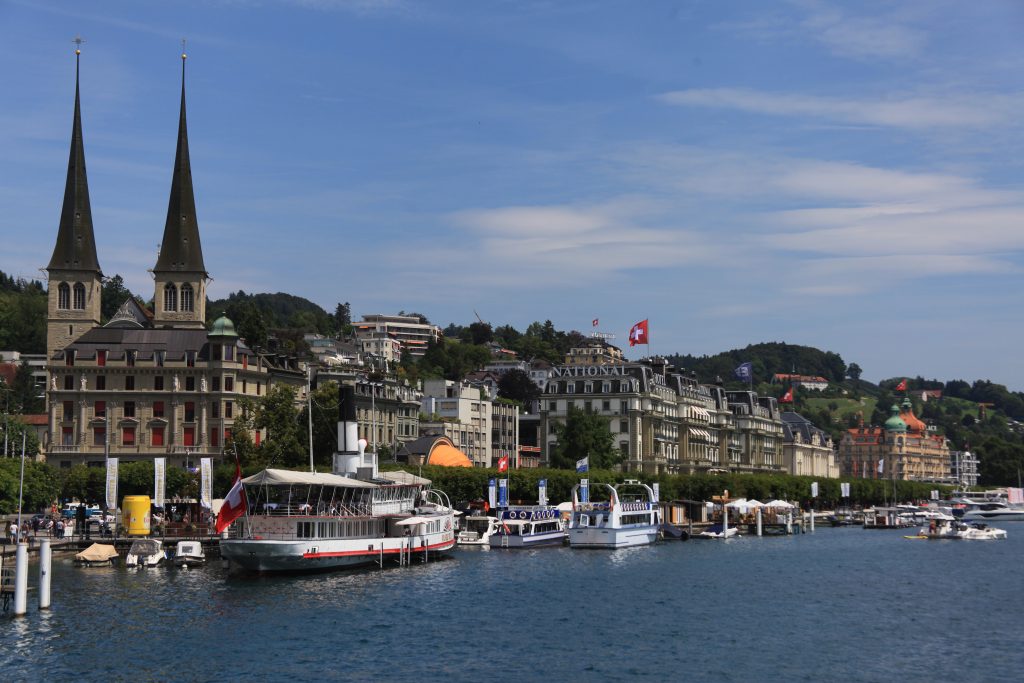
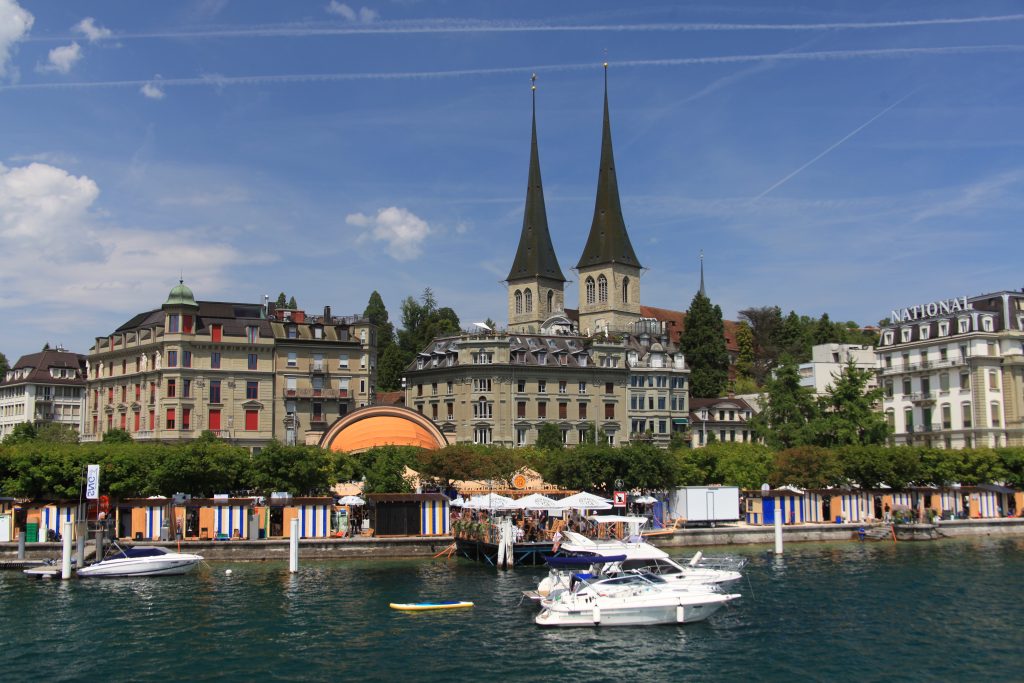
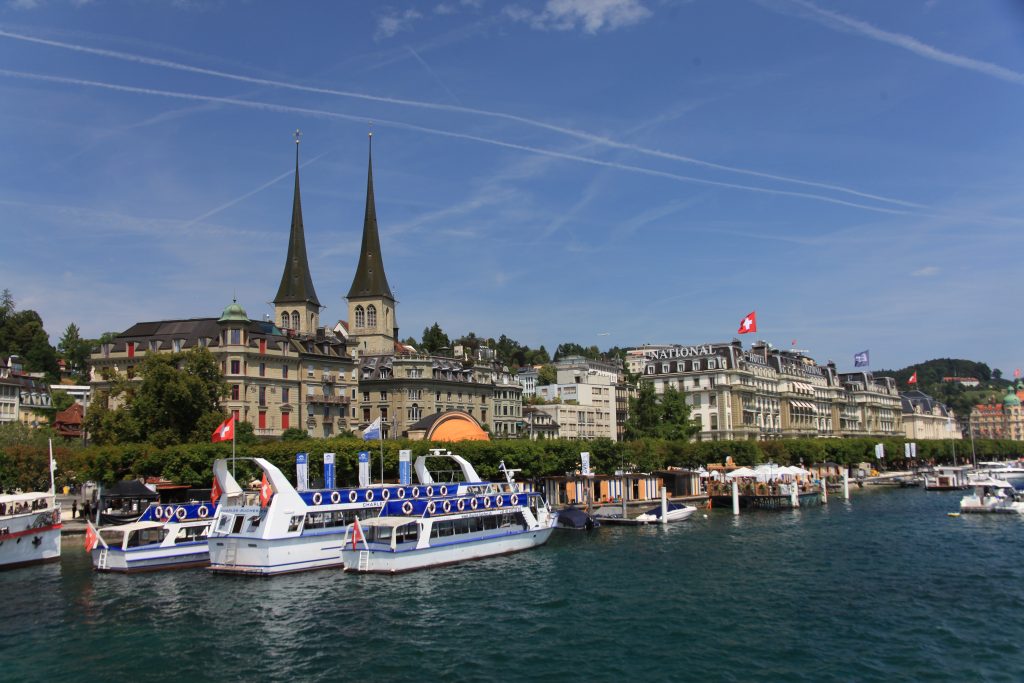
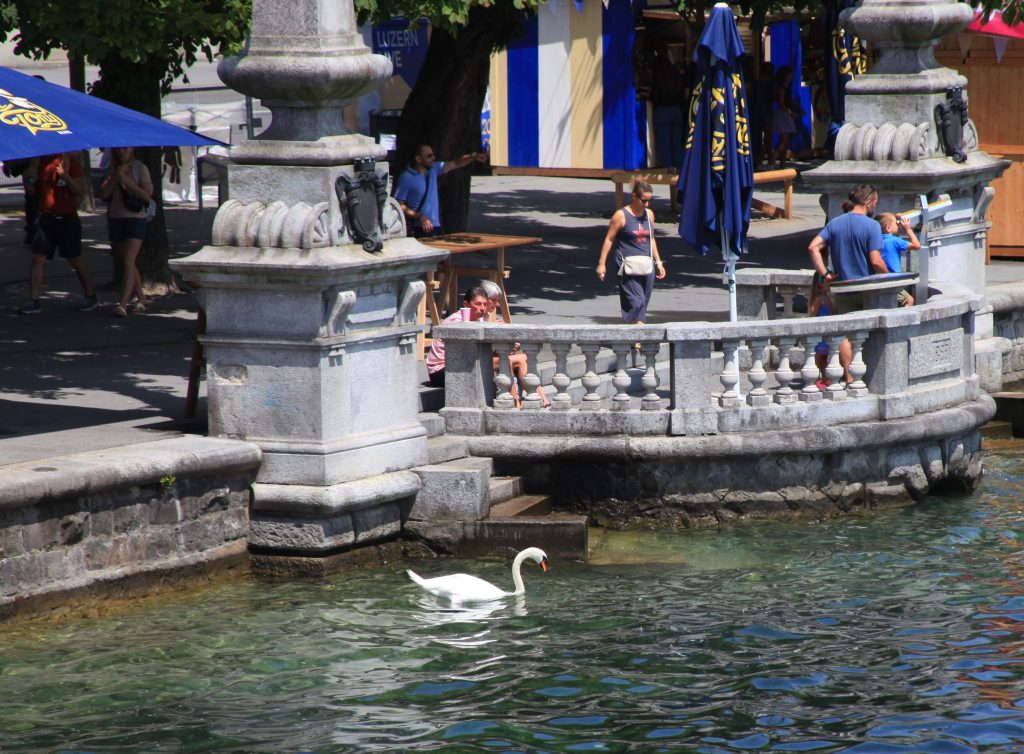
Also distinguishing itself on the Reuss inlet, the twin onion-towered Jesuit Church stands as the first large Baroque church built in Switzerland north of the Alps, with construction beginning in 1667. Given Lucerne’s staunch Catholicism and late resistance to Protestant forces, this church remained the heart of its religious life for many centuries. The Jesuit Church fronts on the inviting river with its steps providing the perfect place for locals and tourists to dip their feet into the cooling water on a hot summer day. In the coming days I would tour the church’s gilded interior with its carved high altar, organ, and treasury. The church is renowned for its fine acoustics, where organists train and concerts are held.
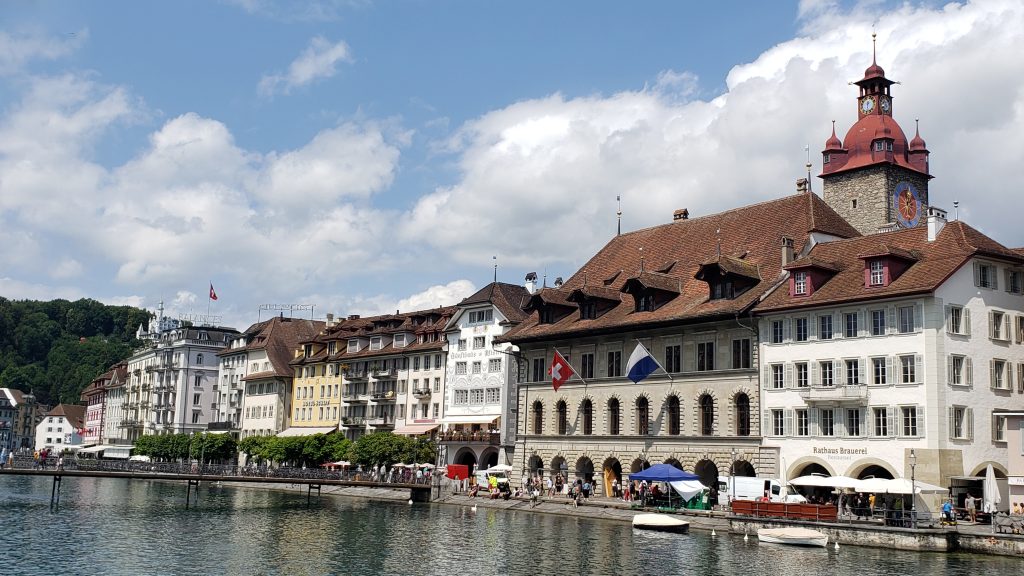
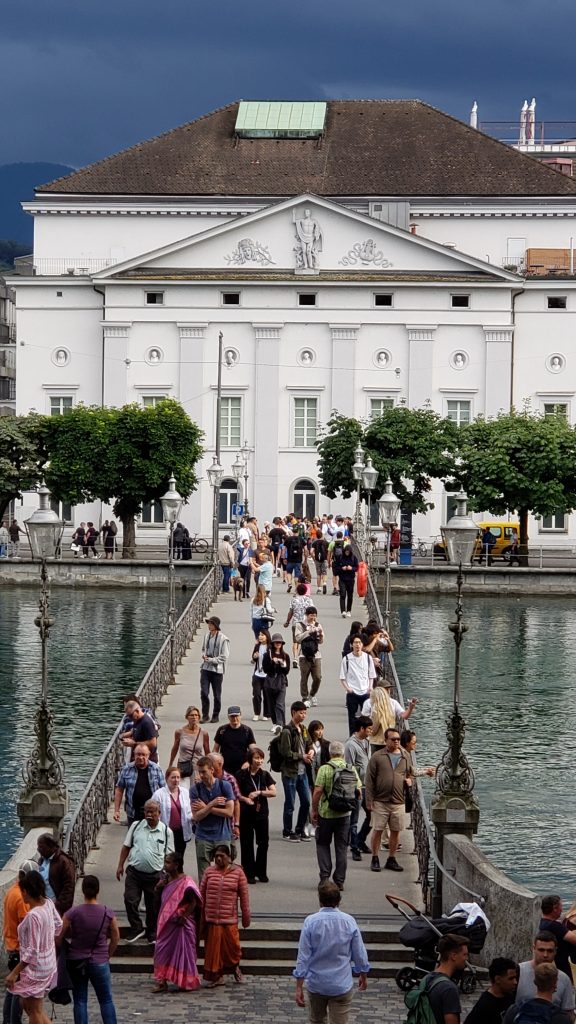
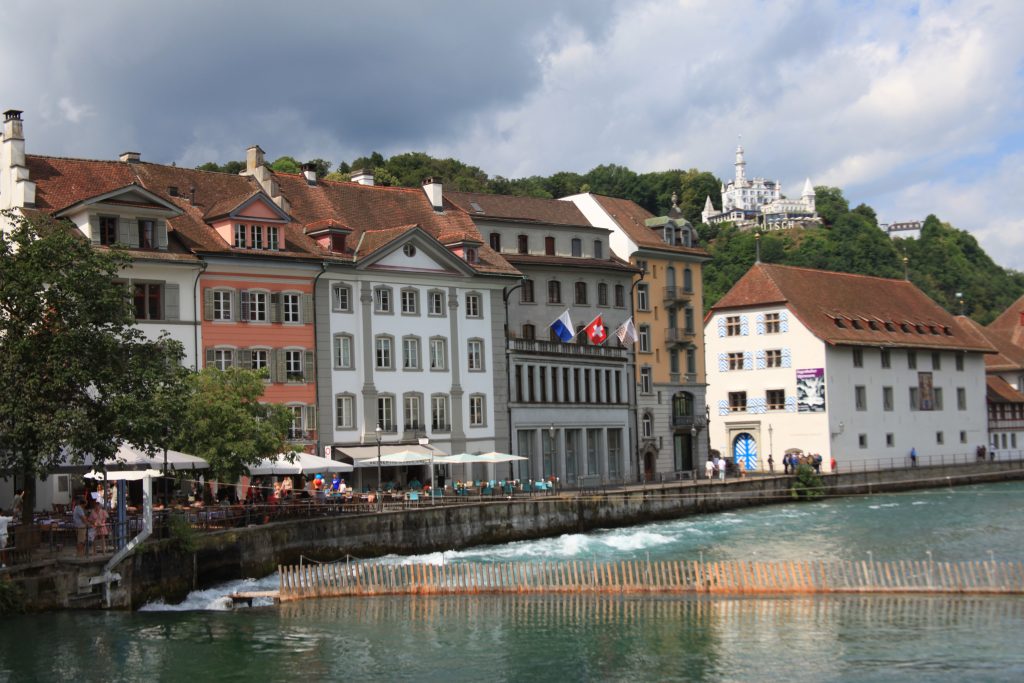
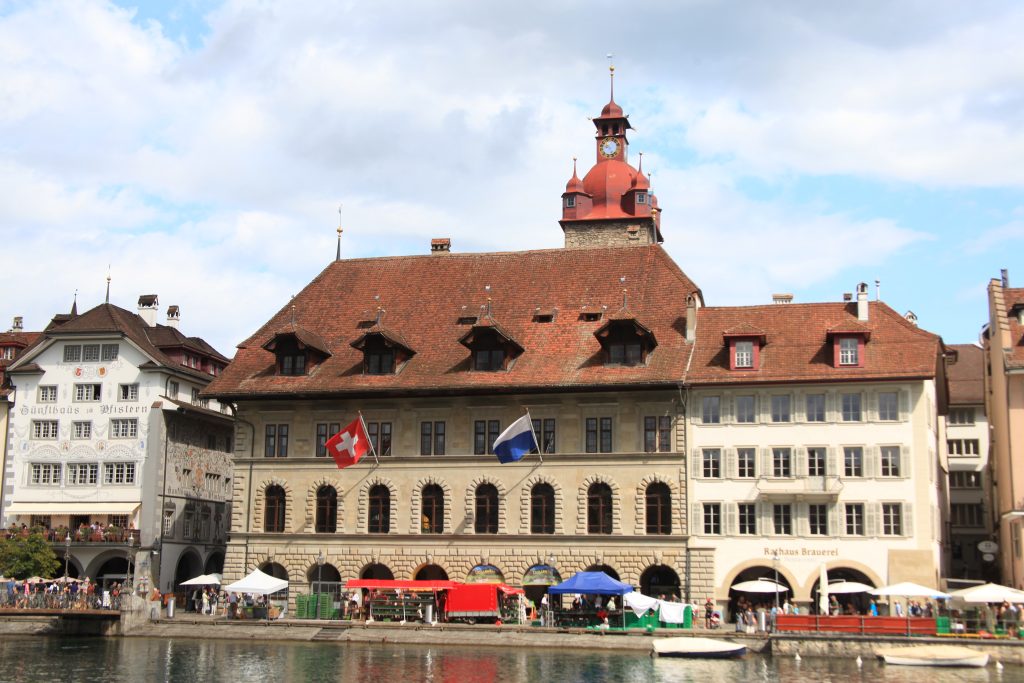
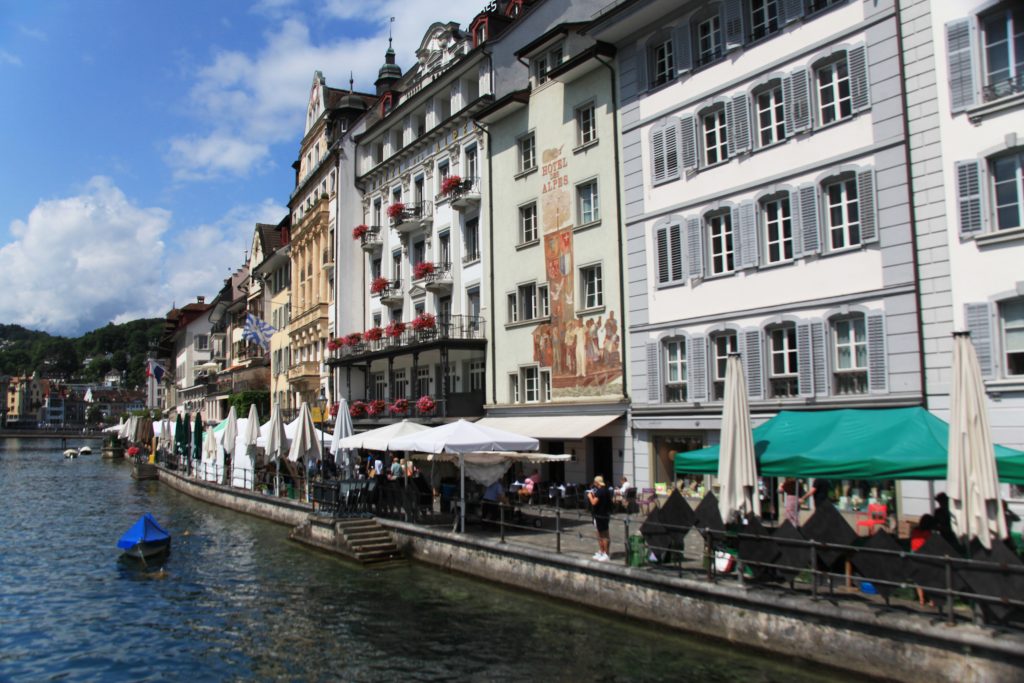
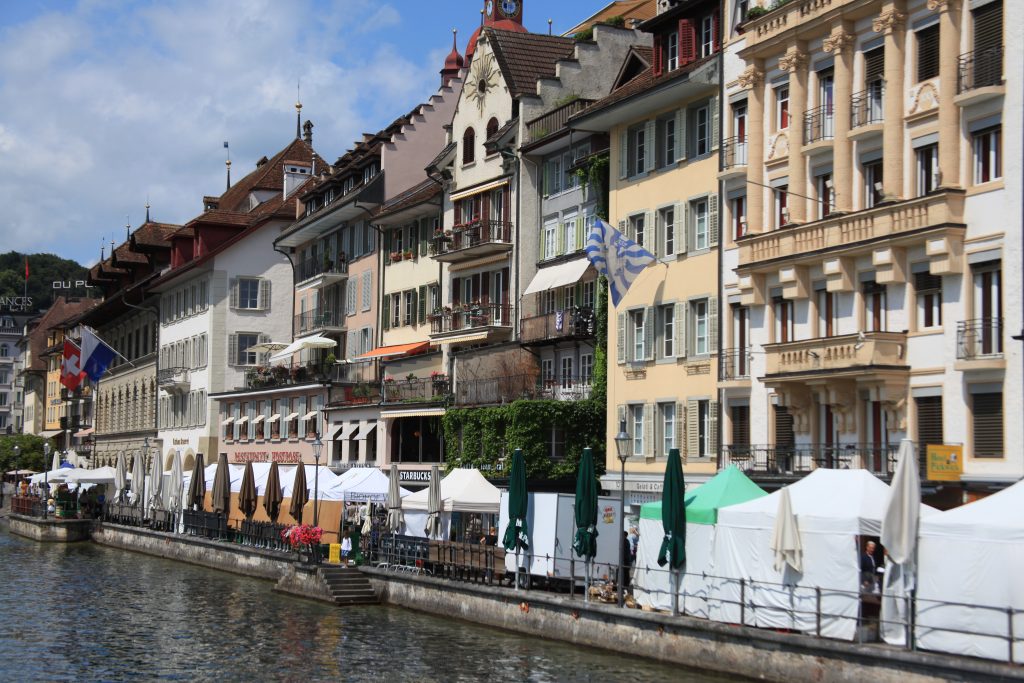
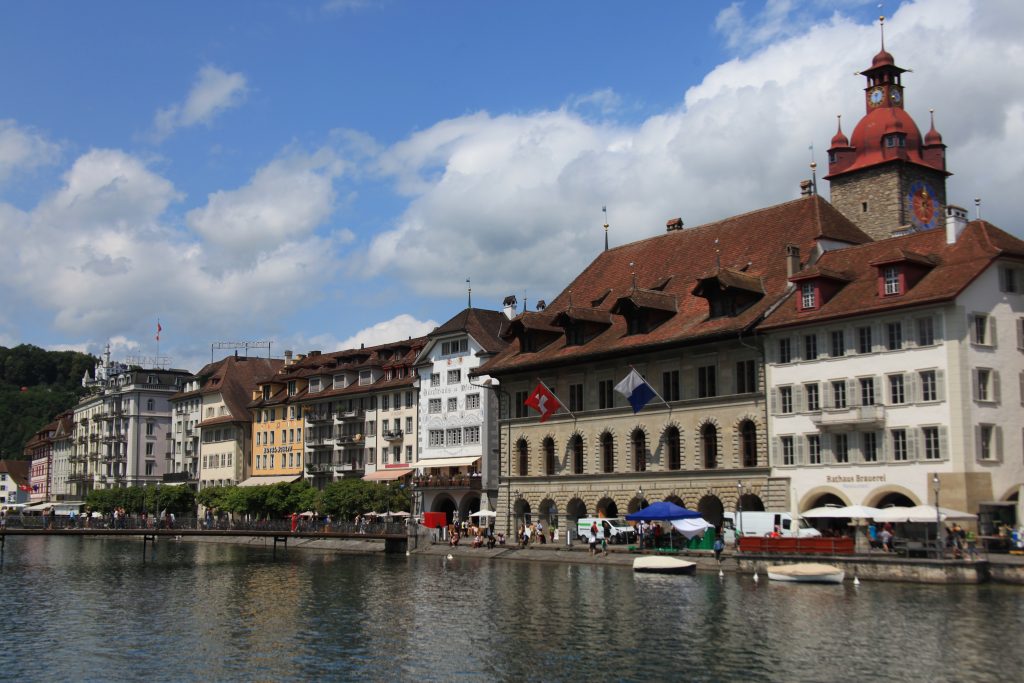
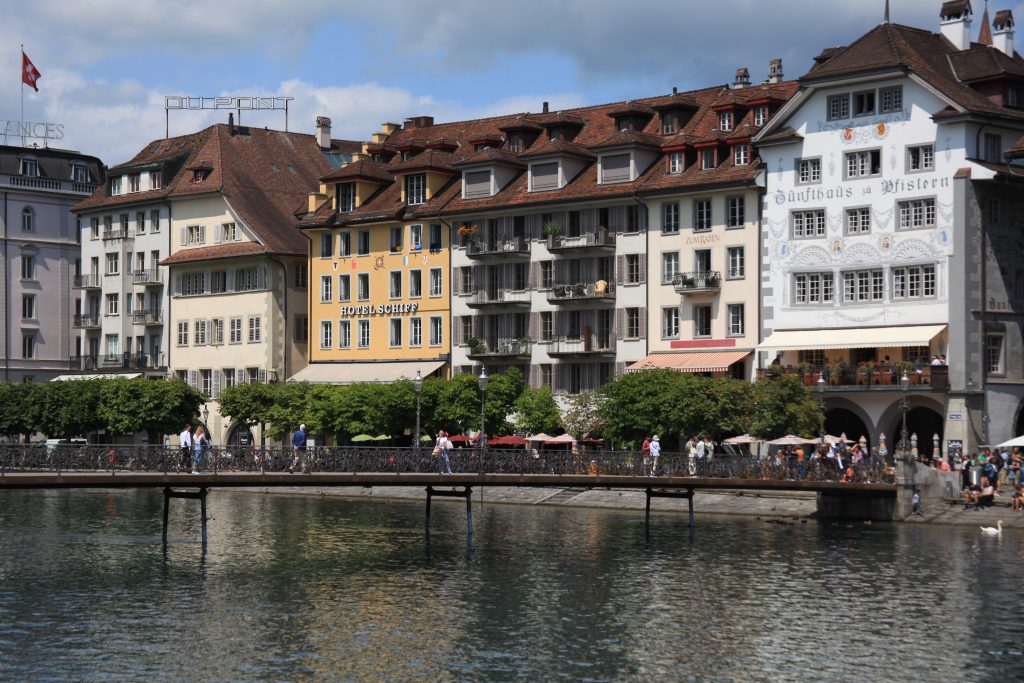
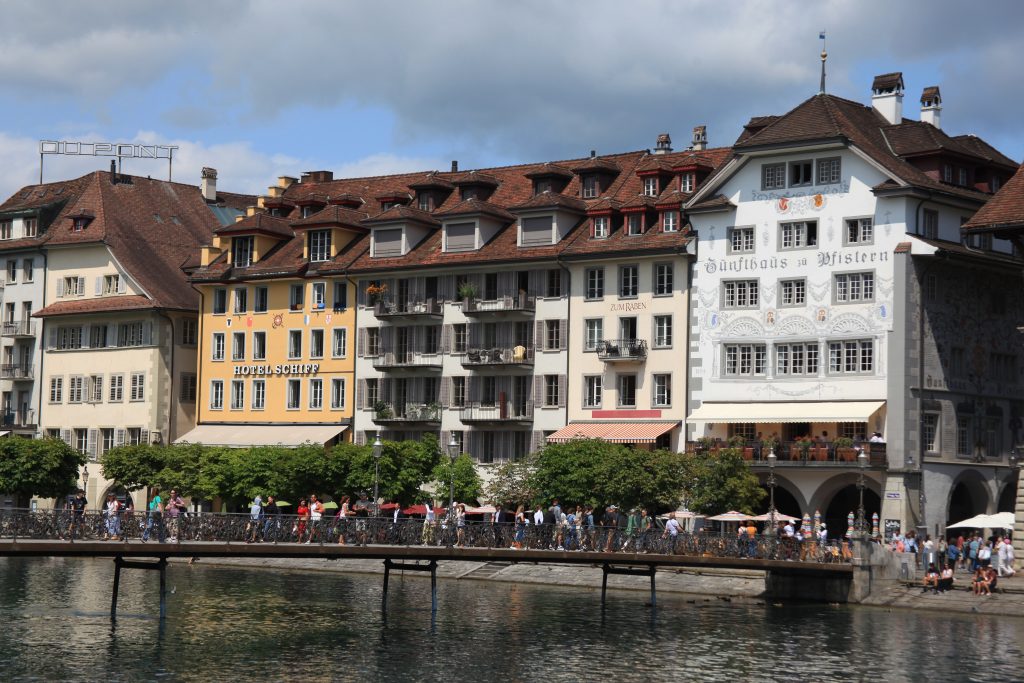
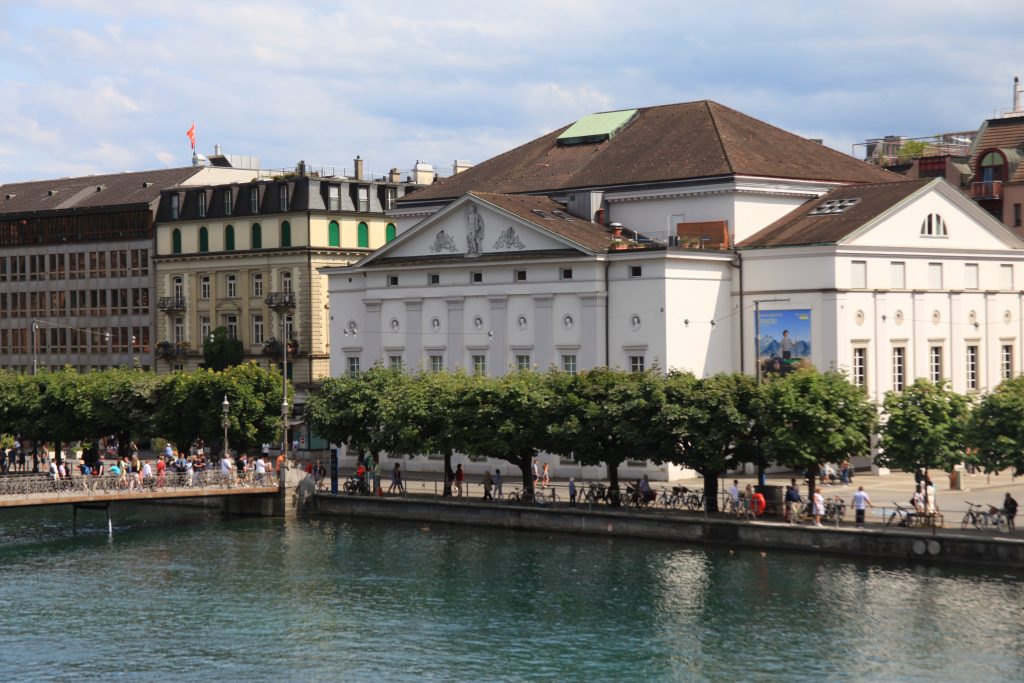
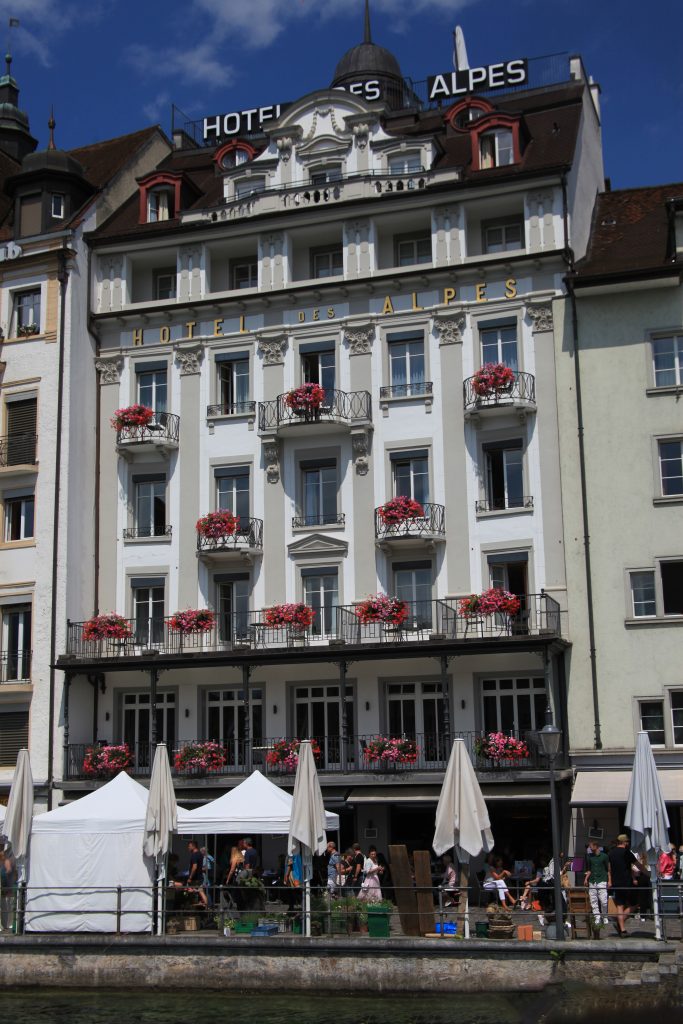
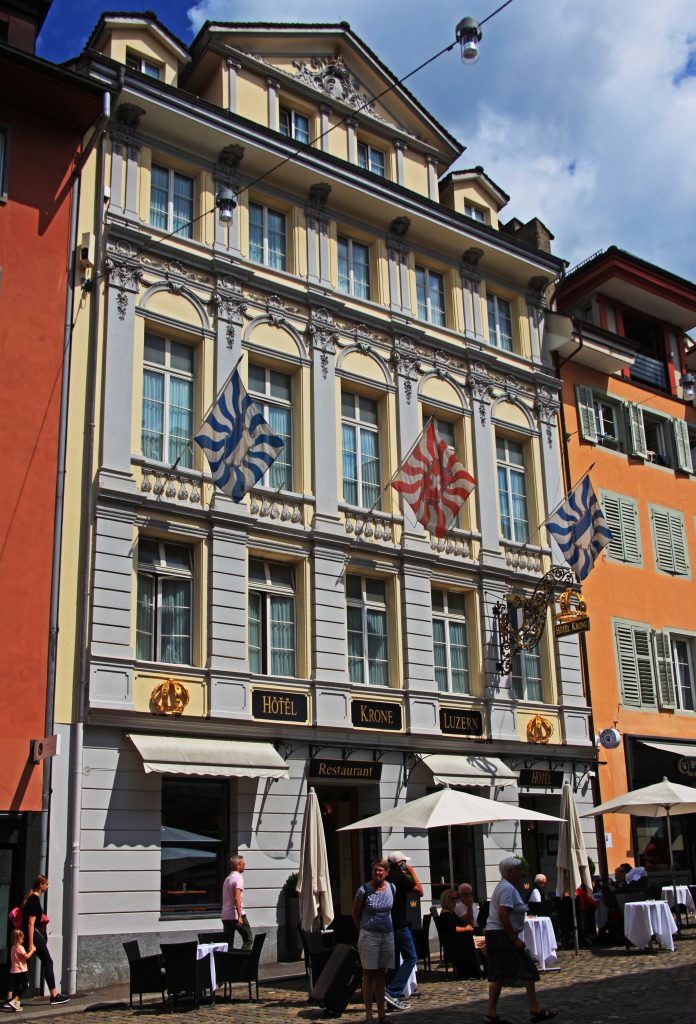
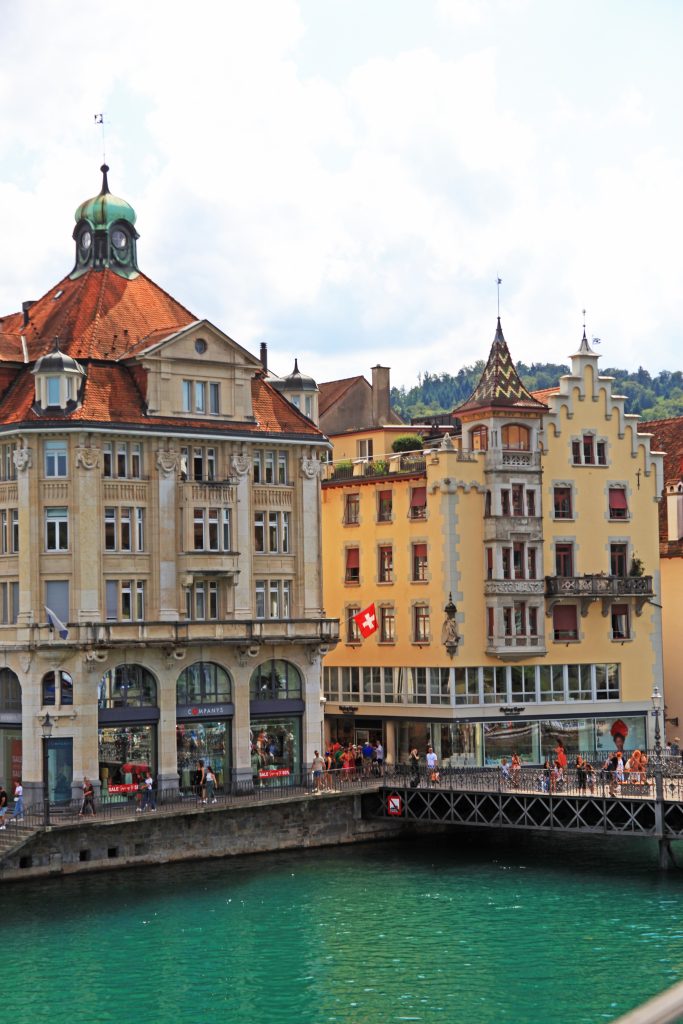
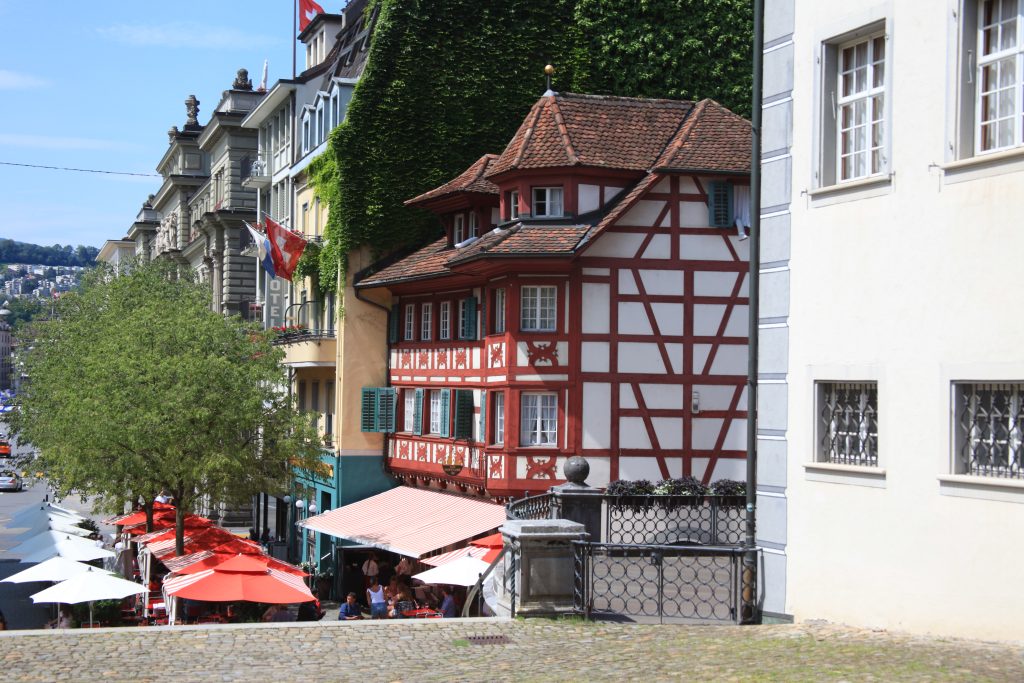
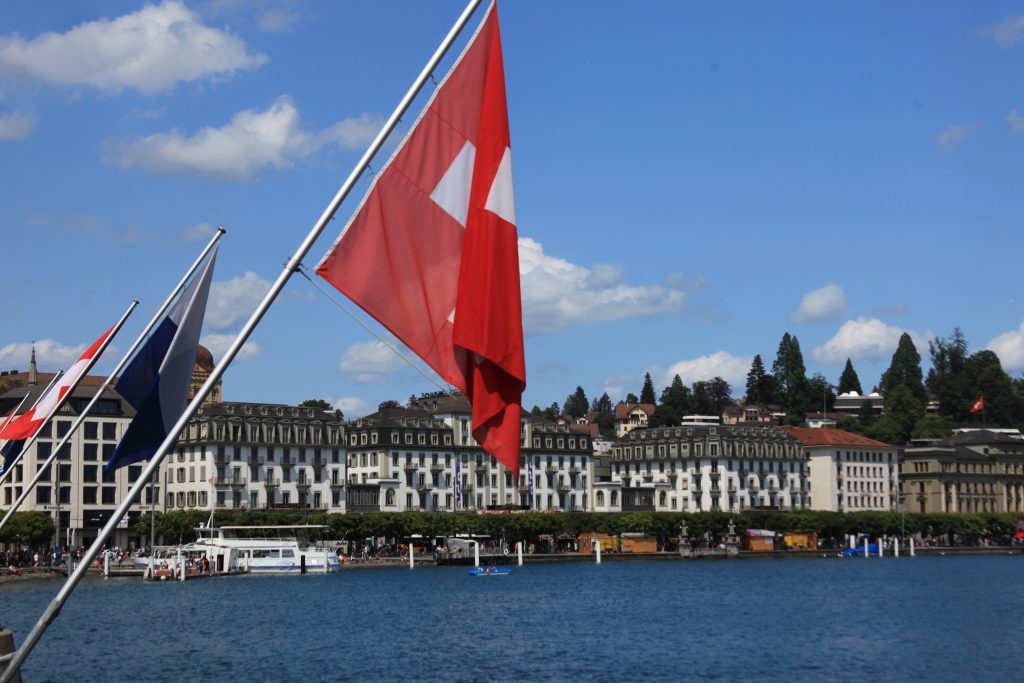
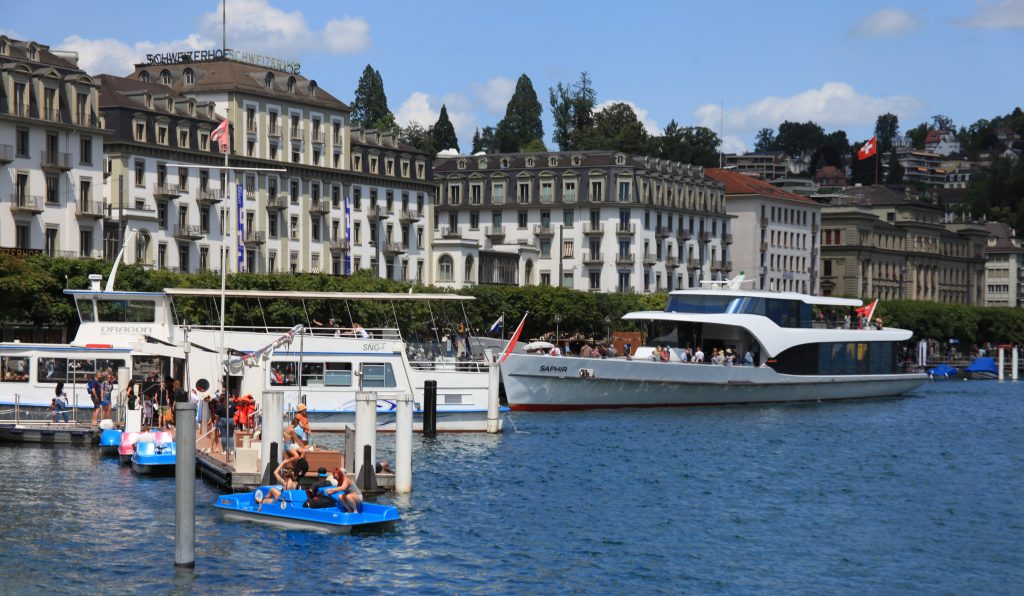
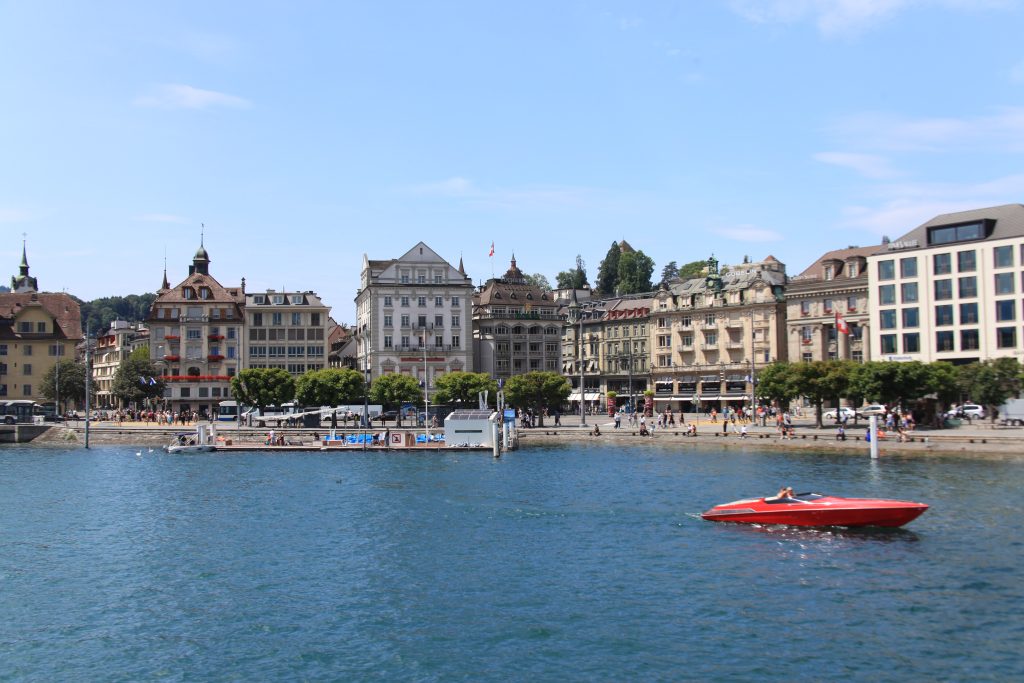
The City Hall building stands among the remarkable historic structures lining this waterfront promenade. Many former burgher and merchant homes are now hotels with al fresco dining overlooking the Kapellbrücke. Move quickly because these tables fill up fast!
On my trip to Lucerne, I dined at Rathaus Brauerei (Town Hall Brewery), which serves many famed traditional Swiss dishes and fresh local fare. How could I resist eating cheese fondue in a city that celebrates an annual Cheese Festival! The food was ample and tasty, and for beer enthusiasts, craft beers brewed on-site in copper vats are local favorites. Sitting under the arched portico, I watched the city lights come on, reflected in the glassy river, as a steady parade of evening strollers passed by.
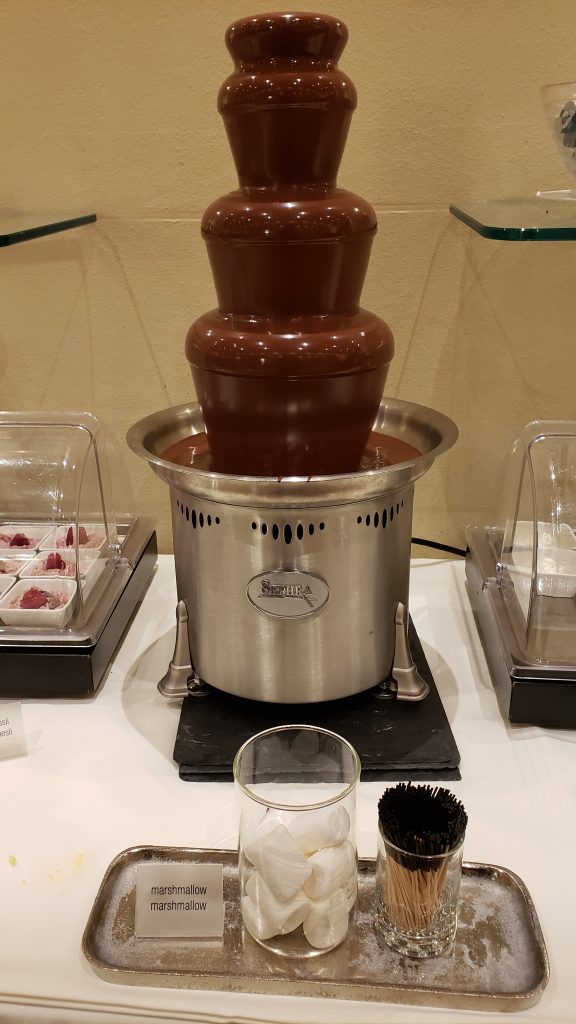
The next morning, I had breakfast on the hotel’s dining veranda. But I couldn’t miss the intoxicating smell of chocolate from the breakfast buffet with its pastries, hot chocolate, and coffee cake laced with the sweet stuff. Nope, it was a chocolate fondue fountain! Not for dinner dessert. Just for breakfast, complete with marshmallows! You’ve gotta love the Swiss! What a wonderful way to start the day!
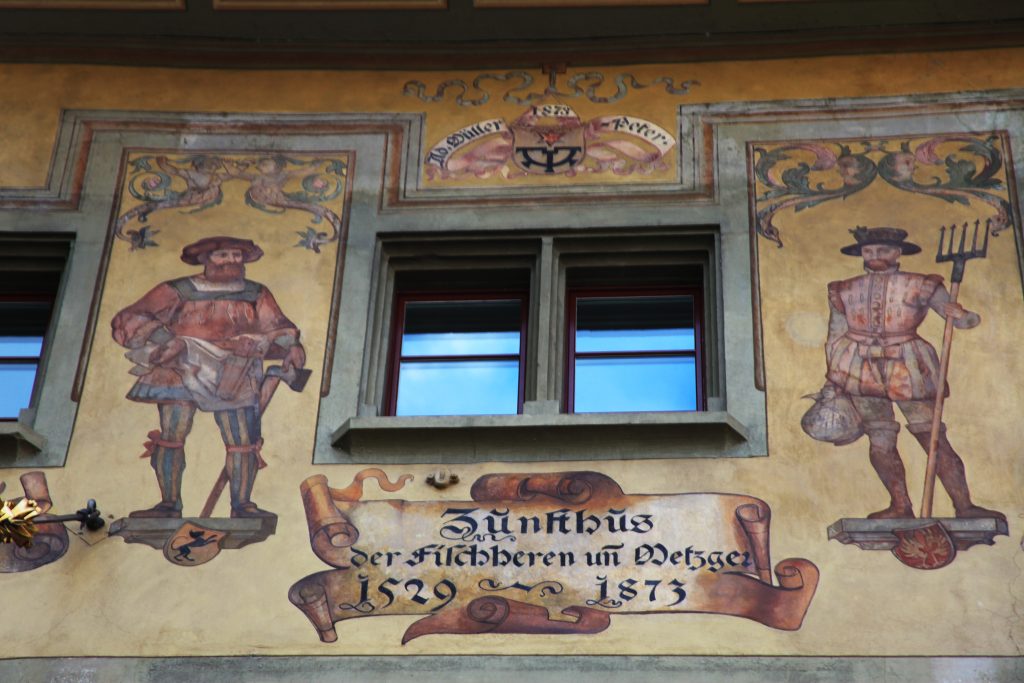
So I began my walking tour of Old Town Lucerne that morning, searching for Old Town’s famous painted squares. Each with its own distinct personality.
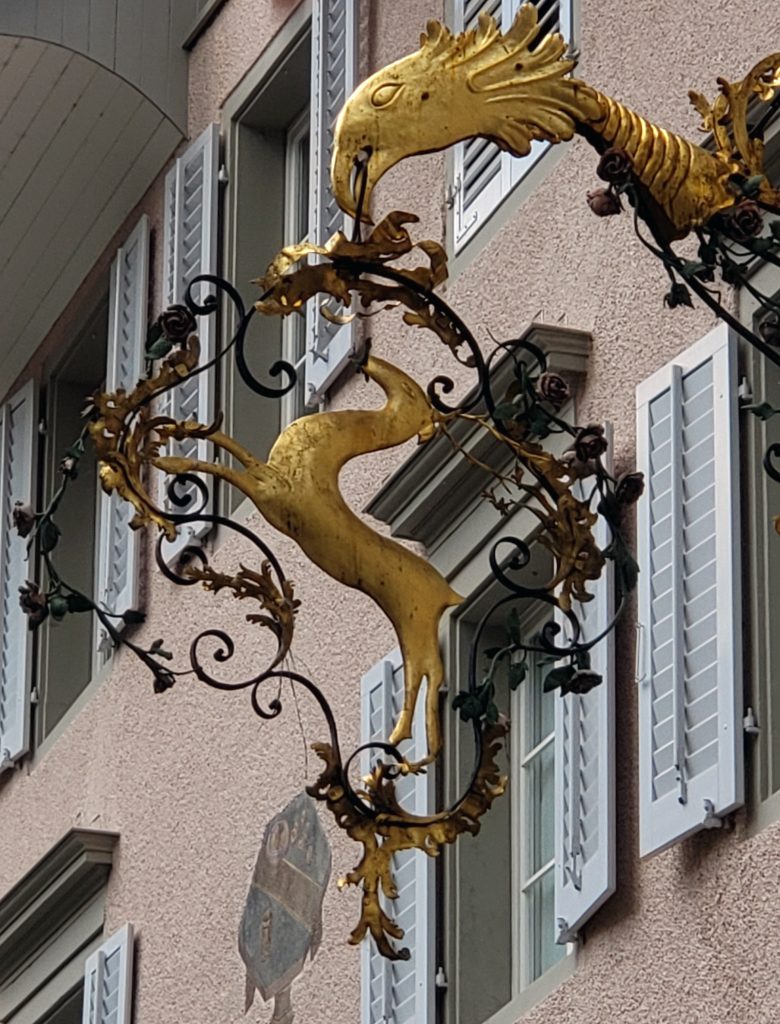
- The Hirschenplatz is named after a hotel which once graced the square, The Stag (Hirsh). You can’t miss the golden stag sign that remains. This was a quarter that appealed to merchants and residents. The frescos on these buildings are protected as historical monuments. The Little Goose-Man Fountain in the center is a favorite of children. This square tends to be fairly sedate and quiet.
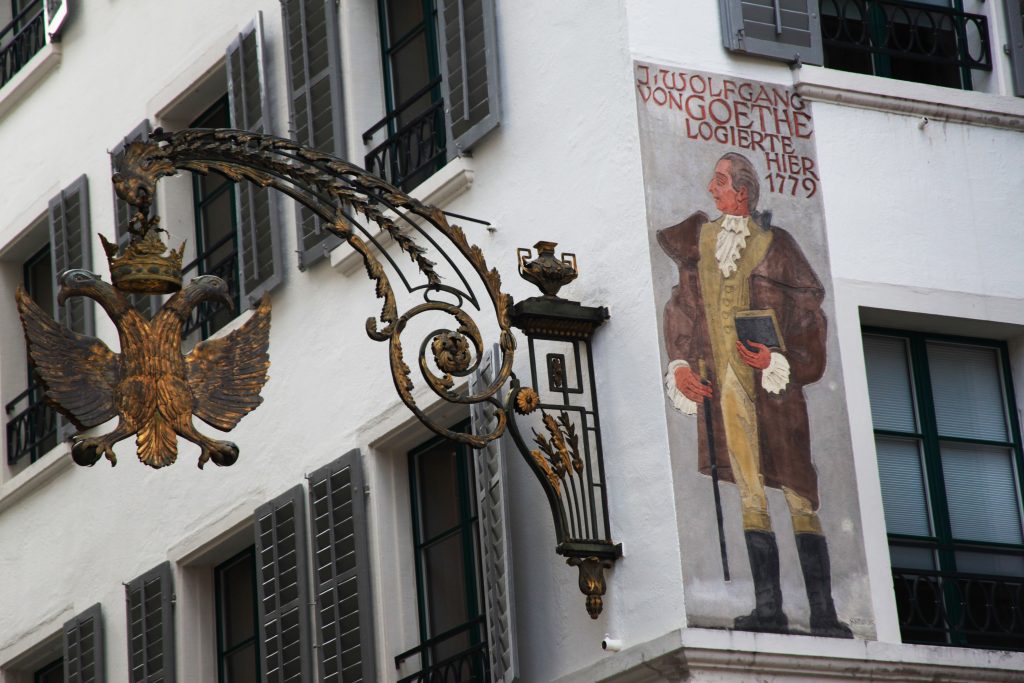
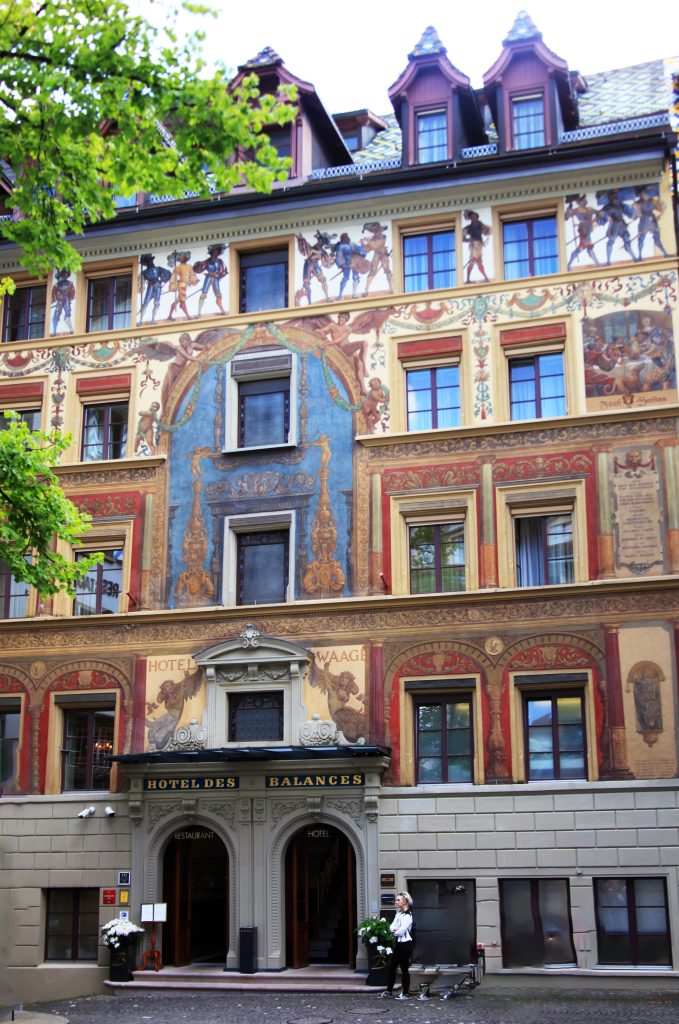
- The Weinmarkt (wine market) has gorgeous colored townhouses that contained taverns for each of the professions– butchers, tanners, shoemakers, and innkeepers: while also acting as guildhalls. This square was the location of the meat market that gave its name to Des Balances. The meat sellers are gone, but the rest of the square has been in its present form since 1481.
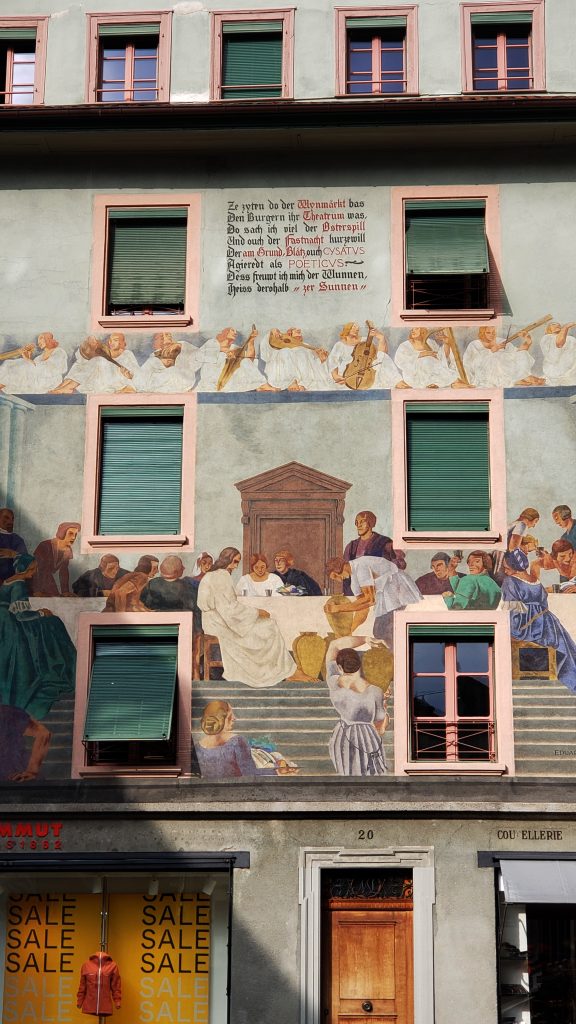
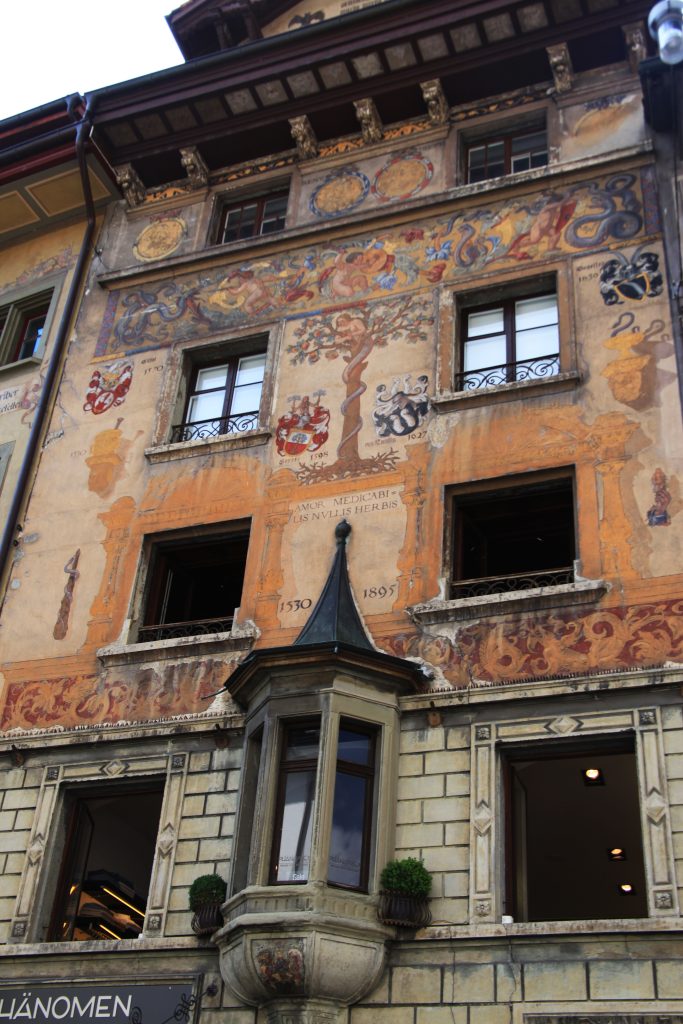
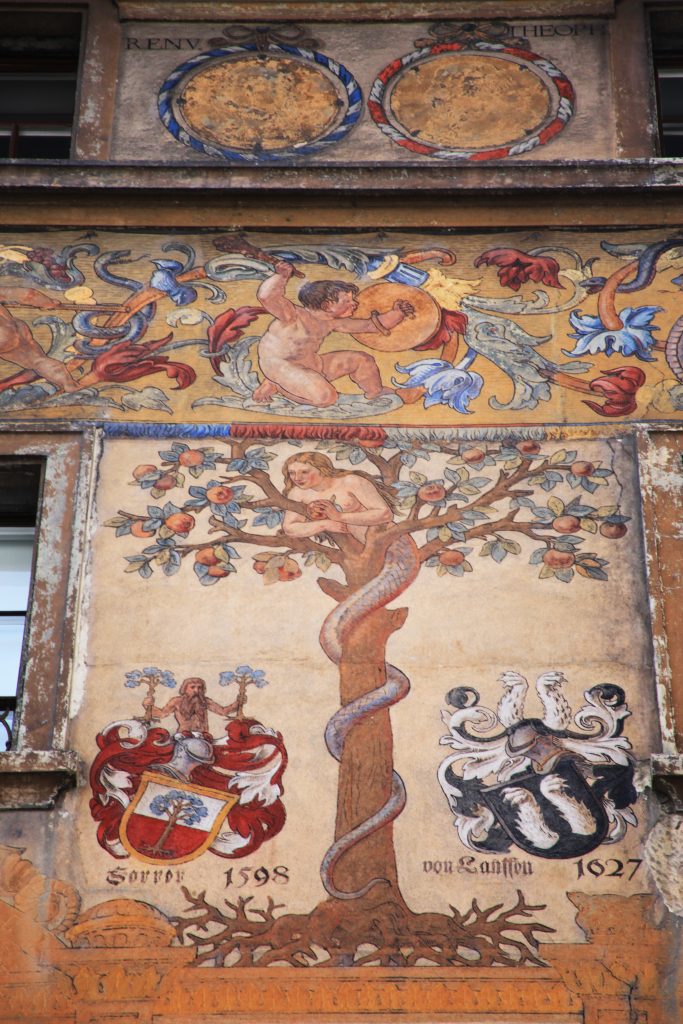
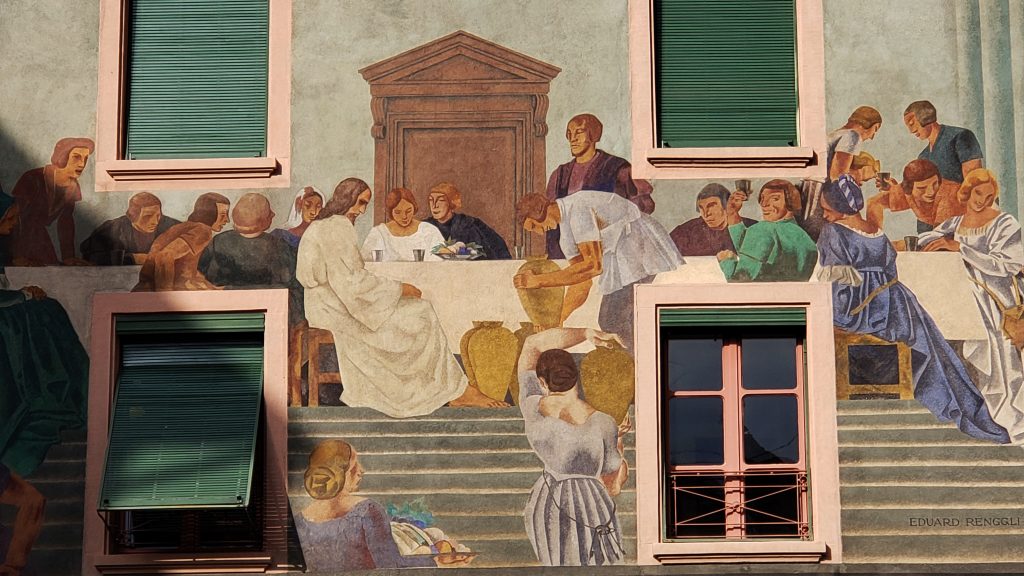
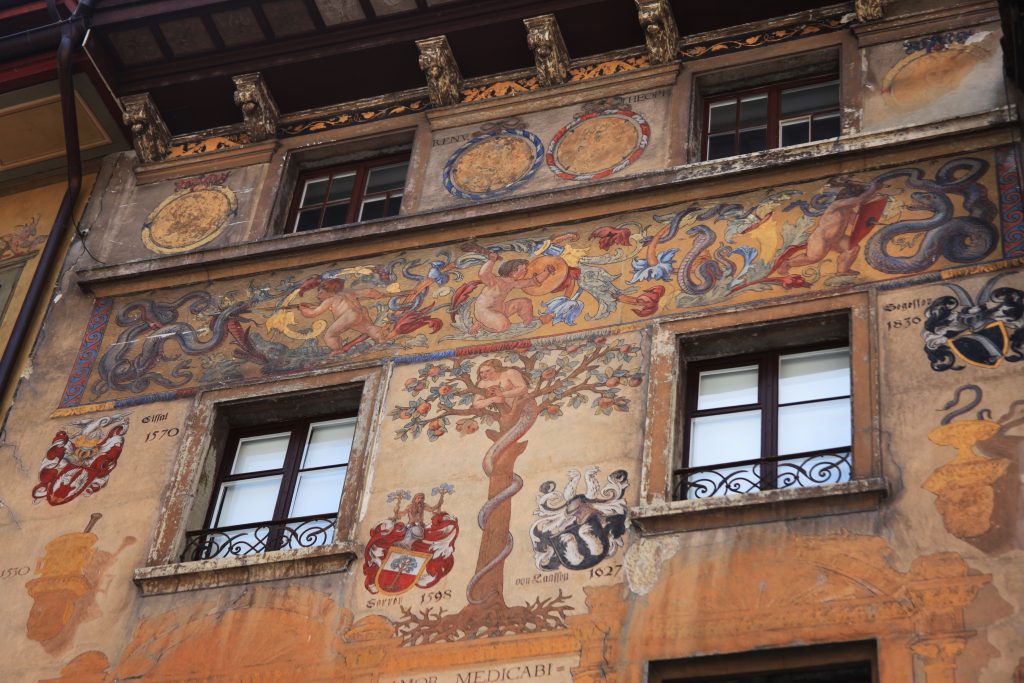
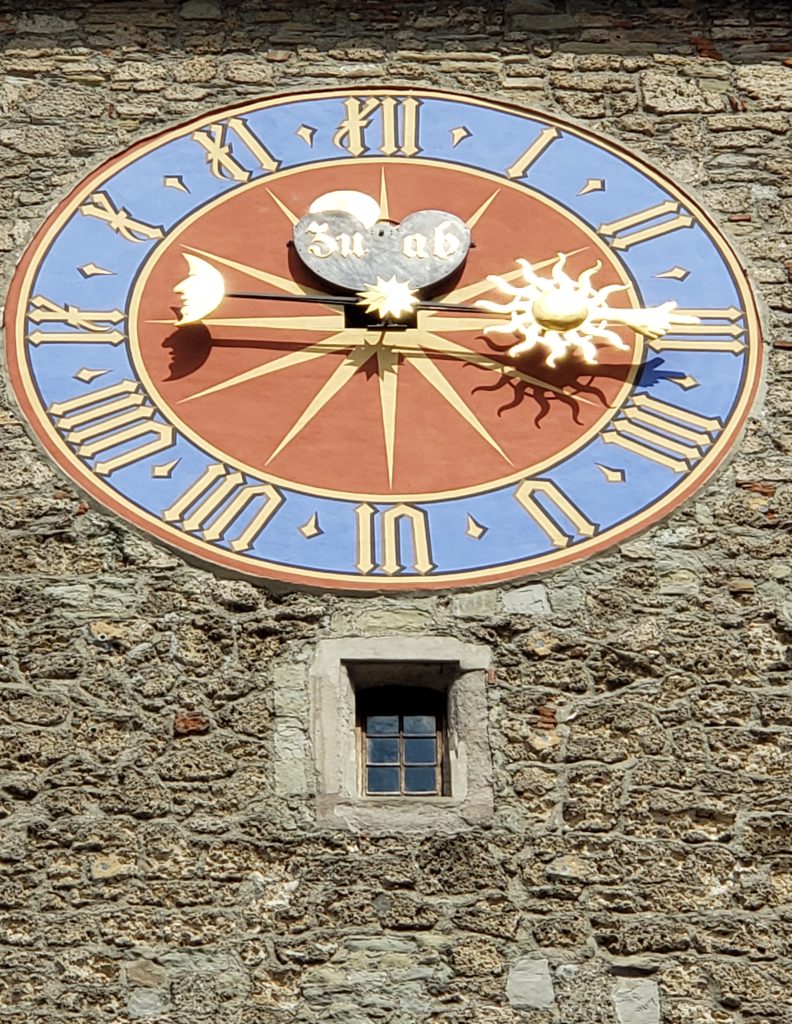
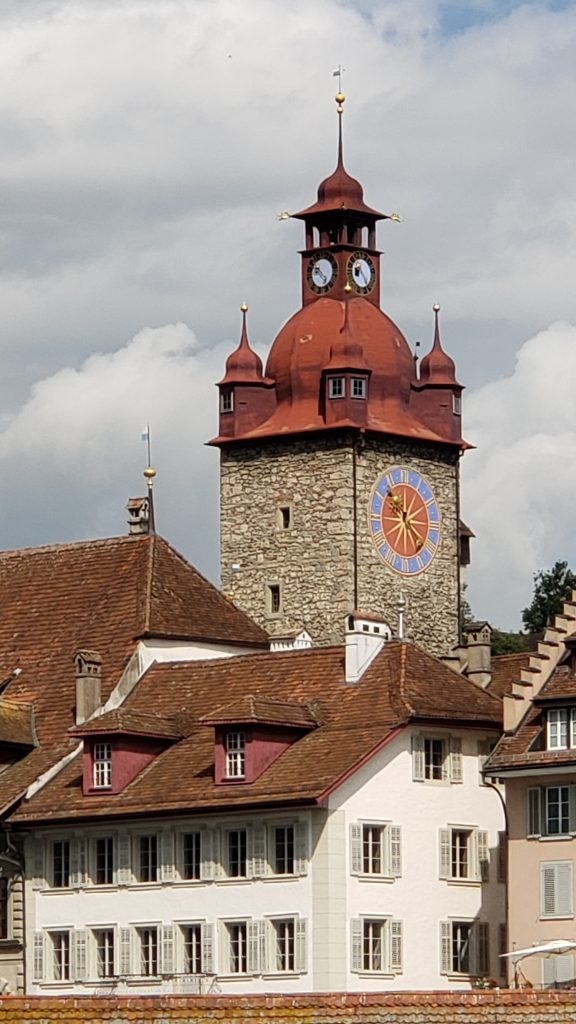
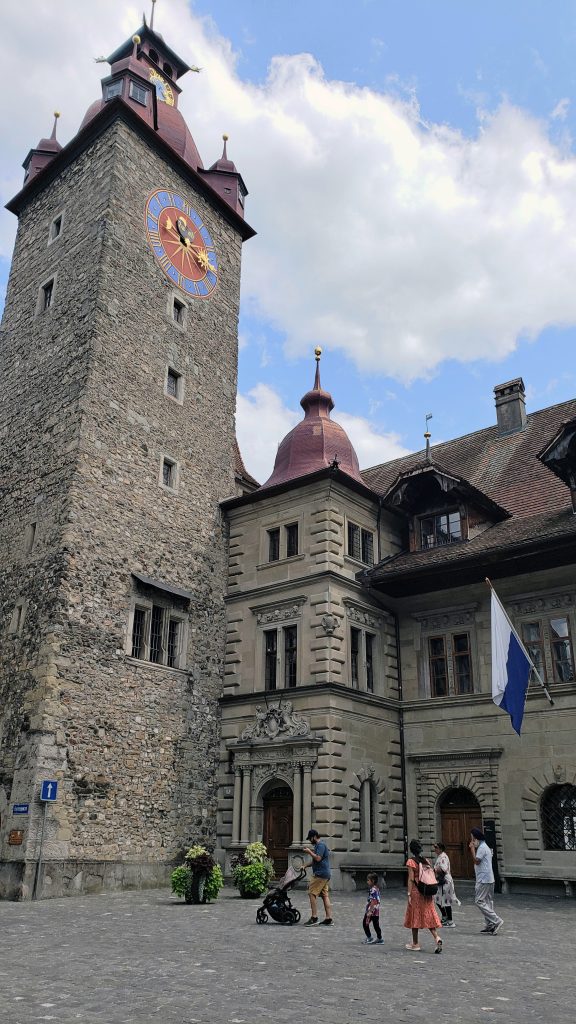
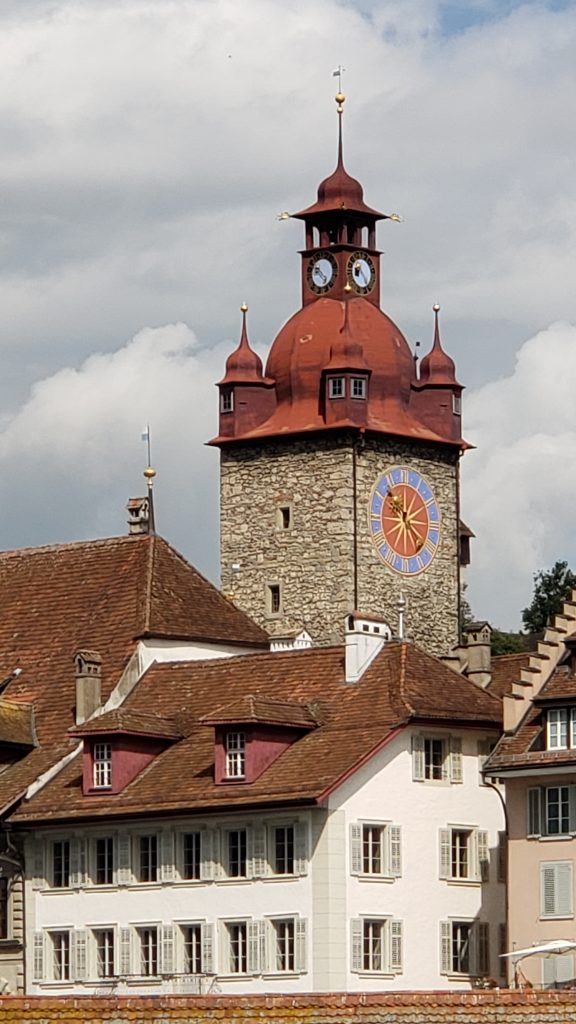
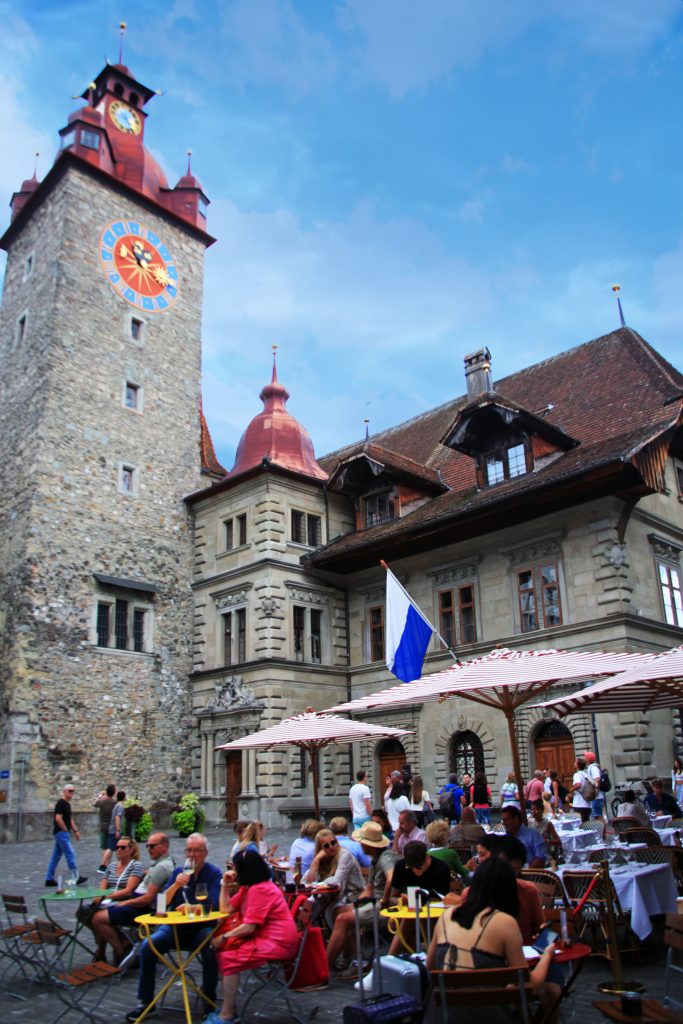
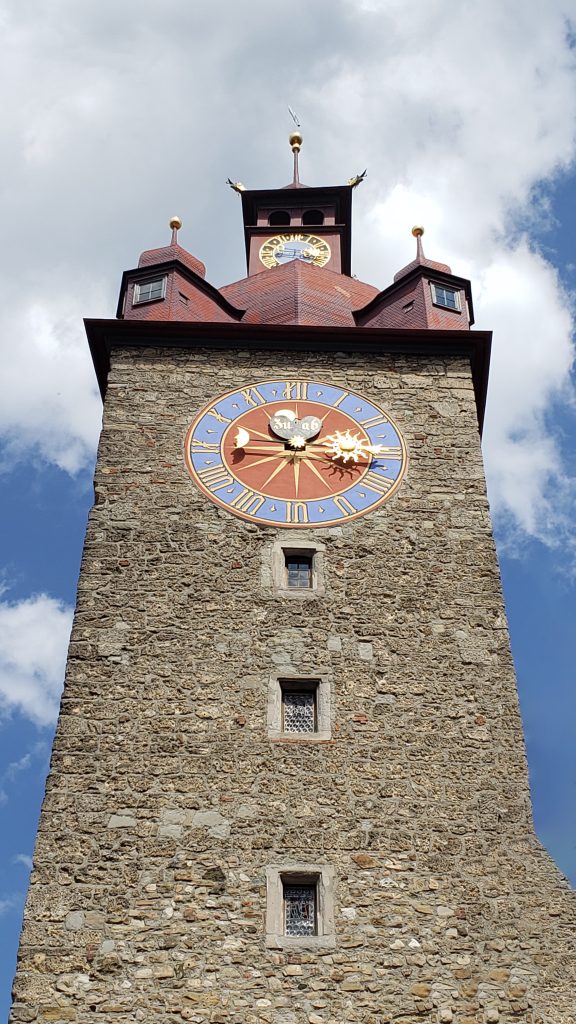
- The Kornmarkt was the center for grain sales in medieval Lucerne life. Its most visible feature is its handsome stone clock tower, the Zytturm, originally one of the nine towers of the city’s lower fortifications, and still climbable for breathtaking views of Lucerne from above. This square was also the site of the construction in the early 1600s of a Renaissance-style building that housed both town hall and granary, and it served those purposes as late as 1979 when the city’s administration was relocated. Much of the town’s political and social life revolved around the Kornmarket square. You will still find cultural events and concerts staged here.
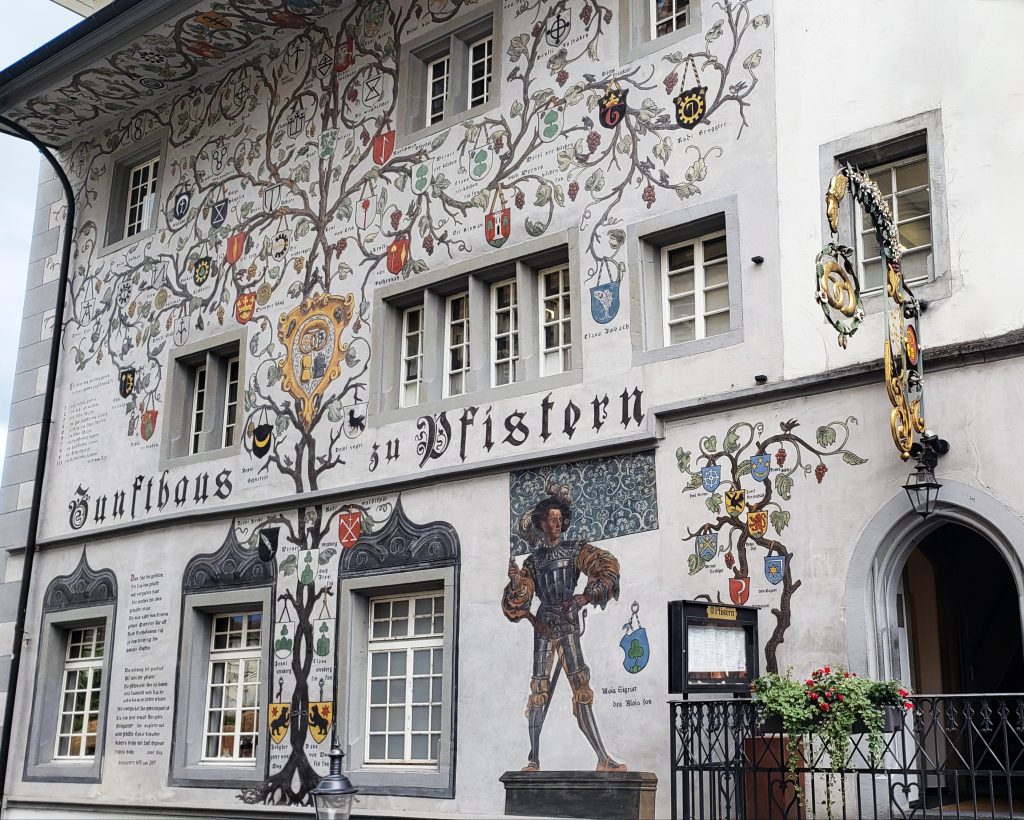
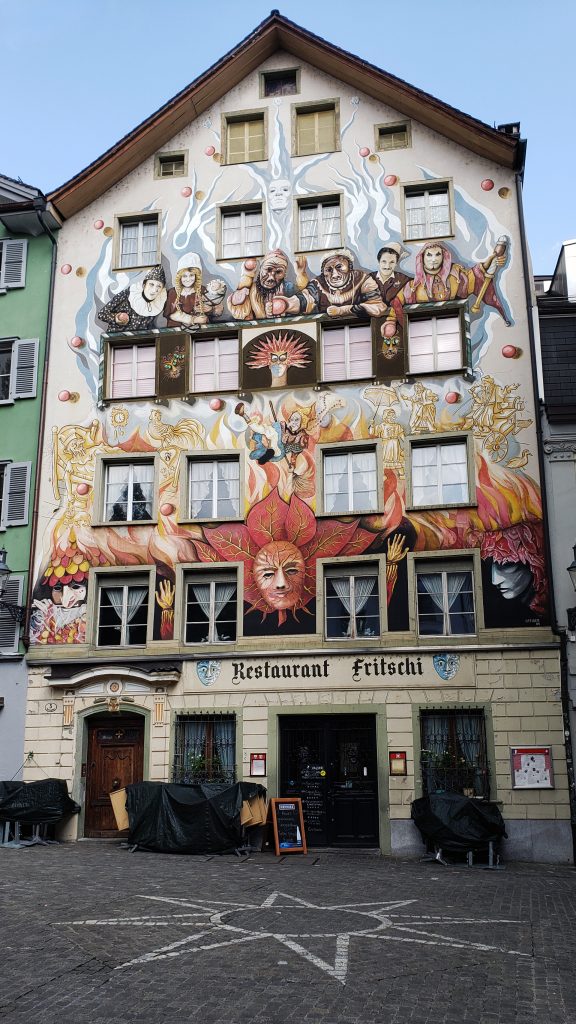
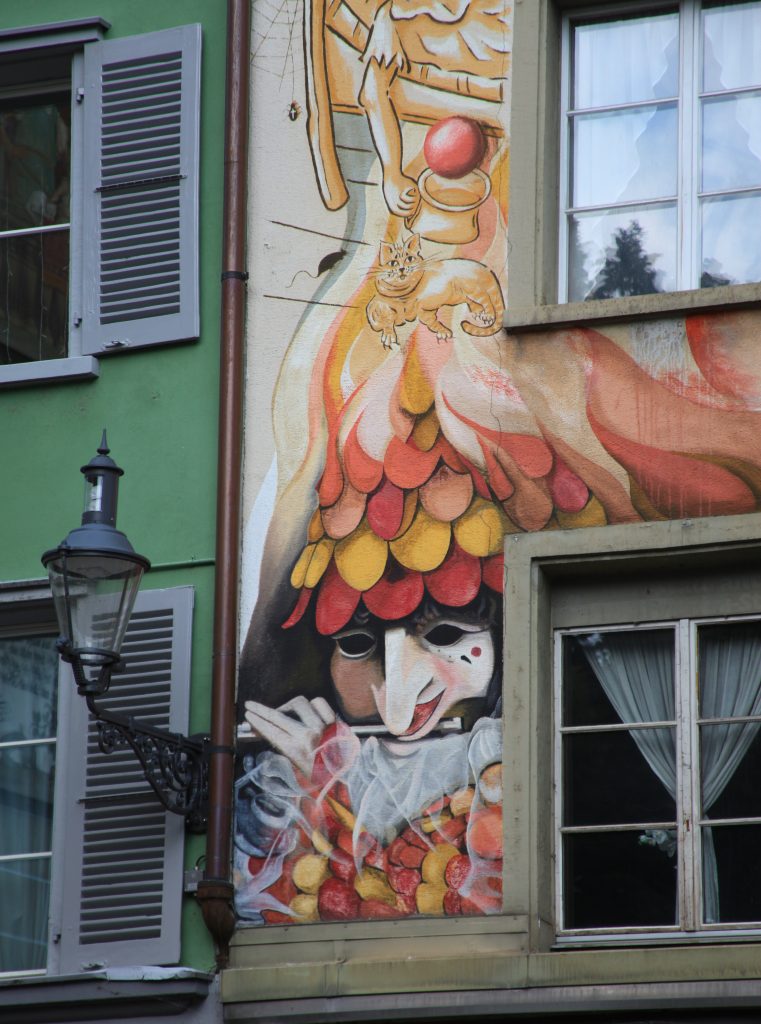
- The Sternenplatz is the square you will remember for its flamboyance, most notably the frescoed “Restaurant Fritschi” with the brilliant flames on the lower floors and the masked carnival figures above the windows, painted by artist Robert Ottiger. This 15th century building is named for a fictional carnival character Lutz Fritschi. Beginning in late February, the annual Carnival is the largest public event in Lucerne where historically costumed characters emerge from the bridges in all directions to converge in the Kornmarkt for a celebration of dance, music and hijinks. I am told there is no rest until Ash Wednesday — the traditional end day of Carnival!
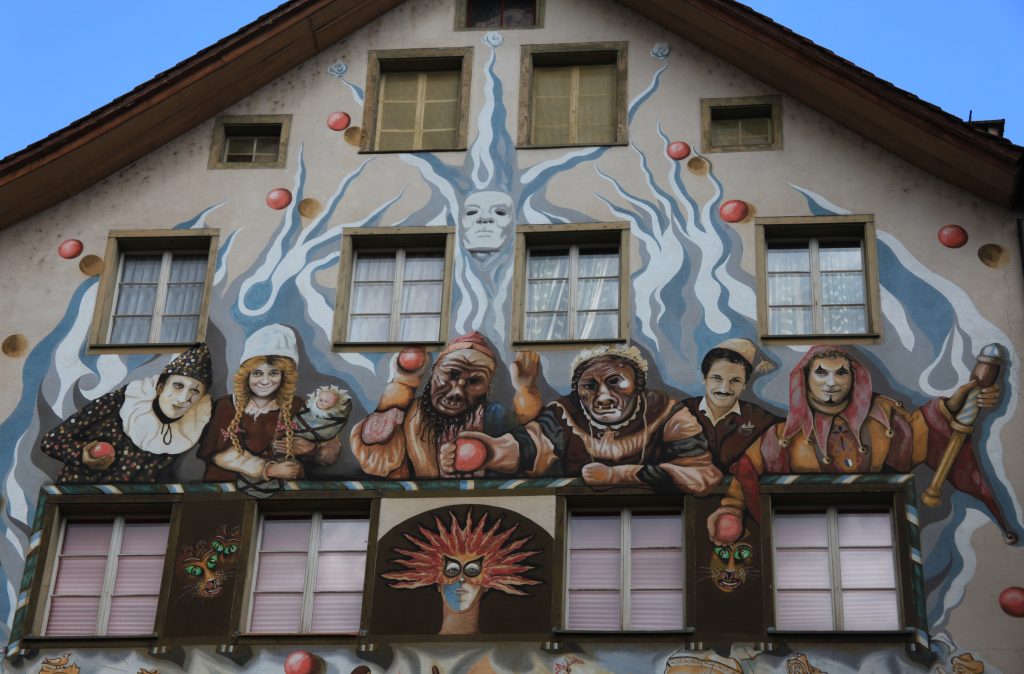
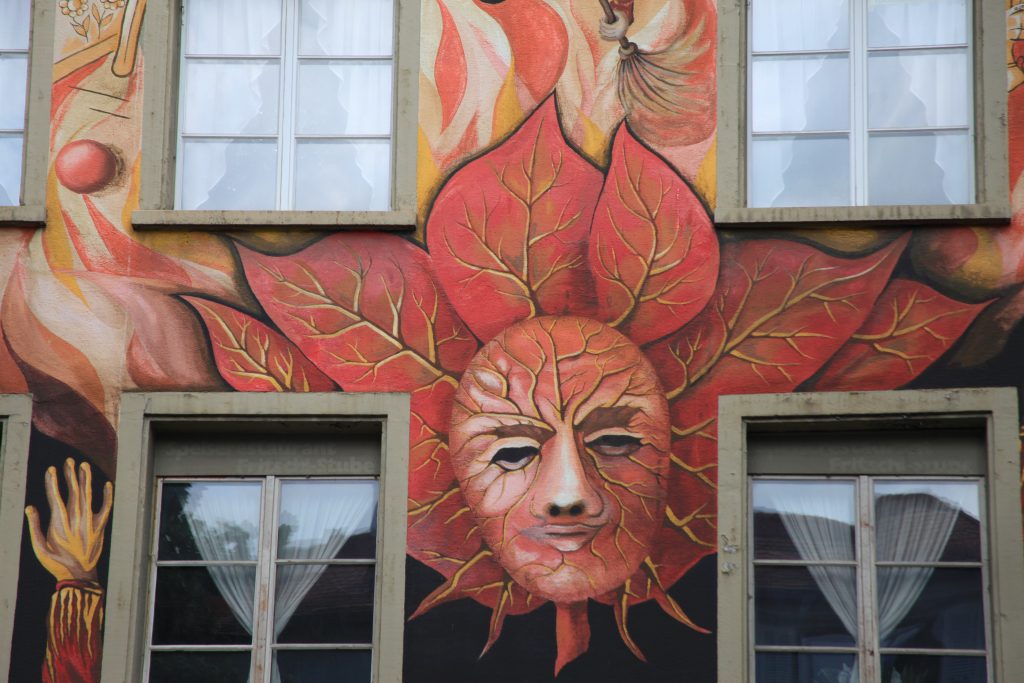
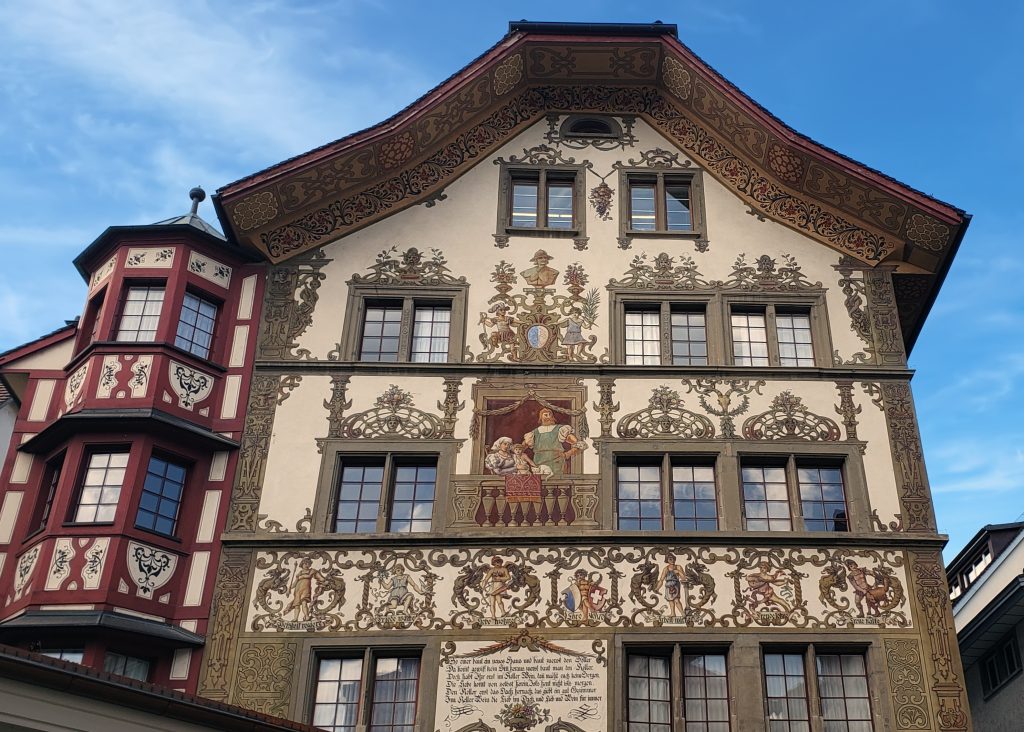
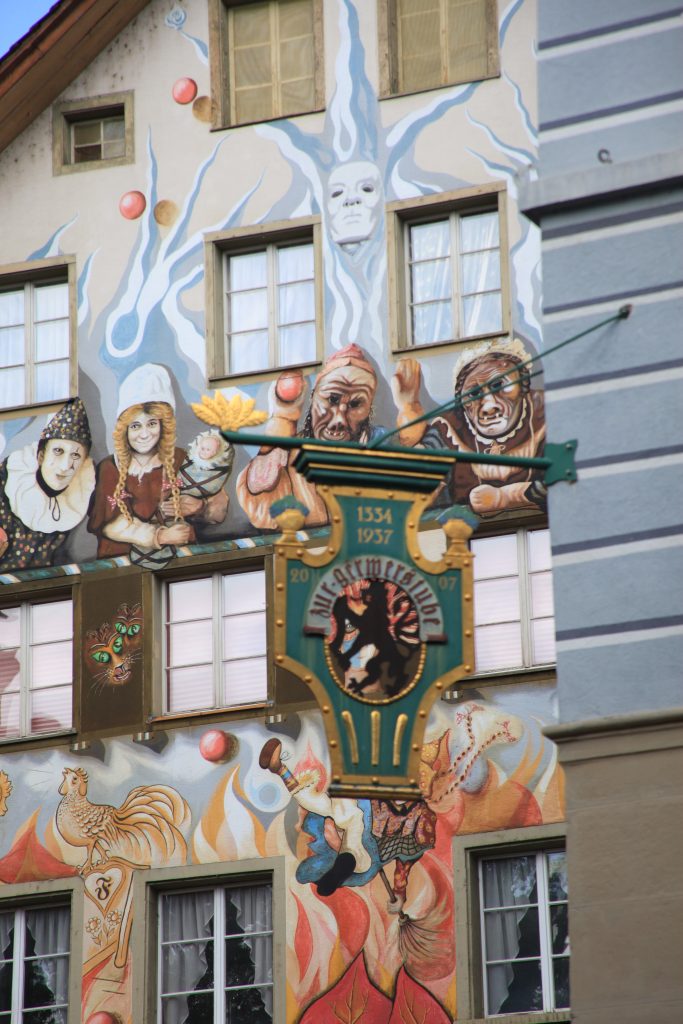
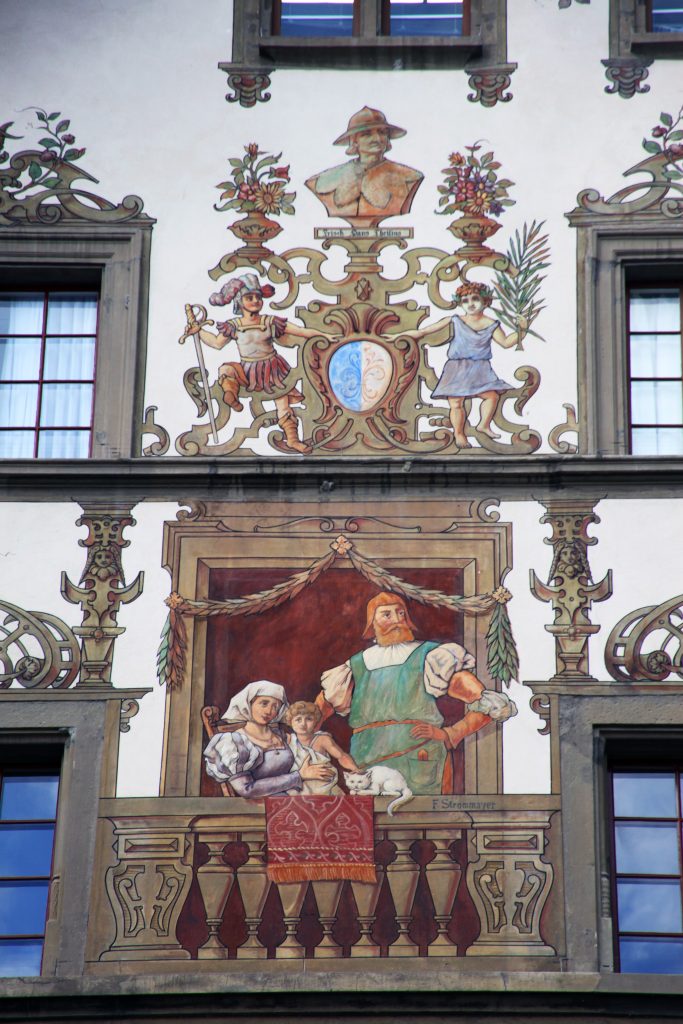
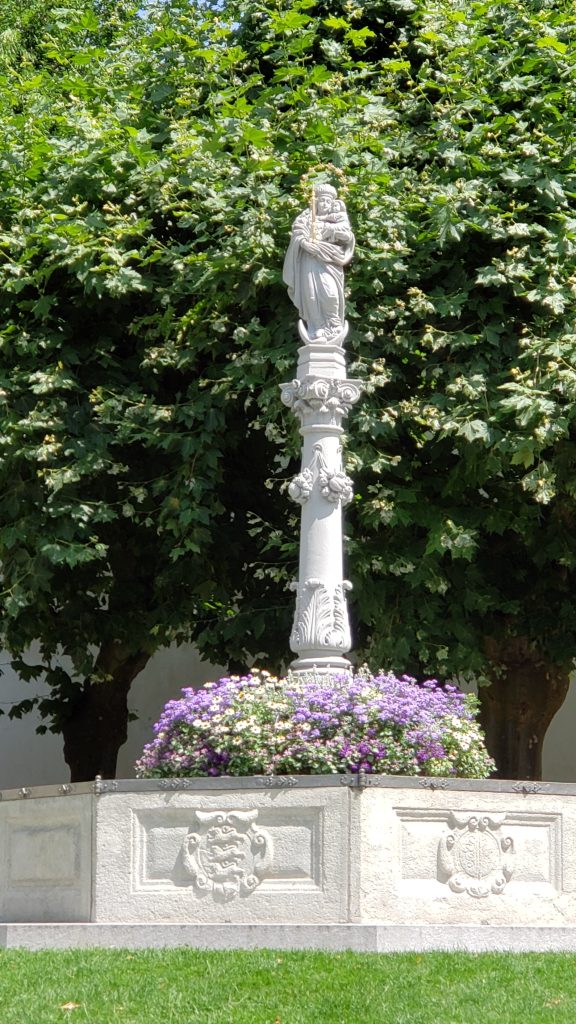
- The Kapellplatz also takes its cue from Carnival. It’s here the event actually begins on the place it is rumored that “Brother Fritschi” is buried. A whimsical fountain that depicts the Fritchi family, from top to bottom–Fritschi, his wife, a nursemaid and servant designated with carnival masks from the 19th century,, is capped by a standard bearer holding a flag. This brightly colored confection is sure to bring a smile to your face.
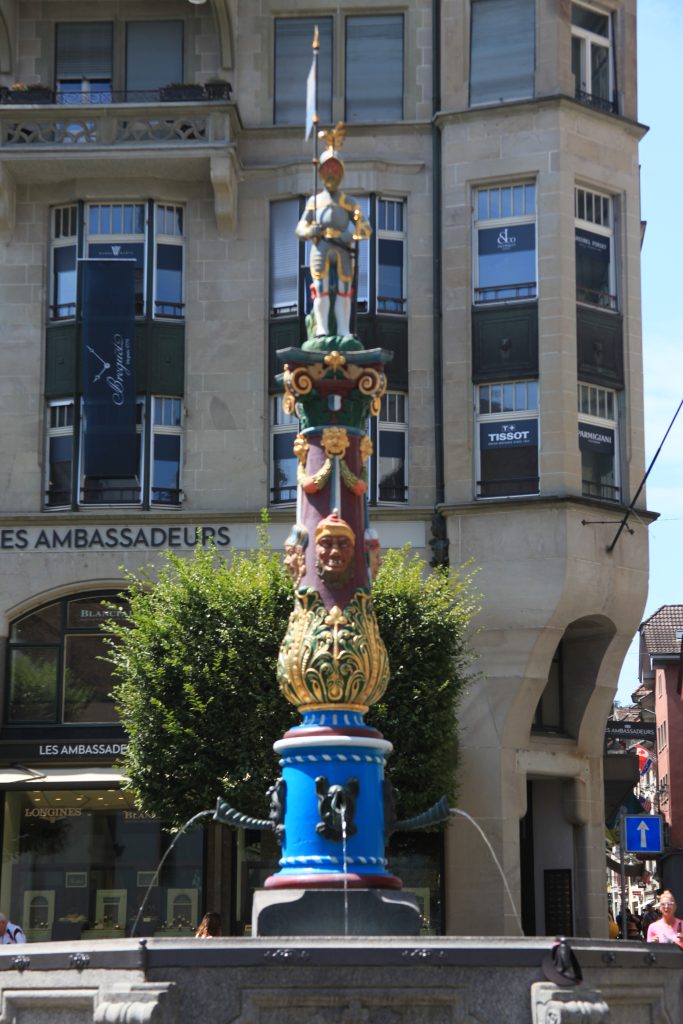
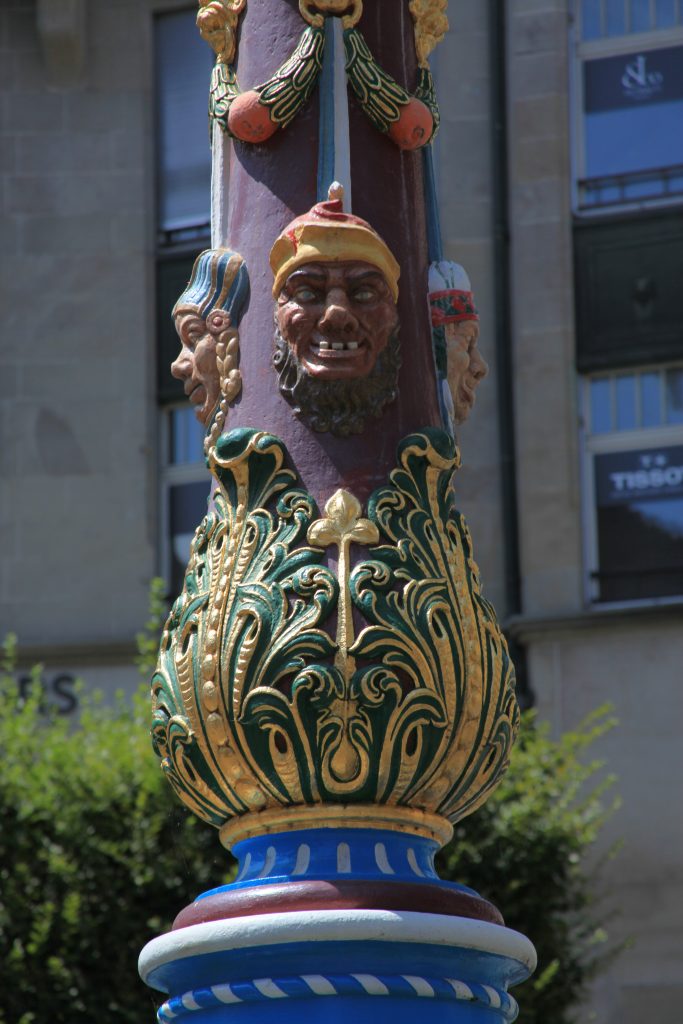
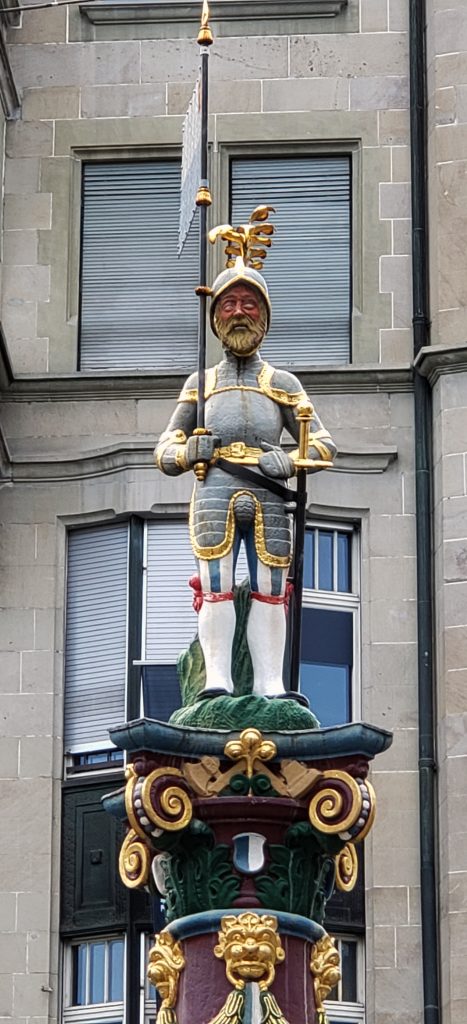
Lucerne residents clearly take pride in their rich history and culture, preserving it on nearly every corner.
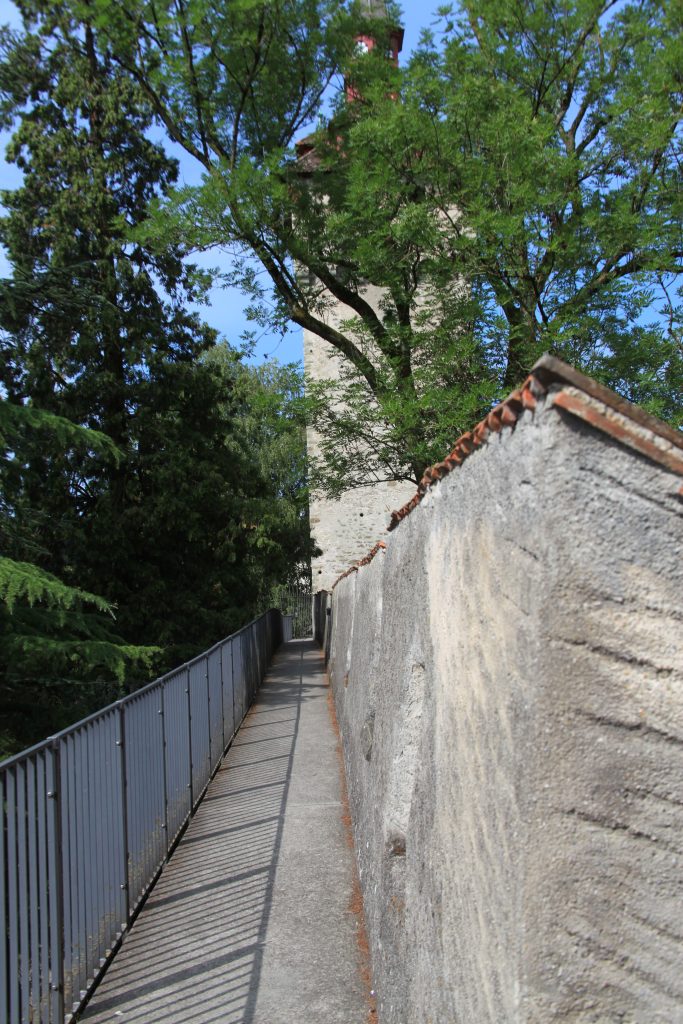
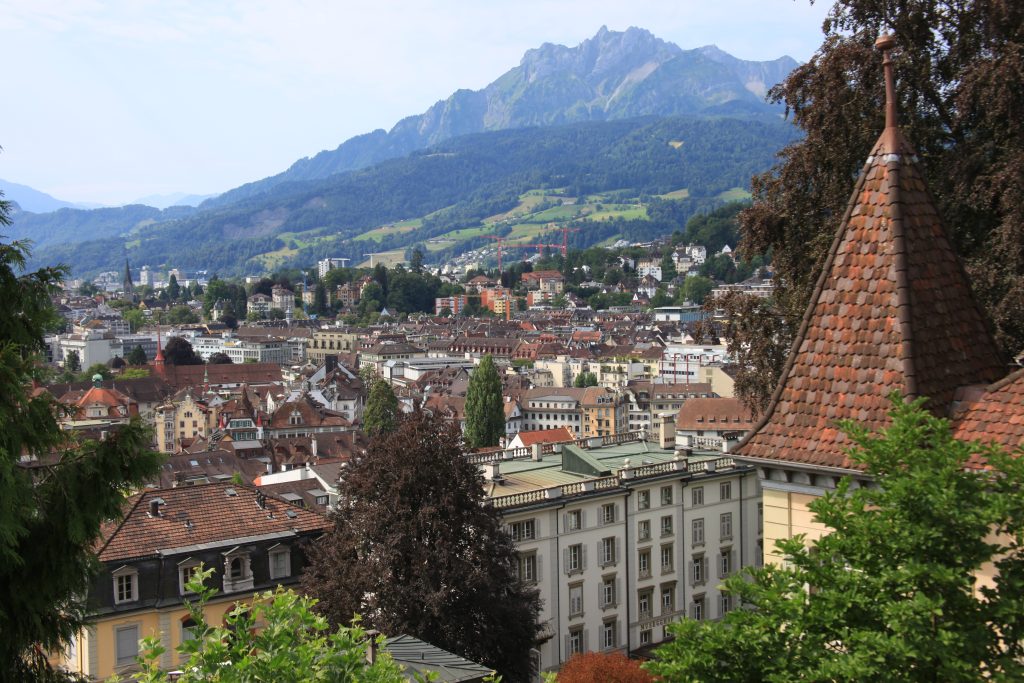
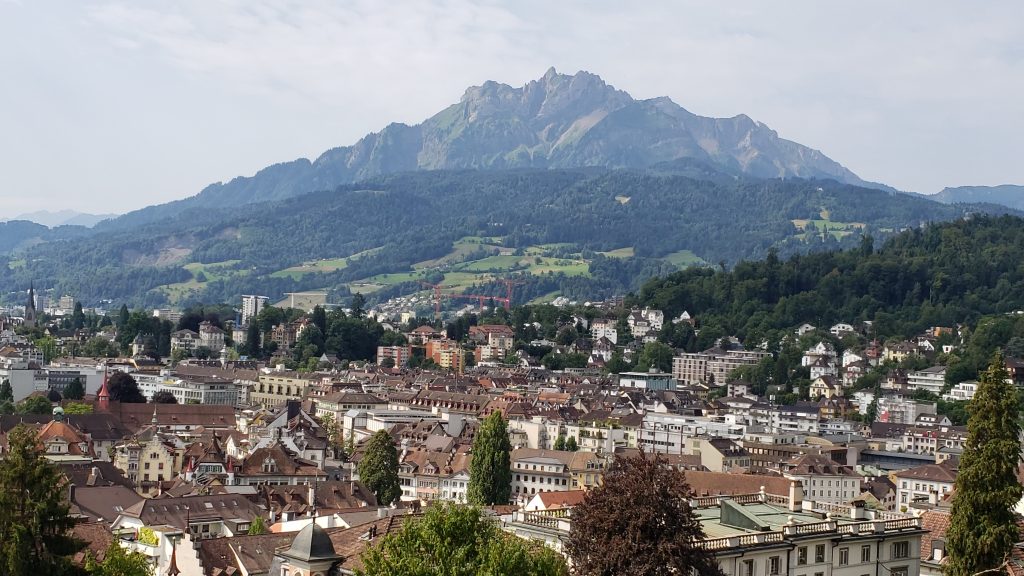
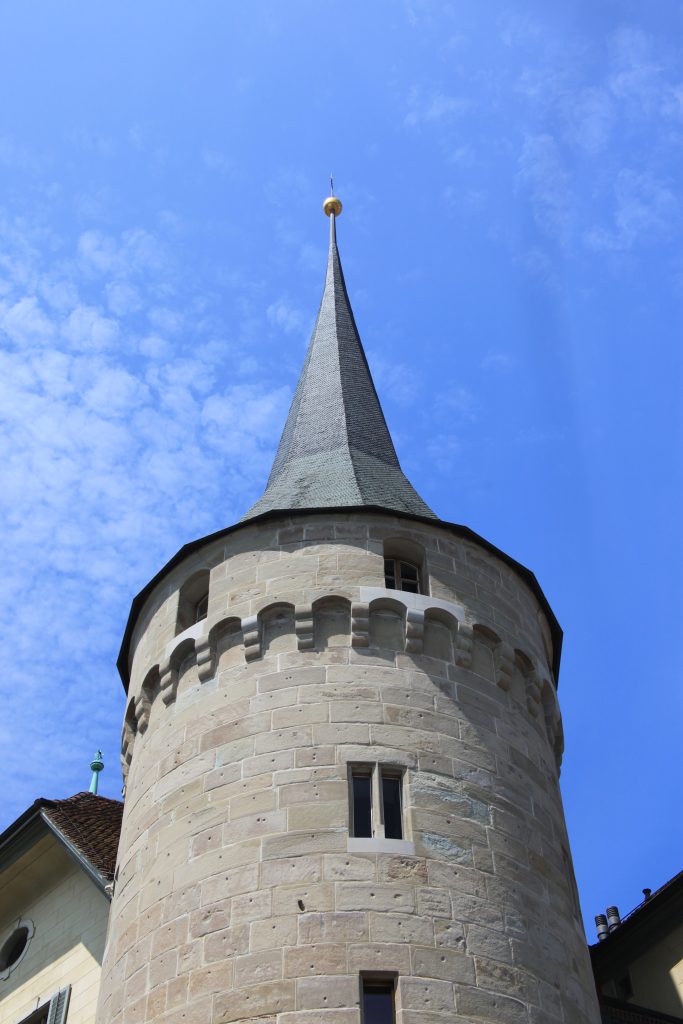
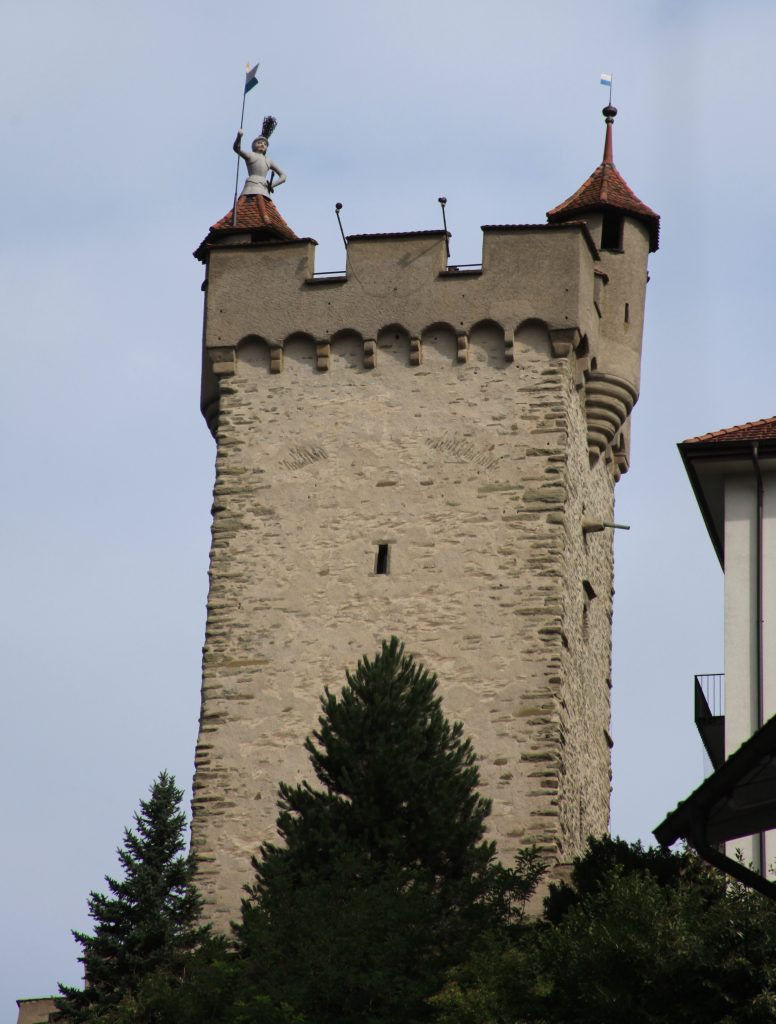
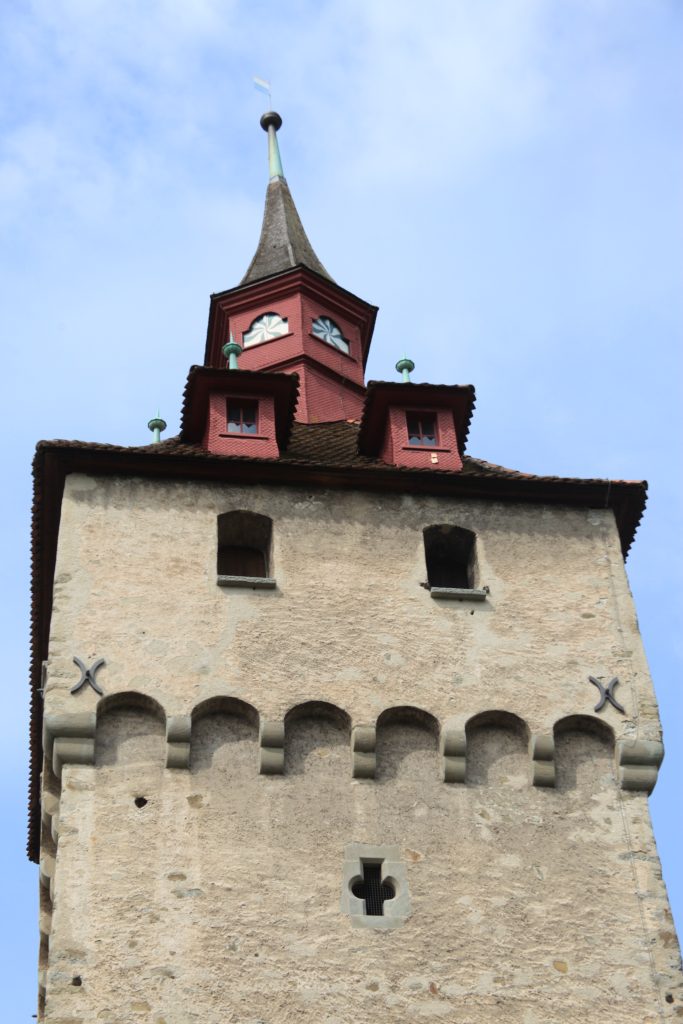
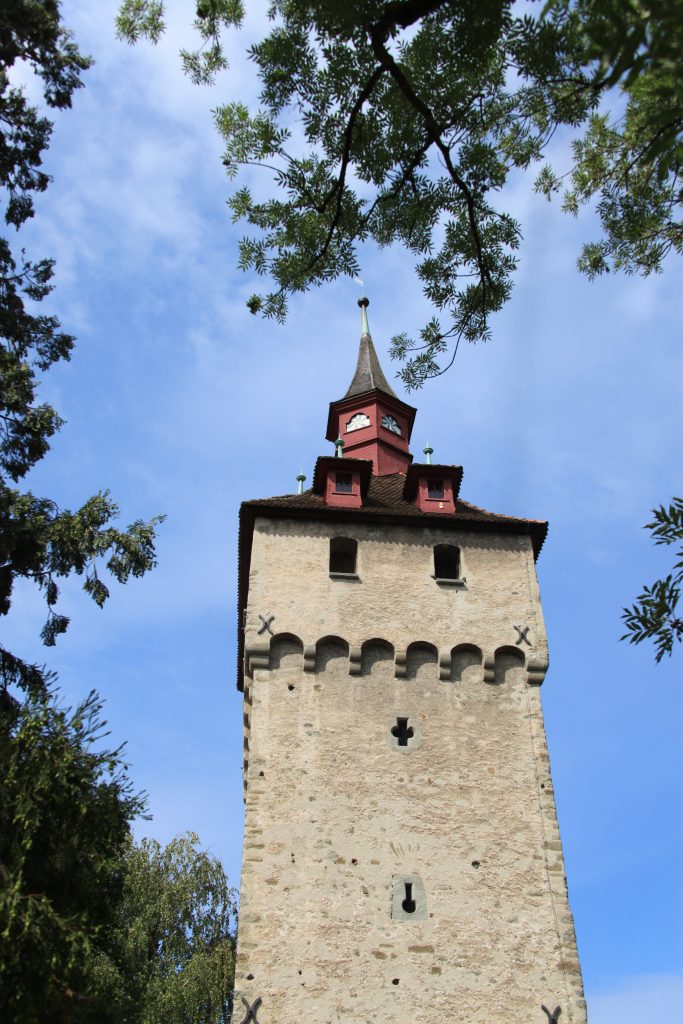
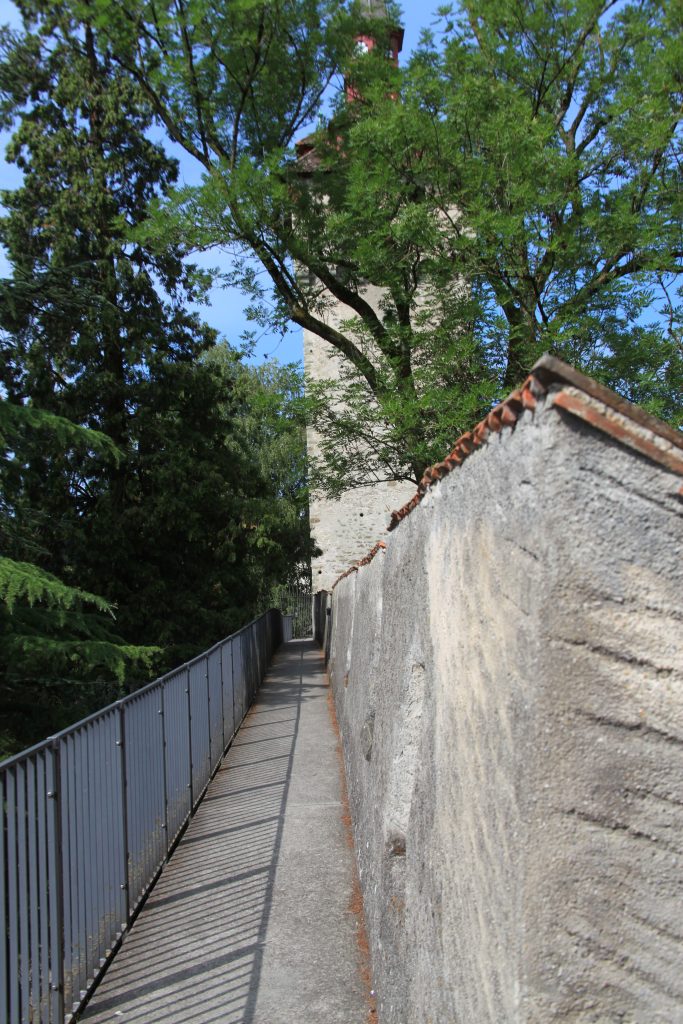
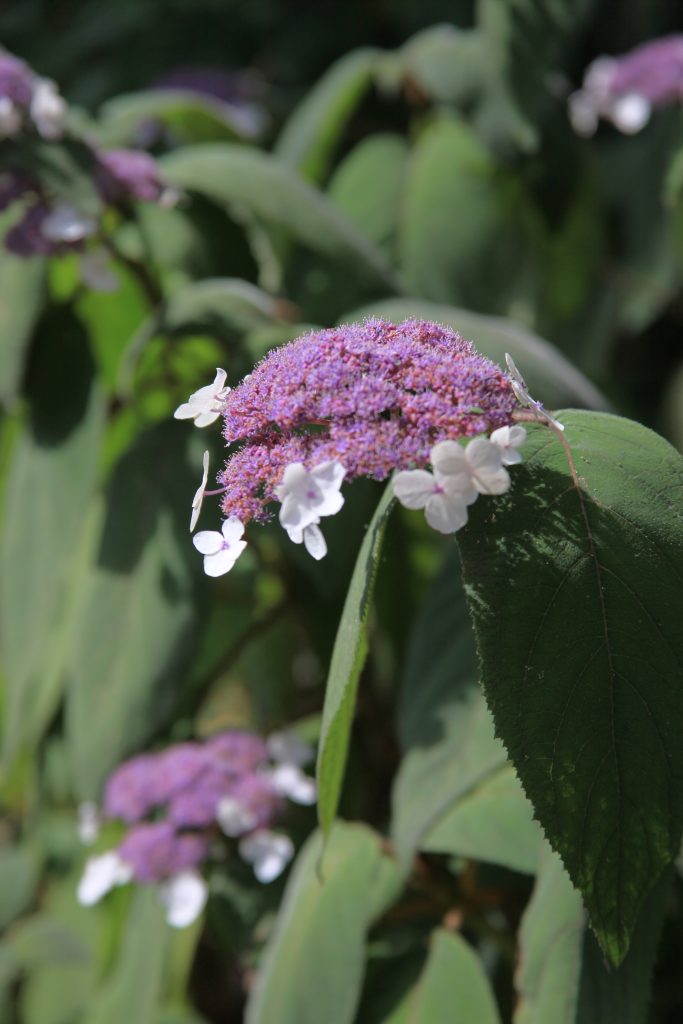
But the city has much more to offer than just the Old Town. One morning I decided to trek up the hillside to the remains of the 2600-foot Musegg Wall with its pointed towers on the high sandstone ridge above Lucerne. These fortifications, begun in the 13th century, consisted of two rampart rings: the inner in the lower town and the outer on the hill. With its nine towers floodlit at night, it is considered Switzerland’s best-preserved defensive wall. Once you mount the wooden staircase through one of the towers, you’re rewarded with striking views of the River Reuss and its surroundings, plus lovely flora and abundant wildlife. The wall shelters rare bird species, including jackdaws, goosanders and alpine swifts.
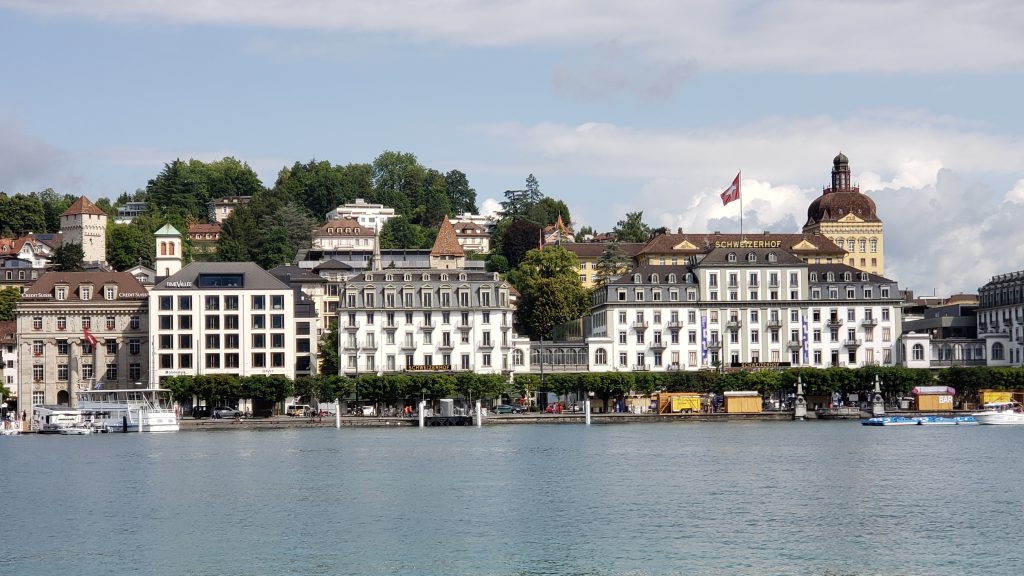
While I didn’t have time to experience it, a funicular also takes you to Hotel Chateau Gütsch, which stands at the original end point of the fortifications. The first inn was built in 1859 but burned in 1888. It was rebuilt to resemble Germany’s Neuschwanstein Castle. Views from here span the entirety of Lake Lucerne and are reportedly gorgeous. This too was a must-stop for Victorians on their Grand European journeys.
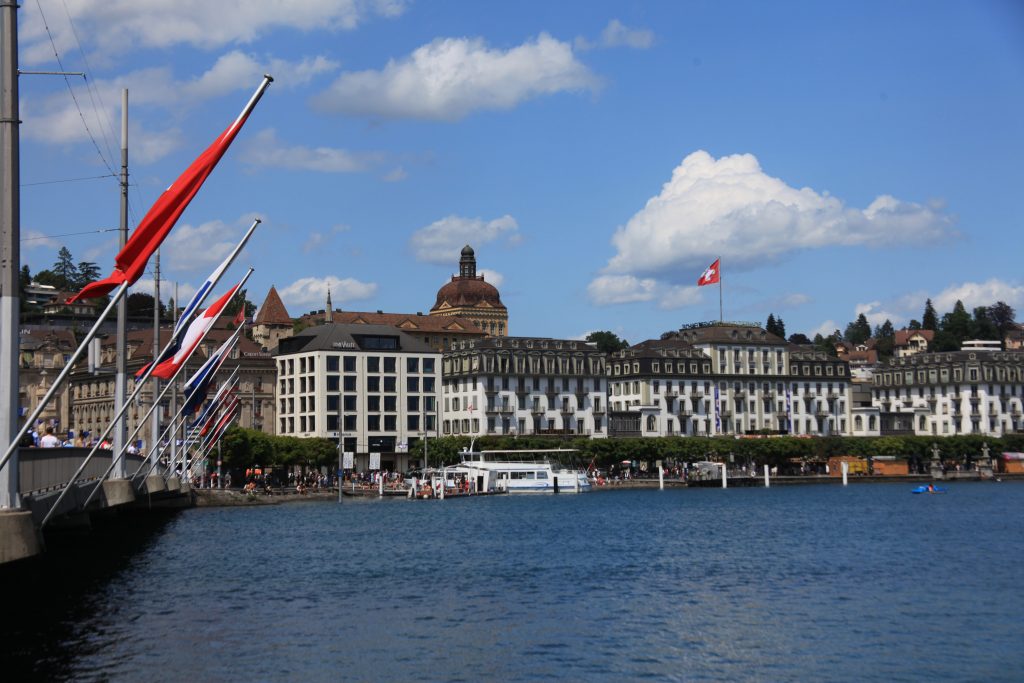
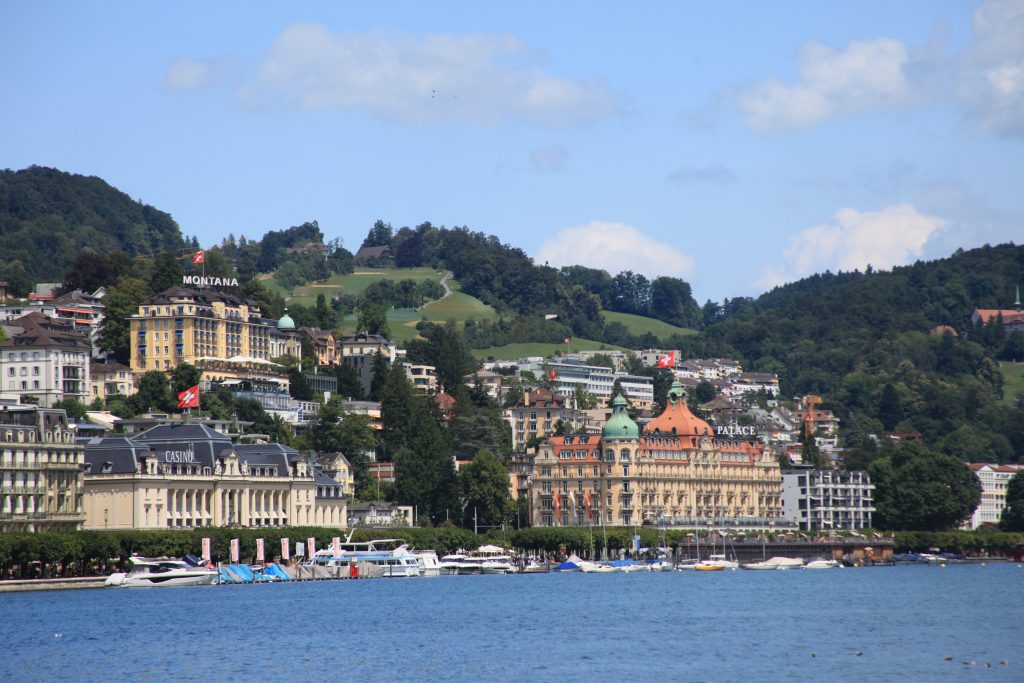
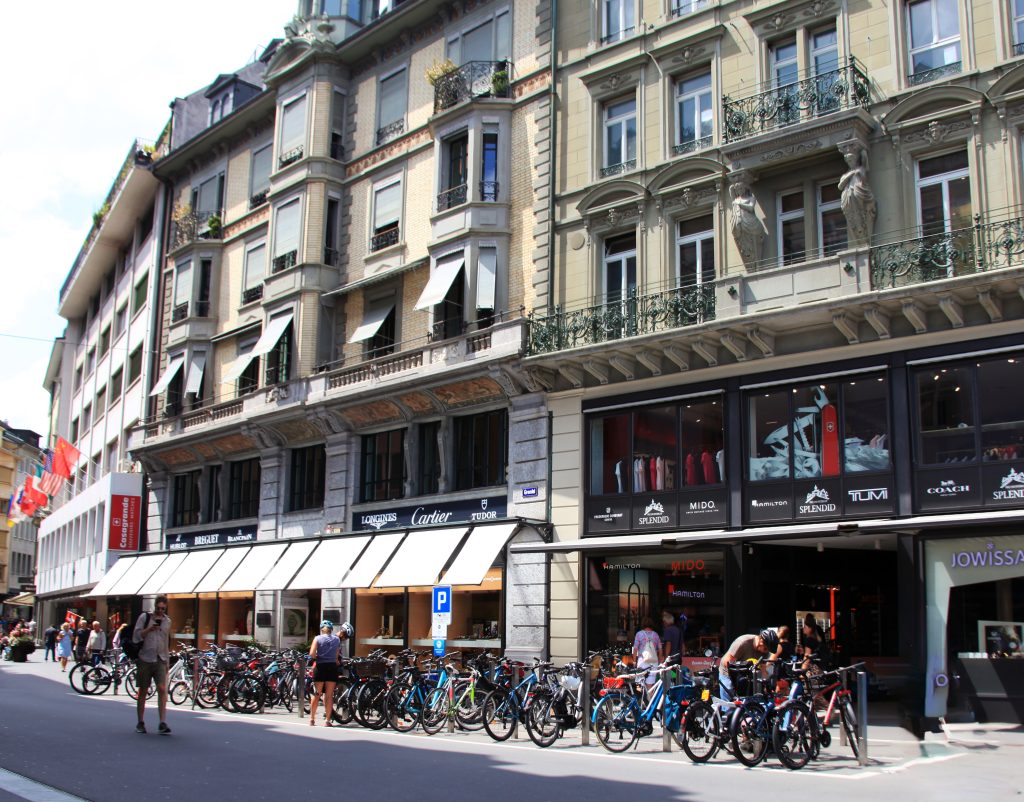
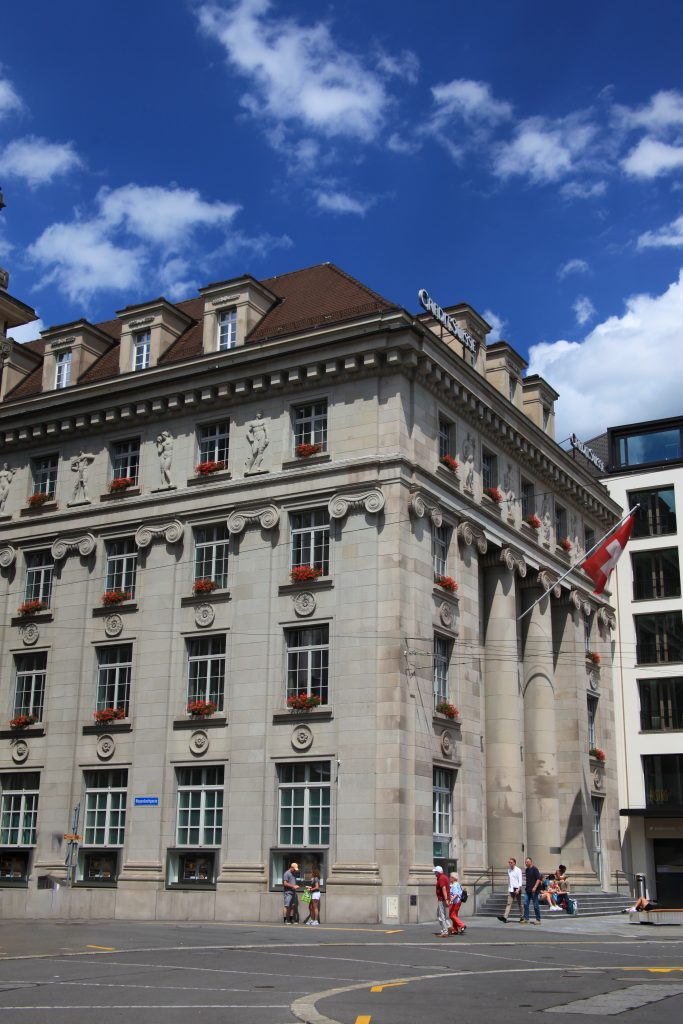
Later that day, I headed east into the newer part of town. On the way, I passed through Lucerne’s elegant shopping district with its busy thoroughfares lined with designer stores offering Gucci, Valentino, Stella McCartney and Balenciaga, where daywear can start at $25,000 and a bridal dress can run six figures or more. Don’t ask what cocktail wear will cost! Speaking of that, you might just be able to don your new elegance for a performance at Lucerne’s Culture and Congress Center, known locally as KKL (Kultur- und Kongresszentrum Luzern), a modern architectural masterpiece. This indoor-outdoor building fronting on the lake is considered one of the world’s great performance centers, known for its extraordinary acoustics.
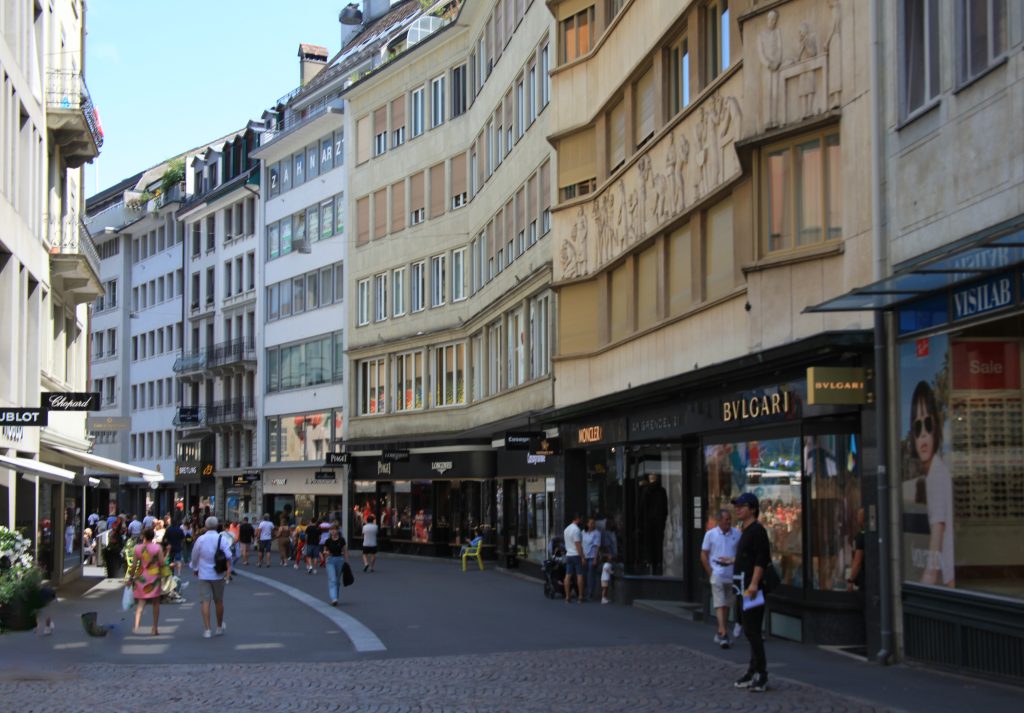
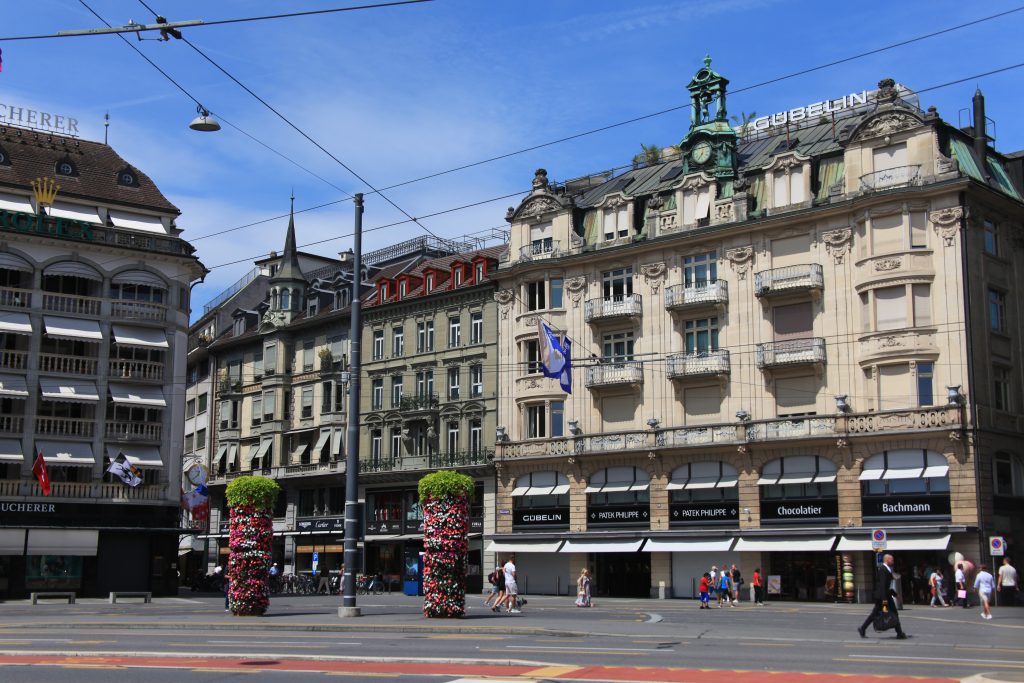
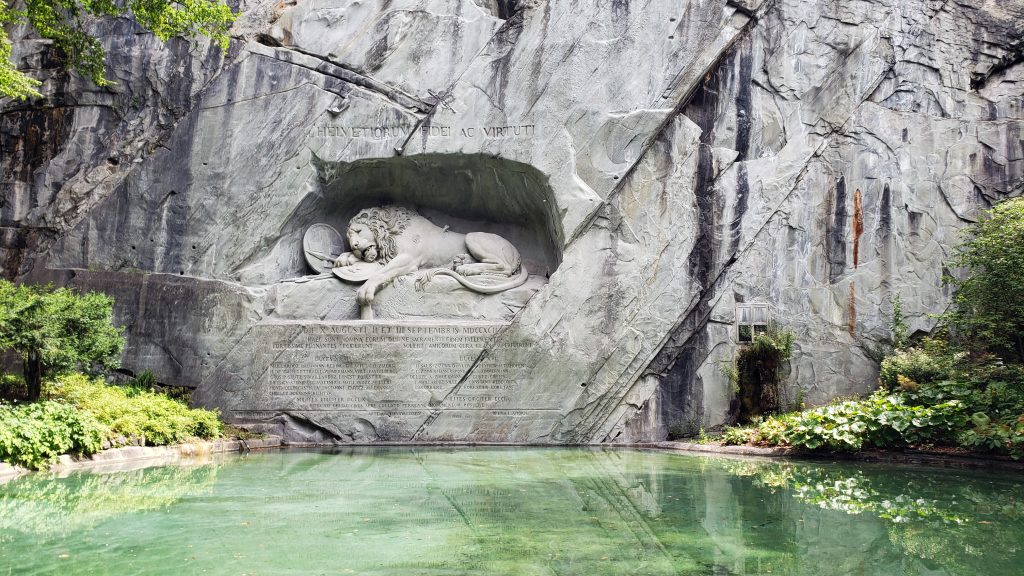
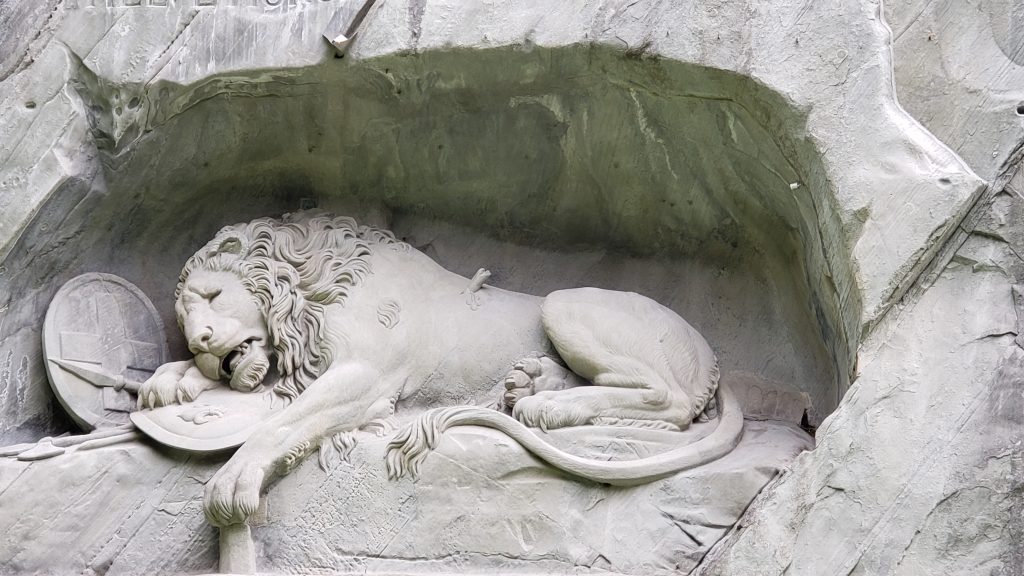
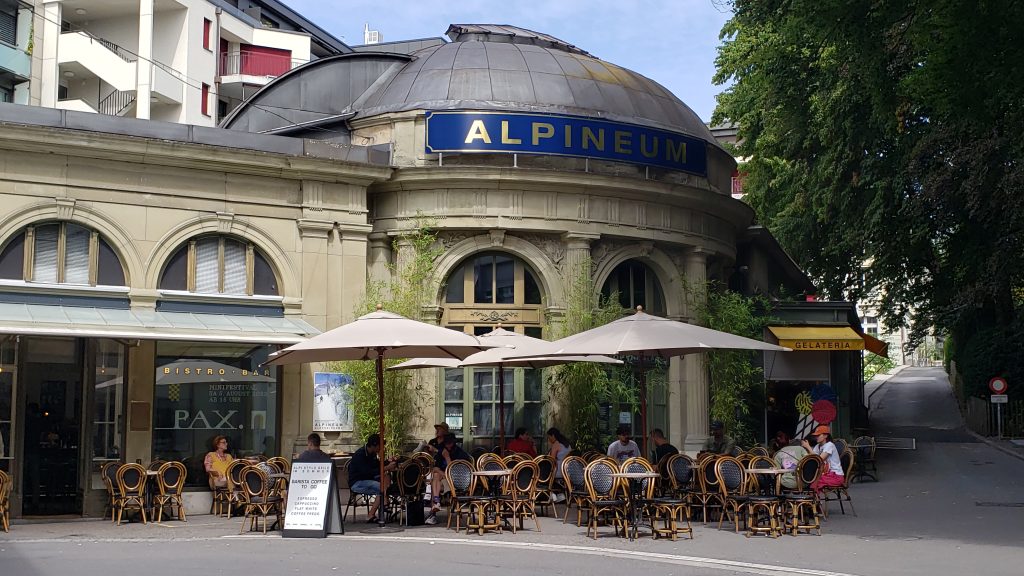
As I exited the shopping district, I entered a part of town north of the lake that blends modern with 18th and 19th century residences and storefronts. Two notable landmarks include the Alpineum, a museum featuring a 3D diorama of the Alps. Housed in an 1885 circular Victorian structure, it also houses the Alpineum Kaffehous & Bar, a lovely spot to rest your feet before heading to the Lion Monument. Carved in relief from sheer rock, this touching sculpture of a dying lion honors the Swiss Guards killed in 1792 defending Marie Antoinette and Louis XVI at the Tuileries Palace during the French Revolution.
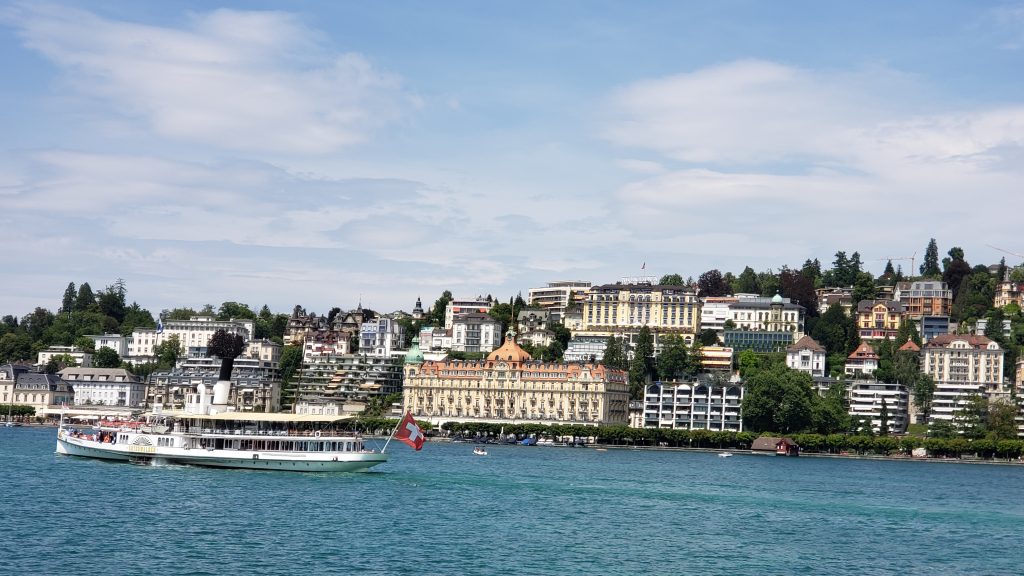
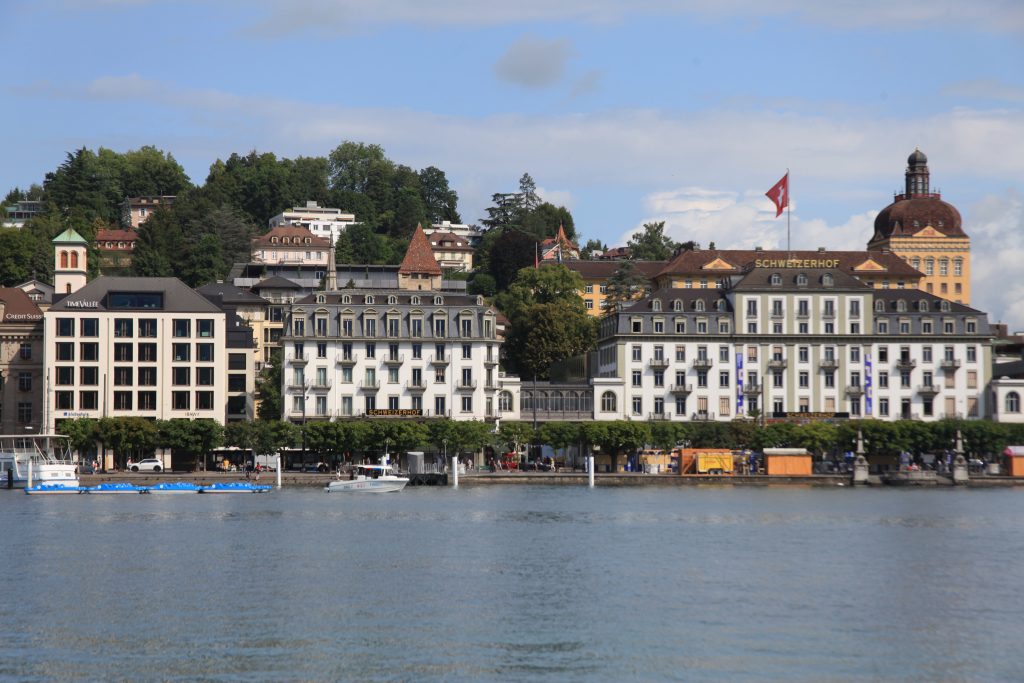
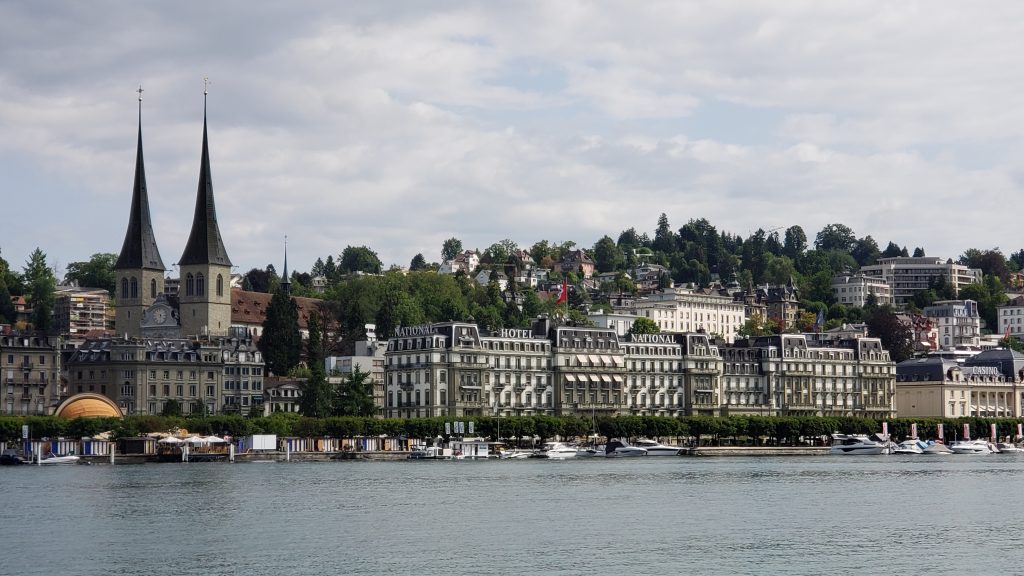
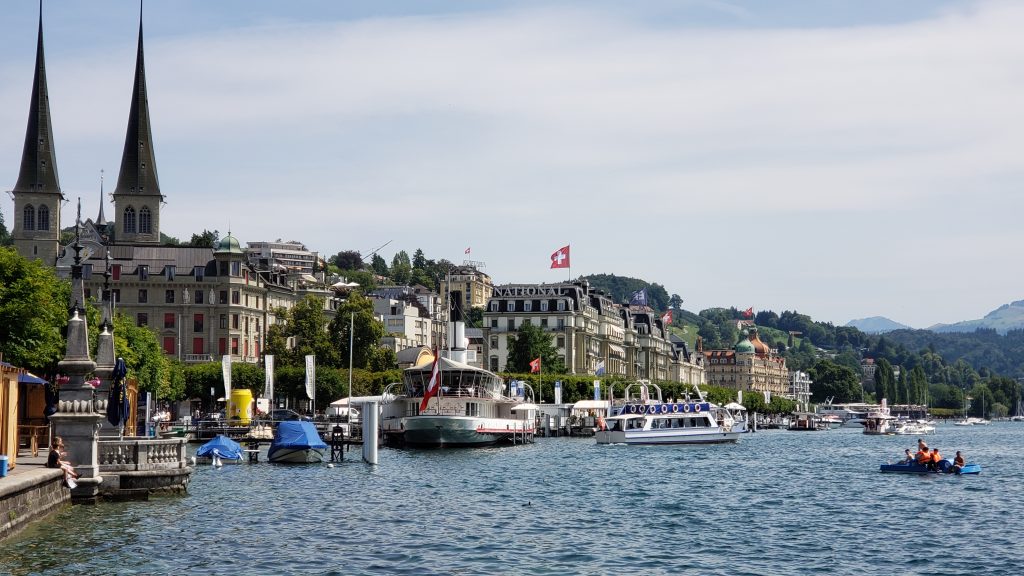
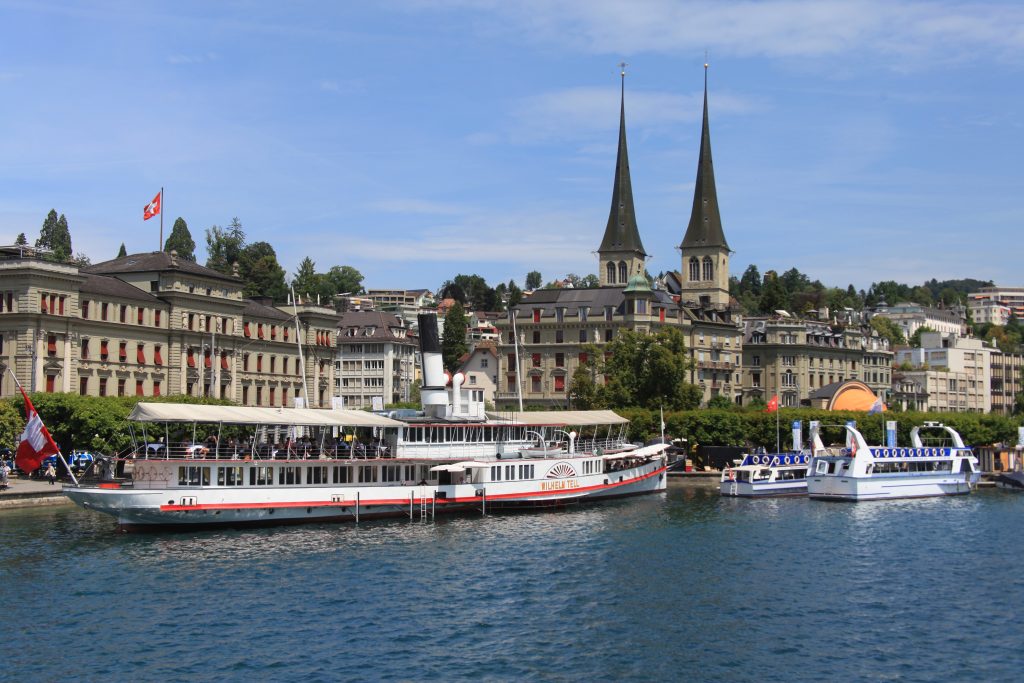
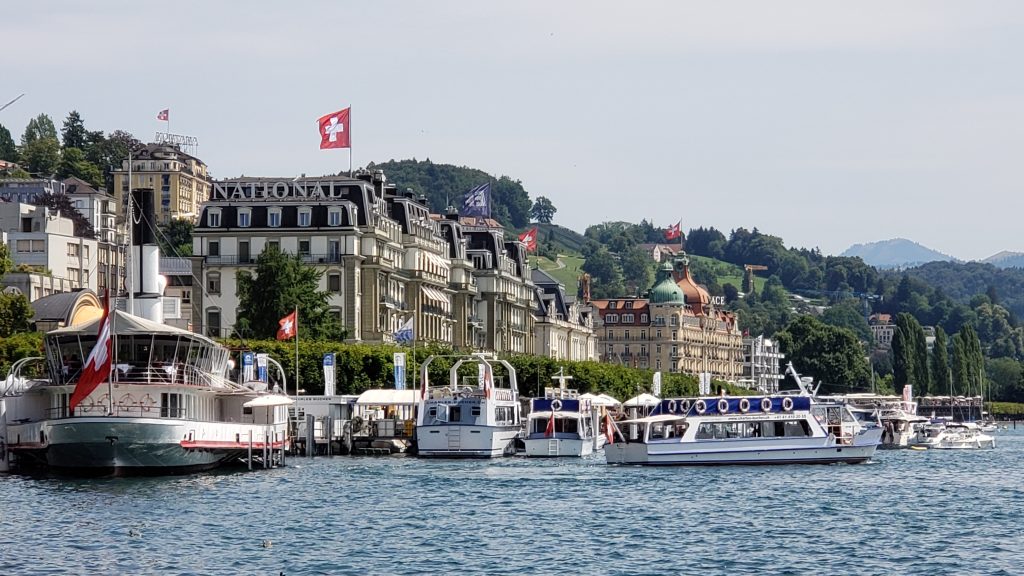
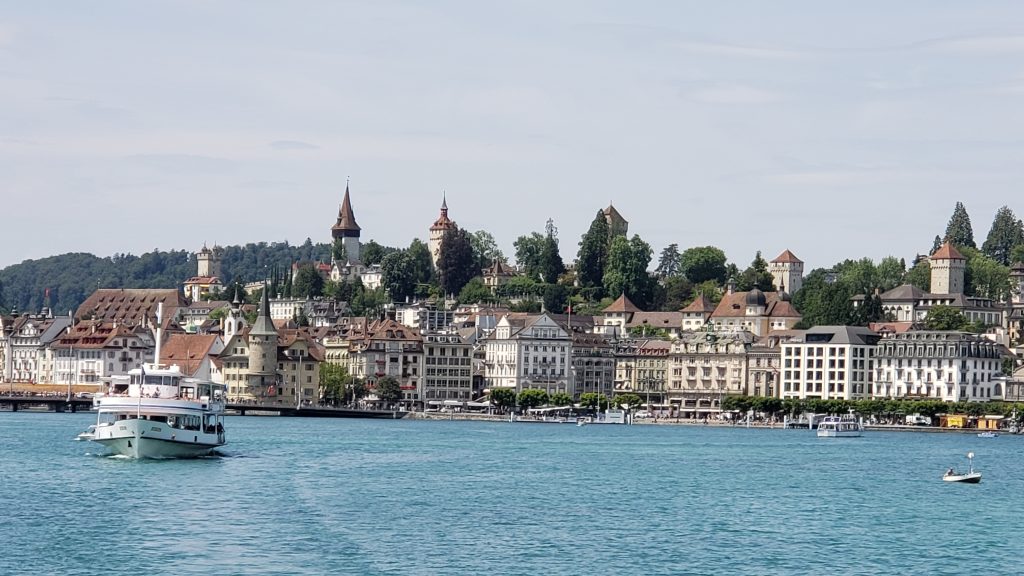
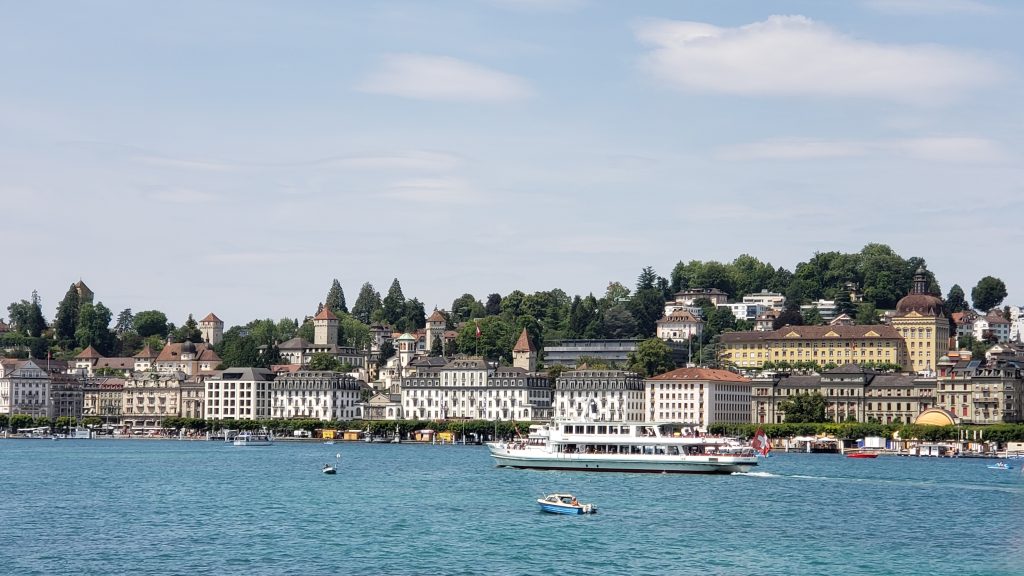
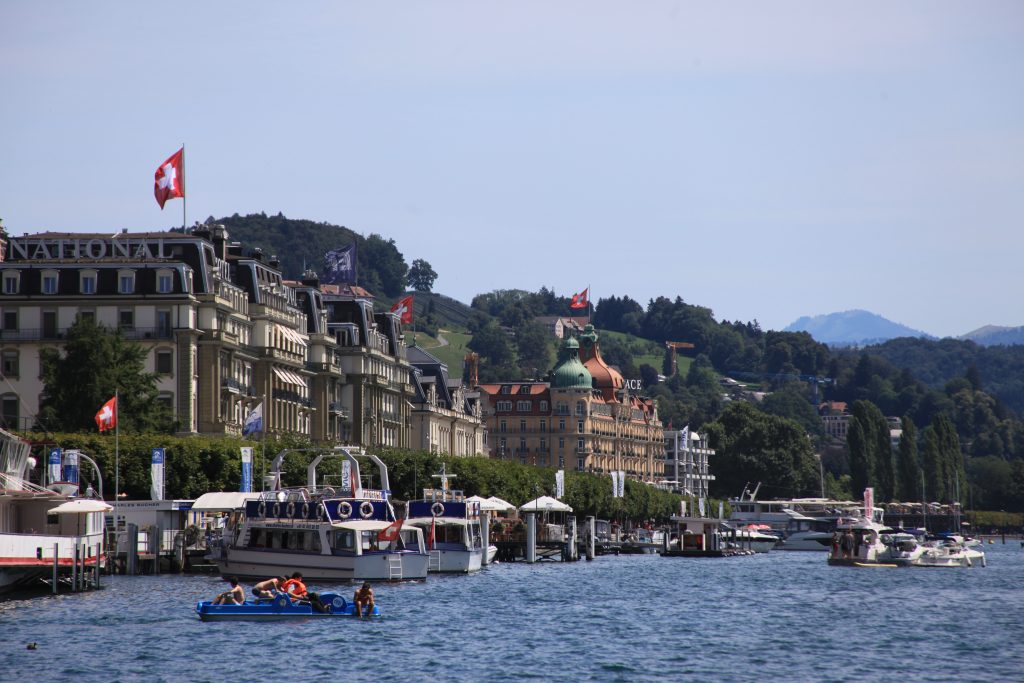
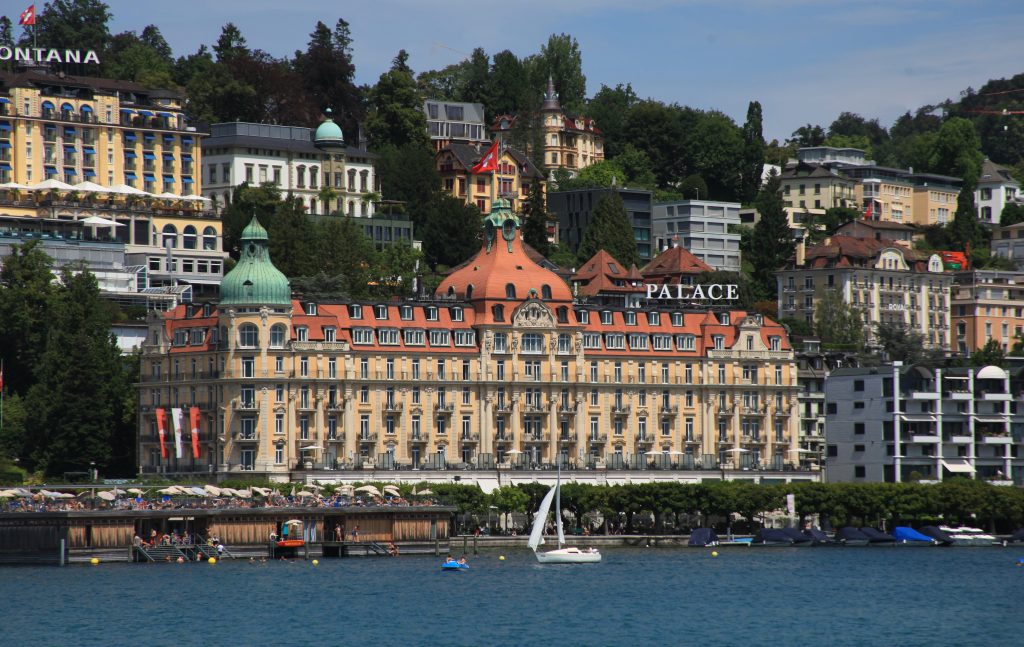
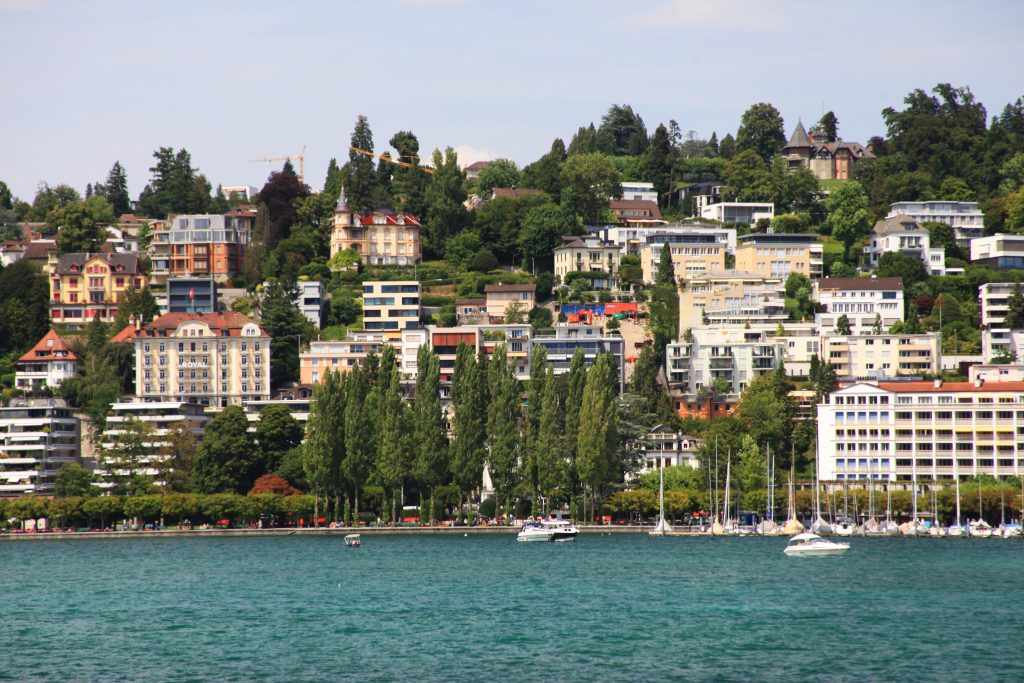
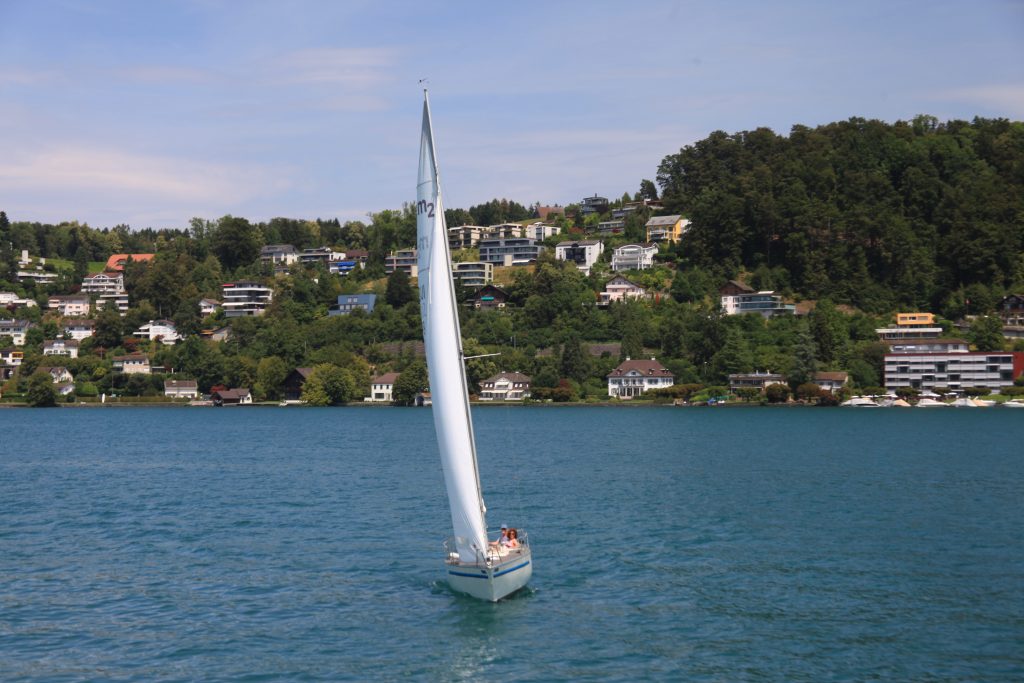
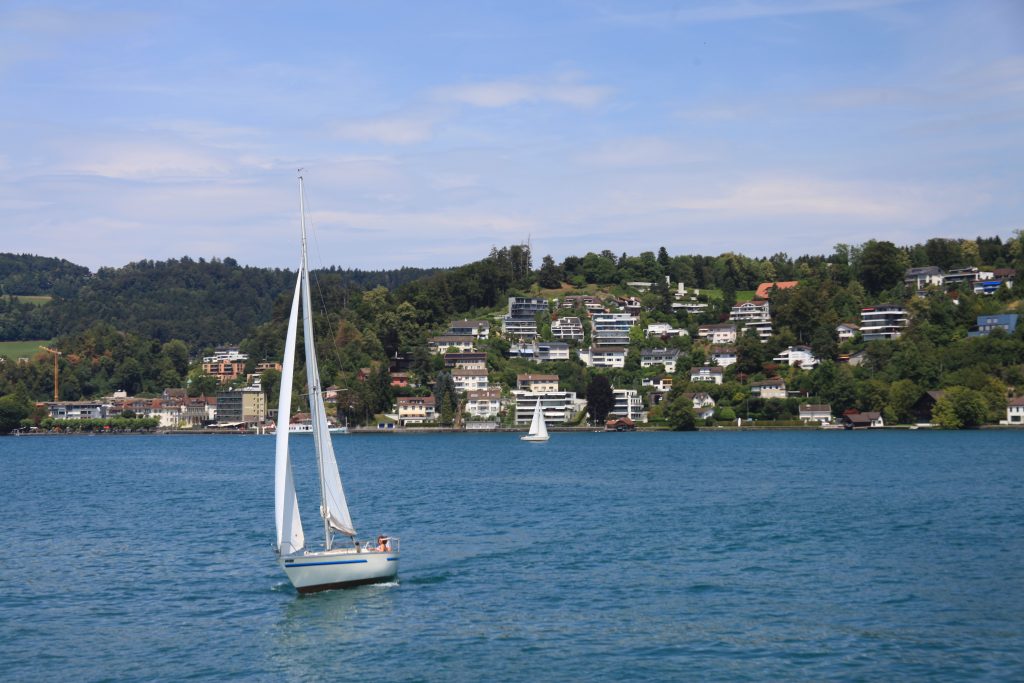
Before leaving this area, St. Matthew’s with its two stately spires is well worth a visit. This Neo-Gothic church is one of only two Protestant churches in the city and was built in 1848. The composer Richard Wagner married here. I ended my stay in Lucerne with a peaceful paddle-steamer cruise on the lake. The stunning views afforded me great images of St.’s spires. Matthews, Kapellbrücke, Mt. Pilatus lakeside chalets with pleasure craft out for a Sunday sail. It was the perfect way to wind down after a magical couple of days in the Swiss Alpine city of Lucerne.
Tours to Consider
- Lucerne Walking & Boat Tour: The Best Swiss Experience
- Lucerne Walking Tour: Explore Top Sights & Hidden Gems
Where to Stay in Lucerne, Switzerland
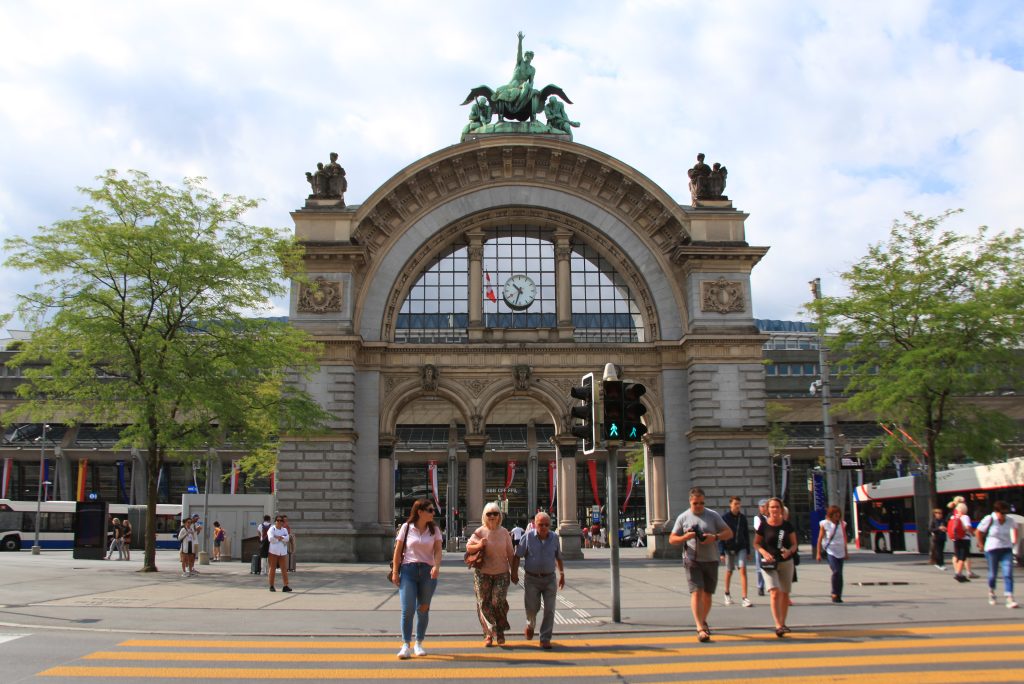
For a comfortable stay in Lucerne, Old Town hotels like the Hotel des Balances offer the most atmospheric choice, positioned right along the Reuss River. These accommodations put you within walking distance of the Chapel Bridge, the Altstadt’s medieval streets, and main attractions, though rooms are compact and prices reflect the central location. If you prefer more space and modern amenities at a lower cost, hotels around the train station or in the Europaplatz area offer solid alternatives, typically within five to ten minutes on foot from the Old Town.
For travelers seeking quieter surroundings, the residential neighborhoods on the lake’s eastern shore, particularly around Seeburg and the Tribschen area, offer guesthouses and smaller hotels with garden settings and lake views. These locations work well if you have a car or are willing to take a short train or bus ride to reach the center. The lakeside walks from these areas are pleasant, winding among local residences rather than tourist zones.
Budget-conscious visitors should consider the hostels and family-run guesthouses in Neustadt, the newer town district just across the river from the Altstadt. This neighborhood has younger energy and excellent transit connections to central attractions without Old Town’s premium pricing. Many of these properties offer both private rooms and dormitory beds, allowing flexibility for different group sizes and travel styles.
Book accommodations several weeks ahead during summer months, as Lucerne draws steady tourist traffic from June through September. Spring and fall offer pleasant weather, fewer crowds, and better availability, making these seasons ideal if your schedule allows.
