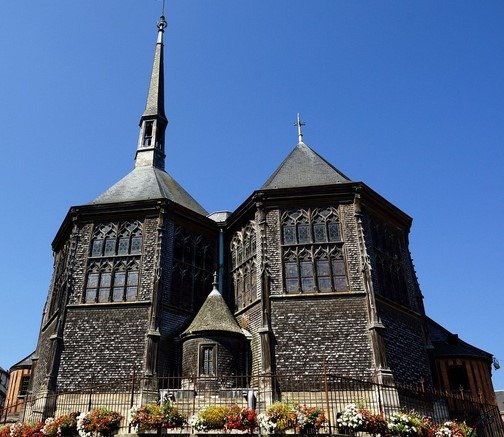
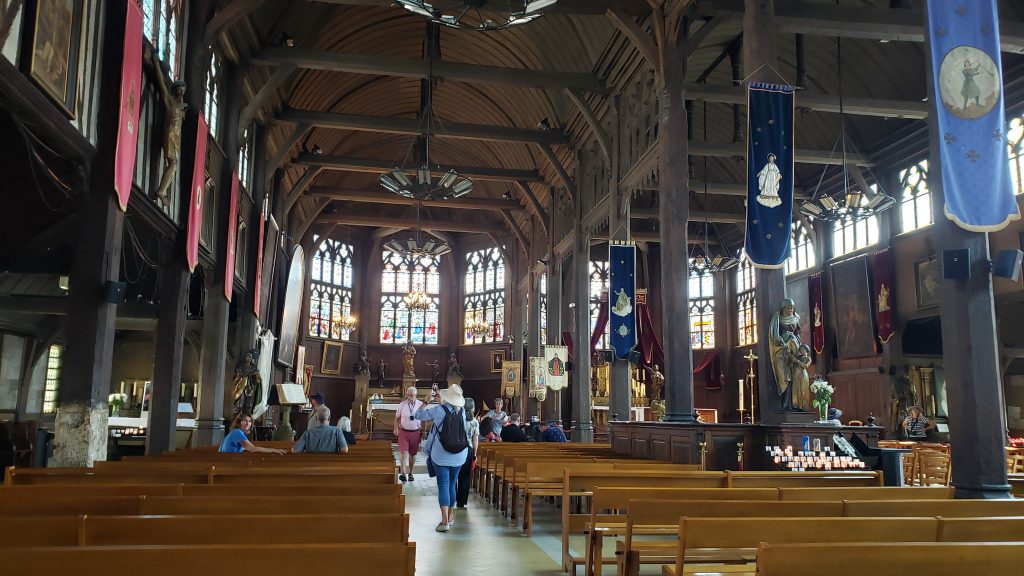
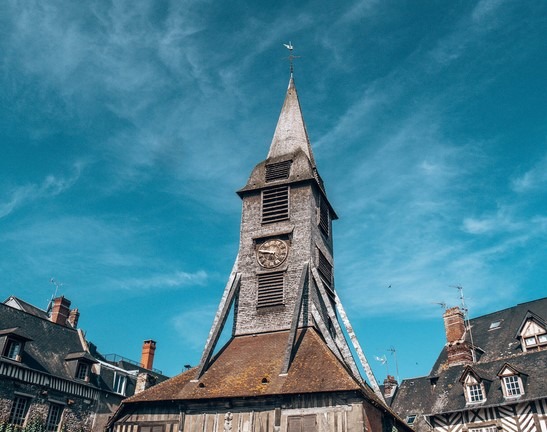
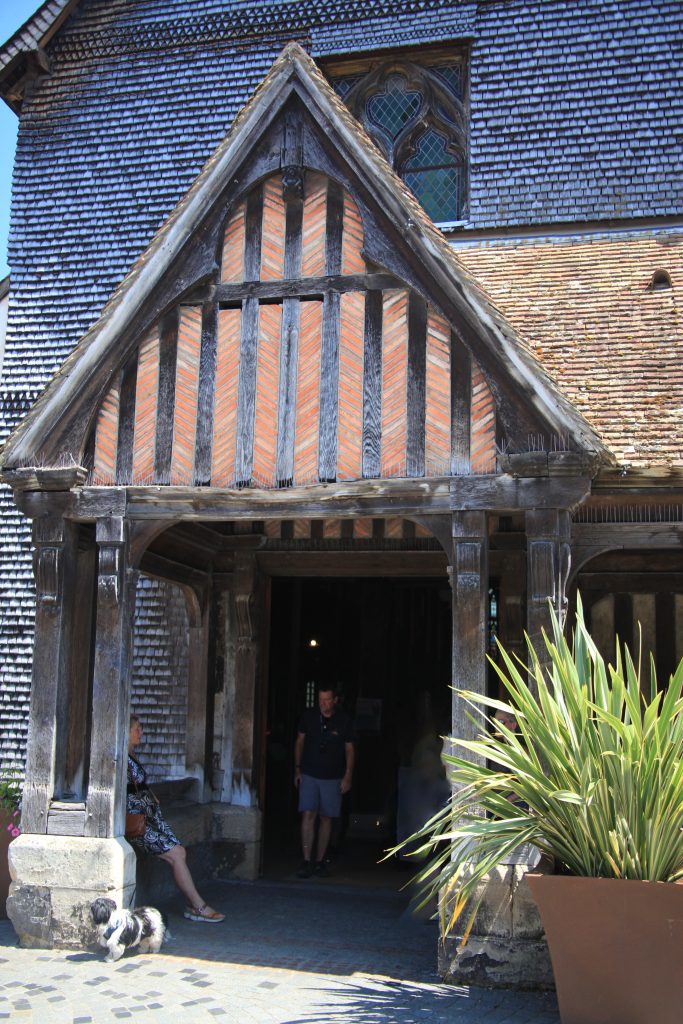
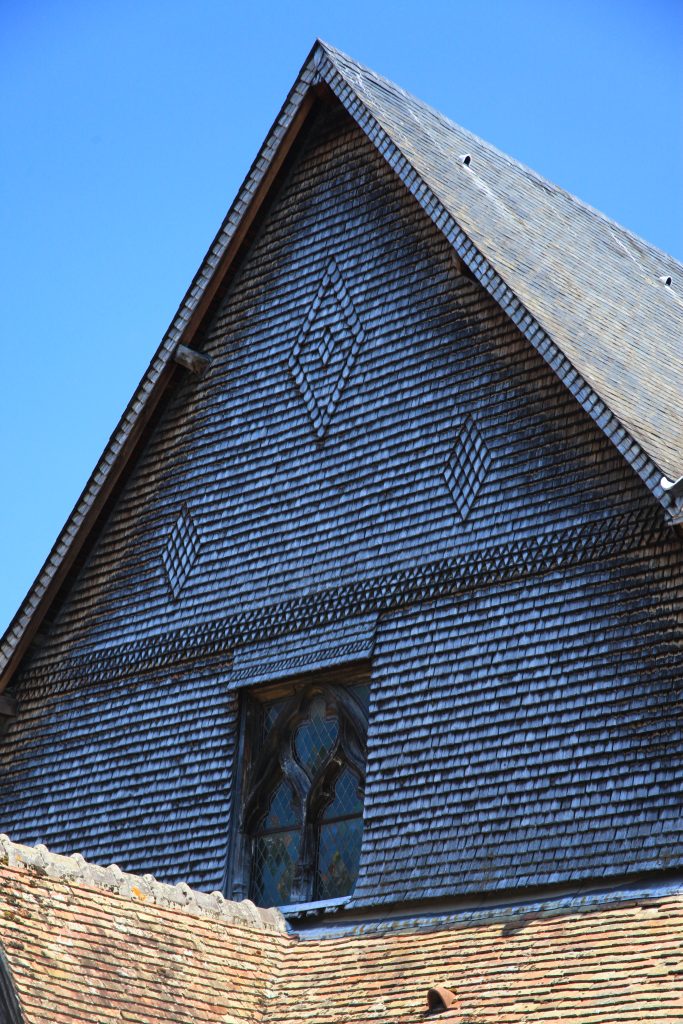
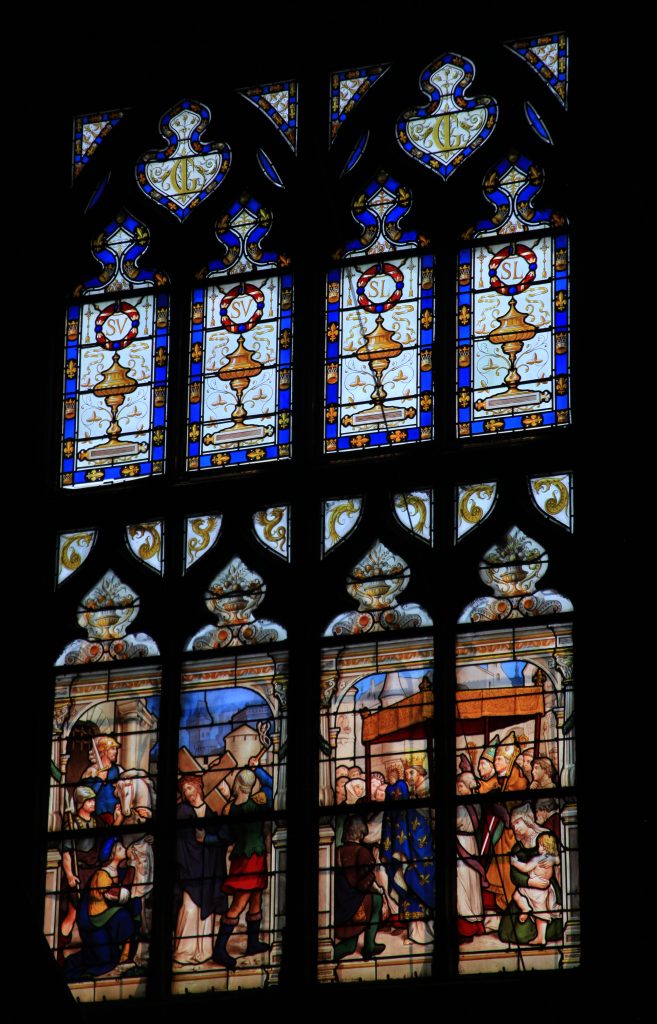
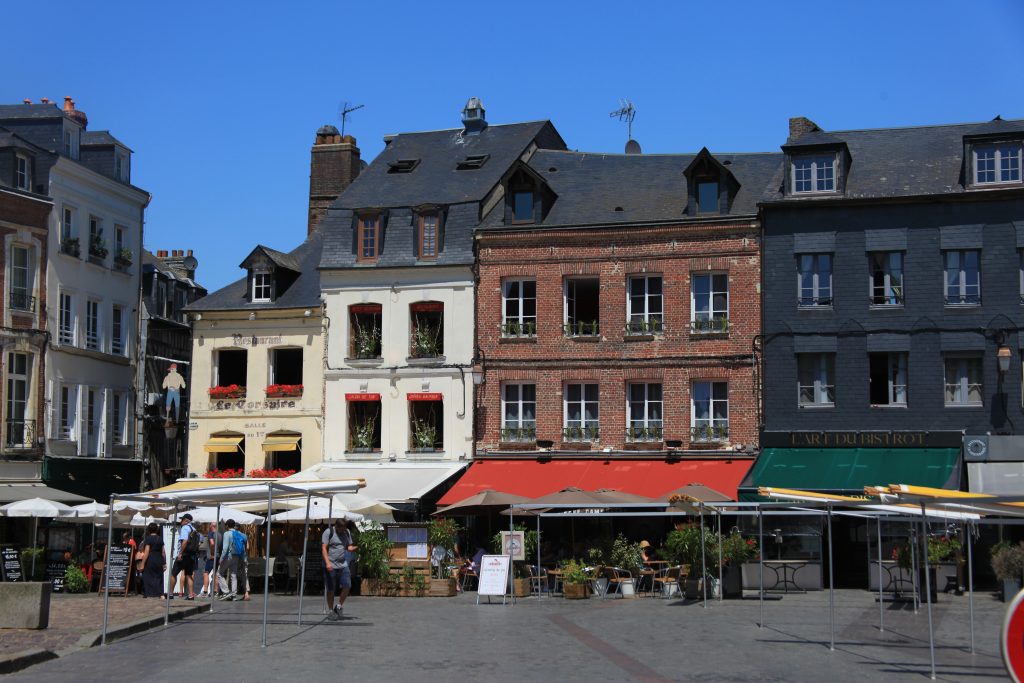
You would think a medieval church would be constructed of stone and marble, right? Not so with Honfleur’s entirely wooden Sainte Catherine’s, the largest wooden church remaining in France. In fact, this incredibly unique edifice was built by the town’s shipbuilders, seafarers, and other maritime workers, and it indeed looks like an overturned ship’s hull looking up at its ceiling!
It appears that the stone church that stood on this spot was destroyed in the Hundred Years’ War. So late in the 15th century, the locals wanted a new church to commemorate and express thanks to the all-mighty for finally kicking the British out of Normandy. One problem. all of the masons were employed elsewhere, rebuilding from the war, and stone was in short supply. So, what to do? This world-famous seafaring port–which was at that time a dominant player in France’s commercial and explorational ocean-going trade (Samuel de Champlain sailed from here to found Quebec) — had plenty of shipbuilders and craftsmen.
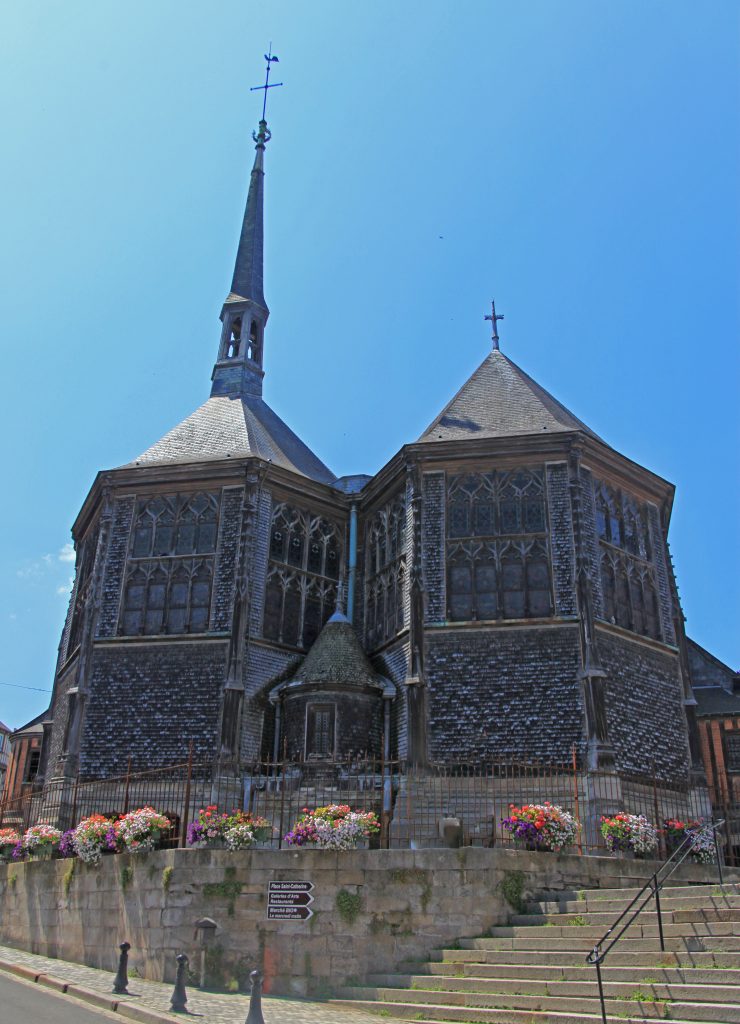
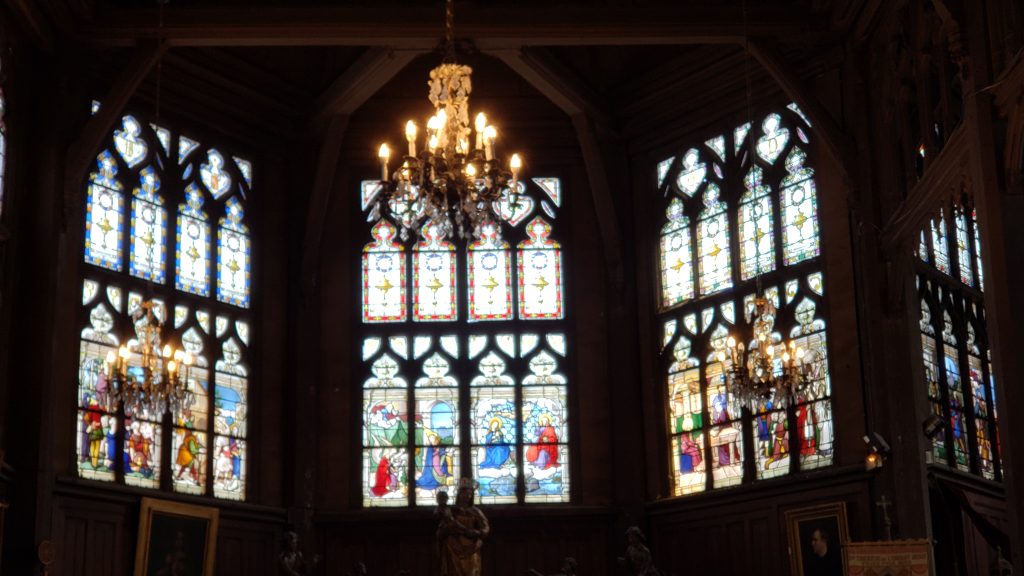
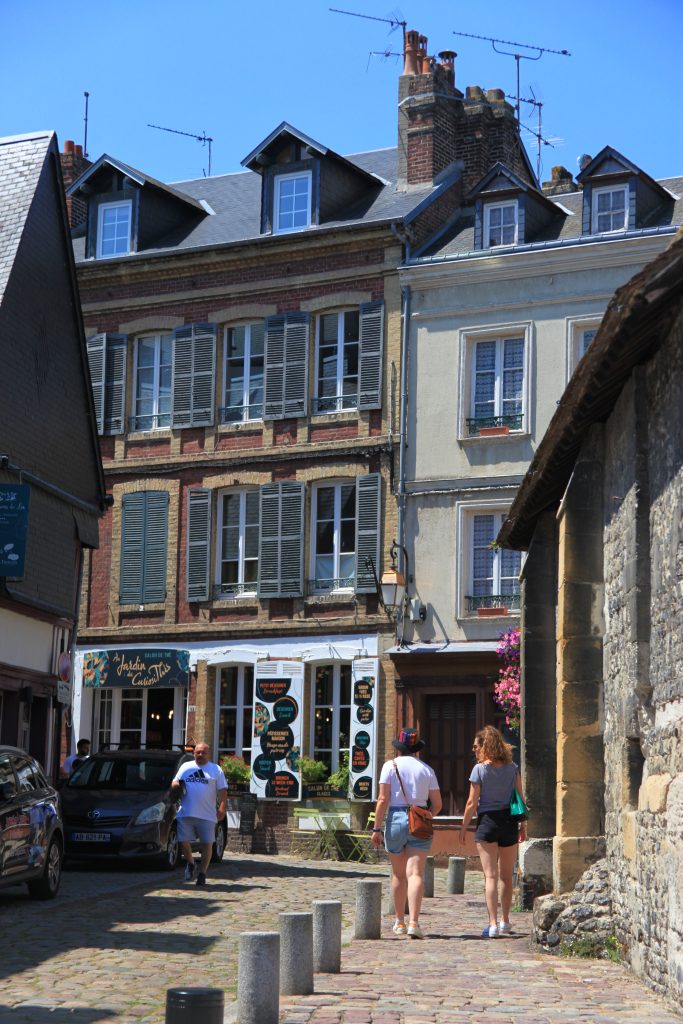
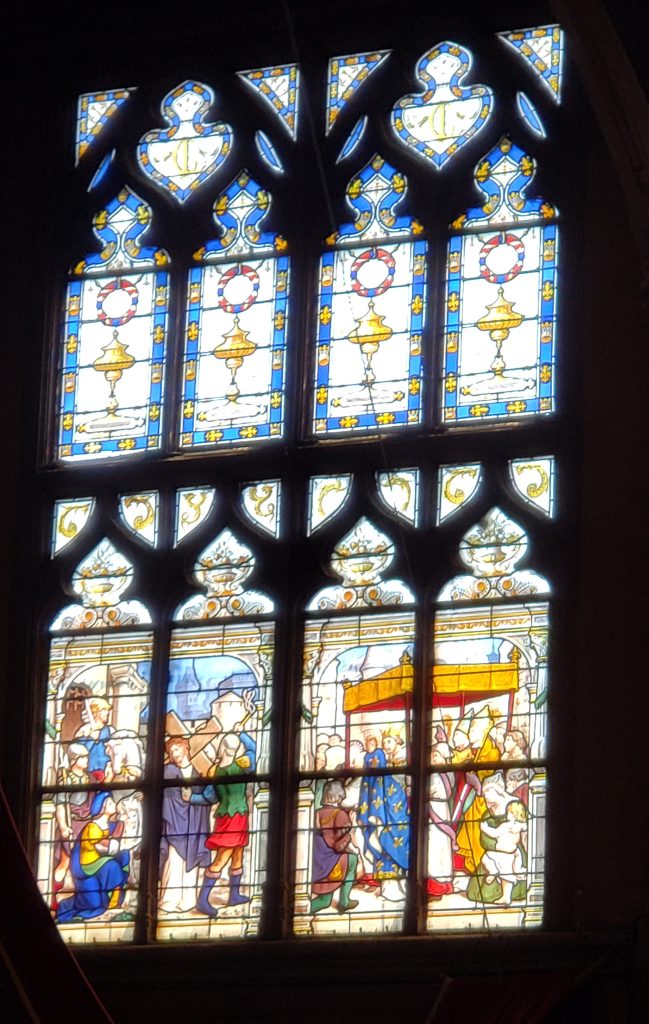
They got busy harvesting wood from the nearby Touques Forest (now called Saint-Gatien Wood) in 1460 and quickly erected the Church of Saint Catherine. It has two naves, some really unique stained glass, gorgeous wood carving, and a separate wooden belfry (now in the Place du Marché nearby), probably set off away for fire prevention. The magnificent architectural details, thanks to the true wood craftsman of the time, make this an extraordinary place to visit within the charming, seaside historic village of Honfleur. (We’ll visit more of Honfleur in future posts!)
Where to Stay in Honfleur, France
Honfleur’s compact center sits along the harbor, and most lodging is within walking distance of the Church of Sainte-Catherine and the old port. The town has hotels, guesthouses, and vacation apartments scattered through the medieval streets and along the waterfront. For a stay close to restaurants and the main attractions, look for accommodations in the historic quarter near the harbor itself. Prices range widely depending on season and amenities, so book ahead during summer months.
The waterfront area offers the most atmospheric location if you want to wake up to harbor views and have dining steps from your room. Hotels here tend to be older buildings converted from period structures, which means smaller rooms and steep stairs but authentic surroundings. The trade-off is worth it if you plan to spend your evenings walking the quays and sitting at harbor-side cafes.
For quieter lodging without sacrificing convenience, consider the residential streets one or two blocks inland from the port. These neighborhoods have charming guesthouses and family-run hotels that offer better value and often more space than waterfront options. You’ll still reach the harbor and main sights in under five minutes on foot, but you’ll experience more of how locals actually live in Honfleur.
Honfleur has limited chain hotel presence. Small independent hotels and family guesthouses are the standard here, which means more character but also less predictability in amenities. Book directly with your chosen property or through established travel sites that include guest reviews mentioning specific room sizes and conditions. Parking in Honfleur is tight, so ask your hotel about parking options when you reserve, or plan to rely on walking and occasional taxi rides.
Recommended Reading
Here’s some Honfleur and medieval Normandy reading for you.
- Medieval Maritime Warfare by Charles D. Stanton: A detailed look at naval conflict in the medieval era, providing valuable context for understanding the military and maritime culture of coastal towns like Honfleur during its heyday.
- Shipping the Medieval Military: Maritime Logistics in the 14th Century by Craig L. Lambert: This fascinating study explores how armies were transported by sea, shedding light on the logistical importance of port towns such as Honfleur in medieval Europe.
- The Routledge Handbook of Maritime Trade around Europe 1300-1600 edited by Wim Blockmans, Mikhail Krom, and Justyna Wubs-Mrozewicz : A wide-ranging academic resource that places Honfleur within the broader context of European maritime commerce.
- Ports in the Medieval European Atlantic: Shipping, Transport and Labour by Mathias Tranchant : Focused on the Atlantic world, this book examines the day-to-day life of port cities, making it especially relevant to understanding the economic and social fabric of Honfleur.
- The Viking Way by Gwyn Jones: For a deeper historical foundation, this classic work explores Viking influence in Normandy, setting the stage for how Norse culture helped shape the region long before Honfleur’s rise.
- The Normans by R. Allen Brown: A vivid account of the Normans’ conquest, governance, and cultural legacy, perfect for tracing the roots of Normandy’s powerful maritime and military traditions.
- The Hundred Years War by Robin Neillands : Covering the turbulent era when Honfleur’s famous wooden church was built, this narrative brings to life the broader conflict that shaped life in Normandy and across France.
- Insight Guides: Normandy: A richly illustrated travel guide with historical depth and cultural insight, ideal for discovering Honfleur’s past and present, from shipbuilders’ churches to seaside charm.
Tours to Consider