
The Historic Traveler Interview with J.F. Penn
On the Historic Graveyards, Cemeteries, and Ossuaries of the UK and Europe
Come on, admit it! Don’t you have at least a bit of morbid fascination about graveyards and cemeteries? As a history lover, it’s almost built into our DNA. And so, The Historic Traveler called on a woman who is both an aficionado of great graveyards, but a leading novelist and travel writer.
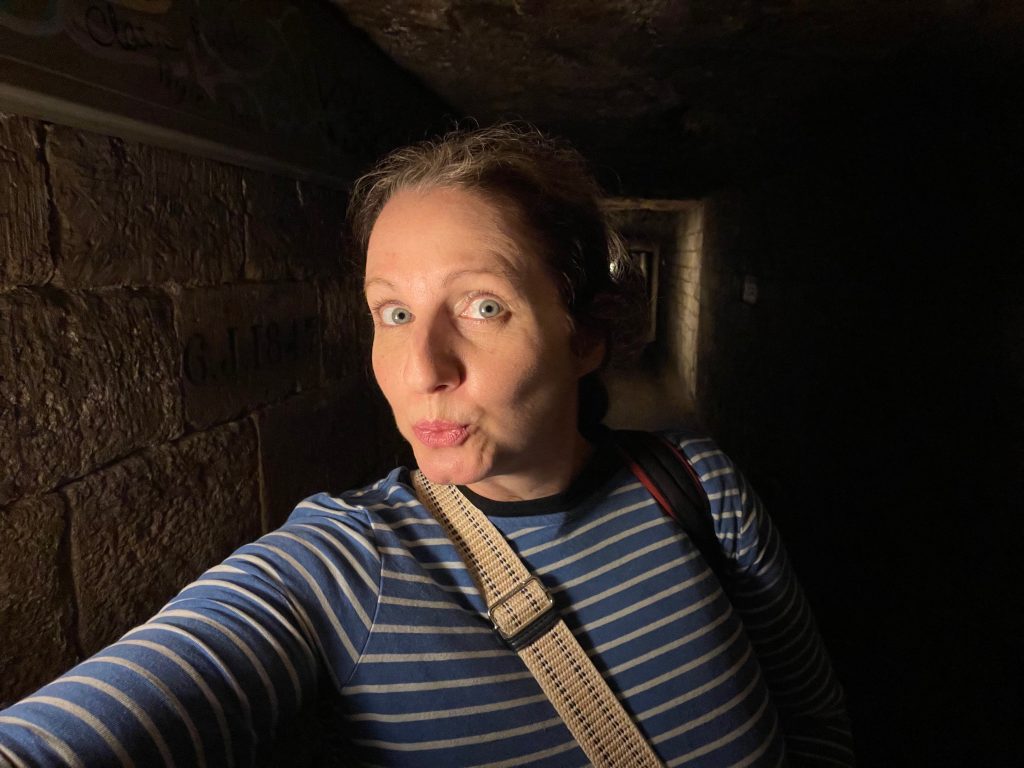
J.F. Penn is the award-winning, New York Times and USA Today bestselling author of thrillers, dark fantasy, crime, horror, short stories, and travel memoir. Jo lives in Bath, England and is a taphophile, someone who loves cemeteries, gravestones, and the history, art and culture around death.
Jo researches her books by visiting places in person as much as possible, and in this article, she shares some of the unusual places that have inspired her stories.
Jackie: What is the difference between a graveyard, a cemetery, and an ossuary?
Jo: A graveyard is usually a burial ground attached to a church, whereas a cemetery is a stand-alone burial area, for example, found near a crematorium or a public burial ground.
An ossuary, from the Latin ‘ossos’ for bone, is a container or chamber specifically to hold bones. It can be as small as a box, or as large as a chapel. In Europe, there are many ossuaries where bones are used as decoration.
Jackie: Why are you drawn to these places?
Jo: I have always been interested ever since I was a child. I’ve always been an old soul.
Jackie: What is it about death culture that fascinates you?
Jo: These places bring a sense of ‘memento mori,’ remember, you will die, and for me, that is not a morbid sentiment. Instead, it brings a sense of perspective.
Life is fleeting and we must make the most of every measured day. Many cultures appreciate this, but we in the west, have increasingly lost touch with it. Because so many are afraid of death and avoid it, these places are often quiet and peaceful, and anyone who is there acts respectfully. This makes it easier to think, and write, and consider the stories behind the graves and the bones, especially if you are a historical traveller.
As Franz Kafka said, “the meaning of life is that it stops.”
Jackie: Your research trips to such historic places inspired your thriller Crypt of Bone. Tell us about Sedlec, Kutná Hora in the Czech Republic.
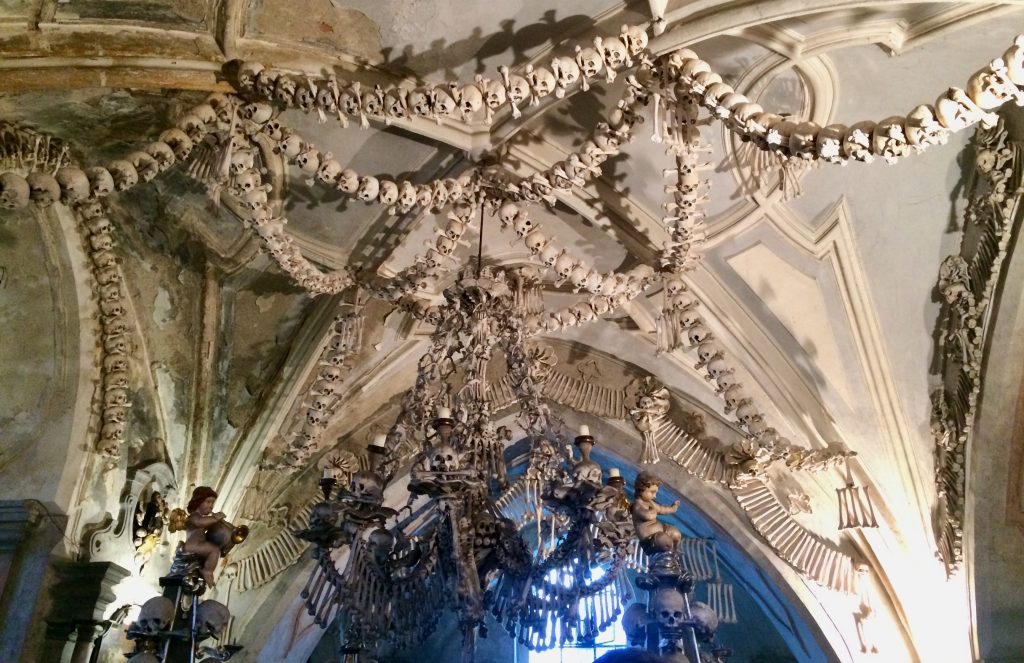
Jo: The Sedlec Ossuary in Kutná Hora, known as the Bone Church, is a small chapel packed with human skeletal remains, estimated to be between 40,000 to 70,000 individuals.
Back in the 13th century, the abbot brought back earth from the Holy Land and sprinkled it on the land, which made people want to be buried at Sedlec. With the Black Death and many wars, thousands more were interred, and later the Gothic church was built, and the bones sorted to accommodate more dead.
In 1870, a local woodcarver, František Rint, organized the bones, arranging them into chandeliers, garlands, a coat of arms, and other artistic designs. While the chapel is macabre, because of the sheer number of bones, it is an extraordinary place to contemplate mortality, and I couldn’t help but make it a pivotal setting in my thriller, Crypt of Bone.
You can get to Sedlec on a day trip from Prague, either independently by train, or there are day trips through GetYourGuide.com and other providers. You can find out more at www.sedlecossuary.com
Jackie: Are the Paris Catacombs an ossuary and what can people find there?
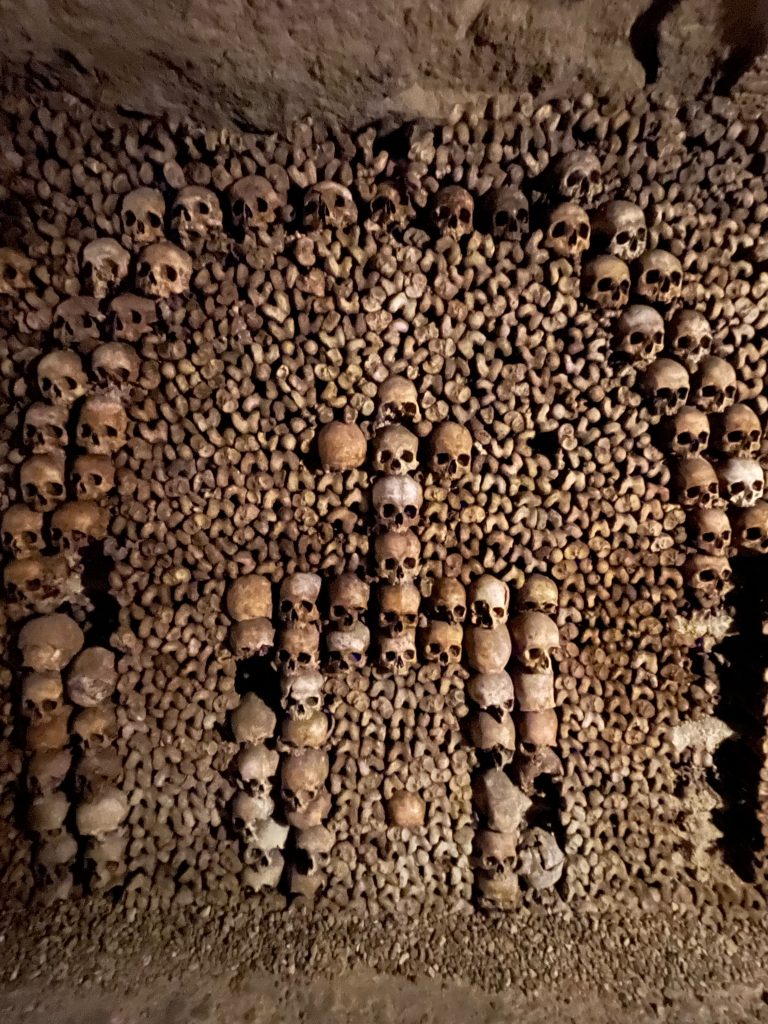
Jo: The Paris Catacombs are probably the most famous of ossuaries, with over six million dead in the network of underground tunnels and ancient quarries.
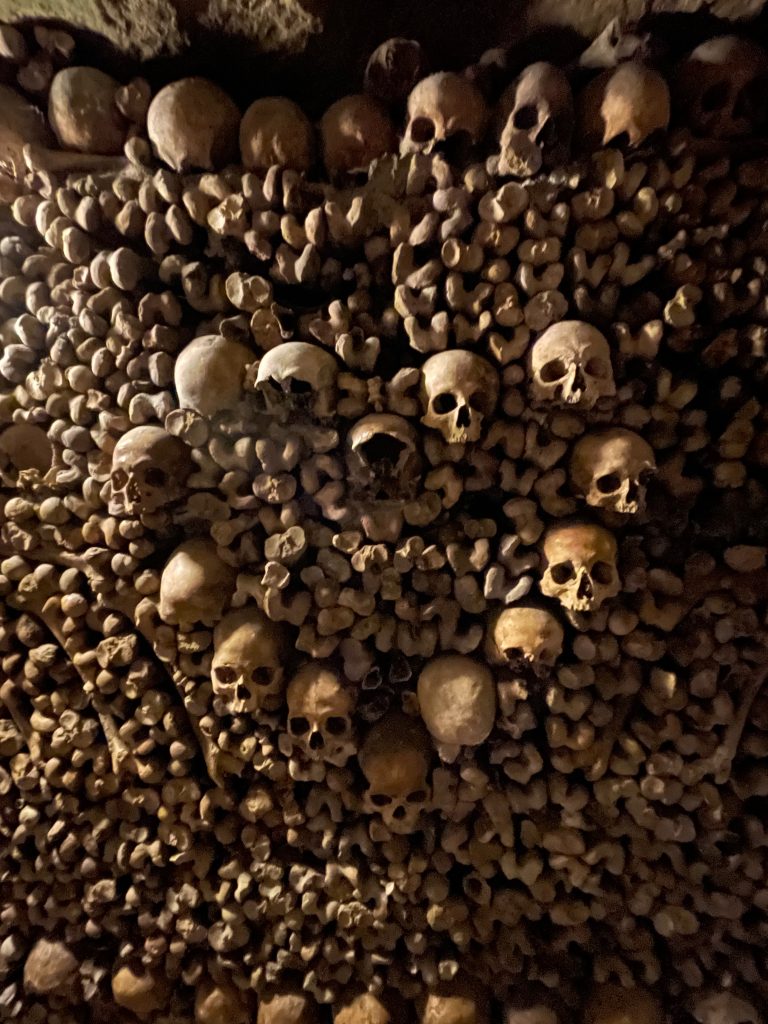
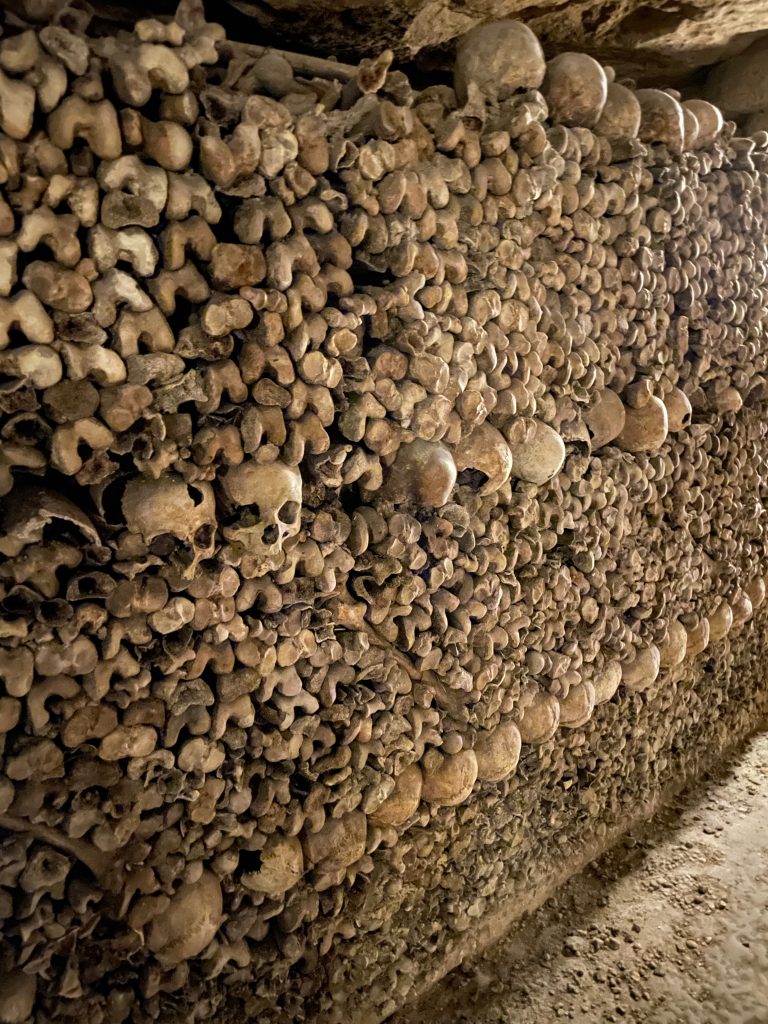
In the late 18th century, Paris faced a public health crisis as overflowing cemeteries threatened to contaminate the water supply. The city authorities moved the remains beneath the city, resulting in today’s catacombs. There are markers in each section to denote which cemetery the remains came from, and at the first entrance, there is a warning on the stone: ‘Arrête! C’est ici l’empire de la mort.’ (Stop! This is the empire of death.)
The bones are neatly stacked and arranged, creating what feels like an infinite corridor of skulls and femurs, all illuminated by dim, flickering lights. There are some sections made into designs of shields and even a heart of skulls.
You need a ticket to enter The Paris Catacombs, accessible near the Metro station of Denfert-Rochereau. There are lots of stairs and it’s quite a walk if you’re not used to it. Book well in advance, since they have limited time slots at www.catacombes.paris.fr
Jackie: Let’s stay above ground now! In your crime thriller, Delirium, set in London, you use Kensal Green Cemetery as a setting. Tell us about that.
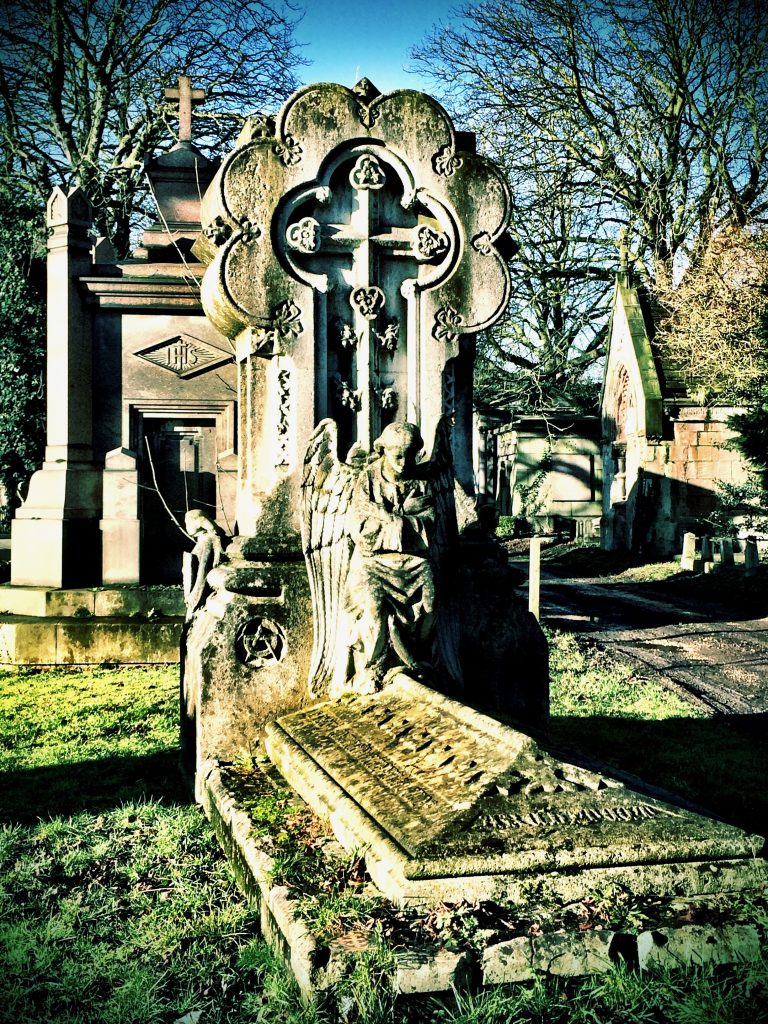
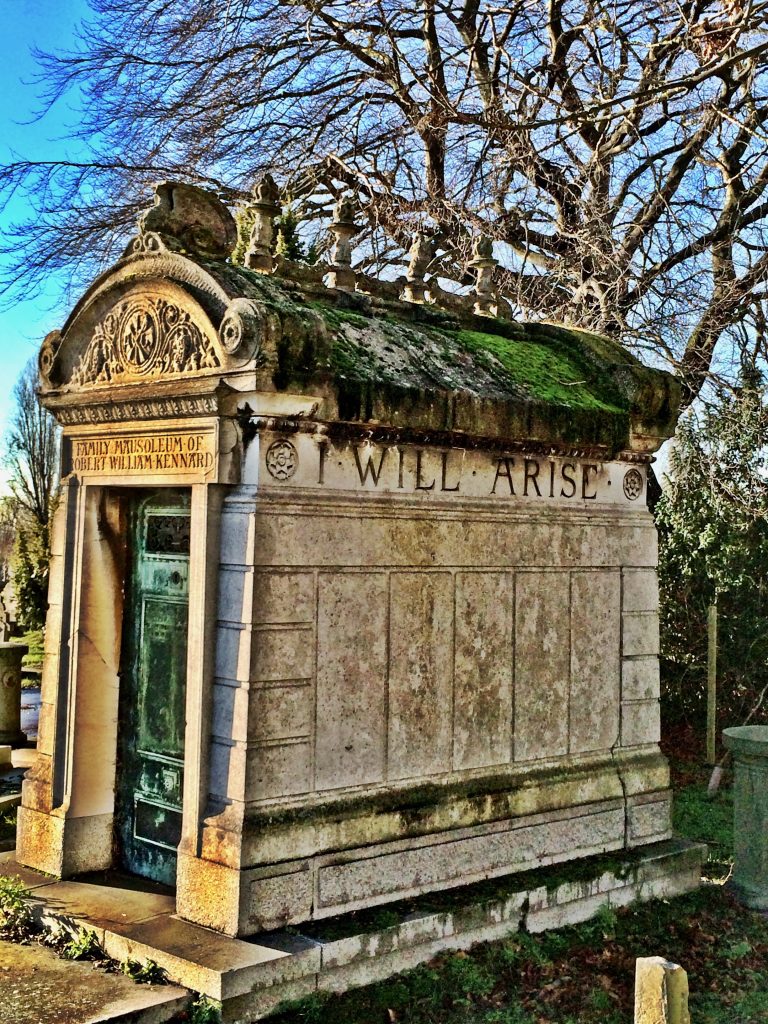
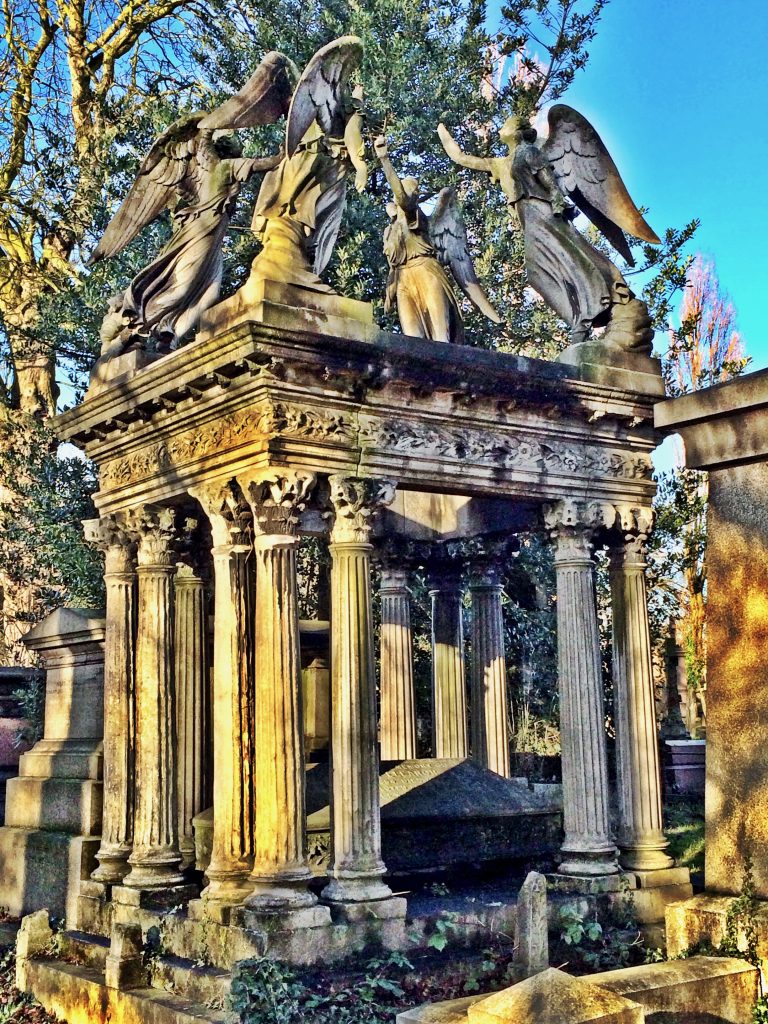
Jo: If you enjoy a peaceful walk around a beautiful park with ornate tombs and memorials, Kensal Green Cemetery in London is definitely worth a visit. You don’t need a ticket and it’s free to access.
It was established in 1832 as one of London’s Magnificent Seven cemeteries, built in the Victorian era as park-like burial grounds to ease overcrowded churchyards and combat health hazards. But it’s a world away from what we might build as a public burial ground today, with beautiful memorials, tombs above ground similar to Père Lachaise in Paris, and statues of angels, broken columns, Egyptian obelisks, and other ‘memento mori’ markers.
There are many famous historical people buried there from industrial engineer Isambard Kingdom Brunel, to author of The Woman in White, Wilkie Collins, and scientist Charles Babbage, inventor of the Difference Engine, which led to the first computer.
You can find out more information at www.kensalgreencemetery.com and you can walk to it easily from Kensal Green train station, which has Overground and Underground lines.
Jackie: In your crime thriller, Deviance, your characters are involved with Crossbones Graveyard. Why is that place so unusual?
Jo: Crossbones Graveyard in Southwark, London, is quite different from the formal Victorian cemeteries. It’s not even an official burial ground, and there are no graves there, but in many ways, it is far more poignant to visit.
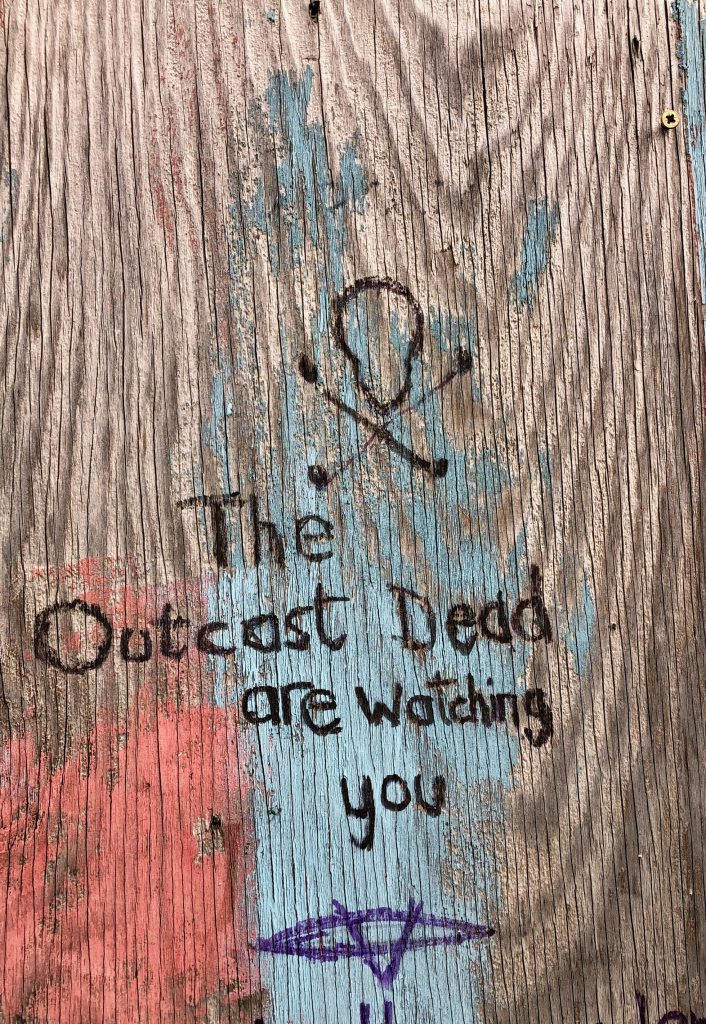
In the 1990s, during excavations for an extension of an Underground train line, archaeologists found 148 skeletons in an unconsecrated burial ground. These were the outcasts of society, the women known as ‘Winchester Geese,’ medieval sex workers licensed by the Bishop of Winchester, along with their illegitimate children, and other marginalized people. For centuries, it lay largely forgotten.
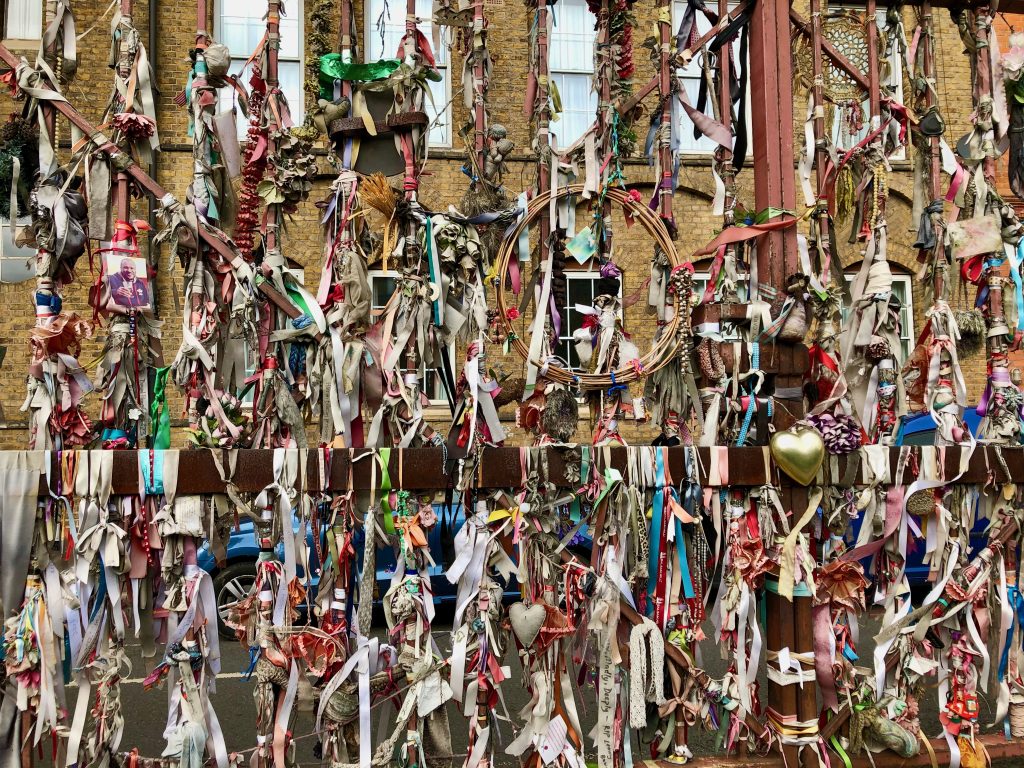
It’s now a memorial site with ribbons and mementos tied to the gates in remembrance of the Outcast Dead. It’s interesting because it represents hidden history, the stories of ordinary people, often women, who lived only a few blocks from the wealthy in their palaces and cathedrals. Perhaps not so different from today …
The entrance to the remembrance garden is on Redcross Way, a short walk from London Bridge or Southwark train stations. I recommend you visit Southwark Cathedral and the ruins of Winchester Palace first, which give you a sense of grandeur, before walking a few blocks to Crossbones. https://crossbones.org.uk/
Jackie: If people want to visit these kinds of historical places, what are your tips for making the most of the trip?
Jo: Do your research: Before visiting, read up on the history of each site. Knowing why an ossuary exists or who built a particular crypt, or what you might see there, makes the experience far richer. But don’t get too obsessed with research either. It’s good to have an attitude of serendipity where you keep an eye out and follow your curiosity as you explore.
Check opening times and tours: Many of these places have specific visiting hours or guided tours. You need to book well in advance for some of them.
Be respectful. Remember, these are human remains. Photography might be allowed (or not) depending on the site, so check the rules and always be discreet.
Take it slowly: Walk slowly and allow the atmosphere to work on your senses and your imagination. Often, the hush and the shadows convey as much as the monuments themselves.
Ask yourself questions and reflect: Most of us rush through life without considering our inevitable end, and walking amongst those who have already died, whose names we mostly don’t even know, helps put life in perspective. Memento mori, remember you will die, so what can do you to make the most of your life now?
Jackie What are some books you recommend that might help people explore this area further?
Jo: Paul Koudounaris takes incredible photos and his books are a treasure trove of fascinating death culture. Try The Empire of Death: A Cultural History of Ossuaries and Charnel Houses. Specifically for cemeteries, I recommend 199 Cemeteries to See Before You Die by Loren Rhoads, and Death: A Graveside Companion by Joanna Ebenstein, who also runs the wonderful site, MorbidAnatomy.org. I also love From Here to Eternity: Traveling the World to Find the Good Death by Caitlin Doughty.
You can find my books as J.F. Penn at Amazon or your favourite online bookstore, or at my store, www.JFPennBooks.com. You can also find my travel site and Books and Travel Podcast at www.BooksAndTravel.page and my photos at www.instagram.com/jfpennauthor
The Article was featured in the Summer, 2025 issue of The Historic Traveler Magazine.
All images in this article are courtesy of J.F. Penn.
