
There is something remarkable about being in an historic library that is in itself an historic treasure, housing thousands of other historic treasures.
It is impossible not to step back in time, surrounded by carefully curated walls of books, manuscripts and other cherished and valuable objects set amongst stunningly crafted beauty—whether its carved wooden shelves and furnishings, guilded décor, frescoed ceilings, world renowned artworks or cultural assets. These libraries speak to how precious these contents were to their builders and how even more vital they are to us as the underpinnings of our human knowledge…our thread to the past.
So today, I will share with you three of my favorite historic libraries, the first of more I will seek to share in the future.
The Klementinum
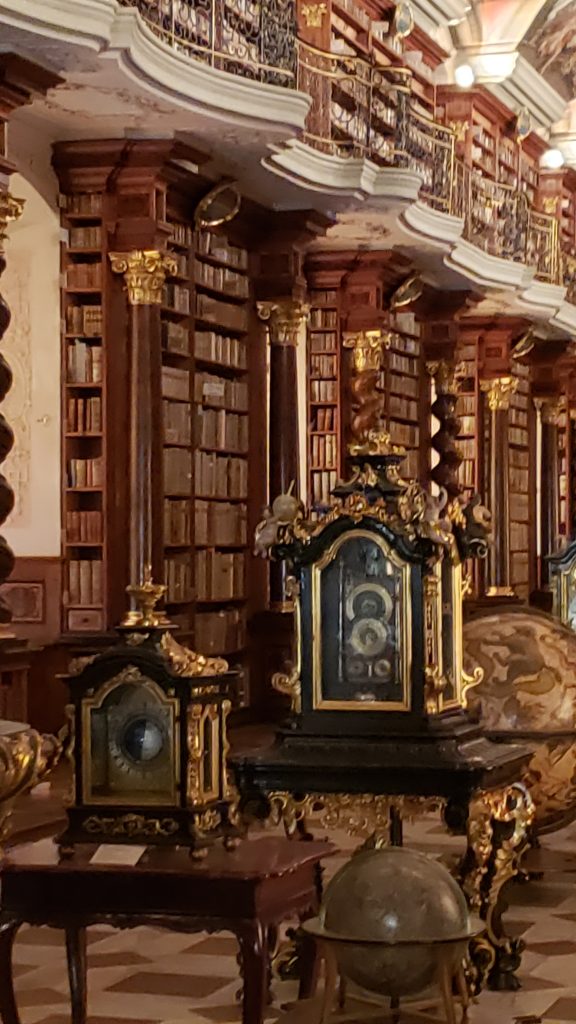
The Klementinum is considered by many to be among the most beautiful libraries in the world. Housed within a Jesuit College founded in Prague in 1556 (in what is now the Czech Republic), the Klementinum’s Baroque library was built in 1709-1726 to house a collection transferred from Charles University, one of the oldest universities in the world, originally chartered in 1348 by Holy Roman Emperor Charles IV. The Klementium was established as an observatory (on its upper floors), library and university by Empress Maria Theresa of Austria, when the Habsburgs were in power.
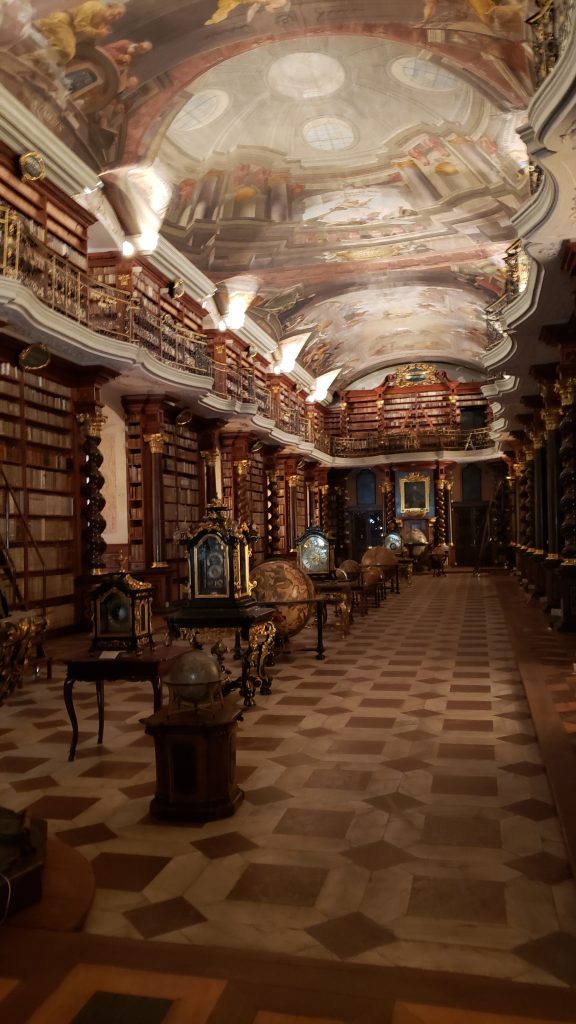
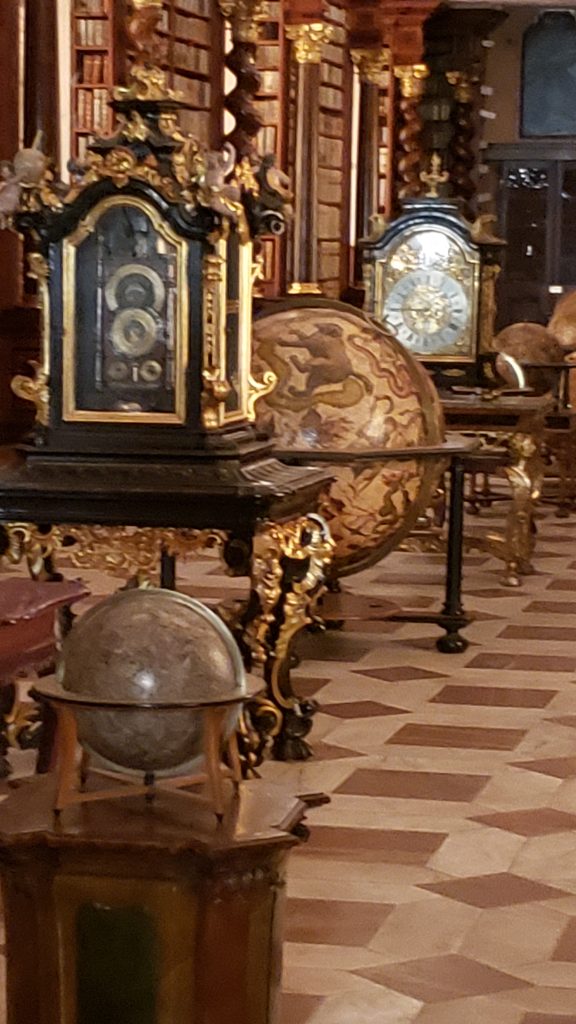
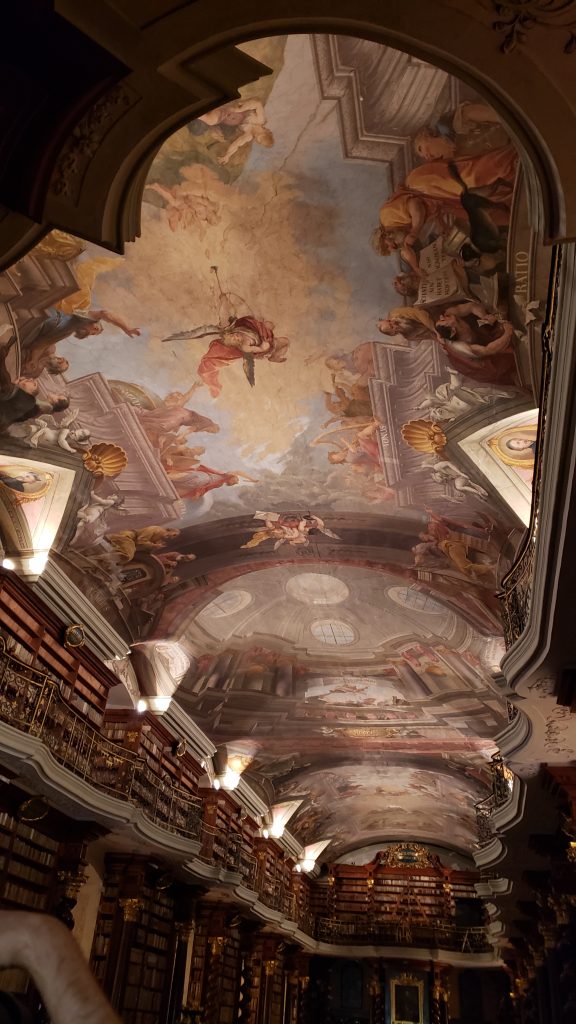
The Klementinum is not a large library, but it is a jewel. Kept in darkness to preserve its ancient volumes, you can view it briefly with a timed illumination. It reveals stunning ceiling artwork by Jan Hiebl showing the medieval depiction of human knowledge. The books are housed on rich wooden shelves and a collection of antique spinning world globes marches back into the library one after another.
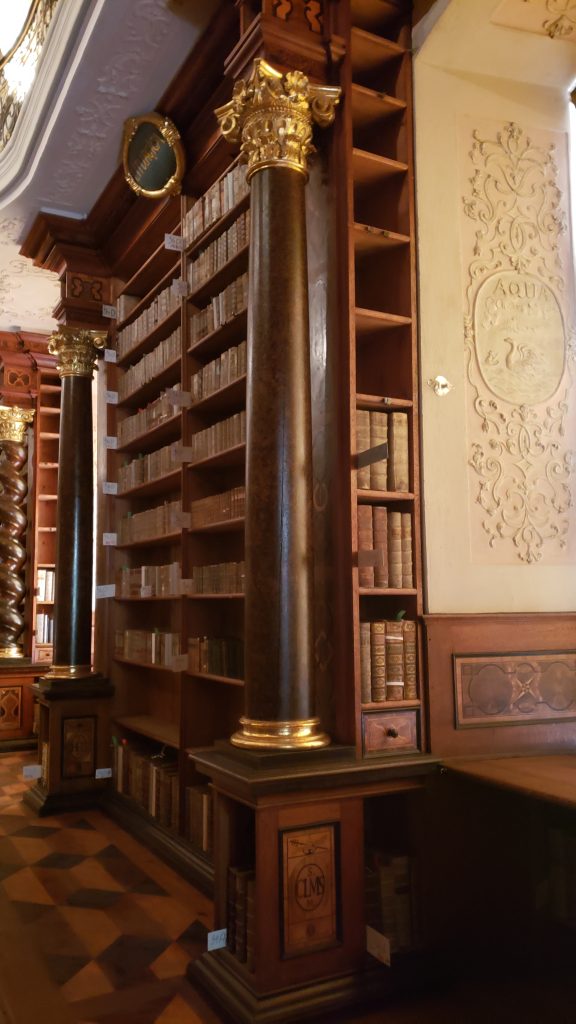
The Trinity Library
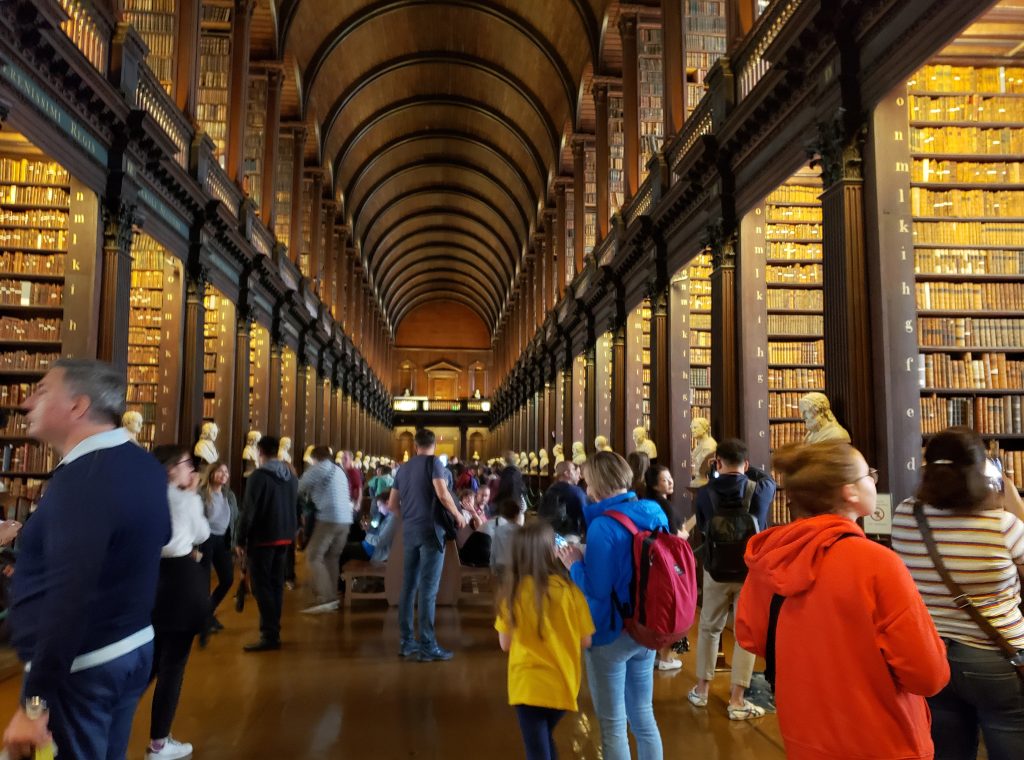
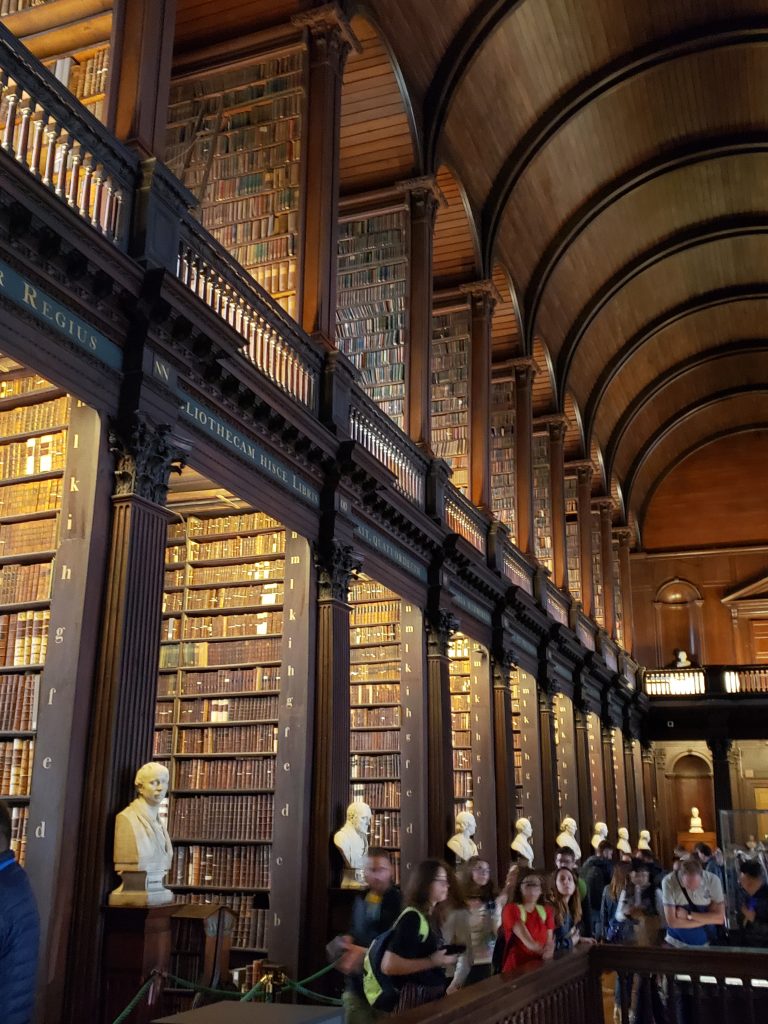
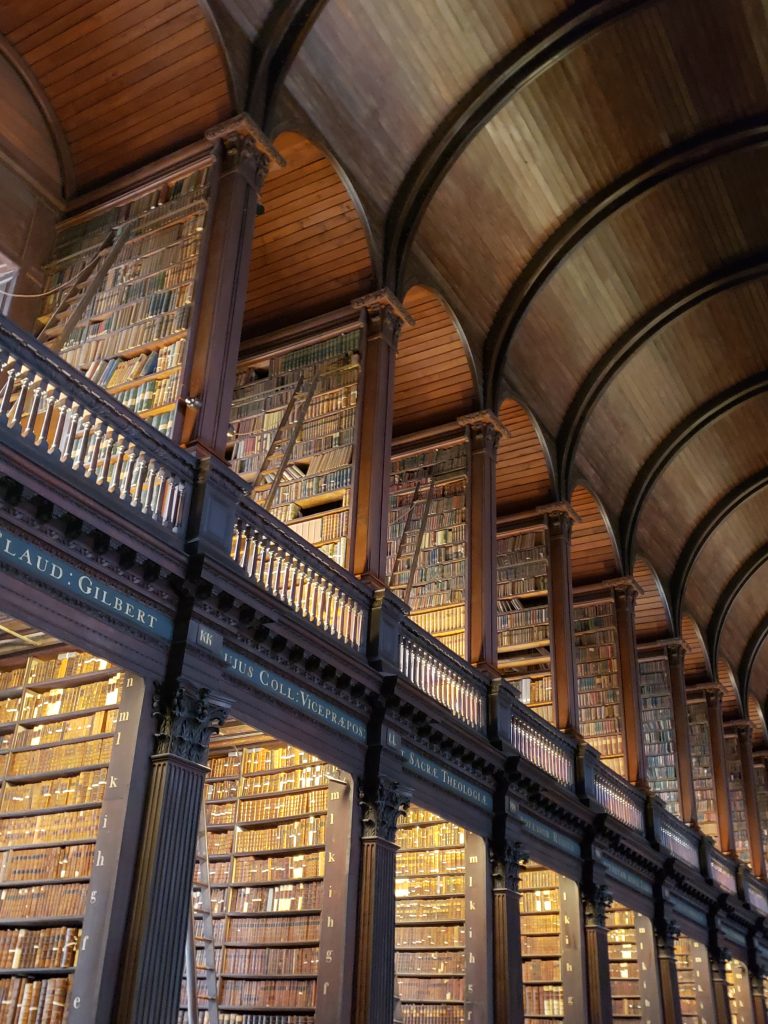
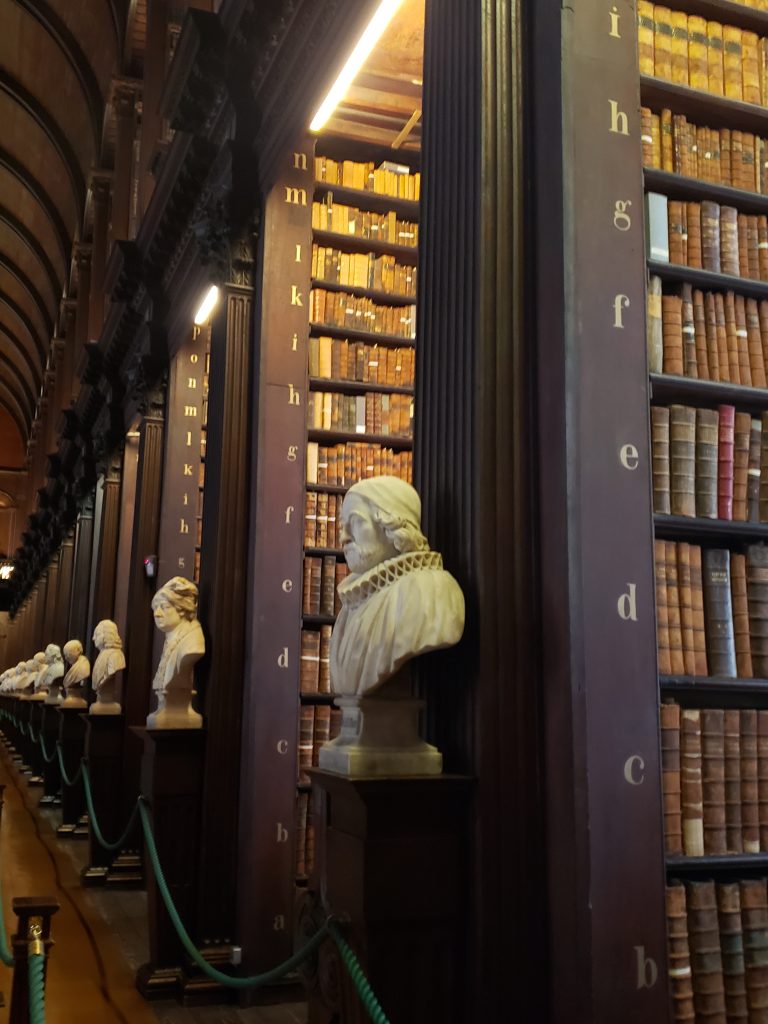
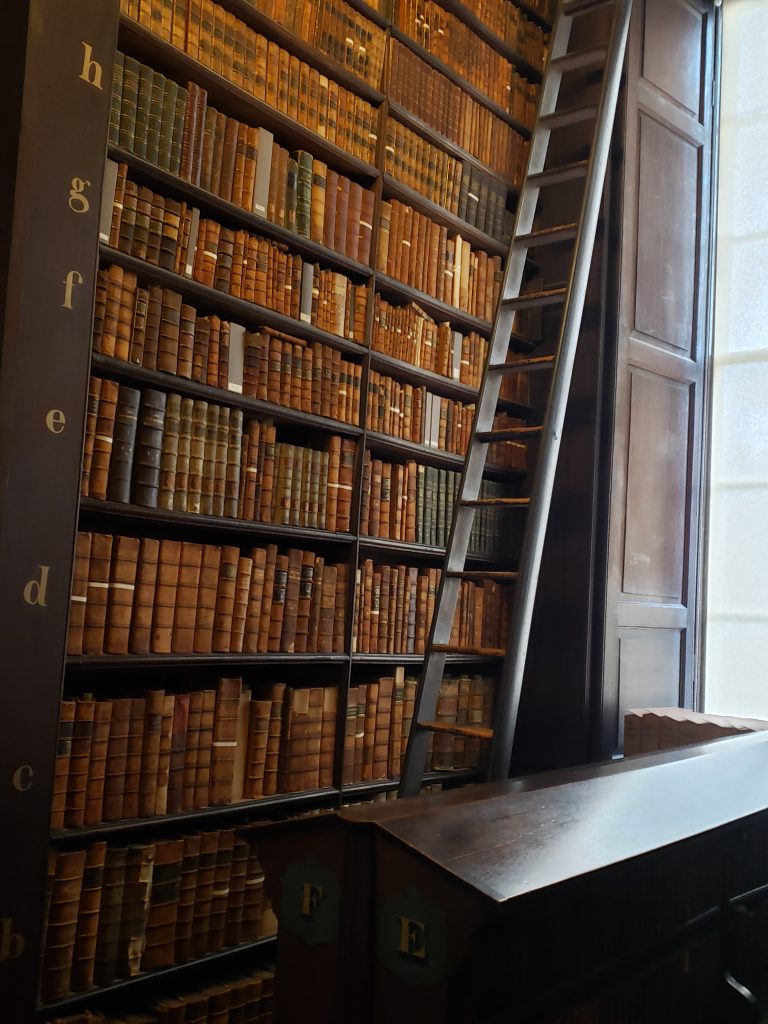
Trinity Library in Dublin, Ireland, located within the walls of Trinity College, is another stunner begun in 1712, designed by architect Thomas Burgh. With small windows on its sides to bring in just enough illumination, you look down a room that seems burnished in gold, movable ladders climbing up seemingly several stories of ancient books of all sizes and subjects. The 213-foot “long room” as it is known features an arched center isle with repositories on each side housing 200,000 of the library’s oldest books. It features an upper gallery that was added to accommodate the growing collection.
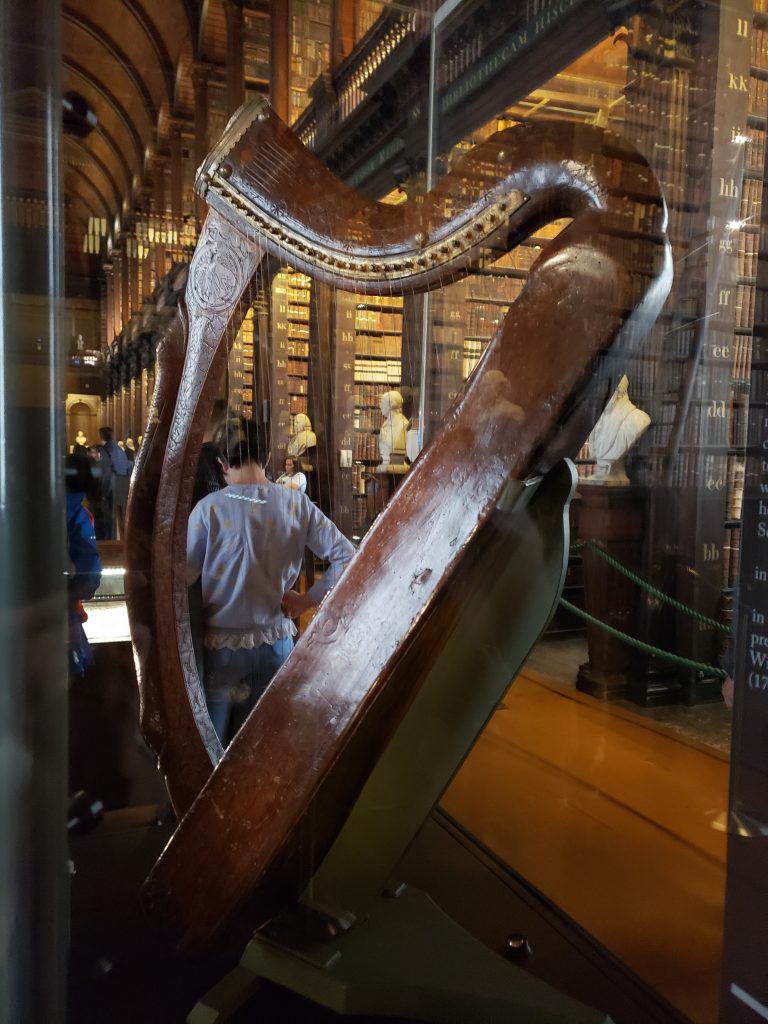
Here you can also see the harp of Irish king Brian Boru dating to the 15th century and marble busts of great philosophers, writers, and men—and now women–who have supported the college. In an adjacent building, you’ll find an exhibit of the one of the four volumes of the Book of Kells, an astonishingly beautiful illustrated manuscript and Celtic Gospel in Latin, created in approximately 800 AD, in a uniquely Celtic artistic style—a cultural treasure of the Irish people.
The Morgan Library and Museum
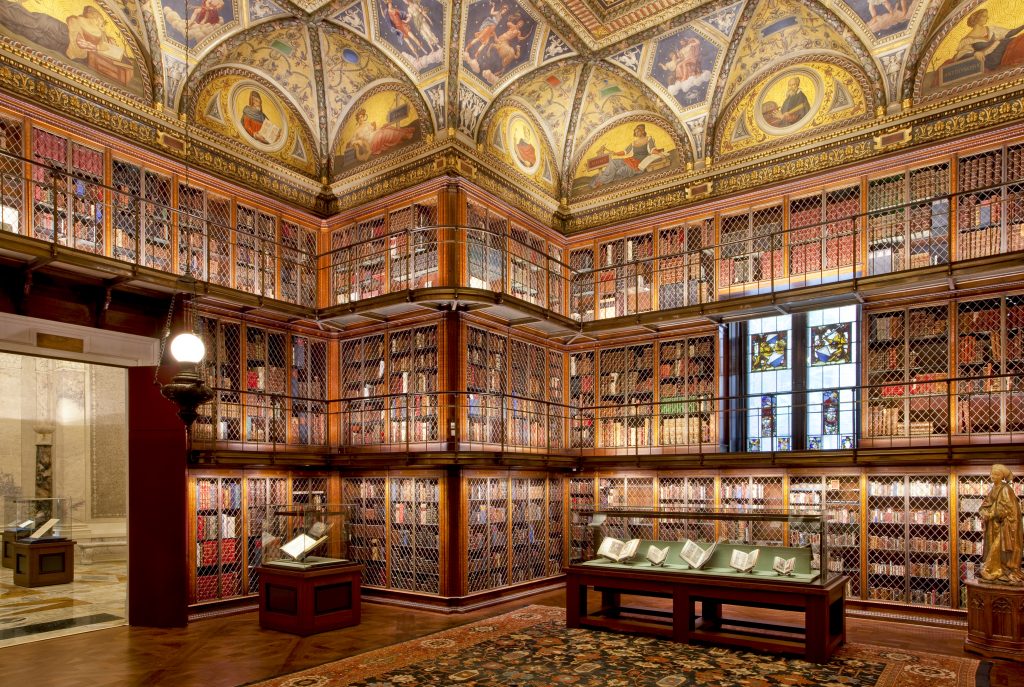
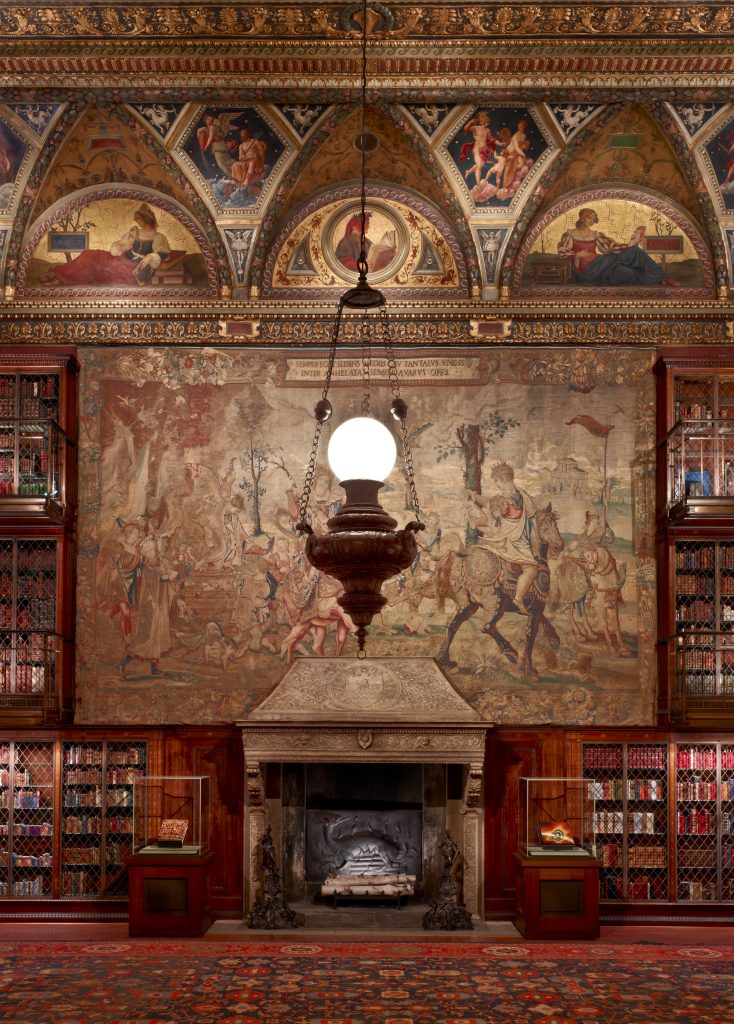
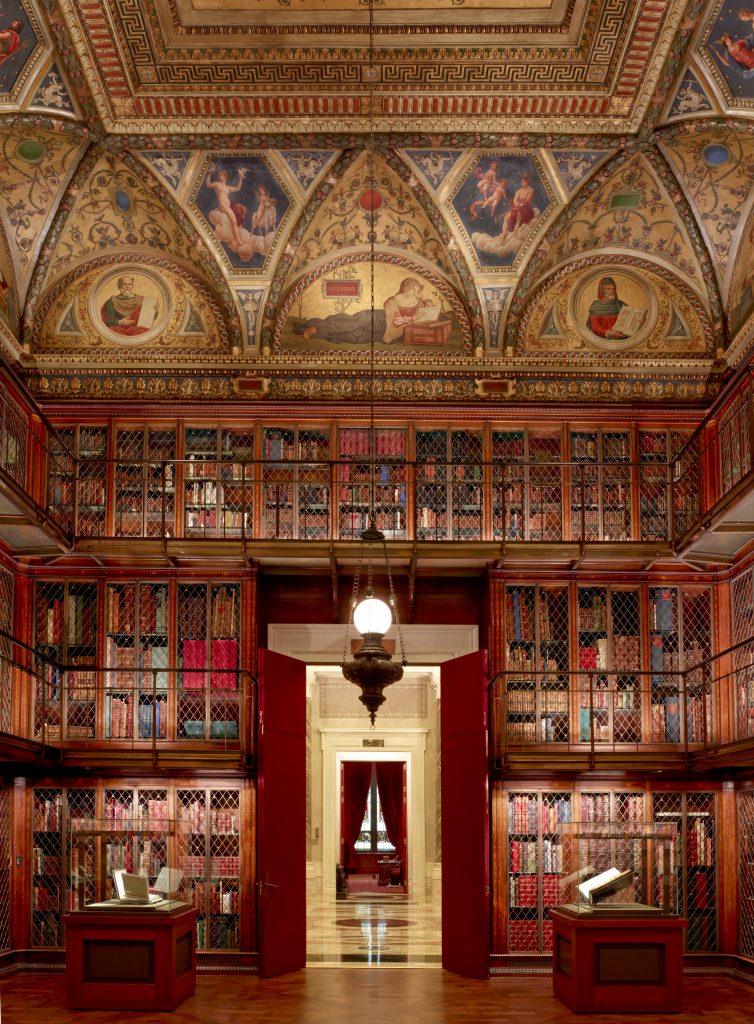
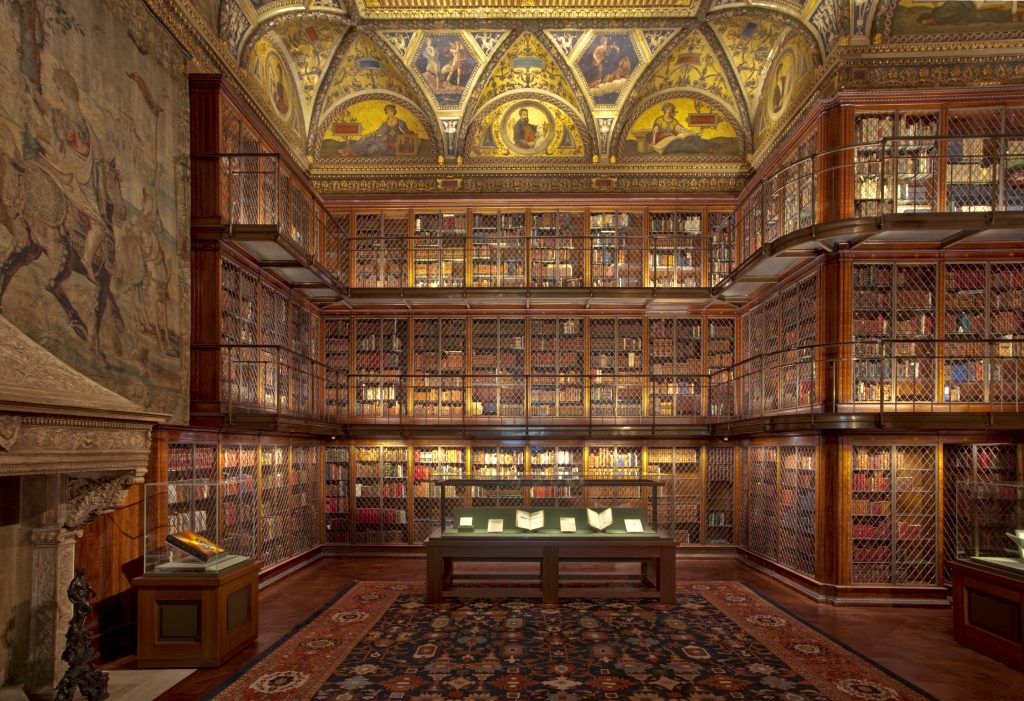
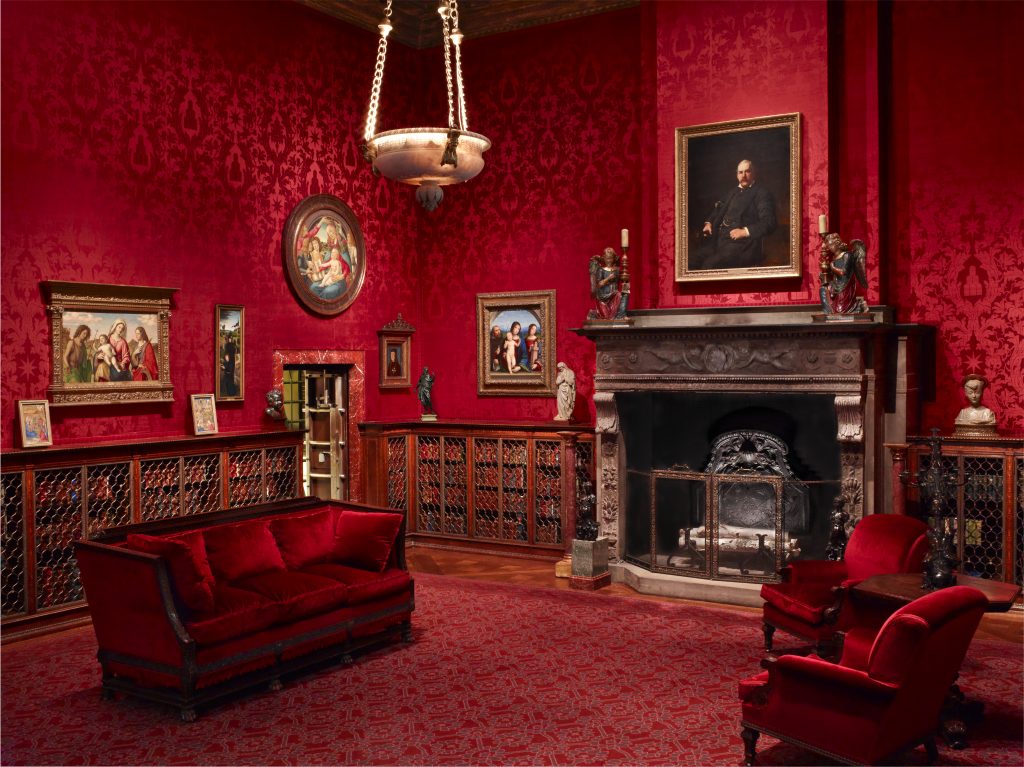
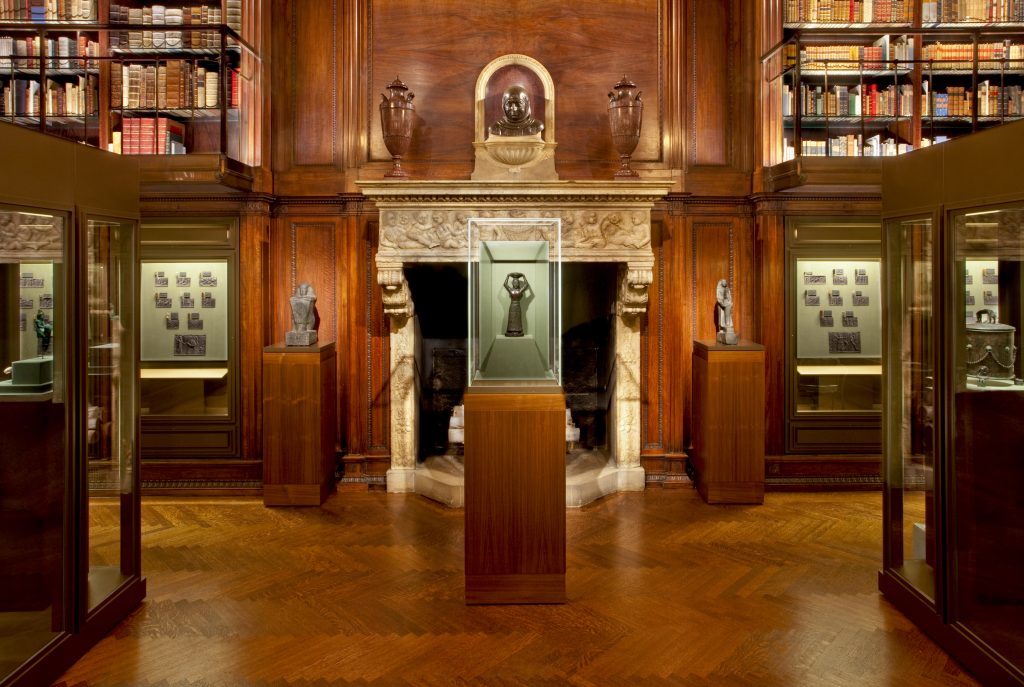
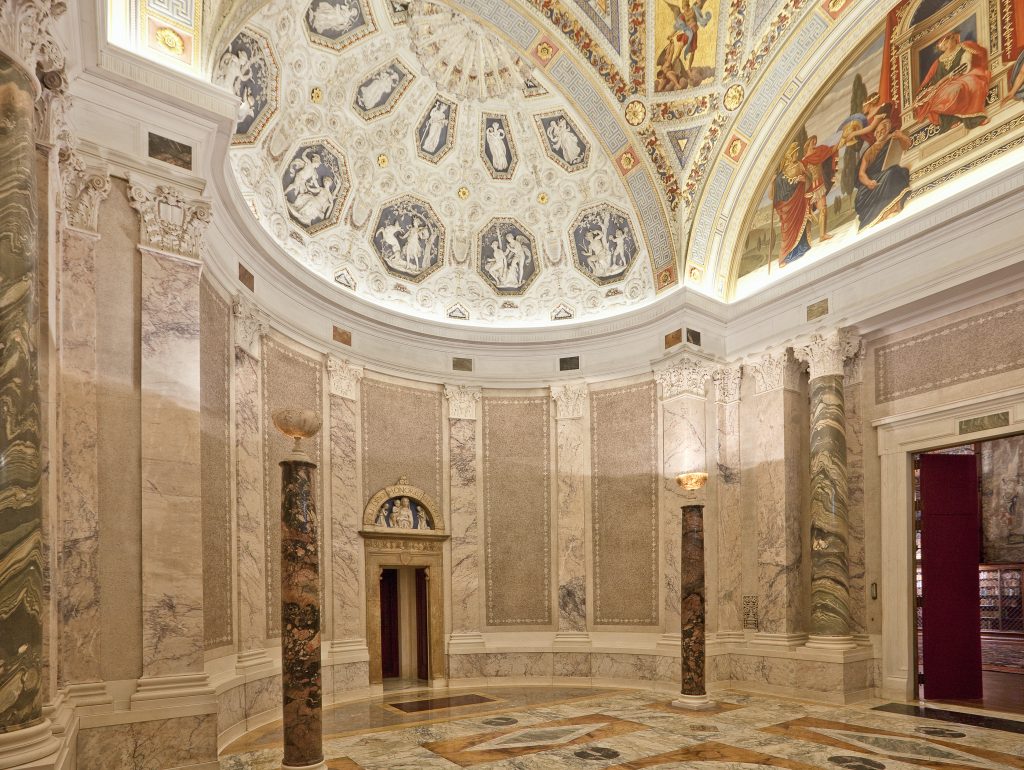
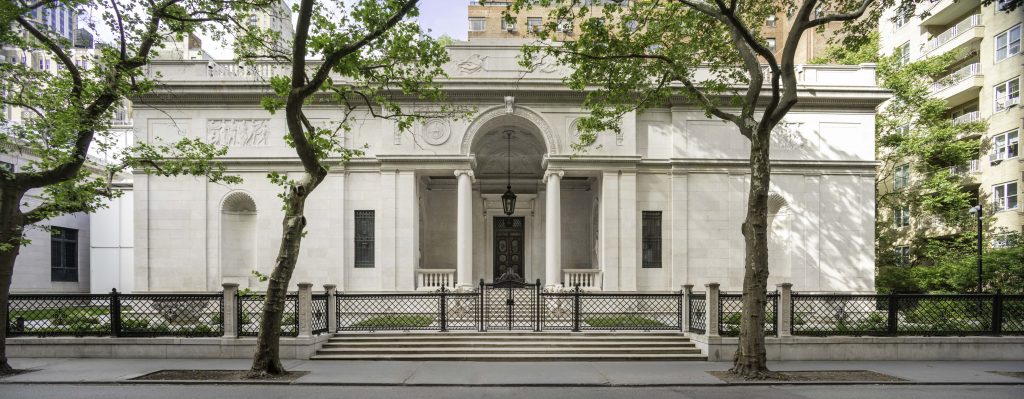
The Morgan Library and Museum in New York City was begun by financier J.P. Morgan in 1906 as a private library to house his growing collection of rare and one-of-kind books, manuscripts, maps, letters, journals, notebooks, stained glass, artworks, and historically significant objects—relocating them from the basement in his home! Originally adjacent to the Morgan family mansion, the Italian Renaissance library building was designed by the renowned turn-of-the-century architectural firm McKim, Mead and White.
When stepping into the Morgan Library you feel as if you are in someone’s elegant Victorian era home. The rooms feature grand fireplaces, ornate murals, Persian rugs, plush red velvet covered furnishings, a tapestry depicting the seven deadly sins, a decorative ceiling, a rotunda entrance. The main library room features triple tiered bookshelves reaching up three stories made of bronze and rich Circassian walnut. The room also has two staircases that are hidden behind bookcases at the corners. It’s an overwhelming assault to the senses—the smell of the musty books, the elegance of the gilt everywhere. It dares you to touch, but you may not!
Today this National Historic Landmark houses more than 350 objects and also serves as a research library. It contains original manuscripts and first editions from Charles Dickens, Sir Walter Scott, Edgar Allen Poe, Ernest Hemingway, Alexandrea Dumas, Thomas Moore, Jane Austin, Mark Twain, Herman Melville and numerous other legendary writers, and the collection includes three Gutenberg Bibles, Shakespeare’s First Folio and original prints of the Declaration of Independence.
Recommended Reading
To experience the Klementium in fiction, try The Secret Miracle by Jorge Luis Borges, whose the main character has a dream where the librarians look for God in the books of the library.
I couldn’t find much specifically on the library, but here are novels featuring locations within Trinity College–Normal People by Sally Rooney about a couple who meet at Trinity College, and a two contemporary mysteries —A Stone of the Heart by John Brady and Murder at Irish Mensa by Clara O’Beara. If you’d like to know more about the collection, consider Treasures of the Library Trinity Collegeby Peter Fox, which explores the varied facets of the libraries collections – some of the oldest written materials of the age before printing; the transition from manuscript to print in the 15th and 16th centuries and its impact on the reading public; and later manuscripts and typescripts as sources for scholars of history and literature.
Personal Librarian by Marie Benedict and Victoria Christopher Murray is a must if you are interested in the Morgan Library. It’s an internationally bestselling fictionalized life of Belle da Costa Greene, the woman whom Morgan hired to build and acquire his collection. At one point, she was the most powerful woman in corporate America, but what was not known until nearly 50 years after her death in 1950, was that she was a black woman passing as white. It’s a fascinating account of what she accomplished and the fear of being discovered that she experienced throughout her life.
