by Diana Giovinazz
Approximately twenty miles north of Naples, Caserta Palace stands as a jewel of the former Kingdom of the Two Sicilies. Originally designed as a rival to Versailles, this Baroque palace survived Napoleon’s invasion, three regime changes, and devastating World War II bombings. And while it has been a popular filming destination, it became a UNESCO World Heritage Site in 1997. Now this palace is a must-see destination.
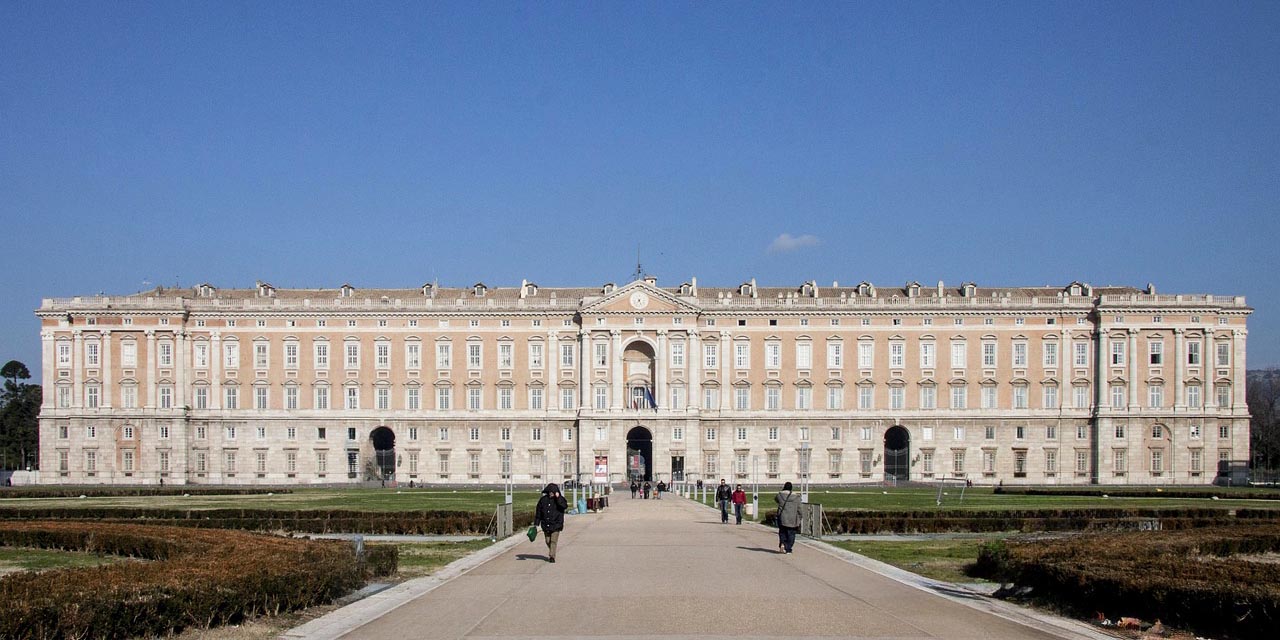
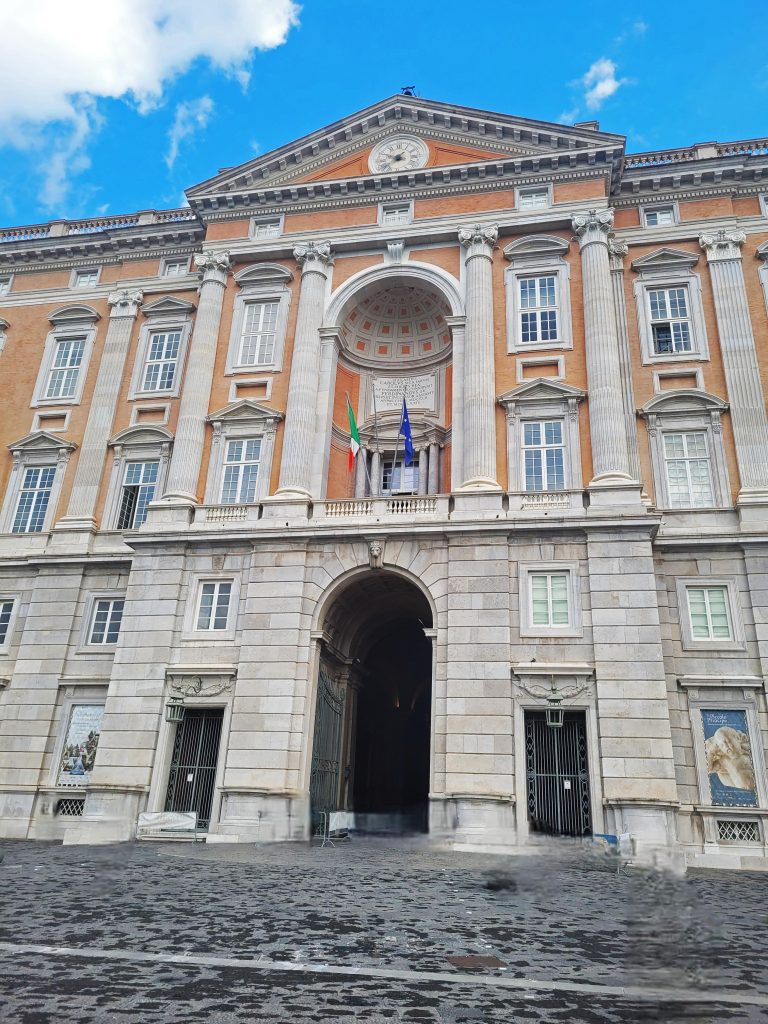
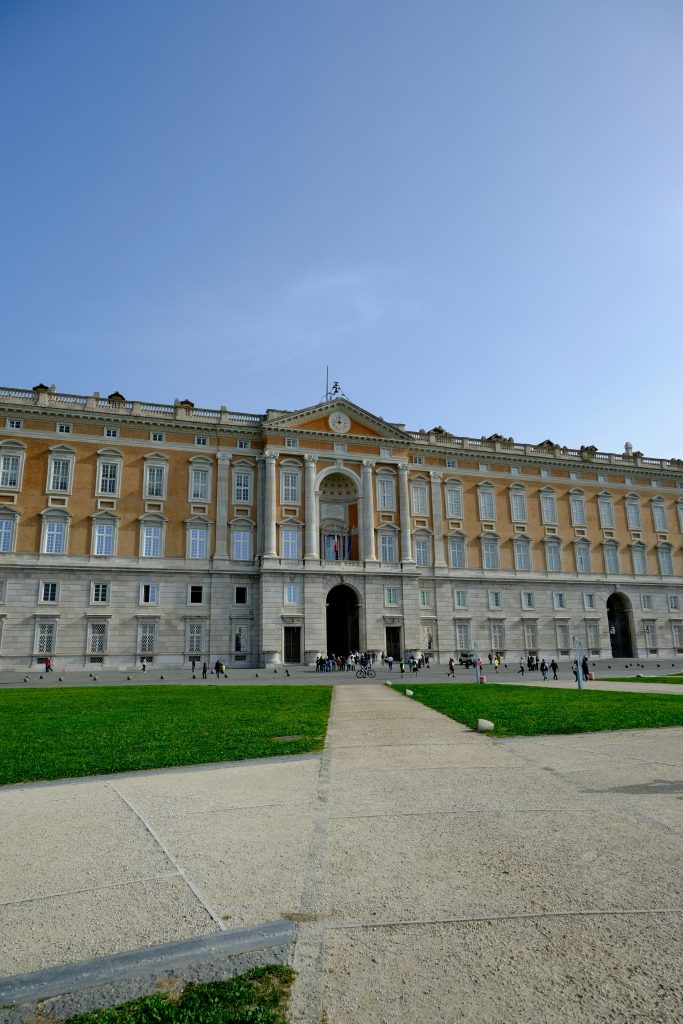
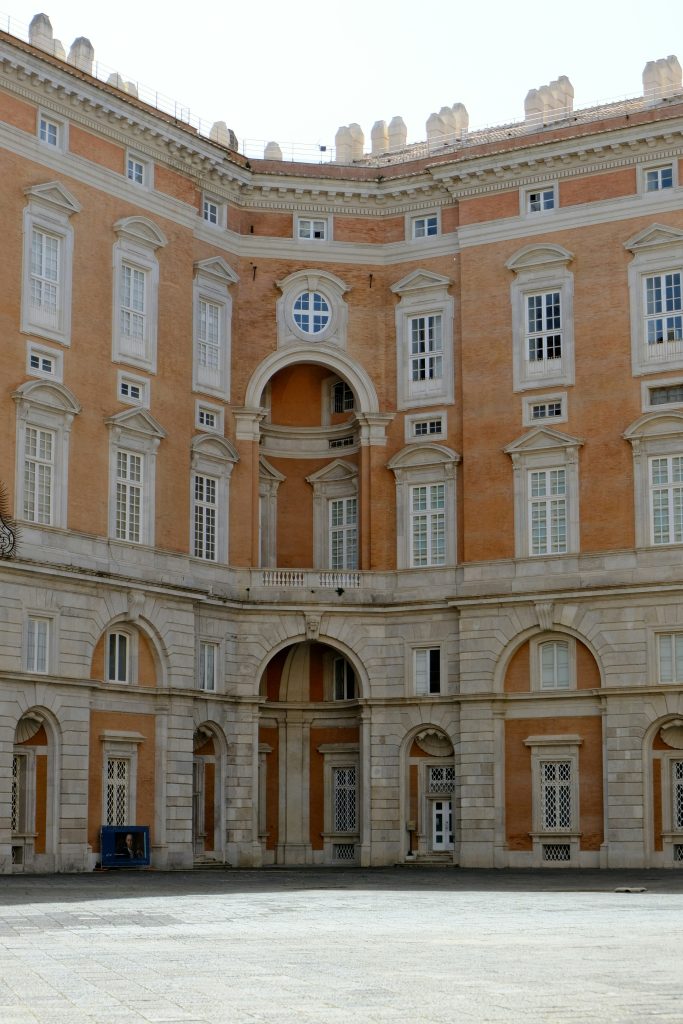
Naples was the seat of power for the Kingdom of the Two Sicilies, small but mighty. Having gained its name when King Charles VII took over the island of Sicily and southern Italy from Naples, it withstood invasions from Spain, Austria, and even France. King Charles, as the second son of the Spanish King, quickly set about creating a court that rivaled those of other European nations. Which meant he needed a palace grander than Versailles, so he enlisted the brilliant architect Luigi Vanvitelli. You might be familiar with Vanvitelli’s other notable work: the façade of the Palazzo Poli behind the Trevi Fountain.
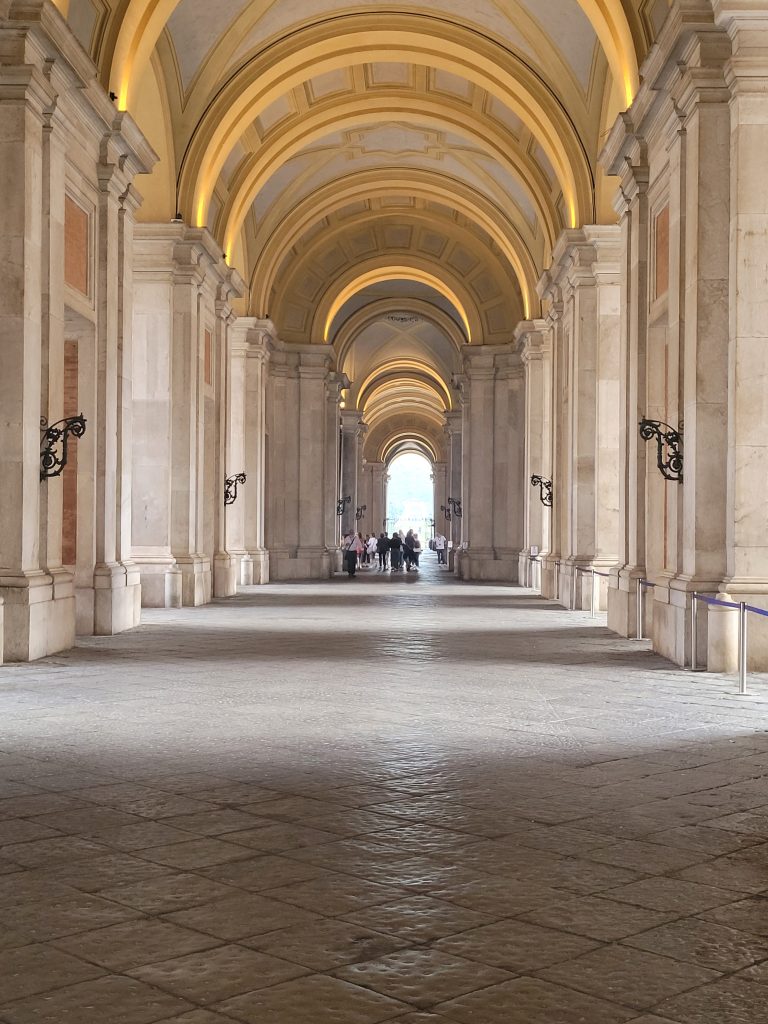
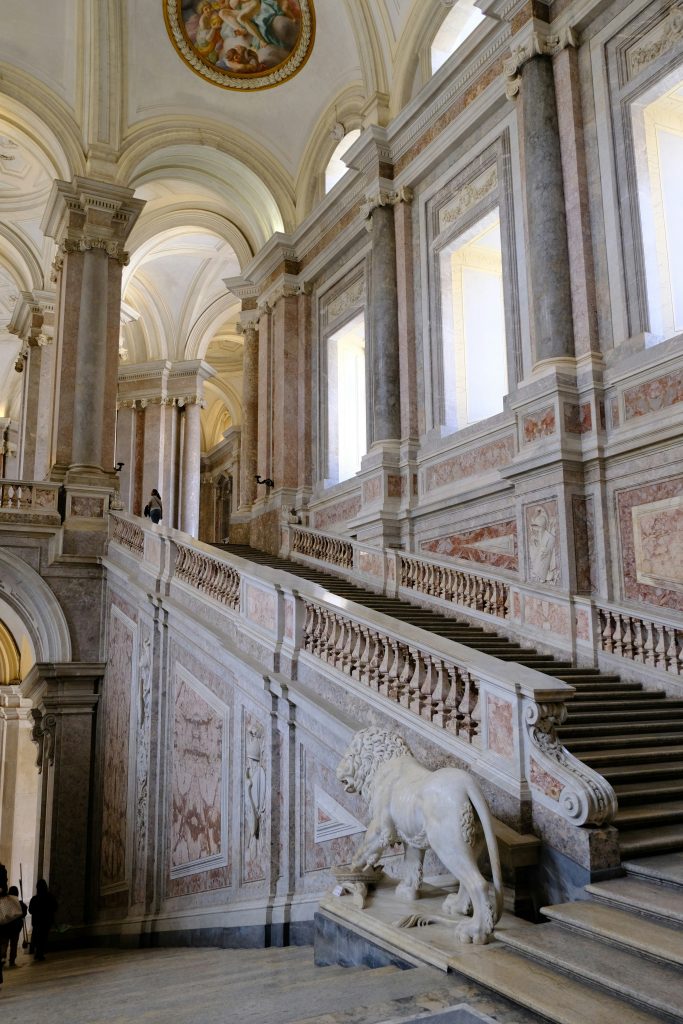
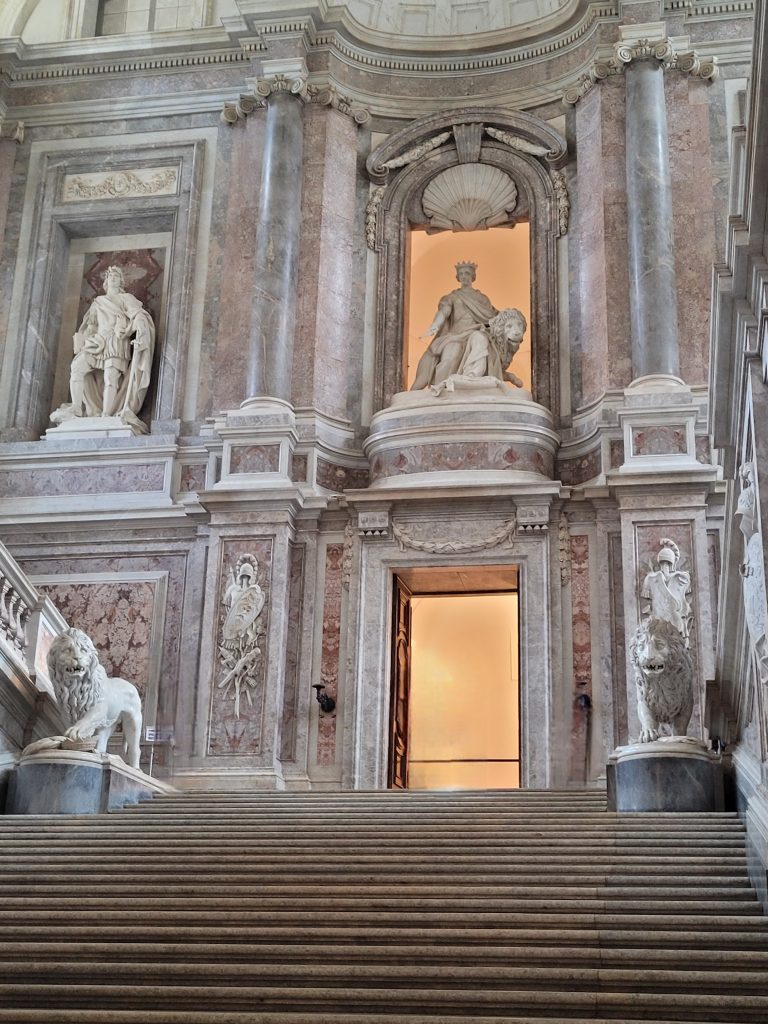
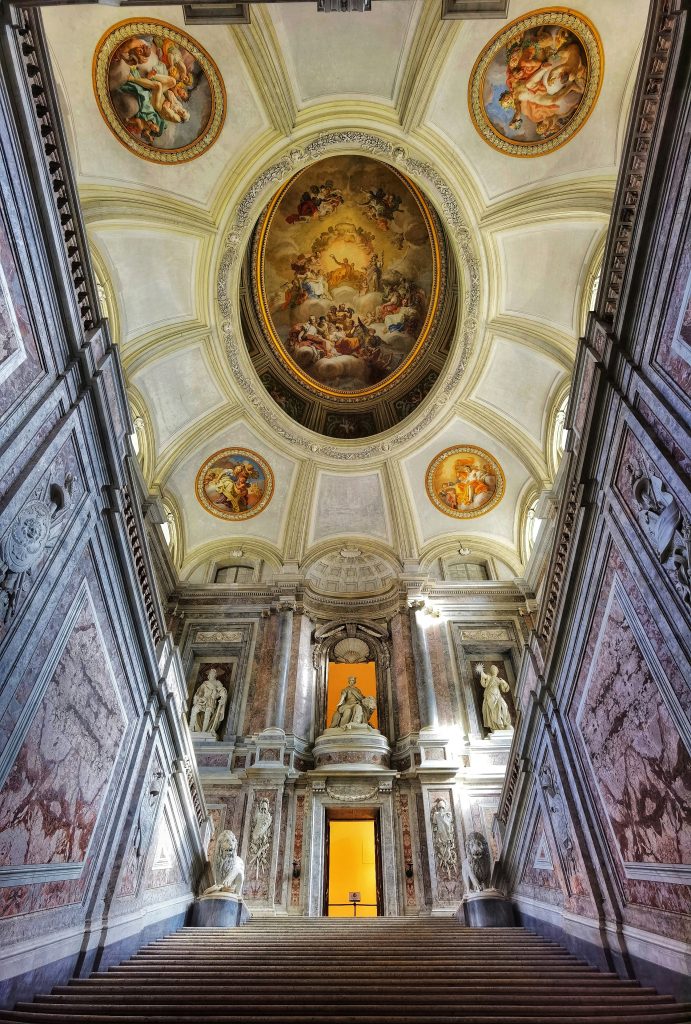
Upon entering Caserta, you’ll marvel at the symmetric architecture of the Cannochiale. But that’s just the warm-up. The Royal staircase is no ordinary staircase. Made of Trapani marble, halfway up the 116 steps stand a pair of marble lions representing Neapolitan strength and three statues—Merit, Truth, and Royal Majesty—all fashioned in the likeness of King Charles. These stairs lead to an upper vestibule that showcases architectural and artistic excellence through its mathematical design. Giant floor-to-ceiling windows overlook the palace grounds.
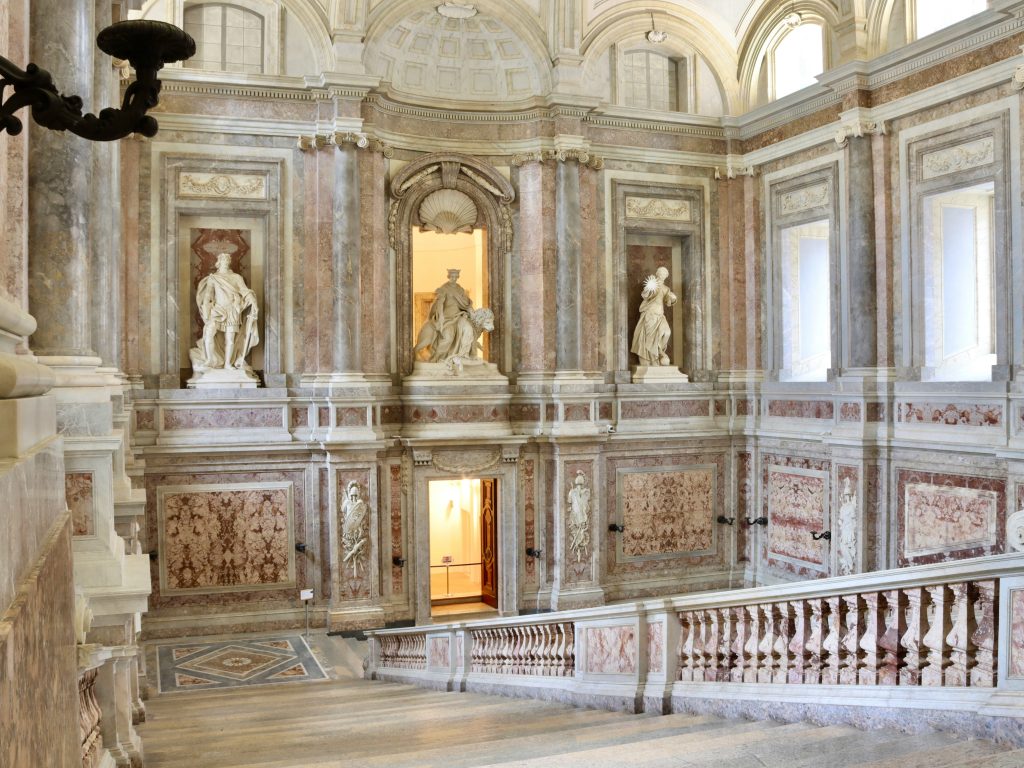
Though King Charles commissioned the palace, he neither lived here nor decorated it. When his brother, the King of Spain, died childless, Charles and his heir returned to Spain, leaving his successor, Ferdinand I of Naples, and Queen Maria Carolina to rule the Kingdom of the Two Sicilies.
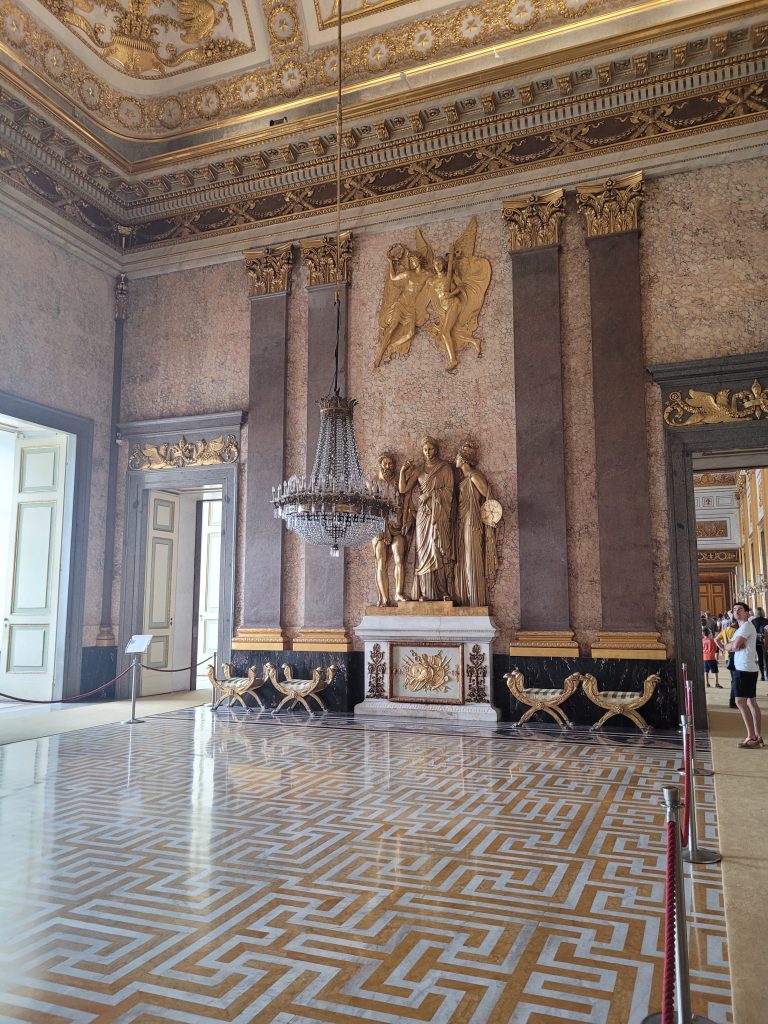
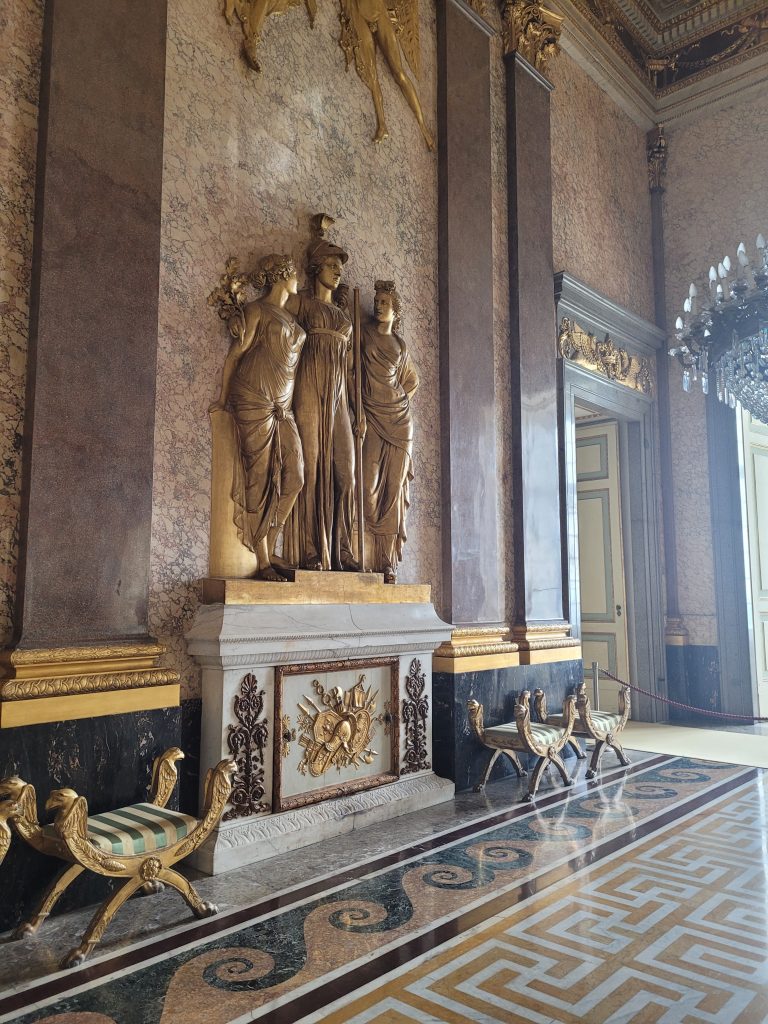
From this point, your self-guided tour begins with the royal apartments, which showcase Queen Maria Carolina’s taste and elegance. You will start in multiple bedrooms and sitting rooms, including those of King Ferdinand and Queen Maria Carolina. The queen was an avid reader who employed her own personal librarian to track down books. Visitors glimpse her love of books in the Palpatine library, which spans three rooms. Along this tour, you can take in the understated throne room with its golden statues and crystal chandeliers.
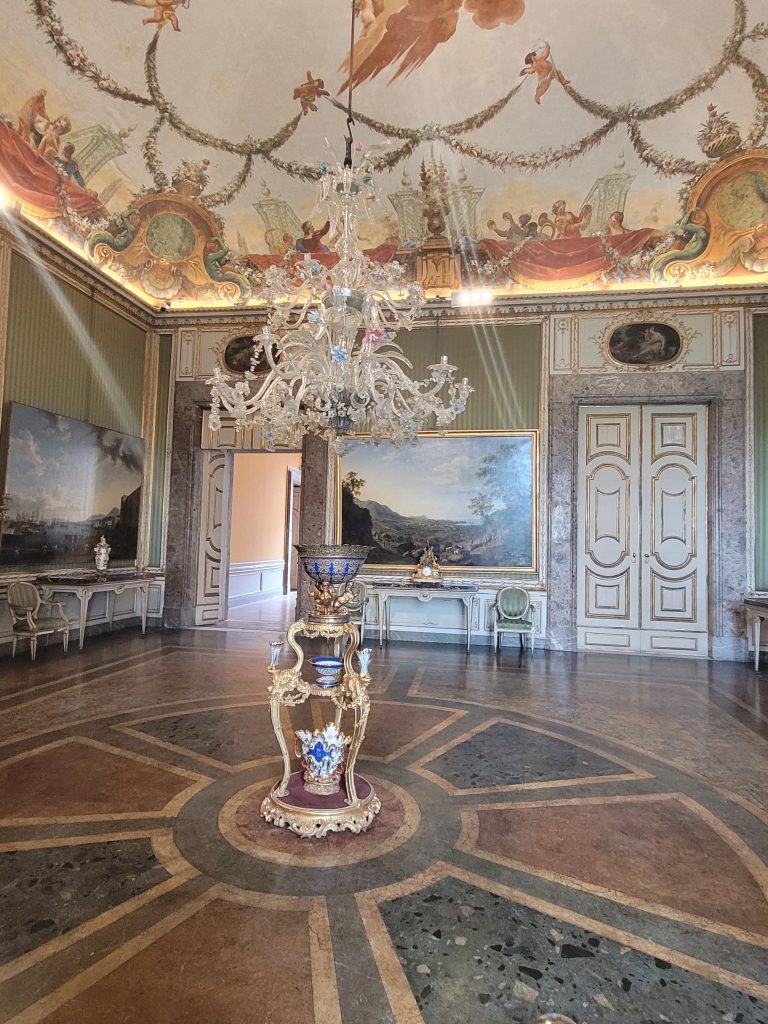
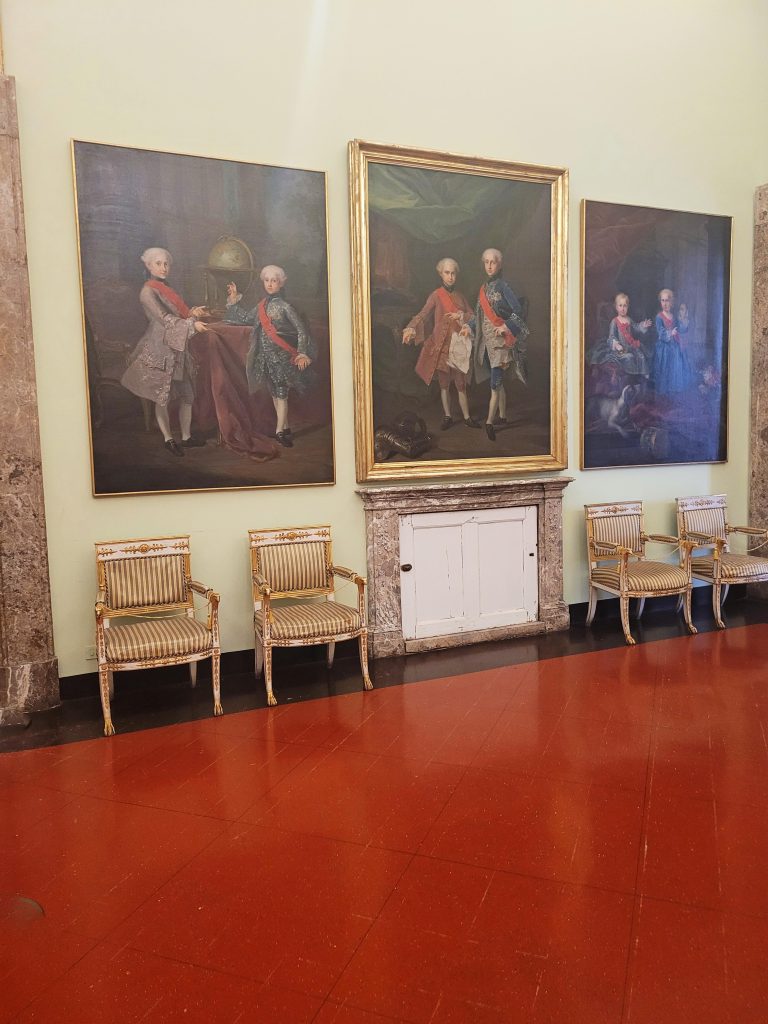
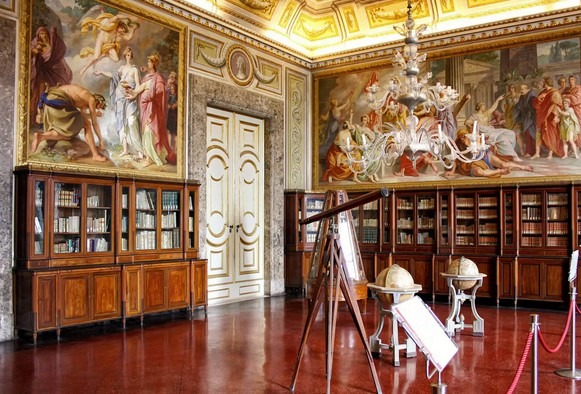
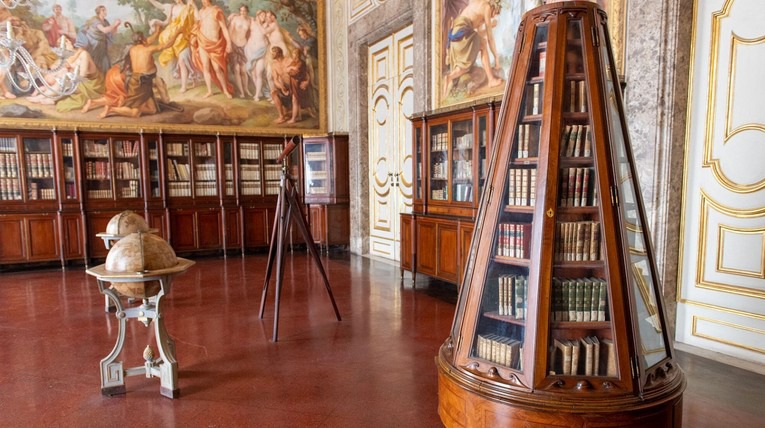
King Ferdinand was an extensive collector of nativity scenes, also known as a Presepio, and his collection was genuinely vast. His collection numbered in the hundreds and remains on display at Caserta Palace. You will be able to see other exhibits of art and architecture, including Luigi Vanvitelli’s original plans for those places.
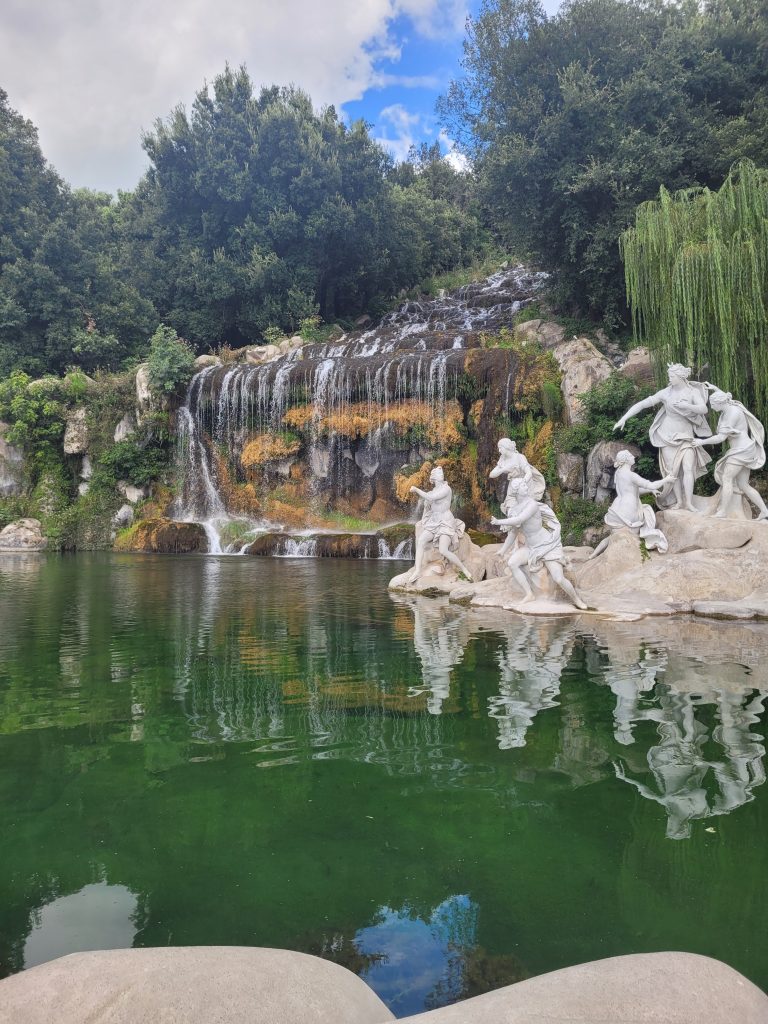
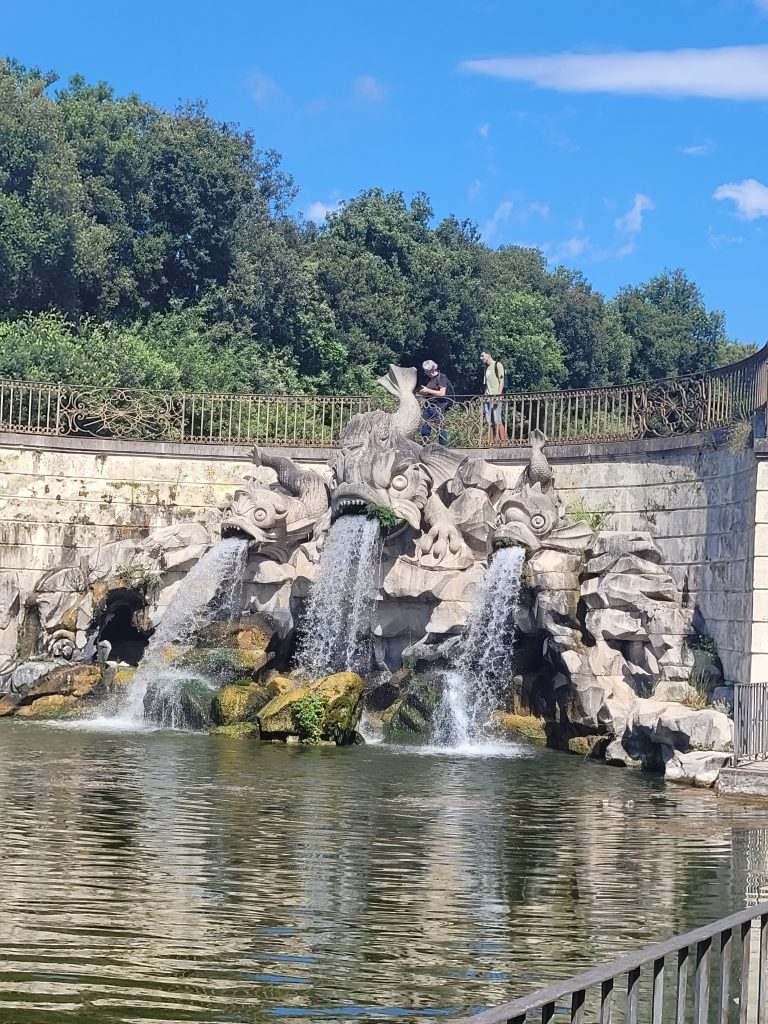
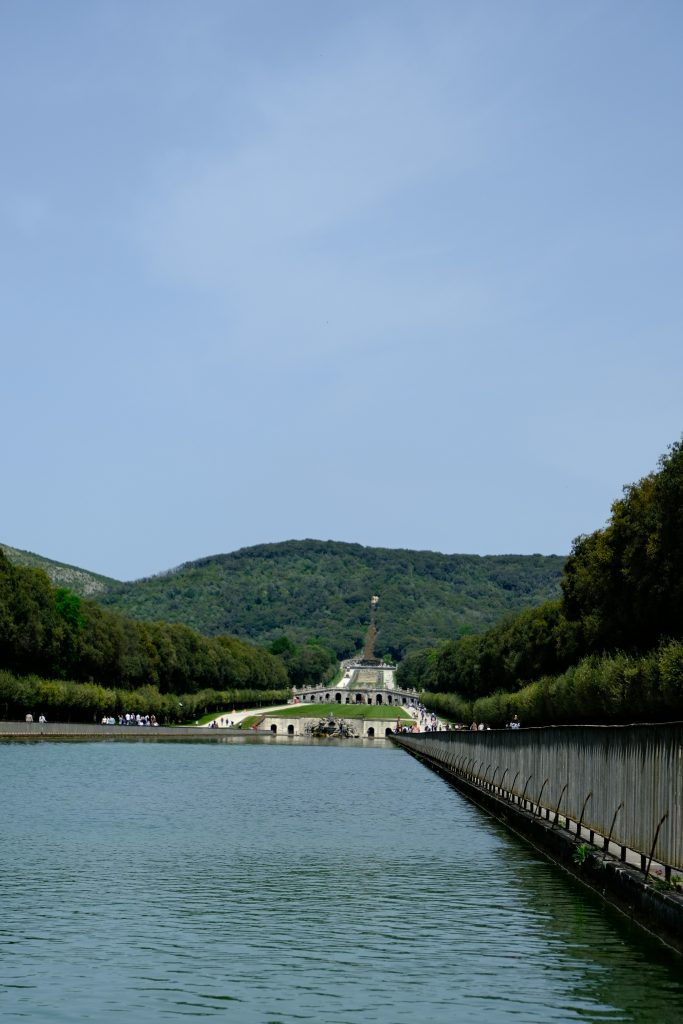
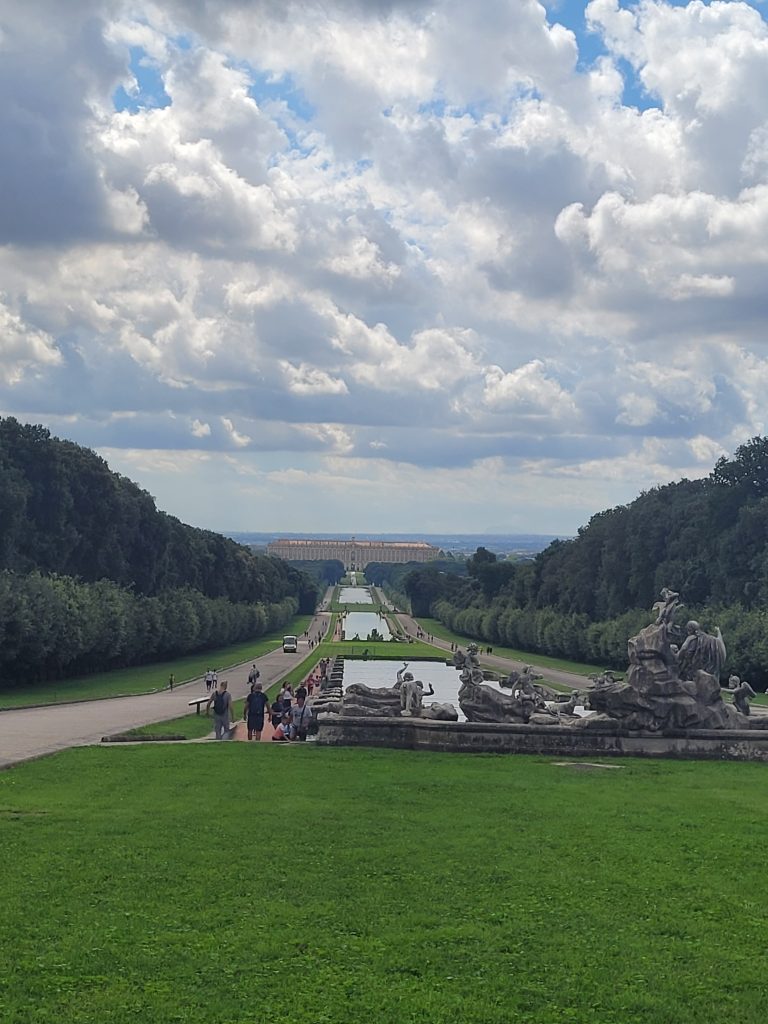
But the palace’s interior is not its only draw. The Royal Park is designed like a spyglass. It makes the waterfall and fountain at the far end look much farther away than a three-mile walk. But most importantly, a series of fountains lines the area, each with its own unique theme. My whimsical Fountain of Dolphins, though the Fountain of Aeolus served as the background in Star Wars Episode II: Attack of the Clones and the Hulu series The Great. At the end of the walk stands the breathtaking Fountain of Diana and Actaeon, depicting the goddess transforming Actaeon into a deer attacked by his own dogs. The art blends seamlessly with the natural foliage and waterfall from the Carlo aqueduct, which supplies water for all the pools. At this point, it’s worth taking a moment to admire not just the fountain but the amazing views of Caserta from this angle.


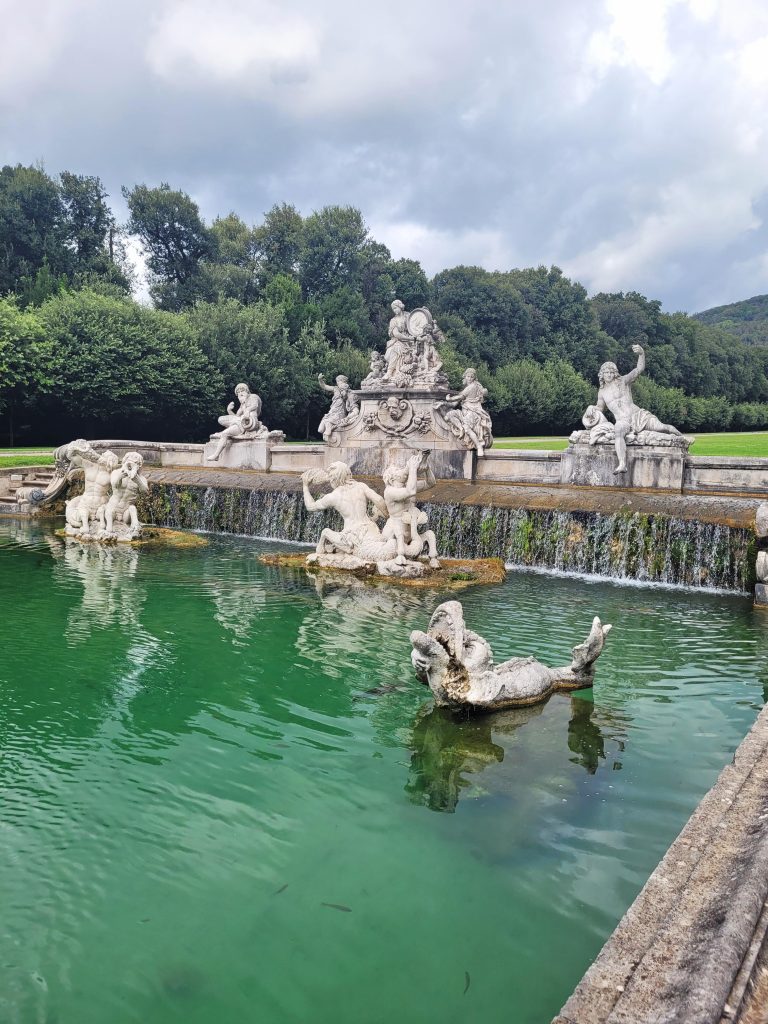
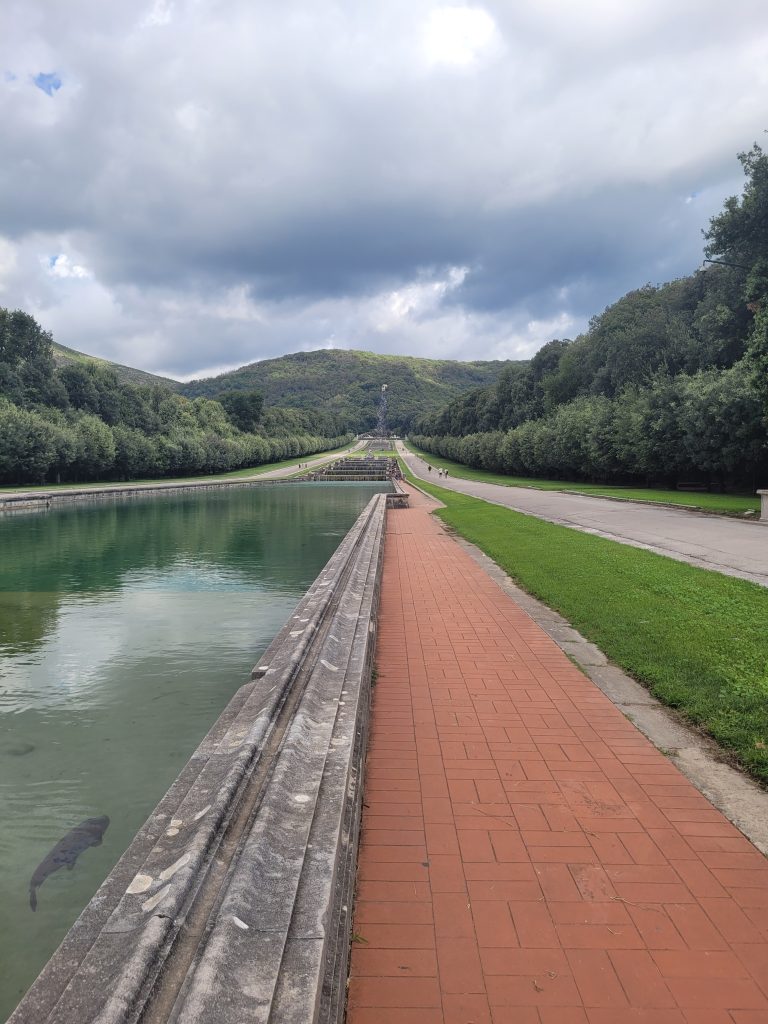
Now take a walk through the English Garden or explore the charming town of Caserta to enjoy a bite to eat or some shopping while pondering if Caserta is grander than Versailles.
Travel Tips to Consider:
- Book your tickets to visit Caserta directly through the palace itself on their website.
- You can also purchase bike rentals and shuttle passes for the Royal Park for those who are unable to walk the length of the park.
- There are multiple ways to get to Caserta, but the easiest way for travelers is by train from Naples. The palace is only 300 meters away from the station.
Where to Stay in Naples, Italy
For a trip centered on Caserta Palace, Naples proper offers the most convenient base. The city’s hotels range from luxury properties near the central station to mid-range options in the Vomero district, perched on a hilltop with good transit connections. Most visitors find it practical to stay within walking distance of the Circumvesuviana railway line, which reaches Caserta in about 30 minutes.
The San Carlo area and Spaccanapoli neighborhood offer affordable guesthouses and smaller hotels in the historic center, keeping you close to other museums and Naples’ main attractions. These areas have improved considerably in recent years, offering authentic neighborhood experiences with reliable public transport. Budget-conscious travelers often choose family-run hotels here, where owners offer firsthand advice on timing your Caserta visit to avoid crowds.
If you prefer quieter surroundings, Vomero or Chiaia offer residential-style accommodations with metro access to downtown in minutes. These neighborhoods feel less touristy than the center but maintain good restaurant and café options for evening meals. The quiet setting offers respite after a full day exploring the palace’s 1,200 rooms and gardens.
For your Caserta day trip, book accommodation that offers early breakfast so you can catch a morning train. The palace opens at 8:30 and sees far fewer crowds in the first two hours. Having a hotel near the central station simplifies logistics and eliminates the stress of navigating Naples’ traffic if you rent a car.
Recommended Reading
- Antoinette’s Sisterby Diana Giovinazzo. — The story of Queen Maria Carolina Charlotte as she rose to power from a Habsburg princess to the queen of the small county of the Kingdom of the Two Sicilies. While she was close with her favorite sister, Marie Antoinette, she was forced to come to terms with her sister’s untimely murder. Considering Caserta was Queen Maria Carolina’s favorite home, it was a central setting for this novel.
- The Last Masterpieceby Laura Morelli. — Post World War II, two women do what they can to rescue stolen art throughout Italy. With scenes set at Caserta, which was heavily bombed during the conflict. Some of the art that the characters had to track down included art taken from the palace.
- The Wardrobe Mistressby Meghan Masterson — A Novel of Marie Antoinette. Giselle Aubry, a young girl, has the opportunity to become the undertirewoman for Queen Marie Antoinette, growing ever closer to the queen. With the onset of the French Revolution, Giselle must choose between the queen and the revolutionaries.
- The Lying Life of Adults by Elena Ferrante — Ferrante is the quintessential author on all things Naples. While her Neapolitan Quartet may be her most celebrated work, her latest novel, The Lying Life of Adults, explores what life is like for a teenage girl living in modern-day Naples, Italy. When Giovanna hears her father say that she has an ugly face like that of his estranged sister, unraveling a series of family secrets.

A born history nerd, Diana Giovinazzo is the critically acclaimed author of The Woman in Red and Antoinette’s Sister, and co-creator of the literary podcast “Wine, Women, and Words,” which features interviews with authors. Diana lives in the Los Angeles area with her husband and a menagerie of animals.