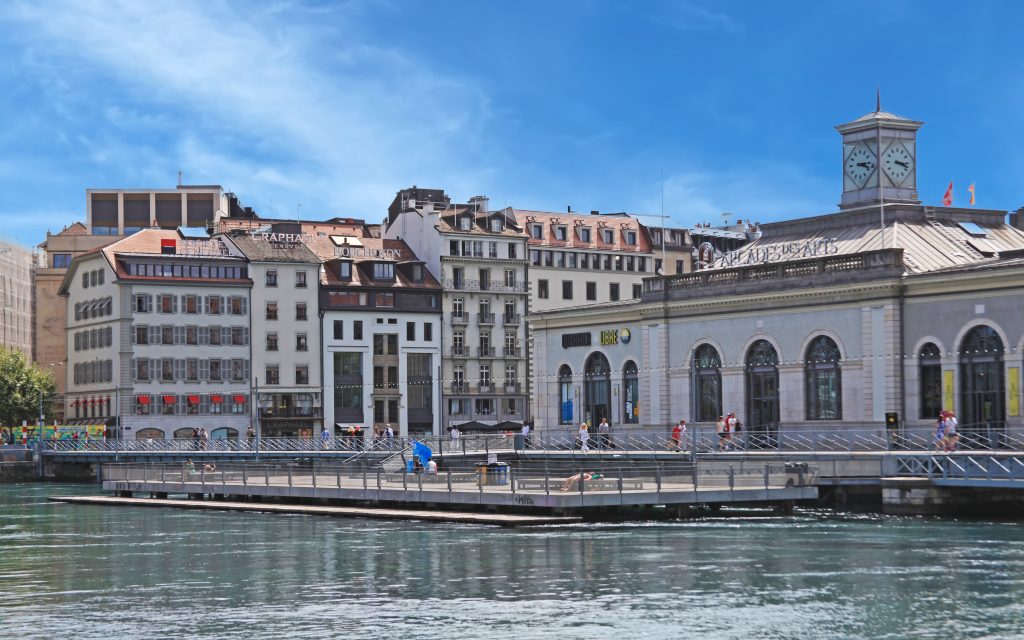
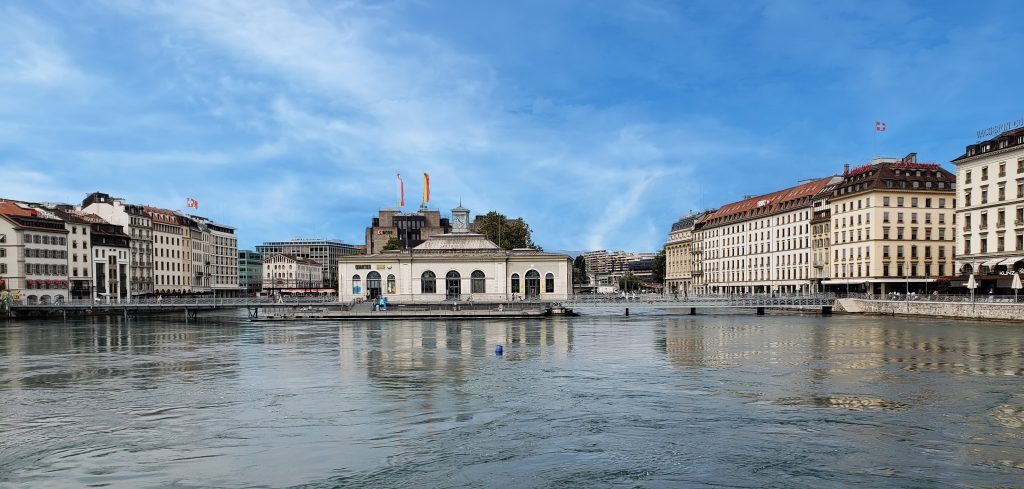
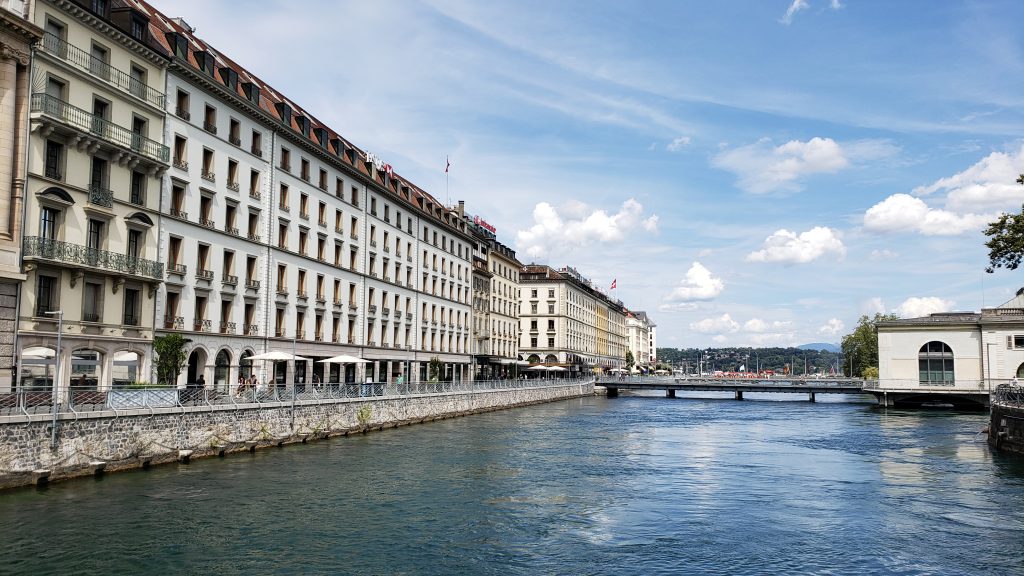
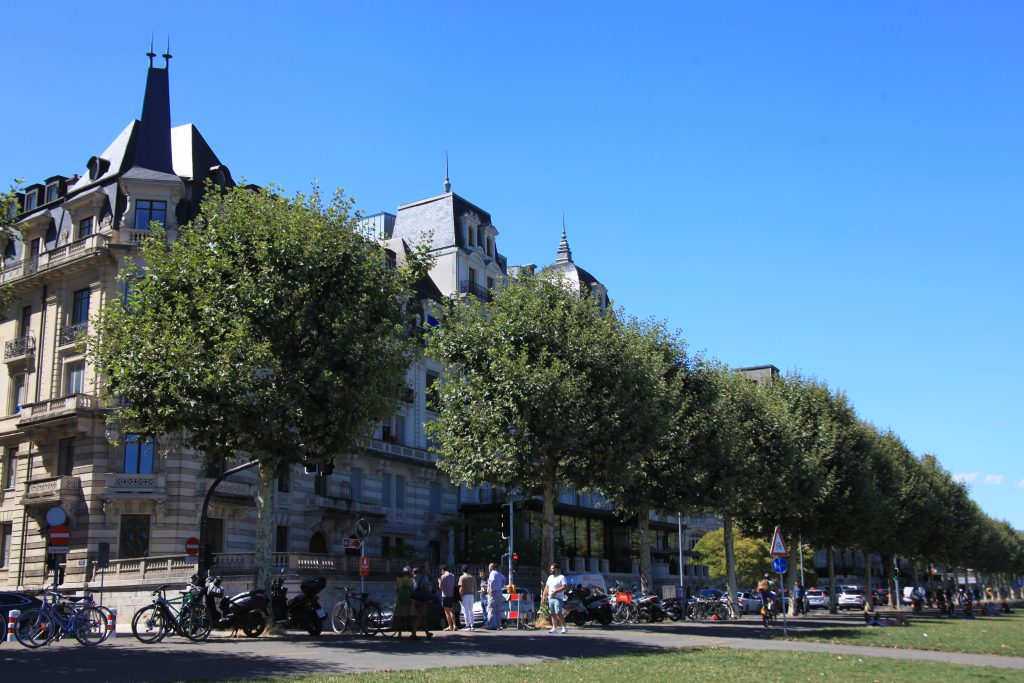
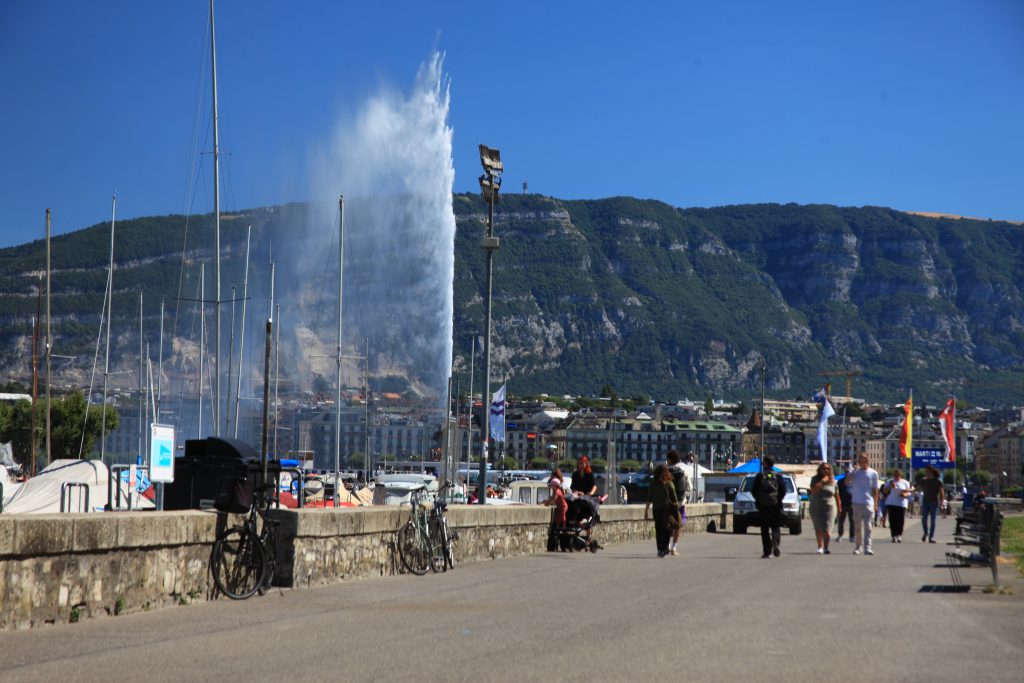
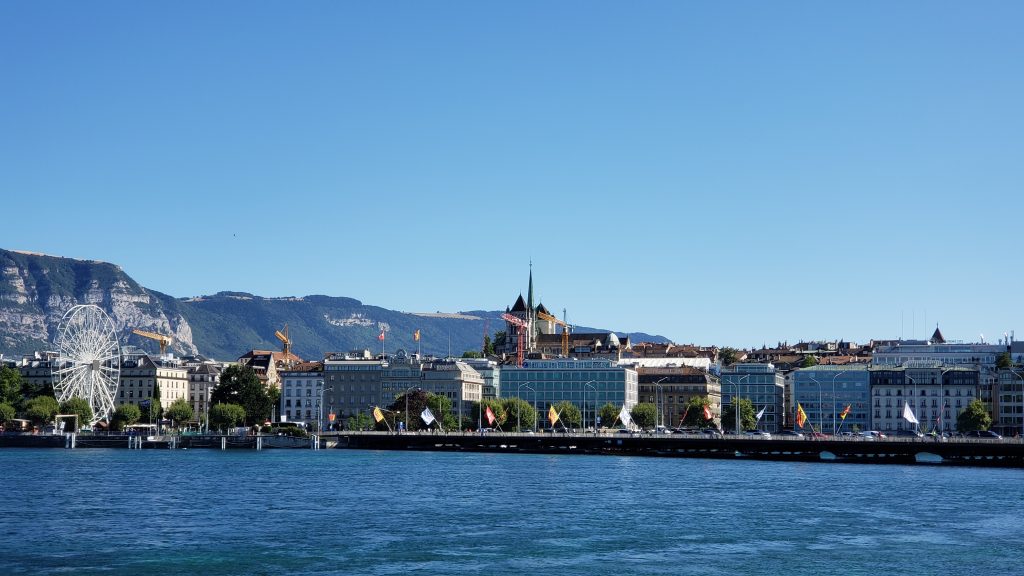
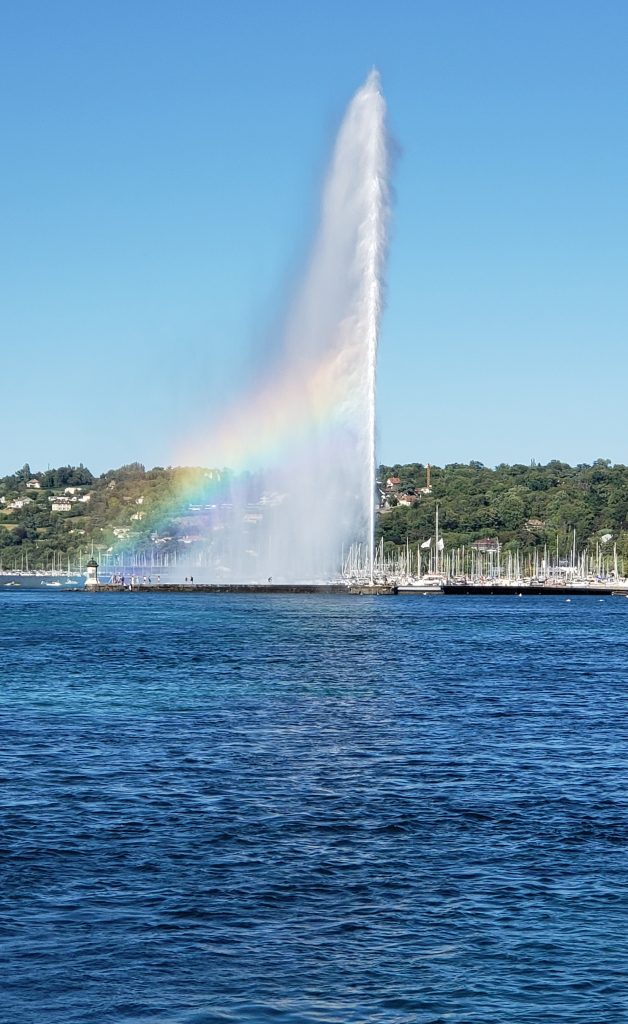
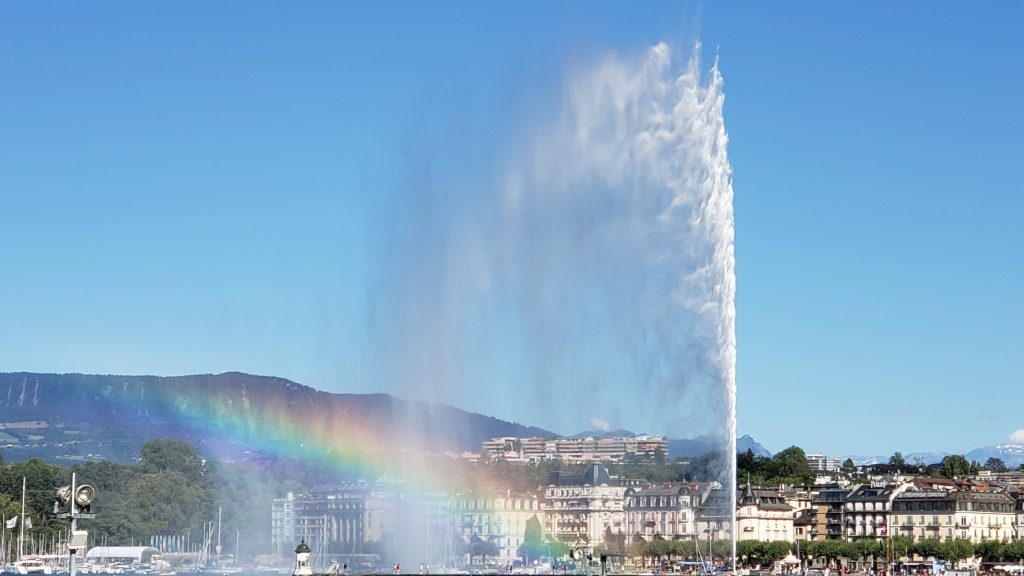
There is a moment just after sunrise when pale light brushes across Lake Léman and the Jet d’Eau begins its ascent into the dawning sky—430 feet of water caught in a spray of light, mist, and motion. Geneva awakens slowly but confidently, a city where glassy waters have long reflected diplomacy, invention, and ideals. But this is no abstract city. It is best understood not by headlines or treaties, but by walking along quays and across bridges, beneath plane trees and beside centuries-old facades. Geneva’s waterfront is where the past comes into view.
The Nexus of Commerce, Faith and Neutrality
Long before it became a neutral ground for world affairs, Geneva held strategic and symbolic importance. Nestled where the Rhône spills from Lake Léman toward France, this city anchored trade, faith, and resistance. Celtic tribes called it Genava, a name the Romans adopted when they annexed the territory around 121 BCE. Positioned on the route between the Mediterranean and the North Sea, Geneva’s port bustled with barques and commerce since antiquity.
By the Middle Ages, the city had established itself as a powerful and fiercely independent bishopric. When the Protestant Reformation swept across Europe, Geneva became a northern lighthouse of the faith. Under John Calvin, it became a haven for religious refugees, printers, and philosophers. The city’s waterfront and bridges stood silent witness to shifting doctrines, turning presses, and arriving exiles, often by boat.
In later years, after Geneva established itself as the focal point for resolving European conflict and uniting trading partners, its beauty attracted the world’s crowned heads seeking respite from weather or burdens in their own countries, along with cultured elites who came to relax. From the 18th through the early 20th century, Geneva’s crystalline lakefront offered a retreat from the burdens of court life and continental unrest, drawing visitors with its Alpine setting and orderly character. Empress Elisabeth of Austria, the famously restless “Sisi,” was one of many royal guests to stroll these promenades. Russian aristocrats came to convalesce, English peers brought their governesses, and exiled monarchs composed memoirs in lakeside villas while sipping chocolate chaud in the Hôtel Beau-Rivage salons. But it was not just royalty who came, but the cultured and monied from all eras, statuses, and nations. Even now, Geneva retains the hush of old money, luxurious but rarely loud. And today, the city is further fueled by the banking haven it has become, attracting newer wealth and the wealthy alike.
But alongside that prominence, Geneva hosts the world’s largest concentration of NGOs—independent nonprofit organizations serving vulnerable populations and causes, from human and animal welfare to health, displacement, and hunger crises. The estimated number of more than 500 of these organizations have chosen Geneva as home. The UN European headquarters are located here. The vast number of board members, executives, and workers serving these organizations find welcome in this cosmopolitan city.
Lakeside Strolling
The first thing you notice along the waterfront is the looming presence of snow-capped Mont Blanc across the lake. It seems close enough to touch, but this stately Alpine peak is actually in France. It makes you aware that the border appears to be mere miles away, when in reality it is about 300 miles from where you stand.
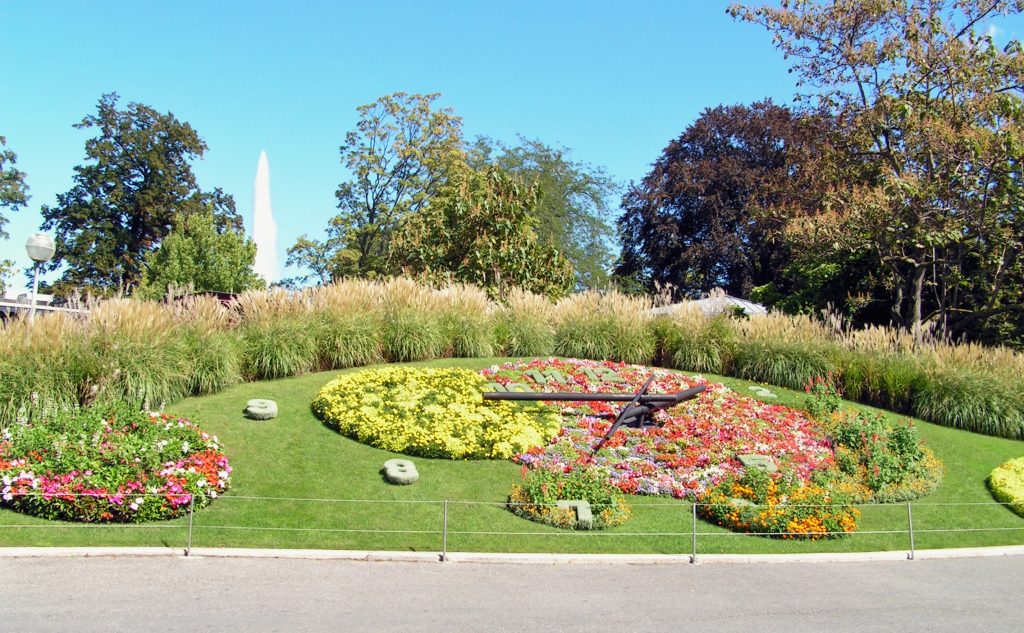
To explore this elegant city speckled with Victorian landmarks, classic hotels and world-class banks, begin your walk at the Jardin Anglais, a lakeside park carved into the city’s shoreline in the 1850s. Once part of a defensive moat, it was transformed into a genteel English promenade with curving paths, manicured lawns, and the famed Horloge Fleurie, a floral clock made of 6,500 blooms that shifts seasonally. Pause here to breathe in the crisp lake air and linden scent, watching locals read their newspapers or sip espresso beneath wrought-iron lampposts.
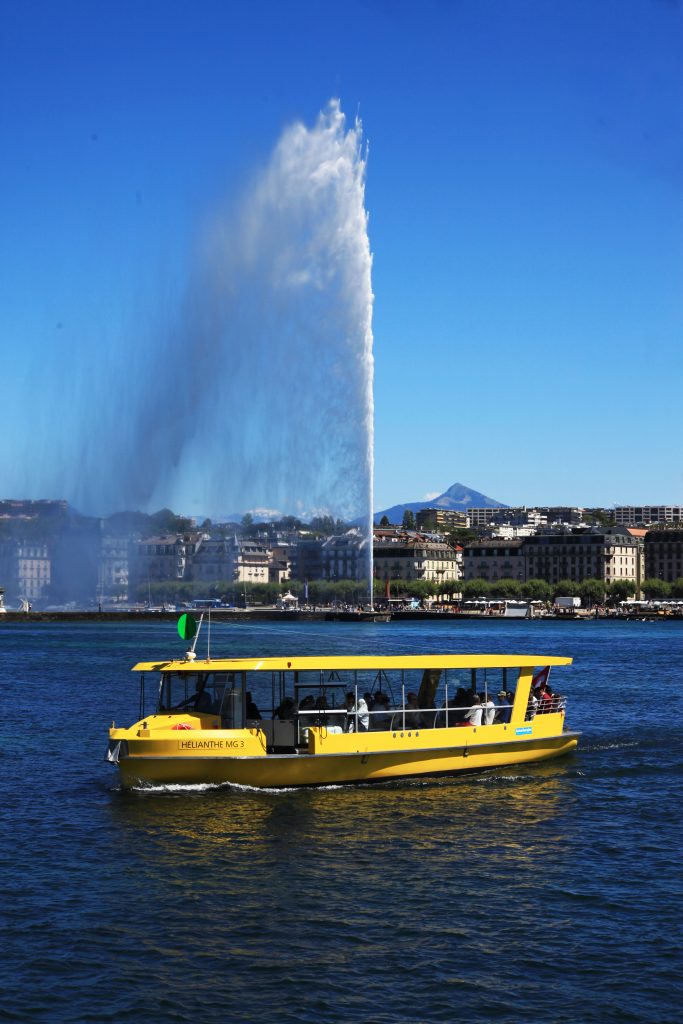
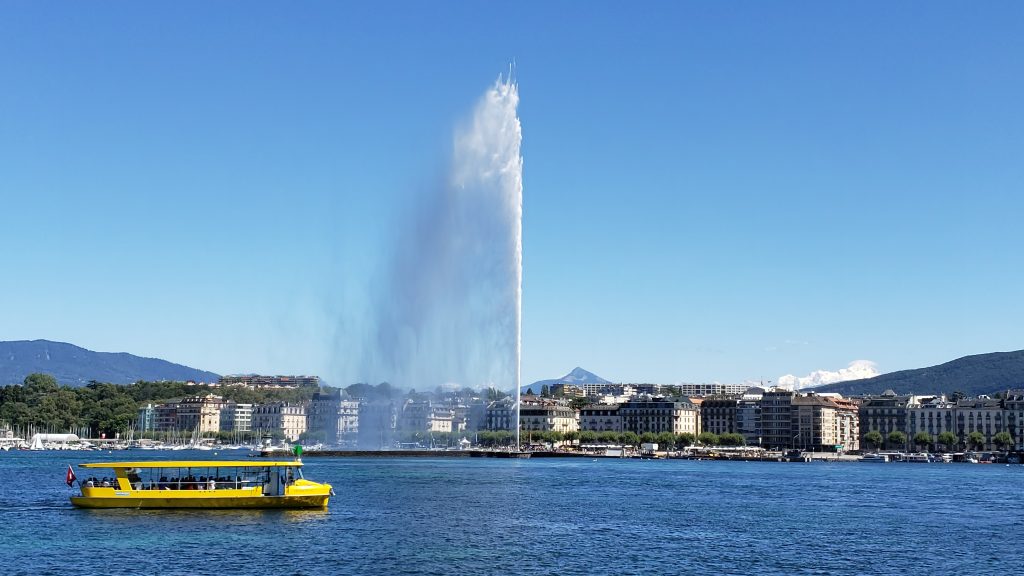
From here, follow the Quai Gustave-Ador to the Jet d’Eau, the city’s crown jewel. Its story began not as an ornament, but as an accident of industry. In 1886, Geneva’s hydraulic power network required a safety valve to release excess pressure. This original “fountain” shot water 30 meters into the air, a practical marvel of engineering. But it captivated the public. In 1891, the city relocated it to its current lakeside location, transforming an engineering solution into one of Europe’s great landmarks. The Jet now surges skyward at 500 liters per second and 124 mph, visible even from airplanes descending into Cointrin Airport.
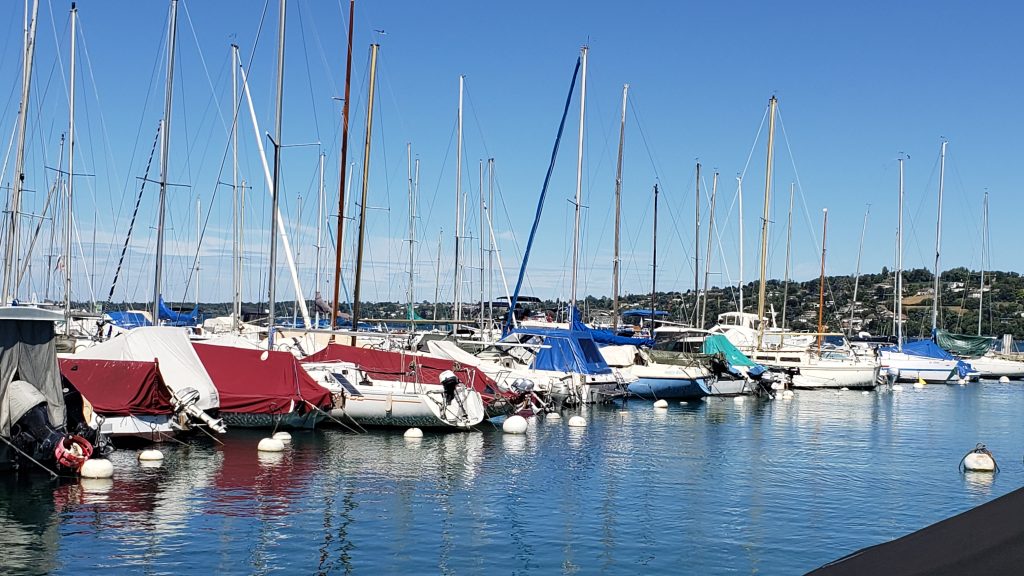
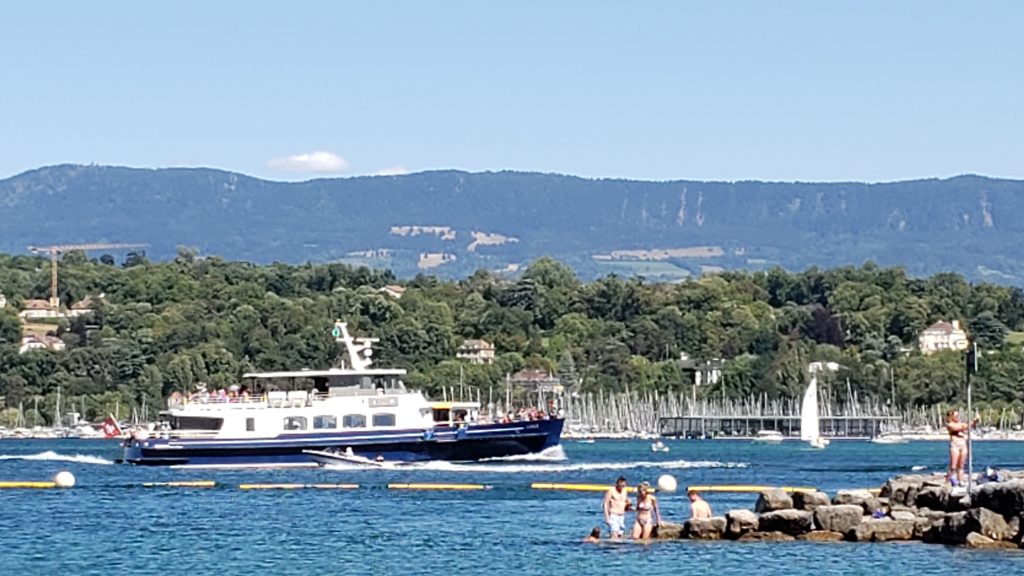
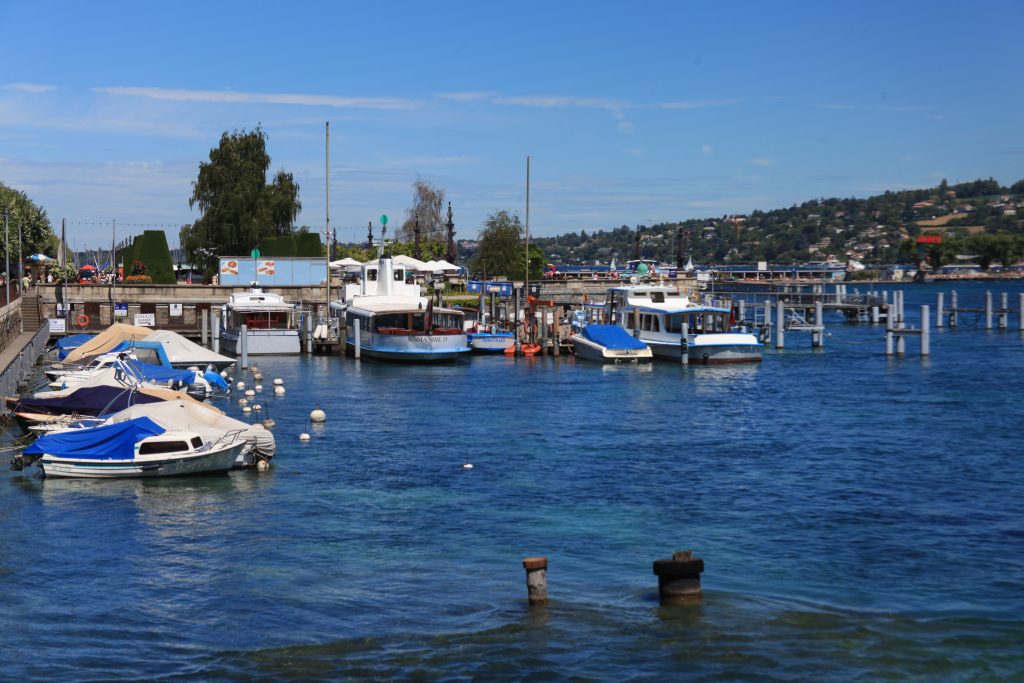
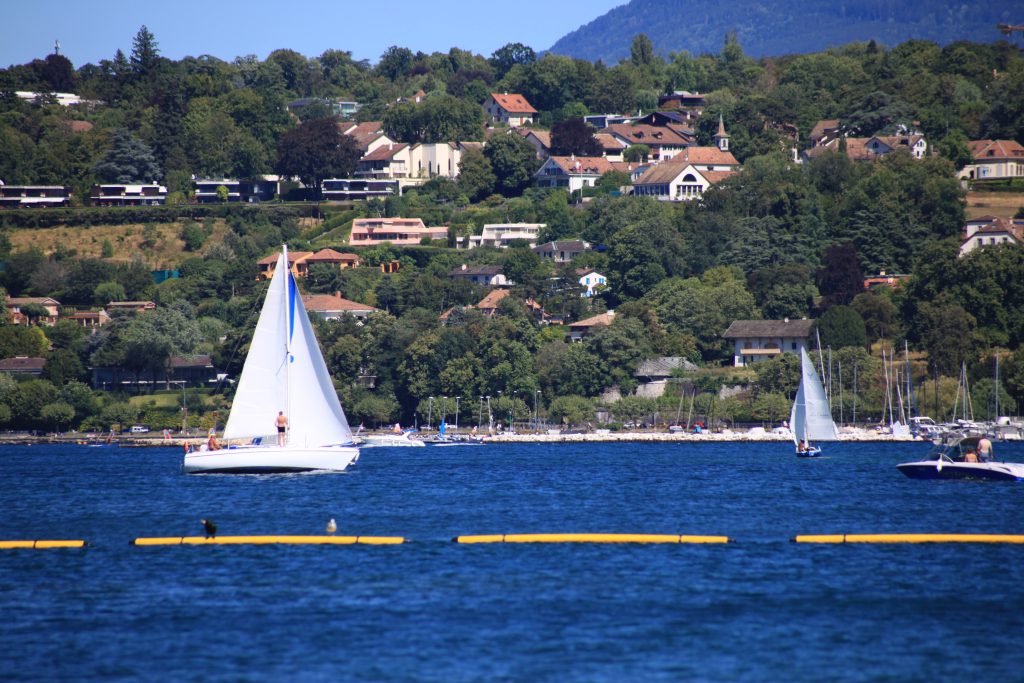
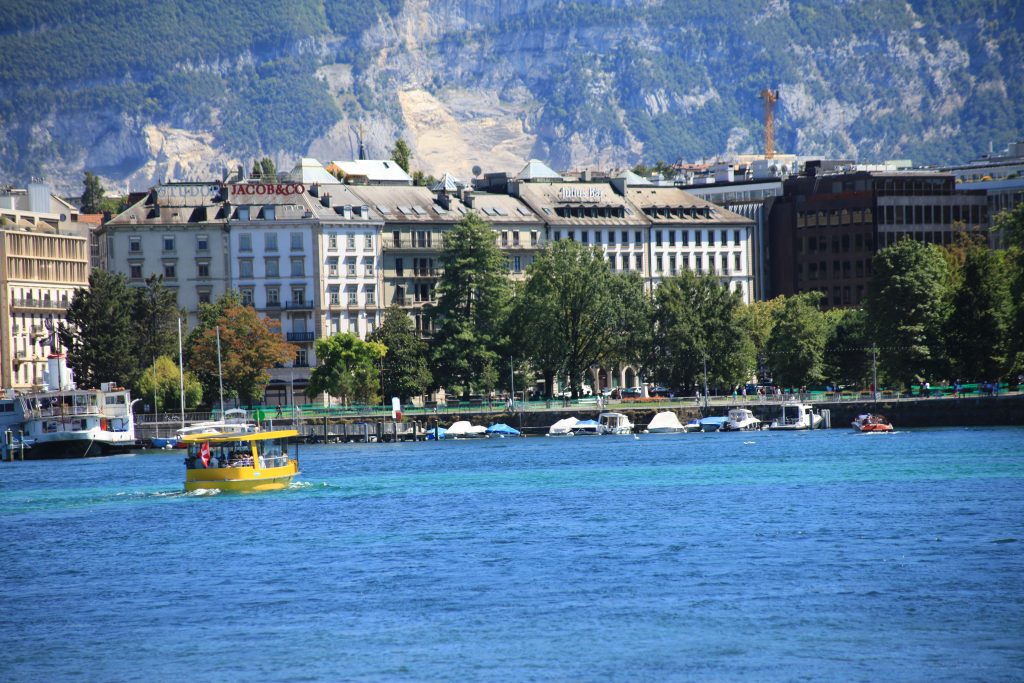
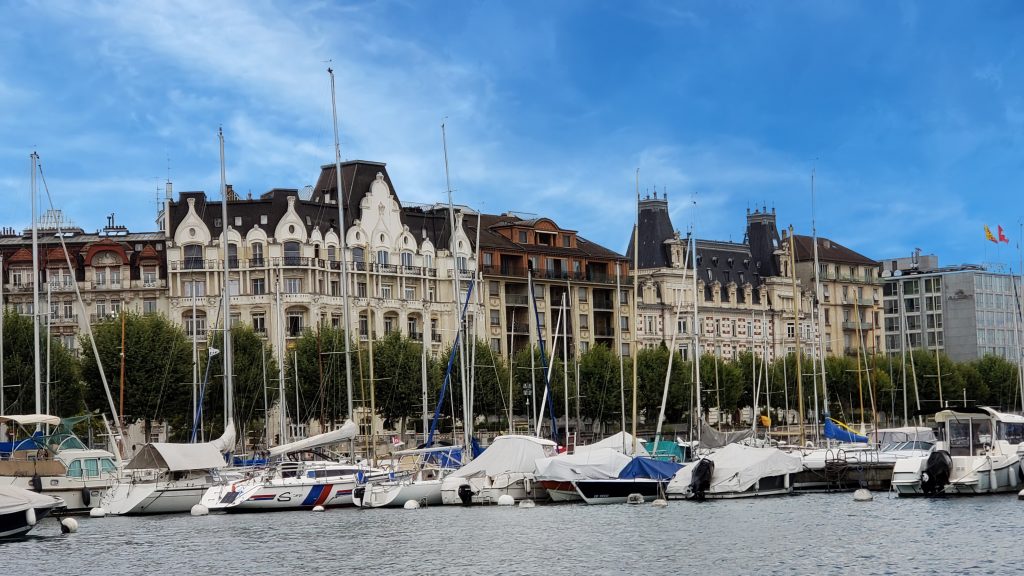
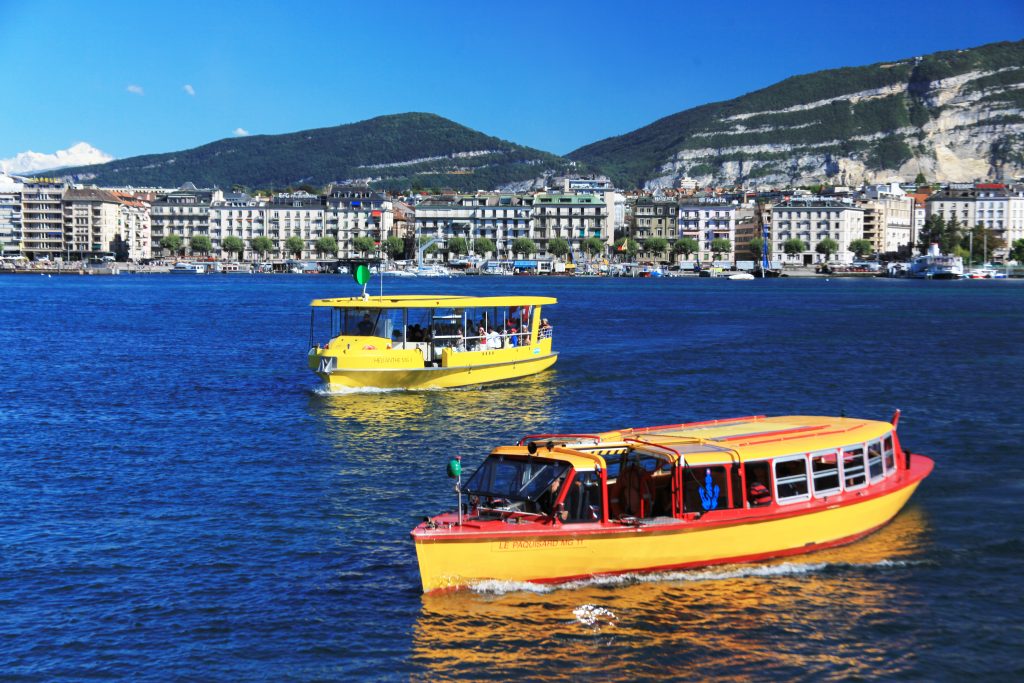
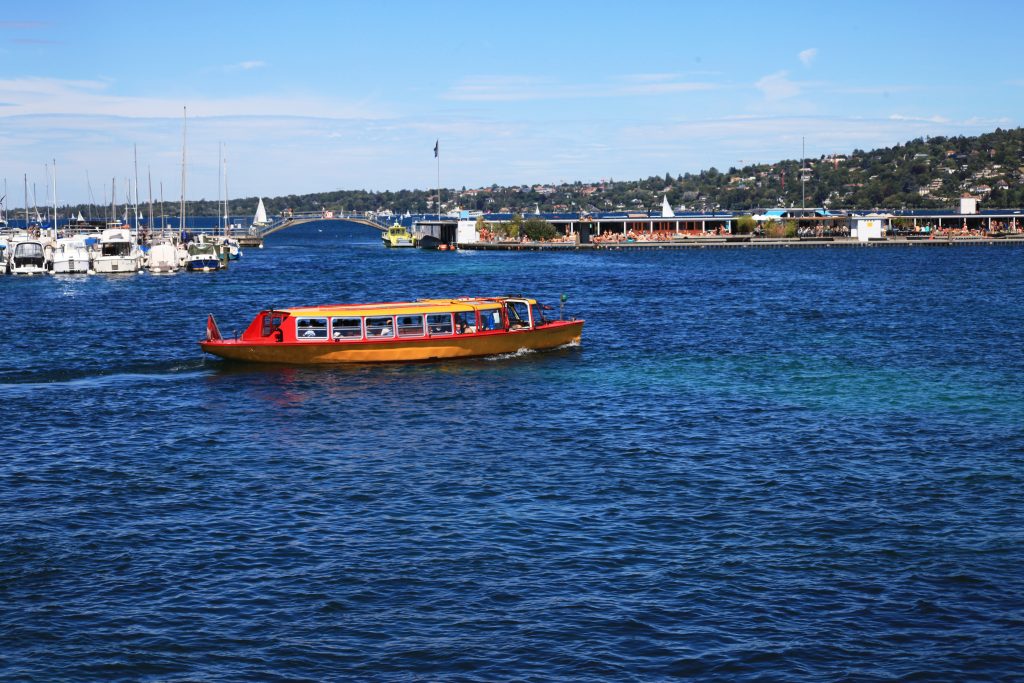
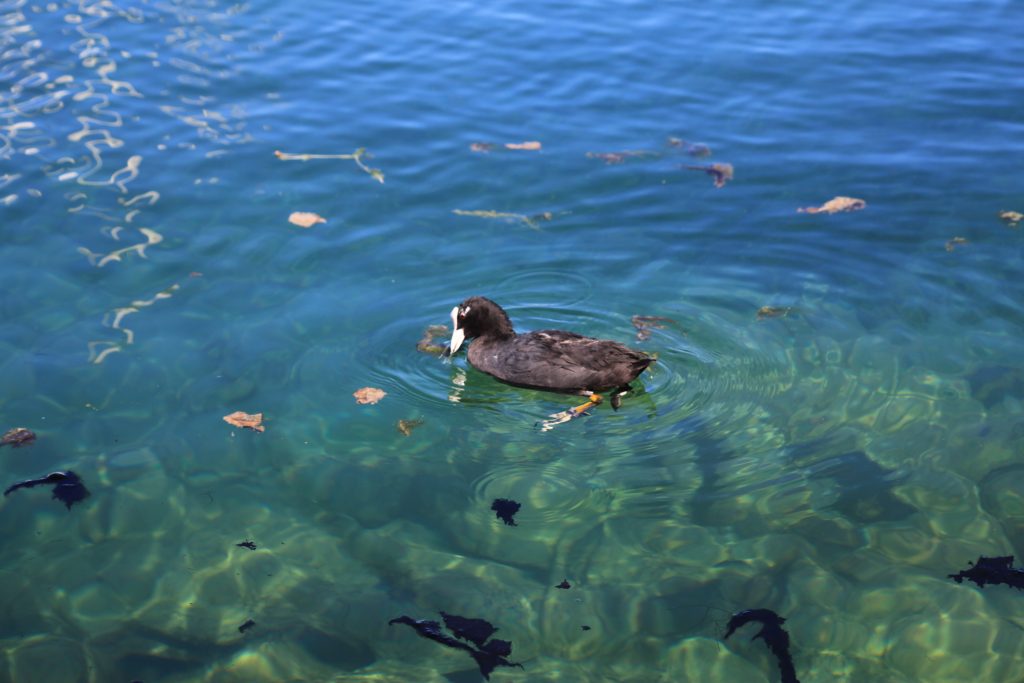
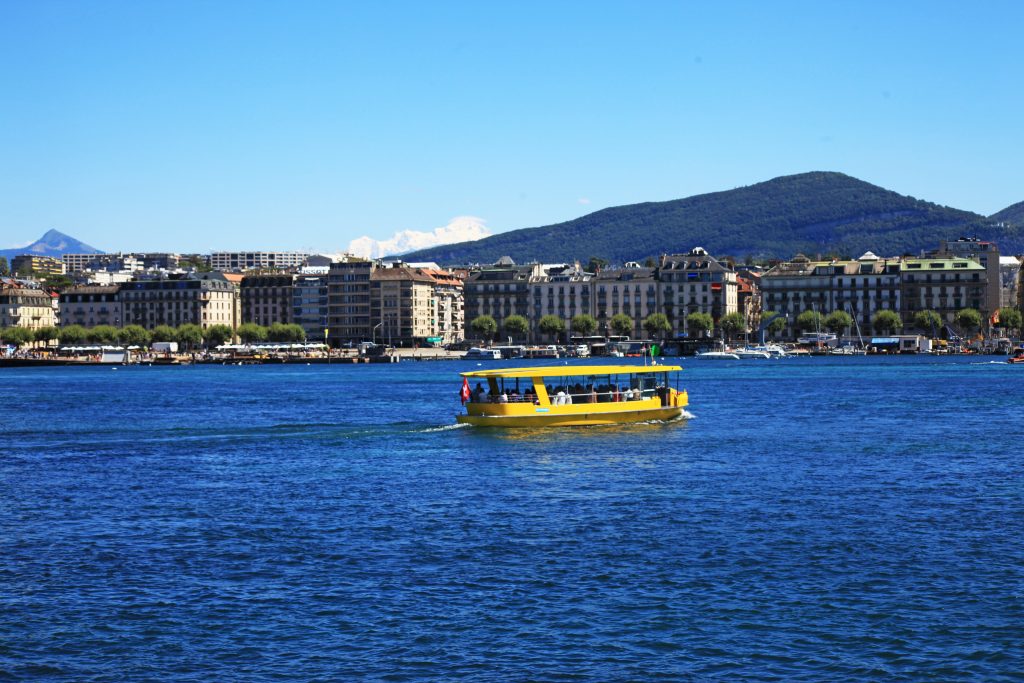
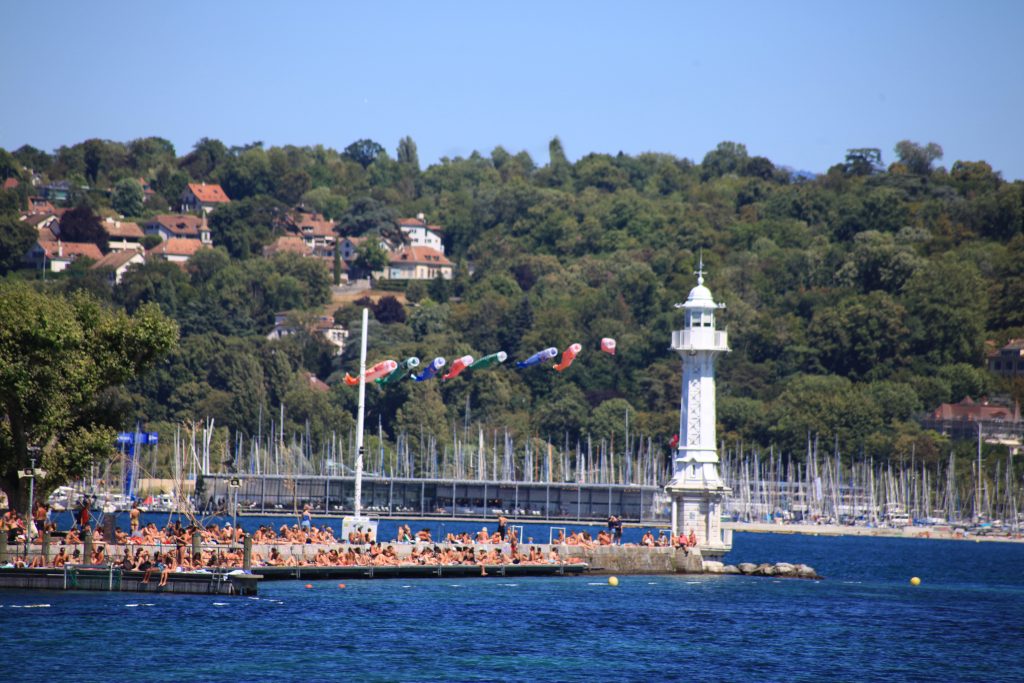
Walk a little farther and you’ll reach the Bains des Pâquis, a public bath built in the 1930s on a slender jetty that locals have cherished for generations. In summer, it bustles with swimmers, sunbathers, and philosophers holding court over fondue. In winter, steam rises from the sauna’s deck as bathers plunge into the icy lake, a ritual of renewal. Along the Quai Gustave-Ador, sleek sailboats bob at marinas alongside weathered wooden rowboats, each with its own story. The harbor is a moving portrait of water taxis darting between promenades, pleasure craft drifting under the sun, and swans, snowy and serene, preening beside the docks. In the warmer months, lakeside cafés extend their tables to the quay’s edge, where polished locals sip Apérol spritz beneath striped awnings.

The Beautiful Bridge of Diplomacy
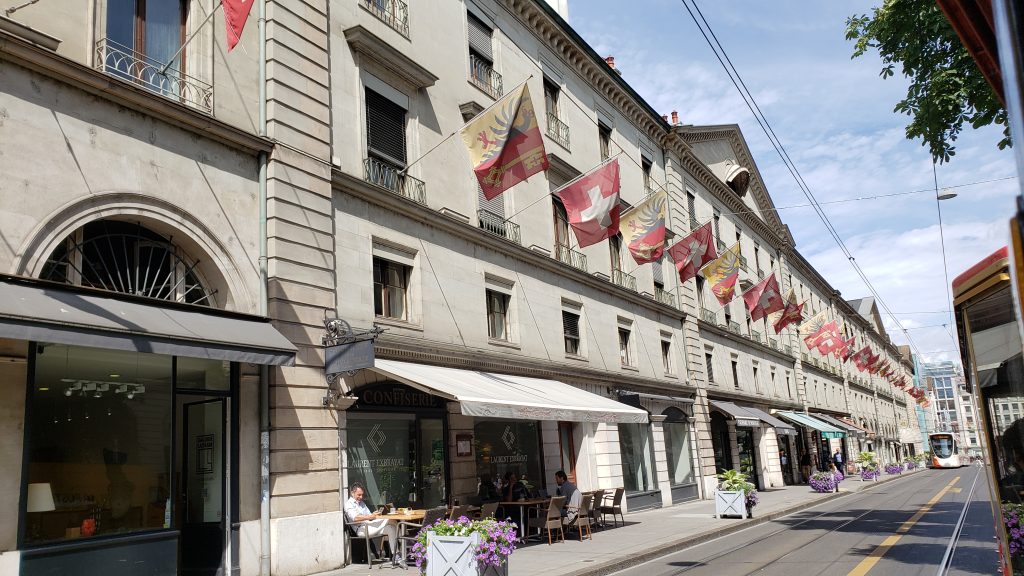
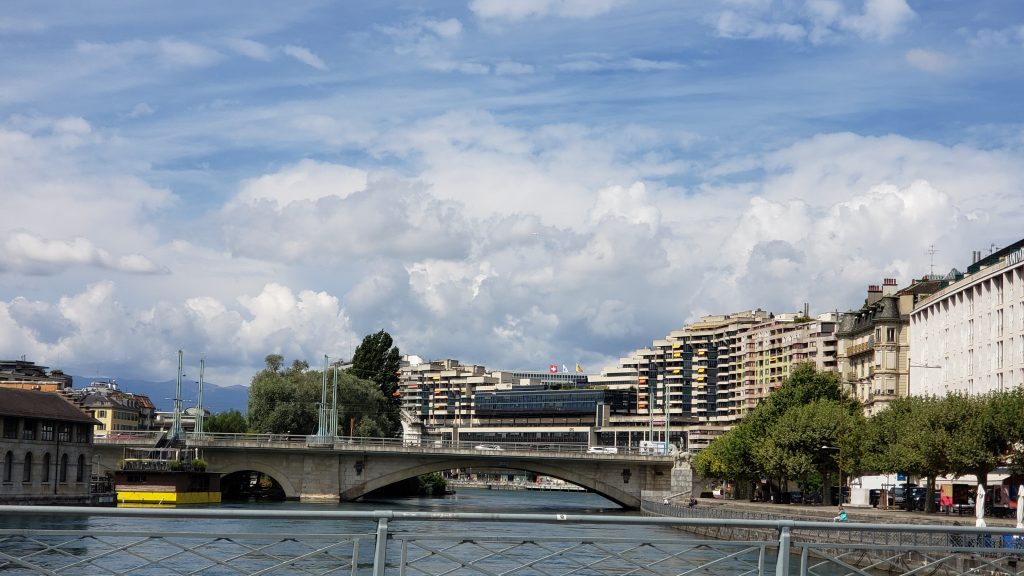
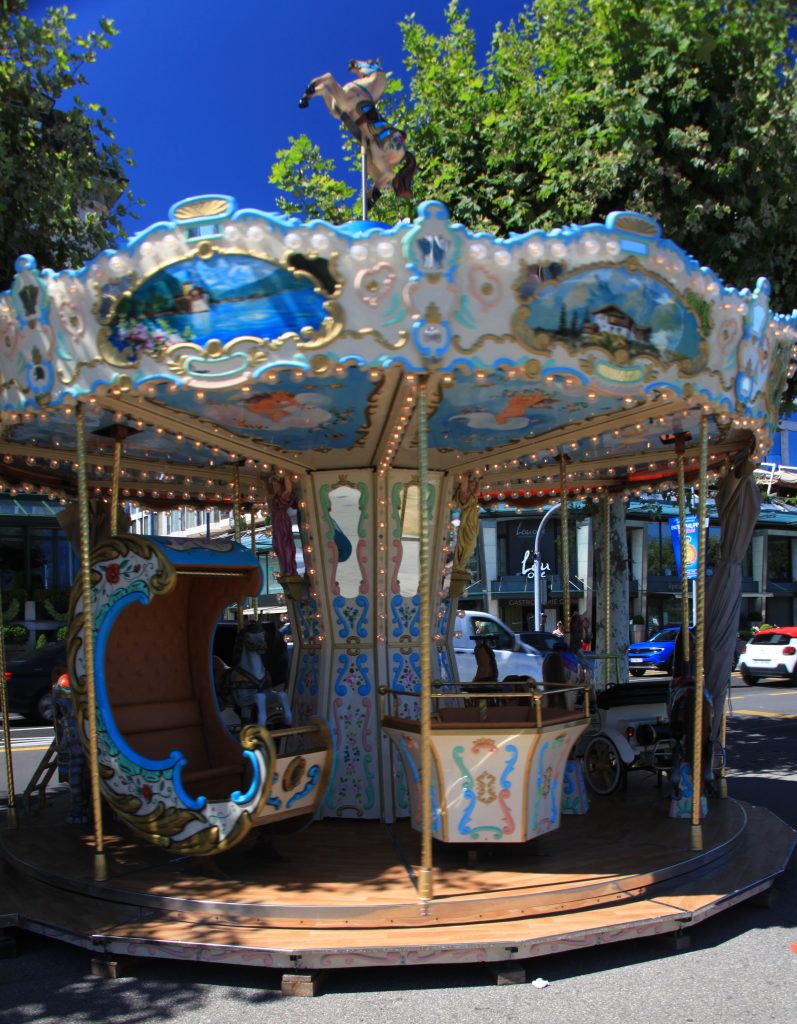
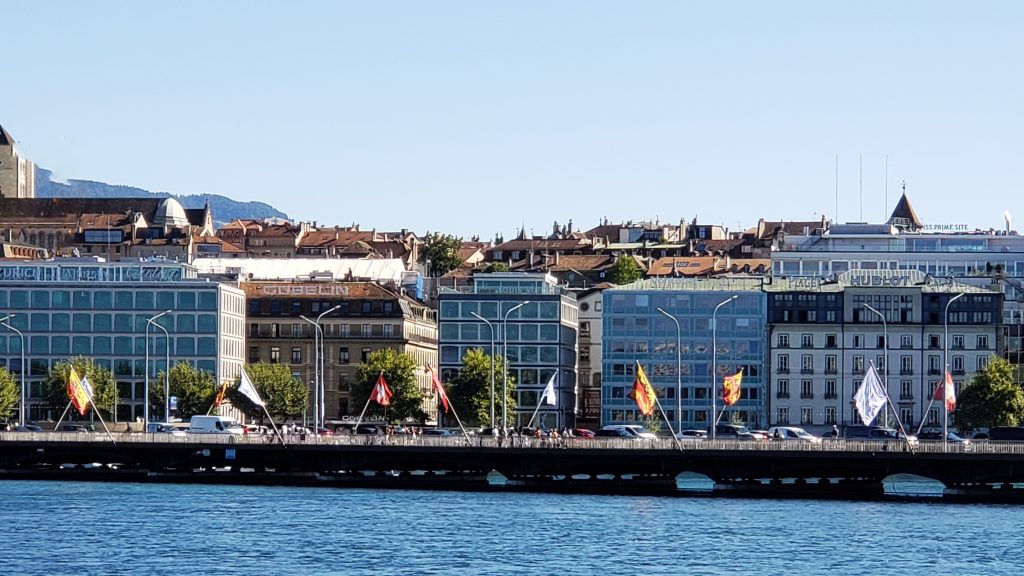
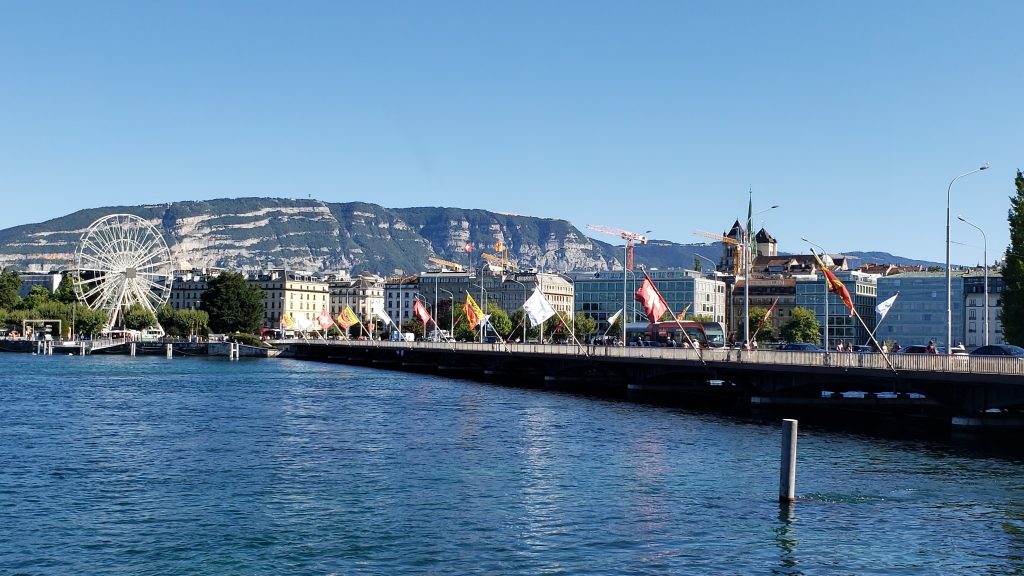
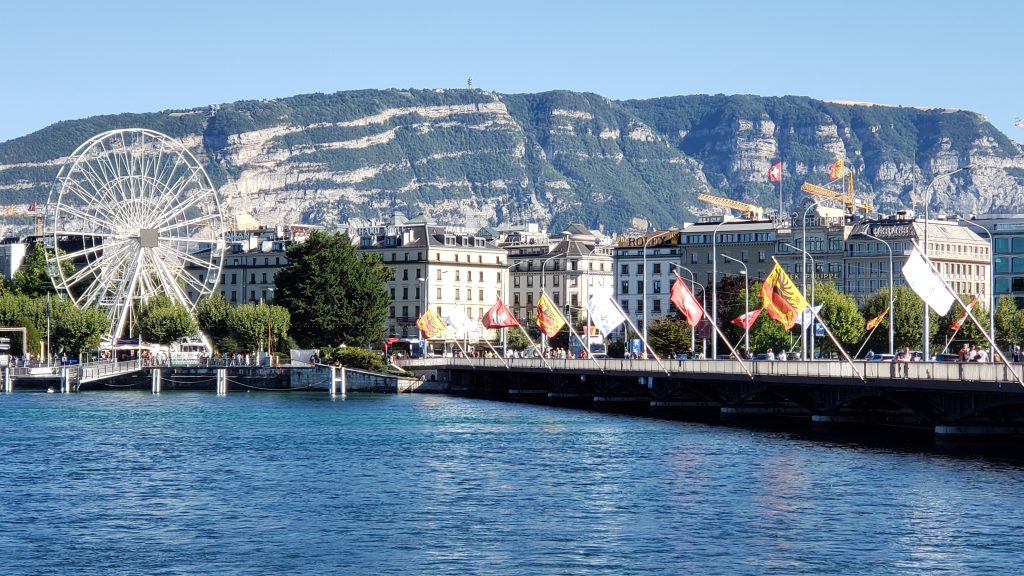
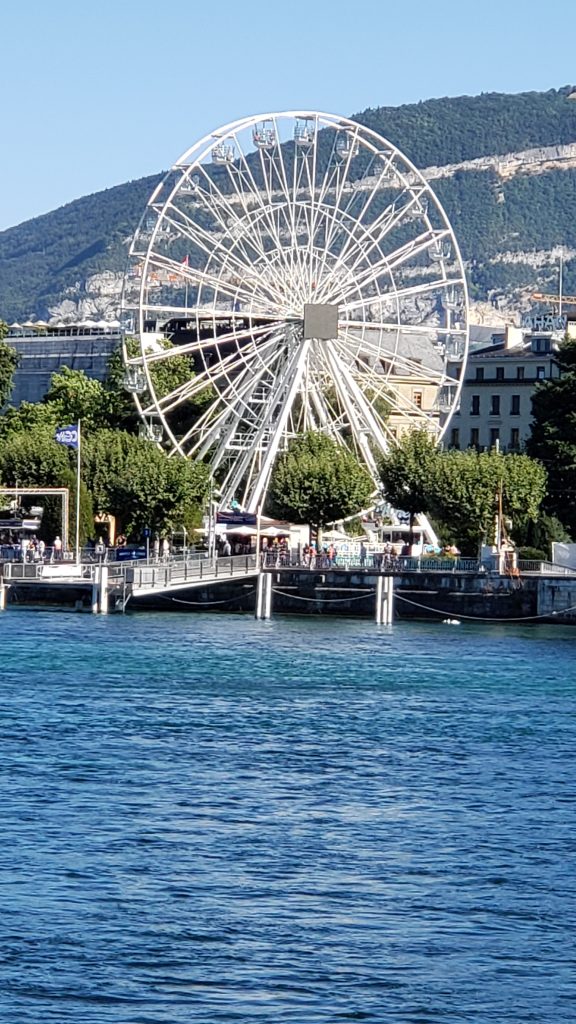
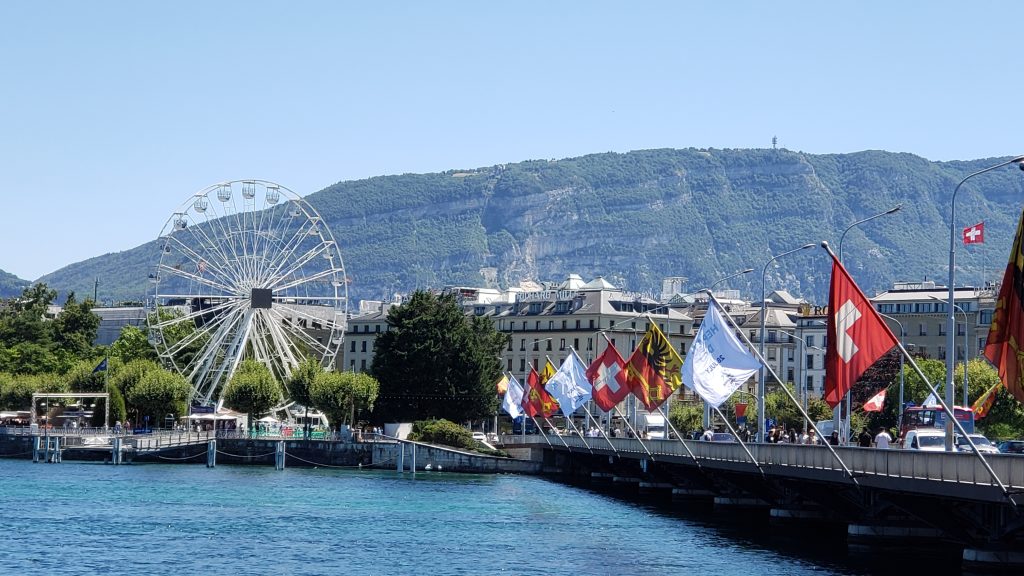
The Pont du Mont-Blanc functions as both threshold and theater. It crosses the Rhône as it emerges from the lake, with panoramic views in all directions. But more than its scenery, this bridge tells you where you are. Flags from every Swiss canton flutter proudly alongside United Nations banners and those of neighboring countries, their colors rippling in the breeze like silk gowns at a diplomatic ball. In summer, a glowing Ferris wheel slowly spins near the water’s edge, children’s squeals mingling with the soft slap of water against stone. At twilight, it reflects in the lake like a turning star.
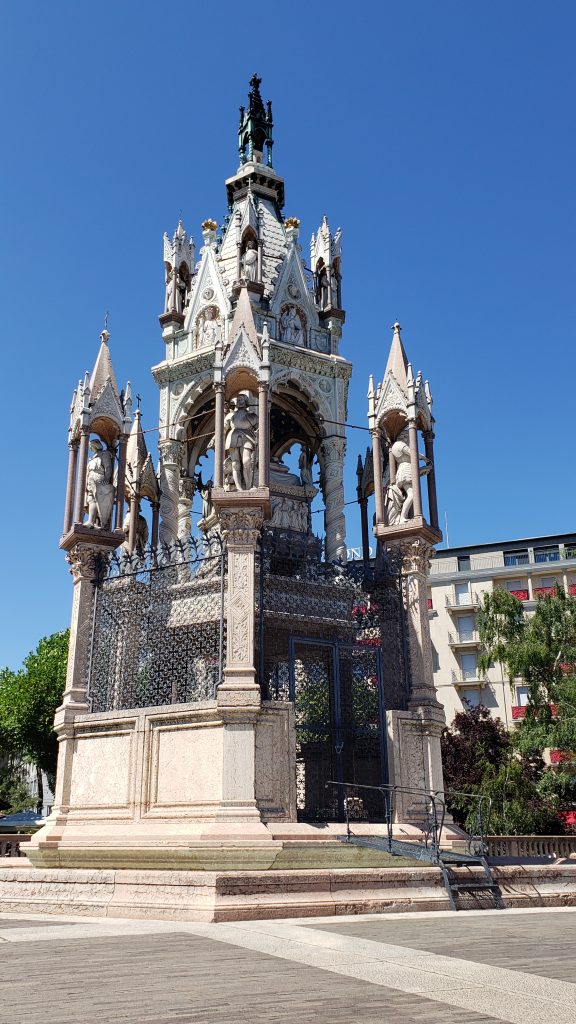
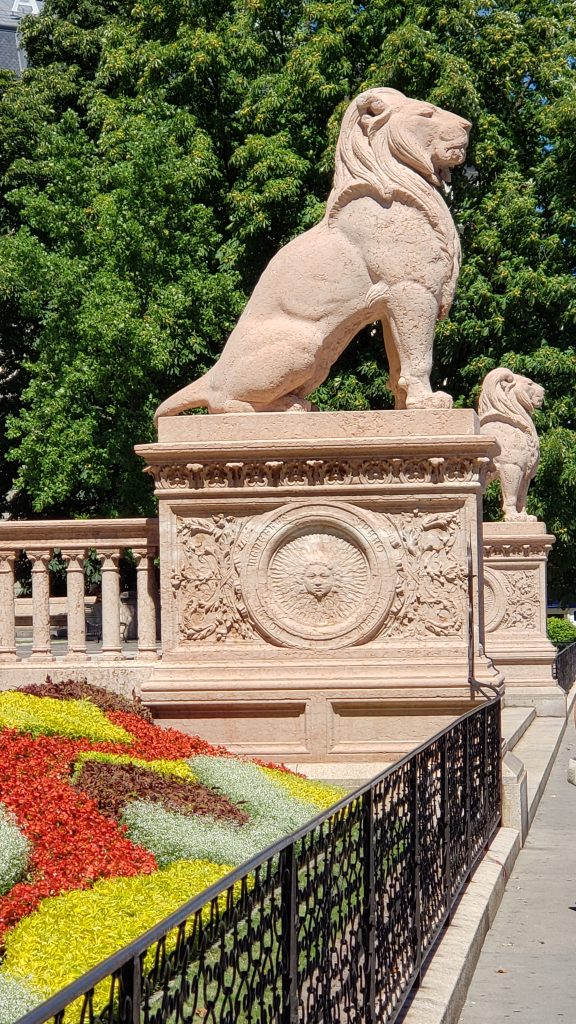
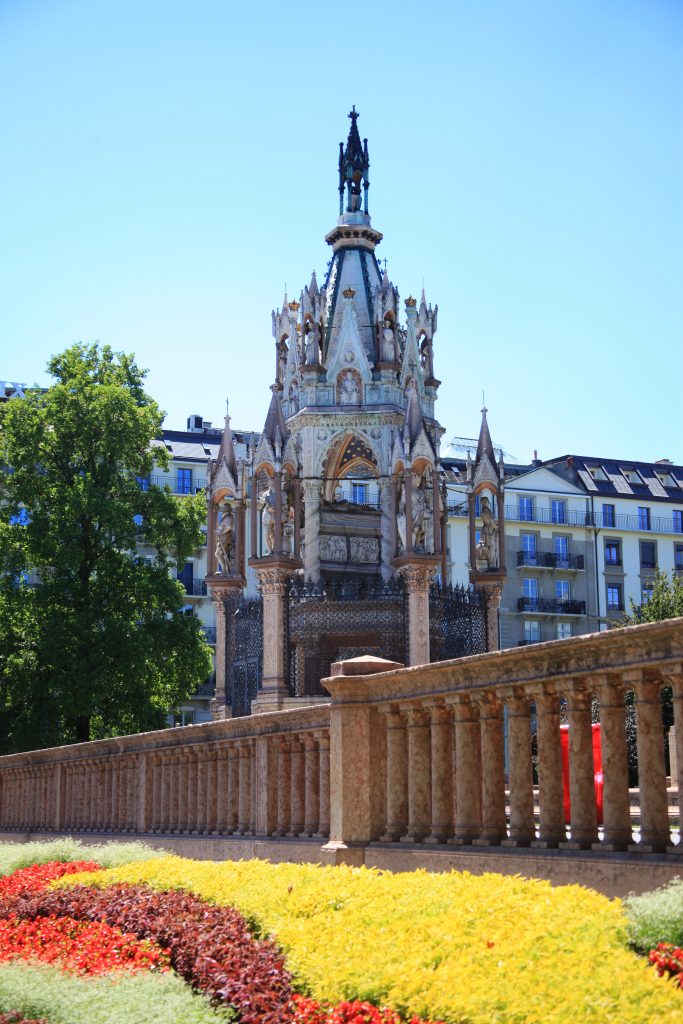
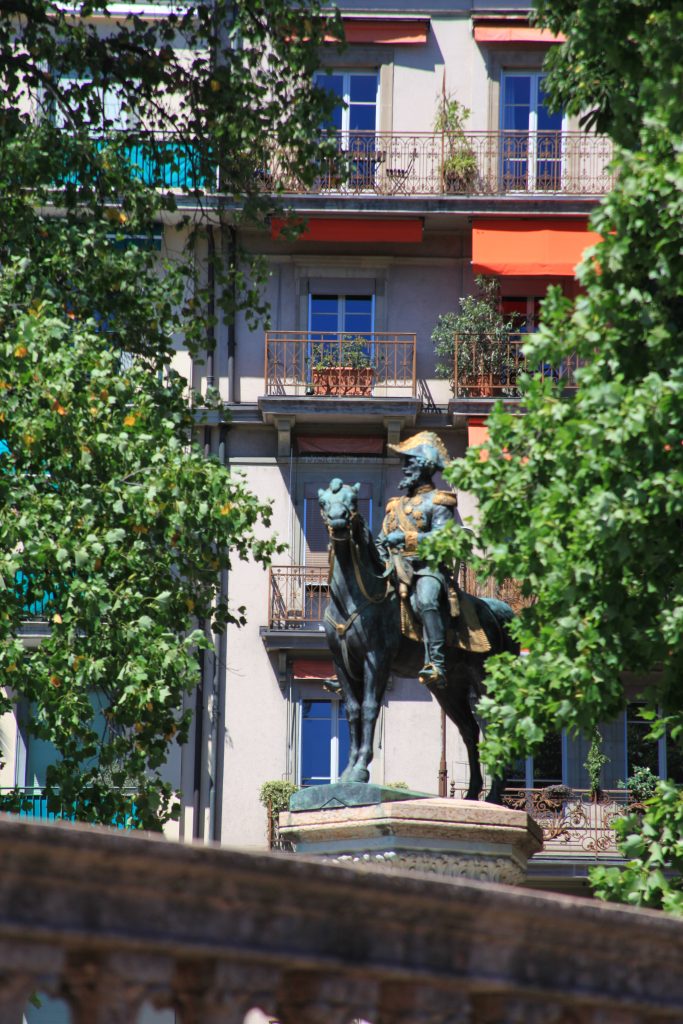
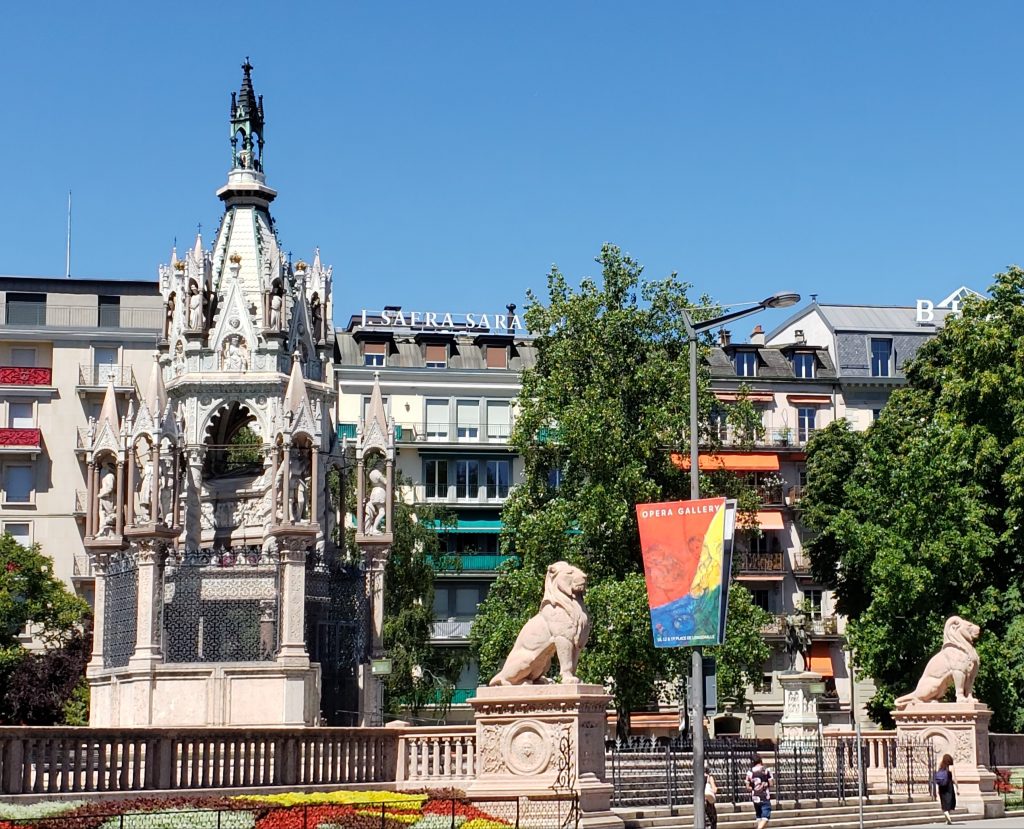
But Geneva’s lakeshore is more than beauty; it is biography. A short walk leads to the Brunswick Monument, a neo-Gothic mausoleum built in 1879 to house the remains of Charles II, Duke of Brunswick, an exile who left his vast fortune to the city in exchange for this flamboyant tomb modeled after Verona’s Scaliger family. One man’s vanity became a city’s legacy.
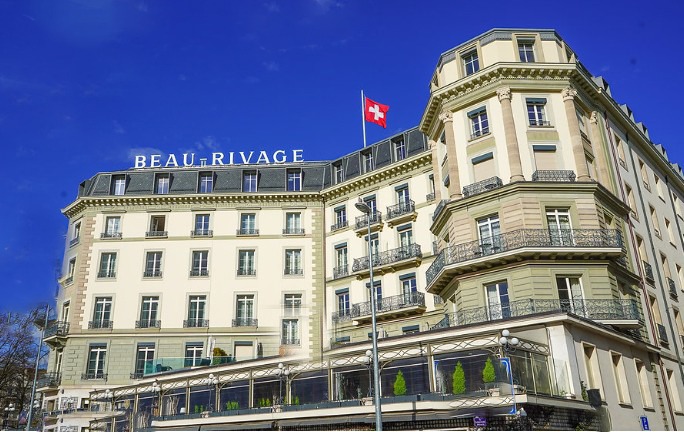
Step into the hushed opulence of the Hôtel Beau-Rivage, opened in 1865 and still favored by discreet global glitterati. Here, Empress Elisabeth dined on the lakeside terrace shortly before being assassinated by an anarchist as she boarded a steamer nearby. The hotel still displays her bloodstained dress in a glass case, tucked discreetly in a corner salon.
League of Nation’s Birthplace
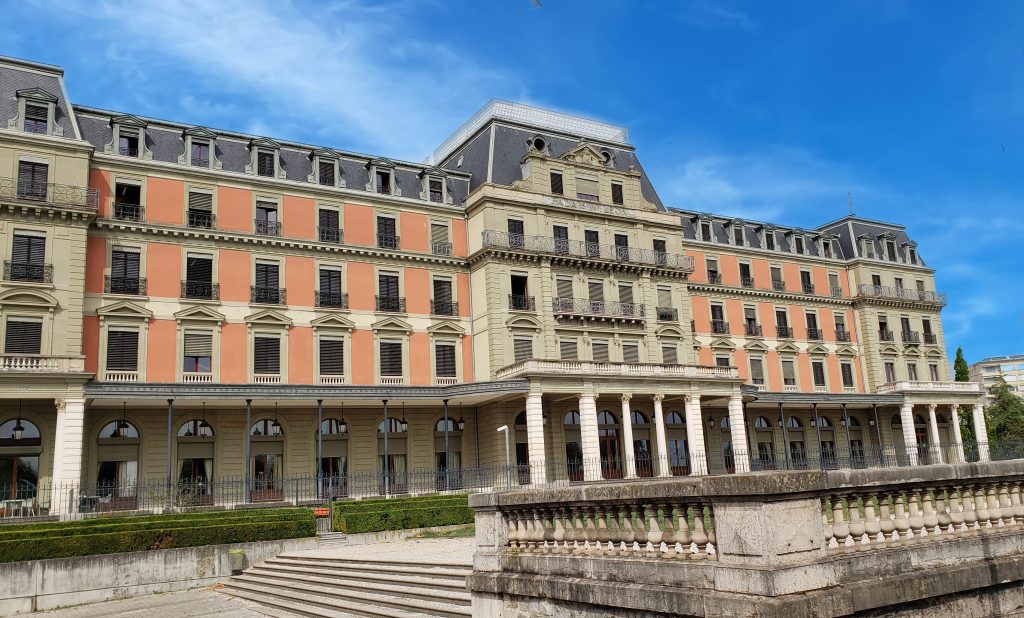
Commissioner for Human Rights. It faces the lake with the dignified restraint of a structure that has witnessed the world argue, weep, and hope within its walls.
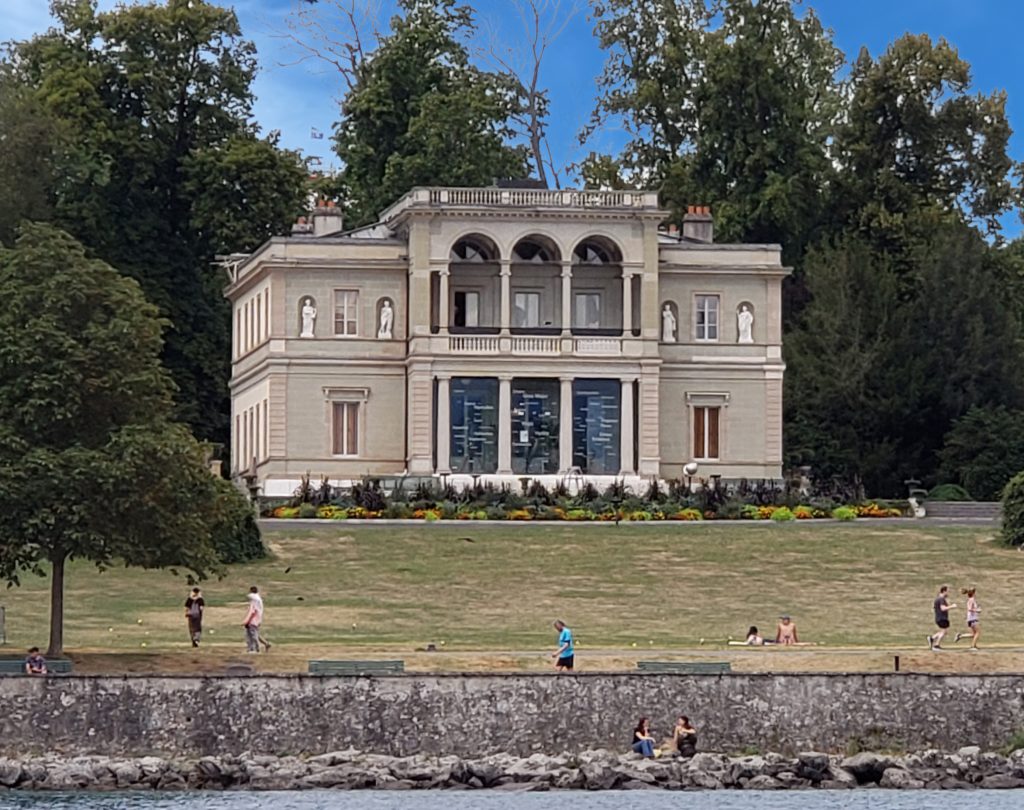
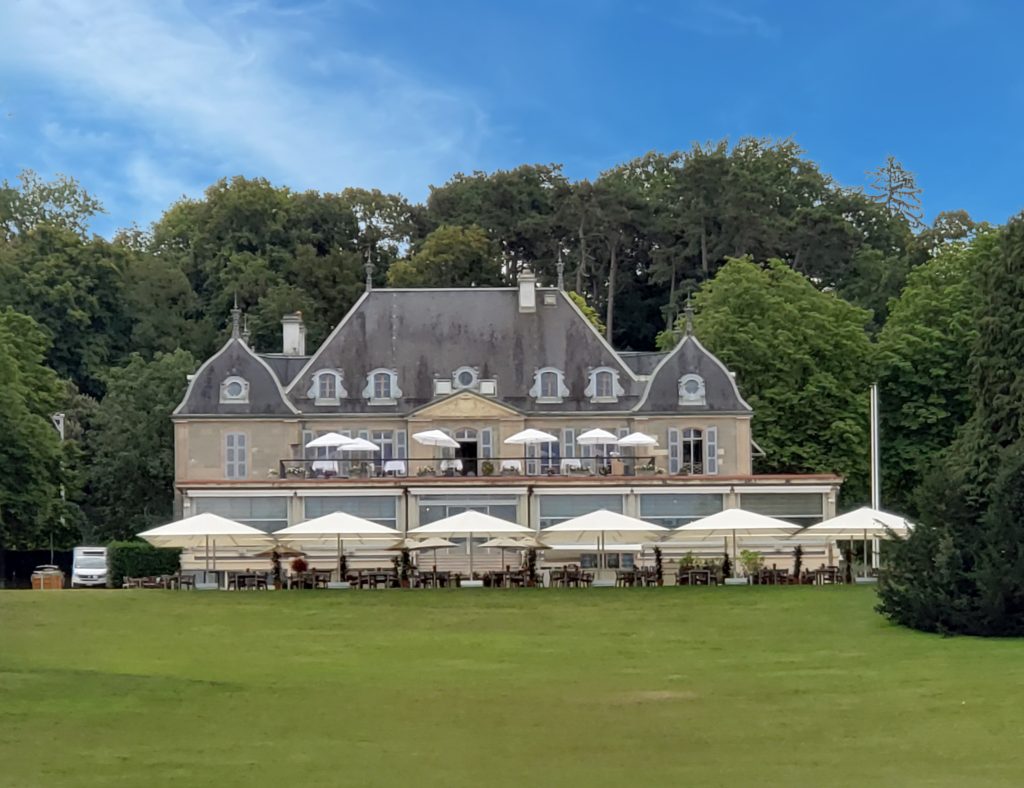
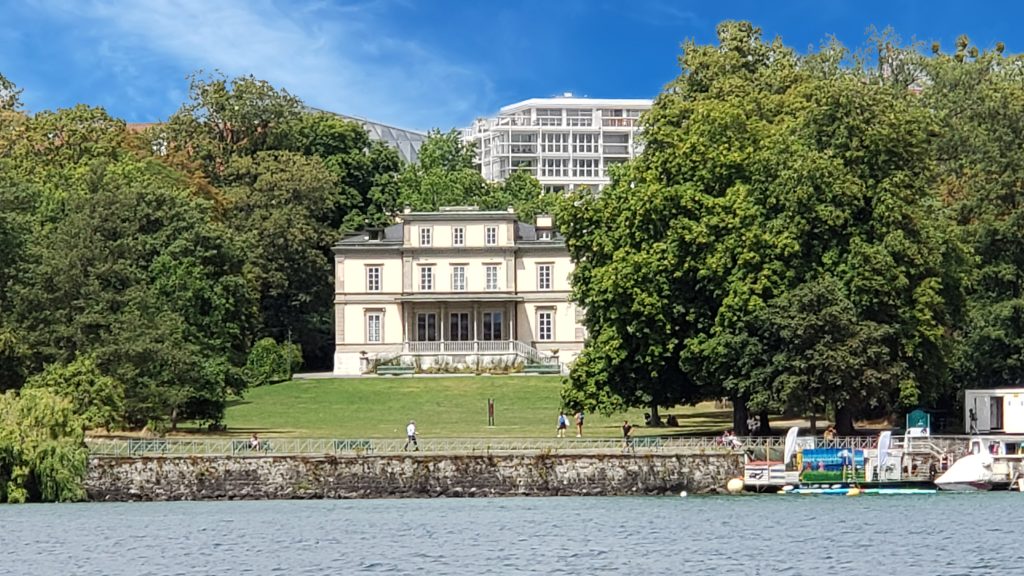
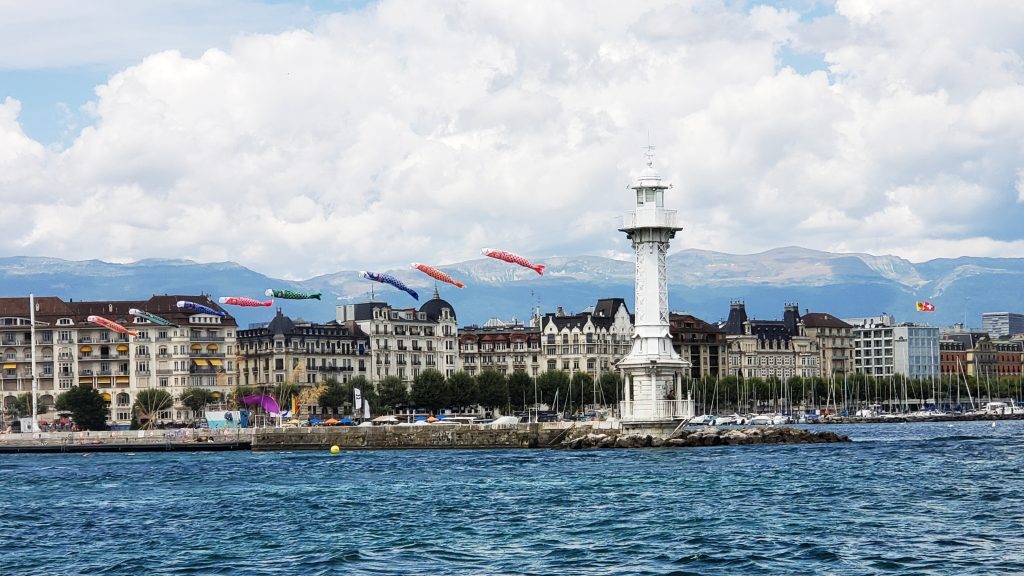
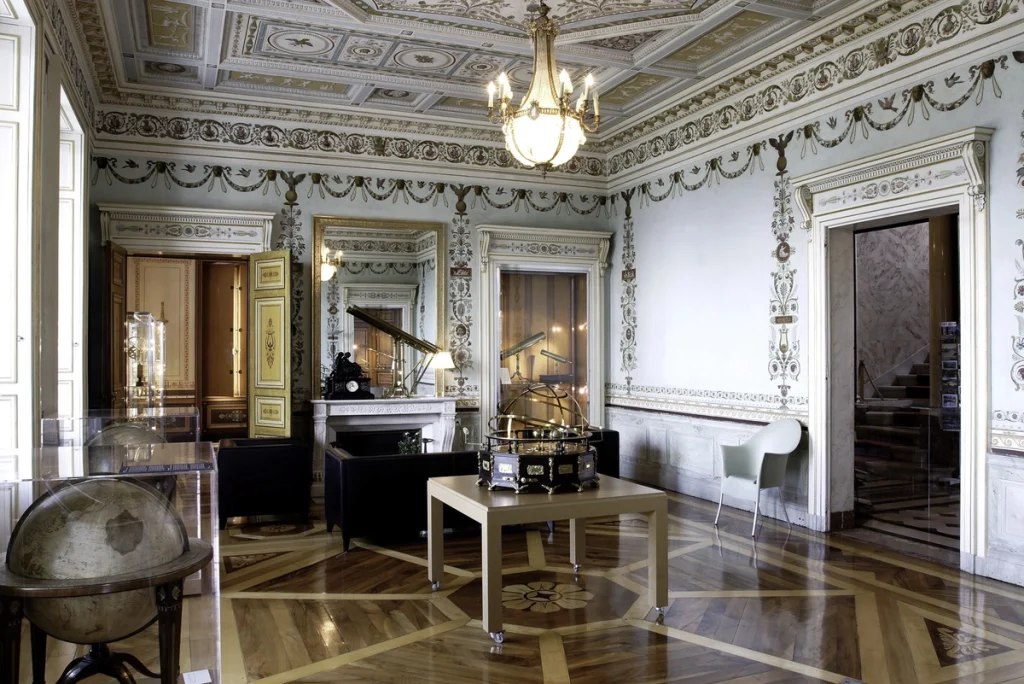
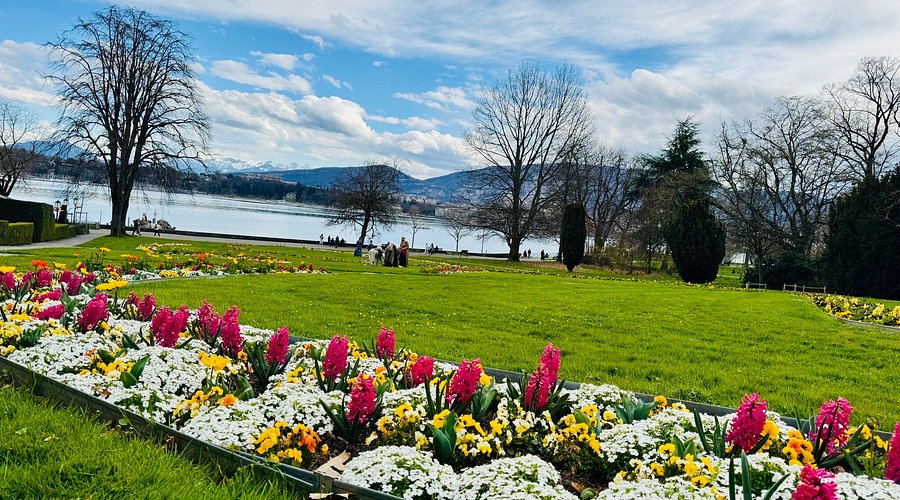
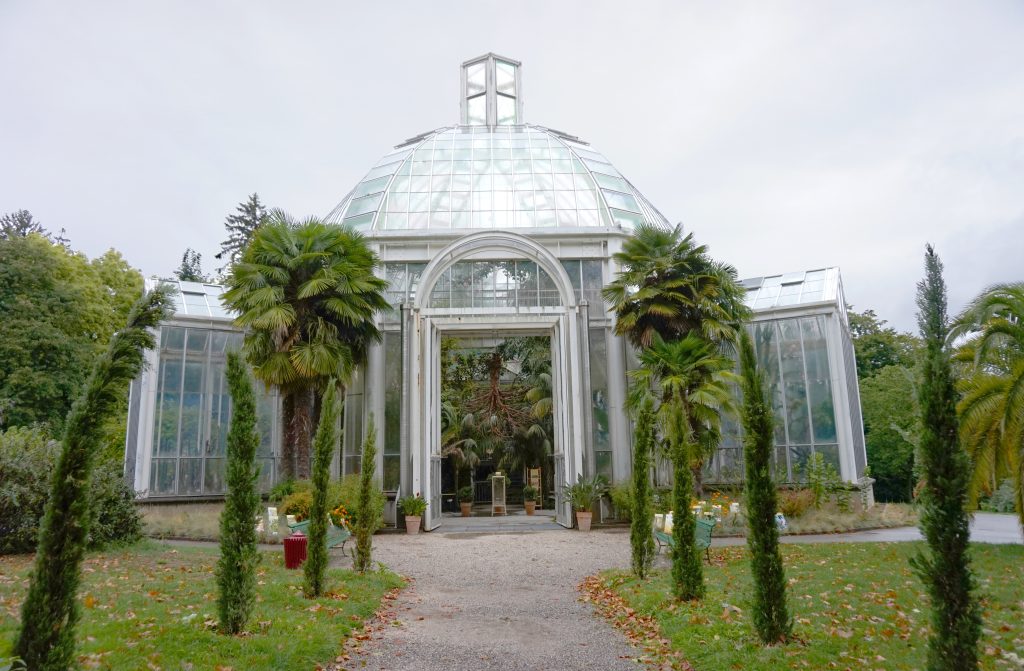
The northward path leads you to the Parc Mon Repos and Parc La Perle du Lac, two jewels of public green space that were once part of Enlightenment-era estates. It’s said Rousseau imagined better societies here while botanists catalogued alpine plants. Between these two parks sits the Muséum d’histoire des sciences, a villa-turned-museum displaying curious celestial instruments, barometers, and 18th-century microscopes that document the age of inquiry. Even farther along the waterfront is Geneva’s Botanical Garden. Established in 1817, this quiet treasure trove holds more than 16,000 species, charming greenhouses, and a delightful zoo of small creatures. It exemplifies Swiss reverence for natural order and beauty, a living encyclopedia by the water.

More to See Around Town
Here are a few more lakeside places to visit:
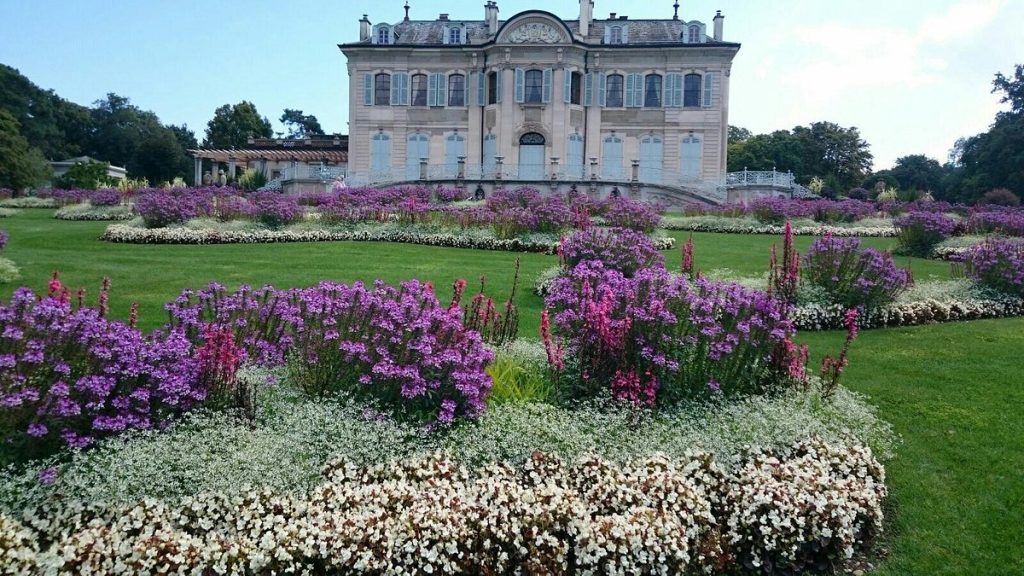
Villa La Grange (Parc La Grange, east of the Jet d’Eau)
This neoclassical mansion in Parc La Grange was the private estate of a wealthy Geneva merchant family. Surrounded by terraced rose gardens and centuries-old trees, the villa has hosted diplomats, writers, and statesmen for centuries, including the 2021 meeting between Presidents Biden and Putin. Inside, original salons and a richly paneled library evoke the quiet opulence of Geneva’s Enlightenment elite.
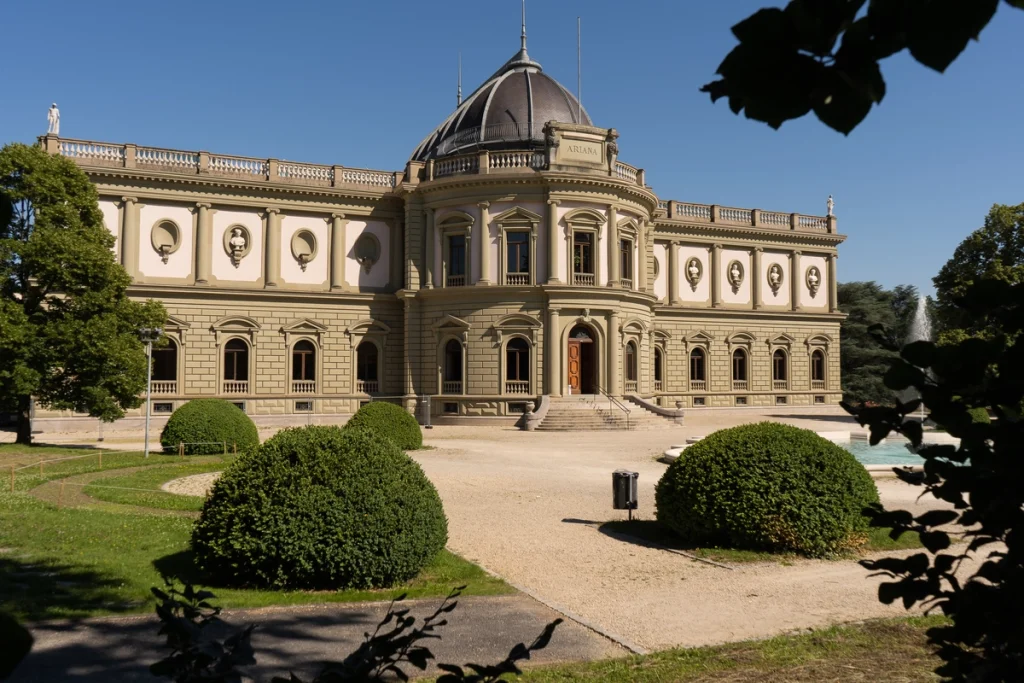
Musée Ariana (Ariana Park, adjacent to the Palais des Nations)
Built in the 1880s by Genevan philanthropist Gustave Revilliod, this palatial Italianate mansion features a majestic rotunda and iron-glass cupola and is devoted to ceramic and glass arts. The museum feels like a porcelain jewel box, with tiled floors, sweeping staircases, and decorative friezes reflecting the city’s Belle Époque refinement. Revilliod, who saw art as a unifier of cultures, lies buried beneath a Lebanese cedar in the surrounding park.
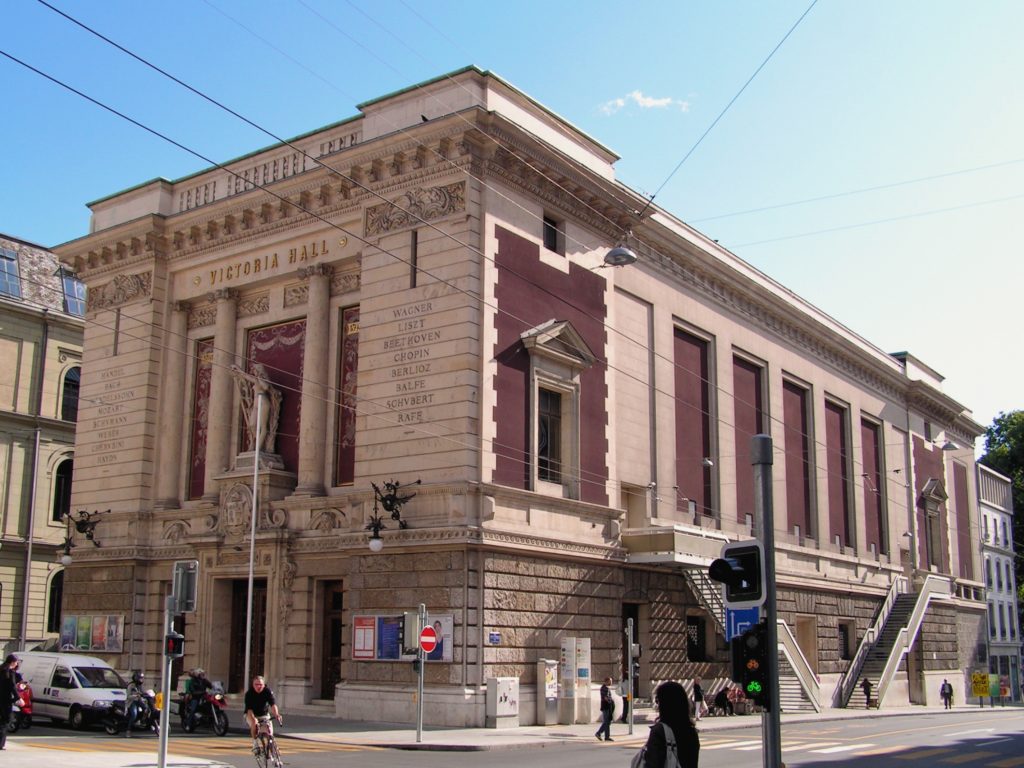
Victoria Hall (Montbrillant neighborhood, near Gare Cornavin)
A premier classical music venue gifted to Geneva in 1894 and named in honor of Queen Victoria, Victoria Hall remains one of the city’s most distinguished stages. The interior, restored after a fire in 1984, features gilded balconies, painted ceilings, and acoustics celebrated by generations of musicians. The city’s enduring love of orchestral grandeur and civic elegance is evident throughout.
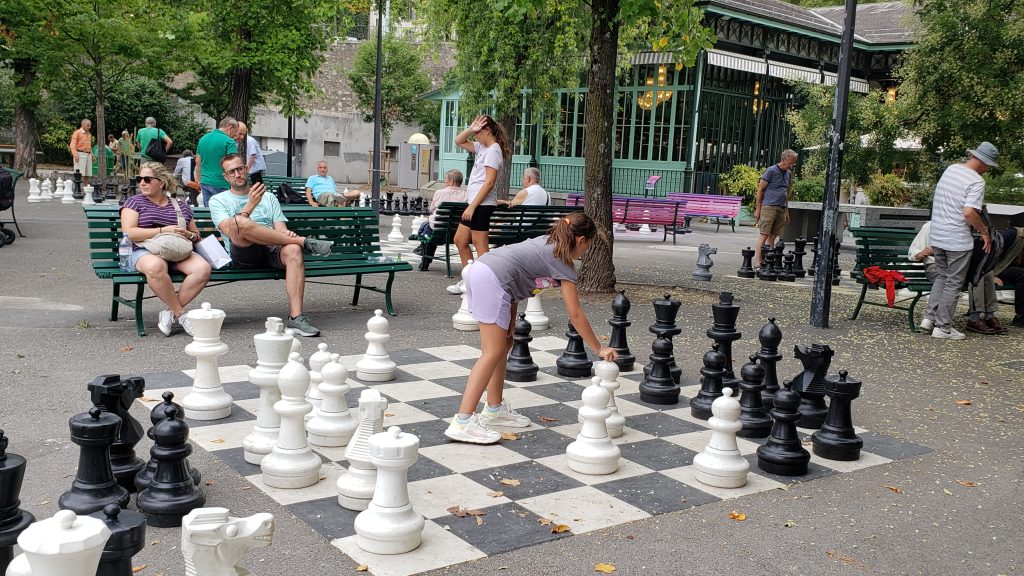
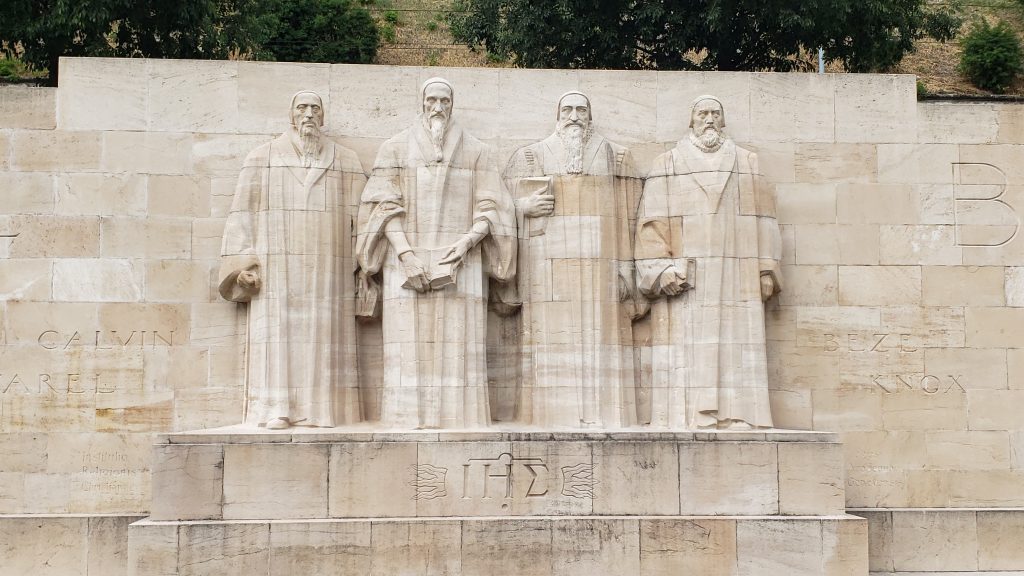
The Reformation Wall (Parc des Bastions, at the base of Old Town) is a grand stone monument carved directly into the old city ramparts, honoring the 16th-century Protestant Reformation leaders Calvin, Farel, Beza, and Knox, who helped shape Geneva into a haven for religious thought and exile. The surrounding park is equally evocative, with giant chessboards, shady promenades, and the stately University of Geneva halls just beyond.
Conservatoire de Musique (Rue de la Vallée, beside Parc des Bastions)
Founded in 1835 in a neoclassical gem just beyond the Old Town, Geneva’s conservatory has been a sanctuary for musical excellence. Its ionic columns and airy interior salons have welcomed students, composers, and legends like Franz Liszt. It remains an elegant echo of Geneva’s 19th-century intellectual and artistic flourish.
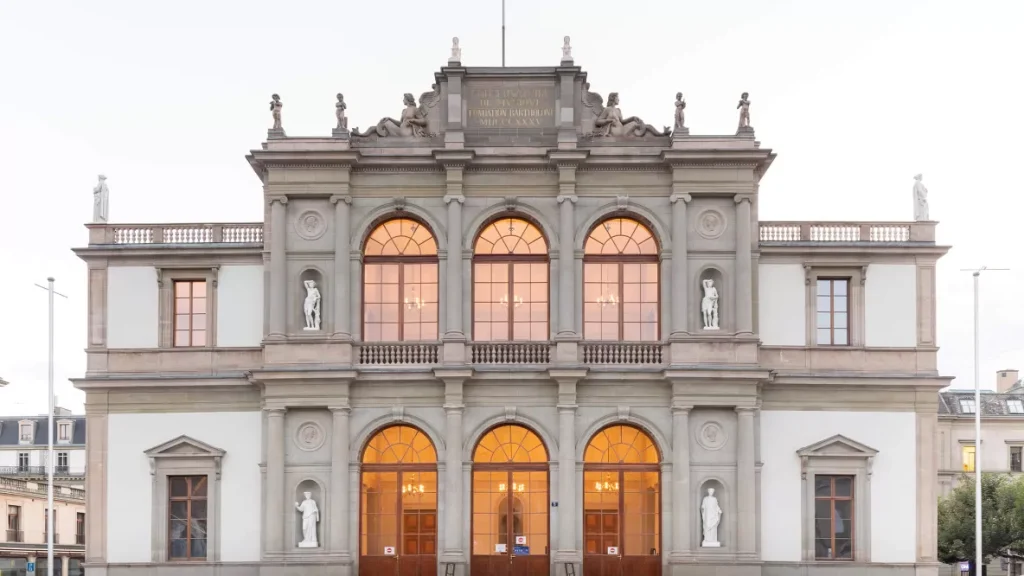
A temple to the fine arts, it is an integral part of the MAH (Musée d’Art et d’Histoire). MAH is a collection of buildings inaugurated in 1910 to unite diverse art collections and human endeavors in one place.
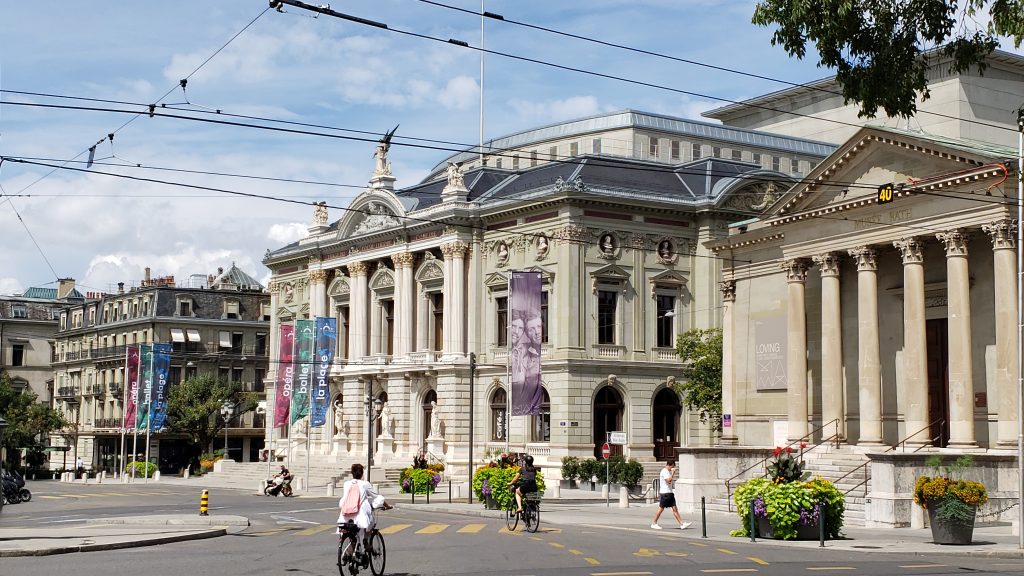
Built in 1843, this historic building on the Pont de la Machine houses watchmaking and artisanal craft workshops.
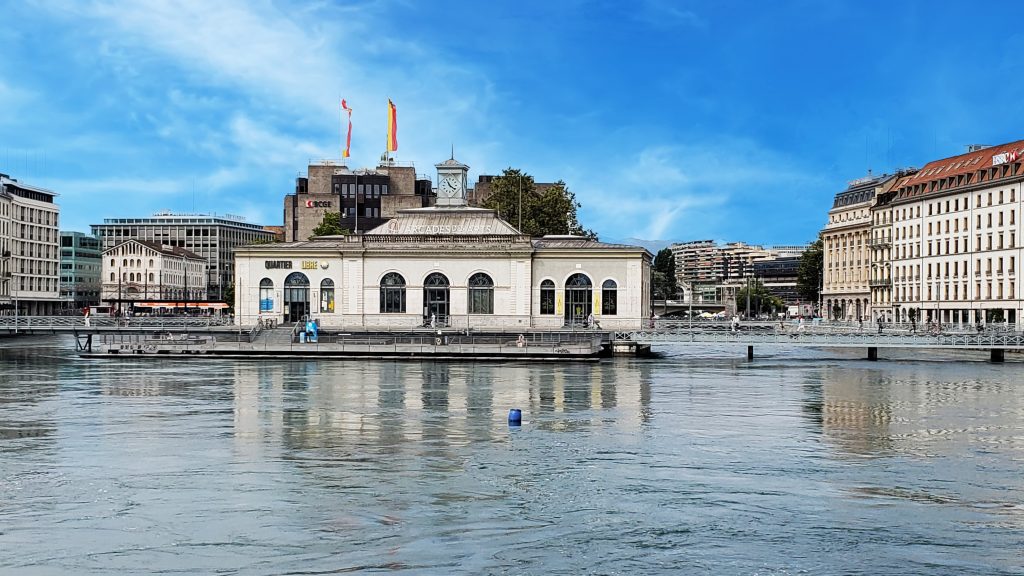
The Bâtiment des Forces Motrices (BFM) is a stunning example of industrial heritage transformed into a cultural center, originally built in the late 19th century as a hydroelectric power station for the city, and now housing a major theater, concert hall, and exhibition spaces.
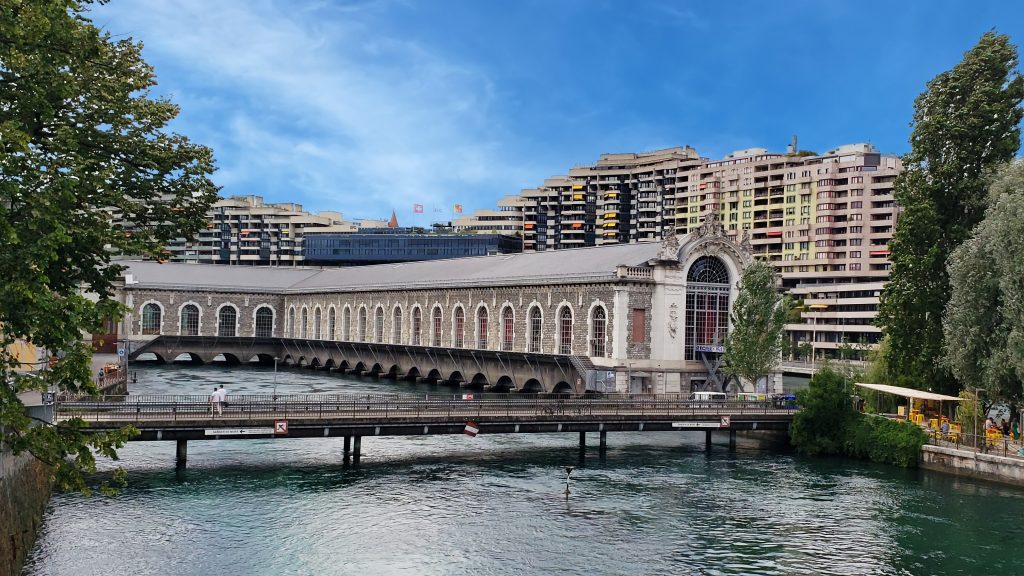
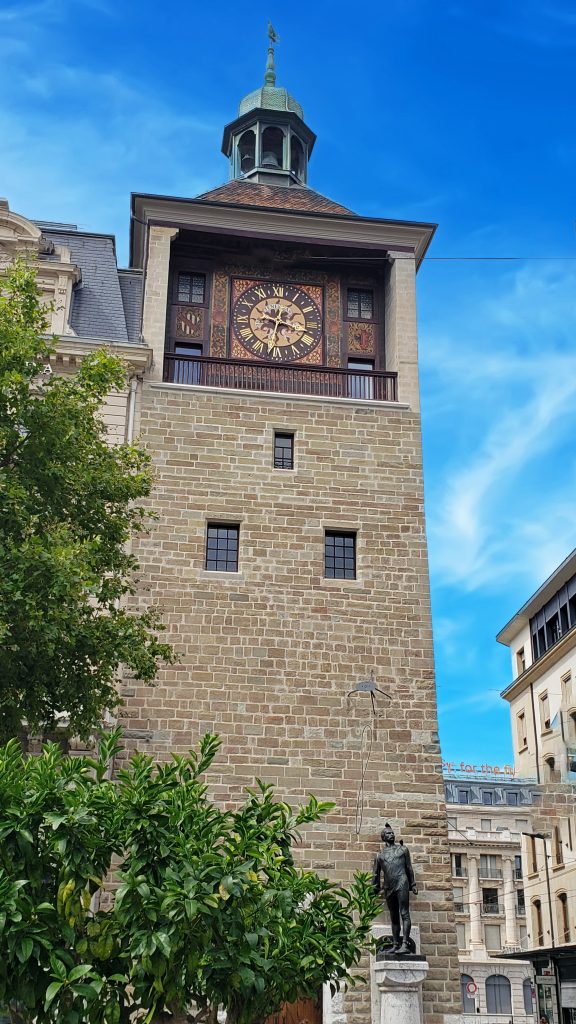
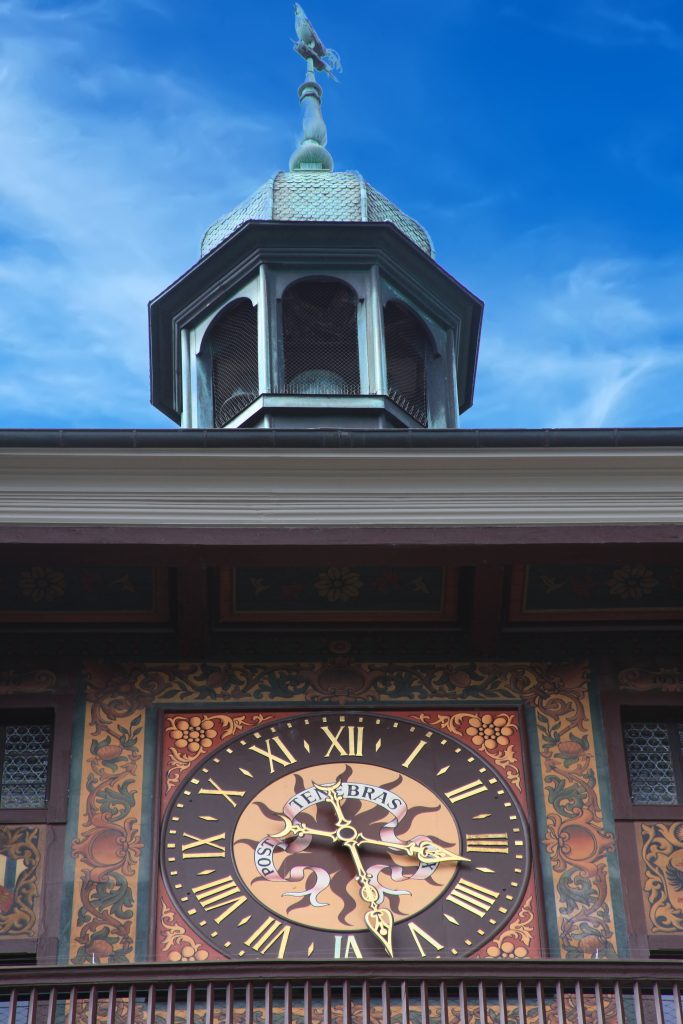
Pont et Tour de l’Ile (Tower on the Island)
A clock has topped this tower in one form or another since 1538. Le Pont de l’Île made Geneva a major European trade crossroads. A bridge once spanned these two rivers here, dating back to Roman times.
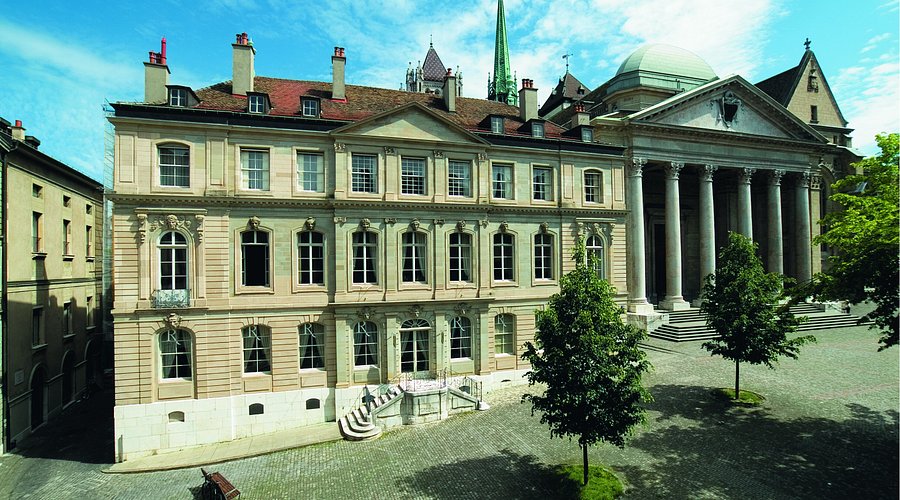
International Museum of the Reformation (Maison Mallet, Cour Saint-Pierre, edge of Old Town)
Though perched just above the Old Town’s historic heart, this refined 18th-century townhouse draws few visitors. Within its carved wood staircases and painted ceilings, a collection traces the city’s defining role in the Reformation. The house, once home to prominent Calvinist families, offers a quiet window into the domestic life of Geneva’s patrician past.
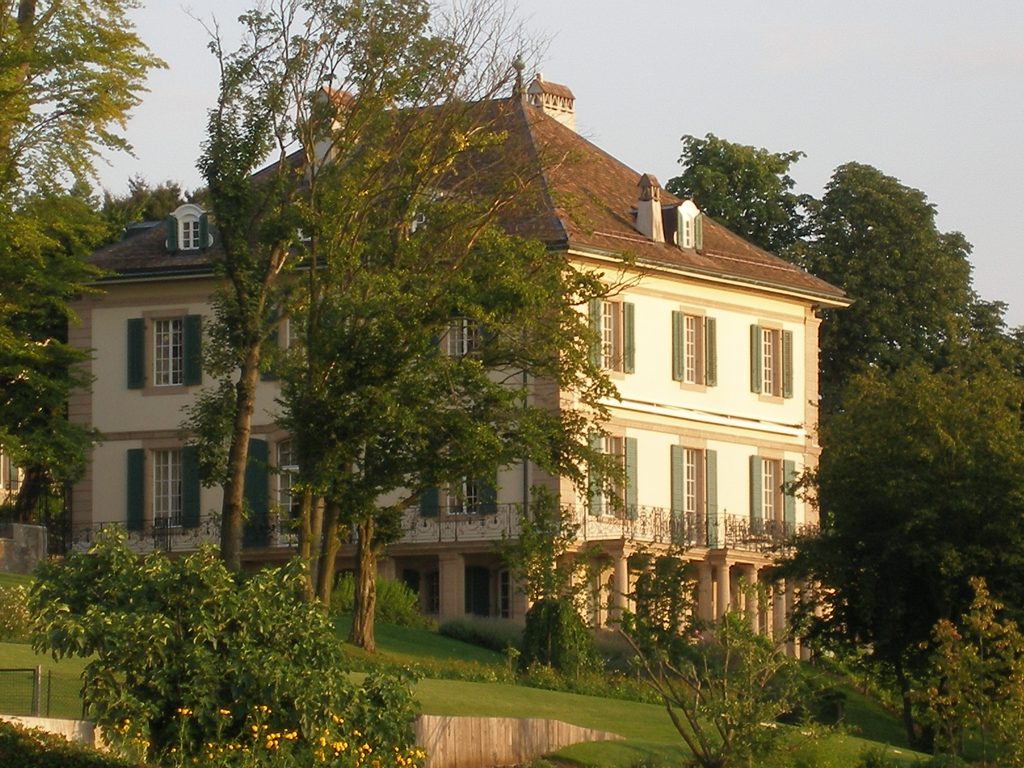
Villa Diodati, a grand house in Cologny perched above the lake
It was in the summer of 1816 that one of the most iconic literary interludes in European romanticism unfolded, one whose ripples reached well beyond poetry and into the very birth of modern horror. George Gordon Byron, already infamous for his romantic entanglements and searing verse, fled England in self-imposed exile. Political scandal, personal debts, and a failed marriage rendered him toxic to London society. Joined by fellow poet Percy Bysshe Shelley, Mary Wollstonecraft Godwin (later Mary Shelley, author of Frankenstein), and Mary’s stepsister Claire Clairmont—who had followed Byron to Geneva after a brief affair—they created scandal, poetry and stories. What unfolded during that rainy summer would become legend.
Geneva’s Beguile
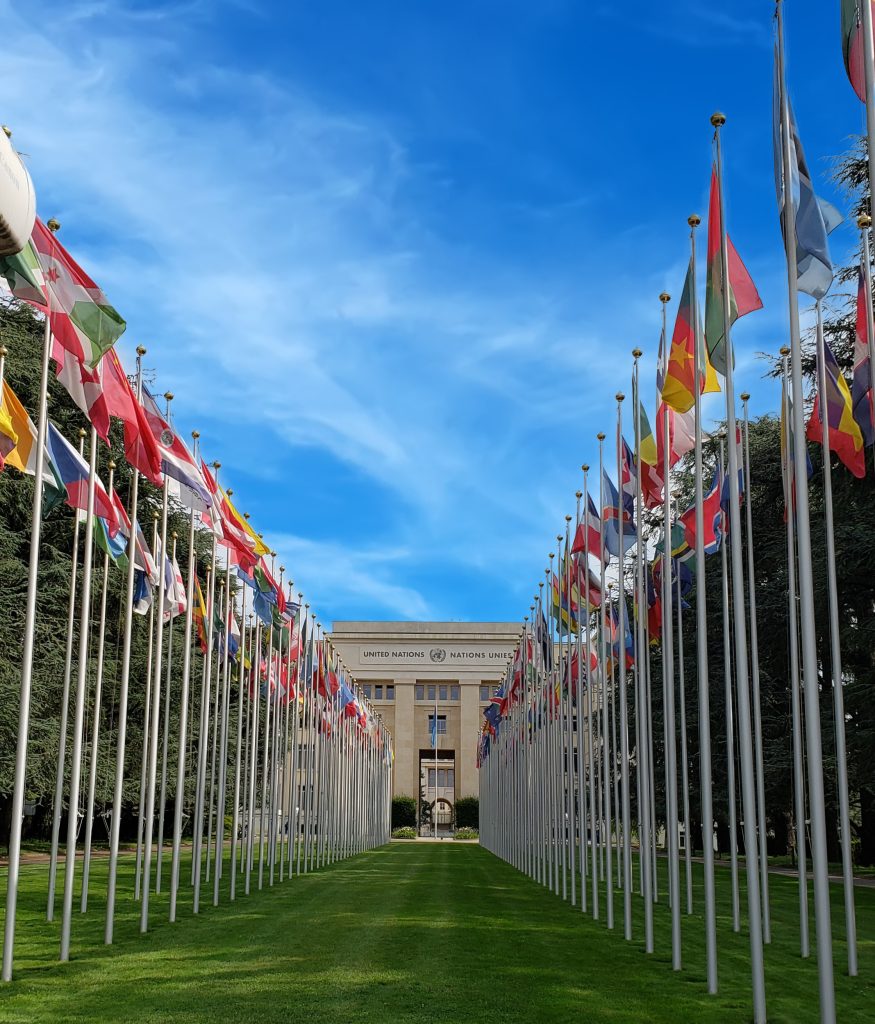
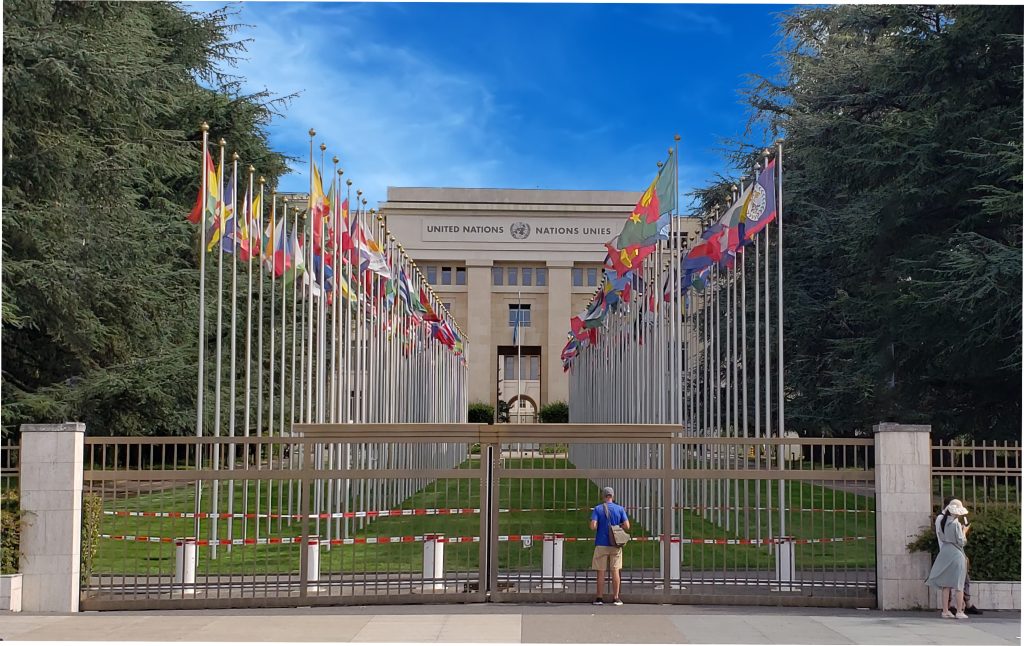
Today’s Geneva balances its dual legacy: worldly yet intimate, opulent yet understated. Along the water’s edge, you might spot a Saudi princess in sunglasses beneath a wide-brimmed hat, a Swiss banker gliding by on a Brompton bicycle, or a café waiter handing a glass of chilled Chasselas to a British historian dog-earing a paperback. All drawn, like you, to the water. Geneva has always drawn its identity not just from who governs it, but from who lingers here, and always, the city turns outward, from the stately porticoes of its waterfront buildings to the ribbons of flags fluttering along the Place des Nations. The lake remains Geneva’s mirror and heartbeat. It reflects the city’s centuries of grace and quiet grandeur.
Where to Stay in Geneva, Switzerland
For business travelers and diplomats, waterfront hotels near Lake Geneva provide convenient access to the international organizations around the airport and UN quarters. The Hotel President Wilson and similar luxury properties in this zone offer direct access to major corporate centers, though rooms carry premium rates year-round. If your budget permits, these locations eliminate transit needs during intensive work schedules.
The Old Town neighborhoods of Vieille Ville and Carouge have guesthouses and smaller hotels within walking distance of the cathedral, historic streets, and local restaurants where residents actually eat. These quieter areas feel more grounded than the commercial zones, with rates typically 30 to 50 percent lower than lakeside properties. The trade-off is that you’ll rely on trams and buses to reach the international quarter, though Geneva’s transit runs efficiently.
Mid-range chain hotels line the Cornavin train station area and neighborhoods just south of the city center. This location works well if you’re using the train or prefer straightforward logistics without the Old Town’s character or the waterfront’s expense. You’re close to restaurants, shops, and transit in every direction.
For longer stays, furnished apartments in residential neighborhoods like Plainpalais or Les Paquis offer kitchen access and the feeling of living as a resident rather than just passing through. Geneva’s rental market is pricey but stable, and having your own space lets you settle into the rhythm of a place where service and discretion are woven into daily life rather than reserved for tourists.
Recommended Reading
Historic Novels
- The Swiss Account by Paul Erdman: A financial and political thriller rooted in Switzerland’s banking system and long tradition of neutrality.
- The Elusive Flame by Kathleen Woodiwiss: A sweeping romance with scenes in aristocratic European cities that mirror Geneva’s vanished world of royal retreats.
- The Magic Mountain by Thomas Mann: A landmark historical novel set in a Swiss sanatorium that explores European society on the eve of World War I.
- Le Crime de l’Hôtel Saint-Flon by Olivier May: A mystery unfolding in 19th-century Geneva’s upscale society, where secrets hide behind lace curtains and lakefront estates.
Nonfiction / History
- A Concise History of Switzerland by Clive H. Church; Randolph C. Head: A clear and authoritative overview of Swiss history from its medieval origins to the modern federal state.
- Calvinby F. Bruce Gordon: The book explores Calvin’s theology, political influence, and role in shaping Geneva’s civic identity. It is a standalone scholarly work that situates Calvin within Swiss and European history.
Tours to Consider:
- Geneva Highlights 2-Hour Introductory Tour
- Best of Geneva City Tour with optional boat cruise
- Geneva Private Walking Tour with a Local Guide