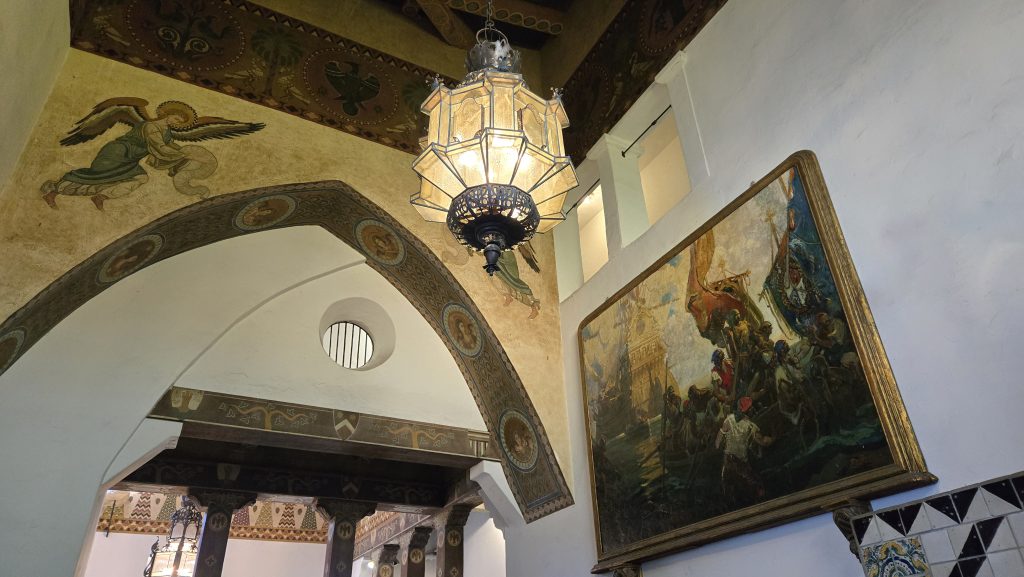
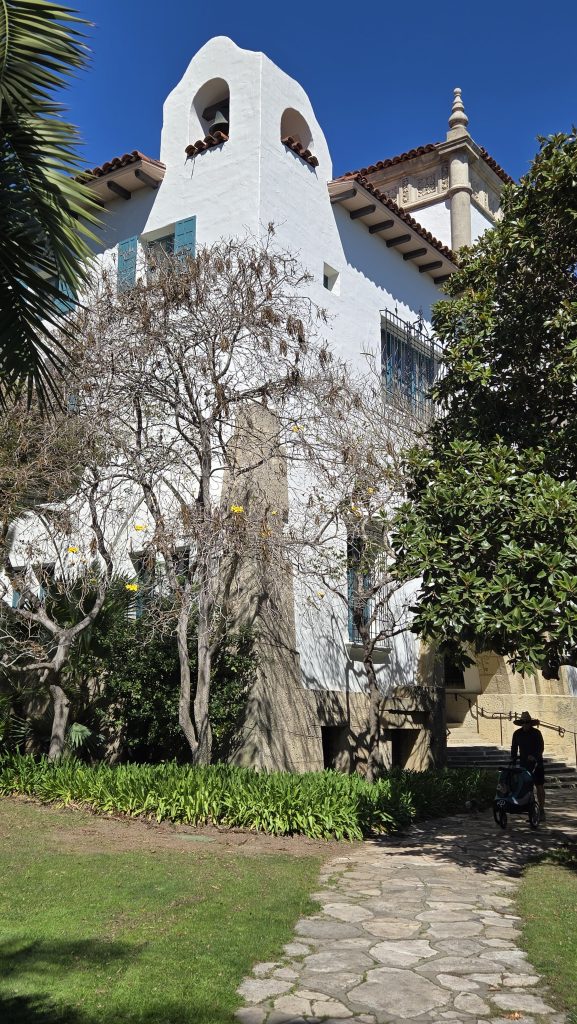
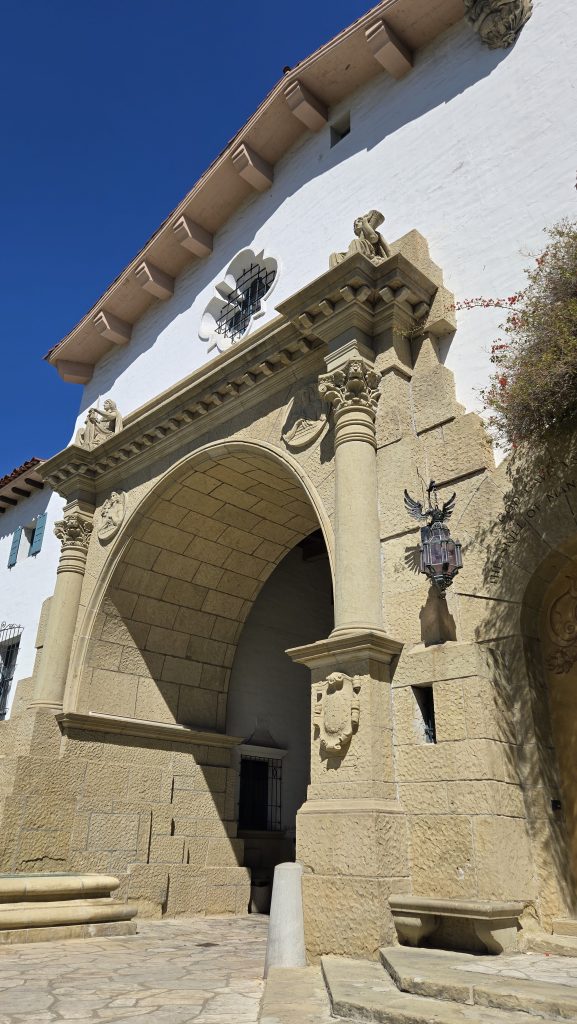
It may be one of the few civic buildings in the United States where you feel tempted to whisper, as if inside a cathedral. Step beneath the archway of the Santa Barbara Courthouse, and you’re immediately struck by its grandeur—both architectural and temporal, with centuries of history etched into every stone. Here, history is not confined to records and rulings, but dances across ceilings, echoes in tiled stairways, and unfurls in vast murals that retell California’s complex past with each brushstroke.
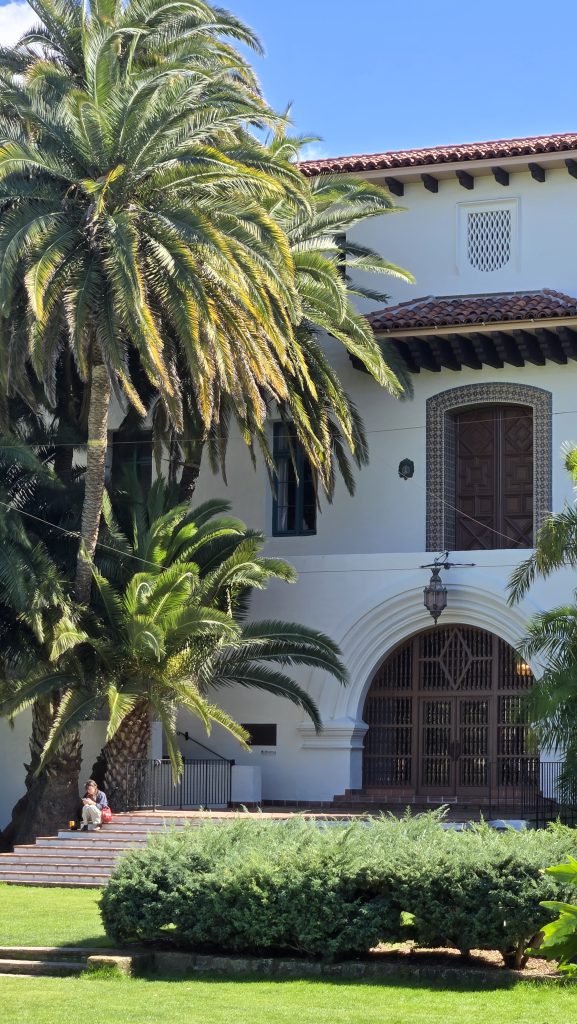
The Santa Barbara County Courthouse, completed in 1929, replaced its Greek Revival predecessor, which a devastating 1925 earthquake had reduced to rubble. But what rose in its place was not merely a replacement, but a reinvention. Drawing from Santa Barbara’s Spanish colonial roots and Andalusian influences, the new courthouse became a dazzling homage to Mediterranean Revival architecture, complete with red tile roofs, wrought iron, painted ceilings, and hand-glazed tiles.
Designed by William Mooser III and recognized as one of the finest examples of its kind in the U.S., the courthouse was declared a National Historic Landmark in 2005. But its story goes beyond architecture. It is a narrative of reinvention, resilience, and aesthetic ambition, a city rebuilding while choosing to remember its heritage in color and stone.
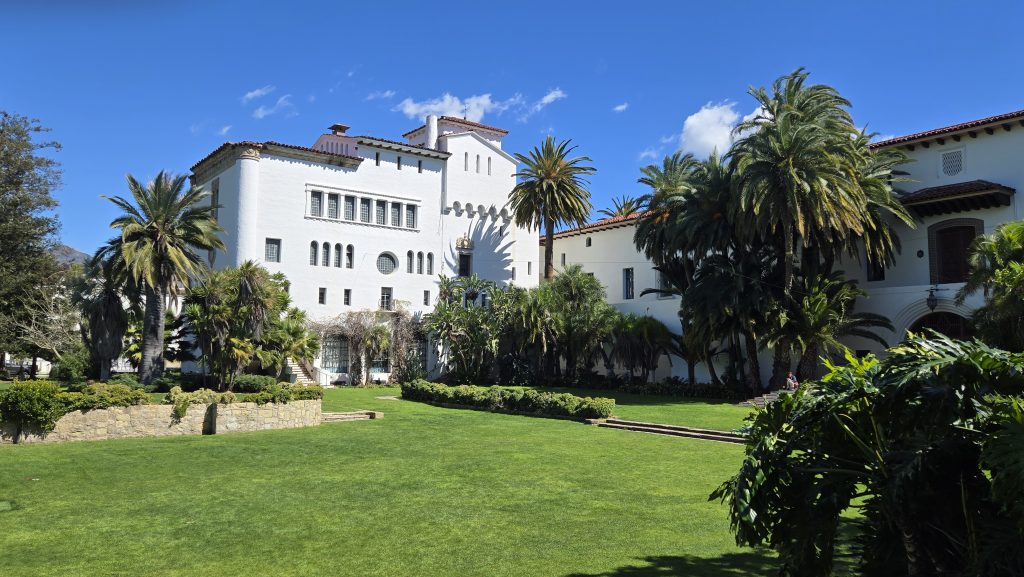
Anacapa Archway and Surrounding Sculptures
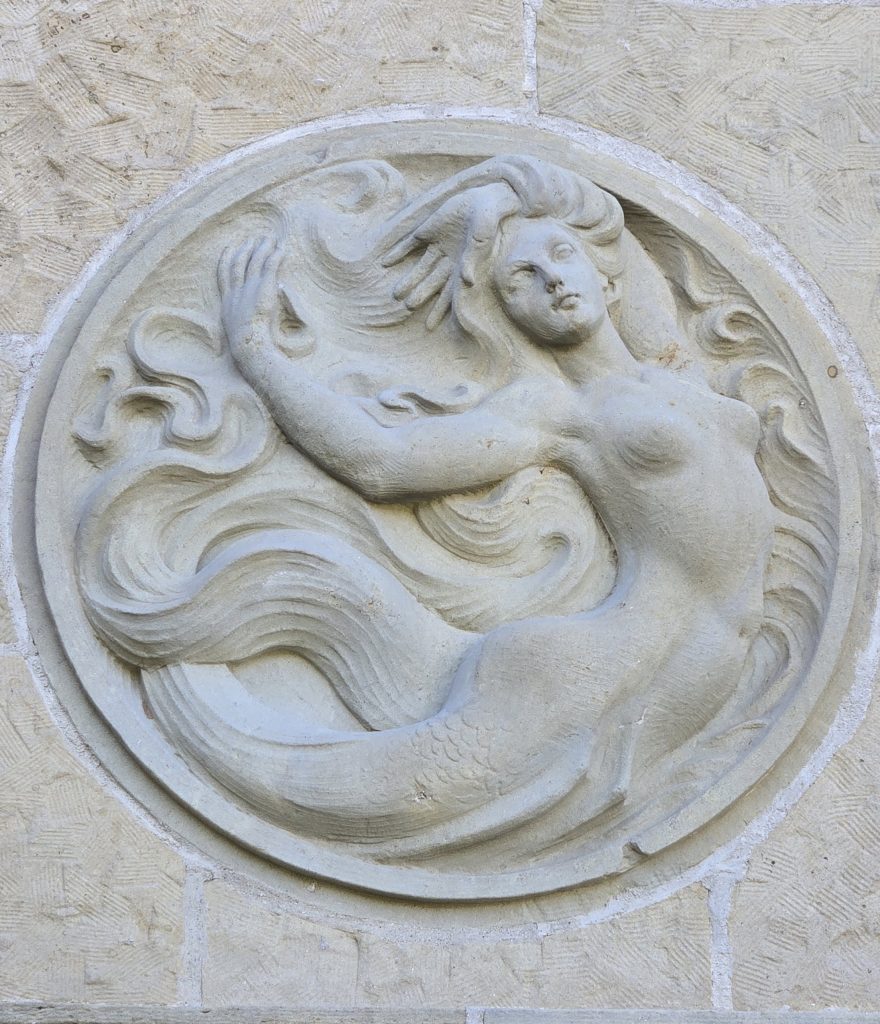
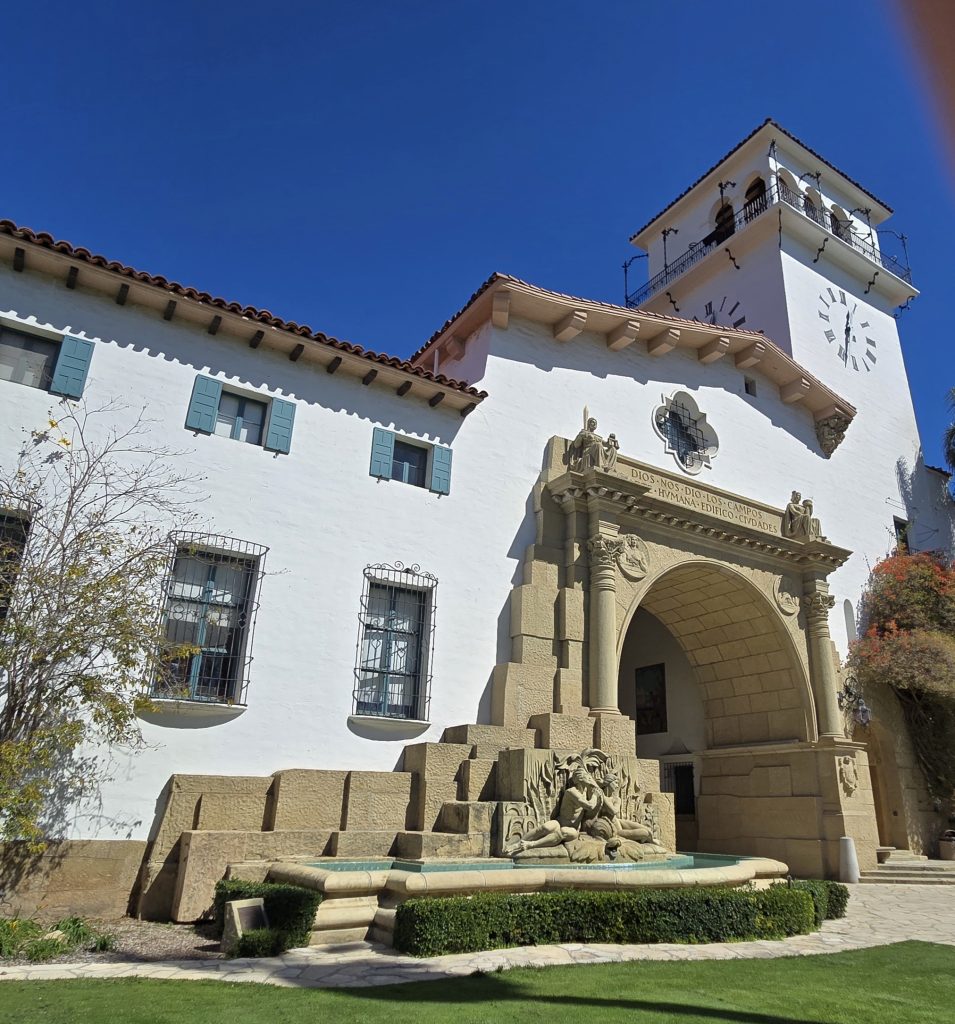
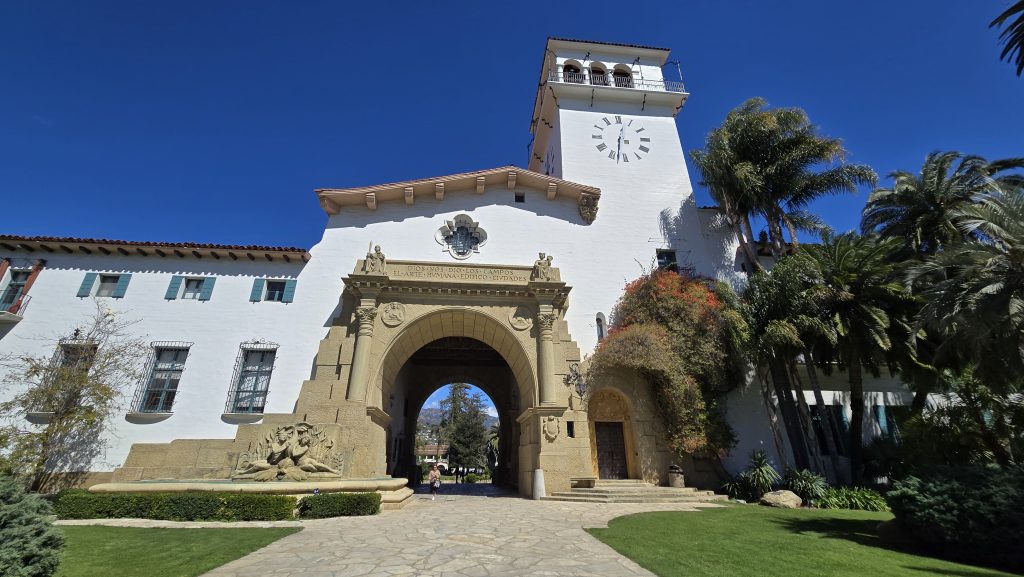
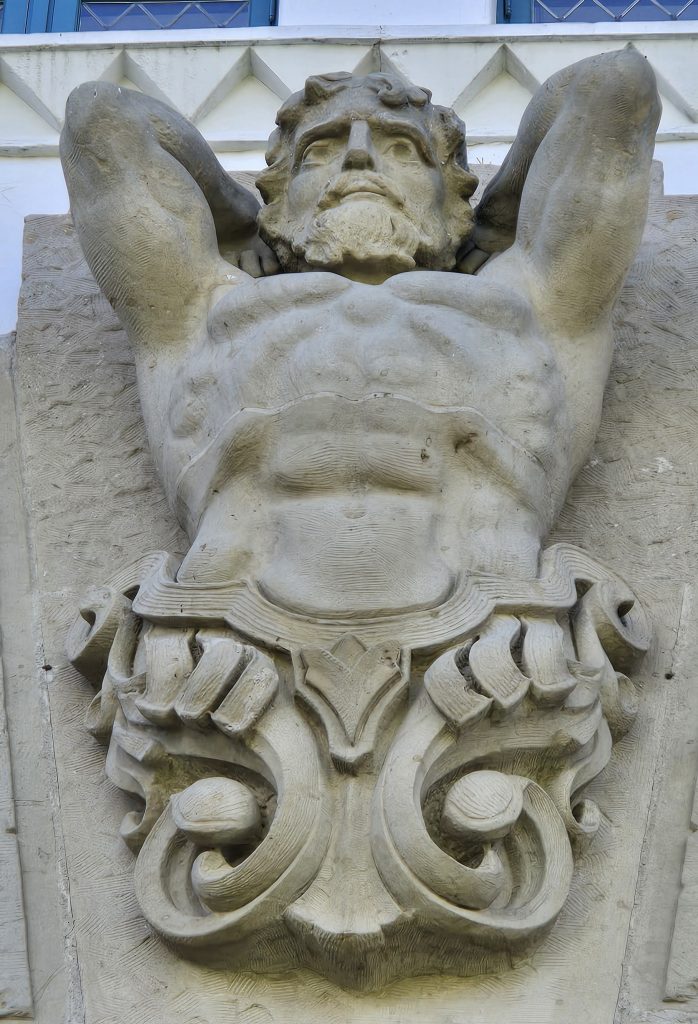
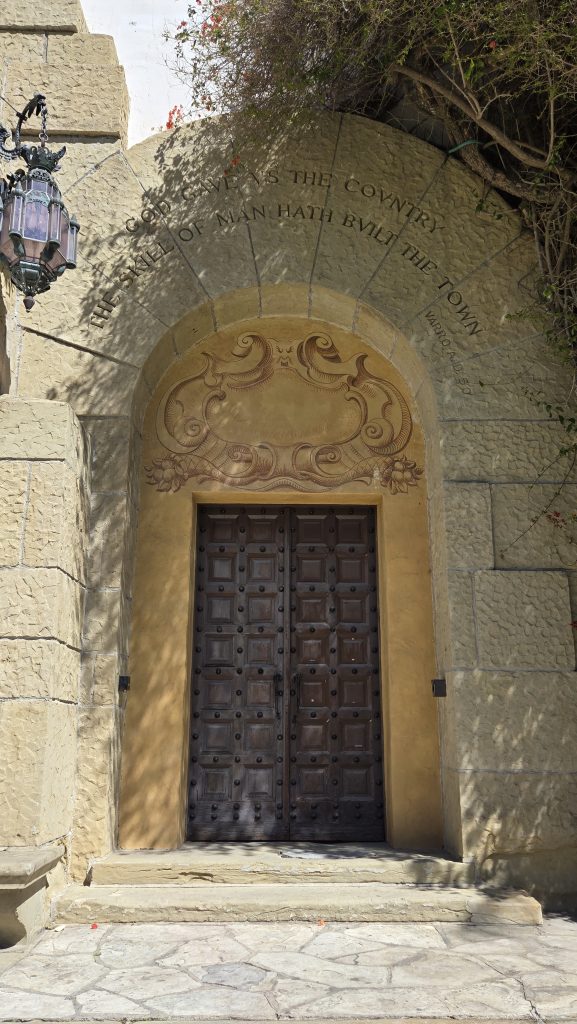
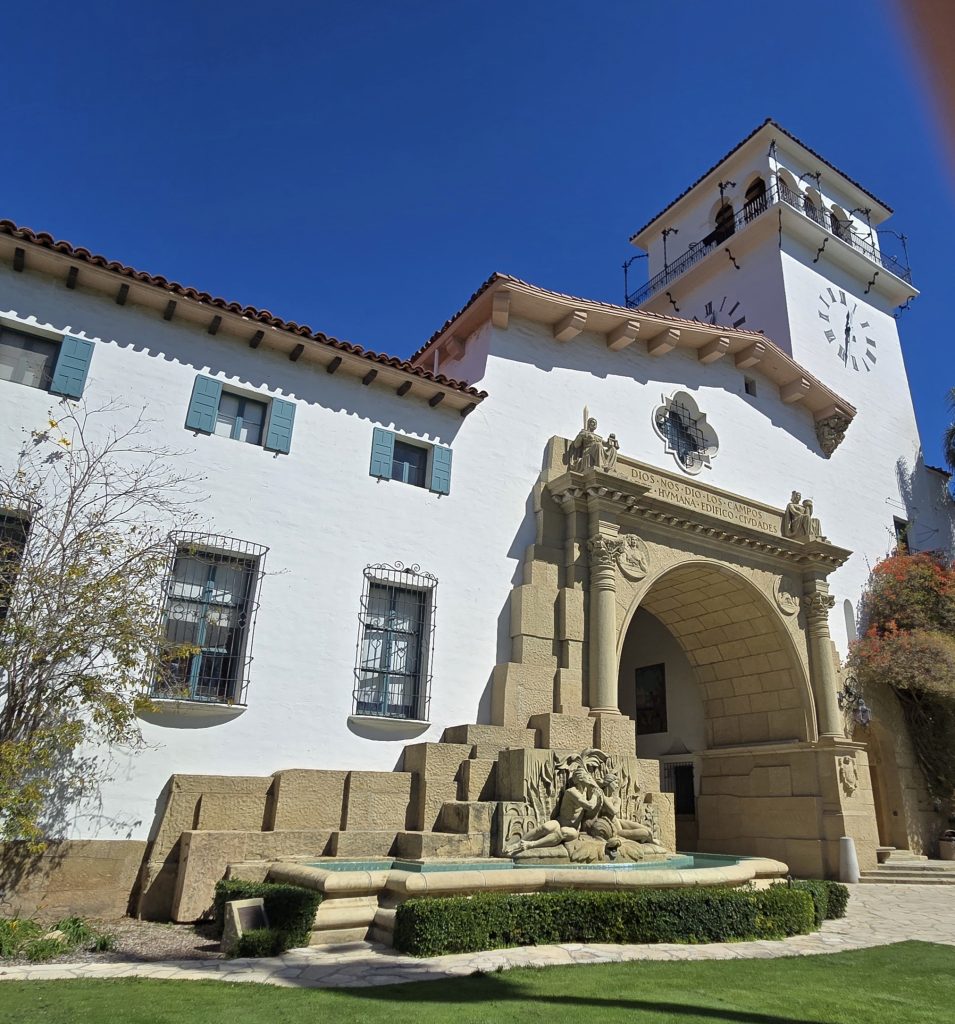
The main entrance on Anacapa Street showcases a grand sandstone archway adorned with elaborate carvings. Above the arch, a Latin inscription reads “Dios nos dio los campos. El arte humana edificó ciudades,” translating to “God gave us the fields. Human art built the cities.” Flanking the arch are sculpted figures and decorative elements that heighten the building’s majestic presence.
Moorish Influence
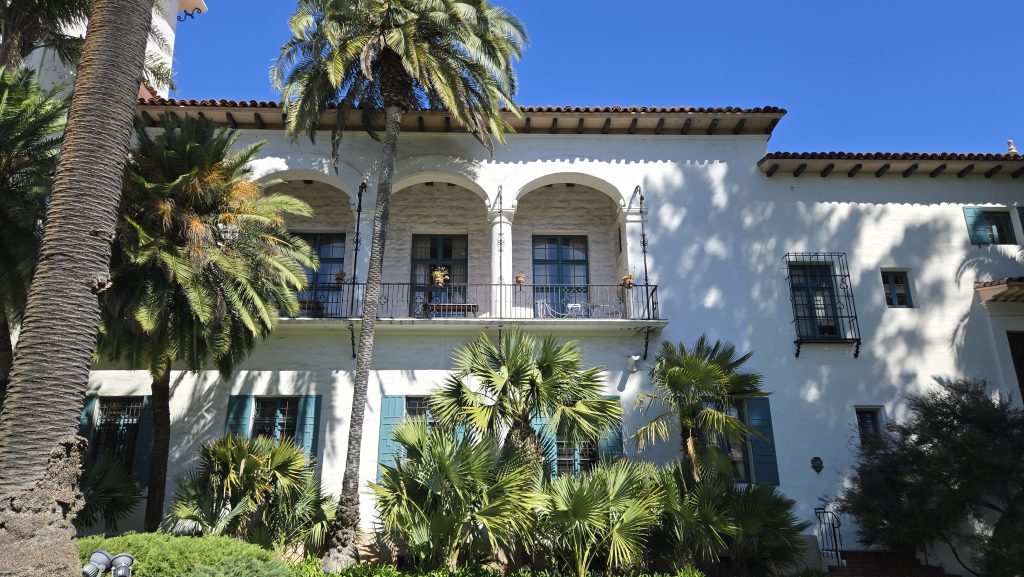
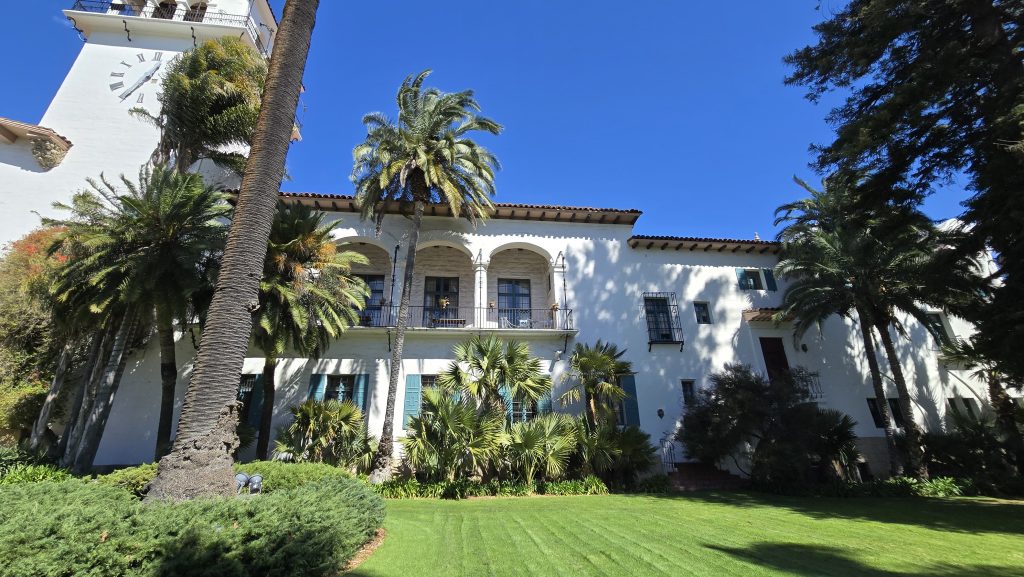
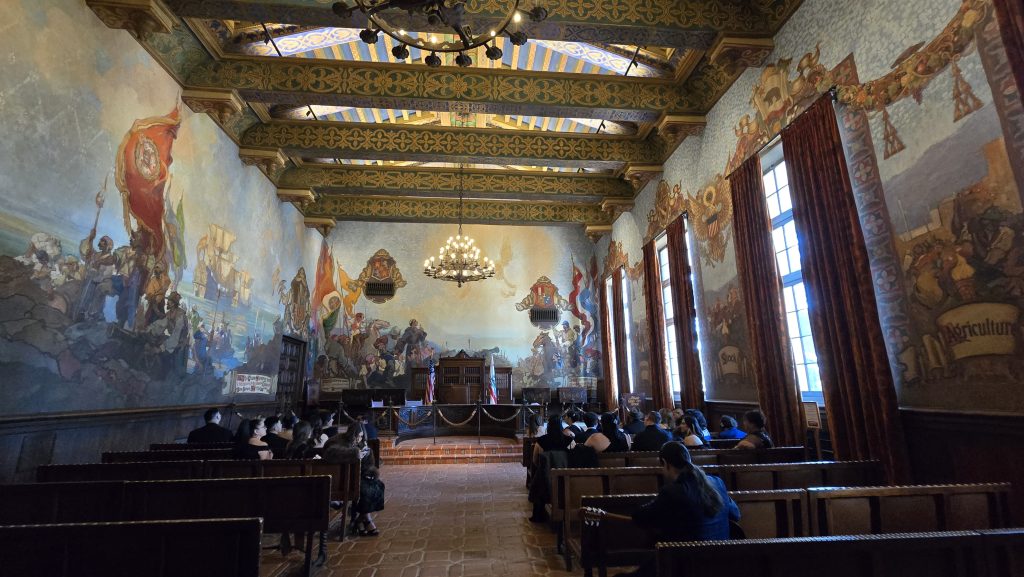
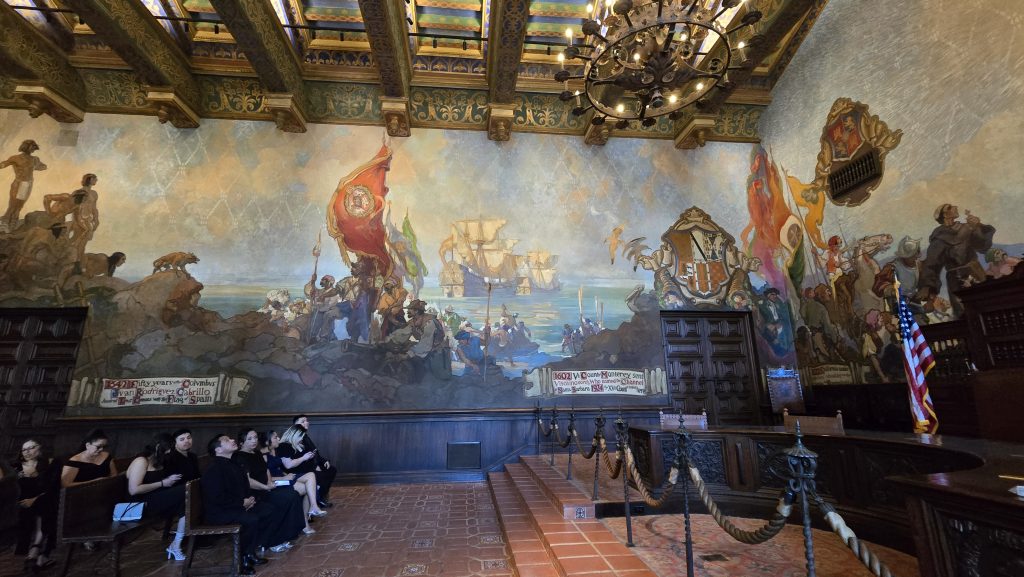
Wander the Sunken Garden, formerly the site of the original courthouse, and you’ll find yourself wrapped in silence beneath palms and fig trees, the courthouse’s clock tower rising like a sentinel above. The grand exterior, clad in warm sandstone and trimmed with cast-iron balconies and hand-painted tiles, evokes romantic Moorish Spain, yet it was envisioned with civic pride and California light in mind. Step through the arched entryway and you’re greeted by the echo of footsteps on intricately tiled floors and the stateliness of a building meant to inspire reverence. The courthouse functions as both a visual gem and a working seat of justice, housing multiple courtrooms, the sheriff’s office, a law library, and administrative offices. The most spectacular of these spaces is the Mural Room. Once the boardroom for the County Supervisors, this chamber now hosts weddings, receptions, and ceremonial gatherings, though it was also where key legal decisions shaping the county’s development were debated and passed. The hand-carved mahogany furniture, iron fixtures, and expansive murals envelop visitors in both beauty and symbolism.
The Murals
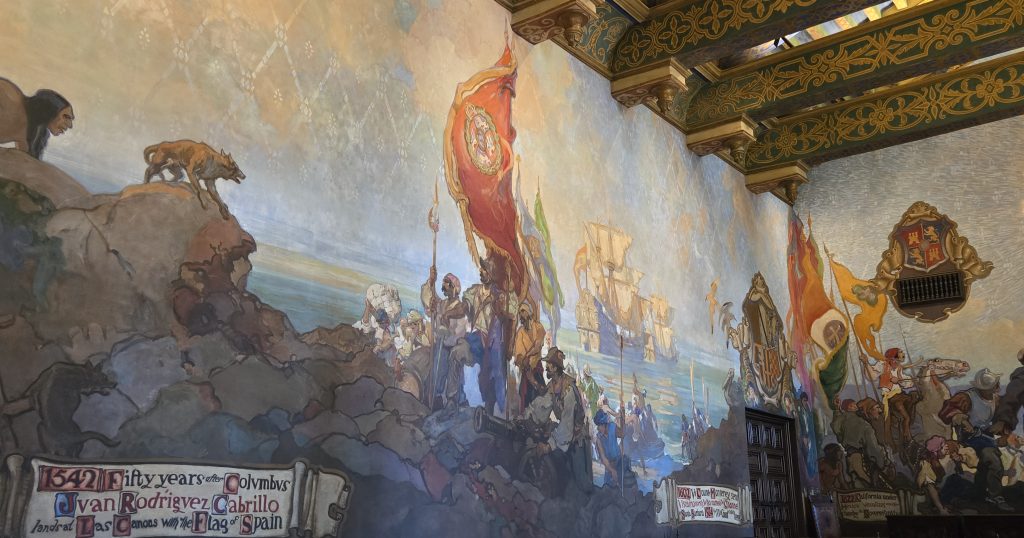
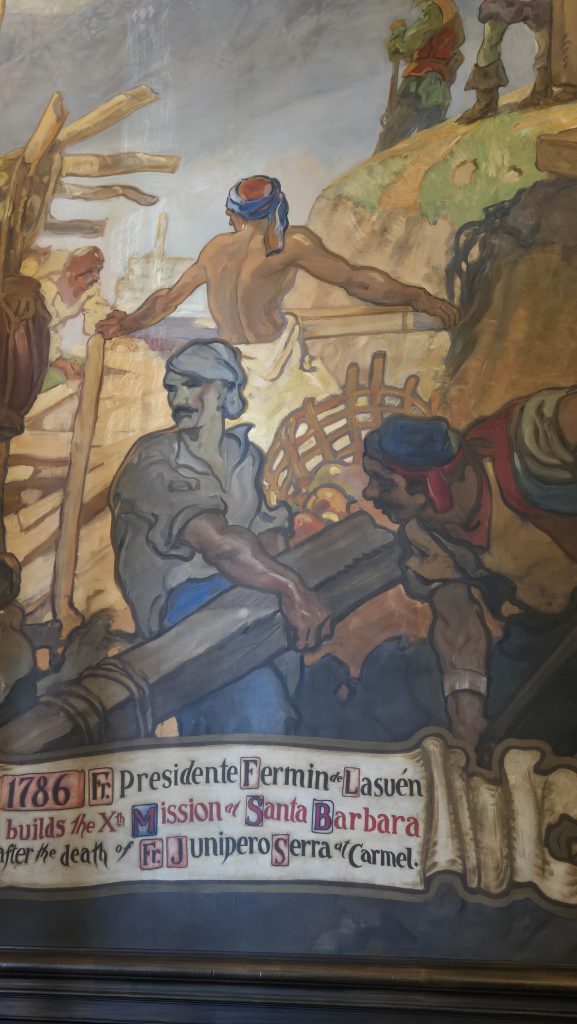
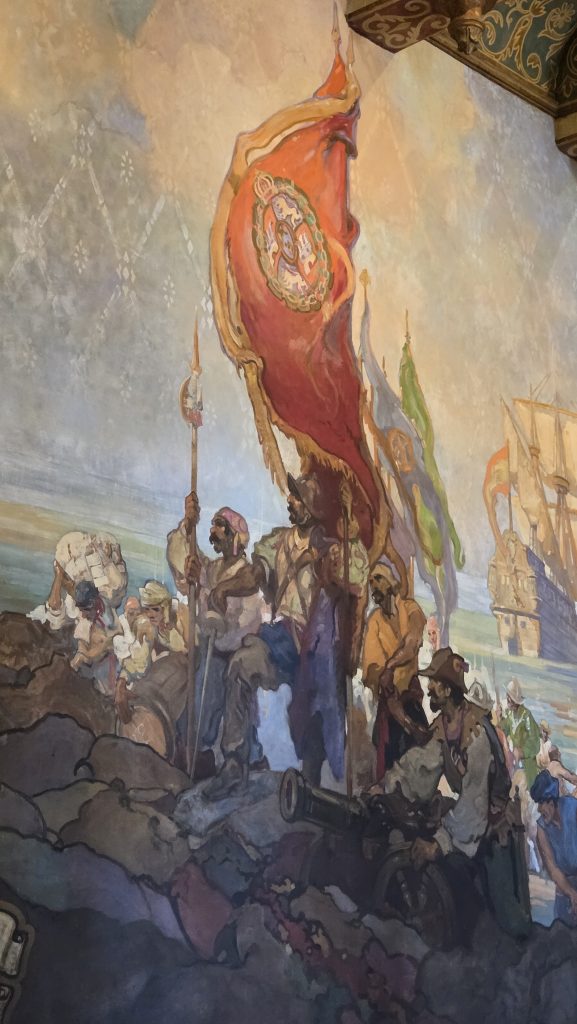
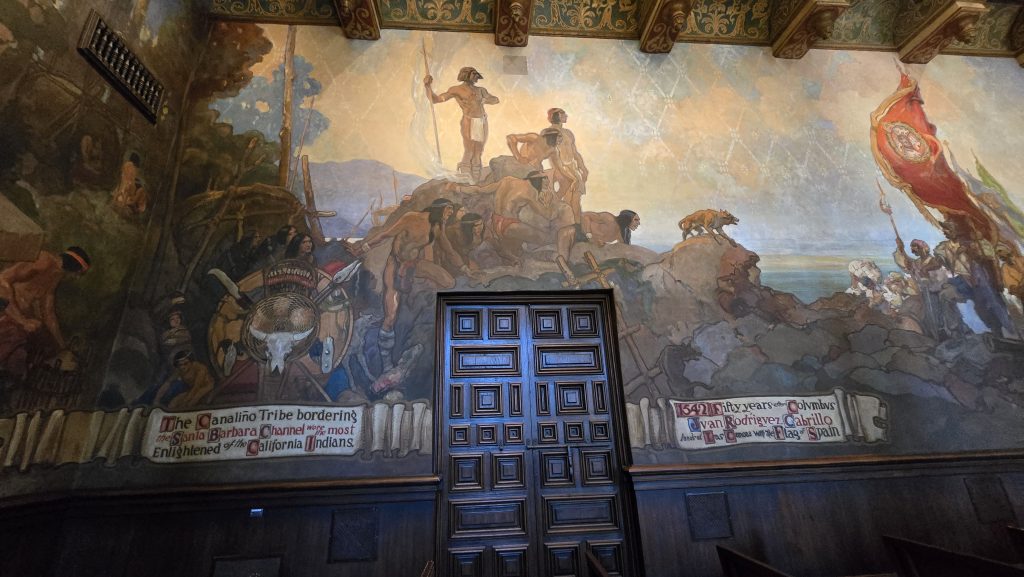
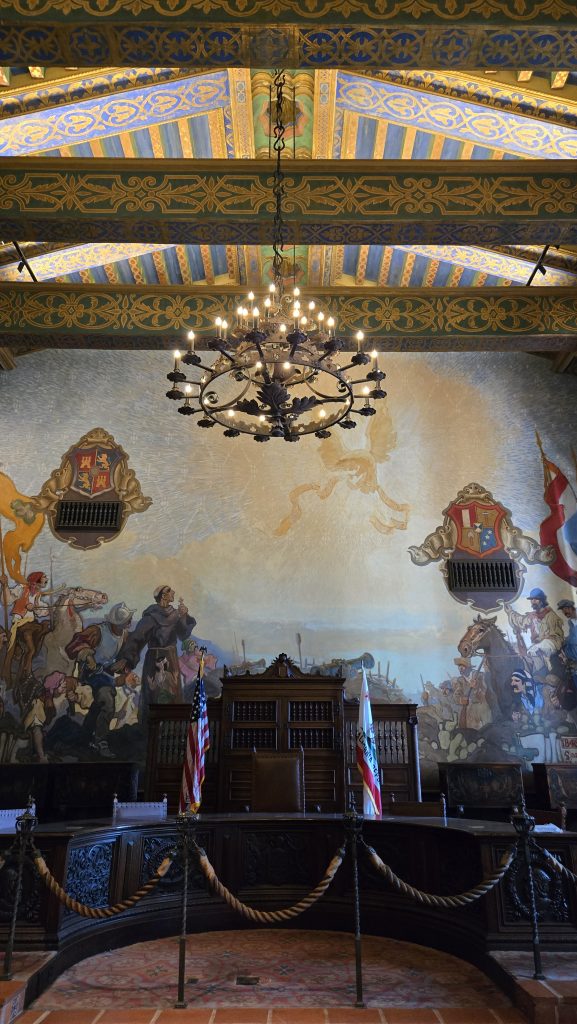
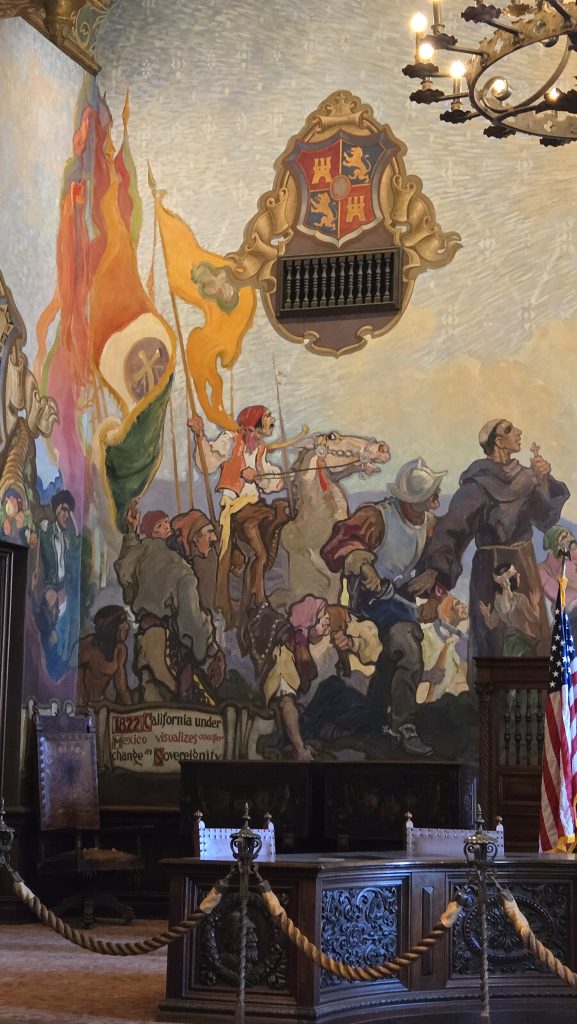
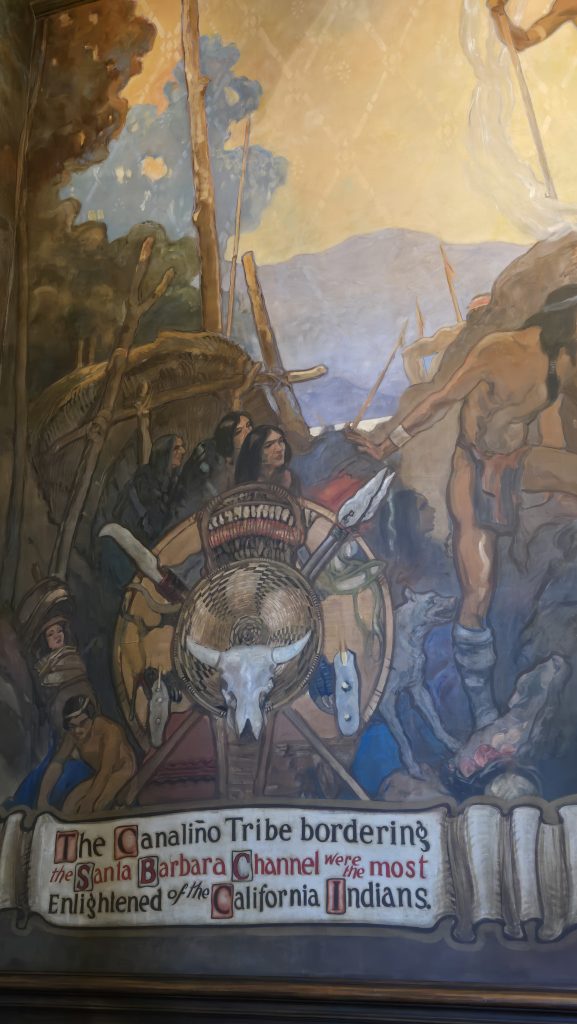
The murals of the Santa Barbara County Courthouse, painted by artist Daniel Sayre Groesbeck in 1928, capture California’s layered history in vivid detail. Groesbeck, a Hollywood set designer, infused the murals with dramatic flair and historical depth through his work. Spanning over 4,200 square feet, these murals cover the room and show pivotal moments from the region’s past.
- Chumash Heritage: The murals honor the Chumash people, indigenous inhabitants of the Santa Barbara Channel for over 12,000 years, showcasing their maritime culture and deep connection to the land.
- European Exploration: Scenes illustrate the 1542 landing of Juan Rodríguez Cabrillo and the 1602 expedition of Sebastián Vizcaíno, marking early European encounters with the California coast.
- Mission Era: The establishment of Mission Santa Barbara in 1786 is portrayed, reflecting the Spanish colonial influence and the spread of Christianity among indigenous populations.
- Transition to American Rule: The arrival of John C. Frémont in 1846 signifies the shift from Mexican to American governance, a turning point in California’s political landscape.
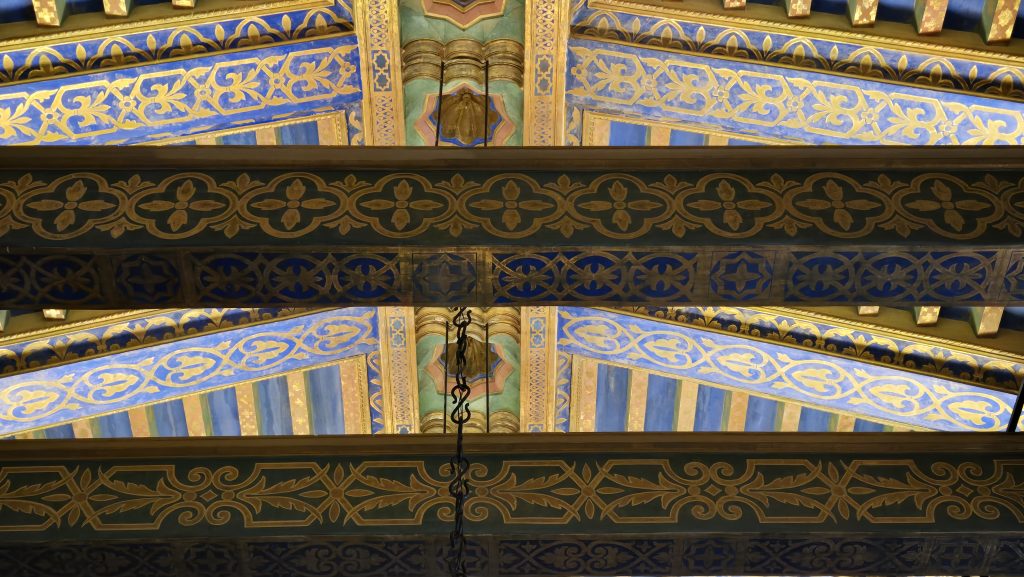
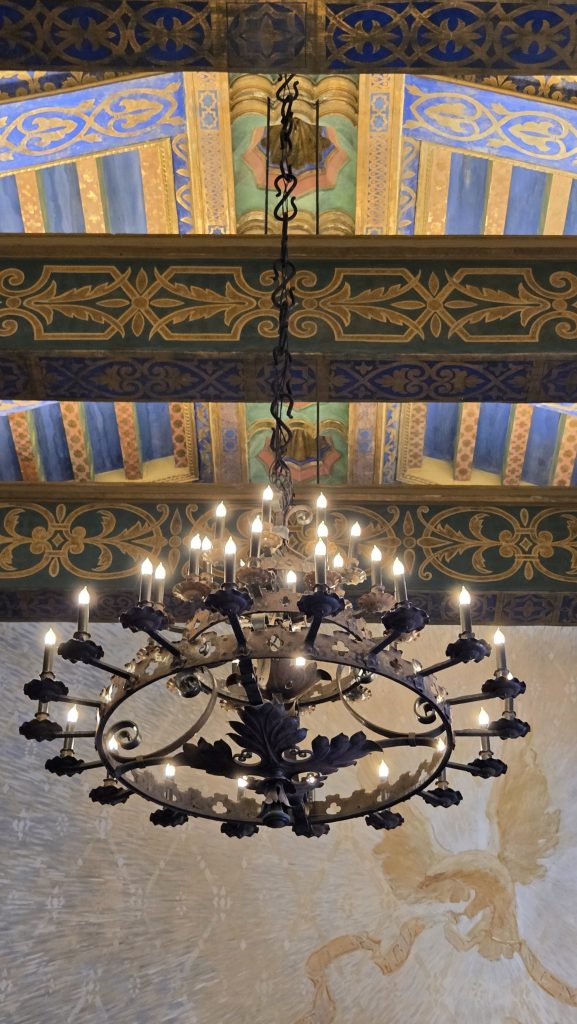
Complementing the murals, the ceiling by Giovanni Battista Smeraldi displays the Mudéjar style with intricate stenciling and gilded beams that define the room’s grandeur.
Picturesque Clocktower
Climb the spiral staircase to the top of El Mirador, the courthouse clock tower, and enjoy a 360-degree view of red-tiled rooftops and cobalt sea, with the Channel Islands hovering on the horizon. The tower still rings out the hours with its original Seth Thomas mechanism. And shot from the exterior, the clock tower ranks among Santa Barbara’s most frequently photographed images, embodying the city’s laid-back charm.
Climb the spiral staircase to the top of El Mirador, the courthouse clock tower, and you’ll be rewarded with sweeping 360-degree views of red-tiled rooftops and cobalt sea, with the Channel Islands hovering on the horizon. The tower still rings out the hours with its original Seth Thomas mechanism. And shot from the exterior, the clock tower ranks among the most frequently photographed images representing Santa Barbara’s laid-back charm.
Details of Note
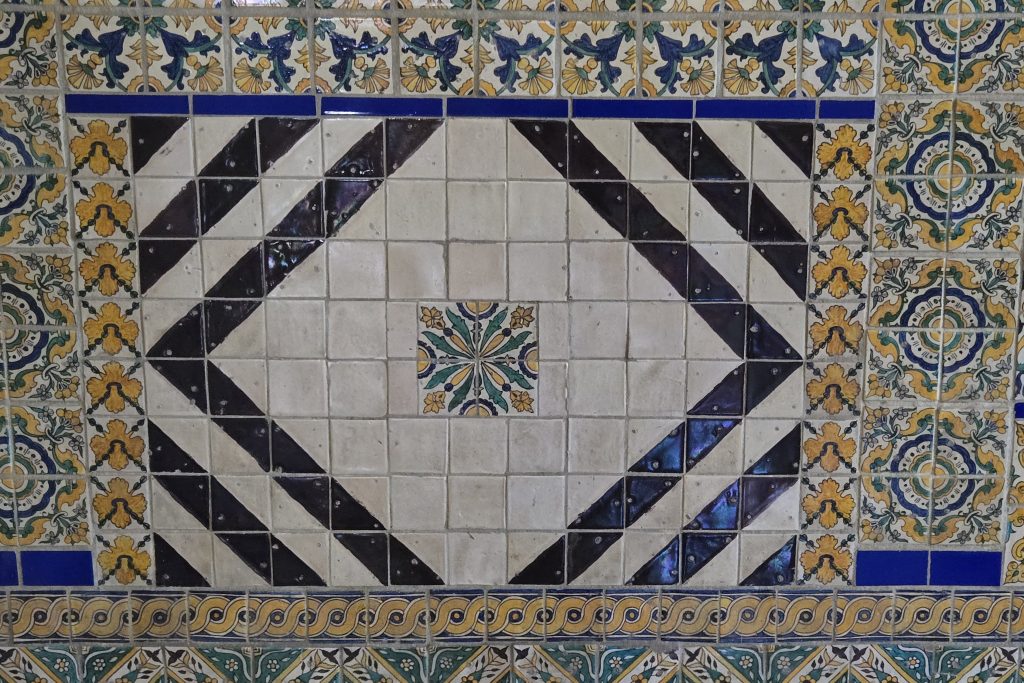
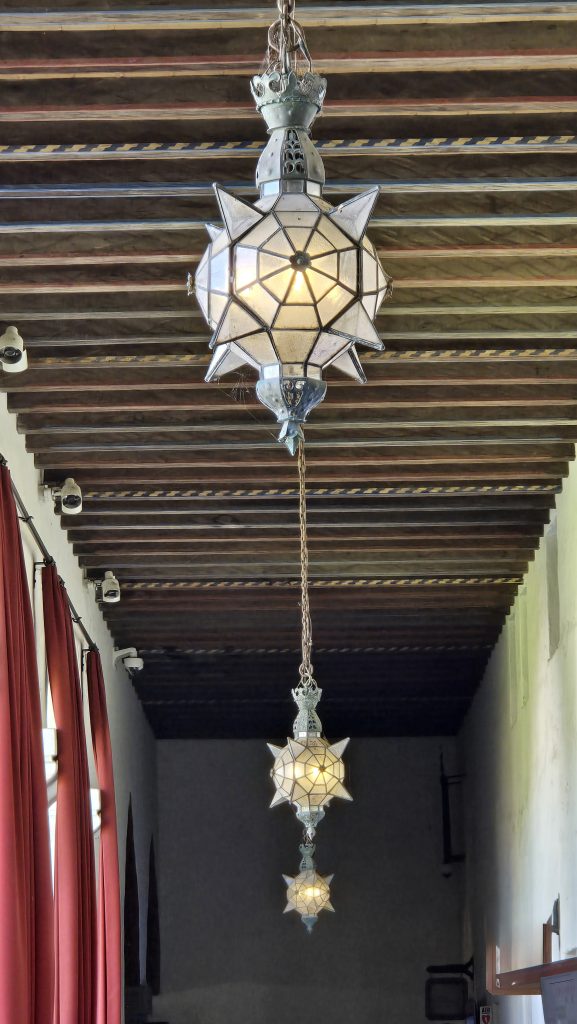
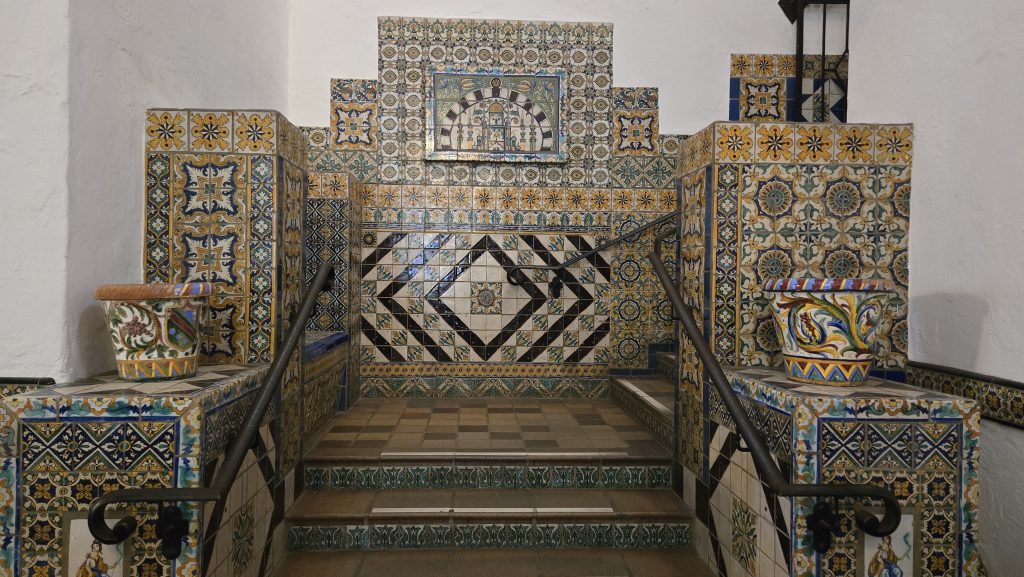
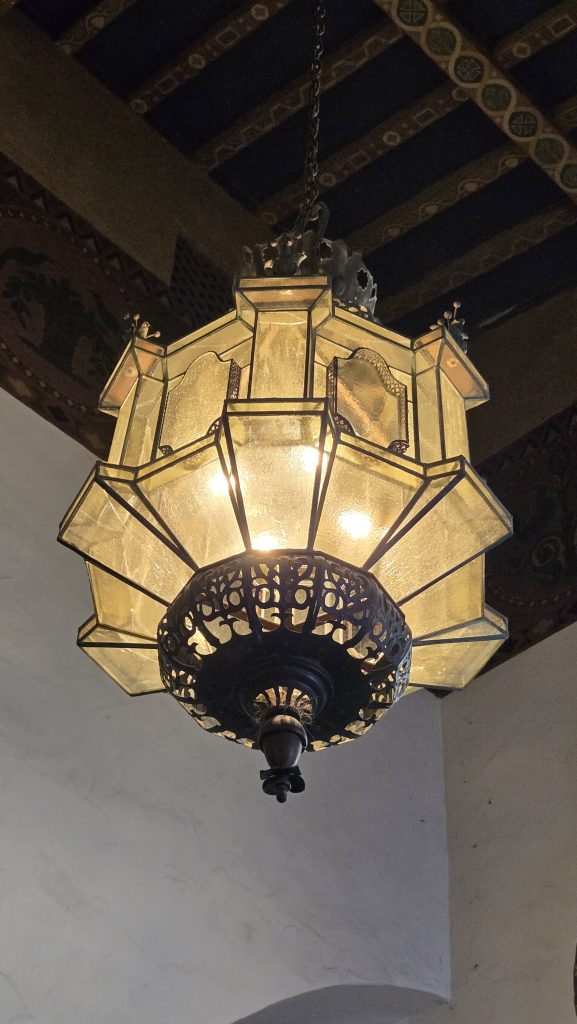
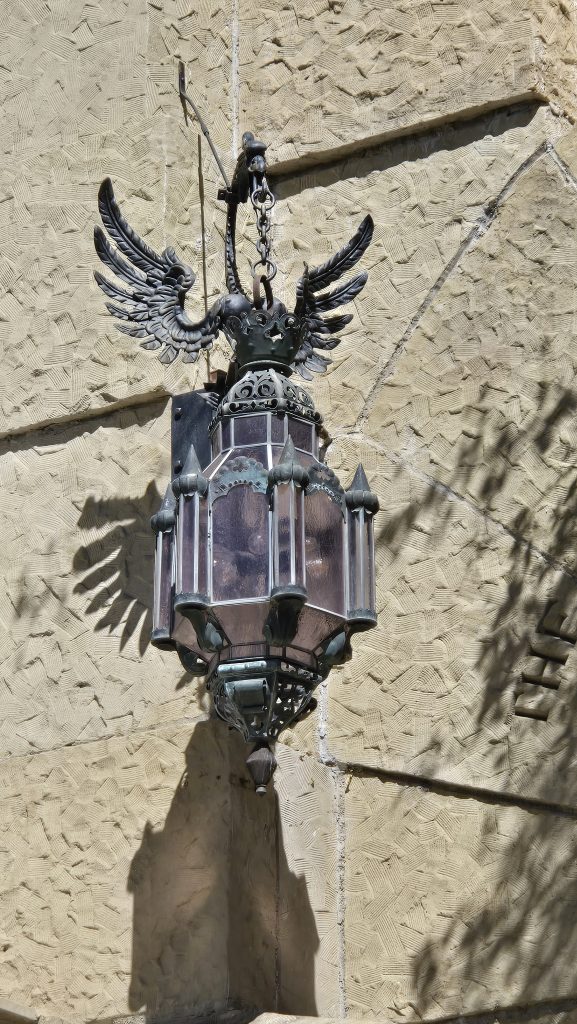
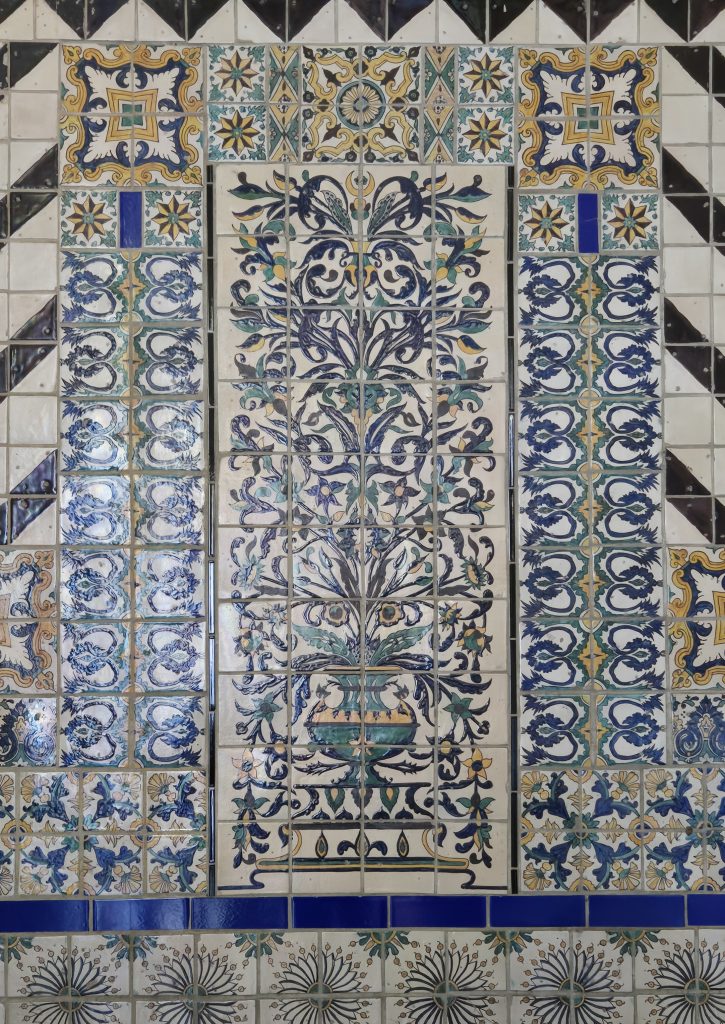
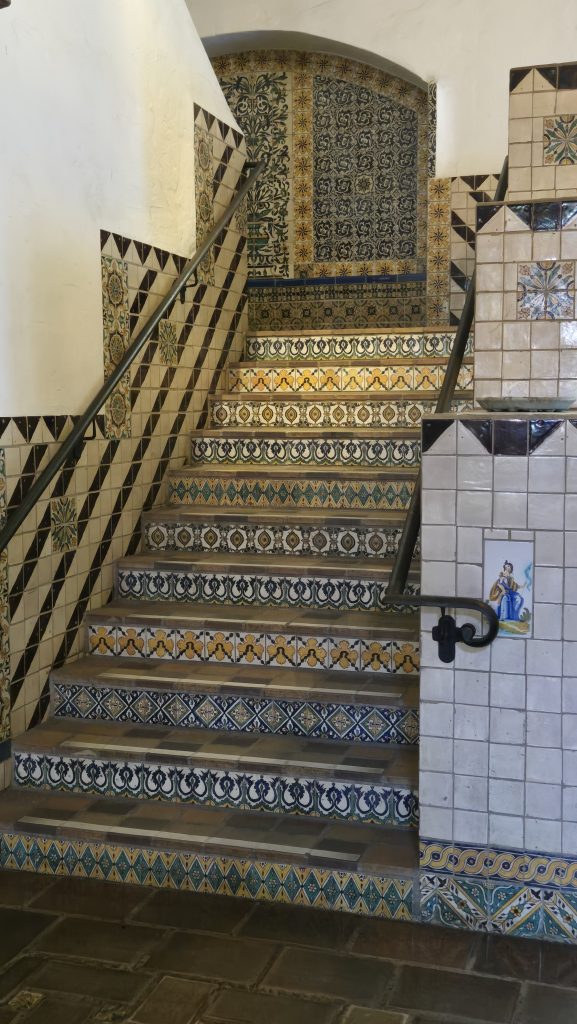
Even the smaller details whisper their own stories: hand-painted ceilings etched with Moorish patterns, wrought-iron chandeliers the size of small boats, and antique elevators that glide upward as if rising through time. Each corridor, archway, and sunlit cloister deepens the sense that law and legacy meet here not in confrontation, but in ceremony. Pay close attention to the patterned tiling on the walls and stairways.
The Fountain Flows
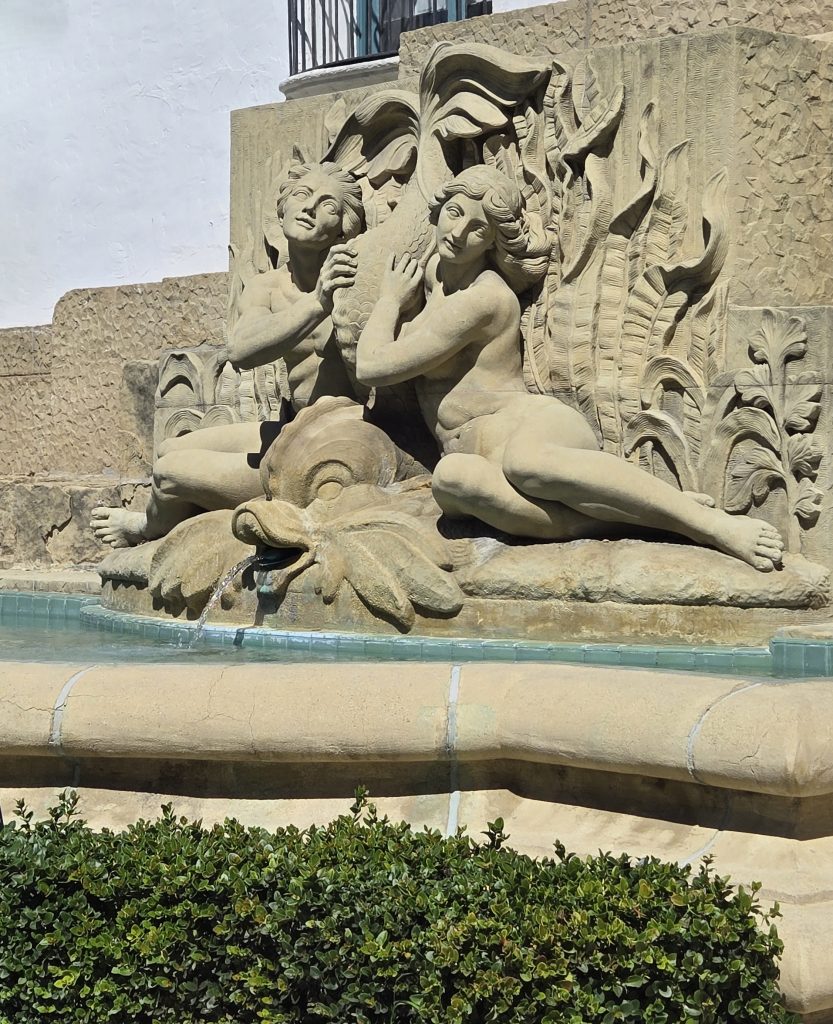
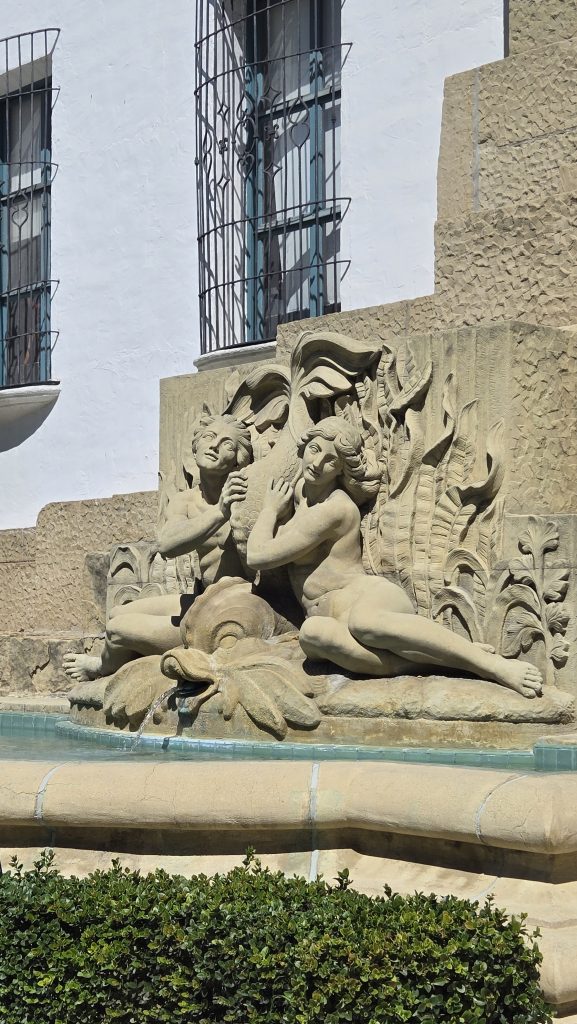
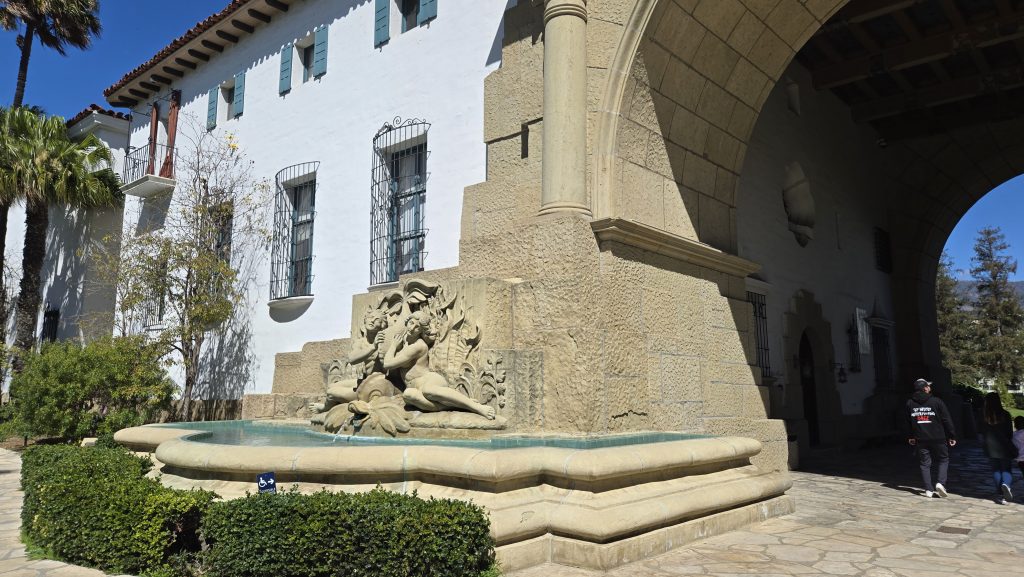
A stunning fountain at the entrance has been restored after years of decay. The Spirit of the Ocean Fountain, positioned near the grand arch of the Santa Barbara County Courthouse, reflects the city’s enduring connection to the sea. This sandstone sculpture, originally crafted in 1927 by Italian sculptor Ettore Cadorin, depicts two nude figures often interpreted as siblings or mythological beings holding a large fish, which symbolizes the ocean’s bounty and Santa Barbara’s maritime heritage.
Also flanking the main archway are two significant sculptures by Cadorin representing Justice and Agriculture. These figures embody the foundational principles of the courthouse, serving as guardians of law and order. Their presence reinforces the courthouse’s role as a center of civic life and community engagement.
Jail Wing and “Bridge of Sighs”
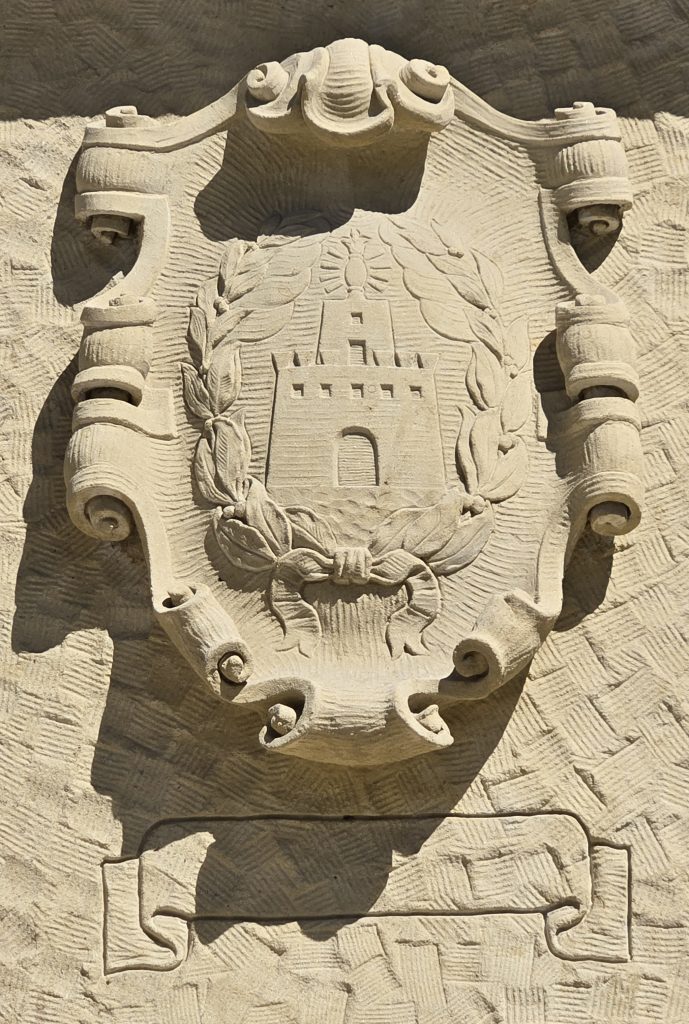
The courthouse’s jail wing includes a sandstone archway inscribed with the Latin phrase “Discite Justitiam Moniti,” meaning “Learn Justice From This Warning,” and also features castle-like elements such as a cast-stone breastplate shield, a concrete and stone turret, lancet windows, and embrasures. A small bridge known as the “Bridge of Sighs,” inspired by Venice’s famous span, connects the Administrative and Court Wing to the Jail, symbolizing the passage from freedom to incarceration.
Famous Faces
Today, the courthouse remains both a working seat of justice and a beloved public monument. People photograph their weddings beneath its arches. Weddings held here include those of Kourtney Kardashian & Travis Barker, Vice President Kamala Harris & Doug Emhoff, and Mira Sorvino & Christopher Backus, among others. Tourists climb the tower for the perfect coastal vista. Film crews use it as a period backdrop. And on balmy summer nights, the lawn transforms into a natural amphitheater for cinema and Shakespeare al fresco.
Yet beneath the romanticism lies a powerful message: architecture and art can serve the public too. They can uplift civic life and remind us, through brushstroke and brick, of where we’ve been, who we’ve been, and how we choose to tell those stories. So when next you find yourself in California, steer your steps to this courthouse on Anacapa Street. Not just to admire its beauty, but to stand quietly in its muraled chambers and feel the breath of history. For in Santa Barbara, the past persists and paints the walls.
Where to Stay in Santa Barbara, United States
For a stay near the Courthouse, downtown Santa Barbara hotels offer the most convenient access. The Canary Hotel and similar downtown properties sit within walking distance of the building, State Street shops, and restaurants. These downtown options cost more but save you the drive to main attractions.
The Montecito area, just south of downtown, offers a quieter alternative with access to Oak Park and the surrounding foothills. Properties here range from modest inns to larger resort-style accommodations, and you’ll find yourself among the tree-lined neighborhoods where many of Santa Barbara’s historic estates sit. The trade-off is a short drive to downtown, but the setting is more residential and less touristy.
If your budget is tight, Milpas Street and areas east of downtown offer smaller hotels, motels, and guesthouses at moderate rates. These neighborhoods lack the polish of downtown or Montecito but authentically reflect how locals live, and you’re still only ten to fifteen minutes from the Courthouse by car.
Beach-adjacent lodging on Cabrillo Boulevard is pricey but puts you steps from the harbor and Mission for combined coastal and architectural sightseeing. The Santa Barbara Biltmore and similar oceanfront properties offer resort amenities while keeping you near the city’s landmarks. For most travelers exploring the Courthouse and downtown, staying closer to State Street makes better practical sense.
Recommended Reading
- Lords of Santa Barbara by Susan Hart —This two-part novel delves into the history of the Segovia family, Spanish settlers who contribute to the building of El Presidio in Santa Barbara. The story explores themes of love, cultural conflict, and the complexities of colonial life in early California.
- Santa Barbara’s Royal Rancho by Walker A. Tompkins — A dramatized historical narrative exploring the Rancho era of Santa Barbara, focusing on the De la Guerra family and the rise of California’s ranching aristocracy. Tompkins blends real historical events, regional legends, and vivid storytelling to capture daily life, politics, and cultural shifts in 19th-century Santa Barbara. Not part of a series.
- The Proud Breed by Celeste De Blasis — Spanning several generations, this epic novel traces the lives of a Californio family, offering a vivid portrayal of California’s history, including the Santa Barbara region, during the 19th century. The story delves into the cultural and political shifts that shaped the state.
- The Californios by Louis L’Amour: A frontier saga steeped in the landscapes and legacies of early California
- Zorro by Isabel Allende: A richly imagined origin story of the masked avenger, blending myth, history, and social justice
- The Laws of Our Fathers by Scott Turow: While not set in Santa Barbara, this legal drama draws from the deeper tensions of how law shapes lives, echoing the courthouse’s continuing role
- Santa Barbara: A Guide to El Pueblo Viejo by Neal Graffy: A lively and highly detailed guide to the city’s Spanish Revival architecture and rich civic heritage
- The Muralist by B.A. Shapiro: Though set elsewhere, this novel illuminates the role of New Deal muralists like Groesbeck and the public art legacy of the 1930s
Tours to Consider