
By Subhasish Chakraborty
Rajasthan is India at its most exotic and colorful. This is the home of the Rajputs, warrior clans who ruled this region of India for over a thousand years, guided by a code of chivalry and honor similar to medieval European knights.
Rajasthan’s geography is somewhat dry and inhospitable, but remarkably varied. A line drawn southwest to northeast divides the state into the hilly, rugged southeast region and the barren northeastern Thar desert, which extends across the border into Pakistan.
India’s Prime Minister Narendra Modi has galvanized Rajasthan’s tourism infrastructure through robust economic policies, and his government’s long-term investments in rail, road, electricity, and optical fibre connectivity have sparked what amounts to a Tourism Revolution in the state.
The Department of Tourism has innovatively showcased Rajasthan’s magnificent heritage to discerning international visitors, who can now experience its rich culture, vibrant traditions, and surreal landscapes in a manner befitting royalty.
Rajasthan recently hosted Gallops of India, a one-of-a-kind equestrian adventure that drew riders from across the globe and bolstered Rajasthan Tourism’s international profile. Former Miss France Camille Cerf, who rode through the state’s colorful desert towns, shared her experience: “It is a fascinating and colourful experience to ride in the living desert of Rajasthan. The terrain is diverse, and you get to witness a variety of fauna along the way. Meeting the people of rural areas enriches the whole ride.
Rajasthan today lays out the blueprint for a truly extravagant holiday. This Indian state offers you the chance to experience what lies beyond the ordinary. All that is exclusive, unusual, and far removed from standardized sameness, with hospitality that comes straight from the heart.
We take you on an incredible journey through the fairytale cities of Jaipur, Udaipur, Bikaner and Jaisalmer, revealing opulent palaces, magnificent garrisons, battle-scarred fortifications and hidden watchtowers that echo the state’s turbulent past.
Jaipur: India’s Pink City
Jaipur, the capital of Rajasthan, is popularly known as the “Pink City” for the pink sandstone used in the buildings of its old, walled quarter. This fascinating city is remarkably harmonious and lies amid a desert landscape, surrounded by barren hills.
The city owes its foundation to the erstwhile royal warrior-astronomer His Excellency Maharaja Jai Singh II (1699-1744), who laid out the city with its quintessential walls and six rectangular blocks by adhering to the principles of town planning set down in the ancient Indian architectural treatise, the Shilpa Shastra.
The Old City lies to the northeast of Jaipur, while new settlements have spread to the south and west. As dusk descends, this part of Jaipur attains a magical glow from the pink and orange edifices, beautifully complemented by the brightly clothed Rajasthani people.
Here’s what you should see when visiting Jaipur:
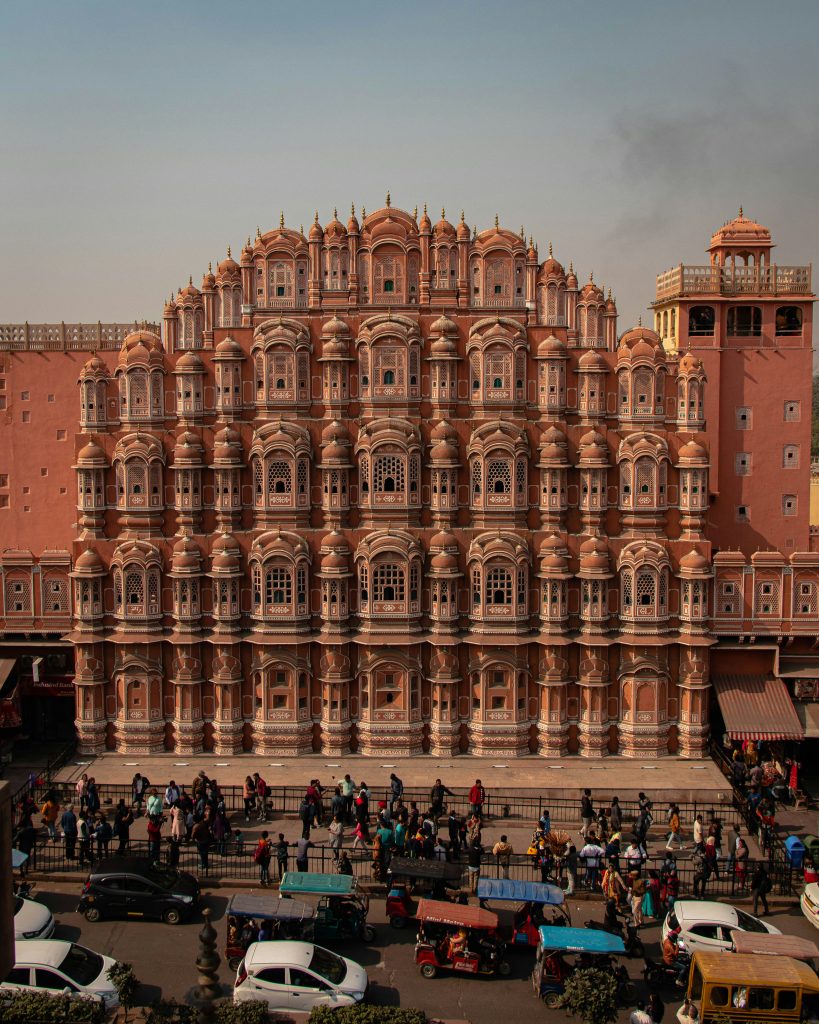
- Hawa Mahal — Known as the “Palace of Winds,” this five-story pink sandstone façade allowed royal women to observe street life unseen. Its honeycomb of 953 small windows channels cooling breezes throughout the structure.
- City Palace — A sprawling complex in the heart of Jaipur, the City Palace blends Mughal and Rajput architecture. It remains partially the residence of the former royal family.
- Chandra Mahal — The most prominent structure within the City Palace, this seven-story palace offers panoramic views of Jaipur. Each floor has a distinct name and function, with ornate interiors still used by the royal family.
- Mubarak Mahal– Built in the late 19th century to receive foreign dignitaries, this “Welcome Palace” now houses a textile museum. Its fusion of Islamic, Rajput, and European styles is particularly striking.
- Dewan-E-Khas — The Hall of Private Audience, where the maharaja held confidential meetings with courtiers and nobles. It features intricate marble inlay and a refined, regal atmosphere.
- Dewan-E-Aam– This Hall of Public Audience was used for addressing the general public and administrative matters. Its large open space is supported by intricately decorated columns.
- Observatory (Jantar Mantar) —A UNESCO World Heritage site, this 18th-century astronomical observatory is home to the world’s largest stone sundial. Built by Maharaja Jai Singh II, it features 19 architectural instruments for tracking celestial bodies.
- The City Palace Museum — The City Palace Museum displays royal artifacts including weapons, costumes, manuscripts, and art. It offers a vivid glimpse into the lives of Jaipur’s former rulers.
- Govindji Mandir — This Krishna temple, once the royal family’s private place of worship, is located within the palace grounds. It remains a sacred and active place of devotion.
- Art Gallery– Located in the Mubarak Mahal, the gallery showcases miniature paintings, rare manuscripts, and antique textiles. It reflects the artistic legacy of Jaipur’s royal court.
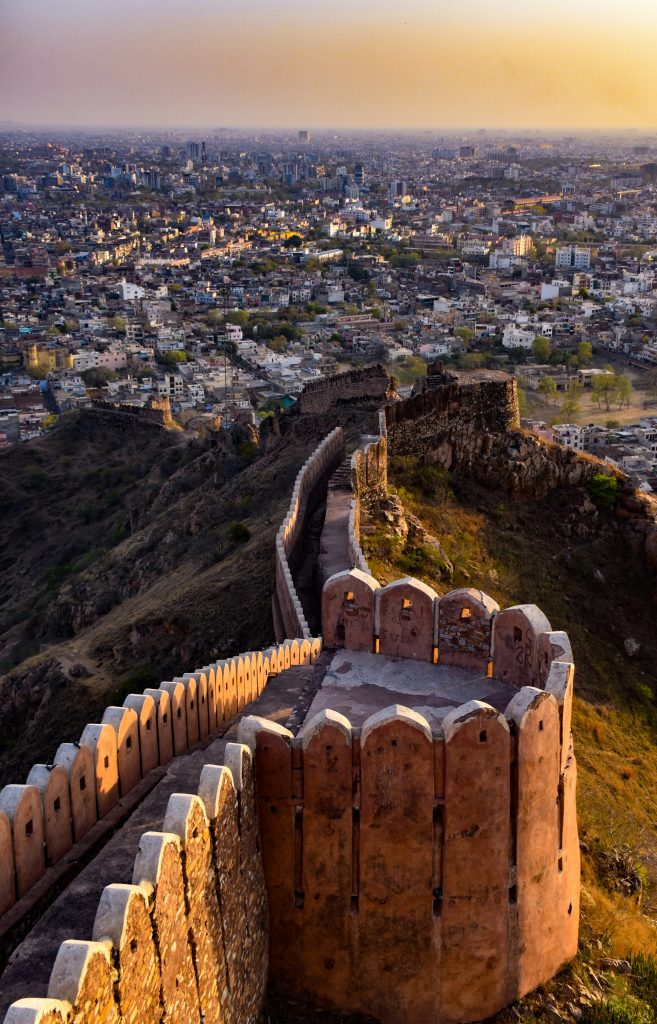
- Nahargarh Fort — Perched in the Aravalli hills, this fort was built for defense and as a royal retreat. Its terraces offer sweeping views of Jaipur, especially at sunset.
- Jal Mahal — The “Water Palace” appears to float in the center of Man Sagar Lake. Though not open to the public, it’s a beloved photo spot known for its symmetry and serenity.
Where to Stay:
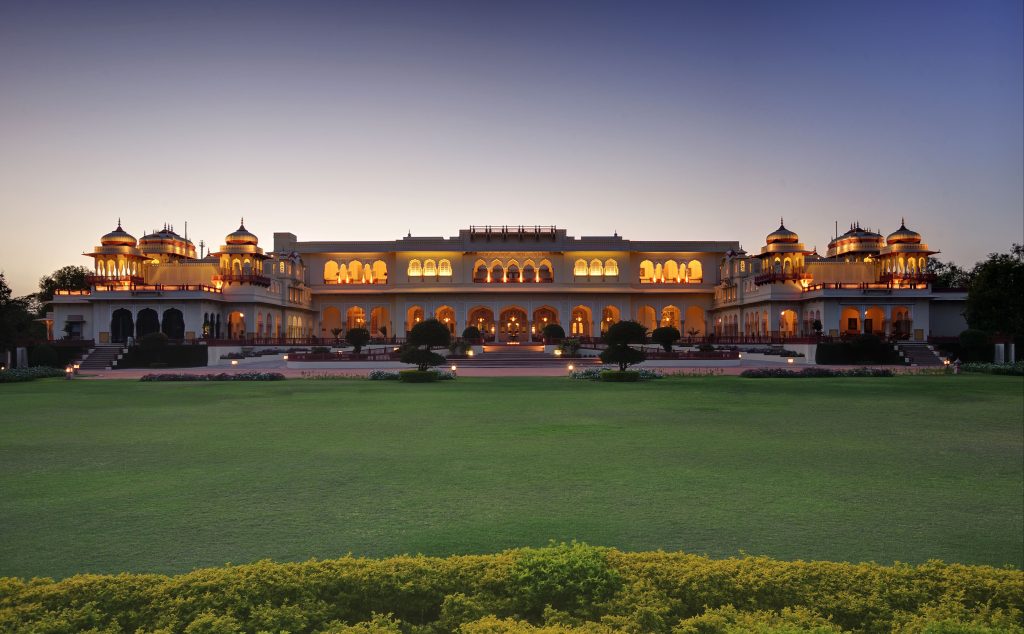
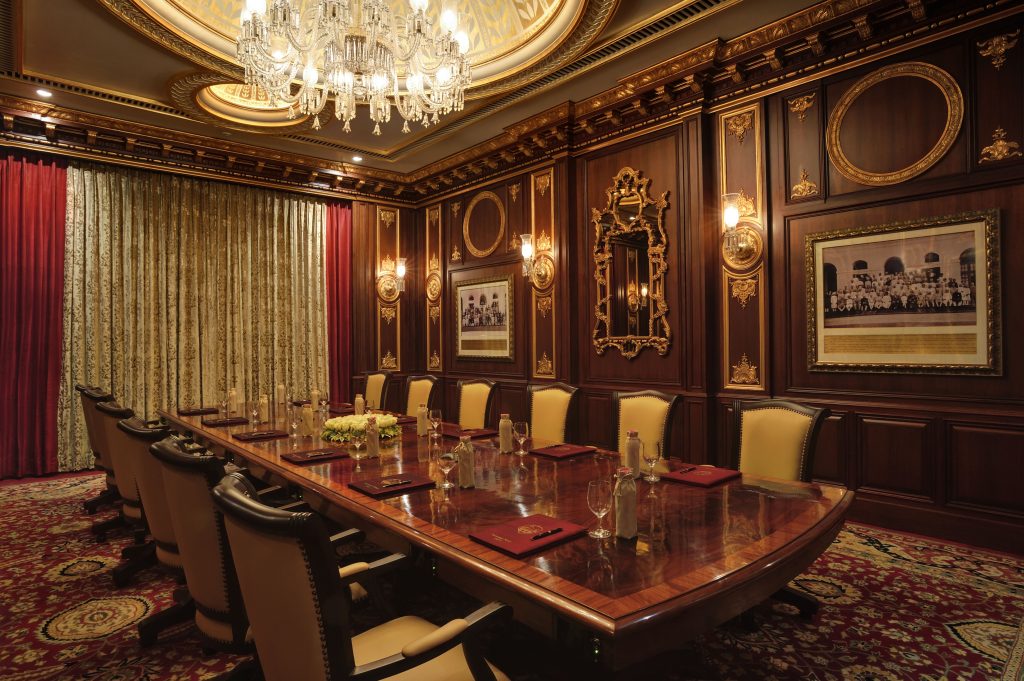
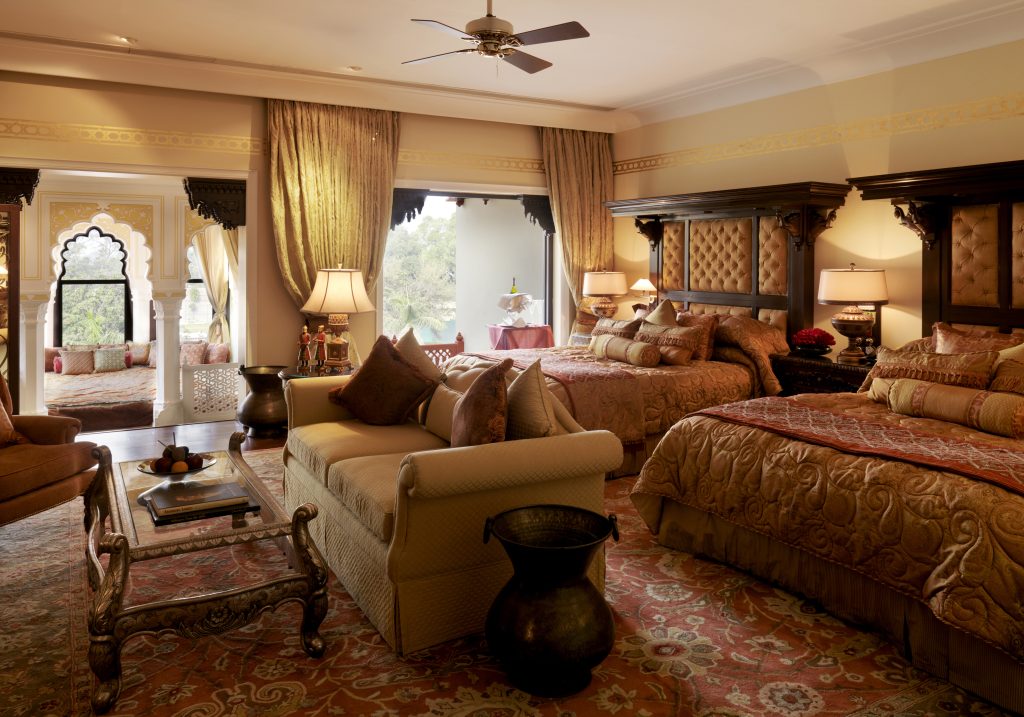
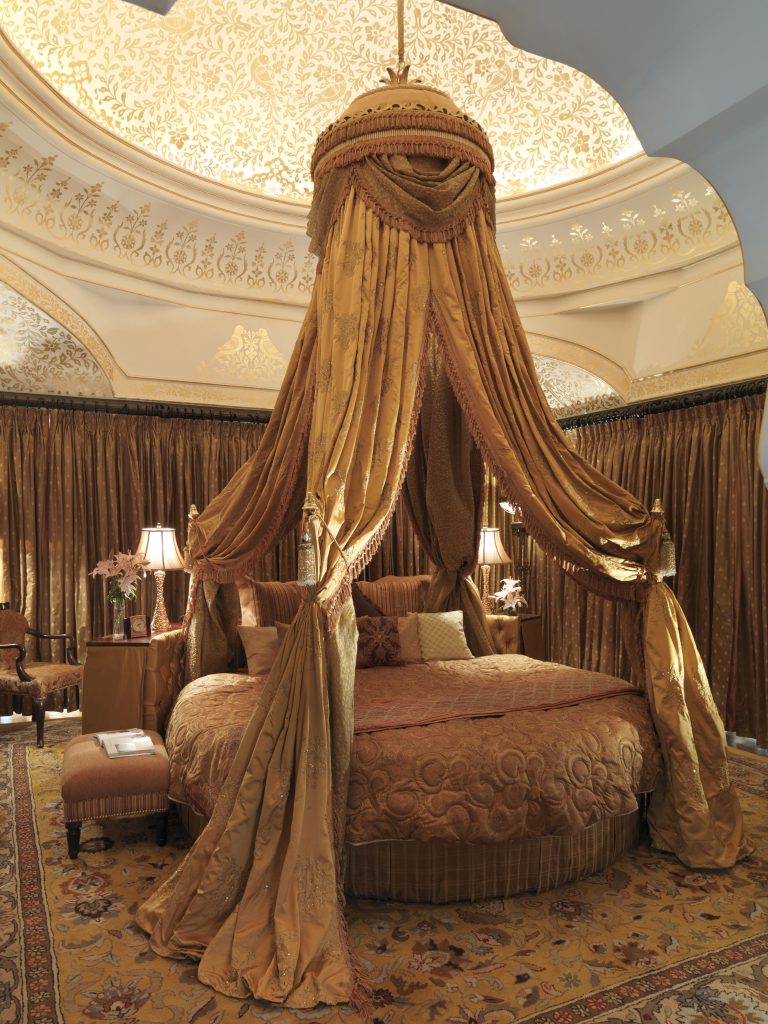
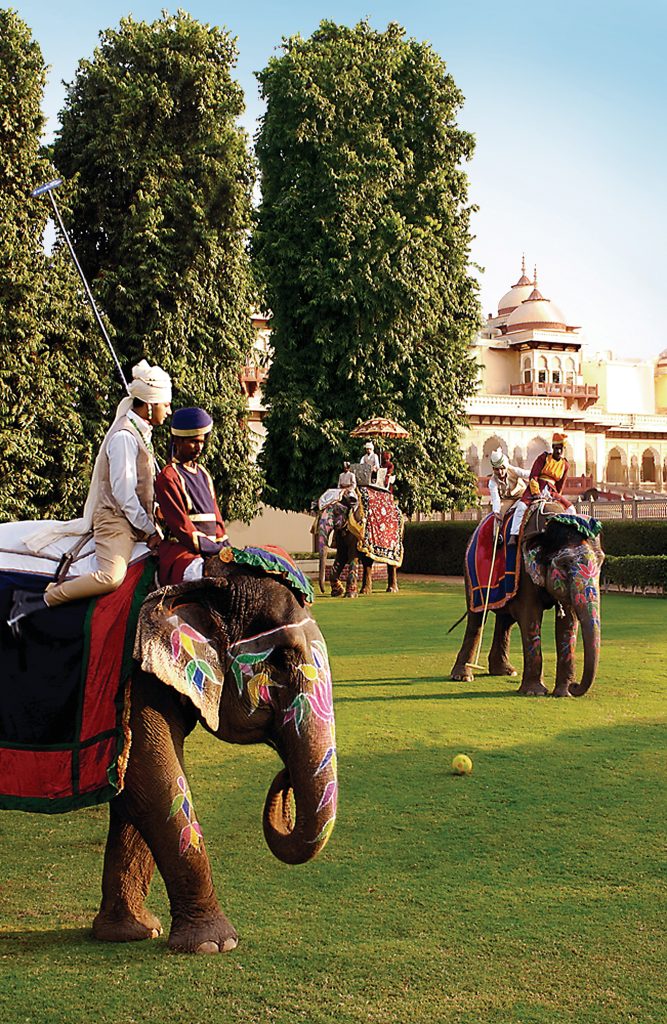
Jaipur, a major tourist hub, offers a wide variety of luxurious hotels. The magnificent Taj Rambagh Palace hotel, a former residence of Jaipur’s royal family, sits ideally south of town in a class of its own. Amongst Indian brands, the ITC Rajputana and Oberoi Rajvilas stand in a class of their own. In fact, Jaipur’s hotel landscape features major global hospitality brands—The Hilton, Holiday Inn, The Marriott, The Sheraton, Le Meridien, and Radisson—all established in Rajasthan’s capital city.

What to Buy:
Mirza Ismail Road (M.I. Road) is the principal commercial street of Jaipur’s new section and its modern shopping centre.
Jaipur’s bustling shops and markets cluster around Hawa Mahal, including Johari Bazaar for jewelry, Bapuji Market for textiles, and Tripolia Market for wooden carving and brass products.
Udaipur: The Lake City
The lake city of Udaipur is a cool oasis in Rajasthan’s dry landscape and arguably the most romantic city in a state where every settlement has its own romantic or exotic tale. Udaipur, founded in 1567 by Maharana Udai Singh, is enclosed by the remains of a city wall that sprawls along the east side of Lake Pichola. Being the capital of the former Mewar dynasty (568 AD), this romantic city brims with tales of heroism and valor from the redoubtable Rajput warriors.
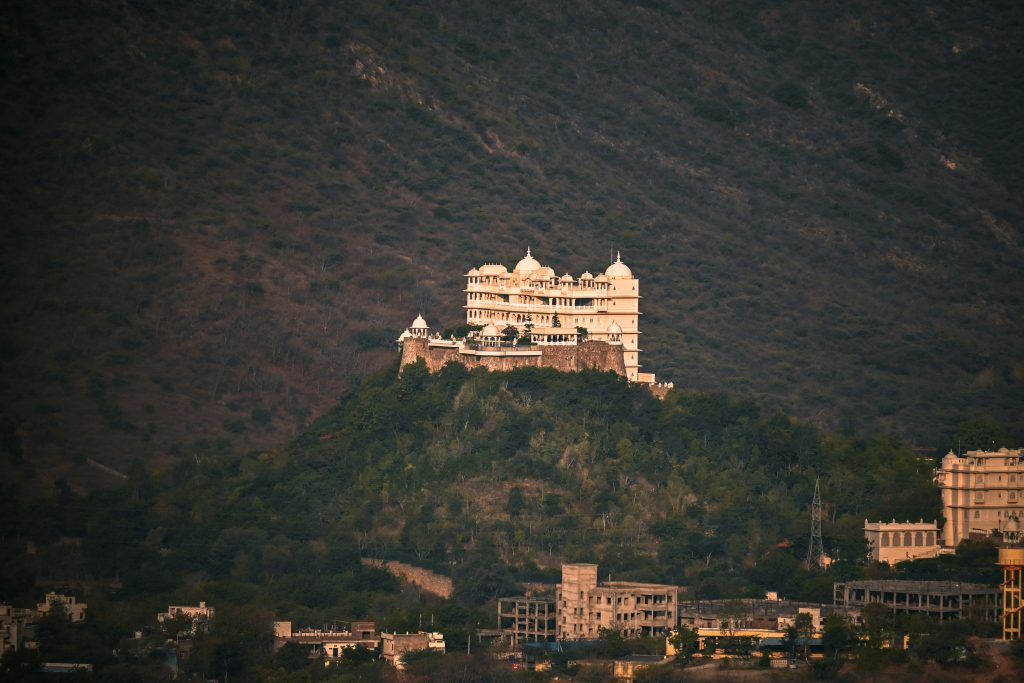
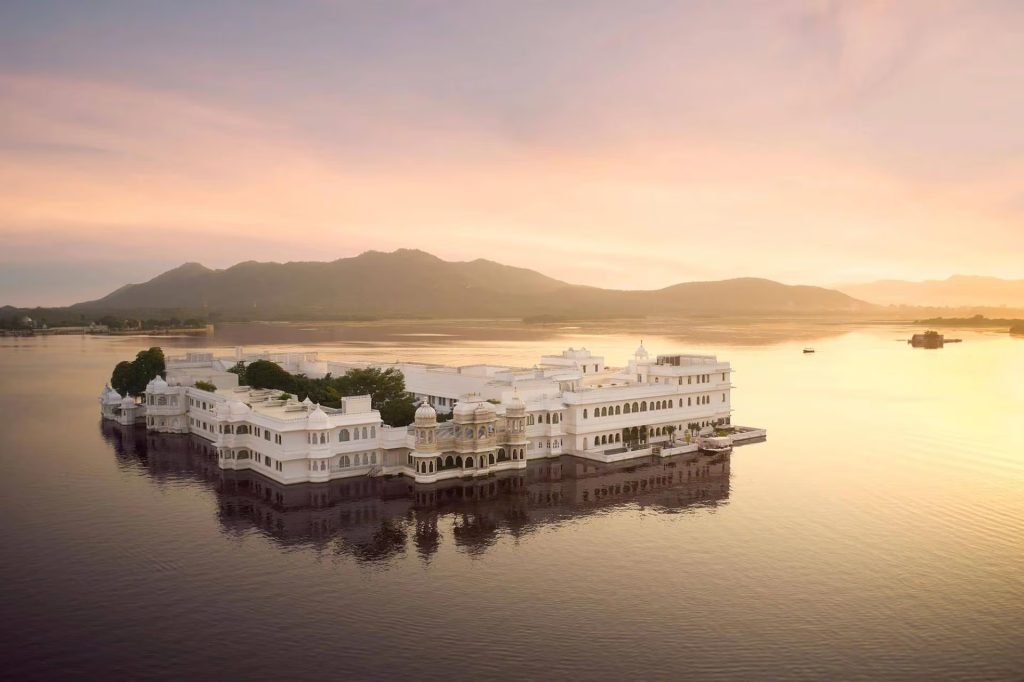
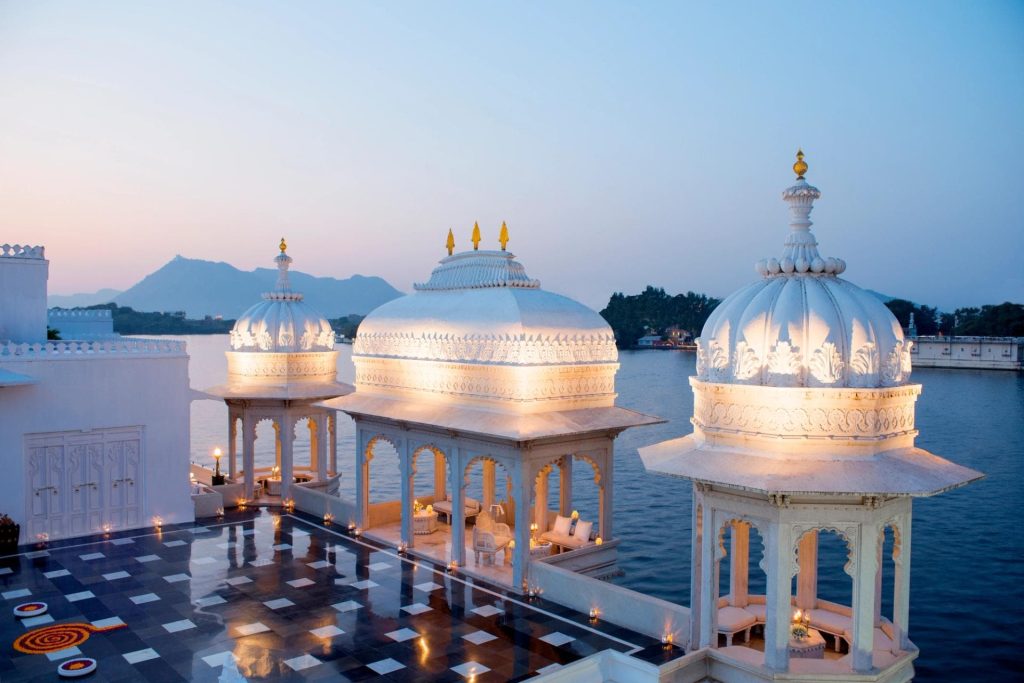
The city is replete with magnificent palaces, and The Lake Palace in particular, which has now been converted into a luxury hotel, is simply awesome in its regal grandeur. This one-of-its-kind palace towers over the lake, a conglomeration of buildings added by various royal figures (Maharajas) that somehow retains a surprising uniformity of design.
Bharatiya Lok Kala Museum is a peculiar museum that epitomizes the preservation of folk arts, with an interesting collection of dresses, dolls, masks, musical instruments, rare paintings, and puppets as its high point.
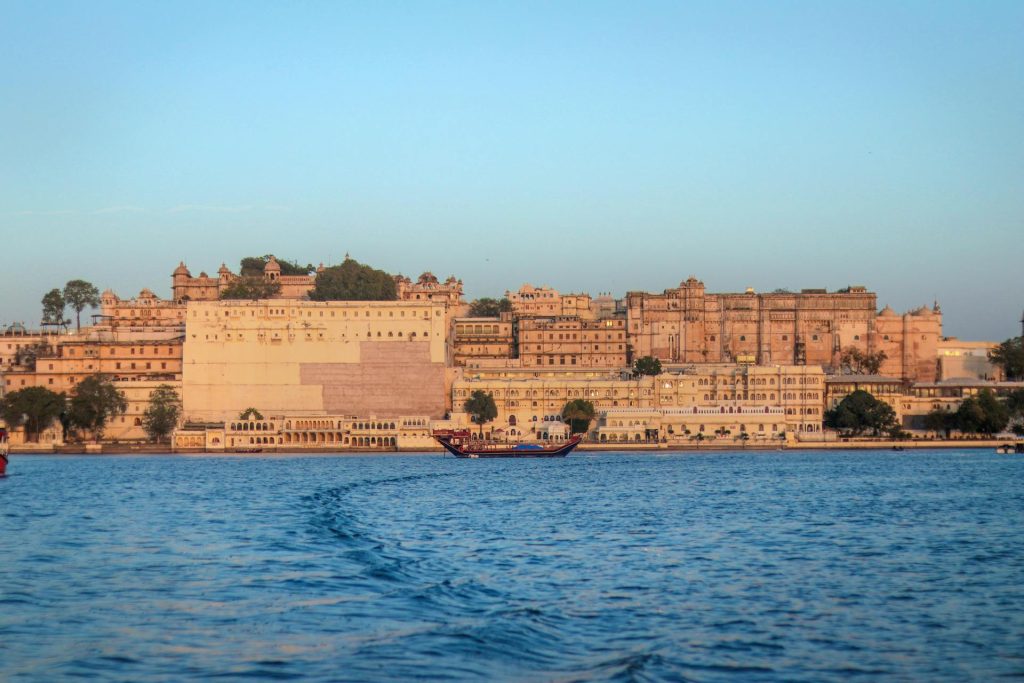
Here’s what else you should see when visiting Udaipur:
- City Palace and Museum — A magnificent complex of palaces built over centuries, offering panoramic views of Lake Pichola and housing a museum with royal artifacts, costumes, and weapons.
- Fateh Sagar Lake — A serene artificial lake surrounded by hills and woodlands, ideal for boating and home to islands including Nehru Park and the Udaipur Solar Observatory.
- Jagdish Temple — A large 17th-century Hindu temple in the heart of the city, known for its stunning Indo-Aryan architecture and elaborate carvings dedicated to Lord Vishnu.
- Pratap Samak — A memorial to Maharana Pratap, the legendary Rajput hero, featuring a striking bronze statue and exhibits detailing his life and battles, particularly the Battle of Haldighati.
- Puppet Museum — A quirky and colorful museum showcasing Rajasthani puppetry traditions, complete with marionette performances and handcrafted dolls.
- Saheliyon Ki Bari — A picturesque garden built for the royal ladies, adorned with fountains, lotus pools, marble pavilions, and lush greenery offering a peaceful retreat.
- Ahar Museum — An archaeological site and museum housing relics and cenotaphs of Mewar kings, with artifacts dating back over 3,000 years and a focus on ancient Indian civilization.
Where to Stay:
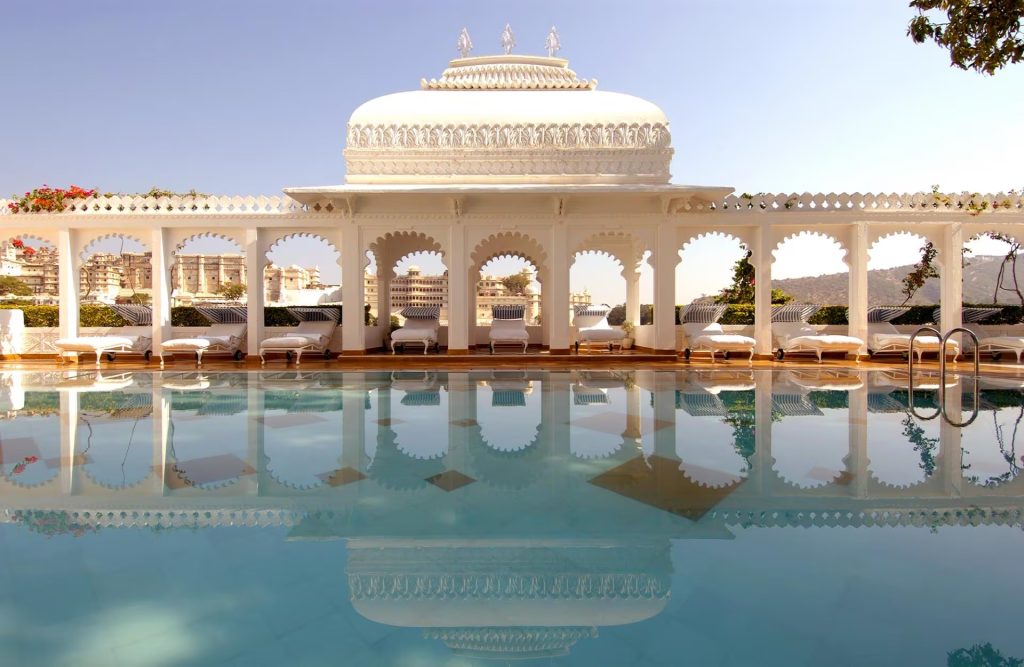
Udaipur, the city of palaces, unsurprisingly boasts some of India’s most magnificent palace hotels, and the city‘s finest is among India’s most delightful: the opulent Taj Lake Palace hotel, situated in the middle of Lake Pichola. Other luxurious, royally appointed hotels include The Shiv Niwas Palace, Ramada Udaipur, The Oberoi Udaivilas, The Leela Palace, and The Lalit Laxmi Vilas Palace, among others.
What to Buy:
Udaipur’s bustling market zone comprises commercial neighborhoods like Chetak Circle, Bapu Bazar, Palace Road, and Shastri Circle. Udaipur is renowned for its exquisite silk block prints, Bandhani sarees, wooden crafts, and embroidered items.
Tours to consider:

Subhasish Chakraborty is a travel writer from India associated with numerous global travel publications, including In-Flight magazines. He received guest travel writer invitations from various Indian states and served as a Tourism Consultant for the UNWTO.
All images are for illustrative purposes only and remain the copyright of their respective owners.
Where to Stay in Jaipur, India
Jaipur’s City Palace area provides the most convenient base for exploring the Pink City’s central attractions. Hotels range from luxury properties like the Rambagh Palace, a restored royal residence with colonial gardens, to mid-range options near the bazaars and markets. The neighborhood puts you within walking distance of Hawa Mahal and the city palace, though traffic and narrow streets may make a tuk-tuk preferable for longer journeys within the old city.
If you prefer quieter surroundings with easier access to modern amenities, the area around MI Road and Civil Lines has become the commercial center of newer Jaipur. Hotels here offer newer construction with reliable wifi, air conditioning, and restaurants serving both Indian and international food. You trade the historical atmosphere of the old city for more straightforward lodging and less navigating through crowded bazaars.
For budget travelers and those seeking social atmosphere, the Sansar Chandra Road area near the old city has numerous guesthouses and small hotels popular with backpackers. These are generally clean, family-run establishments that offer good advice on local sights and transport. This option suits you well if you’re comfortable with basic facilities and want to meet other travelers.
Consider booking several weeks in advance during October to March, when popular hotels fill quickly. Rates drop significantly during the hot summer months of April through June, though heat can be intense. Many hotels offer better value outside tourist centers like Delhi or Agra, especially if you venture beyond the immediate central zone.
