
We are pleased to feature an exclusive interview with Tony Riches in the new Summer edition of The Historic Traveler Magazine
This featured article is contributed by Tony Riches, one of the world’s leading historic novelists, featured in the Summer edition of The Historic Traveler. Here he embarks on his journey to the home of the Brontë sisters. Photos by Tony Riches.
The church of St Michael and All Angels, with its old tower and crowded graveyard, sits atop the cobbled main street of Haworth, a village on the edge of the Yorkshire Pennines. Patrick Brontë became curate of the church in February 1820 and moved into the adjacent parsonage on the edge of the moors.
This was home to his wife Maria, his daughters Maria, Elizabeth, Charlotte, Emily, and Anne, and his troubled son, Branwell Brontë. The people of Haworth are proud of their literary heritage, yet the parsonage’s signage is modest and understated.
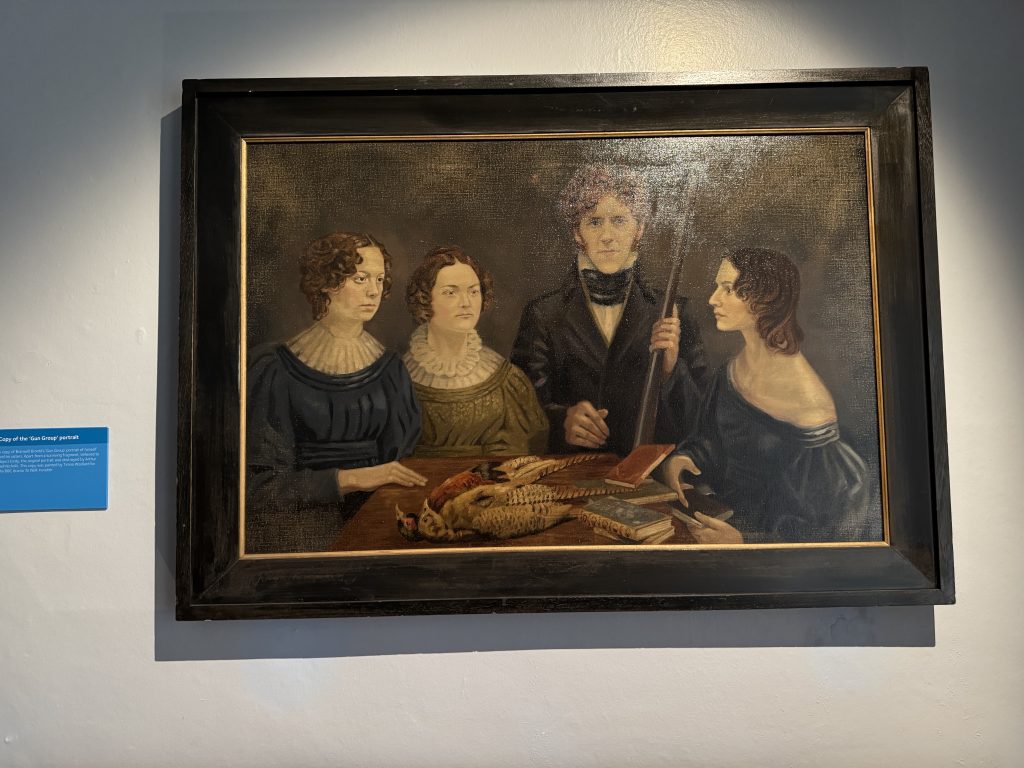
Inside the Parsonage
There’s a sense of unreality as you enter the Brontë Parsonage Museum. The first room we entered was the dining room, where a familiar portrait of Charlotte presided. The museum curators have assembled an intriguing mix of period artifacts and reproductions to evoke how the house might have appeared when the Brontë sisters lived there. The original table was returned to the parsonage only in 2016.
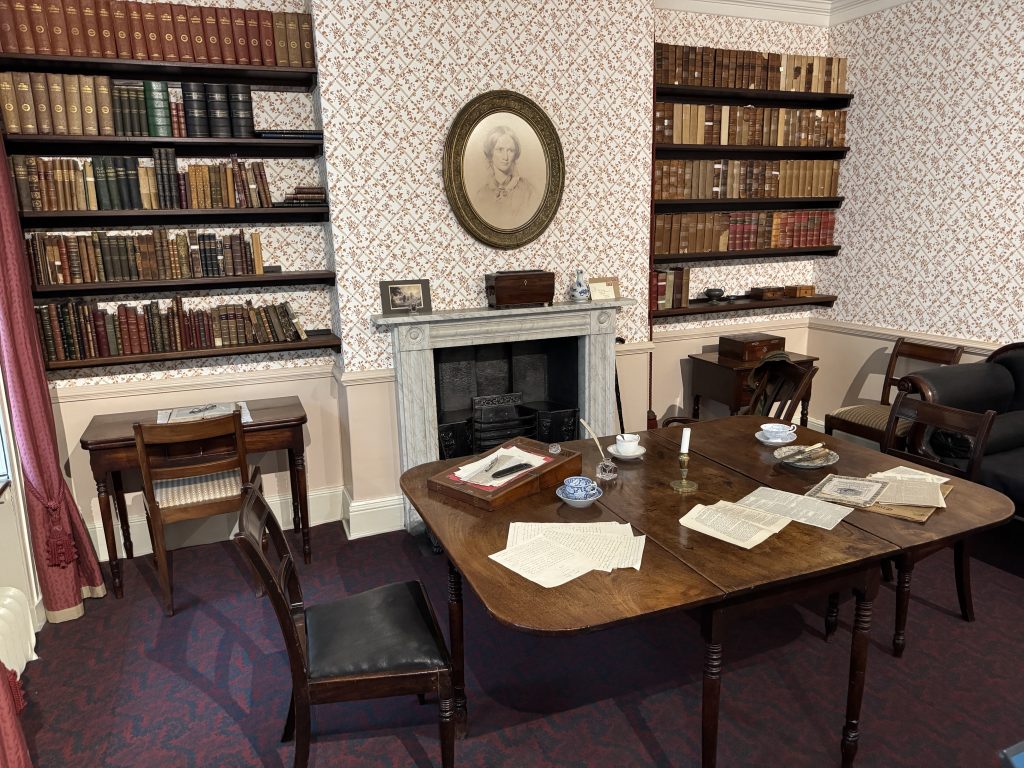
For those of us who grew up reading Jane Eyre and Wuthering Heights, it’s easy to imagine the ghosts of the sisters walking around the table in flickering candlelight, reading their work aloud and discussing plot ideas.
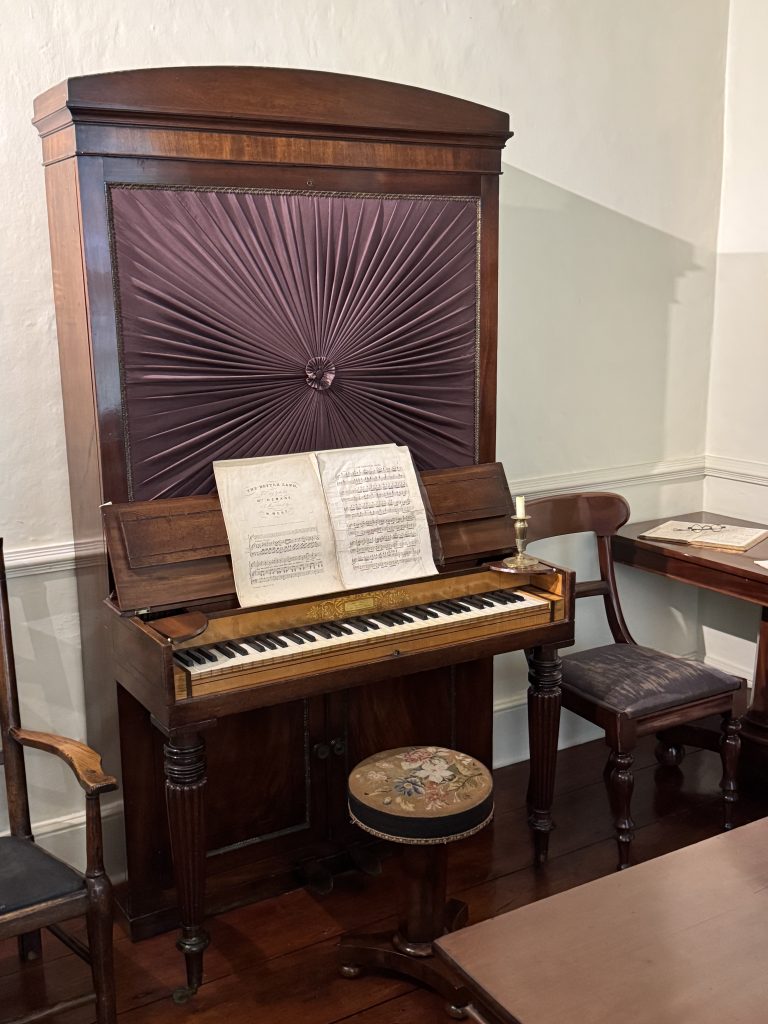
Across the hallway is Patrick Brontë’s study, with the original piano played by the whole family, and now restored to a playable condition. One of the many things I learned during this visit was that he was originally called ‘Patrick Brunty’, an old Irish name, and assumed the more distinguished sounding name Brontë at Cambridge university.
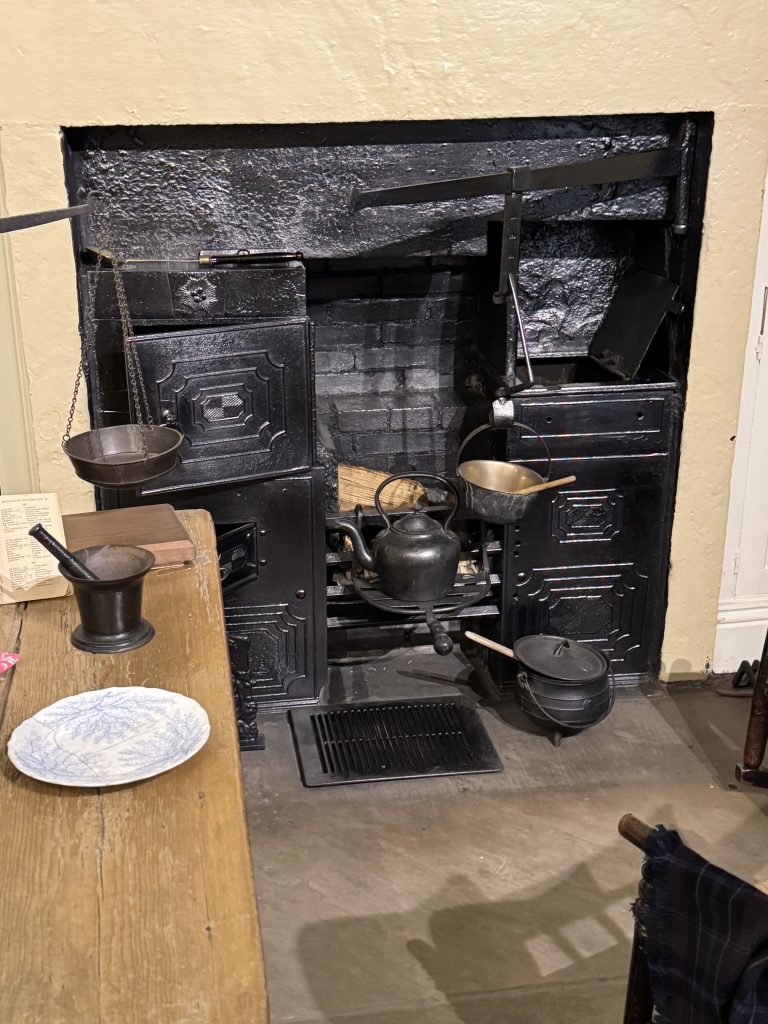
A small kitchen leads off next, where the girls would gather for the warmth of the range on cold winter evenings. It seems their few servants and housemaids became close companions, and very much part of the conversations: and the girls did their share of domestic work.
This small kitchen would have also been where meals for them all would have had to be prepared, and the only place for washing and drying all the laundry.
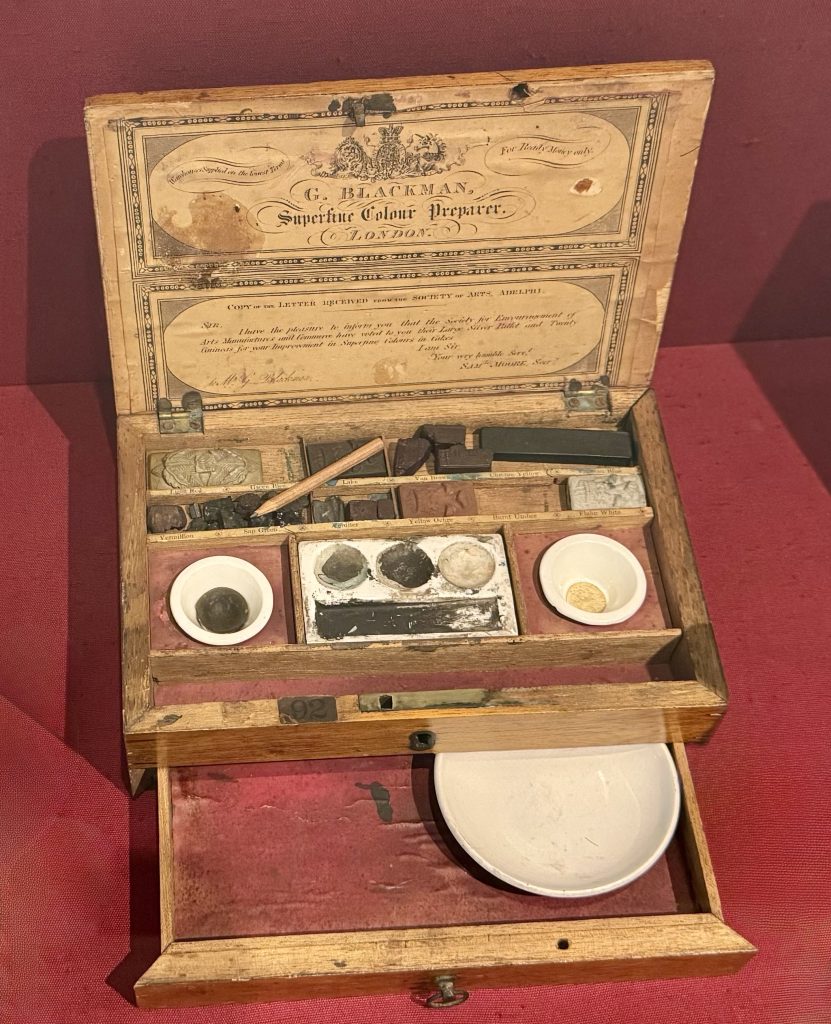
One of the most fascinating rooms up the wooden staircase is Charlotte Brontë’s bedroom, with one of her dresses on display, as well as a collection of her personal items, such as her bonnet and her paint box, preserved as she last left it
Early Deaths
Maria Brontë died suddenly of suspected cancer in 1821, and was followed by her two eldest daughters, Maria and Elizabeth in 1825 who died due to poor living conditions at school. Patrick never remarried, and did his best to educate his daughters in preparation for becoming governesses.
He made sure they all had lessons in drawing and music, and encouraged their interest in literature, including poetry by Wordsworth, and the novels of Walter Scott, which were studied by the sisters and important to the development of their writing.
Another of the things I learned on my visit was that Patrick Brontë was also an important literary influence on the sisters. His first book of verse, published in 1811, and in 1813 was followed by his second collection entitled ‘The Rural Minstrel’. a novel. In 1818, the year Emily was born, Patrick saw his first novel published: ‘The Maid Of Killarney; or Flora and Albion; A Modern Tale.’
The religious allegories in their father’s works must have inspired the love of poetry and writing for Anne, Emily and Charlotte, even after the failure of their first publication, ‘Poems by Currer, Ellis and Acton Bell’. In the difficult days when they failed to find a publisher, it is likely they thought ‘our father did it, and so can we.’
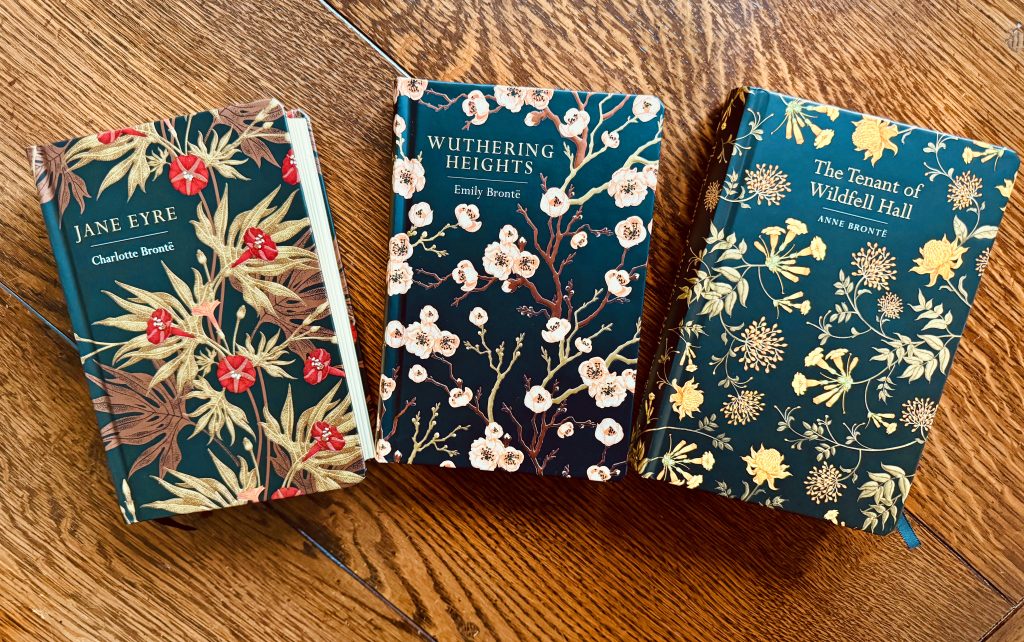
Charlotte, Emily and Anne Brontë went on to write some of the most important novels in the history of English literature – including ‘Jane Eyre’, ‘Wuthering Heights’ and ‘The Tenant of Wildfell Hall’, but only Charlotte saw commercial success in her lifetime: and suffered the loss of Emily and her brother, Branwell, in 1848 and Anne in 1849.
A Fateful Marriage
On the 29th June, 1854, Charlotte, by then a famous novelist, married her father’s curate, the Reverend Arthur Bell Nicholls. Her husband moved into the parsonage, but Charlotte died the following year, possibly from pregnancy complications or tuberculosis. It seems Arthur made a promise to remain at the parsonage, and cared for Patrick Brontë until his death on the 7th June 1861, aged 84.
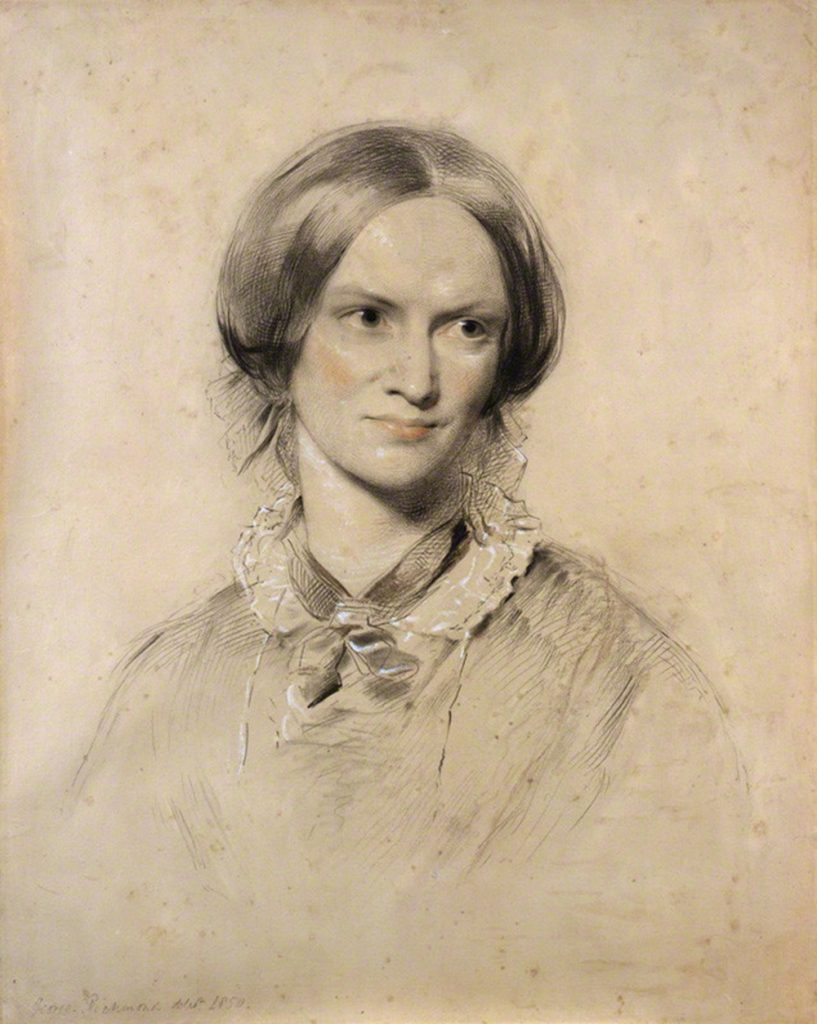
Like her sisters, Charlotte Brontë’s spirit lives forever through her books, and there is a real sense of their presence at the parsonage, a recommended visit for anyone with an interest in lives of the Brontës.

Tony Riches has established himself as one of the leading historic novelists of today with a dozen books that focus on the leading figures surrounding the monarchs of the Tudor and Elizabethan years. These beautifully researched books are all international bestsellers, beginning with his Tudor Trilogy. Tony’s blog, The Writing Desk, has over 1.4 million visitors, and his popular podcast, Stories of the Tudors has had more than 270,000 downloads. Explore more at www.tonyriches.com
Where to Stay in Haworth, United Kingdom
Haworth is compact, so you’ll find accommodations within easy walking distance of the main attractions. The town center and streets leading to the parsonage hold several guesthouses and small hotels for literary tourists. These range from Victorian-era properties to modern bed-and-breakfasts, many offering views of the moorland that inspired the Brontë novels. Booking directly with proprietors often yields better rates than online platforms, and they can recommend local walks and dining spots.
For visitors seeking traditional Yorkshire hospitality, the guesthouses on Main Street and surrounding lanes offer personal service and hearty breakfasts. These family-run establishments typically have fewer than a dozen rooms and fill quickly during school holidays and weekends. Room rates are generally modest due to the village’s size and rural setting. Many hosts have lived in Haworth for years and share authentic details about the area’s literary history.
If you prefer more amenities, Keighley (the nearest market town, three miles away) has larger chain hotels and restaurants with broader menus. The journey from Keighley to Haworth takes about fifteen minutes by car or taxi, making it a reasonable base if Haworth itself is fully booked. However, staying in the village lets you experience the narrow streets and moorland atmosphere the Brontës knew.
Book accommodations well in advance for summer visits or the Brontë anniversary dates in July. The village has limited lodging and steady tourist demand. Many properties require two- or three-night minimum stays and close seasonally during winter months.
Recommended Reading
Books by the Brontës:
- Jane Eyre by Charlotte Brontë
A gothic romance and feminist bildungsroman following the emotional and moral growth of an orphaned governess. - Wuthering Heights by Emily Brontë
A dark, windswept tale of obsession, revenge, and doomed love set on the Yorkshire moors. - The Tenant of Wildfell Hall by Anne Brontë
A bold, proto-feminist novel chronicling a woman’s escape from a destructive marriage. - Agnes Grey by Anne Brontë
A quiet, observant novel inspired by Anne’s own time as a governess, exploring class, gender, and morality. - Shirley by Charlotte Brontë
Set during the Luddite uprisings, this novel weaves industrial strife with personal resilience and proto-feminism. - Villette by Charlotte Brontë
A psychologically rich and semi-autobiographical novel about exile, repression, and unspoken desire. - The Professor by Charlotte Brontë
Her first (and initially unpublished) novel, exploring ambition, love, and cultural dislocation in Brussels. - Poems by Currer, Ellis, and Acton Bell by Charlotte, Emily, and Anne Brontë
A poetic volume revealing the sisters’ shared affinity for solitude, nature, and the inner life.
Books About the Brontë Family:
- The Brontës: Wild Genius on the Moors by Juliet Barker
An authoritative and richly detailed biography of the entire family, blending scholarship and storytelling. - Charlotte Brontë: A Fiery Heart by Claire Harman
A vivid, deeply human portrait of Charlotte and the inner heat that fueled her fiction. - Emily Brontë: A Biography by Winifred Gérin
An empathetic study of the elusive Emily, unveiling the mind behind Wuthering Heights. - Take Courage: Anne Brontë and the Art of Life by Samantha Ellis
A re-evaluation of Anne as the boldest Brontë, told with literary insight and personal reflection. - The Brontës at Haworth by Ann Dinsdale
An illustrated volume offering a window into the family’s home and daily life at the Parsonage. - Becoming Jane Eyre by Sheila Kohler
A novelized imagining of Charlotte’s path to authorship and the life that inspired her most enduring work. - To Walk Invisible by Sally Wainwright (script/book)
The screenplay of the BBC drama captures the sisters’ determination to publish and endure.
