
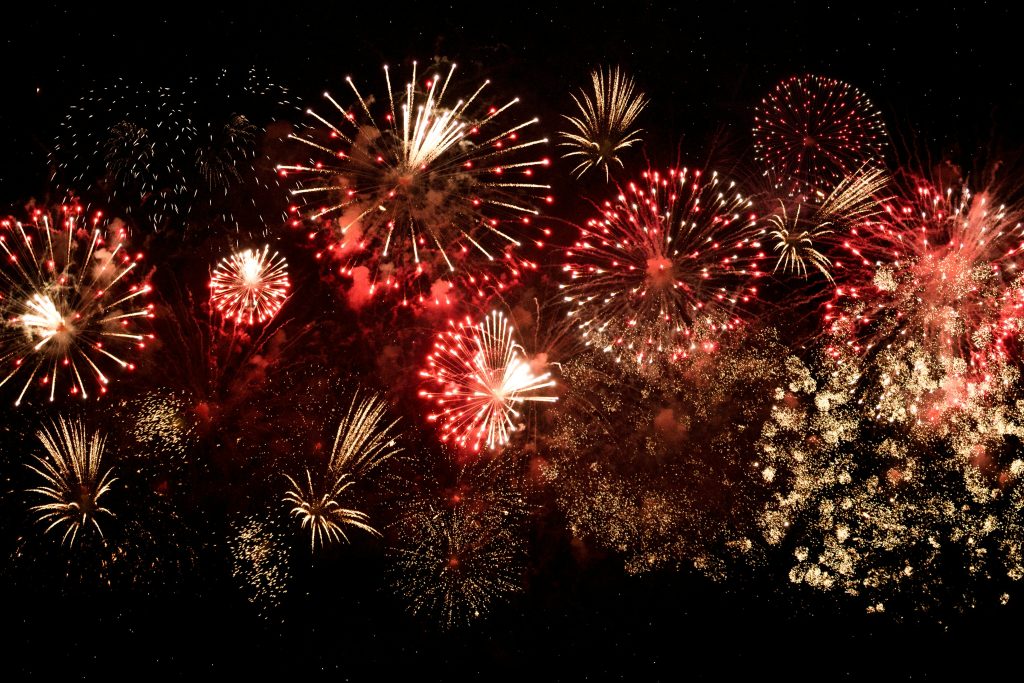
There is a moment—just before the first burst—when the sky holds its breath. Then, a spark ascends, pauses, and blossoms into light. Gold rains down, crimson flares ripple outward, and for a fleeting instant, the heavens themselves seem to celebrate.
Fireworks feel inseparable from the Fourth of July, yet their story begins far from American shores—centuries earlier, in a world of alchemy, empire, and wonder. It is a history of fireworks as rich and layered as the displays themselves.
The Origins and History of Fireworks
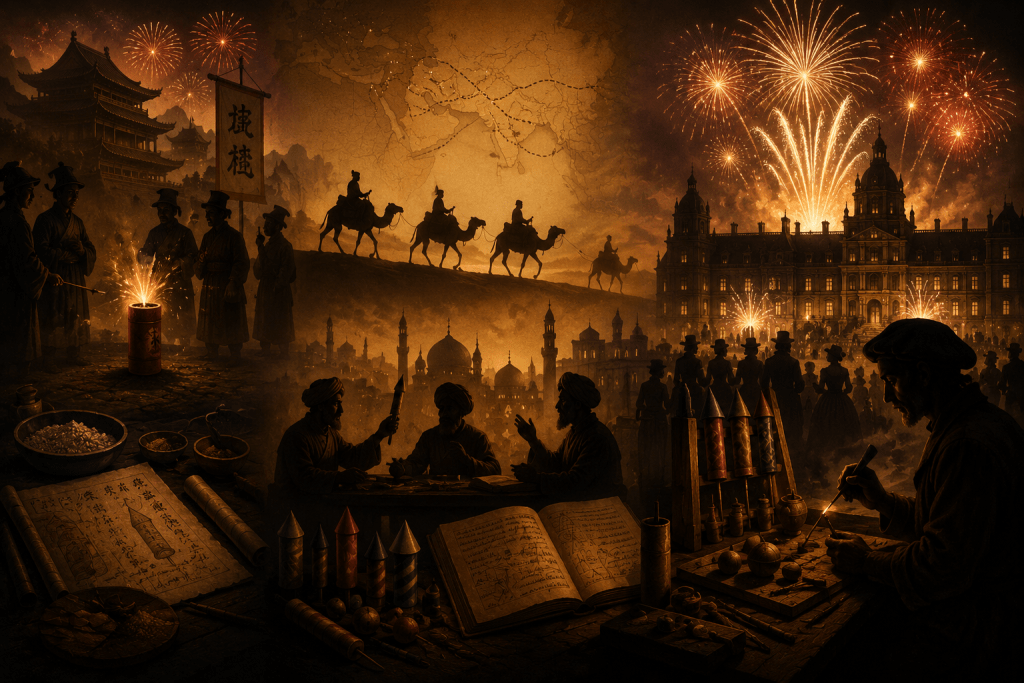
The origins of fireworks trace back to ancient China, where, sometime during the Tang Dynasty (7th–10th centuries), a curious mixture of saltpeter, sulfur, and charcoal was discovered—quite by accident—to ignite with startling force. These early “fire medicines” were first used not for celebration, but for warding off evil spirits, their sharp cracks believed to frighten away malevolent forces.
By the Song Dynasty, Chinese pyrotechnicians had refined the formula into recognizable firecrackers and rudimentary rockets, launching them into the air with bamboo tubes. What began as ritual soon evolved into spectacle.
From China, the knowledge of gunpowder traveled west along the Silk Road, reaching the Islamic world and eventually medieval Europe, where it was embraced with both fascination and ambition. By the Renaissance, fireworks had become a symbol of power—commissioned by monarchs to celebrate victories, marriages, and coronations.
Italian artisans, in particular, elevated fireworks into an art form. Families of pyrotechnicians—often passing their secrets down through generations—developed new colors, shapes, and effects. By the 18th century, fireworks displays were no longer mere novelties; they were carefully choreographed spectacles, designed to awe entire cities.
Coming of Age
Imagine London in 1749, the Thames illuminated by one of the most famous displays in history: George Frideric Handel’s Music for the Royal Fireworks. Commissioned by King George II to celebrate the Treaty of Aix-la-Chapelle, the event featured elaborate wooden pavilions, orchestral accompaniment, and a fireworks display so ambitious that parts of the structure caught fire—adding unintended drama to the evening.
Or step into Versailles under Louis XIV, where fireworks were staged as extensions of royal identity. Reflections danced across fountains and gilded facades, turning the palace grounds into a theater of light and power.
By the 19th century, fireworks had become more accessible to the public. In England, Vauxhall Gardens and Ranelagh Gardens offered regular displays—part entertainment, part social ritual—where crowds gathered beneath lantern-lit trees as bursts of color lit the sky.
And then, of course, there is America.

America Awash
On July 4, 1777, just one year after the Declaration of Independence, Philadelphia marked the anniversary with bells, bonfires, and fireworks. John Adams had envisioned a celebration of “pomp and parade…bonfires and illuminations from one end of this continent to the other.” Fireworks fulfilled that vision perfectly—dramatic, communal, and impossible to ignore.
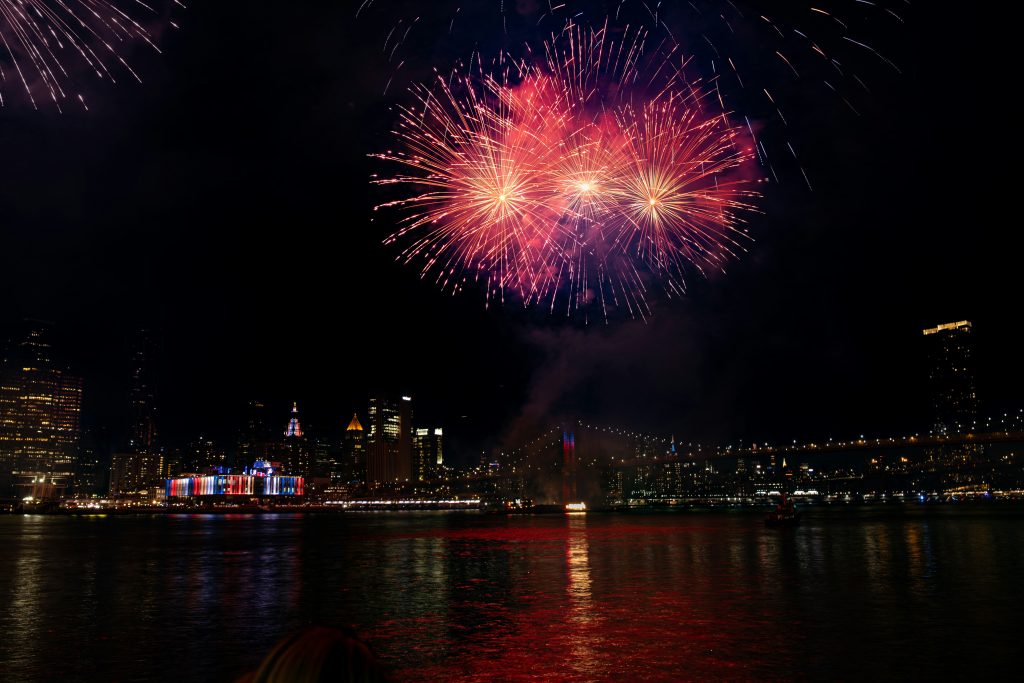
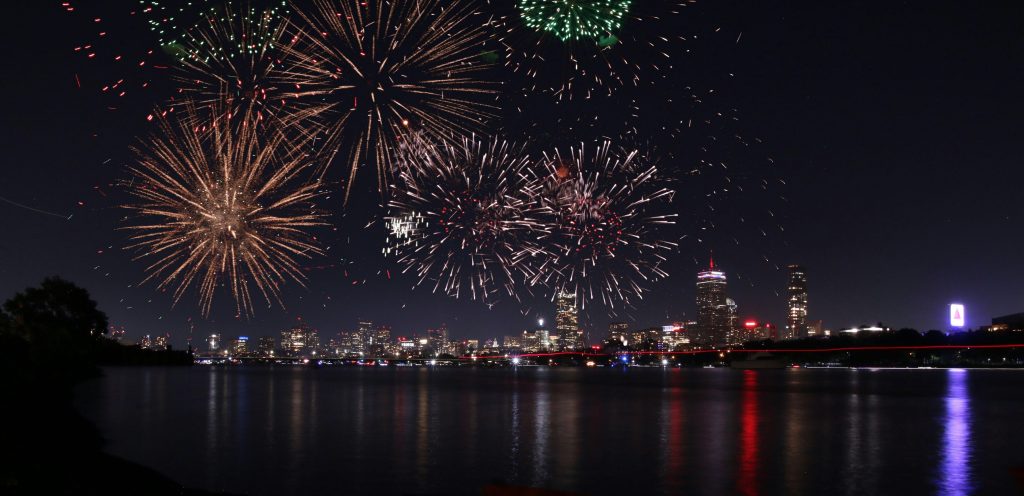
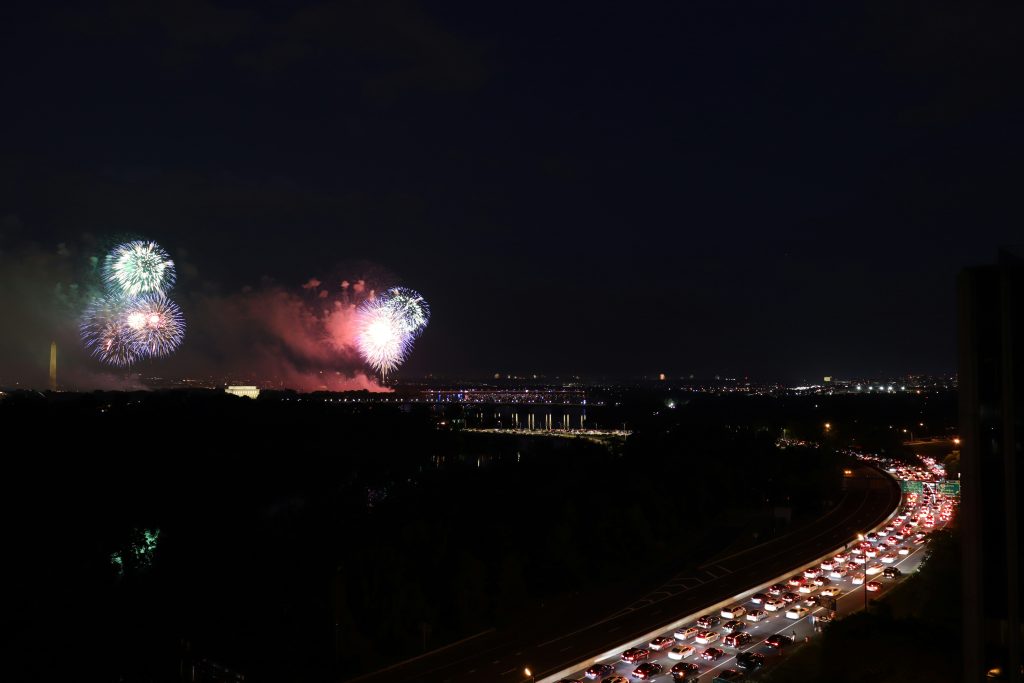
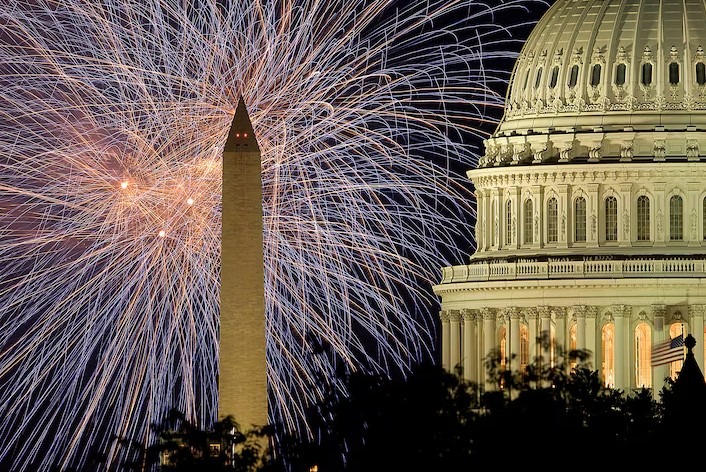
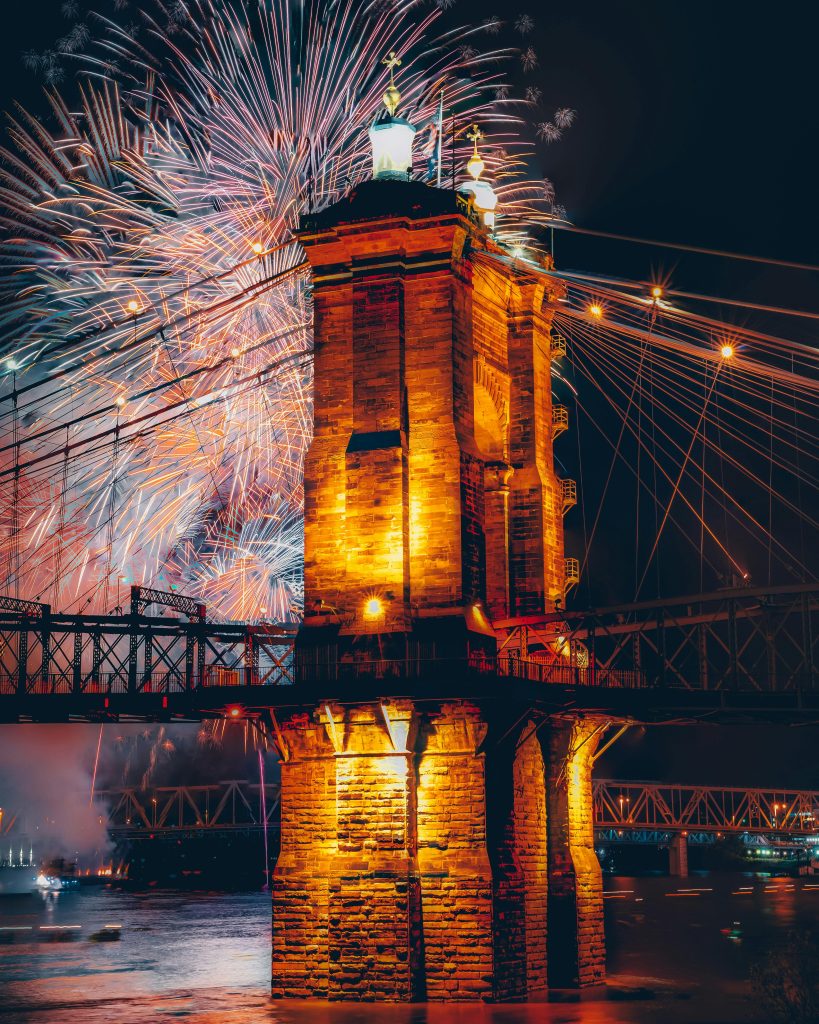
On the Fourth of July, fireworks in the United States are less a spectacle than a shared ritual—none more iconic than New York City’s Macy’s display, where thousands of shells are launched from barges along the East River, illuminating the skyline in synchronized bursts of color and light. Watched by millions both in person and on broadcast, it is a celebration scaled to the nation itself—grand, communal, and deeply symbolic. Across the country, from Boston’s Charles River to Washington, D.C.’s National Mall, fireworks echo John Adams’ vision of “illuminations” marking independence.
Explosive Everywhere
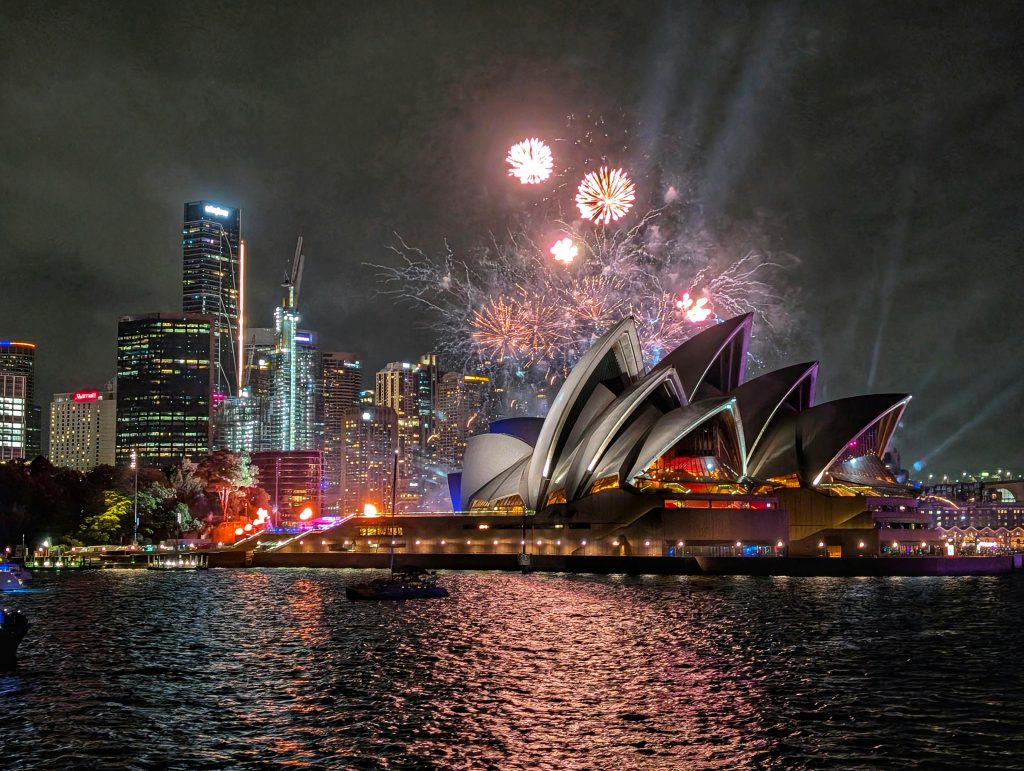
Beyond America, the world answers in kind: Sydney Harbour erupts each New Year’s Eve in a dazzling choreography over the Opera House and Harbour Bridge; London’s Thames display frames the London Eye in cascades of light; and in Valencia’s Fallas festival, fireworks are not just seen but felt—thunderous, rhythmic, and woven into the cultural fabric of the city.
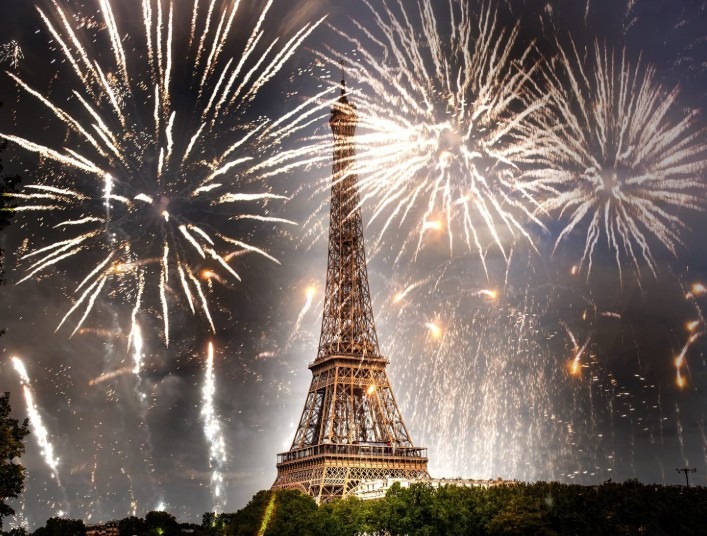
Equally unforgettable are those displays staged against the world’s most storied landmarks, where history itself becomes the backdrop. Paris on Bastille Day offers perhaps the most romantic of all—fireworks bursting from the Eiffel Tower, reflected in the Seine, accompanied by music that swells across the Champ de Mars. In Rome, celebrations near the Colosseum and Castel Sant’Angelo layer ancient stone with fleeting brilliance, a dialogue between permanence and ephemera. Beijing’s Olympic-era displays transformed the Forbidden City skyline into a theater of light rooted in the very birthplace of gunpowder. And in Edinburgh, Hogmanay fireworks crown the castle perched high above the city, a dramatic reminder that some of the most powerful spectacles are those where the past and present meet—if only for a moment—in fire and sky.
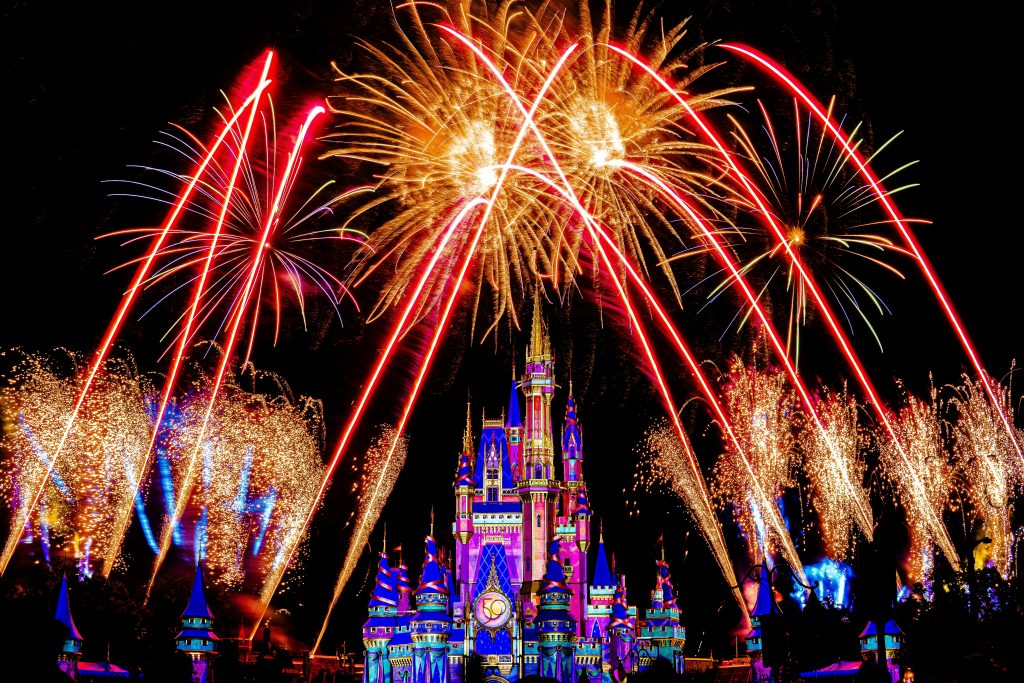
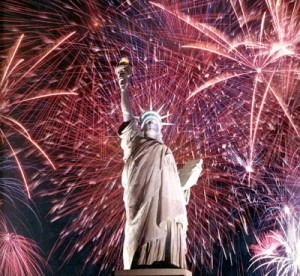
Of course, who can ignore the images of fireworks over The Disney Magic Castle, the Statue of Liberty or the U.S. Capital, the Super Bowl, or the Olympics. These are celebrations of our shared cultural touchstones!
Behind these displays are modern pyrotechnicians—heirs to those early Italian families—who now use computer timing and chemical precision to create effects unimaginable in earlier eras. Yet the essence remains unchanged: a fleeting, radiant moment shared in collective awe.
Fireworks are, by their nature, ephemeral. They exist for seconds—then vanish into smoke and memory.
And yet, their history endures. From ancient Chinese rituals to royal European spectacles to the jubilant skies of Independence Day, they have always marked moments that mattered—victory, unity, renewal, and hope.
Recommended Reading
- Fireworks: Pyrotechnic Arts and Sciences in European History by Simon Werrett – A richly illustrated study of how fireworks evolved into grand spectacles of power, art, and public celebration in Europe.
- The Chemistry of Fireworks by Michael S. Russell – An engaging and accessible look at the science behind color, composition, and the explosive beauty of fireworks.
- The Gunpowder Age: China, Military Innovation, and the Rise of the West by Tonio Andrade – A compelling history of gunpowder’s origins in China and its transformative impact on warfare and global power.Handel: The Man and His Music by Jonathan Keates (for context on the Royal Fireworks spectacle)
- Pyrotechnics: The History and Art of Firework Making by Alan St. H. Brock – A visual treasure of historic engravings revealing the grand, theatrical fireworks displays of European courts.
- De la Pirotechnia by Vannoccio Biringuccio – Written by Italian engineer Vannoccio Biringuccio, it is one of the earliest printed works to discuss explosive materials and technical craft in detail.
- The Firework Book by John Withington – A vivid collection of modern, full-color photography capturing the scale and brilliance of contemporary displays.
- Spectacular Paris (various authors) – Large-format photography collections showcasing the romance of Bastille Day fireworks over the Paris skyline.
The Families Behind the Fireworks
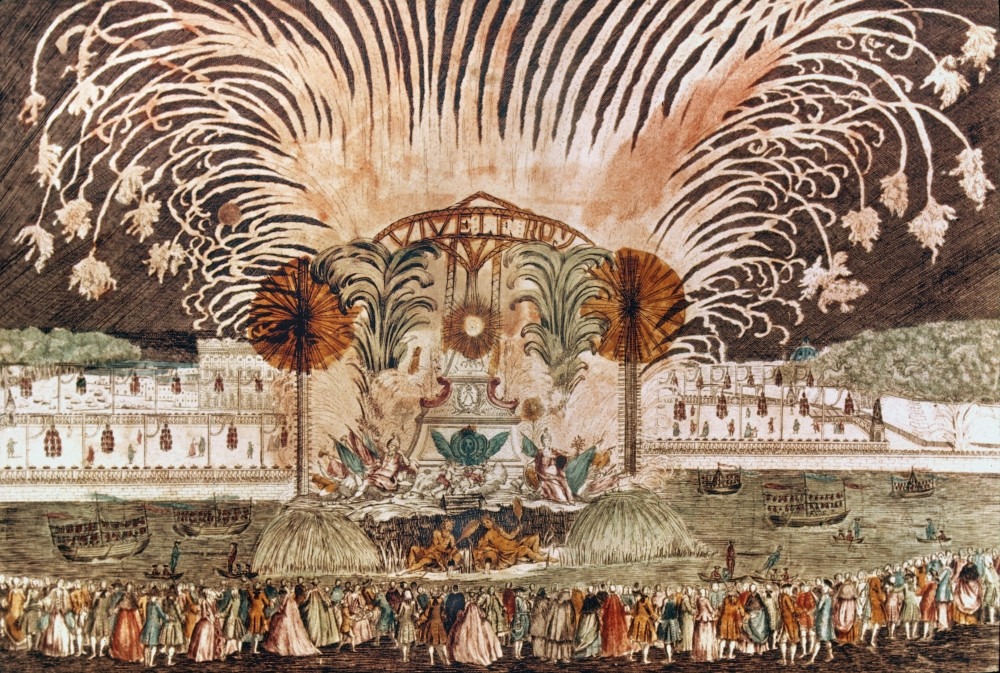
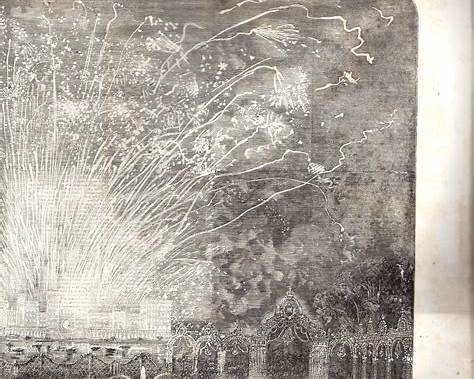
Long before fireworks became a global industry, they were the closely guarded craft of family dynasties and regional traditions, with formulas and techniques passed from one generation to the next.
Among the most celebrated were the Ruggieri family, originally from Bologna, Italy, who were invited to France and became the fireworks masters of the royal court, creating dazzling displays for Versailles and Paris. In France, the Morel family also became known for large-scale public spectacles, helping carry pyrotechnics from the world of monarchs into broader civic celebration. In England, the Brock family, founded by John Brock, emerged as one of the great pyrotechnic names, later joined by the Pain family, whose descendants still maintain a leading fireworks company today.
Elsewhere, fireworks flourished through powerful regional family traditions rather than one famous surname. In Naples and Sicily, family-run pyrotechnicians built elaborate “firework machines” for religious festivals, while in Liuyang, China—the historic heartland of fireworks—generations of families preserved the oldest traditions of all, guarding the craft that began with gunpowder itself.
Their art vanished in moments of light and smoke, but these families ensured the tradition endured—passed hand to hand, century to century, illuminating courts, cities, and celebrations around the world.
