Where Da Vinci’s Dreams Became an Essential Waterway
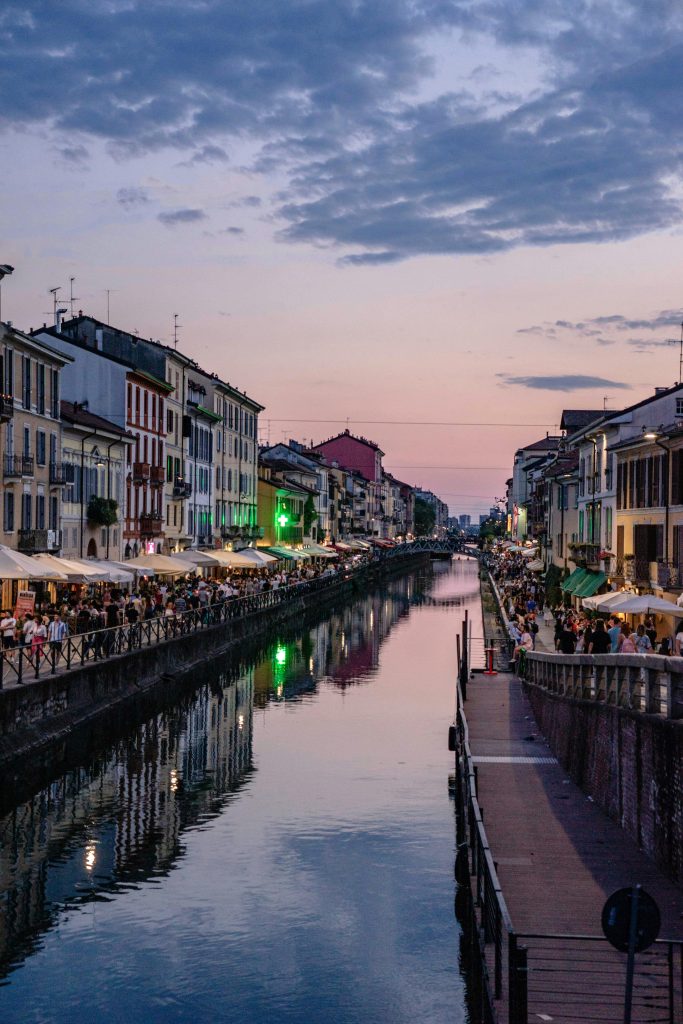
Walk the streets of Milan today and the city will greet you with style: haute couture, neoclassical façades, tram bells echoing against marble. But if you follow the sounds of water, soft and steady, you’ll find yourself in a different Milan. One that speaks to its powerful historic past.
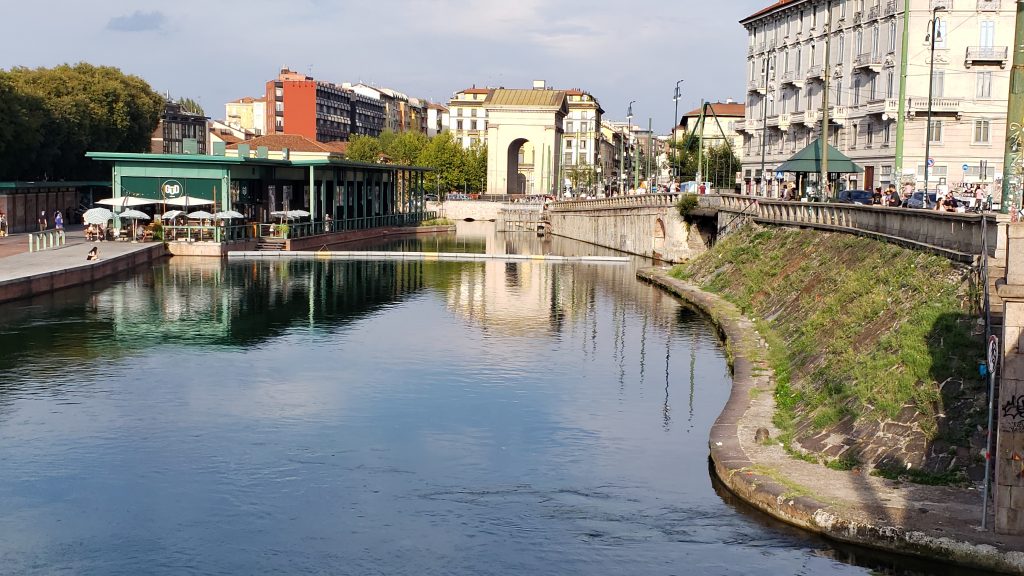
Here, in the Navigli District, two long canals still trace the quiet heartbeat of a city once built not on fashion, but on flow.
These are the last remnants of a remarkable system: the Navigli, Milan’s historic canals, once five in total, that stitched together commerce, agriculture, and invention. And at the center of their most extraordinary chapter stood Leonardo da Vinci, not as painter, but as engineer.
A City of Land, Thirsting for Water
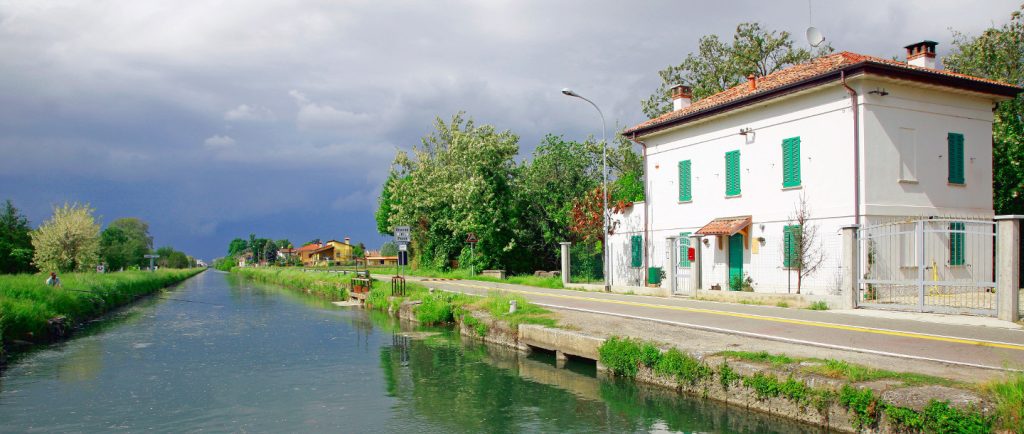
Unlike Venice, Milan is a city of landlocked ambition. Situated far from the sea and built atop the flat plains of Lombardy, it had no natural waterway to support its trade. And yet, as early as the 12th century, Milan’s leaders began constructing artificial canals to bring water in, and goods out.
These canals weren’t aesthetic. They were pragmatic lifelines.
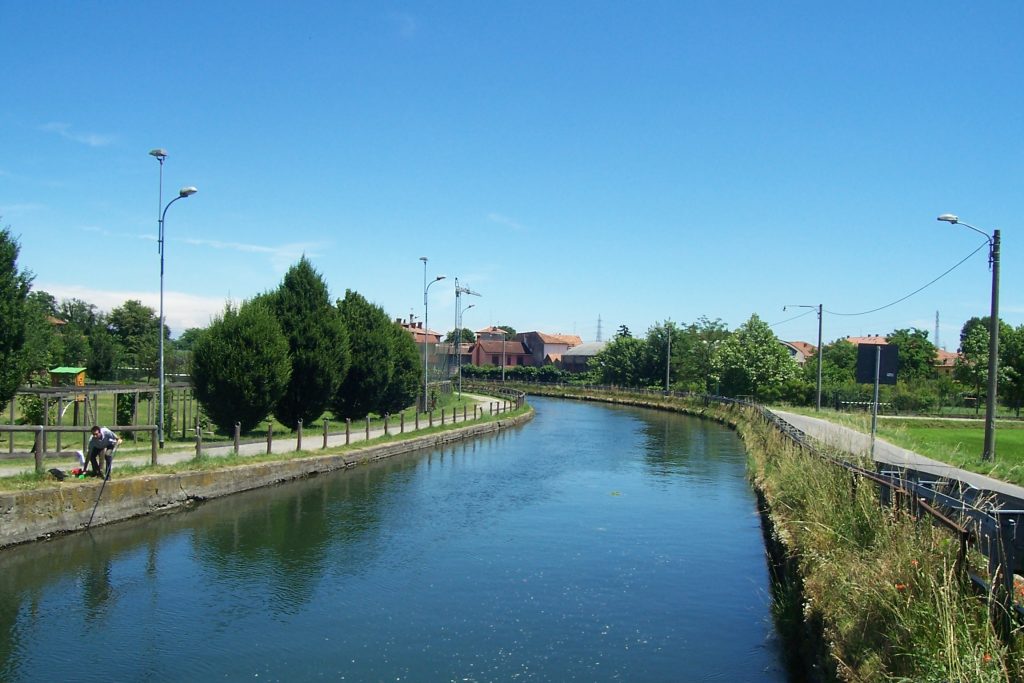
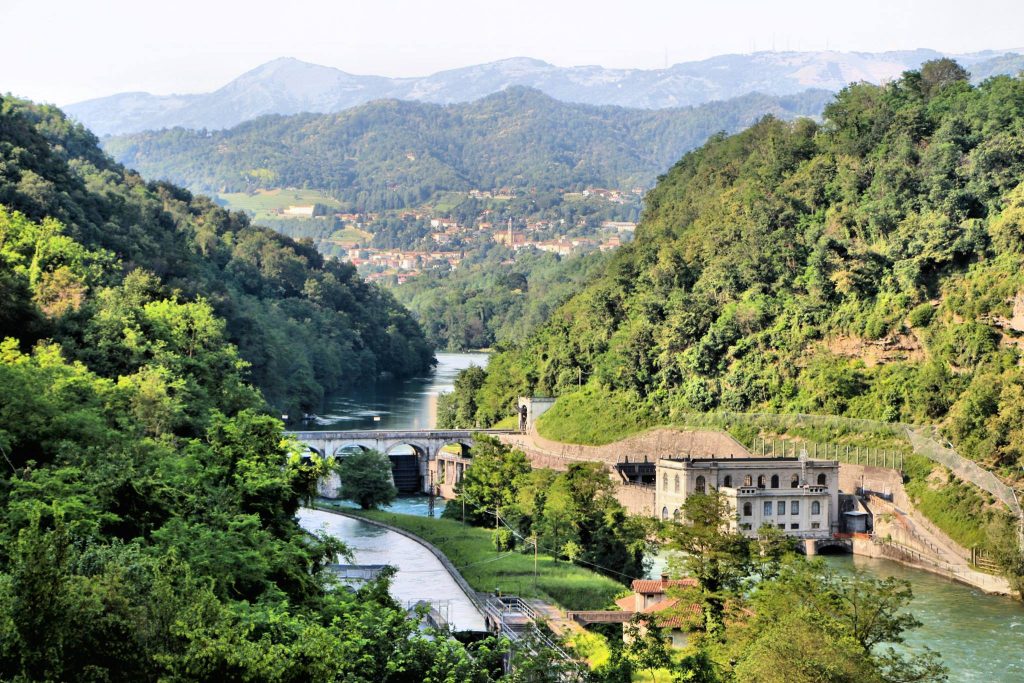
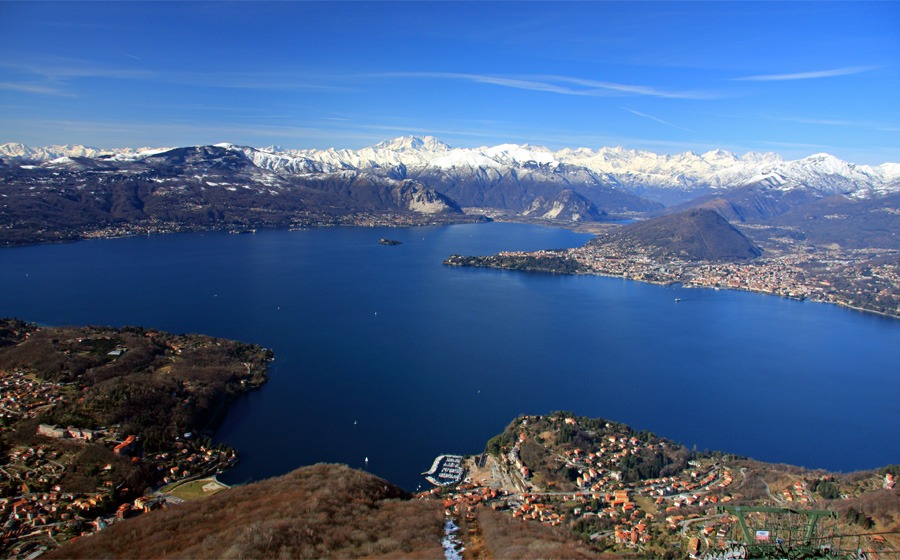
The earliest, the Naviglio Grande, was begun in 1177, connecting Milan to the Ticino River. This allowed goods, especially marble, grain, and textiles, to reach the city from Lake Maggiore, and ultimately, the Mediterranean. By the 14th century, more canals followed: the Naviglio Pavese, the Naviglio Martesana, the Naviglio di Bereguardo, and the Naviglio di Paderno.
Together, they formed a vast system that allowed barges to bring food, stone, and fuel into the city, and to carry cloth, arms, and wealth out into the world.
But moving water across flat terrain isn’t easy. Elevation changes, sediment, and irregular flow made canal traffic unpredictable. Milan needed more than brute force. It needed brilliance.
Enter Leonardo: The Artist as Engineer
In 1482, the infamous Ludovico Sforza, the Duke of Milan (Il Moro), summoned a 30-year-old Leonardo da Vinci to court. The artist offered more than paintings, he brought a letter listing his capabilities as a military engineer, waterworks planner, and hydraulic innovator.
Among his earliest and most significant contributions was to Milan’s canal system.
Leonardo studied the Martesana Canal, already under development to bring water from the Adda River to Milan, and he proposed a series of lock gates that would revolutionize control over water levels and boat movement. His design for mitered lock gates, which opened and closed on a central axis and could withstand varying water pressure, became the blueprint for modern lock systems still in use today.
He also drafted detailed topographical surveys of the canal network, water flow diagrams, and imaginative sketches of machines to dredge canals, lift boats, and divert rivers. His notebooks are filled not just with inventions, but with a deep, reverent understanding of water: its weight, its will, and its use.
In short, Milan’s canals became one of Leonardo’s great unfinished masterpieces, a work of science and soul.
Marble by Water, City by Stone
Thanks to the canals, the Duomo of Milan, one of Europe’s great Gothic cathedrals, was literally built by water. The pink-hued marble used in its construction was quarried from Lake Maggiore and transported along the Naviglio Grande, reaching the city via barge. The canals weren’t simply infrastructure. They were sacred arteries delivering the materials of beauty and faith.
By the 16th and 17th centuries, Milan’s canal system expanded into nearly 100 miles of interconnected waterways, navigated by flat-bottomed boats and lined with porticos, granaries, and taverns. The water also powered mills and irrigated the farmlands that still sustain the Lombard countryside.
Even into the 19th century, the Navigli continued to support daily life, washing, trade, travel, before the pressure of industrialization, urban expansion, and automobiles led to the covering of most canals in the 1920s and ’30s. Streets like Via San Marco and Via Fatebenefratelli now run above buried waterways.
The Navigli Today: Still Flowing, Still Reflecting, Still Vital
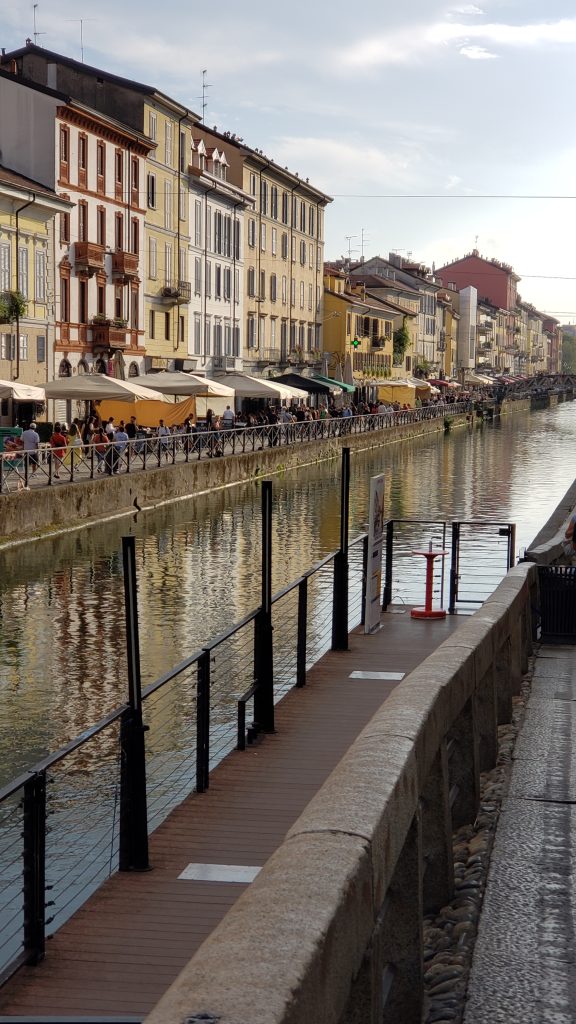
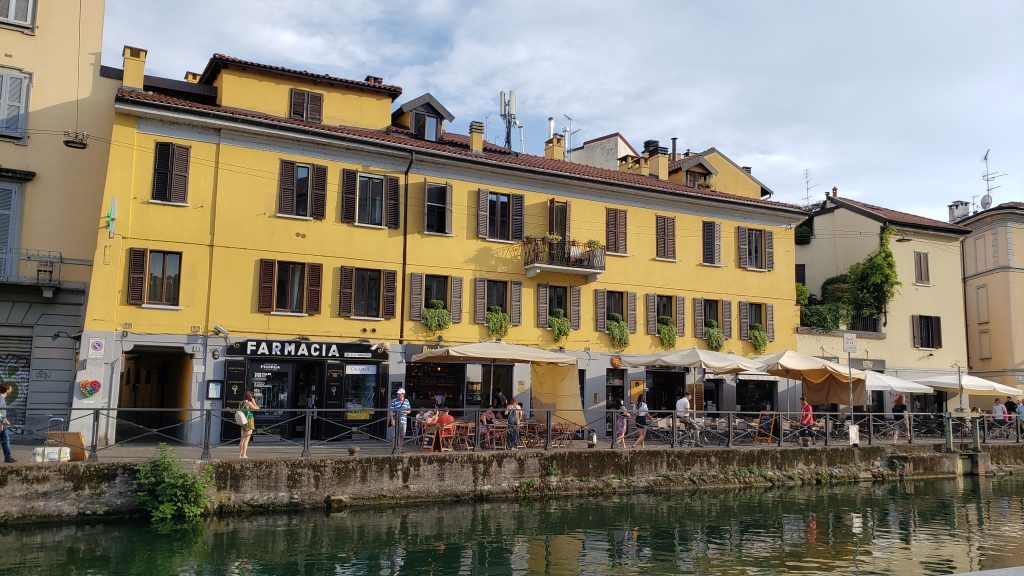
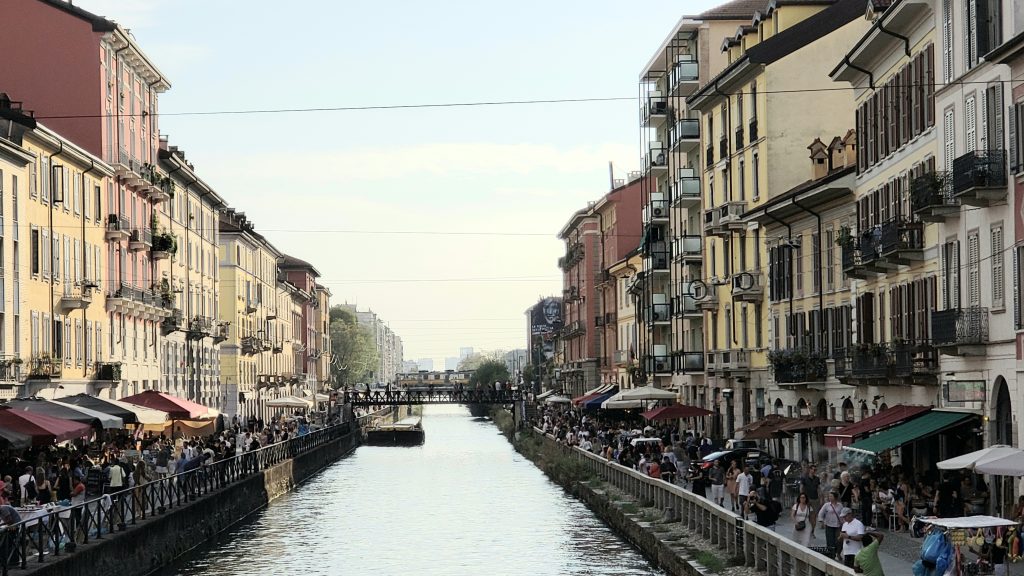
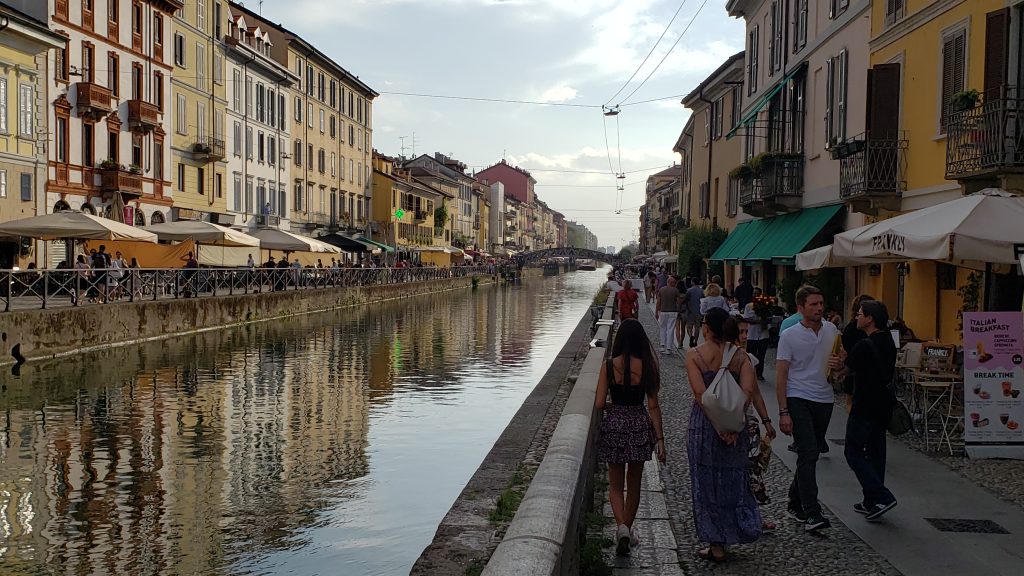
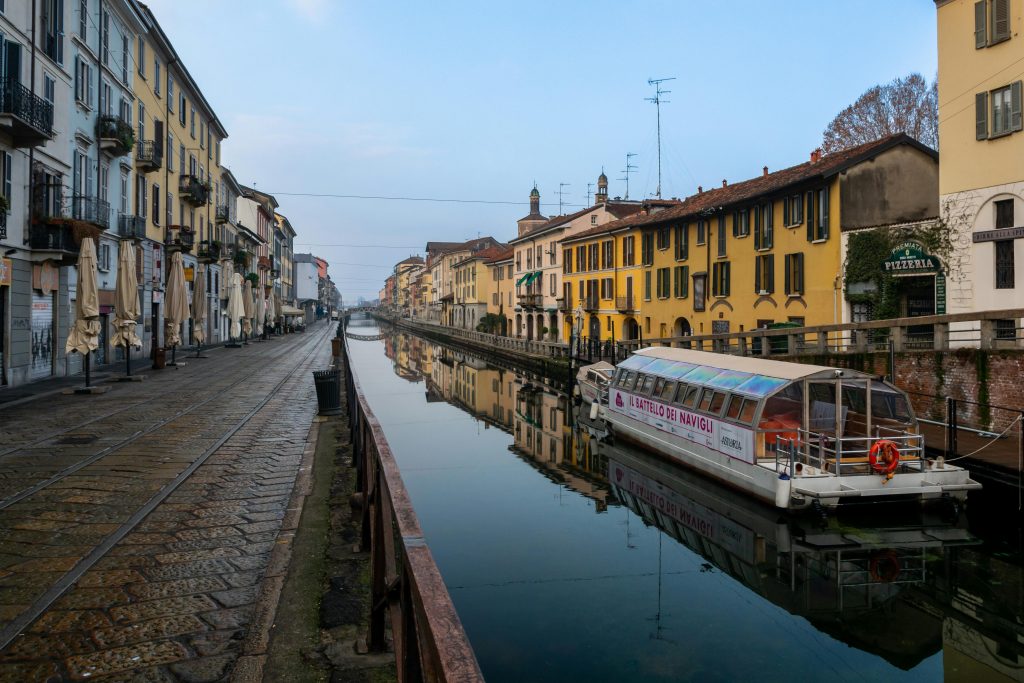
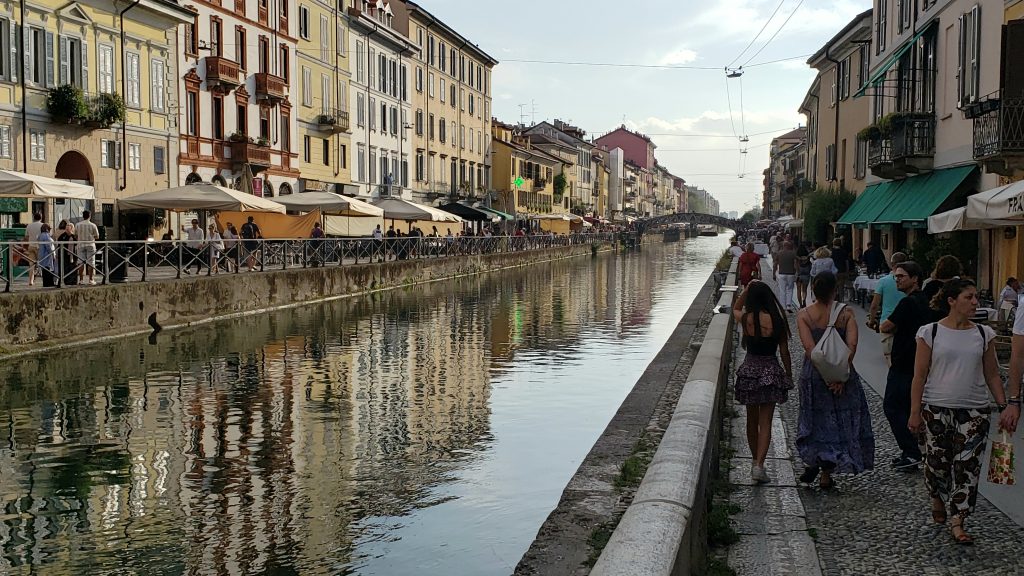
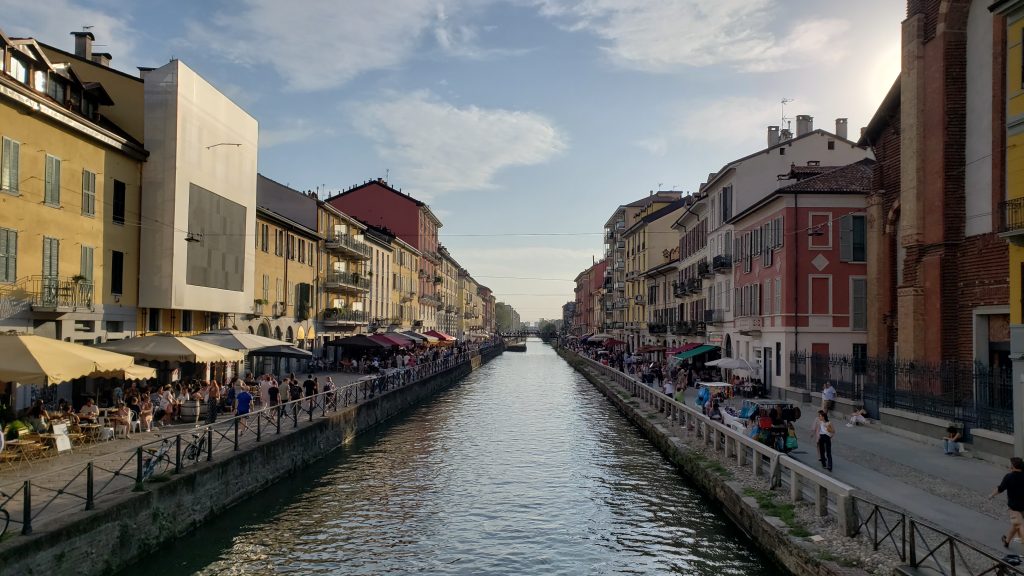
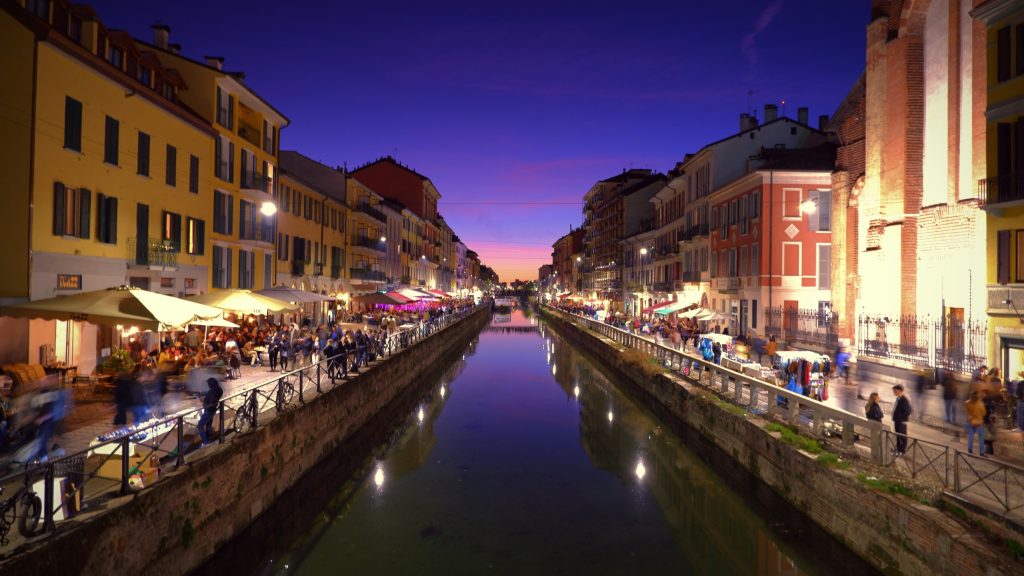
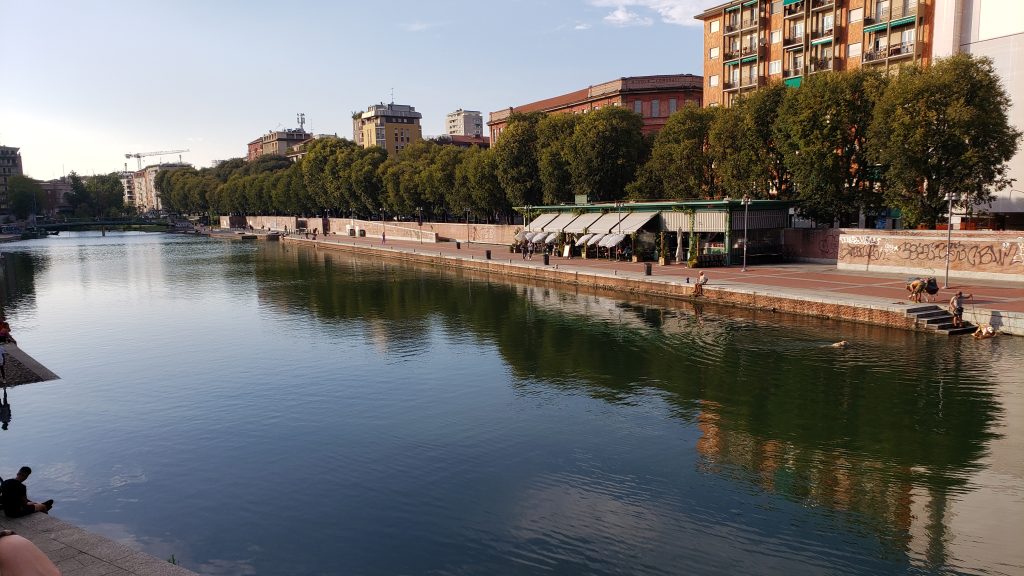
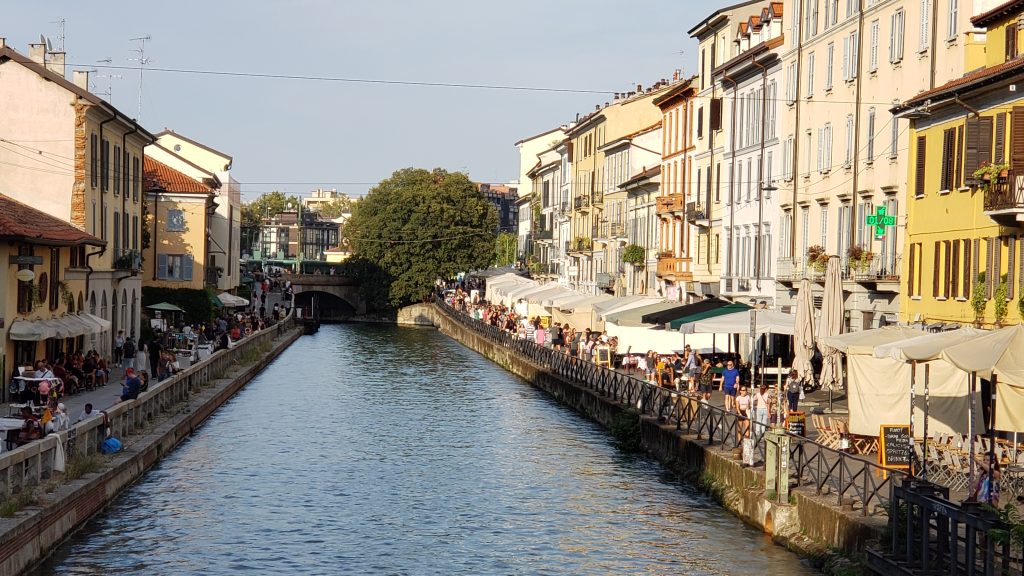
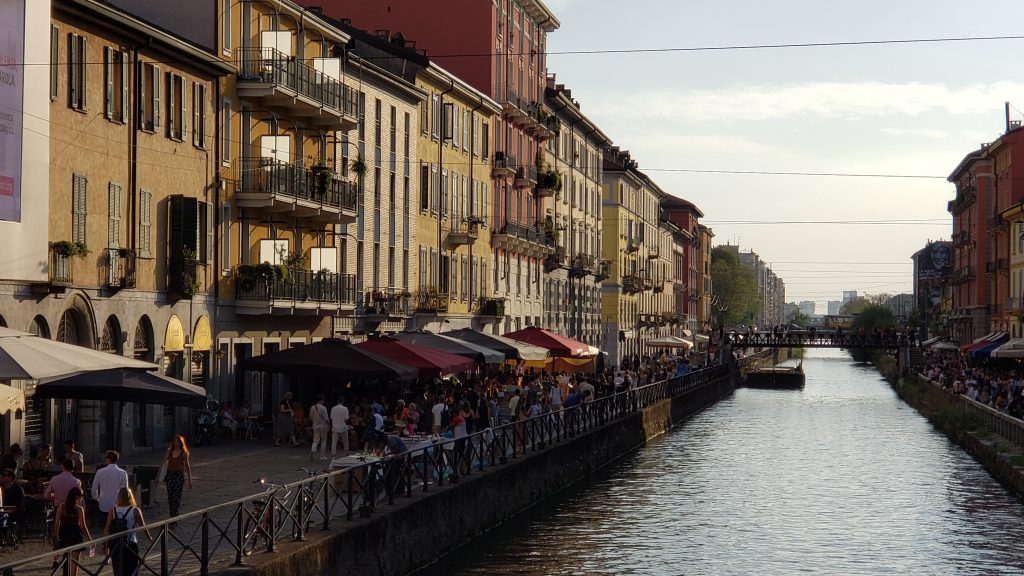
Of the five original canals, only two are still open: the Naviglio Grande and the Naviglio Pavese. And where once they carried marble and wheat, today their canal-side streets attract a vast array of diners, drinkers, music lovers and shoppers seeking its atmospheric tempo.
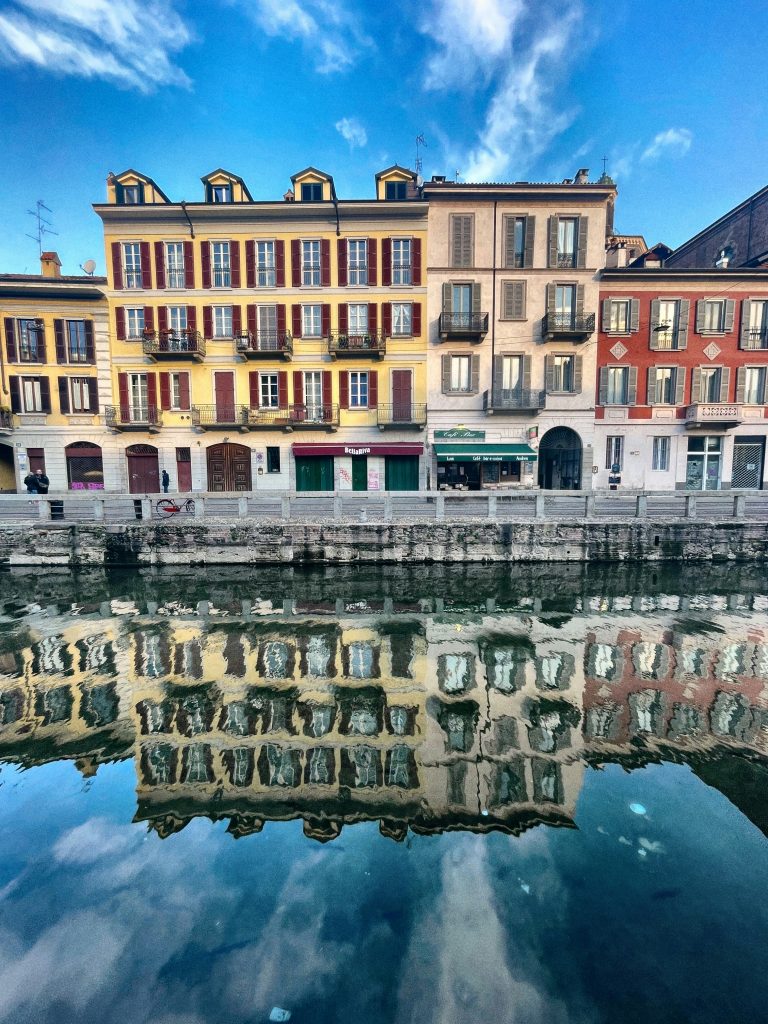
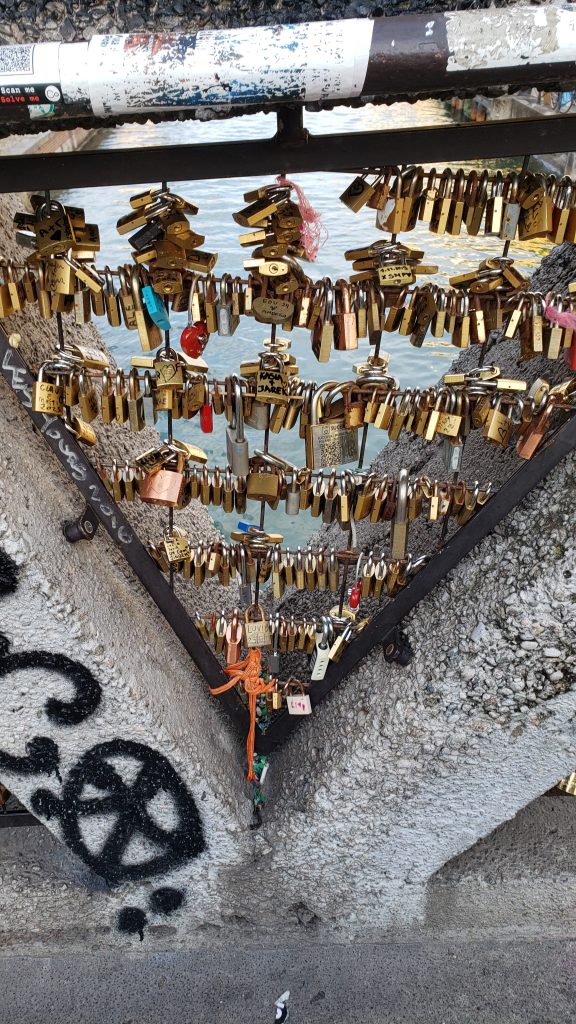
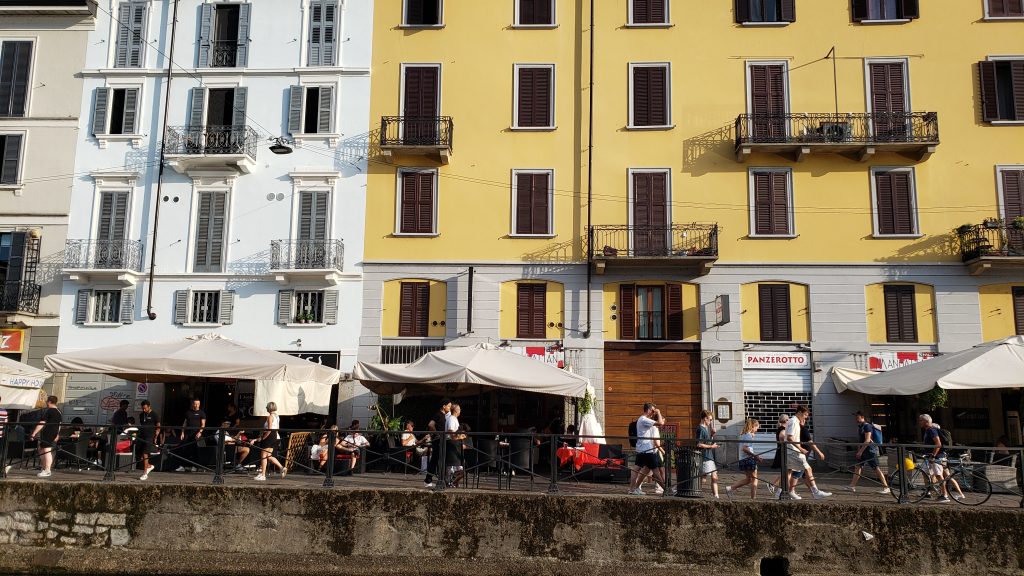
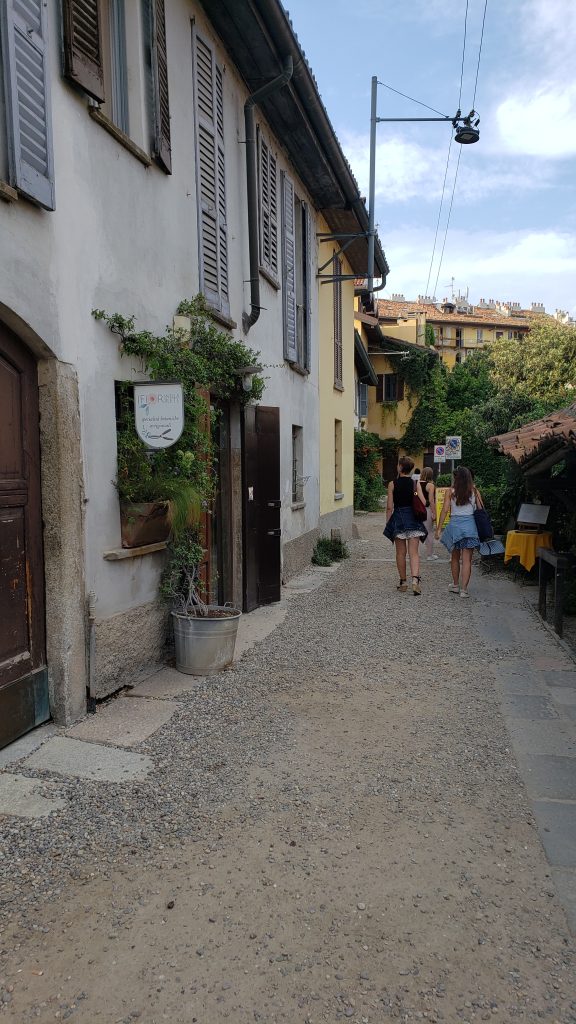
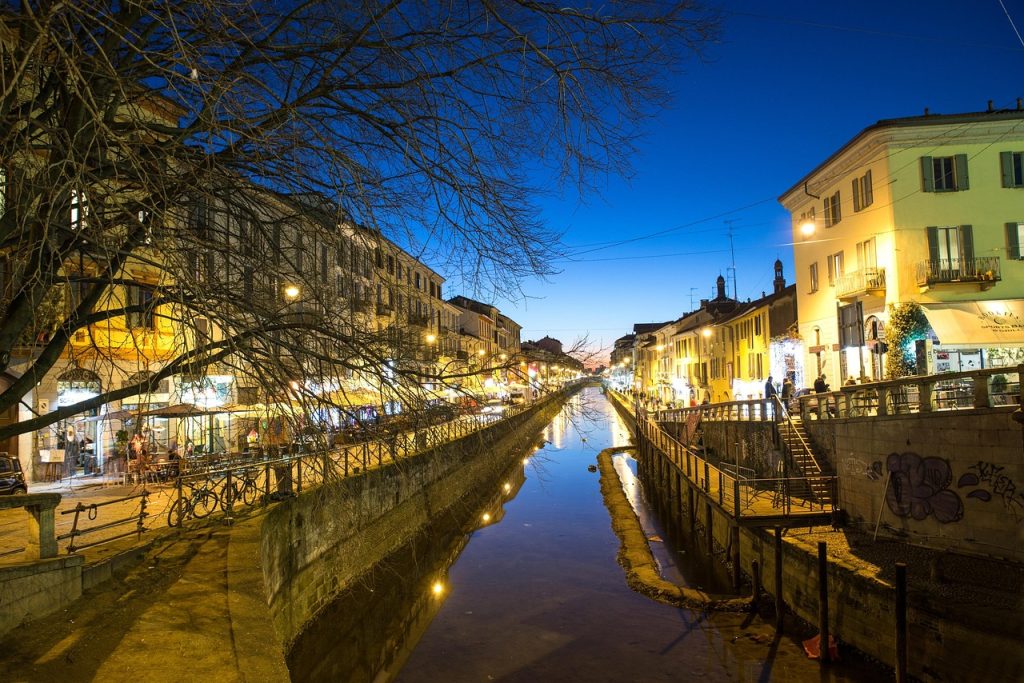
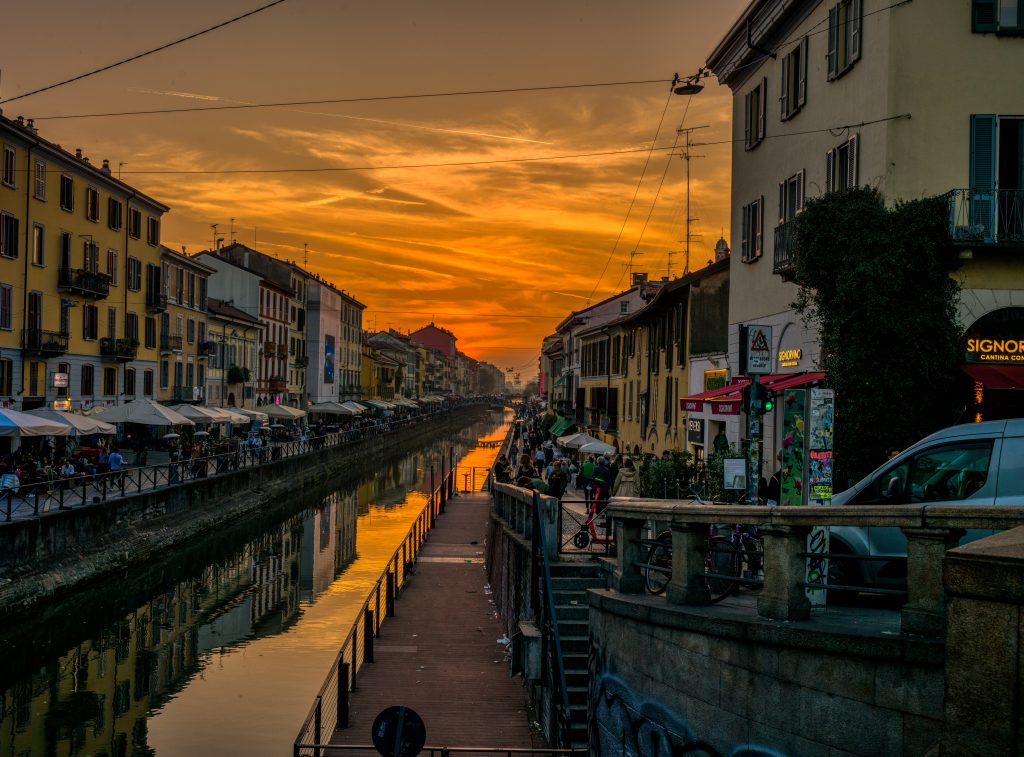
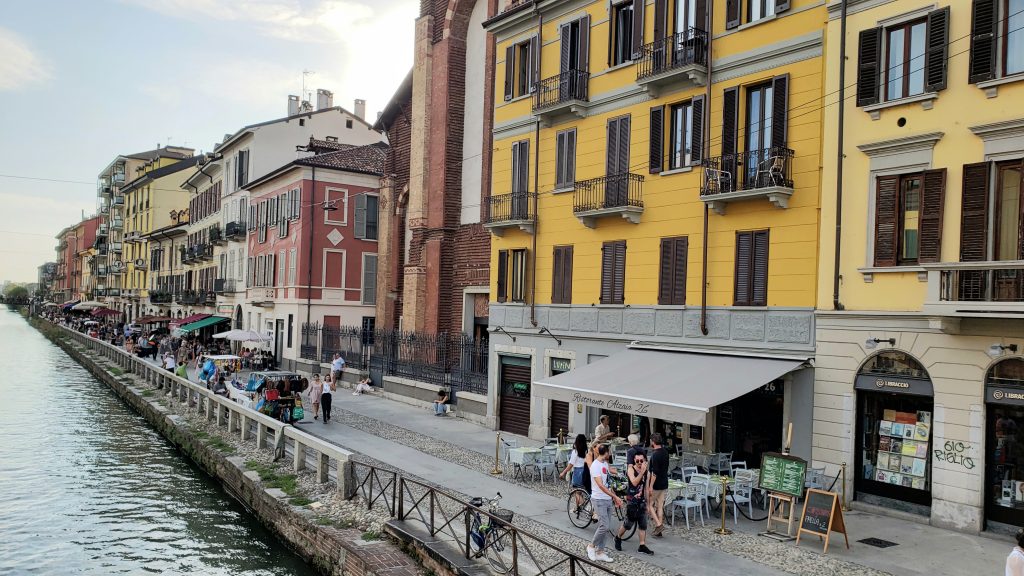
The Navigli District is now one of Milan’s most beloved neighborhoods, a place of twilight reflections, jazz echoing under old bridges, antique shops tucked behind ivy-covered courtyards and enticing eateries. The canal embankments are lined with trattorias, bookshops, and artisan studios. Streetlamps glow on water. Conversations float on the breeze. The bridges over the canals are ripe with lovers — and photographers catching the last of the sunlight glinting on the golden buildings.
Every Saturday, the Naviglio Grande hosts a vintage and art market along its cobbled banks, echoing the commercial rhythm of centuries past. In summer, boat tours carry visitors past the very locks that Leonardo once sketched.
Milan may be remembered for marble and fashion, but it was built, literally, by water. And not just water flowing through stone channels, but water guided by genius. To walk beside them today is to glimpse Leonardo not in a gallery, but in the glint of water under an old brick bridge, where invention once met intention, and still does.
Where to Stay in Milan, Italy
For travelers interested in Milan’s canal history, the Navigli district offers the most authentic experience. This neighborhood sits directly along the restored Navigli Grande and Navigli Pavese canals, where da Vinci’s original lock systems still function. Hotels and guesthouses in this area range from budget-friendly options to mid-range properties, and staying here puts you within walking distance of canal-side restaurants and the evening passeggiata when locals stroll the water’s edge. The neighborhood has a genuine working character rather than the polished feel of central Milan.
If you prefer proximity to major transit and cultural attractions, the area around Centrale Station and the Duomo offers larger hotels and more booking options. These central locations make it easier to visit the Pinacoteca di Brera, the Castello Sforzesco, and other historical sites without lengthy metro rides. The tradeoff is higher prices and more tourist crowds, though the convenience may be worth it if you have limited time in the city.
For budget travelers, the Isola neighborhood north of the canals has gained popularity in recent years with smaller hotels, hostels, and bed-and-breakfast properties. It sits just a short metro ride from the Navigli and offers a younger atmosphere with local bars and restaurants. This area gives you breathing room from the tourist center while keeping you connected to the city’s water history.
During warmer months, booking several weeks in advance is essential, as Milan draws significant convention traffic alongside leisure travelers. Consider staying through a weekday evening to experience the canals when they’re quieter, or time your visit around times when water levels are higher and the locks are actively used. This reveals the engineering that da Vinci designed over five centuries ago more vividly than daytime tourist hours allow.
Recommended Reading
Fiction
- Leonardo’s Swans by Karen Essex
A richly imagined novel of the Sforza court, weaving Leonardo’s artistic genius with the power struggles of Renaissance Milan. - The Secret Book of Grazia dei Rossi by Jacqueline Park
An intimate and elegantly written story of a Jewish woman in 16th-century Milan, caught in love, faith, and courtly intrigue. - In the Company of the Courtesan by Sarah Dunant
Set partly in Milan and rich with Renaissance detail, this novel offers a sensual, political, and artistic portrait of northern Italy’s city-states.
Non-Fiction
- Leonardo da Vinci by Walter Isaacson
A deeply engaging biography that explores Leonardo’s work as a painter, inventor, and canal engineer, using his notebooks as a lens. - Leonardo da Vinci and the Art of Sculpture: Inspiration and Invention by Gary M. Radke
The book examines his contributions to hydraulic engineering, including canal systems and water management. It provides insight into how these innovations shaped Milan’s urban and economic development. - Leonardo da Vinci: The Marvellous Works of Nature and Man by Martin Kemp
The book includes detailed discussion of his work on water, hydraulics, and canal engineering during his time in Milan. - The Notebooks of Leonardo da Vinci (Oxford Classics Edition)
A primary source that reveals Leonardo’s endless fascination with water, its hydraulics, its grace, and its uses.
Tours to Consider: