
By Subhasish Chakraborty
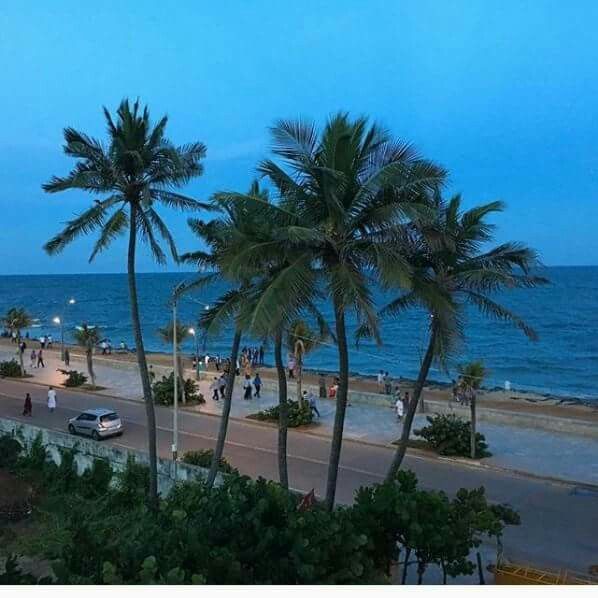
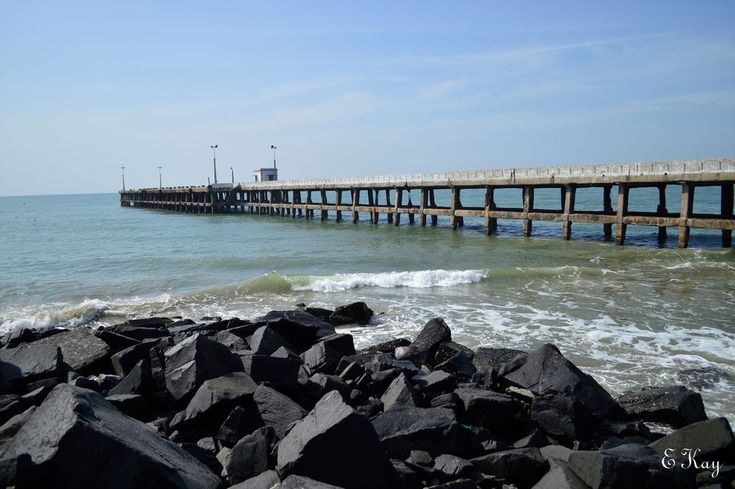
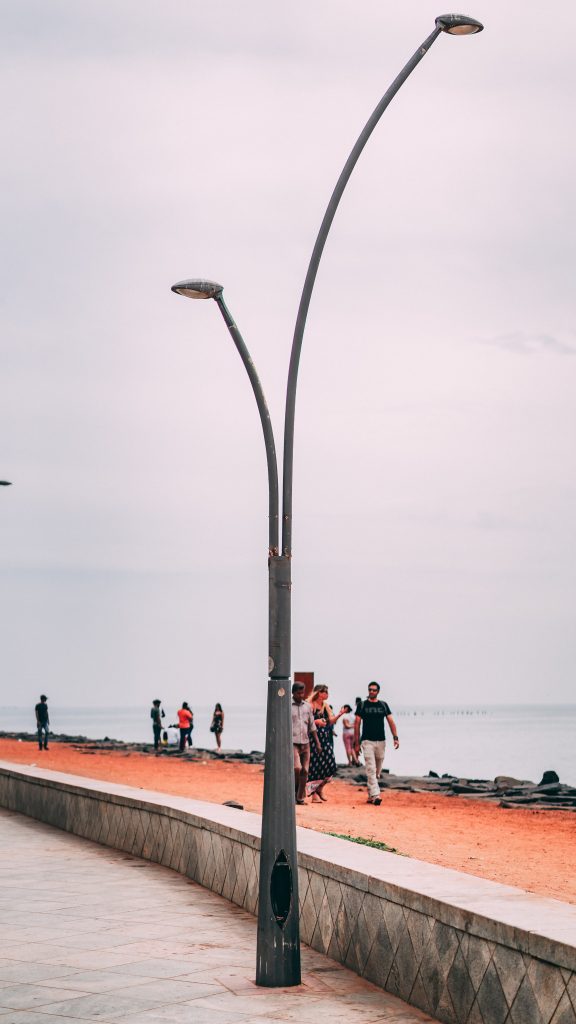
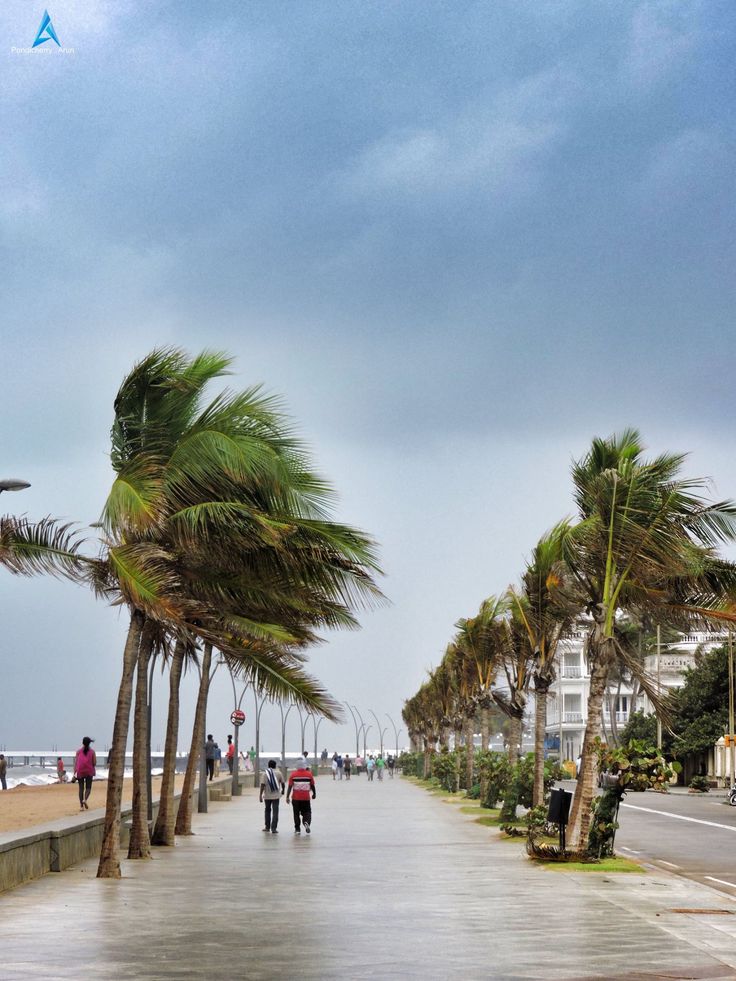
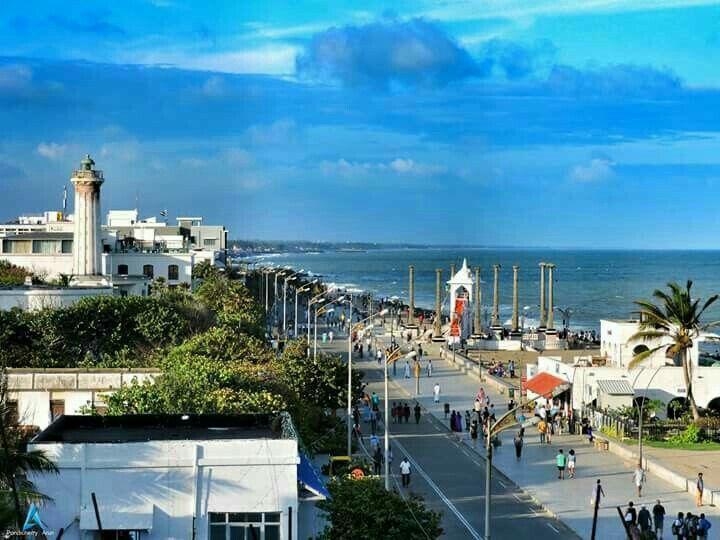
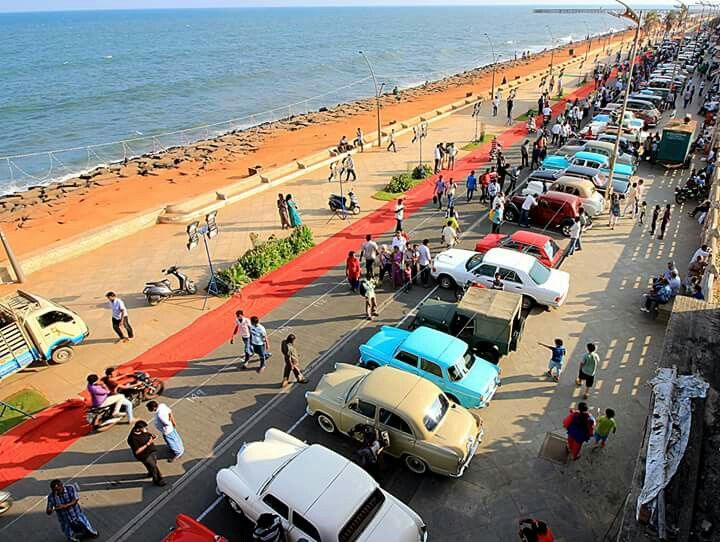
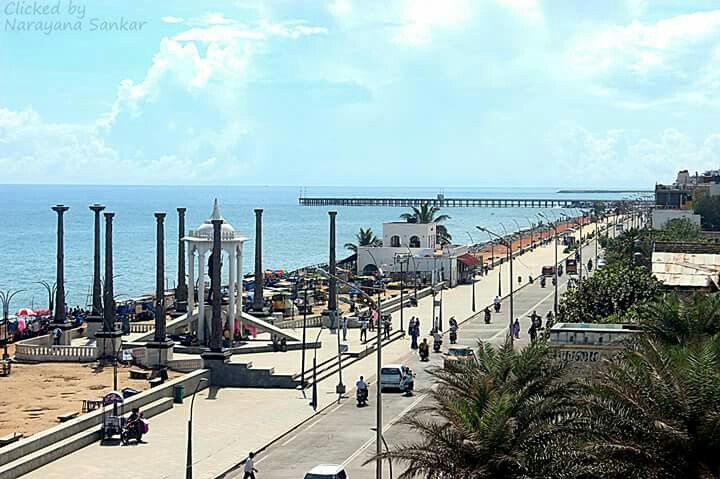
Puducherry on the southern coast of India must rank amongst the prettiest of coastal cities of India. Apart from its French connection, Puducherry is also the place where the Ashram of one of India’s great spiritual giants Rishi Aurobindo is located. It is a picture-perfect destination with immaculately maintained boulevards, classical edifices of the French era, virgin beach fronts, laidback backwater stretches and the eclectic gastronomic delights, all of which makes Puducherry a much sought after tourist destination.
Sri Aurobindo was a Bengali revolutionary and took active part in India’s freedom struggle. But as destiny would have it, he left his militant activism behind only to rediscover himself in the innate spiritual cauldron of India by relocating to the utterly peaceful ambience of Puducherry in southern India. He devoted his entire life to the spiritual upliftment of humanity from his modest Ashram, which in the years to come was to become one of India’s most renowned spiritual retreats.

Puducherry’s Appeal
Bengali people have a sentimental attachment to Puducherry, as Shri Aurobindo himself was a Bengali and every year hundreds of visitors visit his Ashram as well as Aurovile, the universal international city that was founded in the year 1968. I, being a Bengali, wanted to visit Puducherry and when the opportunity came my way, courtesy my younger brother Debasish, who was working in the aviation industry in Chennai, a city which is located at a distance of 166 Kms (103 miles) from Puducherry, I couldn’t refuse his offer.
Since my brother had already made the reservations at the immaculate ITDC Ashok hotel, I had no difficulty spotting it and the hotel was ideally located on the beachfront. After freshening up, I spoke to the hotel’s Manager about the pros and cons of sightseeing in this incredible city and he advised me to go on a walking tour of the city. A well-informed guide was provided to me and together we embarked on an enchanting walking tour of the French Quarters as well as the Ashram and its surroundings.
Historical Perspective
Puducherry’s association with the French commenced with the arrival of a French officer named Bellanger in the year 1673 and the subsequent development of the port. However, the French received a rude shock when the Dutch overtook the fortified town of Puducherry in the year 1693 only to transfer it back to the French four years later with the signing of a treaty.
Planned development of the town commenced from the year 1726 to 1754 under the stewardship of competent Governors of the stature of Lenoir, Dumas and Dupleix. Under their visionary leadership, Puducherry soon became a prosperous coastal town of southern India.
The French were from time to time at loggerheads with the British East India Company and with the arrival of the dynamic Robert Clive to India, the French aspiration of setting up a colonial empire in India were shattered once and for all. The French Governor Dupleix was sent back to France.
For a brief while Puducherry was under the British rule. But all this changed with the signing of a friendship treaty in Europe between the British and the French in the year 1765. The re-development of the town based on the principles of town planning commenced with the arrival of French Governor Law de Lauriston and in a short span of five months, he built more than 400 edifices in Puducherry to permanently change the landscape of the town.
Meanwhile, skirmishes with the British East India Company continued from time to time and it was not until the year 1816 that the French could rightfully claim permanent possession of Puducherry. For the next 138 years, the French developed Puducherry into a model colonial town and even after the British had left India in the year 1947, Puducherry was still under French rule. It was only in the year 1954 that the French handed over the town to the new Republic of India.
French Quarter
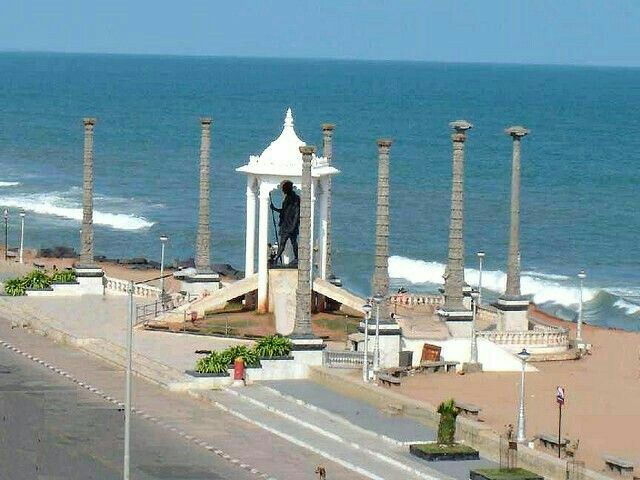
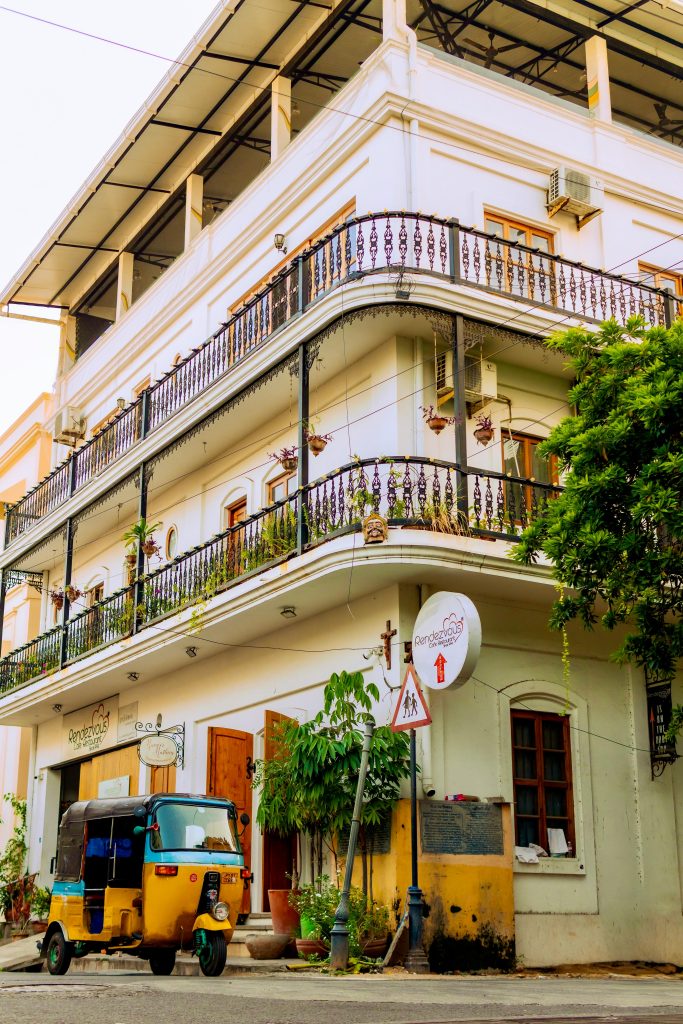
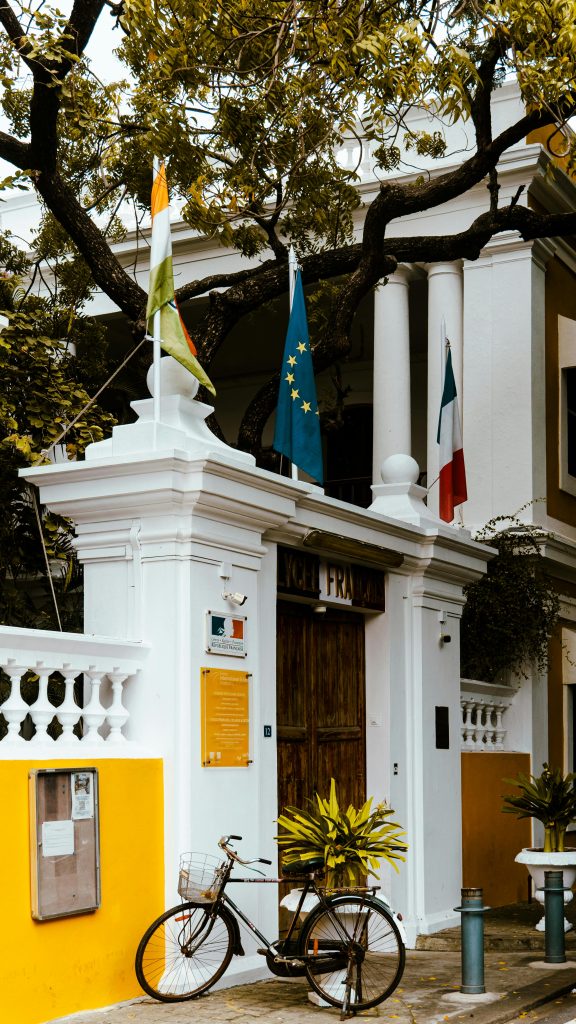
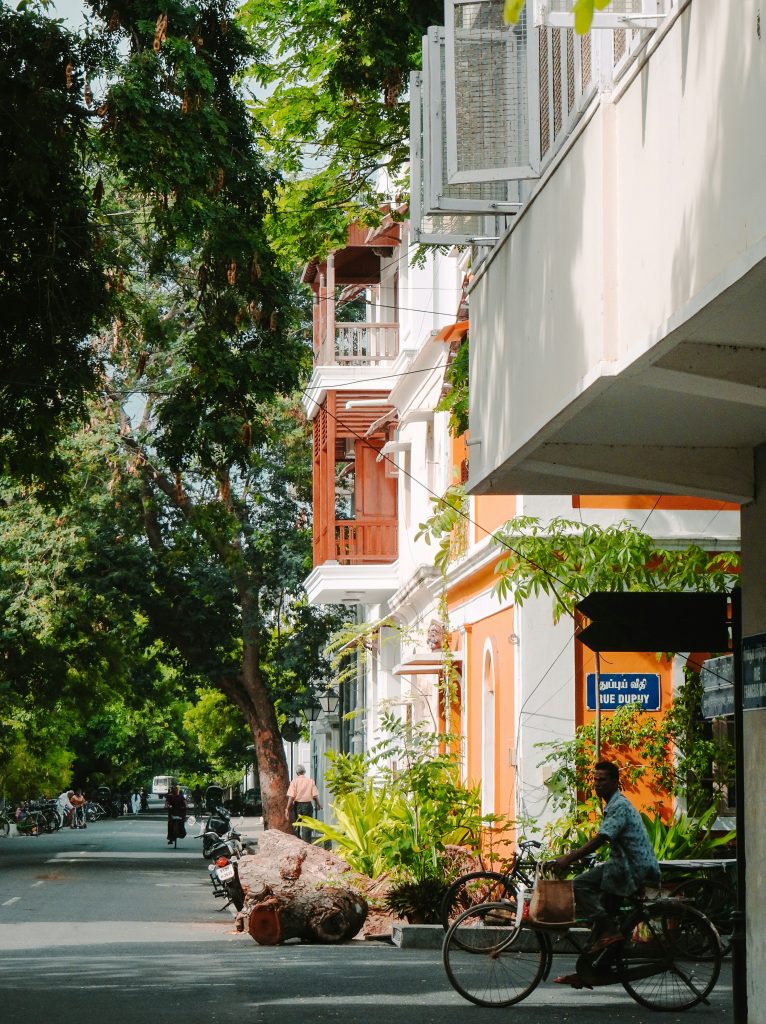
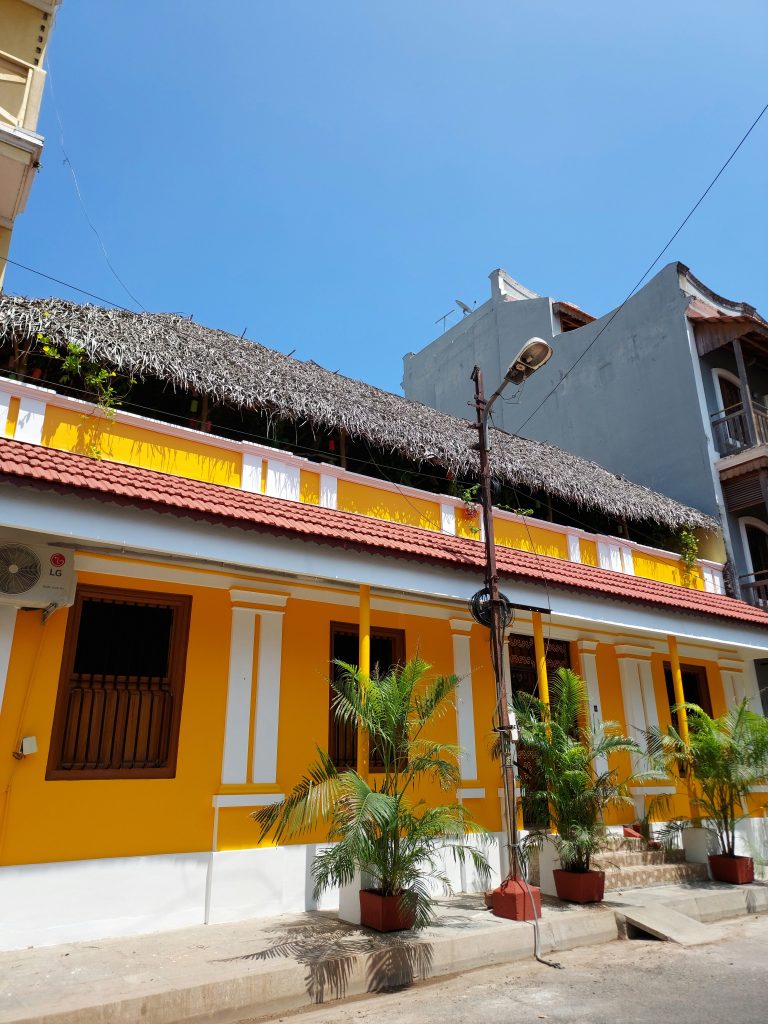
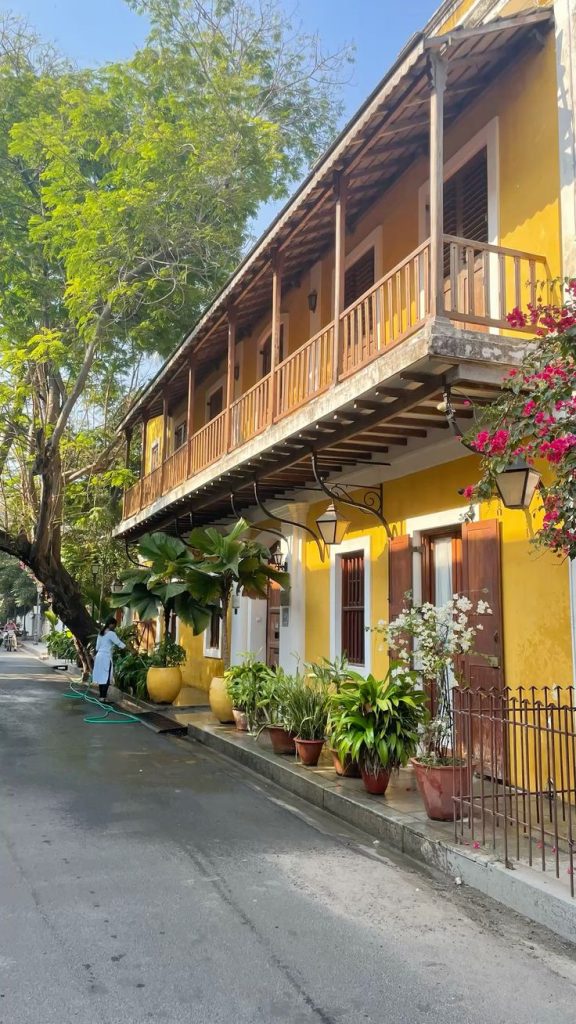
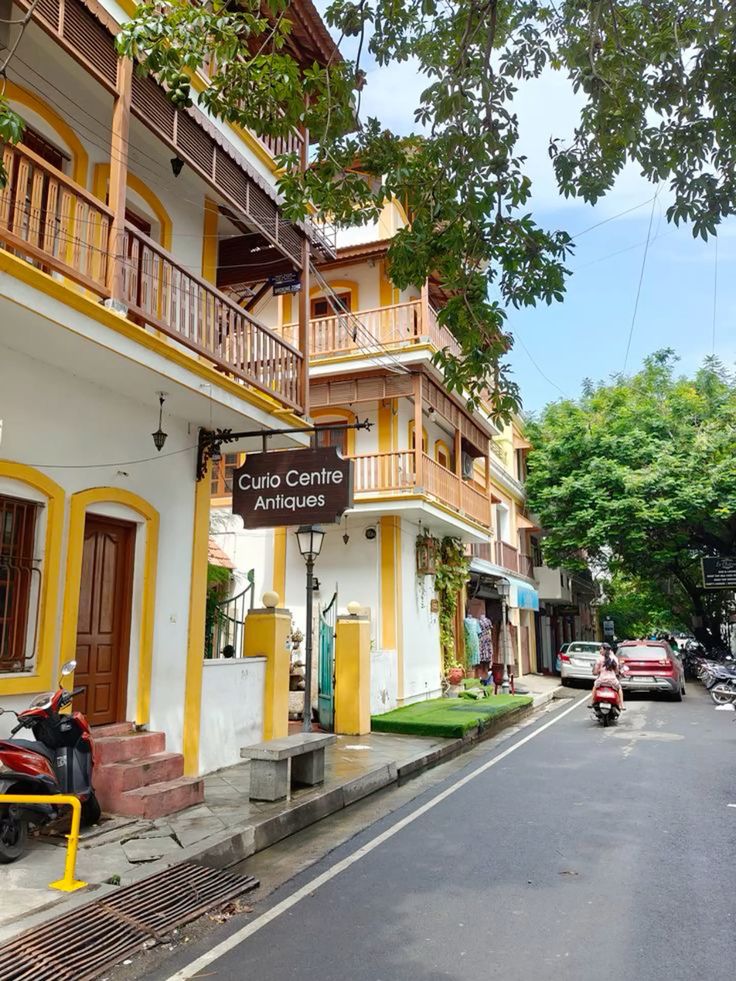
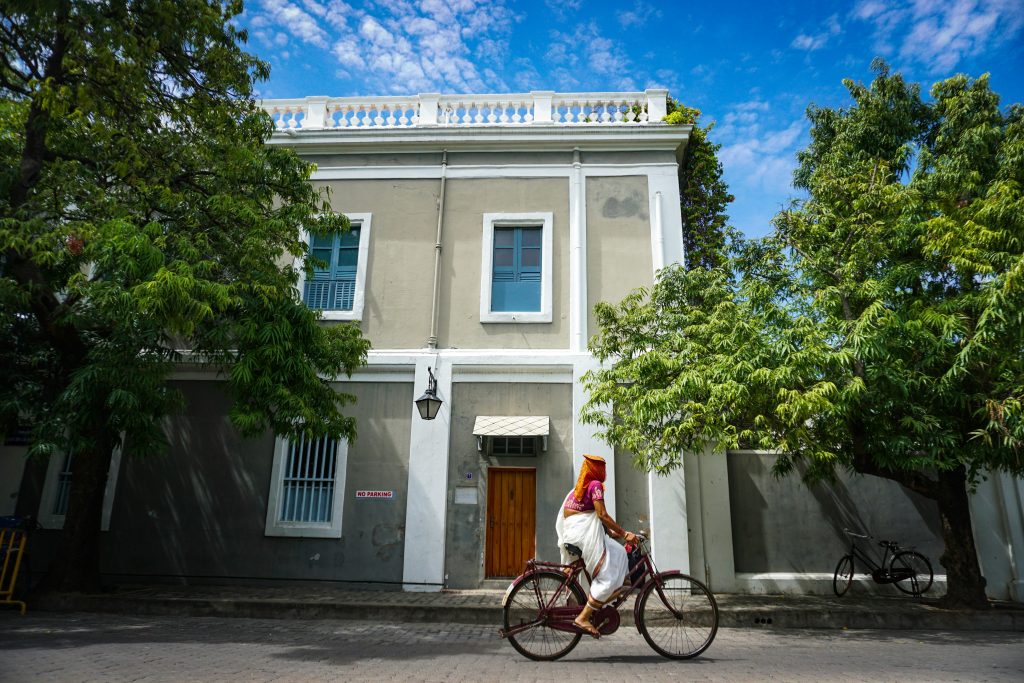
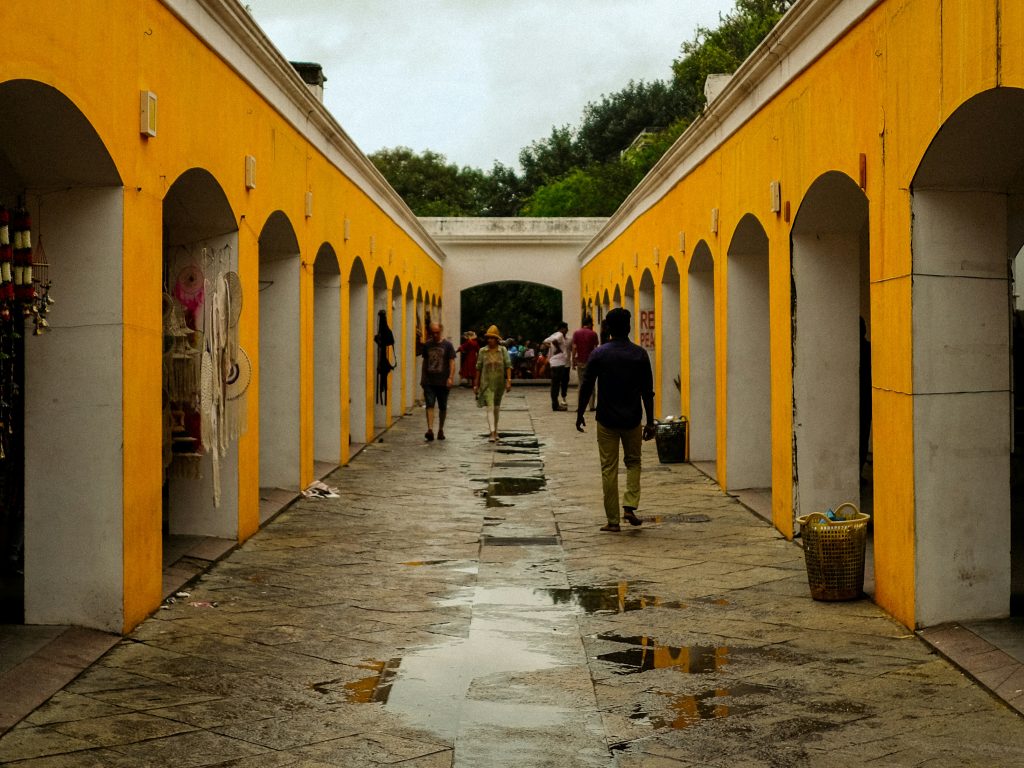
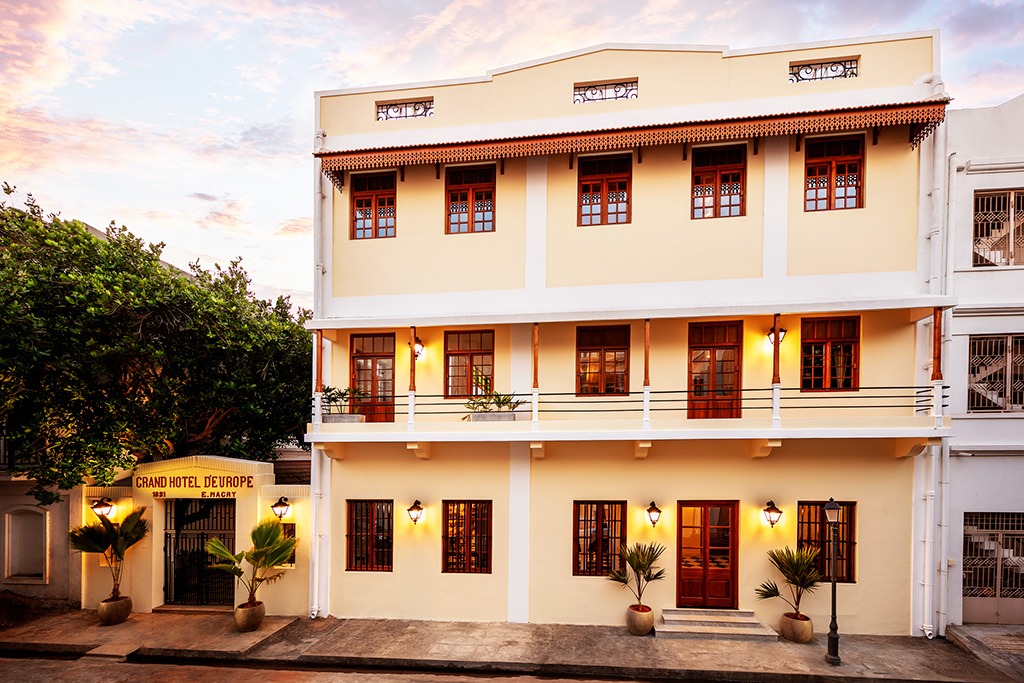
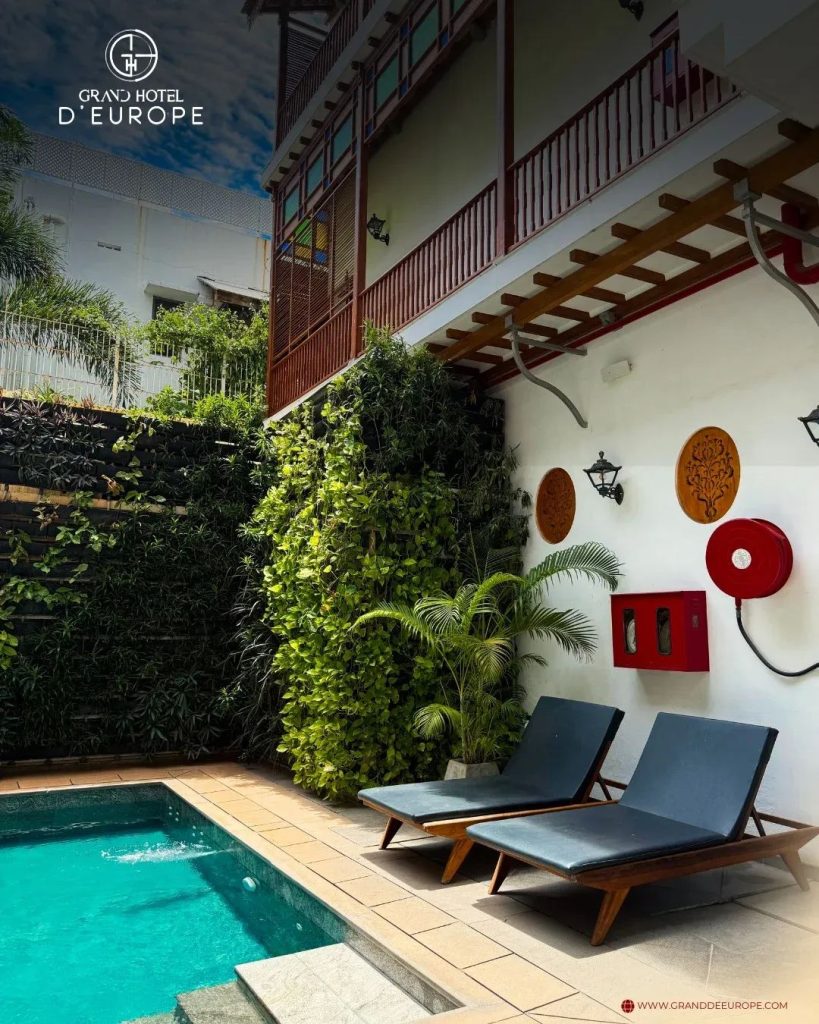
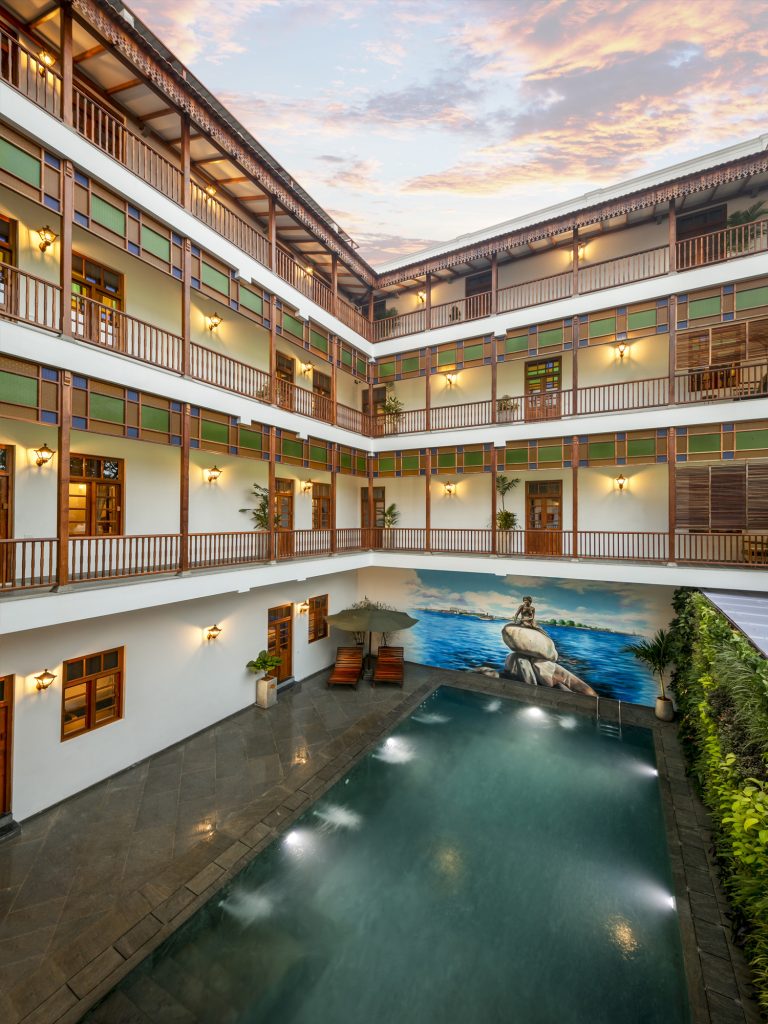
The first morning of our tour was dedicated to visiting the French Quarters and we covered the entire 2 Kms. long walking circuit in about 2 hours’ time. For someone with very little exposure to French architecture, it was a revelation to be able to view some of the most fascinating French architectural edifices like the War Memorial, the Old Light House, the Romain Rolland Library, the museum, the Circle de Puducherry, the magnificent Legislative Assembly, the Joan of Arc statue, the Church of Capuchians, Le Grand Hotel d Europe etc.In fact, every street reverberated with a distinct French aura. The entire French Quarter is immaculately planned in a grid pattern, and the edifices are conspicuous by their arched gateways, beautifully maintained courtyards and immaculately painted exteriors.
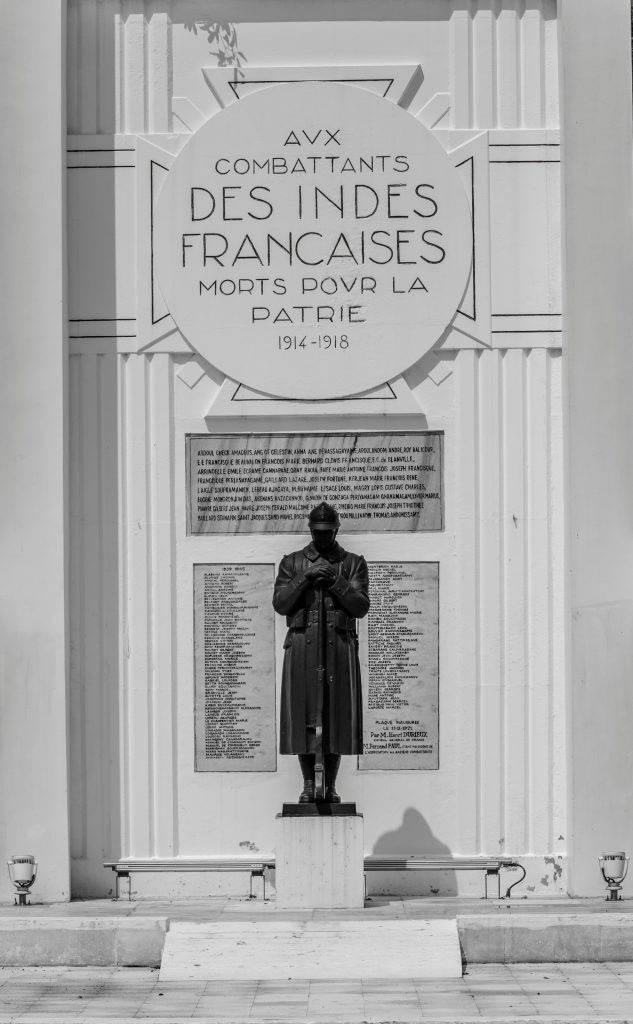
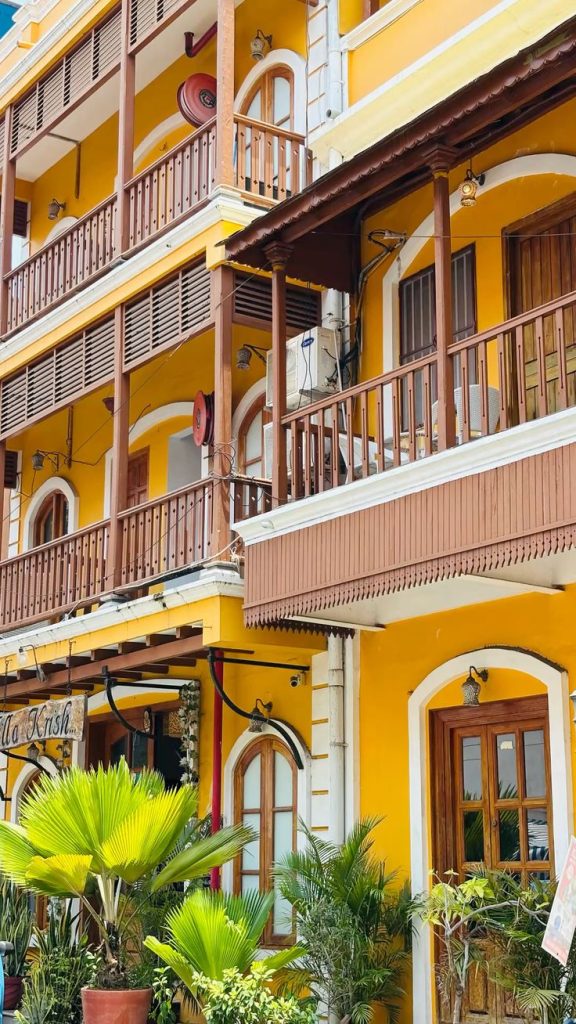
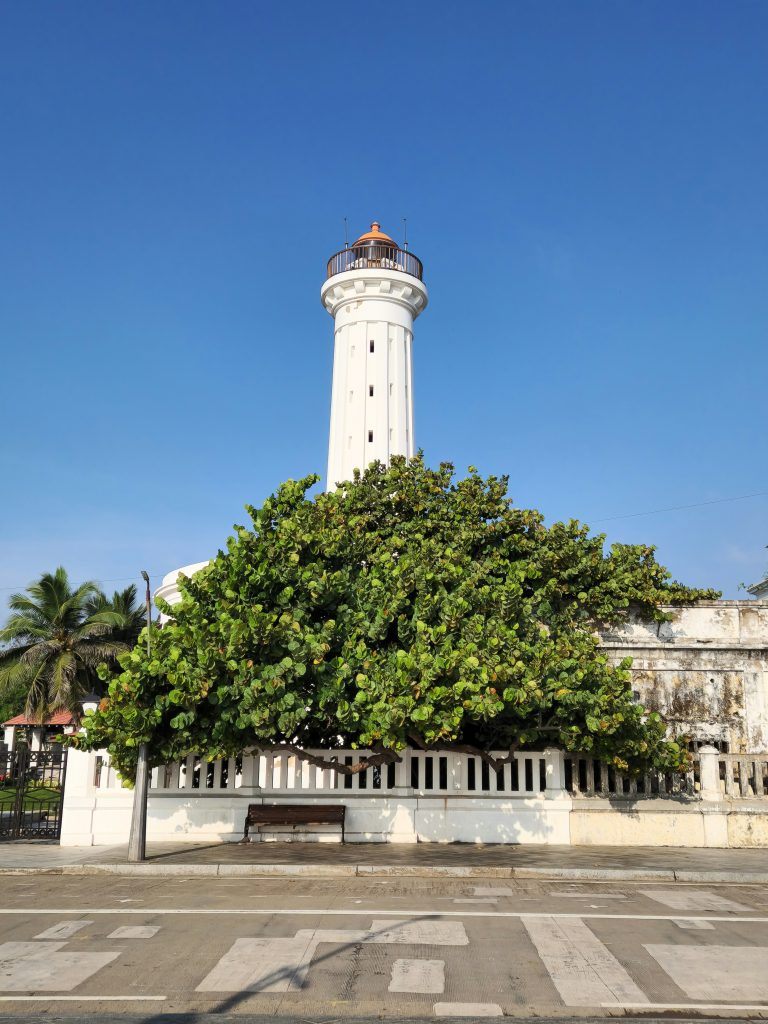
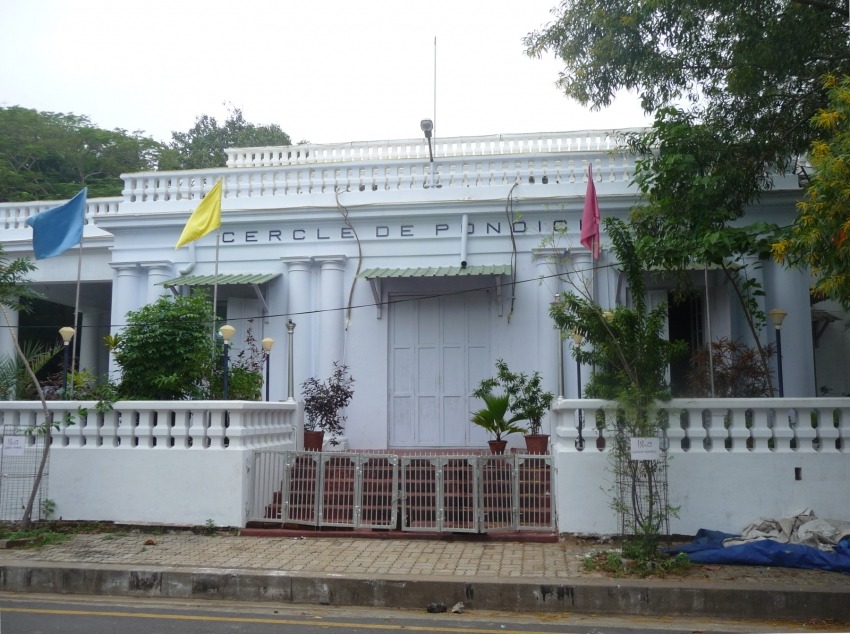

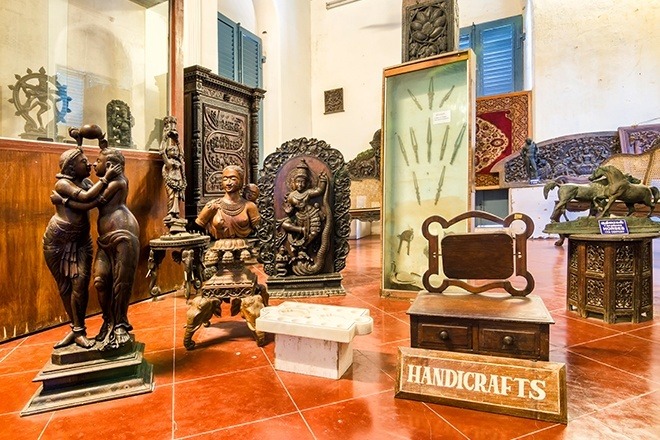
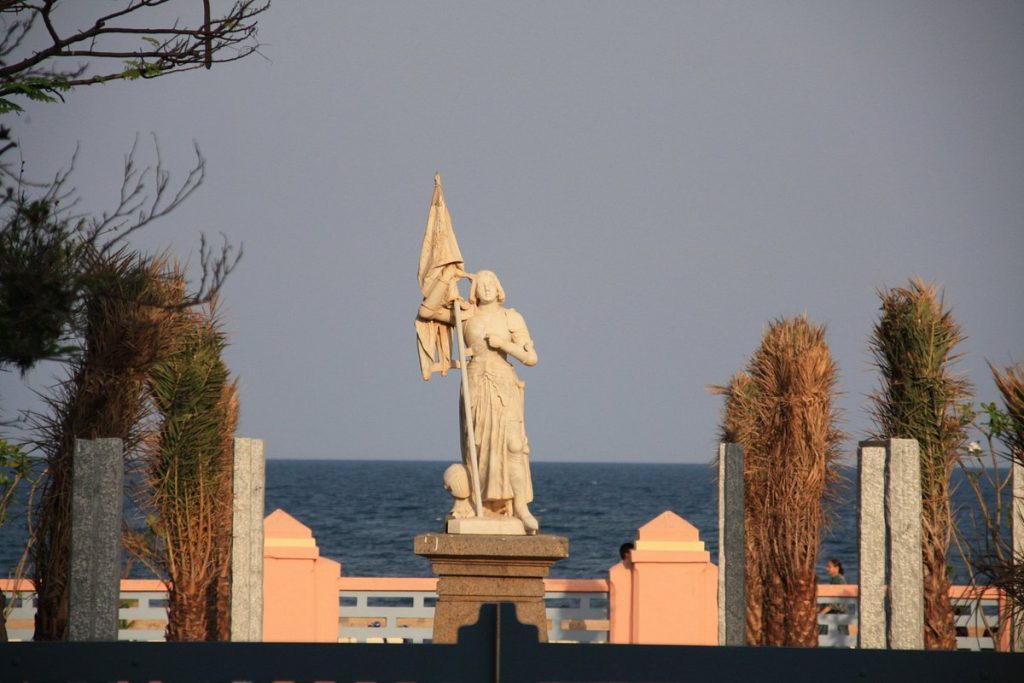

I was most impressed by the magnificent Raj Nivas, which is where the Lieutenant Governor of Puducherry resides. Another edifice that made me spellbound was the Hotel de Vile. I was told by my guide that this majestic building used to serve as the Town Hall during the French regime and presently houses the local Municipality.
The afternoon was spent dining at the elegant La Terrasse located on Beach Road and then embarked on our second leg of the Walking Tour, covering the Aurobindo Ashram and its peripheral areas.
Aurobindo Ashram
Even though it was late afternoon, the sun was blazing hot and the temperature reached the high 40’s Celsius. I put my cap and my Ray Ban goggles on and hit the trail accompanied by my guide who it seemed to know Puducherry by the tip of his fingers. We ventured along the northern part of the city where the world-famous Aurobindo Ashram, along with its multiplicity of branches, provided some of the most fascinating heritage sites in the whole of India.
The tour started from the Ashram office and covered tourist spots like the French Consulate, the Ashram playground, Ashram Art House, Le Foyer de Soldat, the Samadhi Sthal, the Gloconde and shopping centers like Auroshika, Boutique d’Auroville, Auroshree and La Tienda. I bought a few packets of incense sticks that were manufactured by the Ashramites from one of the shops that stocked them.
By far, the most enduring landmark of Puducherry is the Aurobindo Ashram, which was set up in the year 1926 by the great spiritualist himself. Ever since then, this one-of-its-kind Ashram that specializes in “Integral Yoga” has divinely evolved into one of the most popular spiritual retreats in the world. His philosophy of “Integral Yoga” has become tremendously acceptable in both India as well as the Western world and millions of devotees pour in from all over the world to partake in Sri Aurobindo’s philosophy of learning to live within, to act always from within and from a constant communion with the divine.
Through his many books and lectures on the synthesis of Yoga, Sri Aurobindo stirred humanity to pierce the veil between the outer consciousness and the inner being, which according to him was one of the most crucial movements in Yoga. According to the great spiritualist: “ Yoga means awaking first to your inner self and then to your higher self: a movement inward and a movement upward. It is, in fact only through the awakening and coming to the front of the inner being that you can get into union with the divine”. The outer physical man, according to Sri Aurobindo, is only an instrumental personality and by himself he cannot arrive at this union, he can only get occasional touches, religious feelings, imperfect intimations.
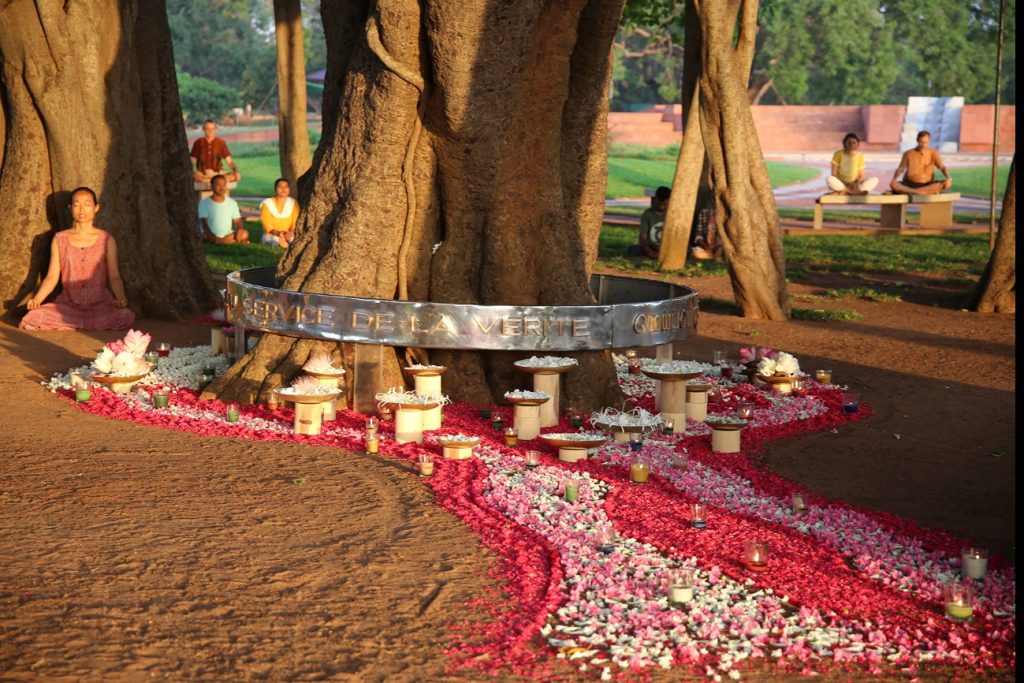
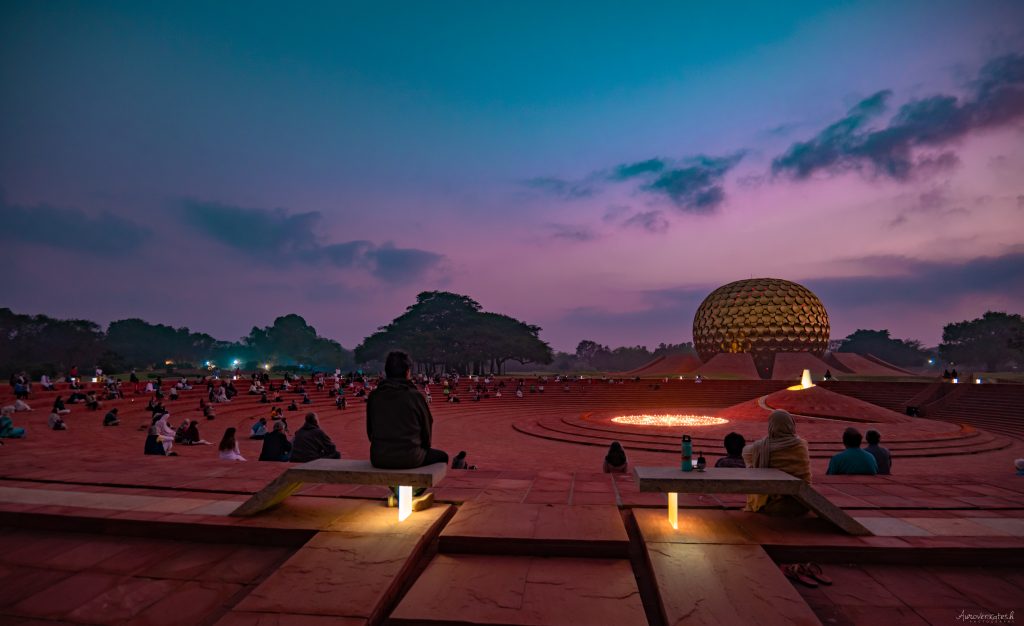
It is a sheer joy to witness the surcharged spiritual atmosphere at the Auribindo Ashram where everyday hordes of devotees from far and near strive to realize their true divine nature. What hit me spiritually here is the all-encompassing silence. Everyone at the “Samadhi Sthall” of Aurobindo Ashram strives to silence their mind, remain calm, attentive, without making noise in their eternal quest for the higher light.
The mortal remains of Sri Aurobindo and The Mother are preserved at their “Samadhi Sthall” or mausoleum located in the main building of the Ashram and devotees offer their prayers here along with resident ashramites.
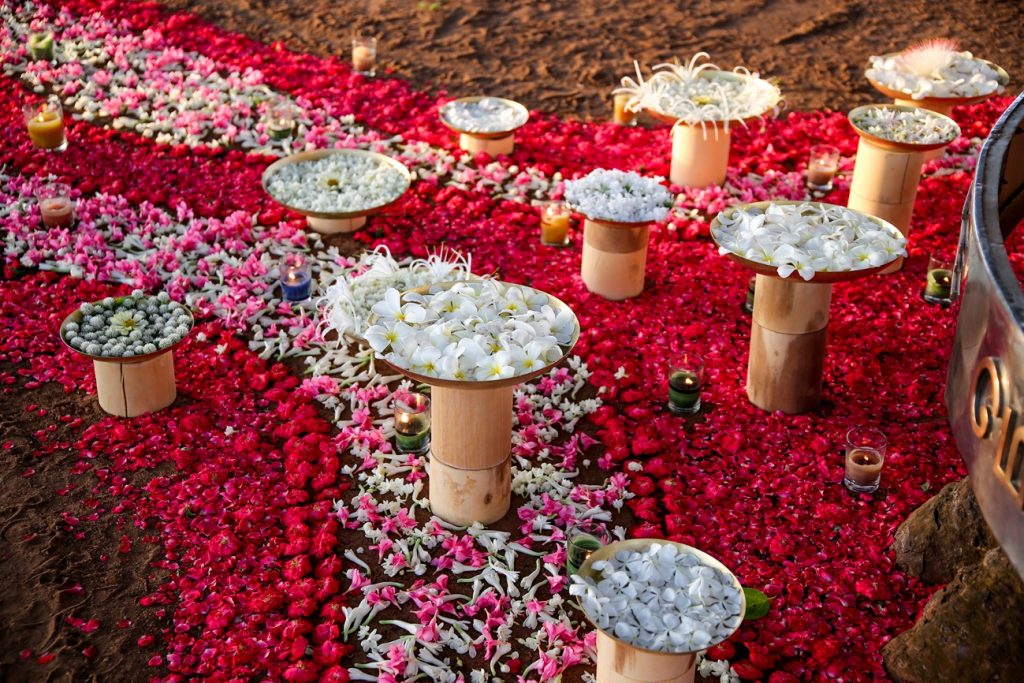
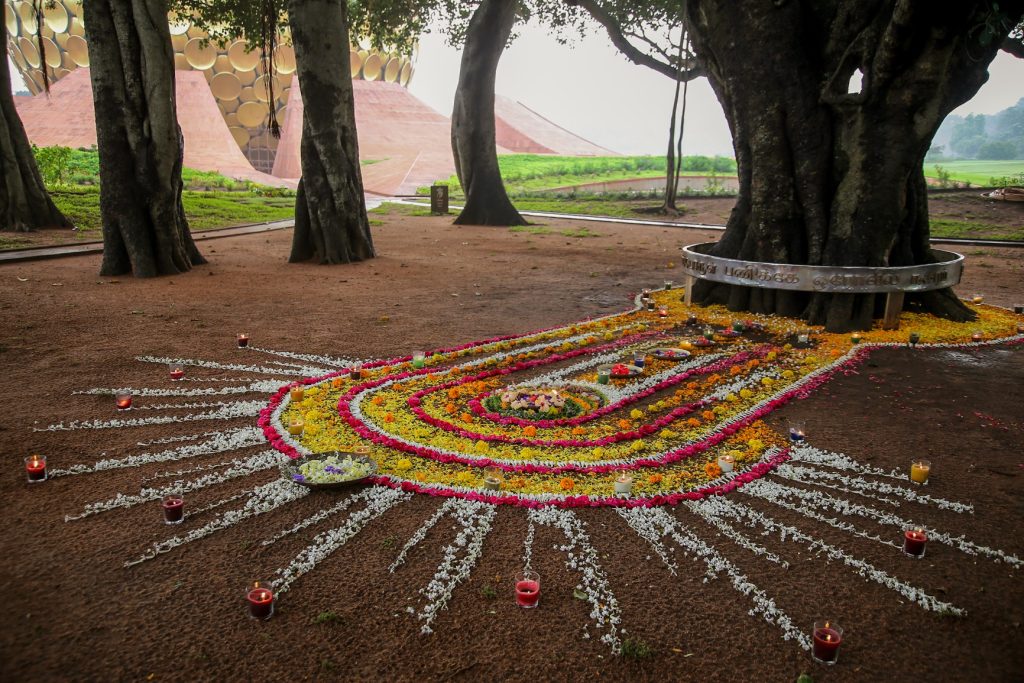
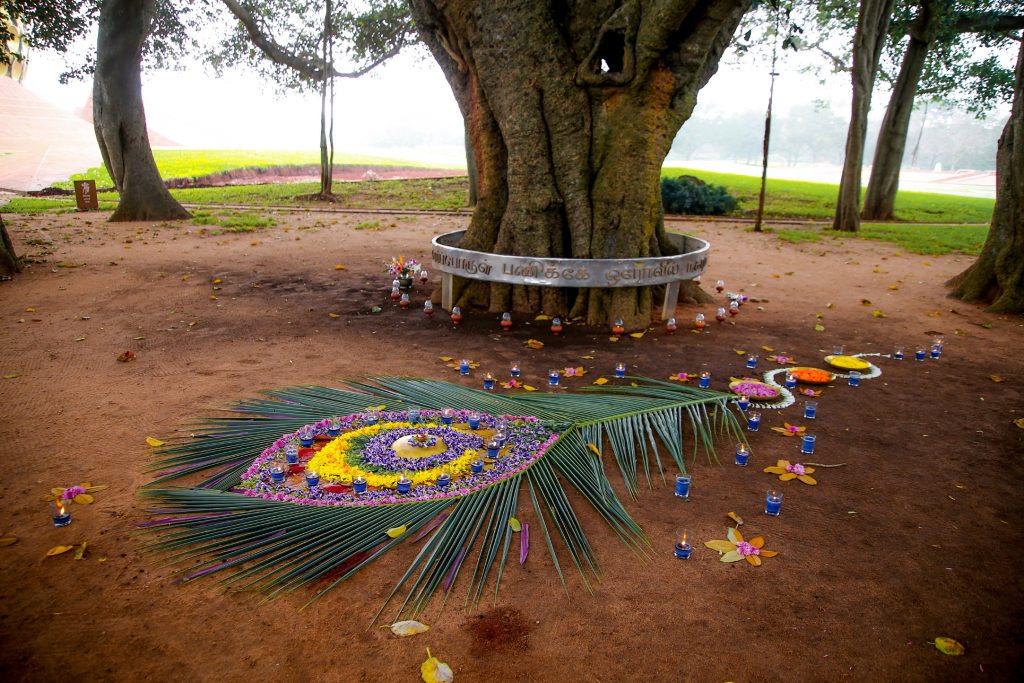
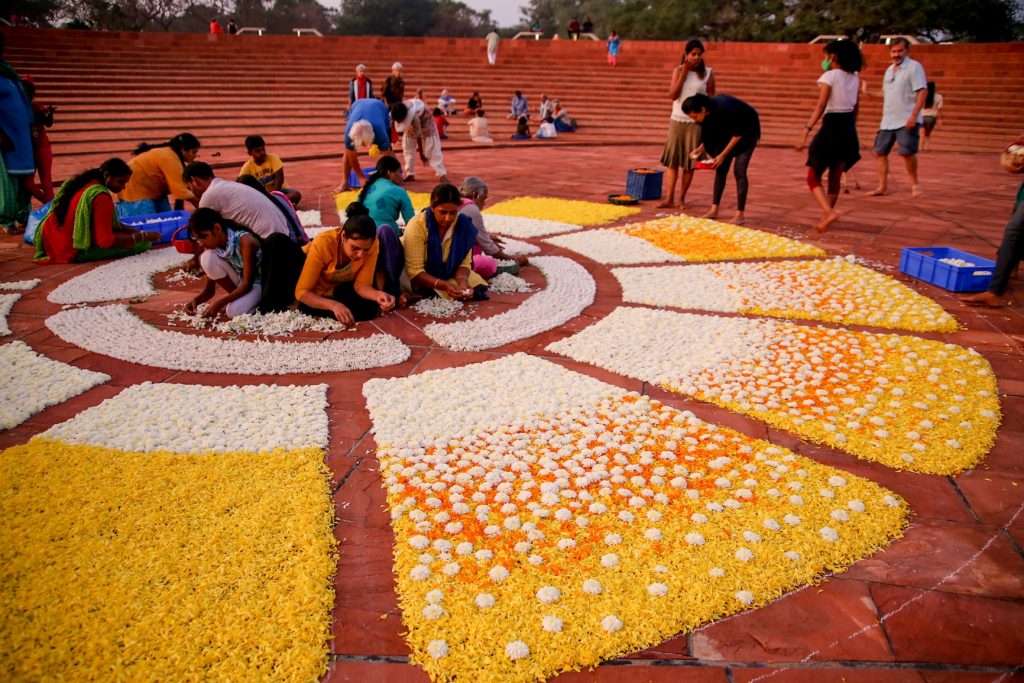
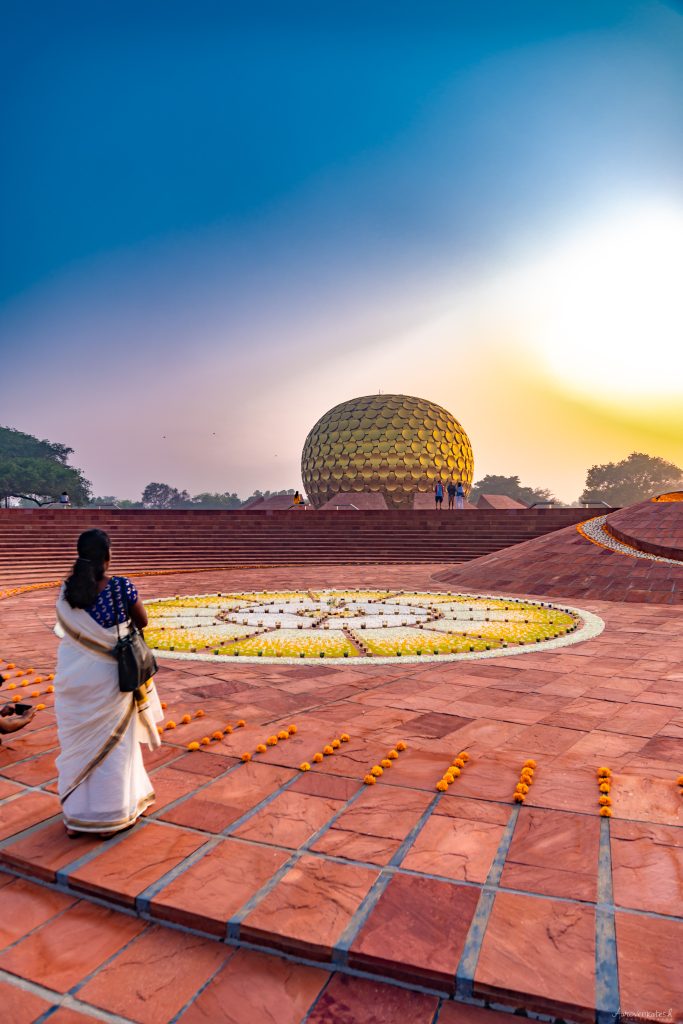
Drawn by Sri Auribindo’s magnetic spiritual philosophy, a Paris based musician-painter by the name of Mirra Alfassa was so deeply engrossed in Sri Aurobindo’s brand of spirituality that she decided to dedicate her entire life for the cause of Sri Aurobindo’s mission of uplifting humanity through spirituality. After the master’s passing in the year 1950, the mantle of stewardship of running the day-to-day affairs of the Ashram rested on the shoulders of “The Mother.”
For the spiritual welfare of humanity, The Mother conceived of a place where a “Universal City” would be built, which would be above the narrow confines of caste, color, creed, politics and nationality. True to her divine intention of harmonizing humanity spiritually, the universal city of “Auroville” was brought into existence in the year 1968 and ever since then, this one-of-its-kind spiritual city has been evolving with a burgeoning growth in the number of devotees that continues to increase with each year.
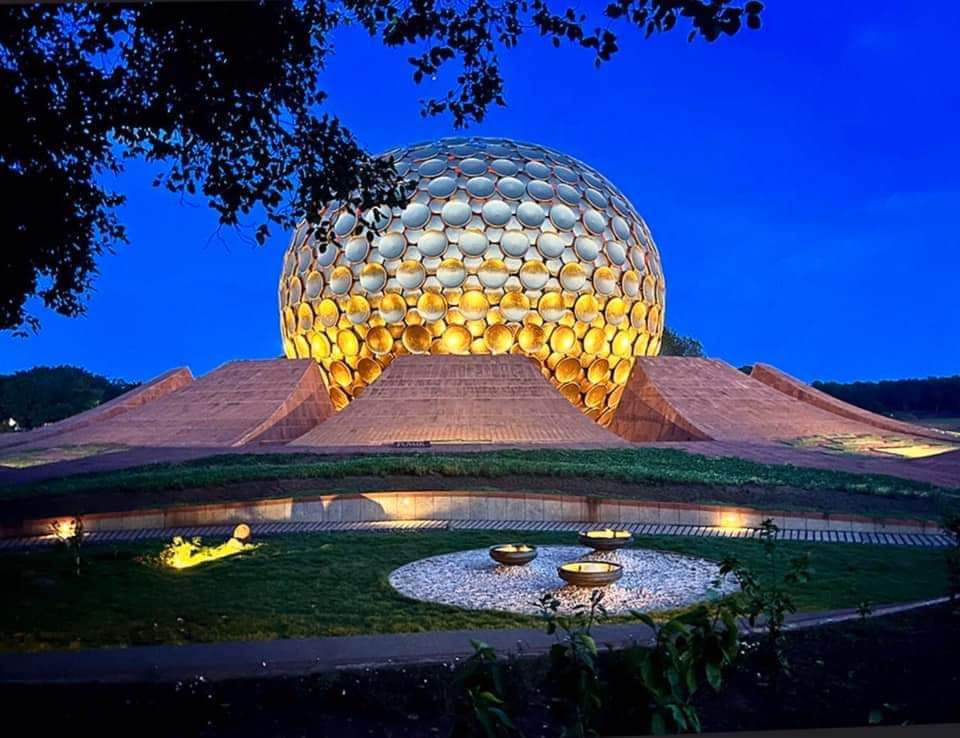
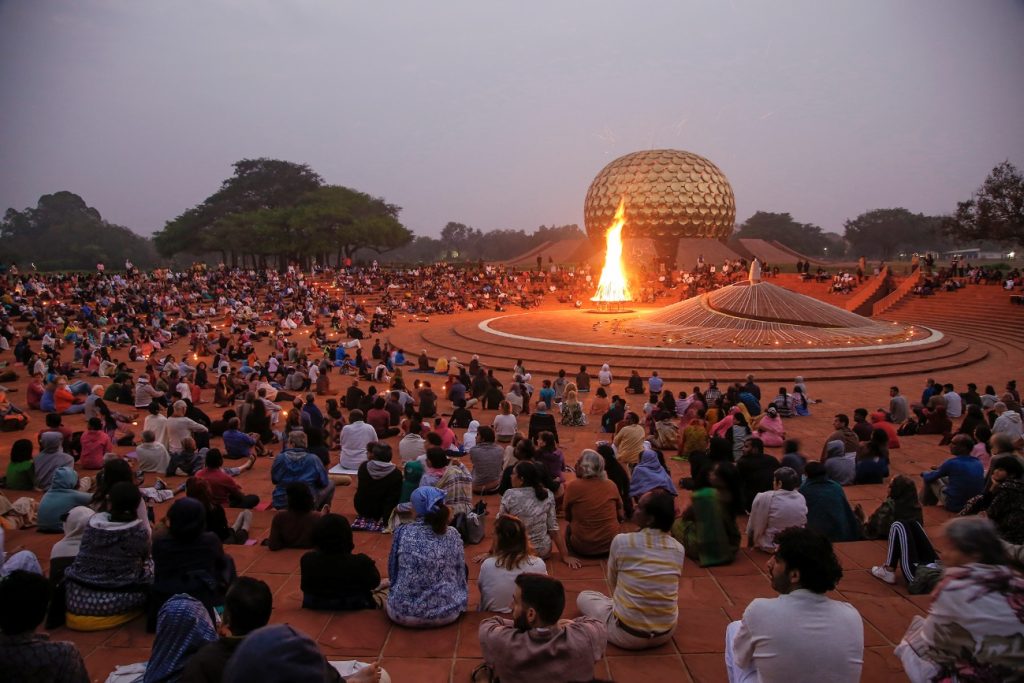
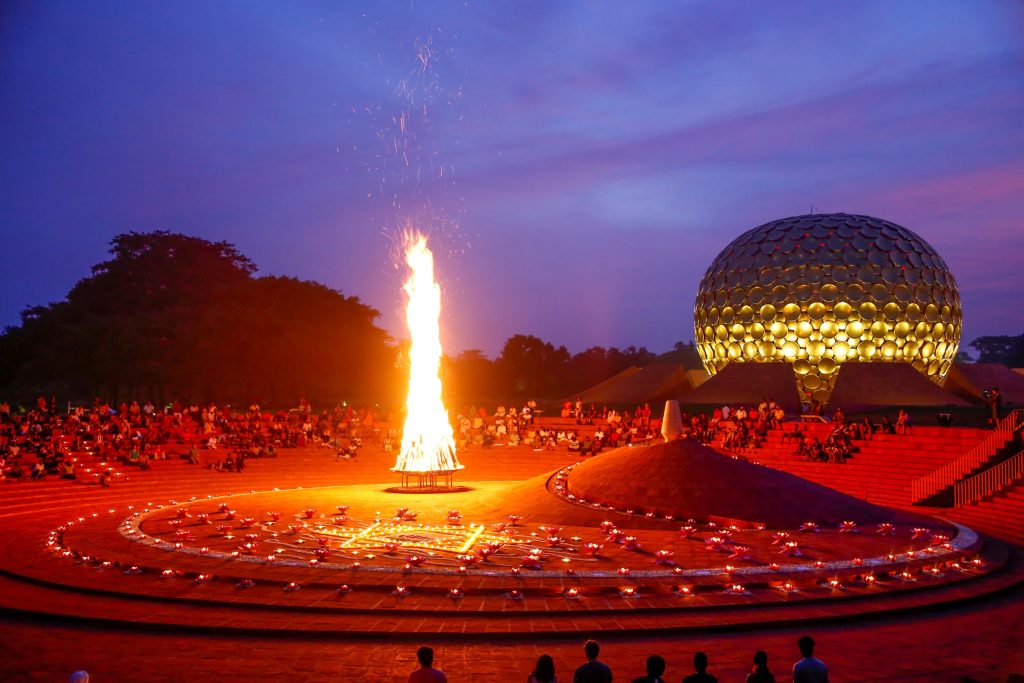
I was told that here at the Auroville, located at a distance of a mere 8 Kms. from Puducherry city center, the Western devotees far outnumber Indian devotees and presently a population in excess of 2,000 are known to reside here. The entire city along with the outstanding, if not stupendous football-shaped Matrimandir, a gold-domed meditation and yoga center, was designed by one of France’s most renowned architects: Roger Anger.
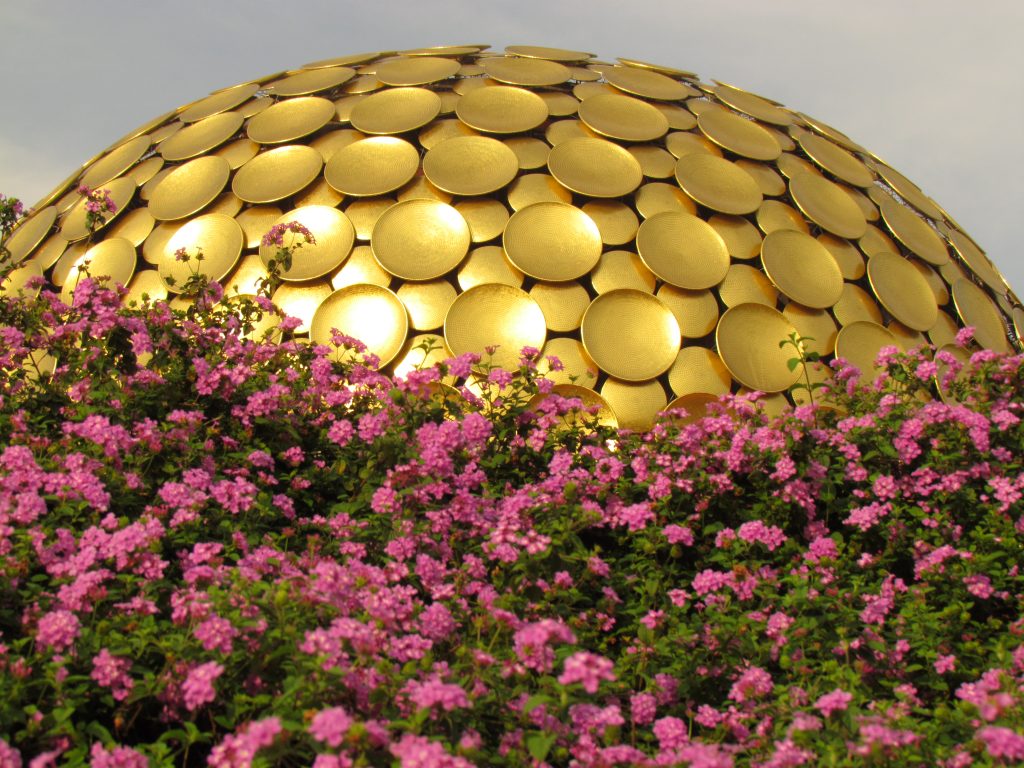
As I ambled across the meandering alleyways of Auroville, in the reassuring company of my guide Prasanth, the sight of clusters of buildings that were a harmonious blend of Western and traditional south Indian architectural pattern drew my attention. The fusion houses were set in the backdrop of a rural landscape, and I was told that the residents engage themselves in everything from agriculture to photovoltaic solar systems.
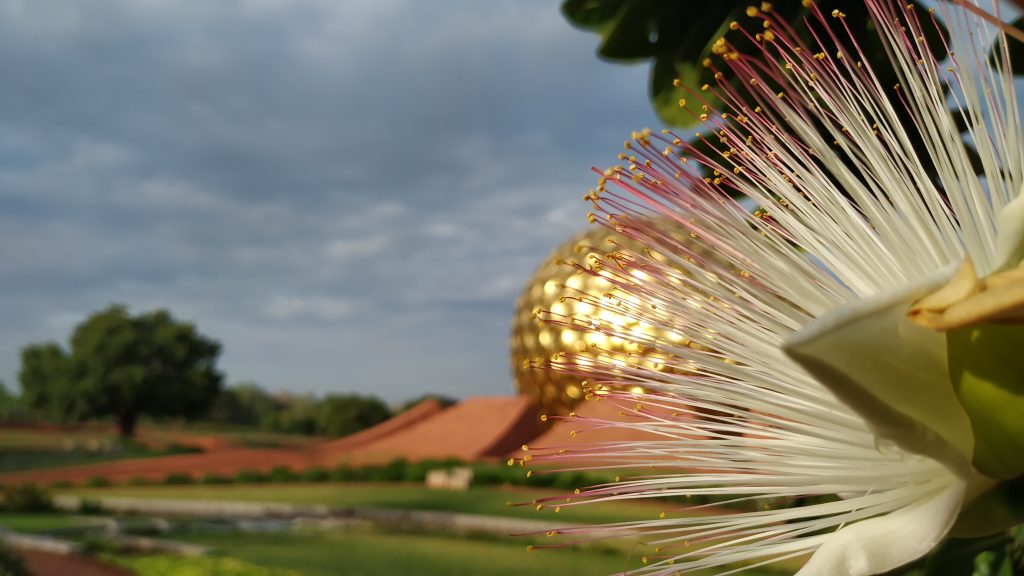
The piece de resistance is of course the centrally located Matrimandir. Many visitors mistakenly regard it as a temple, which is not true. Rather, it is a place for silent contemplation of the divine. This stupendous Matrimandir is spread over an area encompassing all of 62 acres of lush greenery and is a symbol of Sri Aurobindo and Holy Mother’s quest for spiritual perfection which was nicely summed up by Amanda Ferguson, a permanent resident of Auroville thus: “I came to reside in Auroville in the mid-1980s and over the past few decades that I have spent here, there is one thing that I have learnt from Holy Mothers philosophy, which is when you can no more call anything, not even yourself, yours, when everything, including your body, sensations, feelings and thoughts, belongs to the divine. The divine takes the entire responsibility of all and you have nothing more to worry about.”
Although Amanda became a full-time resident of Auroville only from the mid-80s, she was amongst the fortunate few who were blessed with the opportunity to witness one of humanity’s most blessed hour — the inauguration ceremony of Auroville on the 28th of February, 1968 when the soil of 124 countries was placed on a specially designed lotus-shaped urn reflecting the universality of Auroville.
Inside the Matrimandir, we came across an exclusive Inner Chamber, which was conspicuous by an optical glass globe measuring 70 centimeters in diameter and has been so designed to focus the sunlight on a custom-designed heliostat to aid in meditation and contemplation of the divine.
Best Time to Visit:
Although Puducherry is a year-round tourist destination, for the Yoga aficionados, it is best to visit in the first week of January in time for the International Yoga Festival where all the big names in the world of Yoga converge at Puducherry. Classical dance, folk songs and other Indian folk arts transform Puducherry into a fairy tale land of the Vedic era.
Getting There:
The nearest international airport is at the metropolitan city of Chennai, which is located at distance of 135 Kms (83 miles) from Puducherry and is conveniently linked with Europe, USA and rest of the world through routine air services from some of the world’s leading airlines.
From Chennai one can reach Puducherry by road. The travel time is 3.5 hours. You can hire a taxi /cab or hop into a State Transport operated bus from Chennai Bus Station. Buses leave every 15 minutes from Chennai’s Koyembedu bus stand. If traveling on a hired cab, ask the driver to take the East Coast Road instead of the National Highway, which is infinitely more captivating in terms of scenic beauty.
Accommodations:
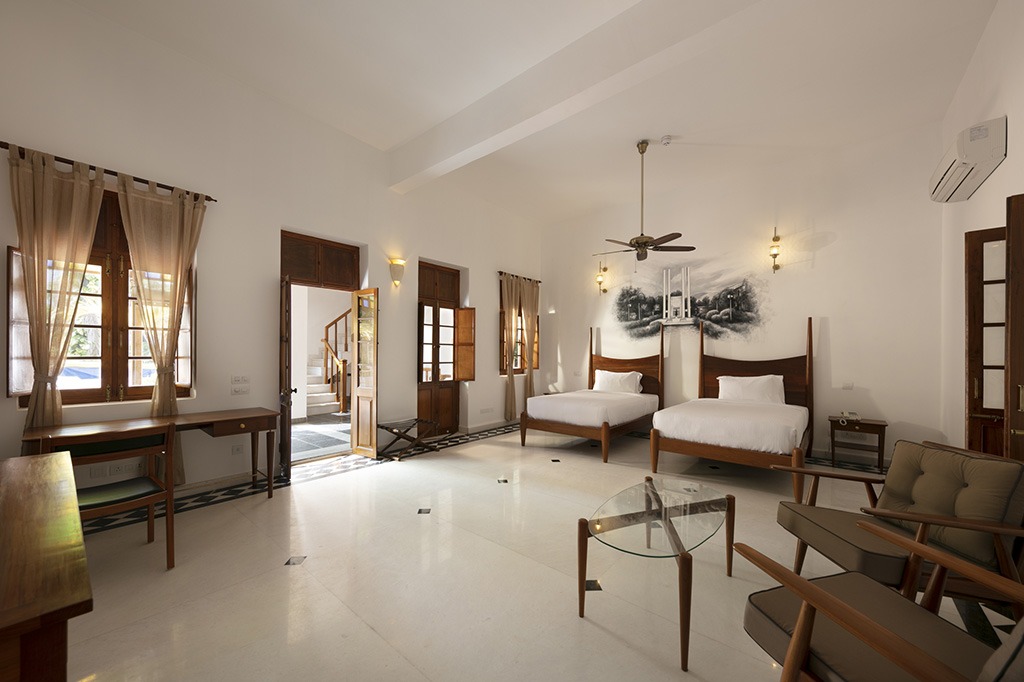
Being a French outpost, Puducherry is replete with a fine choice of hotels, both heritage as well as the contemporary. There are also the beach resorts, which are very popular. Those who come to Puducherry with a spiritual bent of mind, find the Ashram Guest Houses to be ideal place to stay.
Anandha Inn, Hotel Annamalai International, Hotel MASS Maraimalai, Le Dupleix, The Promenade are some of the renowned up-market hotels of Puducherry.
As far as Beach Resorts are concerned Hotel Ashok ITDC (Tel: +91-0413-2655160-166)
Banyan Beach Resort (Tel: +91-0413-2234866/867), Kailash Beach Resort (Tel: +91-0413-2619700/703), St. James Court Beach Resort (Tel: +91-0413-2655276), The Dune Resort (Tel: +91-0413-2655751) are very popular.
Puducherry has its share of Heritage hotels, as well and some of the established heritage hotels that cater to the exacting demands of the international travelers. They include Aurodhan Heritage Guest House, Hotel De L’ Orient, Hotel de Puducherry, Heritage Villas of Puducherry, Patricia Guest House, Rendezvous Inn and Calve.
Eating Out:
Being a town with a rich colonial French history, it is natural to find that there are many French & European specialty restaurants in Puducherry, some of whom offer authentic cuisines of the Mediterranean. Apart from Continental cuisine, there are also many South Indian, North Indian, Chinese and even Vietnamese cuisine restaurants in Puducherry.
For the very best of French & European cuisine drop in at Le Club and the The Bistro Café at Dumas Street, Satsanga and Le Tirous at Labourdonnais Street, Au Feu de Bois at Bussy Street, Carte Blanche in Hotel De L’ Orient and Santhé at Romain Rolland Street, Rendezvous at Suffren Street and La Terrasse at Beach Road.
For those desirous of quality multi-cuisine fare, drop in at L’Heritage at Hotel Anandha Inn, Renaissance at Annamalai International, Nanda at Hotel Mass, Seagulls at Beach Road, Salt & Pepper at S.V. Patel Salai and Masala Zone at Dumas Street.
For Indian fare, the best of the lot are Anugraha, Haveli, Surabhi Restaurant, Le Café, Adyar Ananda Bhawan, La Coromandale, and Indian Coffee House.
For authentic Chinese fare, Chez Aziz, Indochine, China Town, Paris, St.James Court, Vietnamien and Snappy are your best options.
Shopping:
Puducherry has enough variety to entice the shopaholics. Textiles made of silk, gems and jewelry, leather goods and pottery are much in demand. Of late, the antique furniture business is gaining popularity rapidly.
Tourism Office
For further information on Puducherry, please feel free to contact:
Tourism Information Centre
40, Goubert Avenue
Puducherry, India

Subhasish Chakraborty is a travel writer from India, associated with numerous global travel publications, including In-Flight magazines. He received invitations as a guest travel writer from various Indian states and was a Tourism Consultant for the UNWTO.
All images are for illustrative purposes only and remain the copyright of their respective owners.
Where to Stay in Puducherry, India
The French Quarter, centered around Rue Saint-Louis and the seafront promenade, offers colonial-era hotels and boutique guesthouses in restored buildings. These properties range from budget guesthouses to mid-range comfort and often feature period architecture with modern amenities. Staying here puts you within walking distance of the ashram-influenced cafes, the Basilica of the Sacred Heart, and the beach, making it convenient for exploring the town’s main attractions on foot.
Auroville, the experimental international community about 12 kilometers north, has its own lodging options including guest houses and cottage accommodations run by residents. Many of these places emphasize simplicity and community values, offering a quieter, more introspective experience than the main town. If you want to experience Auroville’s philosophy directly, staying within the township allows you to attend morning meditations and participate in community meals.
Pondicherry Beach Road and the White Town area near Promenade Street provide a range of hotels from economy to upmarket, with several offering ocean views. Hotels on this stretch tend to be busier and more mainstream, suitable if you prefer conventional amenities and easy access to restaurants and shops. The beachfront location gives you evening walks along the promenade, though the sea here is calmer than at swimming beaches farther south.
For a quieter base, consider the areas south of the town center near Serenity Beach or the villages closer to Mahabalipuram. These neighborhoods have fewer tourists and smaller guesthouses, giving you a calmer perspective on local life. The tradeoff is more travel time to reach Auroville or the French Quarter, though you gain access to less crowded beaches and a different pace of daily activity.
