A City in Four Acts
Verona, one of the extraordinary cities that proudly wears its Roman heritage in stone, stands as a remarkable testament to that legacy. It not only preserves its Roman edifices but has smoothly blended them into a city fabric that is medieval, Renaissance, and thoroughly modern behind an ancient façade. Yet it’s sensuous, lush, and enthralling.
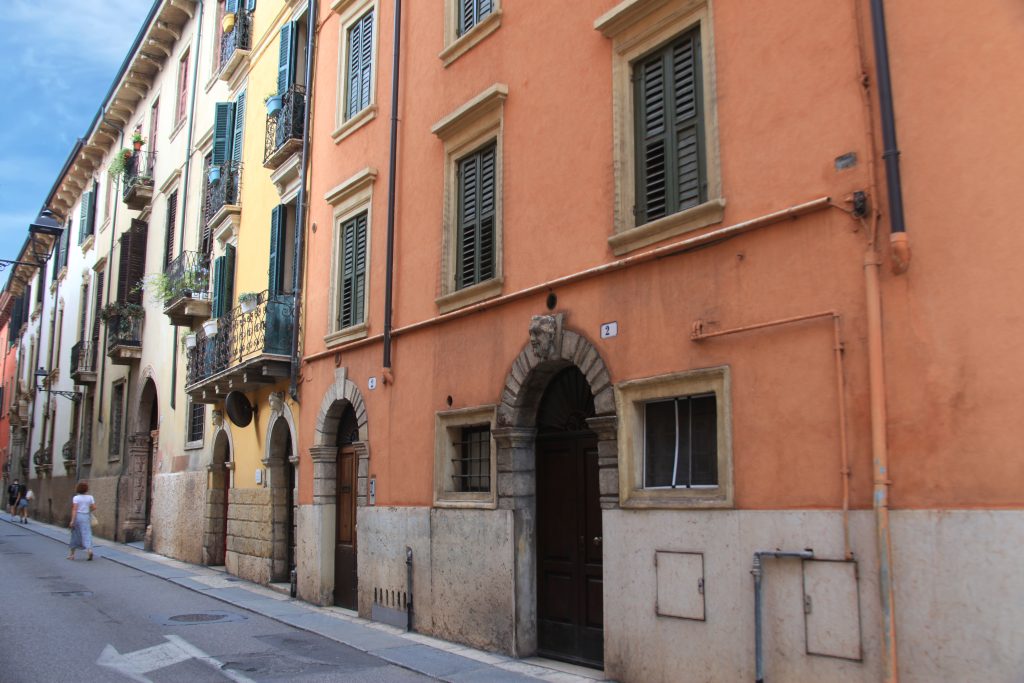
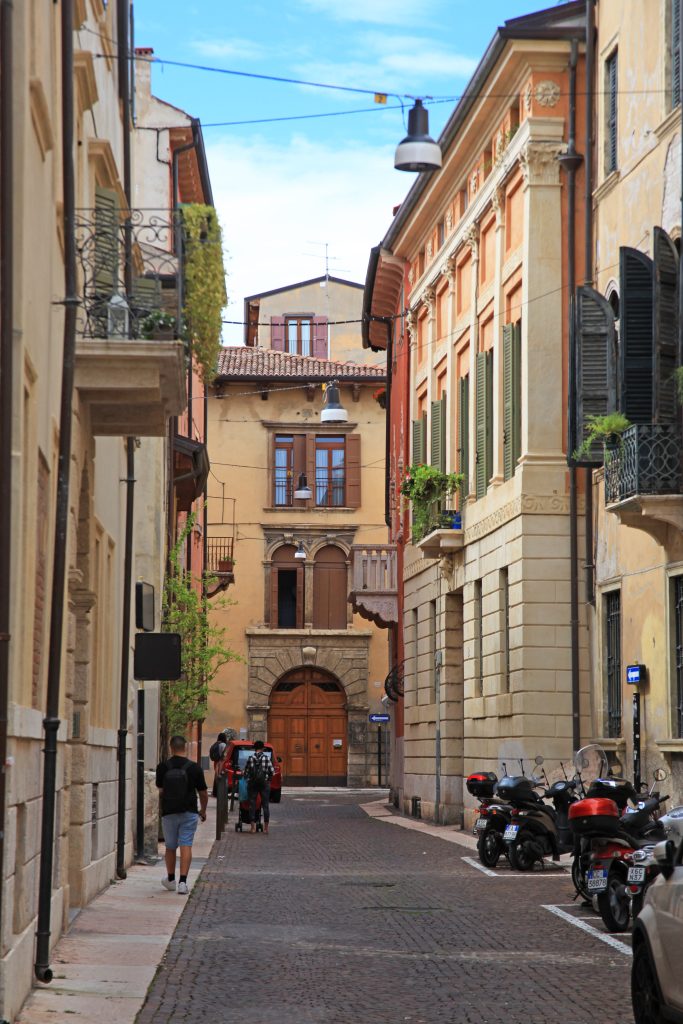
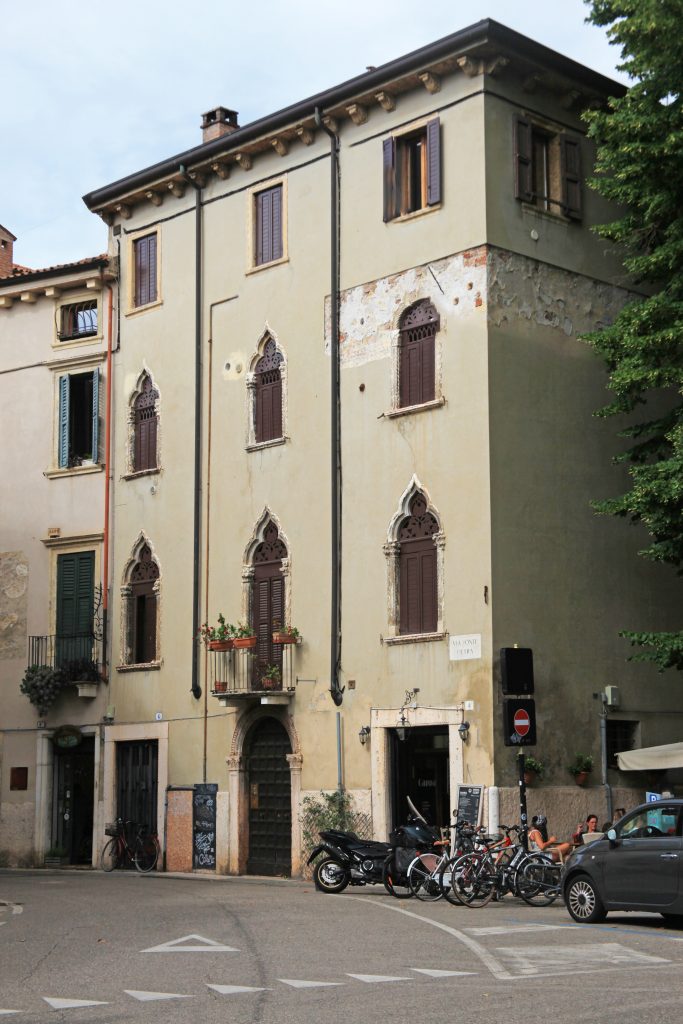
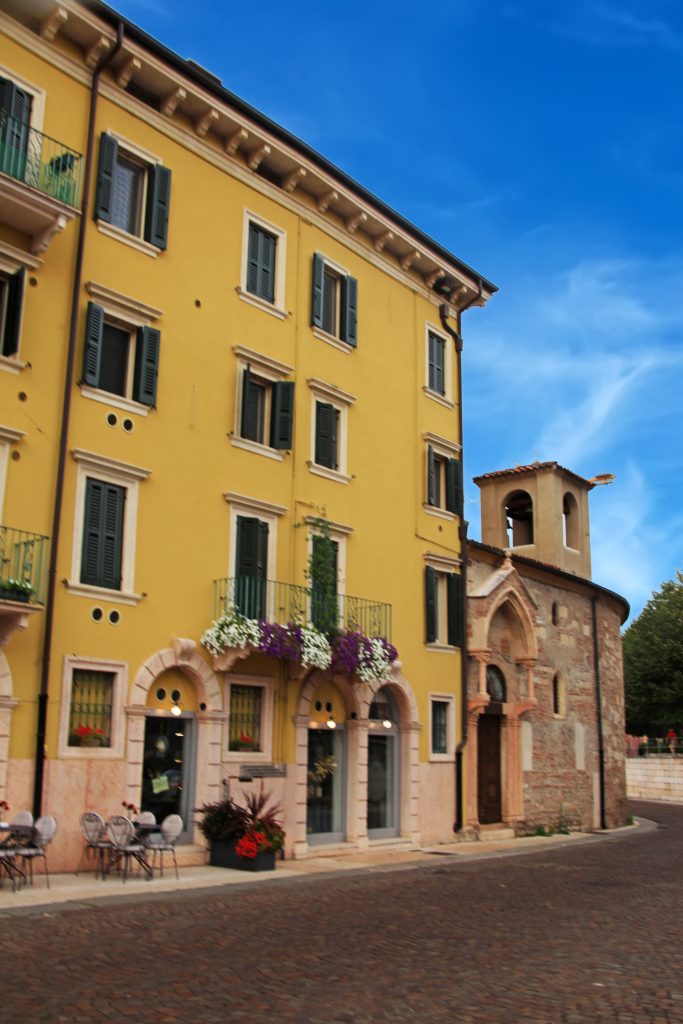
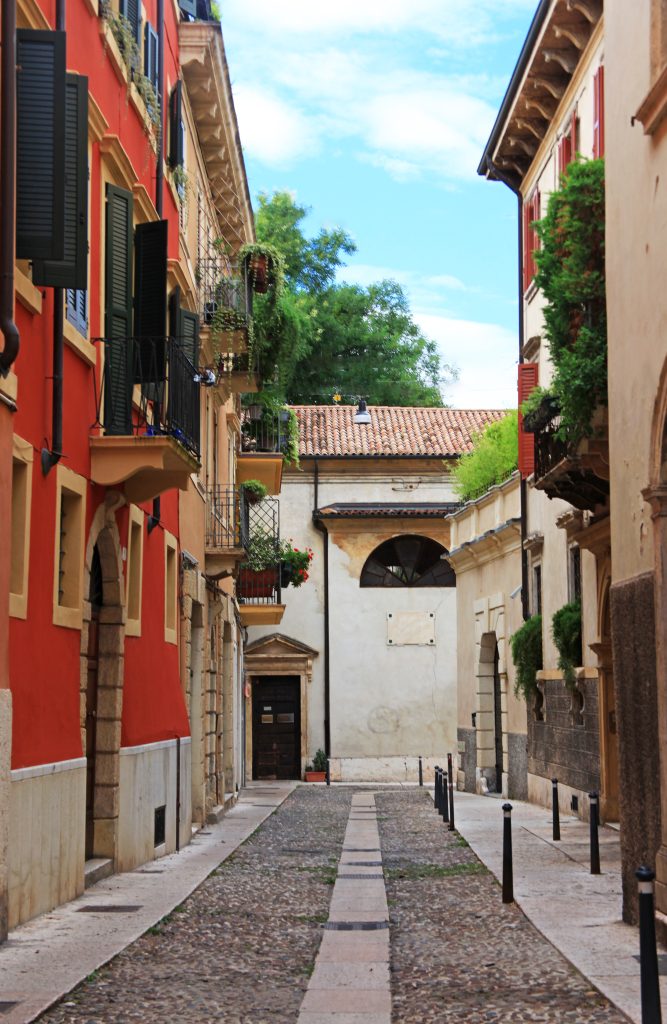
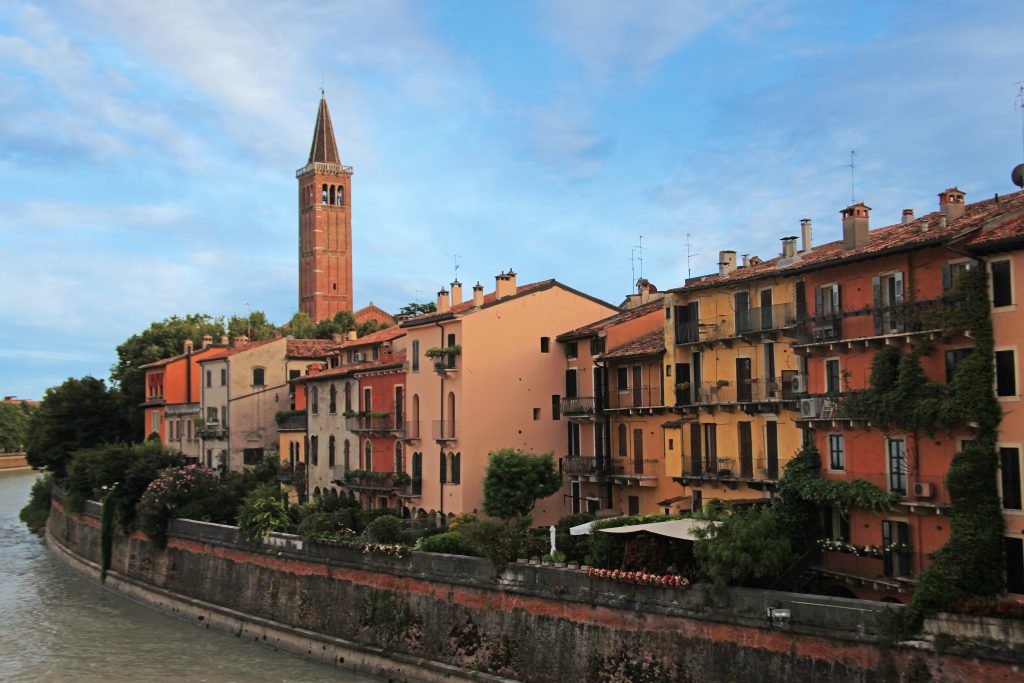
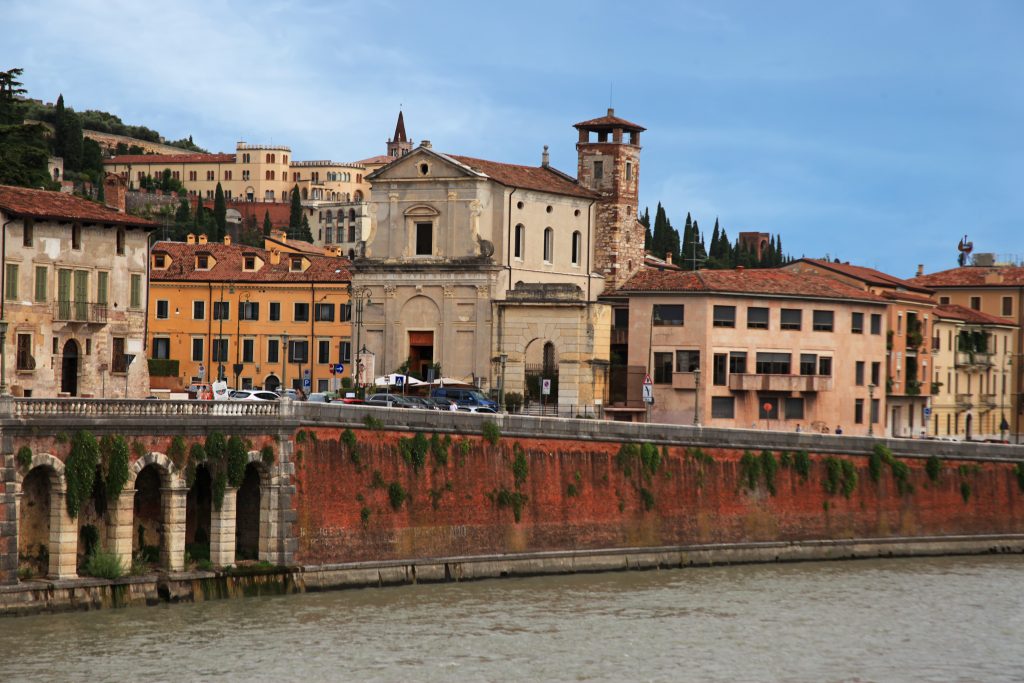
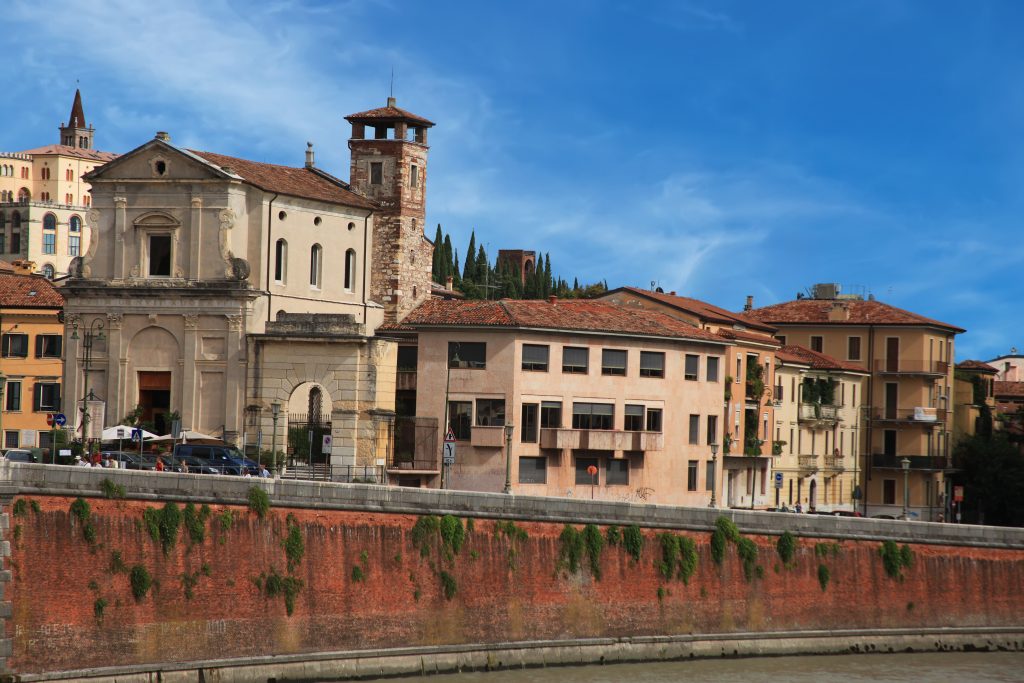
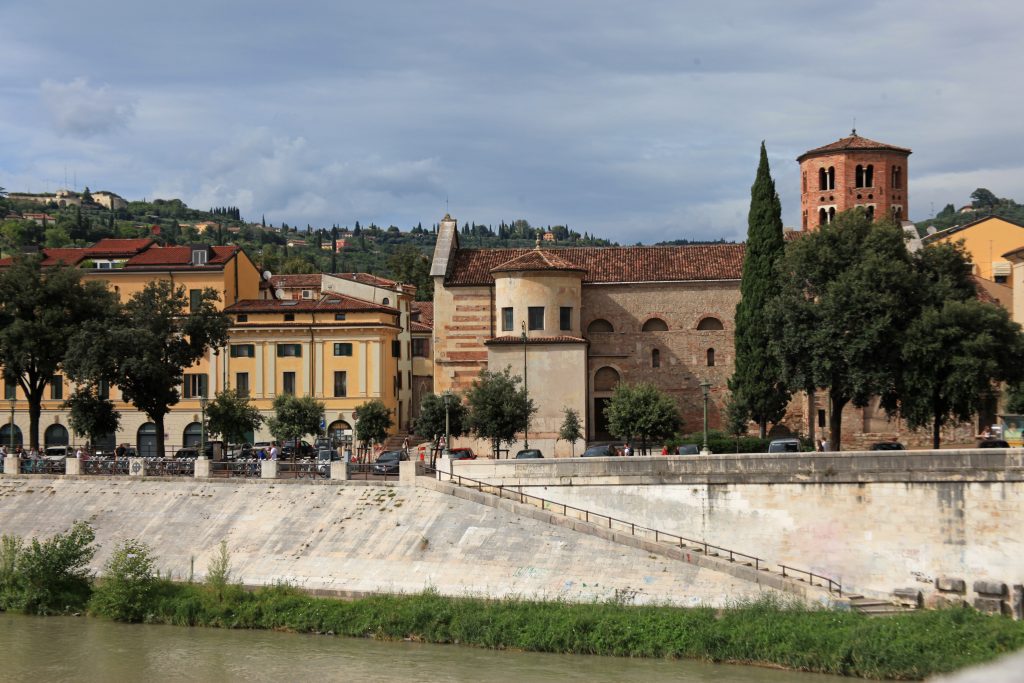
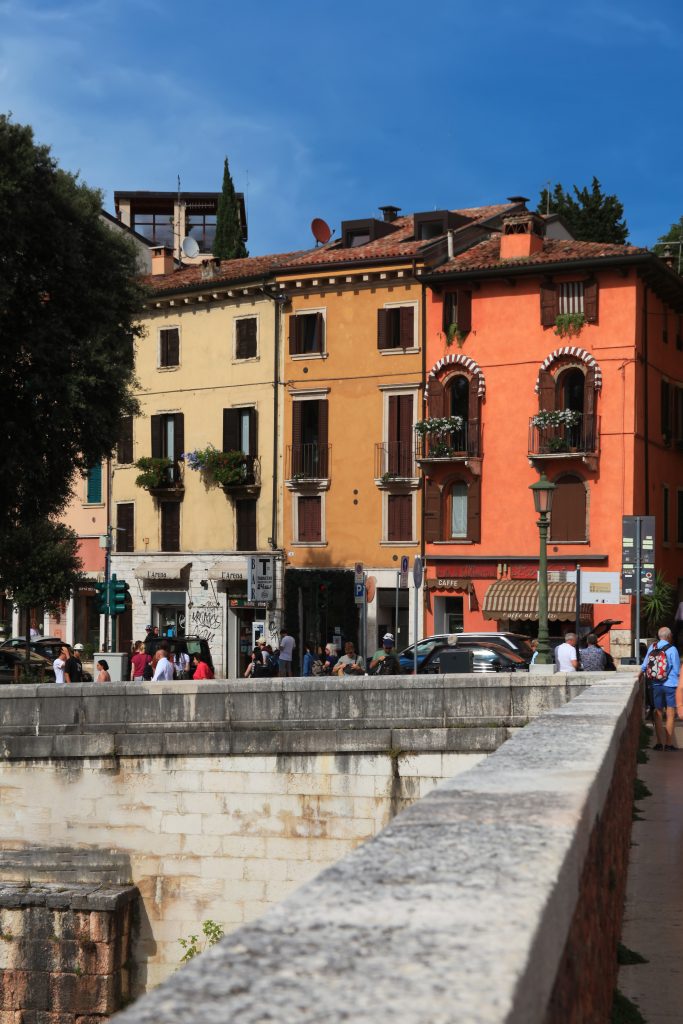
To walk through Verona is to move not through time, but through layers of history, as if the city were staging its own past in a series of acts. The Roman past stands with imperial clarity, its arches and amphitheaters still intact. The medieval period brought towers and fortified walls. The Renaissance softened the skyline with symmetry and learning. And today, Verona still embodies all these identities, woven into its soul like a well-loved script.
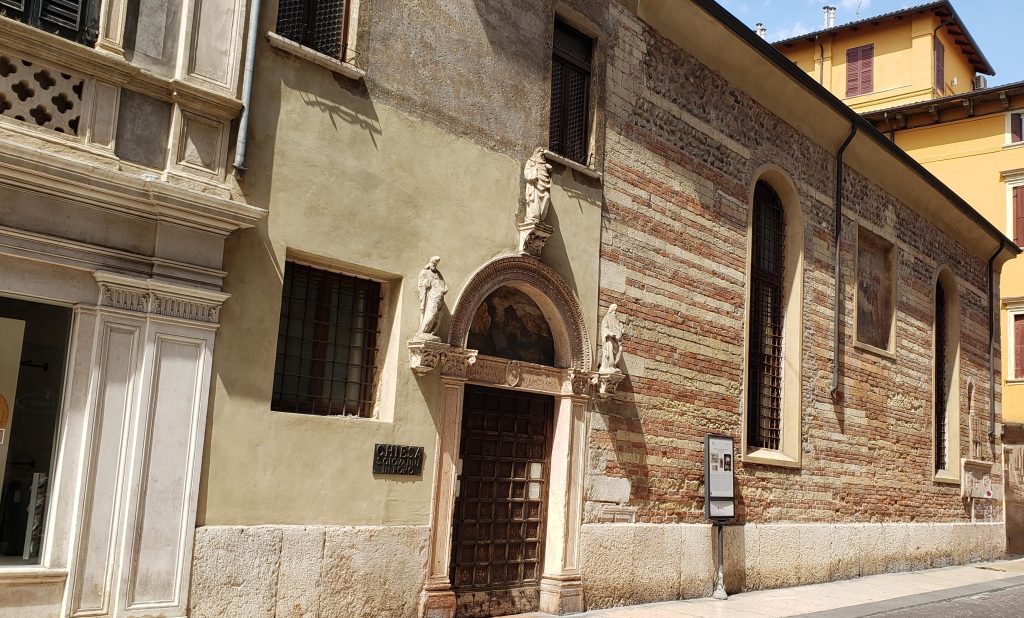
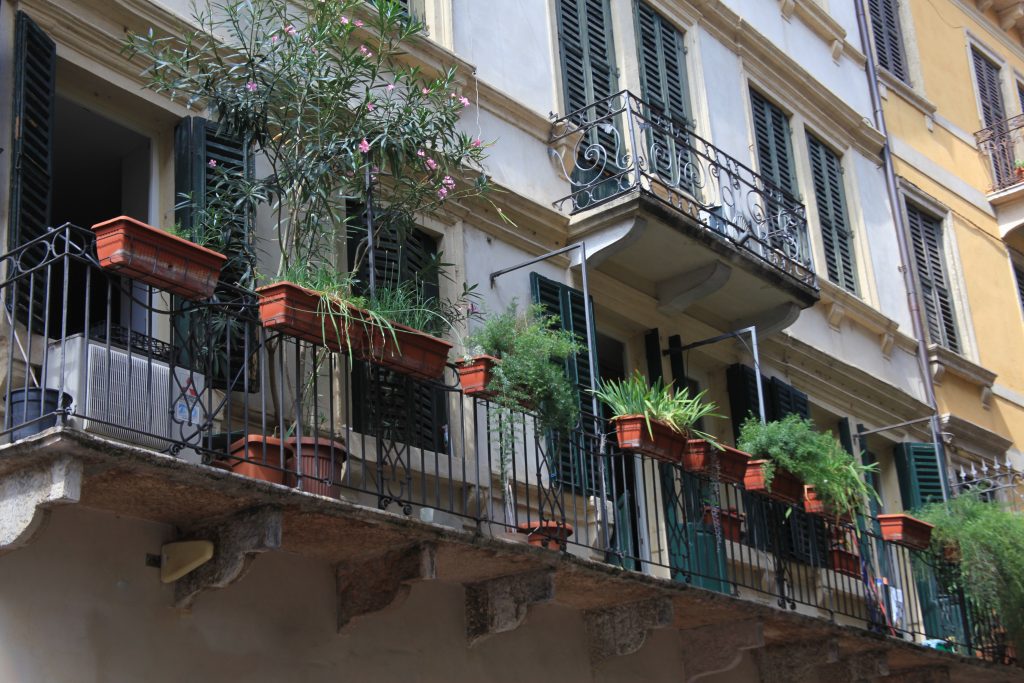
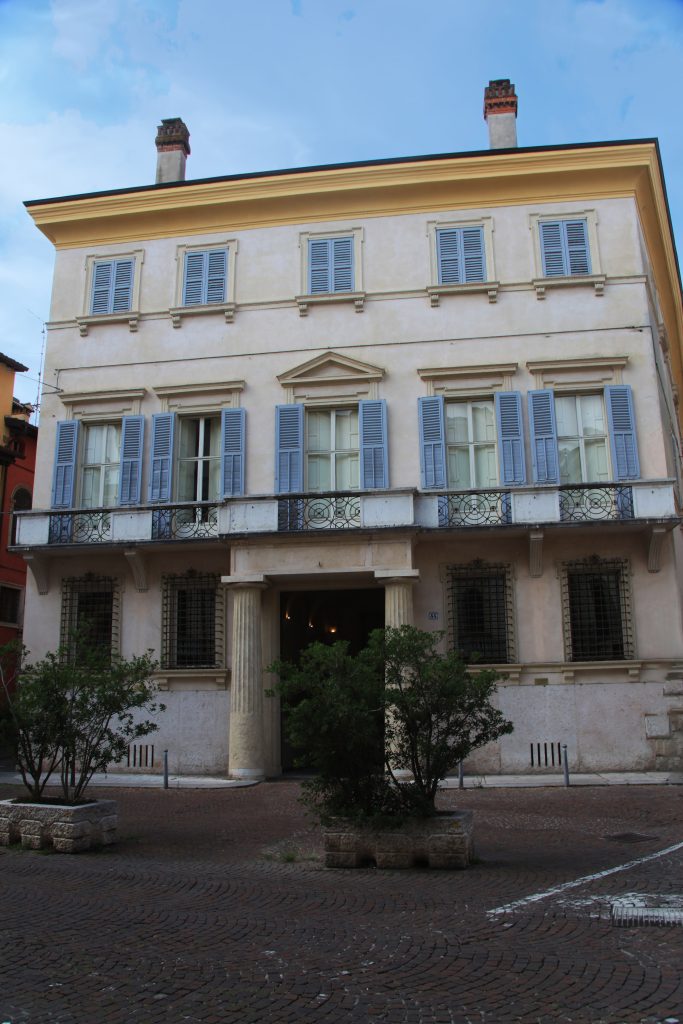
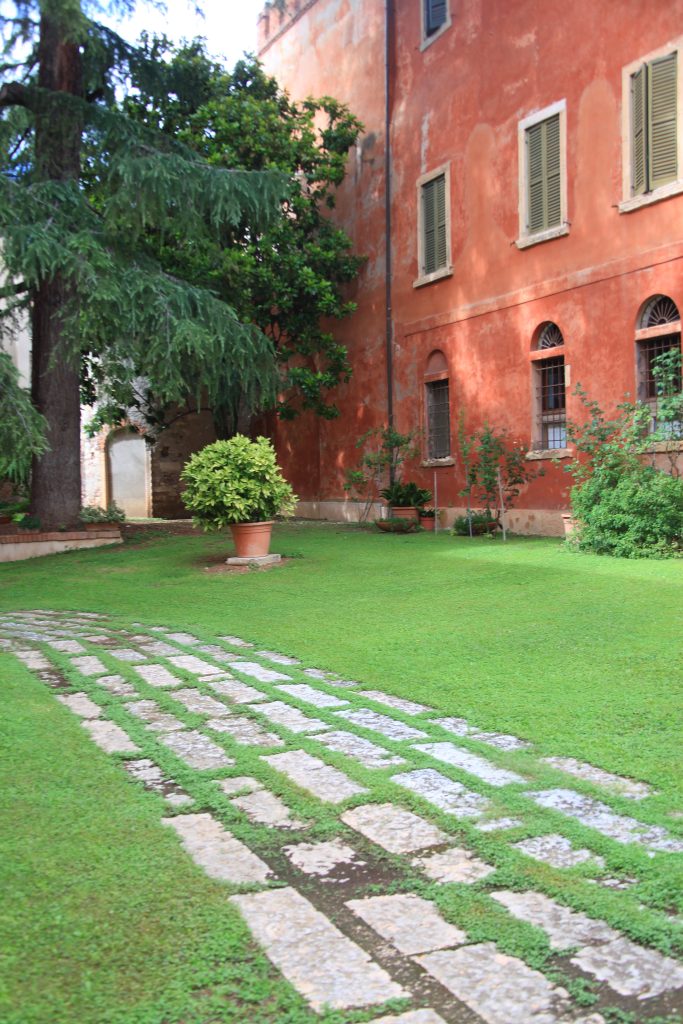
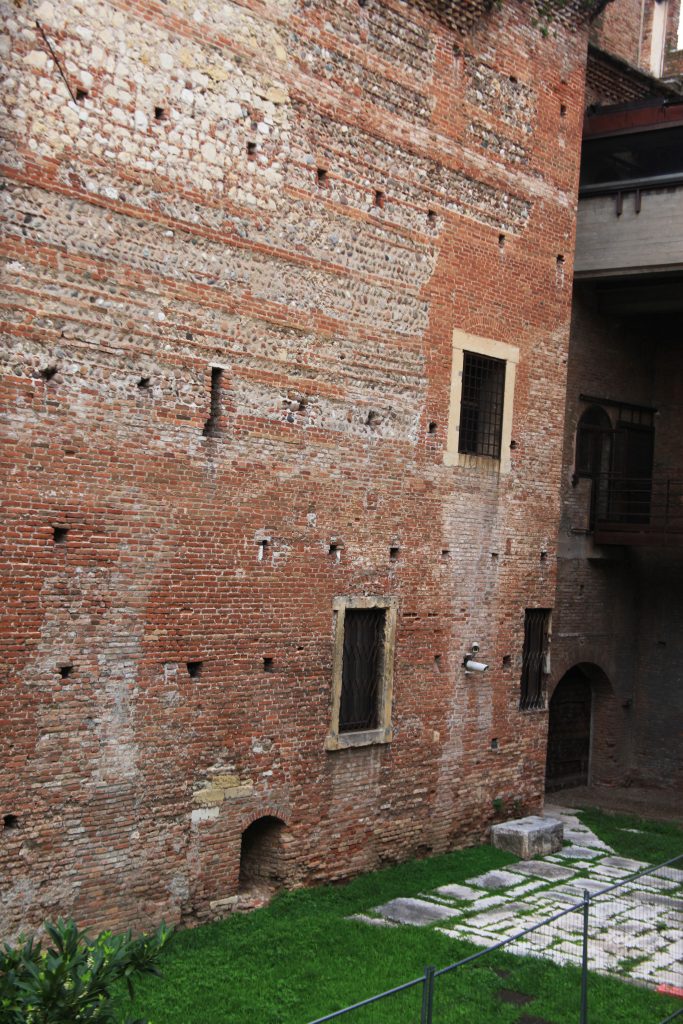
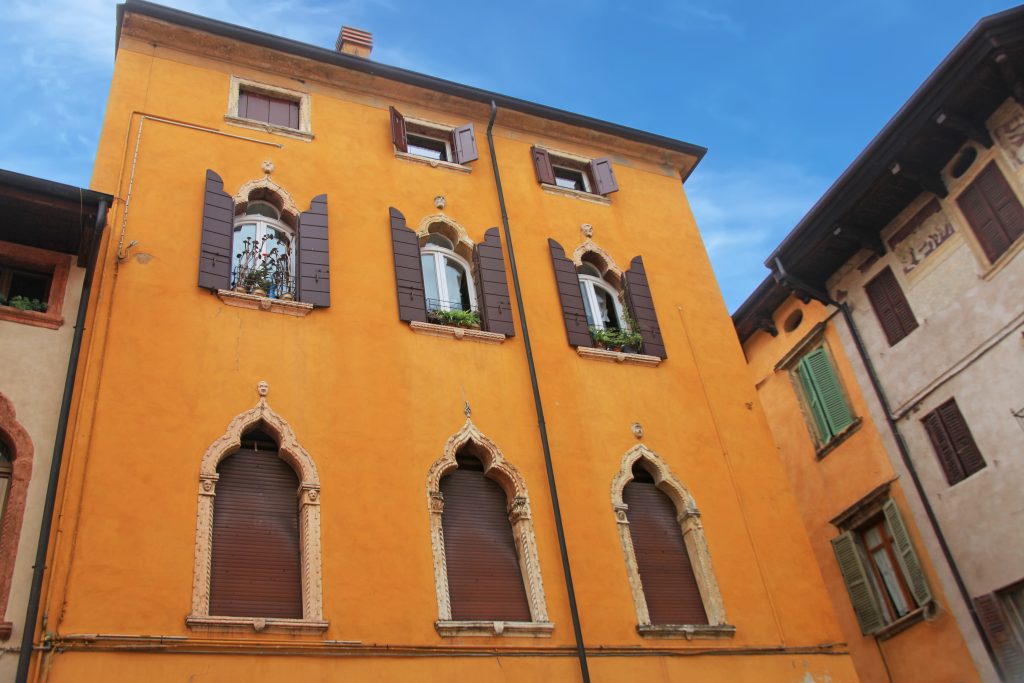
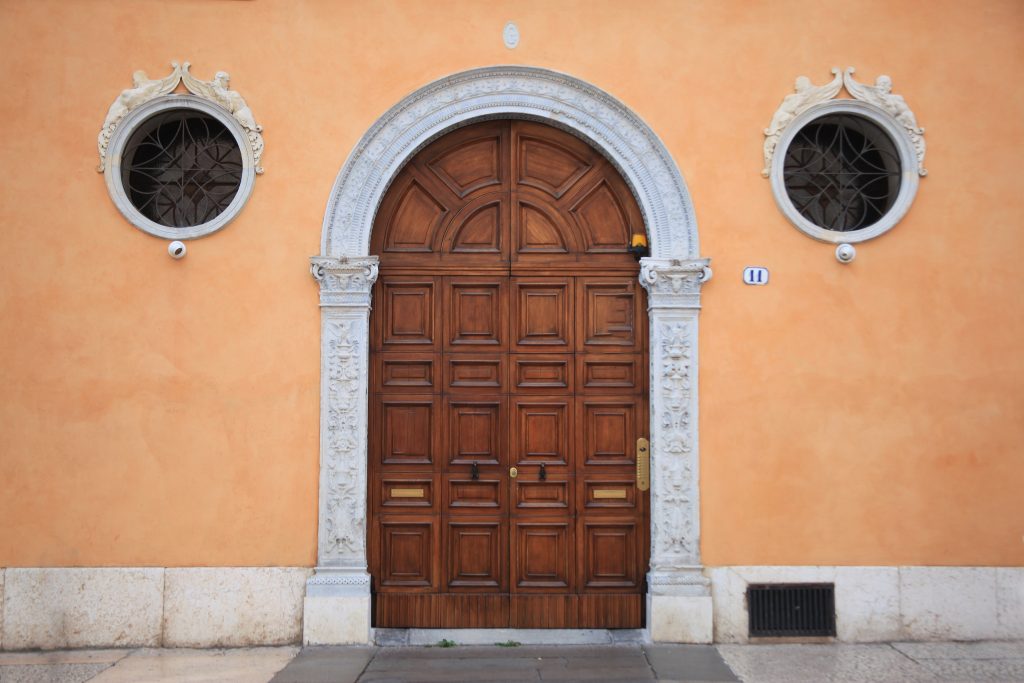
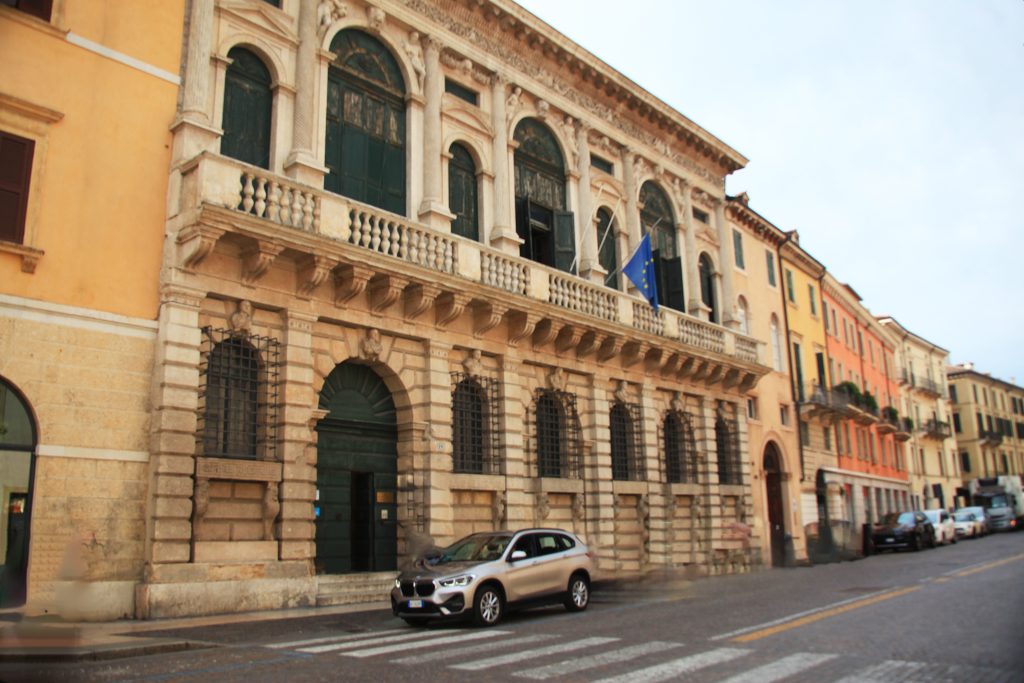
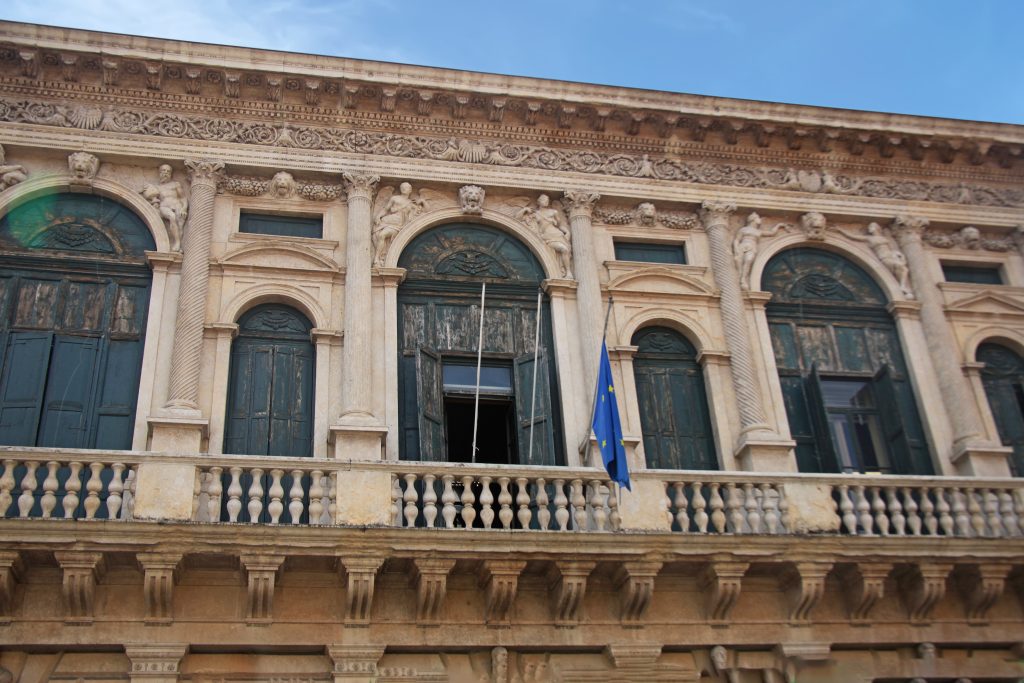
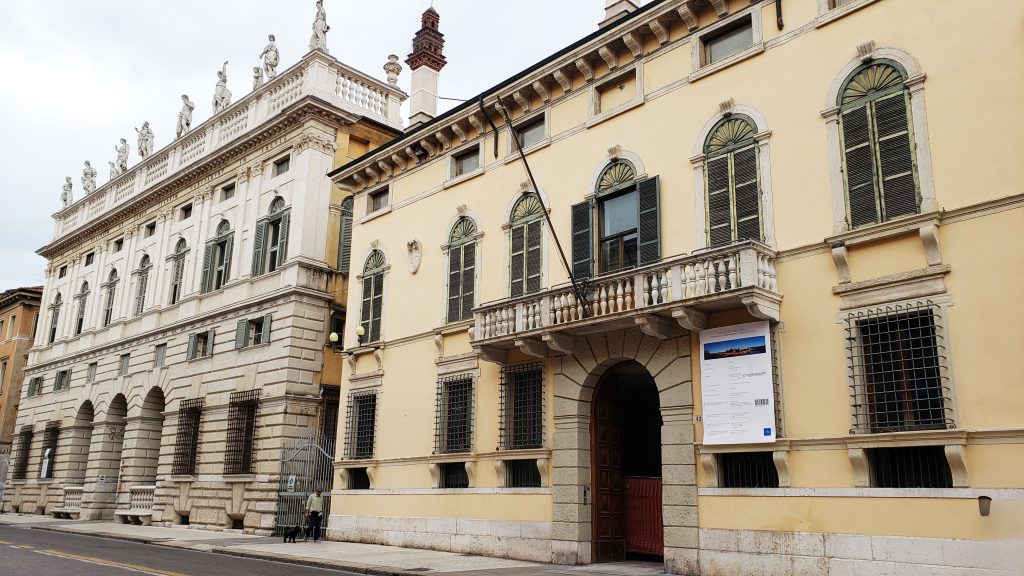
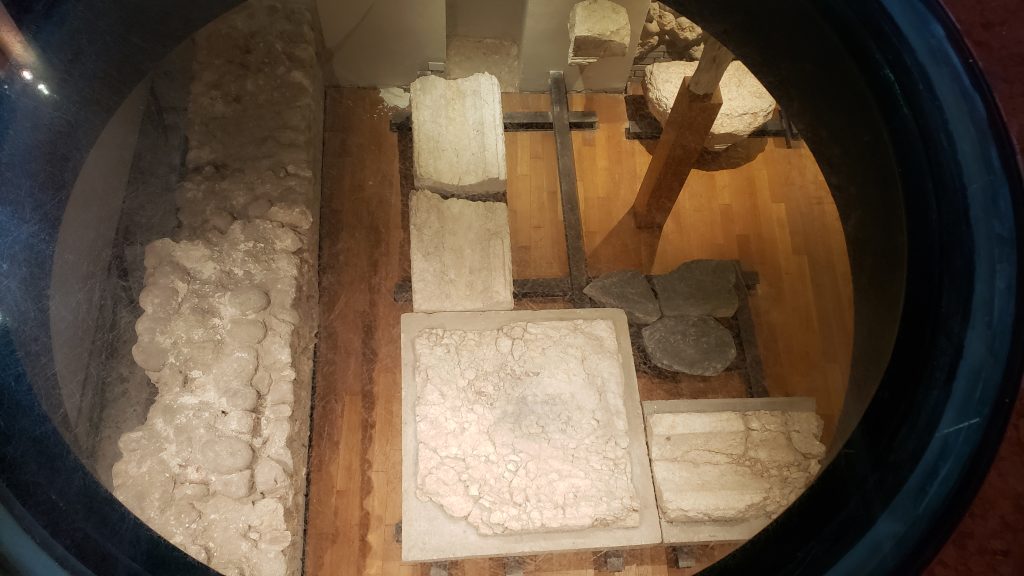
Let me demonstrate this in the hotel I had the privilege to have enjoyed during my stay, the NH Collection Palazzo Verona. Situated on a side street off the main promenade Via Mazzini, this seemingly single building was once two palazzos, separated by a courtyard between. That courtyard is now the covered lobby elegantly tying these structures into one bespoke hotel. First, note the occasional intentionally unfinished spot on the wall, a reminder of these structures’ ancient vintage. But the real surprise comes when you enter the breakfast room on the mezzanine and discover a large window in the floor revealing the archaeological remains of a Roman home, complete with nearly intact mosaic flooring!
This is not a museum. Verona has always been alive with life!
The Stories That Captivate
This city breathes with history and stories. Whether that is Shakespeare’s most famous love story, Dante’s exile, the rivalries of Italian ruling families, or the city’s resurrection after the plague in 1517, Verona boasts of its perseverance and vitality with theatricality!
That’s why its piazzas feel like open-air stages. Beneath the romance pulses an ancient rhythm, one heard in every colonnade, stone gate, and Latin inscription fragment. Let’s explore this city in four acts!
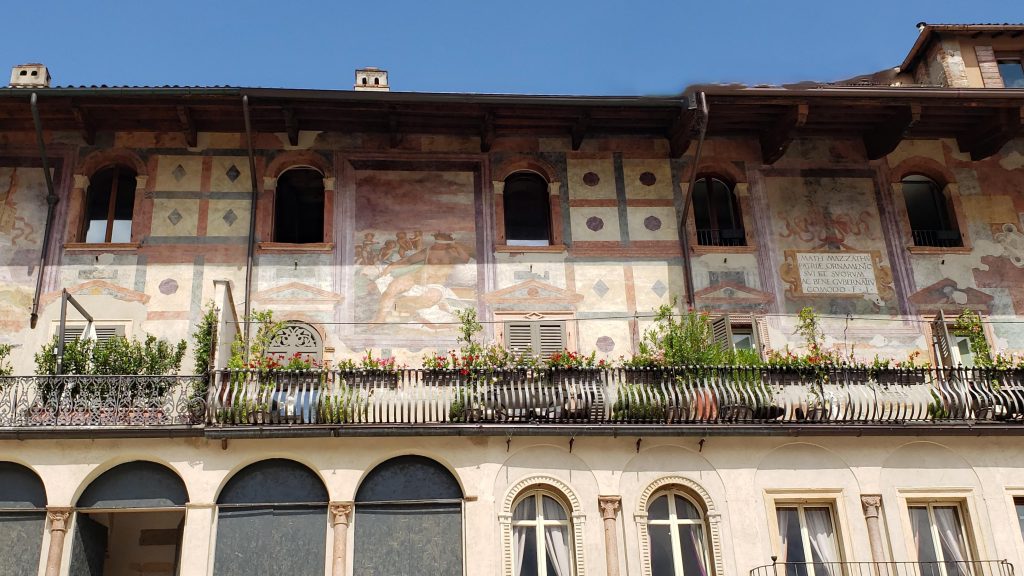
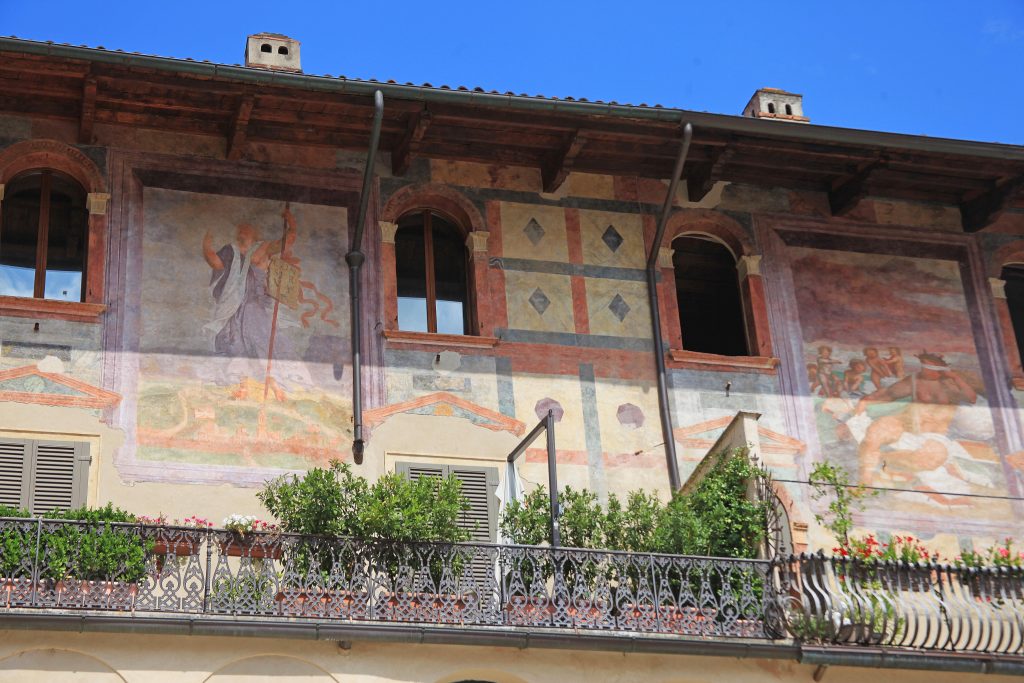
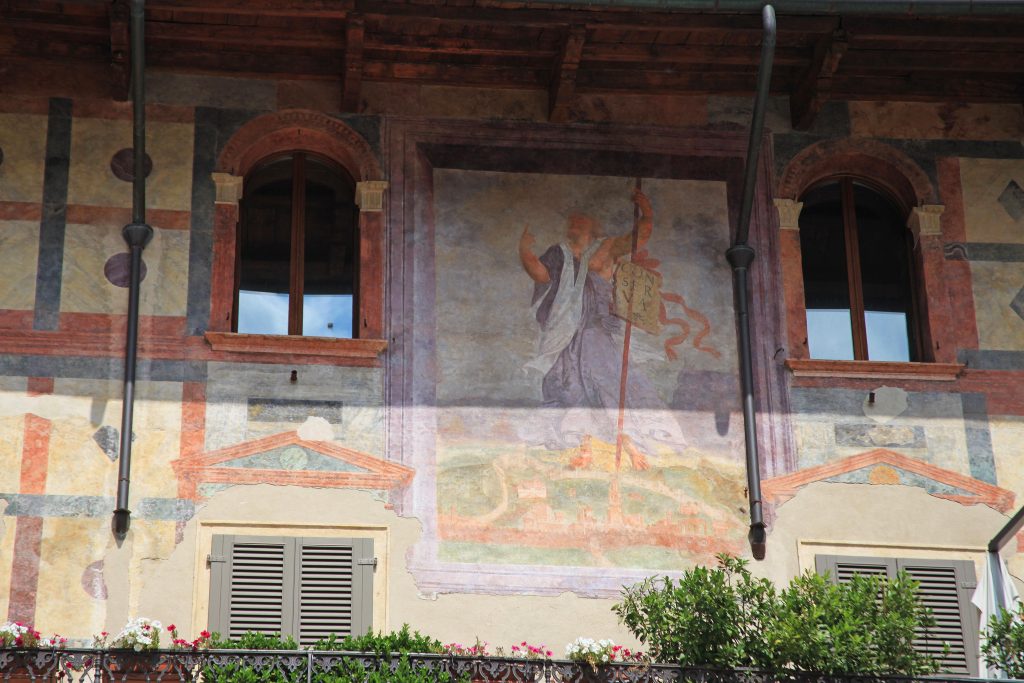
Act I: Verona the Roman
Arches, Amphitheaters, and a City Built to Endure
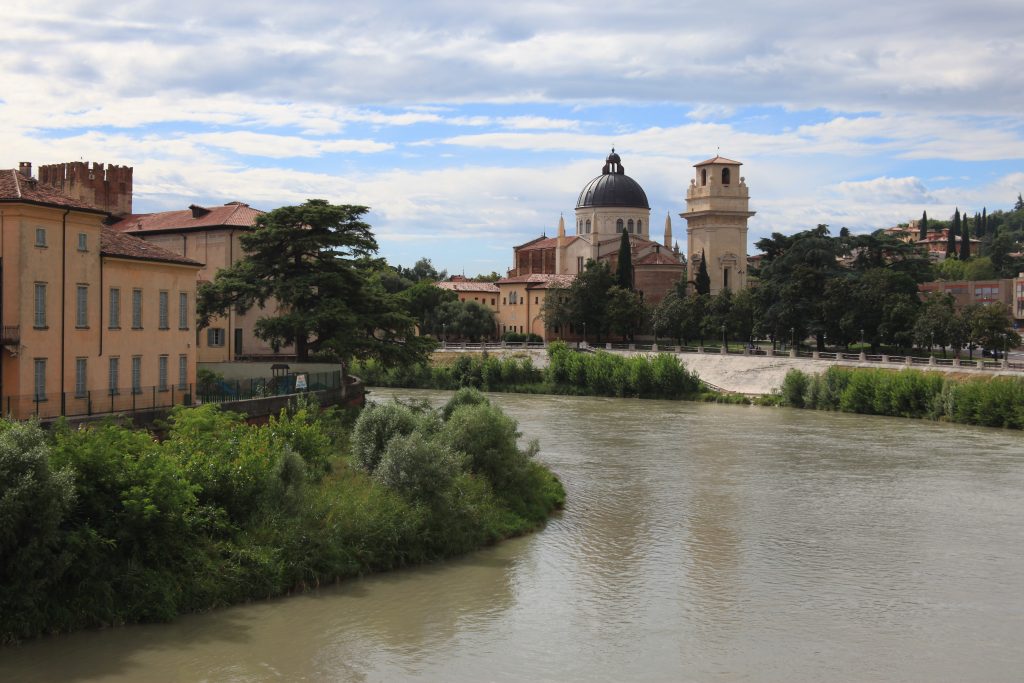
Founded in 89 BCE as a Roman colony, Verona quickly became a strategic military and commercial hub. It sat at the junction of key Roman roads, Via Postumia and Via Claudia Augusta, among others, and controlled a vital bridge across the Adige River. The city grew prosperous, adorned with theaters, baths, and monuments of civic authority.
Today, Verona remains one of the best-preserved Roman cities in northern Italy, with relics still woven into the life of the city rather than tucked behind museum glass.
- The Arena (Arena di Verona)
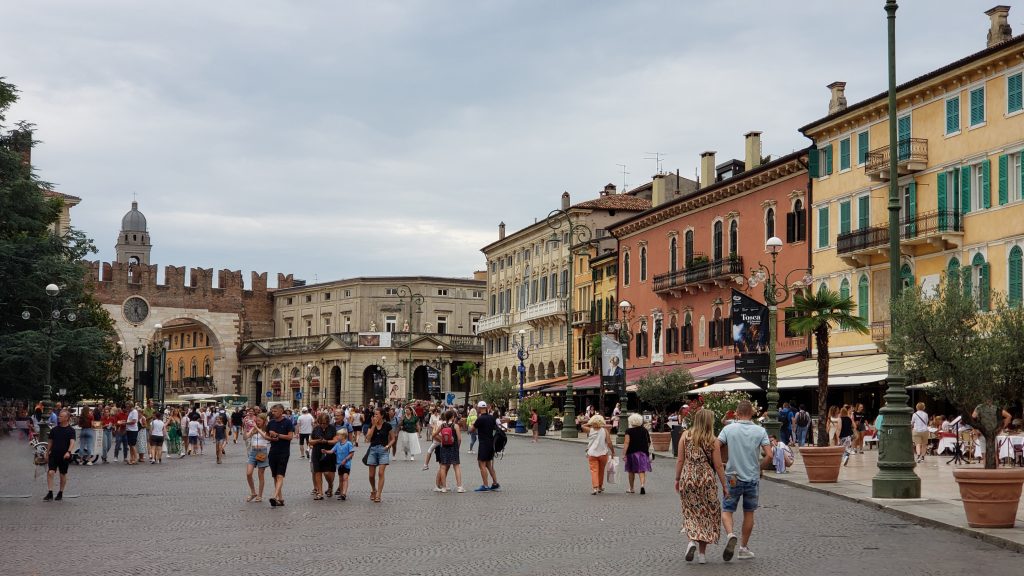
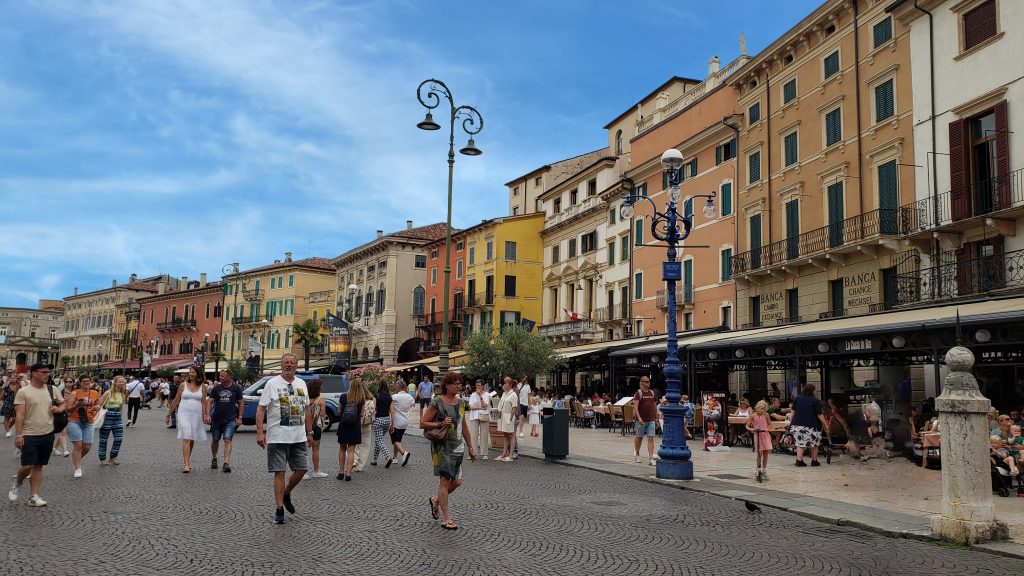
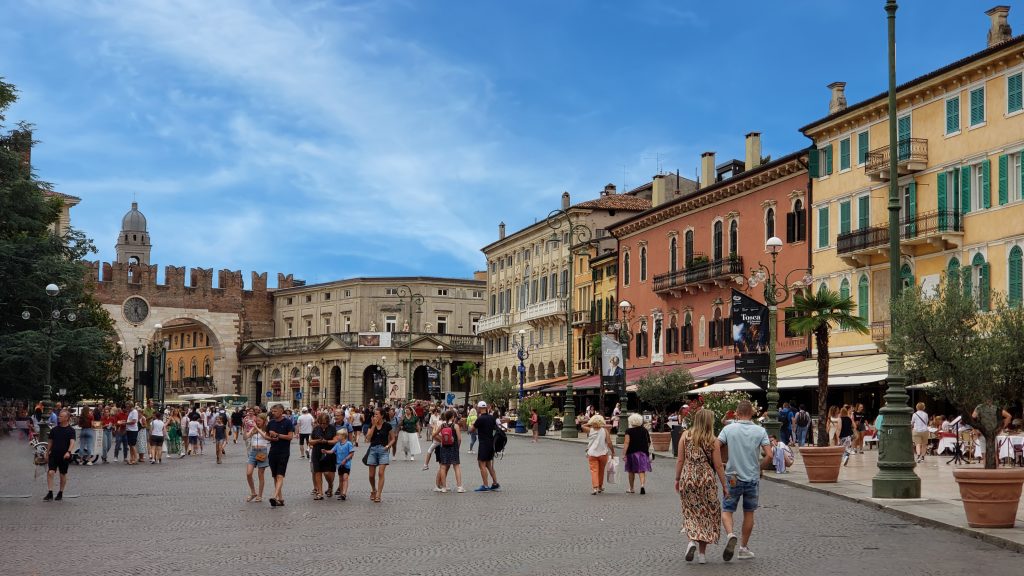
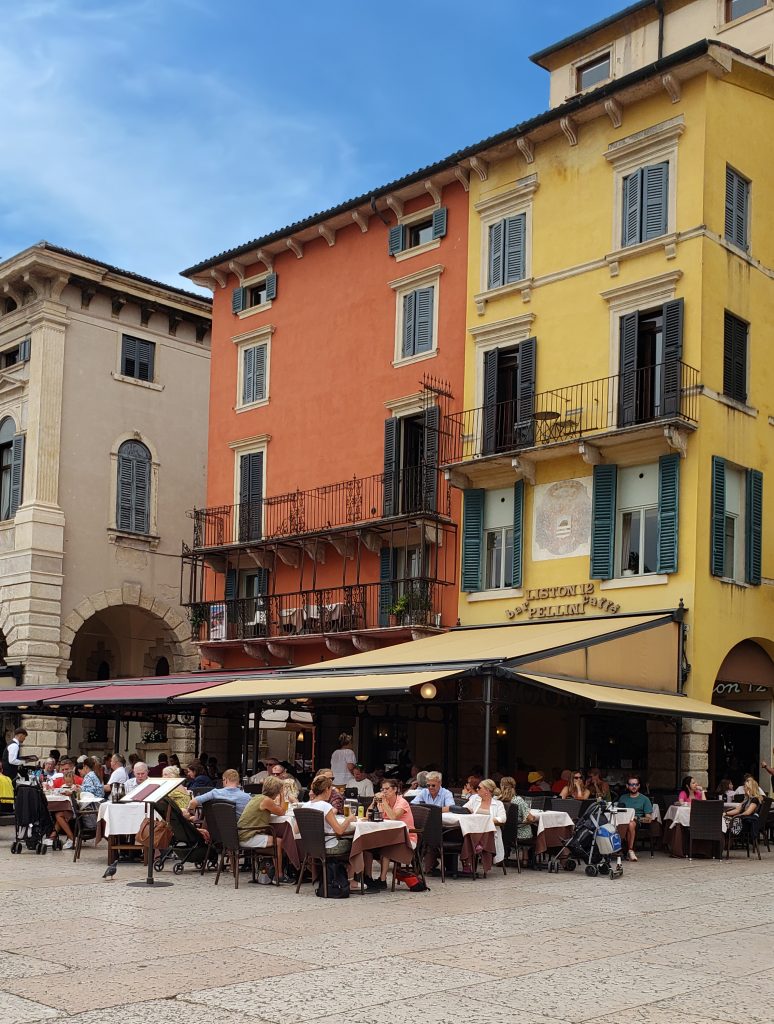
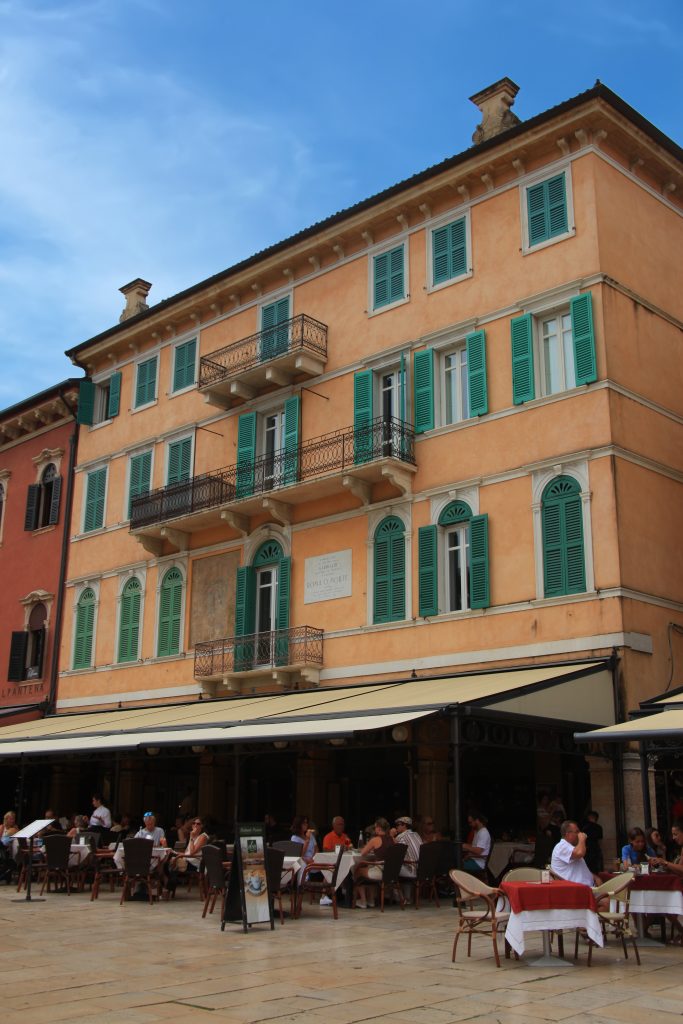
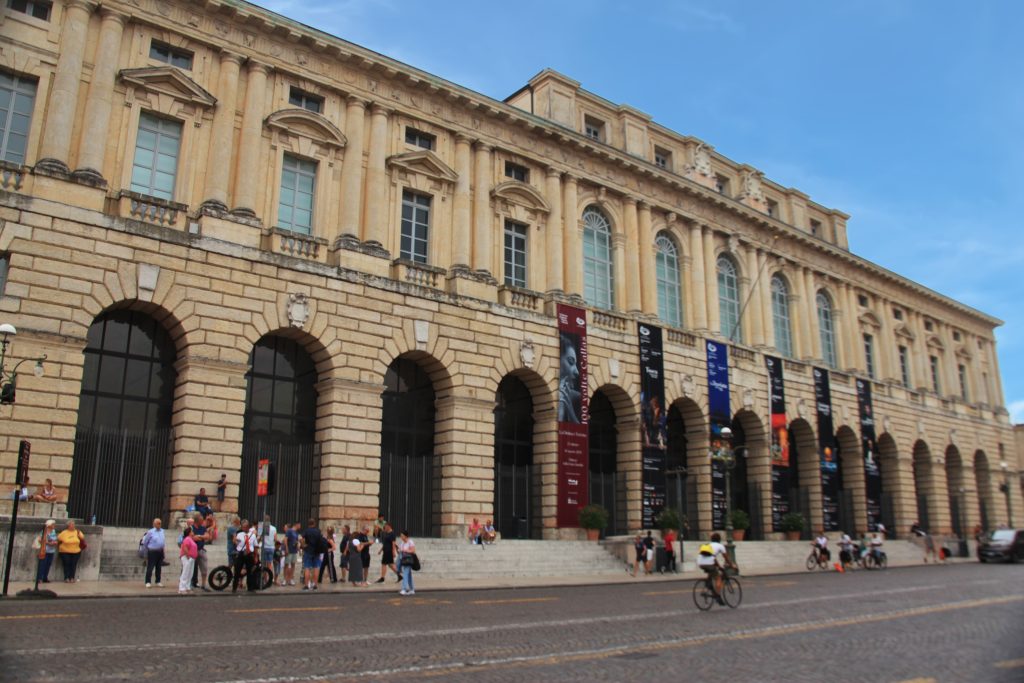
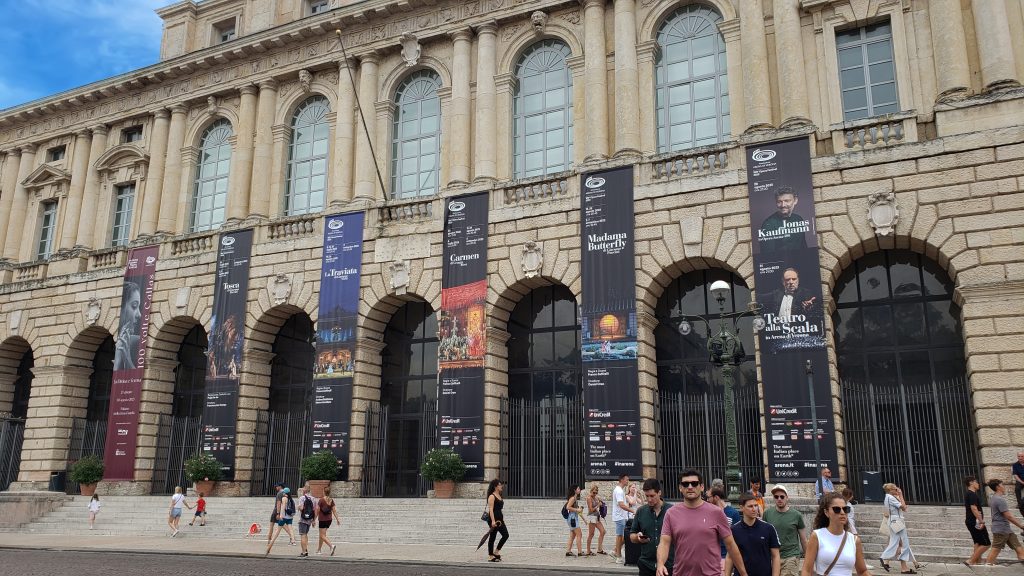
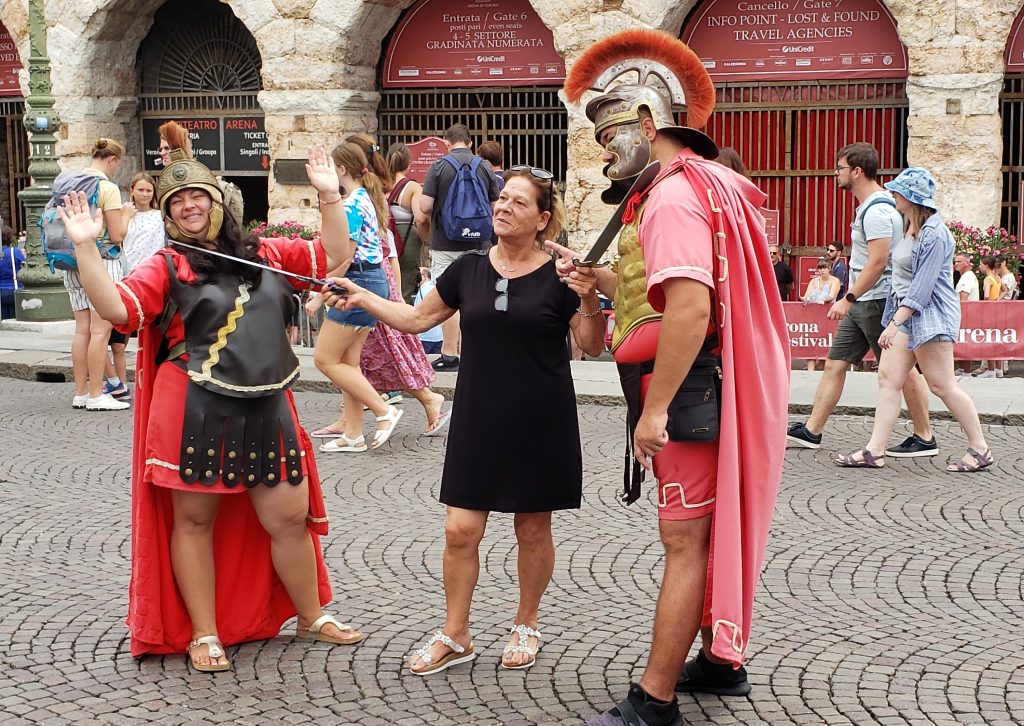
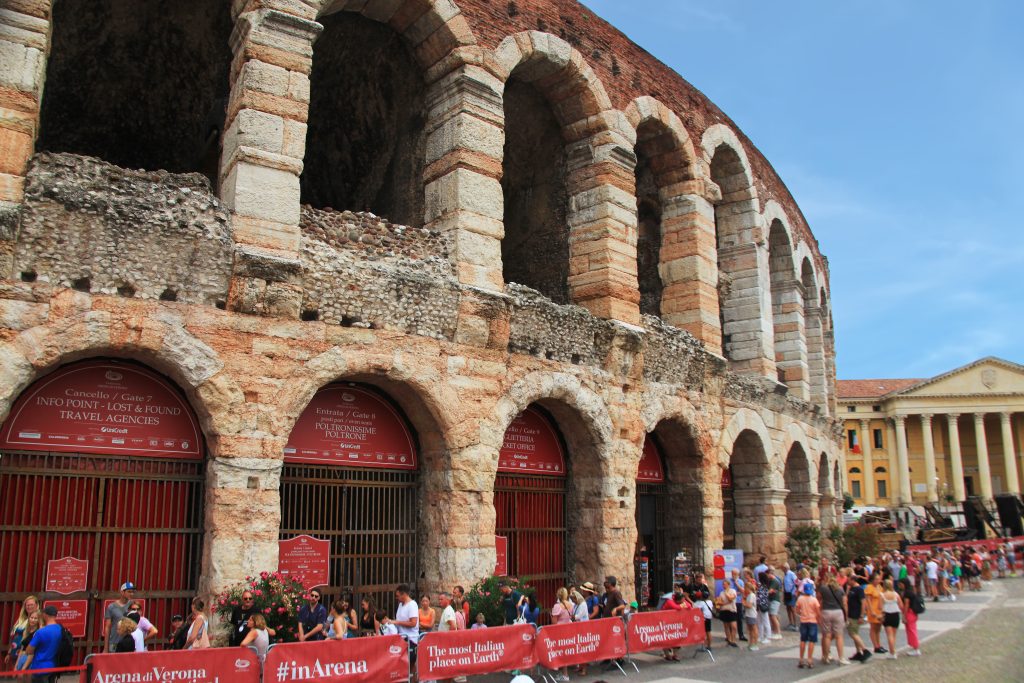
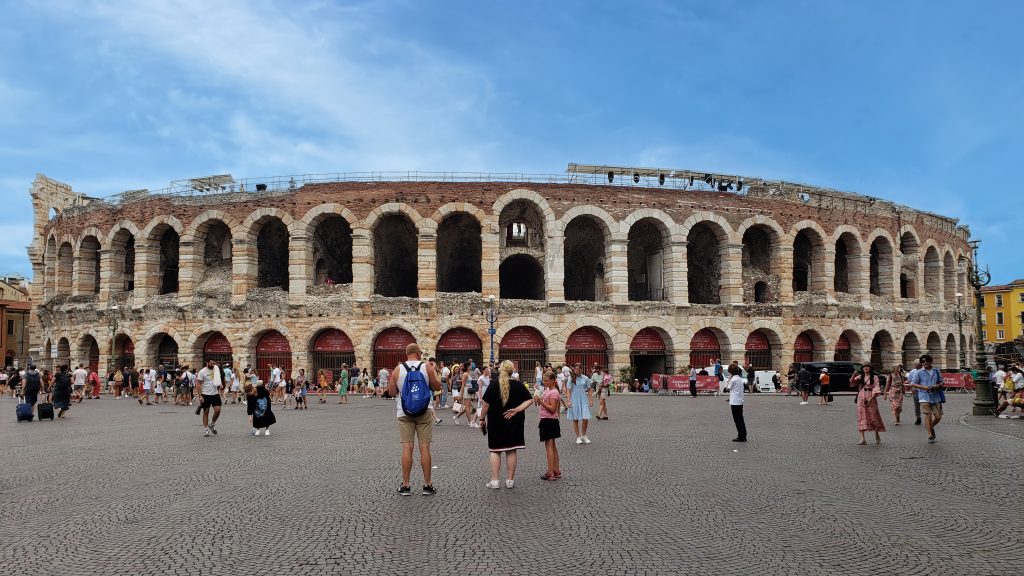
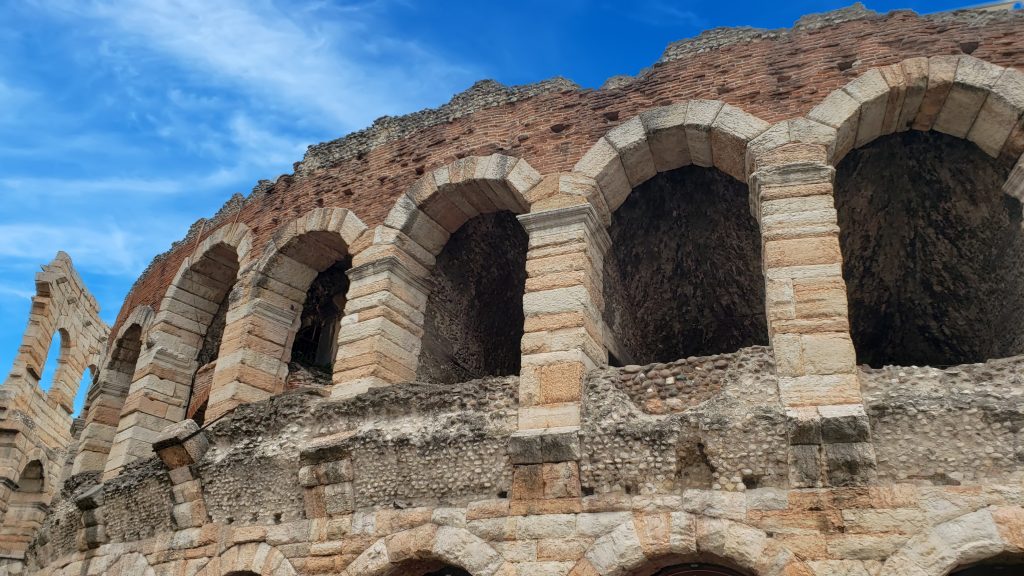
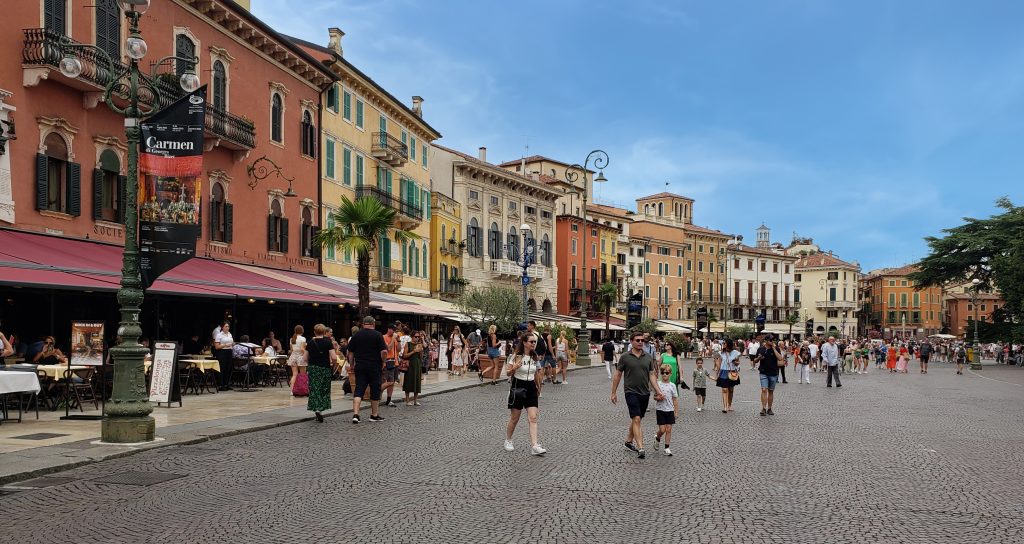
Perhaps the most astonishing of them all: this 1st-century Roman amphitheater, built of pink-tinged limestone, is the third-largest in Italy, and still in use. Where once gladiators clashed, today opera singers fill the air with Puccini and Verdi. The Arena di Verona has outlived emperors, wars, and earthquakes, including a devastating one in 1117, which destroyed much of its outer ring. That the amphitheater survived at all is nothing short of remarkable. The Arena seats 15,000 and forms the vibrant heart of Piazza Brà, Verona’s grand civic space. The arena is the backdrop for much of the civic life if the city. It rises as an exclamation point as you turn the corner into the Piazza. Sit in one of the outdoor cafes and enjoy the pulsing activity in this handsome square, with children playing, families reuniting, shoppers browsing, buskers serenading.
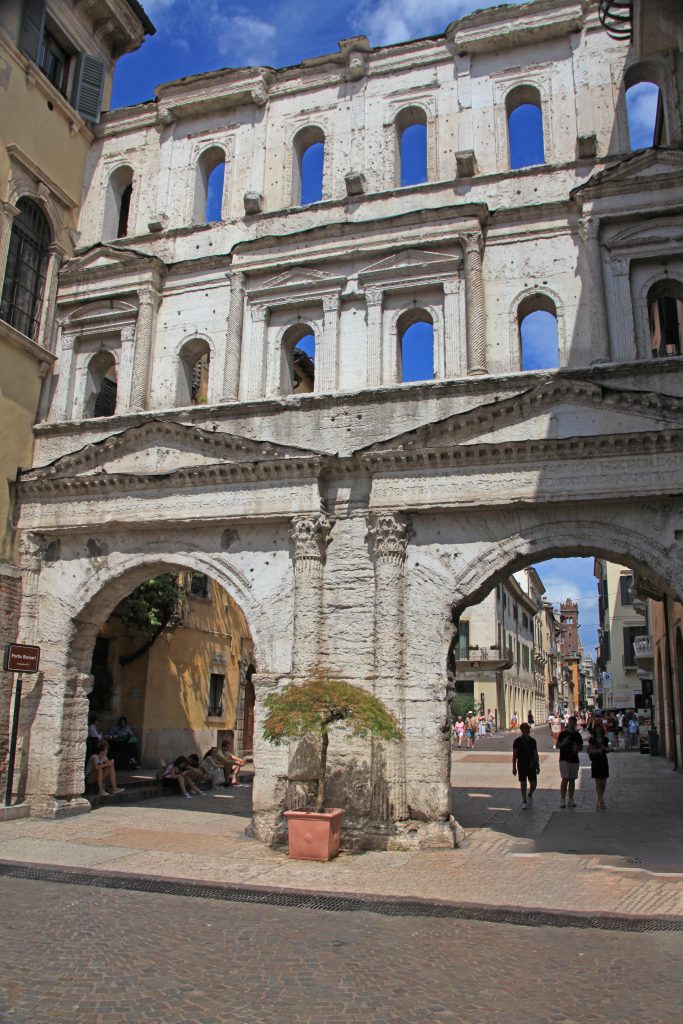
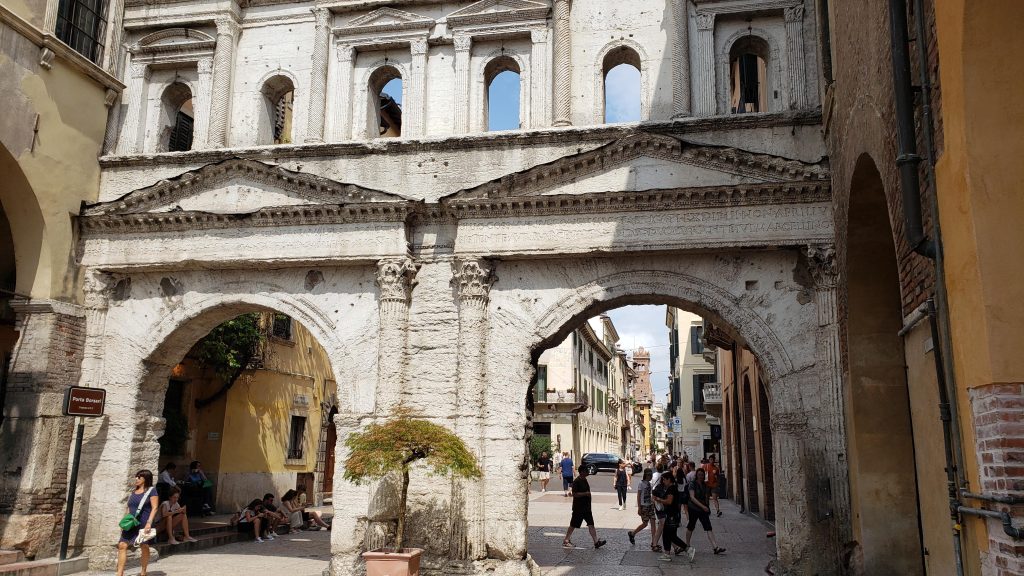
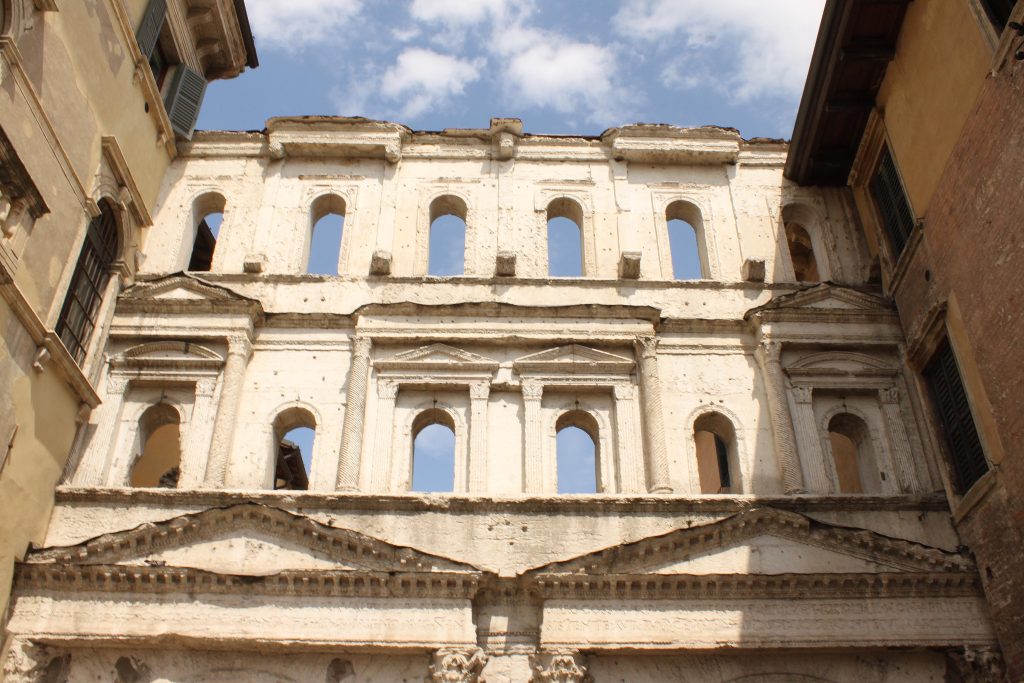
- Porta Borsari
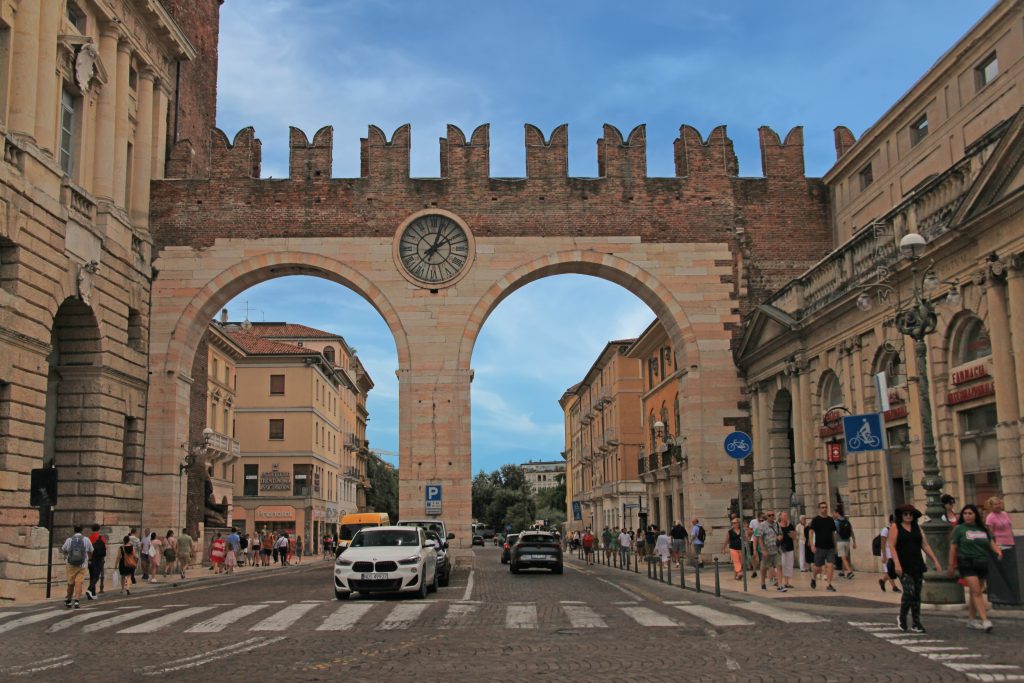
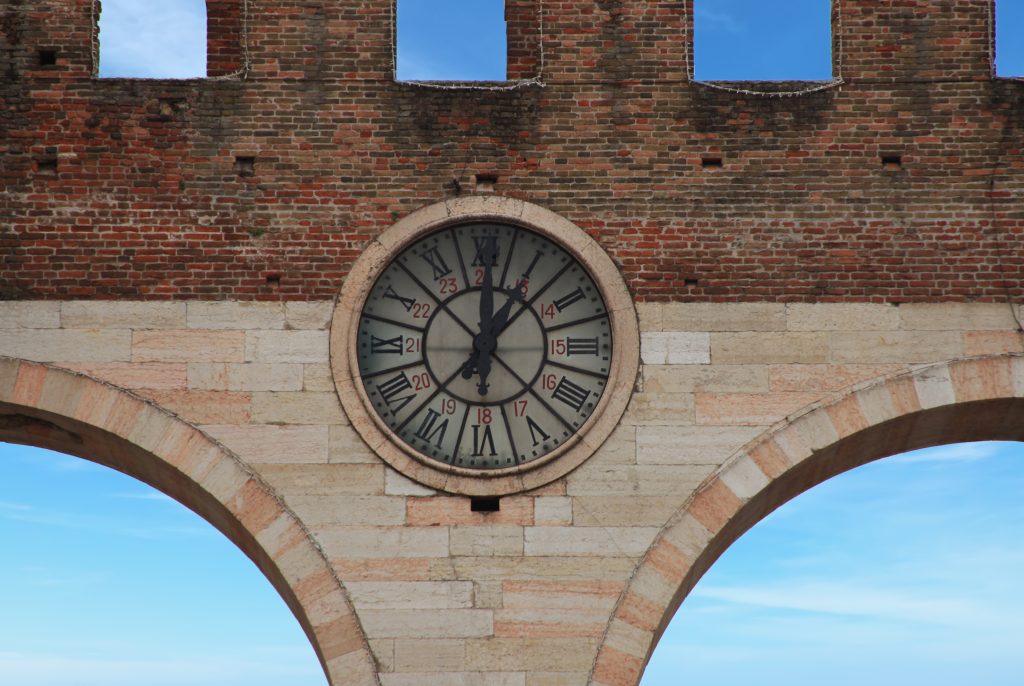
An exquisitely preserved 1st-century city gate, with its twin arched portals and Corinthian columns, once marked the entrance to Verona’s decumanus maximus. The carved inscriptions still echo with imperial presence. This is the gateway that welcomes you into the core of historic Verona
- Porta Leoni
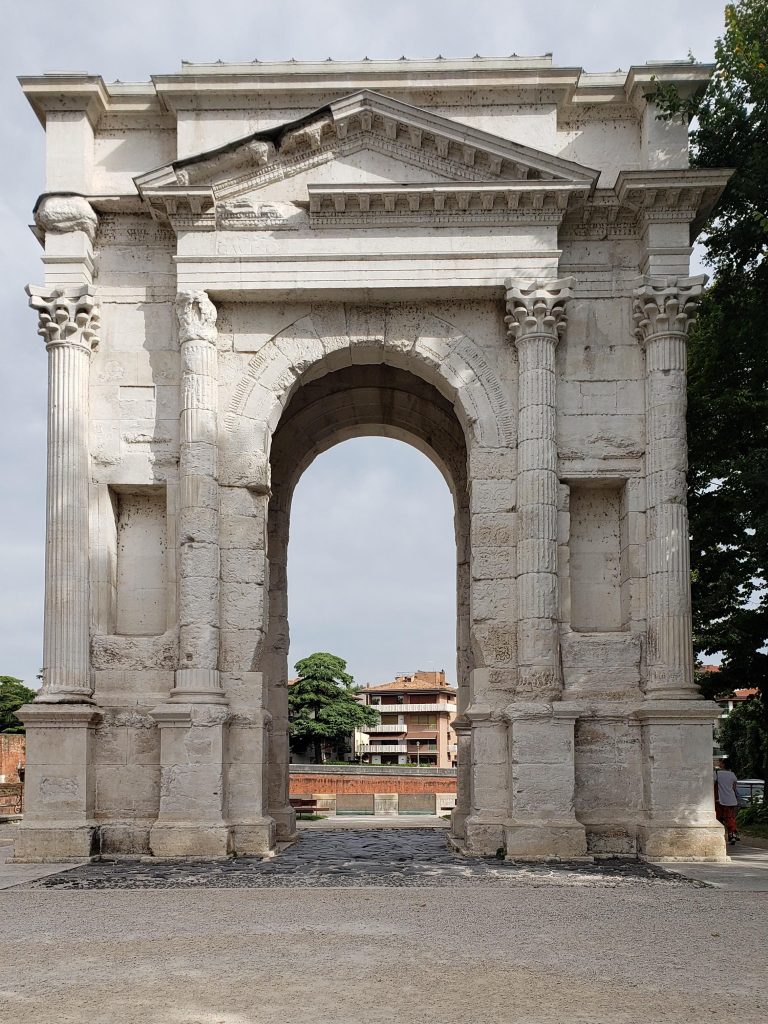
Less intact but no less evocative, this partially buried gate reveals fragments of Roman pavement and wall foundations. It opens like a window into the city’s blueprint.
- The Roman Theater (Teatro Romano)
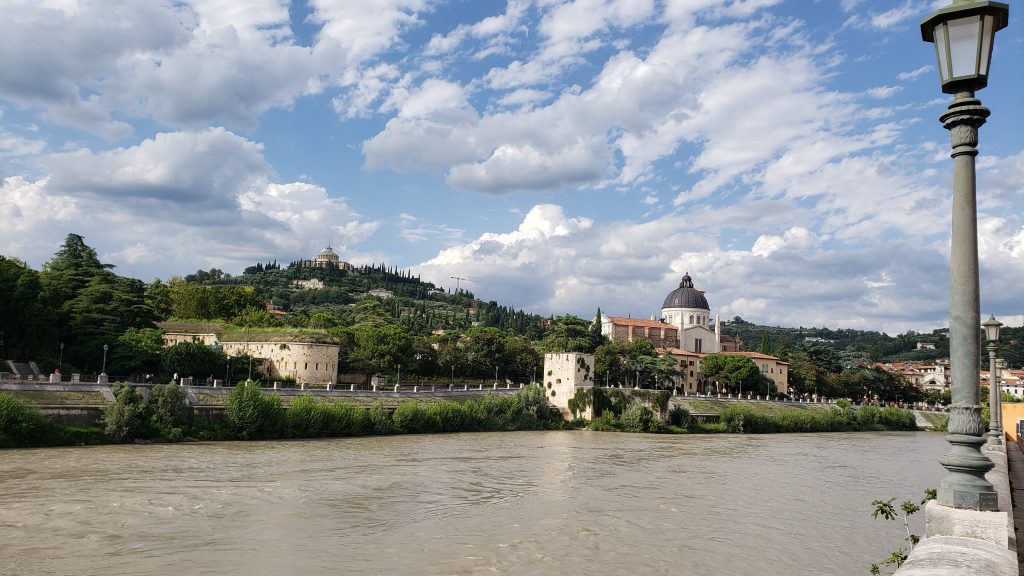
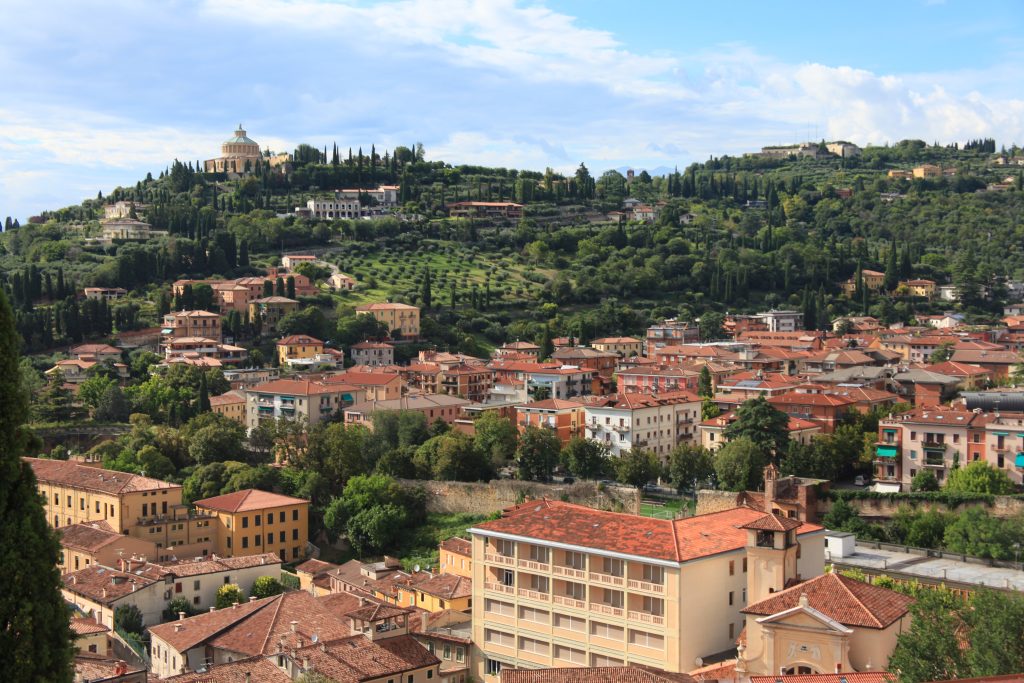
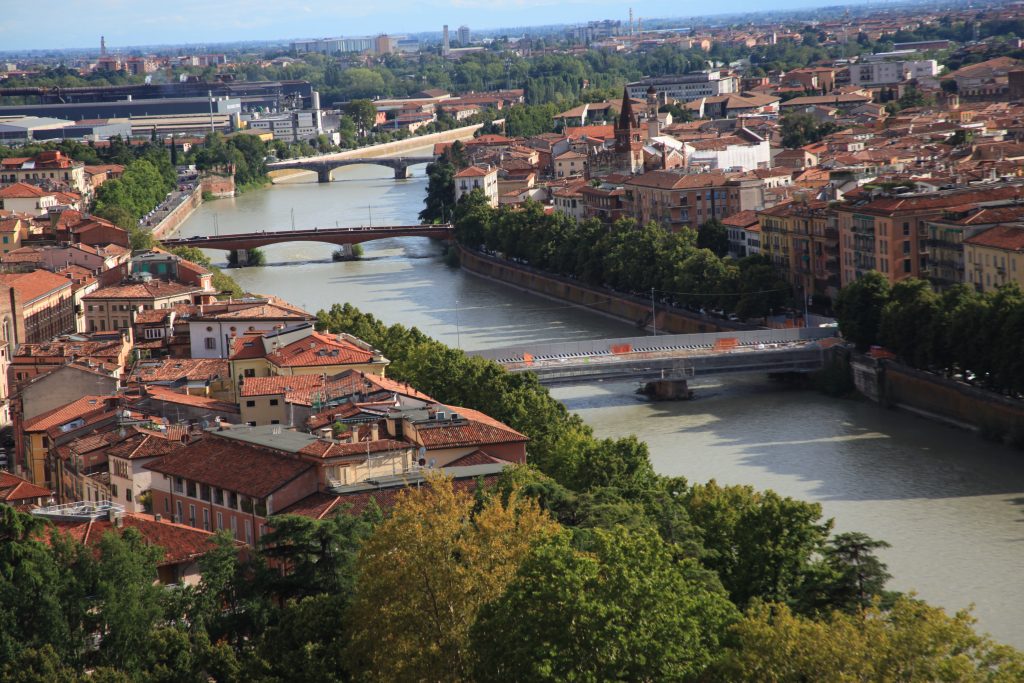
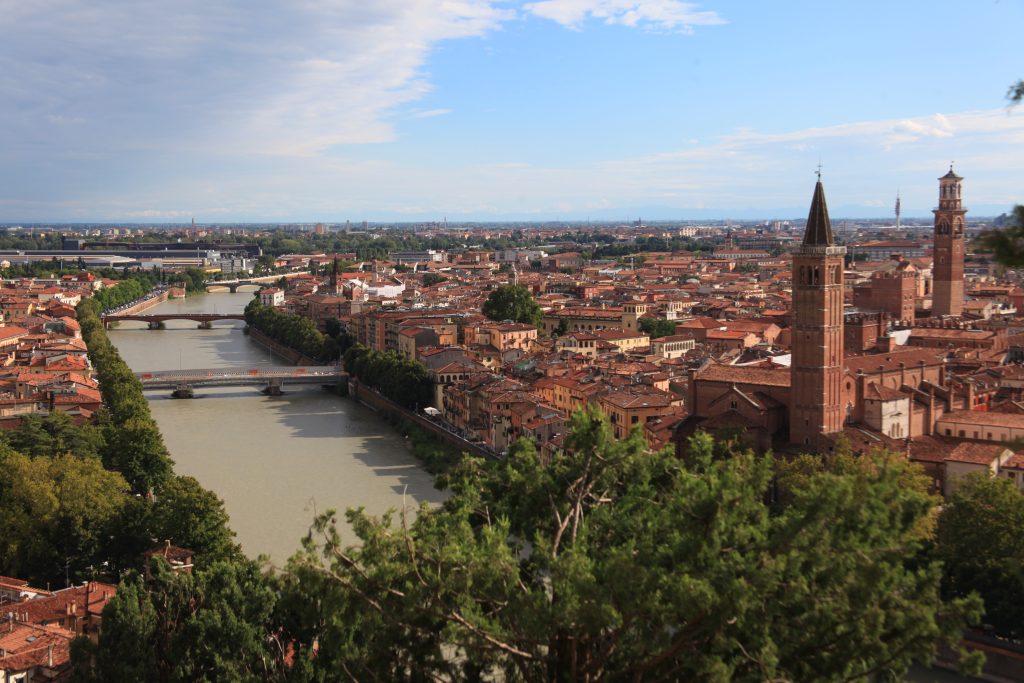
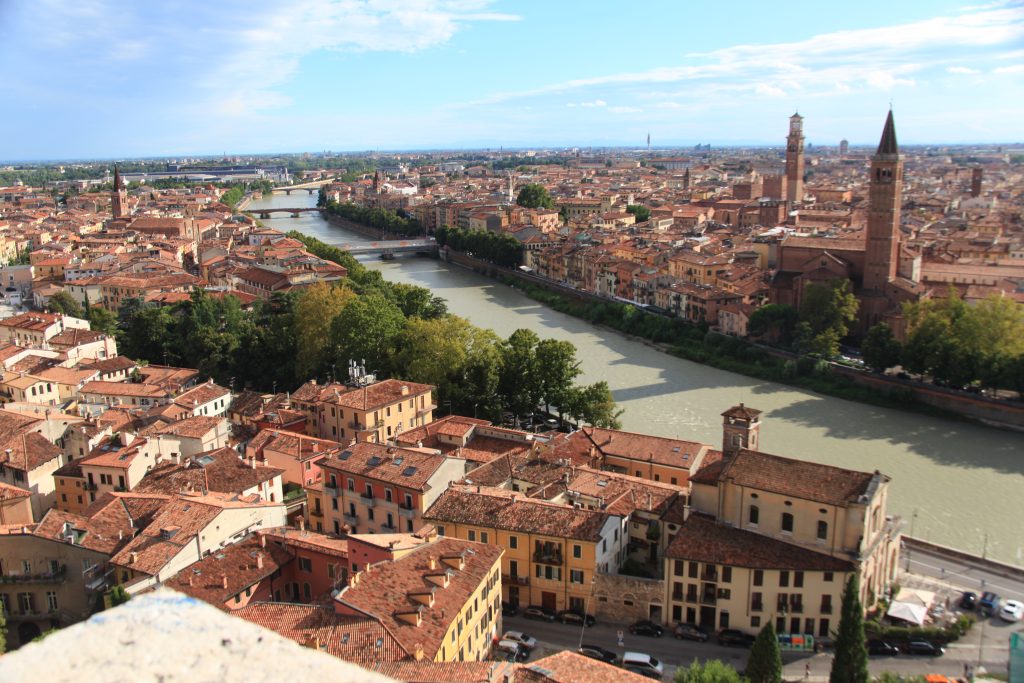
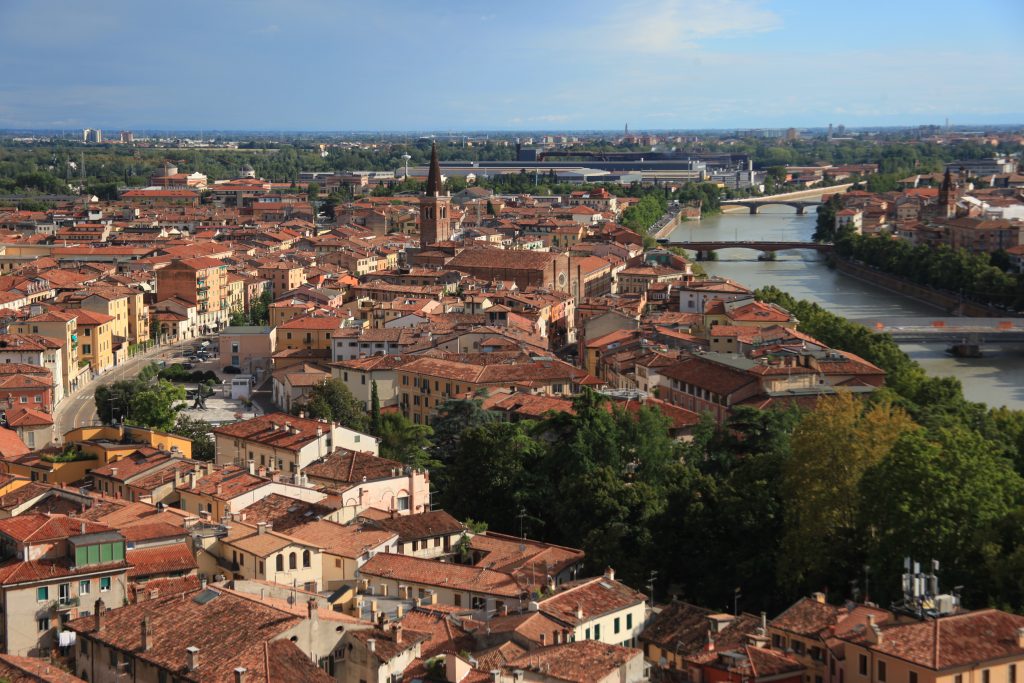
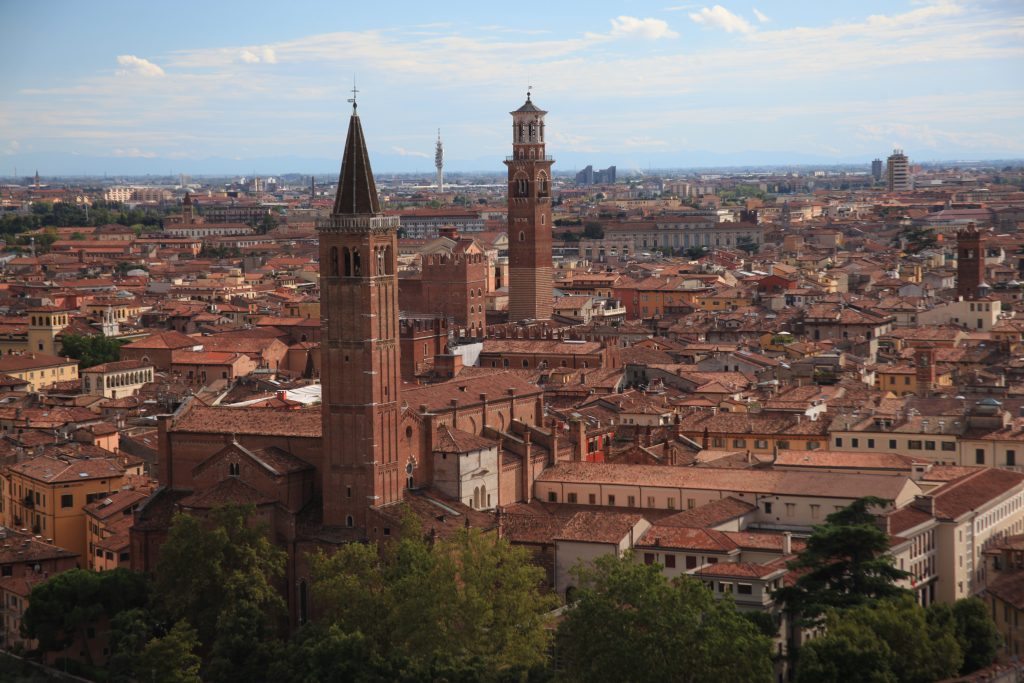
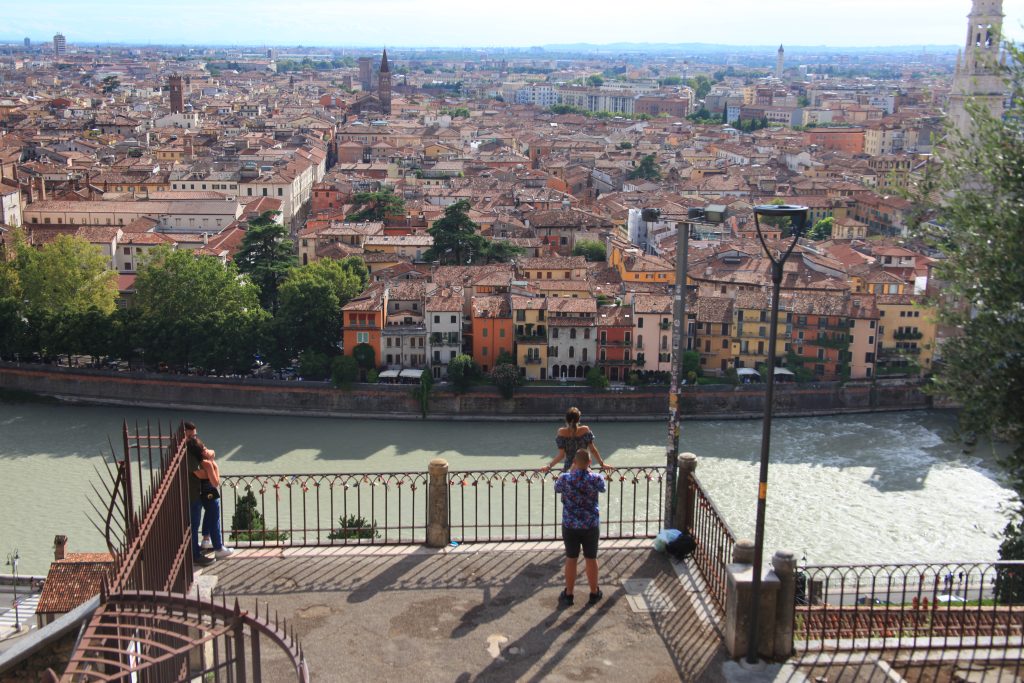
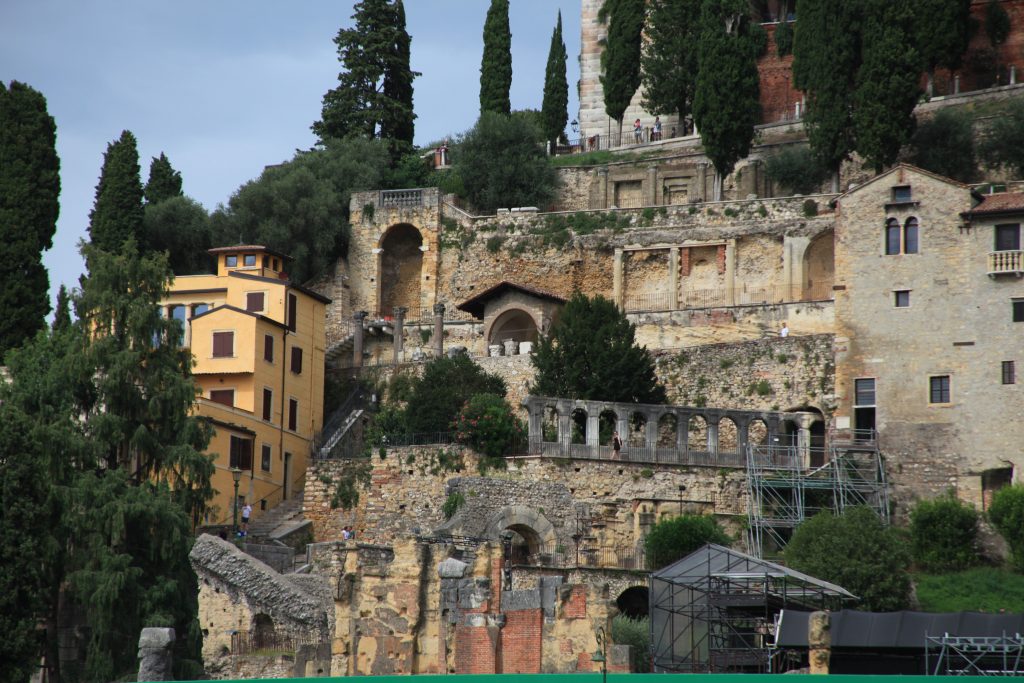
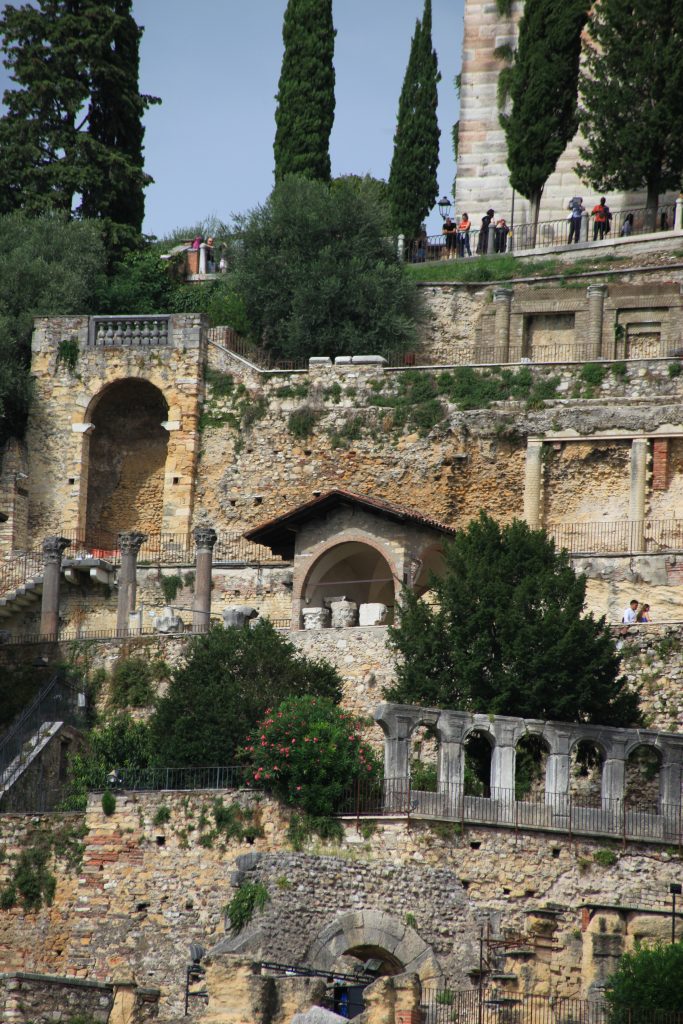
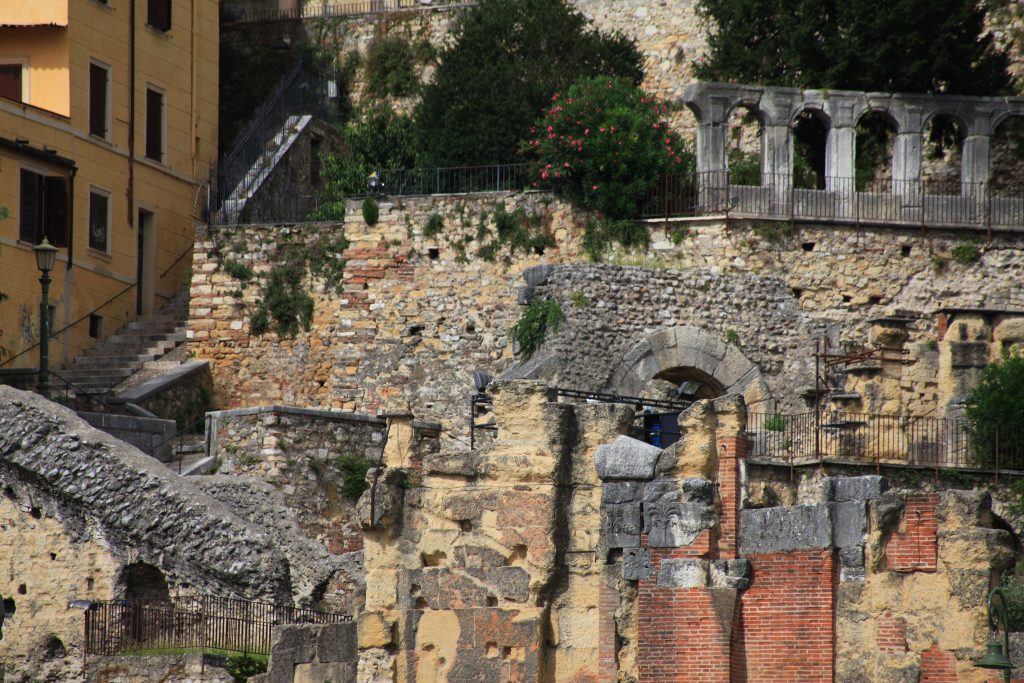
Built into the hillside across the river in the 1st century BCE, this semicircular stone theater still hosts summer performances under the stars. Nearby, the Archaeological Museum holds statues, mosaics, and funerary reliefs found on site. On this precipice you can review the full enfoldment of Verona with its towers, churches and bustling streets.
- Ponte Pietra
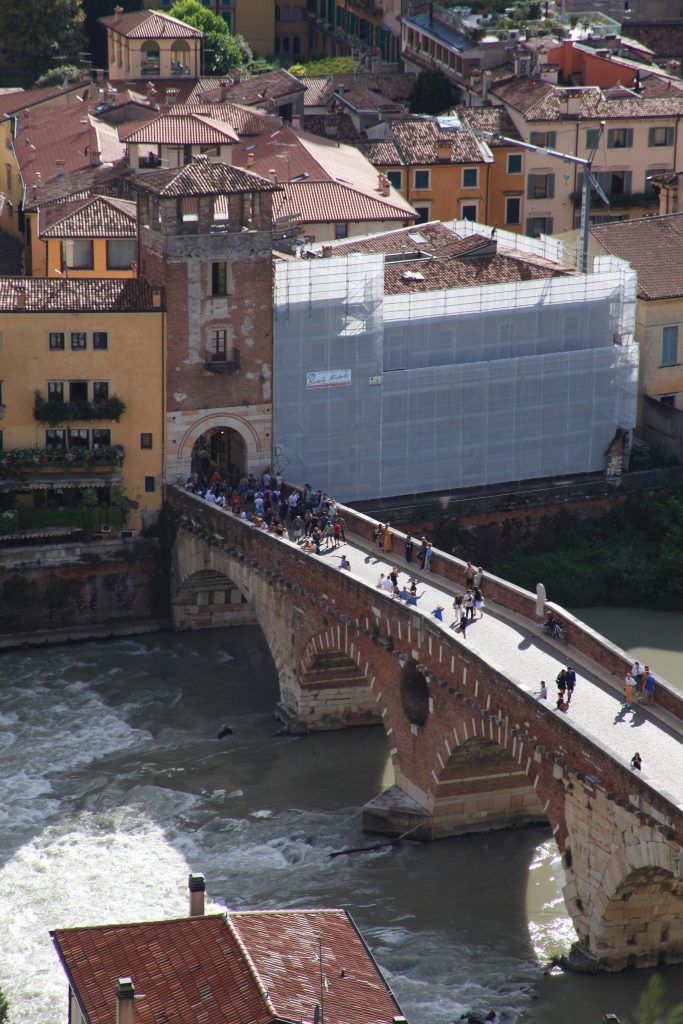
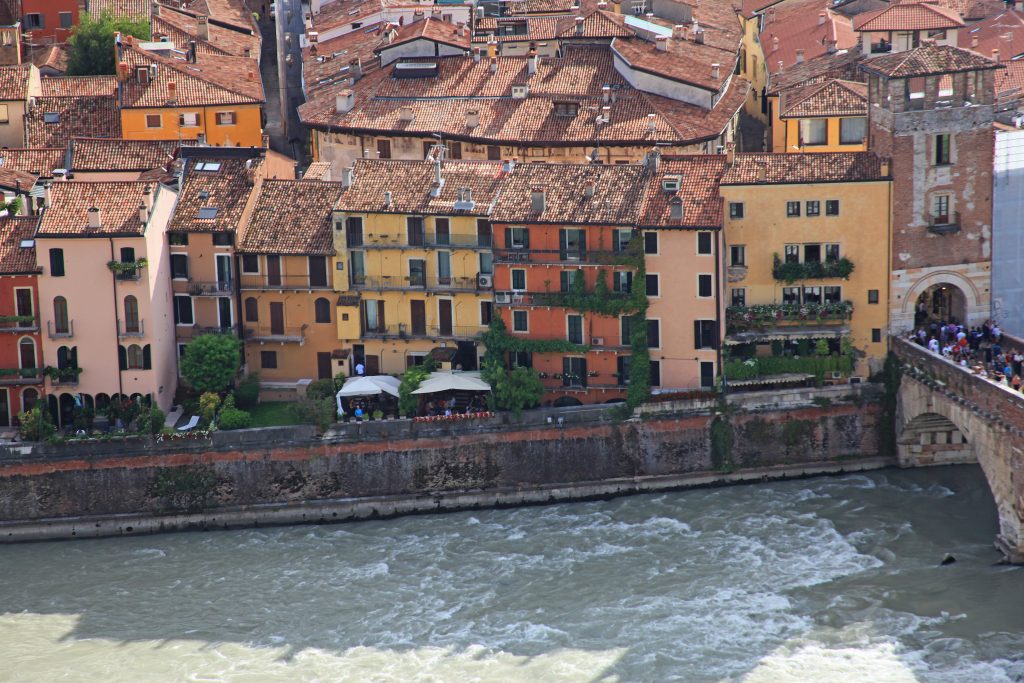
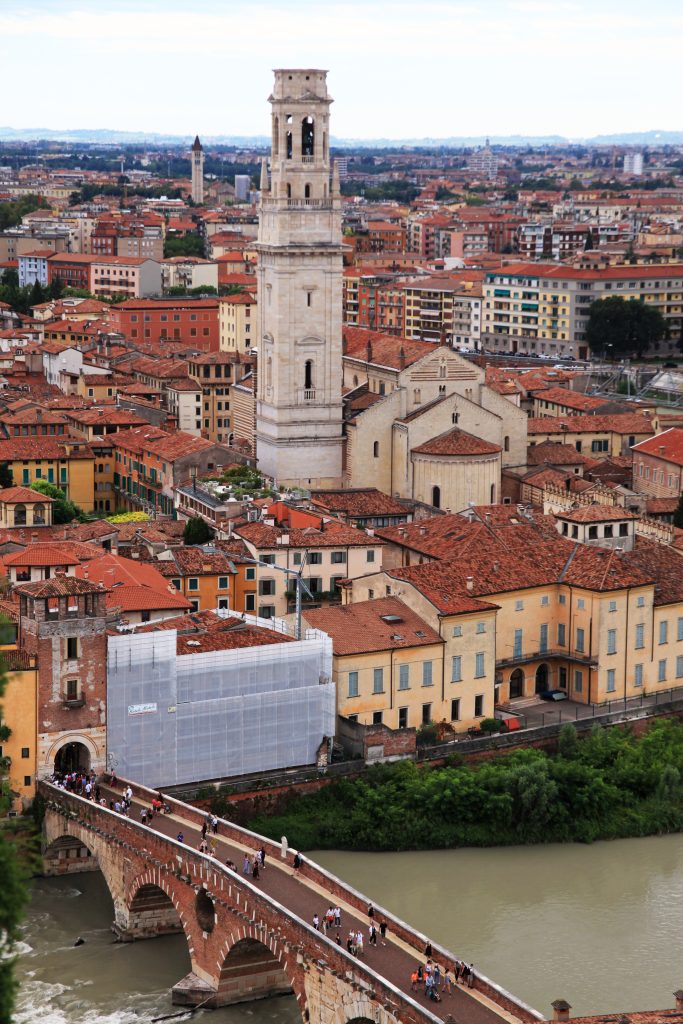
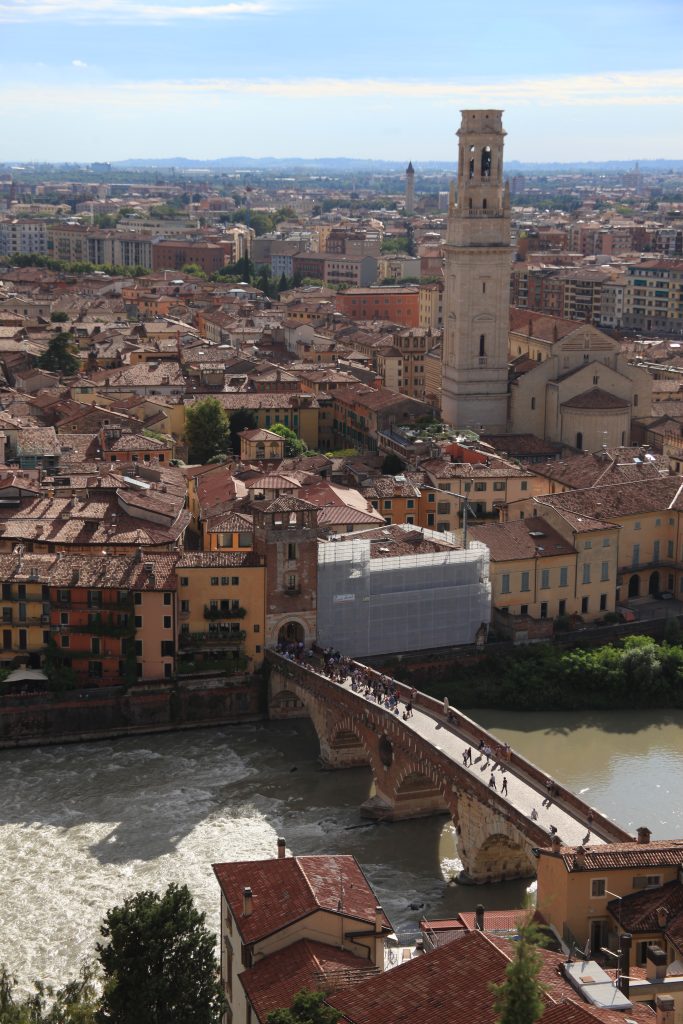
Verona’s oldest bridge, the Ponte Pietra, began as a Roman structure in the 1st century BCE. Damaged and rebuilt over the centuries, it still carries both vehicles and foot traffic, an enduring and picturesque link across the Adige.
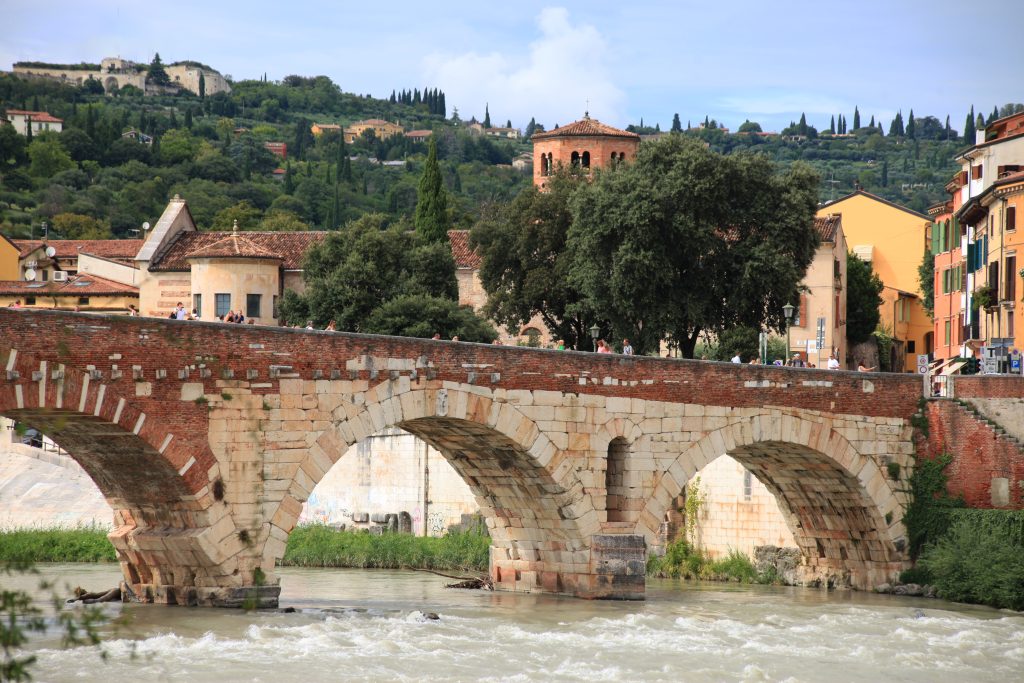
In Verona, the Roman world endures. It echoes in the street’s curve, in the cobblestones’ song, in the very foundations beneath.
Act II: The Medieval Stage
Fortified Walls, Bell Towers, and the Scaligeri Rise
As the Roman Empire waned, Verona endured, sheltered by its geography and strengthened by its own ambitions. During the early Middle Ages, the city fell under Lombard rule and subsequently the Holy Roman Empire. But it was under the della Scala family, the Scaligeri, that Verona reached its medieval peak.
Like many Italian city-states in the Middle Ages, Verona was caught between the Guelphs (papal supporters) and Ghibellines (imperial supporters) in a larger European conflict.
These rival factions weren’t merely political labels; they sparked real street warfare, exiles, assassinations, and social upheaval. Verona’s alignment shifted over time, but under the Scaligeri, the city largely backed the Ghibelline cause and opposed papal interference.
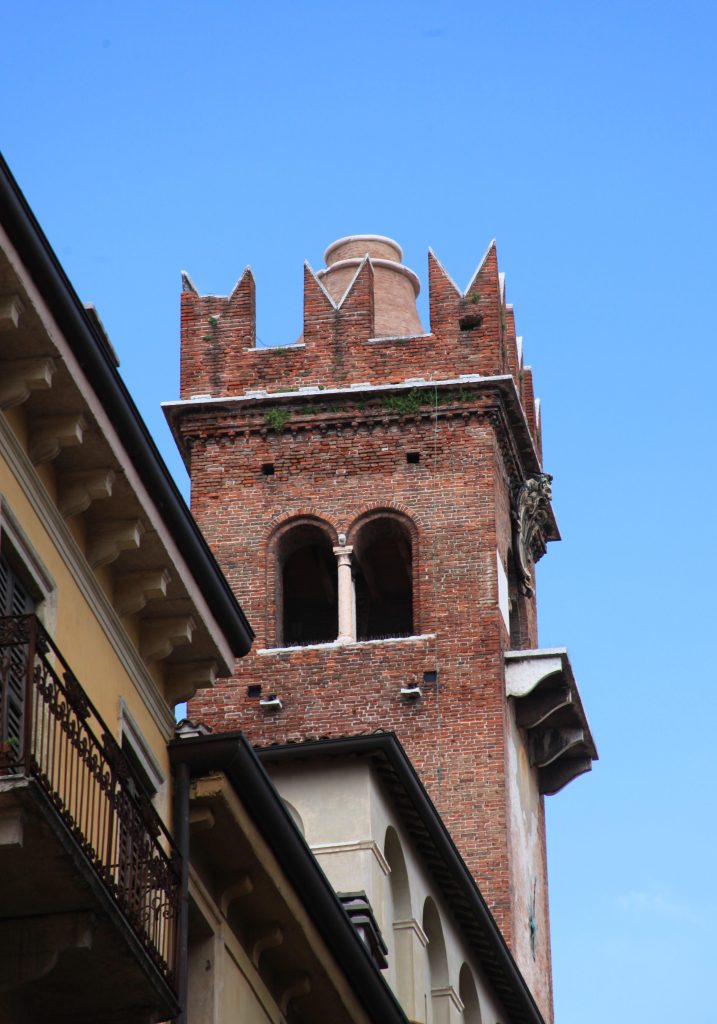
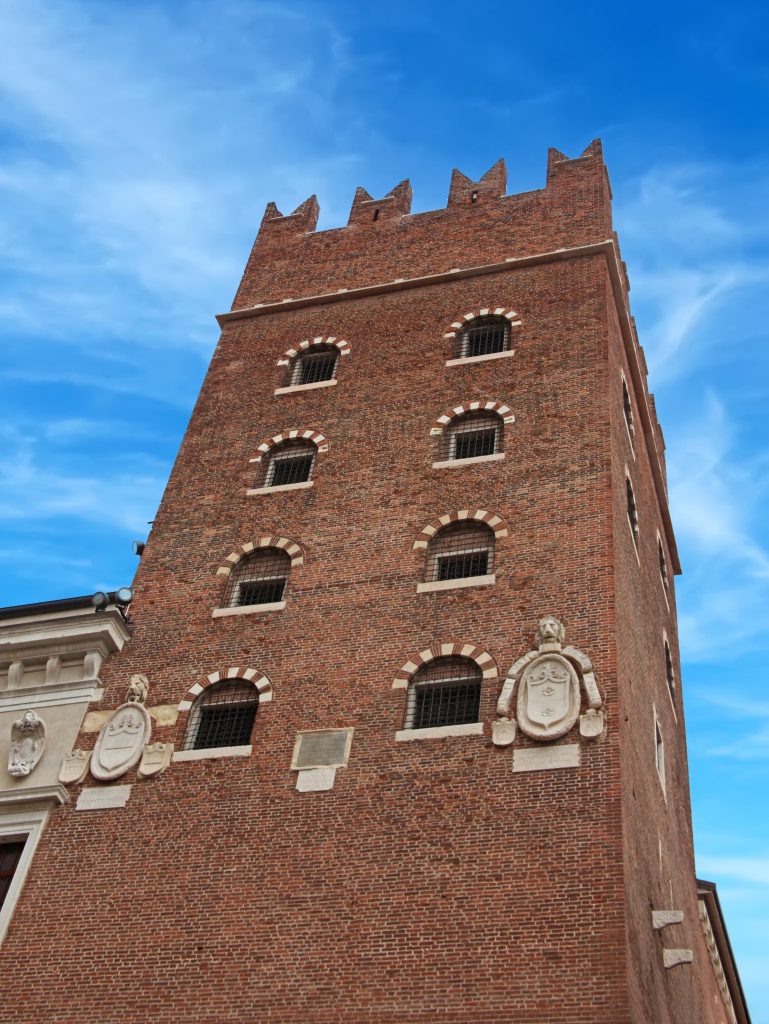
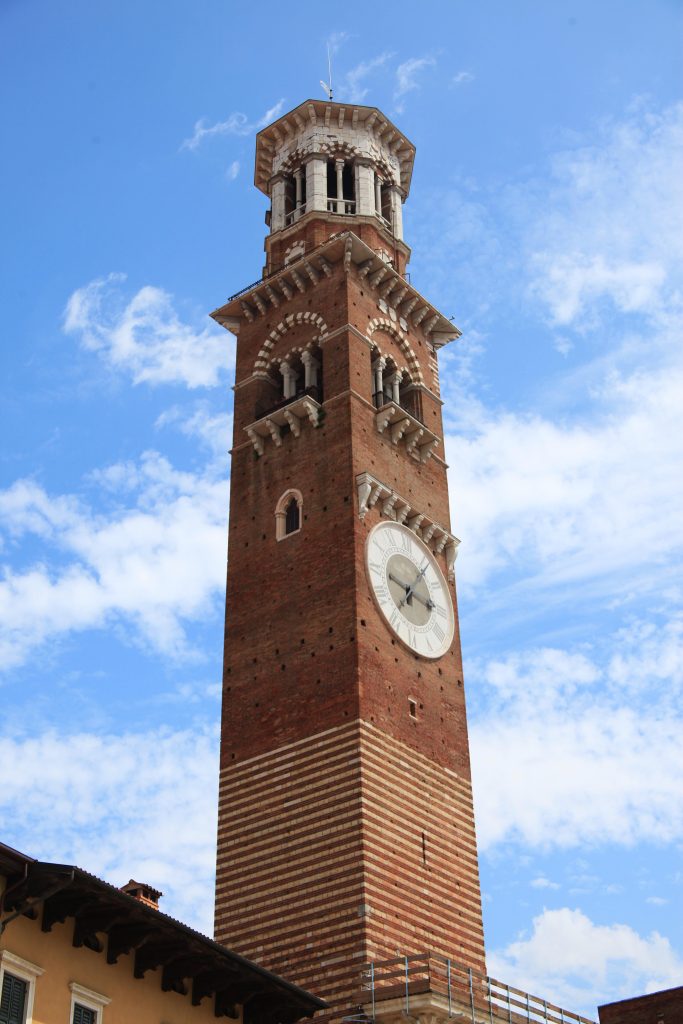
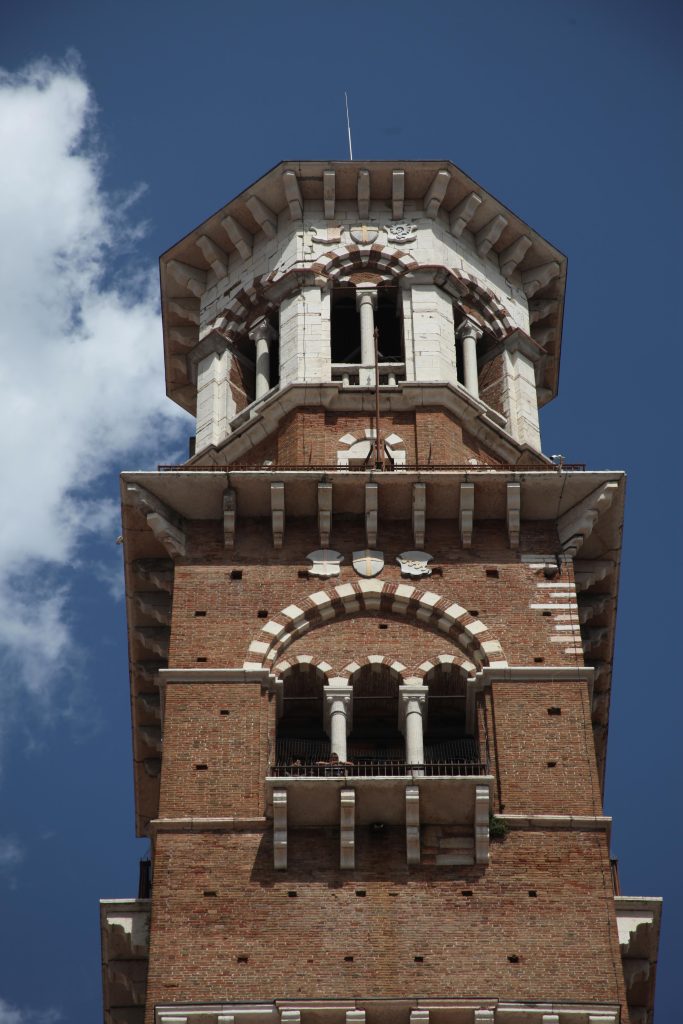
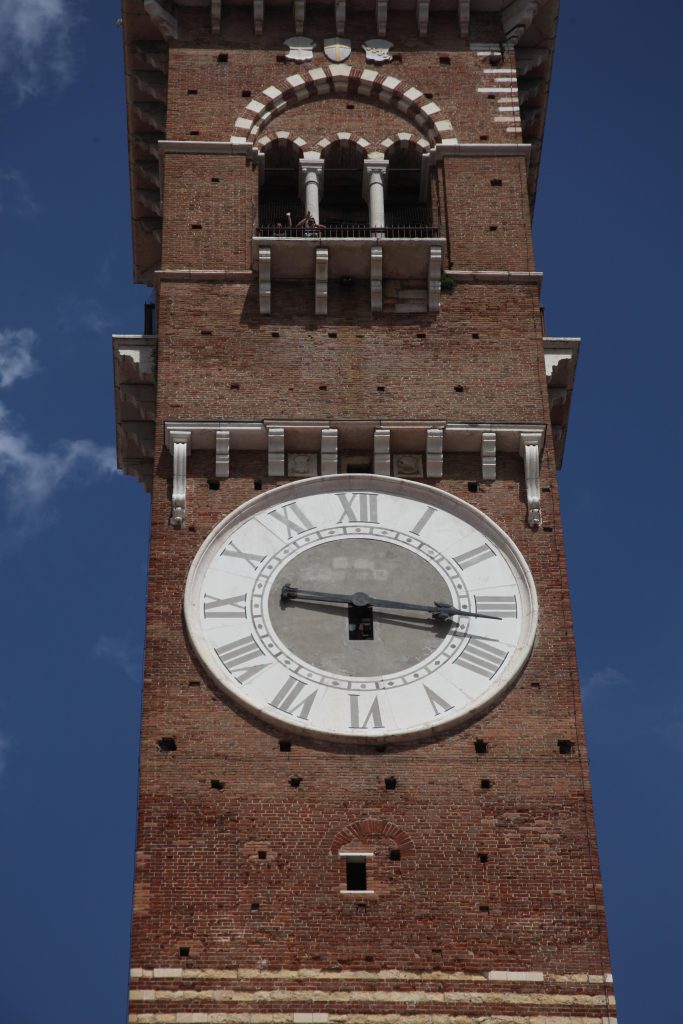
This conflict shaped urban life, with families aligned to rival factions living under tension and building towers not just for pride but for defense against neighbors. These tall medieval towers, some still standing today, silently remind us of a city once divided both vertically and ideologically.
Ruling the Scaligeri family from the 13th to 14th century transformed Verona into a Gothic stronghold, dotted with towers, crenellated walls, and lavish tombs.
- Castelvecchio
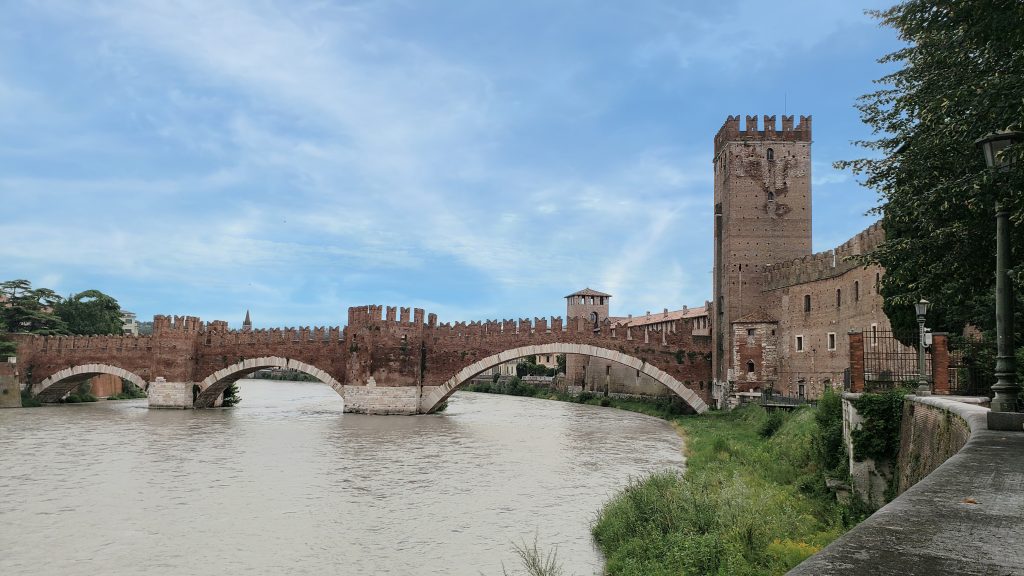
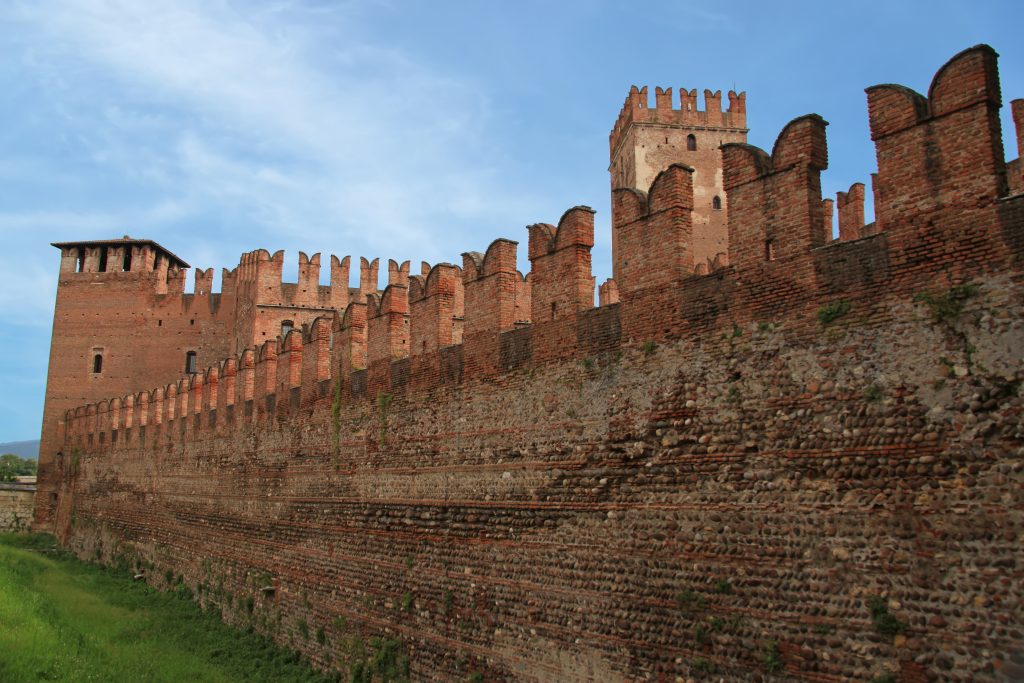
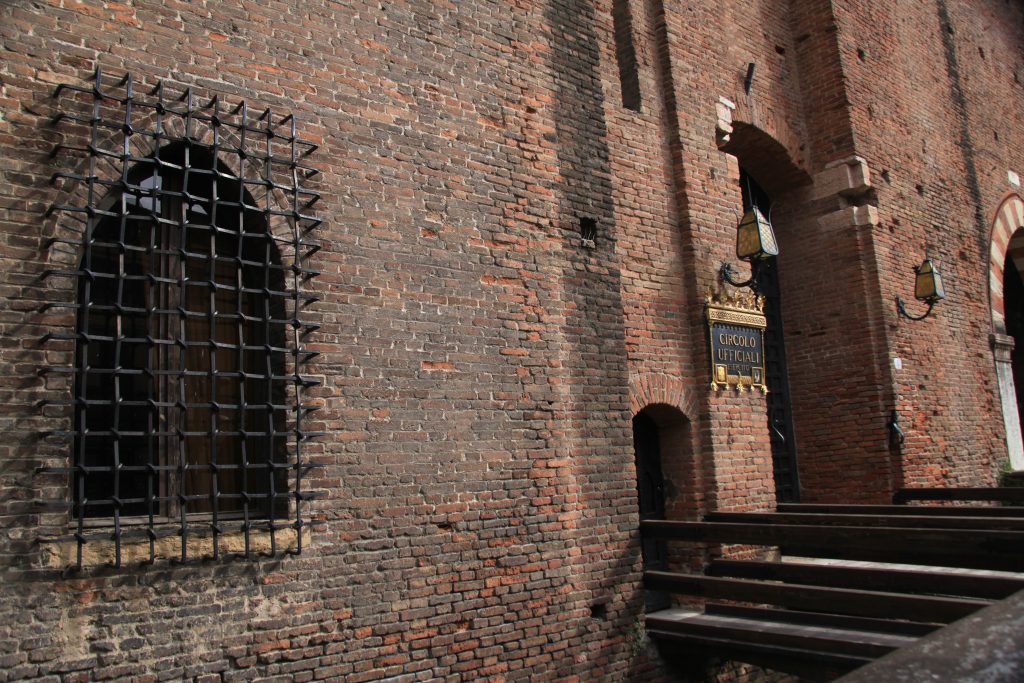
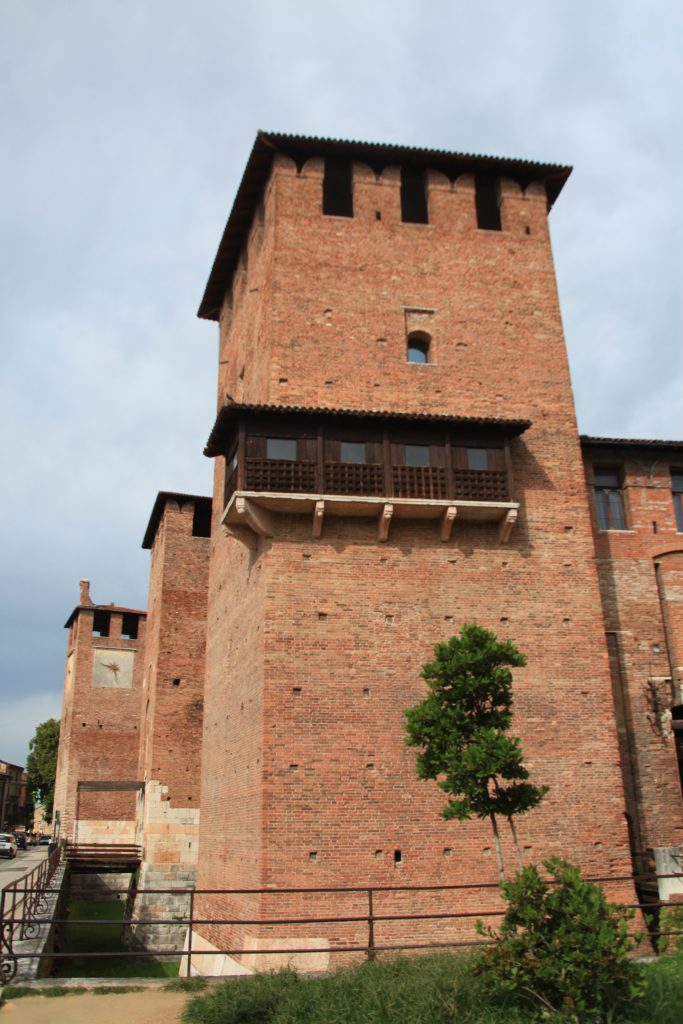
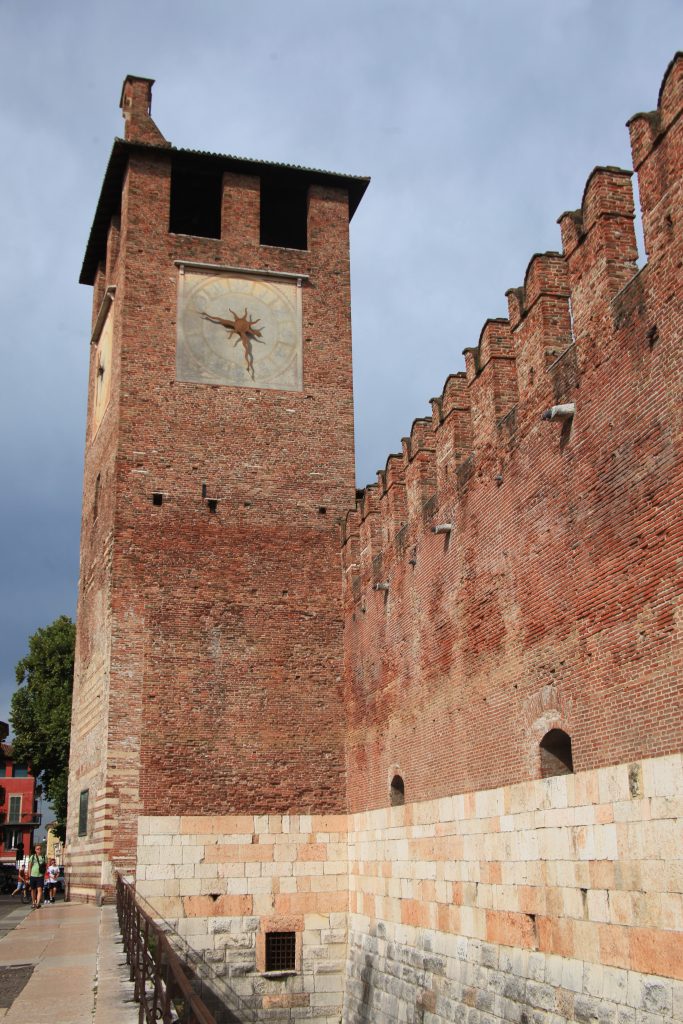
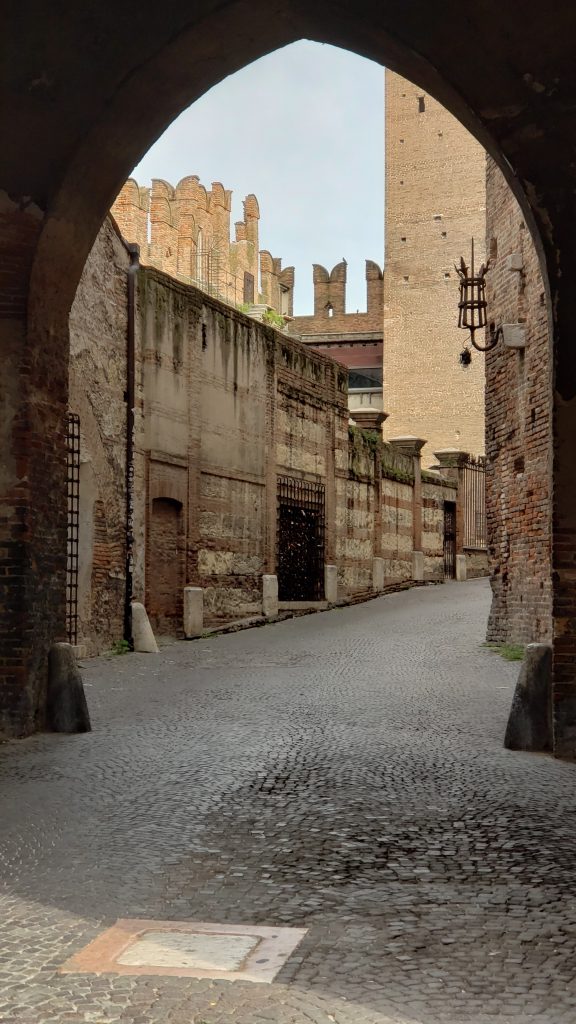
Built in the 1350s by Cangrande II della Scala, this red brick fortress guarded the city’s western flank. Its bridge, the Ponte Scaligero, arches dramatically over the Adige. Inside, the Museo di Castelvecchio houses sculpture, frescoes, and medieval arms, elegantly curated within its moody halls.
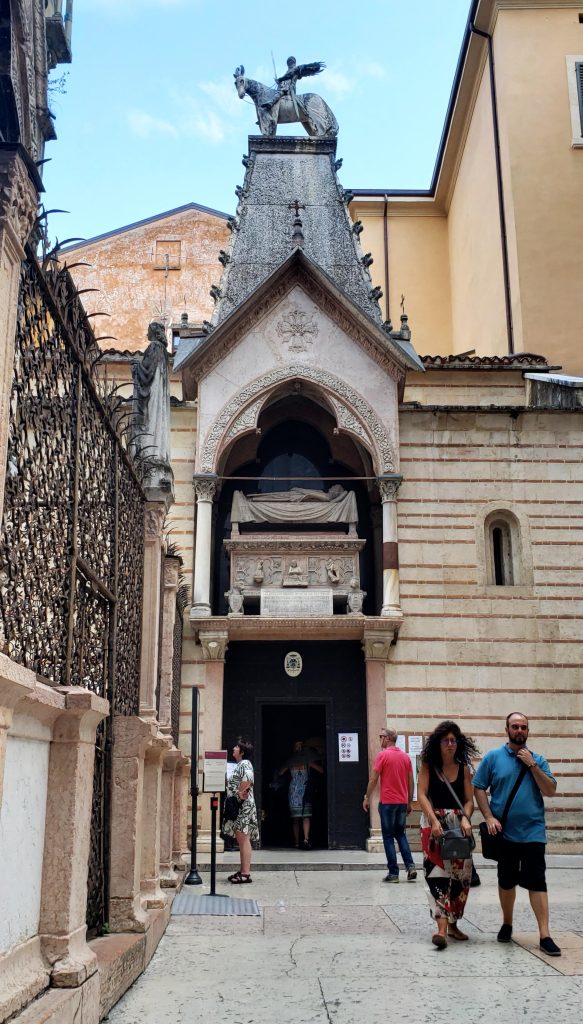
- Arche Scaligere
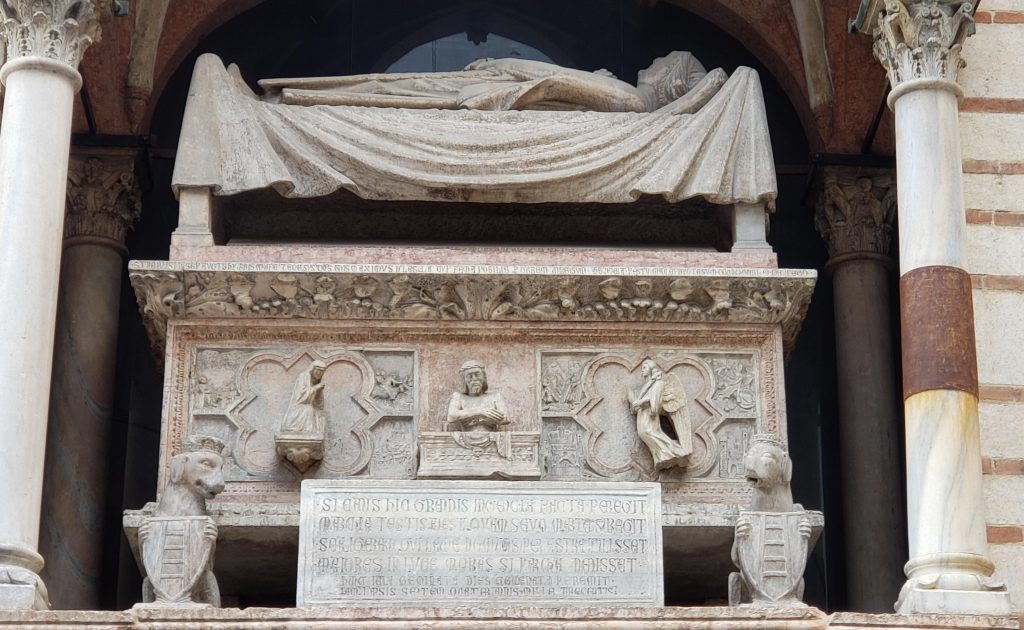
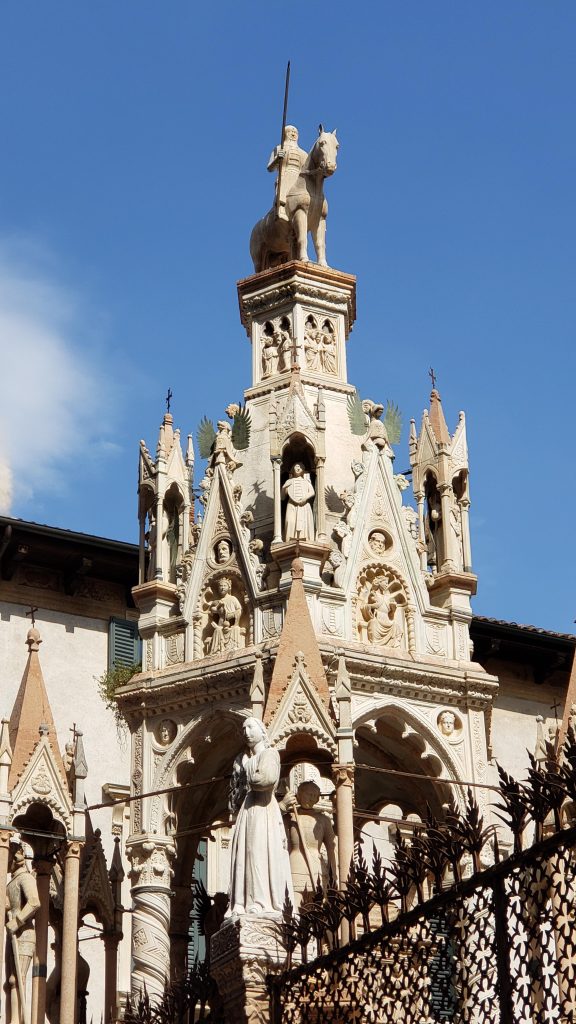
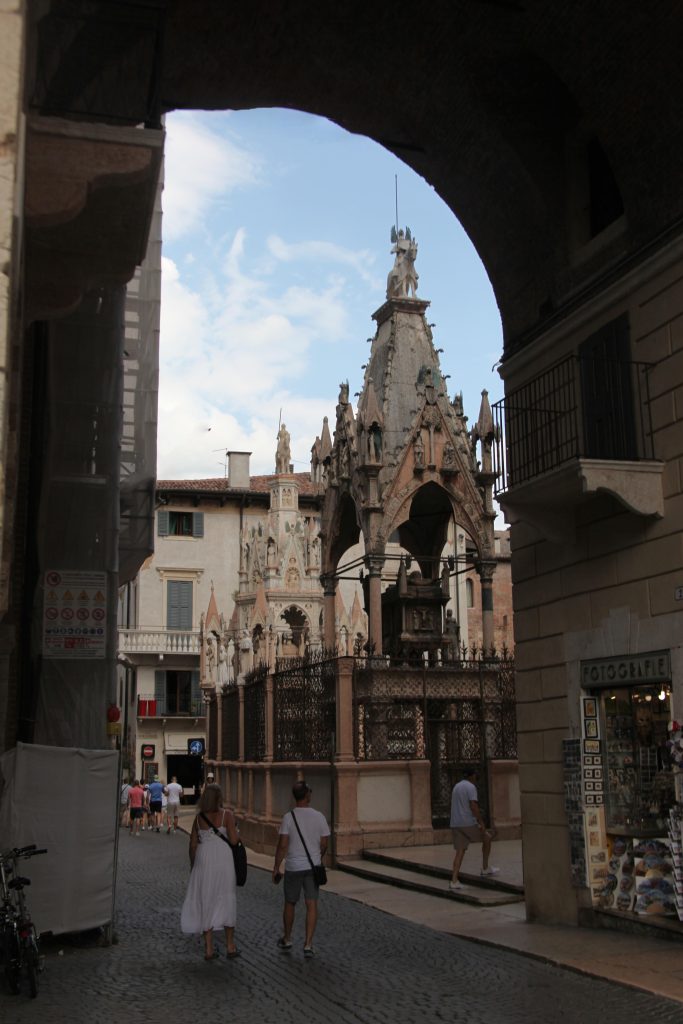
A cluster of Gothic funerary monuments, enclosed behind an iron gate in the heart of the old city. These ornate, spired tombs celebrate the Scaliger lords with theatrical flair, a testament to both their power and their need to be remembered.
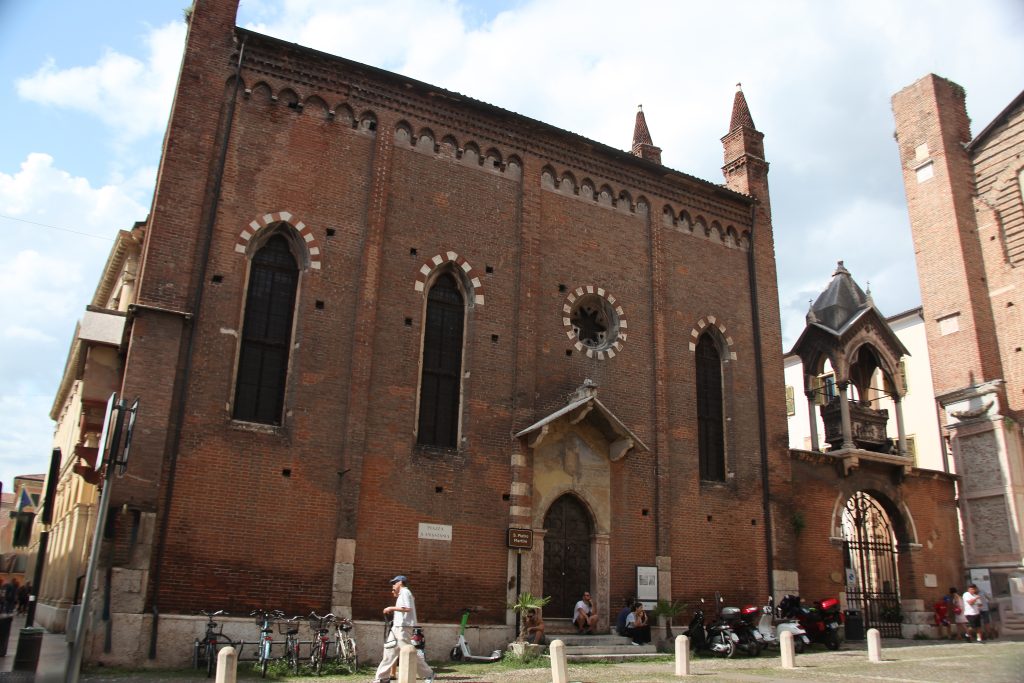
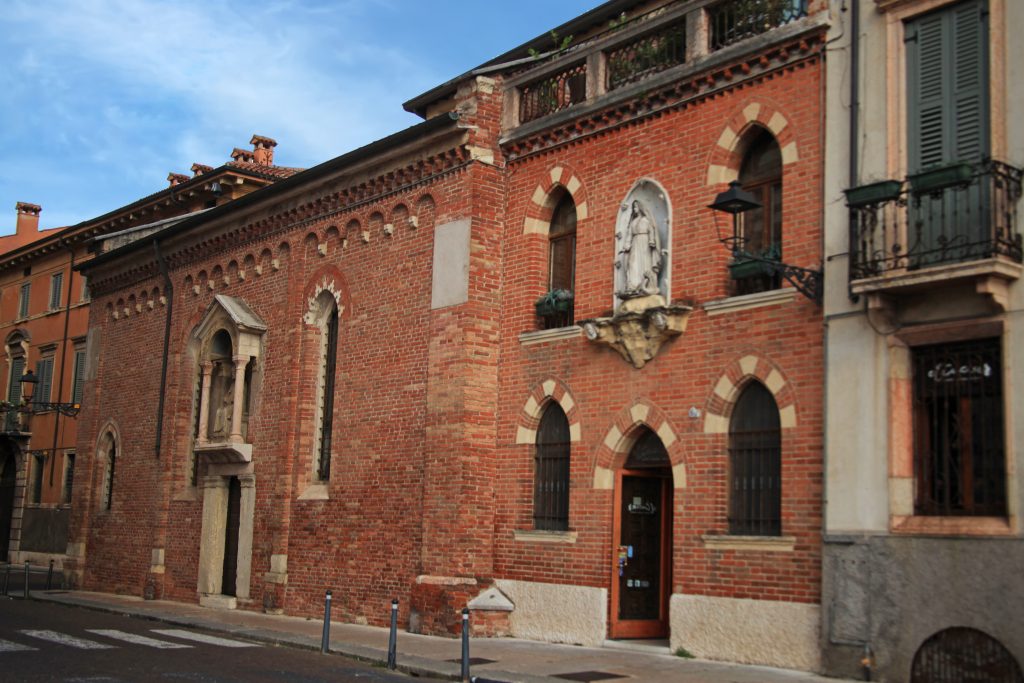
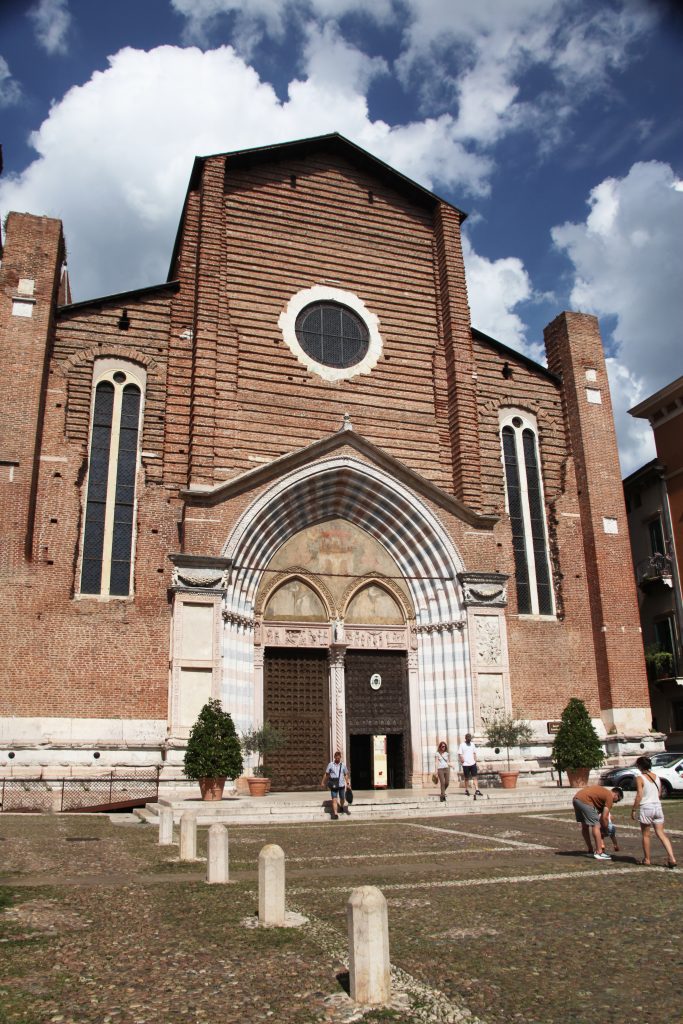
- Sant’Anastasia
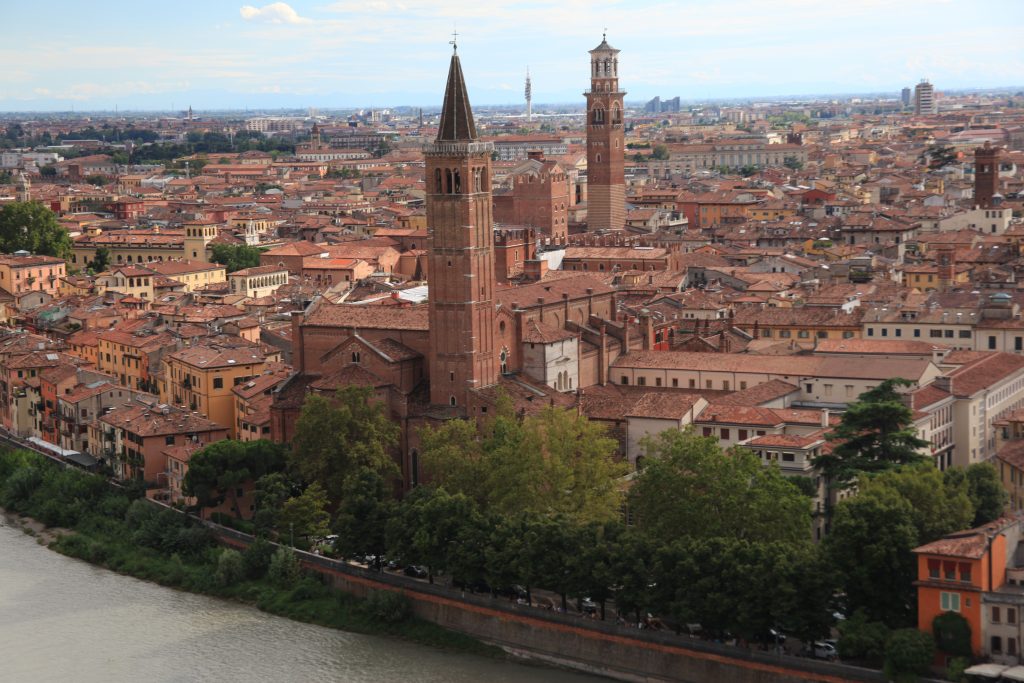
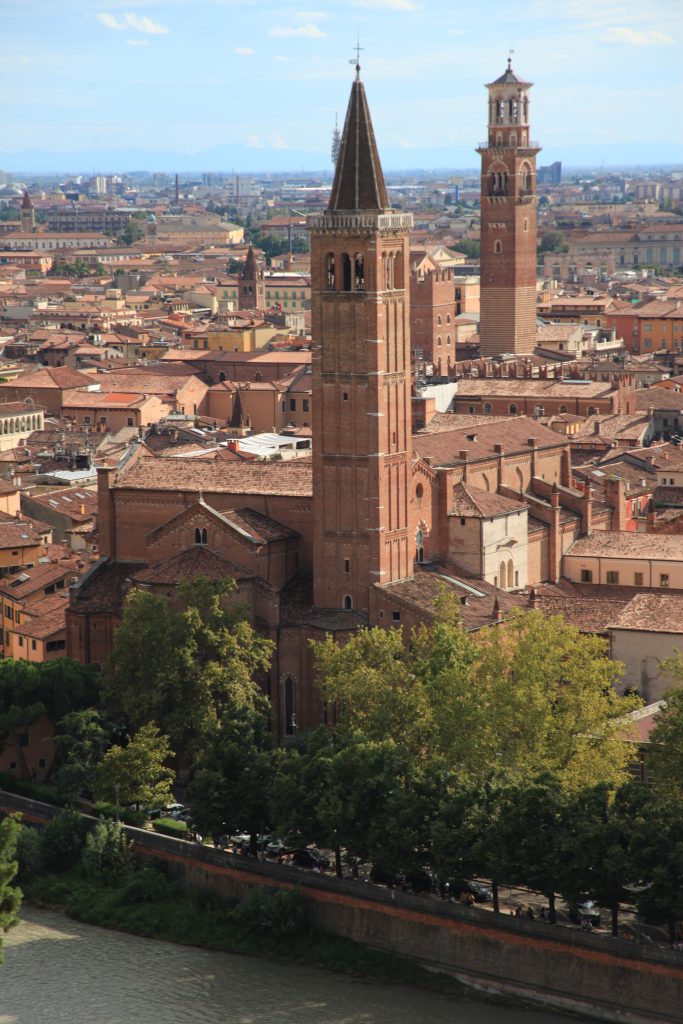
Verona’s largest church, begun in the late 13th century, is a marvel of Gothic architecture with striped columns, vaulted ceilings, and frescoes that still seem to breathe.
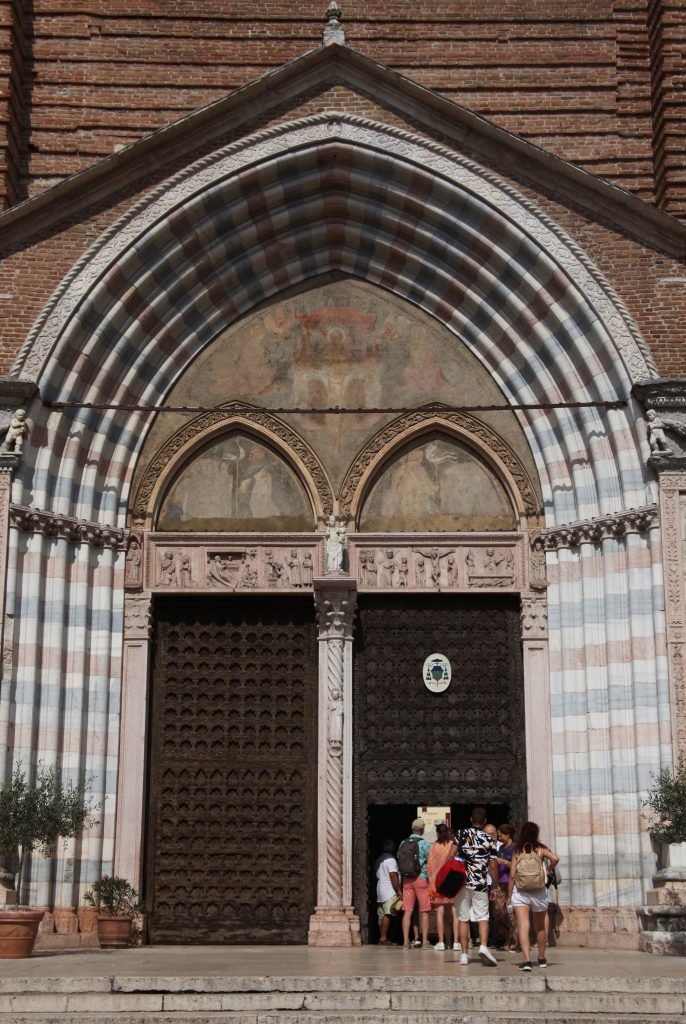
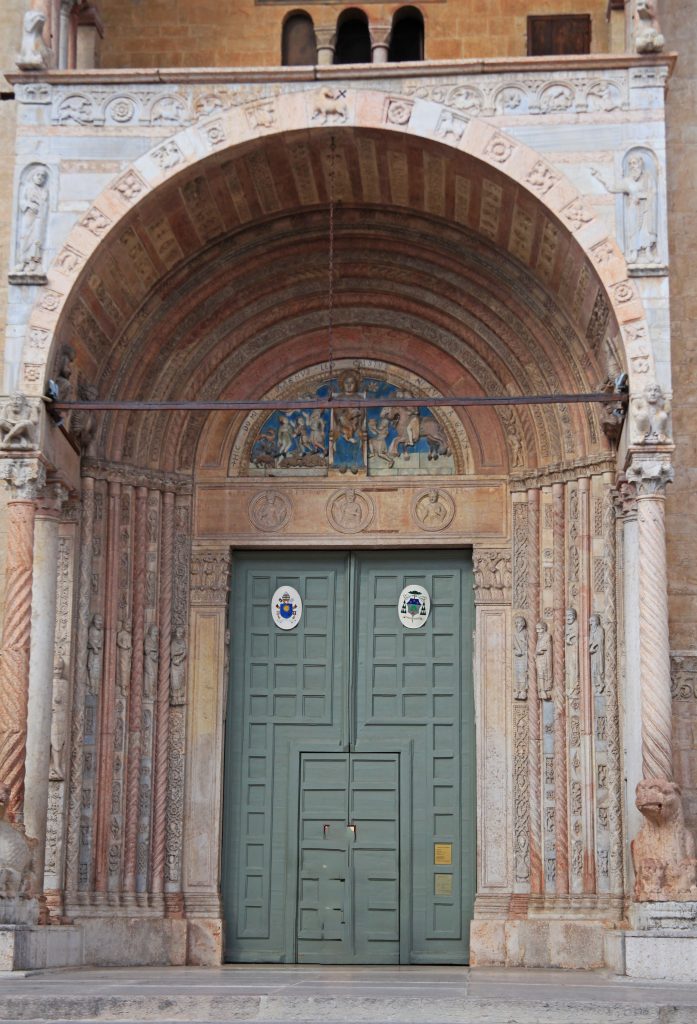
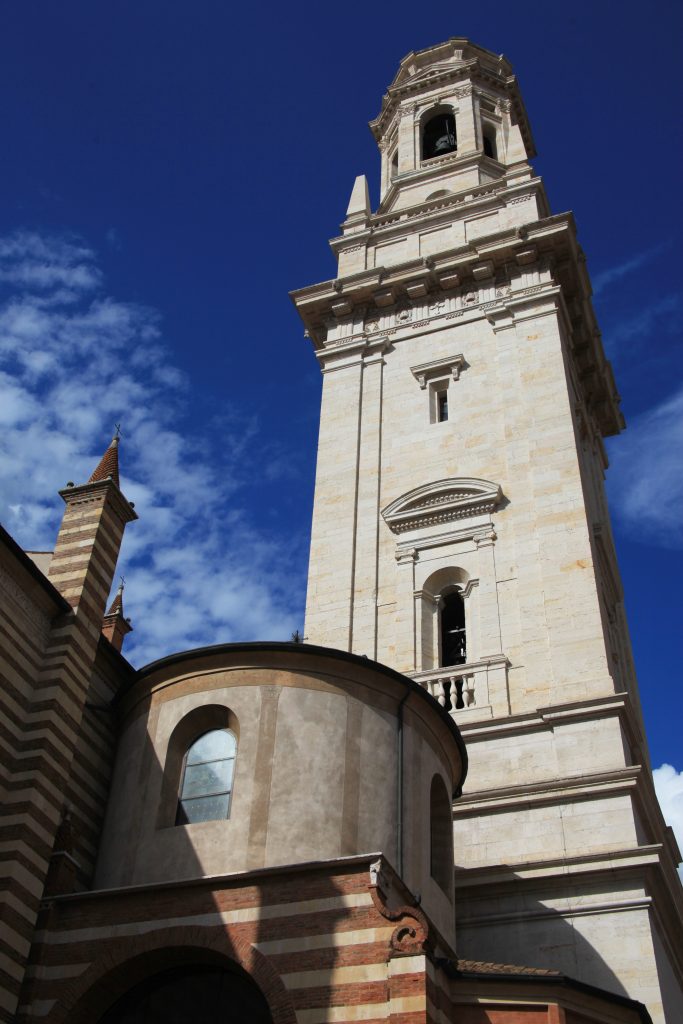
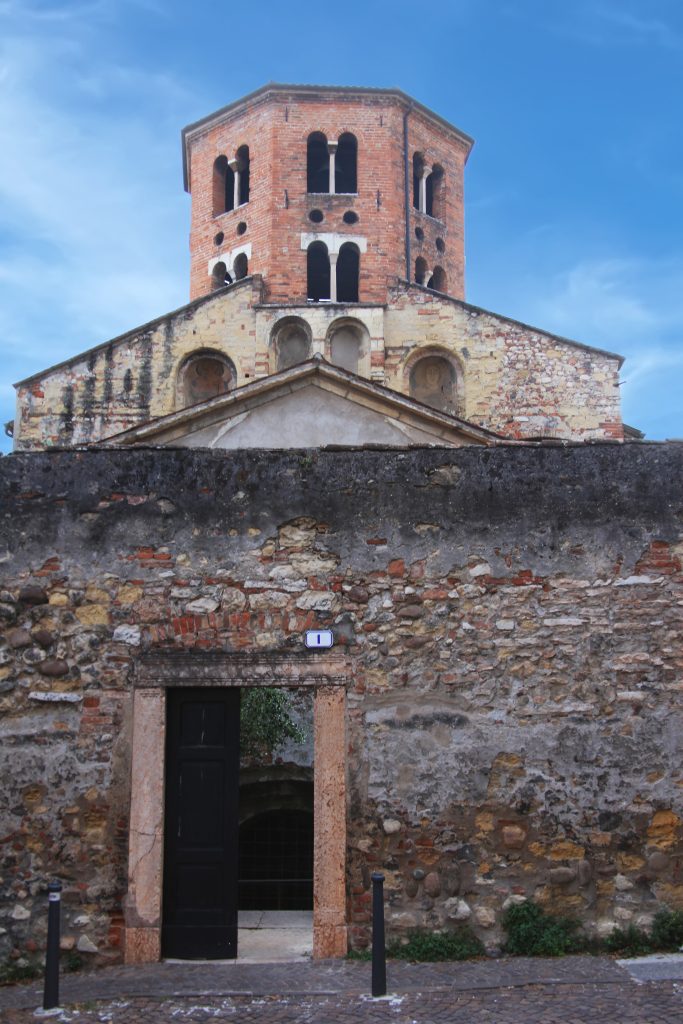
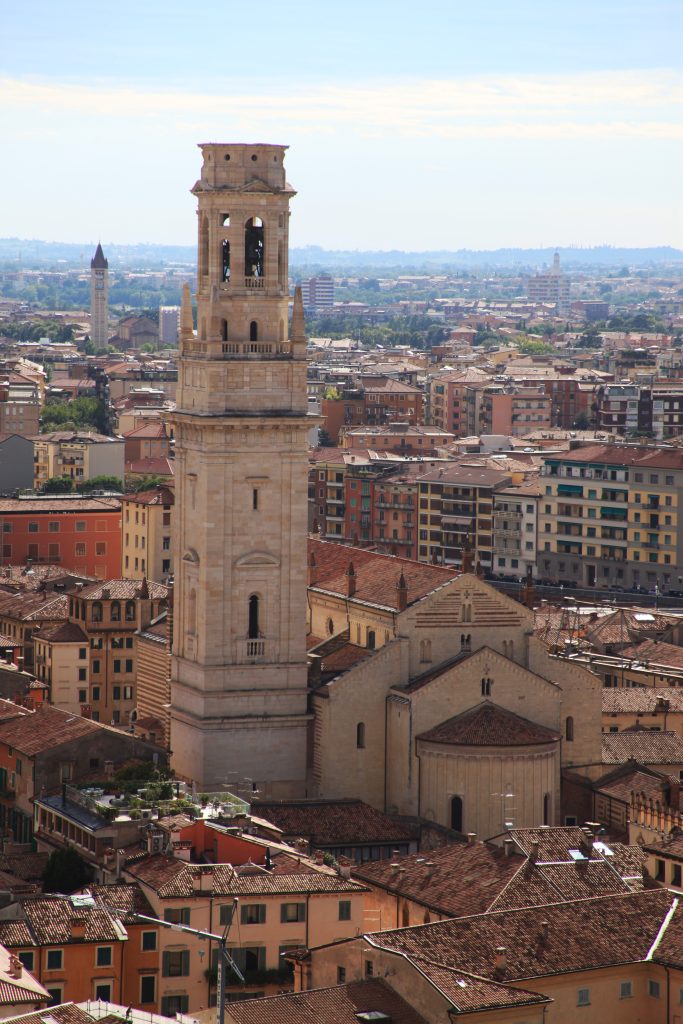
In the Middle Ages, the cathedral assumed its current form. The Romanesque Duomo of Verona, formally the Cattedrale di Santa Maria Matricolare, was rebuilt in the mid-12th century following the devastating 1117 earthquake that destroyed much of its predecessor. Construction began shortly after that disaster, and the new Romanesque cathedral was consecrated in 1187.
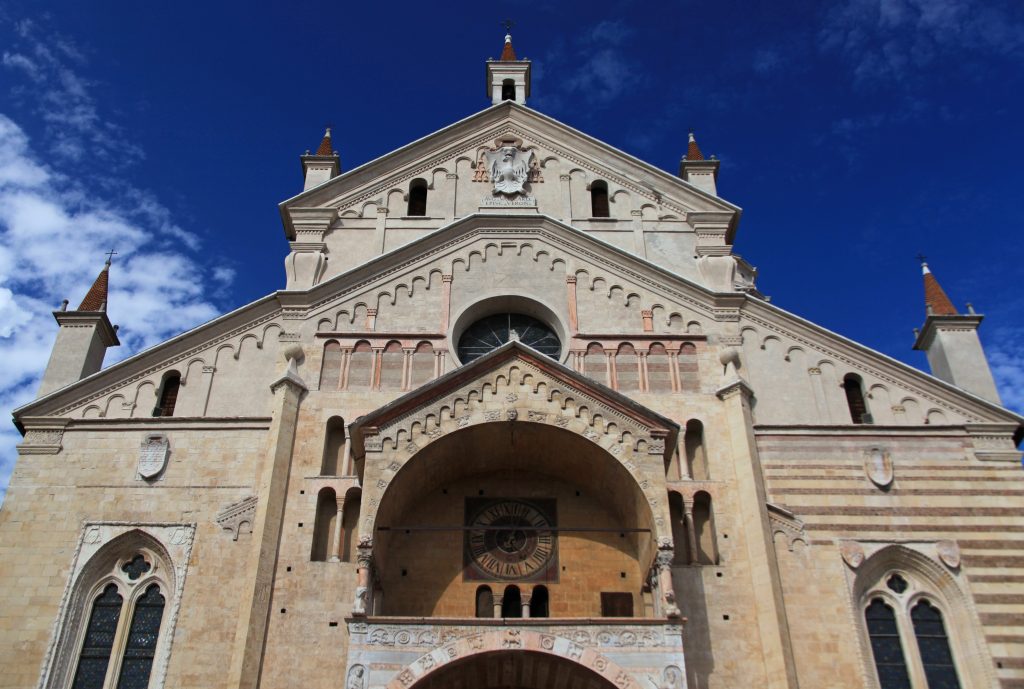
This version of the cathedral displays the Romanesque style typical of northern Italy: thick stone walls, rounded arches, narrow windows, and sculptural detailing. Over the centuries, Gothic and Renaissance additions layered onto the original Romanesque structure, but that 12th-century foundation still defines the building’s core—especially in the nave, crypt, and sculpted portal.
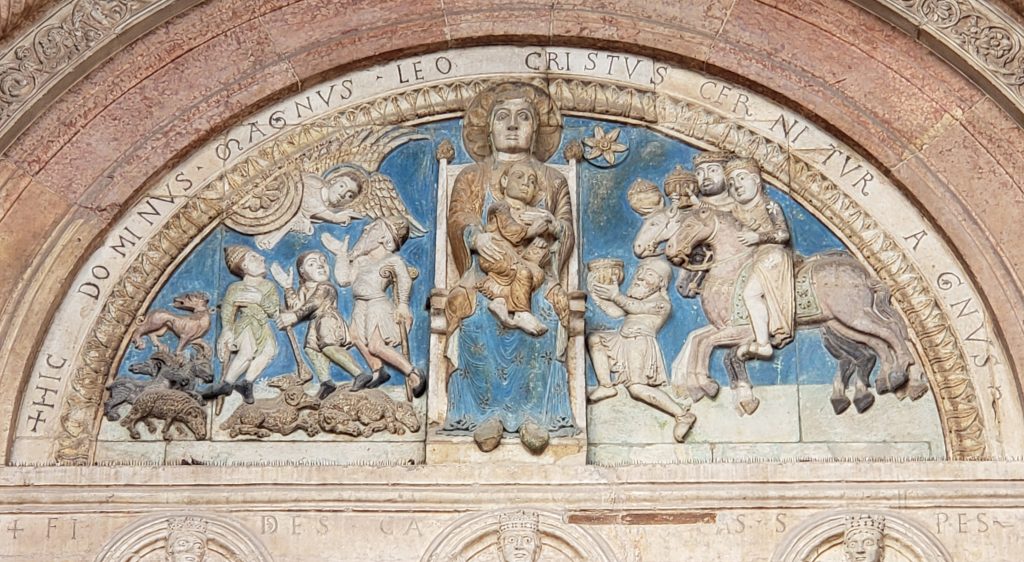
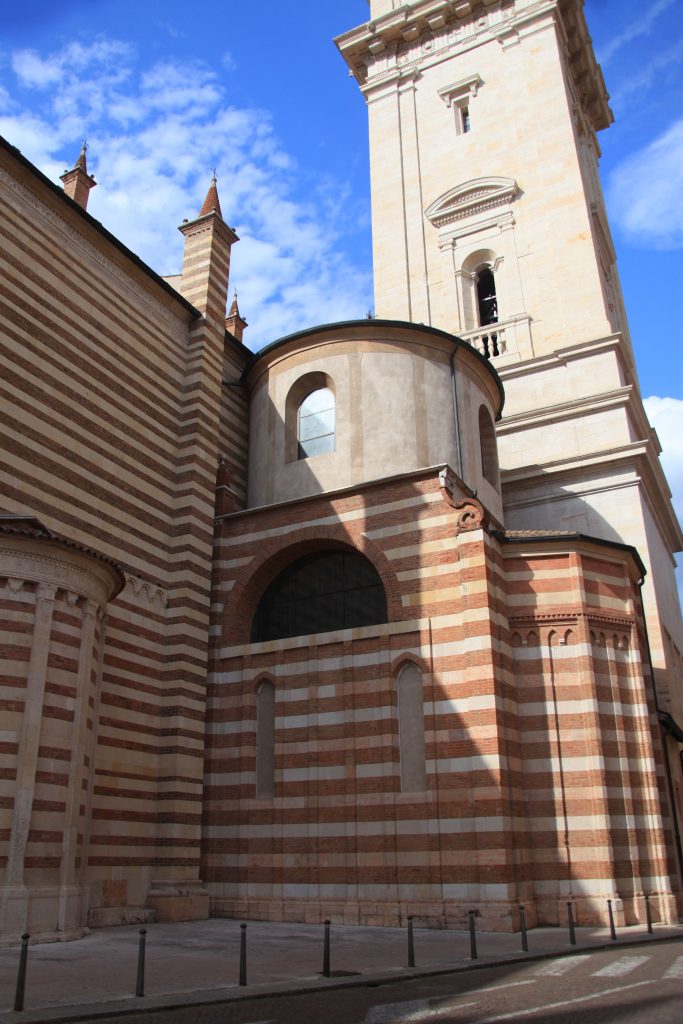
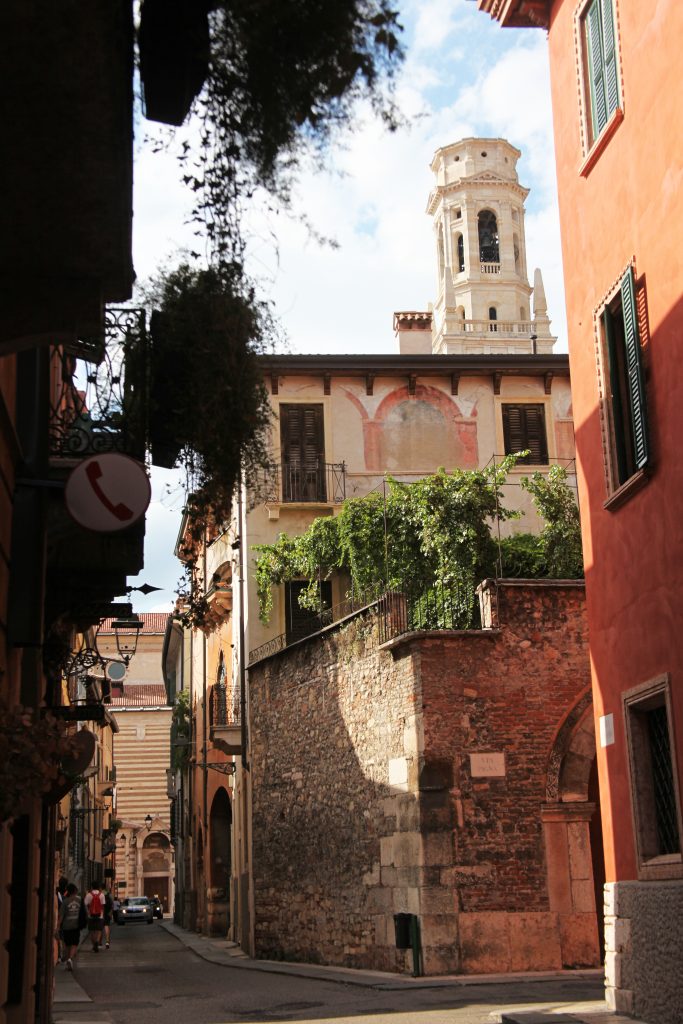
The pink-and-white cathedral exterior is modest yet noble, with a tall campanile (still technically unfinished), an arched Romanesque portal, and a carved tympanum that greets the faithful in 12th-century solemnity. But the interior is a quiet revelation: solemn, soaring, and suffused with that gentle Verona light.
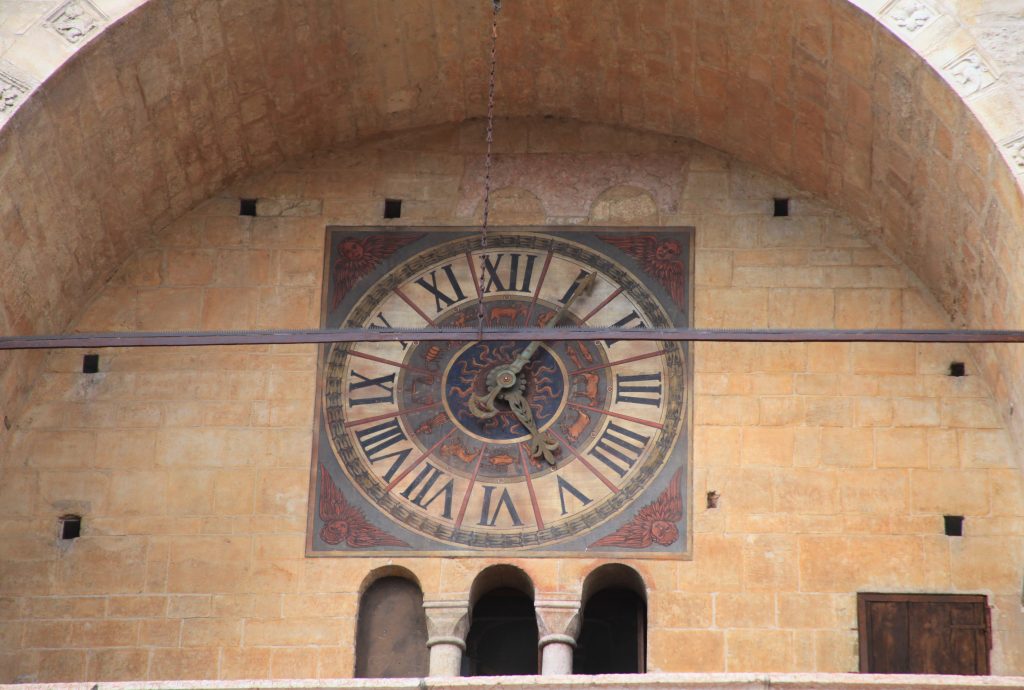
In this era, Verona’s towers and belfries looked upward, symbols of civic pride and noble competition.
Act III: Renaissance Repose
Humanism, Harmony, and Elegant Piazzas
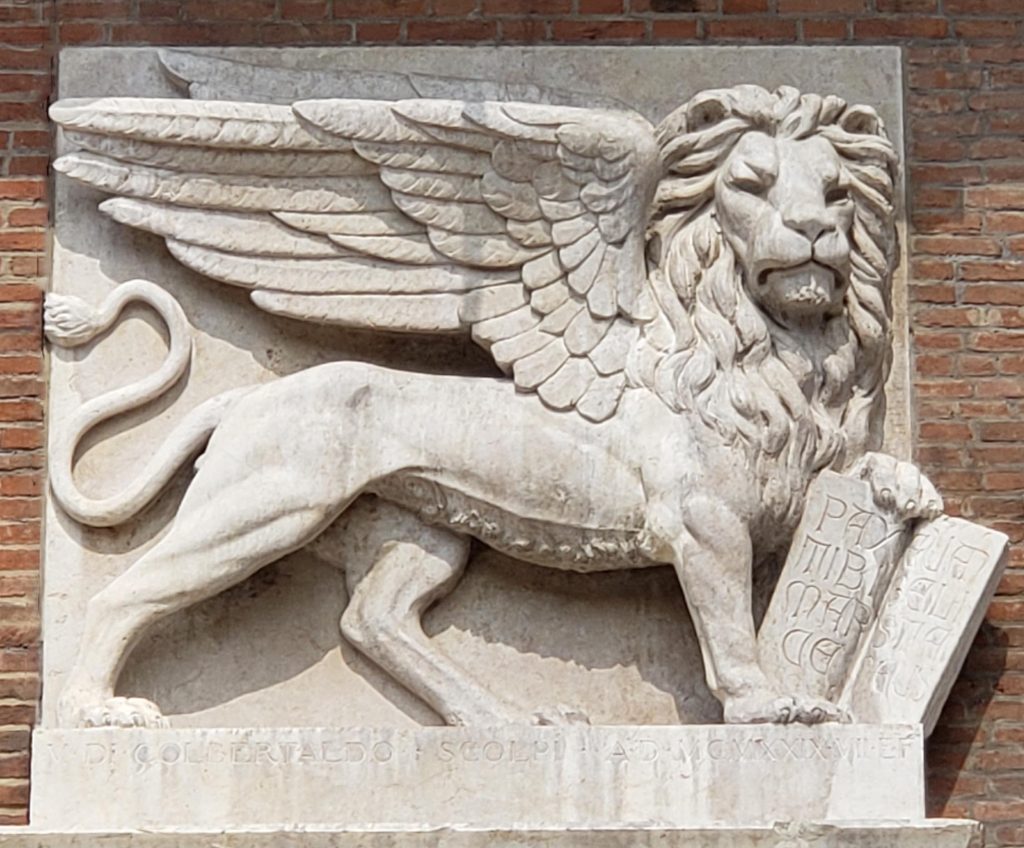
By the 15th century, Verona had fallen under Venetian rule, bringing Renaissance order and grace. While Venice commanded trade, Verona cultivated learning, painting, and architecture. During the 15th and 16th centuries, Verona became a major silk producer, second only to Venice in the Veneto. The city’s merchant class grew rich on trade, and Verona’s location on the Adige River made it a natural hub for textiles and ideas.
The silk trade’s wealth funded Renaissance palaces, libraries, and scholarship. While Florence is more famous for its Renaissance, Verona quietly fostered one of the oldest libraries and nurtured artists like Paolo Veronese, who would go on to influence Venetian painting with his bold, theatrical compositions.
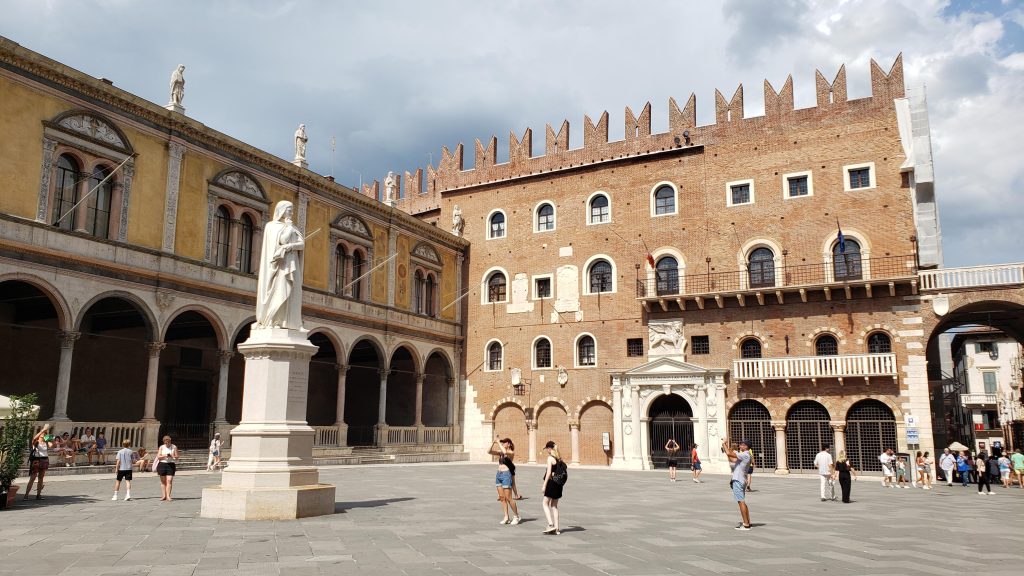
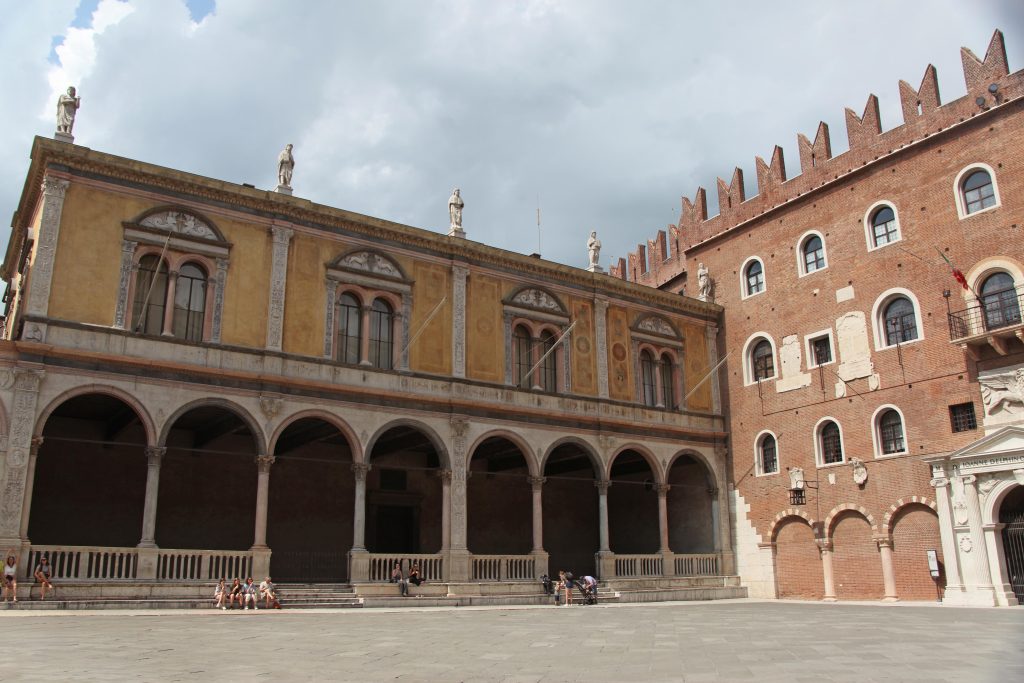
- Piazza dei Signori
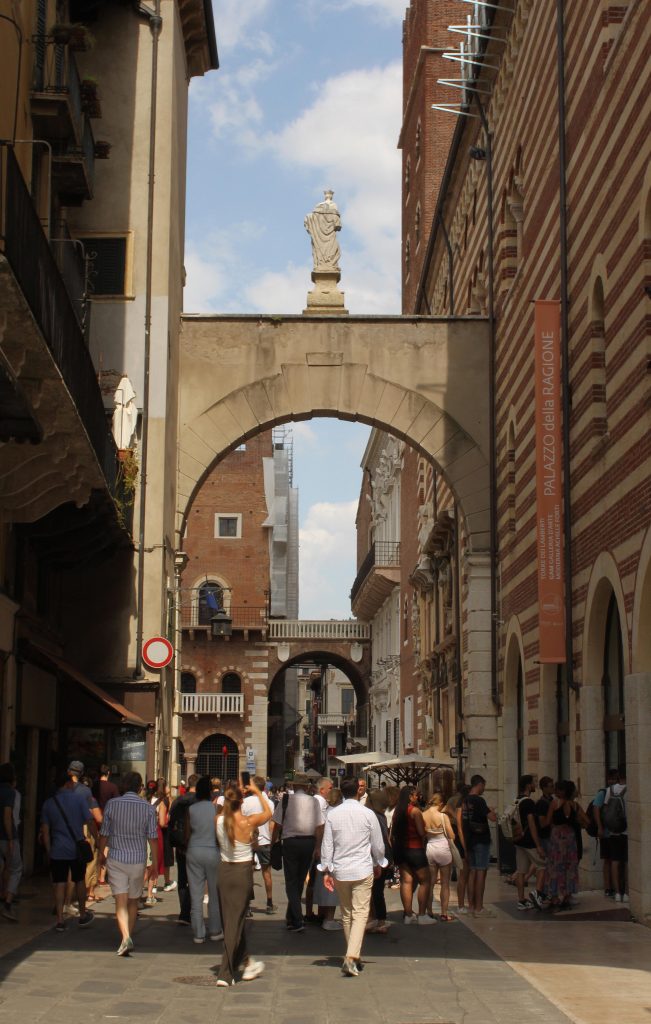
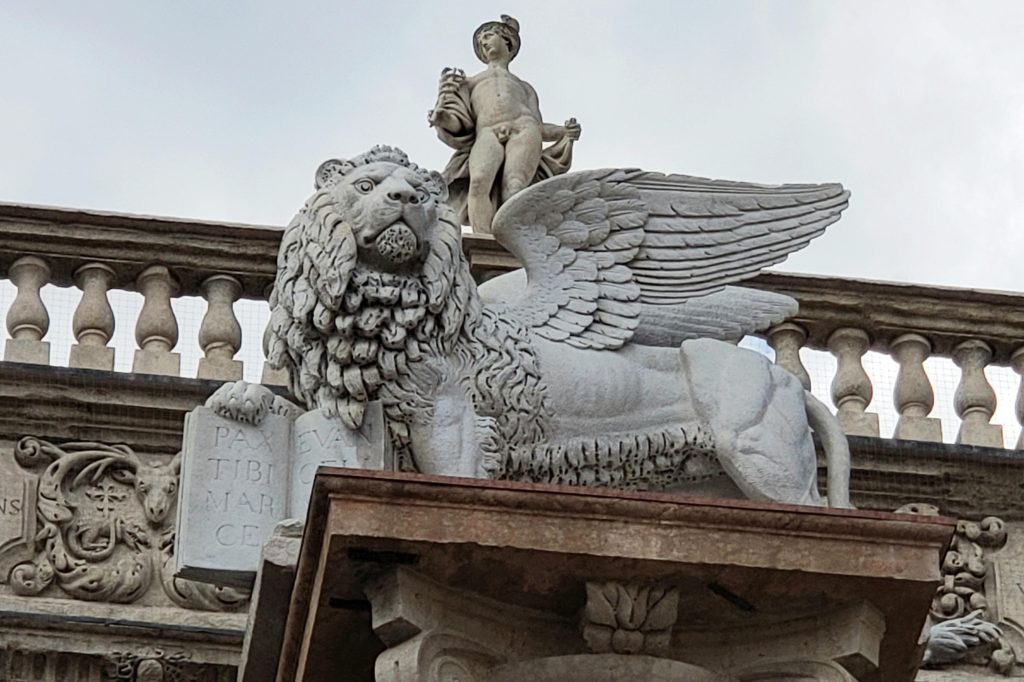
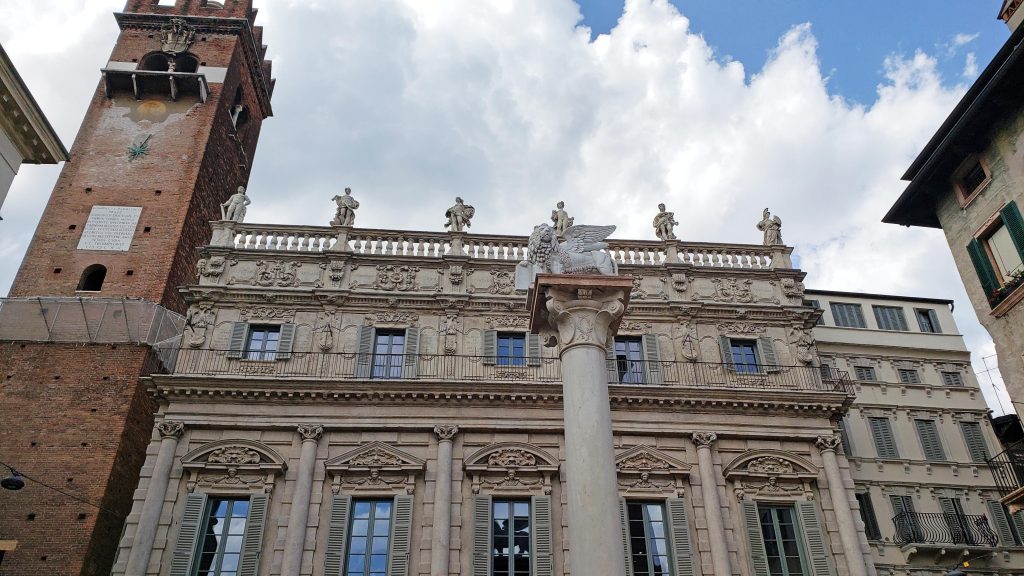
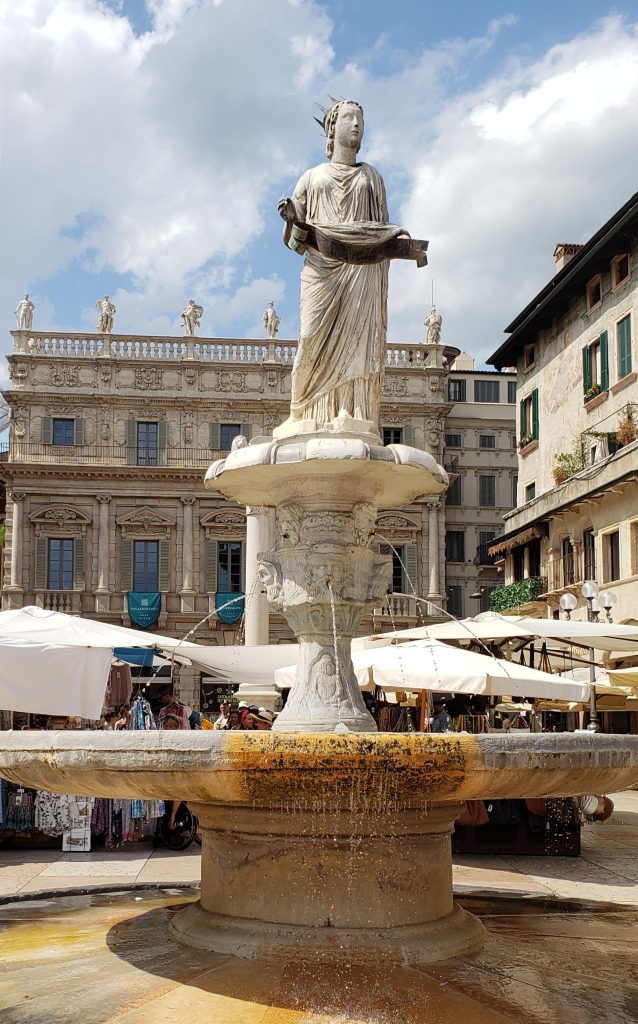
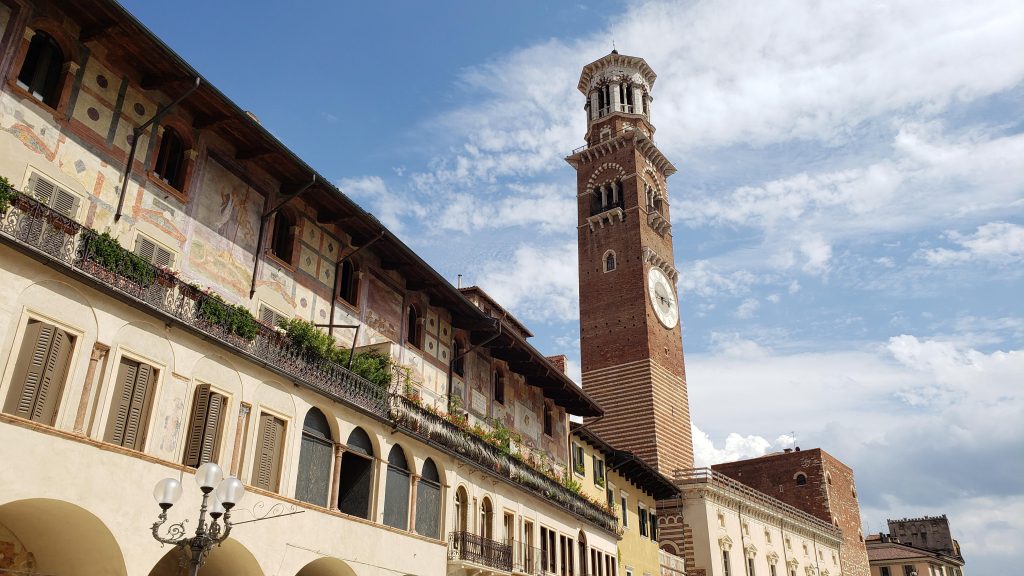
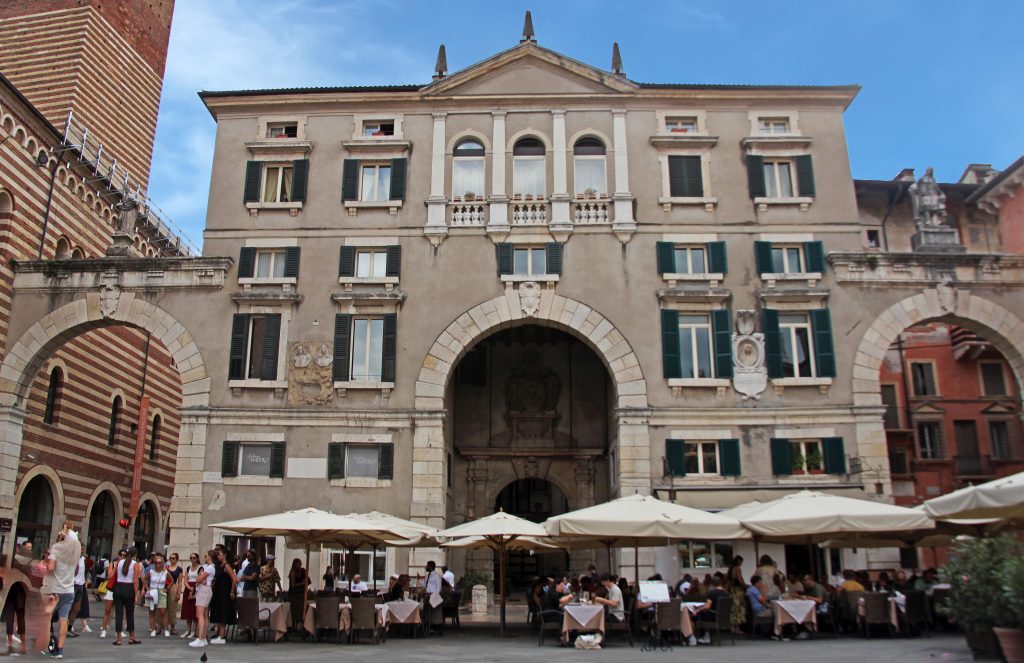
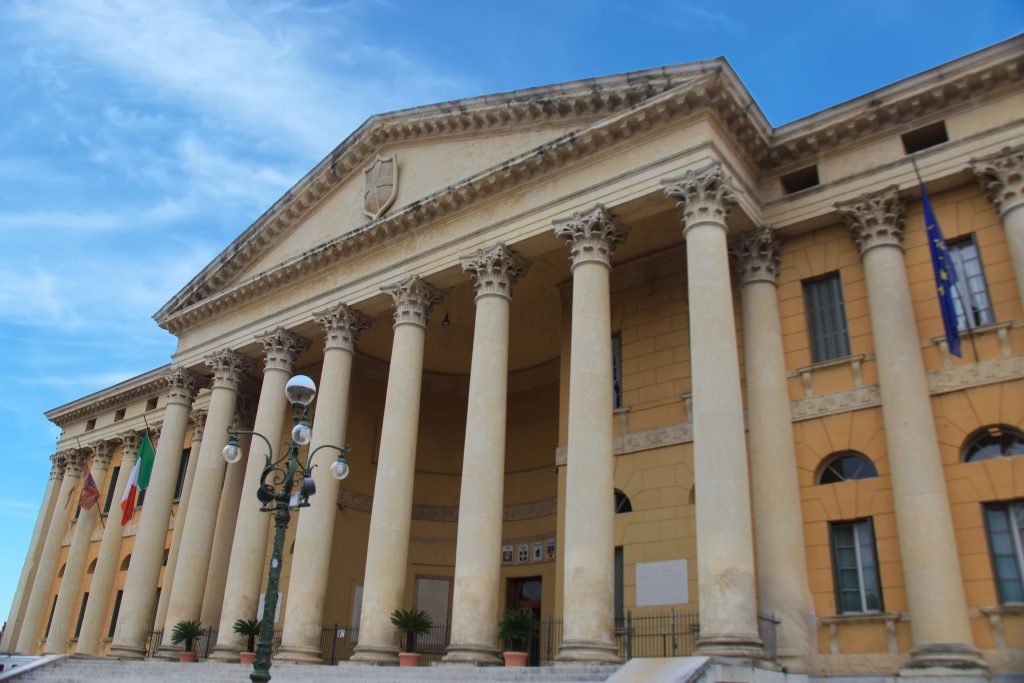
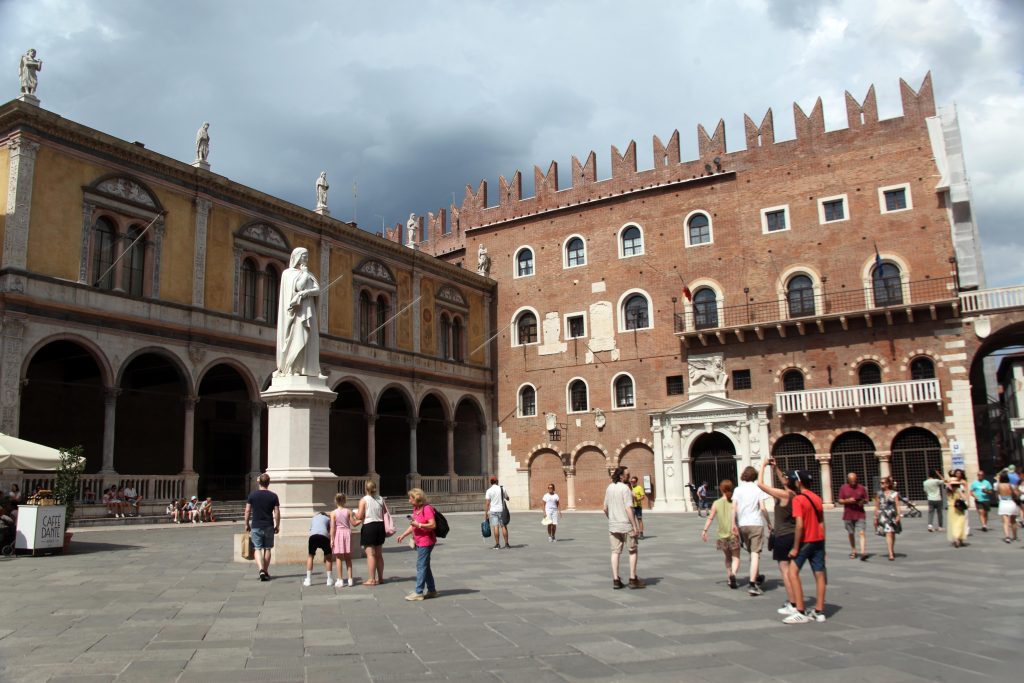
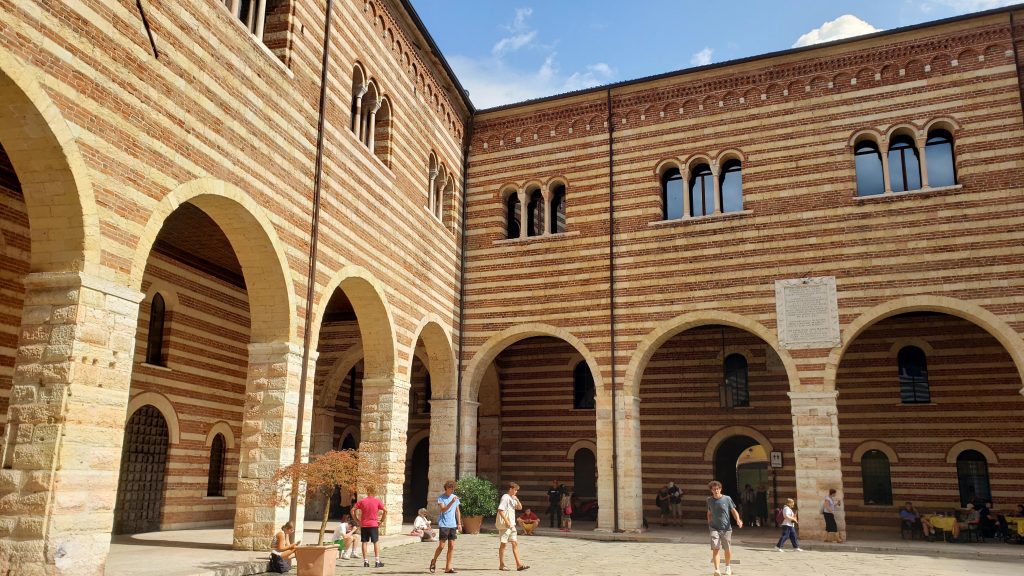
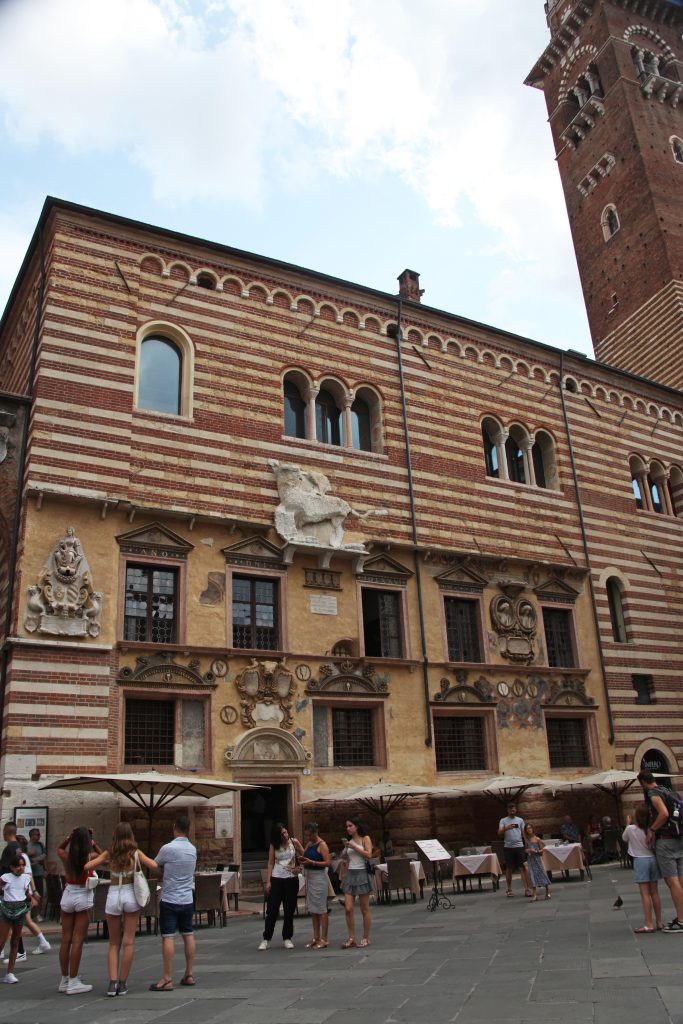
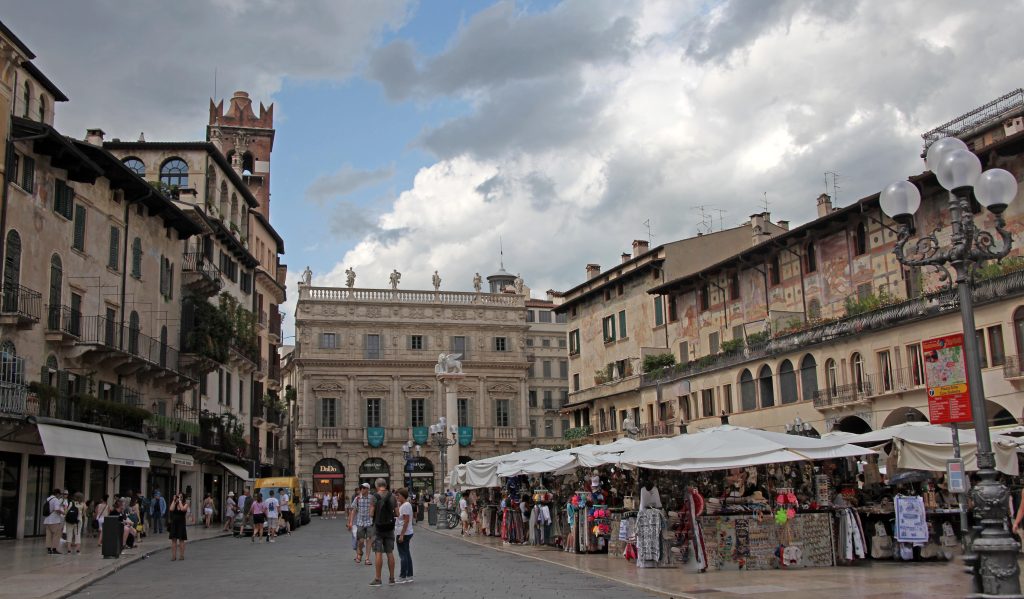
Once the city’s political center, this enclosed square radiates balance and refinement. The Palazzo della Ragione, Palazzo del Capitano, and Loggia del Consiglio each speak in the language of Renaissance civic pride.
- The Biblioteca Capitolare
One of the oldest libraries in the world, containing manuscripts dating back to the 6th century. Scholars from Petrarch to Bede walked these halls, a quiet cornerstone of European learning.
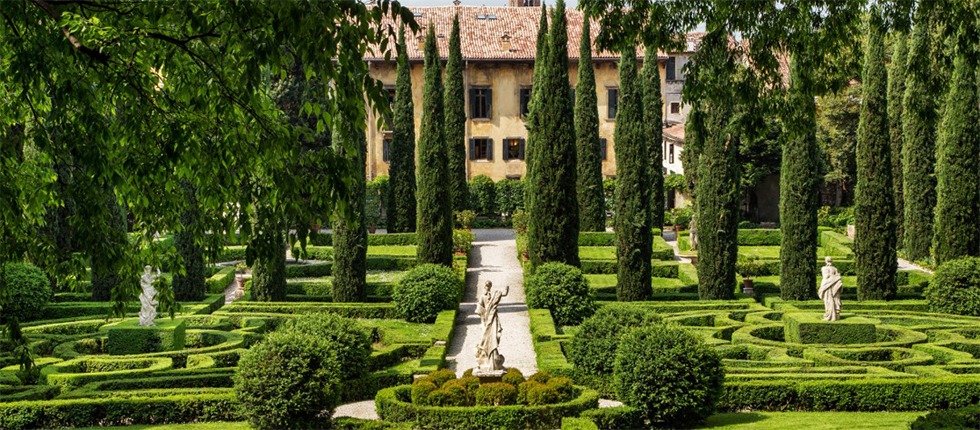
- Giardino Giusti
Across the river, these 16th-century gardens blend manicured hedges, mythological statuary, and panoramic views, a serene Renaissance landscape for contemplation.
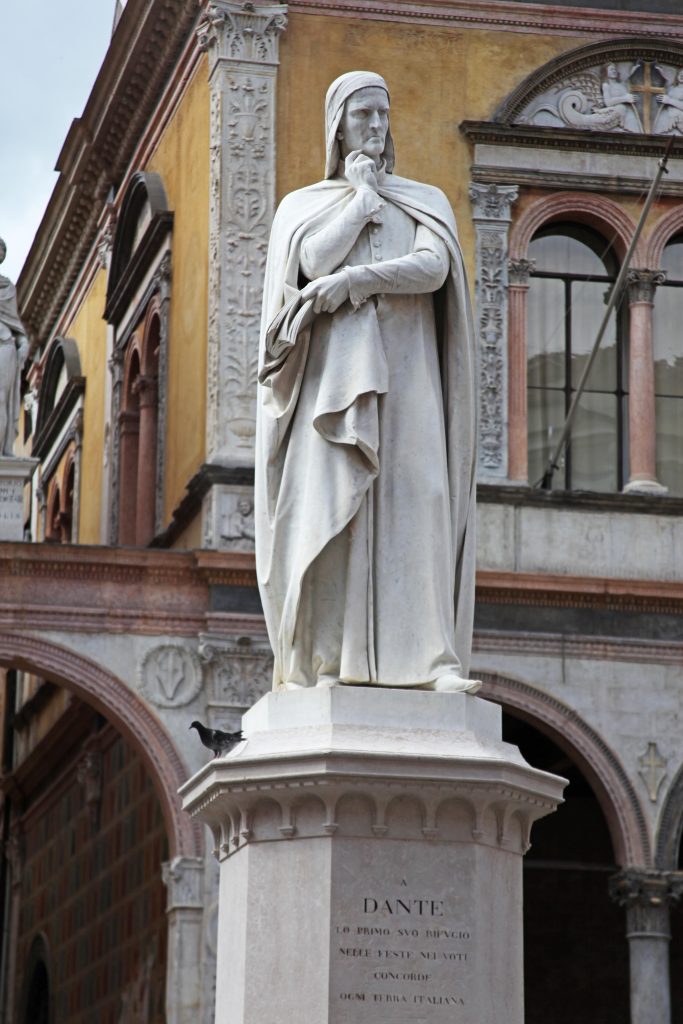
It was during this time that Dante Alighieri, exiled from Florence, found refuge in Verona under the patronage of Cangrande della Scala. A statue of Dante now stands solemnly in Piazza dei Signori, facing the palace where he composed verses, a poet among princes.
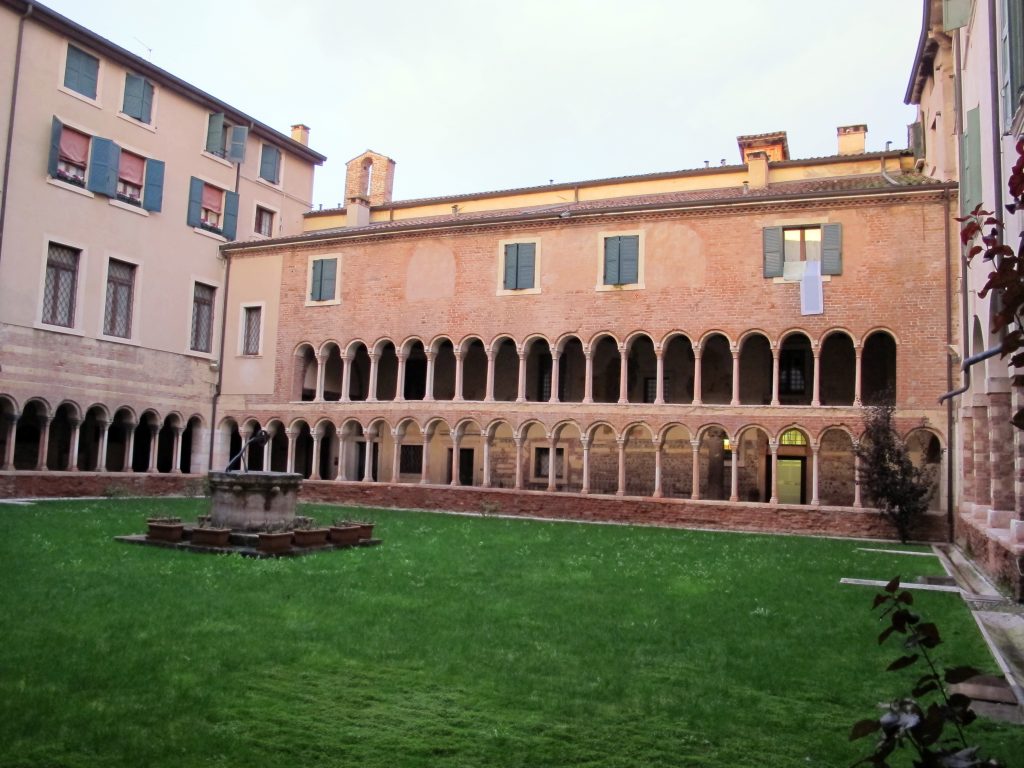
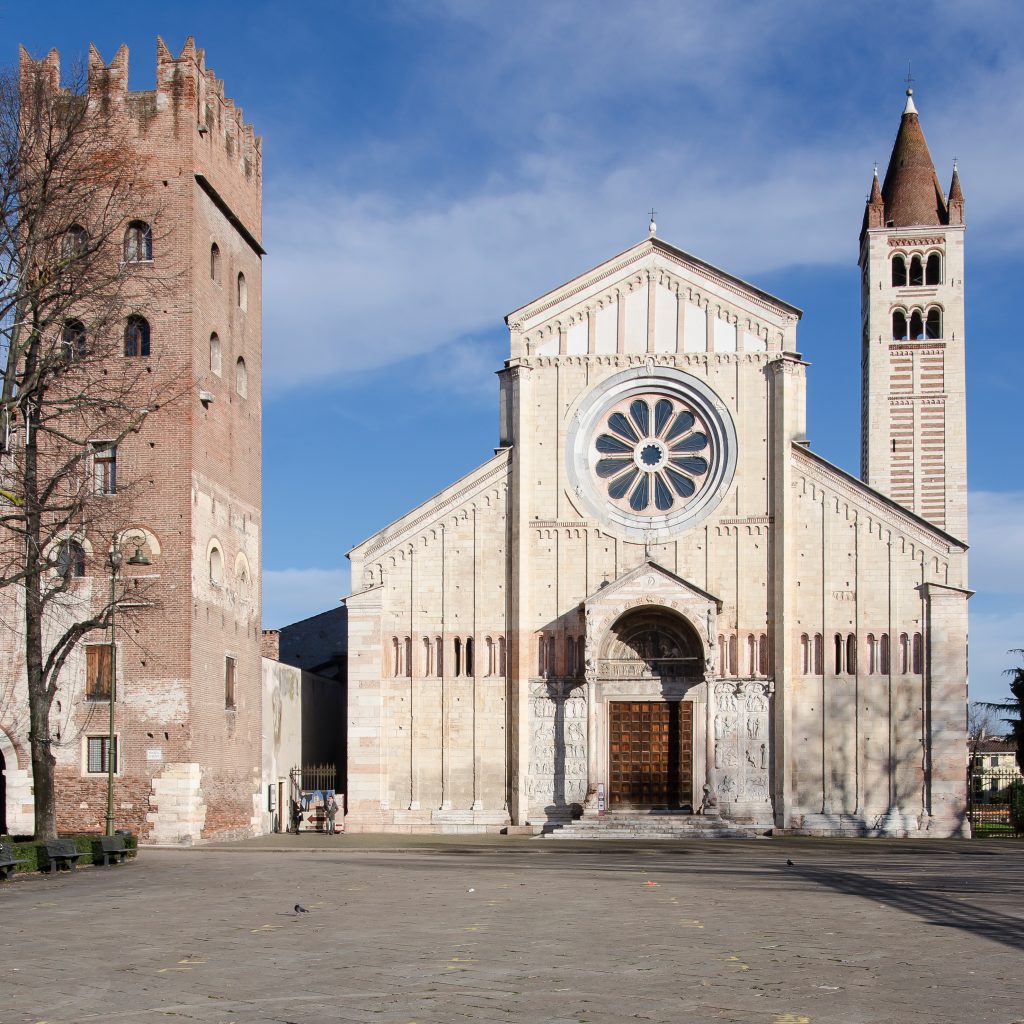
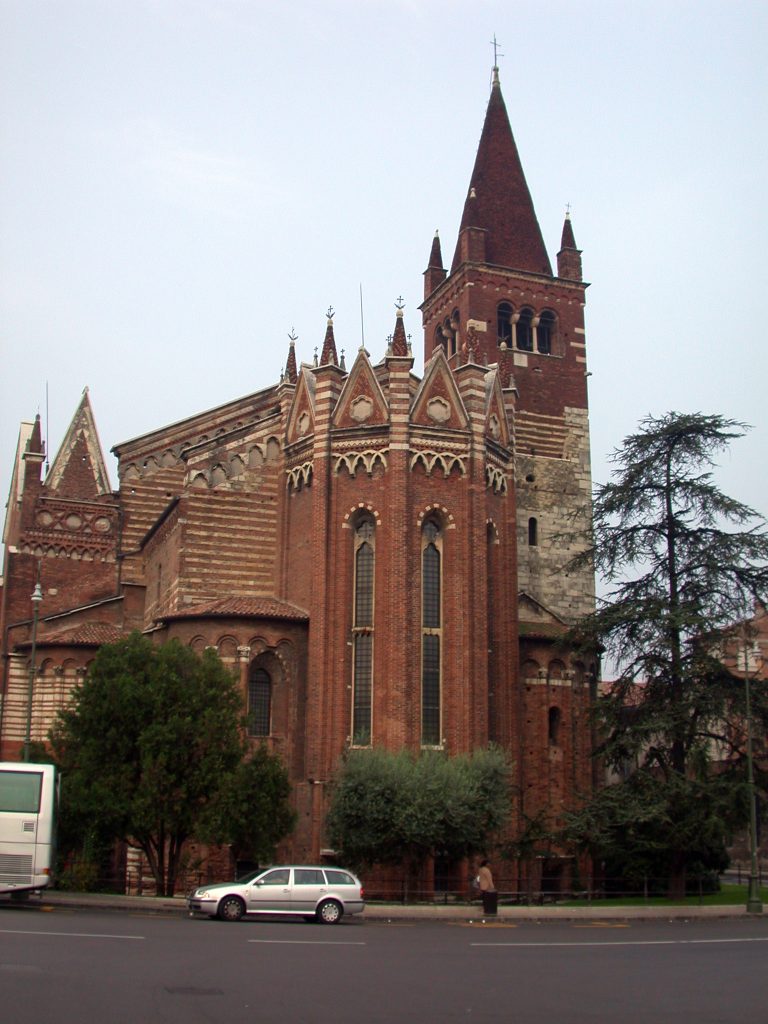
This period was also marked by the plague’s onset in 1517. What set Verona apart was how its citizens, especially members of religious confraternities (lay brotherhoods), organized care for the sick, burial of the dead, and aid to quarantined families. Churches such as San Fermo and San Zeno served as both spiritual centers and hubs of community care and action. Their records, preserved in Verona’s archives, tell stories not of nobility or politics, but of ordinary bravery.
Act IV: A City Still in Love
Opera, Juliet, and Timeless Allure
Today’s Verona remains both polished and soulful. It draws summer tourists with its open-air opera festival, yet remains a city where locals gather for passeggiata, where bicycles outnumber cars in the historic core, and where stories are still performed in the streets.
And no tale is more famous than that of Romeo and Juliet.
Though the Capulet and Montague families were likely inspired by real Veronese clans, Shakespeare’s tragedy gave Verona a romantic legend that the city has embraced with theatrical charm.
- Casa di Giulietta
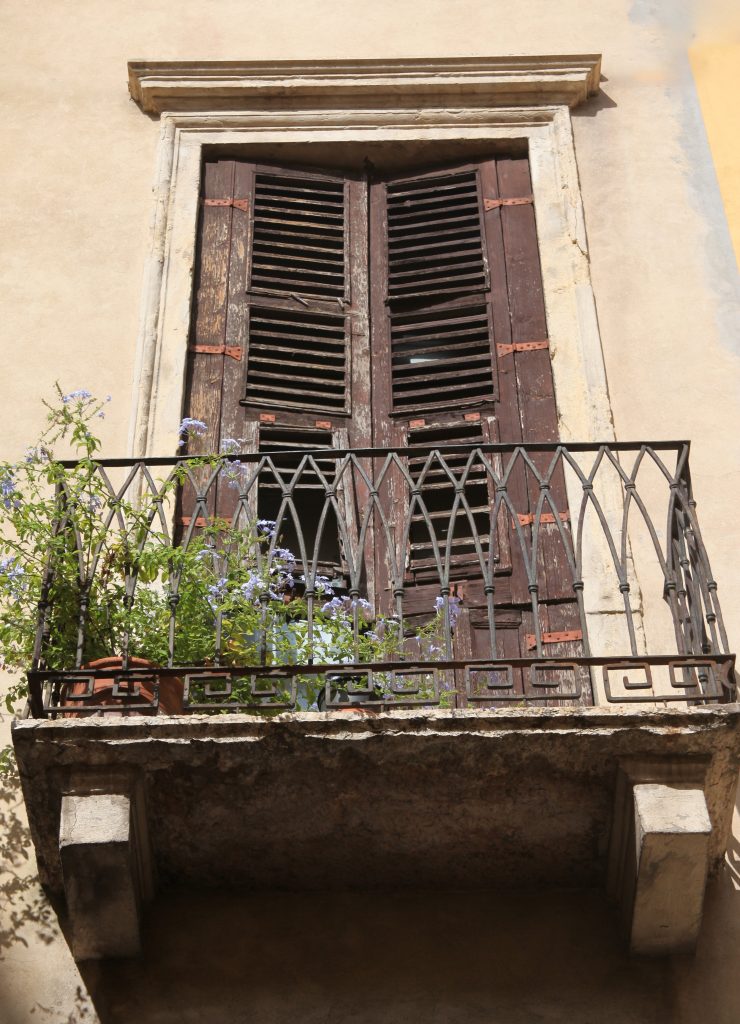
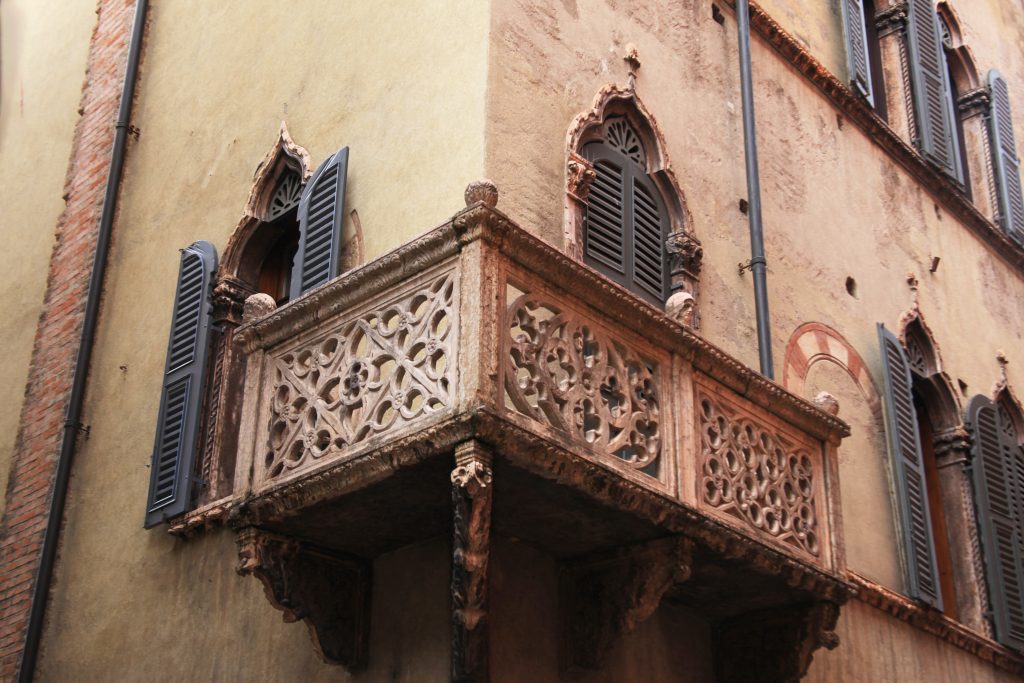
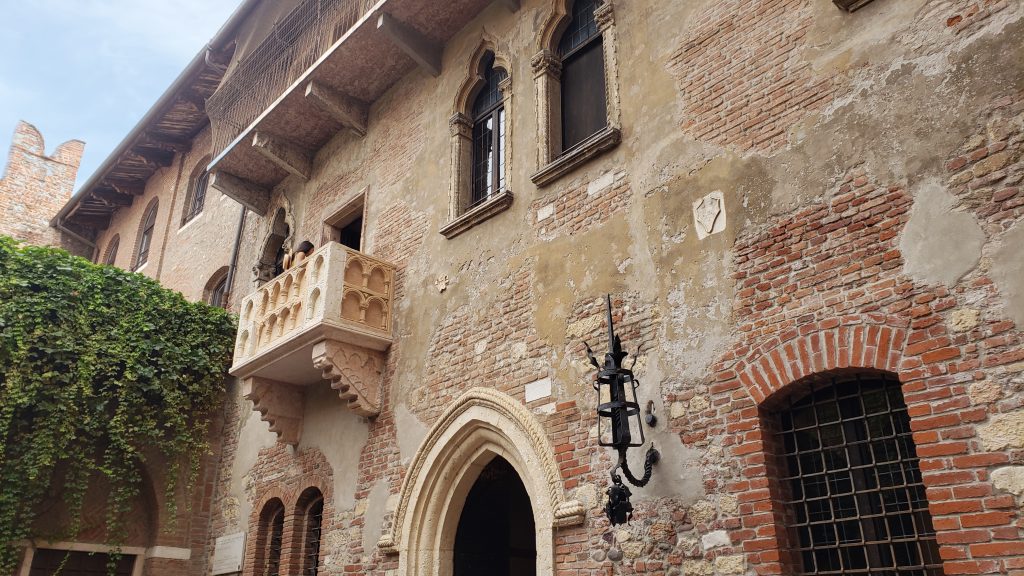
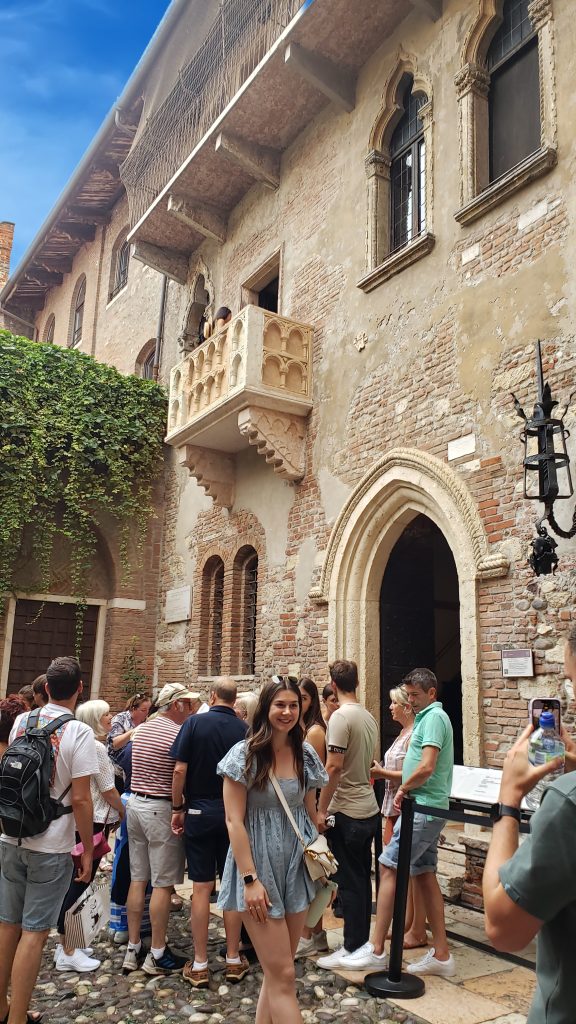
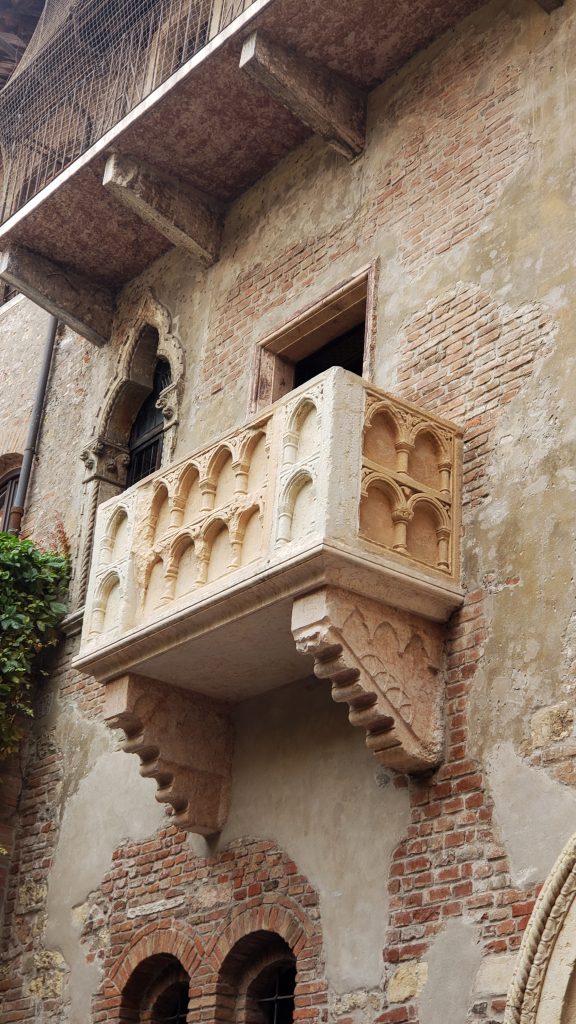
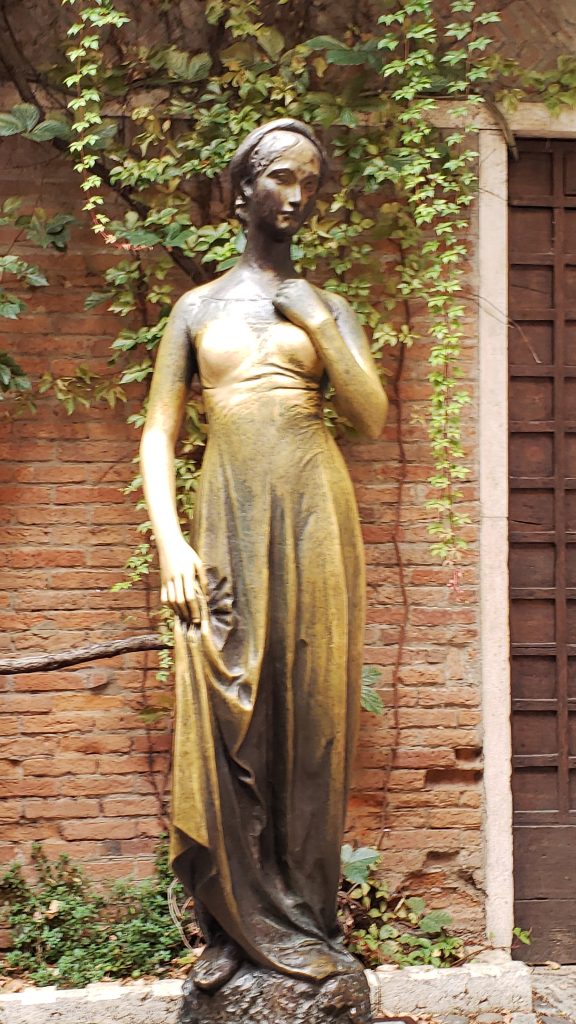
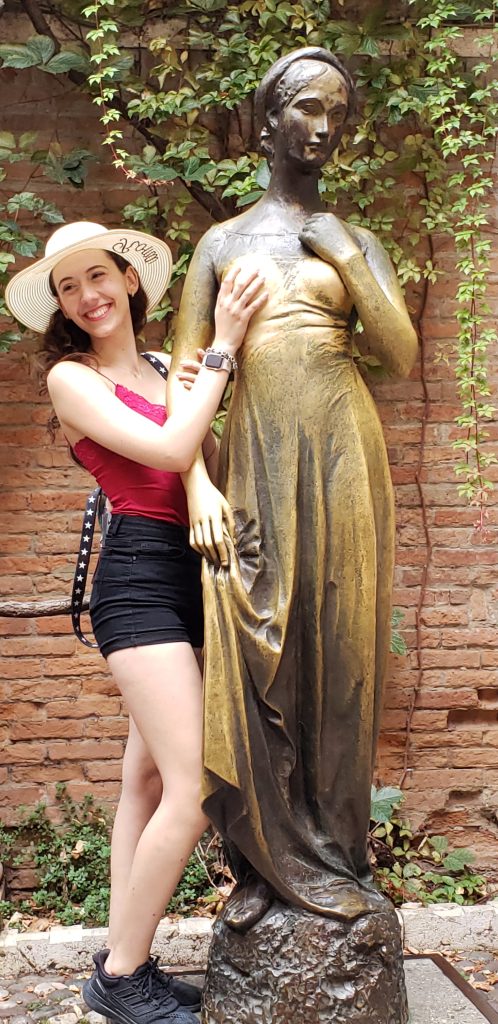
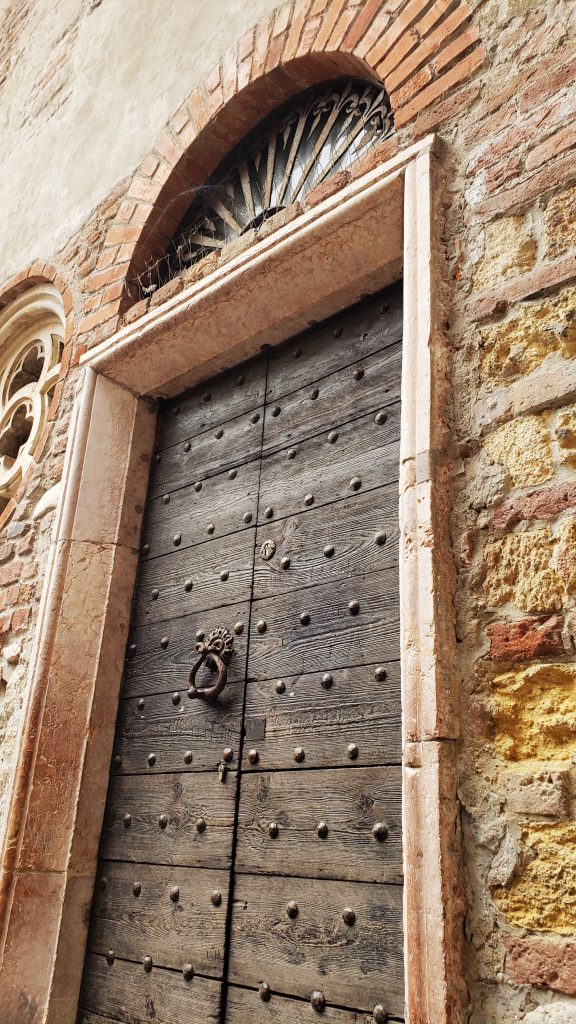
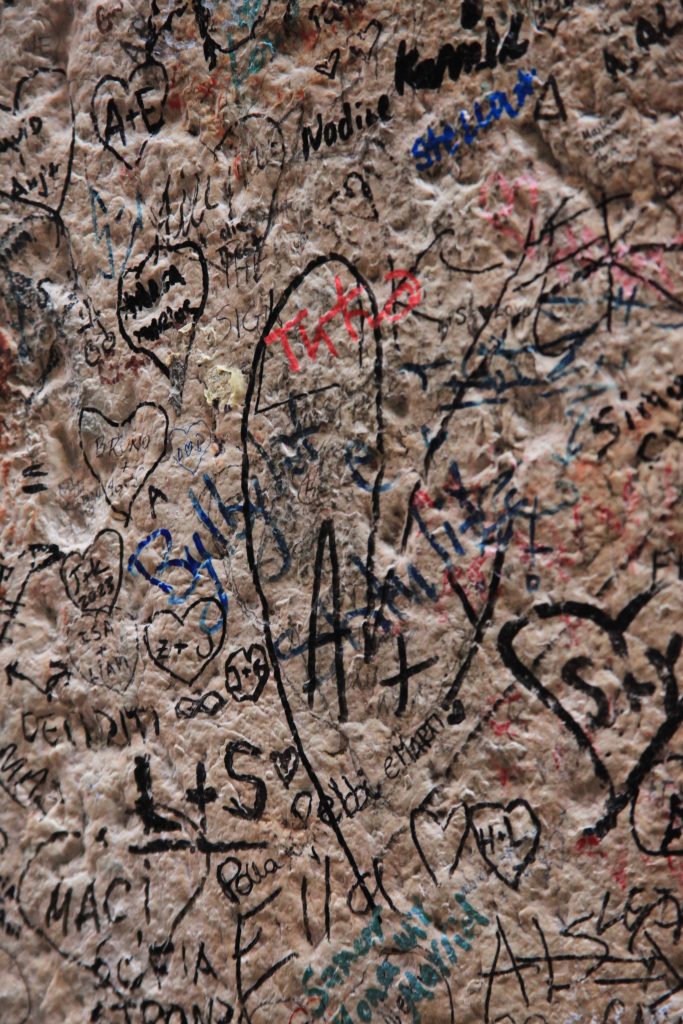
A 14th-century house with a small Gothic balcony of Via Cappello, claimed (without solid evidence) as Juliet’s home. The courtyard is perpetually filled with hopeful lovers, and letters to Juliet still arrive daily, now answered by a team of volunteers known as the Juliet Club. There is also a robust and statuesque life-size bronze image of Juliet in the courtyard and visitors are encouraged to touch the bare breast of the lovely beauty in order to ensure “luck in love.”
- Juliet’s Tomb (Tomba di Giulietta)
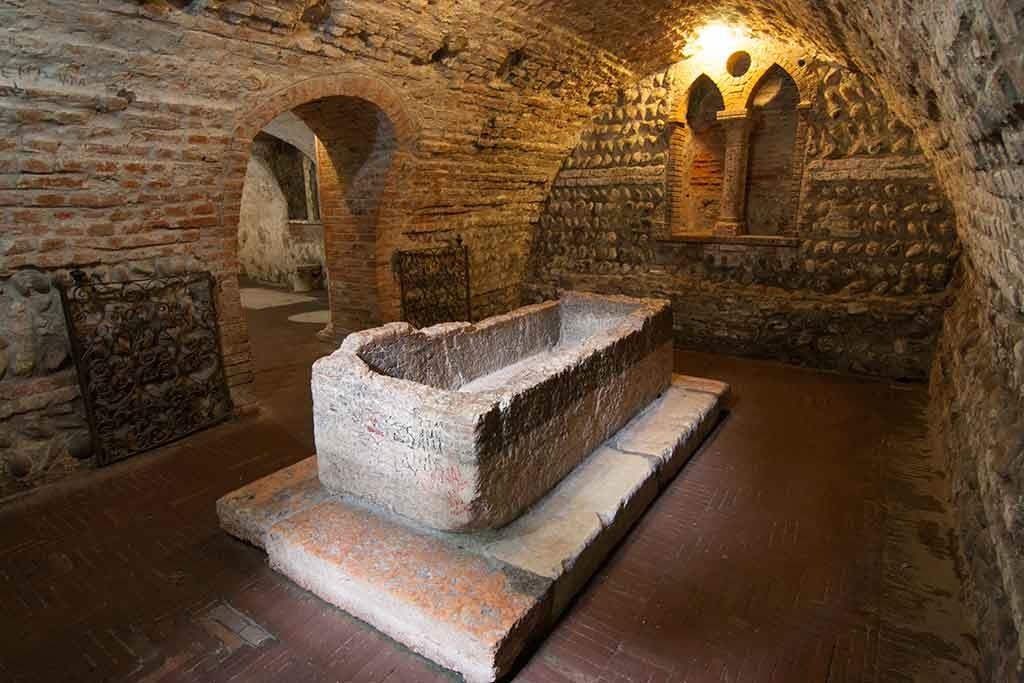
Housed in a former monastery, this quiet crypt offers a more solemn tribute to the tale. Though purely symbolic, it has a hushed atmosphere that suggests that grief, too, is part of love’s legacy.
Connecting It All
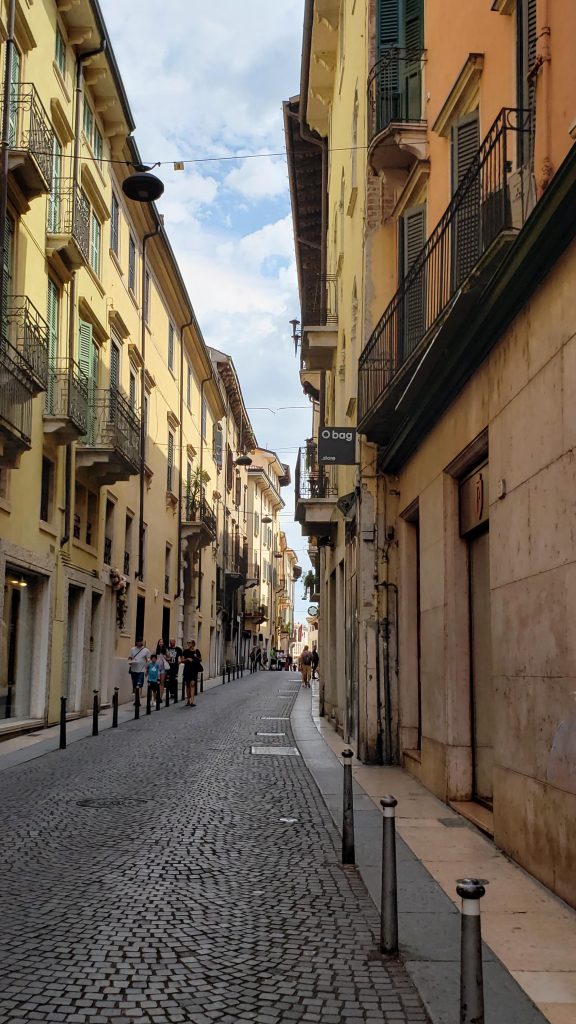
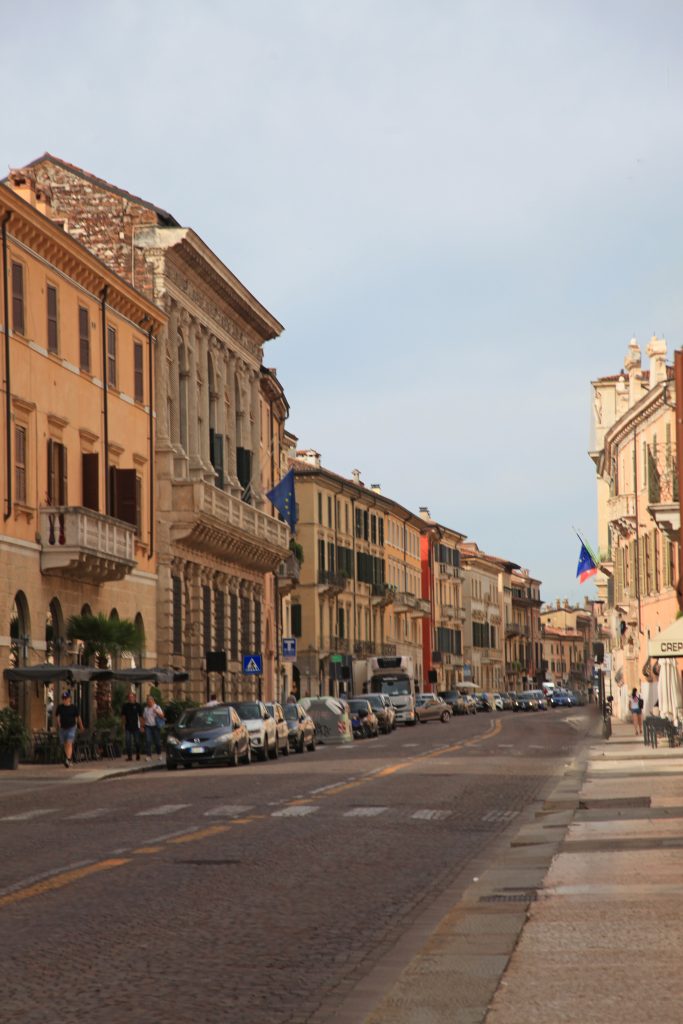
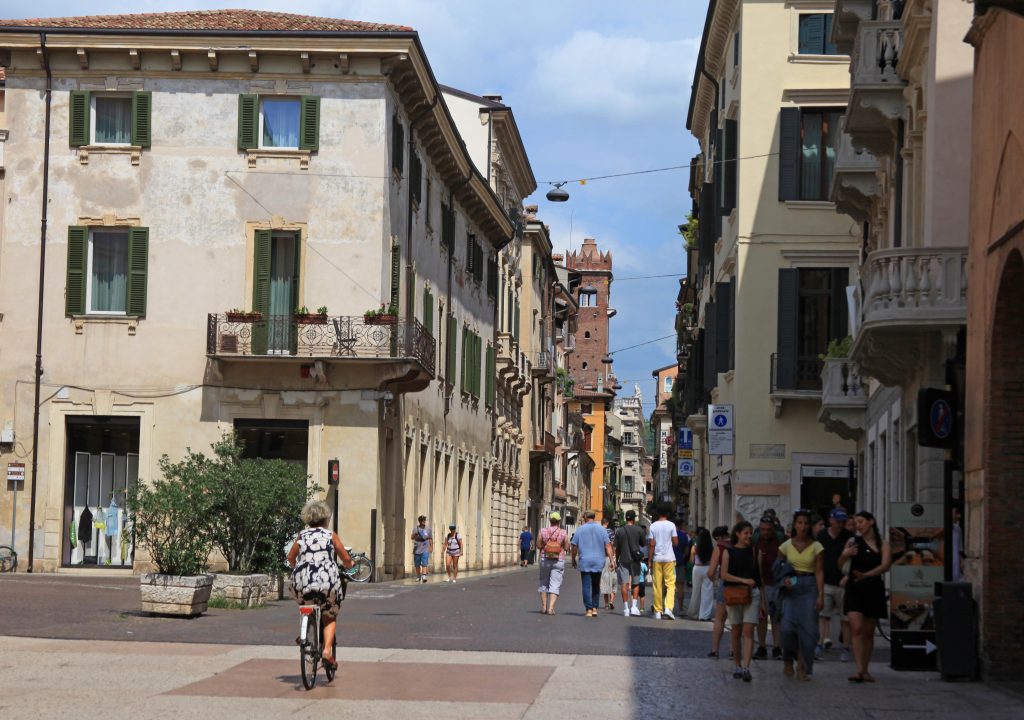
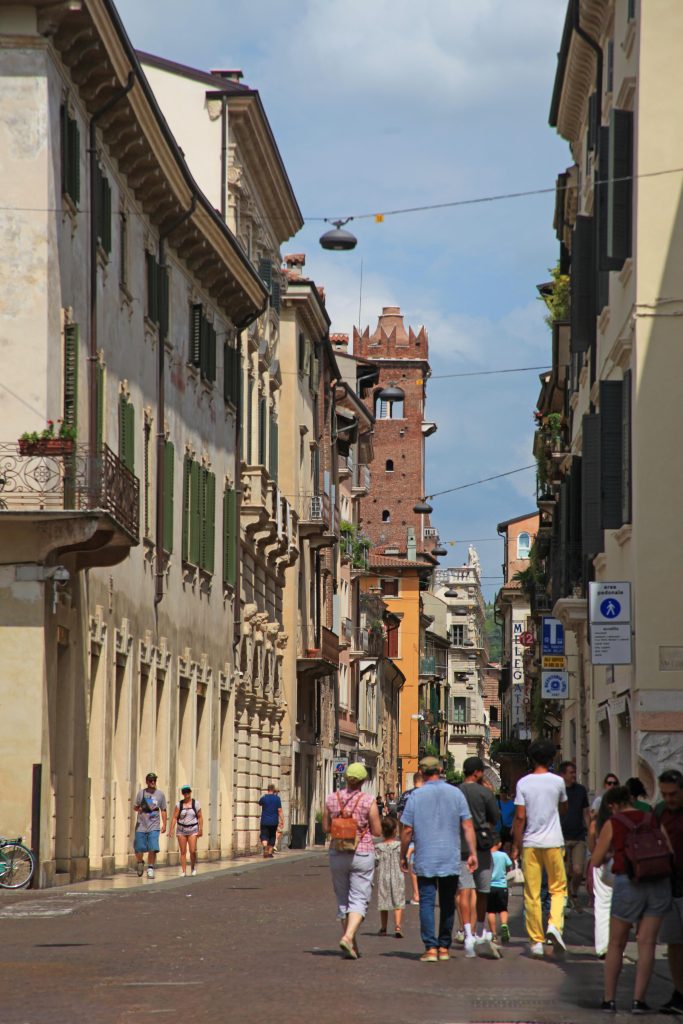
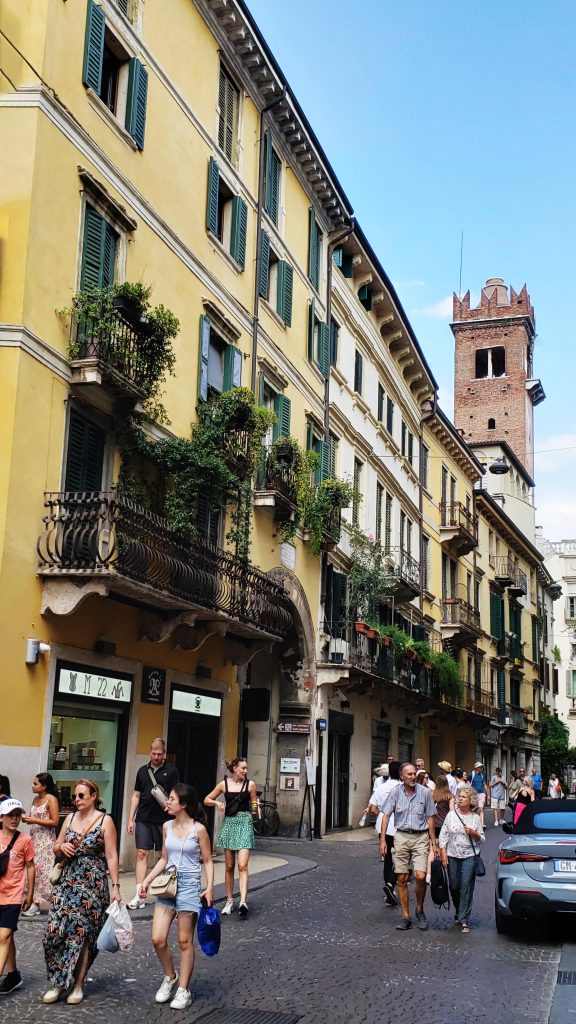
The main historic street through Verona is Via Mazzini, officially Via Giuseppe Mazzini.
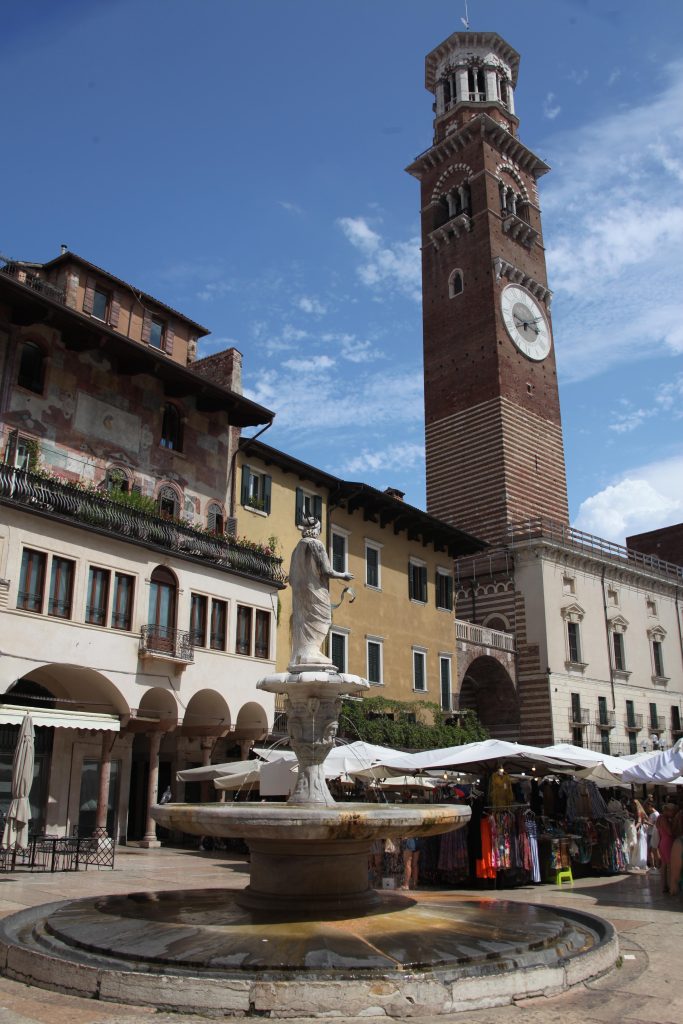
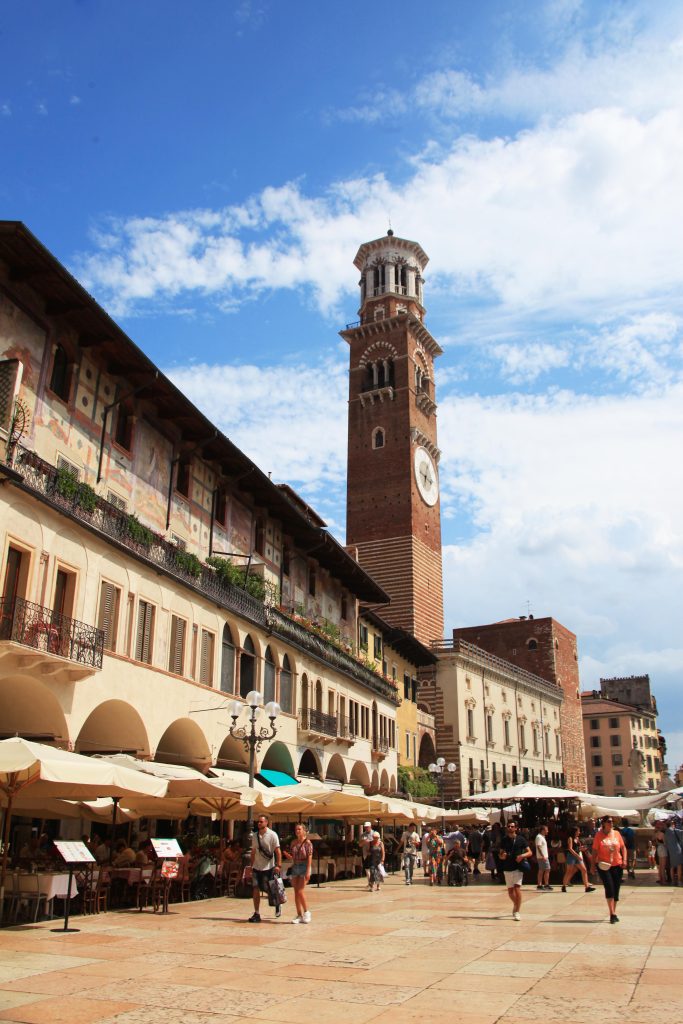
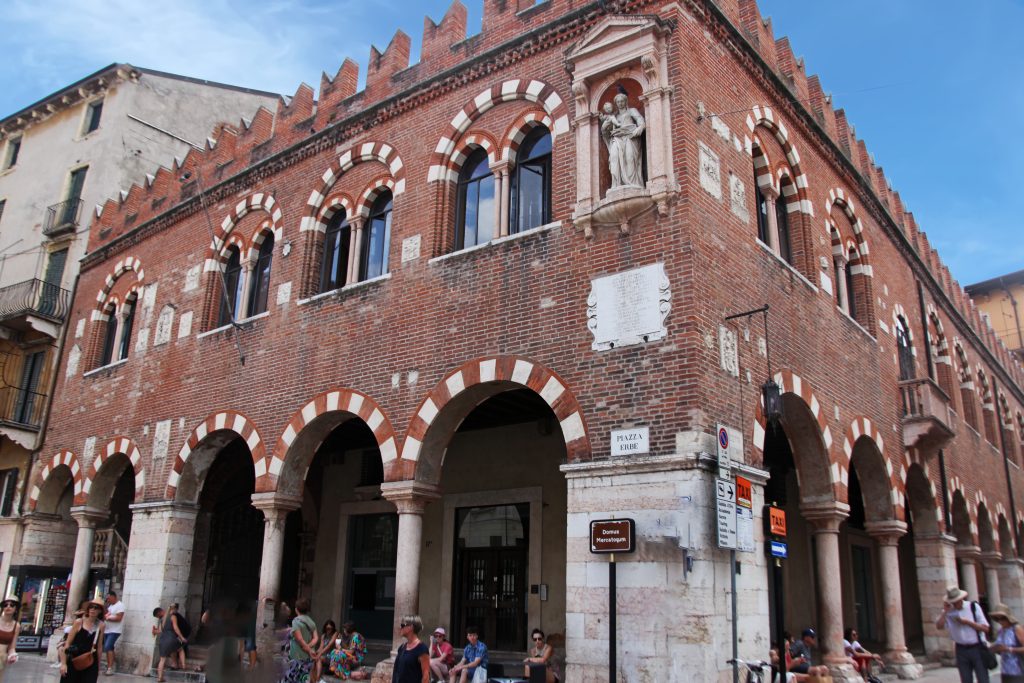
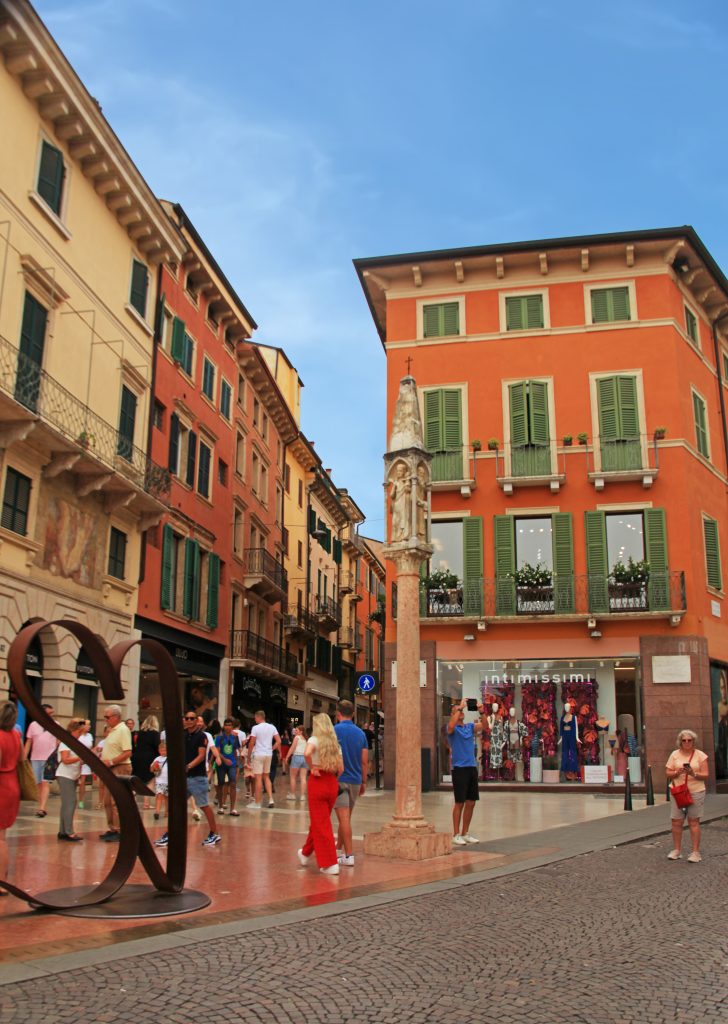
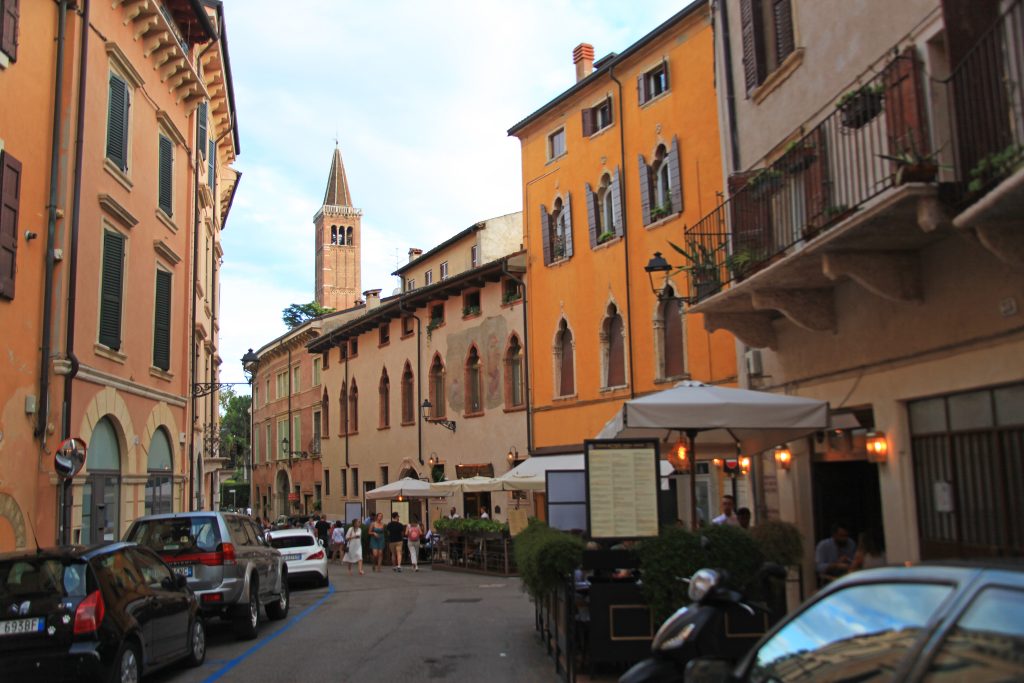
This elegant pedestrian thoroughfare connects Piazza Brà, home to the Roman Arena, with Piazza delle Erbe, the ancient Roman forum and heart of medieval and Renaissance civic life. Via Mazzini, paved in polished marble and flanked by boutiques, gelaterias, and arcaded façades, follows the line of an ancient Roman decumanus, quite literally tracing the footsteps of empire.
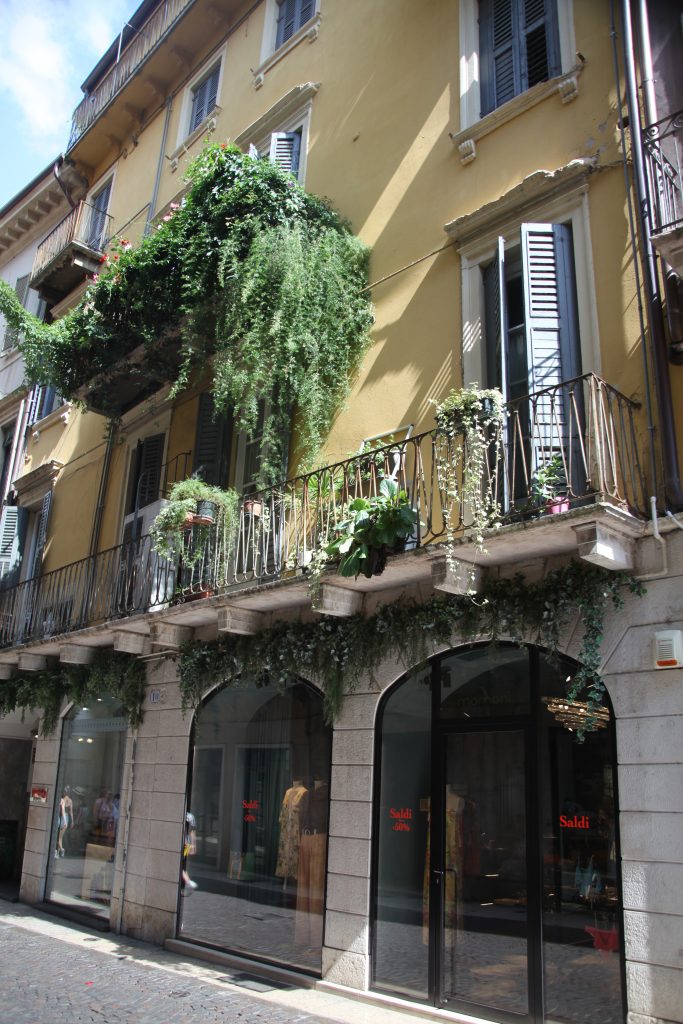
Today, it’s where Veronese history meets modern Italian life: window shopping beneath Renaissance cornices, café tables by Roman gates, and conversation echoing off stone that remembers gladiators and poets. High fashion boutiques and trendy chain stores line the street alongside mouthwatering dining establishments, museums, galleries, churches, and cannabis dispensaries. It pulses with life.
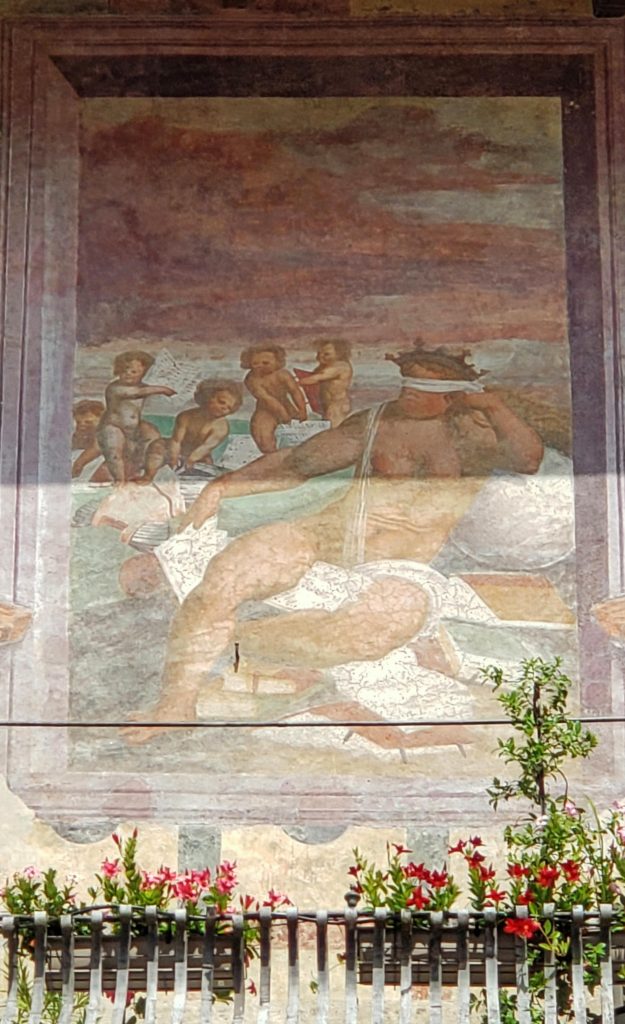
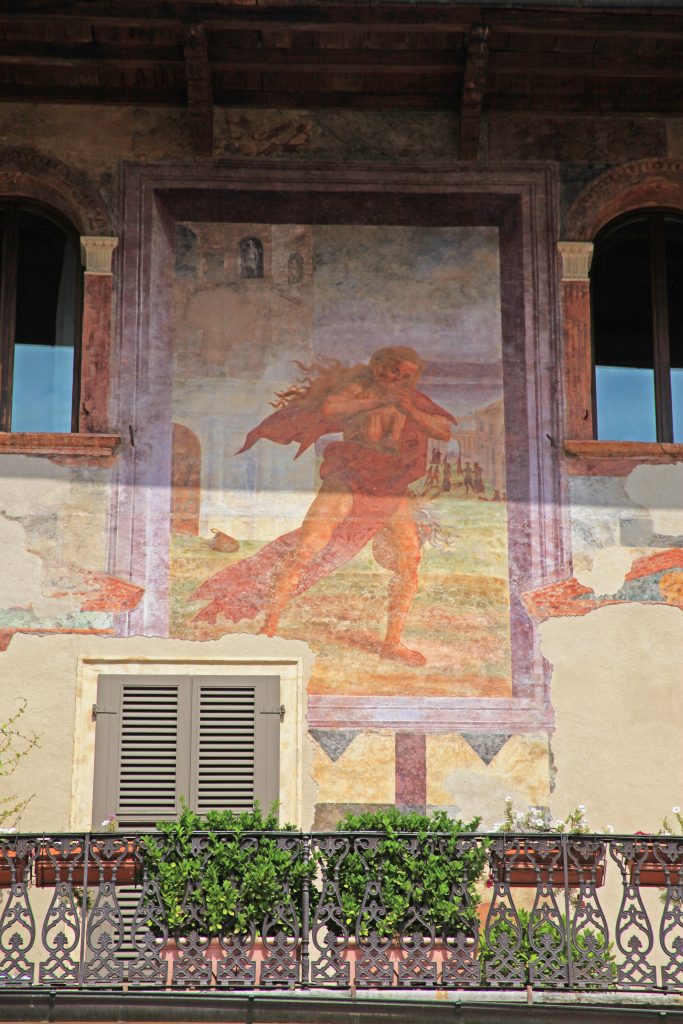
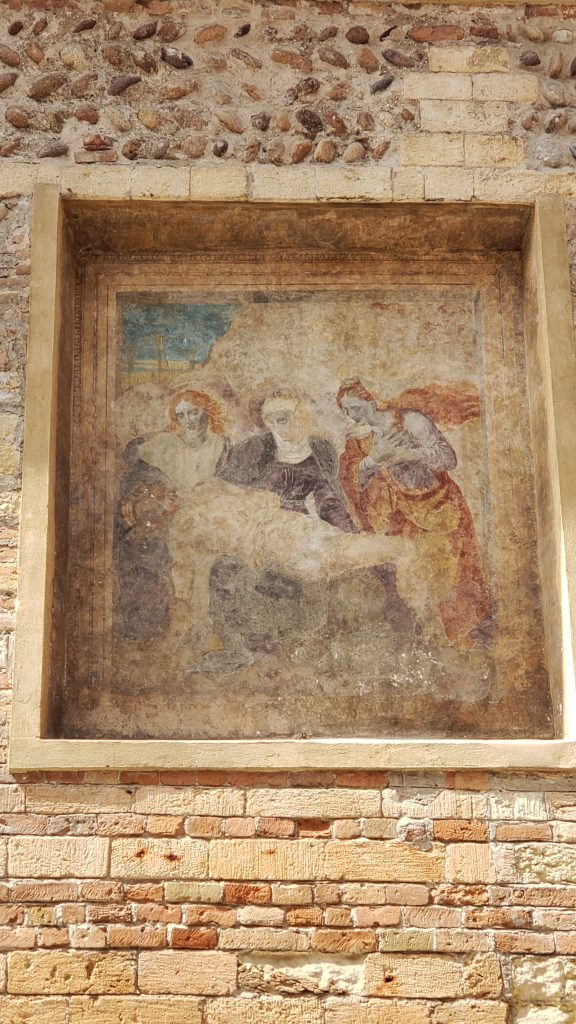
Verona unfolds in four acts, with no intermission. Its Roman past stands strong, yet it is never only Roman. The medieval towers rise beside Renaissance courtyards, where Juliet’s balcony and Dante’s silence inhabit the same city. Verona carries every era, layered like fresco, each glowing through the next.
To walk her streets is to feel history not as memory but as presence, and in her arches, piazzas, and perfumed evenings, you sense the next act waiting in the wings.
Where to Stay in Verona, Italy
For a stay in Verona’s historic center, the area around Piazza Bra provides the most convenient access to major attractions including the Arena and nearby restaurants. Hotels here tend toward the higher price range, but you’ll spend less time traveling between them. The Piazza fills with outdoor dining in the evenings, creating atmosphere but also street noise if your room faces the square directly.
The neighborhoods just north of Piazza Bra, especially around Via Cappello and streets toward the Duomo, offer a quieter alternative while staying within a five-minute walk of the main sights. You’ll find family-run guesthouses and smaller hotels throughout these blocks, many in Renaissance-era buildings. The pedestrian streets here are safer for evening walks, and you’re close enough to experience the evening passeggiata (the traditional Italian evening stroll) without being directly in the loudest tourist zones.
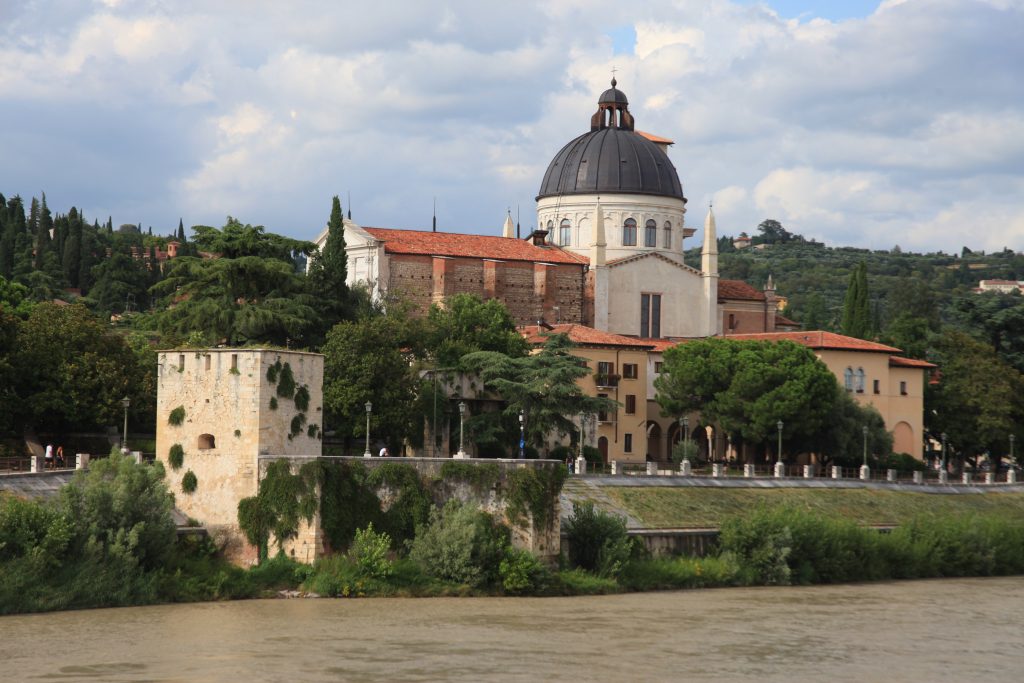
If your budget allows flexibility, the area east of Ponte Pietra offers views back toward the city and a more residential feel, sitting slightly outside the main tourist corridor. This side of the river offers good hotel and guesthouse options, just a ten-minute walk from the Arena. The walk across the bridge becomes part of your daily routine, offering different perspectives on the city each time you cross.
For visitors prioritizing affordability, neighborhoods beyond the immediate historic center (areas like Veronetta on the north bank) have hostels and budget hotels with bus connections to Piazza Bra. You trade proximity for lower nightly rates, which works well for longer stays when minimizing walking distance between your lodging and sights matters less.
Recommended Reading
Fiction
- Juliet by Anne Fortier
A modern woman traces her lineage to medieval Verona and uncovers the roots of Shakespeare’s lovers in this romantic, suspenseful novel set across time. - The Betrothed (I Promessi Sposi) by Alessandro Manzoni
Though set in Lombardy, this 19th-century classic captures the tenor of northern Italy in the Renaissance, richly atmospheric and historically detailed. - In the Company of the Courtesan by Sarah Dunant
Set in Renaissance Venice and Rome, with echoes of Verona’s courtly past, this novel blends sensuality and survival in a vivid Italian setting. - Daughter of Siena by Marina Fiorato
While the main setting is Siena, key scenes and romantic tensions unfold in Renaissance Verona. This novel weaves political machinations, masked balls, and personal longing into a rich historical narrative. - The Viper of Milan by Marjorie Bowen, Set in 14th-century Renaissance Italy, this historical novel dramatizes real power struggles involving Mastino della Scala, a dispossessed ruler of Verona, and his conflict with Gian Galeazzo Visconti of Milan.
Non-Fiction
- Time Out Venice: Verona, Treviso, and the Veneto by Time Out Guides Editors
Time Out Venice: Verona, Treviso, and the Veneto is a detailed cultural travel guide covering the historic cities and landscapes of the Veneto region. - DK Eyewitness: Verona and Lake Garda
A beautifully illustrated guide with architectural maps and historical detail, perfect for those walking Verona era by era. - Dante in Love by A.N. Wilson
A lyrical biography of Dante, with an emphasis on his exile years and time in Verona under the Scaligeri. - Shakespeare’s Italy and Italy’s Shakespeare by Shaul Bassi
An exploration of how Renaissance cities like Verona shaped, and were shaped by, the Bard’s imagination.