Ancient Stones, Wind-Carved and Wave-Washed
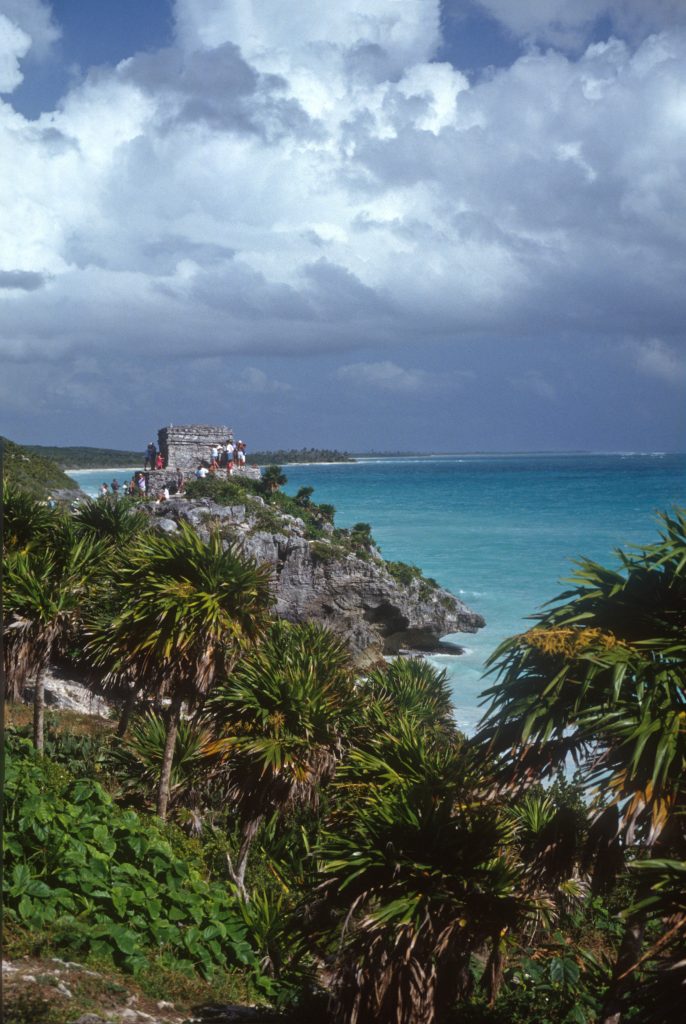
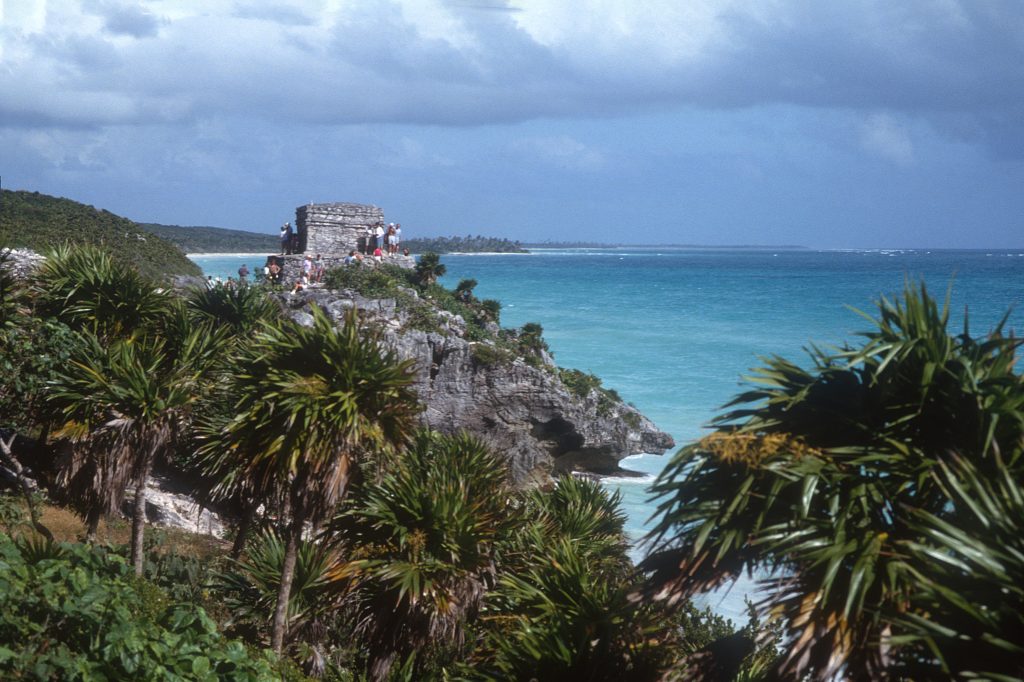
There are ruins that hide in jungles, and there are ruins that rise from cliffs. Tulum, the ancient Maya city perched high above the Caribbean Sea, does both—a fortress of limestone and light, framed by turquoise water and the cry of gulls. If Chichén Itzá speaks of celestial calculation, and Palenque whispers of jungle gods, then Tulum sings: a salt-air ballad of trade, time, and survival.
Tulum is smaller than some of its inland Maya cousins, but its setting is so cinematic it feels staged by the gods. Wind moves through the columns like memory. Lizards sun themselves on steps once trod by merchants and priests. And the sea crashes below, just as it did a thousand years ago, when this city watched over trade routes and tides.
A Seaside Stronghold: Tulum’s History
The name Tulum means “wall” in Yucatec Maya, and indeed, this is one of the few known fortified Maya cities. But before it was called Tulum, the site may have been known as Zamá, meaning “City of Dawn”—a reference to its eastward orientation, welcoming the sun each morning as it rose over the Caribbean.
Tulum reached its peak between the 13th and 15th centuries, during the post-Classic Maya period, and remained occupied up until the early decades of Spanish colonization. Its coastal location made it an important maritime trading port, linking inland cities like Cobá and Ek’ Balam to sea routes stretching from Honduras to the Yucatán’s northern coast.
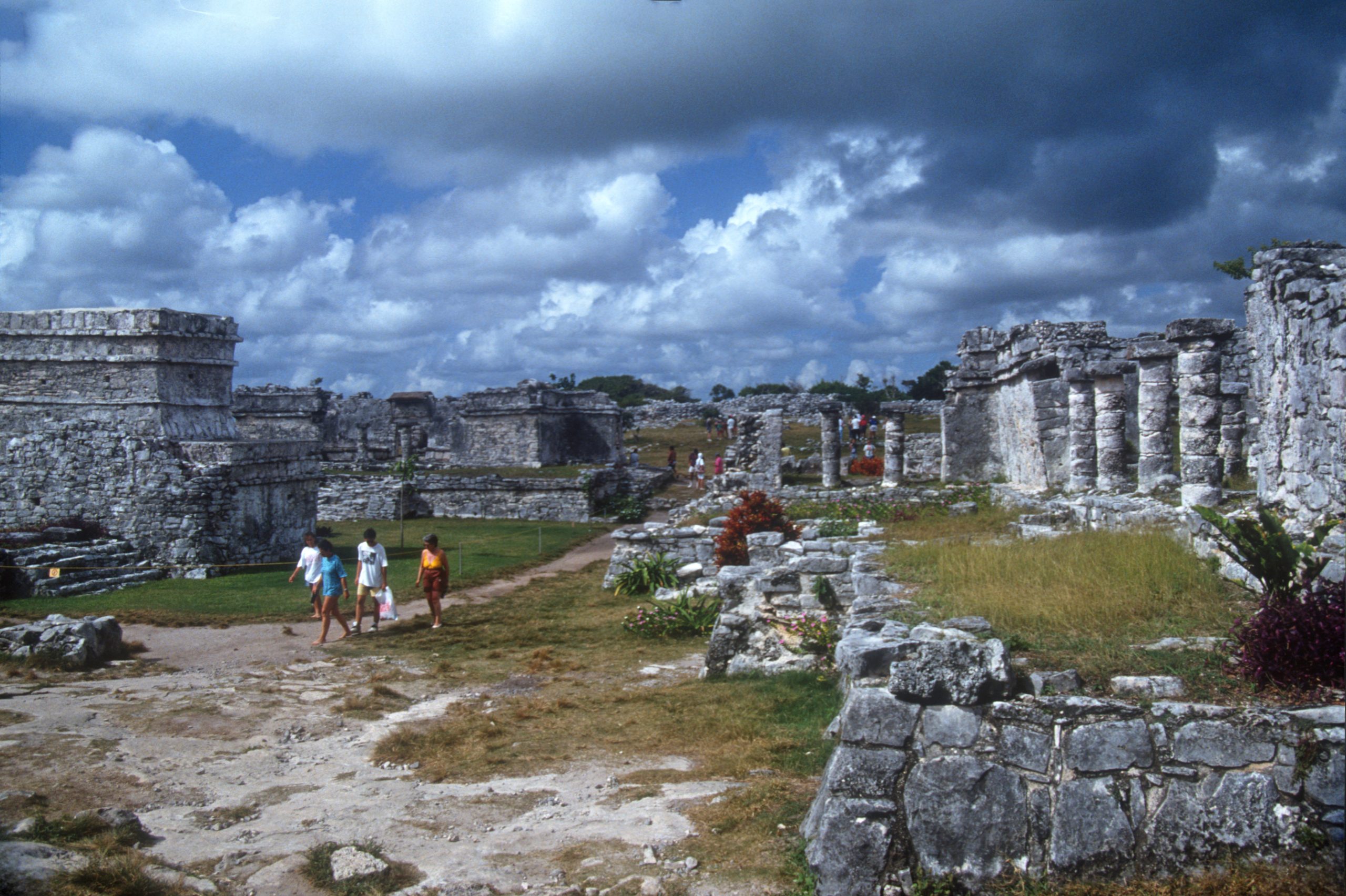
Unlike the massive urban centers inland, Tulum’s layout was compact—surrounded on three sides by thick limestone walls, with the fourth side left open to the cliff edge and the sea. This made it both strategically defensible and symbolically powerful: a city both of the land and of the water.
Despite being one of the last cities built and inhabited by the Maya, Tulum still reflects a continuity of cosmology and architectural traditions that stretch back centuries. It was never conquered in battle, but it was eventually abandoned, its political and religious significance waning after Spanish contact and the collapse of regional trade.

What You’ll See
Tulum is not a ruin that invites grandeur. It invites closeness. Its structures are lower, its scale more human. And yet, against the blue of the Caribbean, even the humblest wall feels mythic.
El Castillo (The Castle)
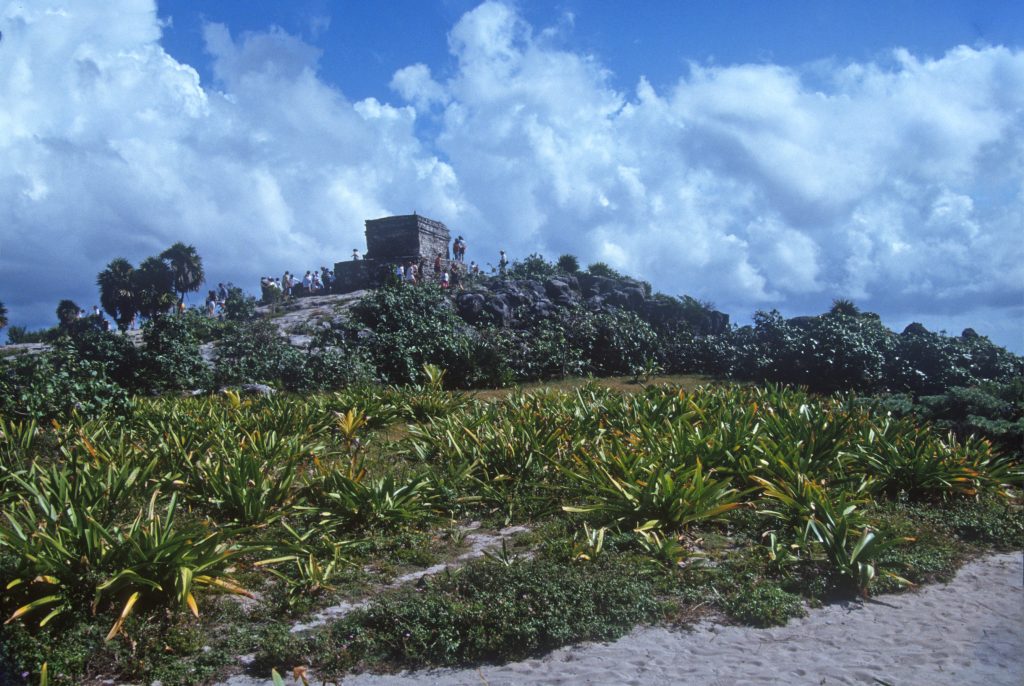
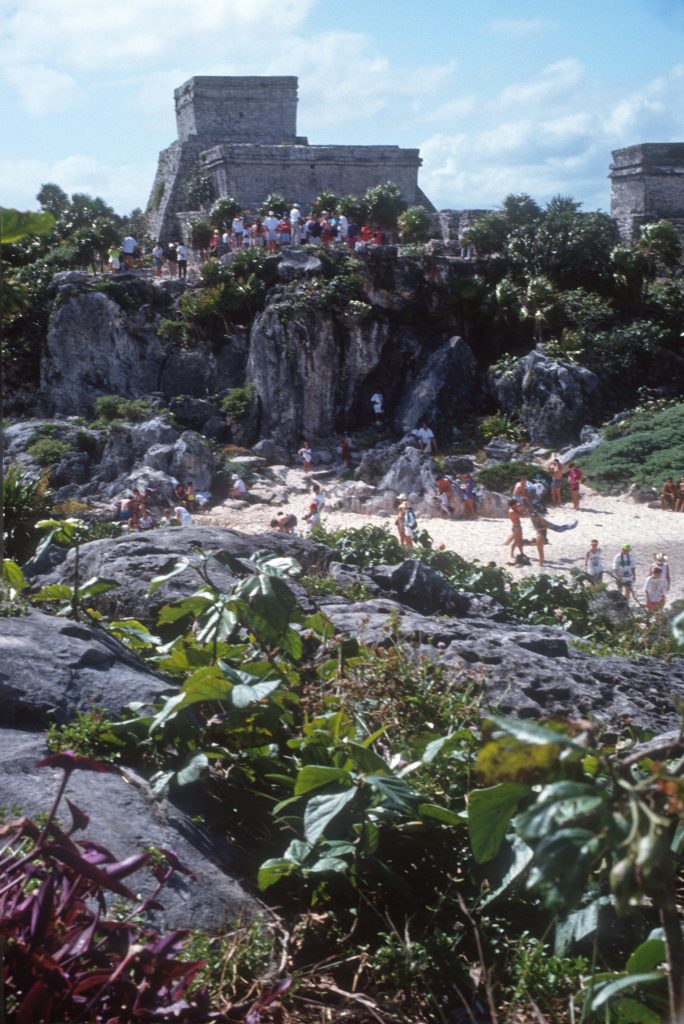
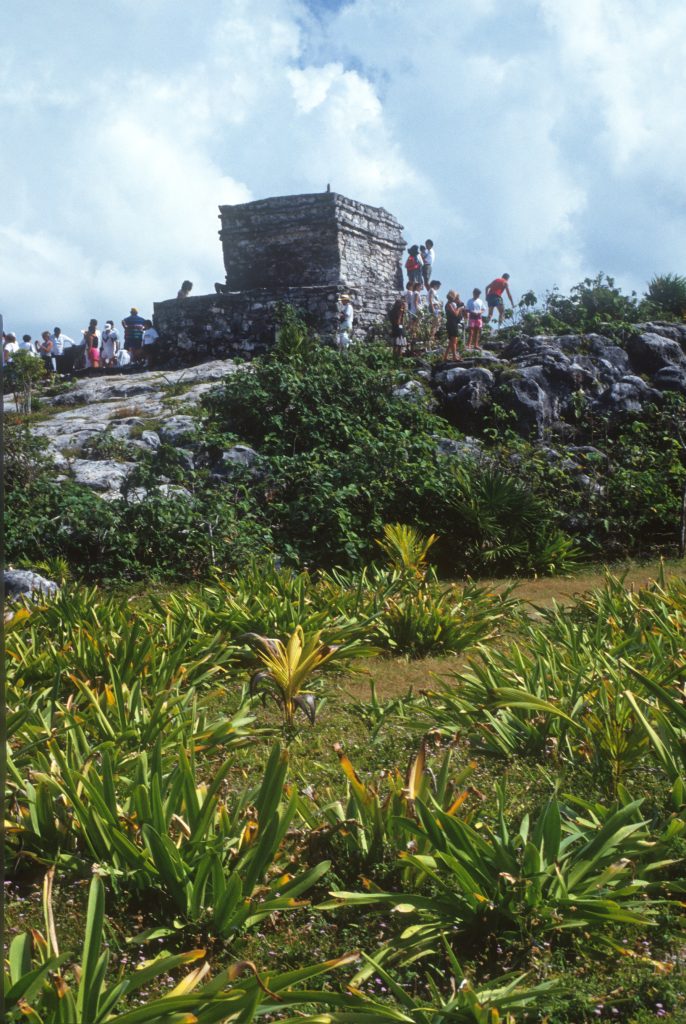
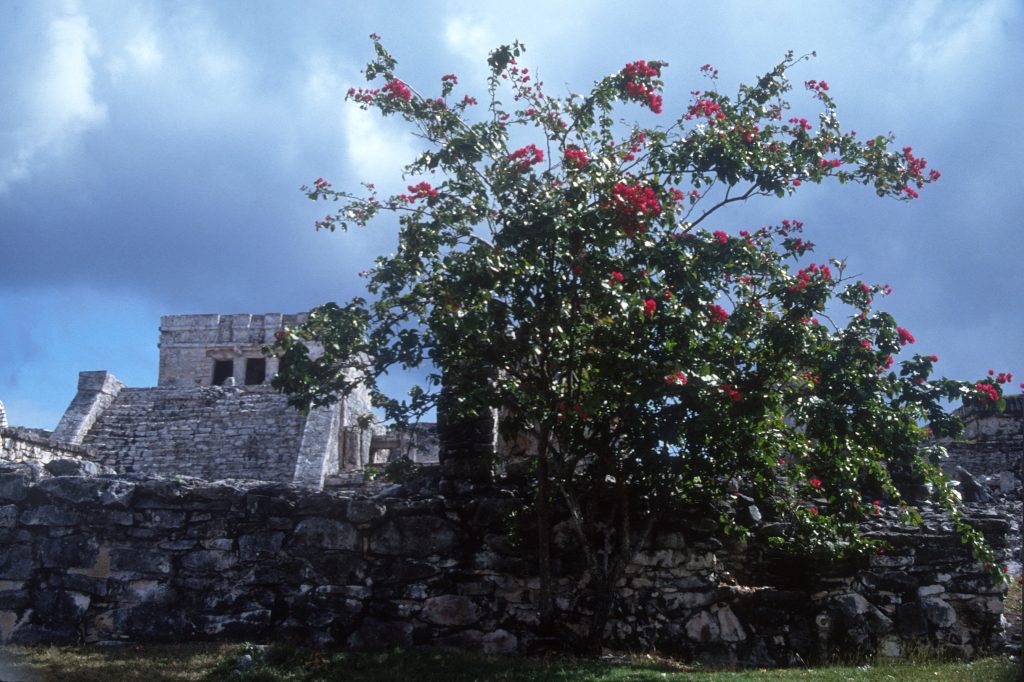
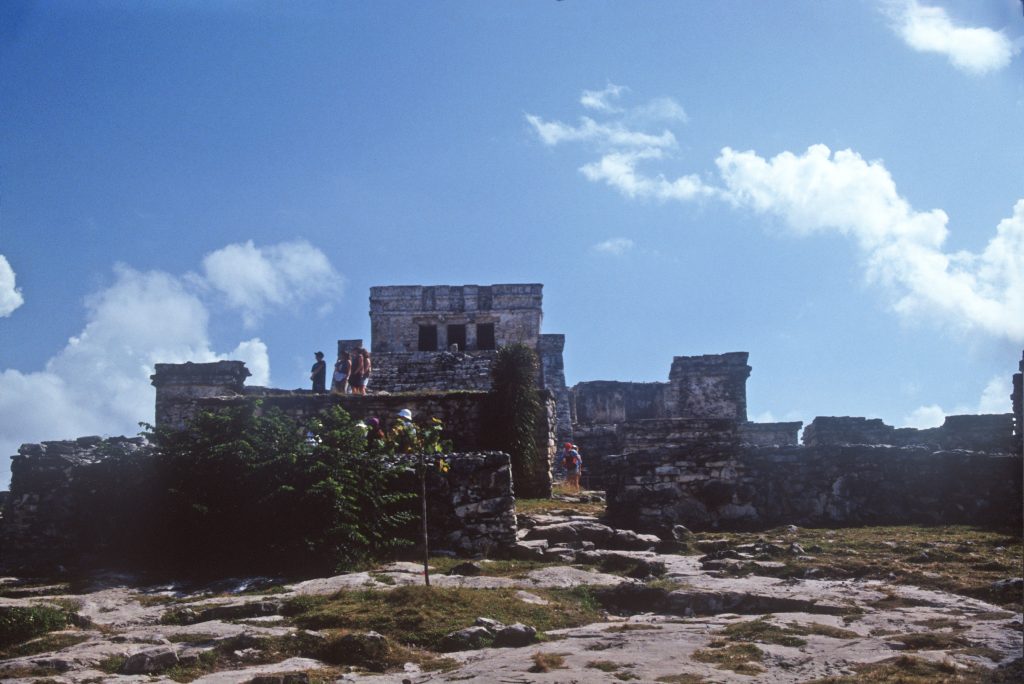
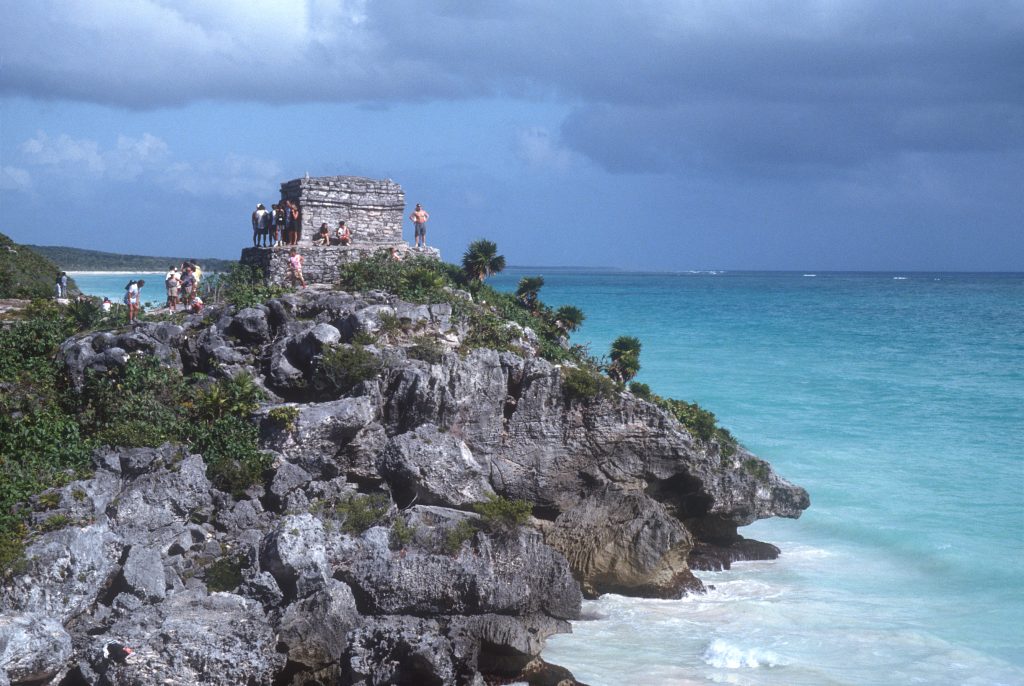
The site’s most iconic structure, perched dramatically on the cliff edge, was both a temple and a lighthouse! Mariners arriving along the coast would align their canoes with torches lit through two small windows, guiding them safely through the reef—a subtle marvel of engineering and ritual.
El Castillo stands atop a stepped pyramid platform, its façade adorned with columns and niches. At its height, it was painted red and blue, with stucco masks of gods that faced wind and sun.

Temple of the Frescoes
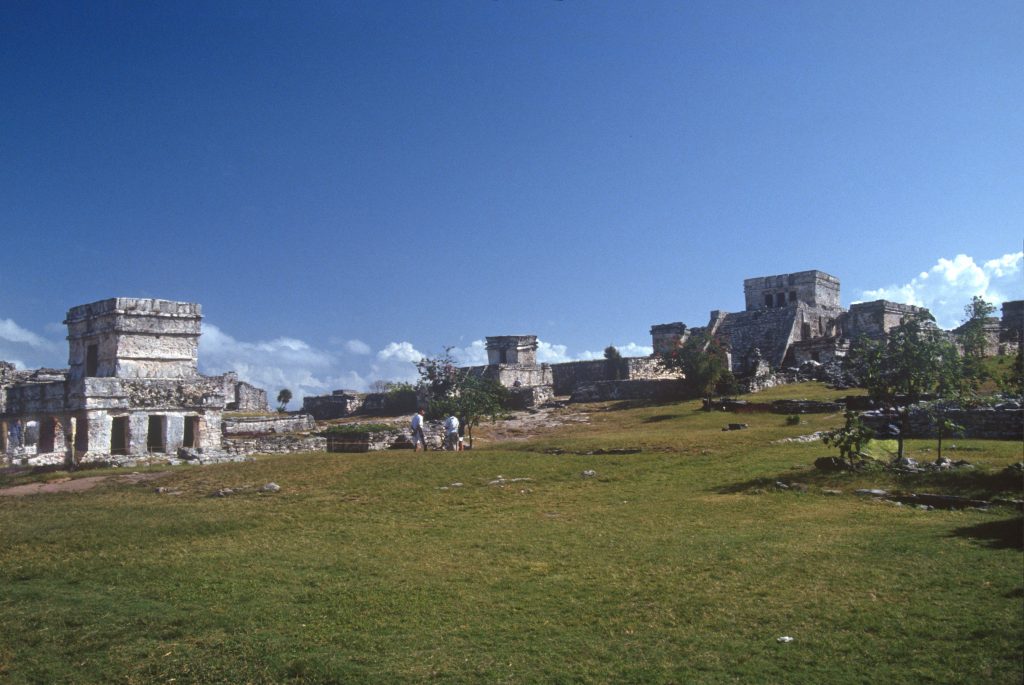
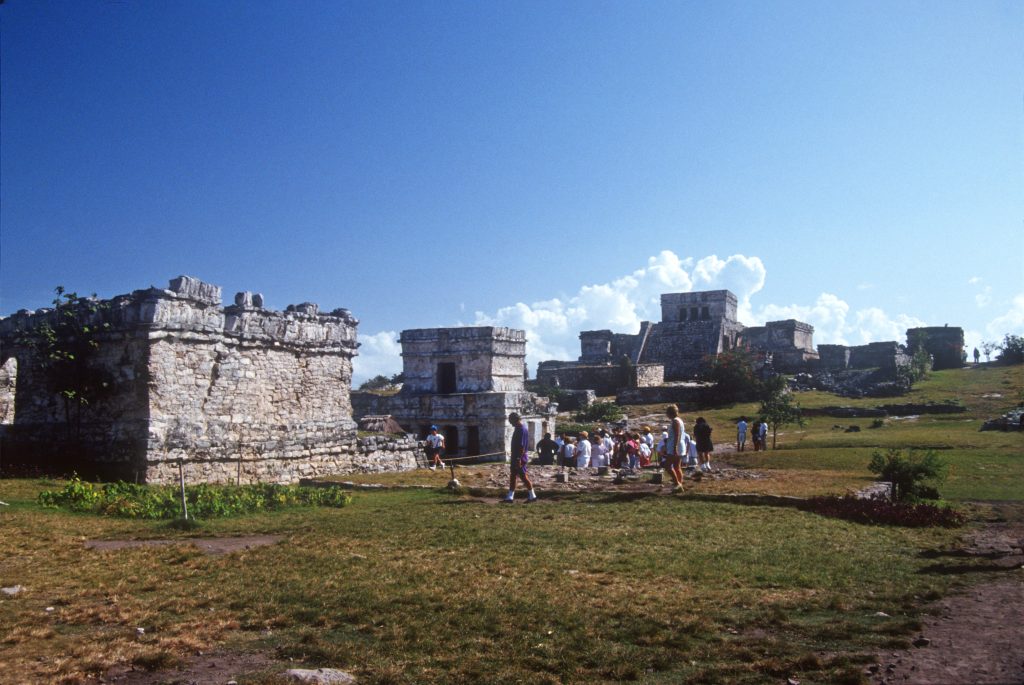
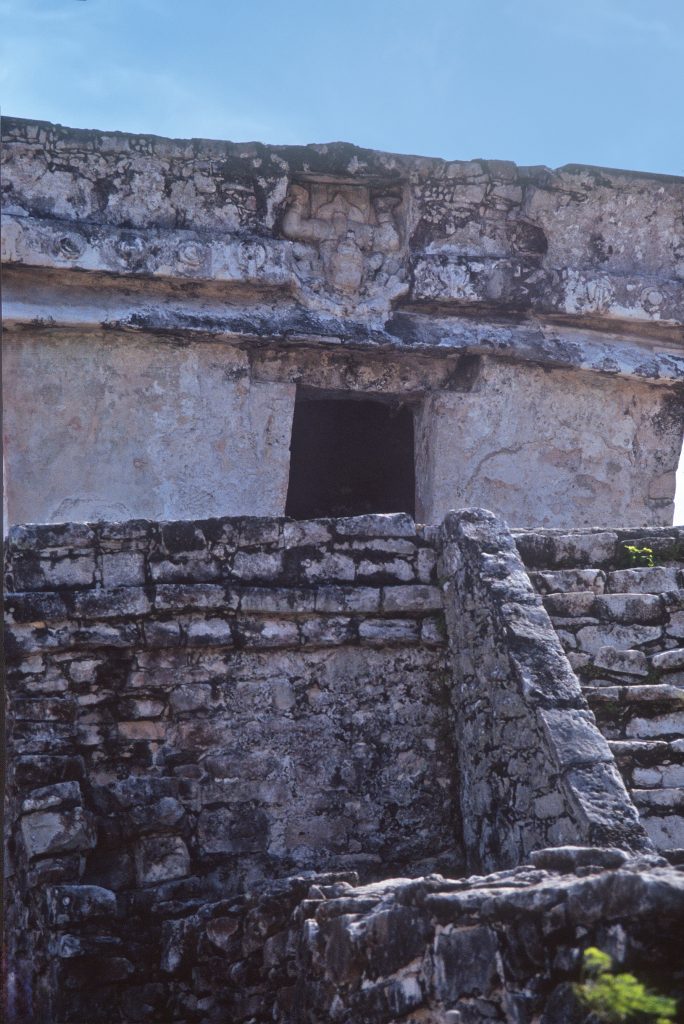
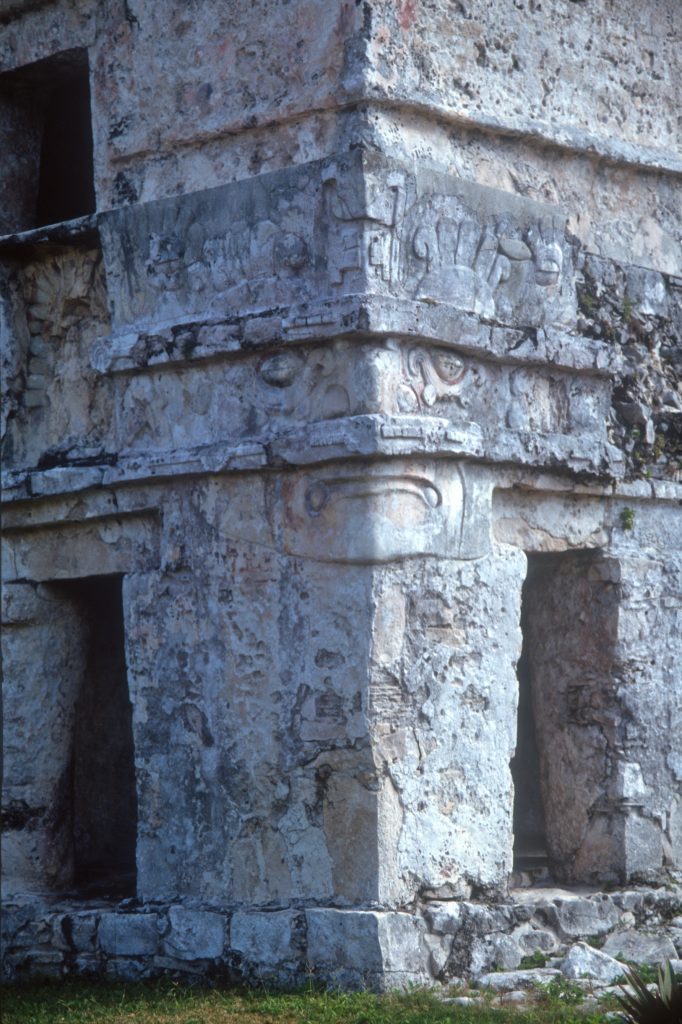
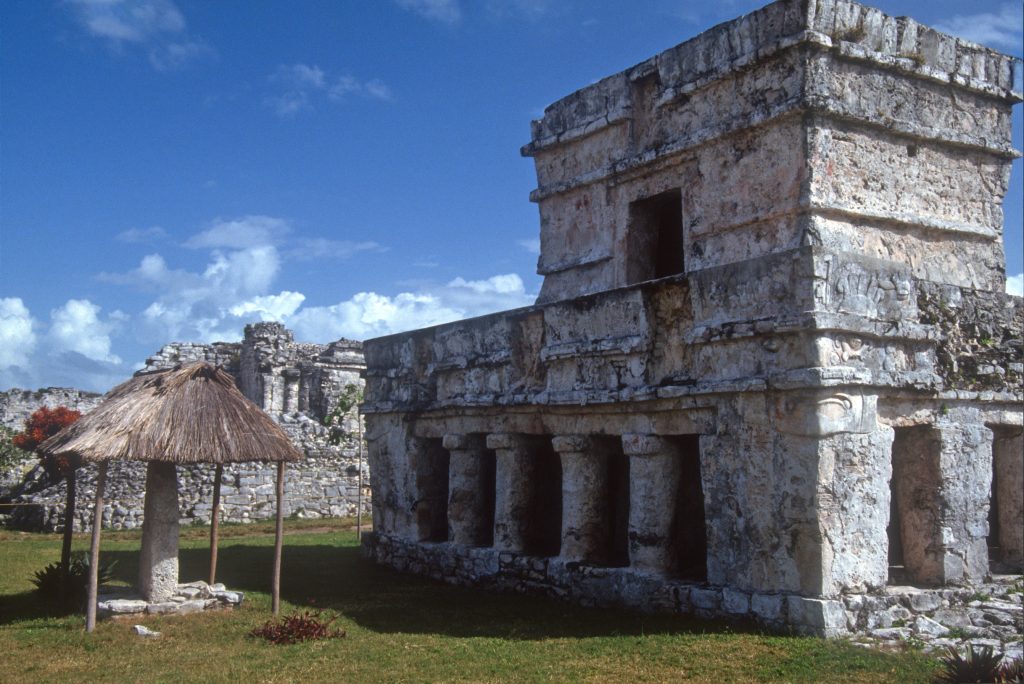
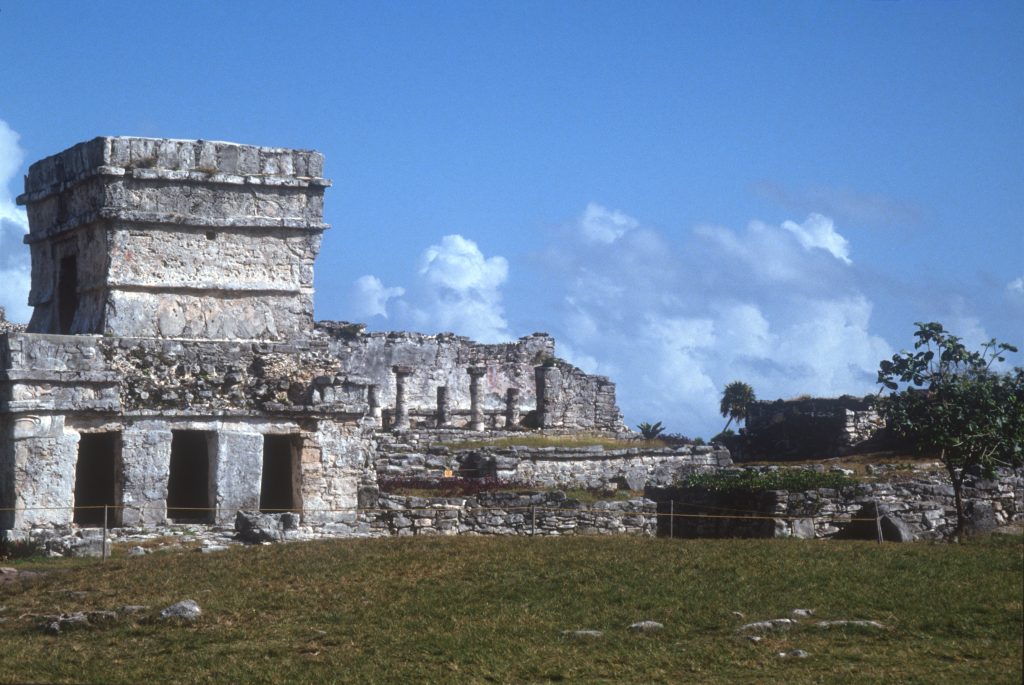
One of the best-preserved buildings, this temple once served as a religious center and observatory. Inside are faded but still-visible murals depicting Maya deities and cosmological scenes, including the rain god Chaac and the Descending God—a winged figure associated with bees, Venus, and rebirth.
The outer walls are decorated with stucco figures, and small altars inside once held offerings. Stand inside this temple, and you can feel the layered conversations between earth, sky, and underworld.
The Temple of the Frescoes is believed to have served astronomical and calendrical purposes alongside its religious function. Here’s what suggests that:

- Alignment with the Sun: Certain windows and niches in the temple appear to align with the sun’s movement during the solstices and equinoxes, marking key points in the Maya solar calendar.
- Interior Murals and Cosmology: The murals inside—depicting gods, celestial symbols, and spiritual cycles—may have functioned as visual representations of cosmic order, linking ritual to the rhythm of the sky.
- Descender God Imagery: The prominent figure of the Descending God, often associated with the planet Venus, appears here—hinting at Venus tracking, which was deeply important in Maya ritual and agriculture.
House of the Halach Uinic
This residential structure was likely the home of Tulum’s high priest or ruler. Its modest size reflects a city that was intimate and ceremonial, rather than imperial.
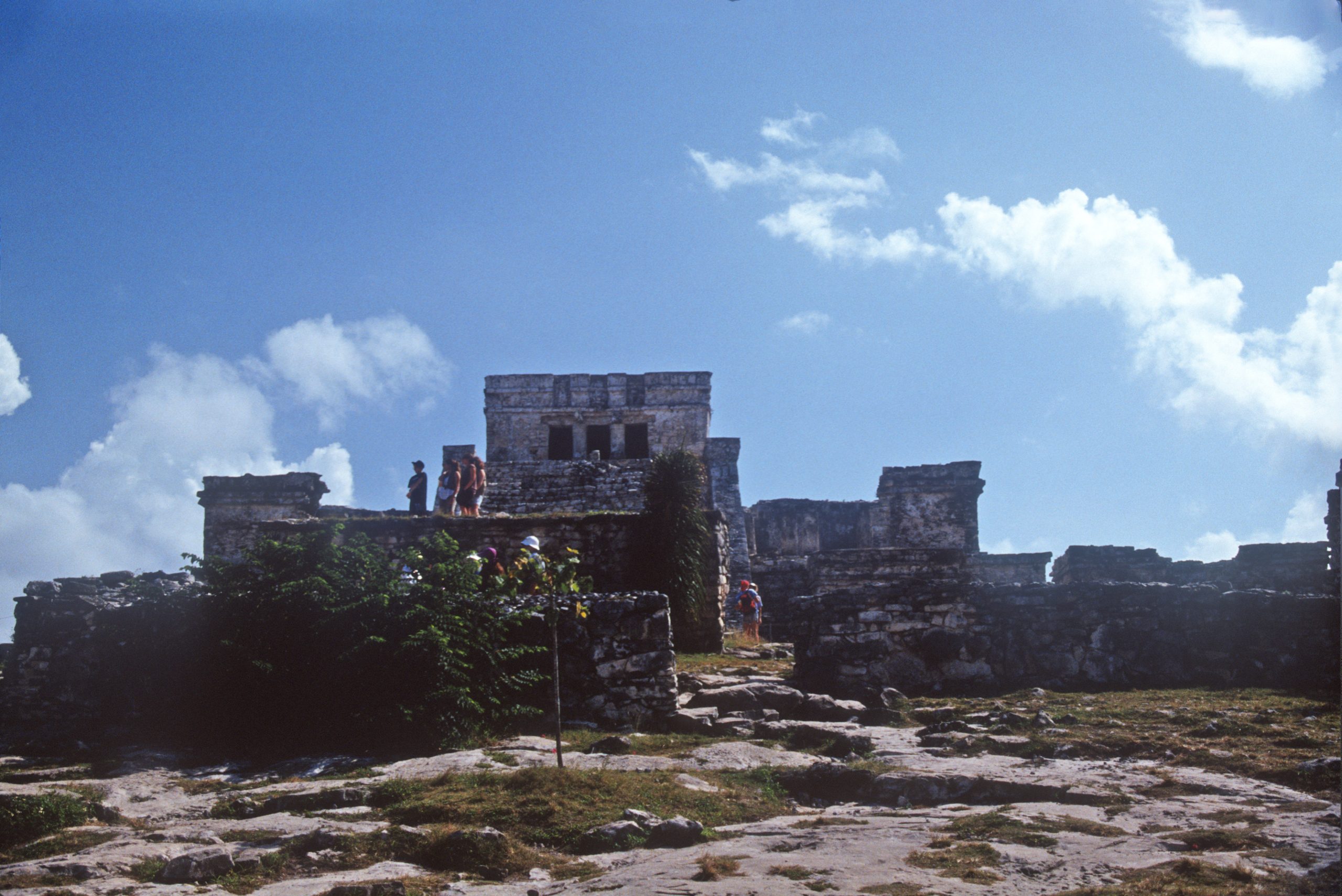
Wall and Gates
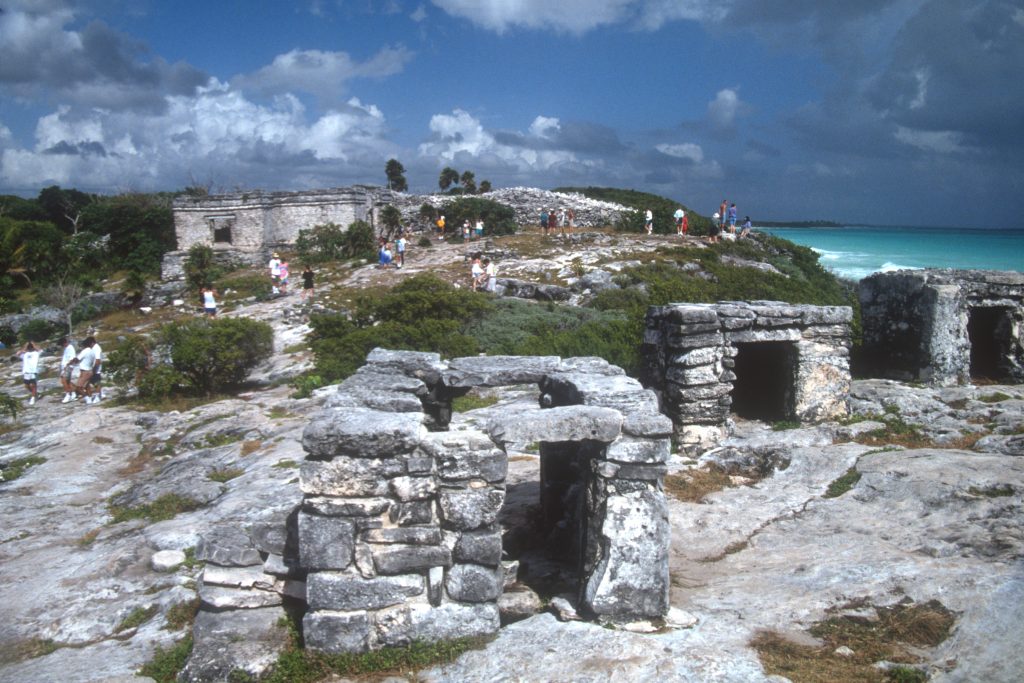
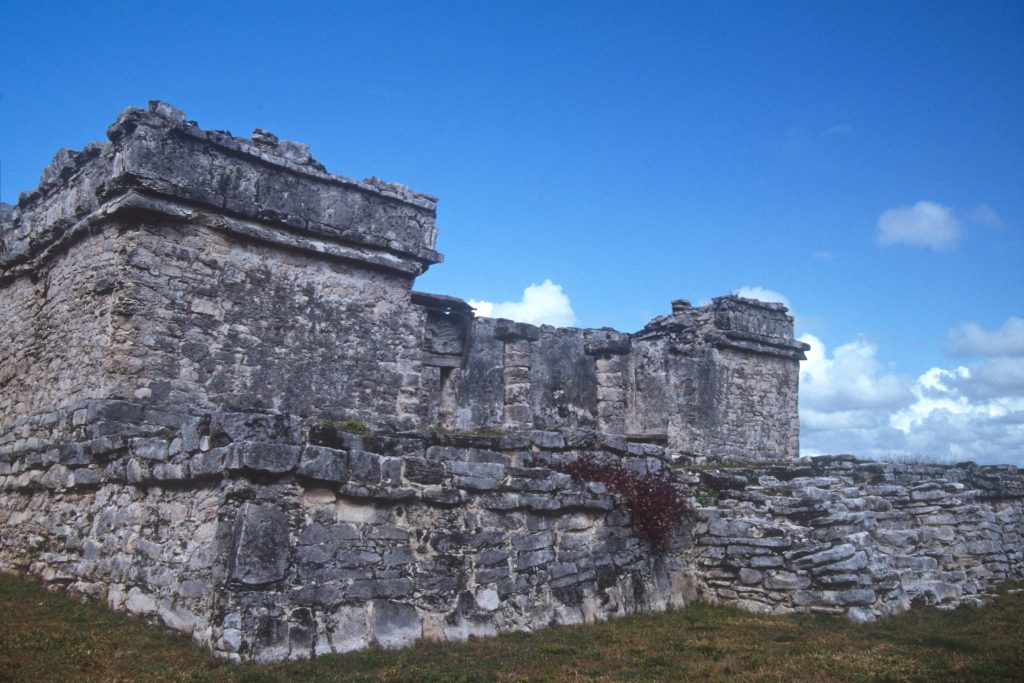
The enclosing wall, with its watchtowers and narrow gateways, still defines the site. Entering through its narrow passageways evokes the sense of crossing into sacred space—of passing from the known world into a realm of ritual, politics, and elemental worship.
The Beach Below
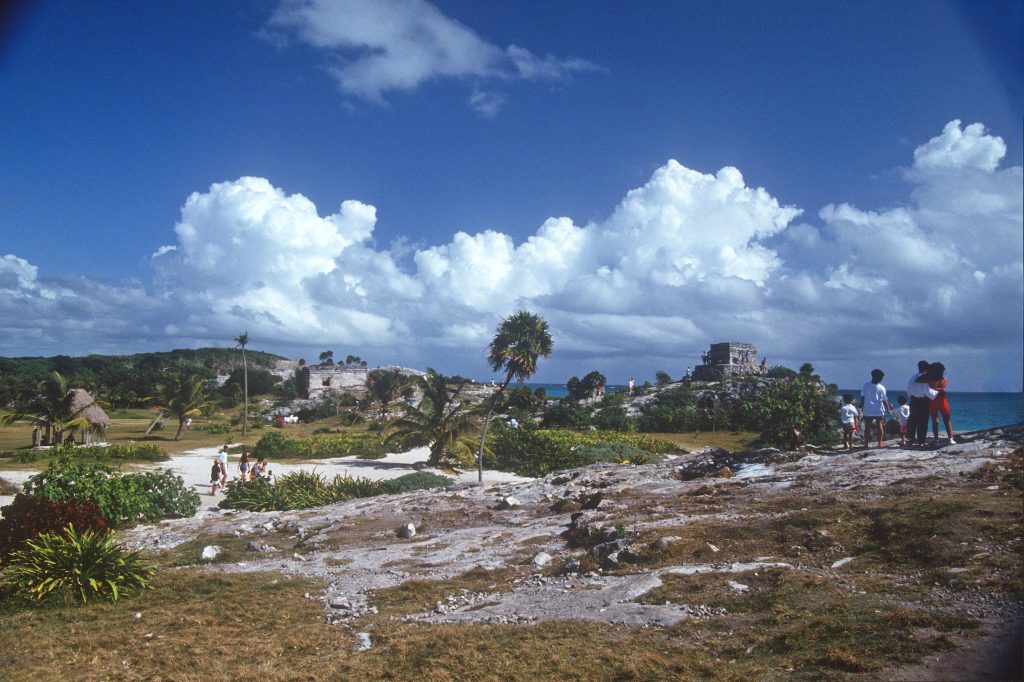
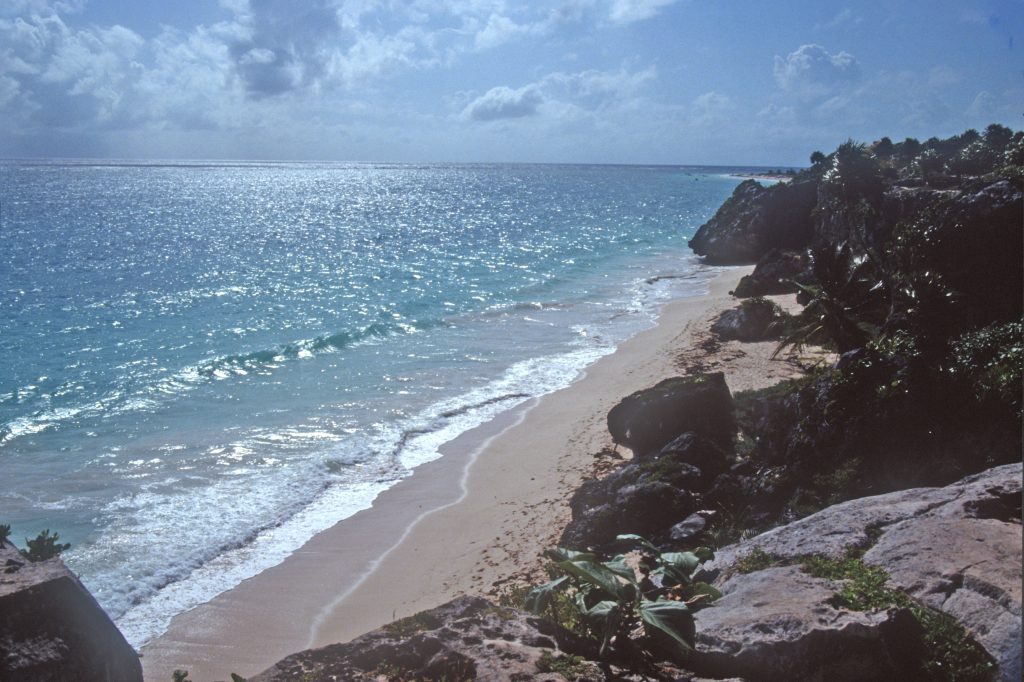
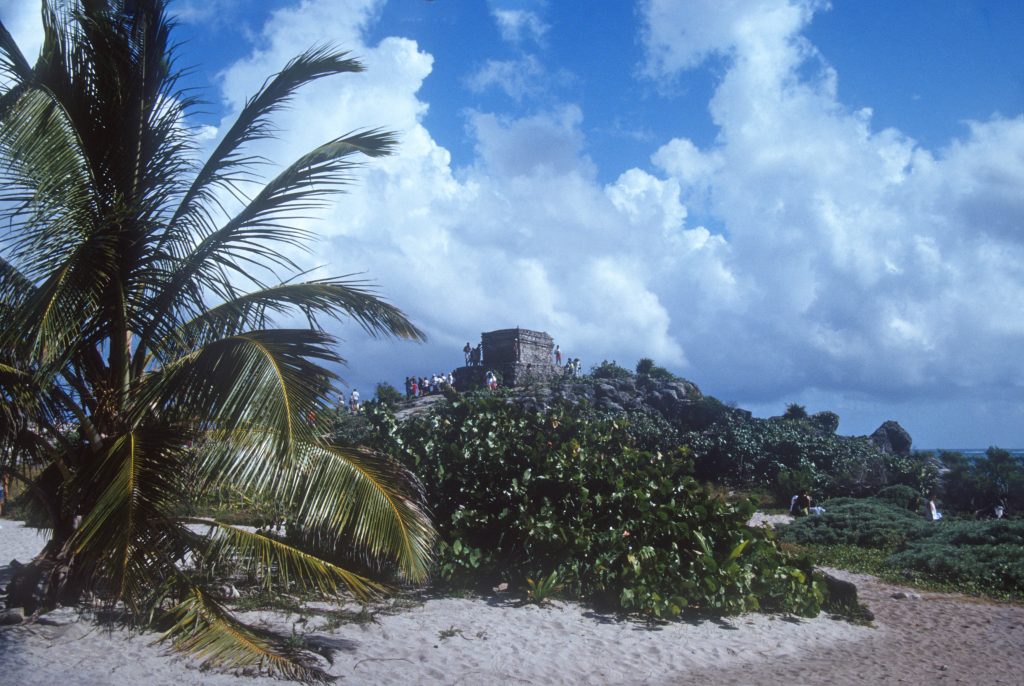
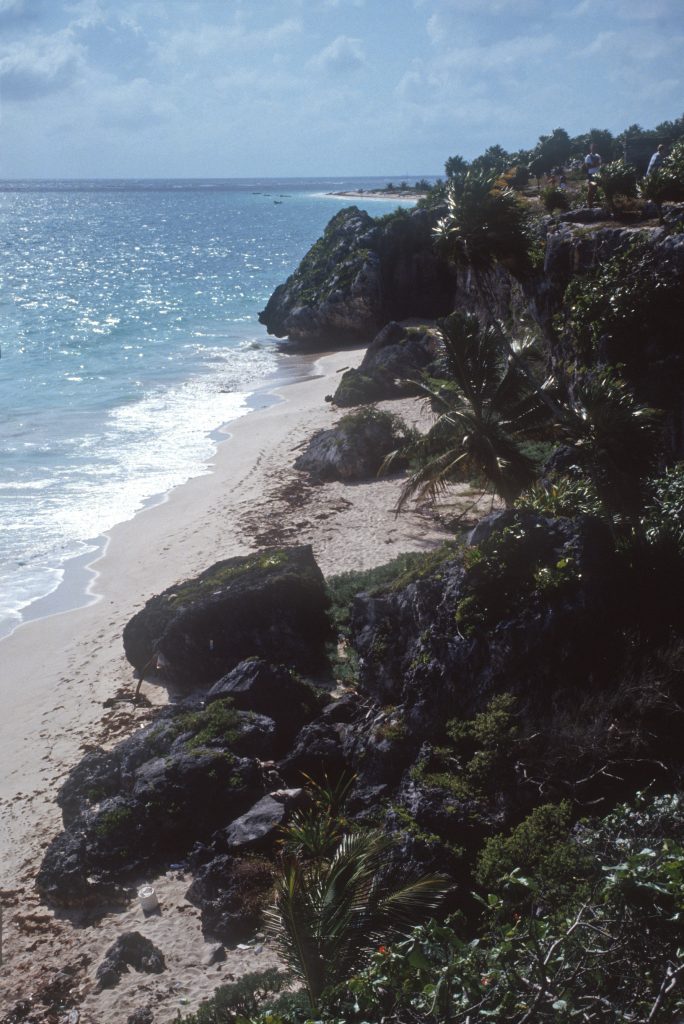
At the base of the cliffs, a small protected cove gives modern visitors access to one of Mexico’s most iconic beaches—where ancient stones overlook modern swimmers. It’s a living juxtaposition: the sacred and the sunbathers, coexisting at the foot of time.
Tulum Today: Ruin and Renewal
Today, the ruins are part of Parque Nacional Tulum, protected under federal law and visited by thousands each year. While the town of Tulum has grown into a bustling eco-chic destination filled with boutique hotels and wellness retreats, the ancient site remains a place of reverence.
Guided tours are widely available, but even a solo visit offers clarity. Come early in the morning, before the crowds. Let the sea breeze fill the silence. Watch the light shift across stone. And remember: these walls stood before European empires ever knew the Americas. They have outlived priests and pirates, storms and empire.
Tulum’s gift is not just its beauty—it is its endurance.
Where to Stay in Tulum, Mexico
Tulum’s accommodations range from beachfront resorts to budget-friendly hostels and boutique properties, with most lodging concentrated in three main areas: the Hotel Zone along the Caribbean coast, the town center, and the quieter Tankah Cove to the south. The Hotel Zone offers direct beach access and tends toward higher prices, while the town center provides walkable access to restaurants and shops at more moderate rates. For a quieter experience with character, consider staying in Tankah Cove or the Akumal area just north of Tulum, where smaller hotels and guesthouses sit closer to nature reserves and cenotes.
Budget travelers will find numerous hostels and small guesthouses in the town center and along the beach road, many offering dormitory beds and private rooms at reasonable rates. These properties often have communal areas and local knowledge about cenotes, archaeological sites, and beaches that larger resorts may not emphasize. Staying in town also means you can walk to mercados, local restaurants, and pharmacies rather than relying entirely on hotel dining.
Mid-range hotels in Tulum typically offer rooms with air conditioning, private bathrooms, and either pools or beach access, positioned between the highway and the coast. These properties often include breakfast or easy access to nearby cafes, and many are family-owned, which means staff can give detailed advice about the area’s history and current conditions. A location within walking distance of the town’s central street simplifies getting around without a rental car.
For those seeking beachfront proximity without resort-level pricing, several smaller hotels and cabanas operate directly on the sand or in the dunes north and south of the main Hotel Zone. These tend to be quieter than the large resort clusters and may include hammocks, shaded areas, and simpler amenities that still provide comfort. Book accommodations in advance during high season (December through March) and consider staying slightly inland if you’re flexible, since beachfront rates spike considerably during those months.
Recommended Reading
Fiction
- Aztec by Gary Jennings
An epic historical novel set earlier than Tulum’s peak but saturated with Mesoamerican texture, mythology, and complexity. - The Obsidian Blade by Pete Hautman
A time-travel novel that touches on various periods in Maya history and belief, perfect for younger readers or adults with a taste for speculative fiction. - Time Among the Maya by Ronald Wright
A lyrical and sharply observed travelogue that includes vivid reflections on ruins like Tulum and their cultural continuity.
Non-Fiction
- Incidents of Travel in Yucatán by John Lloyd Stephens and Frederick Catherwood
The classic 19th-century account of early explorations of Maya sites, including Tulum—richly illustrated and foundational in the field. - The Ancient Maya by Robert J. Sharer and Loa P. Traxler
A comprehensive academic yet accessible survey of Maya civilization, from origins to the post-Classic period. - A Forest of Kings by Linda Schele and David Freidel
A brilliant, narrative-driven dive into Maya cosmology, leadership, and sacred history, ideal for contextualizing Tulum’s spiritual design.
Tours to Consider