Where the Wind Writes Its Own Story
Clifden lies at the farthest westward stretch of Ireland’s wild green hand, a small town where sea, stone, and sky meet. You do not stumble upon Clifden by accident; you arrive with purpose, or you arrive transformed. There are fewer places in Europe where the raw pulse of nature is so tangled with history, where ruin and rebirth walk side by side down the same stony lane.
Clifden is the unofficial capital of Connemara, a western realm of bogland and granite, trout streams and storm-blown sheep. But it is also a town born from a colonial dream, scorched by famine, shaped by emigration, and still, defiantly, beautifully alive.
A Town Carved from Wilderness
Clifden is a relatively young town by Irish standards. It was founded in 1812 by John D’Arcy, a Galway landowner who established what had been a remote and sparsely populated corner of the island. D’Arcy envisioned Clifden as a planned town, a commercial and civic hub to bring prosperity to the western edge of his estate.
By the 1830s, the town had become a major port, exporting fish, wool, marble, and livestock. It flourished for a time, until the Great Famine (1845-1852) devastated the region. Clifden, like so many Irish towns, was hollowed out by starvation and emigration. The D’Arcy family’s fortunes collapsed, and their estate was seized and sold.
Yet even through hardship, Clifden remained resilient. It became the terminus of the Galway-Clifden railway line in 1895, and its location on the Atlantic edge drew pioneers and poets alike.
One of the most extraordinary footnotes in its story came in 1919, when aviators John Alcock and Arthur Whitten Brown crash-landed just outside Clifden, completing the first nonstop transatlantic flight. They had taken off from Newfoundland and landed near the Marconi Wireless Station, itself a marvel of modern communication perched on the boggy cliffs.
Local Detail and Sensory Description
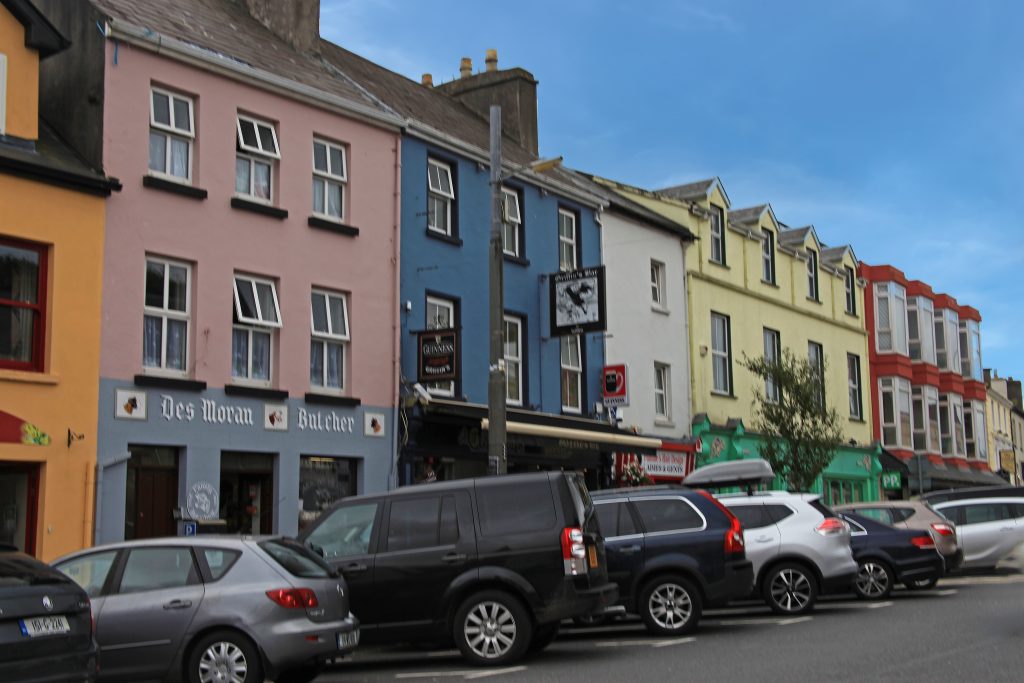
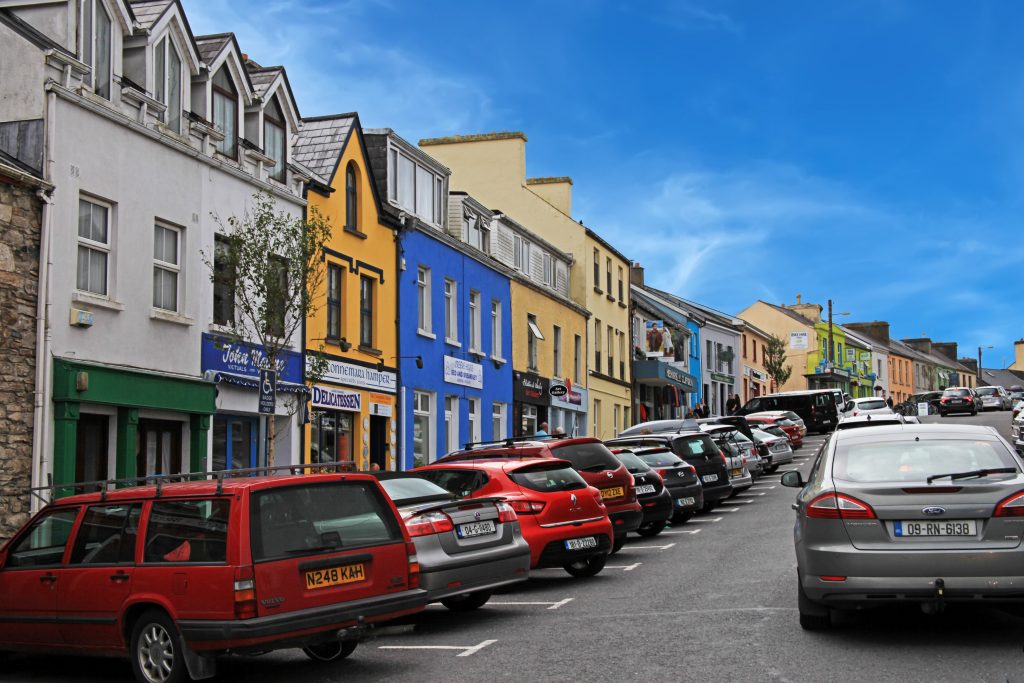
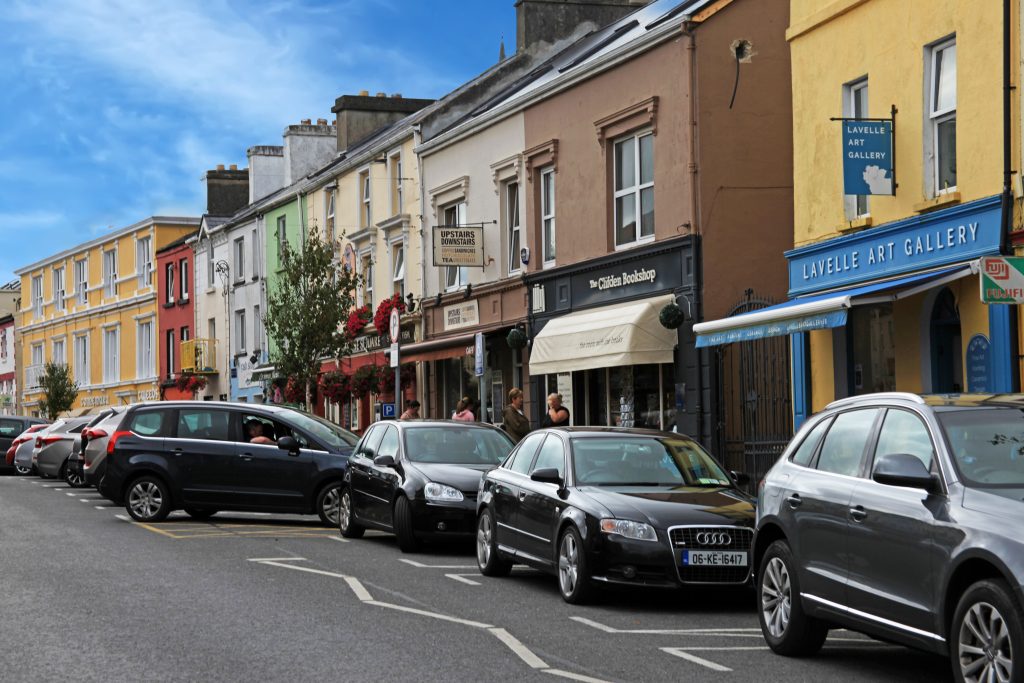
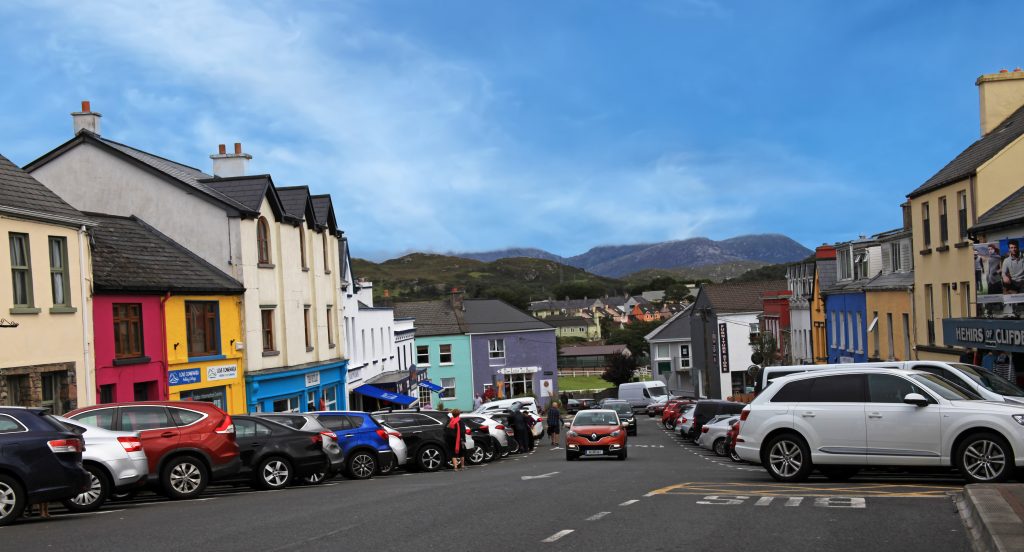
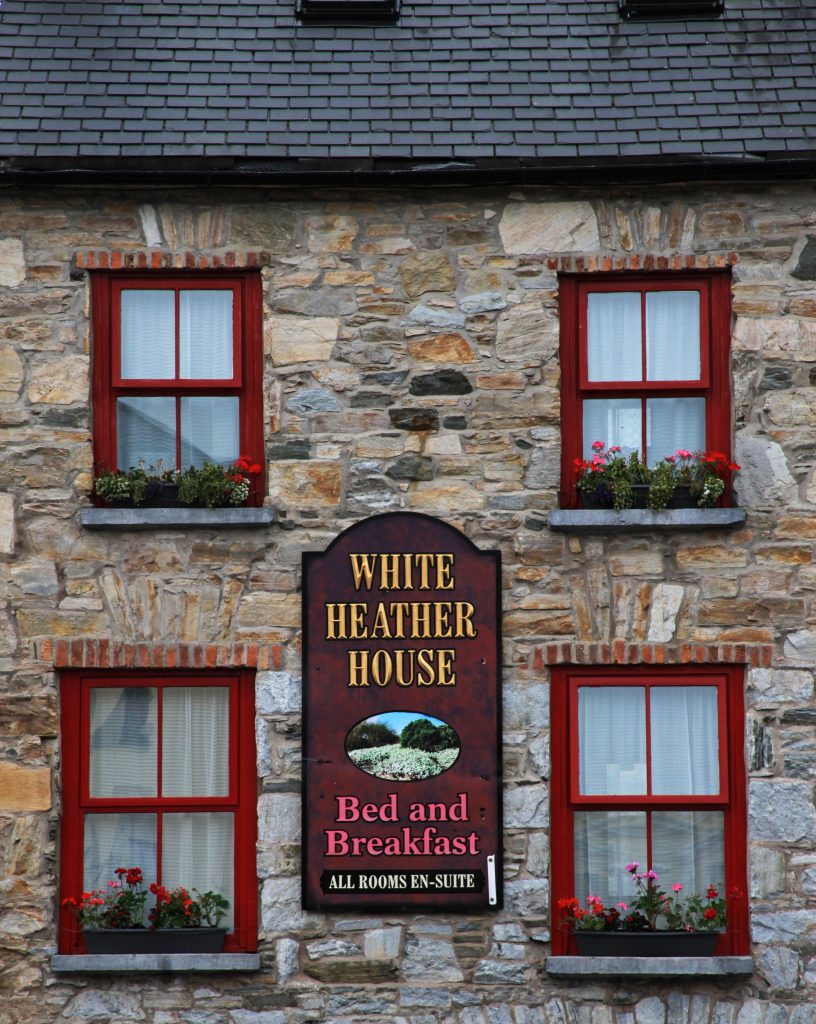
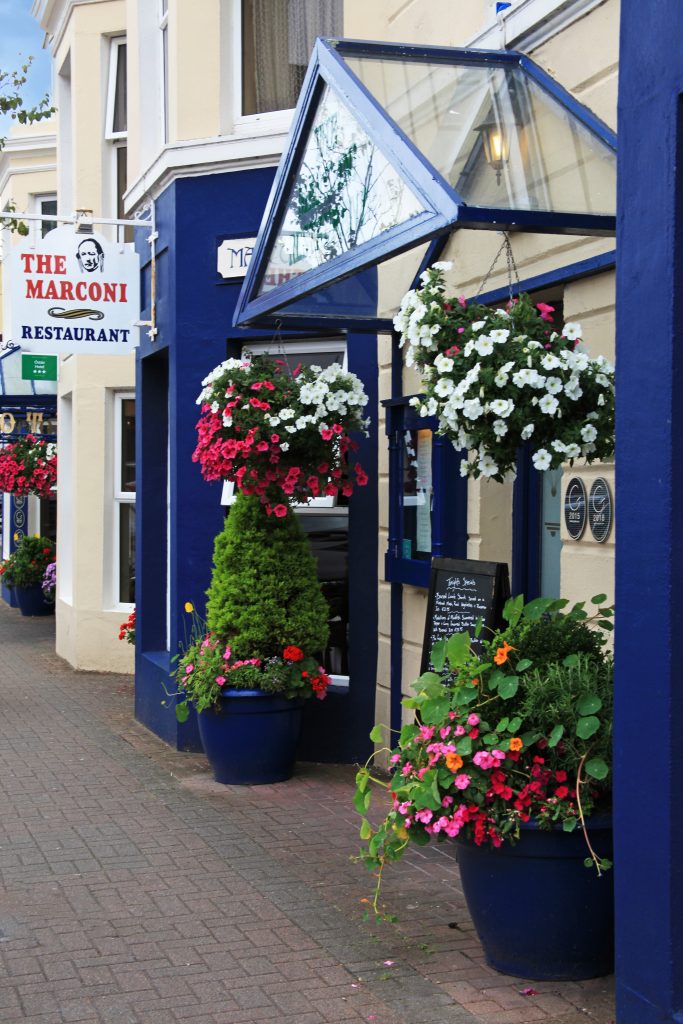
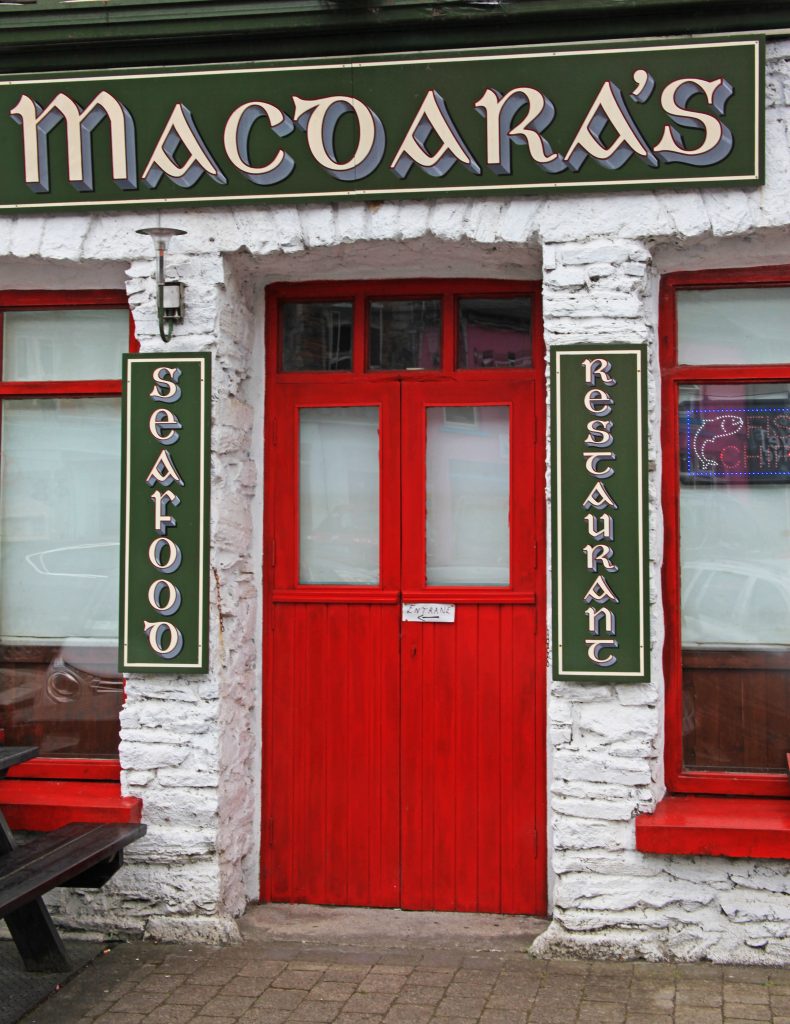
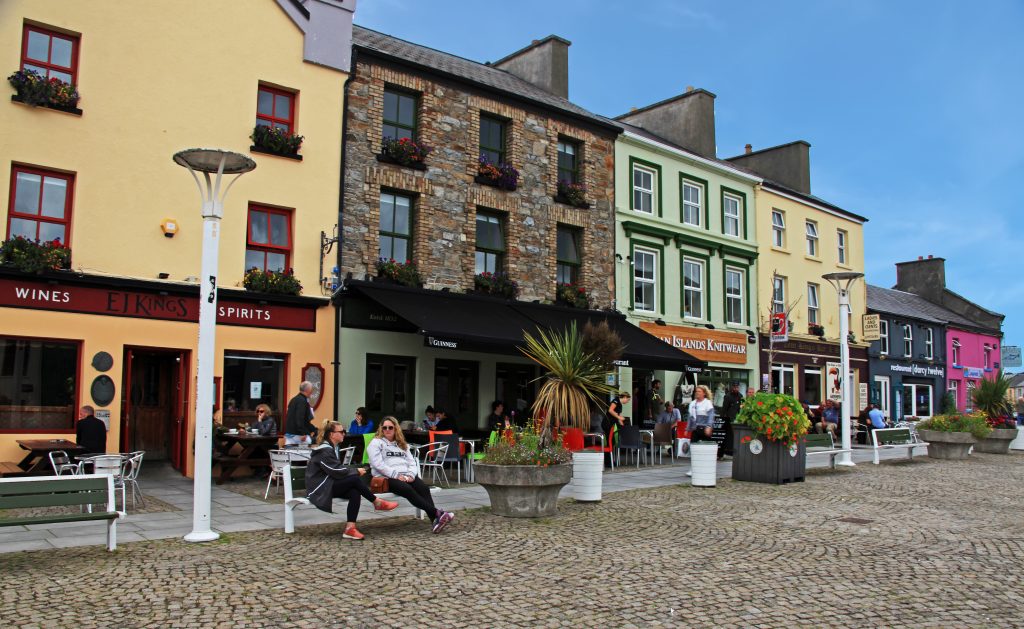
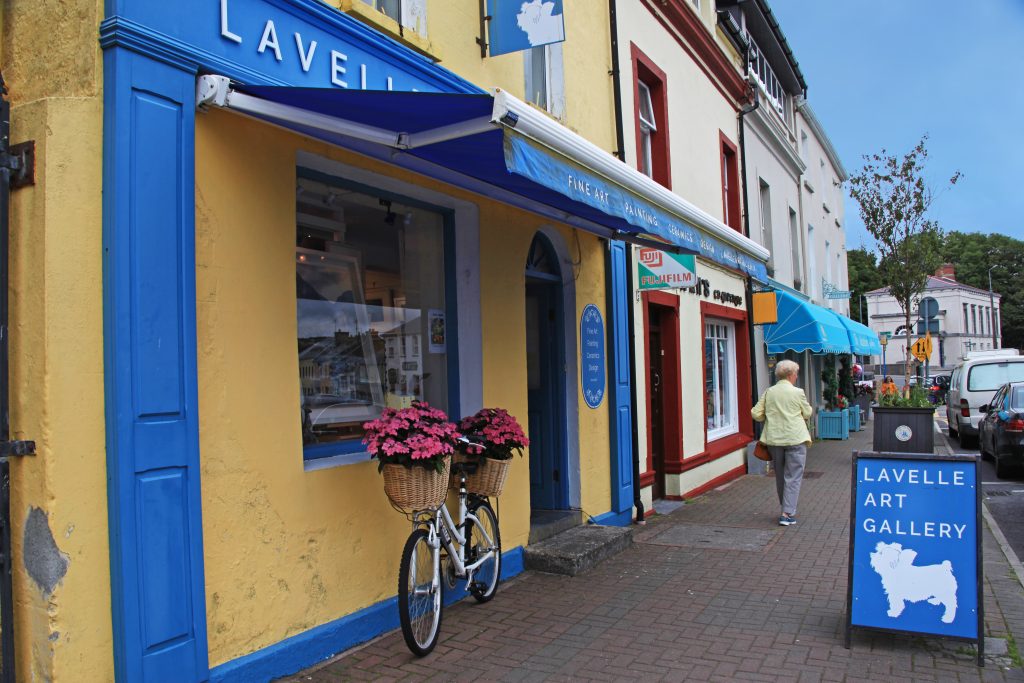
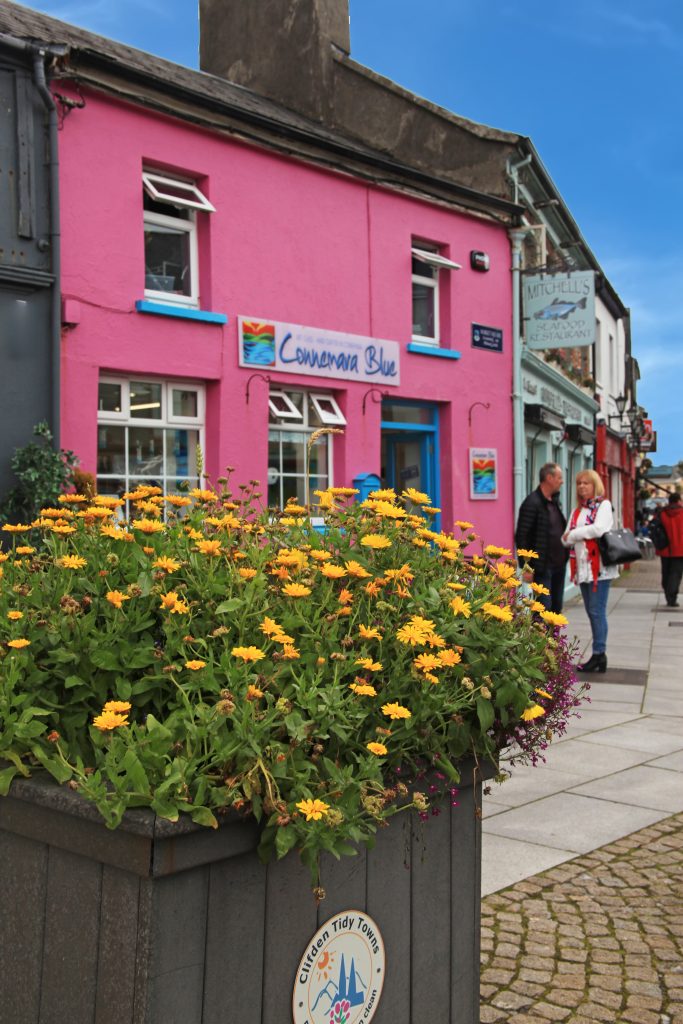
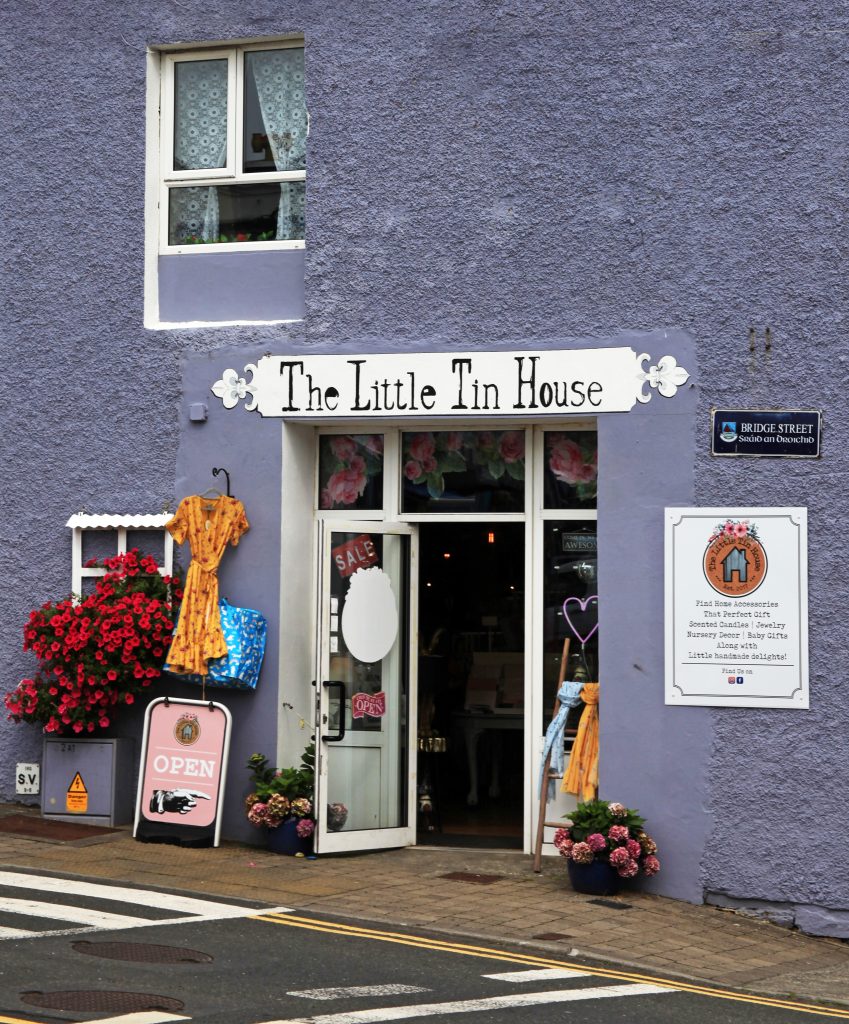
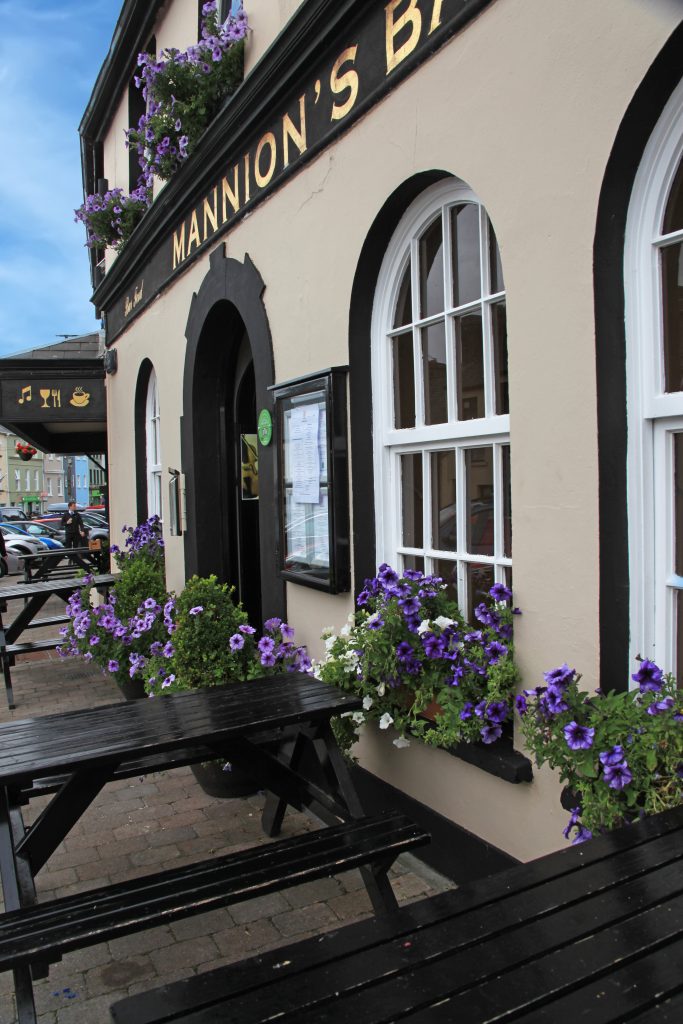
Clifden is the kind of place where every weather arrives in an hour, sunlight grazing the heather, then rain sweeping in sideways off the sea, then a hush of mist so thick it seems to remember things. The town itself is a lively horseshoe of pastel shopfronts, cozy pubs, and Georgian-style houses gathered around a central square. Music spills from doorways, turf smoke drifts from chimneys, and people stop to talk.
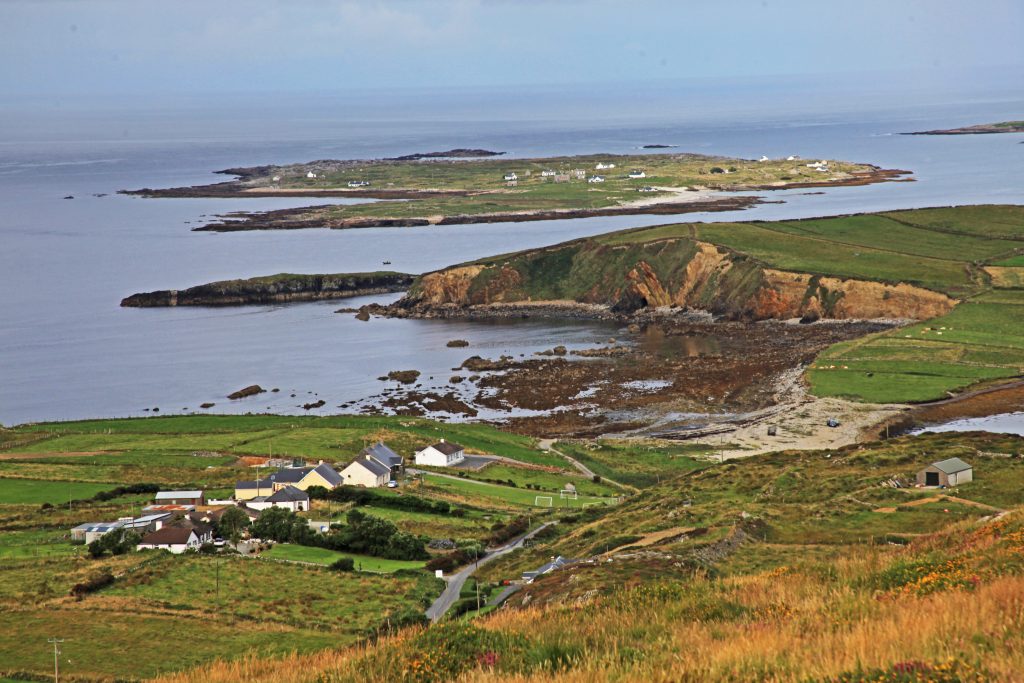
From the town center, the Sky Road loops westward along the cliffside, one of Ireland’s most scenic drives. Here the Atlantic roars below in blue fury, stone walls run like veins through the hills, and abandoned famine cottages still stand like ghosts on the moor.
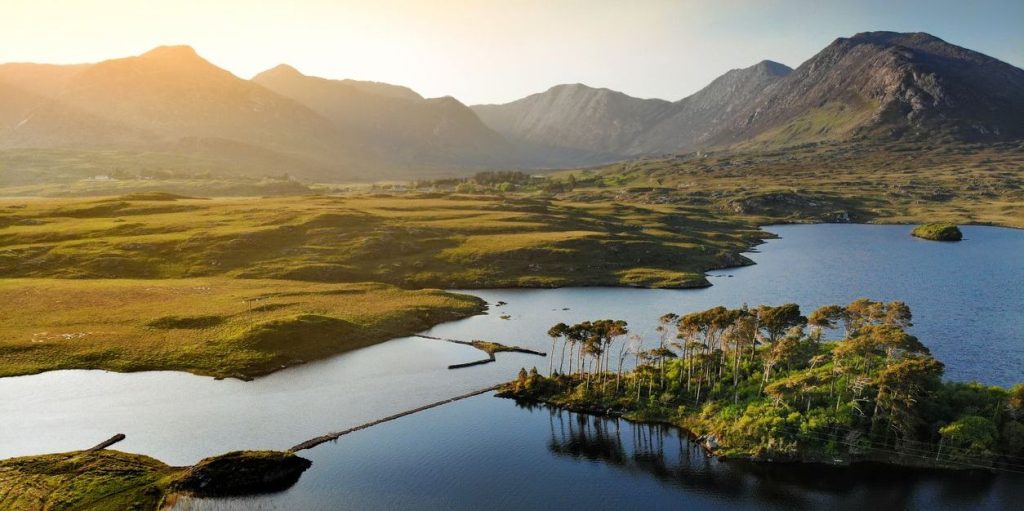
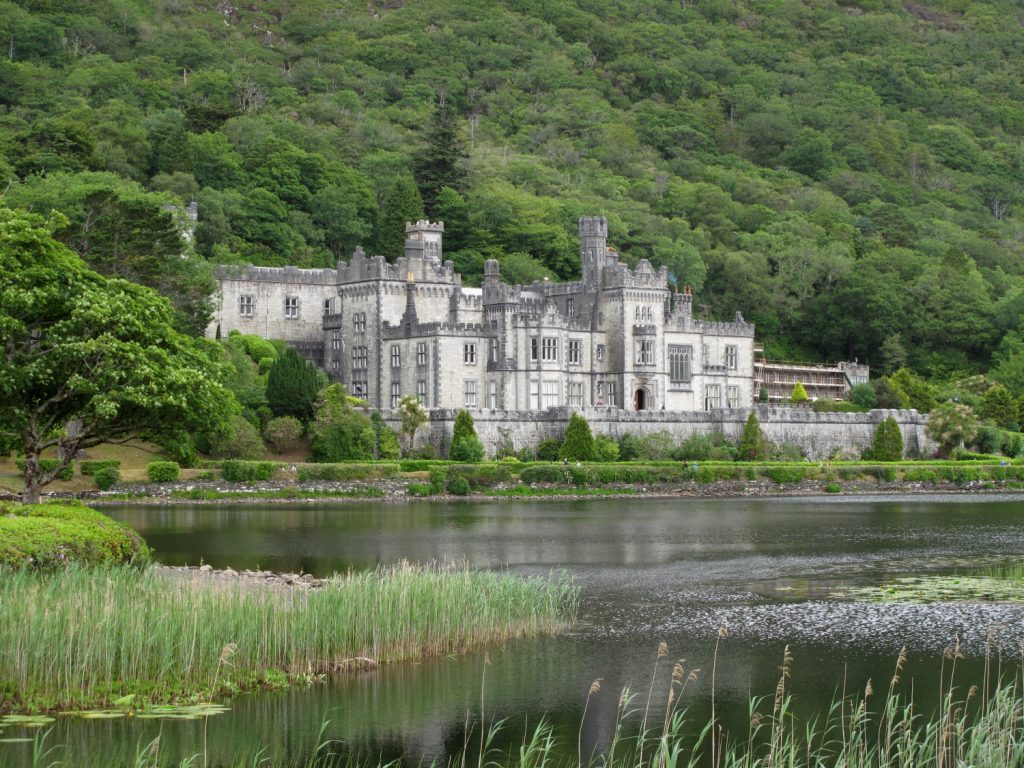
To the north, the Twelve Bens rise in rugged procession, beloved by walkers and climbers. To the east, Kylemore Abbey sits mirrored in its lake, a former private castle turned Benedictine monastery and one of Ireland’s most beautiful historic homes.
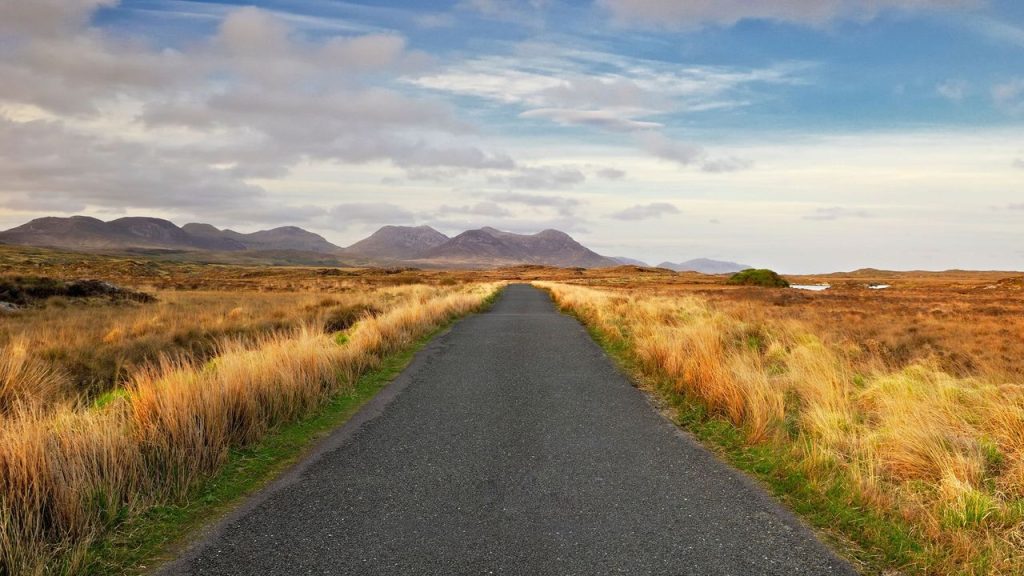
Even the Bog Road, a lonely stretch through rust-colored heather and peatland, tells a story: of hardship, hand-dug turf, and lives made from the land itself.
Clifden Today: Music, Culture, and Connection
Today, Clifden balances the charm of a village with the heartbeat of a cultural hub. Its annual Clifden Arts Festival, founded in 1977, that brings together writers, musicians, painters, and thinkers from across Ireland and beyond. The town is also a stronghold for traditional Irish music, best experienced in a crowded pub with a pint in hand and a fiddle soaring beside the fire.
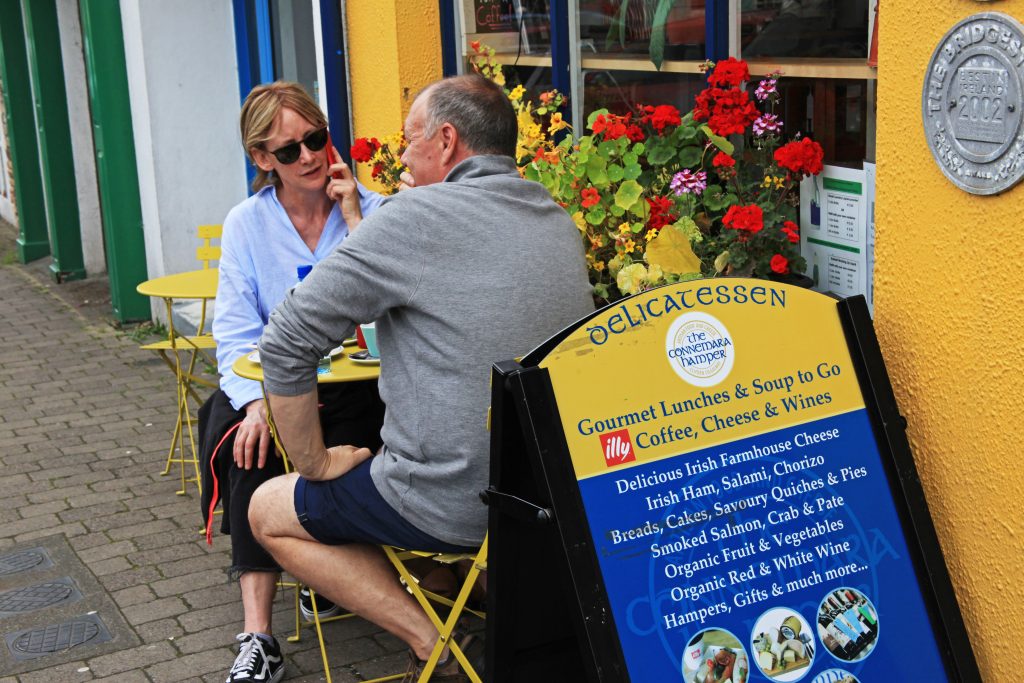
Its markets are filled with Connemara marble, handwoven wool, and sea-scented soaps. Its cafés serve up fresh crab sandwiches and brown bread still warm from the oven. And its landscape remains, as ever, a character in its own right.
Clifden is not a place that shouts its story. It sings it softly, in peat smoke, in ruined stones, in wind off the bay.
Abbeyglen Castle
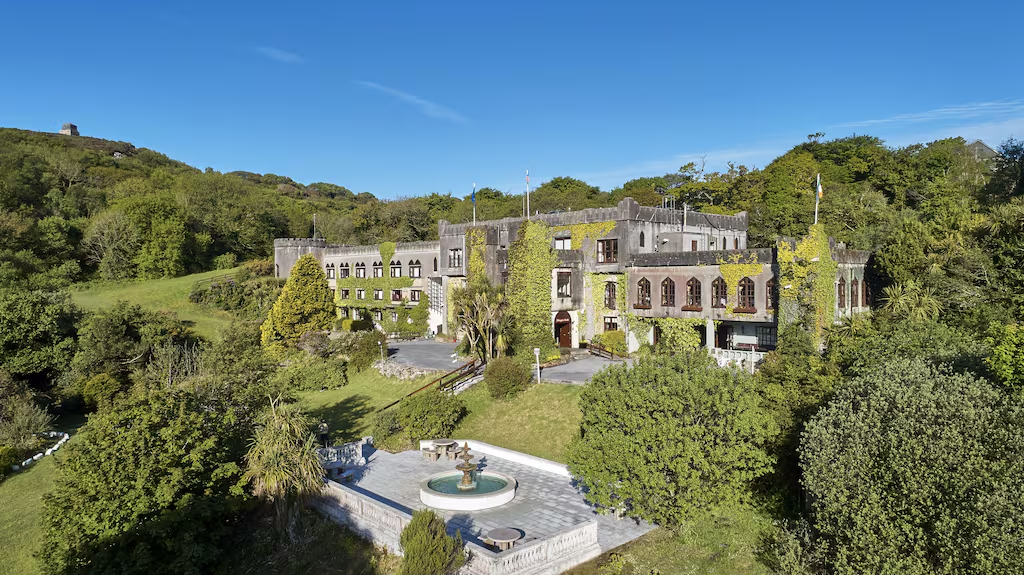
Just above the colorful town of Clifden, tucked into the slope of a Connemara hillside where the Twelve Bens rise in windswept procession, stands Abbeyglen Castle, a turreted stone manor that blends the romance of the past with the warmth of Irish hospitality. Though it looks every inch the medieval stronghold, Abbeyglen was built in the Victorian era, when the west of Ireland was experiencing post-famine recovery, land reforms, and the arrival of railway lines that made even this wild corner of the island newly reachable.
The castle was built in 1852, in the wake of the Great Famine, by the Irish Anglican Church to serve as a home for the aging and destitute, particularly widows. It changed hands several times over the next century, transitioning from institutional use to private ownership, until it was reimagined in the mid-20th century as a boutique hotel, long before the term existed. Today, Abbeyglen Castle is family-run and delightfully idiosyncratic, equal parts elegance and eccentric charm.
Inside, the mood is unmistakably Irish: a glowing peat fire in the drawing room, Waterford crystal chandeliers over the piano bar, and walls lined with ancestral portraits and old letters. Some rooms still boast four-poster beds and clawfoot tubs, while others offer balconies looking down toward Clifden Bay, where the sea flickers silver and blue. Guests gather in the evening for complimentary champagne and stories, often told by the owners themselves, before drifting toward the dining room for local oysters, lamb, and laughter.
Where to Stay in Clifden, Ireland
Clifden’s town center offers the most convenient base for exploring Connemara, with several mid-range hotels and guesthouses within walking distance of restaurants, shops, and the harbor. The Quay House, a converted harbor-master’s residence, provides historic character with modern amenities, while The Set Head and Alcock and Brown Hotel offer comfortable rooms a short walk from the main street. These central properties put you steps from local pubs, the Clifden Arts Festival venue, and easy access to hiking trailheads.
For travelers seeking quieter surroundings with countryside views, guesthouses and small hotels in the hills surrounding Clifden offer good value and a more intimate experience. Properties along the Sky Road or in the valleys to the north tend to be family-run, with owners who can direct you to less-visited walking routes and local history sites. These locations require a car but reward you with space, genuine Irish hospitality, and views across bogland and distant mountains.
Vacation rentals and cottages scattered throughout the Connemara region give you flexibility if you plan to stay several days and explore beyond Clifden itself. Many sit on working farms or in small villages within 20 minutes of town, allowing you to experience rural Irish life while keeping Clifden’s amenities and restaurants accessible for dinner. This option works well if you’re interested in the region’s geology, archaeology, and quiet history rather than nightlife.
Book ahead during the summer season (June through September) and around the Clifden Arts Festival in September, when rooms fill quickly. Off-season visits from October through April bring smaller crowds, lower rates, and a chance to experience the town as locals do, though some guesthouses close for winter. Spring and autumn offer good weather for walking and exploring without the peak-season pressure.
Recommended Reading
Fiction
- The Wild Laughter by Caoilinn Hughes
A darkly comic, lyrical novel set in the west of Ireland, exploring inheritance, faith, and economic despair. - Galway Bay by Mary Pat Kelly
A sweeping historical novel that follows a family from famine-era Connemara to the Irish diaspora in America. - Round Ireland with a Fridge by Tony Hawks
A delightfully absurd and touching travel memoir that includes reflections on the west coast’s remote charm.
Non-Fiction
- Connemara: Listening to the Wind by Tim Robinson
A masterwork of literary geography, blending folklore, topography, and history with poetic reverence for the land. - The Great Hunger: Ireland 1845-1849 by Cecil Woodham-Smith
A definitive, harrowing account of the Irish Famine and its devastating impact on towns like Clifden. - The Story of the Irish Race by Seumas MacManus
A sweeping cultural history that places Clifden and the west within the larger arc of Irish identity. - Alcock and Brown: The True Story of the First Non-Stop Transatlantic Flight by Brendan Lynch
A vivid retelling of the 1919 flight that crash-landed in Clifden’s misty bogland and changed the world.
Tours to Consider: