
They once echoed with the hiss of steam engines, the bustle of travelers, and the clipped commands of stationmasters. Today, these cathedrals of transportation — once the crown jewels of their cities — have been lovingly revived as opulent hotels. Step through their arched doors, and you’ll still feel the hum of history beneath the hum of modern hospitality. Welcome to the world where timetables have given way to turndown service — where historic train stations now offer you a plush pillow instead of a platform.
We applaud these enterprising visionaries who saw the value in saving these incredible institutions and making them havens for travelers still.
Station Recovery
The train station, in its golden age from the late 19th to early 20th century, was more than mere infrastructure. These were civic statements — often styled in Beaux-Arts grandeur or Romanesque heft — built to embody the promise of progress. Architects filled their lobbies with barrel-vaulted ceilings, gleaming marble, stained glass, and murals that whispered of industrial might and cosmopolitan dreams.
But with the mid-century rise of the automobile and the airplane, these transportation hubs saw their ridership decline — and their marble halls go quiet. What remained, however, was architecture too majestic to demolish, and too sentimental to forget.
Enter adaptive reuse: the artful act of breathing new life into old bones. These six historic stations are living proof that preservation doesn’t have to be precious — it can be pleasurable.
Hop On for An Experience
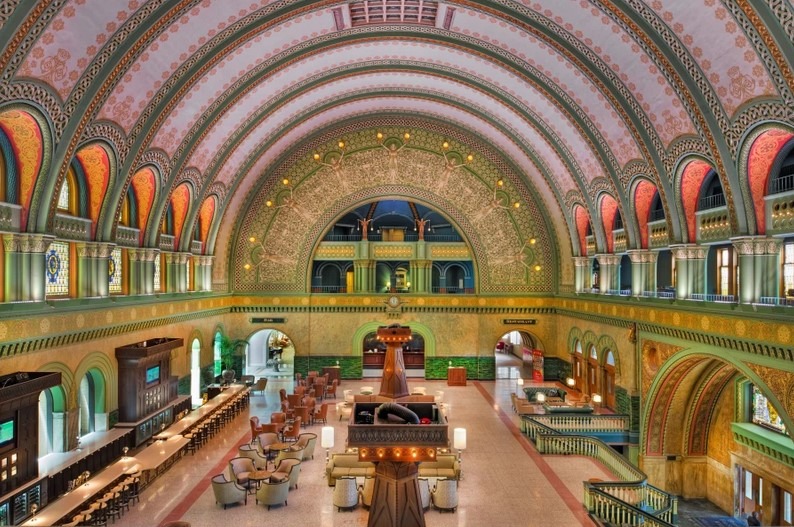
St. Louis Union Station Hotel — St. Louis, Missouri (Curio Collection by Hilton)
Once the largest train station in the world, this 1894 architectural marvel wears its legacy on its sleeve. Walk into the Grand Hall, and your eyes will lift — inevitably — to the 65-foot-high barrel-vaulted ceiling, swirling with art nouveau mosaics. A 70-foot marble bar now stands where weary travelers once queued. And don’t miss the Tiffany stained-glass window of the “maidens of the American rail,” classical goddesses in repose — a tribute to New York, St. Louis, and San Francisco. The modern hotel offers rooms even inside its original clock tower, and the Grand Hall glows each night in a light show that transforms the station into a kaleidoscope of storybook fantasy.
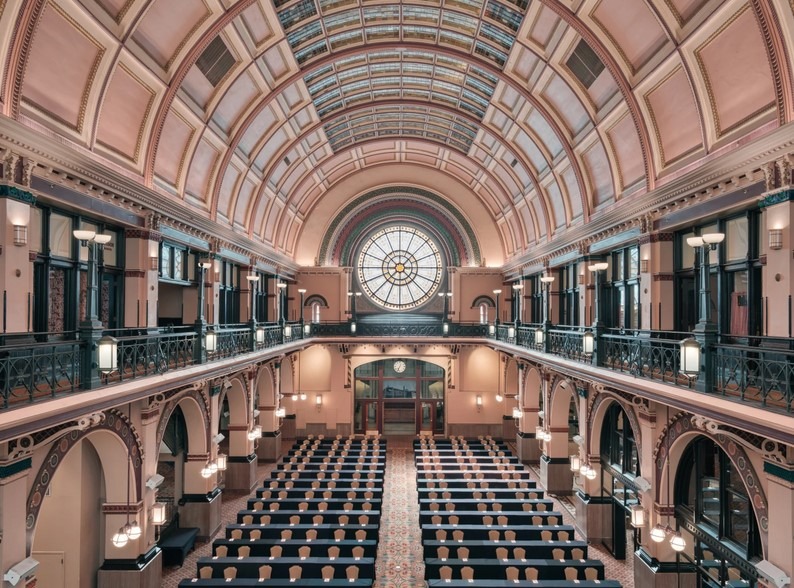
Crowne Plaza Indianapolis Downtown Union Station — Indianapolis, Indiana (Crowne Plaza)
Here’s your chance to sleep in a Pullman car — without leaving the station. The 1913 brick-and-stone Union Station, with its Gothic cathedral-inspired windows and National Register status, now houses a hotel where 13 historic railcars serve as guest rooms. The sleeping quarters retain their narrow windows and romantic vintage allure, but with modern conveniences tucked inside. It’s nostalgia meets comfort, and the sense of departure still lingers — even when you’re standing still.
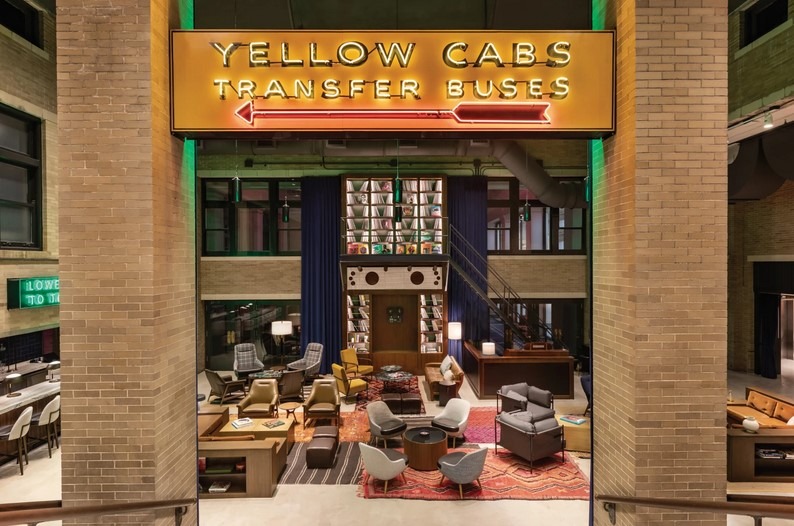
The Central Station Memphis — Memphis, Tennessee (Curio Collection by Hilton)
Originally built in 1914 and still an active Amtrak stop, this station now sings a different tune — literally. Its mid-century modern reincarnation includes a vinyl record library in the hotel bar, curated with local Memphis musicians. With its neoclassical façade, sweeping columns, and Mississippi River views, the station evokes both the solemnity of old-world travel and the soul of its city. It’s a place where you can toast to B.B. King while sleeping beneath carved cornices.
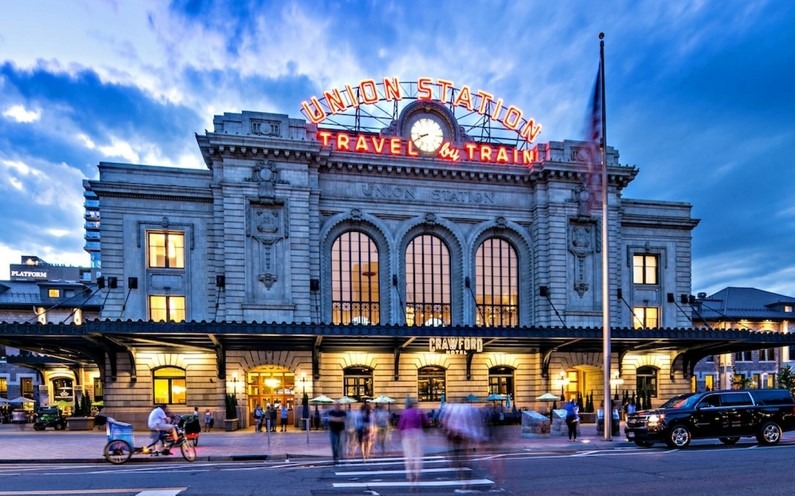
The Crawford Hotel at Denver Union Station — Denver, Colorado
With Beaux-Arts bones and Rocky Mountain soul, the Crawford Hotel inhabits one of America’s most elegant transit hubs. Originally opened in 1881, then rebuilt in 1914 after a fire, this station bustled with 50,000 passengers a day during WWII. Today, you can sip a bourbon where the ticket window once stood, in the wood-paneled Terminal Bar. The Pullman-style rooms nod to vintage sleeper cars with Deco touches and custom art. Amtrak still pulls in, but these days, so do cocktail carts.

Radisson Lackawanna Station Hotel — Scranton, Pennsylvania (Radisson)
Built in 1908 in grand French Renaissance style, this station was once the pride of coal country. After closing in 1970, it was reborn with gleaming marble columns, working fountains, and its signature Tiffany stained-glass ceiling still overhead. The lobby feels like a scene from a Gilded Age opera, with gray and gold hues that would have made Edith Wharton swoon. And right outside? Scranton’s beloved trolley museum and excursion trains — a playground for rail romantics.
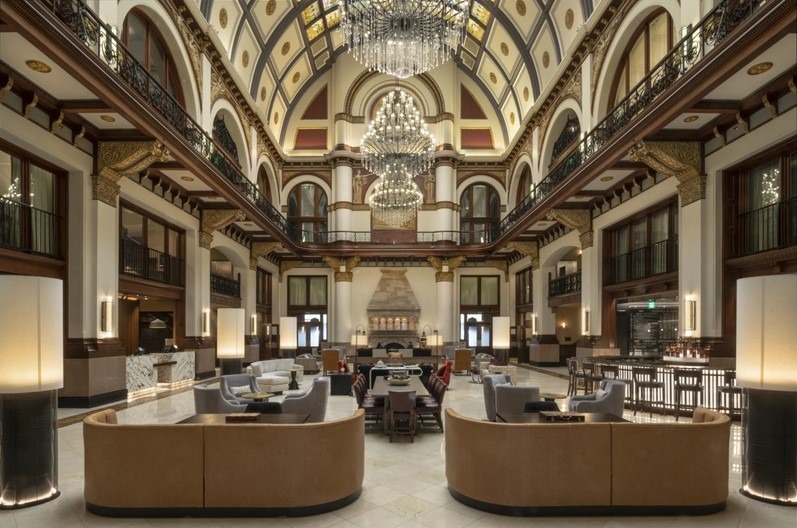
Union Station Hotel Nashville Yards — Nashville, Tennessee (Marriott’s Autograph Collection) If Music City ever needed a temple, it found one in this 1900 Romanesque Revival station. With its castle-like turrets, 65-foot-stained glass ceiling, and nightly live music in the marble-and-mahogany lobby, the station is both stately and spirited. The hotel serves as a living memory to Nashville’s rail era — while inviting you to relax to the tune of a jazz quartet. Perhaps, in the most poetic sense, it’s still keeping time. (Featured photo above)
These restorations go far beyond mere aesthetics. They are part of a broader movement to preserve the architectural icons of America’s industrial past — by giving them purpose in the present. Adaptive reuse not only salvages craftsmanship impossible to replicate today, but also honors the labor, pride, and civic vision these stations once represented. In repurposing their spaces for leisure rather than logistics, these hotels keep history in motion — inviting us not just to remember, but to stay.
All images are for illustrative purposes only and remain the copyright of their respective owners.
Where to Stay: St. Louis Union Station Hotel, St. Louis, Missouri
The Gateway Arch neighborhood offers boutique and mid-range hotels within walking distance of the Museum of Westward Expansion and the riverfront. The nearby Laclede’s Landing district has converted warehouse spaces into restaurants and galleries, making it an appealing base for exploring downtown St. Louis on foot. Hotels in this area tend to be reasonably priced compared to other major cities, and you’ll find everything from chains to independent properties.
For a more residential feel, the Central West End is home to Washington University and contains tree-lined streets with bed-and-breakfasts and smaller hotels. This neighborhood sits near the Saint Louis Art Museum and the Missouri History Museum, both free to enter, and has local cafes and bookstores that attract students and professionals. It’s a quieter choice than downtown but still close enough to reach major attractions in ten to fifteen minutes by car or public transit.
The Clayton area, just west of the city center, caters to business travelers and families seeking upscale comfort. This walkable neighborhood has shopping, dining, and cultural venues alongside its hotels. If you’re visiting for more than a day or two, staying here gives you access to both the city’s historic core and its newer commercial districts without the noise of downtown.
Budget-conscious travelers should consider the South City neighborhoods or areas along the MetroLink light rail system, which connects directly to the airport and downtown attractions. Many smaller hotels and motels cluster near major transit stops, making it easy to explore without renting a car. St. Louis’s public transportation, while not as extensive as some larger cities, is affordable and functional for reaching the train station and other landmarks you’ll want to visit.
