
This is the last of my series on Victorian London, the setting for most of my Tommy Jones Mysteries. Murder on the Pneumatic Railway is the fourth book, and starts with the dead body of a postal clerk found in a pneumatic railway car.
When I was at Euston station in London earlier this year, waiting for a train to Inverness, I saw that they were tearing up Eversholt Street nearby. Curious, I went to look into the trench, hoping to see they’d dug deep. They hadn’t. They were laying some utility pipes just a foot or two below the surface.

What was I hoping to see? Some evidence of the old, defunct pneumatic railway line that ran underground from the General Post Office near St. Paul’s Cathedral to Euston Station.
The Pneumatic Railway
During the Victorian era, London was rapidly growing. The mail, which was delivered to London homes twice a day and outside the city once a day, was becoming overwhelming.
Efforts had already been made for pilotless trains to carry parcels and letters. One for passengers had been featured at Crystal Palace.

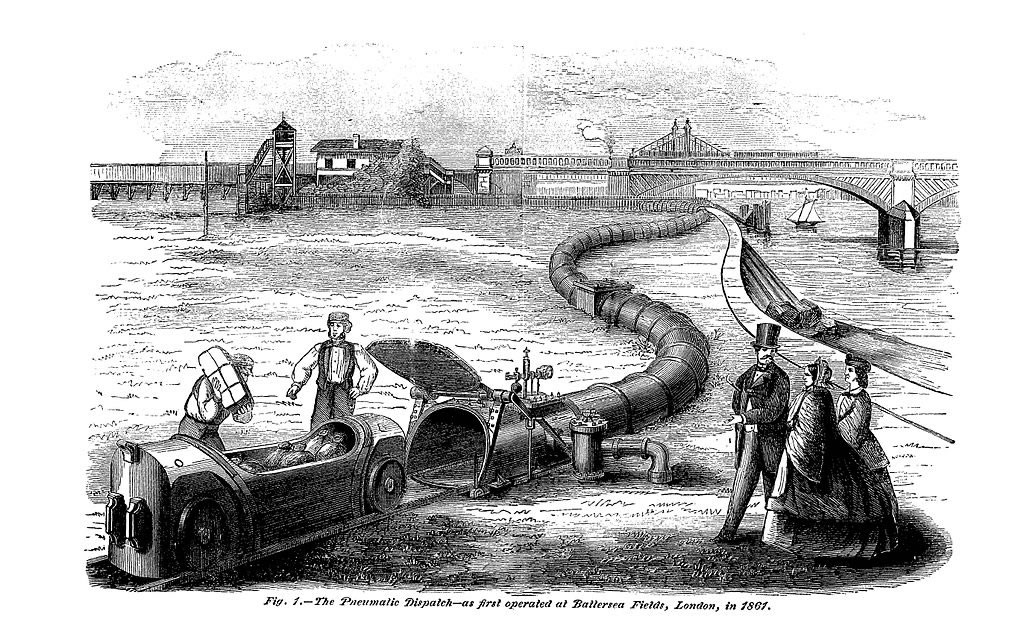
Another had been exhibited at Battersea, where people could see how it worked. Large fans at each of the ends of a large tube propelled and pulled wheeled cars loaded with packages back and forth.
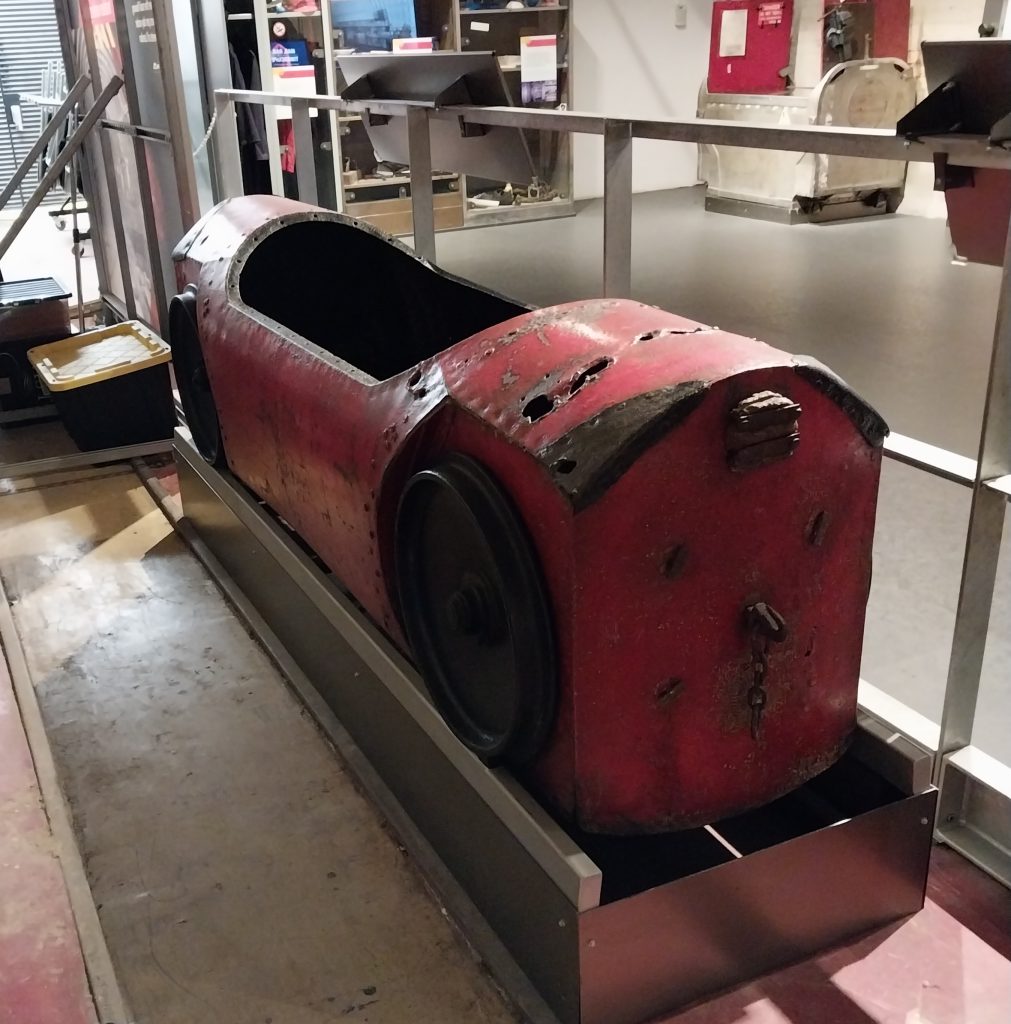
The Postal Museum in London has the last remaining pneumatic mail car, unearthed in 1930.
How does a pneumatic railway work?
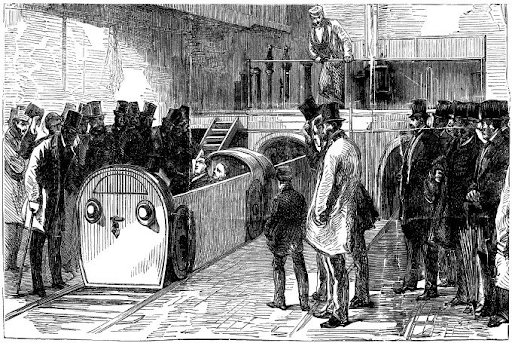
Large fans at each end of a large tube propelled and pulled these wheeled cars on rails back and forth. The fans create a vacuum, and controls were operated at either end. The system was powered by steam engine. In my novel, not only is there a dead body in the car, but later a character is trapped in the tube. The sound must have been incredible.
That’s why it’s odd that the original investors in the London Pneumatic Dispatch Railway project insisted on riding in the car, something the manufacturers were not prepared for. But these were the money guys, so what could you do? Luckily, no one was hurt!
You might recognize pneumatic technology, or have seen it in operation. Drive-up banks use them to deliver papers and cash to customers’ cars. Not many of these are left, but those that are work perfectly well.
I was delighted to see a pneumatic system at Roasting Plant Coffee at London Bridge on my most recent trip. It used a fan system to bring coffee beans out of a tub, into a roaster, then directly to the baristas across the shop at the bar.

The pneumatic railway for mail between the GPO and Euston Station only operated for eleven years, closing down in 1874 because it just didn’t seem to save much time. Mail and packages had to be transported downstairs to the cars, then removed at the other end. Although the original reason for building it had been the crowding on the streets above, it didn’t save enough time to be worth the effort of using it.
Postman’s Park
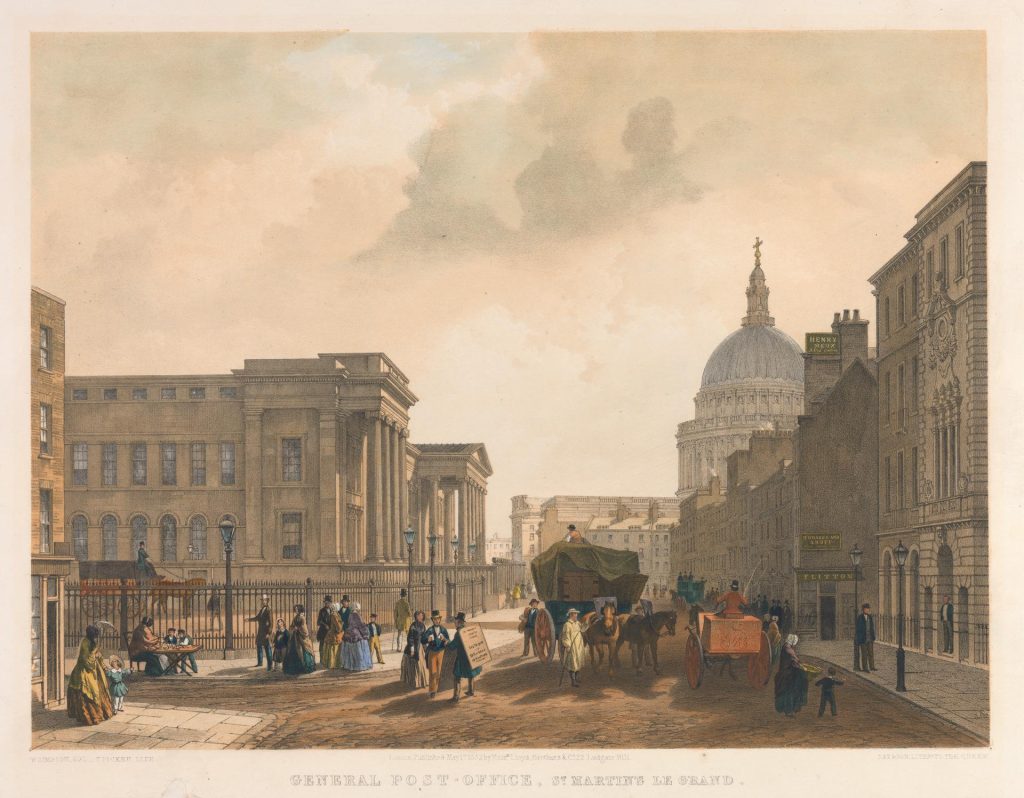
The General Post Office in St.-Martin-le-Grand was where all of London’s mail was sorted. The building was huge. It’s on the left in this picture, and you can see how close it was to St. Paul’s Cathedral.
Although the GPO is no longer there, nearby is Postman’s Park, which dates from 1880. Postal workers from the General Post Office used to hang out there on breaks, since it was one of the few green spaces in the City of London.
It’s often missed by tourists, but the park features a memorial to everyday heroes, some of whom worked for the post office. It was created in 1900 by the artist George Friedrich Watts as the Memorial to Heroic Self-Sacrifice. Many of the plaques are Victorian, but there are sometimes modern ones added.
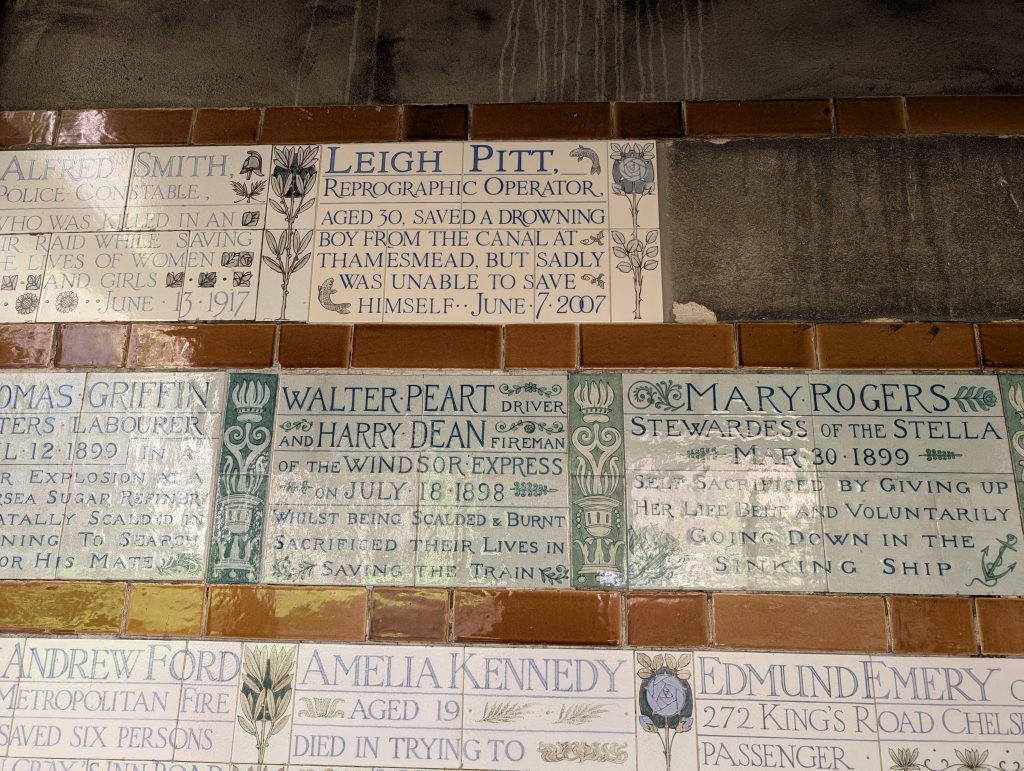
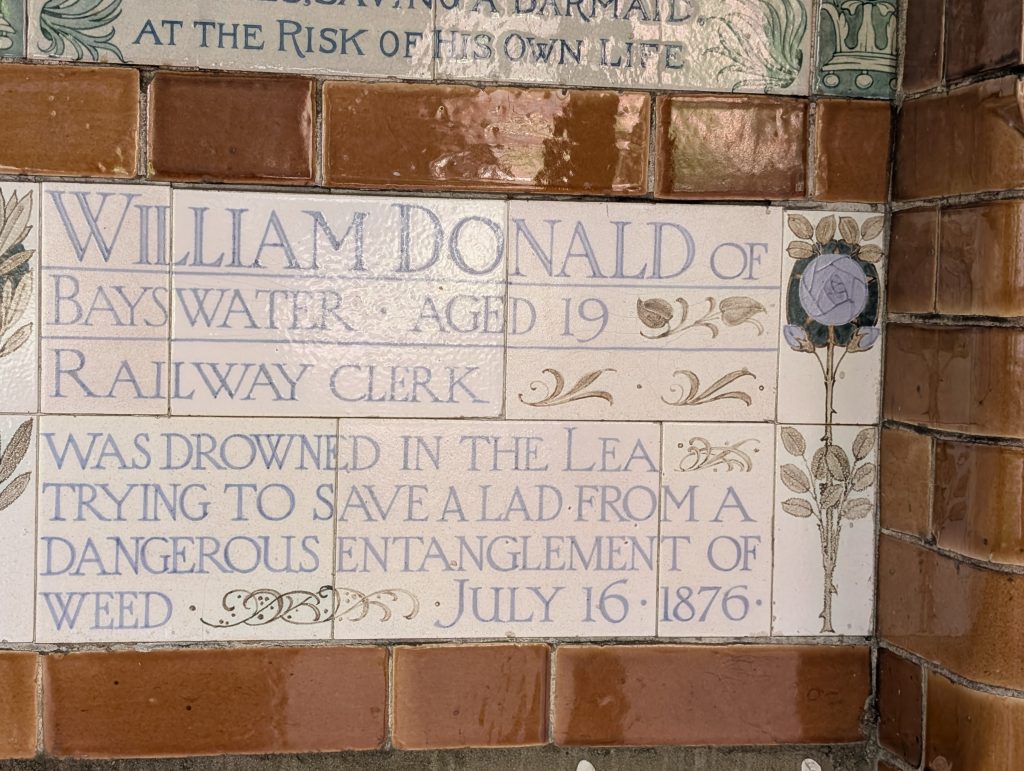
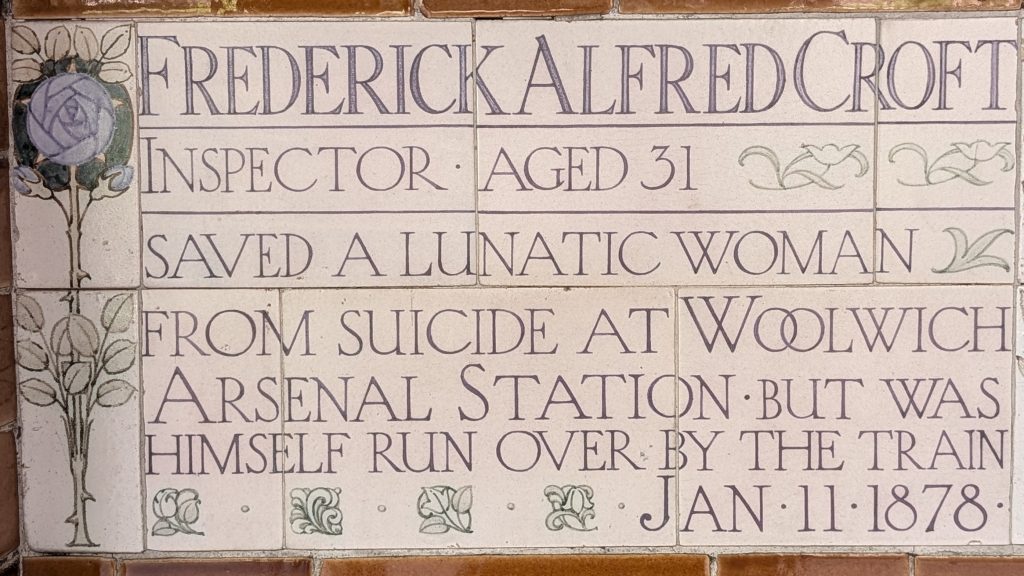
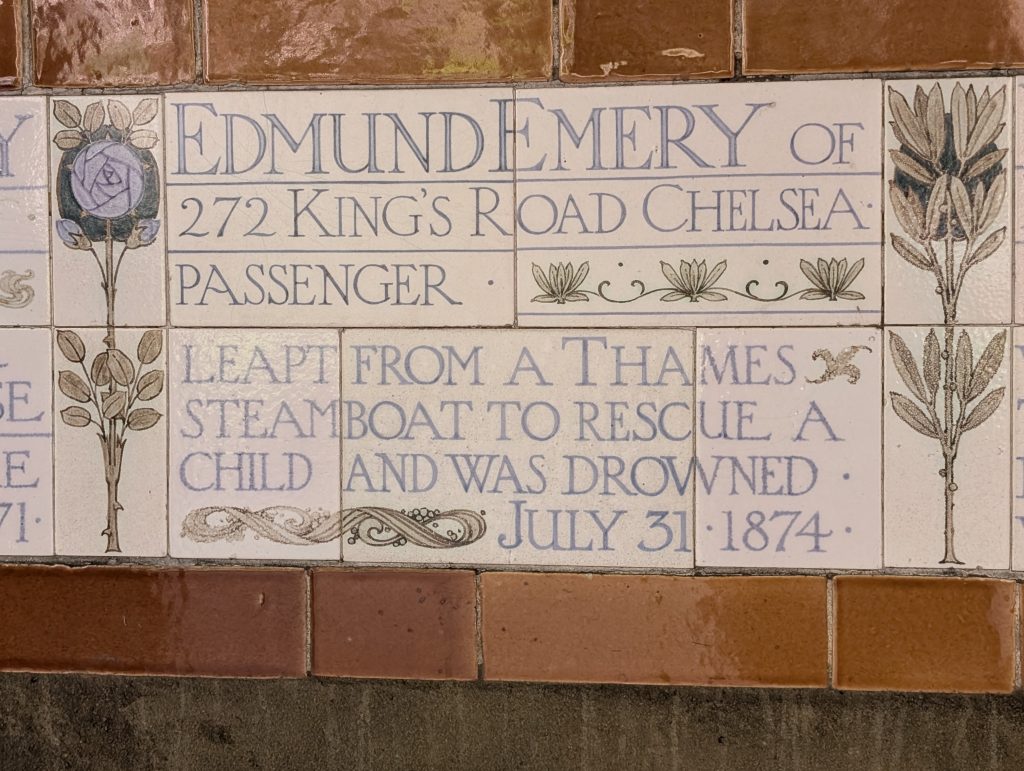
The park was built on old graveyards of several local churches, and the houses around it are splendid historic buildings.
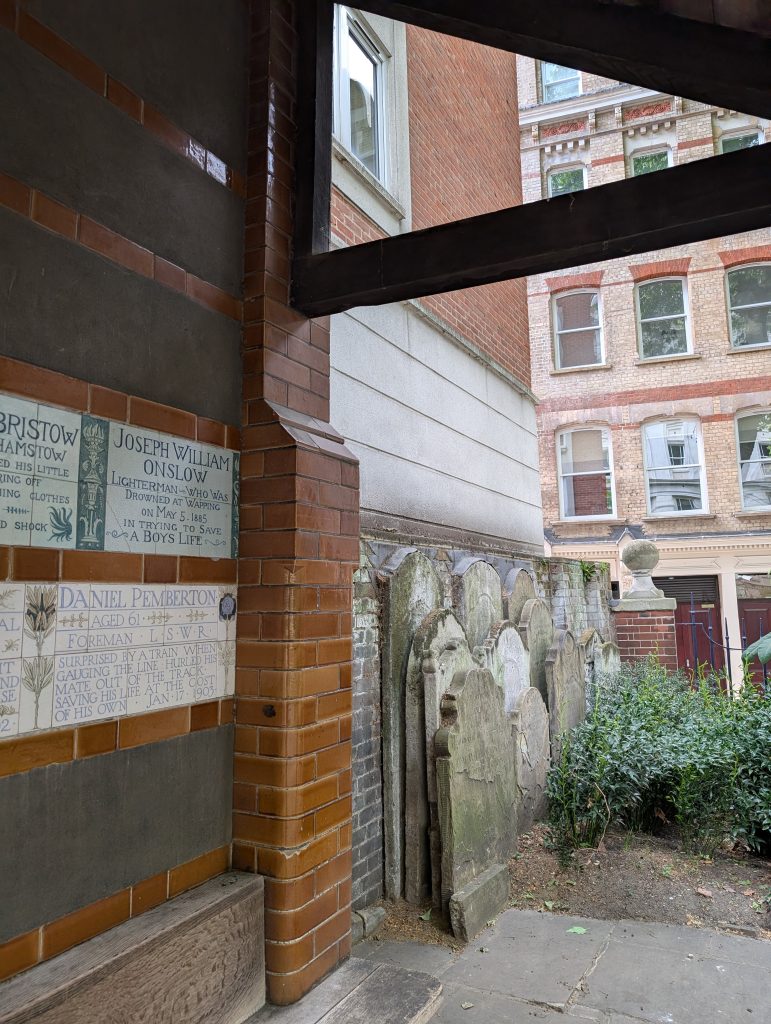
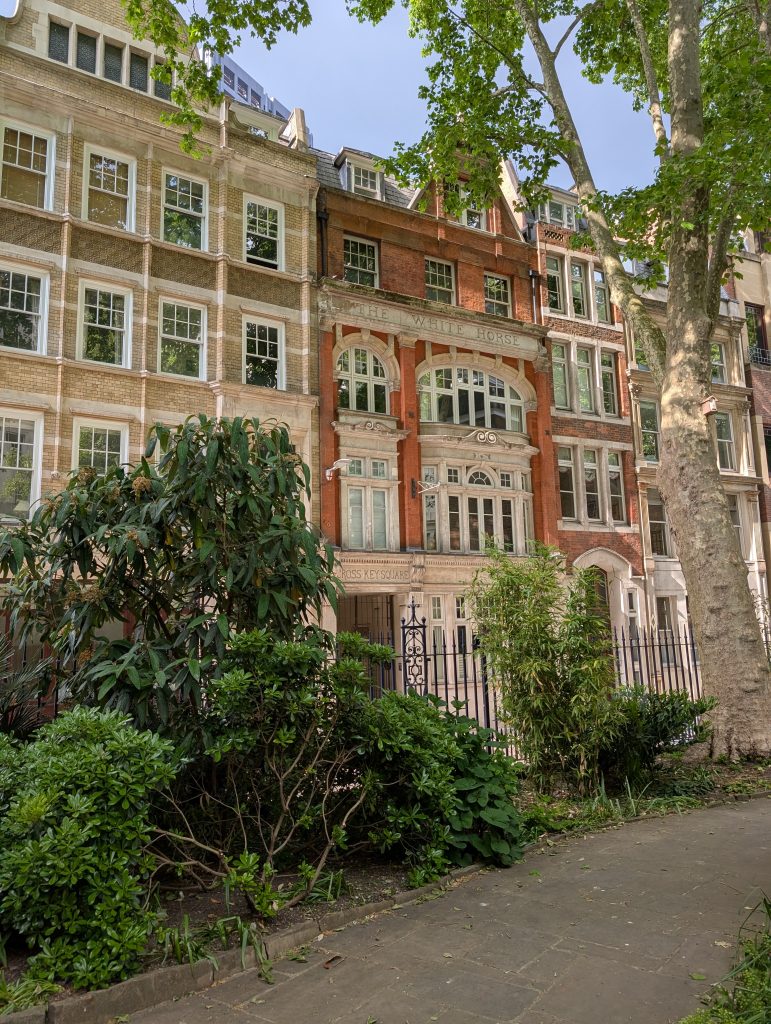
Post offices feature in all my Victorian mysteries, because mail was how people communicated.
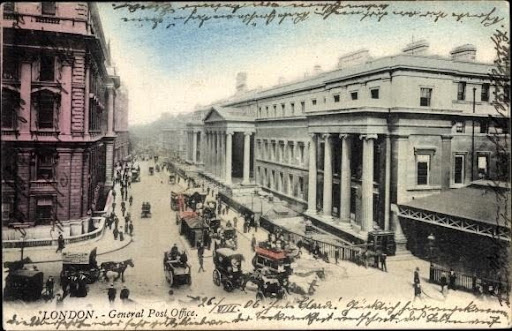
Since the post was delivered so often to London homes, many workers were required. Sorting and stamping provided jobs for those with good eyesight and quick hands.
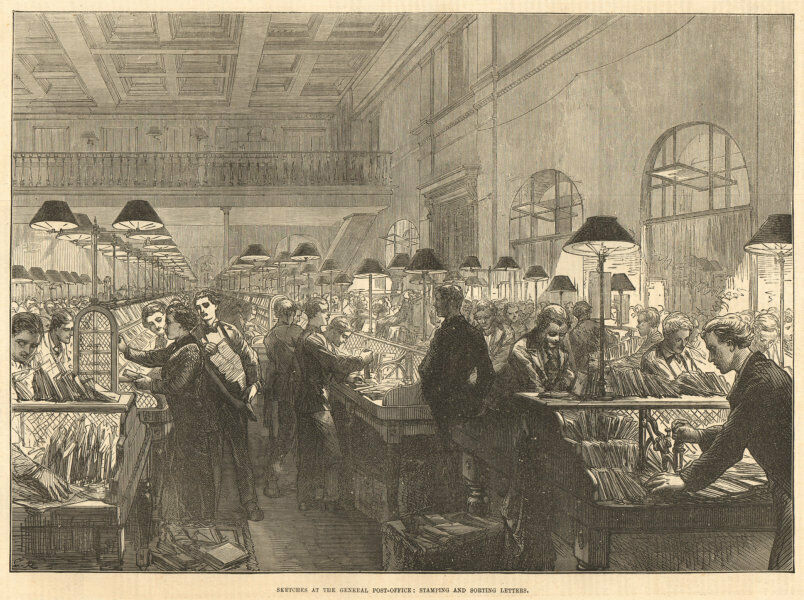
The pillar box
There is one symbol of the old mail system that can be seen all over London: the pillar box. Most are still in use. Each is a bit of history in itself, with the reigning monarch’s symbol on the side of the box.
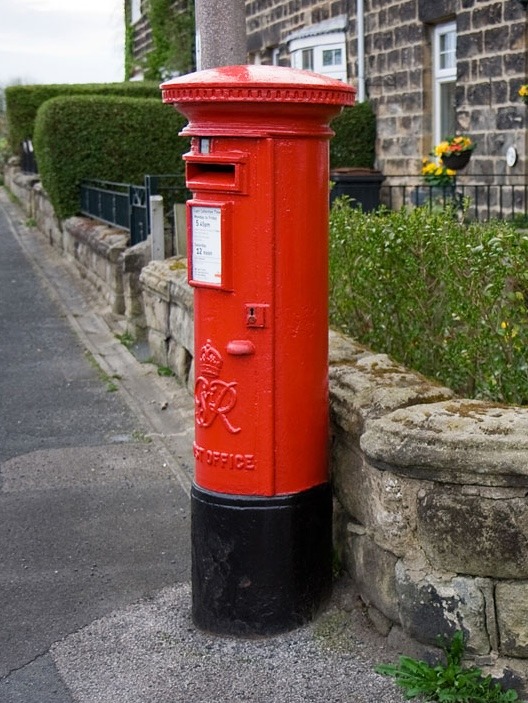
As Victorian inventions, pillar boxes were needed because of the advent of the penny post. In 1840, with the encouragement of postal expert and reformer Roland Hill, Parliament passed an act setting the cost of a normal letter at one penny. Hill also invented the pre-paid paper stamp.
Britain was dedicated to dominating trade throughout the world. Cheap mail, both domestic and international, helped commerce to expand, since most business arrangements across a distance took place with papers that needed examination and signing.
Trains from London could deliver mail in hours to ports and distant towns, and in the city itself one could send a letter in the morning and have it arrive at its destination in the afternoon. Once it cost only a penny, the bulk of mail expanded by 100% in the first year, thus the enthusiasm for anything that would make it move faster.
So if you’re looking for why inventions such as the pneumatic railway could attract investors, the expanding population, and their enthusiasm for letter writing, provide an answer.
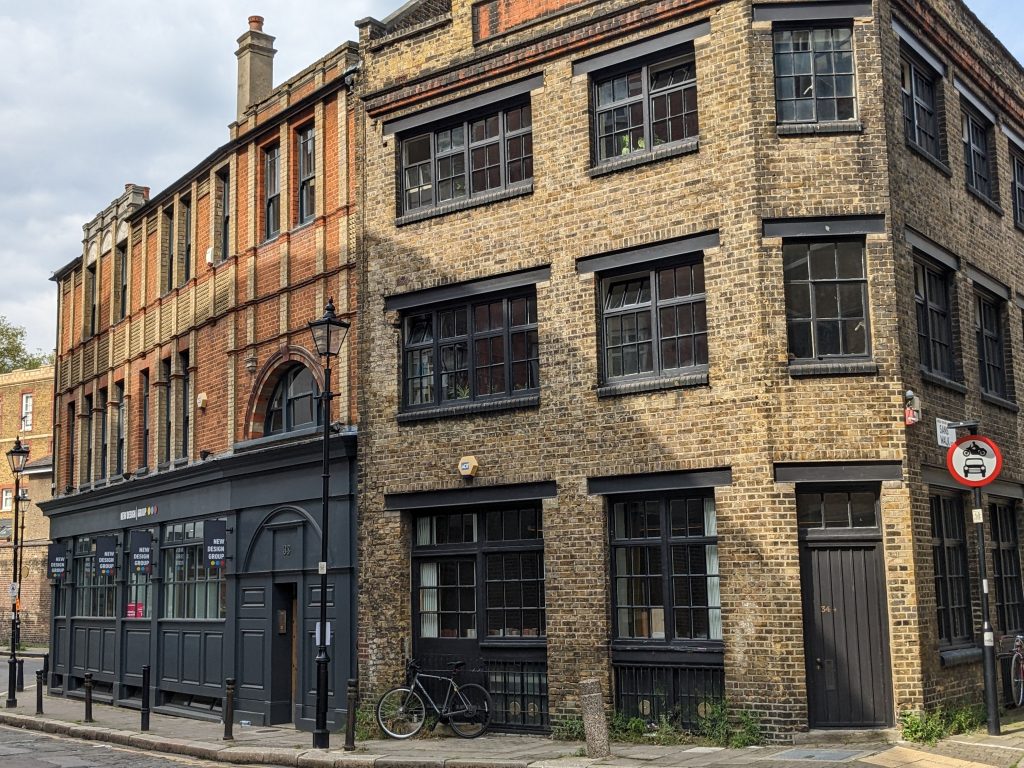
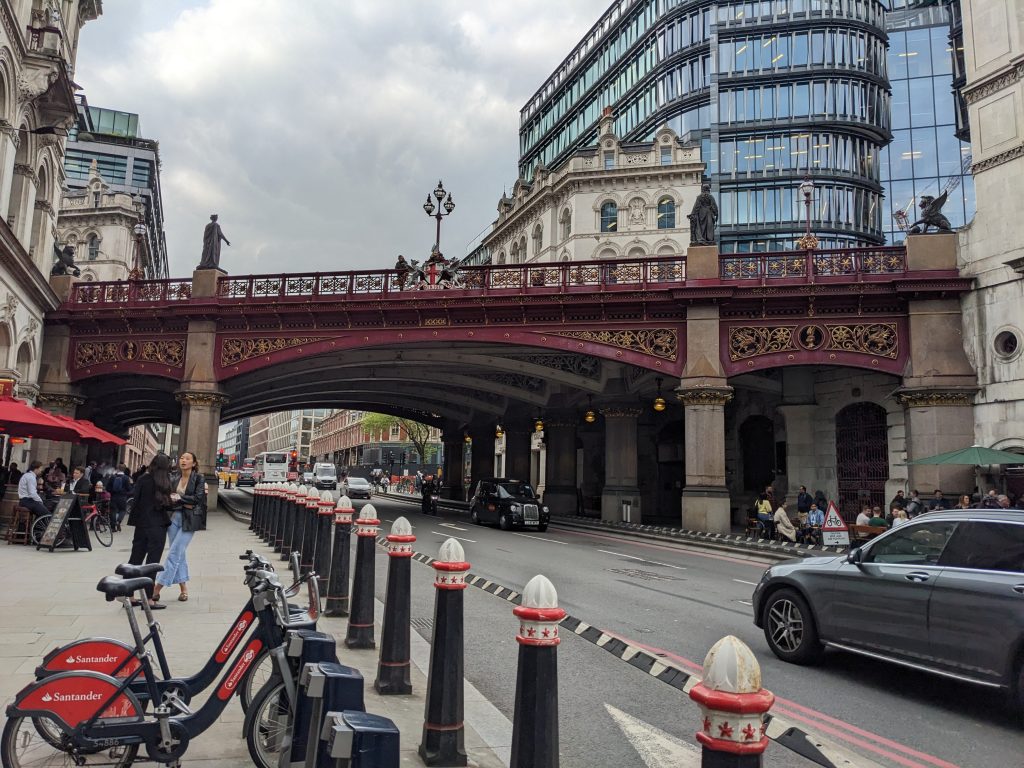
Except as indicated, all photos by the author.
Recommended Reading
Fiction
- Murder on the Pneumatic Railway by Lisa M. Lane — A Tommy Jones Victorian mystery that rides straight into one of London’s strangest industrial experiments: the underground pneumatic railway built to whisk mail, parcels, and freight beneath the city by air pressure. Murder, mechanics, and Victorian ambition make this a splendidly odd corner of London history.
Non-Fiction
- London’s Lost Pneumatic Railway: The World’s 2nd Oldest Underground by London Reconnections — A richly detailed article on the London Pneumatic Despatch Company, the Victorian scheme launched in the 1860s to move mail and parcels through underground tubes by air pressure. The system operated between 1863 and 1874 before practical difficulties and limited savings ended its run.
- Atmospheric Railways: A Victorian Venture in Silent Speed by Charles Hadfield – A history of railway systems powered by air pressure, including Britain’s experimental atmospheric and pneumatic lines. It provides useful historical context for the London Pneumatic Despatch Company and the Crystal Palace pneumatic railway associated with Thomas Webster Rammell. First published in 1967.
- Subterranean City: Beneath the Streets of London by Antony Clayton — A broad exploration of the tunnels, railways, utilities, shelters, and other structures beneath London. It includes London’s underground postal infrastructure and works well for readers interested in the wider hidden city surrounding the pneumatic railway and Mail Rail. First published in 2000
- The British Post Office: A History by Howard Robinson — A broader history of the British postal service, useful for understanding the institution behind Victorian reforms, penny postage, sorting systems, and the modern machinery of national communication.
- The Life of Sir Rowland Hill and the History of Penny Postage by George Birkbeck Hill — A period biography of the great postal reformer whose campaign helped create the Uniform Penny Post and transform letter-writing, postage, and public communication in Victorian Britain.
To Explore:
Roasting Plant Coffee (has a cool animation of the pneumatic system)

Lisa M. Lane is a novelist and historian who writes in several genres, including historical and cozy mystery, literary fiction, and academic work in history and education. She lives in San Diego, California.
The Tommy Jones Mysteries immerse the reader in the bustle and noise of Victorian life. Each novel features a stand-alone mystery with fascinating characters, actual historical figures, and intriguing plots among the gasworks, hospitals, theatres, and galleries of the 19th century. https://grousablebooks.com
