
My mystery Murder at an Exhibition brings the reader into the art and museum world of the 19th century. This is the third of my series of posts on Victorian London, focusing on what I discovered during research for my historical mysteries.
The nineteenth century in Europe saw the rise of nationalism, each nation distinguishing itself against the others. After the fall of Napoleon in 1815, it was almost as if the countries of Europe wanted to show why they were not part of the French empire he had created. Each nation had their own traditions, language, history, and arts.
The need to delineate and display national prowess was not just about showing off local art and culture. National museum collections could subtly display international influence, cultural supremacy, even military power.
Conservatism had something to do with this, because many countries that had fought or been occupied by France wanted to “turn the clock back”, as historians say. While they were not successful in preventing the spread of liberal and democratic ideals, the culture that came out of these efforts continues to resonate with us.
The National Gallery
The building of the National Gallery on Trafalgar Square was completed in 1838. Trafalgar Square, itself celebrating the victory over Napoleon, was the logical site.
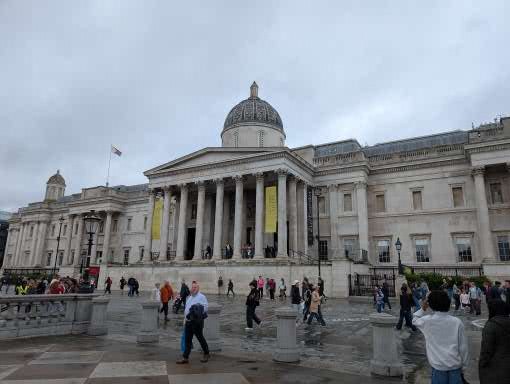
At first, the Trustees just collected paintings they liked or that collectors donated. But when Sir Charles Eastlake became director in the 1850s, he travelled to purchase Italian and Flemish art to expand the collection and made sure that British artists were featured.
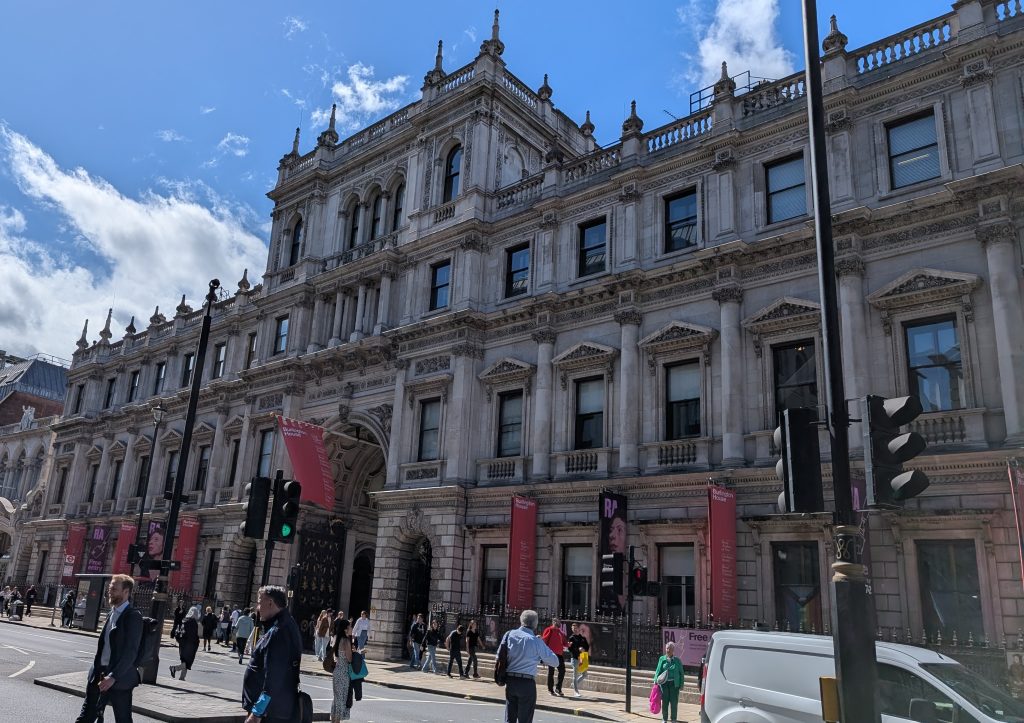
Eastlake is a minor character in my novel. At the time he was director, only the eastern wing of the building housed the National Gallery. The western wing hosted the Royal Academy, which held competitions that pretty much determined an artist’s standing in the art world and society at large. Later the Academy moved to Burlington House and the entire building became the National Gallery.
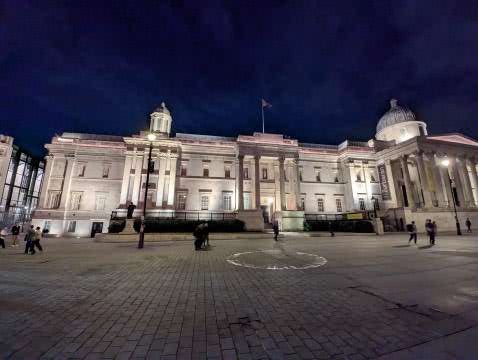
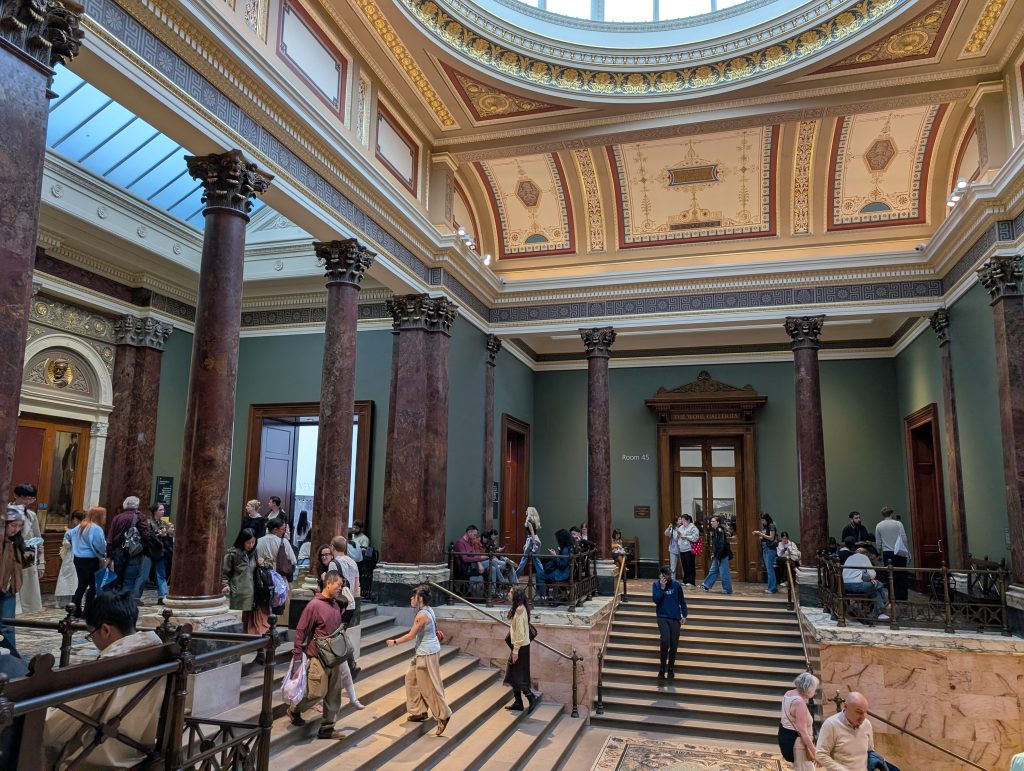
Today the National Gallery stands like a guardian of Trafalgar Square, which hosts rallies and events for a multi-cultural society. Behind its walls are hundreds of paintings, with huge collections of works from the 17th to the 20th centuries.


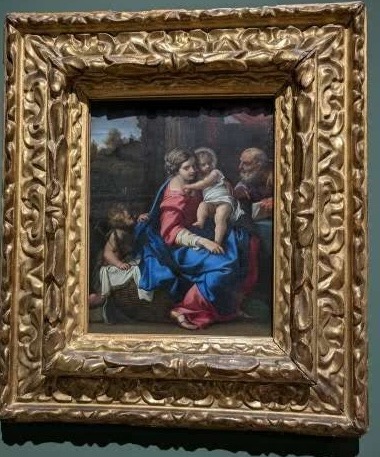
Despite the crowds, The National Gallery is well worth a visit. There I was able to get up close to the work of Carracci, whose extraordinary use of detail is part of my mystery story.
The gasworks being such a dirty business, Parliament made a lot of rules controlling their pollution and production. In 1870, an act would force gasworks to consolidate in an effort to end wasteful competition.
Dante Gabriel Rossetti
One of my main characters is the real-life Dante Gabriel Rossetti. To see some of his work, you go to the Tate Britain, which opened as the National Gallery of British Art in 1897.
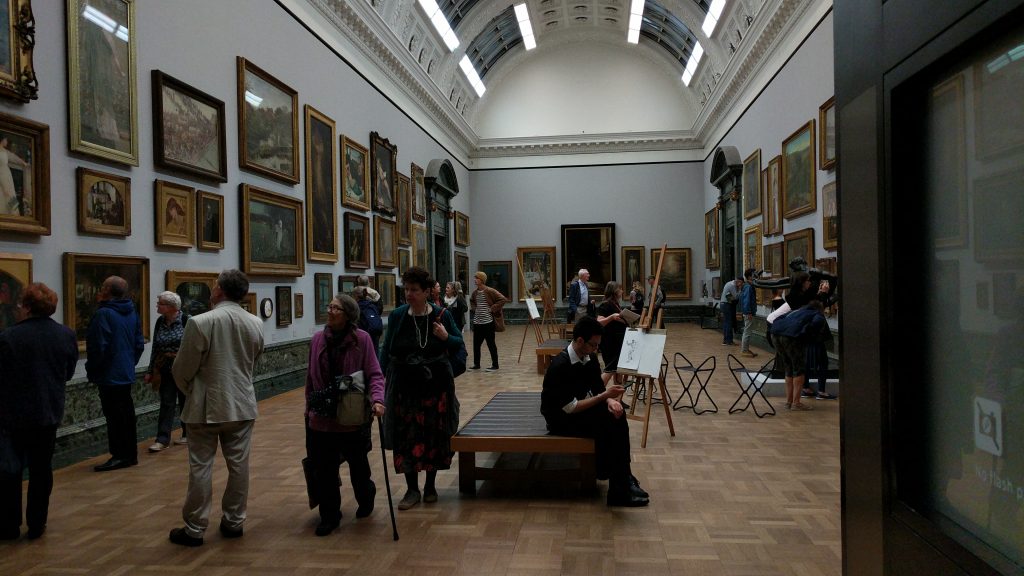
Rossetti was one of the artists known as Pre-Raphaelites, a group trying to break away from the staid academic painting of the Royal Academy. They revived medieval themes like those in art before the Renaissance painters like Raphael. The Tate has an entire room of Pre-Raphaelites, all crammed together as they would have been when they were reluctantly accepted by the art world.
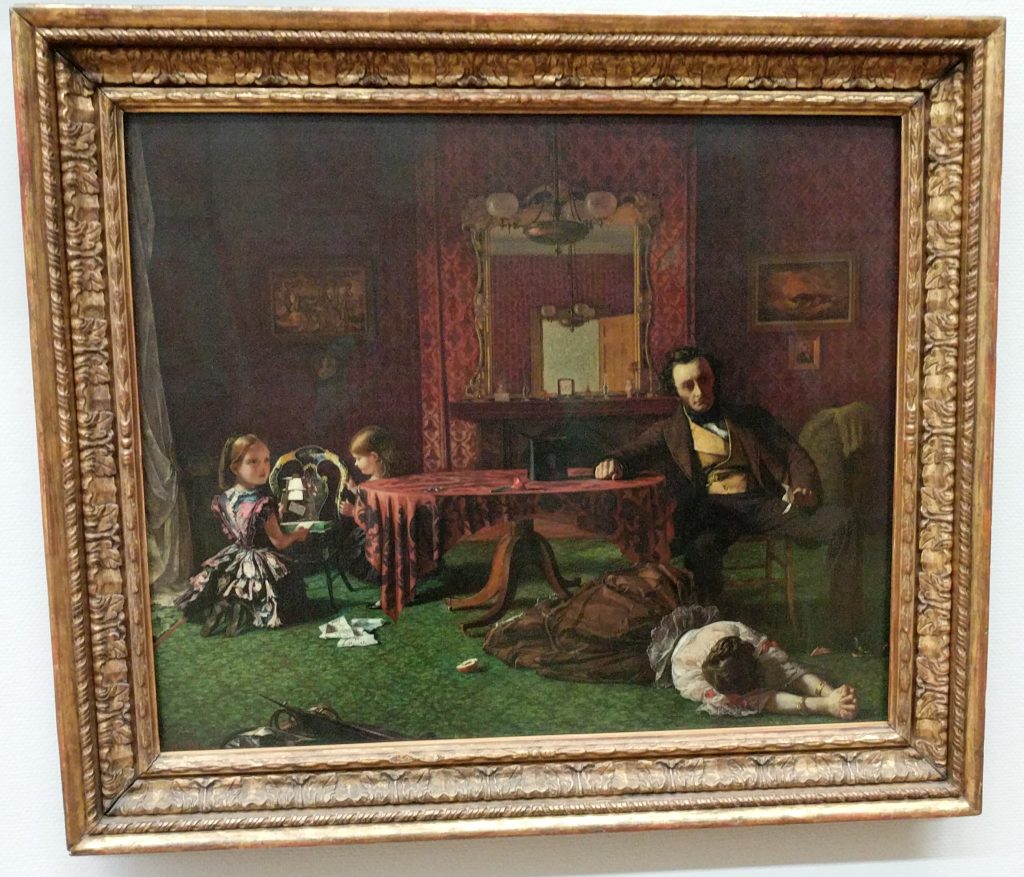
The Pre-Raphaelites also engaged moral themes, which fits our typical view of Victorian life. Although Victorian society was not as stiff, formal, and ethical as we have been led to believe, leading a moral life was the ideal for the middle class.
Why? Middle class wealth was based on finance and industrialization, the newer sources of status. The aristocracy, whose wealth was based on land, often looked down on those who earned money through “trade.” Historians believe that the Victorian moral code was one way that the middle class distinguished itself in society. Certainly much of the art supports this view.
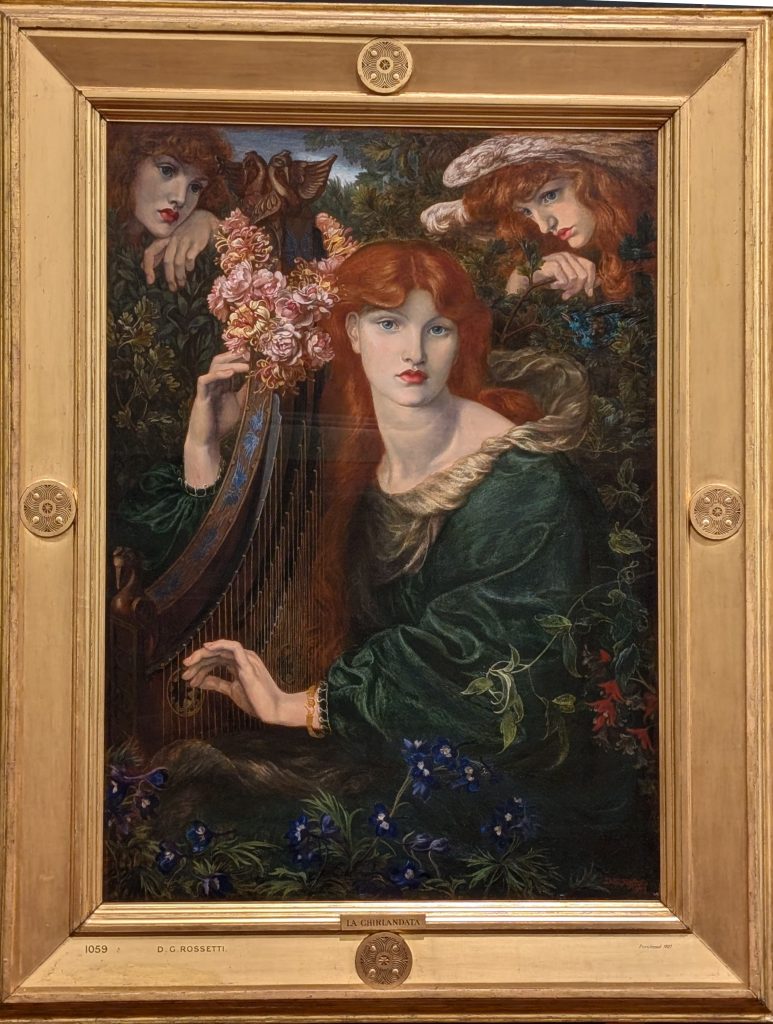
Rossetti did not abide by this moral code. He painted, taught art, fell in love with Elizabeth Siddal and fellow artist’s wife Jane Morris, and in general had quite the reputation. In my novel, he helps my character Jo Harris, an illustrator for the London Illustrated News, solve the murder of an unassuming photographer. Rossetti’s own work was anything but unassuming.

His Annunciation image, although it contains the usual Virgin Mary, Angel Gabriel, and the lily, breaks completely with the usual magical portrayals of the scene. You can also see more of his work at the Guildhall Art Gallery, often overlooked by tourists.
Photography
As a mild-mannered portrait photographer, my character Mr. Pratchett has his studio on Theobald’s Road. We discover in the novel that some of his work is sold in Holywell Street, a place where the artwork is clearly not of the same standard as the National Gallery
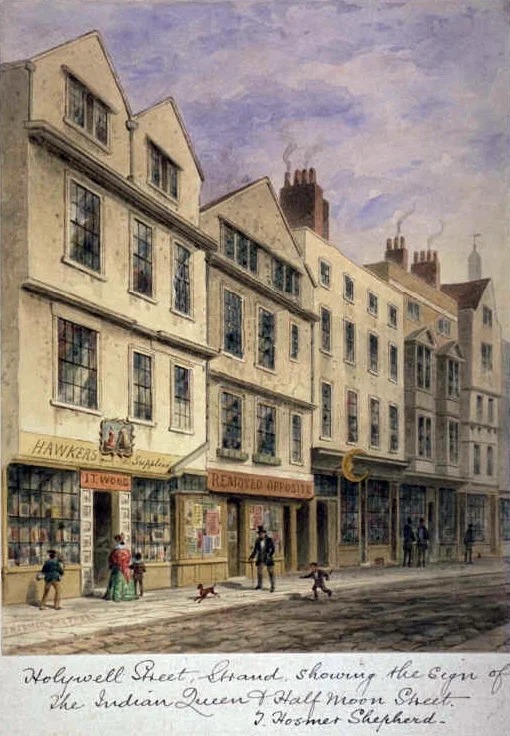
Holywell Street was the place where gentlemen shopped for racy, if not outright pornographic, artworks and literature. Other more traditional booksellers plied their trade there as well, and it was known colloquially as “Booksellers Row.”
Unfortunately, one can no longer walk along Holywell Street. It was a secondary street behind the Strand, so when that thoroughfare was expanded in 1900 it essentially disappeared.
But Theobald’s Road is still there, and is thriving. Its history goes back to medieval times, and it has always been a commercial street. The architecture is varied, and there are many Victorian storefronts.
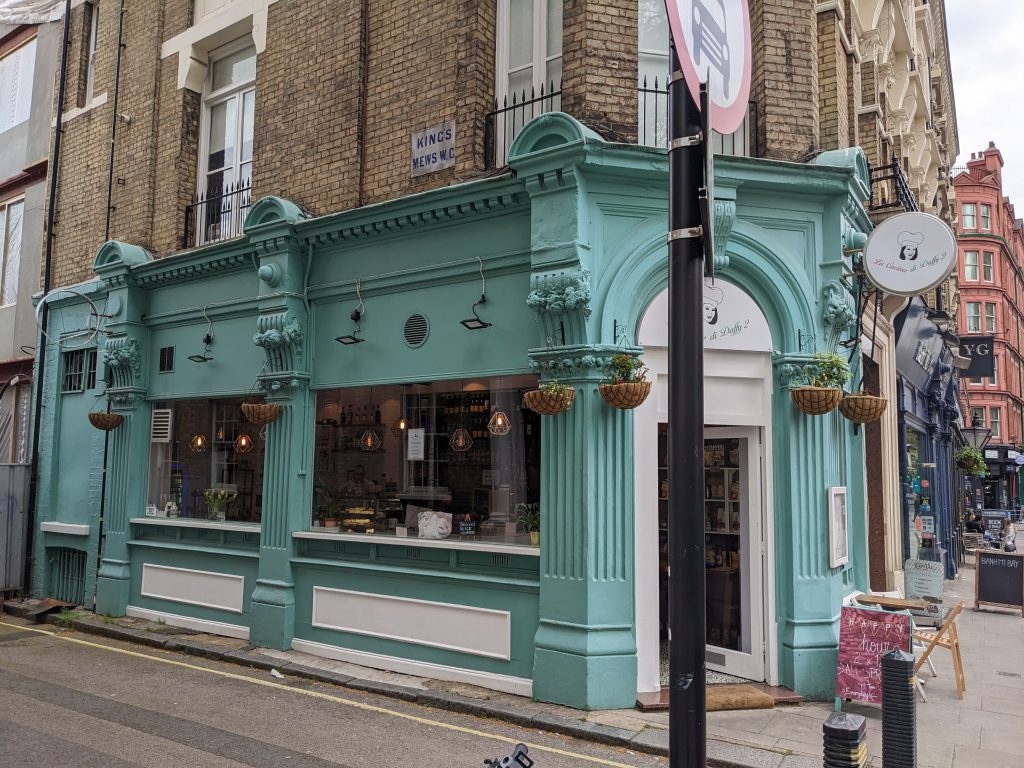
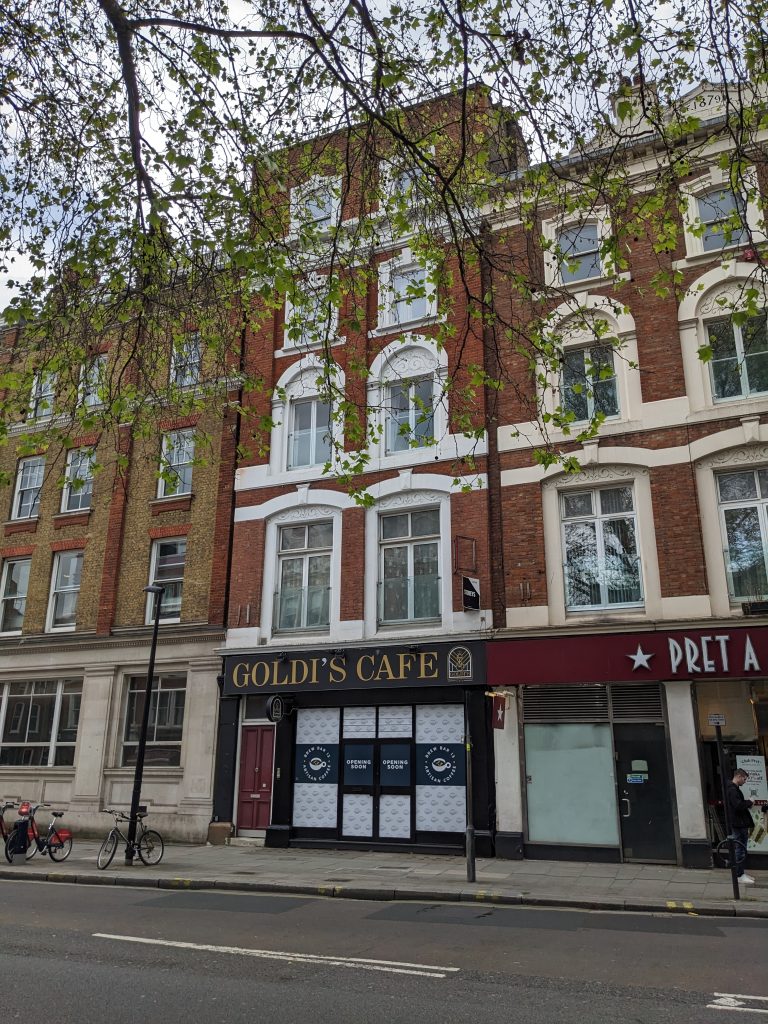
It was no coincidence that I chose Theobalds Road for the photographer’s shop. The area has always been a hub of creative activity.
In Murder at an Exhibition, the murder in the Royal Academy wing of the National Gallery becomes a search through Victorian visual and social culture. In my book, I pair Dante Gabriel Rossetti with real-life art critic and forgery detector Giovanni Morelli. Together they help Jo Harris, my amateur sleuth, solve the mystery. The visual arts are key to the story, and in London they can be thoroughly enjoyed.
To Explore More:
___
Except as indicated, all photos by the author.
Recommended Reading
Fiction
- Murder at an Exhibition by Lisa M. Lane — A traditional Victorian mystery in the Tommy Jones series, set amid the art, personalities, and public spectacle of nineteenth-century London, where murder slips neatly into the varnished world of exhibitions and social ambition.
- Mortal Love by Elizabeth Hand — A richly layered tale moving between modern London and the shadowy world of lost Pre-Raphaelite paintings, where art, desire, mystery, and dangerous enchantment become deliciously entangled.
- The Wayward Muse by Elizabeth Hickey — A novel centered on Jane Burden Morris, the working-class Oxford beauty who became William Morris’s wife, Dante Gabriel Rossetti’s muse, and one of the defining faces of the Pre-Raphaelite imagination.
- Ophelia’s Muse by Rita Cameron — A lush novel about Elizabeth Siddal, the milliner-turned-model who became immortalized as Millais’s Ophelia and entered the passionate, perilous orbit of Dante Gabriel Rossetti.
- The Pre-Raphaelite Seamstress by Amita Murray — Set in 1860s London, this novel follows a young seamstress drawn into the world of Rossetti, Millais, William Morris, artists, models, secrets, and reinvention.
- A Curl of Copper and Pearl by Kirsty Stonell Walker — A fictional portrait of Fanny Cornforth, Rossetti’s earthy, flame-haired model and mistress, offering a livelier view of the Pre-Raphaelite circle from below stairs rather than from the academy.
Non-Fiction
- Victorian Painting by Lionel Lambourne — A sweeping, illustrated survey of Victorian painting, full of color, anecdote, and historical context, restoring the energy, variety, sentiment, spectacle, and ambition of the nineteenth-century British art world.
- The Victorian Art World in Photographs by Jeremy Maas — A visual doorway into the painters, sculptors, models, patrons, dealers, engravers, and personalities who populated Victorian Britain’s bustling artistic scene.
- Pre-Raphaelites: Victorian Art and Design, 1848–1900 by Tim Barringer, Jason Rosenfeld, and Alison Smith — A handsome exhibition volume exploring the Pre-Raphaelite rebellion against academic convention, with paintings, drawings, sculpture, and decorative arts that show why this movement became Britain’s first true avant-garde.
- Poor Splendid Wings: The Rossettis and Their Circle by Frances Winwar — A classic biographical novel-like account of Dante Gabriel Rossetti, Christina Rossetti, Elizabeth Siddal, William Morris, John Ruskin, and the brilliant, tempestuous circle that helped define Victorian art and imagination.

Lisa M. Lane is a novelist and historian who writes in several genres, including historical and cozy mystery, literary fiction, and academic work in history and education. She lives in San Diego, California.
The Tommy Jones Mysteries immerse the reader in the bustle and noise of Victorian life. Each novel features a stand-alone mystery with fascinating characters, actual historical figures, and intriguing plots among the gasworks, hospitals, theatres, and galleries of the 19th century. https://grousablebooks.com
