
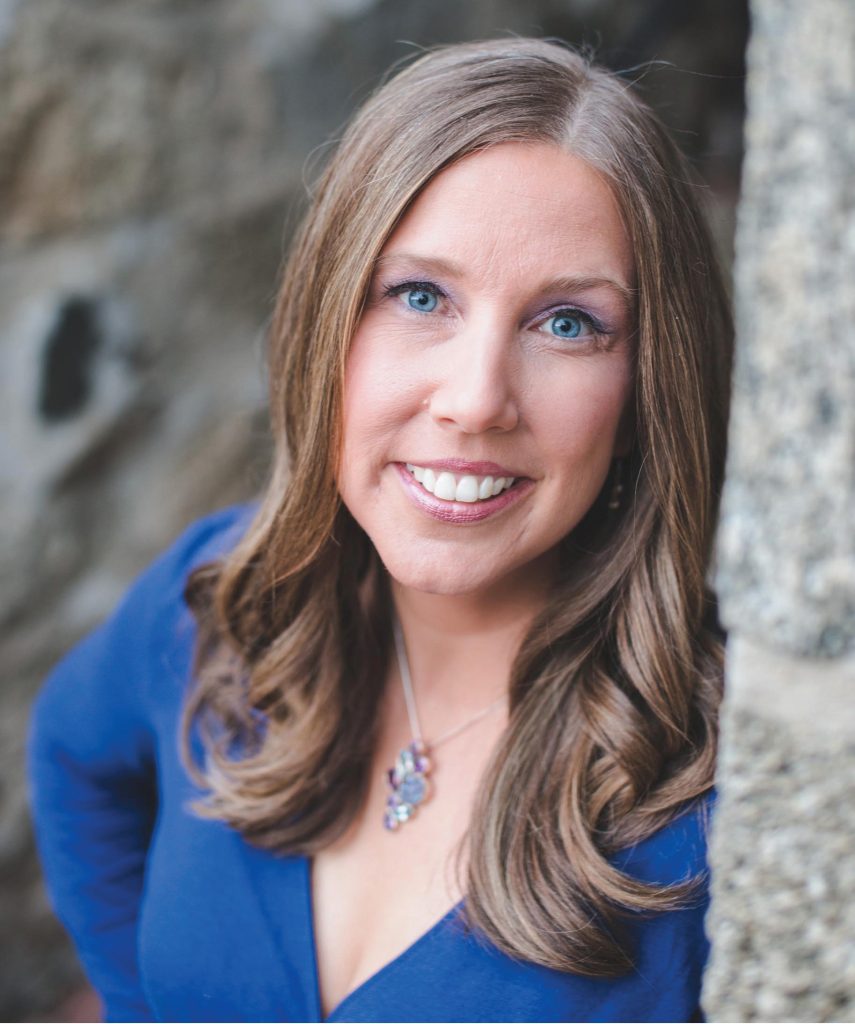
Being an actual historian—and archeologist–as well as a New York Times, Wall Street Journal, and USA Today bestselling historic novelist gives Laura Kamoie a unique platform in the world of historic fiction.
Laura has always been fascinated by the people, stories, and physical presence of the past, which led her to a lifetime of historical and archaeological study and training. She holds a doctoral degree in early American History from the College of William and Mary and published two nonfiction books on early American history. Most recently, she held the position of associate professor of history at the U.S. Naval Academy before transitioning to a full-time career writing fiction.
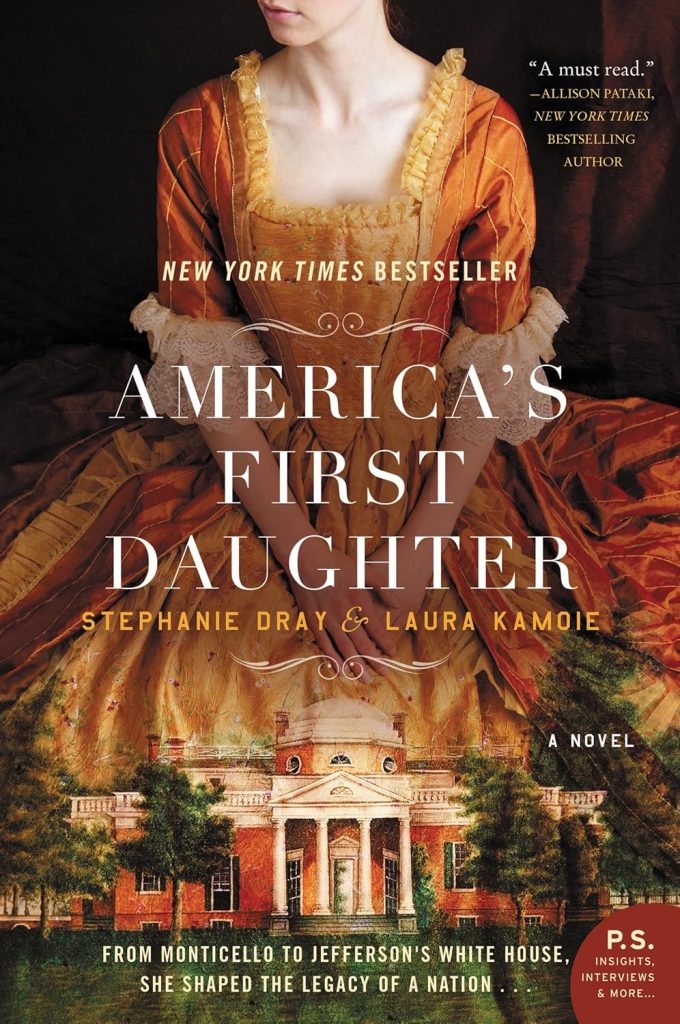
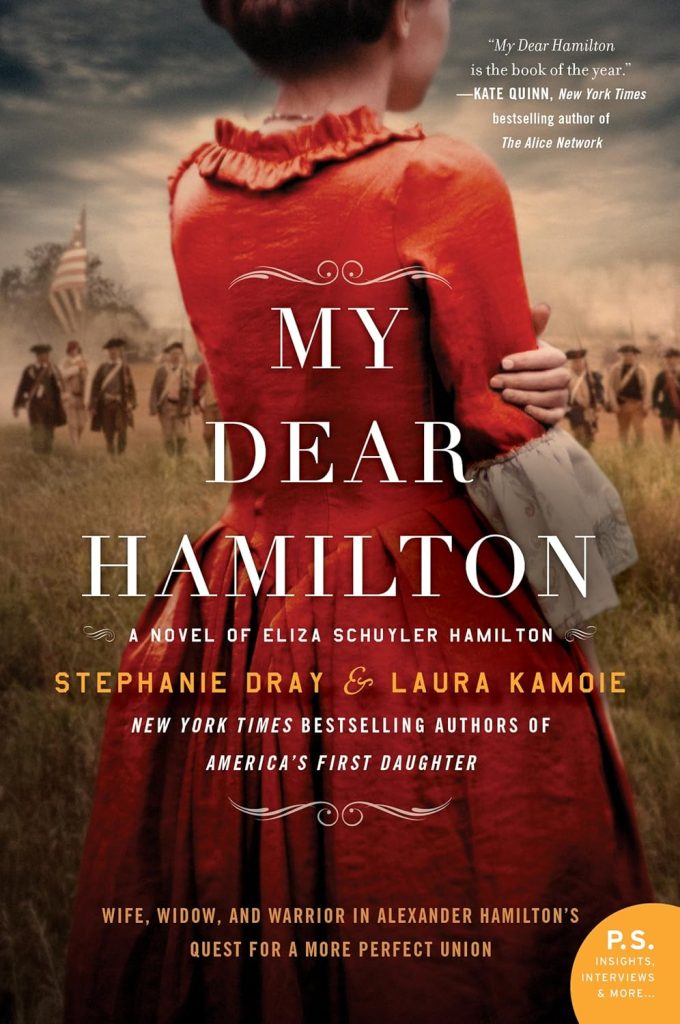
What makes her perfect for this America 250 issue is her focus on the remarkable women who were here at the dawn of the nation. Together with Stephanie Dray, she has authored AMERICA’S FIRST DAUGHTER (Patsy Jefferson), MY DEAR HAMILTON (Eliza Hamilton), and the latest novel out this month, FOUNDING MOTHER (Abigail Adams)
Jackie: What stimulated your love of history, Laura?
Laura: My love of history goes all the way back to my childhood. I grew up in Western Maryland, not far from Antietam Battlefield. And whenever I would visit there, I would feel very much like you could still feel the echo of the battle that had happened. I became very drawn to historic places because I really do feel like there’s often a resonance of the things that happened at a place that sometimes you just feel in your bones. Also in that same area, one of the homes that I lived in, we discovered a secret room that bridged our home and the townhome next door via the attic. There were newspapers from the 1850s. The research that I did seems to indicate that it might have been a hiding place on the Underground Railroad. So just from the earliest ages, I was fascinated by the past. I knew right from grade school that I wanted to be a history teacher.
When I went to college as an undergraduate at Dickinson College in Carlisle, Pennsylvania, I fell so in love with the college environment that I decided that I wanted instead to focus on teaching at the college level When it was time to look at graduate schools, I landed at the College of William and Mary in Williamsburg, because they offered a program that focused on both history and the material culture of the past. William and Mary has an absolutely fantastic program in conjunction with the Colonial Williamsburg Foundation. That’s what started my archaeology career. I landed an apprenticeship as a graduate student with Colonial Williamsburg and was able to do archaeology in that historic area–which was super fun and very interesting. What I always dreamed I would do.
Jackie: That is fantastic. I almost would like to go back and start my life over and follow in your footsteps! So you ended up as a professor of history at the U.S. Naval Academy. Now, that must have been interesting. Tell us more about how you came to be there and what it was like for you.
Laura: The position at the United States Naval Academy was actually my third academic position. I started my career in a temporary position at Saint Olaf College in Northfield, Minnesota. And then, I taught for five years at American University, during which time I developed their graduate program in public history — a field of historical training where we teach students to do history in and for the public, usually in a variety of public and private institutions, museums, the government history offices, the National Park Service, etc. That really was a fantastic way of weaving together what I had already done in my own training with the archaeology and the material culture. When the position opened up at the Naval Academy, it really was a perfect position for me. I ended up building my career here in Annapolis, Maryland, which is the colonial capital of the colony of Maryland. It was really a fantastic experience and a way to make a real contribution with my teaching because the history of the United States was really immediately relevant to the midshipmen understanding their mission and what they were doing.
Jackie: Which leads me to my next question– what’s it like living in Annapolis, one of the most charming and fascinating early colonial towns?
Laura: It is absolutely lovely living here. You get the water view of the Chesapeake Bay, which is just beautiful. The most charming little downtown. There’s a real sense of community here. Some of that is established by the Naval Academy, but it’s a small town with a lot of activity and amenity. You see the midshipmen walking around in their whites. And that’s a lot of fun. And I absolutely love living here on Chesapeake Bay.
Jackie: So how and when did you start writing novels?
Laura: So I was teaching several small senior seminars at the Academy on Thomas Jefferson. I’d gone to a writing conference because I was teaching by day and writing by night at that point. Over dinner, I began telling my good friend Stephanie Dray about these classes, about the kinds of research that the midshipmen were doing. So we got to talking about what a novel about Thomas Jefferson would be like. But then again, it’s so hard to make an original contribution on Jefferson, because it seems like just about every part of his life has been explored. We began to wonder about him as a father, and what his daughters were like. We went back to Stephanie’s hotel room and stayed up until 3 or 4:00 in the morning, researching Jefferson’s daughters, particularly his eldest daughter Patsy. We began finding a lot of really interesting information on her and realized that there were some very interesting untold stories in Patsy Jefferson’s life –especially about the relationship between her and her father. So that very night, with a lot of faith and not a little hubris, we decided that we would write this novel together, despite the fact that neither of us had ever written with a co-author before. It just turned out to be the most dynamic and rewarding partnership. We never intended to continue with additional novels, but it went so well the first time, we just had to keep going.

Jackie: So somewhere in all that, you also did a romance series. Did that come before this collaboration with Stephanie? And if so, how did that happen? Here you are doing history by day and romance novels by night.
Laura: Yes. So in 2008, I suffered a mild traumatic brain injury. It’s not a particularly interesting story. I was unloading the dishwasher, stood up, caught the top of my head on the corner of the kitchen cabinet door, and obviously had a really bad headache. But then the next morning, I couldn’t walk straight. I was listing to the side and extremely nauseous. We found out that I had given myself a pretty serious concussion. In the wake of that, I had about six to nine months of what they call post-concussive syndrome symptoms. And one of those, interestingly, was a very strong creative urge!
So I started writing novels and taking guitar lessons –ending up much better at one of those than the other– although I do have a very pretty guitar. I began writing what I then most read. I grew up in a family that very much believed in the supernatural. We would gather around my grandmother’s kitchen table on Friday nights and tell stories about the various things that the ghosts in our houses had done that week. We all believed in this. It was just part of the family lore. So I initially wrote paranormal stories and just absolutely loved it!
Then I just continued writing. Once I started, it was in my blood. It was in my brain. As that career really took off, it became difficult to juggle full-time teaching with what was a full-time writing career load. I also had two small children. So there came a point when I got a big contract from the romance publisher Avon for a romantic suspense series — where I had to make a choice. I decided to take the leap of faith and embrace my writing career as my full-time occupation. But once I left history, I missed it. And that was really what led me to write historical fiction, as well.
Jackie: So those romance series, as I could tell, are 1001 Dark Nights, The Hero, Blasphemy, and Hearts and Darkness. Am I correct?
Laura: Those are some of them. The series that I actually left teaching for was called the Hard Ink Series. It was set in Baltimore, Maryland, and it was romantic suspense built around the members of a former Army Special Forces unit who investigated the conspiracy that got them kicked out of the military.
Jackie: So tell us a little about your collaboration with Stephanie. How do you work together to actually create all these books?
Laura: Our process has differed a little bit with each book, but generally speaking, we brainstorm the ideas together and then we plot together. We then tackled — based on the known historical chronology — the narrative arcs that we feel we might put in place. After that, we begin to plot out the novel in a Google doc, so we can both always access things at the same time. Next, we decide who’s going to draft which parts. So, for example, with America’s First Daughter, Stephanie drafted chapter one; I drafted chapter two. We had a video chat where we could talk live to each other. If she found a piece of source material that would work better in my chapter, we would swap that back and forth. And then when we were done drafting, we swapped and we revised freely. I would say probably 98% of the time, we simply accepted all of the other person’s changes. Part of that is because we very much trusted each other. We spoke a very similar language about structure, plot and pacing — all the things that go into writing a novel. And there was a great deal of not just friendship, but respect there. By the end, when we’re copy editing and proofreading, there would only be one version of the manuscript. We would literally sit with one laptop in front of us, on the same side of a table, both of our hands on the keyboard at various points, making the changes. In the end, with all of the books, there’s no page that hasn’t touched to some degree by both of us because the end goal is one seamless voice.
Jackie: So that’s the writing part. But what about the research part? Does that mostly rely on you? Do you split up the work? How do you do the research for a book like this?
Laura: We both do our own research. There’s some basic research that you do at the beginning where you get grounded in the secondary source material, and we share those with each other. Next, you identify where the primary source materials are. For all of our books, we’ve been very fortunate because a lot of our source material is online through the National Archives website. There’s an amazing resource for anybody to access. It’s www.founders.archives.gov. It’s a project that is working to digitize and transcribe the papers by and related to the founding generation. Every year they add more. And not only are they digitized and transcribed, but because of that, they’re searchable, which is amazing. So, if you want to know about Abigail Adams’ relationship with her daughter Nabby, you can literally search for those specific documents, which makes it such an amazing resource.
So that’s been our starting point. And we can very easily trade links to the specific letters when we find something that we think would be really useful for the other person’s portion. We have had to do some archival research, as well, particularly with My Dear Hamilton, because while Alexander’s papers are on the National Archives websites, the Schuyler family papers–Eliza’s family–were not. We both happen to think that General Philip Schuyler is a very underrated and underrecognized founding father. That family’s papers were at the New York Public Library and the New York Historical Society, so we went to New York. But we also went up to the Schuyler mansion where they had some additional materials. Sometimes we have to do that, and we love doing those trips because we get to travel together.
Jackie: I was just going to ask whether you actually do onsite visitation.
Laura: That is part of our research, going to the historic sites. Especially at Monticello, there were so many times where we observed things there that either solidified things that we had guessed at or that were so poignant. One example is in our novel, Patsy always seemed to address the institution of slavery more directly than her father. She interacted with the enslaved people. She was the mistress of the plantation. She managed the household servants. And we were wondering what accounts for this difference. Why are they like this?
When we go to Monticello, we realize that it’s literally baked into the architecture because Thomas Jefferson’s rooms are on the first floor of the mansion, and he has constructed it so that out all of his windows, he has this absolutely stunning pastoral and mountain view of the surrounding Virginia landscape. Part of the reason he has that view is because he’s constructed it that way. Immediately out his window is actually the plantation street, but it’s below grade. So from his rooms, he just looks right out over the top of it. Patsy’s rooms are directly above her father’s, so from her windows she actually looks right down onto the plantation street. Every day he overlooks the forced labor side of the plantation, and every day she looks directly at it. It was an observation that we never would have been able to make if we had not visited the site and literally stood where they stood and saw what they saw.
Jackie: So let’s get a little bit more about each individual book. Talk to us about what you really found fascinating about Patsy.
Laura: One of the most fascinating things about Patsy actually is not in the novel, but it was the incident that really had us wanting to explore her. And the incident is this: At the end of her life, she got very ill. And when she was on her deathbed, or what she thought was her deathbed—she recovered from this particular illness—she called her children to her and she says to them: “People say that your grandfather, Thomas Jefferson, had a relationship with Sally Hemings, his enslaved servant. This is not true,” she tells them. “In fact, you can look in the farm books and you can see that he was not here when she got pregnant. There’s no way that this is possible. And it’s your responsibility to protect and defend your grandfather’s legacy.”
She was lying. And in fact, the farm books absolutely show that Jefferson could have been the father, was present during the times when Sally conceived, etc., and Patsy would have known that. So we thought, “What kind of woman, when she thought she was dying, brings her children together to say this–as her final words.”
America’s First Daughter is, in part, the answer to that question. And that’s why it starts when she is quite young. Her mother—this isn’t a spoiler because it’s right at the beginning—dies from complications of childbirth. And Jefferson is absolutely devastated. Even historians agree that not only did he fall into a severe depression, but that he was suicidal. It was mostly for his children that he stayed. So here is this little girl who’s just lost her mother, whose father is very obviously not doing well, who is worried that if he also dies, what happens to her and her sisters. And she very much comes to believe that it is her responsibility to take care of him. That is her formative childhood experience, and it explains a lot about the lengths that Patsy goes to, and the sacrifices that she makes, to try to protect and defend her father.
Jackie: It came through very clearly in the book that you have captured her mission in her life. Really very poignant.
Laura: I very much appreciate hearing that because we did worry that it’s sometimes hard for readers to identify with children as characters in novels, and whether or not people would think we were playing armchair psychiatrist. But there really was, I think, an important psychological element to their relationship for the whole of their lives. It wasn’t always the healthiest. There was an unhealthy amount of codependence on one another, that I think was born out of this crisis in her childhood.
Jackie: So, two years later, along came My Dear Hamilton. What stimulated you? You said you thought this was going to be a one-time deal, and now you’re writing about Eliza Hamilton. Tell us about how that book unfolded and its theme.
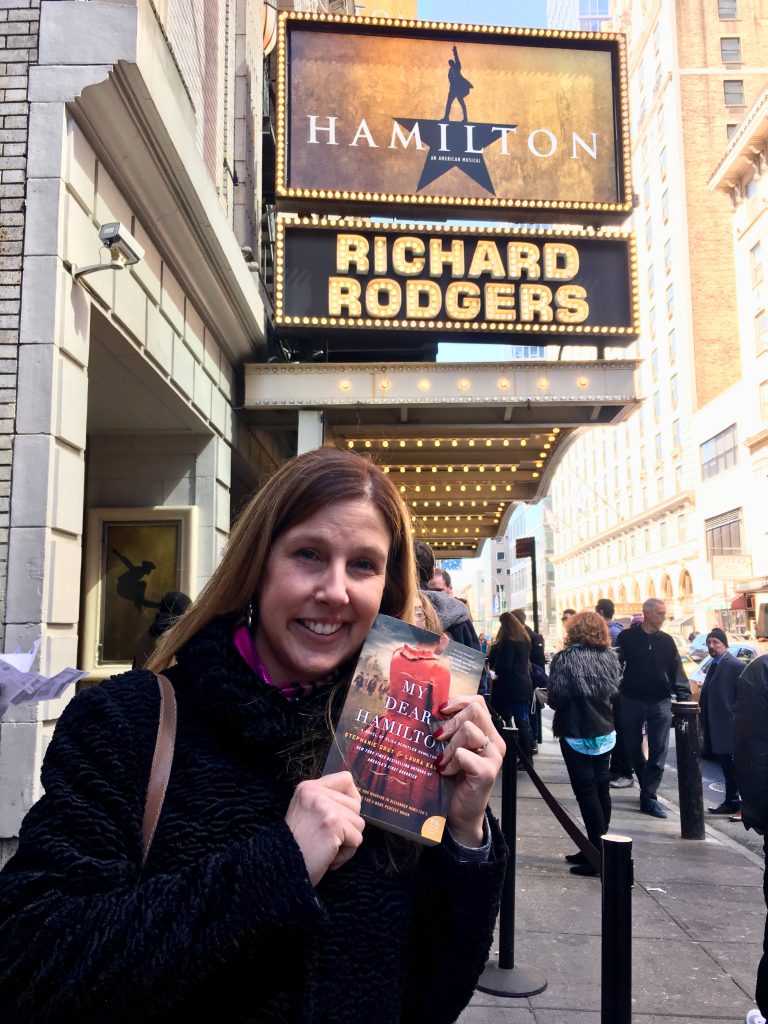
Laura: When we finished writing America’s First Daughter, we had so enjoyed the experience that we wondered if we should attempt it again. The response to the manuscript was extremely positive, and that was very rewarding. We began to assemble a list of potential next subjects. Eliza was on it, as were several other people, including Abigail Adams. But at that same time, we happened to be at a writing conference in New York City. This was July of 2015 and our editor had says, “There is this strange show playing on Broadway. It’s just opening. And I know this is going to sound weird, but it’s the American Revolution set to rap.” And we were both like, “what?”
It turned out that Stephanie had a conflict and could not go to the show, so I took my best friend with me, who also loves history. And this was opening week of Hamilton, an American Musical. At the intermission, I turned to my friend and I said, Eliza has to be the next figure! And this is before you get to where Eliza finally tell hers own story at the very end of the musical.
So the next morning, Stephanie and I had a meeting at our publisher about America’s First Daughter, and in the cab ride on the way to the publisher, I told Stephanie all about the show. I made the case for Eliza. She was totally enamored. We did our meetings at the publisher, then we went to lunch, we started to hammer out a plot, we went back for more meetings. That afternoon, we pitched it to our editor — and we had sold it within the week! That was well before Hamilton won all the Tonys and really exploded into the national phenomenon.
Really the theme of that book– and the reason why we felt like it was so important, is because unlike the musical, which does not show how strongly she figured in Hamilton’s life, our book does. The real Eliza was his constant companion and his advisor, his muse and his helpmate in getting things done. History was happening in her parlor every night– as Alexander would bring people home and they would be working and writing. We did not think that she had really gotten her due, and we intended to write a novel that made an original contribution to our historical understanding of Eliza Hamilton.
Jackie: You had said something somewhere about Eliza calling Alexander “my hero, my betrayer.” Is that the line?
Laura: Yes. Because Alexander Hamilton is an extremely complicated figure, probably one of the most brilliant minds of his generation, but also someone who was capable of a great degree of self-sabotage. Of course, that is most famously true in his duel with Aaron Burr. But, also there’s more than a little evidence that Alexander had not just the one known extramarital affair with Maria Reynolds, who was the subject of the pamphlet that he published—93 pages long—detailing that relationship, but that there were several other extramarital relationships, as well. While Eliza dedicated herself to furthering his goals and helping to found this new nation– at the same time, she uncovers these betrayals and must grapple with that, balancing scales of what part of their relationship was good and what part of it was not. It’s really a moving process that she has to go through.
Jackie: I think you’re really quite right about the Schuyler family — and her background being so prominent in American history that is rightly overlooked here. Eliza was a patriot from the beginning. It was her family essence that she brought into the marriage.
Laura: Absolutely. Her father was a general. He was an incredibly well-respected military man. He had positions overseeing negotiations with the surrounding Indian nations. She actually accompanied him to some of those treaty negotiations. And, at one point she had been given a name by the Iroquois — a story that she recounted all the way to the end of her life, something that she really cherished. Eliza grew up on the frontier where there were all these different peoples coming and going. She saw her mother work as a nurse for armies that often passed by in various conflicts. She grew up in a family that was very geared toward service to country. That was natural for her from the beginning. She didn’t become a patriot because of her relationship to Alexander Hamilton. I think they were drawn to one another, because they were already both such strong, staunch patriots.
Jackie: I’ve heard you say that she actually lived a long time and knew 16 presidents all the way up to Abraham Lincoln.
Laura: That’s right. It’s just fascinating to think. She was really one of, if not the longest living members of the revolutionary generation. She didn’t die until 1854.
Jackie: Let’s move on to Abigail Adams, and thank you, she has definitely earned her due at this point. Let’s talk about what you guys have done for her.
Laura: Initially we were going to avoid Abigail Adams because we’re both really big fans of the HBO miniseries about John Adams and think that Laura Linney’s portrayal of Abigail was just fantastic. And we worried that we wouldn’t be able to make an original contribution, say something different about her. But that series really focused on John and John’s experiences.
When we really looked at what Abigail was doing while John was away for all of his various wartime and nation-building activities and appointments, Abigail was on her own for upwards of 10 to 12 years of their early marriage. And she was already a very independent-minded person. It was one of the things that drew her to John, that he was open to that and accepting of her independence. But, by necessity she had to take care of herself and her small children on her own–in a time of war, in a time of repeated pandemics, because where armies are, disease follows — and make decisions and figure out how to raise money to take care of her family. She did all of that exceedingly well and became a powerful force in her own right.
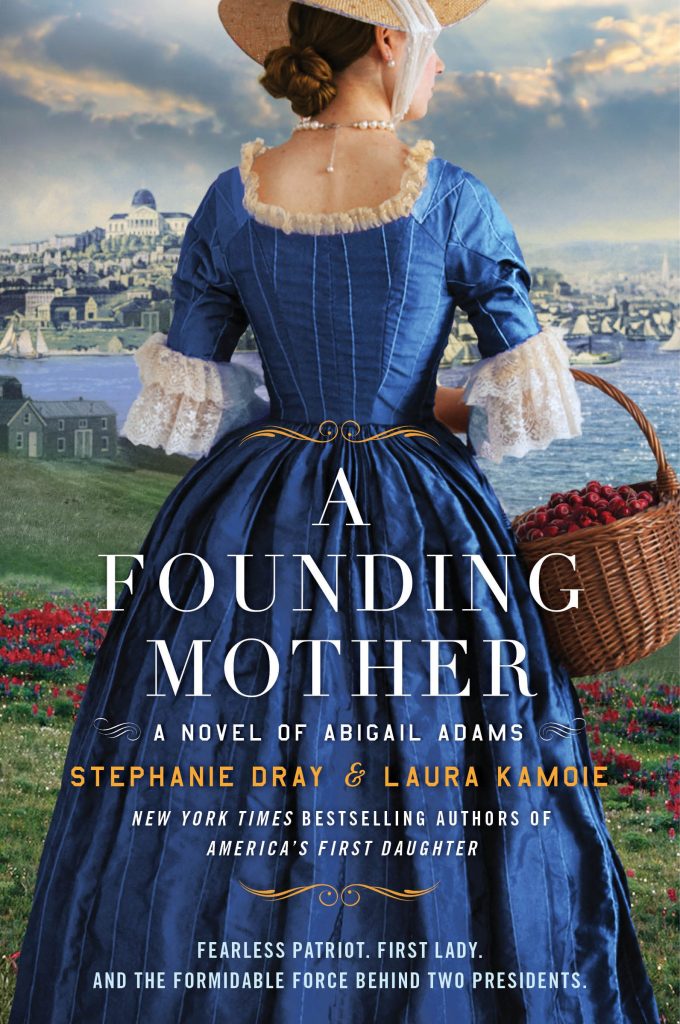
Jackie: And that book is just out, so we have a great opportunity to share it with the community. So who’s next in your sights?
Laura: We have pitched an idea to our publisher, but it has not been solidified yet, so we cannot share it. We also are writing solo works, both set in the World War II era. Those we can share a little bit more about, but until we get the green light from our publisher on our next founding mother novel, mum’s the word.
Jackie: So why don’t you give us a little bit of insight on what you’re working on next.
Laura: My solo novel is tentatively titled Churchill’s Spy Mistress. It is about an immigrant woman to Britain named Vera Atkins, who became the de facto head of part of the Special Operations Executive — Churchill’s organization to bolster and build the resistance in occupied parts of Europe by sending spies in to build those networks. Vera Atkins becomes in charge of the women who she ultimately convinces to serve. And after the war, she goes into war-torn Europe and becomes something of a Nazi hunter as she tries to track down what happened to her spies who didn’t return. She also assists in the prosecution at the Nuremberg war crimes trials because of some of that information she finds along the way. She’s an absolutely fascinating figure! There are also some points of view from the first two of her women spies who parachute into occupied France. I’m almost done drafting that one. At the same time, Stephanie is beginning to work on a book that she is tentatively entitling Macaroni with Mussolini, and it’s about how pasta becomes a symbol of resistance in Italy during World War II — and it involves a bit of her own family history, as well.
Jackie: Wow. You guys have really got some groundbreakers there. I can’t wait to read them. So you also did this interesting collaboration book, Ribbons of Scarlet about the French Revolution. Tell us about this book, why it’s unique, and how you brought it together.
Laura: Stephanie Dray and Eliza Knight were the two authors who came up with this idea, and it was born out of a conversation about how it’s hard to pick a single woman who can really tell the breadth of the history of the French Revolution because it is so complicated. There are so many different elements. The government changes five times, the class divisions make the experiences very different. So a solution to that problem was to pick more than one woman to tell the story. The initial list was about 20 people long. Ultimately, they narrowed it down to seven women because two of their stories are intertwined. It was six authors and seven women. We each drafted our own character’s experience, but then we had to weave them together so it would read as one story. It was a fantastic experiment and very rewarding to be able to tell such a broad novel of the French Revolution. it was great to work with this sisterhood of other authors when, we were writing about the the sisterhood of women who fought in the French Revolution.
Jackie: I think I’ve heard you say that somehow all these women probably knew each other. There was actually a thread between them.
Laura: And that was that was really important. We didn’t just want six disconnected women. We wanted them to intersect and overlap and have conversations and meet each other on the street or have established relationships already. That was part of how we winnowed that list of 20 down to these seven, because there were some other absolutely fascinating women, but they just didn’t intersect with anyone. There weren’t good opportunities where you could justify putting two women in the same space, even if historically we didn’t know for sure that that had happened. Part of the selection process was making sure that these women could know each other because it’s easier to make a loss or a win emotionally poignant, if the characters are invested in one another.
Jackie: So do you think being a historian really gives you a leg up?
Laura: In some ways yes, in some ways no. I had the background in early American history, but the craft of writing is something everyone shares. Many historical novelists should be calling themselves historians because of the depth of research they do.
Jackie: Tell us a little more about your life.
Laura: I live in Annapolis, Maryland. I have two daughters, 21 and 19. One is about to graduate from college, the other is in Los Angeles at university. They’re both doing great. My younger daughter is pursuing journalism and has won awards. I love to travel, especially to historic sites. I love archaeology, documentaries, and shows like Time Team and Expedition Unknown.
I haven’t excavated recently due to arthritis in my hands, but I still follow sites like Jamestown, where I worked with the team that discovering the original 1607 fort. Until then there was no proof of exactly where the site was. We did it! Those are some of my fondest memories as a historian. There is nothing like holding something in your hand that the last person who touched it was the person who dropped it 400 years ago! That’s just fascinating to me.
