If you’re planning a spring trip to New York, the city’s botanical gardens and flower markets offer a chance to experience the same floral abundance that once captivated colonial merchants. The New York Botanical Garden in the Bronx, Central Park’s Cherry Hill, and the Conservatory Garden all showcase seasonal blooms from March through May, while neighborhood flower markets in Washington Square and the Flower District on 28th Street carry fresh tulips and spring arrangements year-round, continuing a tradition of horticultural commerce that stretches back to the city’s earliest days.
Tulip Fever in New York City: When Manhattan Became a Spring Garden
When I lived in New York twenty years ago, spring certainly arrived with charm. There were flowering trees, daffodils, early park plantings, and the occasional proud tulip bed.
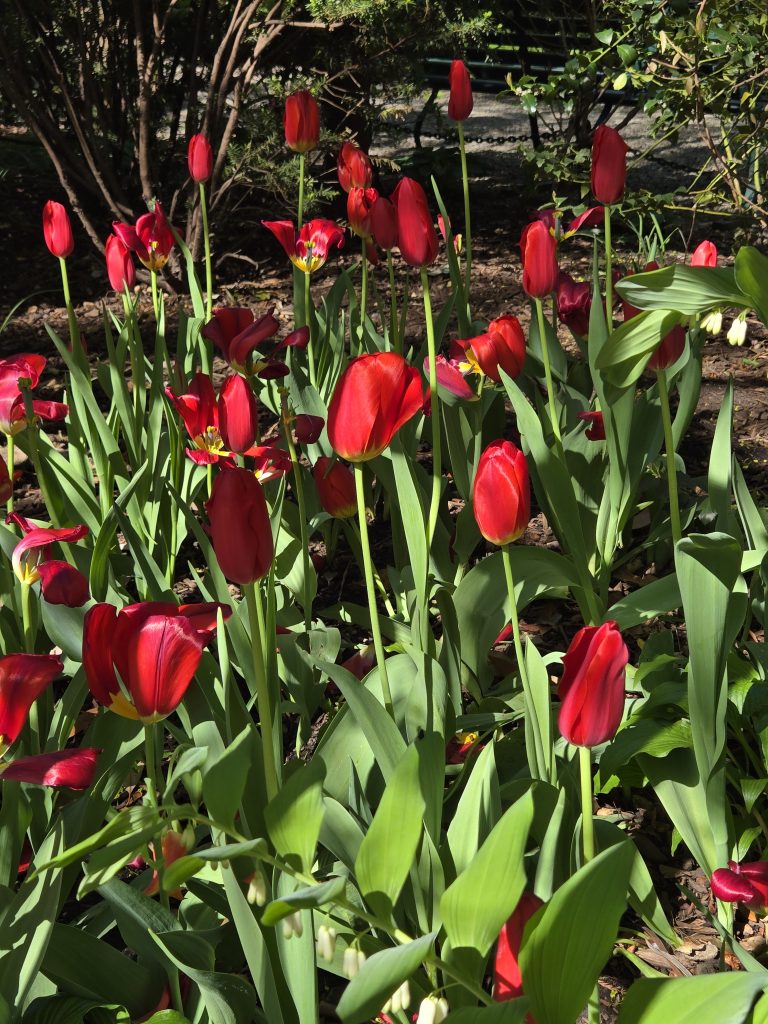
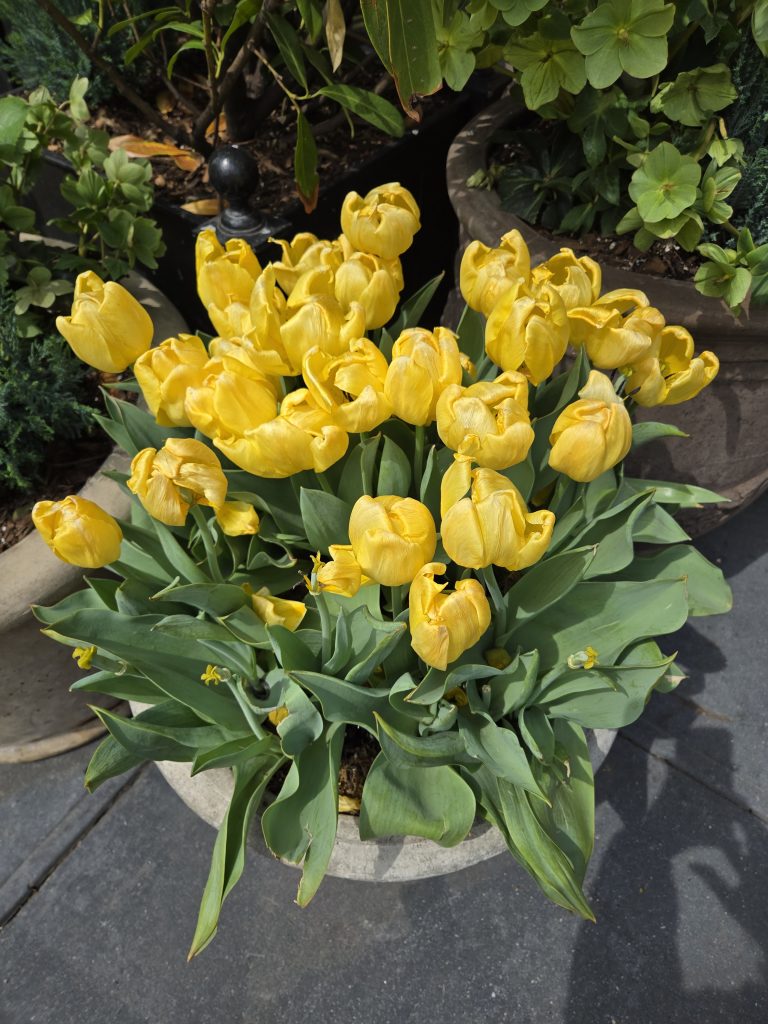
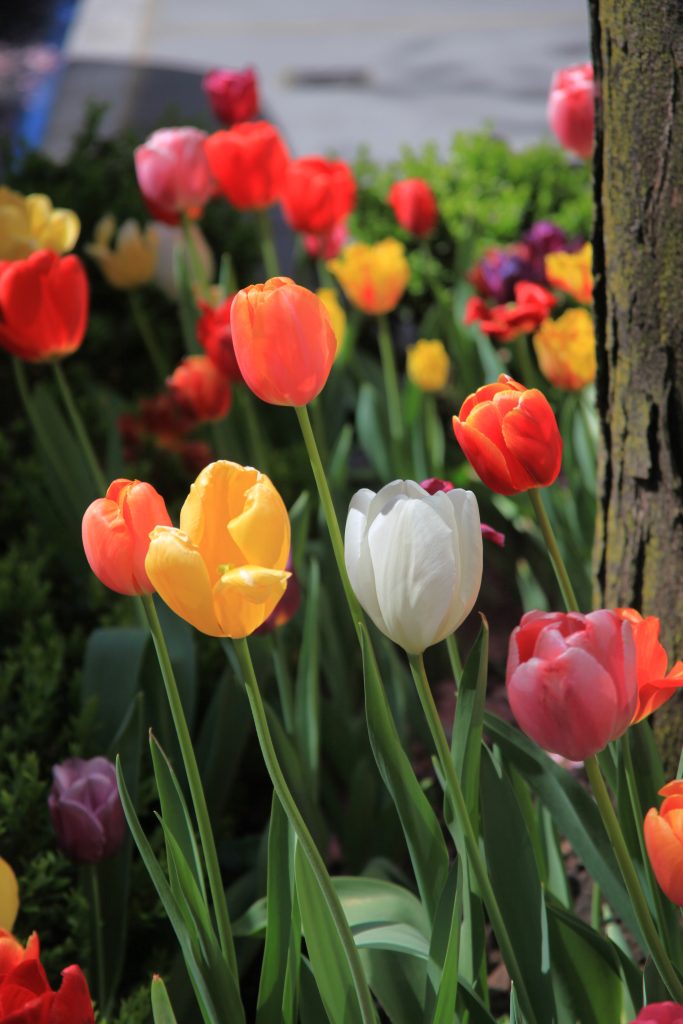
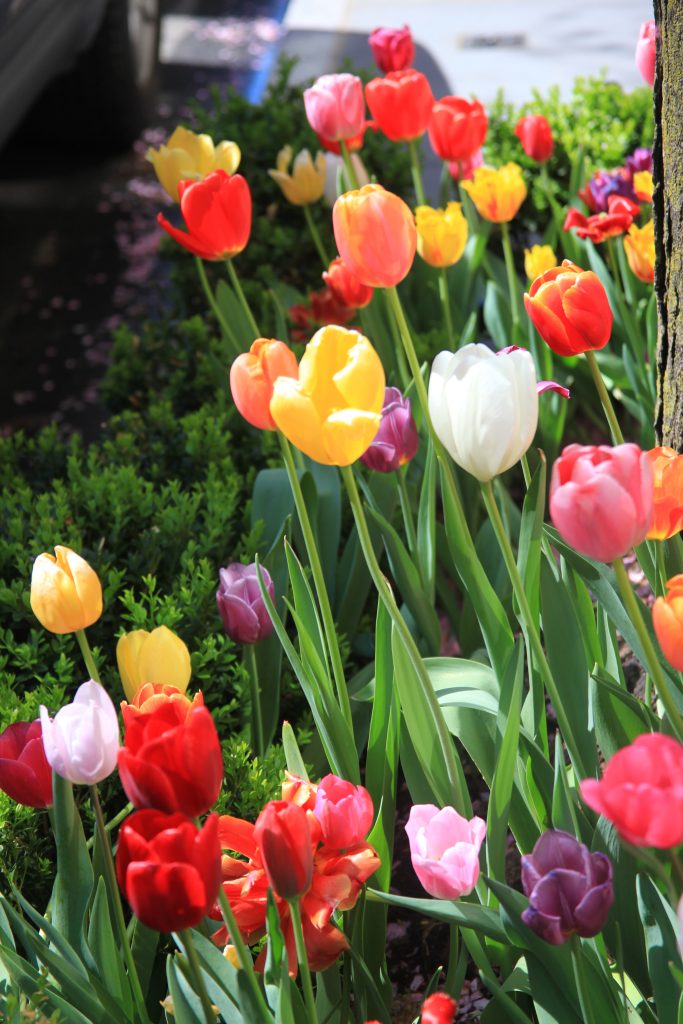
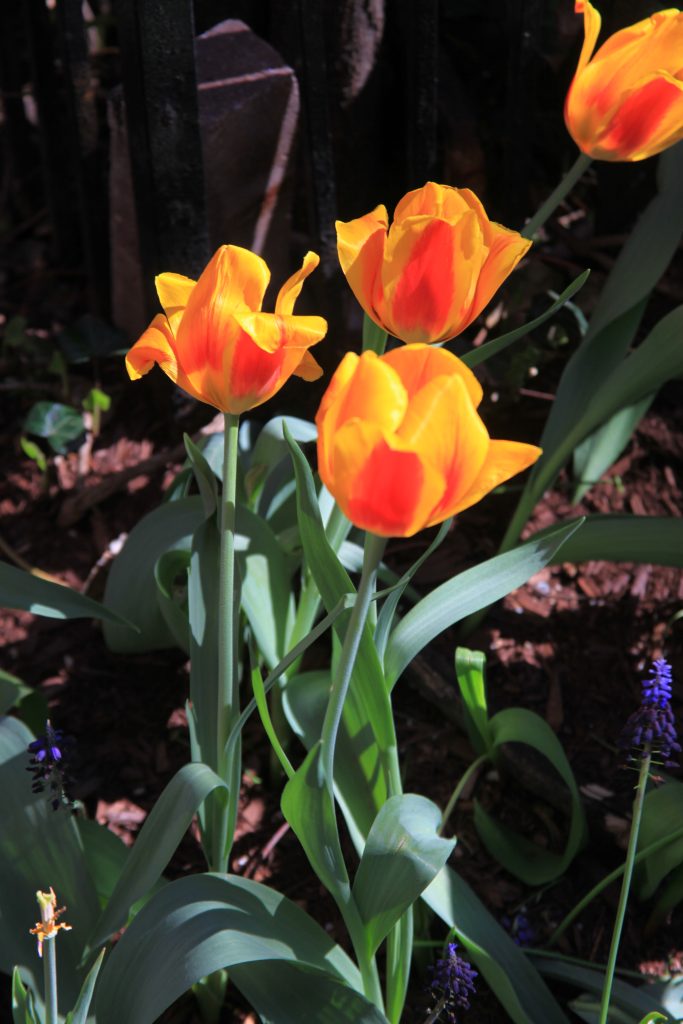
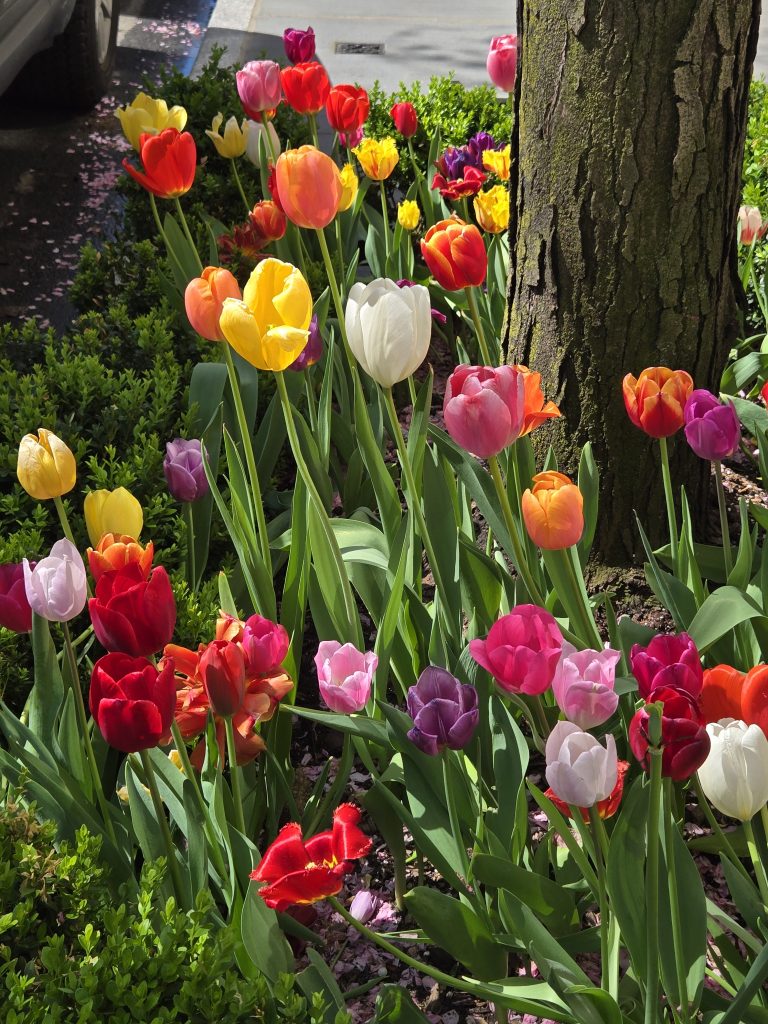
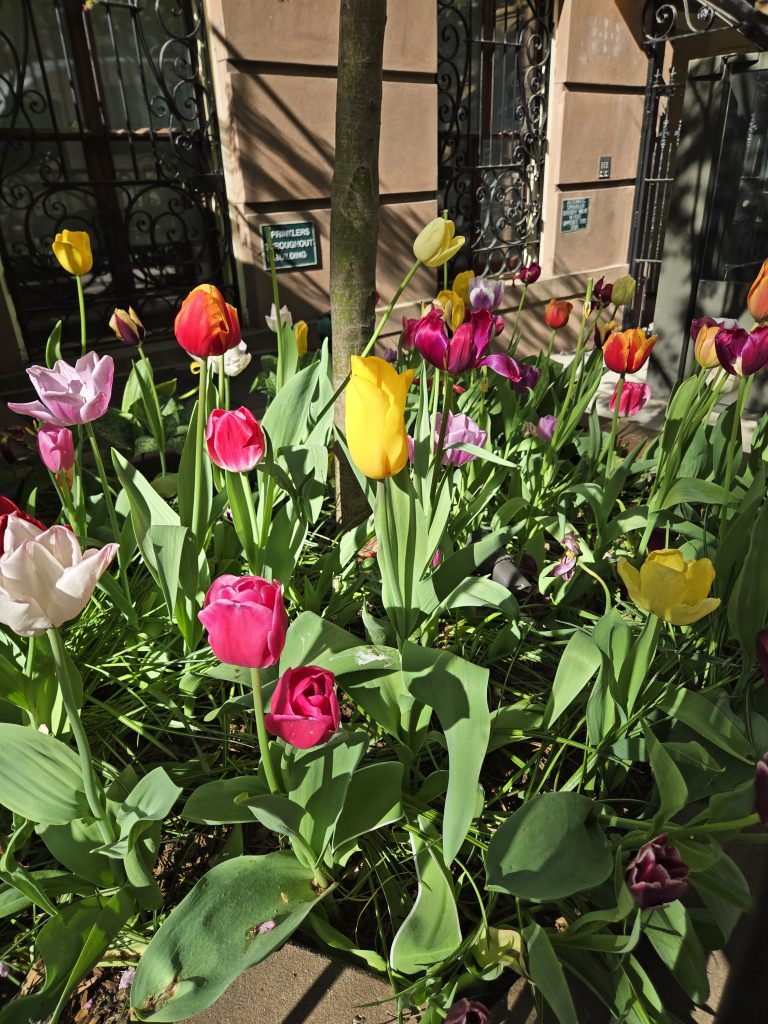
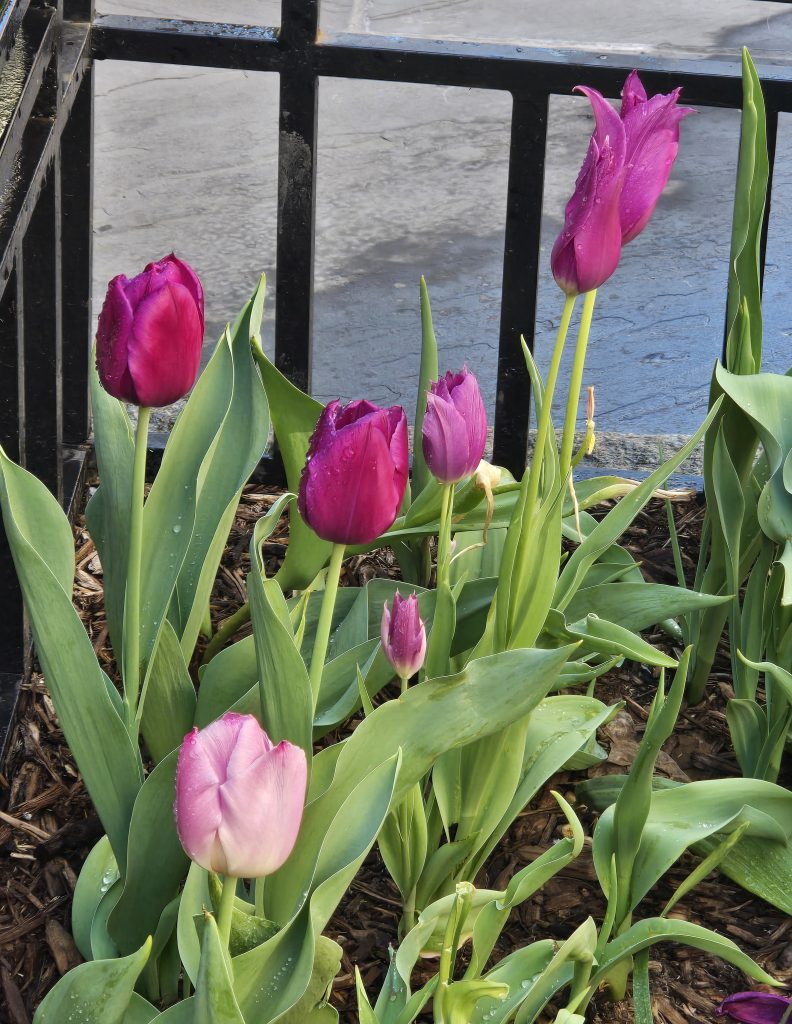
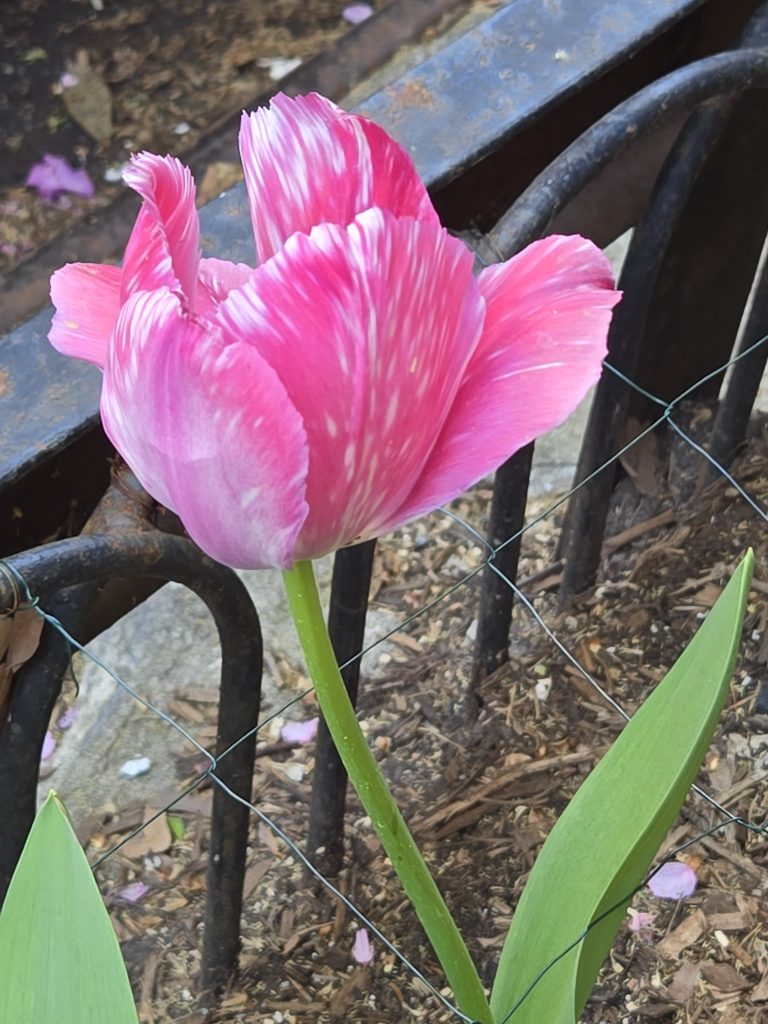
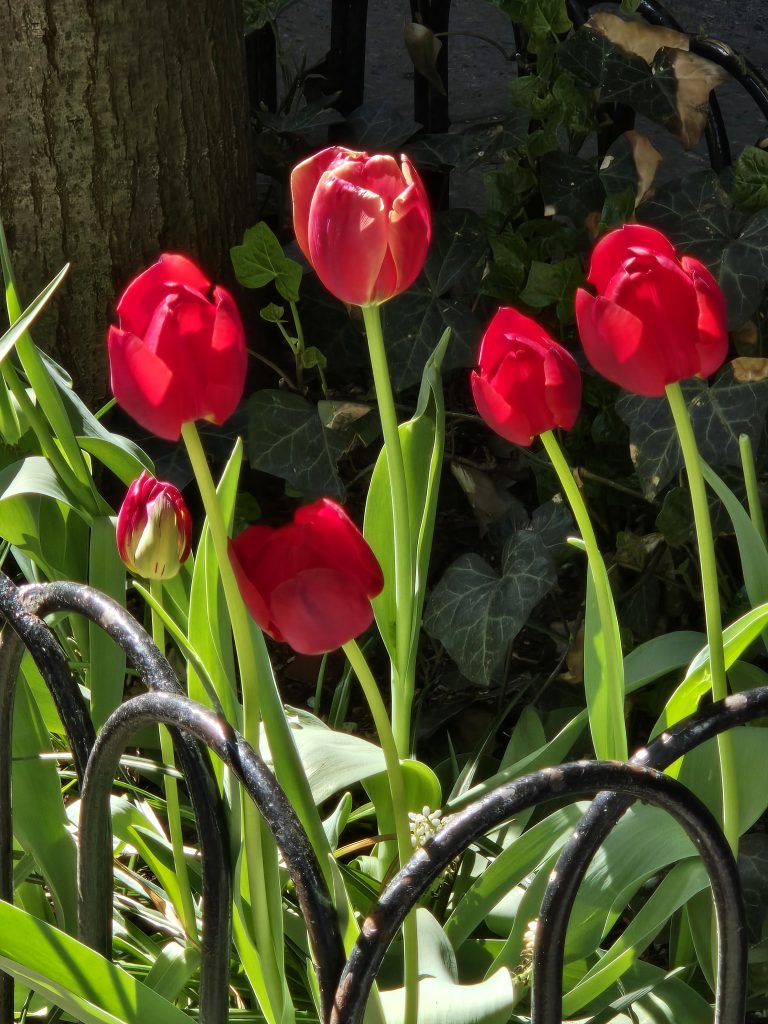
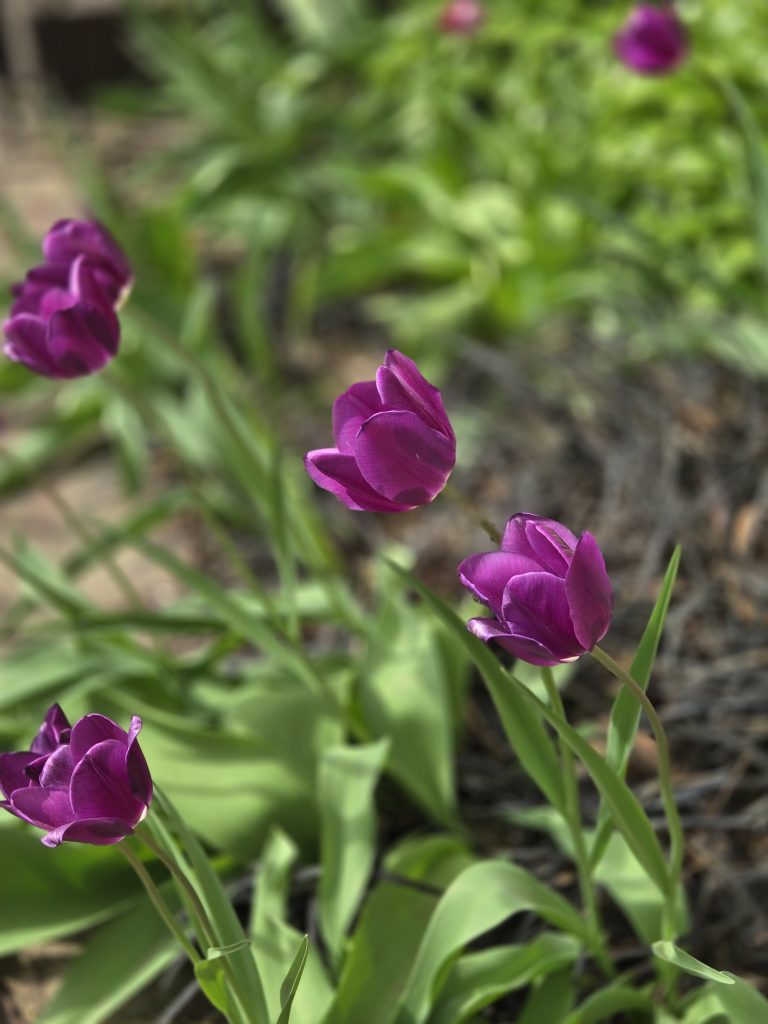
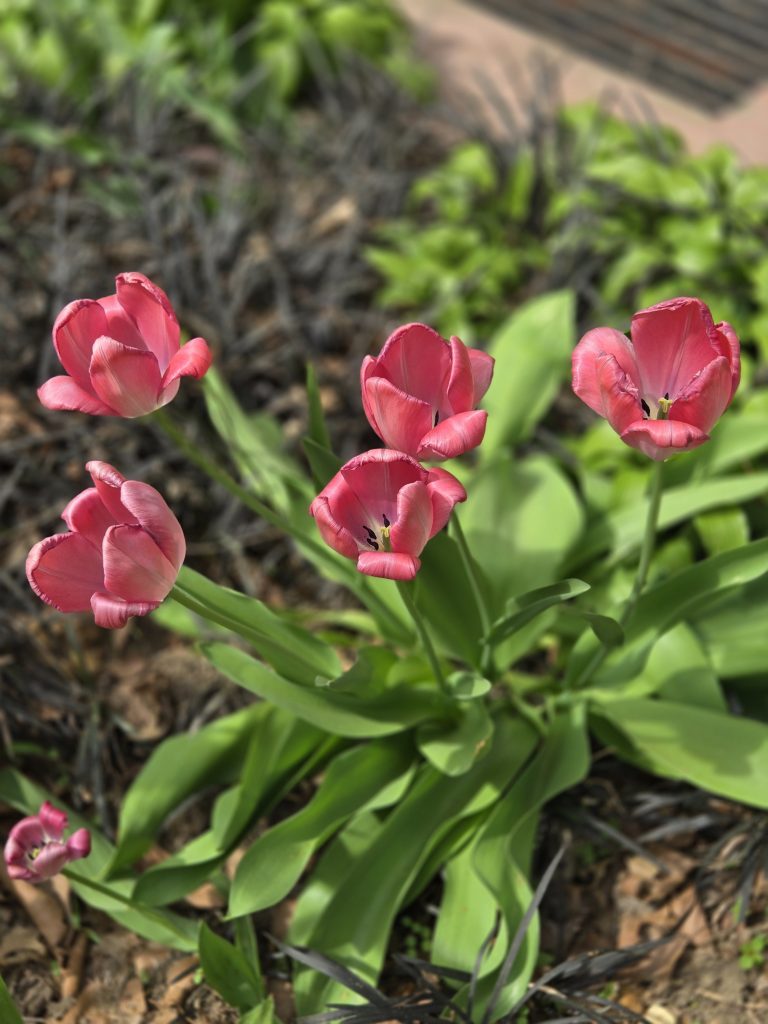
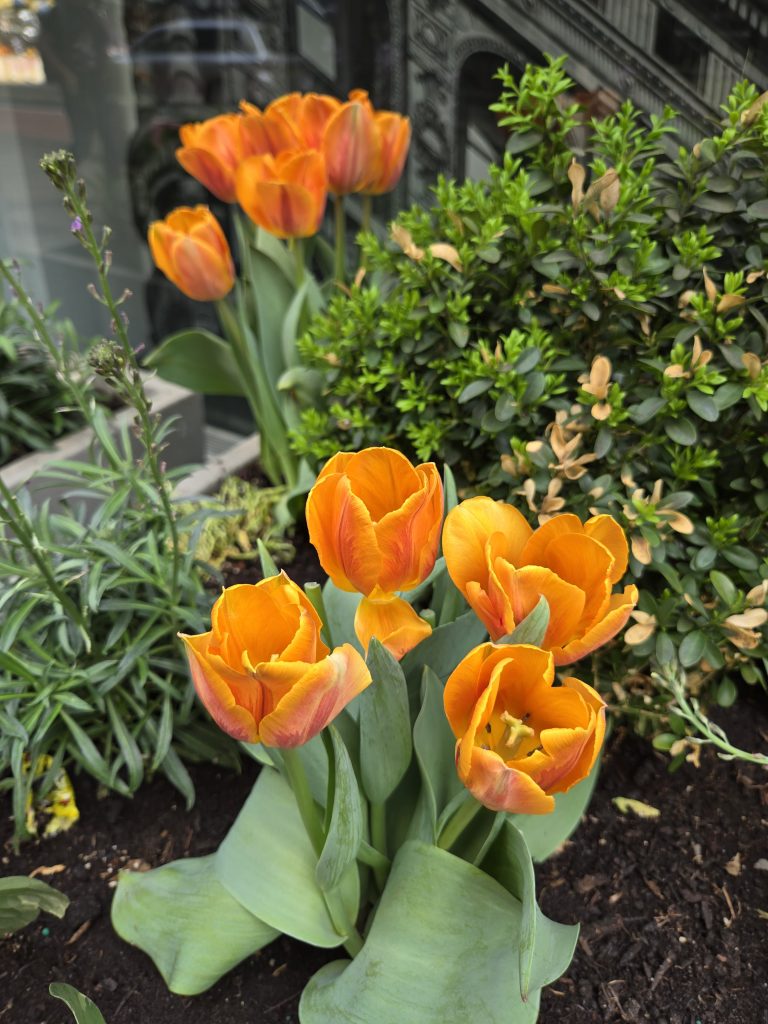
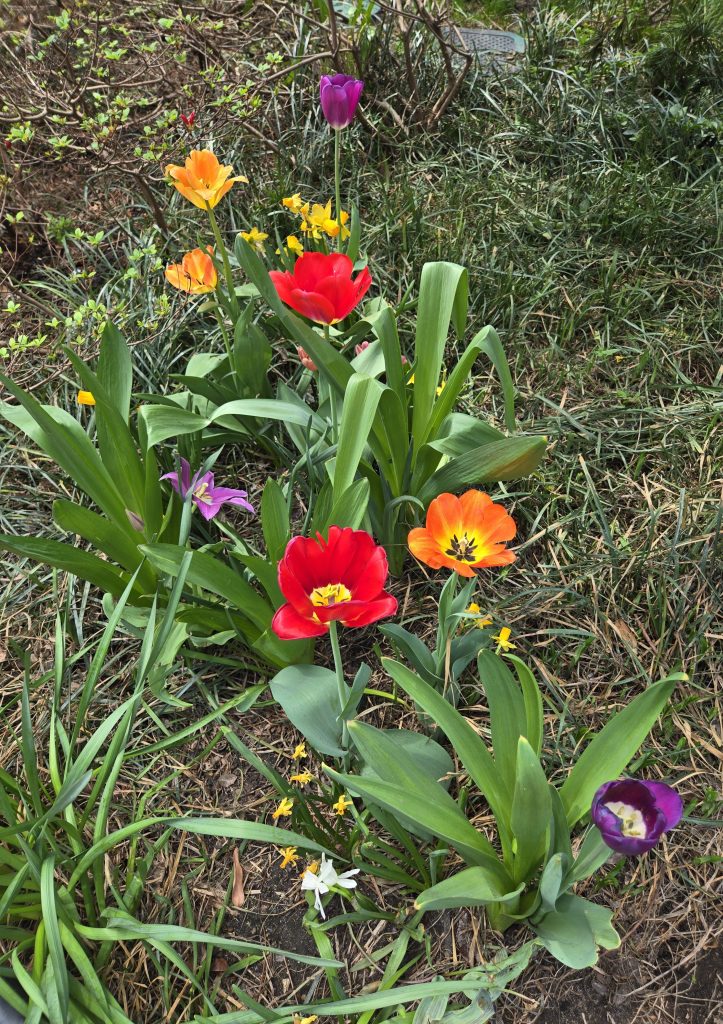
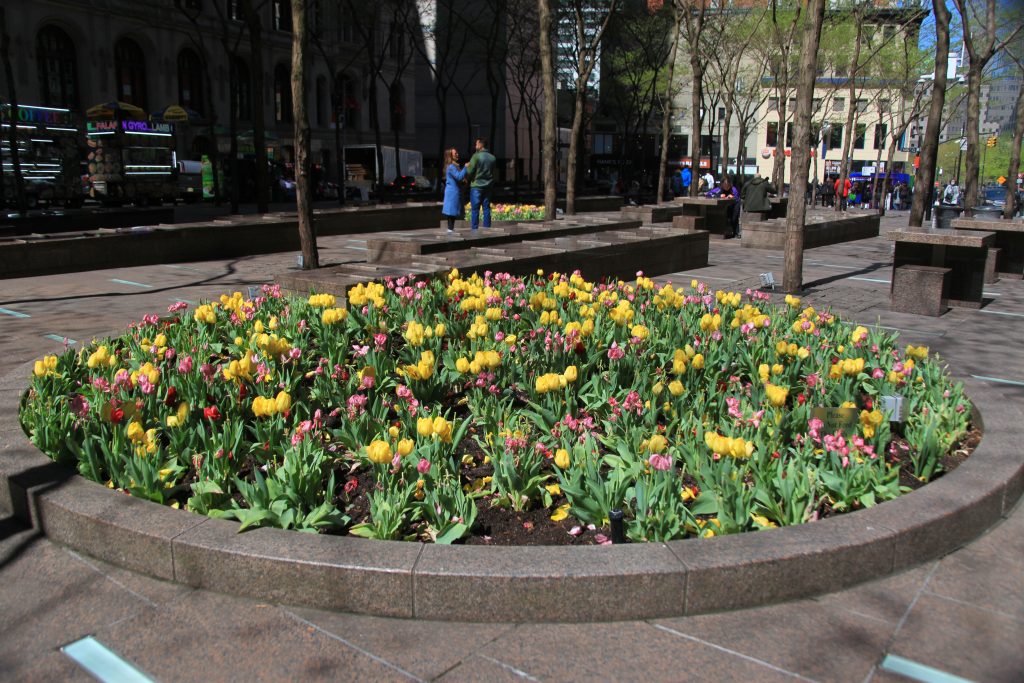
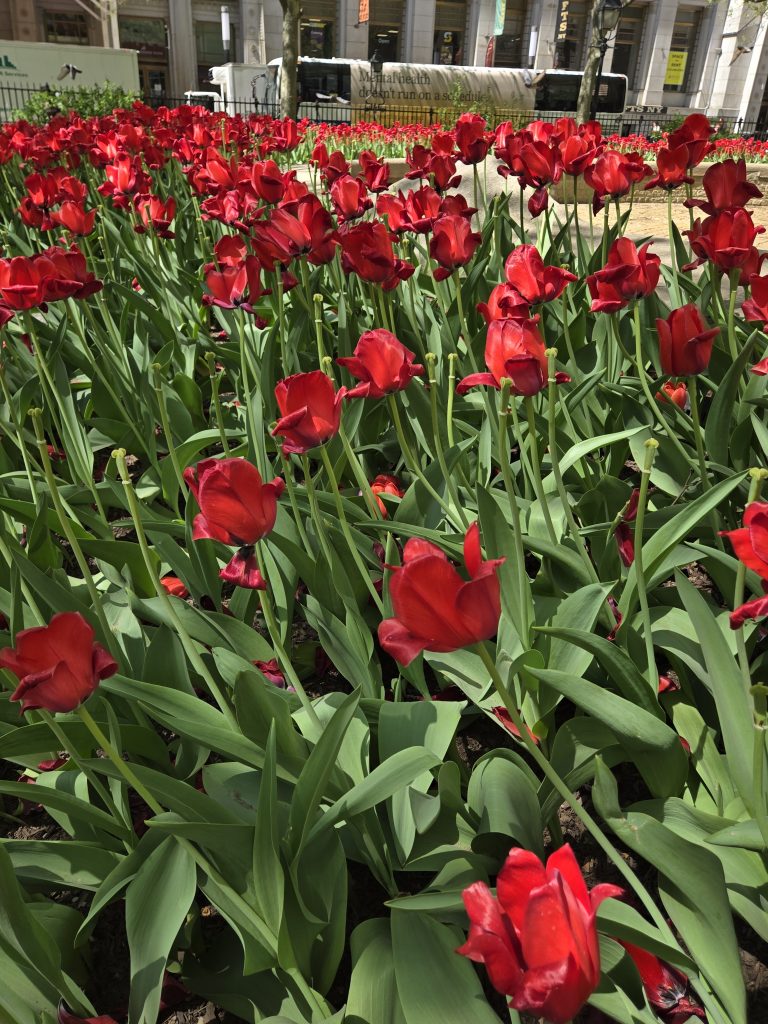
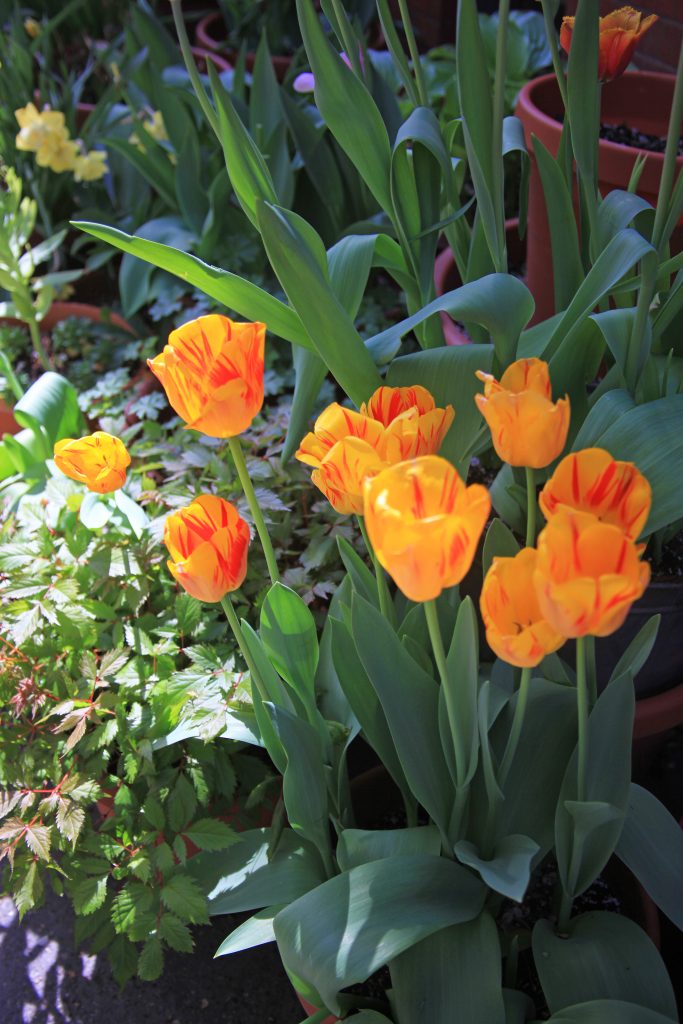
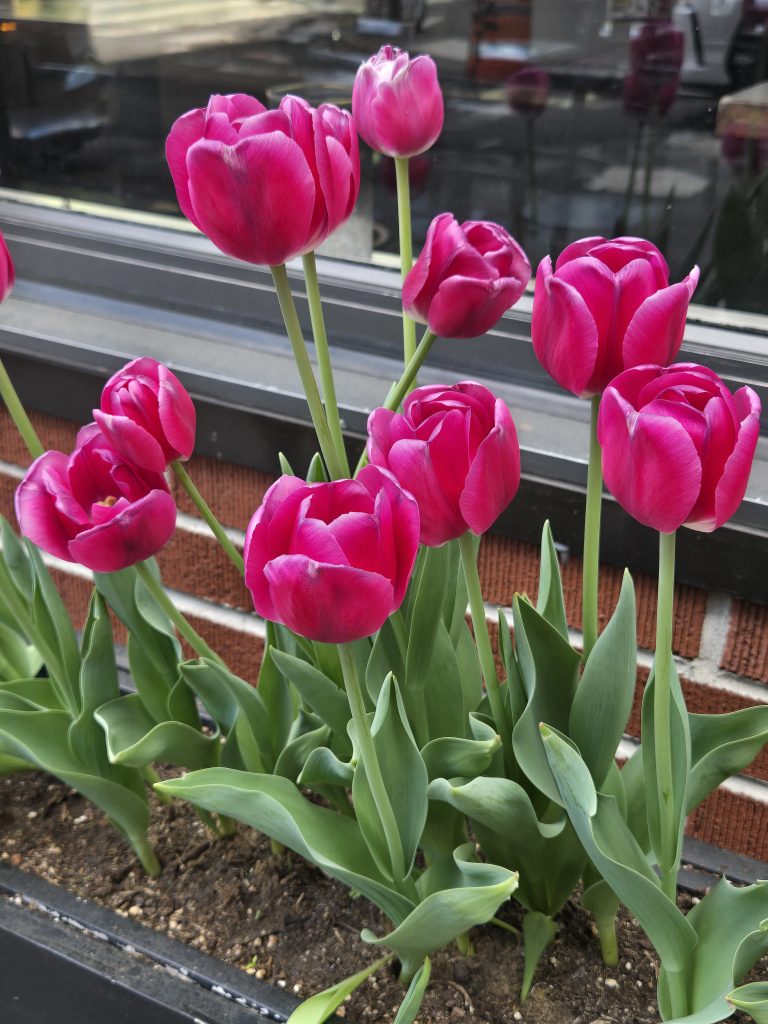
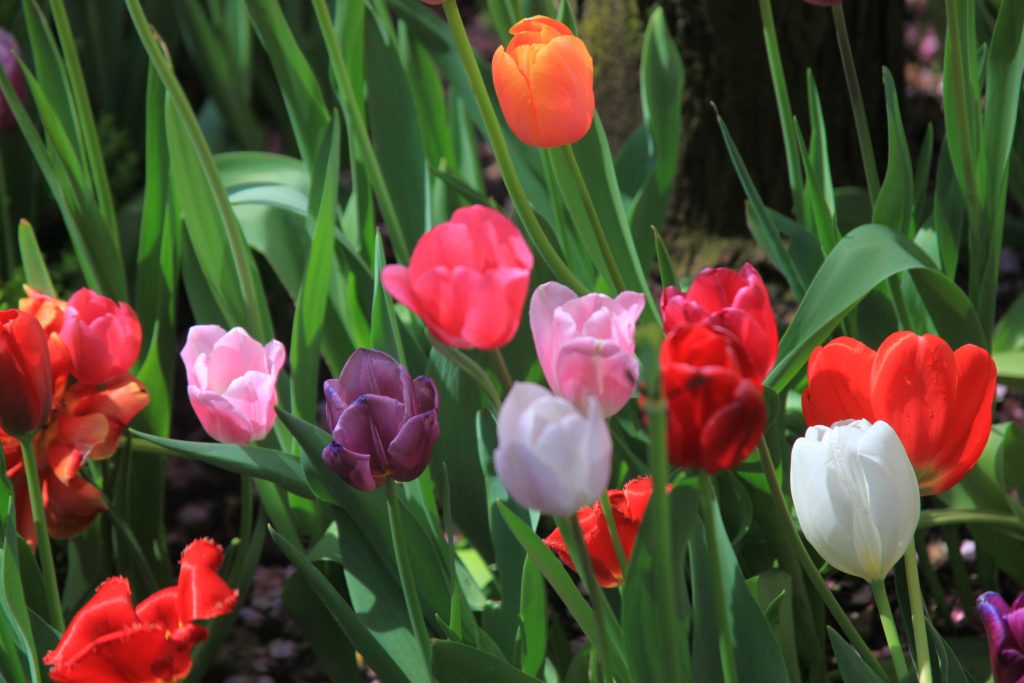
But now, suddenly, everywhere you turn—along Park Avenue, in Central Park, at Union Square, outside brownstones, around office towers, in median strips, planters, and public gardens—there they are TULIPS! Red, yellow, coral, cream, violet, raspberry, flame-orange, and those wonderful variegated ones that look as though some Dutch painter had a very spirited afternoon with a brush.
What’s remarkable is that it feels choreographed. An unofficial decree that if it’s spring you plant TULIPS!
The city now seems seized by a genuine case of Tulip Fever! And happily, no one appears eager for a cure.
A Dutch Flower in a Very Dutch City
Of course, tulips and New York belong together more naturally than one might first suppose. Before it was New York, it was New Amsterdam, founded by the Dutch in the 17th century. And while the city’s original Dutch settlers were rather more concerned with trade, harbor rights, beaver pelts, and survival than with ornamental flowerbeds, the tulip has become a lovely modern echo of that Dutch inheritance.
The tulip’s own history is as dramatic as anything Manhattan could invent. Native originally to Central Asia and cultivated in the Ottoman Empire, tulips reached Europe and became a sensation in the Netherlands during the 17th century. By the 1630s, Dutch “Tulip Mania” had become one of the most famous speculative bubbles in history, with rare bulbs selling for astonishing sums before the market collapsed.
So perhaps it is fitting that the flower associated with beauty, desire, commerce, risk, display, and a touch of madness should find such a happy second life in New York City.
This is, after all, a town that understands spectacle.
Park Avenue: The Grand Floral Promenade
The most storied tulip setting in Manhattan is still Park Avenue.
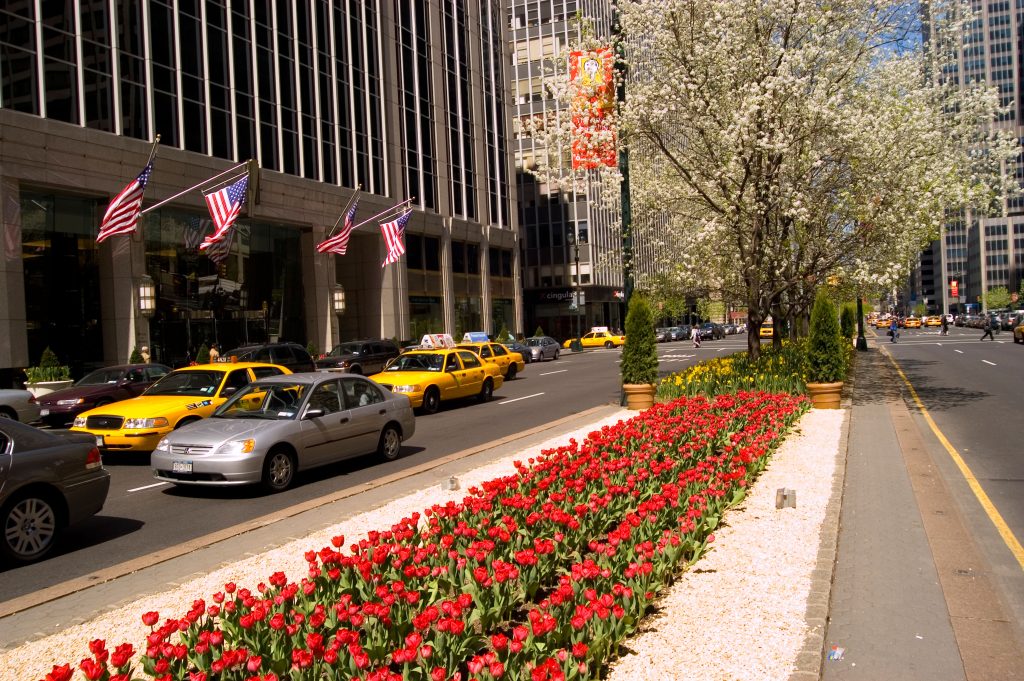
Each spring, the central malls burst into color, transforming that long, elegant corridor of apartment houses, office buildings, churches, and traffic into something almost European. Yellow taxis stream past drifts of red and white. Doormen stand beneath awnings while petals tremble in the wind. Businessmen, dog walkers, nannies, joggers, tourists, and lifelong New Yorkers all pause for the same reason: the flowers are irresistible.
Park Avenue’s spring tulip tradition is not new. Its origins are often traced to civic beautification efforts begun by philanthropist Mary Lasker in the mid-20th century, when tulips helped soften and enliven the avenue’s central malls. Today, The Fund for Park Avenue continues that work, maintaining plantings along the medians and even hosting the beloved annual Tulip Dig, when bulbs may be removed and replanted after their display has passed.
There is even a hidden urban advantage beneath the blossoms. The New Amsterdam History Center notes that underground rail lines beneath Park Avenue warm the soil, giving the tulips a head start in spring. How wonderfully New York is that? Even the subway helps stage the floral drama.
Central Park: Tulips with a Formal Bow
If Park Avenue gives us tulips as urban pageantry, Central Park offers tulips as garden theater.
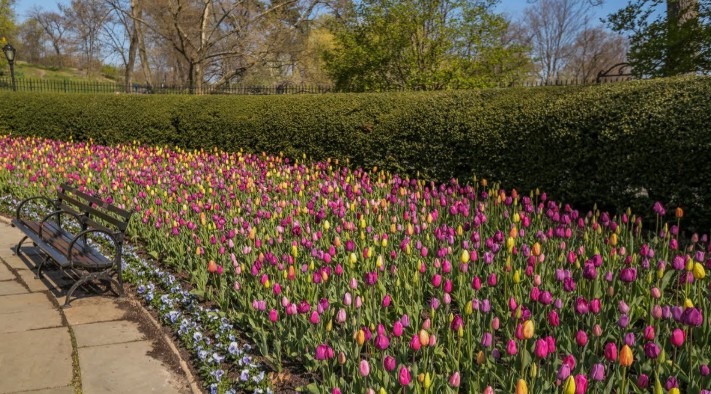
The Conservatory Garden, tucked into the northeastern corner of Central Park, is one of the city’s great formal treasures. Here, tulips appear not as accidental splashes of color but as carefully composed masses of bloom. The Central Park Conservancy notes that the North Garden alone contains 20,000 tulips, while the South Garden may feature up to 25 different varieties.
This is a place for lingering.
Here, tulips stand in elegant ranks beside fountains, hedges, crabapple trees, wrought iron gates, and strolling paths. In April and May, the garden becomes a painterly composition of color and symmetry. Visitors drift through with cameras and coffee cups, while brides, families, influencers, and solitary dreamers all find their own reason to stop.
The Conservancy describes the spring displays as the result of months of planning and fall bulb planting—gardening as an act of faith in the future. And in a city not always known for patience, that may be part of the magic. Tulips demand that someone believed in April back in October.
Union Square: Tulips as Festival
Then there is the newer, more exuberant phenomenon: Tulip Day.
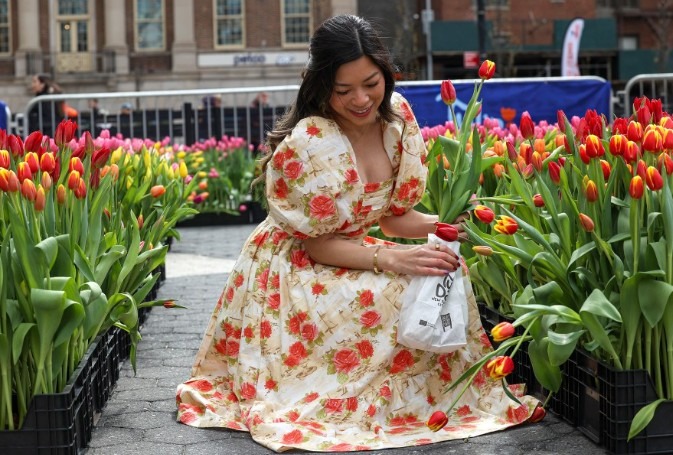
In recent years, Union Square has hosted an enormous tulip installation where visitors are invited to pick their own bouquet. In 2025, the event featured 170,000 tulips and was staged for the second year in a row. The event is made possible by Royal Anthos, representing the flower and tree agriculture industry, along with NYC Parks, the Consulate General of the Kingdom of the Netherlands in New York, and Union Square Partnership.
This is tulip display as public celebration—part Dutch heritage, part urban joy, part Instagram pilgrimage.
For a few hours, one of Manhattan’s busiest crossroads becomes a temporary flower field. The sight of people walking through the city holding armfuls of tulips is unexpectedly tender. It softens the edges. It makes strangers smile at one another. It turns the subway platform into a bouquet parade.
And frankly, New York could use more bouquet parades.
This alone has afforded the masses of New York residents a chance to simply repopulate their own flowering spaces with tulips sourced at Tulip Day!

You Don’t Have to Look Far
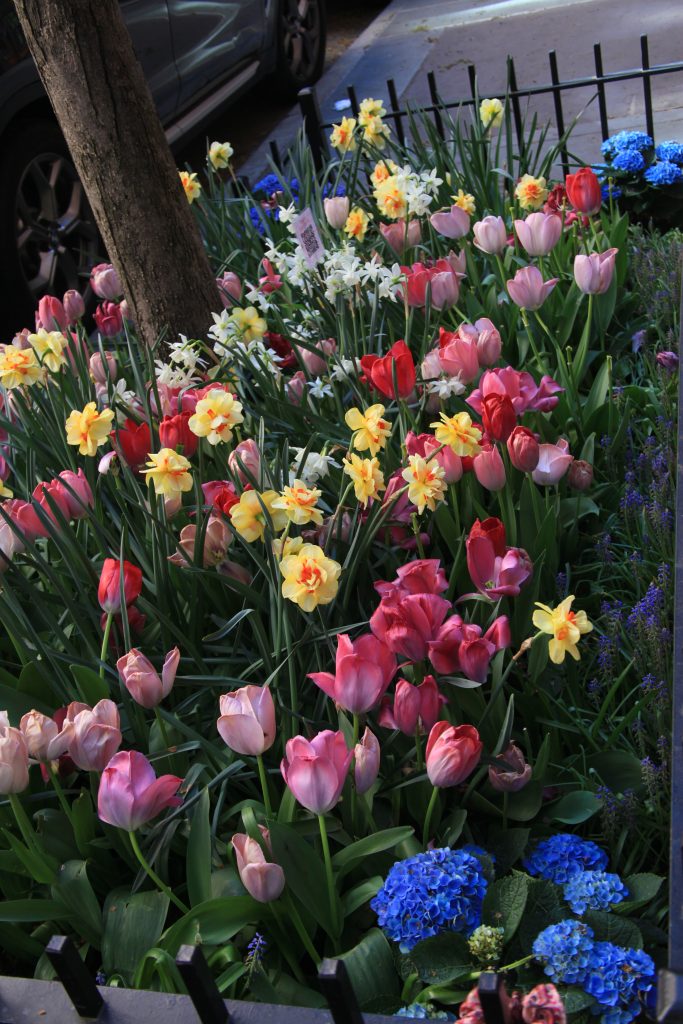
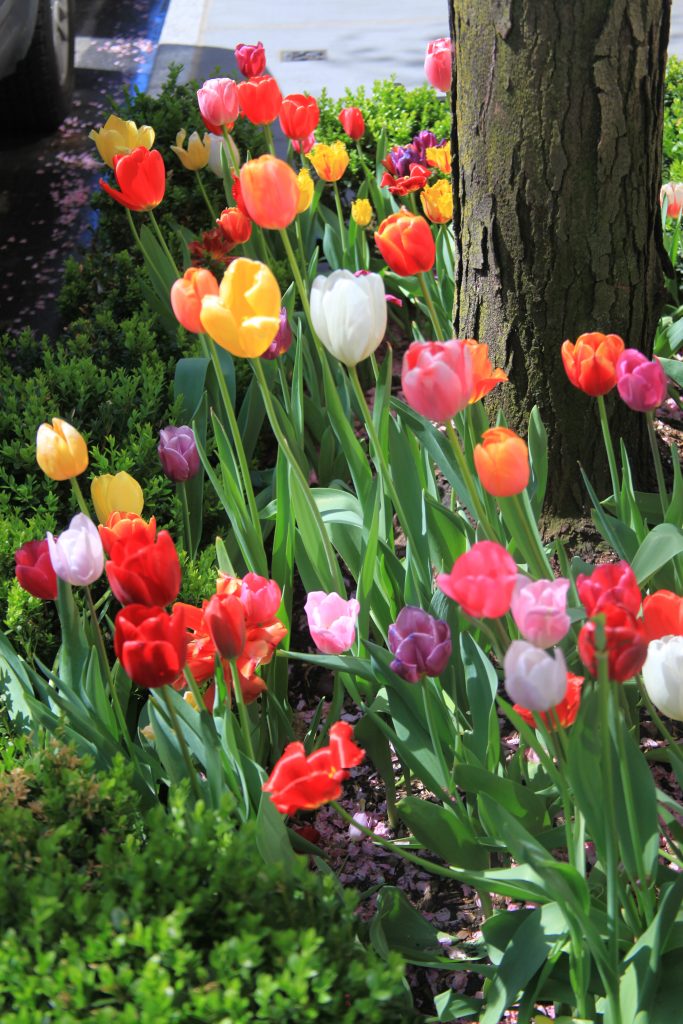
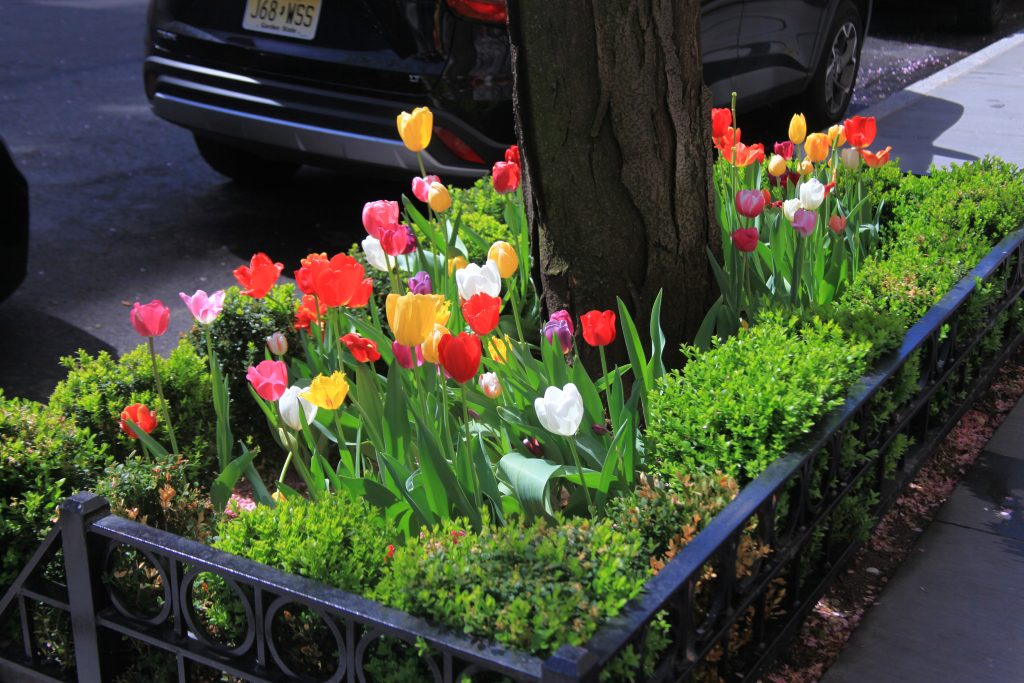
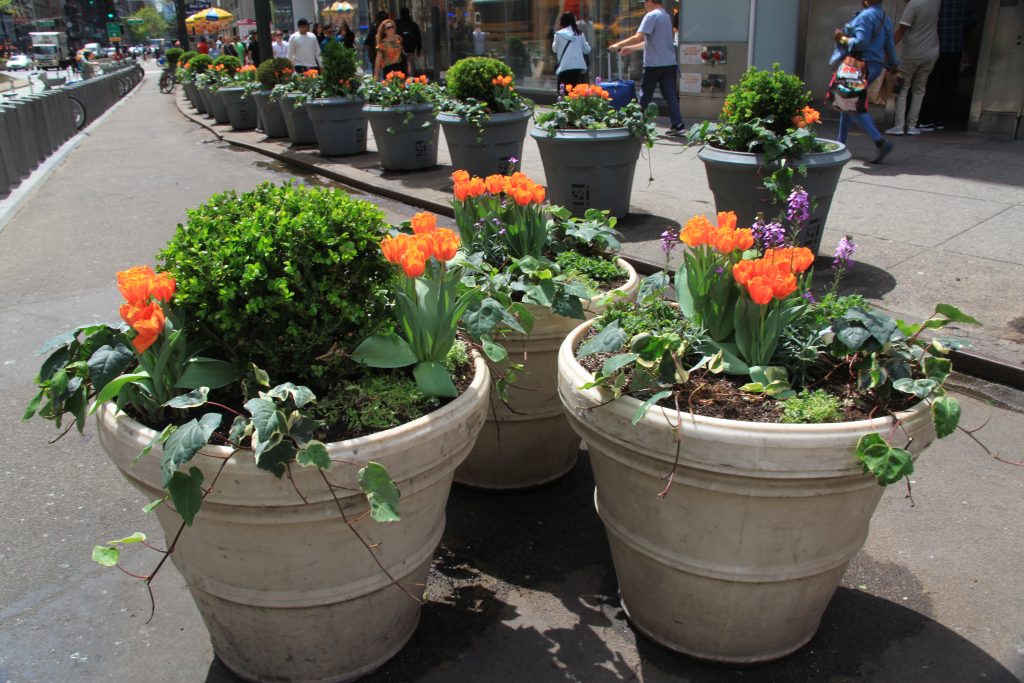
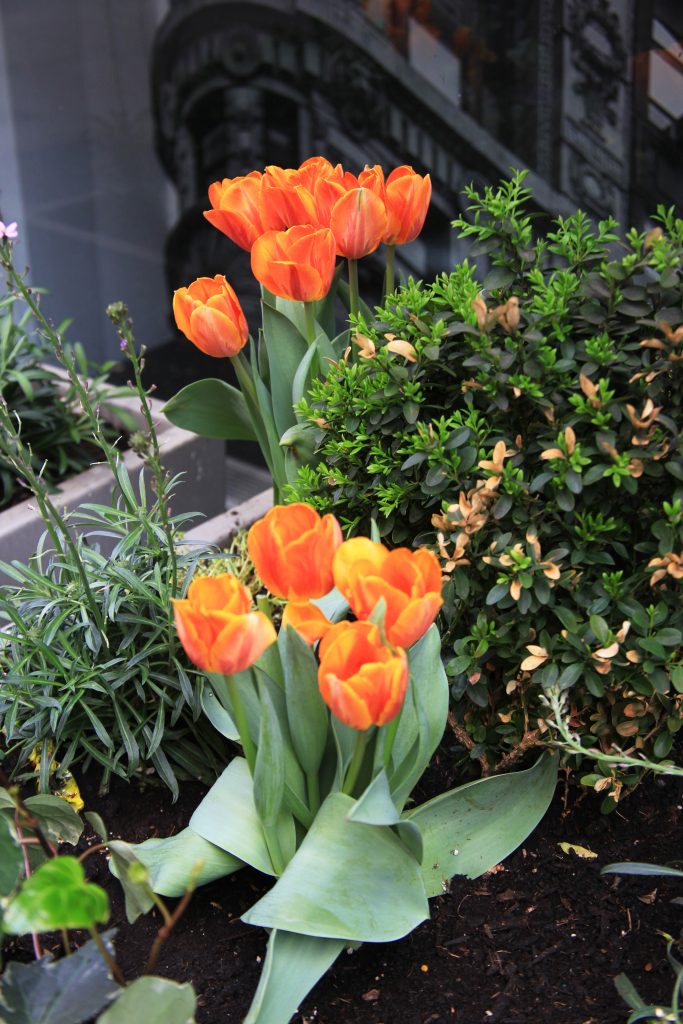
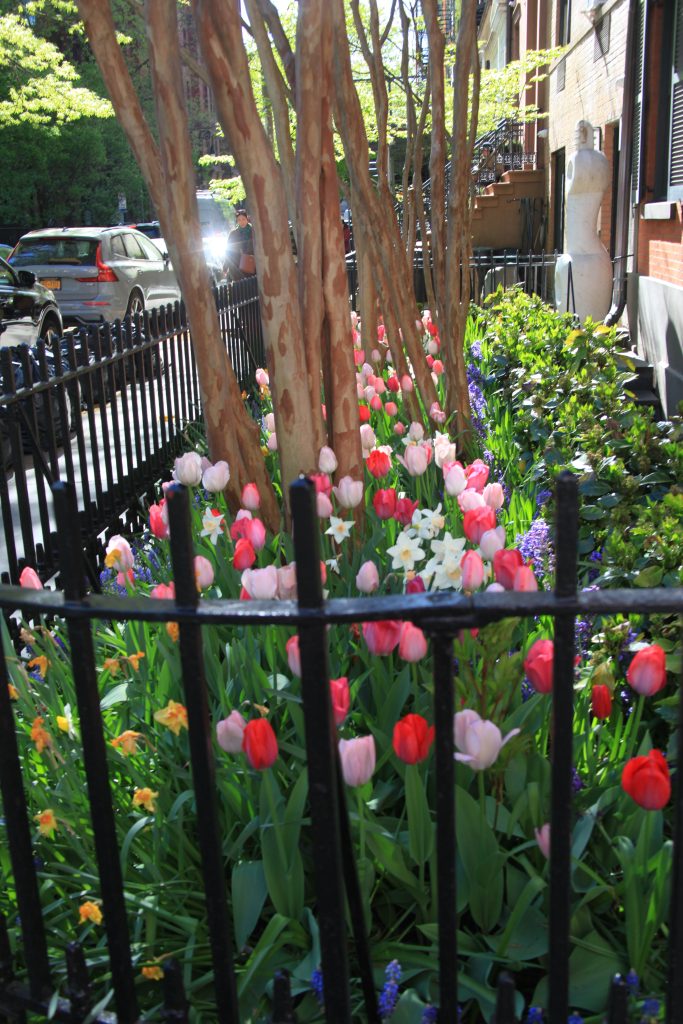
The proliferation of tulips is most evident in the flower beds surrounding the trees on city sidewalks. Everywhere you turn, local owners and renters adorn their tiny flower beds with single or multi-colored tulips.
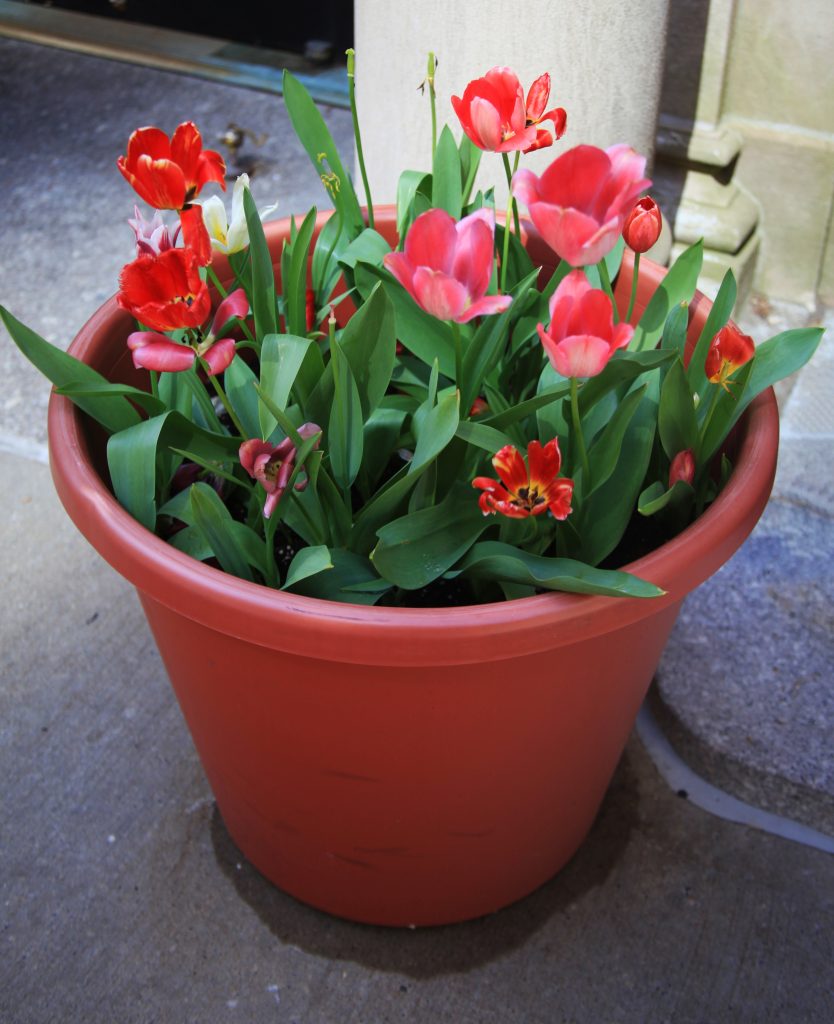
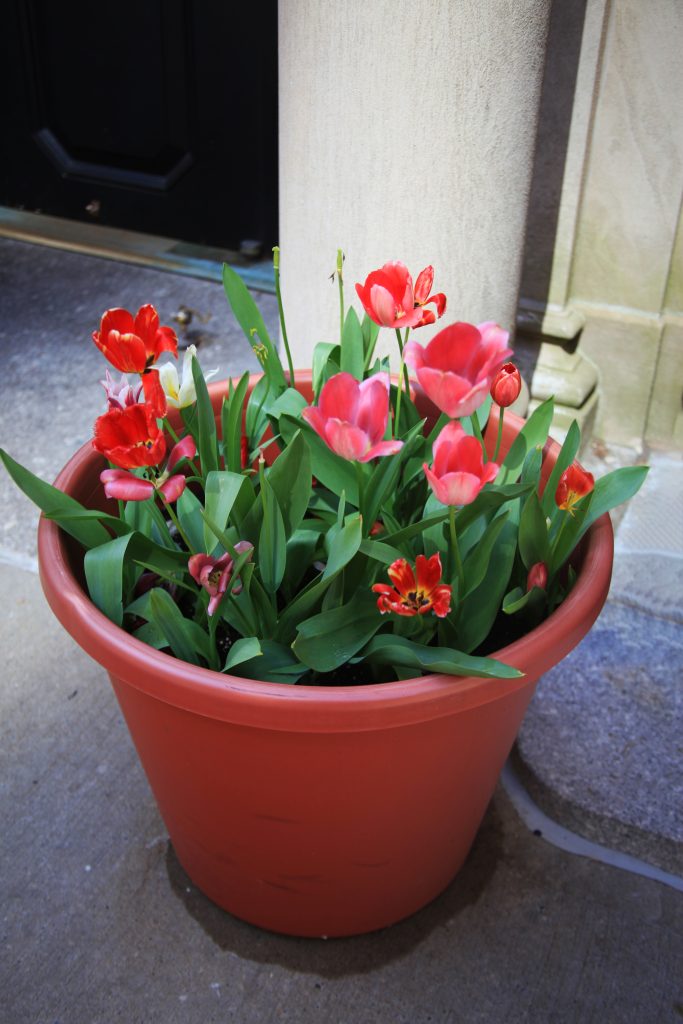
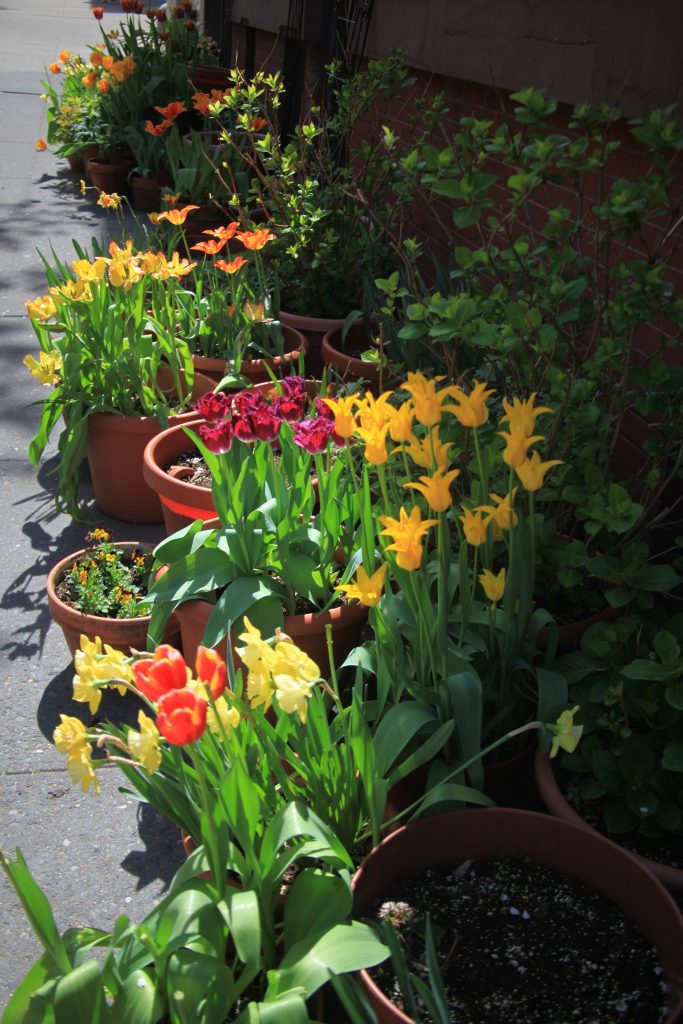
The staircases and stupes of brownstones and dwellings across the city, boast flowerpots bursting with tulip color!
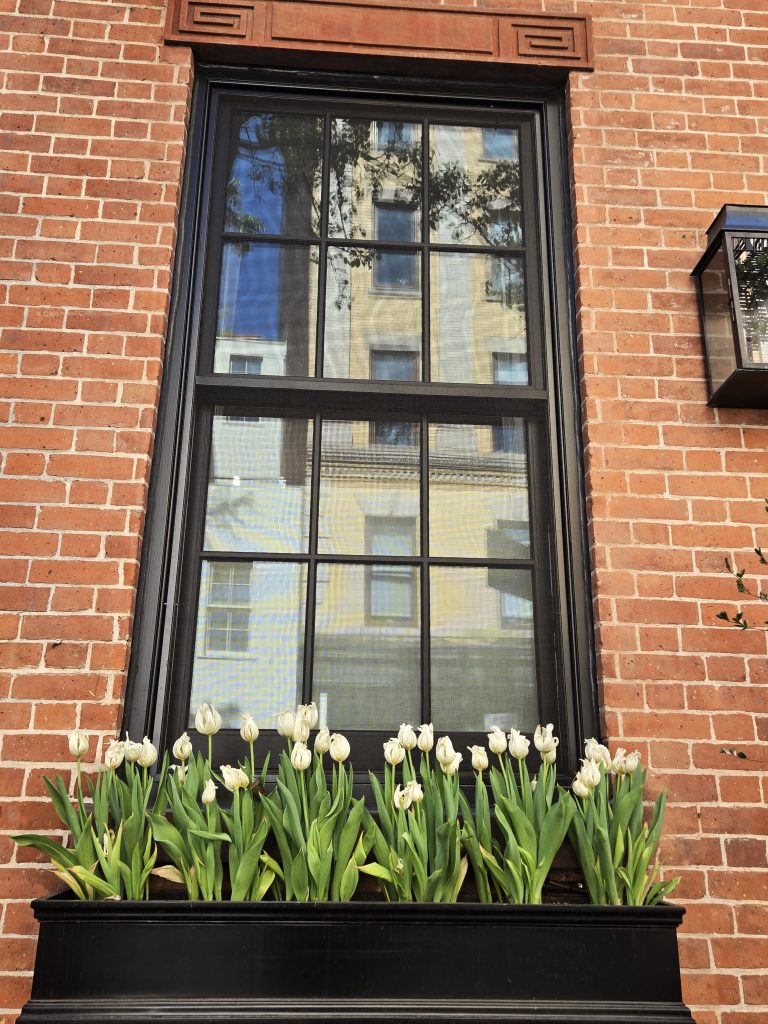
Flowering window boxes proclaim the tulip ascendancy.
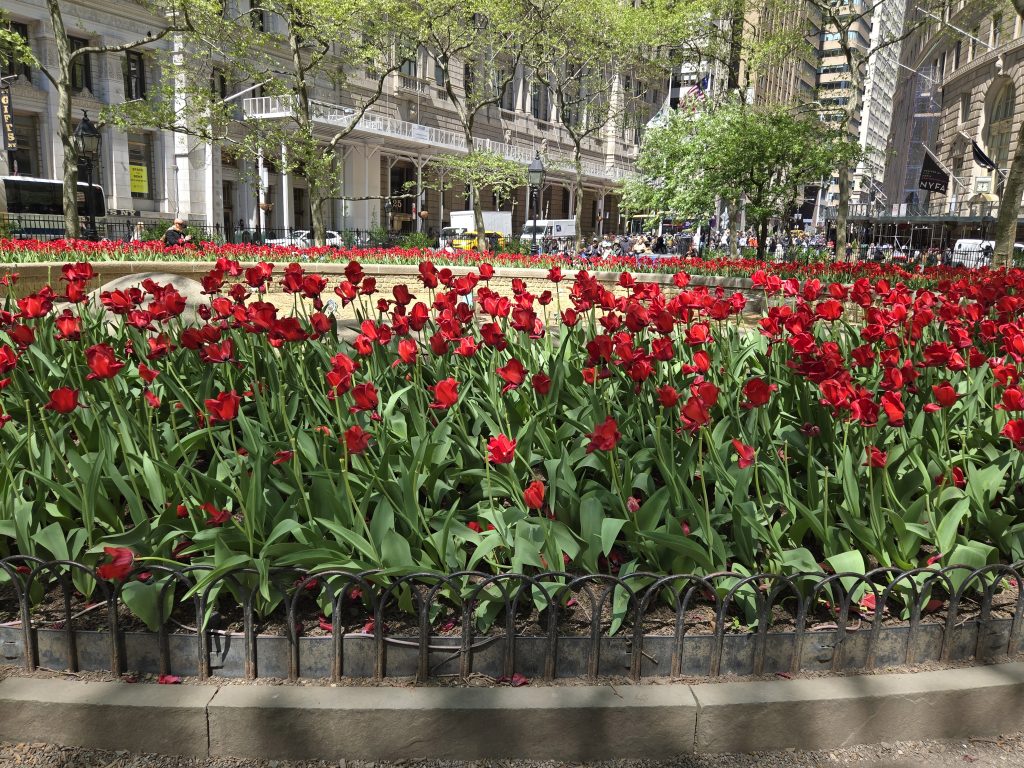
Parks such as the Bowling Green, where fittingly Peter Minuit, the third director of the Dutch New Netherland colony, orchestrated the legendary 1626 “purchase” of Manhattan Island from the local Lenape Native Americans in exchange for trade goods valued at 60 guilders, is now adorned with brilliant red tulips in spring.
Church yards sprout tulips.
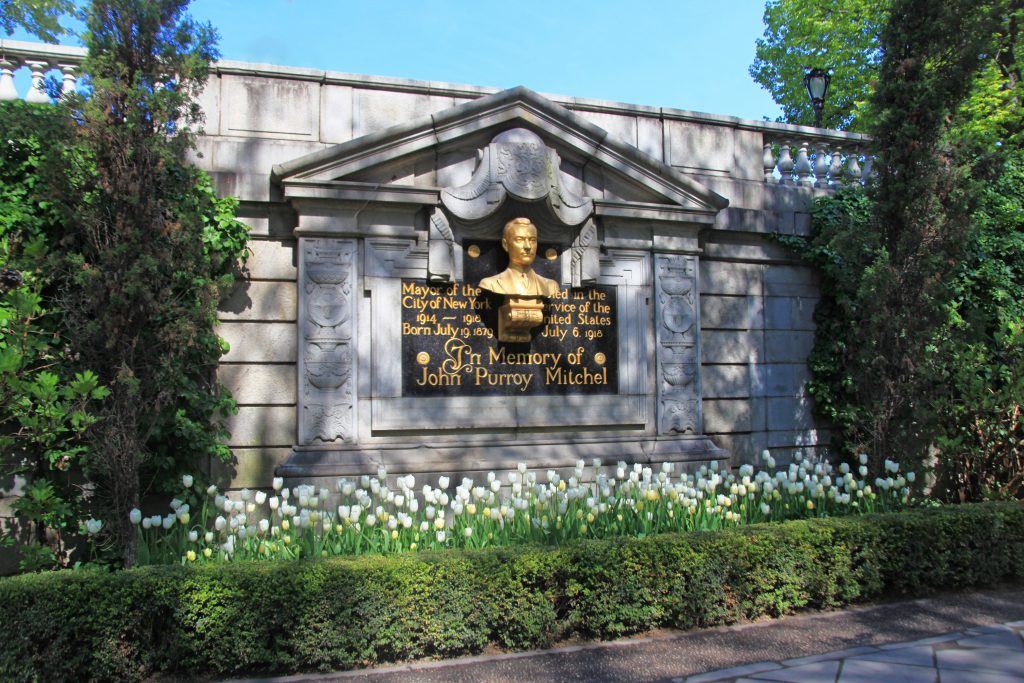
Municipal memorials solemnly honor fallen heroes or civic leaders with sweepings of icy white tulips.
New subway entrances sport tulips in an around the pocket parks that are springing up as segments of town regentrify.
And of course, every florist and even bodega are awash in brilliantly colored tulips to take home for the table or a loved one.
Why It Feels Bigger Now
So why does New York feel more tulip-filled than it did twenty years ago?
Part of the answer is scale. More parks, conservancies, neighborhood groups, business improvement districts, and private building owners now understand the value of seasonal plantings. Flowers are no longer just decoration; they are civic identity, tourism draw, neighborhood pride, and social media magnet.
Part of it is visibility. Twenty years ago, a spectacular tulip bed might have delighted passersby. Today, it is photographed, posted, shared, mapped, recommended, and sought out. A tulip display no longer stays in one neighborhood. It travels instantly through phones.
And part of it may be emotional. Since 9/11, New York’s spring flower culture has carried an added layer of meaning. The city’s Daffodil Project, for instance, has planted millions of daffodils citywide as living memorials. While that project centers on daffodils rather than tulips, it helped deepen the association between spring bulbs and collective remembrance, resilience, and renewal. NYC Parks notes that thousands of daffodils continue to be planted in parks each year in remembrance of September 11.
Tulips fit beautifully into that larger language of spring. They are temporary, brilliant, fragile, and extravagant. They arrive after winter as if they had been rehearsing underground.
What makes New York’s tulip season so enchanting is not simply that the flowers are beautiful. It is that they briefly elevate the emotional temperature of the city.
In a place built on speed, ambition, noise, and verticality, tulips bring the eye back down to street level. They remind us that cities, like gardens, are cultivated. They must be planned, tended, renewed, and occasionally allowed to surprise us.
And so each spring, New York becomes, if only for a few dazzling weeks, a little more Dutch, a little more tender, and a great deal more colorful. Tulip Fever has returned. This time, let’s hope it never breaks.
Where to Stay While the City Blooms
You don’t need to spend a fortune to wake up close to the bloom. A few well-placed budget options put you within easy reach of the city’s best tulip spots.
La Quinta Inn & Suites by Wyndham New York City Central Park on West 71st Street sits just a short walk from the Conservatory Garden, making it one of the most convenient bases for catching the park’s spring displays at their peak. Rooms are simple and functional, breakfast is included, and the subway is right there when you’re ready to head downtown.
Night Hotel Broadway on West 94th Street is another solid Upper West Side option — well-priced, close to Central Park, and just a subway ride from both Park Avenue and Union Square for Tulip Day. Straightforward, clean, and exactly what you need when the real attraction is outside.
East Village Hotel on First Avenue puts you close to Union Square, which hosts the city’s most exuberant tulip event each spring. The neighborhood is walkable, full of cafés and restaurants, and a easy ride up to the park when you’re ready to explore further
Recommended Reading
Fiction
- Tulip Fever by Deborah Moggach — A deliciously atmospheric novel of love, art, obsession, and speculation during 17th-century Dutch Tulip Mania.
- The Miniaturist by Jessie Burton — Set in 17th-century Amsterdam, this richly detailed novel conjures the world of Dutch wealth, secrecy, trade, and domestic intrigue.
Non-Fiction
- Tulipomania: The Story of the World’s Most Coveted Flower and the Extraordinary Passions It Aroused by Mike Dash — A wonderfully readable history of the Dutch tulip craze and the flower’s astonishing rise to fame.
- Tulip: The Story of a Flower That Has Made Men Mad by Anna Pavord — A lush and elegant cultural history of the tulip, from Central Asia to Ottoman gardens to European obsession.
- The Island at the Center of the World by Russell Shorto — A fascinating history of Dutch Manhattan and the New Amsterdam roots that still shape New York today.
- The New York Botanical Garden by Gregory Long, Todd A. Forrest, and Karen Daubmann — A lush illustrated history of the Bronx’s great 250-acre botanical treasure, with photographs, garden history, architecture, rare botanical art, and the story of one of America’s premier plant institutions.
- Central Park: An American Masterpiece by Sara Cedar Miller — A beautifully illustrated look at Central Park’s design, history, landscapes, and restoration, especially useful for giving context to the park’s formal gardens and seasonal plantings.
- Central Park, 1857–1995: The Birth, Decline, and Renewal of a National Treasure by Eugene Kinkead — A strong historical account of Central Park’s creation, neglect, and revival; valuable if you want to connect today’s spring blooms to the city’s larger park-preservation story.